
Kitchen Appliances
How Long Does a Rice Cooker Take? Times by Rice Type
As an Amazon Associate we earn from qualifying purchases. We may earn a commission from links on this page, at no extra cost to you. Learn more.
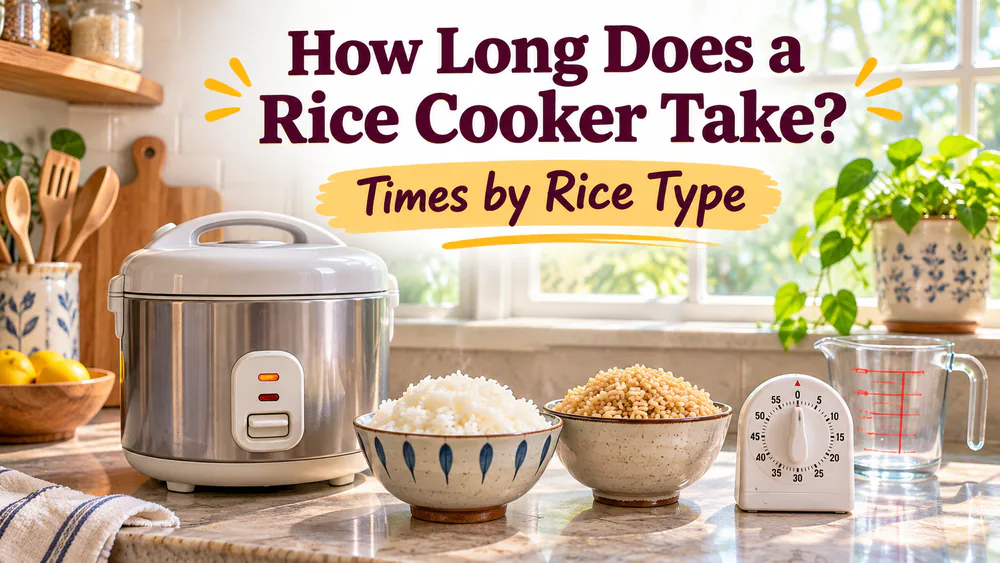
Most white rice cycles run roughly 20 to 60 minutes. Brown rice usually takes about 50 to 90 minutes or longer. Those are planning ranges across different machines, not promises for any one batch.
The cooker, rice type, batch size and any separate resting stage all affect the time. We plan around the manual for the exact cooker on the counter. This guide gives you the ranges, the reasons they shift, and how to time rice with the rest of dinner. It also fits alongside our rice cooker reviews if you are still choosing a model.
Rice Cooker Cooking Times at a Glance
The table below uses published manual estimates for two models. It is not a set of our own stopwatch results, and it is not a brand average. Each Aroma row uses the supplied measuring cup, which equals 3/4 US cup of uncooked rice.
Note. Every time in this table is the programmed cycle only. It is not total time to serve. Add washing, any soaking your manual asks for, and any rest the instructions call for.
| Cooker and program | Rice | Uncooked amount | Estimated cycle time |
|---|---|---|---|
| Aroma digital cooker, White Rice | White | One supplied cup | 27-32 minutes |
| Aroma digital cooker, White Rice | White | Two supplied cups | 30-35 minutes |
| Aroma digital cooker, Brown Rice | Brown | One supplied cup | 50-57 minutes |
| Aroma digital cooker, Brown Rice | Brown | Two supplied cups | 53-60 minutes |
| Aroma digital cooker, Flash Rice | White only | One supplied cup | 18-23 minutes |
| Zojirushi induction cooker, regular white program | Long-grain white | Batch size not specified (1.0 L model) | 52-59 minutes |
| Zojirushi induction cooker, Brown program | Medium or long-grain brown | Batch size not specified (1.0 L model) | 85-92 minutes |
The Zojirushi estimates run from starting the cycle to Keep Warm. Water amount, starting temperature, room conditions and voltage all affect when that happens. The table describes that one international model under the manual's test conditions, not every Zojirushi.
Does Cooking Time Include Soaking and Resting?
It depends on the cooker. Some machines fold soaking and steaming into the program, and others expect you to handle those steps yourself.
The cooking cycle versus total time until serving
Zojirushi Micom programs automate soaking, cooking and steaming. Conventional models need separate preparation and steaming steps, following their own instructions. So a number on the display and the time until rice reaches the table can be quite different.
For total time until serving, we add up four pieces:
- Washing and measuring the rice.
- Any soak the manual asks for.
- The programmed cycle.
- Any rest the manual calls for after the cycle.
Do not count the same stage twice. If your cooker already steams at the end of its program, adding a long extra rest on top can make the plan longer than it needs to be.
When to rest rice after the cooker finishes
There is no universal rest period. The Aroma instructions we used move straight from completion to stirring and serving, without naming a separate rest. The Zojirushi manual says separate soaking is unnecessary, and extra soaking softens the rice.
So we do not rest rice for a fixed number of minutes. We read the manual for that model. If it lists a rest, we add it to the serving plan. If it does not, we fluff the rice when the cooker finishes and serve.
Why Rice Cooker Times Vary
Three things drive most of the gap between one cooker's time and another's: the grain, the type of cooker, and the amount you cook.
White rice, brown rice, and other varieties
Brown rice keeps its bran layer, so it takes longer than white rice. The chart shows it plainly. On the Aroma, one supplied cup of brown rice takes 50-57 minutes against 27-32 minutes for white.
Texture matters as much as the clock. The Aroma ARC-914SBD can make good white rice but produce mushy brown rice, with starchy moisture collecting on the lid. A finished cycle tells you the cooker stopped. It does not tell you the rice came out well.
For jasmine, basmati, sushi and wild rice, we have no matched timing series to offer. Use the grain program on your cooker and its instructions rather than a rule of thumb from another variety.
Basic, digital, and pressure rice cookers
A basic cooker changes mode once the free water is gone and the pot temperature rises. A digital model can manage heating in stages, so its cycle often takes longer than a basic switch-operated cooker's cycle.
Pressure cookers need a different way of counting. They use a sealed, pressurized pot, so the wait includes heat-up, the timed pressure stage and the prescribed pressure release. A short pressure setting is not the total wait for rice. Heat-up and release depend on the batch, the appliance and the recipe, so we do not put a single pressure total in the chart.
Water proportions that work in one electric pressure cooker also do not necessarily transfer to another. Check the instructions for your own pot.
Batch size, water amount, and starting temperature
Doubling the rice does not double the time. On the Aroma, going from one supplied cup to two adds only a few minutes for white rice (27-32 minutes becomes 30-35) and for brown rice (50-57 becomes 53-60).
Cup size is the other trap. Use the measure that came with your cooker. It avoids a mismatch between the amount of rice and the water markings inside the pot. Then fill to the line for that amount, not by guesswork.
Starting temperature and water amount also matter. The Zojirushi manual lists both among the things that change when a cycle finishes. Cold water and a cool kitchen can stretch the wait a little.
How to Plan Rice Around Dinner
We like using a rice cooker on busy weeknights because it lets us step away while the rice cooks. Automatic rice cooking frees attention for the rest of dinner. The plan is to work backward from serving time.
- Look up the cycle time for your cooker, rice type and amount in the manual.
- Add washing, any soak and any rest the manual lists.
- Subtract that total from your serving time to find the start time.
- Start the rice, then begin the protein and vegetables that need less time.
- When the cooker finishes, fluff the rice and serve.
Use Keep Warm to hold cooked rice until you are ready to serve. If you want it done later, use the delay timer. Read your own manual first, because delay timer wording varies and we would not trust a general rule here.
Tip. Keep little hands away from the steam vent. Zojirushi's manual says to keep children away from escaping steam and not to open the lid during cooking.
Why Is My Rice Cooker Taking Longer Than Expected?
Most delays have a simple cause. Work through this checklist before you assume something is broken.
- Check the display. Some models do not count down at the start.
- Confirm you chose the right program, since brown rice runs much longer than white.
- Confirm the water matches the line for the amount of rice you added.
- Make sure the pot exterior is clean and dry, as the Aroma instructions advise.
- Leave the lid closed while the cycle runs.
The display is not counting down yet
On the Aroma ARC-914SBD, the numerical countdown covers only the final 10 minutes. A chasing pattern runs before it. So a cooker that looks stuck at the start may be right on schedule.
The cycle is longer than the manual suggests
Manual estimates describe set conditions. Cold water, a cool room, a larger batch or a different rice type can all stretch the cycle. The Zojirushi manual lists water quantity, starting temperature, room conditions and voltage as factors.
Treat the manual's range as a guide. A Quick or Flash setting can shorten the cycle, but the Zojirushi manual warns that Quick can produce harder or wetter rice.
The cooker switches to Warm but the rice is still hard
When the timer ends, the texture still needs a check. The Cosori 5L can leave white rice dry and clumped. It runs quietly but announces completion with loud beeps audible from another room. A completed timer does not by itself establish good texture.
The Aroma instructions give a fix for hard rice: add water and continue cooking. Fluff the rice after completion and taste it before serving.
Frequently Asked Questions
How long does one cup of rice take in a rice cooker?
Check which cup the manual means. The cup supplied with the Aroma equals 3/4 US cup of uncooked rice, so it is smaller than a standard measuring cup. Use the cup that came with your cooker and fill to the matching water line.
Does cooking twice as much rice take twice as long?
Not by much, so you rarely need to start a bigger batch far earlier. The bigger question is whether the pot's water markings cover the amount you add, so confirm that before you start.
Does Quick Cook reduce the total time?
Only for the right rice. On the Aroma, Flash Rice is for white rice only, so brown rice has no shortcut there. Quick settings can leave rice harder or wetter, so taste before serving.
Is a rice cooker faster than cooking rice on the stove?
Not necessarily. Its real advantage is automatic heat management while you cook other dishes. To compare fairly, use the same rice, amount and serving endpoint, including soaking and resting on both sides.
The Bottom Line
Expect roughly 20 to 60 minutes for white rice and about 50 to 90 minutes or longer for brown. Treat those as ranges and take the exact figure from your cooker's manual.
Decide whether the number you are reading is cycle time or total time to serve. Then plan the rice first and build the rest of dinner around it.
Read next
The Bottom Line
Explore our kitchen guides for more help planning everyday meals.