As an Amazon Associate we earn from qualifying purchases. We may earn a commission from links on this page, at no extra cost to you. Learn more.
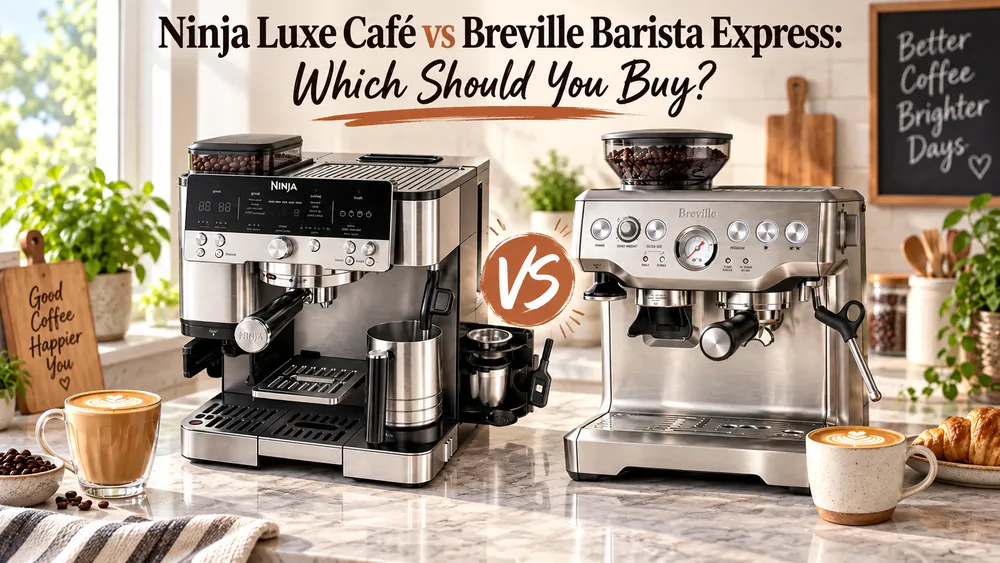
When Ninja launched the Luxe Café in mid-2024, it didn't keep its target a secret. The ES601 was built to take on the Breville Barista Express, the machine that has anchored home espresso since 2013.
They sit in the same price bracket, roughly $500 to $700. But they come at the job from opposite directions. The Luxe Café automates the whole shot. The Barista Express teaches you to pull it.
That split shapes our verdict: choose the Ninja for automation and versatility, choose the Breville for espresso craft and the learning curve that goes with it. We landed there after weeks with both machines side by side on our counter.
We ran both machines side by side for six weeks of daily use, each pulling one to four drinks a day. The Ninja took the milk-drink mornings, double shots and lattes, with the occasional travel-mug drip or rapid cold brew in the same day. The Breville handled the espressos and cappuccinos, and it drank more of our beans doing it. Week one previewed the whole comparison: the Ninja served a perfect latte by the third try after a short run of bitter calibration shots, while the Breville burned through beans dialing in and steamed flat-to-bubbly milk until the wand technique clicked.
Quick Verdict
Here's our quick verdict before the details.
Key takeaway. Espresso quality: the Breville Barista Express wins with true 9-bar extraction and a manual steam wand that rewards practice.
Convenience and versatility: the Ninja Luxe Café wins with guided dosing, hands-free frothing, and drip plus cold brew in one machine.
Price: the Ninja wins at launch pricing, though the Breville often matches it during sales events.
Buyers who want to learn espresso should buy the Breville. Buyers who want great drinks fast should buy the Ninja.
Buyer situation
Pick
Why
You want café-style drinks with minimal fuss
Ninja Luxe Café
Guided grind and dose, hands-free froth
You want real espresso and room to grow
Breville Barista Express
True 9-bar extraction, a manual wand, room to learn
Your budget is the priority
Ninja Luxe Café
Lower list price, no drip machine needed
You drink mostly straight espresso
Breville Barista Express
Richer, more consistent shots once dialed in
You plan to keep one machine for years
Breville Barista Express
A decade-plus track record, cheap replacement parts
Specs Compared: Quick Reference Table
Both are pump espresso machines with conical burr grinders.
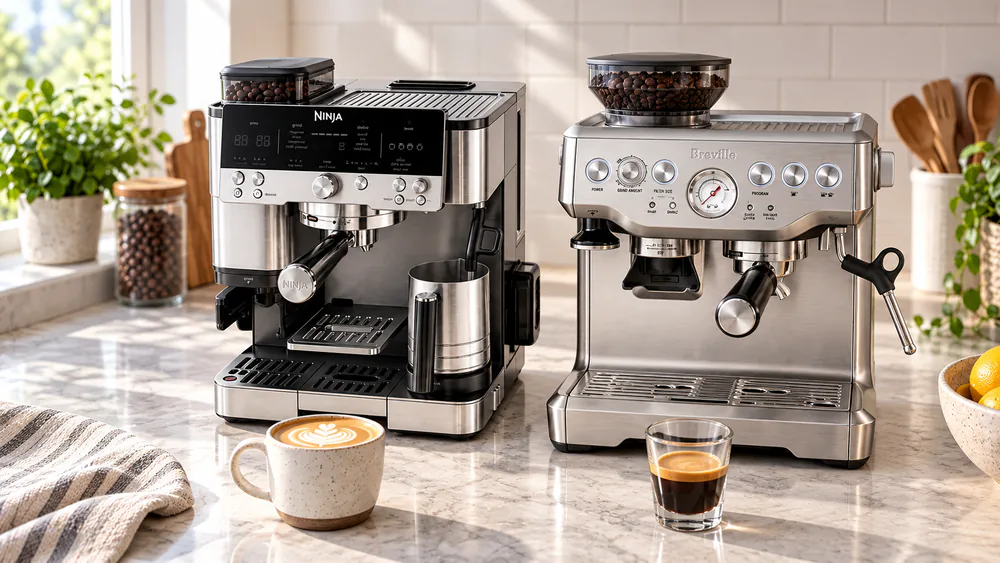
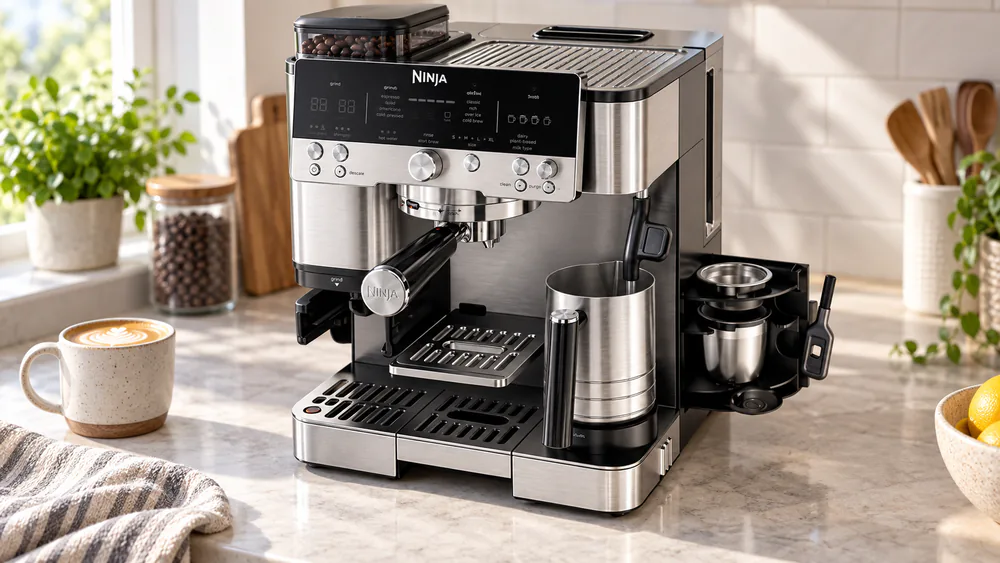
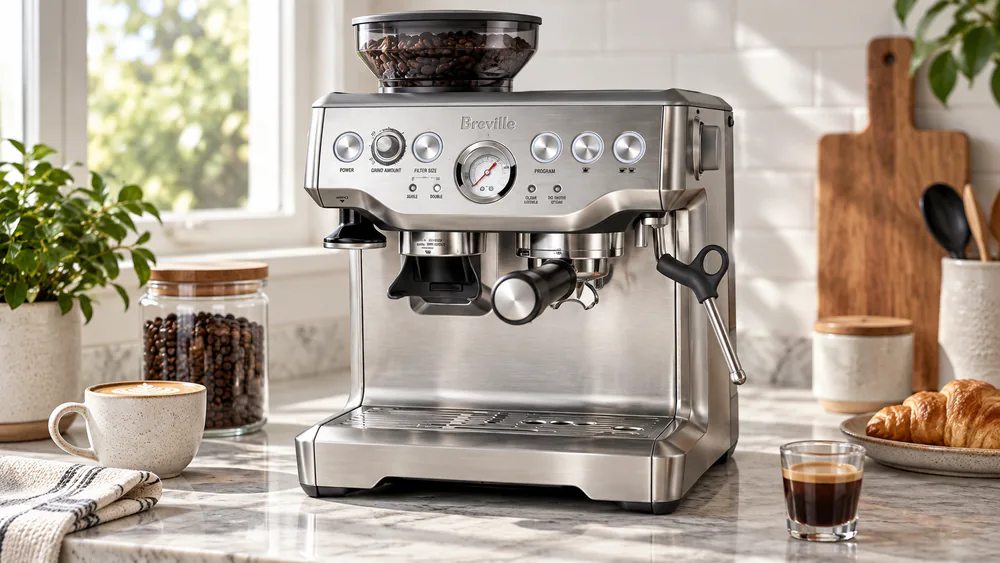
Two philosophies in one photo: the 3-in-1 Ninja beside the semi-automatic Breville.
Note. Street prices were last checked in August 2026 and move week to week. Confirm the current price before you buy.
Two Coffee Philosophies: Automated vs Manual
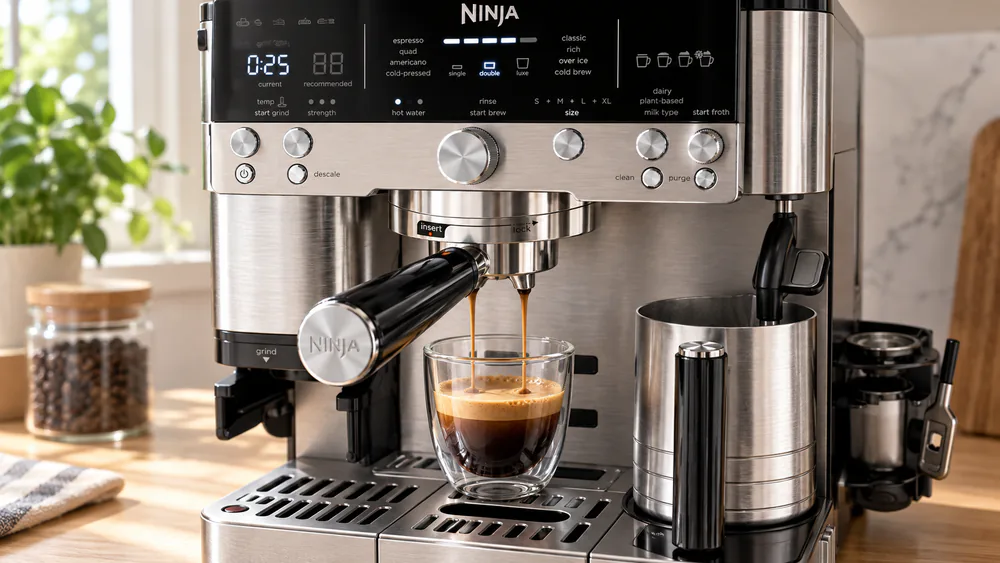
This comparison comes down to two ways of making espresso, and neither is wrong. The Ninja treats the shot as a problem to automate: Barista Assist reads the beans, weighs the dose, and adjusts temperature and pressure in real time. You press a button and get a drink.
The Breville treats the shot as a skill to learn. You choose the grind, time the pull, and judge the shot yourself. The machine expects you to meet it halfway.
Feature-by-Feature Comparison
We scored both machines on seven dimensions: grinder and dosing, espresso quality, milk frothing, ease of use, design and durability, price and value, maintenance.
Grinder & Dosing
The grinder is where these two differ most.
The Ninja's conical burr grinder spans 25 settings and doses by weight on a built-in scale, removing the beginner's biggest failure point: weighing the coffee.
The Breville offers 16 settings with steel conical burrs and volume-based dosing with a manual override. There's no scale; you set the grind time and adjust by taste.
The honest results: the Ninja grinds fine enough for espresso only just barely, and its drip grind was inconsistent. The Breville's grinder is simpler and louder. Grinder failure is the biggest repair risk on both: the most common breakdown on the Ninja, and Breville repairs run about $300, mostly labor.
Winner: the Ninja for range and guided dosing, though the Breville's simpler grinder is the safer long-haul bet.
Warning. The grinders in both machines are the ceiling of their espresso potential. Each limits you the day you start chasing specialty shots.
Espresso Quality & Taste
This is the dimension that settles most buyers' debates, and it's where the Breville pulls ahead.
The Luxe Café's pump has no official pressure rating (listings claim 9 to 19 bar), with PID temperature control at a 93 C default, steered by Barista Assist. Shots are consistent and easy, but they taste like very strong, rich coffee rather than true espresso. The first week is a calibration phase: bitter shots and the occasional small leak while the machine learned our beans.
The Barista Express runs a 15-bar Italian pump regulated to 9 bar, with Thermocoil heating and PID control delivering water at 200 F. Once you dial in the grind, shots show deeper crema and better clarity than anything the Ninja produces.
Winner: the Breville Barista Express, clearly, if espresso quality is your primary reason for buying.
Warning. The Ninja is an espresso-style machine, not a true espresso machine. It makes delicious, strong, café-style drinks, but if your benchmark is a genuine espresso shot, you'll be happier with the Breville.
Milk Frothing & Specialty Drinks
The machines split cleanly here: one frees your hands, the other frees your technique.
The Ninja's Dual Froth System steams milk hands-free with four presets: steamed milk, thin froth, thick froth, cold foam. It turns out consistent microfoam every time, and the wand self-cleans. You can't steam by hand or set the milk extra hot, and the froth never matches a manual wand's, which caps latte art. Oat milk frothed visibly weaker than dairy. The thin-froth program is genuinely loud; the others run quiet enough for a pre-dawn kitchen.
The Breville's manual wand takes practice, and our first weeks produced flat-to-bubbly milk until the technique clicked. With practice it makes genuine microfoam, hotter milk, and real latte art; the single boiler means no brew-and-steam at once.
Winner: the Ninja for hands-free consistency, the Breville for control and craft. Pick by whether you want milk drinks fast or latte art later.
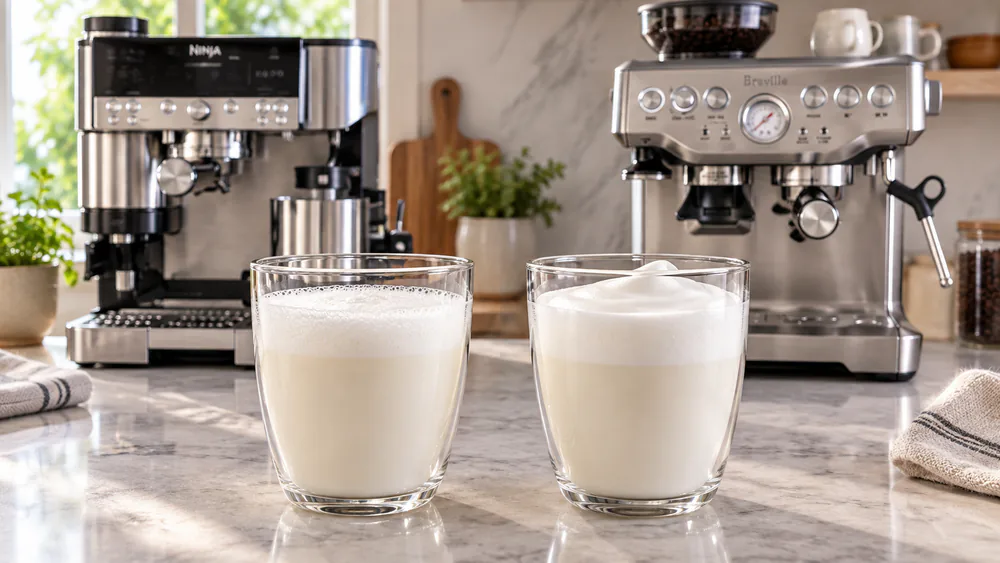
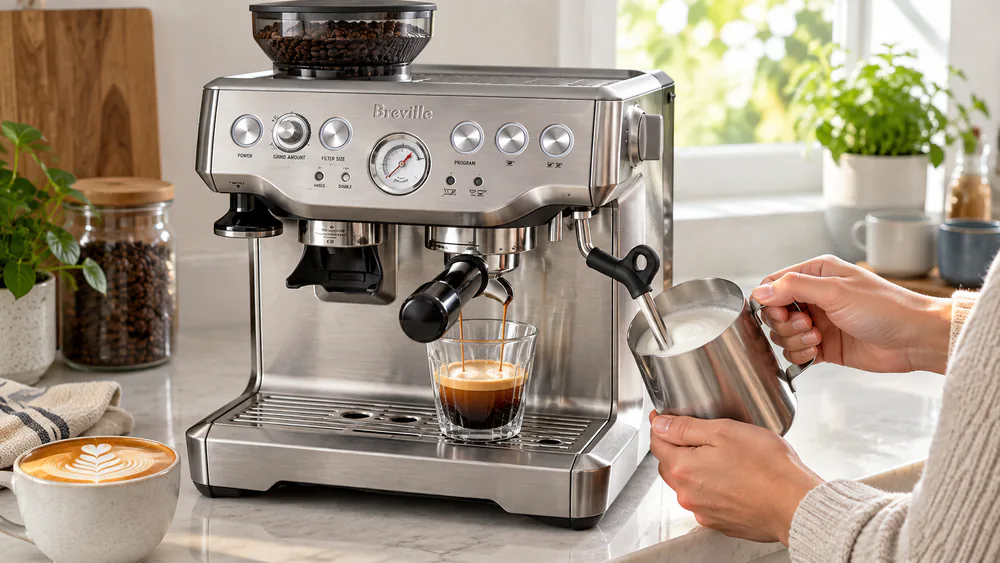
Auto frother versus manual wand: consistency on the left, craft on the right.
Ease of Use & Learning Curve
This is the Ninja's home turf, and the gap here is the biggest in the comparison.
Barista Assist recommends the grind size, weighs the dose, and guides the tamp. A perfect latte within about three tries is typical, and setup takes under an hour.
The Breville's learning curve is real and it costs beans: one of our early sessions spent a full bag just getting the grind right. It's ready in about 30 seconds but brews more stably after a 10 to 15 minute warm-up. The payoff is a skill you keep.
Winner: the Ninja Luxe Café, and it isn't close. The Breville's learning curve is the price of its espresso quality.
Design, Build Quality & Durability
Neither machine is small or light, but they build to different standards.
The Luxe Café is lighter and more plastic-forward than the Breville, though well put together, with in-machine accessory storage and a rich in-box kit. It carries a 1-year warranty. The breakdowns we see most often: the grinder stopping entirely, sometimes within weeks, the scale misreading, and the plastic funnel cracking.
The Barista Express is heavy and solid enough that it never walks on the counter, though the stainless is plating over plastic and can chip. The track record is more than a decade long, and regular care keeps units running for years, with the only service a cheap gasket or solenoid swap.
Winner: the Breville on track record and parts availability. The Ninja's reliability pattern is the biggest risk in this comparison.
Price & Value
On price, the machines are closer than their list prices suggest.
The Luxe Café launched at $499.99 and lists at $599.99 today, with street pricing moving week to week. It also replaces a drip machine and a cold brew maker for a house that drinks all three. Ninja's official page lists the current price.
The Barista Express lists at $699.95 but frequently sells for $499 to $550 at major sales events. You're paying for espresso hardware and a decade of reputation. Breville's official page has the spec sheet.
Winner: the Ninja at list prices, the Breville on sale. Check the current price before you decide.
Maintenance & Cleaning
Both machines reward daily care, but one asks for less of it.
The Luxe Café runs a clean cycle every 4 weeks, and the steam wand self-cleans with an automatic purge, so the one daily chore is wiping the wand after each drink. The drip tray fills fast and spills if you rush it.
The Barista Express asks for more: wipe and purge the wand daily or milk film scalds on, swap the water filter every 60 uses or 2 months, and descale on schedule. It flushes into the drip tray after every use, and the tray fills after about 15 drinks. Keep up the routine and it runs for years.
Winner: the Ninja for less effort. Its auto-purge wand saves time daily, though neither machine is set-and-forget.
Ninja Luxe Café: Pros, Cons & Who It's For
Up top we promised a calibration week, and for the Ninja that week is the gentle one: a short run of bitter shots, then weeks of the same drink on demand.
Barista Assist in action: the machine weighs, guides, and adjusts the shot for you.
The Luxe Café's whole case fits in one sentence: a great café-style drink without the learning curve, delivered from your first week. We rate it 4.1 out of 5, strong on convenience and versatility, marked down for the reliability pattern, the one thing that gets worse the longer you own it.
What We Like
What We Like
Guided weight-based dosing removes the biggest beginner failure point
Hands-free frother makes consistent microfoam, self-cleaning wand
Drip, cold brew, and iced drinks in one machine
Generous in-box kit
What We'd Change
Fine-grind limits and an inconsistent drip grind
No manual steaming, no extra-hot setting, no single shot
No hot-water spout, so Americanos need the kettle
Reported grinder, scale, and plastic funnel failures
Week one is the calibration week. We pulled a run of bitter shots while the machine learned our beans and had one small leak. The drip tray fills faster than you expect and spills if you rush it. The reliability pattern is the harder truth: grinder failures can strike within weeks, the plastic funnel cracks, and the built-in scale misreads. The 60-day money-back guarantee is a real safety net, and a consistent latte within three tries is typical for us too.
Who It's For
The Ninja Luxe Café is for households that want great coffee without a hobby: a latte on autopilot, drip for the office, cold brew for the weekend, one machine. See the Ninja Luxe Café on Amazon to check current pricing. Skip it if latte art, true espresso, or a decade of service with cheap repairs are your priorities.
Breville Barista Express: Pros, Cons & Who It's For
Where the Ninja automates, the Breville asks more of you, and it trades your effort for the craft.
The manual wand: more practice, more control, real latte art.
The Barista Express is still the standard the Ninja is chasing, and it keeps the top spot. We rate it 4.6 out of 5: the best espresso quality in this price class, with the dialing-in effort as the honest cost of entry. Buy it for the espresso, and plan to work for it.
What We Like
What We Like
True 9-bar extraction with better clarity
Volumetric shot control with manual override
Manual wand makes genuine microfoam and real latte art
Heavy, solid build with a decade-plus track record
What We'd Change
Steep learning curve that goes through beans
Loud, whiny grinder and daily drip-tray flushing
Single boiler: no brew-and-steam at once, cool-down pauses
No auto-on timer, no drip or cold brew
We started mornings fifteen minutes early to get ahead of the warm-up: the machine is ready in about thirty seconds but brews far more stably after a longer warm-up, and there's no auto-on timer. The grinder is loud and whiny, and every use flushes into the drip tray, which fills after about fifteen drinks. We wiped the wand after every drink and hit a bridge of beans in the hopper one morning. The pressure gauge earns its reputation: when the needle lands in the window, the shot comes out right, and that feedback is why the learning curve flattens out.
Who It's For
The Barista Express is for buyers who want espresso as a skill, not a service: a month of dialing in, real latte art, one machine for close to a decade. See the Breville Barista Express on Amazon to check the current price, since it often sells for $499 to $550 on sale. Skip it if you want drinks fast with no learning curve, or if your kitchen also needs drip and cold brew.
Who Should Buy Which Machine
With both machines reviewed, the choice comes down to who you are and how you make coffee each morning.
Choose the Ninja Luxe Café If You...
Want a good drink fast, with no dialing in
Drink drip or cold brew as often as espresso
Want hands-free milk drinks every morning
Don't want to weigh, time, or steam anything by hand
Want one machine for every coffee style
Choose the Breville Barista Express If You...
Want real espresso and are willing to learn the craft
Plan to practice latte art and texture milk by hand
Drink mostly straight espresso or simple milk drinks
Want a machine with a decade-plus track record
Care about parts availability and cheap repairs
Who Should Skip Both (and Build a Separate Stack)
Both machines share one compromise: a grinder that caps your espresso ceiling. If espresso is a serious hobby, build a separate stack. A dedicated espresso machine like the Breville Bambino Plus with a standalone burr grinder gives better grind control and parts you can upgrade one at a time, for a similar outlay. The Bambino Plus (BES500BSS) lists at $499.95 and typically sells for $399.95 to $499.95, near $480 to $500 outside sales events. A separate burr grinder runs about $100 to $200 (Breville Smart Grinder Pro at $199.95, Baratza Encore at $149.95, OXO Brew conical at about $99 to $110). A Bambino-plus-grinder pair lands around $690 to $700. Street pricing moves week to week and dips at major sales events, so check the current price. If your coffee life is mostly pour-over or drip, a good standalone brewer is the honest answer.
Cost of Ownership: First Year
The stack math above starts with the sticker price, and the sticker is only the start.
Machine: the Ninja at roughly $499 to $599, the Breville at $499 to $699
Beans: one 12 oz bag a week at about $15 to $25 (2026 industry averages for fresh-roasted specialty coffee run about $22 to $23 per bag, with a median near $20 and wide swings by origin, roast, and roaster), or $780 to $1,300 a year
Accessories: covered either way, since both boxes include the basics
Cleaning, Ninja: tablets, powder, and brush ship in the box, with replenishment roughly $30 to $40 a year at current street prices (a Breville BES007 descaler 4-pack runs $19.99 to $24.99 and an 8-pack of BEC250 cleaning tablets about $11 to $12, varying by retailer and pack size)
Cleaning, Breville: the water filter (BWF100NA 6-pack) lists at $29.95 and sells for about $25 on the street, and needs swapping roughly six times a year (street pricing moves week to week, and compatible filters undercut the genuine article sharply)
First-year totals land around $1,300 to $1,950 for the Ninja and $1,300 to $2,050 for the Breville, depending on your bean budget. Over five years they diverge: six to nine years of daily use is routine on the Breville, while the Ninja's grinder and motor failures show up inside the first year for a share of units. A machine that runs eight years costs half as much per year.
Final Verdict
The honest answer depends on whether you want a coffee machine or an espresso hobby. The Ninja delivers café-style drinks with almost no effort and is the better value at list price because it replaces three machines. The Breville delivers espresso worth the learning curve, and its maintenance record makes it the better long-term buy for espresso-first drinkers.
If we were buying for ourselves, two questions would decide it. Do you want to learn espresso? Then the Breville, bought when it dips below $550. Do you just want great drinks fast, plus drip and cold brew? Then the Ninja, with the 60-day money-back guarantee as your trial period. Either way, plan for a separate grinder within a couple of years if specialty shots start calling, and verify current pricing.
Key takeaway. Choose the Ninja if you want automation, versatility, and the lower list price.
Choose the Breville if you want espresso craft, a manual wand, and a decade-long track record.
Skip both if espresso is a serious hobby; build a separate stack instead.
Note. Prices verified August 2026 and subject to change. Confirm the current price before you buy.
Frequently Asked Questions
Is the Ninja Luxe Café a real espresso machine, or espresso-style?
It's a real pump machine with PID temperature control, though the vendor publishes no pressure rating and listings claim 9 to 19 bar. The extraction behaves like very strong, rich coffee rather than true espresso. Espresso-style is the honest label.
Which machine is better for beginners?
The Ninja, by a wide margin. Barista Assist weighs the dose and recommends the grind, and setup takes under an hour. One trade-off the guides leave out is on the Breville side: it has no auto-on timer, so early-morning users start it by hand, and while it is ready in about 30 seconds, it brews far more stably after a 10 to 15 minute warm-up. Plan to switch it on a quarter hour before you want coffee.
Which one makes better espresso?
The Breville, without much debate, and the spec sheet shows why. Its 15-bar pump is regulated to a true 9 bar at the group head, while the Ninja publishes no pressure rating and its retail listings disagree, ranging from 9 to 19 bar. Regulated pressure is the mechanical difference behind the taste: a guaranteed 9 bar at the group versus a number on a listing.
Does the Ninja have a better grinder than the Breville?
On paper, yes: 25 settings and weight-based dosing against 16 settings and volume-based dosing. In practice the gap is closer, and the repair math matters more than the settings count. The Ninja's grinder is its most common breakdown and can stop within weeks, while the Breville's simpler, louder grinder has a decade of field history; when one does fail, expect a repair quote around $300, mostly labor.
Auto frother or steam wand: which is better for milk drinks?
For speed and consistency, the auto frother: the Ninja's four presets deliver the same microfoam every morning. Two caveats from our mornings with it: the plant-milk issue is milk-specific, not machine-wide (oat milk froths visibly weaker than dairy, while some plant milks froth about as well), and the thin-froth program is genuinely loud, so a pre-dawn kitchen will hear it. For control and latte art, the manual wand wins. Pick by your ambition, not your milk.
Does the Ninja Luxe Café make drip coffee and cold brew?
Yes, that's the 3-in-1 pitch: drip coffee in three styles, including over ice, plus cold brew. Our honest note: the cold brew reads more like an iced Americano than true cold brew. The Breville makes espresso and milk drinks only.
Is the Breville Barista Express still worth buying in 2026?
Yes, for espresso-first buyers. The BES870XL has been the home espresso standard since 2013, and it routinely sells for $499 to $550 at sales events, right at the Ninja's price. Its grinder is dated by 2026 standards, so plan around that.
How much counter space do they need?
Both are counter hogs and the vendor spec sheets disagree, so measure before buying. On most published figures the Ninja is about 13 x 13.4 x 14.6 in and 26 lb, while the Breville's official sheet lists 15.9 x 13.1 x 12.4 in.