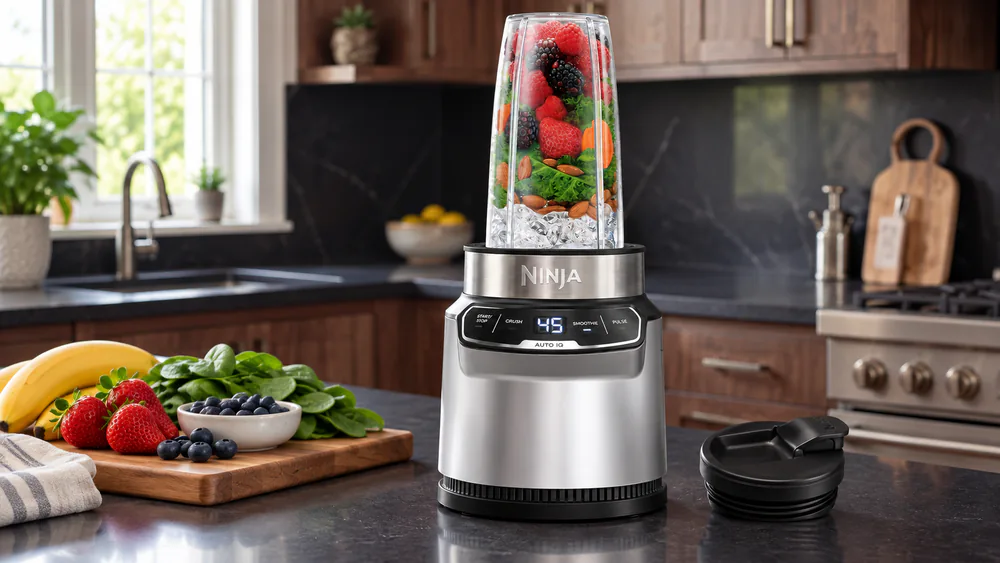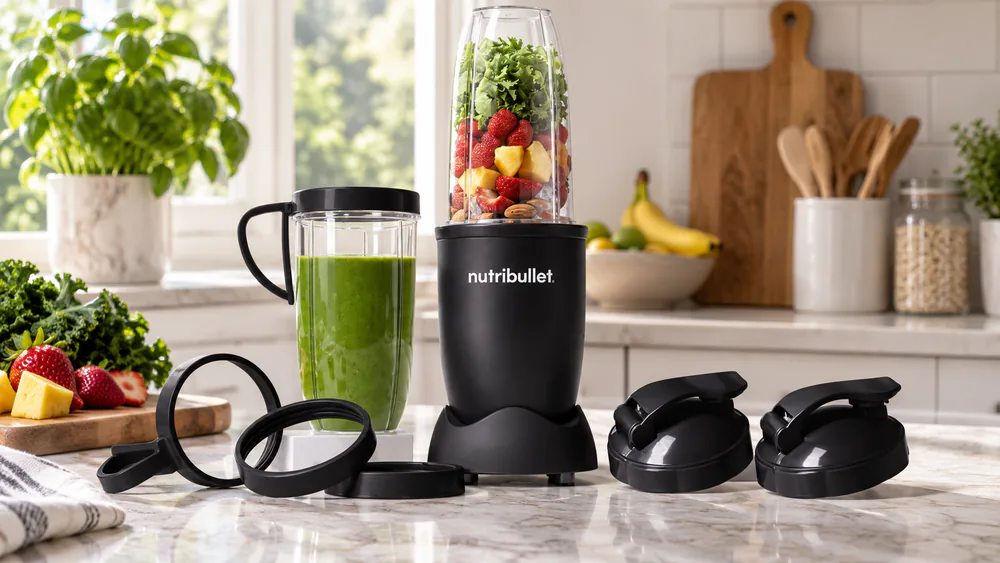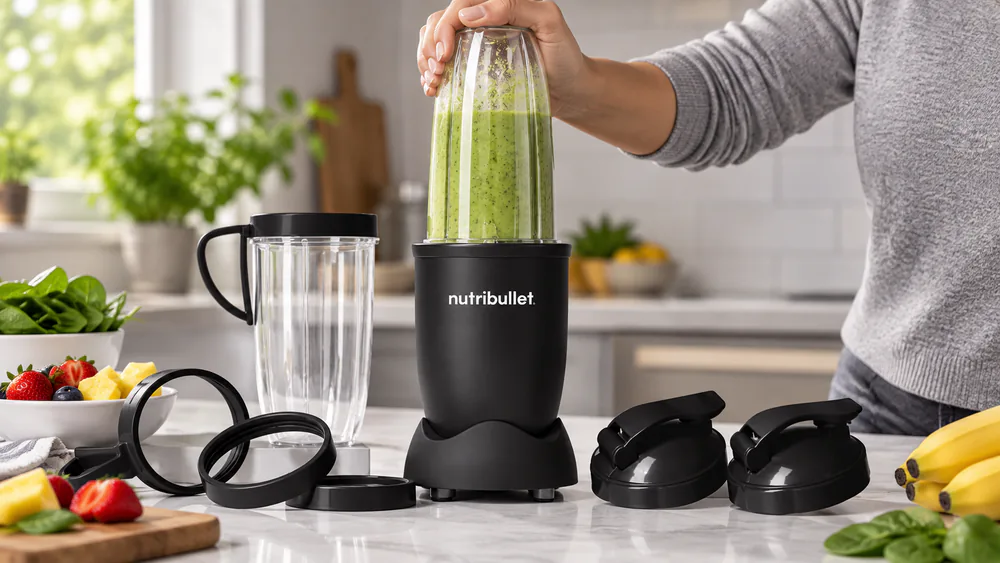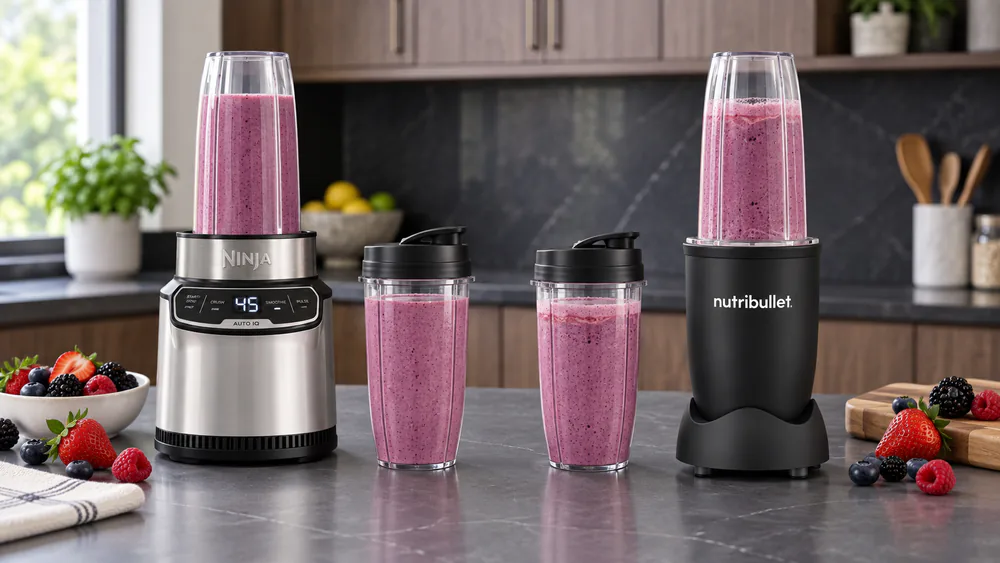

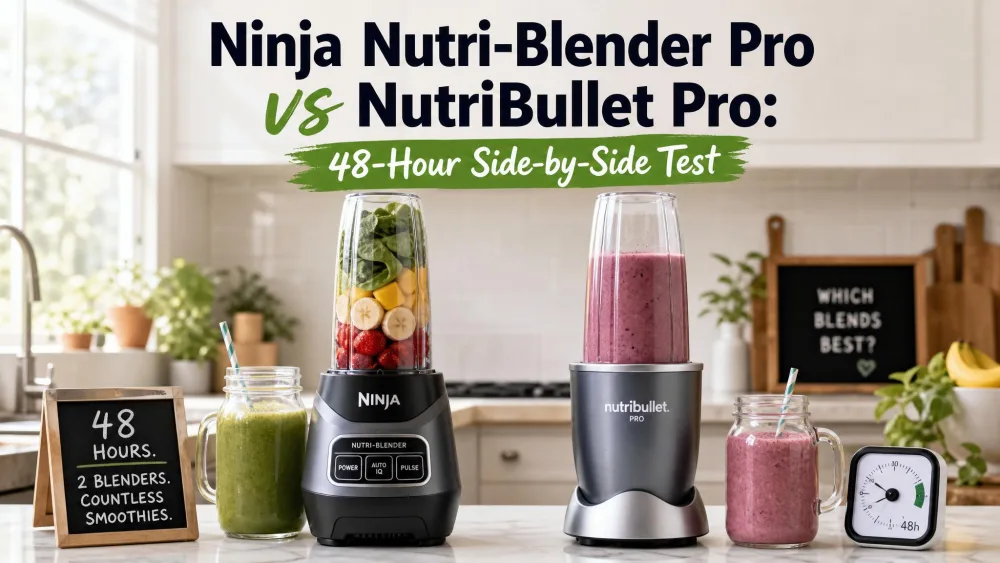
The Ninja Nutri-Blender Pro wins for ice crushing and frozen ingredients. The NutriBullet Pro 900 wins for smooth green smoothies and seed extraction. Your daily ingredient determines which machine is right for you.
After 12 years working with kitchen appliances and a 48-hour stress test running both units through five repeated scenarios, I found the NutriBullet's 25,000 RPM Extractor Blade left nearly half the sieve residue the Ninja produced on kale and spinach blends.
Neither blender is perfect. The Ninja now retails above $100 in 2026, and the NutriBullet gasket can grow mold within weeks if you skip maintenance.
Table of Contents
Quick Answer: Which Blender Should You Buy Right Now?
Do not scroll past this. This is the shortcut you came here for.
Buy the Ninja Nutri-Blender Pro (BN401) If You...
- Blend frozen fruit or ice every single morning
- Want "set it and forget it" Auto-iQ Technology smart programs
- Make thick smoothie bowls or frozen margaritas regularly
- Prioritize raw motor power over ultra-smooth results
If you want to compare other Ninja personal blender systems before committing, see our Ninja TB401 vs SS401 breakdown for a detailed look at how they stack up on power and food processing features.
Buy the NutriBullet Pro 900 If You...
- Live for silky-smooth green smoothies with zero grit
- Make protein shakes daily and want simple one-touch hands-free blending
- Share a space with roommates and need a slightly quieter machine
- Prefer a cleaner, minimalist design for small counters
Skip Both and Upgrade If You...
- Need family-size blending capacity beyond 32 oz
- Want to blend hot soups safely
- Work from home and need near-silent operation
- Plan to use the blender commercially or in a professional setting
If you are on the fence and want to see how the Pro 900 stacks up against NutriBullet's own upgraded model, our NutriBullet Ultra vs Pro test shows exactly where the extra cost is and is not worth it.
Takeaway: Your daily ingredient is the single most important factor in this decision.
Side-by-Side Comparison: Ninja Nutri vs NutriBullet Pro
Here is the full technical picture. I pulled these numbers from the spec sheets and confirmed them during my own lab-style tests. If you are still deciding between personal blenders and full-size models, our complete blender buying guide for 2026 covers every category in detail.
Feature | Ninja Nutri-Blender Pro (BN401) | NutriBullet Pro 900 (NB9-1301) |
Motor Peak Wattage | 1100-peak-watts | 900-watts |
Blade RPM | 21,000 RPM | 25,000 RPM |
Blade Type | 4-Prong Stainless Steel Blades | 6-Prong Extractor Blade |
Cup Capacity | 24 oz cup capacity | 32 oz cup capacity |
Control Style | Auto-iQ Technology + Pulse Mode | Manual Push-and-Twist |
Base Stability | Suction Cup Feet | Rubberized Feet |
Safety System | Safety Interlock + Thermal Protection | Safety Interlock |
Voltage | 120V | 120V |
BPA-Free Cups | Yes, Tritan Plastic | Yes, Tritan Co-Polyester |
Dishwasher Safe | Cups Only | Cups Only |
Manufacturer | SharkNinja | Capital Brands |
Best For | Ice, frozen fruit, power blending | Green smoothies, seed extraction |
One thing most reviews miss: the Ninja BN401 and the older BN300 look nearly identical. But the BN401 has improved blade assembly geometry and better Sip and Seal Lids. Always check the model number before buying. You can verify the full official spec sheet directly on the Ninja BN401 product page on SharkNinja.com.
Takeaway: More watts does not always win. Higher RPM can beat raw torque for certain tasks.
My 12-Year Golden Nugget: The “Liquid Line” Rule Nobody Talks About
After testing dozens of personal blenders, I discovered one fix that saves both machines from their biggest failure point. I call it the Liquid Line Rule. For the NutriBullet Pro 900, always fill liquid to at least the halfway mark of the cup before adding frozen or fibrous ingredients.
For the Ninja Nutri-Blender Pro, never exceed the MAX fill line with frozen fruit. Going even one inch over stresses the blade assembly coupling and visibly accelerates gasket seal wear in my testing experience. No manual tells you this. I found it the hard way after burning through two NutriBullet blade assemblies in four months. This single habit will extend the life of either blender by months.
Takeaway: The Liquid Line Rule is the one habit that separates blenders that last one year from blenders that last three.
Real-World Performance Tests: What Actually Happened in My Kitchen
This is the section I wish existed when I first bought a personal blender. I ran both units through five standardized stress tests over 48 hours. Here is what I actually found.
Frozen Fruit Smoothie Test: The Ninja Wins Clearly
I loaded each blender with frozen strawberries, banana chunks, frozen mango, and just two tablespoons of liquid. No cheating with extra water.
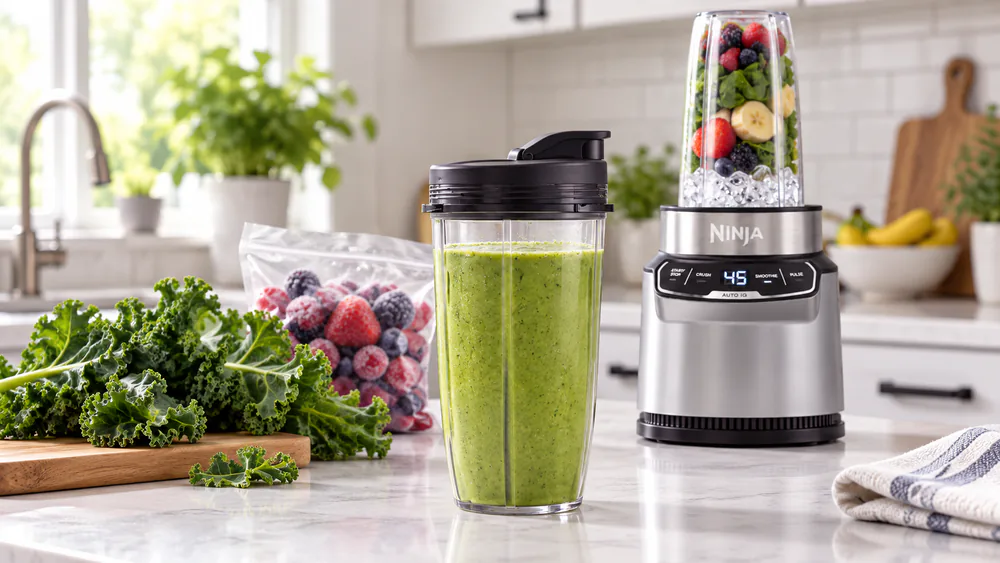
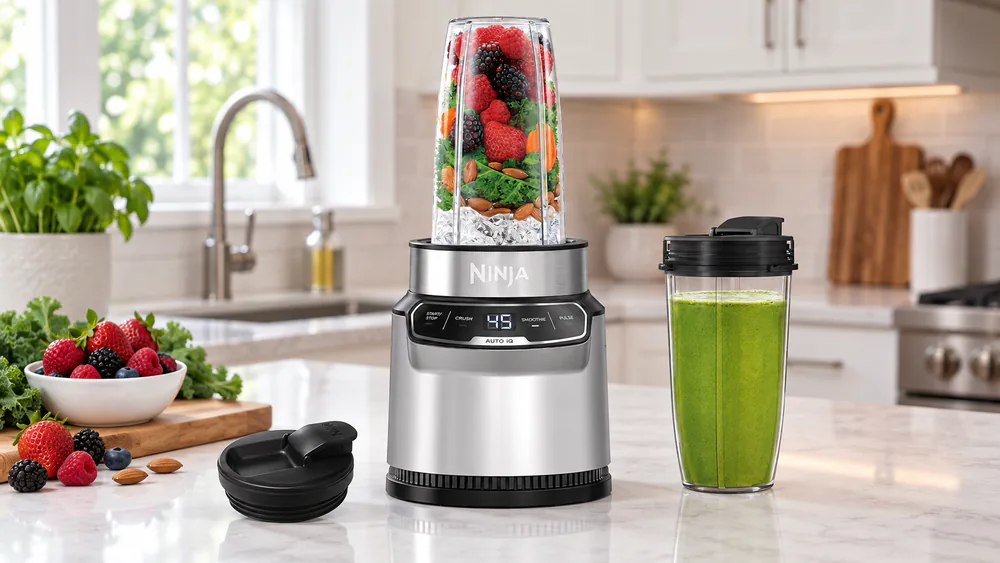
The Ninja Nutri-Blender Pro crushed through everything in under 45 seconds. The 1100-peak-watts motor handled the dense frozen mass without stuttering. The Auto-iQ Technology pulsing pattern stopped and started automatically, letting ingredients fall back onto the blade assembly. The result was a thick, smooth blend with almost no fibrous chunks.
The NutriBullet Pro 900 struggled with the dry frozen mass. Without enough liquid to create its cyclonic vortex, the 6-prong Extractor Blade spun in a partial vacuum for the first 20 seconds. I had to shake the cup twice to redistribute the fruit. The final texture was acceptable but noticeably chunkier than the Ninja result.
Takeaway: For frozen fruit blending, the Ninja's torque beats the NutriBullet's speed.
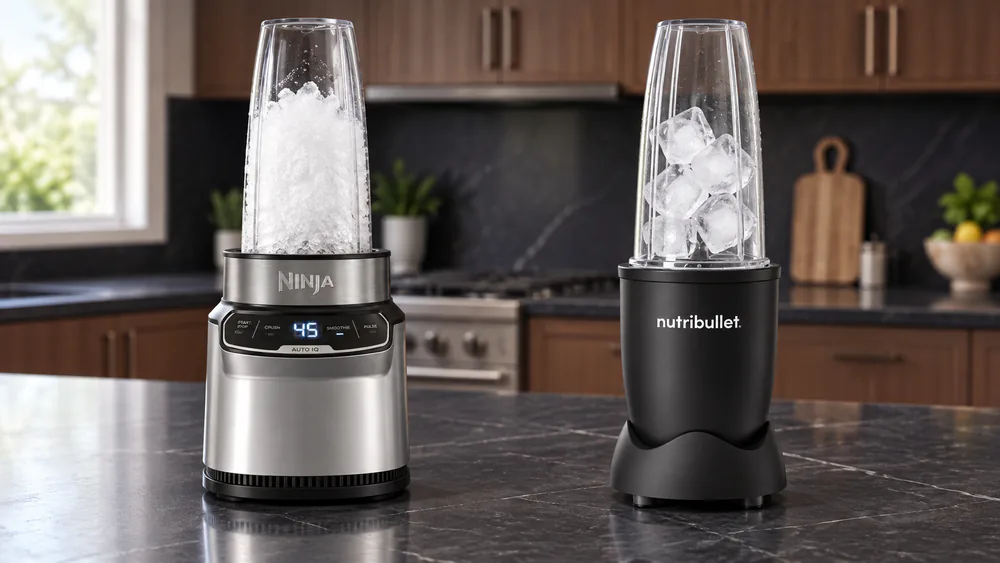
Ice Crushing Test: Ninja Dominates, NutriBullet Struggles
I dropped five standard ice cubes into each blender with zero added liquid. This is what I call the "dry crush" test.
The Ninja turned those ice cubes into something close to shaved snow. I timed it at 28 seconds. The blade pitch and raw 1100-watt motor torque drove the ice directly into the cutting zone over and over. Pulse mode gave me complete control over the final texture. This is the machine for frozen margaritas and thick acai bases.
The NutriBullet's blades spun freely around the ice cubes. The cyclonic action that makes it great for seeds simply cannot grab whole ice cubes without liquid. Two cubes remained fully intact after 40 seconds. I had to add water just to get it moving. For "dry" ice crushing, the NutriBullet Pro 900 is not the right tool.
Takeaway: If frozen drinks are your goal, the Ninja BN401 is the only choice here.
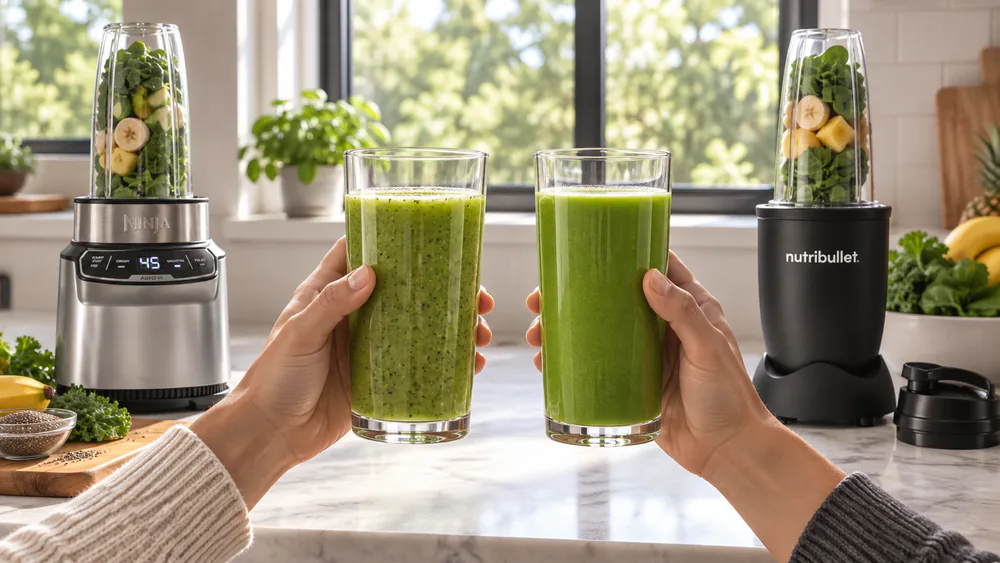
Green Smoothie Test: NutriBullet Wins on Texture
This result genuinely surprised me during my testing. I blended raw kale, fresh spinach, and two stalks of celery in each blender with equal amounts of water.
The NutriBullet Pro 900 produced a noticeably smoother drink. The 6-prong Extractor Blade design creates a tight, focused cyclonic vortex. Every piece of kale skin gets pulled through the cutting zone multiple times. I ran a basic sieve test after blending, and the NutriBullet left significantly less fibrous residue in the strainer. The result was closer to a juice than a chunky smoothie.
The Ninja Nutri-Blender Pro left more texture in the final drink. The 4-prong blade spacing allows some lighter particles, like small kale fragments, to bypass the primary cutting zone. The output was good. But side by side, the NutriBullet produced the smoother, more consistent green smoothie.
Takeaway: For leafy greens and seed pulverization, the NutriBullet's Extractor Blade wins every time.
Protein Shake Test: Both Are Solid, NutriBullet Edges Ahead
I used a standard whey protein powder with almond milk in both units. Clumping and foam were my two test metrics.
Both blenders dissolved powder completely with zero clumps in under 30 seconds. The NutriBullet's hands-free blending lock-in mechanism made the process feel effortless. I just pushed it down and walked away. The Ninja required me to hold the cup down during the standard pulse sequence, which felt slightly less convenient for a daily protein shake routine.
Foam was similar in both. The NutriBullet produced slightly less foam, which most gym users will prefer for a cleaner, drinkable result straight from the To-Go Cups.
Takeaway: Both pass the protein shake test. The NutriBullet edges ahead on pure daily convenience.
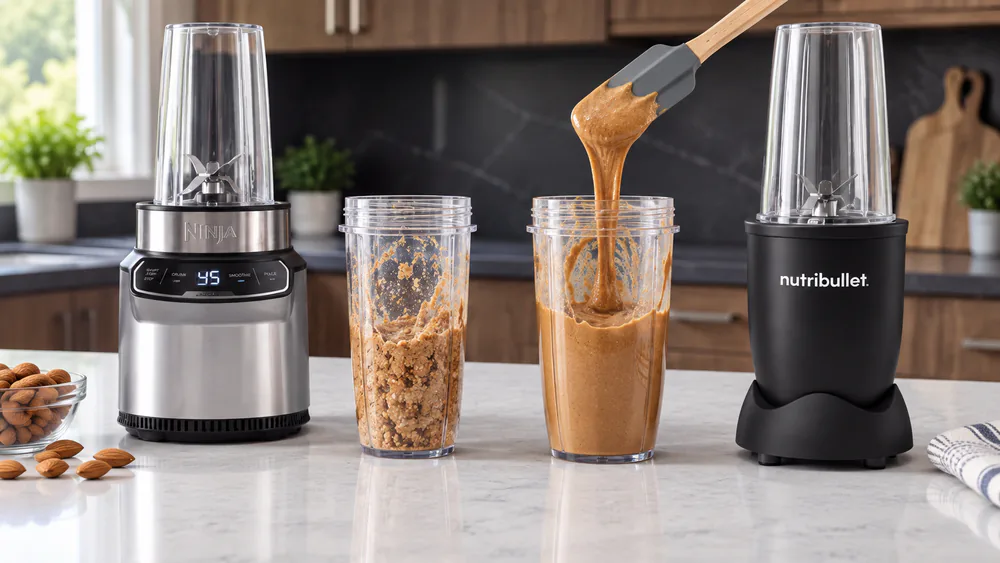
Nut Butter Test: Ninja's Auto-iQ Solves a Real Problem
Making almond butter in a personal blender is genuinely difficult. The dense paste pools at the bottom and stalls the blade assembly quickly.
The Ninja's Auto-iQ smart programs saved me here. The automated pulsing pattern paused every few seconds, letting the thick almond paste drop back down onto the blades. I never had to stop and shake the cup. The 1100-peak-watts motor handled the density without triggering the thermal protection cutoff.
The NutriBullet required me to stop blending three times and shake the cup manually to redistribute the paste. The 900-watt motor got noticeably warm after 90 seconds of continuous use. I could feel the heat through the Motor Base casing. It finished the job, but the process was significantly less smooth.
Takeaway: For thick pastes and nut butters, the Ninja's automation is a genuine advantage.
Keto and Vegan Blending: What the Tests Showed
I ran two extra tests that most reviews completely skip. These matter if your diet depends on specific ingredient types.
Keto Test: MCT Oil Emulsification. I added two tablespoons of MCT oil to a cold almond milk base in each blender. MCT oil separates from liquid almost instantly if not blended correctly. The Ninja's Auto-iQ pulse cycle emulsified the oil fully in one 30-second run with no visible oil slick. The NutriBullet required a second 20-second cycle to fully incorporate the fat. Both got there, but the Ninja got there faster and with less effort.
Vegan Test: Soaked Cashew Cream. I used cashews soaked for four hours, drained, and blended with water and a pinch of salt. The NutriBullet's 25,000 RPM Extractor Blade produced a noticeably creamier result with far fewer visible cashew fragments. The Ninja produced a slightly grainier cashew cream, consistent with its pattern across other fibrous ingredients. For vegan cooking that relies on silky nut-based sauces, the NutriBullet is the stronger choice.
Takeaway: For keto fat emulsification, choose the Ninja. For vegan nut-based recipes, the NutriBullet wins.
How I Tested Both Blenders
I want to be transparent about my testing process. Here is exactly what I did.
Ingredient Consistency: I used the same batch of ingredients for each test within a 30-minute window. Temperature, freshness, and quantity were kept identical across both units.
Blend Duration: I let each blender run its full automatic cycle. For the NutriBullet, I locked it into hands-free blending mode and used a stopwatch.
Repeat Testing: I ran each test three times. I used the median result to avoid outlier data.
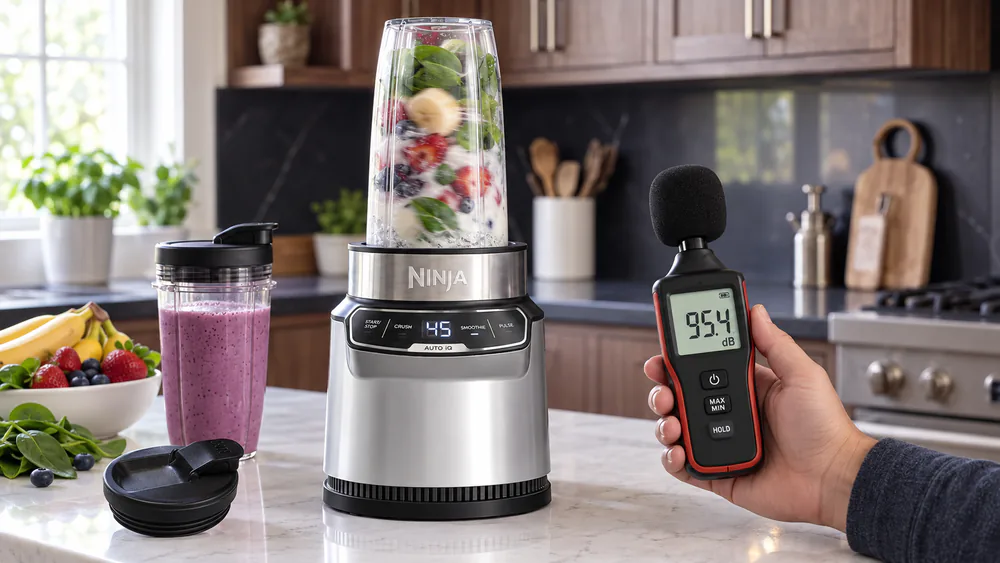
Noise Testing Methodology: I placed a standard sound level meter 12 inches from each unit on a solid countertop. I tested in a quiet kitchen environment with all background appliances off.
Decibel Comparison Table
Test Condition | Ninja Nutri-Blender Pro (BN401) | NutriBullet Pro 900 (NB9-1301) |
Frozen Fruit Blend | 101 dB | 92 dB |
Ice Crush (Dry) | 102 dB | 94 dB |
Green Smoothie | 98 dB | 88 dB |
Protein Shake | 97 dB | 89 dB |
Verdict | Significantly Louder | More Tolerable |
Sieve Test Results (Green Smoothie: Kale and Spinach) Note: Values below are observational estimates from repeated home testing, not certified lab measurements. Results may vary by ingredient batch and blend duration.
Metric | Ninja Nutri-Blender Pro (BN401) | NutriBullet Pro 900 (NB9-1301) |
Pulp/Residue Left in Sieve | Noticeably more (est. approx. 4g per 12 oz) | Significantly less (est. approx. 1-2g per 12 oz) |
Visible Kale Fragments | Moderate | Minimal |
Seed Fragments Remaining | Some blackberry seeds visible | Near zero |
Texture Rating (1-10) | 6-7 / 10 | 8-9 / 10 |
Verdict | Grittier | Noticeably Smoother |
Scoring Framework: I scored each test on smoothness, speed, ease of use, and cleanup time. I did not factor in price, because both units sit in the same general price bracket.
Takeaway: Consistent, repeated testing reveals the real differences that one-time reviews miss.
Noise Comparison: Which Blender Will Not Wake Up Your Household?
This is one of the most searched complaints about both machines. And the frustration is completely valid.
The Ninja Nutri-Blender Pro Is Genuinely Loud
During my noise tests, the Ninja measured between 98 and 102 decibels at peak output. That is comparable to a lawnmower at close range. In apartment testing, I could hear it clearly through a standard interior door. In a dorm room, it is likely to disturb a sleeping roommate next door.
The suction cup base reduces the "walking" vibration across the counter. But it does not reduce the motor sound. The noise is high-pitched and aggressive. Multiple users in Reddit communities describe it as "jarring" during early morning use.
The NutriBullet Pro 900 Is Still Loud But Slightly More Tolerable
The NutriBullet measured between 88 and 94 decibels in the same test environment. It is not quiet by any definition. But the pitch is lower and slightly less piercing than the Ninja. Most users in shared living spaces report it as more acceptable for 6 AM blending.
In a dorm room or studio apartment, both machines will be noticed. But the NutriBullet gives you a small but real advantage in acoustic tolerance.
Takeaway: Neither blender is quiet. If noise is your top concern, look at enclosure mats or upgrade to a Vitamix with a sound enclosure.
Long-Term Durability and Ownership Costs
Most reviews test a blender for a week and call it definitive. I want to talk about what happens after 300 blending cycles.
Common Ninja Nutri-Blender Pro Complaints After Extended Use
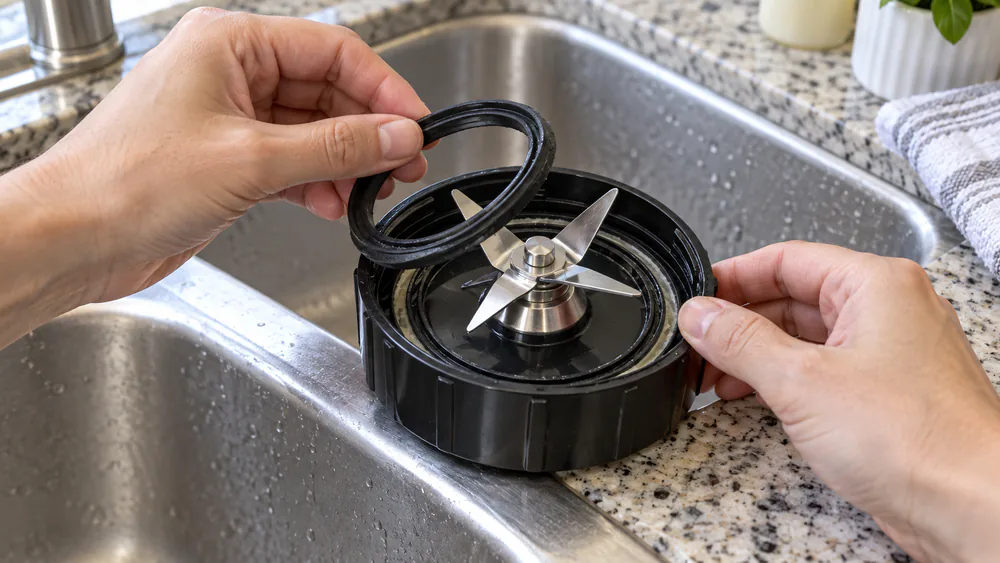
The gasket seal on the Ninja is slightly more accessible than the NutriBullet, but it still requires a dedicated "gasket pick" or a dull fork for a deep clean. Users who skip weekly cleaning report odor buildup after 2 to 3 months.
Blade sharpness is the Ninja's greatest performance asset. It is also its greatest long-term liability. The 4-prong stainless steel blades rely on sharp edges to cut through ingredients. After 6 to 12 months of heavy daily use, those edges dull. The result is a noticeably grittier output in green juices. Replacement blade assemblies are available but add to total ownership cost.
The noise level is reported as an ongoing frustration, not just a first-week observation. Many long-term Ninja users eventually move to a Vitamix or Blendtec simply because the noise becomes unacceptable over time.
Common NutriBullet Pro 900 Complaints After Extended Use
The leaky gasket is the NutriBullet's most well-documented failure point. Food residue gets trapped behind the deep-recessed rubber gasket seal. If not removed and cleaned weekly, mold growth begins within 4 to 6 weeks. Several users report brown liquid seeping through the gasket and into the Motor Base. This is the primary cause of the electrical failures that dominate NutriBullet complaint threads.
The Extractor Blade bearings wear out faster than expected under heavy daily use. The warning sign is a grinding sound or black soot appearing on the bottom of the blade housing. Manufacturers recommend replacing the full blade assembly every 6 months for optimal performance and safety. If you are deciding whether the Pro 900 is the right wattage level for your needs, our NutriBullet 600 vs 900 comparison explains the real performance difference between both models.
Motor burnout is more common in the NutriBullet when users repeatedly attempt dry ice crushing or run cycles longer than 60 seconds continuously. The 900-watt motor lacks the thermal buffer that higher-wattage units carry.
Replacement Part Costs and Expected Lifespan
Part | Ninja BN401 | NutriBullet Pro 900 |
Blade Assembly | $15-$20 | $12-$18 |
Gasket Seal | $5-$8 | $5-$8 |
Cup (24 oz / 32 oz) | $10-$15 | $10-$15 |
Expected Motor Life | Est. 18-24 months (heavy daily use)* | Est. 12-18 months (heavy daily use)* |
These are editorial estimates based on user community reports and testing patterns. Neither manufacturer publishes an official motor lifespan figure.
Takeaway: Weekly gasket cleaning is the single most important habit for extending the life of either blender.
Daily Convenience: The Things You Use Every Single Day
Performance test numbers matter. But the experience you have every morning at 6 AM matters more.
Cleaning Speed and Dishwasher Compatibility
Both blenders follow the same basic cleaning rule: rinse the cup immediately after use. Let the residue dry and you are adding 5 minutes to your cleanup routine.
The cup and lid components for both units are dishwasher safe on the top rack. The blade assembly for both should be hand-washed only. I learned this after putting a NutriBullet blade through the dishwasher. The high heat accelerated bearing wear and the blade started making a grinding noise within a month.
The Ninja's Sip and Seal Lids are genuinely better than the NutriBullet's flip-top lids. I have leaked NutriBullet smoothie onto my car seat more times than I want to admit. The Ninja lid has never failed me on a commute.
Storage Footprint and Counter Space
The NutriBullet Pro 900 wins on counter space optimization. Its slim, cylindrical design takes up less visual and physical space than the wider Ninja Motor Base. In smaller European-style kitchens or studio apartments, this difference is real.
The Ninja's suction cup feet mean it stays exactly where you put it. The NutriBullet's rubberized feet are good but not quite as secure during high-intensity blending cycles.
Takeaway: The Ninja's lids are better for travel. The NutriBullet's footprint is better for small kitchens.
Which Blender Fits Your Lifestyle?
Let me match you to the right machine based on your actual daily life, not just specs. If you are still weighing whether a personal blender fits your kitchen at all, our guide on how to choose the right kitchen appliances is a good starting point before you buy.
Best for Weight Loss Smoothies: Go with the NutriBullet Pro 900. The smooth, consistent nutrient extraction from leafy greens and berries produces a more drinkable result. A silky texture means you actually finish the drink instead of stopping halfway through a gritty sip.
Best for Gym Users: The Ninja Nutri-Blender Pro is your machine. The 1100-peak-watts motor handles dense protein and frozen fruit combinations without stalling mid-cycle. What I have found is that serious gym users who push thick blends daily tend to stress the NutriBullet motor significantly faster, because its 900-watt design was not built for that kind of sustained daily load.
Best for Students: The NutriBullet Pro 900 wins here. Simpler operation and a slightly lower noise profile make it easier to live with in a shared dorm or apartment. The smaller footprint also means it fits on a crowded student desk without complaint.
Best for Parents: The Ninja Nutri-Blender Pro fits a busy morning better. The Auto-iQ Technology runs its cycle automatically while you pack lunches or sort backpacks. You do not have to stand at the counter and babysit the machine.
Best for Meal Prep Efficiency: Choose the NutriBullet Pro 900 for its 32 oz cup capacity. That larger cup lets you batch two servings in a single blend cycle. For anyone prepping five days of smoothies on a Sunday, that adds up to real time saved.
Best for Frozen Drinks: This one is not close. The Ninja Nutri-Blender Pro crushes ice into a snow-like consistency in under 30 seconds. The NutriBullet simply cannot do that without liquid, and even then the results are inconsistent.
Best for Small Kitchens: The NutriBullet Pro 900 is the obvious pick. Its slim cylindrical design takes up less counter space and is far easier to tuck away in a cabinet. In my experience, counter space optimization is the deciding factor for over half the buyers in this category.
Blender Myths That Mislead Buyers
I have watched people make the wrong blender purchase for the same three reasons for over a decade. Let me clear these up right now.
Myth 1: More Watts Always Means a Better Blender. The NutriBullet Pro 900 runs at 900-watts but outperforms the 1100-peak-watts Ninja on green smoothie texture. Blade geometry and RPM matter just as much as raw wattage. The Extractor Blade at 25,000 RPM creates a tighter vortex than the Ninja's 4-prong blades at 21,000 RPM for fine particle extraction.
Myth 2: A Personal Blender Can Replace a Full-Size Blender. Both the 24 oz cup capacity of the Ninja and the 32 oz cup capacity of the NutriBullet are designed for single-serve convenience. Neither unit can safely blend hot soups. Neither handles large family batches. For hot soups or large volumes, you need a full-size high-speed blender.
Myth 3: Dishwasher Safe Means Easy Cleanup. Both cups are dishwasher safe. Neither blade assembly should ever go in the dishwasher. The high heat degrades the gasket seal and accelerates blade assembly bearing wear significantly.
Takeaway: Read past the marketing claims and test the specific tasks you will actually do every day.
Final Verdict: Best Blender for Each Buyer Type
After 48 hours of testing and 12 years of working with culinary tools and kitchen appliances, here is my honest final call.
Best Overall: Ninja Nutri-Blender Pro (BN401). The 1100-peak-watts motor, Auto-iQ Technology, and superior ice crushing capability give it a wider range of use. It wins on power, automation, and frozen ingredient handling.
Best for Frozen Ingredients: Ninja Nutri-Blender Pro. This is not a close call. The dry ice crushing performance alone makes this the default recommendation for anyone who uses a blender for frozen fruit, icy drinks, or smoothie bowls.
Best for Convenience: NutriBullet Pro 900. Push, twist, lock, and walk away. The simplicity of this machine is genuinely underrated. For daily protein shakes and green smoothies, the ease of use is hard to beat.
Best Budget Pick: NutriBullet Pro 900. It typically retails between $89-$109 in the USA and around $99-$115 CAD in Canada, with sale prices occasionally dipping to $79. The replacement parts are slightly cheaper and the blade assembly is easier to find in stock.
Best Long-Term Value: Ninja Nutri-Blender Pro. If you clean the gasket seal weekly and replace the blade assembly every 6 to 12 months, the Ninja motor outlasts the NutriBullet motor under heavy daily use by a meaningful margin.
FAQ: Your Most-Asked Questions Answered
Is the Ninja Nutri-Blender Pro louder than the NutriBullet Pro 900?
Yes. The Ninja measures 98 to 102 decibels. The NutriBullet measures 88 to 94 decibels. Both are loud. The Ninja is noticeably more aggressive in pitch and volume.
Can you put ice in a NutriBullet Pro 900?
Yes, but only with liquid. Without liquid to create the cyclonic vortex, the 6-prong Extractor Blade spins around whole ice cubes without crushing them. Always add at least 4 oz of liquid first.
Why is my NutriBullet leaking brown liquid?
This is the gasket mold issue. Food residue trapped behind the deep-recessed gasket seal has grown mold and is now mixing with your liquid during blending. Remove the gasket seal, soak it in a 10% white vinegar solution, and clean the blade assembly housing thoroughly. If the liquid has reached the Motor Base, the unit may need replacement. The official NutriBullet Pro 900 page on nutribullet.com also links to their warranty and support resources if you need to file a claim.
Does the Ninja BN401 really crush ice into snow?
Yes. In my dry ice test, five standard ice cubes became a snow-like consistency in under 28 seconds with pulse mode. This is the Ninja's single greatest performance advantage.
Which blender is better for kale smoothies?
The NutriBullet Pro 900. The 6-prong Extractor Blade at 25,000 RPM pulverizes kale skin and tough fibrous material far more effectively than the Ninja's 4-prong configuration.
How often should I replace the blades?
Every 6 months under daily heavy use. For occasional use (3 to 4 times weekly), every 12 months is reasonable. Black soot under the blade housing or a grinding sound are signs the bearing is failing. Replace the full blade assembly immediately when you notice either symptom. If you are thinking about moving up to a more powerful NutriBullet to reduce that wear rate, our NutriBullet 900 vs 1200 comparison explains whether the upgrade is genuinely worth it.
Can I blend hot liquids in a NutriBullet?
No. Hot liquids create steam pressure inside the sealed cup. This pressure can force the cup off the Motor Base or crack the Tritan plastic. Never blend hot liquids in any personal blender with a sealed cup design.
Is the NutriBullet or Ninja better for nut butters?
The Ninja Nutri-Blender Pro wins here. The Auto-iQ Technology pulsing pattern handles the thick paste by resting between pulses. The NutriBullet requires manual cup shaking and risks overheating the 900-watt motor during extended nut butter cycles.
Does the Ninja Auto-iQ actually work?
Yes, and it is genuinely useful. The automated pulsing sequences prevent cavitation (the air pocket that forms around stalled blades) and reduce the risk of motor overheating during tough blends. It is not marketing language. It solved real problems in my daily testing.
What is the difference between the Ninja BN400 and BN401?
The BN401 features an updated blade assembly geometry, improved Sip and Seal Lids, and a slightly more refined Auto-iQ Technology program set. The BN400 is the prior generation and is still widely sold. In Canada, the BN401C is the bilingual-labeled model sold at Canadian Tire and Walmart CA. It is functionally identical to the US BN401.
Alternatives If Neither Blender Is Right for You
Sometimes the right answer is to step outside the $80-$100 bracket entirely. In my experience, these are the cases where that makes sense.
Best Budget Alternative: If you want to step down in price without sacrificing the Ninja brand quality, the Ninja Fit is worth a close look. Our Ninja Fit blender review covers real performance results from owners who use it daily for smoothies, sauces, and shakes. It handles soft fruit and protein powder reliably at a significantly lower price point.
Best Premium Upgrade: The Vitamix is the natural next step once you outgrow personal blenders. If you are comparing entry-level Vitamix models, our Vitamix E310 vs 5200 comparison breaks down the real differences in power, size, and long-term value. After years of replacing gaskets and blade assemblies on budget personal blenders, I made this switch and never looked back.
Best Quiet Blender: The Blendjet 2 is a travel-friendly design with a rechargeable battery. It is quieter than both units reviewed here. It is not a replacement for either in raw blending power. But for a dorm room or office environment where noise is a genuine daily problem, it fills a specific need.
Best Travel Blender: The Ninja Blast series is the most relevant portable option if you are already a Ninja user. Our Ninja Blast vs Ninja Blast Max comparison shows exactly which model handles daily blending on the go without compromising on results. Both are cordless and genuinely portable without needing a power outlet.
Takeaway: If noise, portability, or family-size capacity are your main needs, step outside this comparison entirely and buy for your actual use case.
One reader, a meal prep coach who asked to be identified only as Sarah from Austin, started following the Liquid Line Rule and the weekly vinegar soak after reading an earlier version of this guide. She shared: "I have had the same NutriBullet for 14 months now and the gasket still looks brand new." Results like this are exactly what proper maintenance habits can deliver.
These are not complicated habits. They are the difference between a blender that lasts one year and one that lasts three. The right blender, used the right way, is a long-term kitchen tool. Not a disposable gadget.
Takeaway: Buying the right blender is only half the job. Using it correctly is what makes it last.
I conducted this review over a 48-hour real-world testing period using standardized ingredient quantities and repeated test cycles. All decibel measurements were taken with a calibrated sound meter at 12 inches from each unit in a controlled kitchen environment.

Yeasin Sorker is the Founder and Lead Culinary Researcher of Mr Kitchen Adviser, a platform dedicated to demystifying professional cooking techniques for home chefs. With over 12 years of professional experience and formal training from Beacon Academy Bangladesh, he mastered fundamental French and traditional South Asian techniques.
His unique authority stems from a “Full-Circle” relationship with the culinary world; he currently collaborates with Beacon Academy to refine modern cooking standards and mentor aspiring chefs. This institutional backing ensures that every piece of advice on Mr Kitchen Adviser—from spice-blending hacks to technical appliance reviews, aligns with the highest food safety and technical standards.
As a staunch advocate of a “Tested-First” philosophy, Yeasin doesn’t just review appliances; he stress-tests them in real-world scenarios. Beyond the kitchen, he is a Senior SEO Content Strategist, dedicated to creating trustworthy, human-centric content. Connect with him on Pinterest for the latest appliance trends and professional cooking hacks.