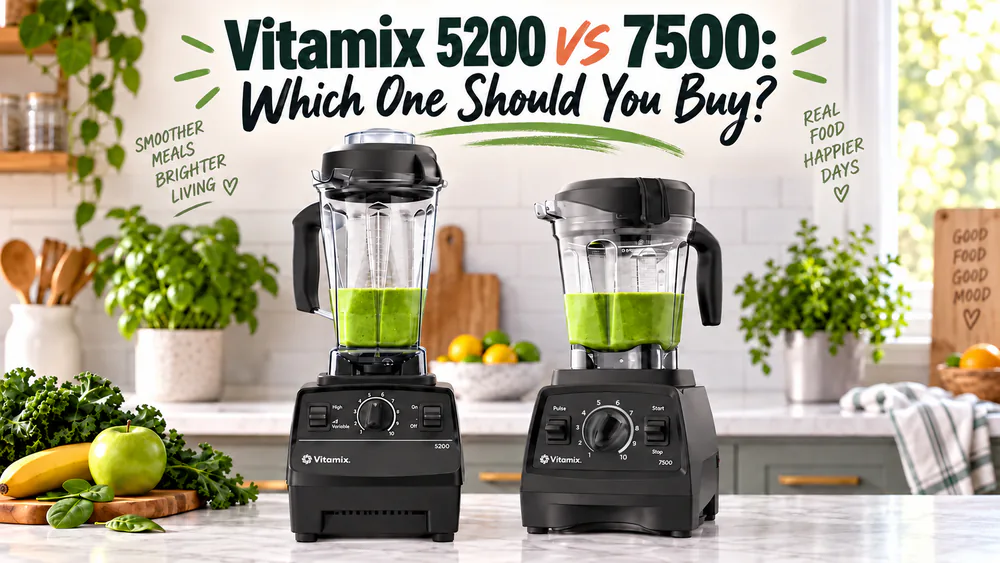
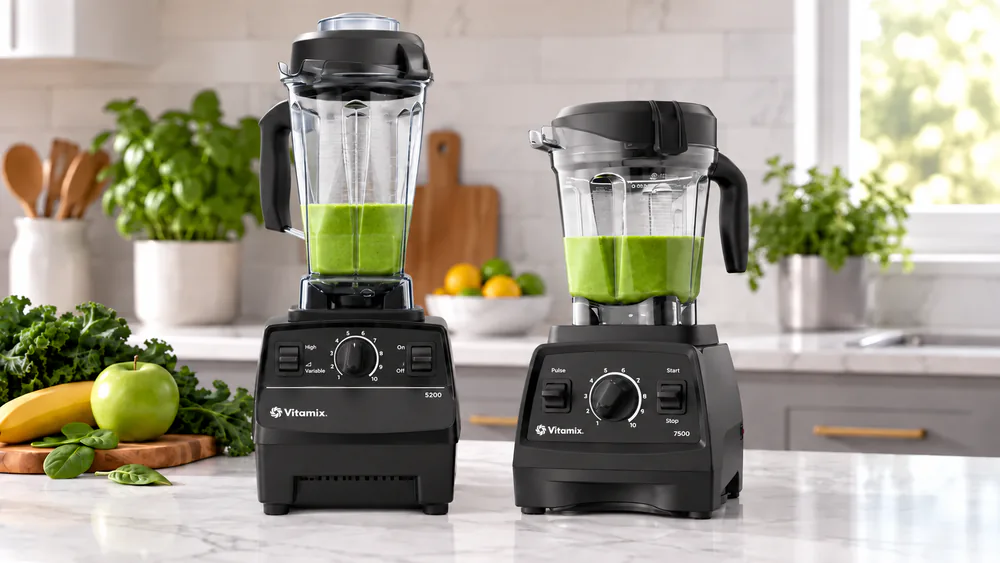
The Vitamix 5200 ($449) is the better buy for small batches and solo blending. The 7500 ($529) is worth the premium if cabinet clearance and a 40% quieter motor matter more to you than price.

I timed both machines on the same green smoothie: the 5200 finished in 35 to 40 seconds without touching the tamper, while the 7500 took 50 to 60 seconds on the same volume due to its wider 4-inch blade base.

The 7500 does have a real limitation though: it underperforms on small batches, and fixing that requires a $100 to $150 add-on container.

Quick Snapshot Comparison (See the Difference Instantly)

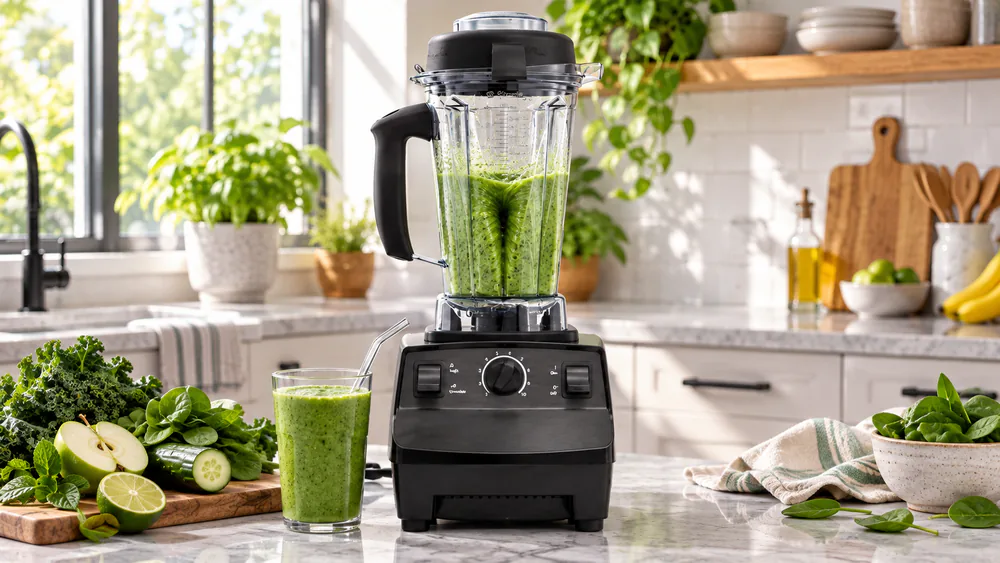
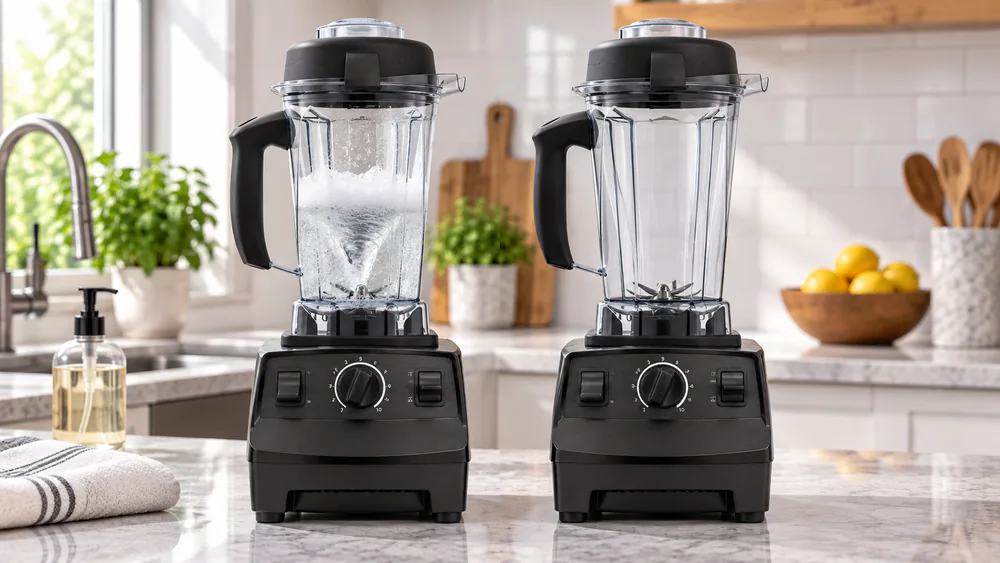
Vitamix 5200 high-performance blender making fruit smoothies on a modern kitchen counter

Feature

Vitamix 5200

Vitamix 7500

Motor

2.0 HP

2.2 HP

Container Shape

Tall and narrow

Short and wide (low-profile)

Blade Size

3-inch

4-inch

Total Height

~20.5 inches

~17.5 inches

Fits Under Cabinets

Rarely

Usually yes

Noise Level

Louder

~40% quieter

Pulse Control

No

Yes

Small Batches

Excellent

Moderate

Large Batches

Good

Better

Retail Price

~$449

~$529

Warranty

7 years

7 years

That table gives you the skeleton. The rest of this article gives you the muscle.

The #1 Difference That Actually Matters (And It Is Not the Motor)

Most comparisons lead with horsepower. That is the wrong place to start.

The real story is the container. The shape of the jar determines how ingredients move, how thoroughly they blend, and whether your smoothie comes out silky or chunky. Everything else is secondary.

Why the 5200's Narrow Jar Blends Small Batches Better

The 5200 uses a tall, tapered 64-ounce container. Because the base is narrow, a smaller volume of liquid and ingredients sits close to the blade. This creates a tight, aggressive vortex that pulls everything downward fast.

Put 16 ounces of kale, banana, and almond milk in a 5200, and it has enough grip on those ingredients to blend them completely in under 45 seconds. You rarely need the tamper. The physics are doing the work.

Why the 7500 Needs More Volume to Shine

The 7500's wide, low-profile jar is genuinely brilliant for large batches. But flip that around: with a small amount of liquid, ingredients spread out across the wider base and sit farther from the blade's sweet spot. You end up needing more liquid, or more time, or both.

This is not a flaw. It is a design tradeoff. Vitamix made a container that excels at capacity and countertop storage. It just means the 7500 performs best when you feed it more.

Think of it like a campfire versus a bonfire. The 5200 is focused and intense in a small space. The 7500 is built for scale.

Quick Verdict: Who Should Buy Which

Choose the 5200 If:

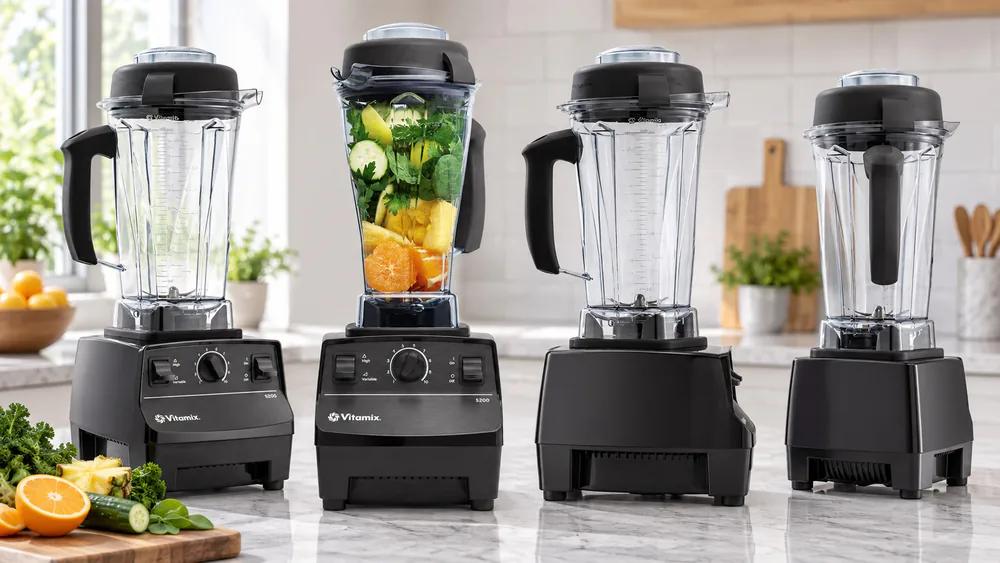
Vitamix 5200 high-performance blender making fruit smoothies on a modern kitchen counter

You are blending for one or two people most days. Single-serve smoothies, quick soups, protein shakes after a workout: the 5200 handles these faster and more efficiently than the 7500.

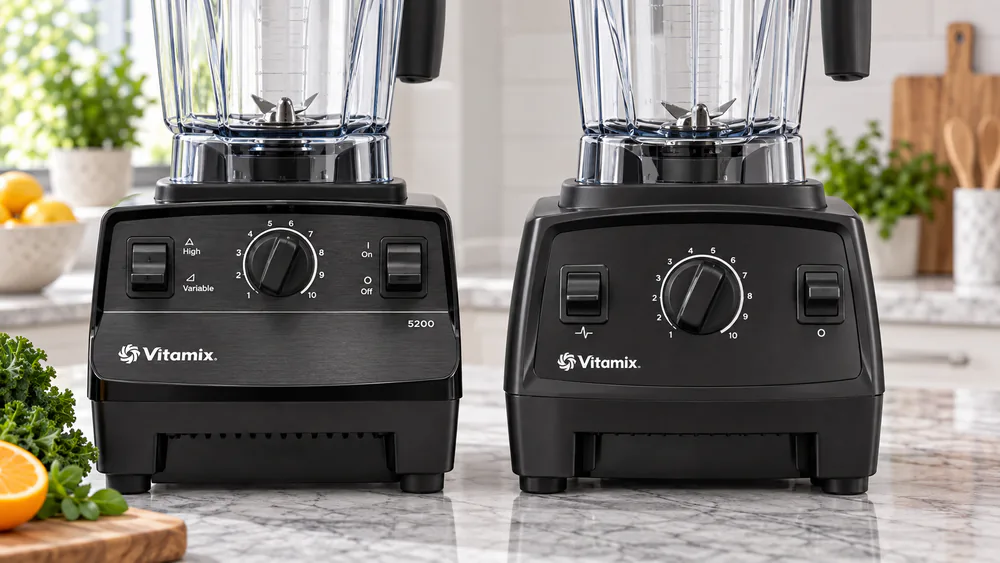
You care about simplicity. The 5200's controls are a variable speed dial and a high/variable switch. Nothing to learn, nothing to fumble with.

Budget matters. At roughly $80 to $100 less than the 7500, the 5200 still delivers professional-grade blending performance. The difference in output on everyday recipes is minimal.

Choose the 7500 If:

You share your kitchen with light sleepers, young children, or a partner who finishes their night shift at 6 a.m. The 7500 uses vibration-dampening technology that makes it measurably quieter, not just a little, but noticeably so in a real home kitchen.

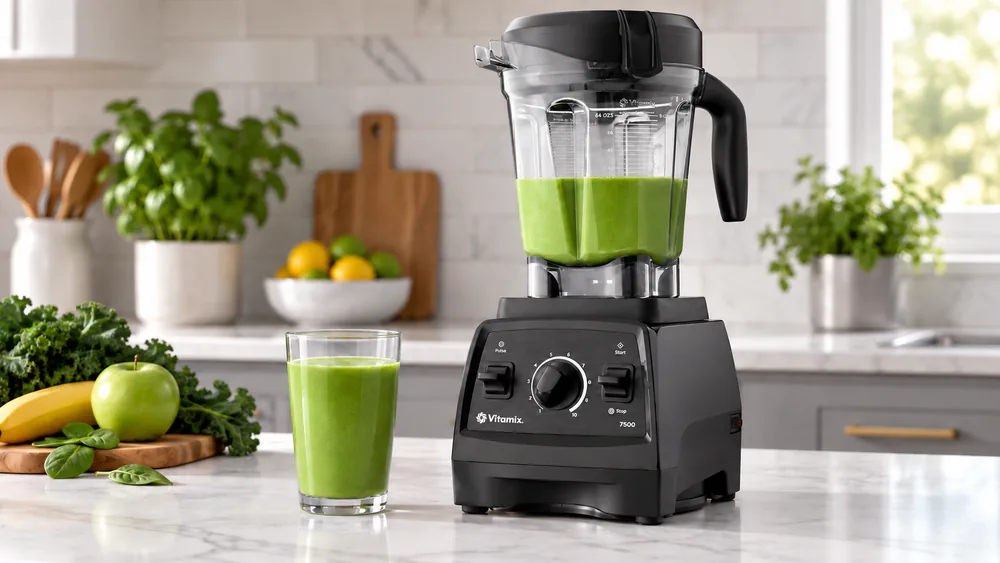
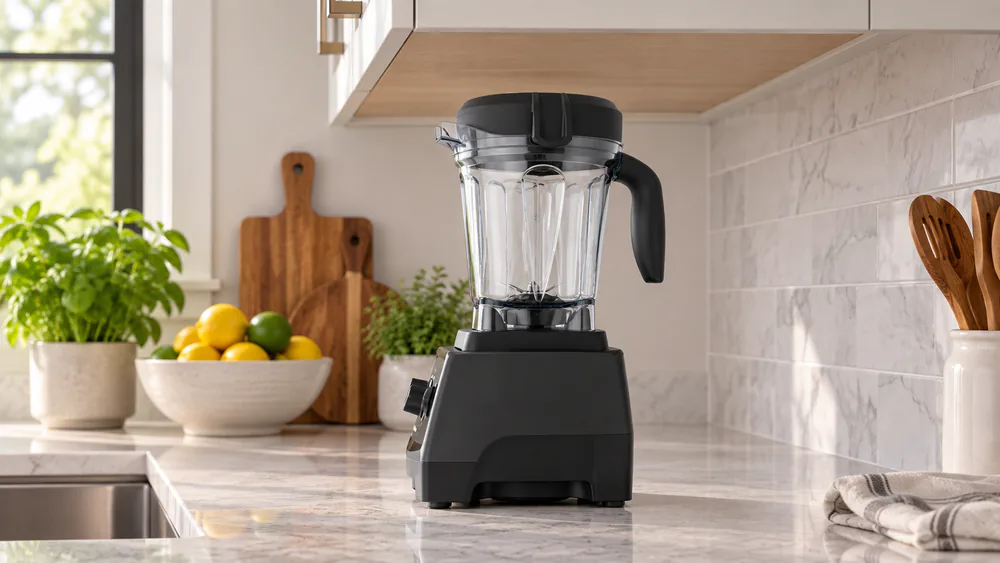
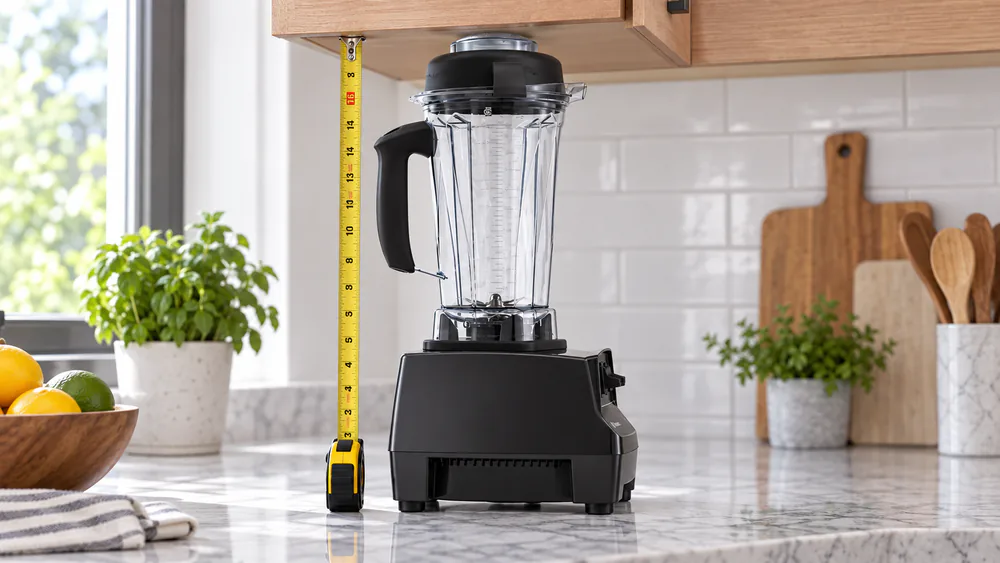
Your cabinets sit low. At 17.5 inches total height (with the container on the base), the 7500 actually lives on your counter without requiring you to tilt, remove, or store separately. The 5200 at 20.5 inches clears very few standard kitchen cabinets.

You cook for a family or do meal prep. The wider jar shines when it is full. Big batches of soup, large smoothie rounds for four people, blended hummus for a dinner party: the 7500 handles all of it without strain.

Noise: What the Specs Do Not Tell You

Both blenders are loud. That is the honest thing to say first.

Sound Profile Difference

Vitamix motors are high-power, and high-power means noise. The 5200 runs at a sharper, higher-pitched frequency that cuts through background noise and carries across rooms. The 7500's vibration-dampening technology changes the character of the sound more than it changes the volume. It is lower in pitch, which human ears perceive as less irritating even when the decibel level is only modestly reduced.

Daily Use Impact

In apartment living or a shared home, that pitch difference matters more than the 40% reduction number suggests. Lower frequency sound feels less intrusive. Neighbors are less likely to hear it through walls. Morning blending becomes less of a household event.

If noise is your primary concern and neither machine feels quiet enough, look at the Vitamix Ascent series or a dedicated sound enclosure. But between these two, the 7500 is the clear winner on sound.

Kitchen Fit: The Practical Reality Most Reviews Skip

Here is the thing about cabinet clearance that most articles gloss over: it is not just about storage. It is about daily friction.

The 5200 Height Limitation

If your 5200 cannot fit under the cabinet, you have two options every single time you want to blend. You either leave it permanently on the counter (which works if you have counter space), or you disassemble it, store the jar separately from the base, and reassemble before each use. That is a minor annoyance that adds up over 500 mornings.

The 7500 Advantage

The 7500 sits assembled on the counter, ready to go. You place it, plug it in, and blend. That small convenience compounds over time in a way that price comparisons do not capture.

Measure your cabinet clearance before buying either machine. If you have more than 21 inches from countertop to cabinet bottom, the 5200 fits and this becomes a non-issue. Most standard kitchens have 18 inches or less.

Controls and Day-to-Day Use

5200 Simplicity

The 5200 uses a variable speed dial that goes from 1 to 10 and a toggle switch for high speed. That is it. It is almost elegantly old-fashioned, and it works perfectly for everything from a light blend to full power.

7500 Convenience

The 7500 adds a pulse function where the 5200 has a high-speed toggle. Pulse lets you achieve deliberately coarse textures: chunky salsa, rough-chopped vegetable soups, hummus with some body left in it. You tap the toggle, the blade fires in short bursts, and you control the texture manually rather than running the full blend cycle.

For smoothie drinkers who want fully smooth results, the pulse feature does not add daily value. For anyone who cooks a wider range of recipes, it adds real versatility.

Neither machine has digital presets or programmable timers, which is worth noting if you are comparing against Vitamix's newer Ascent series (A2500, A3500) or the Pro 750. Those machines cost significantly more, but they bring automated programs for smoothies, soups, and self-cleaning. If you are still deciding between blender categories entirely, our complete blender buying guide for 2026 covers all the key specs to look for before committing to any model.

Real-World Performance: Three Tests That Reveal the Truth

Smoothie Test

A green smoothie: 2 cups spinach, 1 frozen banana, 1 cup almond milk, 1 tablespoon almond butter. The 5200 processes this in roughly 35 to 40 seconds at high speed. The narrow jar keeps the spinach circulating without requiring the tamper. Result: completely smooth. If you are still weighing options across brands, our roundup of the best blenders for smoothies shows how both Vitamix models stack up against Ninja, NutriBullet, and Breville.

The 7500 takes 50 to 60 seconds for the same recipe at the same volume. Not a failure: the result is equally smooth, but the wider jar needs slightly more time to pull the spinach fully into circulation. Add 2 more cups of ingredients and the 7500 catches up or surpasses the 5200 in both speed and consistency.

Nut Butter Test

Both blenders make excellent almond butter and peanut butter. Both require the tamper. The 5200's narrower container means the nut paste climbs the walls slightly more, requiring more frequent tamper intervention. The 7500's wider base keeps the mixture circulating more naturally once it reaches the right consistency. The difference is maybe 30 seconds of total effort.

Ice Crushing

Equal. Both machines reduce ice to snow in under 15 seconds at high speed. The blade material, laser-cut hardened stainless steel, is identical on both. Ice crushing is one task where container shape is irrelevant; raw blade speed handles it.

Cleaning: Faster Than You Think on Both

Self-Cleaning Process

Both machines self-clean. Fill the container halfway with warm water, add a drop of dish soap, run from 1 to 10 for 30 to 60 seconds, rinse. Done.

Neither container is dishwasher-safe. Vitamix is clear on this: the dishwasher degrades the bearing seal over time and can void the warranty.

Manual Cleaning

The 7500's wider container mouth makes manual rinsing easier after sticky blends like nut butter or thick smoothies. If you reach into the container to wipe it down (which Vitamix recommends against given the blades, but many people do anyway), the 7500 gives your hand more room. The 5200's narrower opening takes more effort to reach the bottom. For a full walkthrough on keeping your blades performing at their best, see our guide on how to clean and sharpen blender blades.

Durability: The Myth of the “Outdated” 5200

Some buyers hesitate over the 5200 because it launched in 2007. That is understandable. In the appliance world, an 18-year-old design sounds like it should be retired.

It should not be. Both the 5200 and 7500 remain actively listed and sold on Vitamix's official site as of 2026, alongside newer lines like the Propel and Ascent series. Vitamix has not replaced them, because nothing in their lineup directly replicates what these two models do at their price points.

The 5200 Proven Design

The 5200 has fewer electronics, fewer moving parts beyond the motor and blade assembly, and a simpler circuit design. Simpler systems have fewer failure points. There are home cooks using 5200s they bought in 2009 without a single repair. The motor uses a ball-bearing design that reduces friction and heat buildup, which contributes directly to longevity.

7500 Build Quality

The 7500 is not fragile by any measure. It uses the same core engineering philosophy. But the 5200's long track record gives buyers something the 7500 cannot yet match: decades of real-world proof.

Both carry a 7-year full warranty covering parts, labor, and two-way shipping. That is one of the strongest warranties in the home appliance category and reflects genuine confidence in both products.

Pricing and Real Cost of Ownership

Average Price Range

At full retail, the 5200 runs around $449 and the 7500 around $529. That $80 gap is real, but it is not the whole picture.

Vitamix sells factory-reconditioned versions of both at significant discounts: the 5200 typically at $329 and the 7500 at $439. These are inspected, cleaned, and come with a 3 to 5-year warranty depending on the specific model (confirmed on Vitamix's official reconditioned warranty page). For most buyers, a reconditioned model from Vitamix's own site is the smartest purchase.

Hidden Costs

One hidden cost to consider on the 7500: if you want to blend small batches efficiently, some users eventually add a 32-ounce container designed for the G-Series base. That accessory runs $100 to $150 additional. It solves the small-batch problem entirely, but it changes the total investment calculation.

Cost Over Time

On a pure cost-per-use basis over five years, both machines come out to pennies per blend. A blender you use every day is one of the highest-value kitchen appliances you can buy. The 5200 reconditioned at $329 blended daily for five years works out to roughly 18 cents per use. Even the 7500 at full retail crosses below 30 cents per use over the same period.

Reality Check: Three Myths Worth Busting

More Horsepower Automatically Means Better Blending (False)

Not true at the scale we are talking about. The difference between 2.0 HP and 2.2 HP is 10%. In real kitchens, blending smoothies and soups, you will not notice a performance difference. The container shape and blade size have more impact on everyday results than the motor bump.

Low-Profile Containers Are Always Better (False)

Better for storage, yes. Better for blending: it depends entirely on batch size. If you blend small quantities daily, the low-profile jar actually works against you.

The 5200 Is Outdated Technology (False)

Mechanically, the 5200 uses many of the same principles that make Vitamix motors last for decades. Older does not mean worse in this context. It means proven.

Which Blender Fits Your Lifestyle?

Smoothie Lovers: Choose the 5200

Blending for one every morning, faster and more completely. The narrow container pulls ingredients into the blade without fuss, and you are done in under a minute.

Families: Choose the 7500

The wider jar, quieter motor, and cabinet fit make it the practical family kitchen choice. Large smoothie rounds for four people blend without crowding or overflow.

Meal Prep: Choose the 7500

Large soup batches, blended sauces for the week, big grain porridges: the wider container handles all of it without strain. The pulse feature also helps when you want some texture left in your dishes.

Budget Buyers: Choose the 5200

The 5200 reconditioned delivers the same core blending performance at the lowest entry point in the Vitamix lineup. Same performance on everyday tasks, lower barrier to entry. If you are on the fence about whether a full-size countertop blender is right for your needs at all, our breakdown of personal vs countertop blenders will help you decide before spending $300 or more.

Small Kitchens: Choose the 7500

Countertop storage assembled is not a luxury; it is a daily quality-of-life improvement. The 7500 fits where the 5200 simply cannot. If your kitchen is truly tight on space and you primarily blend for one, it is also worth reading our review of the Ninja Blast Max portable blender as a compact alternative before committing to either full-size machine.

Dry Ingredient Blending: Choose the 7500

The 5200 is known to overheat with extended dry blending because it lacks the advanced cooling fan found in the G-Series. For occasional dry use, either works. For regular coffee grinding, grain milling, or spice blending, the 7500 is the safer long-term choice.

Frequently Asked Questions

Which Makes Smoother Smoothies?

The 5200 produces smoother results on small batches because the narrow container creates a tighter vortex. For larger batches of 32 ounces or more, the results are essentially equal.

Is the 7500 Worth the Extra Money?

If cabinet fit and noise are real concerns in your kitchen, yes. If neither applies to your situation, the 5200 gives you 95% of the performance for less money.

Is the 5200 Outdated?

No. It is one of the best-selling Vitamix models of all time for a reason. The core blending performance remains competitive with newer designs, and its simplicity is part of its durability.

Which Is Quieter?

The 7500, by a meaningful margin in real home use. The pitch is lower and the vibration is dampened. Early morning blending in a shared home is noticeably less disruptive.

Can Both Make Hot Soup?

Yes. Neither uses a heating element. The blade friction at high speed generates enough heat to bring cold soup ingredients to serving temperature in around six minutes, per Vitamix's own product specs. It is just slower than a microwave or stovetop.

Which Lasts Longer?

Both are built to last decades with basic maintenance. The 5200's simpler electronics give it a slight edge in raw longevity potential, but both carry a 7-year full warranty and have documented track records of 10 to 15 years of heavy use.

Do I Need Extra Containers?

Only if you want to expand your use cases. The 7500 base is compatible with a 32-ounce G-Series container that solves the small-batch limitation. The 5200 base works with additional 48-ounce and 32-ounce classic containers. Neither purchase requires accessories to function at a high level.

Final Verdict (Clear, Confident Recommendation)

Best Overall: Vitamix 5200

For the majority of people blending one to four servings daily, the 5200 delivers better small-batch performance, simpler operation, and lower cost. It has the longest track record of any Vitamix model and a justified reputation for reliability. If you buy it reconditioned from Vitamix directly, you are getting one of the best deals in kitchen appliances.

Best for Convenience: Vitamix 7500

The quieter motor, the low-profile container that fits under the cabinet, the pulse control, and the superior large-batch performance make the 7500 the smarter choice for busy households, noise-sensitive environments, and anyone who prioritizes countertop organization.

If You Are Still Unsure

Answer two questions. First, do your cabinets allow 21 inches of clearance? Second, do you typically blend more than 24 ounces at a time? If the answer to either is yes, go with the 7500. If both are no, the 5200 will serve you better and cost you less.

Check Vitamix's certified reconditioned page before purchasing from any retailer. The price difference on a reconditioned 7500 versus a new 5200 narrows considerably, and Vitamix's refurbishment process is thorough enough that the distinction between new and reconditioned rarely matters after the first blend. And if this is part of a broader kitchen setup, our guide to essential kitchen appliances covers everything else worth adding alongside a Vitamix.