
Kitchen Appliances
Water to Rice Ratio: How to Measure for Fluffy Rice

As an Amazon Associate we earn from qualifying purchases. We may earn a commission from links on this page, at no extra cost to you. Learn more.
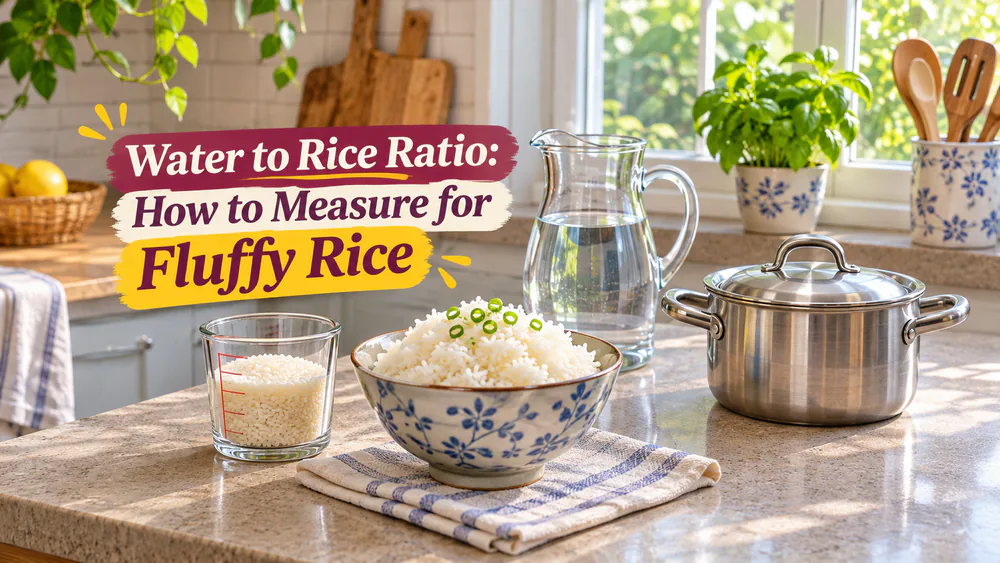
The water to rice ratio is the volume of water you add for each volume of dry rice, measured before rinsing. For ordinary long-grain white rice on the stove, we start with 2 cups of water per cup of rice. Other rice types and appliances need less. The chart below gives a starting point for each, and the sections after it explain how to adjust.
Water to Rice Ratio Chart by Rice Type and Method
Every ratio here means water to dry rice by volume, with the rice measured dry. The long-grain stovetop row assumes unrinsed rice. For the other stovetop rows, follow your package on rinsing and drain well. The pressure cooker column assumes rinsed, drained rice.
| Rice type | Stovetop | Rice cooker | Instant Pot |
|---|---|---|---|
| Long-grain white | 2:1 | Matching white rice line | 1:1 |
| Jasmine | 1.5:1 | Jasmine line if available | 1:1 |
| Basmati | 1.75:1 | Model's basmati instructions | 1:1 |
| Short-grain or sushi | 1.25:1 for sushi | White or sushi line | 1:1 to 1.25:1 |
| Brown | 2:1 to 2.25:1 | Brown line and program | 1:1 to 1.25:1, longer cycle |
Note. These are starting points, not laws. The ratio varies with the rice variety, package directions and your preferred texture; it also differs between appliances.
White Rice Ratios: Long-Grain and Short-Grain White Rice
Long-grain white rice starts at 2:1 on the stove, though a firmer grain can use a little less water. Jasmine drops to 1.5:1 and cooks up soft and a bit clingy. Basmati sits at 1.75:1 and cooks light and fluffy, and rinsing it removes surface starch.
Short-grain sushi rice starts at 1.25:1 after you rinse and drain it. It is naturally cohesive, and that intended stickiness is very different from watery, overcooked mush. Risotto and paella rice need their own instructions.
Brown rice keeps its bran and germ, so it stays chewy and needs a longer schedule than white. Start with 2:1 to 2.25:1, using the package directions to choose the exact ratio.
How Much Water for 1, 2, 3, or 4 Cups of Rice?
At the 2:1 long-grain stovetop ratio, the math scales straight up.
| Dry rice, cups | Water, cups |
|---|---|
| 1 | 2 |
| 2 | 4 |
| 3 | 6 |
| 4 | 8 |
Treat this as arithmetic, not a guarantee for every pot. Large batches need room to expand and take longer to finish than a small pot, so choose a pot with generous headroom and check your package limits.
How Cooking Method Changes the Water to Rice Ratio
Rice absorbs water as it cooks, while some water escapes as steam. How much escapes helps determine how much water the pot needs, which is why the method matters as much as the grain.
Stovetop Absorption Method
An open stovetop pot loses the most water to evaporation, so it needs the highest ratios in the chart. A tight lid slows that loss. We keep the lid closed the whole time, because the trapped steam finishes the grains.
Rice Cooker Measurements and Fill Lines
Rice cookers skip the ratio math. Measure dry rice with the cup that came with the cooker, which on Zojirushi models holds about 180 mL. Put the rice in the inner pan, add water to the line matching your cups and rice setting, and level the rice and pan before you read the line.
If your grain has no dedicated line, use the model's instructions. Capacity can also differ by grain, so a white rice maximum does not tell you the brown rice limit. For more on this, see our rice cooker reviews and our guide to Rice cooker water ratios by rice type.
Instant Pot and Other Pressure Cookers
A sealed pot loses far less water, so the ratio drops. For rinsed white, jasmine or basmati rice, start at 1:1 added water to dry rice. Brown and sushi rice may want 1.25:1 for a softer result. Brown rice also needs a longer pressure cycle, and a natural pressure release works best.
Keep the rice and water at or below the 1/2 full mark, and follow your model's minimum liquid instructions.
How to Cook Rice on the Stove
Here is the unrinsed long-grain method we use for a weeknight pot.
- Measure the rice and water into a pot with a tight lid.
- Bring it to a boil, then reduce to a gentle simmer. Vigorous boiling invites spillovers and moisture loss.
- Cover tightly and simmer for about 18 minutes. Larger batches can take longer.
- Take the pot off the heat and rest it with the lid on for about 10 minutes.
- Fluff with a fork. Resting and fluffing let excess moisture escape, so the grains separate.
Tip. Skip the rest and crank the heat, and the rice can stick to the pot. The resting period is part of the cooking process.
Why the Same Ratio Can Give Different Results
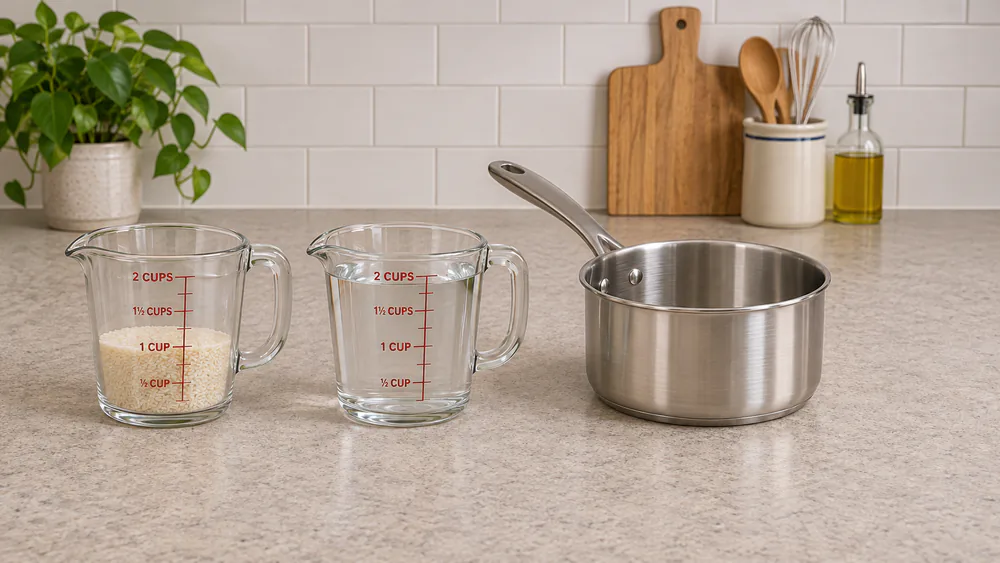
A ratio is only a starting point. Rinsing reduces surface starch and helps grains separate, but any water left on the rice adds to the total liquid, so careful measuring still matters. No universal subtraction after rinsing exists, so adjust to the texture you get.
Pot width, lid fit and heat all change how much steam escapes. A wide pot with a loose lid loses more than a narrow one with a snug lid. Broth also works as the cooking liquid at the same ratio.
How to Fix Mushy, Crunchy, or Burnt Rice
Mushy or Wet Rice
Drain off any standing water, then let the rice sit so moisture steams away. Next time, trim the water a little or rest the pot longer.
Crunchy or Undercooked Rice
Hard grains in a dry pot need a small splash of water and more gentle, covered cooking. Put the lid back on and give it a few more minutes on low.
Rice Burnt on the Bottom
Lift out the usable rice without scraping the burnt layer into it. Soak the scorched pot in warm water, and cleanup gets much easier. Lower the heat next time.
Water to Rice Ratio FAQs
Is the Water to Rice Ratio Always 2:1?
No. Two to one is a good start for long-grain white rice on the stove, but jasmine, basmati, sushi and brown rice each start elsewhere. Pressure cookers and rice cookers use different amounts again.
Can You Use Broth Instead of Water?
Yes. Broth can supply the cooking liquid at the same ratio you would use for water.
How Much Dry Rice Do You Need per Person?
Allow about 1/4 cup dry rice per person for a side. Go higher for bigger appetites or rice-centered meals, which is what a table of seven usually needs.
Read next
Ready to upgrade your kitchen?
Browse our kitchen guides or subscribe for more practical cooking tips.