
Kitchen Appliances
What Is a Milk Frother? How It Works and What It's Used For
As an Amazon Associate we earn from qualifying purchases. We may earn a commission from links on this page, at no extra cost to you. Learn more.
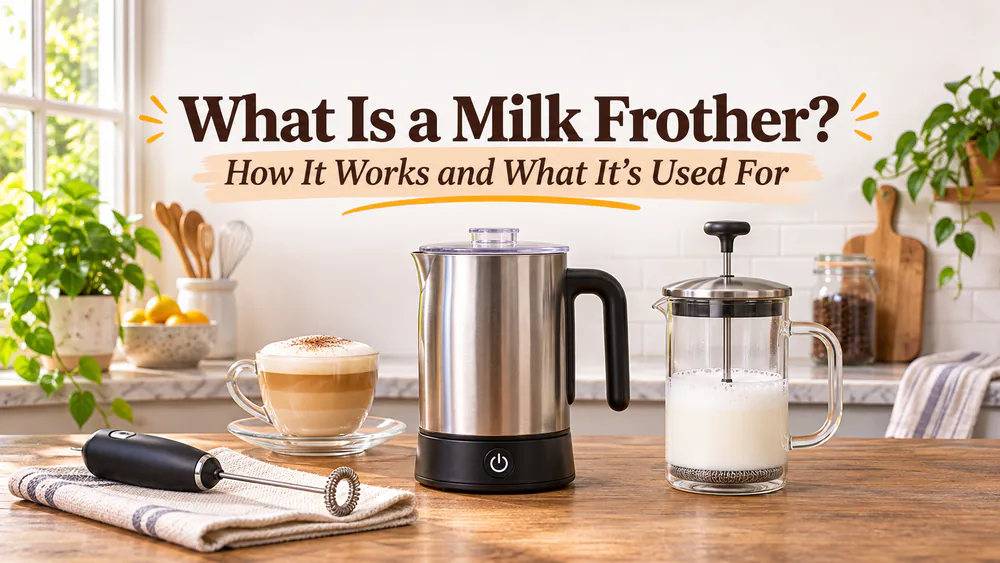
A milk frother is a small tool that introduces air into milk to make foam. Those tiny bubbles add volume and a softer, silkier texture, which is why frothed milk sits on top of cappuccinos, lattes, and hot chocolate.
What does a milk frother do?
A frother works by aeration, which simply means mixing air into liquid. A whisk, plunger, or spinning disc breaks the air into bubbles, and milk proteins wrap around those bubbles and help hold them in place.
Heat is optional. Frothing does not require heat, so you can make either cold or warm foam. A frother also prepares only the milk, not the coffee, so you still need a brewed drink underneath.
What are the main types of milk frother?
There are three useful household types. "Electric" is not a fourth one, because handheld and jug designs can both be electric.
Handheld electric frothers
A small motor spins a whisk in a separate cup or jug. These whisks do not heat milk, so warm it first if you want a hot drink. In our kitchen, the basic handheld style ran quietly and felt stable in the milk, but it made airy bubbles rather than the fine, glossy foam needed for latte art.
Automatic jug frothers
A powered jug combines a whisk and a container, and heated models add a heater. Depending on the model, you can make hot foam, cold foam, or warm milk with no foam. They are the easiest to use: pick a program and walk away. Allow extra counter and storage space for the base, which can extend beyond the jug.
Manual pump frothers
Here a hand-operated mesh plunger moves through milk in a container. It needs no electricity and does not heat milk. It takes more effort than a jug, and technique decides the result.
How is a milk frother different from a steam wand?
A steam wand, found on espresso machines, heats and aerates milk in one step. A frother focuses on foam, and only some models heat. Steamed milk and cold foam are different preparations, and not every frother makes the pourable, fine microfoam that latte art demands. Lots of foam is not the same thing as good microfoam.
How do you choose a milk frother?
For hot lattes with no extra pan, a heated jug is the simple route. For iced drinks or a slim tool, a handheld or manual pump is enough.
Check these points before you buy:
- Hot or cold operation
- Maximum fill level for frothing
- The texture you want, from thick cap to fine foam
- How easily you can reach the whisk for cleaning
- Counter and cabinet space
How do you use and clean a milk frother?
Always leave room for the milk to expand. Follow this sequence for a handheld whisk:
- Pour milk into a tall vessel, filling it no more than halfway.
- Immerse the whisk before switching it on.
- Move it gently through the milk until the foam looks right.
- Switch it off before lifting it out.
For jugs, use the fill mark for your chosen function and close the lid. Our full usage guide covers each method in more detail.
Cleaning is where frothers differ most. Rinse straight away, because milk dries onto a warm jug and takes extra scrubbing. Keep motor handles and powered bases out of water, and check the manual to see whether your jug is dishwasher-safe.
Which milk works best for frothing?
No milk is best in every frother. Whole milk tends to feel creamier, while skim feels lighter. Plant-based drinks vary with their formulation and the device, so try a barista-style version and follow your frother's guidance. We have seen the same oat milk foam well in one machine and struggle in another.
What drinks can you make with a milk frother?
Frothed milk tops cappuccinos, lattes, and hot chocolate, and it works on iced coffee as cold foam.
Is a milk frother worth it for you?
If you drink milky coffee at home most days, a frother is a small upgrade that pays off quickly. If you rarely do, a manual pump or a spare French press may be enough.
Can you use a blender instead of a milk frother?
Sometimes. A blender made for aeration, such as one with a dedicated foaming disc, can make milk foam. A standard blender may not give the same result, so a frother is the safer choice.
How can you improve large, uneven bubbles?
Tap the jug on the counter to pop the big bubbles, then swirl the milk to bring the foam back together before you pour.
Does frothing change how milk tastes?
It changes the texture and mouthfeel more than the flavor, making the milk feel lighter and creamier.
Browse our milk frother reviews when you are ready to choose.
Read next
Ready to upgrade your kitchen?
Explore our guides for more ways to make your favorite drinks at home.