As an Amazon Associate we earn from qualifying purchases. We may earn a commission from links on this page, at no extra cost to you. Learn more.
You want fresh juice at home without breaking the bank, and that is a fair thing to ask: too many budget juicers fail where it counts, spraying pulp across the counter, choking on an apple, or quitting a few months in. The good news is that a solid machine no longer has to cost more than a week of groceries.
This guide ranks seven affordable juicers across the three types most people actually buy: cold press, centrifugal, and a dedicated citrus squeezer. Street prices run from about $23 to about $150, so there is a pick for every budget. Start with the at-a-glance table, then read the reviews, because the details of daily use are what decide whether a machine lasts.
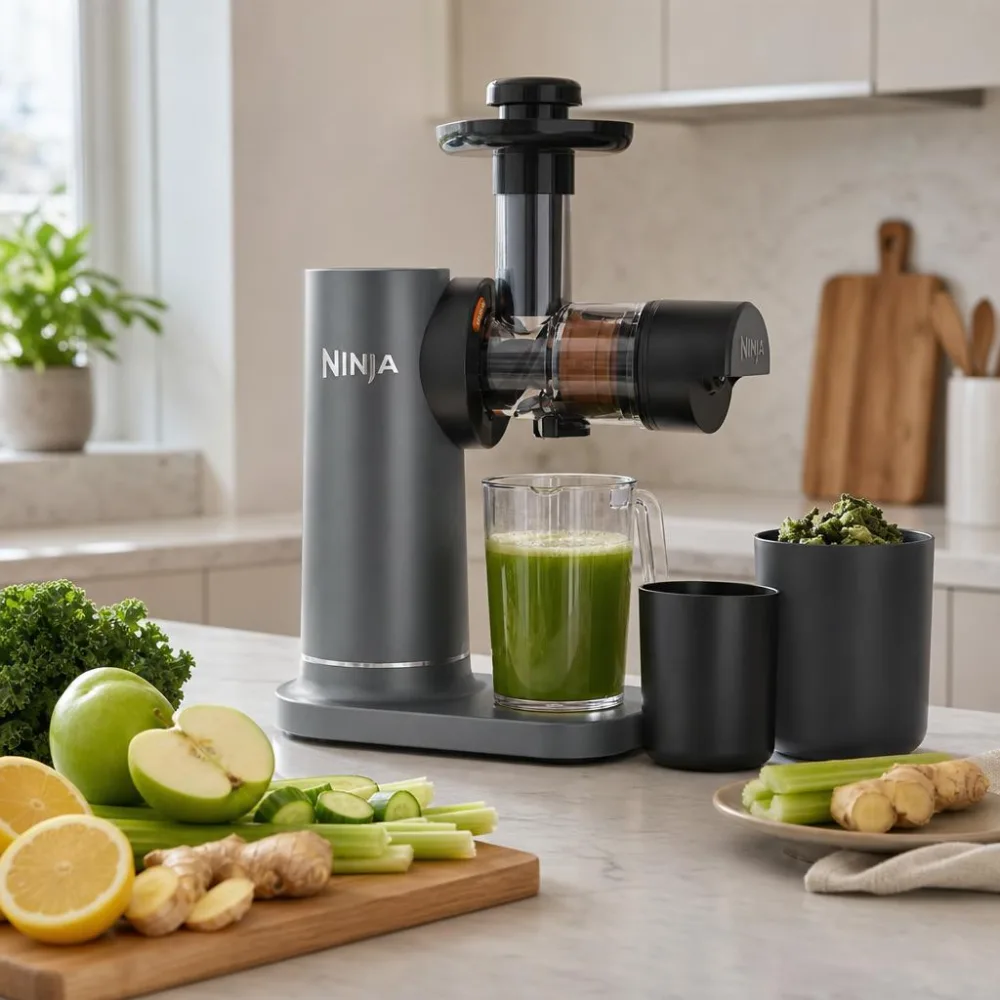
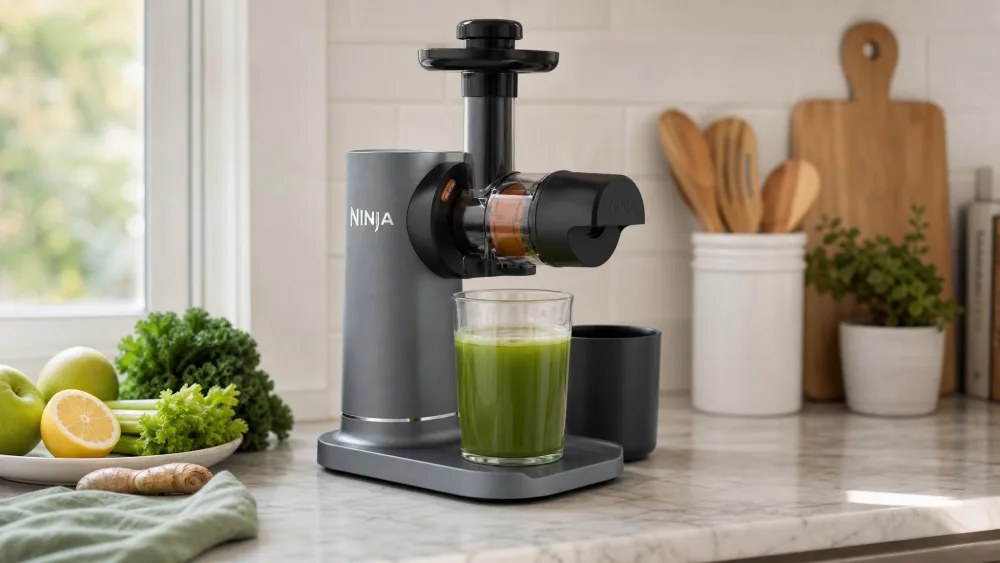
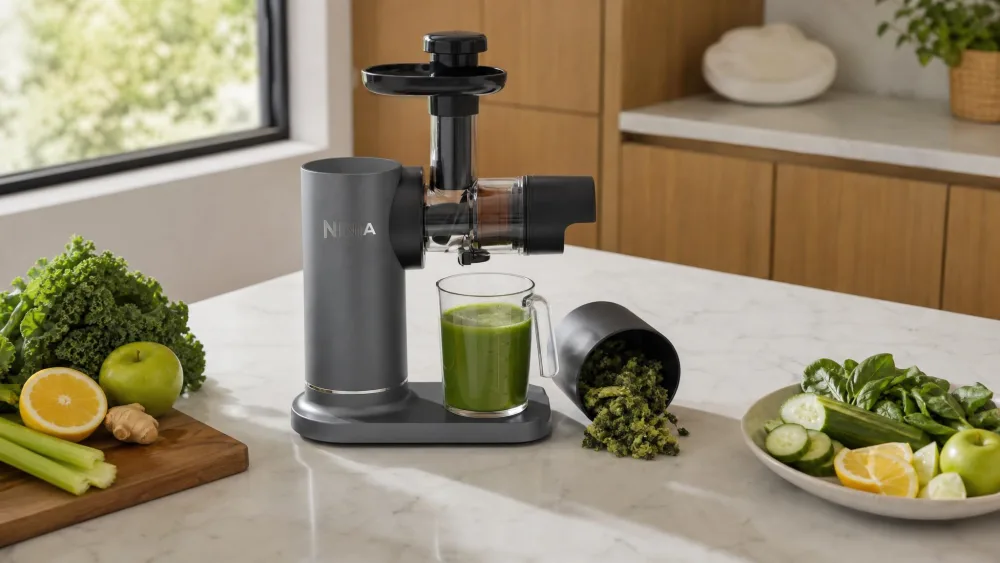
The best all-round affordable juicer we found, and the one we would buy for most kitchens: it pressed apples and carrots into sweet, nearly pulp-free juice, with pulp so dry that nothing dripped when we tipped the container upside down.
The parts snap apart and rinse clean in minutes, so daily use actually sticks. The trade-offs are a narrow feed opening, a squeal on hard fruit, and kale that comes out wetter than carrots, while lemons and berries crush to pulp without jamming. Check the current price of the Ninja NeverClog Cold Press Juicer JC151 on Amazon. Best for most kitchens, and especially anyone who plans to juice more than once a week.
Pros
Genuinely dry pulp, the best in this roundup
Cleanup in minutes, which is why daily use sticks
Handles seeds and small berries without jamming
Cons
Narrow chute means pre-chopping apples and carrots
Hard fruit makes the motor squeal loudly
2. Hamilton Beach 67951 Cold Press Masticating Juicer: Best Budget Cold Press Juicer
2
Hamilton Beach 67951 Cold Press Masticating Juicer
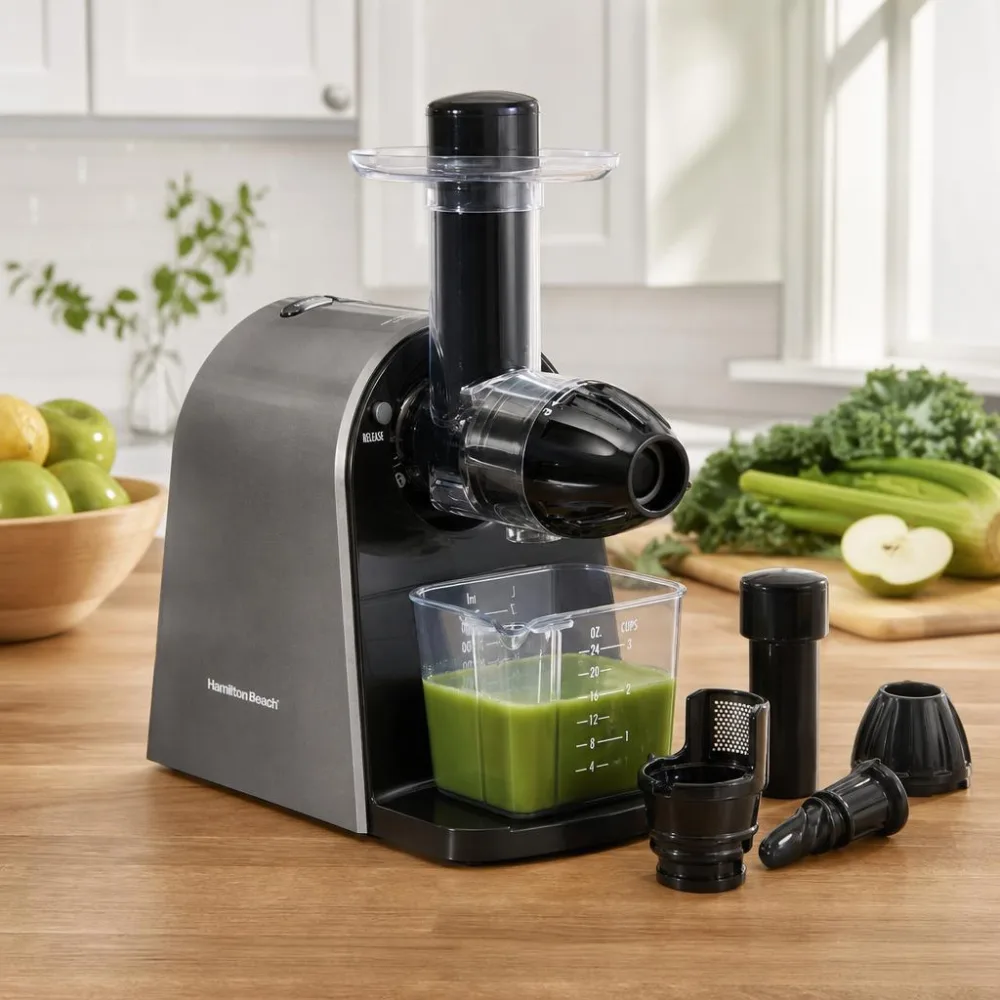
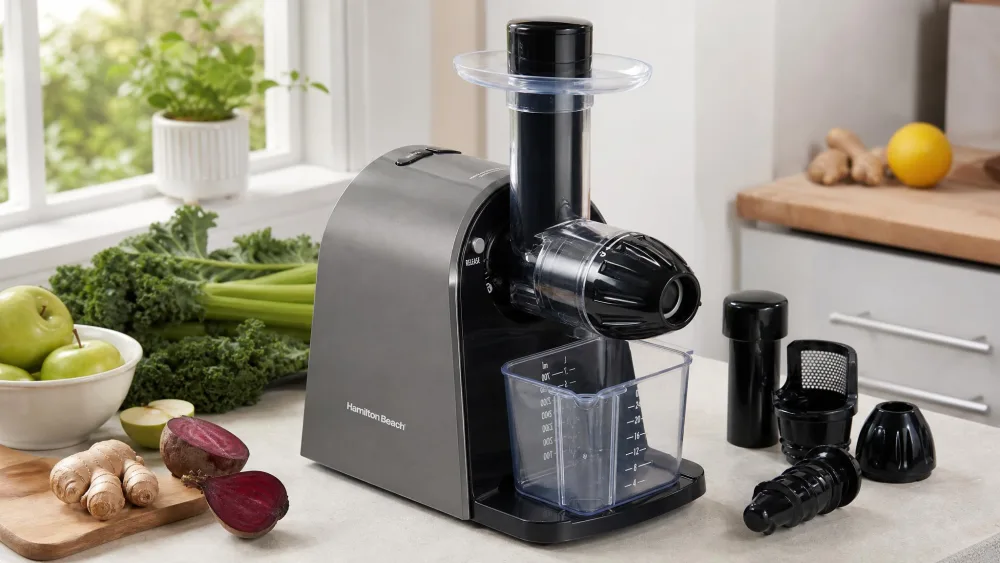
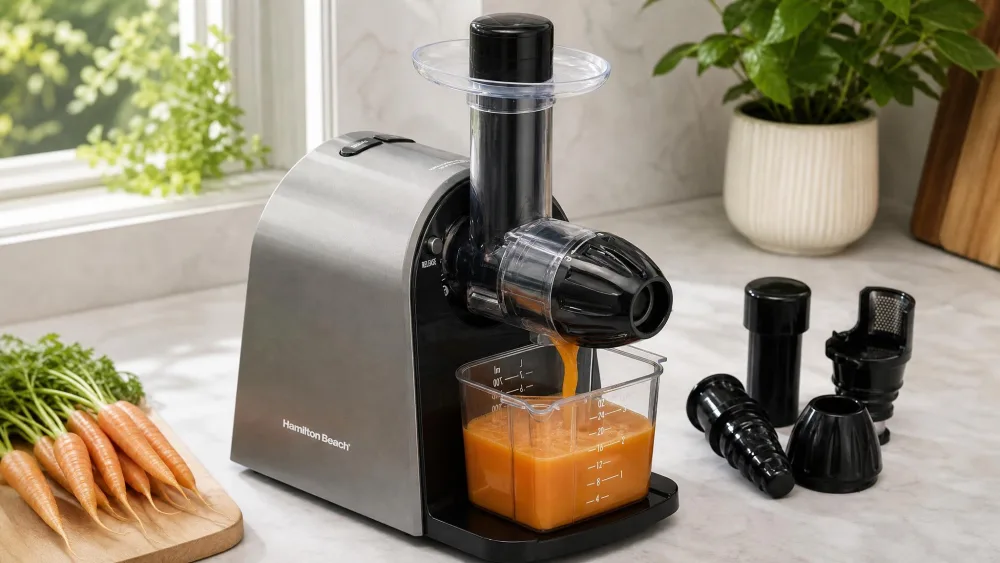
The best way into cold press juicing without the cold press price, if you accept small pieces and slow feeding: it is quiet for a masticator, easy to clean, and the juice is real slow-press juice.
Every food-contact part rinses or goes in the dishwasher
24 oz BPA-free juice cup with froth separator
Tritan auger on a slow, quiet masticating drive
Specifications
Type
Slow masticating cold press, Tritan auger
Power
150W
Feed chute
Narrow, pre-chopping required
Capacity
24 oz juice cup
Warranty
3-year limited
Price
No street price verified, check the retailer
Apples and pineapple jam the auger if fed fast, so we cut small and fed slowly, while carrots and beets handled beautifully. Greens wrap around the auger unless a hard vegetable feeds in behind them, and cleanup is the strong suit, with buyers returning for a second unit as a gift or a backup. You can find the Hamilton Beach 67951 Cold Press Juicer at Walmart, and the Hamilton Beach 67951 Cold Press Masticating Juicer is on Amazon as well. Best for first-time cold press buyers who want the cheapest real slow juicer.
Pros
Real cold press juice at a genuine budget price
Quiet for a masticator, easy to clean
Carrot and beet batches are excellent
Cons
Apples must be peeled and cut small before feeding
Clogs on soft fruit and greens if fed too fast
3. Hamilton Beach 67601A Big Mouth Centrifugal Juicer: Best Cheap Centrifugal Juicer for Speed
3
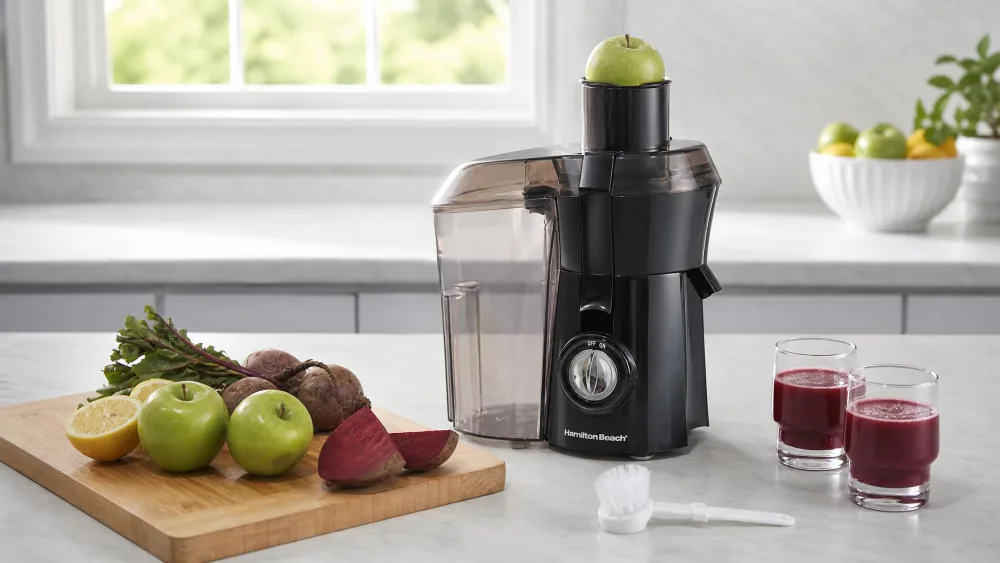
Hamilton Beach 67601A Big Mouth Centrifugal Juicer
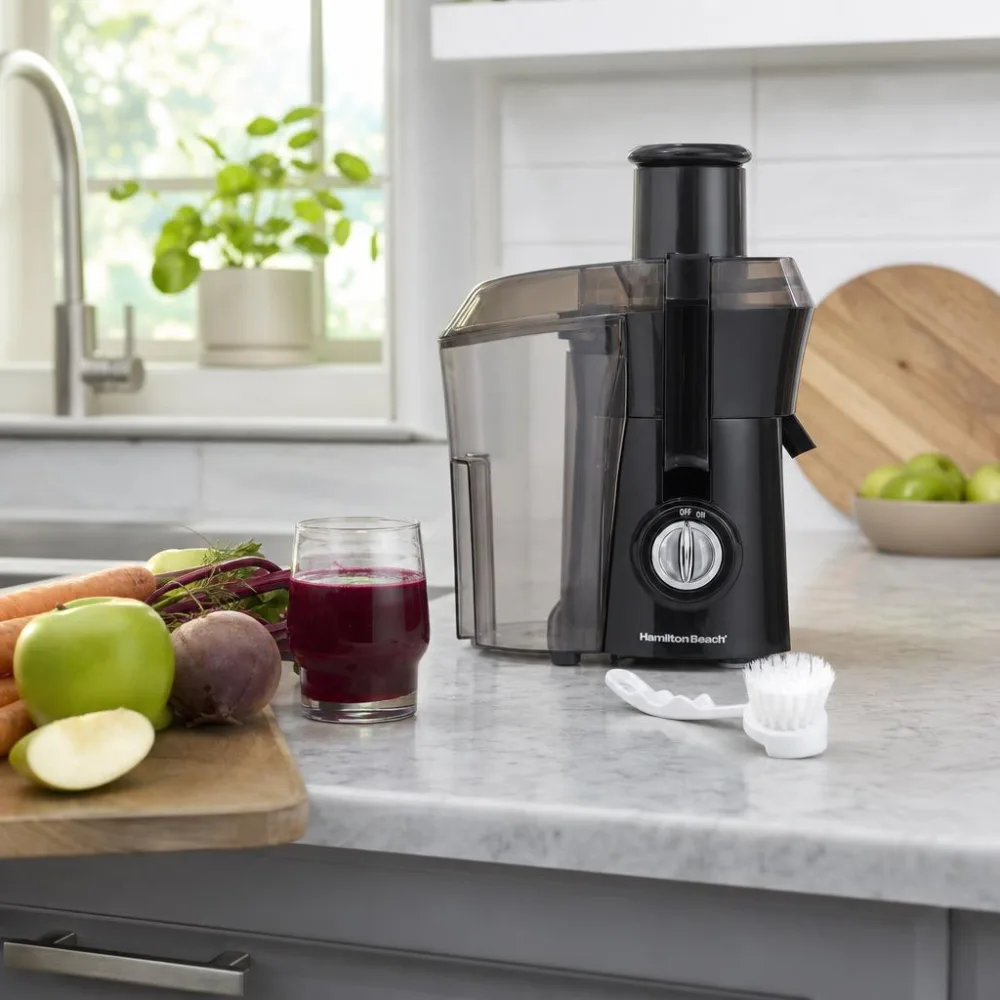
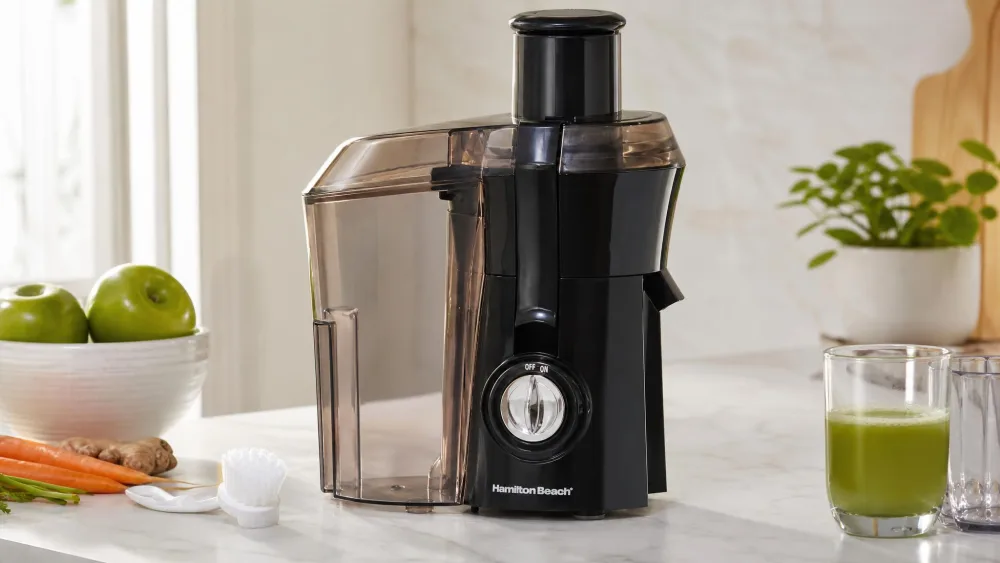
The fastest juice for the money in this roundup, and the machine that teaches people they like juicing, with whole apples going in whole. The 3-inch Big Mouth chute takes whole apples or a handful of carrots with almost no knife work, and the 800W motor finishes a batch in seconds.
3-inch chute takes whole apples and celery bunches
80 oz pulp bin catches a full batch
Pulp bin, juice bowl, lid, and pusher are dishwasher safe
Specifications
Type
Centrifugal juice extractor
Power
800W
Feed chute
3-inch Big Mouth, whole apple fits
Capacity
80 oz pulp bin
Warranty
3-year limited
Price
About $75 street, moves week to week
It is loud, closer to a vacuum cleaner than a kitchen appliance, and pulp comes out noticeably wet, so we ran greens a second time or strained them. Feeding too fast makes it spit juice and fling wedges back, and a grocery bag in the 80 oz pulp bin keeps cleanup to two minutes. Check the current price of the Hamilton Beach 67601A Big Mouth Centrifugal Juicer on Amazon. Best for fast weekday juice when noise is not a dealbreaker.
Pros
Whole-apple chute, almost no knife work
Fastest juice in the roundup
Huge pulp bin and dishwasher-safe parts
Cons
Very loud, like a vacuum cleaner
Wet pulp leaves real juice behind
4. magic bullet Mini Juicer MBJ50100AK: Best Compact / Small-Space Affordable Juicer
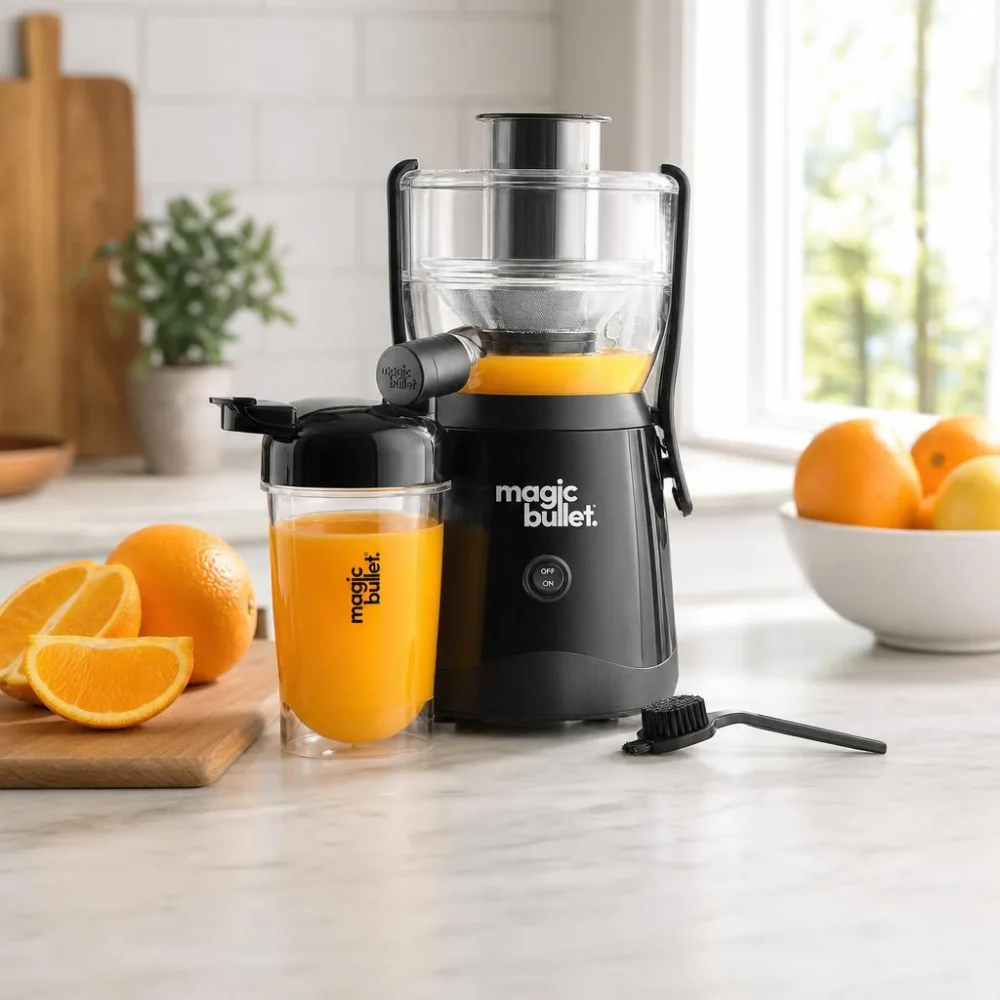
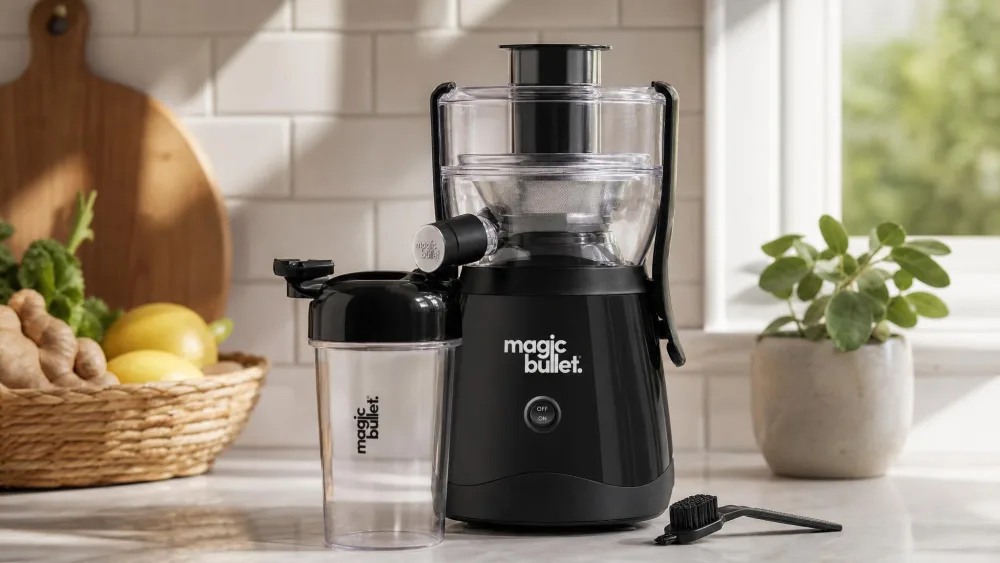
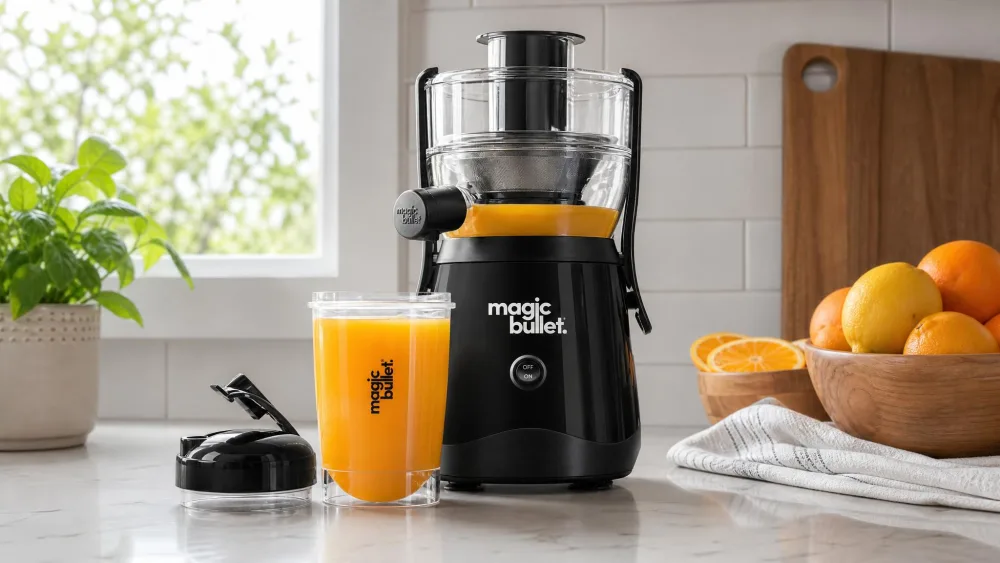
The space-saving pick for solo juicers, and a rare compact machine that has held up through years of steady use, juicing straight into a 16 oz to-go cup. Single servings are its strength: juice goes straight into the cup, the lid snaps over it, and you walk out the door, while hard produce like beets and ginger goes through fast, though leafy greens need smaller cuts and the pulp filter takes an extra rinse.
Juices straight into a 16 oz to-go cup
2-inch chute fits larger chunks with less chopping
Silicone spout cap catches drips
Specifications
Type
Compact centrifugal-style mini juicer
Power
400W
Feed chute
2-inch
Capacity
16 oz cup with twist-on lid
Warranty
1-year limited
Price
About $45 street, moves week to week
Check the current price of the magic bullet Mini Juicer MBJ50100AK on Amazon. Best for solo juicers, tiny counters, and anyone who wants juice before they walk out the door.
Pros
Tiny footprint that fits under cabinets
To-go cup workflow, juice and leave
Beets and ginger go through fast
Cons
Struggles with leafy greens and oversized pieces
Pulp filter needs extra effort to rinse clean
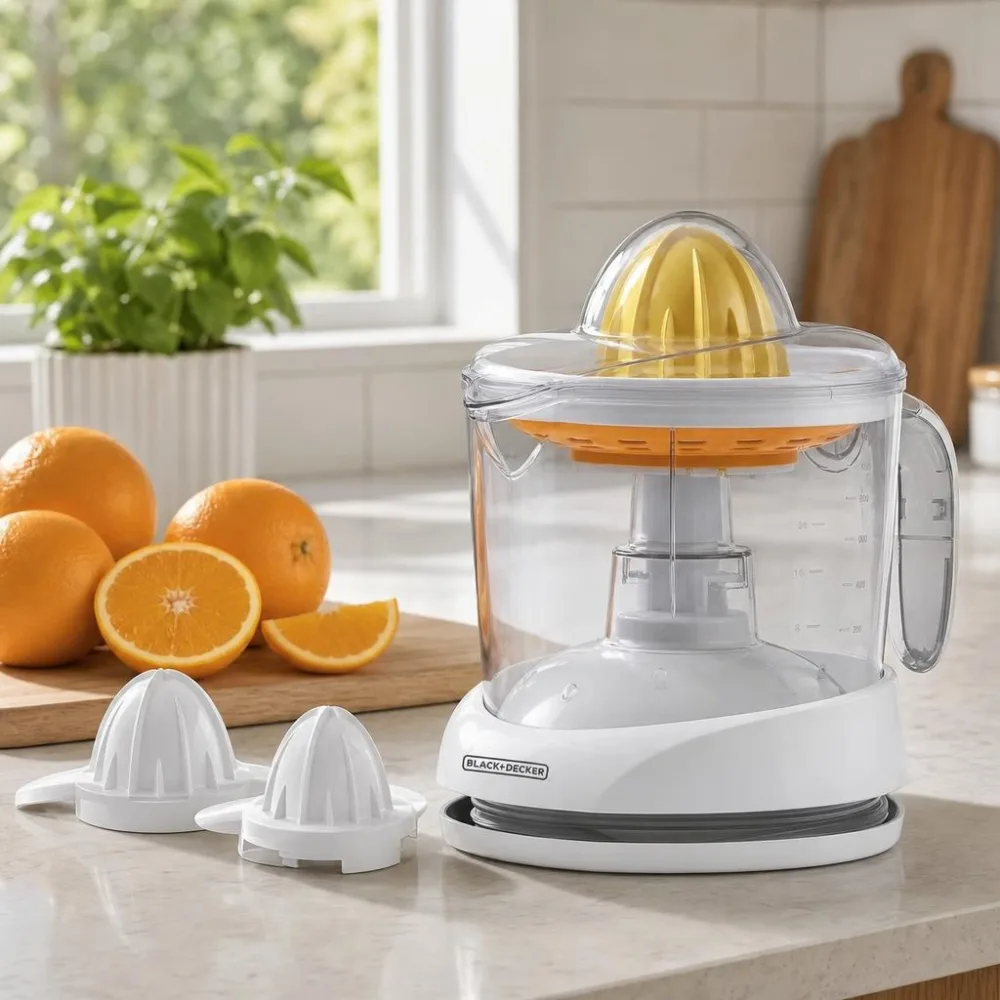
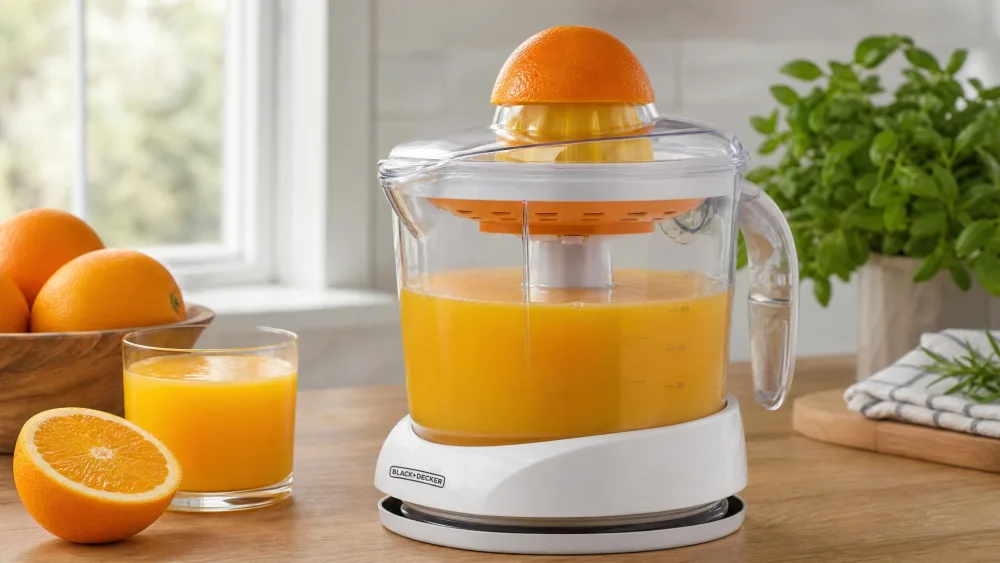
5. BLACK+DECKER 32oz Electric Citrus Juicer CJ625: Best Citrus Juicer on a Budget
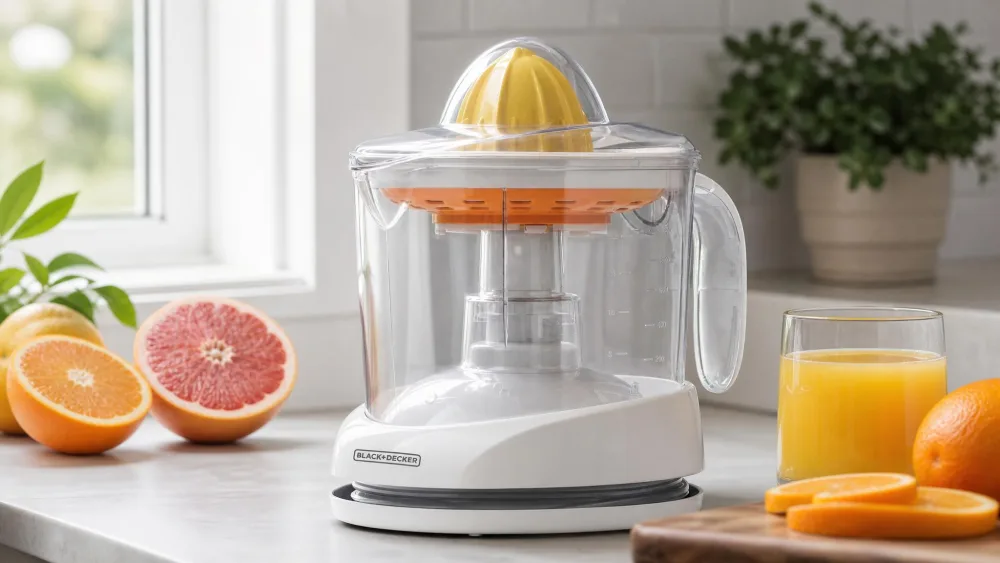
The citrus machine that does everything citrus for less than the cost of two bags of oranges, with cleanup measured in seconds, though it is loud while you press. The pressure-activated reamer spins only while you press down, and pressing a fruit half is gentle work, which is why it replaces manual squeezers, especially for people with arthritis.
Pressure-activated reamer with auto-reverse
Adjustable pulp control dial with pulp basket
Two reamer sizes, small and large
Specifications
Type
Electric citrus juicer, pressure-activated reamer
Pulp control
Adjustable dial with removable pulp basket
Reamers
Two sizes, lemon/lime and orange/grapefruit
Capacity
32 oz clear pitcher
Cleaning
Dishwasher-safe parts, disassembles fully
Price
About $23 street, moves week to week
The pulp dial runs from pulp-free orange juice to marmalade-ready batches, and the 32 oz pitcher pours straight from the machine. Two caveats: it is loud, like a jackhammer, while you press, and the cones can grow mold if left assembled wet, so we air-dry everything after washing. Check the current price of the BLACK+DECKER 32oz Electric Citrus Juicer CJ625 on Amazon. Best for orange lovers on a budget and anyone replacing a manual squeezer.
Pros
Cheapest recommendation in the roundup
Two reamer sizes cover lemons through grapefruit
Pulp dial works from pulp-free to chunky
Cons
Loud while running, though only while you press
The small reamer is the part most likely to fail
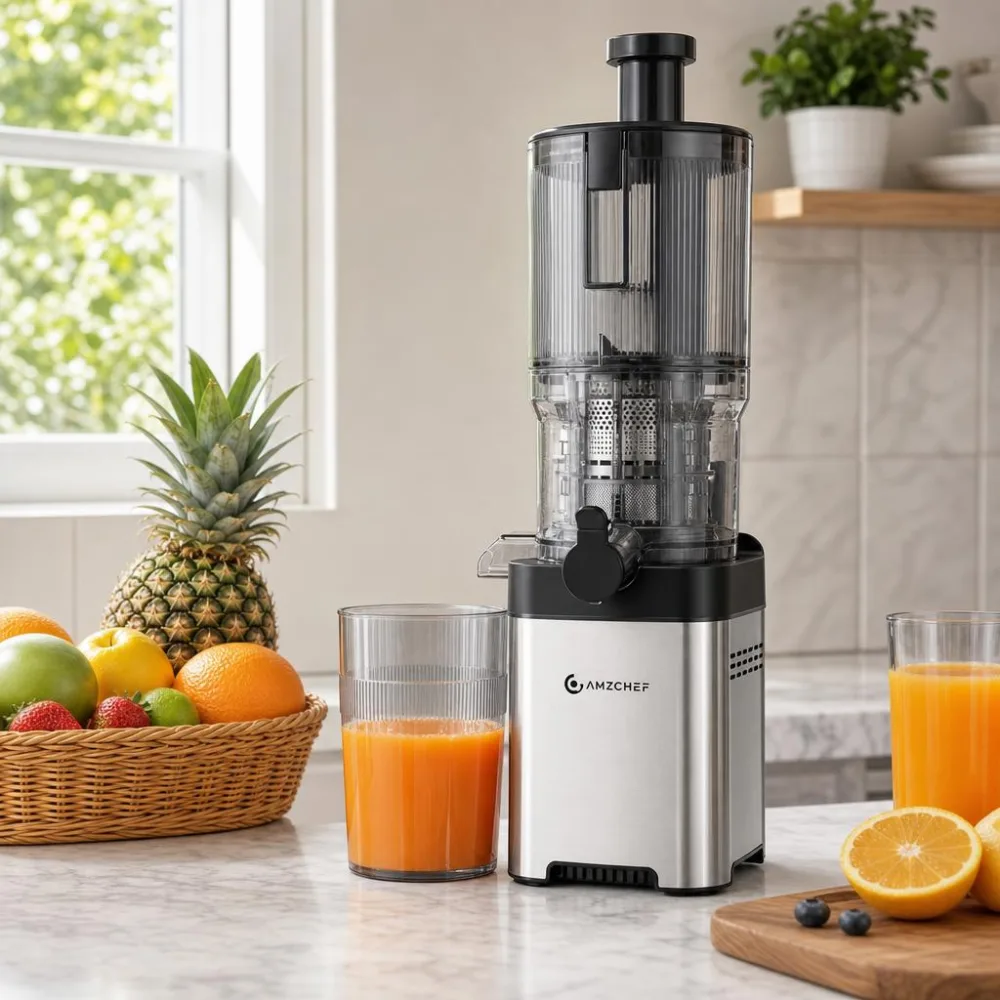
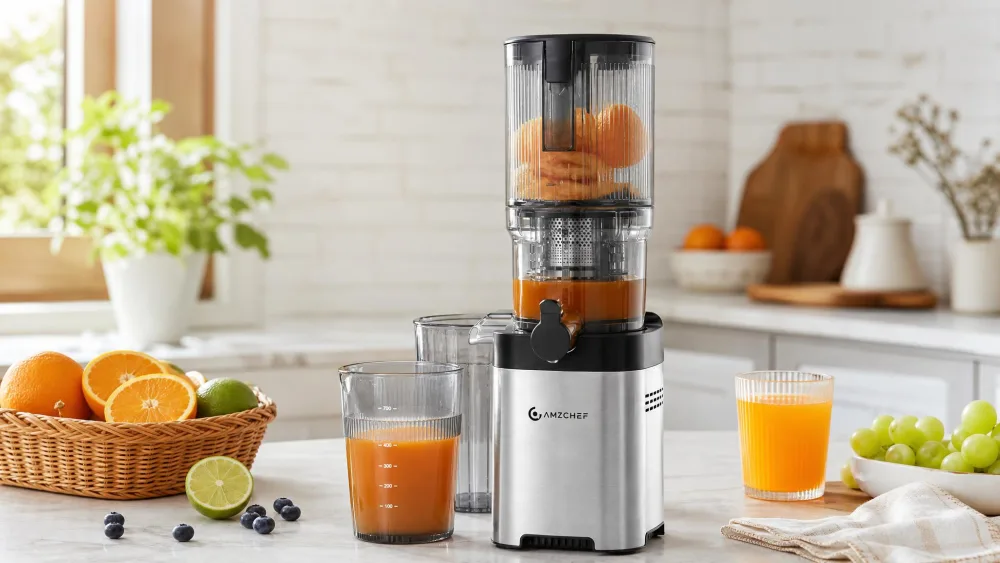
6. AMZCHEF Cold Press Juicer: Best Easy-Clean Budget Juicer
The easy-clean cold press with the biggest chute in the roundup: four whole apples fit at once, one-button operation keeps the cleanup honest, and it runs quietly with dry pulp from most produce. Ginger and blackberries came through with seeds separated cleanly, and the 5.4-inch self-feeding chute all but removes prep time.
5.4-inch self-feeding chute fits four whole apples at once
The honest caveats: celery needs sandwiching between wetter fruits, pineapple pulp stays wet and re-running it just spins in place, and a few units resist disassembly after a session. Check the current price of the AMZCHEF Cold Press Juicer on Amazon. Best for cold press fans who hate chopping and want a wide chute on a budget.
Pros
Biggest chute in the roundup, prep time nearly gone
Quiet, with dry pulp from most produce
Rinse-clean parts and one-button operation
Cons
Celery needs sandwiching between wetter fruits
Some units resist disassembly after a session
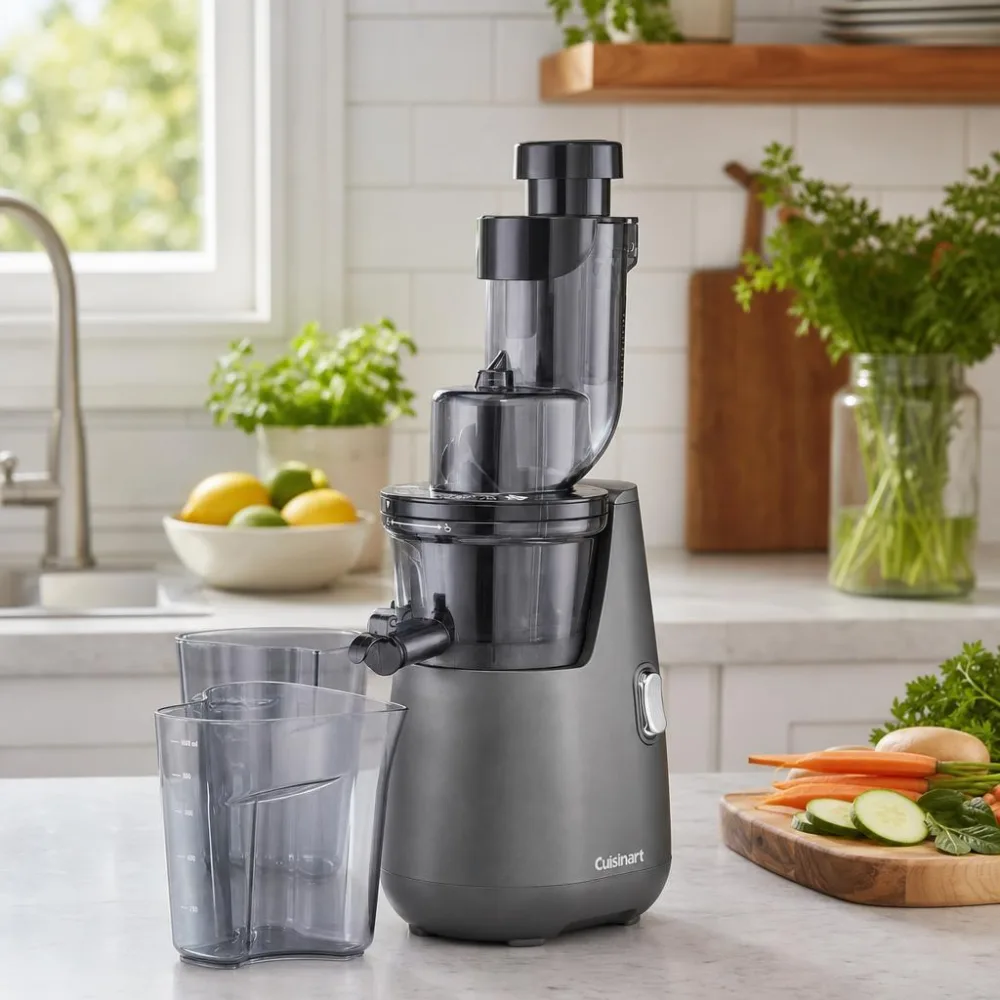
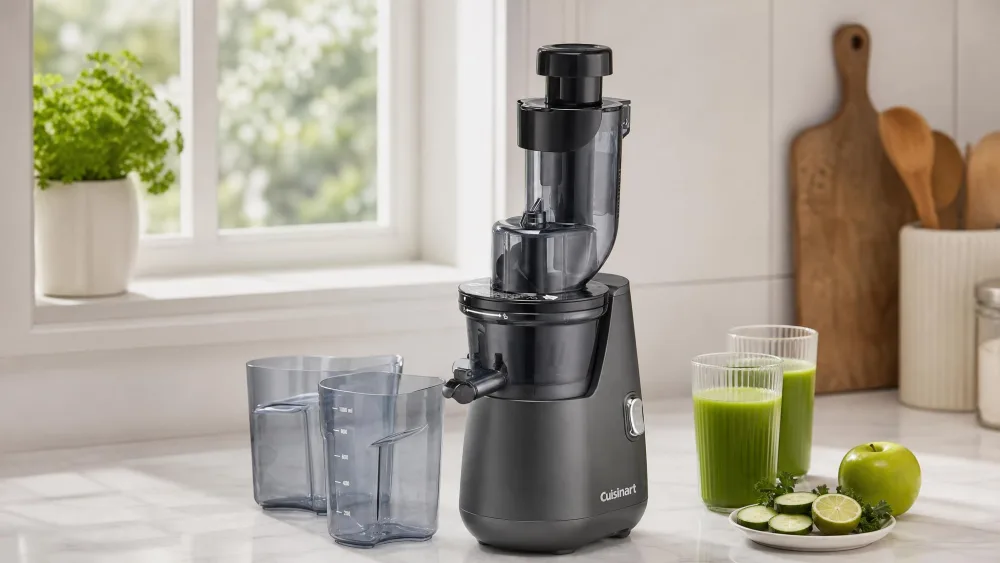
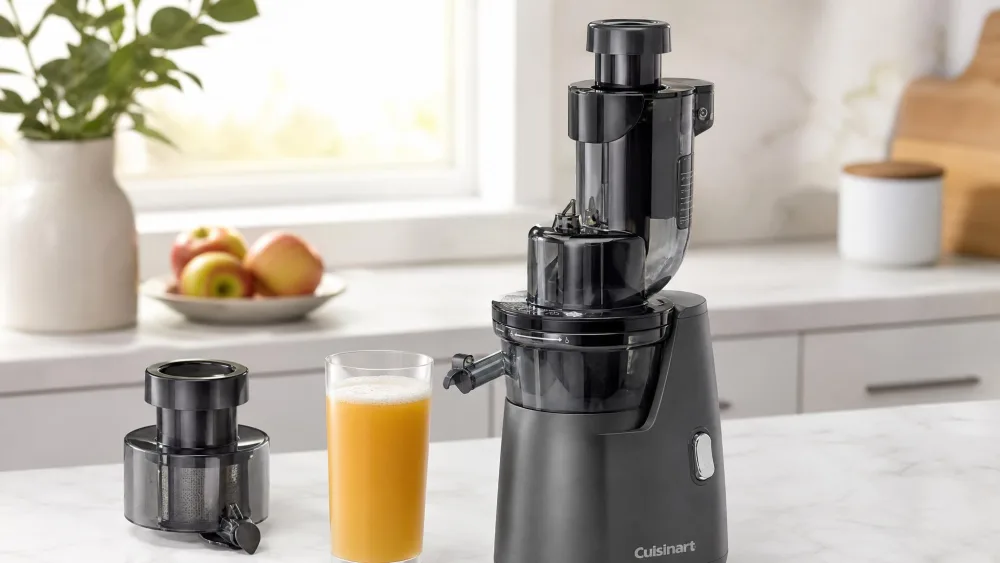
7. Cuisinart CSJ-300 Easy Clean Slow Juicer: Best Value Slow Juicer
The best-value slow juicer for serious cold press juice: bone-dry pulp, quiet operation, and a three-year warranty, with quirks you should know before you buy.
Mesh-free filter rinses clean under the tap
33.8 oz juice pitcher with separate pulp ejection
Won't start until assembled correctly, a safety plus
Specifications
Type
Vertical masticating slow juicer, cold press
Power
200W at 80 RPM
Feed chute
About 2.75 in, whole apples need cutting
Capacity
33.8 oz (1 L) juice pitcher, 0.8 L pulp container
Warranty
3-year limited
Price
About $141 street (list $200), moves week to week
The 200W motor turns a slow 80 RPM, and apple pulp came out bone-dry in our runs. Two things hold it back from the top spot: a quarter-inch foam layer tops the juice, and celery jams the waste section unless cut small and fed last. The mesh-free filter rinses clean under the tap, but the machine breaks down into a lot of parts, and durability is the recurring worry: cracked strainers, and replacement parts that are hard to source. Check the current price of the Cuisinart CSJ-300 Easy Clean Slow Juicer on Amazon; the street price runs well below the $200 list. Best for cold press devotees on a budget who value a long warranty.
Pros
Bone-dry pulp from apples and carrots
Quiet 80 RPM operation
Longest warranty in the roundup, 3 years
Cons
Quarter-inch foam layer tops the juice
Durability reports and replacement parts are the worry
Other Affordable Juicers Worth a Look
One more machine earned a mention.
8
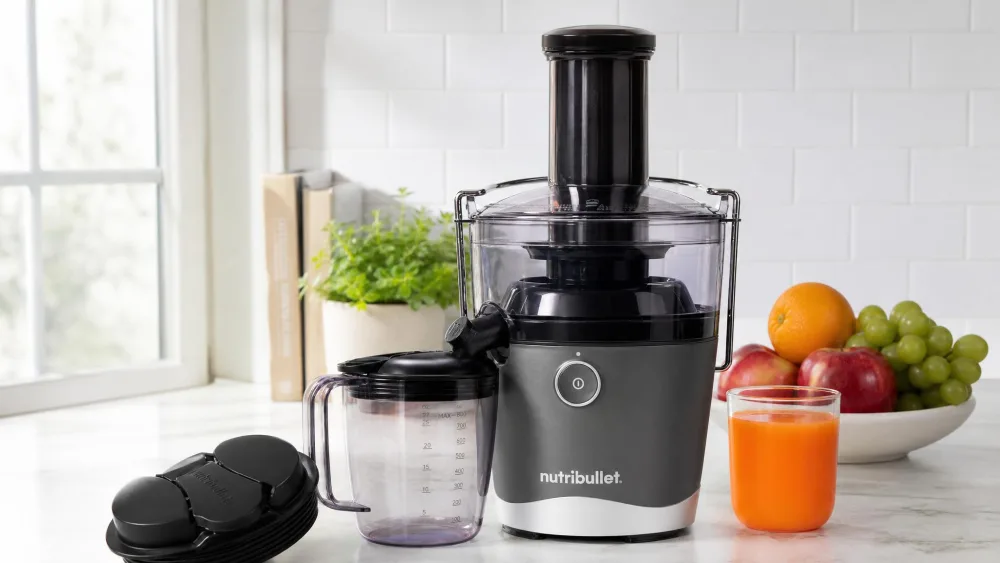
NutriBullet Juicer NBJ50100
3.9
An 800W dual-speed centrifugal with a 3-inch chute and a 27 oz sealing pitcher; fast and easy to feed, but durability reports and wet pulp keep it out of our top seven.
The 3-inch chute takes whole apples, and the sealing pitcher lets you juice and store ahead, but what kept it off the list is the pattern we could not ignore: units broke down within about six weeks of daily use, and the pulp comes out wet. Street price runs about $80, and it is also sold direct on NutriBullet's site. If you want a wide-chute centrifugal, the Hamilton Beach 67601A is the safer call.
How to Choose the Best Affordable Juicer
Three things decide whether a budget juicer gets used or gathers dust: the type, the feed chute, and the cleanup.
Juicer Types: Centrifugal vs. Slow Masticating vs. Citrus
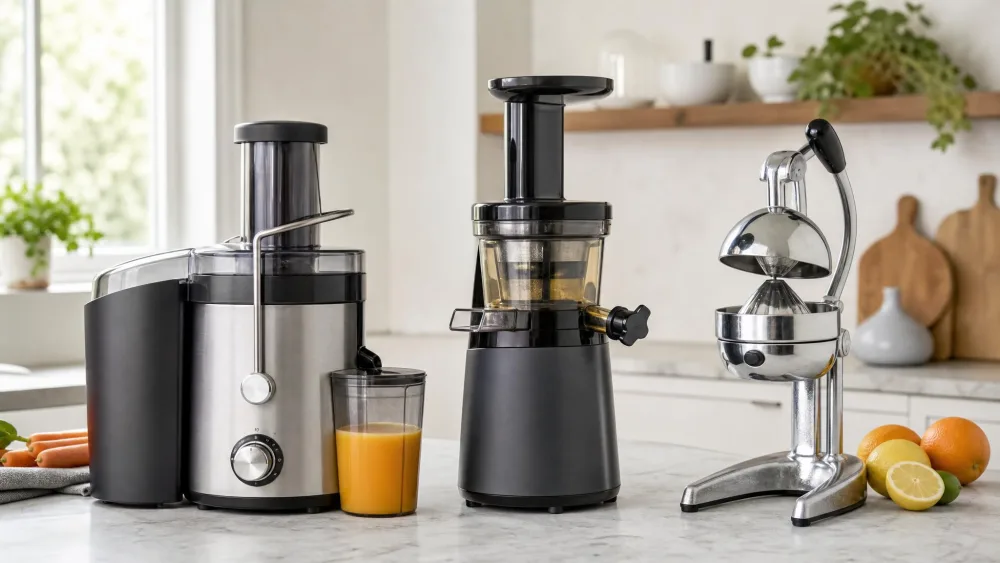
Pick the type first, because it decides everything else, and at budget prices the type gap matters more than the brand:
Centrifugal machines shred and spin, which makes them the fastest and usually the cheapest option, with more foam, more noise, and juice that separates sooner, so drink it the same day.
Slow masticating cold press machines chew produce with an auger, which buys better leafy-green yield, quieter operation, and drier pulp at the cost of more time and prep per batch.
Citrus juicers are the simplest and cheapest, and they handle whole oranges and grapefruit only, with no greens or carrots in the plan.
Feed-Chute Size and Prep Time
Feed chute width is the real time-saving metric: a 3-inch chute fits a whole apple and skips pre-cutting, while narrow openings add minutes of chopping per batch.
Tip. Feed a cold press machine alternating soft and hard produce, cucumber with apple, spinach with carrot, to keep the auger moving. With a centrifugal machine, feed steadily; aggressive feeding adds foam and splatter, not juice.
Wattage and Torque: What Actually Matters
Wattage matters less than type: centrifugal machines run 400 to 1,000 watts because they spin fast, while slow juicers get the job done at 150 to 250 watts, because torque, not speed, extracts the juice. A high wattage number on a slow auger is not a yield guarantee.
Juice Yield and Pulp Dryness
Dry pulp is the honest measure of yield, because it means the machine squeezed nearly everything out, and wet pulp means juice you are pouring down the sink. The Ninja and the Cuisinart produced the driest pulp in this roundup, while the Hamilton Beach 67601A left the most juice behind.
Cleanup, Noise, and Parts Count
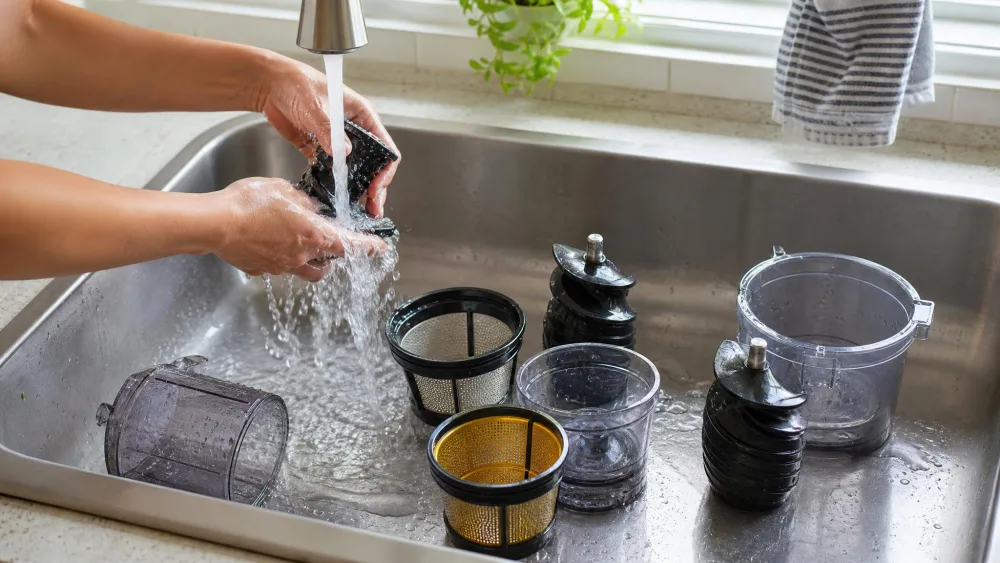
Rinse the filter and parts within 20 to 30 seconds of finishing, because dried pulp on the screen turns easy cleanup into a scrub-fest, and while every machine here has some dishwasher-safe parts, count them anyway. A cold press like the Cuisinart breaks down into a surprising number of pieces, while a centrifugal like the 67601A is a handful of big parts that rinse or bag. Noise splits by type, with centrifugals running loud and slow juicers near-silent.
Note. If you cannot wash right away, soak the parts in warm soapy water; that single habit separates the juicers people keep using from the ones that gather dust.
Setting a Realistic Budget
Here is what each price band actually buys. Under $100 you get genuinely solid machines in the Hamilton Beach, Magic Bullet, and BLACK+DECKER tier, most of them loud centrifugals or entry-level cold press. From $100 to $150 the strongest all-round cold press performance appears, which is where our top pick and best-value slow juicer land. Above roughly $250 the money mostly buys hands-free self-feeding, quieter augers, and longer warranties. The warranty gap explains part of the price gap: budget juicers carry 1 to 3 year coverage, premium slow juicers much longer terms.
The same price-band logic applies to the rest of your kitchen: if your counter also needs a blender, our guide to the best affordable blenders follows the same rules.
If you eventually outgrow the budget tier, the Nama J2 Cold Press Juicer is the hands-free upgrade: load a full recipe and walk away, with a 200W motor at 50 RPM, a 35 oz pitcher, and a 15-year warranty. It runs close to $600, and the Nama J2 is sold direct from the manufacturer as well.
How We Picked These 7 Affordable Juicers
We ranked these seven machines on four tests: yield and pulp dryness, cleanup friction, noise, and replacement-parts availability. Dry pulp mattered most, because it is the difference between a machine that wastes produce and one that does not, and cleanup mattered almost as much, because the juicer you dread washing is the one that dies in a cabinet. Noise separated machines that juiced equally well, and replacement-parts availability told us which budget models you can actually keep running, so a budget juicer only earns a recommendation here if it performs well and is built to last.
Centrifugal vs. Cold Press: Getting the Most From a Budget Juicer
At the budget tier, this is the fork in the road. Centrifugal machines spin a shredding blade, so juice lands in the glass in seconds, with more foam, more noise, and wetter pulp, while cold press machines chew produce slowly with an auger, trading speed for better leafy-green yield, quieter operation, and drier pulp. Getting the most from either type comes down to rhythm: feed a cold press machine alternating soft and hard produce, spinach with carrot, cucumber with apple, and it stops feeling stuck. Centrifugal juice separates and oxidizes faster, so drink it the same day, while cold press juice holds better for batch-ahead households.
FAQ: Affordable Juicers, Answered
Is a slow masticating juicer better than a centrifugal at this price?
For leafy greens, drier pulp, and quieter mornings, yes. Centrifugal wins on speed and price, but at the budget tier the yield gap is smaller than the noise and cleanup gaps.
Can a cheap juicer handle leafy greens like kale?
The slow masticating machines here handle greens best when a hard vegetable feeds in behind them, and even then kale came out wetter than carrots.
How do I clean a budget juicer quickly?
Rinse the filter and parts within 20 to 30 seconds of the last glass, bag the pulp bin on a centrifugal, and let dishwasher-safe parts handle the rest.
How wide does the feed chute need to be to skip pre-cutting apples?
About 3 inches fits a whole apple: the Hamilton Beach 67601A and the NutriBullet have 3-inch chutes, while the AMZCHEF's 5.4-inch self-feeding chute fits several whole apples, and narrow-chute slow juicers like the Ninja and the Cuisinart mean real chopping time per batch.
What wattage do I actually need?
Type matters more than wattage: slow juicers extract with torque at 150 to 250 watts, while centrifugal machines spin at 400 to 1,000 watts.
The right answer starts with your routine, not the spec sheet. If you squeeze oranges most mornings, the BLACK+DECKER is all the machine you need, and if speed is the point, the Hamilton Beach 67601A delivers whole-apple juice in seconds. If you want cold press quality on a budget, the Cuisinart is the value play, while the Hamilton Beach 67951 is the cheapest way to find out whether slow juice fits your life.
One habit beats every upgrade: rinse the parts within 20 to 30 seconds of the last glass, because the juicer you keep using is the one that cleans up fast.
Key takeaway. A budget juicer earns its keep only if it gets used, and the machines that get used are the ones with dry pulp and fast cleanup, so pick the type that fits your routine, then buy the machine that cleans up fastest.