As an Amazon Associate we earn from qualifying purchases. We may earn a commission from links on this page, at no extra cost to you. Learn more.
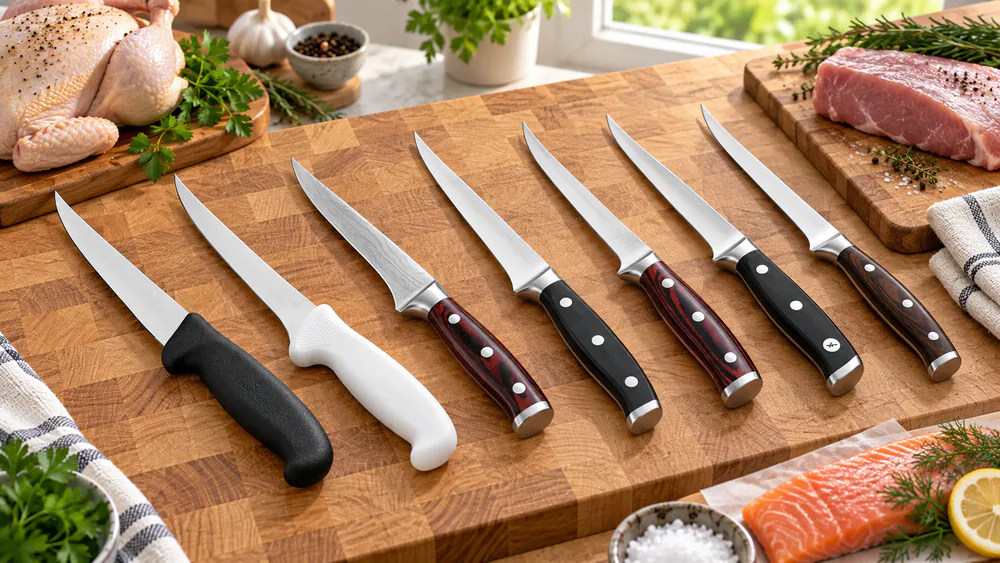
A boning knife is the knife you reach for when a whole chicken needs breaking down, a pork shoulder needs trimming, or a fillet needs to come off the bone. It is a working tool, and it earns its place by how it feels after a long prep session, not how it looks on day one. We tested seven boning knives deboning chicken, beef, and pork, scoring flex, edge retention, and comfort.
In our prep rotation we broke down whole chickens, trimmed brisket, worked pork shoulders and tenderloins, and filleted fish whenever the catch came in. We scored how each blade flexed around bone, how the edge held, and how the handle wore on the hand.
The Victorinox Fibrox took best overall for grip, edge life, and easy maintenance. The Mercer Ultimate White is the sharpest value. And the Swiss Classic is the editor's pick for close, intricate work.
Prices below are street estimates and move week to week. What separated the seven was flexibility, handle grip, and how long the edge held.
Product
Best For
Blade Length
Steel/Material
Blade Flexibility
Handle
Price
Victorinox Fibrox 6-Inch Curved
Best Overall
6 in
High-carbon stainless (stamped)
Semi-flexible
Fibrox (TPE) textured
about $25
Mercer Ultimate White 6-Inch Curved
Best Value
6 in
High-carbon Japanese stainless
Flexible
Textured polypropylene
about $11
PAUDIN 6-Inch
Best Budget
6 in
5Cr15MoV German stainless
Flexible
Pakkawood
about $27
HOSHANHO 7-Inch
Best Flexible
7 in
10Cr15CoMoV (VG-10 equivalent)
Firm flexible
Pakkawood
about $66
HENCKELS Forged Premio 5.5-Inch
Best Stiff
5.5 in
German stainless (forged)
Stiff/semi-flexible
Triple-rivet curved
about $48
Cutluxe Curved 6-Inch
Best for Chicken
6 in
Forged high-carbon German steel
Flexible
Full-tang pakkawood
about $30 list
Victorinox Swiss Classic 6-Inch
Editor's Pick
6 in
European stainless (stamped)
Very flexible
Fibrox textured
about $19
How We Tested Boning Knives
To rank these knives, we ran them through the three jobs a boning knife exists for: breaking down whole chickens, trimming beef, and working pork, with fish fillets whenever the catch came in. After each session we scored how the blade flexed around bone, how the edge held, how the handle wore on the hand, and how easily the steel sharpened back. Edge retention showed up differently knife to knife: the Fibrox arrived razor sharp and held for a long stretch before it wanted a quick run on the steel, the Mercer asked for a steel run fairly often, the HENCKELS asked for a hone every few days, and the Swiss Classic's edge held even after filleting fish and boning out a deer.
The most useful finding came early. Very flexible blades were harder to keep aligned against a rib cage, while rigid blades lost nuance in tight spaces. The knives that worked best were the semi-flexible middle ground, which is why this guide carries a mix of flexible and stiff picks rather than one winner for every job.
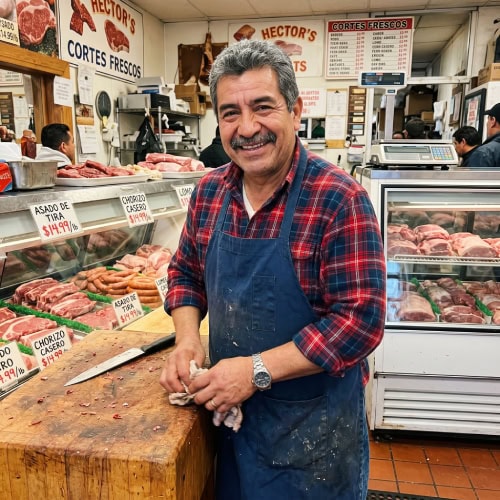
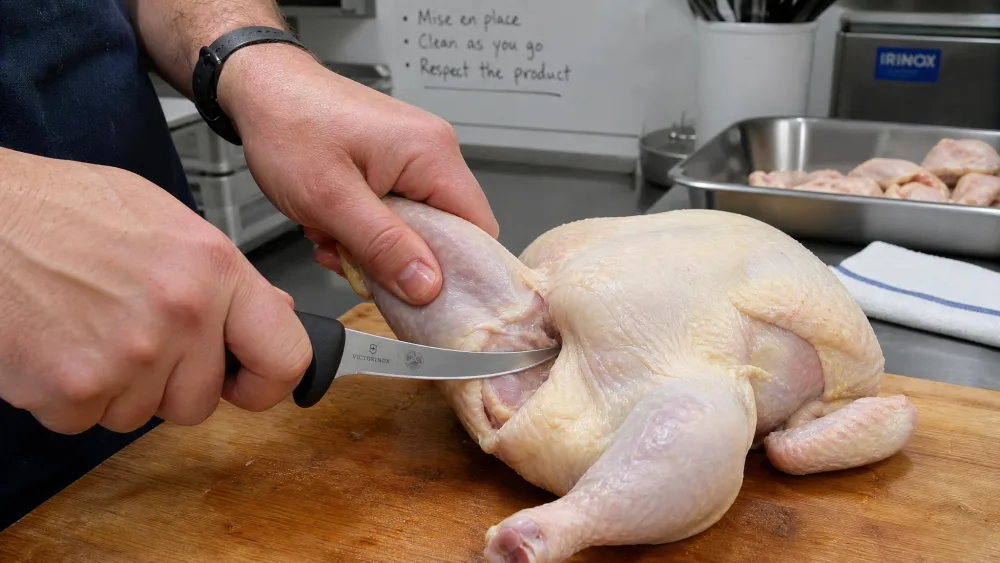
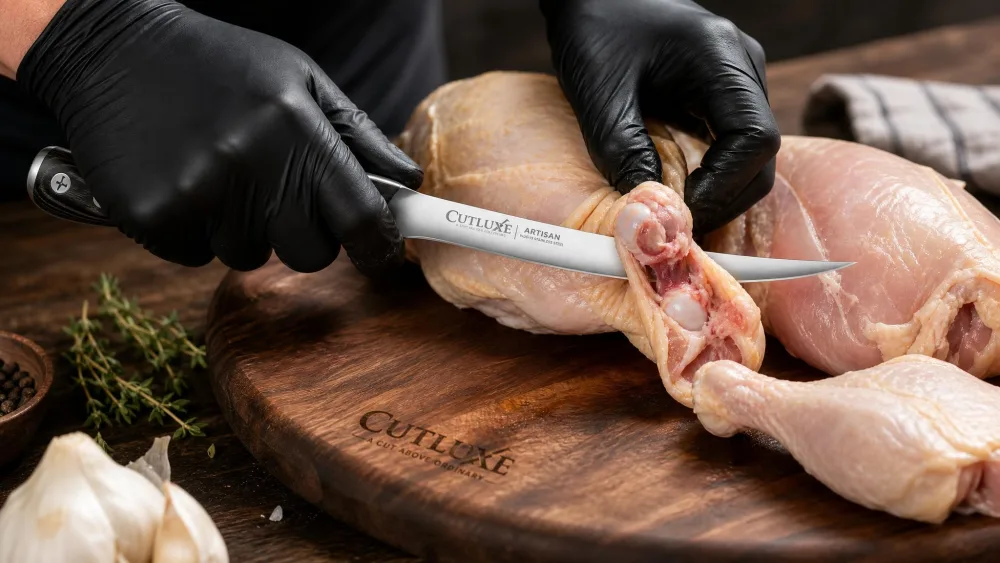
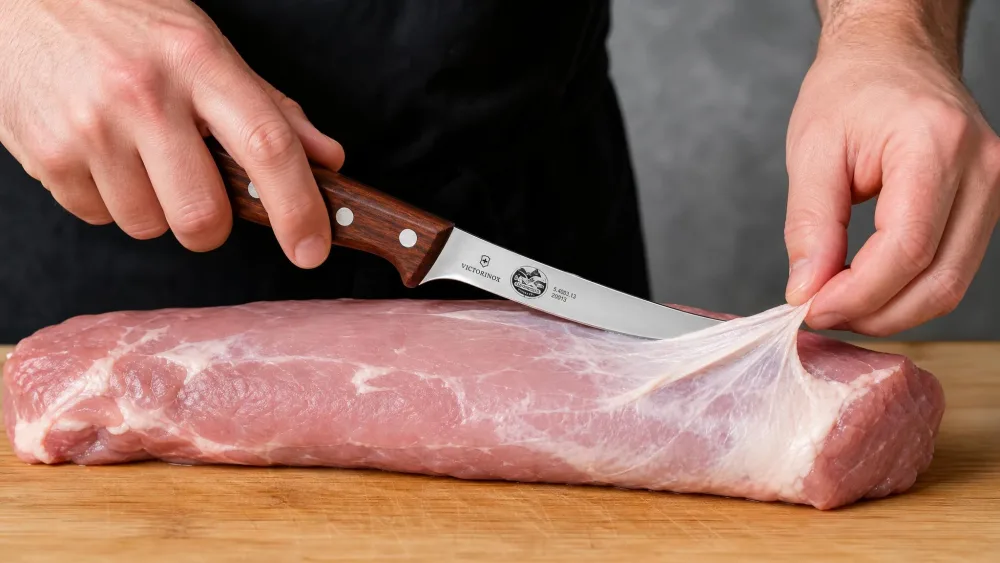
A typical session in our test kitchen: breaking down a whole chicken.
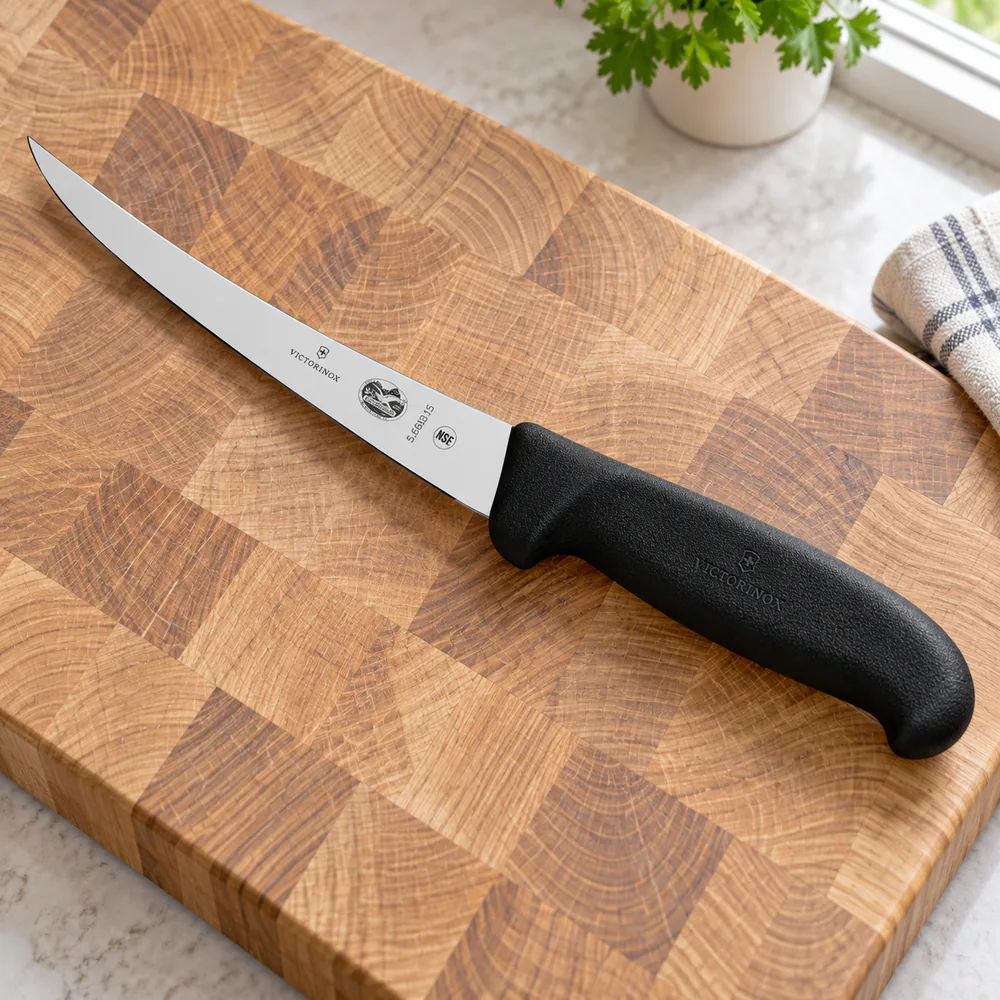
1. Victorinox Fibrox 6-Inch Curved Boning Knife - Best Overall
The Fibrox was the knife we kept reaching for when a whole chicken needed breaking down. The semi-flexible blade worked against the bone without wandering, and the curved profile put the working edge right at the joint. On fish it slid the skin off in one pull, the cleanest single stroke of the test.
Most capable all-around blade for chicken, beef, and pork
Grip stays secure even when hands are greasy
Edge holds well and sharpens back easily
Cons
No sheath included, so plan a storage spot
Runs a touch stiffer than a true flexible fillet blade
Who Should Buy This Knife
If you break down chicken, trim roasts, or work fish a few times a week and want one reliable knife that does not need babying, this is it. If that sounds like the knife you have been looking for, check the current price on the Victorinox Fibrox 6-Inch Curved Boning Knife.
Who Should Look Elsewhere
If your primary job is filleting fish and you want a blade that bends freely, the Fibrox will feel firmer than the label suggests. And if you want a full-tang forged knife, this stamped blade is not that knife.
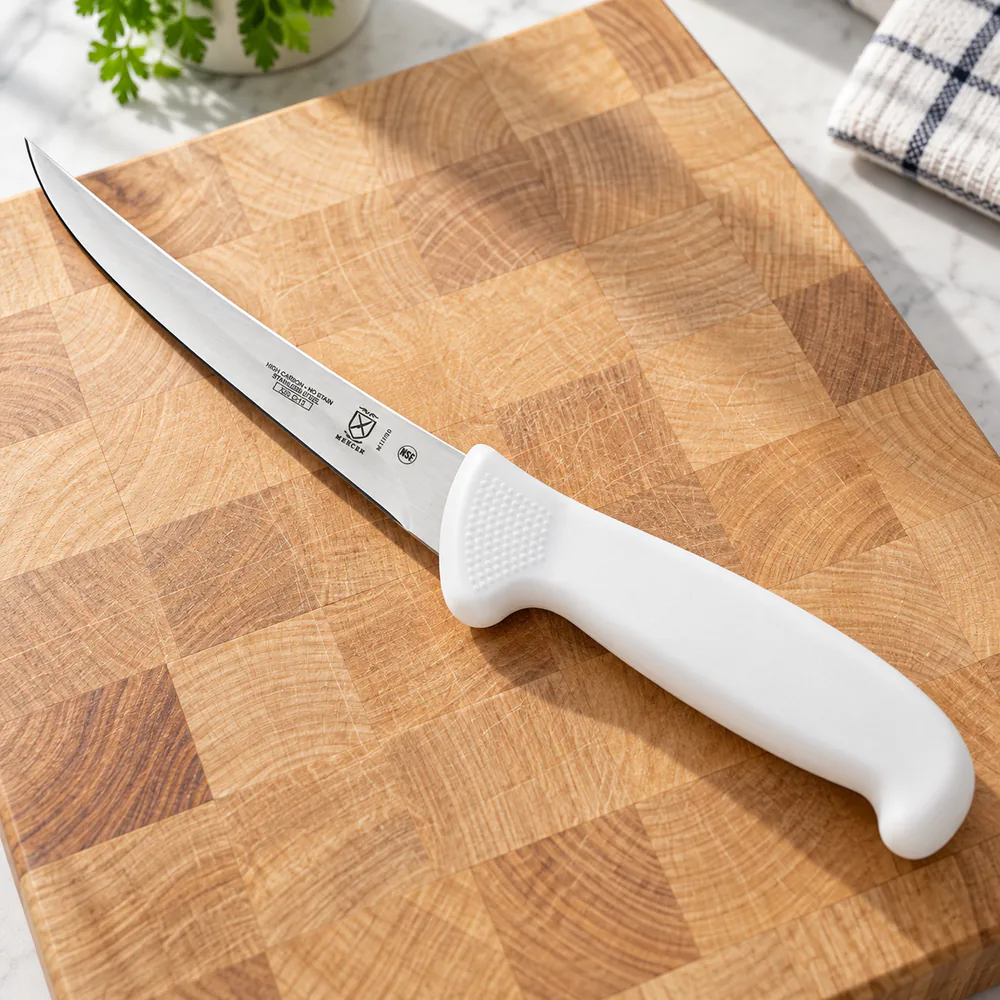
2. Mercer Culinary Ultimate White 6-Inch Curved Boning Knife - Best Value
2
Mercer Culinary Ultimate White 6-Inch Curved Boning Knife
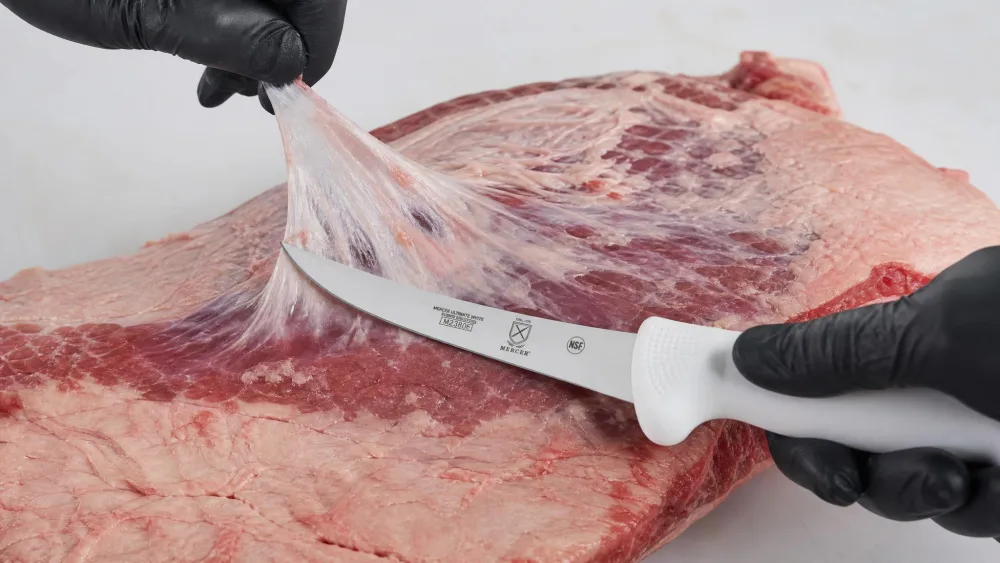
The Mercer is the knife that makes trimming feel easy. Out of the box it cut hard fat and silverskin off a brisket with surgical precision while leaving the meat intact, and it followed the bone on a ham without tearing the flesh. For about $11, that control is a bargain.
6-inch curved blade in one-piece high-carbon Japanese stainless
Hollow-ground edge
Textured finger-point handle with finger guard
NSF certified
Specifications
Blade length
6 inches
Steel
High-carbon Japanese stainless
Edge
Hollow ground
Handle
Textured polypropylene
Care
Hand wash only
Price
about $11
Pros
Remarkable sharpness for the price
Curved blade follows the bone cleanly
Edge is easy to resharpen
Cons
Handle gets slick when coated in meat juices
Needs a steel run fairly often
Hand wash only
Who Should Buy This Knife
Home cooks on a budget who break down chicken, trim brisket, or work with ham and fish get a genuinely sharp blade without spending much. If that fits your kitchen, see the current price on the Mercer Culinary Ultimate White 6-Inch Curved Boning Knife.
Who Should Look Elsewhere
If you need an edge that survives days of heavy use without a steel, or a knife that can go in the dishwasher, the Fibrox is the better buy.
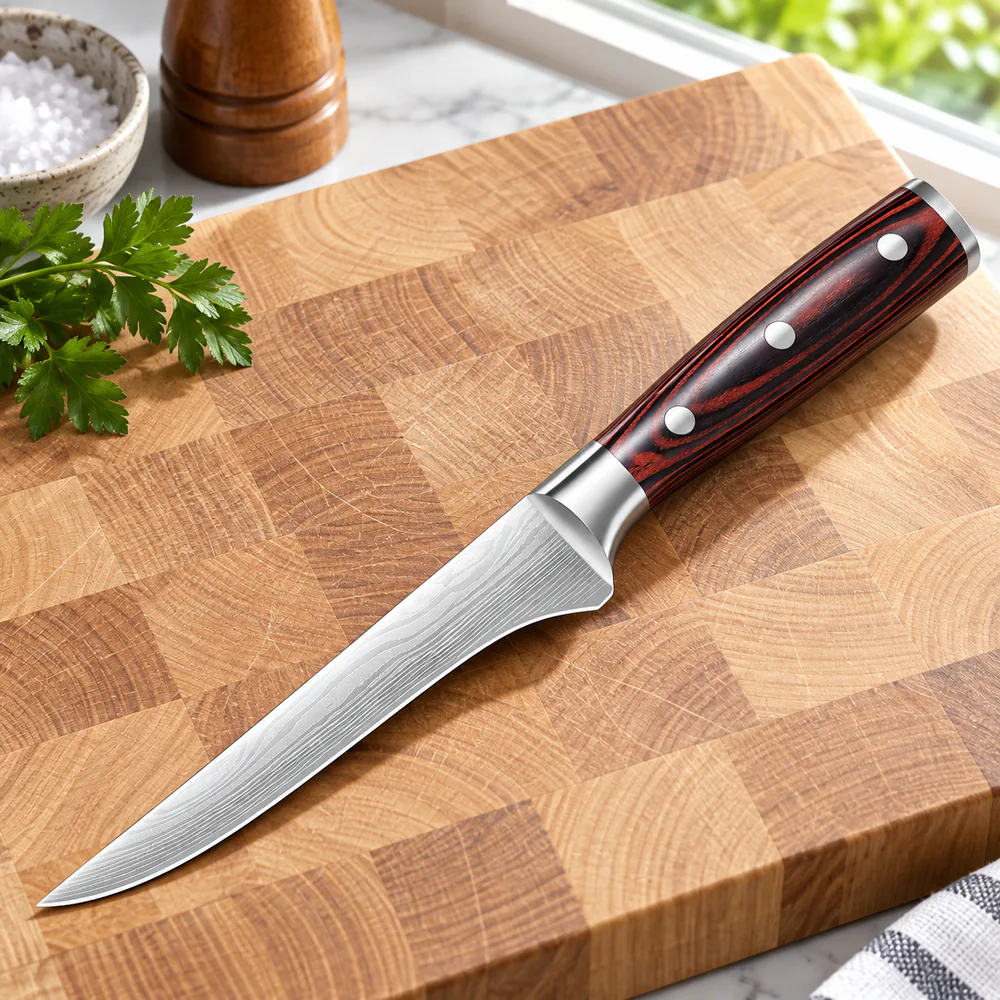
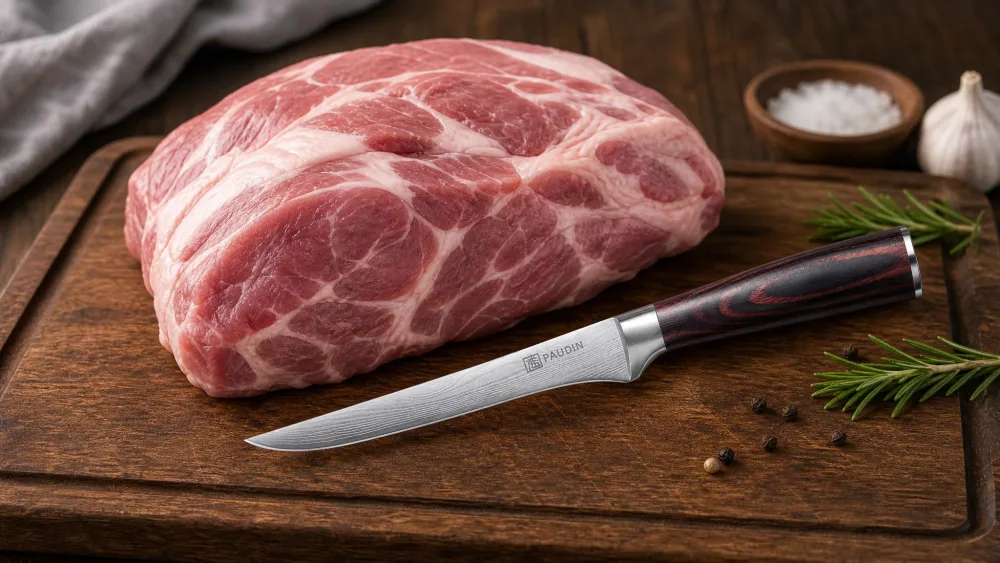
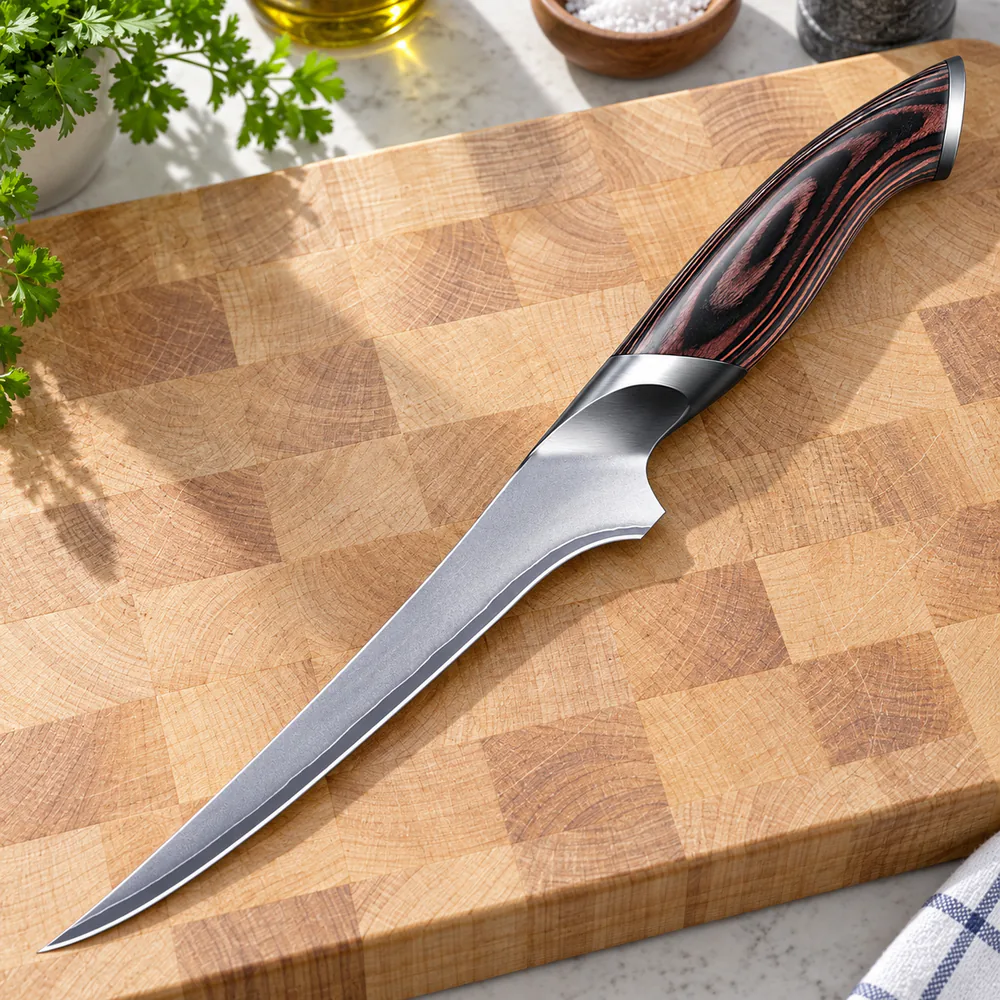
3. PAUDIN 6-Inch Boning Knife - Best Budget
The PAUDIN is aimed squarely at cooks buying their first boning knife, and it is the budget pick we send beginners toward. The trade-offs are the ones you would expect at this price, and the review below lays them out plainly.
The PAUDIN is the budget knife that does not feel like a compromise. We broke down two pork shoulders for sausage with it, and the blade cut cleanly and stayed balanced the whole time. For a first boning knife, it covers more jobs than the price suggests.
6-inch 5Cr15MoV German stainless blade
Hand-honed 15-degree edge per side, 56+ HRC
Ergonomic pakkawood handle
Sheath and gift box included
Specifications
Blade length
6 inches
Steel
5Cr15MoV German stainless
Hardness
56+ HRC
Edge angle
15 degrees per side
Handle
Pakkawood
Price
about $27
Pros
Balanced, lightweight feel
Flexible blade for many jobs
Strong value
Cons
Out-of-box edge is good, not dazzling
Round handle takes getting used to
Softer steel than the premium picks
Who Should Buy This Knife
First-time boning knife buyers and cooks who want a flexible blade, a comfortable handle, and nice packaging without spending much will be happy here. If that sounds right, check the current price on the PAUDIN 6-Inch Boning Knife.
Who Should Look Elsewhere
If you expect a razor edge straight from the box, or prefer a straighter German-style handle, this may not be your pick. PAUDIN's official store also sells a different 6-inch model at a higher hardness, so check which stock you are getting.
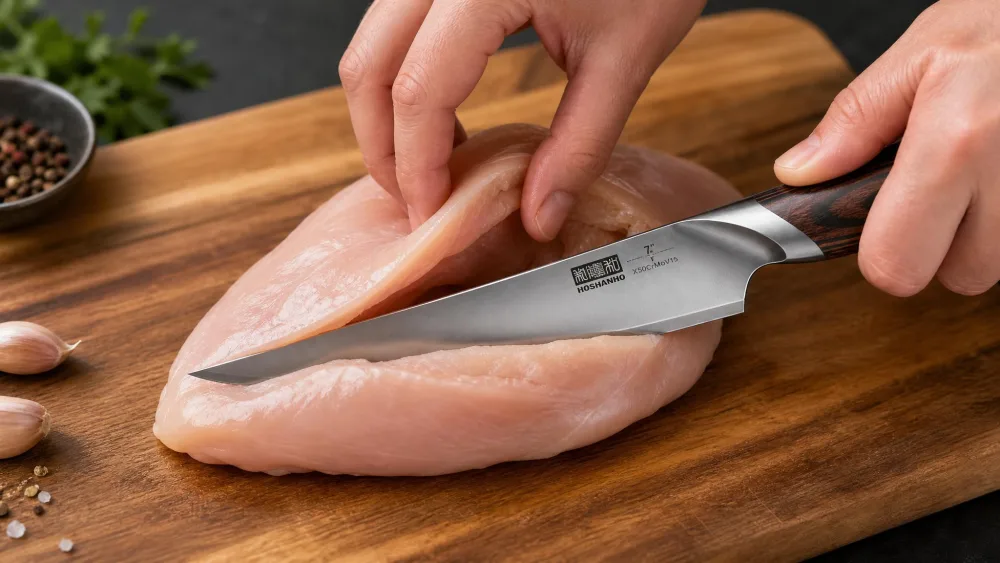
4. HOSHANHO 7-Inch Fillet & Boning Knife - Best Flexible
The HOSHANHO is the sharpest knife in the test out of the box, with a hand-polished edge that rivaled Japanese blades costing far more. It popped chicken thigh bones out and cut pockets into chicken breasts without effort, and on a whole pork tenderloin it sliced chops off cleanly. The same thin blade trimmed fat cleanly, the precision that made the poultry work feel effortless.
Cooks who want a razor-sharp Japanese-style blade for poultry, pork, and fish, and who like the reach of a 7-inch blade, will love it. If that sounds like you, check the current price on the HOSHANHO 7-Inch Fillet & Boning Knife.
Who Should Look Elsewhere
If you want a whippy flexible fillet knife or a blade that can shrug off accidental contact with bone, this high-hardness steel is too delicate.
Pros
Exceptional out-of-box sharpness
Longer 7-inch blade suits big cuts
High-hardness steel holds an edge
Giftable presentation
Cons
Firm for a flexible label
Strictly for meat, never bone chopping
Handle finish can be inconsistent on some units
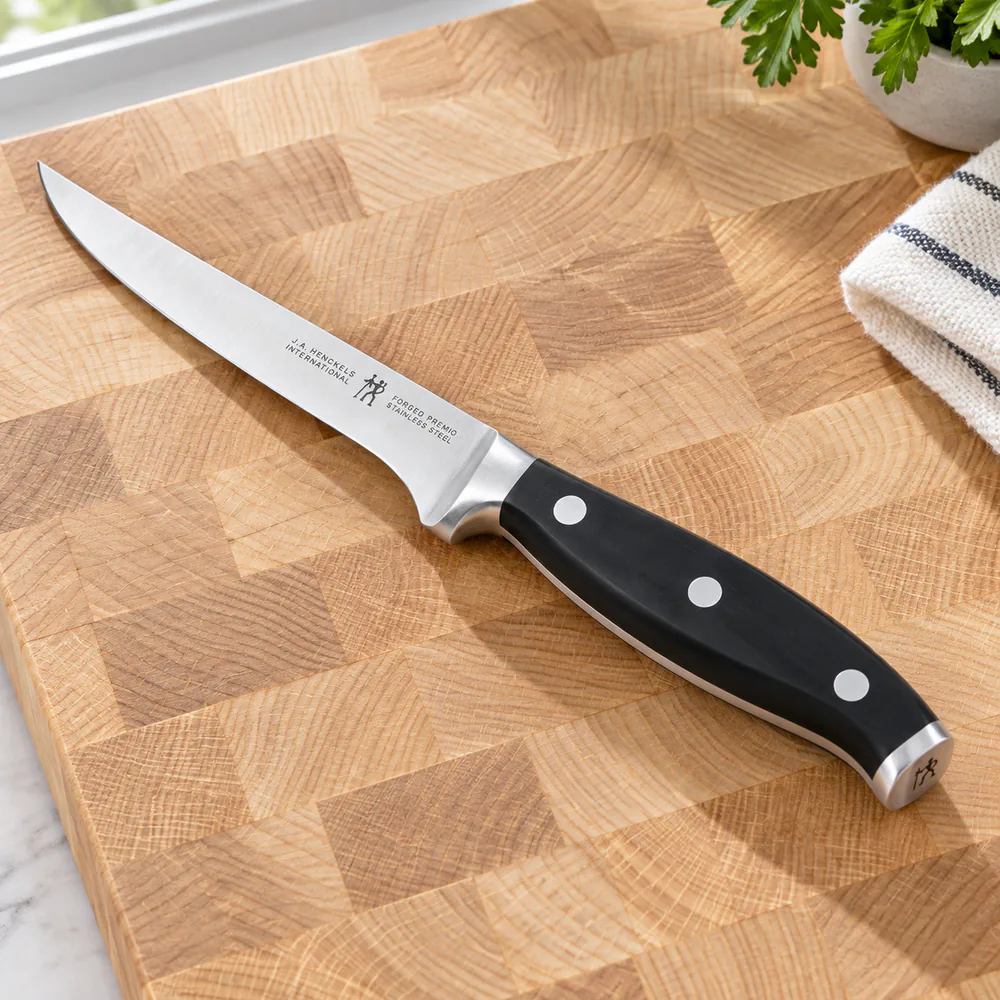
5. HENCKELS Forged Premio 5.5-Inch Boning Knife - Best Stiff
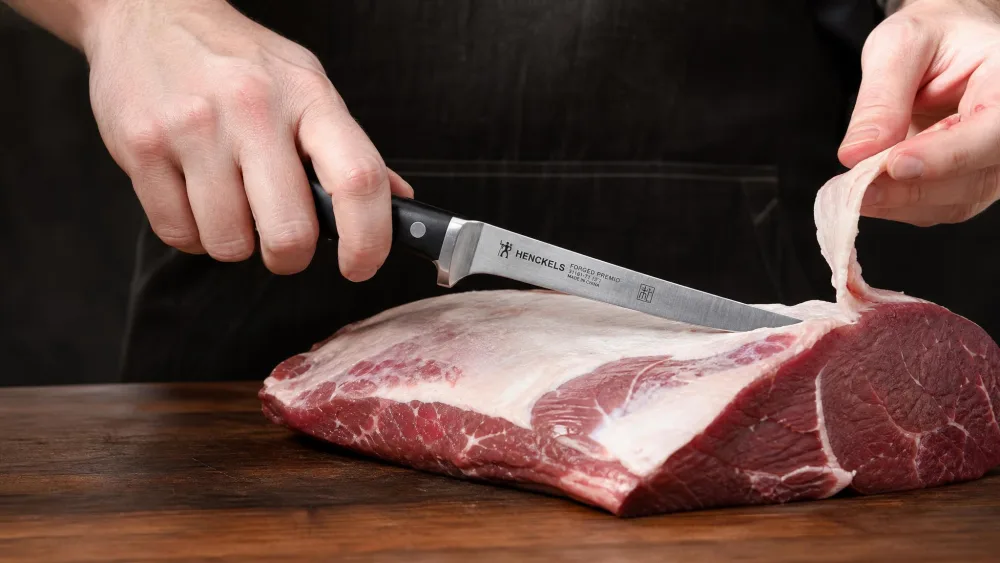
The HENCKELS feels like a step up the moment you pick it up, heavier than it looks with a forged bolster and a firm presence that stamped knives lack. We used it to clean turkeys and chickens, staying stiff enough to trim fat and sinew on larger cuts while holding a sharp, clean edge. It cut through tough sinew with no effort.
Forged German stainless steel with forged bolster
Satin-finished blade
Triple-rivet curved handle
Stainless steel logo endcap
Specifications
Blade length
5.5 inches
Steel
German stainless (X50CrMoV15 class)
Construction
Forged
Handle
Triple-rivet curved
Dishwasher safe
Yes
Price
about $48
Pros
Forged, substantial feel at a fair price
Stiff blade trims fat and sinew precisely
Dishwasher tolerant
Satin finish resists sticking
Cons
Needs a hone every few days for peak edge
Shorter 5.5-inch blade limits reach
Who Should Buy This Knife
Cooks who want a stiff, precise trimming knife for roasts, turkeys, and sinew-heavy beef will appreciate the forged weight and control. If that fits, see the current price on the HENCKELS Forged Premio 5.5-Inch Boning Knife.
Who Should Look Elsewhere
If you need a longer blade or a whippy flexible blade for fish and silverskin, this short stiff knife is not the one.
6. Cutluxe Curved 6-Inch Boning Knife - Best for Chicken
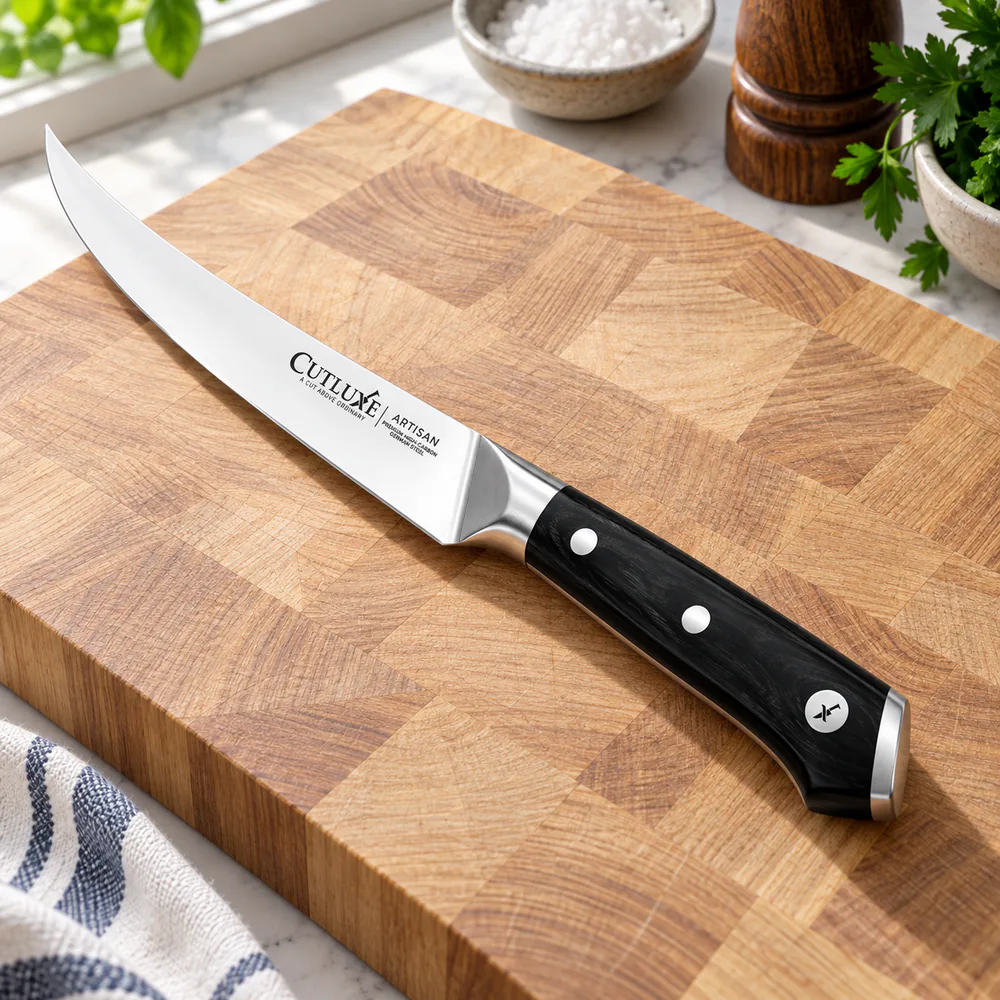
The Cutluxe is the knife we reach for when a pile of chicken leg quarters needs breaking down. The curved, flexible blade scooped around round bones and joints cleanly and took the skin off fish fillets with zero waste. For chicken and game, that curved profile rides the bone with minimal waste.
Forged high-carbon German steel, 56+ HRC
Hand-sharpened 14-16 degree edge
Full-tang triple-riveted pakkawood handle
Lifetime warranty against defects
Specifications
Blade length
6 inches
Steel
Forged high-carbon German steel
Hardness
56+ HRC
Edge angle
14-16 degrees per side
Handle
Full-tang triple-rivet pakkawood
Price
about $30 at list
Who Should Buy This Knife
Home cooks who break down a lot of chicken and anyone who processes game get a blade that rides bone cleanly and holds up to long sessions. If that sounds right, check the current price on the Cutluxe Curved 6-Inch Boning Knife.
Who Should Look Elsewhere
If you want a guaranteed uniform edge out of the box, or if a slick handle on fatty meat is a dealbreaker, a Fibrox-handled knife is the safer call.
Pros
Curved blade scoops around joints and bone
Holds an edge and sharpens back easily
Substantial, well-balanced build
Cons
Handle gets slippery on fatty meat
Edge may need work along its full length out of the box
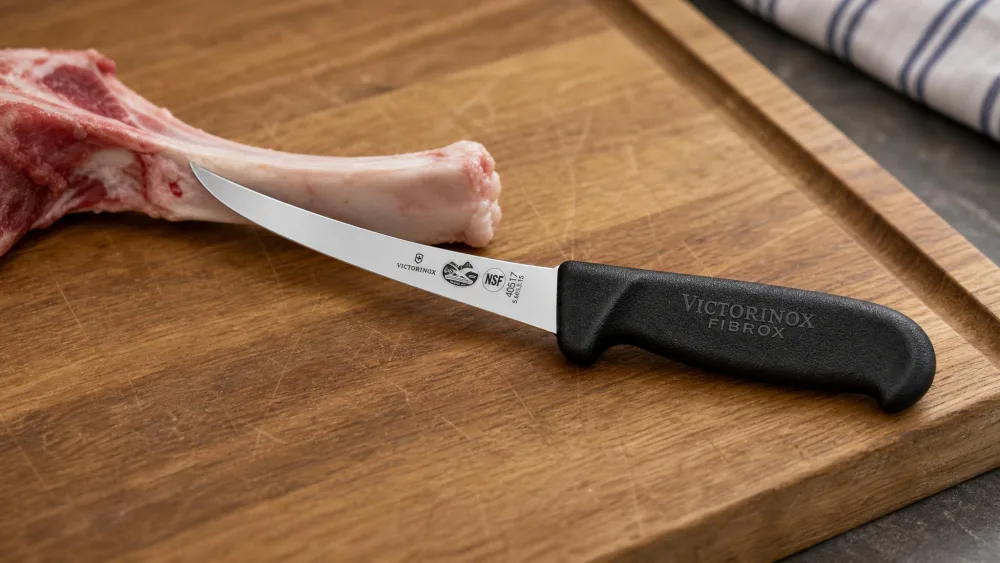
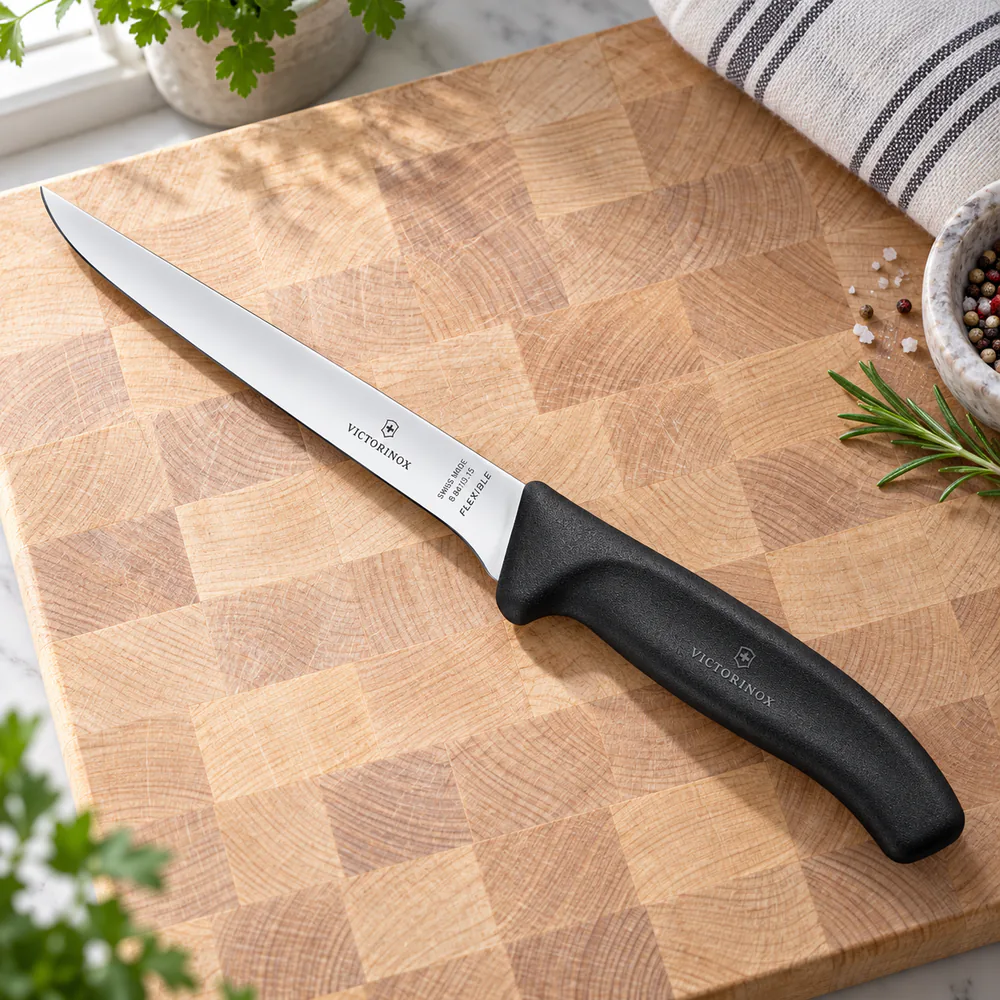
The Swiss Classic was one of the most flexible knives in the test, and that earns it the editor's pick for close work. Its thin tip made silverskin removal on pork easy, and at 3.52 ounces it stayed light enough that fatigue never slowed us down through high-volume prep. It bent into tight areas without going limp, and the edge held after filleting fish and boning out a deer.
Thin flexible European stainless steel blade
Weighs just 3.52 oz
Distinctive S-shaped edge
Textured Fibrox handle minimizes wrist tension
Specifications
Blade length
6 inches
Steel
European stainless, stamped
Weight
3.52 oz
Flexibility
Very flexible
Handle
Fibrox (TPE)
Tang
Not full
Price
about $19
Pros
Exceptional flexibility for close work
Featherlight, low fatigue
Edge holds through heavy use
Very affordable
Cons
Not full tang, can loosen over time
Edge can feel dull out of the box until it settles in
Who Should Buy This Knife
Cooks who want a very flexible, featherlight knife for silverskin, fish, and intricate bone work will love it, especially if they value an edge that keeps performing. At about $19 it is an easy add to any drawer. If that sounds like you, check the current price on the Victorinox Swiss Classic 6-Inch Boning Knife.
Who Should Look Elsewhere
If you prefer a full-tang knife that will never loosen, or want a stiffer blade for heavier trimming, pick the Fibrox or the HENCKELS.
How to Choose the Best Boning Knife
Buying a boning knife comes down to four choices: flexibility, blade length, steel, and handle.
Flexible vs Stiff vs Semi-Flexible Blades
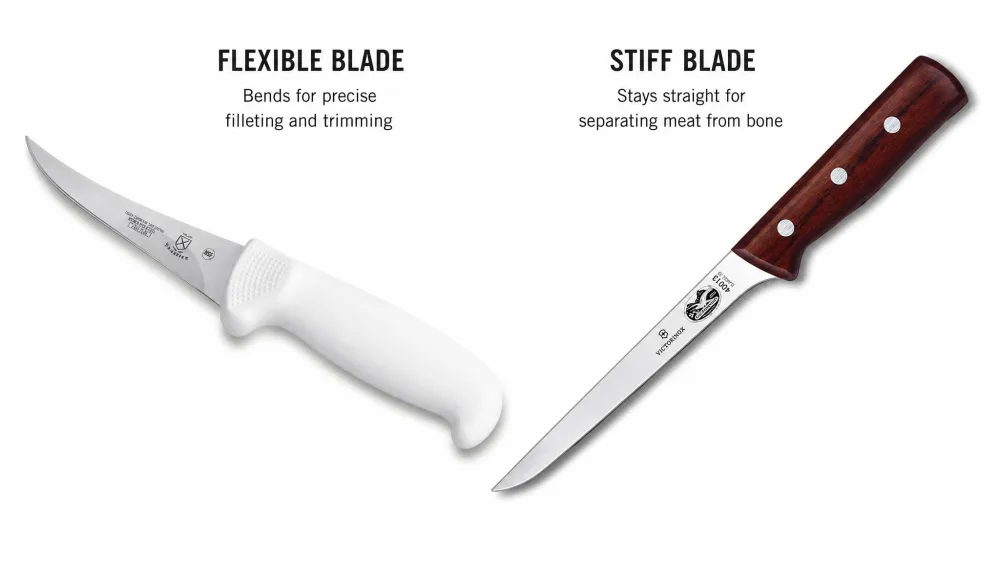
Flexibility is the first decision, and it depends on the job. Very flexible blades follow the curves of fish and silverskin closely, but in our tests they were harder to keep aligned against a rib cage. Stiff blades stay true through heavy trimming but lose nuance in tight spaces. That trade-off is why this guide mixes flexible and stiff picks rather than crowning one flex level for every job. The very flexible Victorinox Swiss Classic sits at one end of that range and the stiff HENCKELS Forged Premio at the other.
Blade Length: 5, 6, or 7 Inches
Six inches is the all-rounder and the right place to start. A 5.5-inch blade gives more control for tight work around joints. A 7-inch blade like the HOSHANHO extends your reach for large roasts and big fish.
Steel Type: German vs Japanese
German stainless steel, usually in the X50CrMoV15 class, is tough, stain resistant, and easy to sharpen. Japanese-style high-carbon stainless such as VG-10 runs harder and holds a sharper edge longer, but it is more brittle and wants hand washing. High-carbon stainless of either school beats low-end steel for edge retention. On the premium end, the Shun Cutlery Classic Boning & Fillet Knife pairs a VG-MAX core with a 69-layer Damascus finish.
Forged vs Stamped Construction
A forged blade is pressed from a single bar of steel, giving it a heavier, better-balanced feel and usually a full tang. A stamped blade is punched from a sheet, making it lighter, cheaper, and often more flexible. Both can be excellent; the Victorinox knives in this guide are stamped and among our favorites.
Handle Material and Grip
Handle grip matters more than you expect, because boning work is messy. Textured handles stay more secure when coated in meat juices, while smooth polypropylene gets slick when wet. Pakkawood looks great and feels warm, though some runs are rounder than ideal.
Blade Shape: Straight vs Curved
A curved blade improves the working angle around round bones and joints, making it easier to scoop meat away cleanly. A straighter blade suits long, flat trimming cuts. If most of your work is around bones, a curved profile is the more forgiving choice.
Tip. Hand wash boning knives with warm water and soap, dry them immediately, and sharpen at 15 to 20 degrees. Store the blade in a block, a strip, or a guard; a boning knife should never rattle loose in a drawer.
Warning. Never use a boning knife as a cleaver. Its thin blade is built to cut meat, not bone, and striking bone chips the edge or snaps the tip. The heat and jostling of a dishwasher also dull the edge faster than hand washing.
Flexibility is the biggest decision when choosing a boning knife.
Boning Knife vs Fillet Knife: What's the Difference?
A boning knife and a fillet knife are close cousins shaped for different jobs. A boning knife runs 5 to 7 inches with a stiffer blade, built to work meat away from bone on chicken, pork, and beef. A fillet knife runs longer, often 6 to 9 inches, with a thinner, more flexible blade built to slide between the skin and flesh of a fish. You can press a flexible boning knife into fillet duty in a pinch, and many fillet knives will debone a chicken, but each is best at its own task. If you work fish often, own both. Cooks who want a semi-stiff blade with a wood handle can also consider the Victorinox Wood 6-Inch Boning Knife.
Frequently Asked Questions
What is a boning knife used for?
It separates meat from bone and trims fat and silverskin on chicken, beef, pork, and fish. It is the knife for breaking down a whole bird, deboning a roast, and portioning cuts with minimal waste.
Is a flexible or stiff boning knife better?
It comes down to your dominant protein. Flexible blades track fish skin and silverskin closely, while stiff blades push through sinew and stay truer on big roasts. If you cook a mixed week, hold a blade flat and press the spine near the tip: the models that flexed noticeably and sprang back straight were the ones our testers favored for all-around work.
What size boning knife should I get?
Start with a 6-inch blade for most kitchens. Go shorter, around 5 to 5.5 inches, for tight joint work, and choose 7 inches if you regularly break down large roasts or big fish. Between sizes, weigh the handle and blade firmness: the HOSHANHO's 7-inch blade runs firmer than its flexible label suggests, so if you want the reach of 7 inches with a more forgiving bend, a 6-inch curved blade like the Fibrox is the safer middle.
How do I sharpen a boning knife?
Hone it on a steel before each session; that realigns the edge and is enough for most weeks. When honing stops bringing it back, sharpen on a whetstone at 15 to 20 degrees per side and dry the blade right away. On high-hardness Japanese-style steel, go gentler on the stone than you would on tougher German steel, since the harder edge is more brittle.
Can I use a boning knife as a fillet knife?
In a pinch, yes, especially with a flexible blade, but expect to work differently. Skinning a fish asks for a long, flexible blade that bends along the body, while deboning a chicken thigh asks for a shorter, stiffer one that tracks the bone. A flexible boning knife handles both adequately, and a dedicated fillet knife makes skinning noticeably easier, so the choice comes down to how often fish is on your counter.
The Bottom Line
If you buy one boning knife, make it the Victorinox Fibrox. It is the most capable all-rounder we tested, and at about $25 it leaves room in the budget for a sharpener. On a tight budget, the Mercer at around $11 is the sharpest value. For silverskin, fish, and intricate bone work, the featherlight Swiss Classic is the editor's pick. Add a flexible blade later if you start filleting regularly.