As an Amazon Associate we earn from qualifying purchases. We may earn a commission from links on this page, at no extra cost to you. Learn more.
When you're filleting a fish, nothing matters more than the knife in your hand. A blade that binds against the backbone turns a thirty-second cut into a wrestling match, and one that flexes wrong shreds the fillet you were about to cook. Most fillet knives fail one of those tests before they leave the cleaning table.
We tested eight of the best fillet knives of 2026 to find the ones that pass both, filleting everything from panfish to redfish along the way. One number sets the bar for the whole class: the Speed Demon stayed sharp through roughly 80 fish after a single pre-season sharpening, and every knife below had to answer for its edge at the cleaning table.
Below are the knives we would buy, how we tested them, and what to look for when you shop.
Our Top Picks at a Glance
Street prices at the time of writing, and they move week to week.
We scored all eight knives on the same four criteria: edge retention, blade flexibility, how the handle behaves over a long cleaning session, and how easily the steel sharpens back to new. Value was weighed last, after the performance scores.
The numbers tell the story. The Bubba cleared 40-plus fish per day on multi-day tournament trips without bogging down as the battery depletes. The Dexter-Russell held its edge through multiple limits of redfish and flounder without sharpening. The KastKing Folding filleted 6 carp in a day without dulling. Prices ran from about $16 to about $220, with a capable knife at every step.
Handle comfort showed up in the session notes, not just the spec sheet. The HOSHANHO's pakkawood grip stayed dry through a two-hour charter session, and the Speed Demon, the WORKPRO, and the Bubba all ran large for smaller hands. A sharp edge only matters until the first meal is done, which is why edge retention carried the most weight in the final scores.
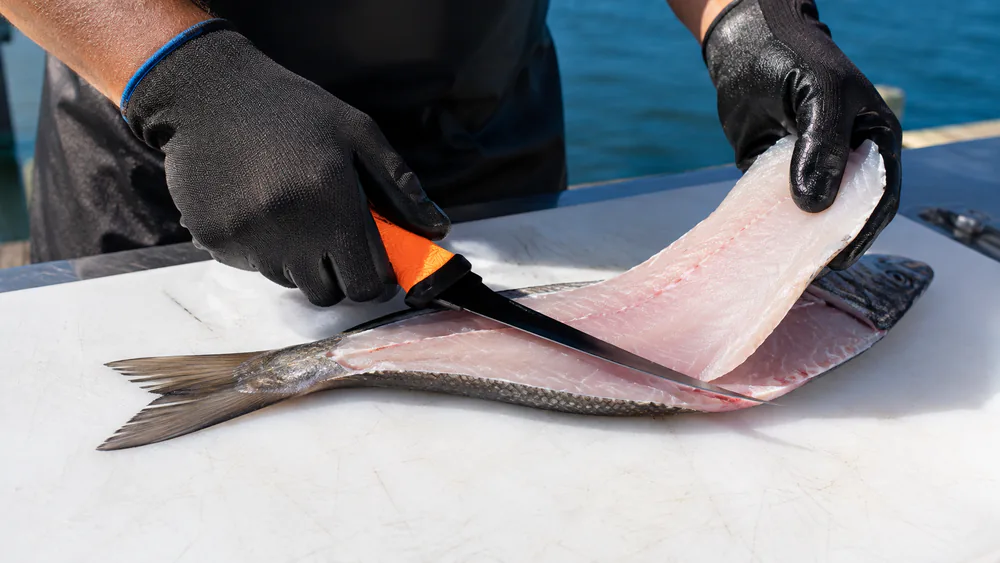
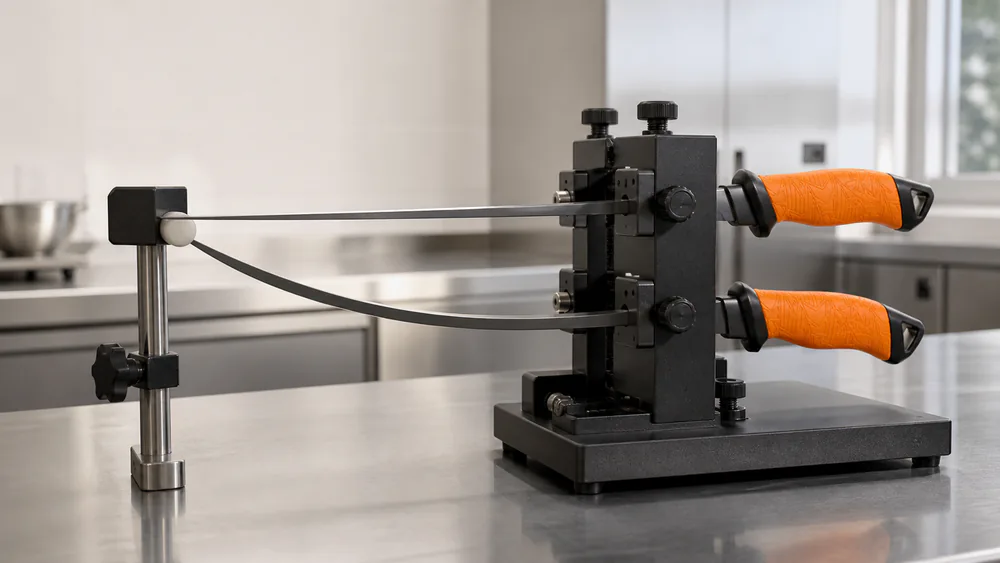
Flexibility matters most when you follow the rib cage around the backbone.
The 8 Best Fillet Knives Reviewed
The ratings below are our own scores, not consumer averages, and prices are street prices at the time of writing.
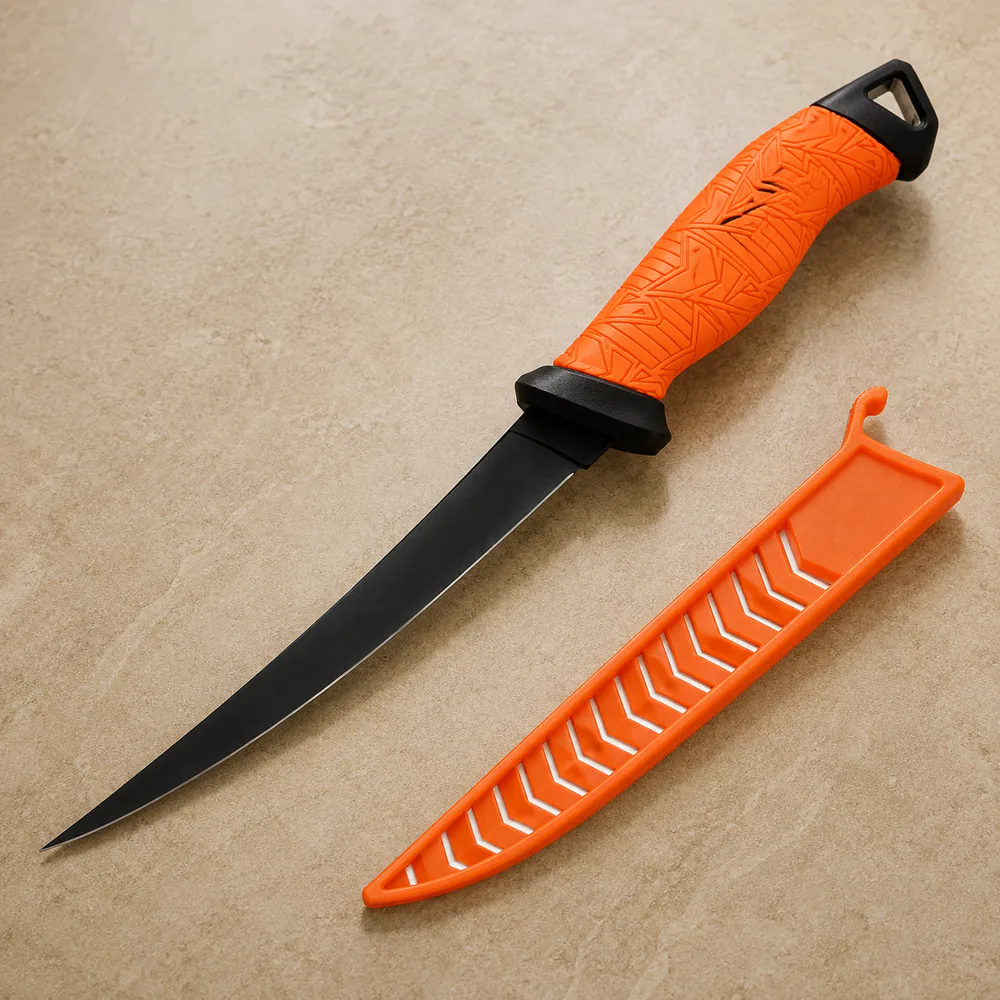
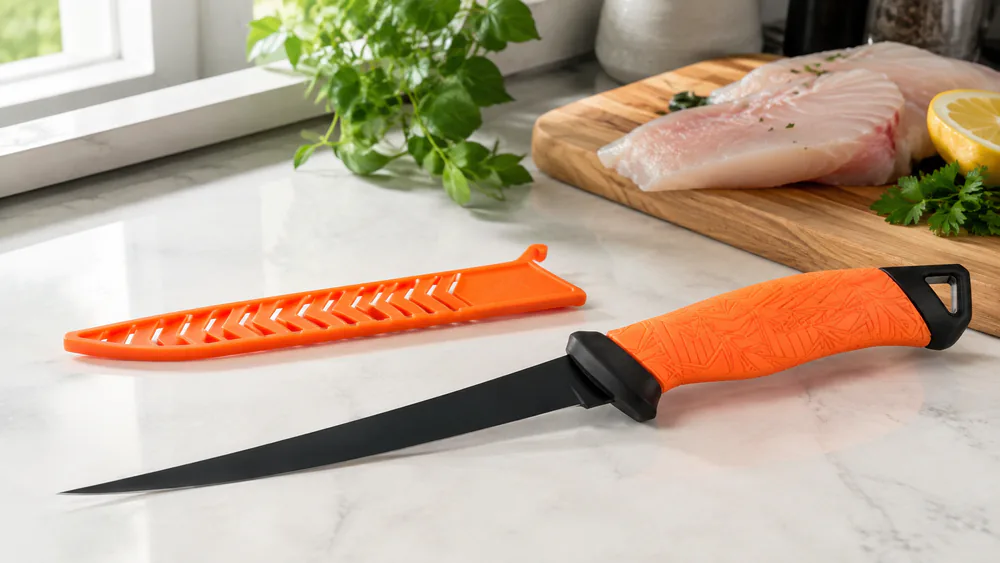
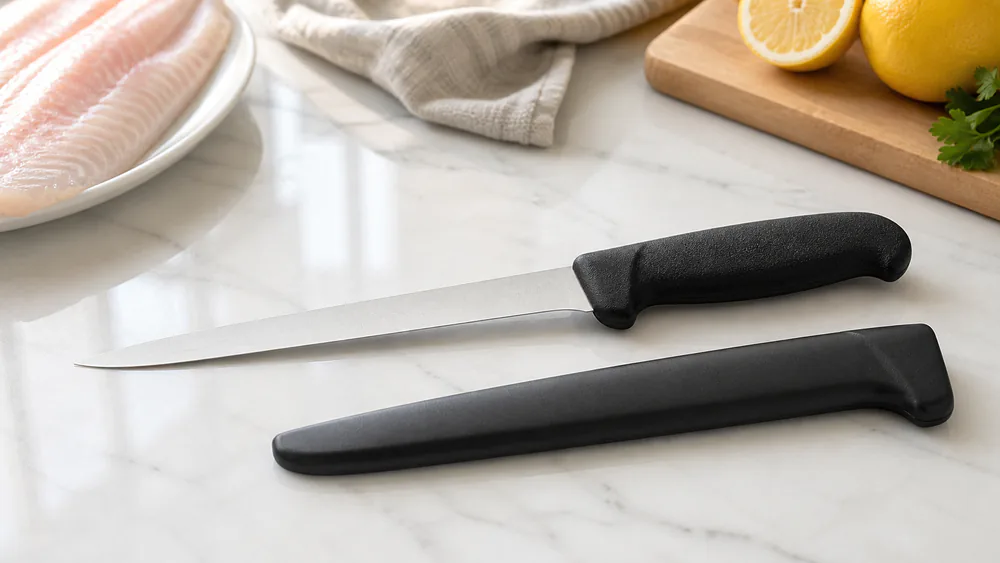
The KastKing Speed Demon Pro is the fillet knife we would buy for most anglers, and the one we would buy again with our own money. Its 7-inch G4116 German stainless blade wears a black corrosion-resistant finish, and the non-slip super polymer grip holds up through a full stringer. It sits at the top of this roundup because of what its edge did over a full season.
Pros
Edge held through roughly 80 fish after one pre-season sharpening
Zero rust after three saltwater trips with just a freshwater rinse
Click-lock vented sheath that drains water instead of trapping it
About $26 for the 7-inch model
Cons
Handle runs large for smaller hands
Edge retention fades against pricier steel
The 9-inch blade in the line is overkill on a stringer of panfish
We ran it through roughly 80 fish after a single pre-season sharpening, and it delivered drag-free cuts on 20 to 30 lb redfish the whole way. Three saltwater trips with nothing but a freshwater rinse, and the blade still showed zero rust. Check the current price of the KastKing Speed Demon Pro on Amazon.
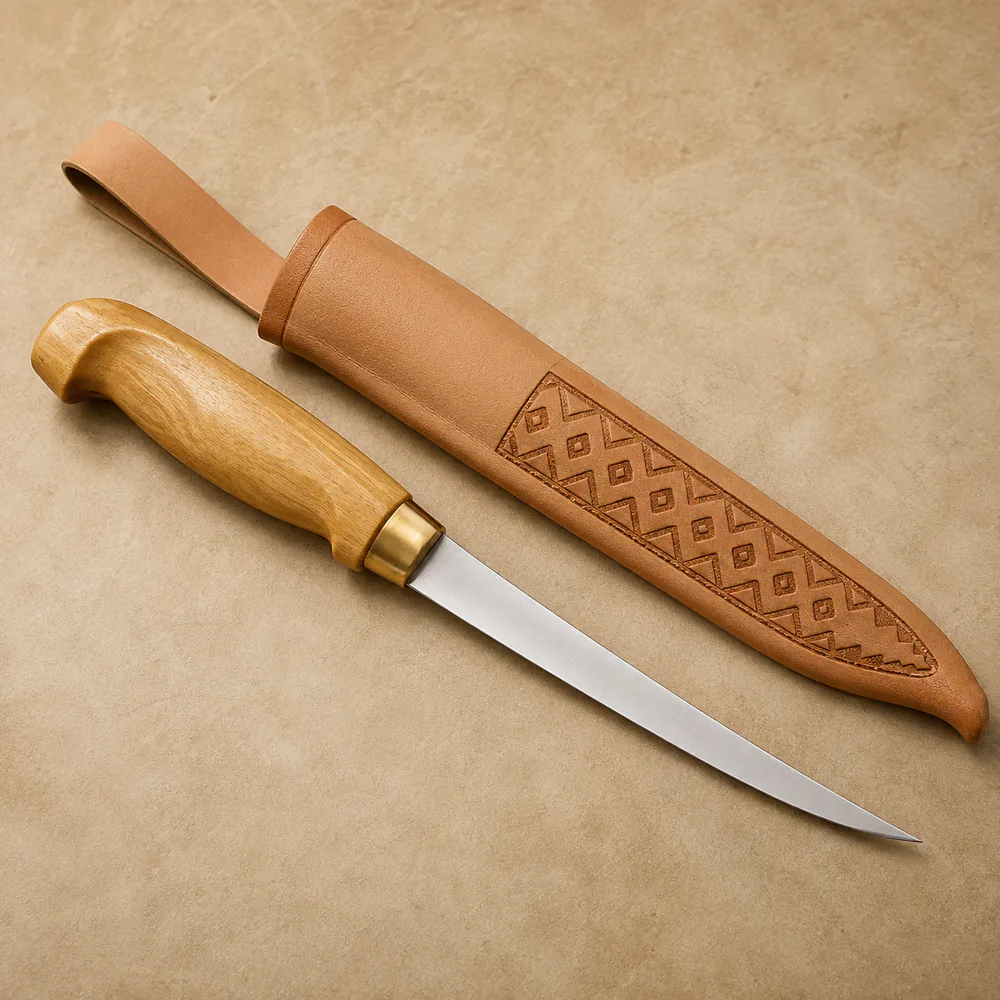
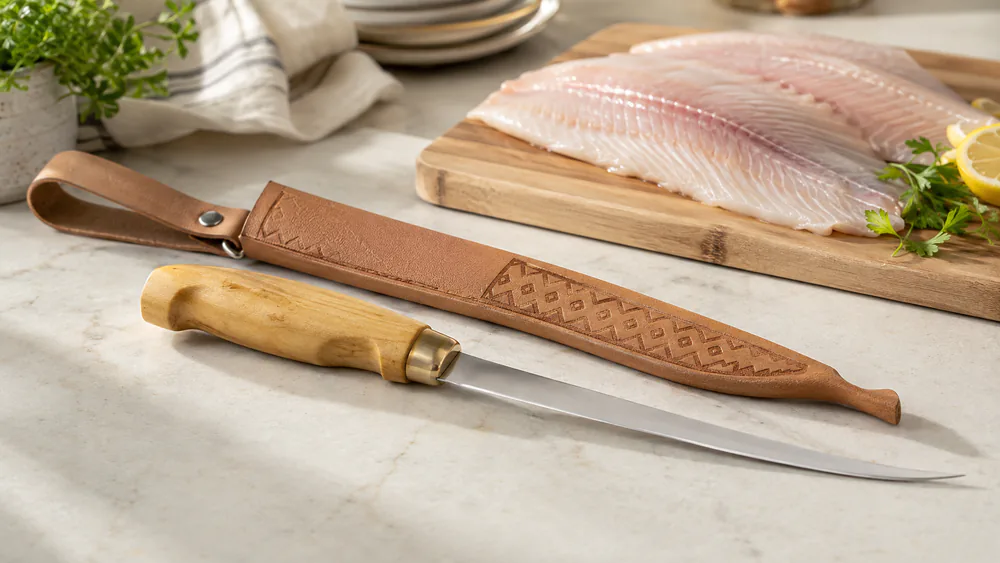
Where the Speed Demon is the value overachiever, the Rapala Fish 'n Fillet is the original. The 6-inch hand-ground European stainless blade tapers progressively into a full tang, and the reinforced varnished birch handle carries a brass ferrule safety notch. It ships with a fine-tooled leather sheath and a single-stage sharpener, a rare pair of extras at this price.
What we liked is the longevity story. Service lives of 25, 30, even 40 years out of a single knife are on record for this model, the hand-ground taper cuts fish like butter, and the resharpening happens in minutes on the included sharpener. What we did not: the wax-finished birch handle gets slick when it is covered in fish slime, the factory edge is inconsistent from unit to unit, and the knife is hand wash and dry only.
Our unit needed a quick touch-up before its first fillet, so we sat down with the included sharpener for five minutes before the first cleaning session and worked the taper the way hand-ground steel asks. The first fillet came off the backbone cleanly, and that five minutes is the whole Rapala trade: a short setup now, decades of service later. At about $27, the Rapala Fish 'n Fillet is the easiest recommendation in this guide.
Bubba Pro Series Lithium-Ion Electric Fillet Knife (Best Electric)
3
Bubba Pro Series Lithium-Ion Electric Fillet Knife
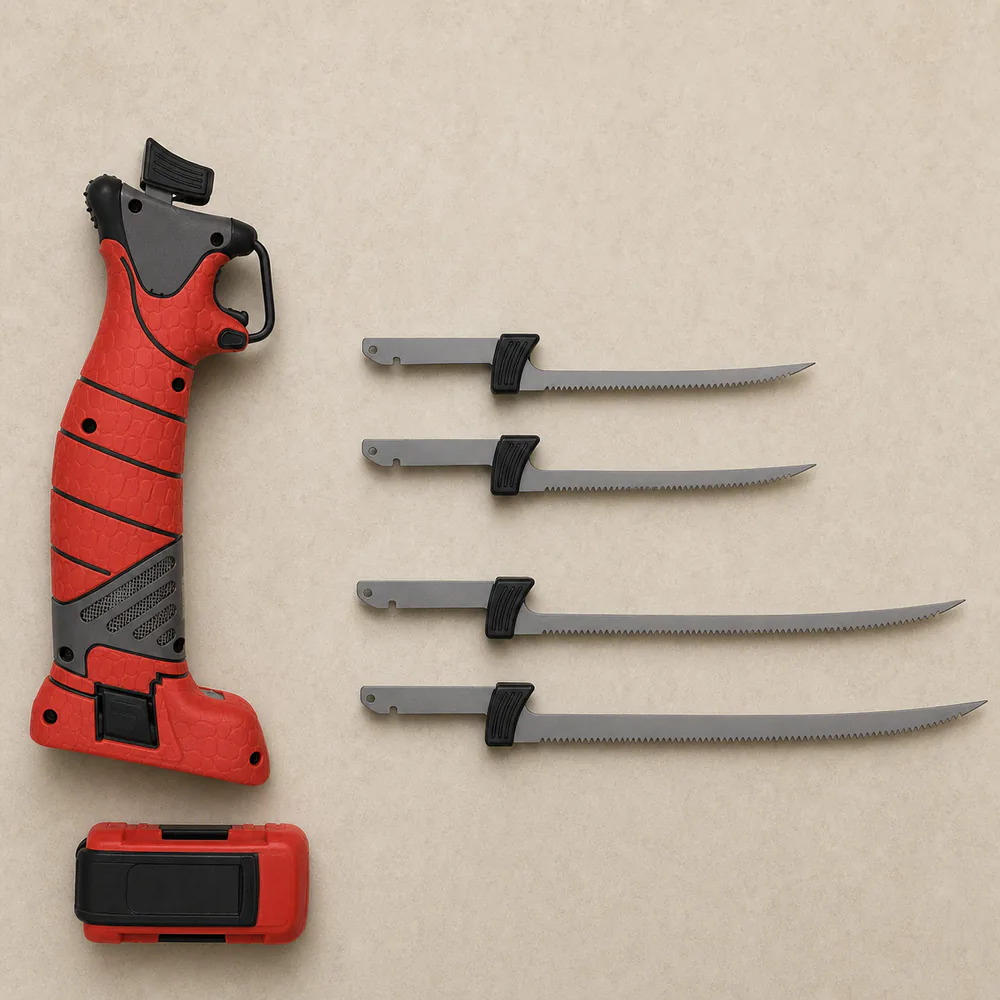
If the Rapala is the budget manual, the Bubba is the serious electric. The brushless motor lives in an aluminum-alloy housing, and four removable Ti-Nitride coated non-stick blades, from a 7-inch E-Flex to a 12-inch E-Stiff, cover everything from panfish to tuna. Two rechargeable lithium-ion batteries ship with a hard carry case, and the knife weighs 1.11 lb.
Pros
No power drop-off even late in a battery cycle
Four Ti-Nitride blades cover every fish size
Dual-rivet blades stay wobble-free
Hard case and two batteries included
Cons
About $220 is a serious investment for casual anglers
Handle is bulky for smaller hands
Quality control has shipped both flawless and dead-on-arrival units
The Bubba cleared 40-plus fish per day on multi-day tournament trips without bogging down as the battery depletes, and a charter-size haul of catfish in 90-degree heat never needed an outlet. One session cleaned 40 fish on a single charge. The trigger response is immediate, and the Ti-Nitride blades avoid the residue buildup of standard stainless. Our one caution is quality control: this line has shipped both flawless units and dead-on-arrival units, so buy where returns are painless. At about $220 for the original Pro Series, with the newer Gen 2 priced higher, it is a real investment, and the 8.5-inch handle is bulky for smaller hands. Check the latest price of the Bubba Pro Series on Amazon.
Dexter-Russell 7-Inch Narrow Fillet Knife (Best for Saltwater)
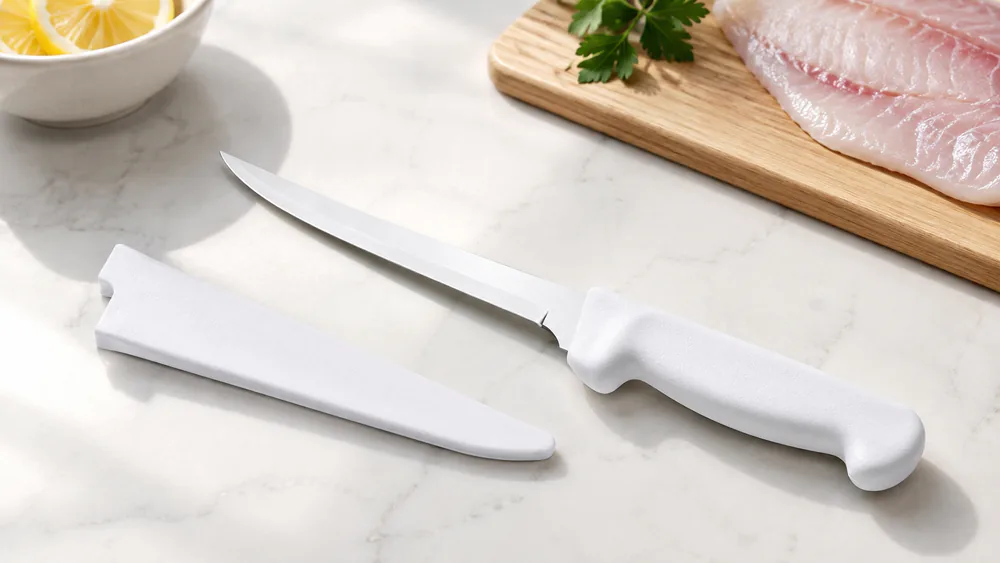
The cheapest knife in this roundup is also the one we reached for after saltwater trips. The 7-inch narrow blade is hollow ground from 400-series stain-free DEXSTEEL high-carbon stainless, and the slip-resistant textured polypropylene handle carries a finger guard. It is NSF certified for commercial use, and the 12-inch overall length covers most fish.
Pros
Stain-free steel shrugs off saltwater with a simple rinse
NSF certified for commercial kitchens
Edge retention that outperforms its price class
The cheapest pick here at about $16
Cons
Stamped steel wears faster than forged under heavy use
Flexibility reads stiff to some hands
Hand wash recommended
The stain-free steel is the reason we picked it for saltwater: through multiple limits of redfish and flounder it came sharp, held its edge without sharpening, and rinsed clean. The handle grips well even when it is bloody and wipes clean in seconds. At about $16 it is the cheapest knife here by a wide margin, and the edge for the money is the running theme. The trade-offs are real: the stamped steel wears faster than forged under heavy use, and the flex reads stiff to some hands. The Dexter-Russell 7-Inch Narrow is the pick we hand to anyone starting out.
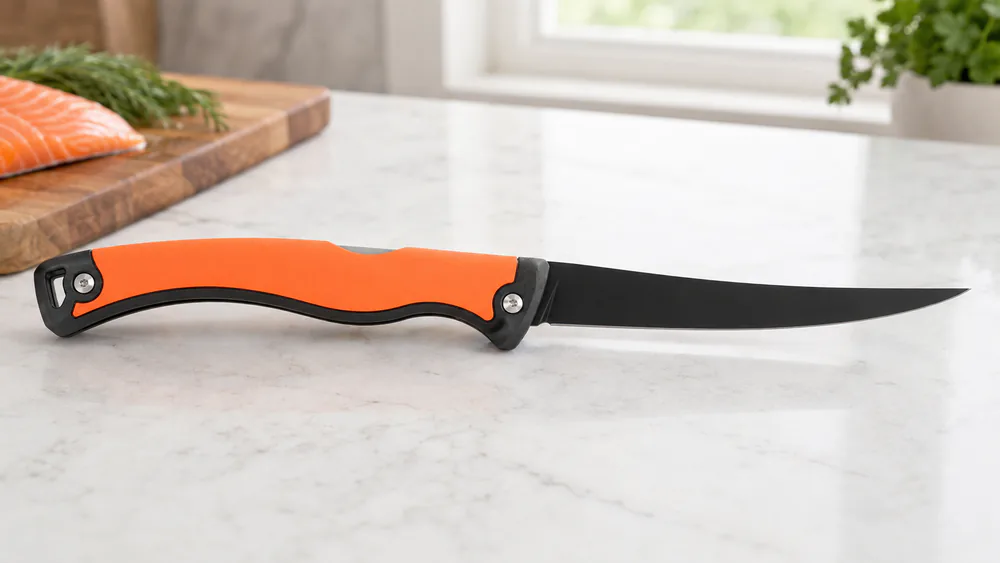
Every knife above needs a sheath or a case, and the KastKing Folding carries its own answer by folding in half. Open, the 6.5-inch G4116 German stainless blade with a gray non-stick titanium-bonded finish spans 13.5 inches; folded, it measures 7.5 inches and weighs 8.1 oz. TPE rubber handles wrap a glass-reinforced polypropylene frame, and the locking mechanism keeps the blade open through a full cleaning session.
Pros
Folds to 7.5 inches for tackle-box and pack storage
Non-stick titanium-bonded finish resists sticking
Locking blade with sheath included
Cons
Right-hand oriented lock and bevel only
Folding spring has failed in a minority of units
6.5-inch blade limits the fish you can take on
We filleted 6 carp in a day with it without dulling, and the folded package earns its place in a tackle box or a canoe pack. The lock and bevel are oriented for right-hand use only, so lefties should look elsewhere, and the folding spring has failed after light use in a minority of units, so treat the mechanism gently. A sheath is included. See the KastKing Folding Fillet Knife price on Amazon.
HOSHANHO 7-Inch Fillet Knife (Best Japanese Steel)
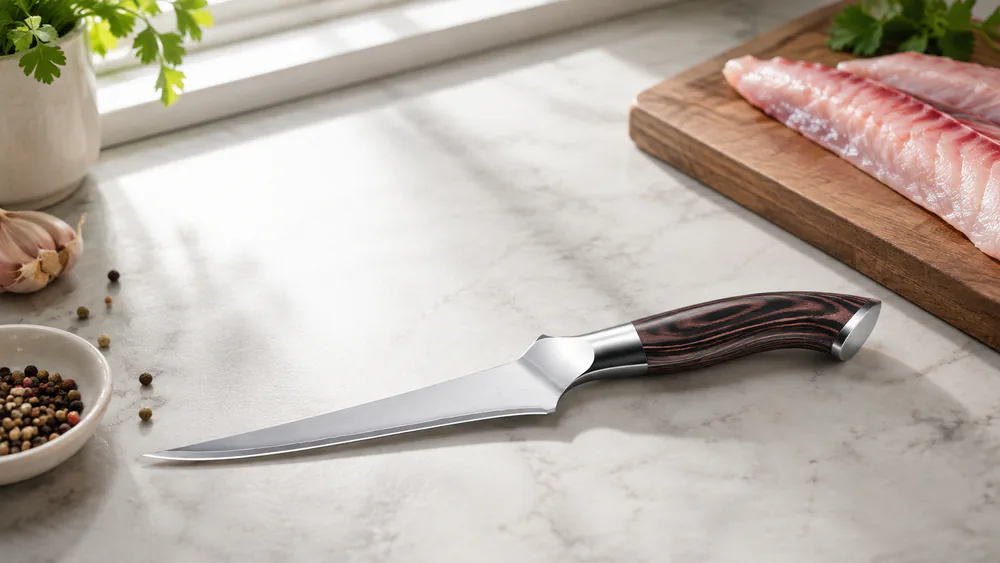
The HOSHANHO takes the opposite approach from the folding KastKing: nothing folds, everything is steel, and out of the box it is the sharpest blade in this roundup. The forged 7-inch (18 cm) blade is 10Cr15CoMoV Japanese high-carbon stainless, hand-polished to 15 degrees per side, and the pakkawood handle weighs the knife at 300 g.
The strengths came out in the session notes. It stayed sharp through 50-plus fish before its first touch-up, cut chicken bones comfortably along the way, and a two-hour snapper-and-grouper session on a charter boat left no fatigue complaints, with the pakkawood grip staying dry throughout. The trade-offs are the honest half of the steel: the blade is stiffer than the dedicated fish-only flex knives, so it reads more like a boning knife on delicate fillet work; high-carbon Japanese steel pits fast if left wet, so hand washing and drying are non-negotiable; and the box ships without a sheath, so budget for one or store it on a magnetic strip. Fit and finish is also uneven across units, with some handles not seating flush at the blade junction. Check the latest price of the HOSHANHO 7-Inch Fillet Knife on Amazon before you buy.
WORKPRO 12V Cordless Electric Fillet Knife (Best Value Electric)
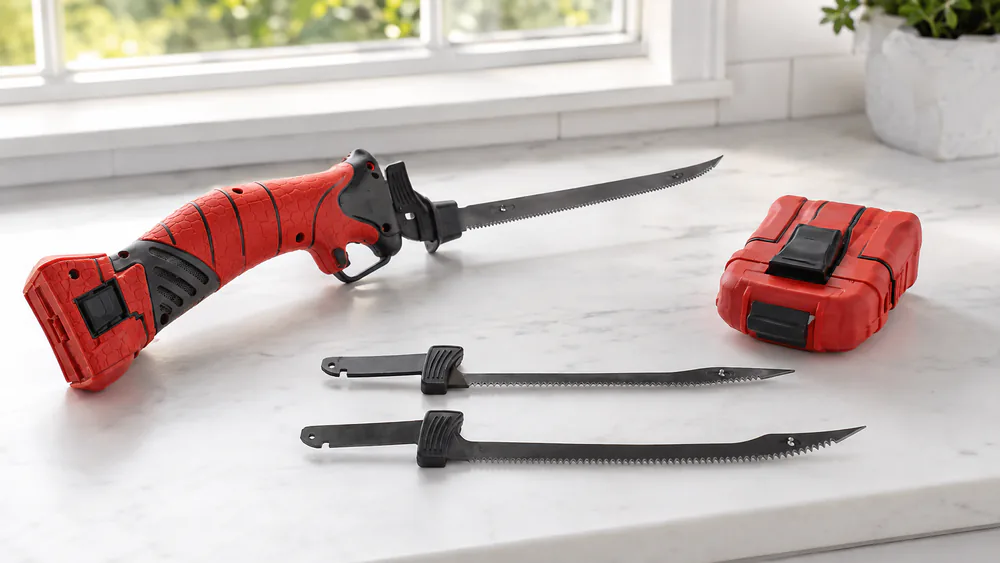
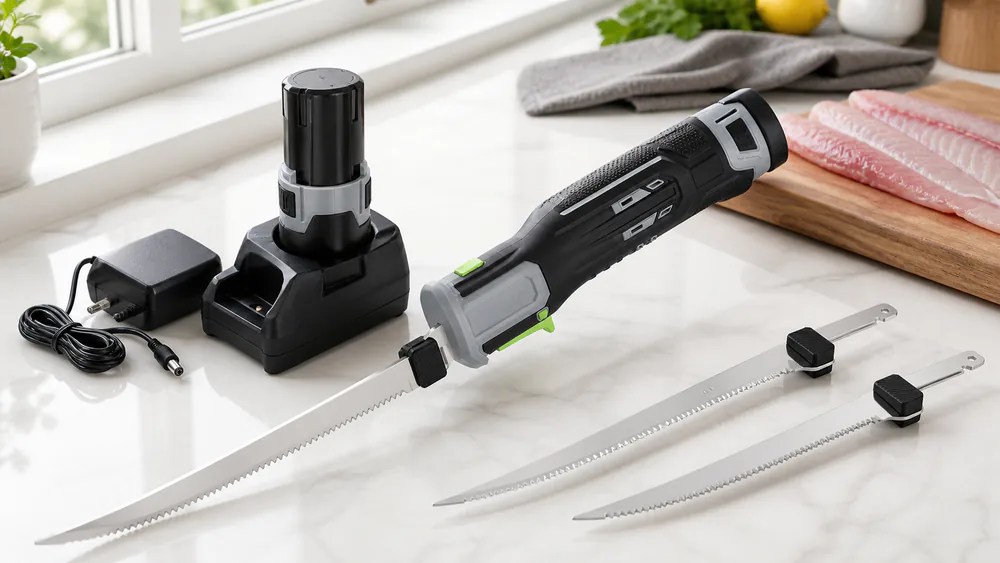
Where the HOSHANHO is all steel, the WORKPRO is all batteries, and it brings the electric experience down to about $80. The 12V cordless motor runs on two removable 2.0Ah battery packs, about an hour of use each with a one-hour fast charge, and it ships with two carbon stainless blades: an 8-inch flex for panfish and walleye, and a 10-inch stiff for catfish and pike. A rubber-coated non-slip handle, a safety lock, an LED work light, and a heavy-duty storage case round out the box, and the knife weighs about a pound.
Pros
Two batteries mean no pause mid-haul
8-inch flex and 10-inch stiff blades cover the species range
About a quarter of the manual fillet time
LED work light and storage case included
Cons
Grip reads large for smaller hands
Runs warm on long sessions
Blades are consumables you will replace over time
In our hands it cleaned 36 walleyes and a jumbo perch on one battery, ran slightly warm by the end, and cut walleye fillet time to a quarter of the manual pace. The two-battery swap means you never pause mid-haul, and a full season of testing showed no power drop-off across a cycle. The grip reads as large for small hands, and the body does run warm on long sessions, but for the price it is the honest answer for anyone who cleans fish in volume without paying premium-electric money. See the WORKPRO 12V Cordless Electric Fillet Knife price on Amazon.
Victorinox Fibrox 8-Inch Fillet Knife (Best for Home Cooks)
The first thing you notice about the Victorinox is the weight: 3 oz, the lightest blade in this roundup. The stamped, bolsterless 8-inch blade (7.9 inches of it) is high-carbon stainless tempered to 55-56 HRC, and the Fibrox TPE grip is the most sure-handed surface here. It is NSF certified and dishwasher safe.
Pros
Flexible blade glides along the rib cage and under small bones
NSF certified and dishwasher safe
3 oz, the lightest and most agile knife here
Professional-kitchen workhorse at about $36
Cons
Ships without a sheath
Thin blade needs care on frozen fish
Plain handle styling if looks matter to you
It flexes and glides through fillets on walleye and trout, cuts through small rib bones without a struggle, and the rubberized grip stays sure even when it is wet. This is the fish-house workhorse: the pattern we look for in a knife that will live in a professional kitchen, and one long session on black cod and sablefish confirmed the 8-inch blade stays light and agile despite its length. It holds its edge well through cleaning sessions, and it sharpens back easily on a home sharpener. The Victorinox Fibrox is the pick we hand to home cooks who fillet at the kitchen counter instead of the boat.
How to Choose the Best Fillet Knife
The right fillet knife is the one that disappears in your hand, and that comes down to three decisions: blade length, steel, and handle. Electrics are a separate decision, and the price tiers below keep the options honest.
Blade Length and Flexibility
Length is the first question, and it tracks the fish you clean. A 6-inch blade suits panfish, trout, and crappie, and it is the most forgiving for beginners. Seven inches is the sweet spot for most freshwater fish and light saltwater, which is why three of our top picks run 7 inches. Eight inches, like the Victorinox, covers bigger freshwater fish and stays agile if the blade is thin. Nine inches and up, including the long electric blades, is saltwater and big-fish territory.
Flexibility is the second half. A flexible blade bends to follow the rib cage and the line of the backbone, which is what separates a clean fillet from a shredded one. The trade is control: a stiffer blade, like the HOSHANHO's, is better for catfish, pike, and meat work, and worse for delicate fillets. When you test a knife, flex the tip gently and imagine it following the bones. If it fights you, it will fight the fish.
A flexible blade bends to follow the rib cage; a stiff blade holds its line.
Steel Type and Edge Retention
Four steel grades cover nearly everything in this class, and the name on the blade tells you what the edge will do.
10Cr15CoMoV, the steel in the HOSHANHO, is a high-carbon Japanese stainless with 15 percent chromium. It takes a very fine edge, holds it through 50-plus fish, and asks for hand washing, because it will pit if left wet. G4116, the steel in both KastKings, is the German 4116 family: corrosion-resistant, easy to sharpen at home, and honest about its limits against premium steel. 1.4116 is the German DIN designation for X50CrMoV15, the same high-carbon stainless Wusthof forges its Classic fillet knife from; it is the premium benchmark for edge life in a stainless blade. And 8Cr13MoV, the budget Chinese stainless you will meet under $20, sharpens easily and gives up edge life in exchange.
For saltwater, corrosion resistance matters as much as edge retention. Stain-free steels and coated blades rinse clean after a day on the boat, while plain high-carbon steel needs immediate rinsing and drying. Hardness numbers tell part of the story, but a fine edge angle matters too: the HOSHANHO's hand-polished 15 degrees per side is why it arrives sharper than anything else here. The deeper argument about high-carbon steel applies to fillet knives more than most blades, because they work thin and wet.
Handle Design and Grip
In hour three of a cleaning session, the handle is the knife. Non-slip polymer and TPE grips, like the Speed Demon's super polymer and the Victorinox's Fibrox, stay sure even when they are covered in slime, and they are the safest bet for most hands. Pakkawood, on the HOSHANHO, stays dry and comfortable but needs hand washing. Birch, on the Rapala, is the classic look, but it gets slick when wet. The Dexter-Russell's textured polypropylene grips well even when bloody and wipes clean in seconds.
Watch handle size, not just material. The Speed Demon, the WORKPRO, and the Bubba all run large for smaller hands, so if your grip is on the small side, try the knife or buy from a store with easy returns. A finger guard is a real safety feature on a blade that works over a wet cutting board, and it is worth paying a few dollars for.
Manual vs. Electric Fillet Knives
The decision is about volume, not better. A manual fillet knife gives you control: you feel the bones through the blade, you make a precise cut, and you can take it anywhere. It is the right answer for two fish after dinner or a weekend stringer.
An electric earns its place when the count climbs. The WORKPRO cut walleye fillet time to a quarter of the manual pace and cleaned 36 walleyes plus a jumbo perch on one battery, and the Bubba handled a tournament-day haul without slowing as the battery drains. Electrics cost $80 to $220, and the blades are consumables you will replace over time. Clean 20-plus fish in a sitting on a regular basis and an electric starts earning its keep; if you fillet a handful at a time, a sharp manual knife is faster in practice.
Budget and Value Tiers
Good fillet knives start cheap. Under $30 buys a genuinely capable knife: the Dexter-Russell at about $16, the KastKing folding at about $23, the Speed Demon at about $26, and the Rapala at about $27. The $30 to $80 tier is where the field gets serious, with the Victorinox at about $36, the HOSHANHO at about $66, and the WORKPRO electric at about $80. Above $100 you are paying for forged premium steel, long warranties, or serious electrics like the Bubba at about $220.
The trap is overspending on the first knife. Edge retention matters less than how easily a steel sharpens back, because a knife you touch up regularly outperforms an expensive one that stays dull. Start in the budget tier, learn to sharpen, and upgrade when you know what you actually use.
Caring for Your Fillet Knife
Hand wash and dry immediately after every session, because most fillet knives are not dishwasher safe and the Victorinox is the exception that proves the rule. High-carbon steel pits fast if left wet, so dry the blade before it goes away. After saltwater trips, rinse with fresh water and dry, even on stainless blades.
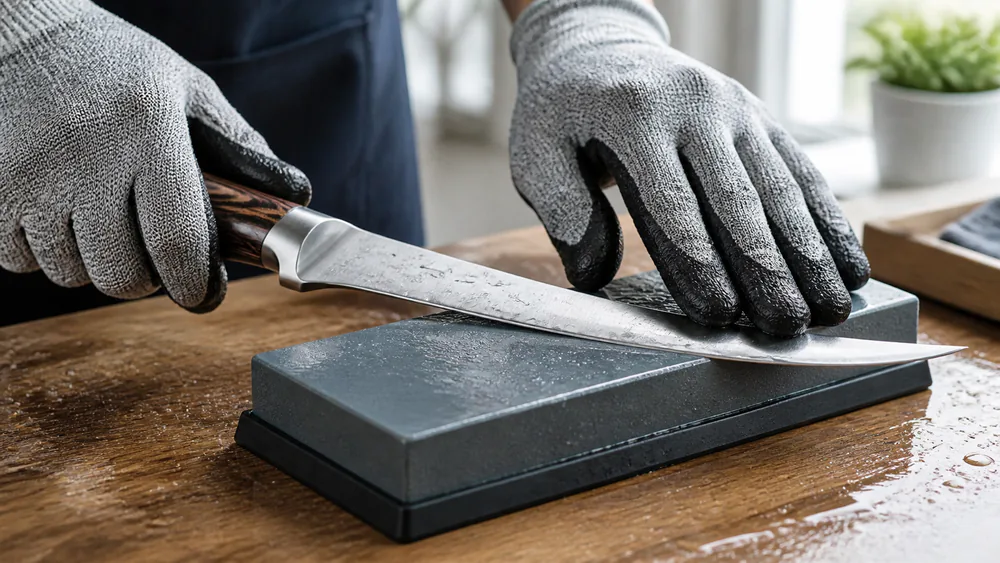
Sharpen on a schedule, not when the knife fails. A few strokes on a steel before each session keeps the edge alive, and a full sharpening when the blade starts to drag restores it. Keep your new fillet knife sharp with our step-by-step guide on how to sharpen a fillet knife, and if you are shopping, our guide to the best knife sharpeners and knife sharpening systems covers the options. Store the blade in a sheath or on a magnetic strip, never loose in a drawer.
A few minutes on a whetstone keeps a fillet knife edge alive through a whole season.
Fillet Knife FAQs
Can a 9-inch blade handle panfish, or is longer always better?
Longer is not better on a stringer of panfish. A 9-inch blade is saltwater and big-fish territory, and on panfish it is overkill: the tip rides far ahead of your hand, so you lose the bone feel that makes a short blade forgiving on small fish. Buy the length for the fish you clean most, and let a 6- or 7-inch blade carry the small stuff.
How many fish should a knife fillet before it needs a full sharpening?
Measure it in fish, not days. A working edge realistically covers a few dozen fish between full sharpenings for the manual knives we tested, and a session on the steel before every outing stretches that gap. When the blade starts dragging through the skin instead of slicing it, the steel is asking for a full pass. Our how to sharpen a fillet knife guide walks through the technique.
Why do some $16 knives outperform $100 knives?
Because fillet work rewards thin, flexible steel, and the cheapest blades in this class are stamped exactly that way. The extra money buys edge life, fit and finish, and a warranty, so the premium shows up over years, not in the first fillet. A $16 knife you keep sharp beats a $100 knife you let go dull, which is why our advice does not change with the price: learn to sharpen whatever you buy.
What is the difference between a fillet knife and a boning knife?
A fillet knife has a thin, flexible blade built to follow the rib cage and backbone and to skin fish in one pass. A boning knife is stiffer, built for separating meat from bone in poultry, beef, and pork. Same family, opposite jobs: a fillet knife flexes, a boning knife does not.
Is X50CrMoV15 worth the premium over G4116?
For most fillet work, no. G4116 is corrosion-resistant and sharpens back to new in minutes on a home sharpener, which covers what a fillet knife does most days. X50CrMoV15, the steel Wusthof forges its Classic fillet knife from, is hardened to 58 HRC and holds an edge longer between sharpenings, so it earns its premium only if you want the longest possible run between sharpening sessions and you accept a more patient session on the stone. If you touch up regularly, G4116 does the job at a fraction of the price.
How long do electric fillet knife blades last, and what do replacements cost?
Long enough that replacements are a maintenance item, not a constant cost. The Bubba ships four Ti-Nitride coated blades that resist the residue buildup of standard stainless, and the WORKPRO ships two carbon stainless blades, one flex and one stiff. Both brands sell replacements separately. Bubba blades sell one per pack, at roughly $13.59 to $28.99 per blade depending on size, retailer, and sale cycles, and no multi-blade refill pack exists, so the blade sets you see on sale are complete knife kits. WORKPRO blades run about $15 to $35 per blade and fit only the WORKPRO 12V knife (model W125223AE), not other WORKPRO tools or other brands. Budget a spare set when you buy.
Final Thoughts
The honest shape of this market is that you do not need to spend much to fillet well. The Dexter-Russell at about $16 is the best dollar-for-dollar knife we have ever put on a cleaning table, and the Speed Demon at about $26 is where most readers should start. If we were starting over, we would buy the Speed Demon first, learn to sharpen it, and add an electric only when the stringer count made the case, which for most readers is never.
Two runners-up deserve a nod. The Victorinox Fibrox is the better knife if your fillet work happens at the kitchen counter rather than the boat, and the Bubba is the only pick that justifies itself for tournament-volume anglers. The one purchase we would make alongside any of these is a sharpener, because every fillet knife is only as good as the edge you give it on Sunday night.