As an Amazon Associate we earn from qualifying purchases. We may earn a commission from links on this page, at no extra cost to you. Learn more.
Which chef's knife still feels sharp after a week of prep? That is the question that matters, and most buyers cannot answer it until after they have spent the money. We tested 8 of the year's best 8-inch chef's knives through a month of real prep, slicing, dicing, and butchering with each blade in rotation. Then we scored how the edge held up, how the handle wore on the hand, and how easily the steel sharpened back to new.
An 8-inch chef's knife is the blade most home cooks reach for on the way to everything else. It dices an onion, slices a roast, and breaks down a chicken with the same edge. Pick the right one and it will still be cutting cleanly years from now; pick the wrong one and you will wonder what all the fuss is about.
The eight winners below span every price band that matters, from a $50 budget blade to a $400 splurge, and they come from both sides of the knife-making world: German forged steel and Japanese precision. Every pick survived a month of prep to earn its slot, and the top of the list did not change hands this year.
Our Top Picks at a Glance
Rank
Product
Best for
Key spec
Rating
Buy
1
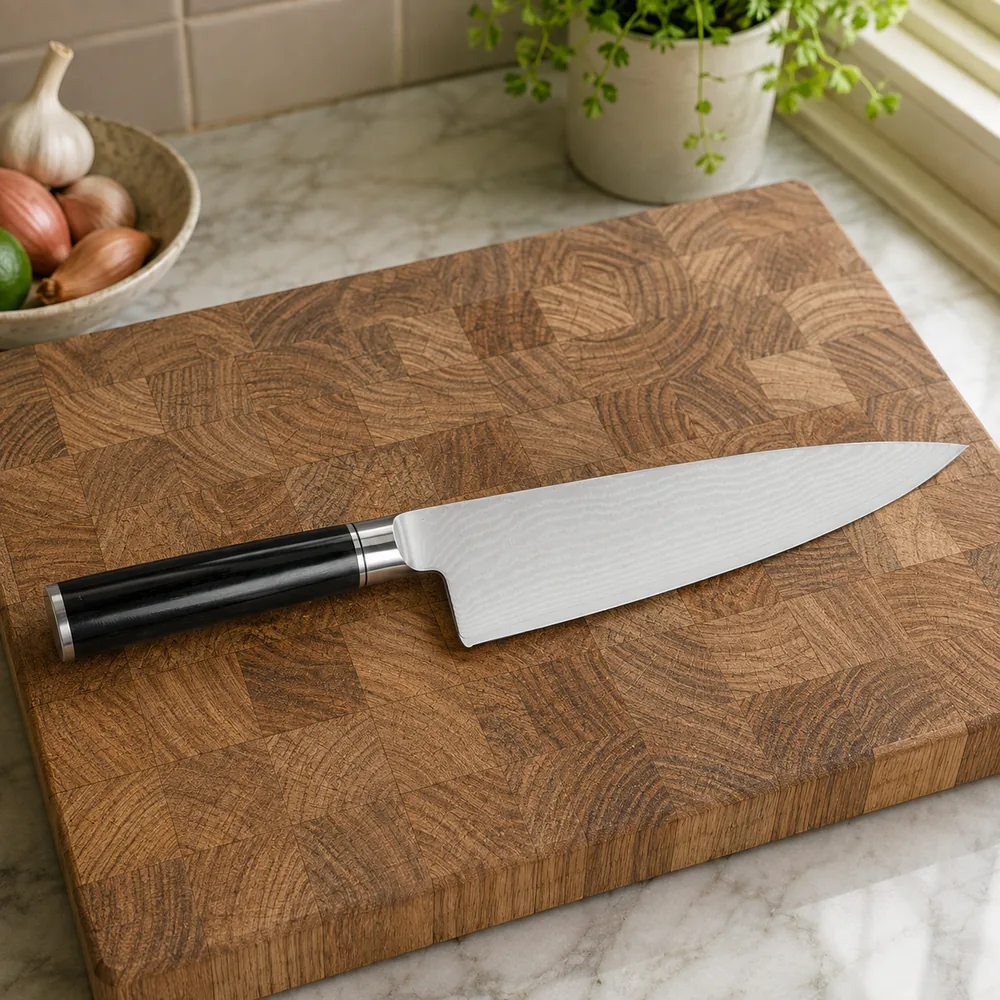
Mac Professional Hollow Edge 8-Inch Chef's Knife (MTH-80)
We earn a commission if you make a purchase, at no additional cost to you.
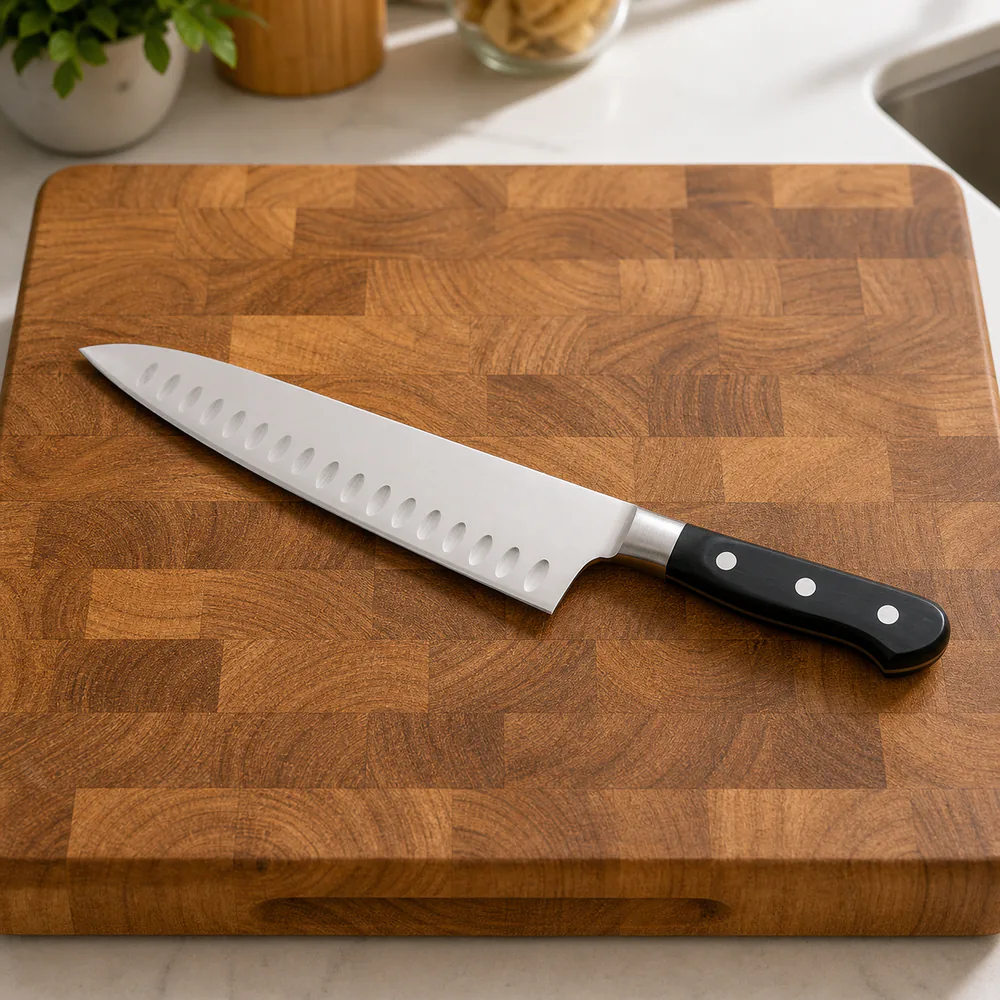
Best Overall: Mac Professional Hollow Edge 8-Inch
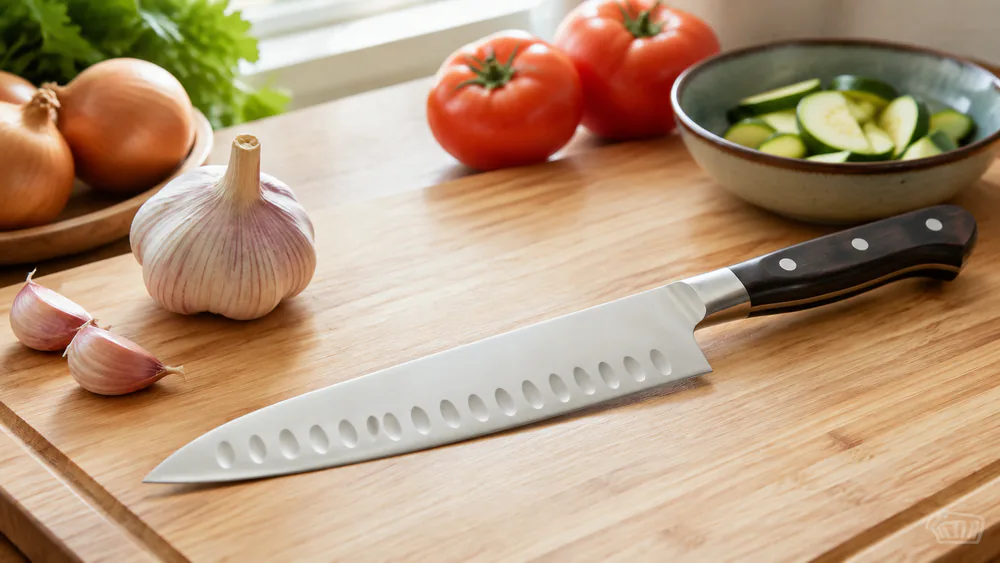
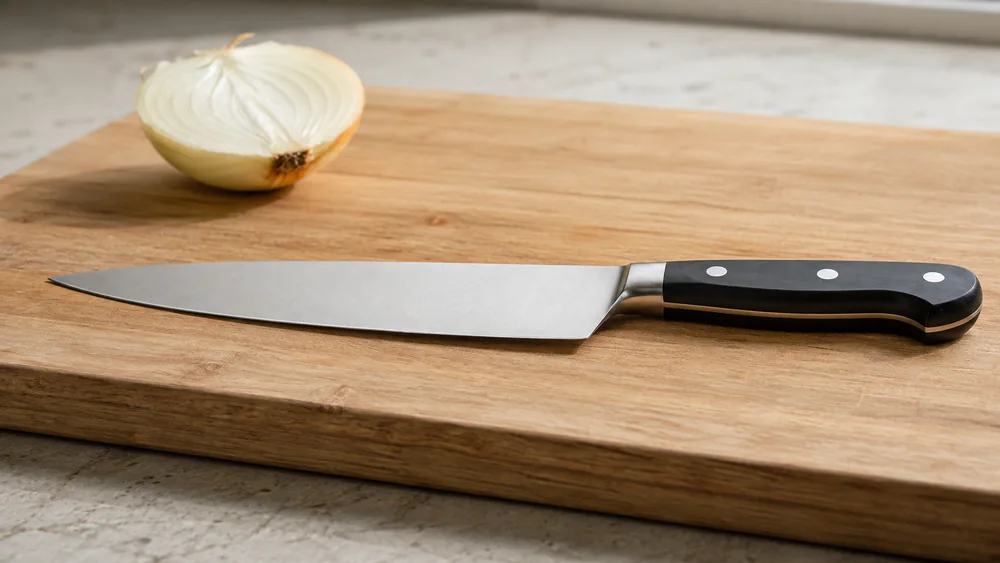
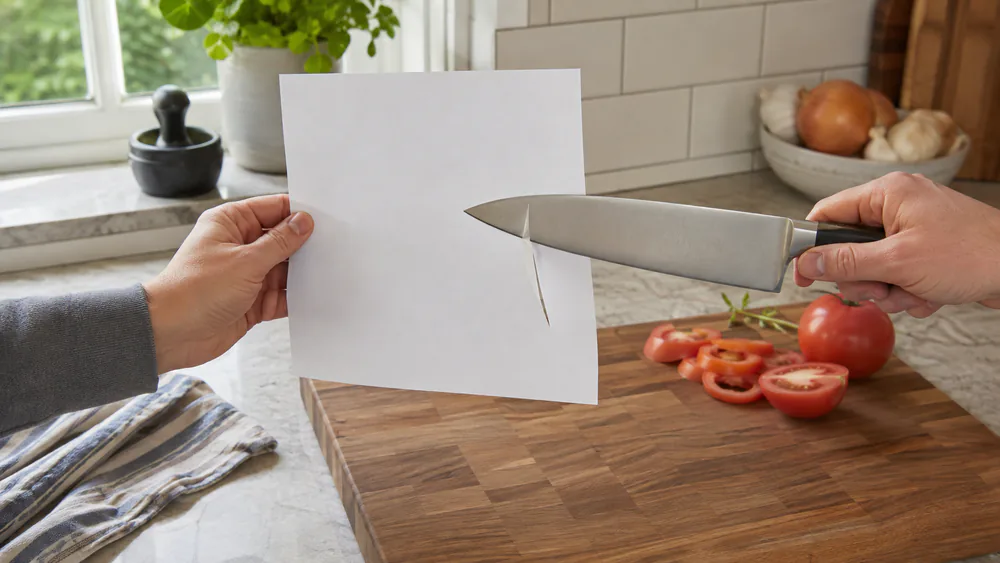
The Mac MTH-80 arrived in our test kitchen laser sharp. On the first session, it sliced printer paper under its own weight, and that was before we cut anything that mattered.
Specs at a glance
Blade length: 8 in (marketed; testers measure 7.9 to 8.2 in)
Steel: High-carbon molybdenum-vanadium stainless, made in Japan
Construction: Thin stamped full tang with hollow-edge (Granton) dimples
Handle: Pakkawood with half bolster
Weight: 6.5 to 6.9 oz
Hardness: 57 to 61 HRC reported, depending on the tester
Edge angle: About 15 degrees per side, hand-honed
Warranty: 25-year limited, authorized sellers only
Dishwasher safe: No
How it performed in testing
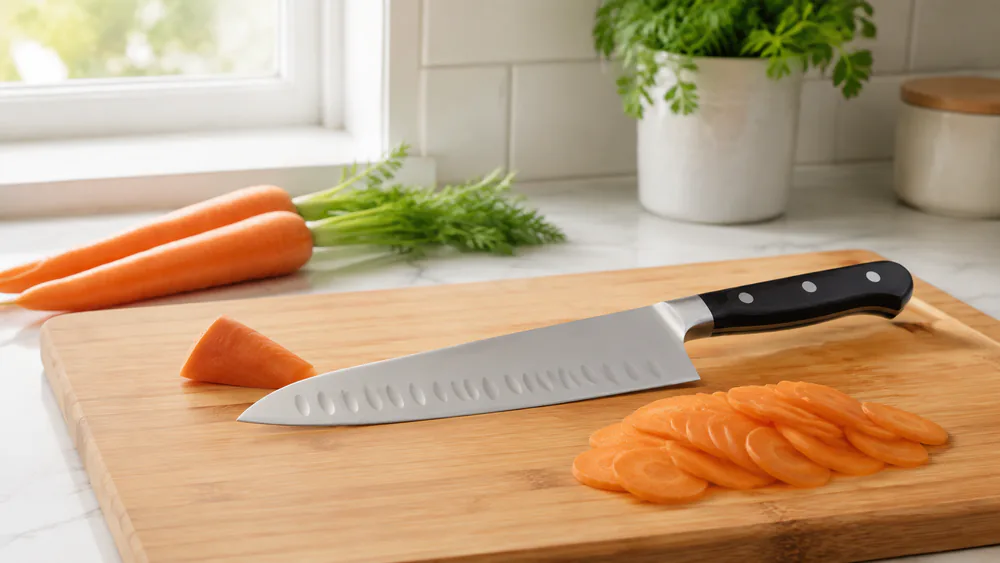
Balanced exactly at the bolster, the Mac turned a carrot into see-through slices with no downward effort. The hollow-edge dimples released potato and summer squash slices without clinging. That combination, an effortless cut and nothing sticking, is what makes it feel like a much more expensive knife than its price suggests.
In our 30-day edge-retention run, the Mac finished second only to the Shun Classic, with a minor edge roll near the heel appearing around day 25. The same thin, light geometry that makes it sharp also makes it particular. Pull-through sharpeners are not suitable, and hard squash seeds or frozen food will chip it. The handle is built for smaller hands, about an inch shorter than the Wüsthof's.
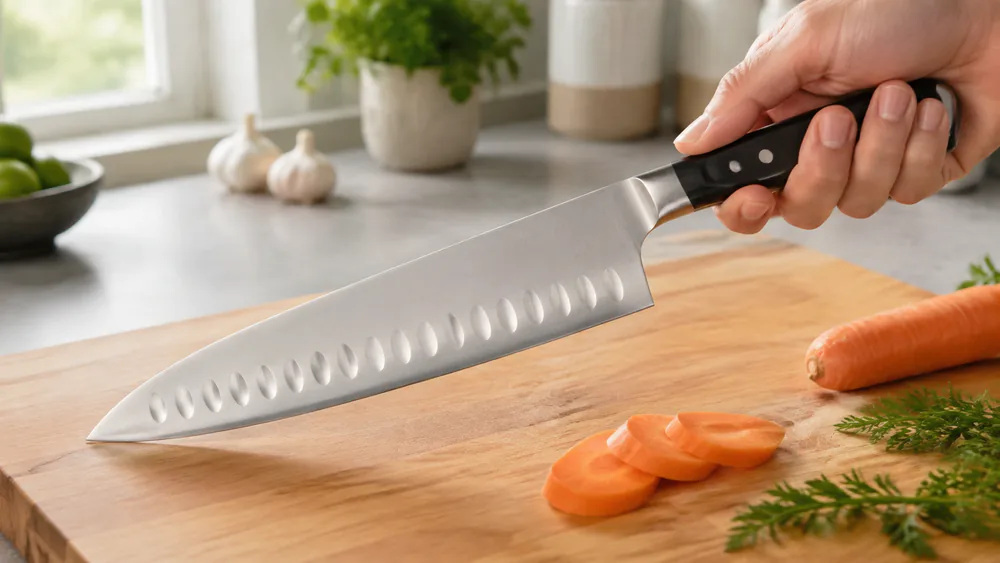
The hollow-edge dimples do real work: potato and summer squash slices drop away instead of clinging.
That warranty only counts if you buy from an authorized seller. Street pricing runs $145 to $175 and moves week to week, and the Mac is available on Amazon and at specialty cutlery retailers.
1
Mac Professional Hollow Edge 8-Inch Chef's Knife (MTH-80)
After a month of prep, the Mac MTH-80 is the chef's knife we recommend first, and it has been our top pick for over a decade. Its short handle, hand-wash-only care, and delicate edge are flaws you can live with; the way it cuts is not something you will find anywhere else at this price.
Pros
Sharpest factory edge in this year's series
Balances exactly at the bolster; effortless thin slicing
Hollow-edge dimples release sticky produce
25-year limited warranty (authorized sellers)
Cons
Handle is built shorter, for smaller hands
Hand wash only; a wet blade left to sit can spot
Delicate edge: no bones, frozen food, or pull-through sharpeners
Warranty applies only to authorized-seller purchases
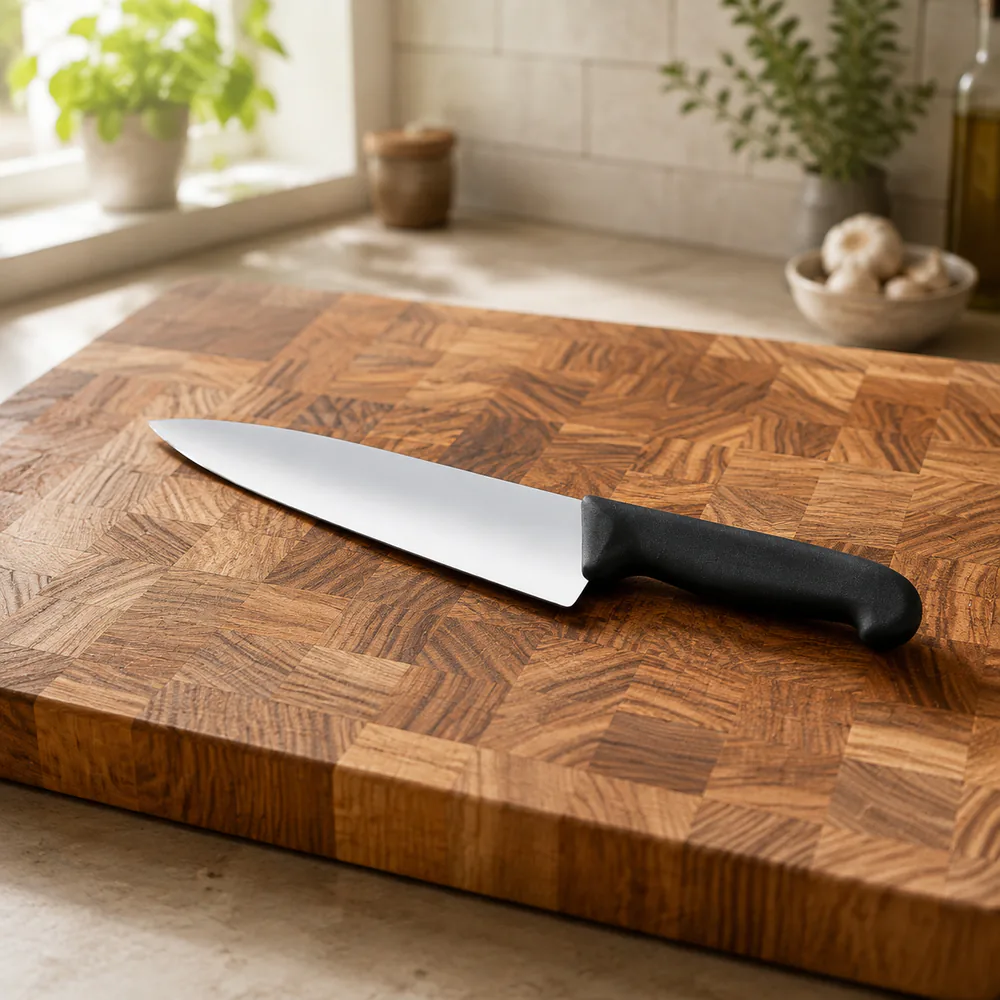
Best Budget: Victorinox Fibrox Pro 8-Inch
Where the Mac asks for careful treatment, the Victorinox Fibrox Pro asks for almost nothing, and that is the point. At about $50, it ends most of our budget arguments before they start.
Specs at a glance
Blade length: 7.9 in (200 mm)
Steel: Tapered stainless, stamped construction
Handle: Textured TPE Fibrox, non-slip when wet
Weight: About 5.6 oz
Hardness: 56 to 58 HRC (not published; retailer sheets vary)
Edge: Standard 50/50, laser-tested
Dishwasher safe: Yes (NSF certified, up to 230 F)
Warranty: Lifetime against defects in material and workmanship
How it performed in testing
The handle is the story. It stayed grippy through a full prep session with wet, soapy hands, and the softer steel flexed where a harder blade would have chipped when a tester twisted against a chicken leg joint. For a beginner, that forgiveness matters more than any spec sheet.
It needs honing more often than the forged knives here, and its light stamped construction feels flimsy next to a $170 Wüsthof. Neither is a dealbreaker. It stayed sharp through a month of near-daily use with routine honing, and America's Test Kitchen keeps it at the top of its chef's-knives-under-$75 testing.
The Fibrox handle stays grippy when wet, a detail that matters in a knife you will wash often.
If your budget stops near $60, stop reading here and buy the Victorinox Fibrox Pro 8-Inch Chef's Knife. It is the best value in this guide, and street prices run about $45 to $60.
The Victorinox Fibrox Pro is the easiest recommendation in this guide: razor sharp out of the box, forgiving when you are learning, and cheap enough that most buyers keep one as a spare. Its light, stamped feel is the trade-off, and you will not notice it once the slicing starts.
Pros
Out-cuts knives costing several times more
Grippy textured handle, even when wet
Dishwasher safe (NSF certified)
Forgiving of beginner mistakes
Cons
Light stamped construction feels flimsy versus forged
Needs honing more often than forged picks
No premium materials or finish
Best Japanese-Style: Shun Classic 8-Inch
If the Victorinox is the value lesson, the Shun Classic is the steel lesson. It is the only knife in this guide that out-retained our top pick in the 30-day run, and it does it with showstopper looks.
Specs at a glance
Blade length: 8 in
Steel: VG-MAX cutting core with 68-layer Damascus cladding, handcrafted in Seki City, Japan
Handle: D-shaped pakkawood, right-hand oriented
Weight: About 7.4 oz
Hardness: 60 to 61 HRC
Edge angle: 16 degrees per side per Shun and most retailers (some listings quote 22)
Warranty: Lifetime limited, with free lifetime sharpening from Shun
Dishwasher safe: No
How it performed in testing
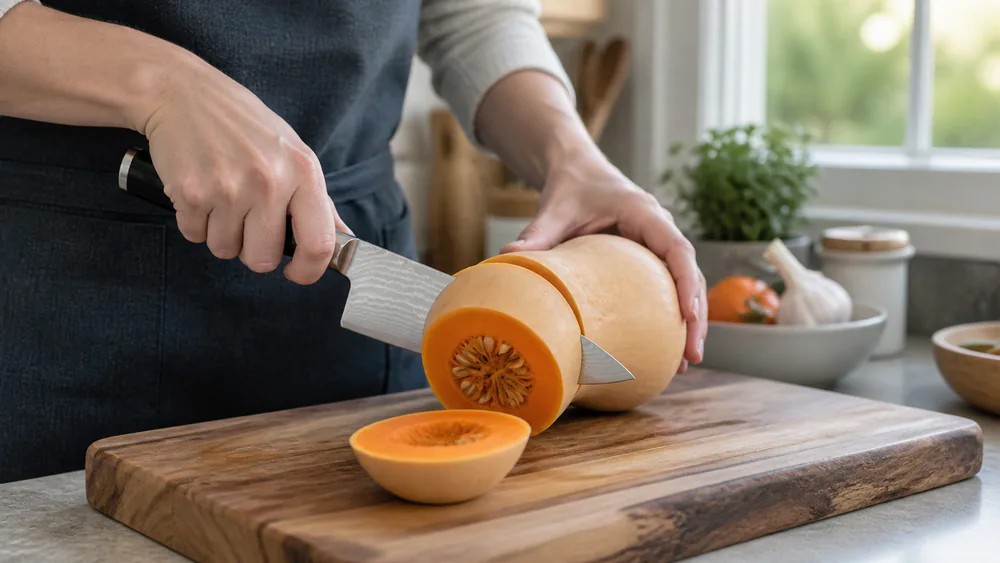
Deep into the month, the Shun was still slicing butternut squash cleanly and dicing herbs as fine as we needed them, which is the kind of late-month performance that separates steel from steel. Its 60 to 61 HRC edge is the reason: hard steel takes a finer angle and keeps it longer.
The flip side of that hardness showed up in our notes too. Careless use chips it, with chips reported as early as the first month, and a few blades arrived with a bent tip or a misaligned edge out of the box. Check yours before you put it to work. It is also a right-hand-oriented knife, with a left-handed version available.
The Shun Classic 8-Inch Chef's Knife sells for $170 to $205 on the street, and pricing moves week to week and varies by seller.
The Shun Classic is our Japanese-style pick because it pairs premium Japanese steel with a comfortable Western grip. Treat it with care and check the tip out of the box, and it earns its price over years rather than weeks.
Pros
Longest edge retention in this year's series
68-layer Damascus is easy on the eyes and functional
Free lifetime sharpening from Shun
60 to 61 HRC steel takes a fine edge
Cons
Chips with careless use
Check tip and edge alignment out of the box
D-shaped handle is right-hand oriented (left-handed version available)
Hand wash only
Best German-Style: Wüsthof Classic 8-Inch
Where the Shun is light and precise, the Wüsthof Classic is heavy and forceful. The 8.5 oz weight is a feature, not a flaw: it gives the blade momentum.
Specs at a glance
Blade length: 8 in
Steel: X50CrMoV15 high-carbon stainless, precision-forged from a single block in Solingen, Germany
Handle: Triple-riveted POM, full tang, full bolster with finger guard
Weight: 8.5 oz
Hardness: 58 HRC
Edge angle: 14 degrees per side (PEtec)
Warranty: Limited lifetime
Dishwasher safe: No
How it performed in testing
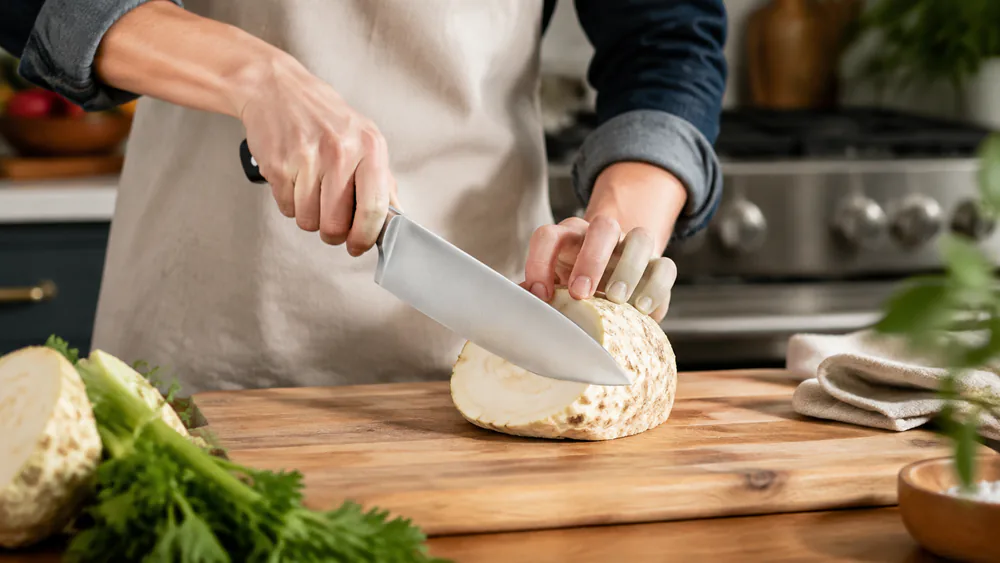
The weight powered through dense squash and celery root without any added pressure. In hour three of a long session, the handle still was not wearing on our palms, the test that matters for anyone who cooks standing up. That momentum also makes occasional bone contact survivable in a way it is not with the thinner Japanese blades.
A freshly sharpened Victorinox can cut as well for a day; the Wüsthof's money buys edge retention, heft, and decades of service rather than a sharper day one. It stayed sharp even with lazy sharpening habits in our notes, and the long-term picture is decade-plus service with nothing but routine honing. The full bolster makes sharpening the heel harder, a real but livable quirk.
The full bolster protects the fingers; it also makes the heel the hardest part of the edge to sharpen.
Street prices run $135 to $170 and dip on sale. The Wüsthof Classic is the Solingen-built blade most cookware collections are built around.
The Wüsthof Classic is the German knife we recommend to cooks who want momentum and decades of service from a tool that forgives a busy schedule. Give it a week to get used to the heft; after that, it is the knife you reach for without thinking.
Pros
Weight and momentum power through dense vegetables
Stays sharp even with lazy sharpening habits
Comfortable handle through long sessions
Solingen-forged, built for decades of service
Cons
Rare but real: blades have snapped on a garlic smash or a drop
Full bolster makes sharpening the heel harder
Hand wash only
Best for Beginners: Mercer Culinary Renaissance 8-Inch
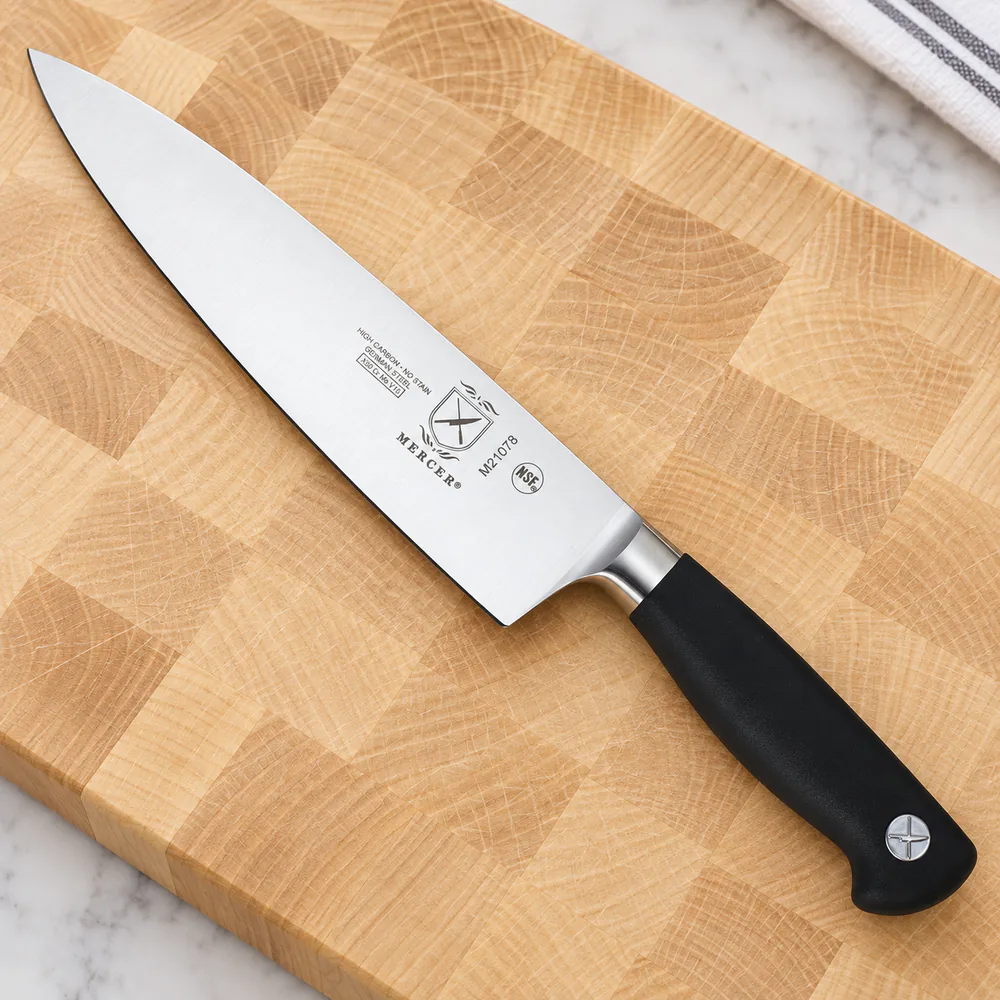
The Wüsthof's price tag is the reason the Mercer Renaissance matters. This forged 8-inch blade costs about as much as a Wüsthof's handle, and it is the knife we hand to beginners.
Specs at a glance
Blade length: 8 in (203 mm)
Steel: X50CrMoV15 German high-carbon stainless, one-piece precision-forged with full tang
Handle: Triple-riveted black Delrin with rounded spine; shortened bolster
Weight: 8.8 oz
Hardness: 56 HRC
Edge: Taper-ground 50/50
Warranty: Limited lifetime; NSF listed
Dishwasher safe: No
How it performed in testing
The shortened bolster exposes the full blade edge, so the stone meets the whole edge without fighting the bolster. That is the detail a first knife buyer actually needs, and the rounded spine stays comfortable even when you grip hard.
It is honest about its limits. The blade is noticeably thick behind the edge and wedges on onions, and finish QC is spotty at this price, with small blade blemishes possible. Neither kept it out of our permanent rotation, and the knife performs like a far pricier German blade.
The shortened bolster exposes the full edge, so the stone travels the whole blade without stopping at the heel.
Street pricing runs $48 to $72, and the Mercer Renaissance is one of the best values in commercial-grade cutlery.
The Mercer Renaissance is the chef's knife we hand to a beginner and the one we reach for on days we want to stop fussing and just cut. It keeps a working edge for weeks, costs about $50, and forgives a learning curve. It wedges on onions; that is the trade-off at this price.
Pros
Sharpens in a few strokes per side
Stayed sharp through the full month with two sharpenings
Rounded spine and shortened bolster, beginner-friendly
Performs like a far pricier German blade
Cons
Thick behind the edge; wedges on onions
Finish QC is spotty at this price
Heavier than the budget pick
Best High-End Upgrade: Misono UX10
Where the Mercer is forgiving, the Misono UX10 is demanding, and it rewards the demands. It is the knife for cooks who sharpen their own blades and want maximum edge life.
Specs at a glance
Blade length: 210 mm (8.2 to 8.3 in)
Steel: Swedish high-purity stainless (Sandvik 19C27 family), made in Seki City, Japan
Handle: Pakkawood, full tang, nickel-silver bolster and rivets
Weight: 5.7 oz (160 to 165 g)
Hardness: 59 to 60 HRC
Edge: Asymmetrical 70/30, right-hand use oriented
Dishwasher safe: No
How it performed in testing
The UX10 went six to eight weeks between sharpenings in our testing, versus four to five for the Mac, the longest window in the guide. Its thin grind parted food cleanly, with almost no wedging. Hours of butchery prep passed comfortably because the blade is astoundingly light, about 5.7 oz.
Its 70/30 asymmetric edge is a right-hand tool, and on day one it glided over tomato and pepper skins instead of biting. That takes getting used to if you have only cut with a 50/50 edge. Durability is the honest question mark: tips have snapped, a fractured blade found no US warranty to fall back on, and the same knife has survived years on a professional line. It demands a proper cutting board and sharpening discipline. Its flat blade has no food-release reliefs, so sliced vegetables cling and need a nudge, and after a decade of sharpening it will need thinning to cut like new again.
Street pricing is the widest in this guide, roughly $175 to $326 depending on the retailer. The Misono UX10 is a knife that pays to shop around for.
The Misono UX10 is our high-end upgrade pick for cooks who sharpen their own blades, cut right-handed, and want an edge that lasts. It is not a first knife, and its durability record is real but not guaranteed. If you are that cook, nothing here cuts quite like it.
Pros
Longest edge-retention window we measured, six to eight weeks
Feather-light; comfortable through hours of prep
Thin grind parts food cleanly with almost no wedging
Precise 70/30 asymmetric edge
Cons
Right-hand oriented only
Sliced vegetables cling to the flat blade
Tips can snap; no confirmed US warranty
Not for bones or frozen food; demands sharpening discipline
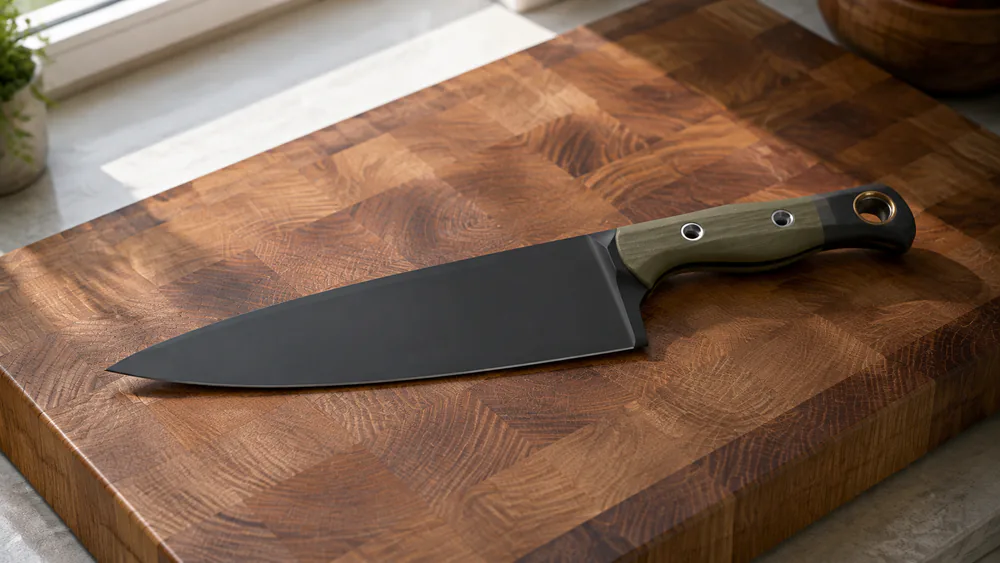
Best Splurge: Benchmade Chef Knife
If the Misono is the traditional upgrade, the Benchmade Chef Knife is the wild card: an American-made blade from a brand better known for pocket knives, priced at $400.
Specs at a glance
Blade length: 8.2 in (retailer sheets disagree by about an eighth of an inch)
Steel: CPM-154 powder stainless, 58 to 61 HRC
Handle: Maple Valley Richlite with black G10 bolster (OD green G10 variant available)
Weight: 7.37 oz
Edge: SelectEdge, 14 degrees per side
Warranty: Lifetime, with free LifeSharp service
Dishwasher safe: No
How it performed in testing
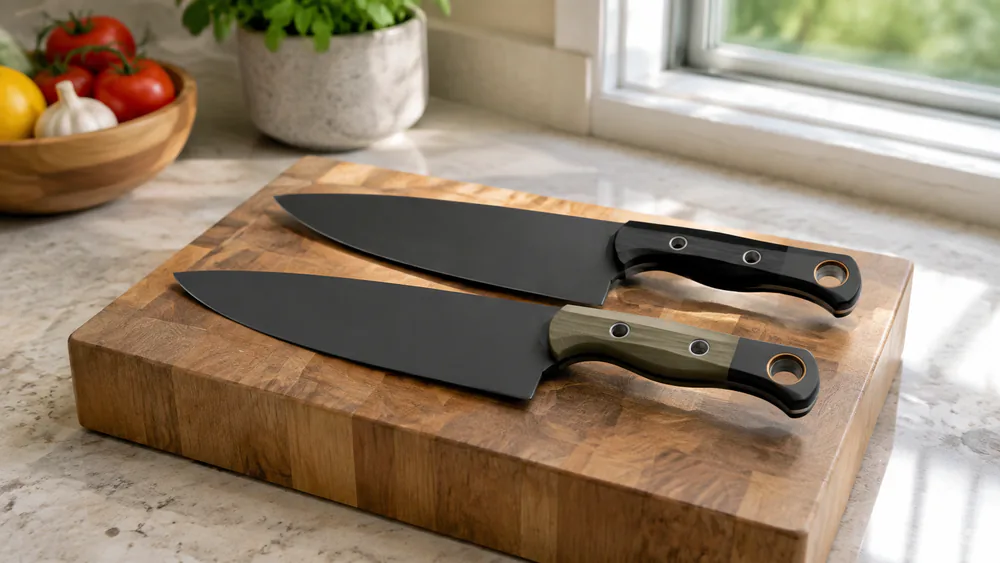
The line proved light, well balanced, and easy to handle in our testing, and the edge held up very well across the series. The aggressively acute 14-degree SelectEdge bevel, sharper than the 17 to 20 degrees most kitchen knives run, cuts clean, and it wants a proper board and hand care in return. The false-edge grind on the spine helps food release, a thoughtful detail on a blade this size.
We are keeping our long-term claims modest because the 8-inch model has not logged years of independent use yet. The track record is simply younger than the knives above. What we can say is that it cuts superbly, and Benchmade stands behind its cutlery line. At $400 at launch, it is the most expensive knife in this guide, and it sells direct and through dealers rather than Amazon.
The Benchmade Chef Knife is our splurge pick for buyers who want something genuinely different: an American-made blade with the sharpest geometry in this guide and a lifetime warranty to match. It cuts superbly, and $400 buys a lot of knife. If the price makes you wince, the Mac MTH-80 is the better value by a wide margin.
Pros
Unique CPM-154 powder steel with an acute 14-degree edge
Light, well balanced, easy to handle
Lifetime warranty with free LifeSharp service
Made in Oregon City, USA
Cons
$400 buys a lot of knife for most home cooks
Long-term durability data is still thin
Acute edge wants a proper board and hand care
Sells through dealers, not Amazon
Best for Smaller Hands: Global G-2 8-Inch
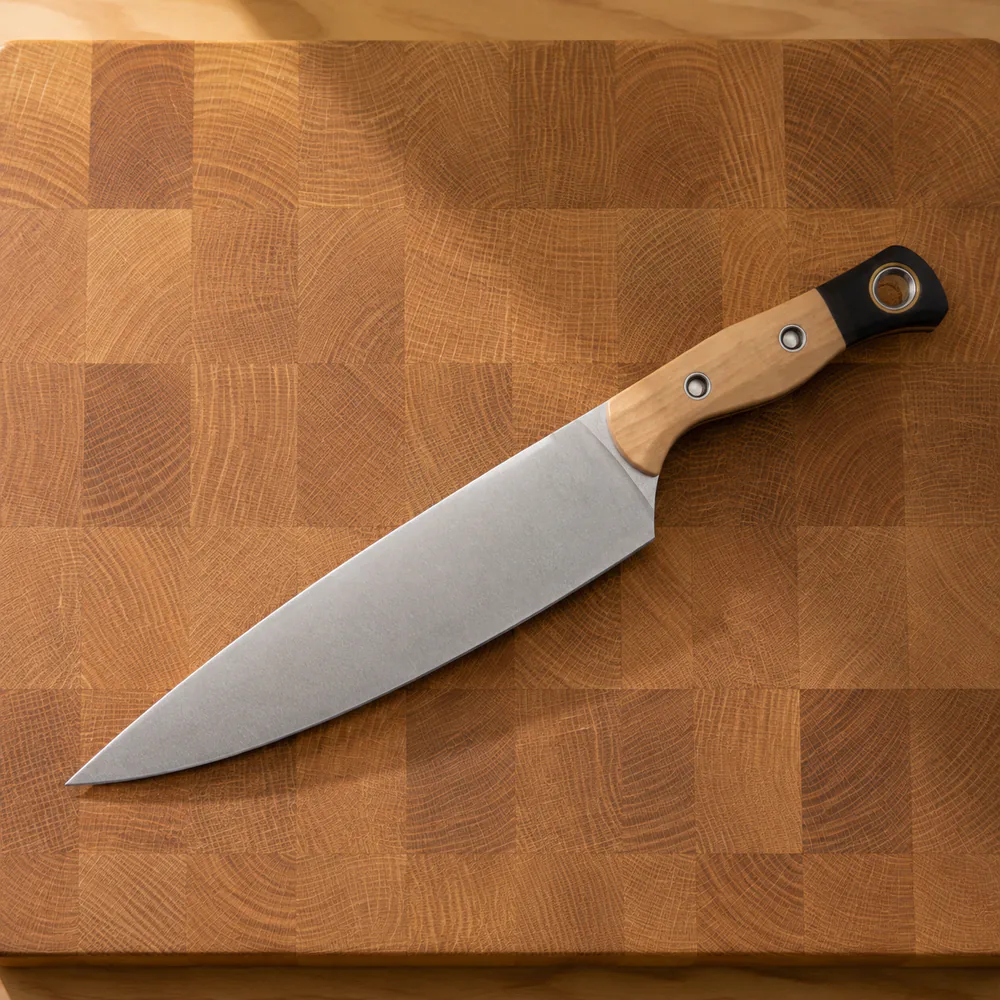
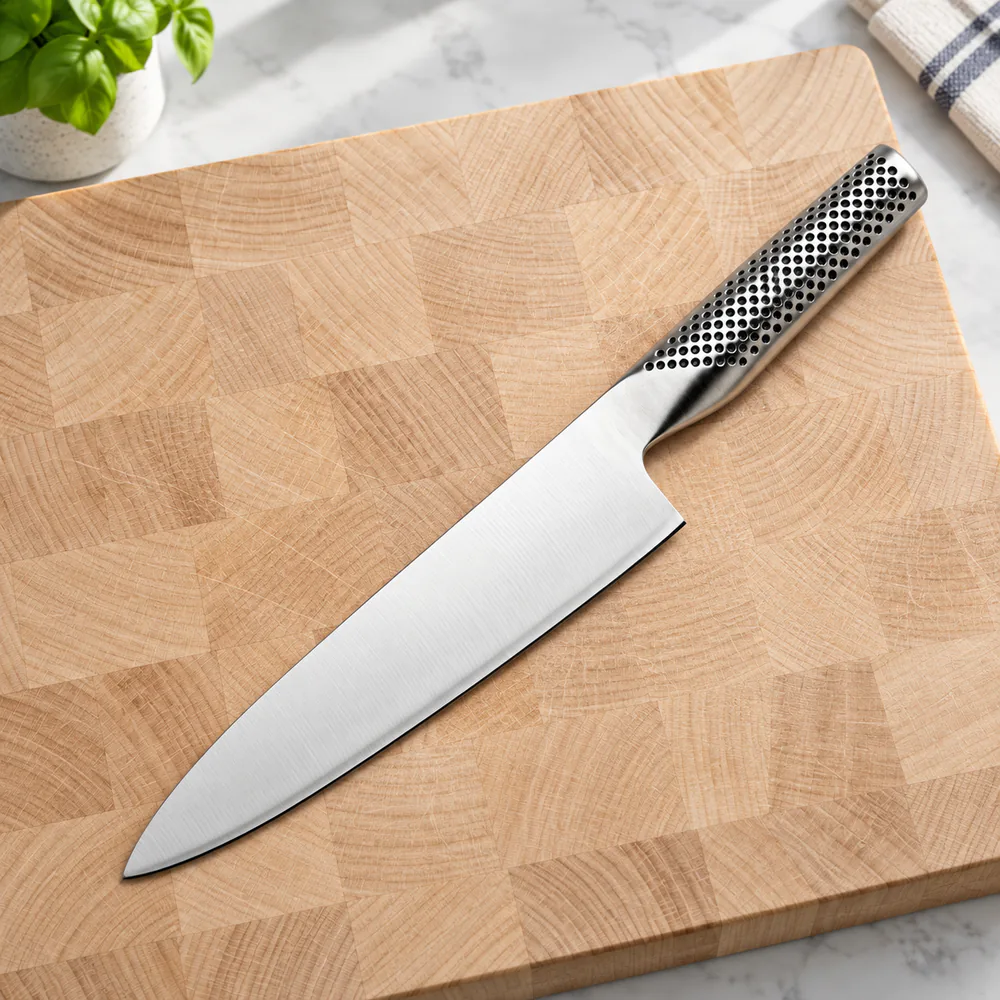
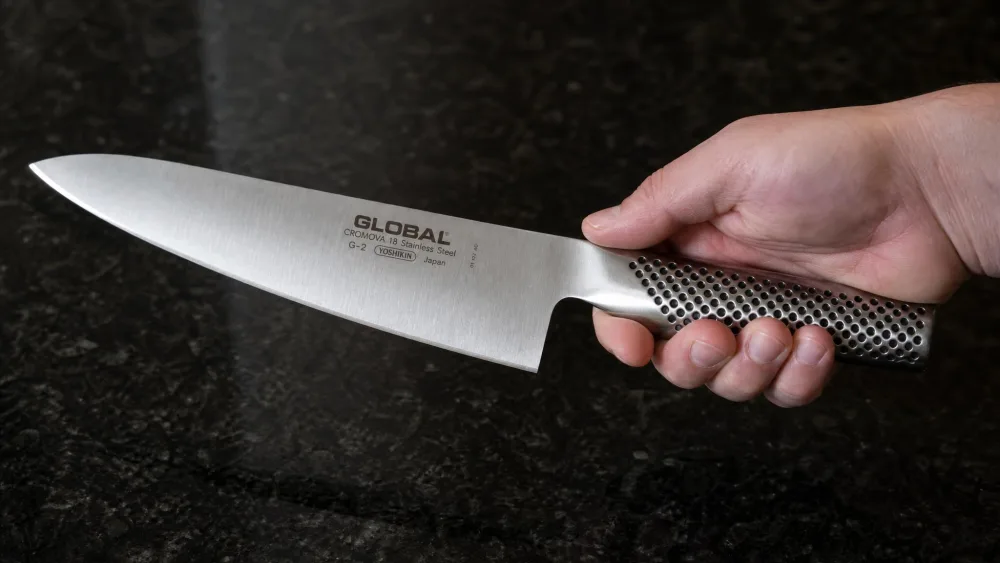
The Global G-2 is the pick for smaller hands and for cooks who want a light knife. Global's idea is that a knife should be one continuous piece of steel, balanced by sand inside the handle.
Specs at a glance
Blade length: 8 in (20 cm)
Steel: CROMOVA 18 molybdenum vanadium stainless, made in Japan
Start with what the Global cannot do. Its dimpled steel handle holds water, so a long wet prep session turns the grip damp and tiring, and long wet shifts on that grip can raise blisters. The convex grind is the other limit, awkward to restore on a flat stone, which makes this the wrong knife for anyone learning to sharpen freehand. What it does do is hold up in ordinary use: after about a week of heavy prep the edge showed only small rolls, and a monthly strop with an annual sharpening kept pace.
It is ice tempered to between 56 and 58 HRC, which suits the thin 2 mm profile. The handle is a poor fit for large hands, so try the grip first.
The Global's light weight is why arthritic hands get on with it, and the same lightness is why cooks used to German knives find it insubstantial. Its short bolster leaves the whole edge sharpenable, so the heel never develops the dead spot a full bolster creates over years of grinding.
Pros
Light at 172 grams, easy on smaller or arthritic hands
One-piece stainless build with nothing to loosen
Lifetime warranty against defects and breakage
Cons
The dimpled steel handle holds water and turns damp
The convex grind is awkward to restore on a flat stone
A poor fit for large hands
Chef's Knife Comparison Chart
Knife
Best For
Blade Length
Steel
Style
Weight
Price
Mac Professional MTH-80
Overall
8 in
Molybdenum-vanadium stainless, 57 to 61 HRC
Japanese
6.5 to 6.9 oz
$145 to $175
Victorinox Fibrox Pro 8-Inch
Budget
7.9 in
Stamped stainless, 56 to 58 HRC
Western stamped
About 5.6 oz
$45 to $60
Shun Classic 8-Inch
Japanese-style
8 in
VG-MAX, 68-layer clad, 60 to 61 HRC
Japanese
About 7.4 oz
$170 to $205
Wüsthof Classic 8-Inch
German-style
8 in
X50CrMoV15 forged, 58 HRC
German
8.5 oz
$135 to $170
Mercer Culinary Renaissance 8-Inch
Beginners
8 in
X50CrMoV15 forged, 56 HRC
German
8.8 oz
$48 to $72
Misono UX10 (210 mm)
High-end upgrade
8.2 to 8.3 in
Swedish stainless, 59 to 60 HRC
Japanese
5.7 oz
$175 to $326
Benchmade Chef Knife
Splurge
8.2 in
CPM-154 powder stainless, 58 to 61 HRC
American
7.37 oz
$400
Global G-2 8-Inch
Smaller hands
8 in
CROMOVA 18, 56 to 58 HRC
Japanese
About 6 oz
$120 to $150
How We Tested the Chef's Knives
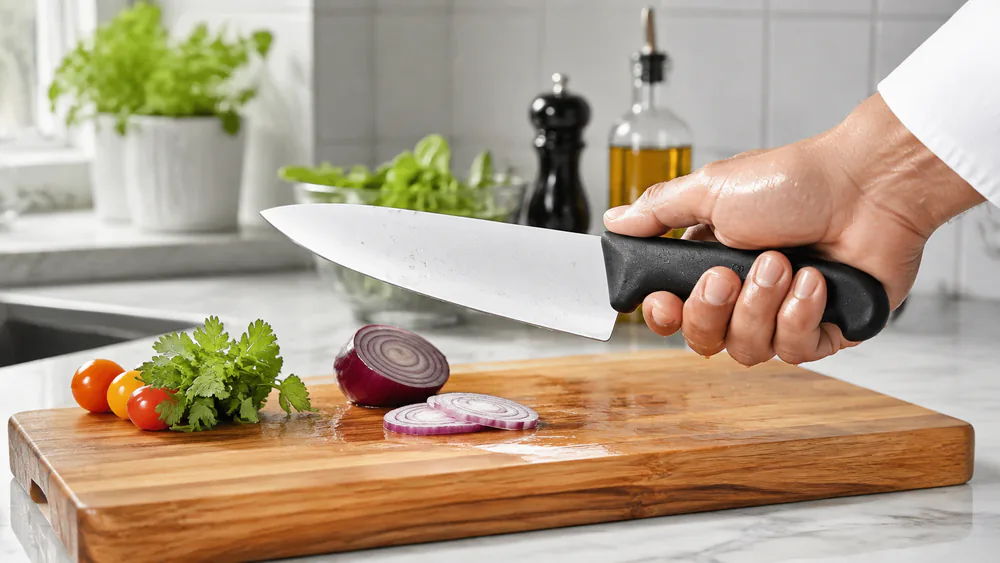
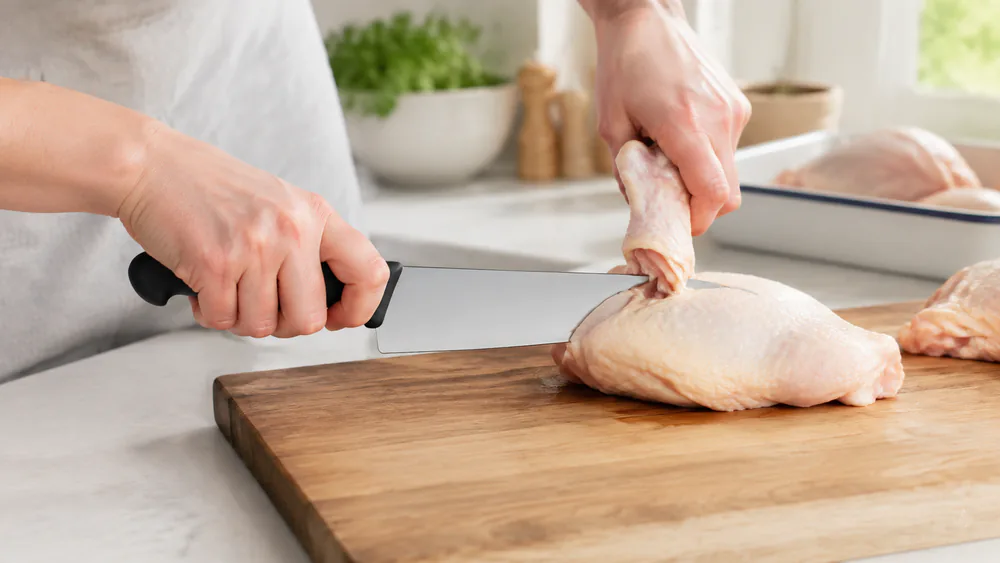
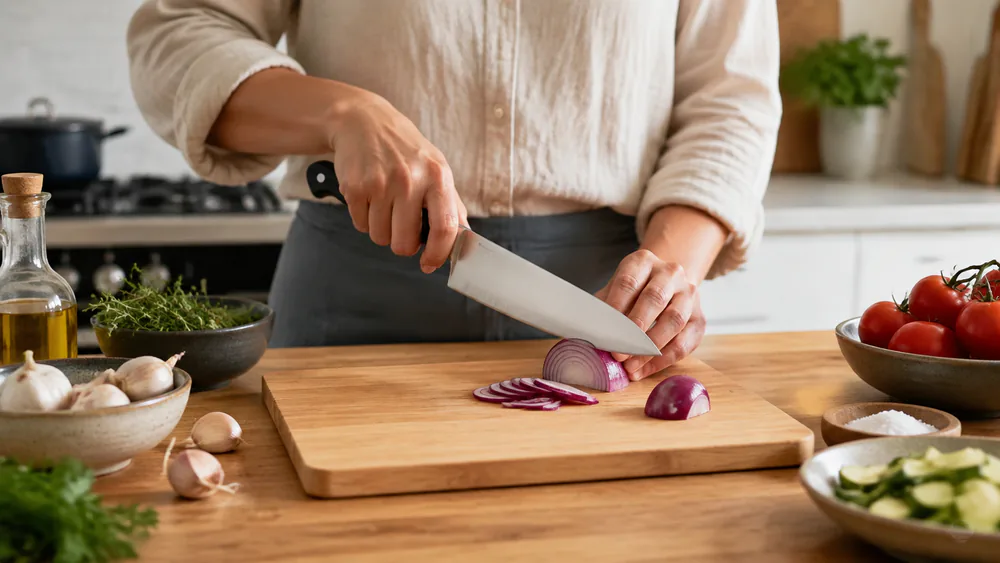
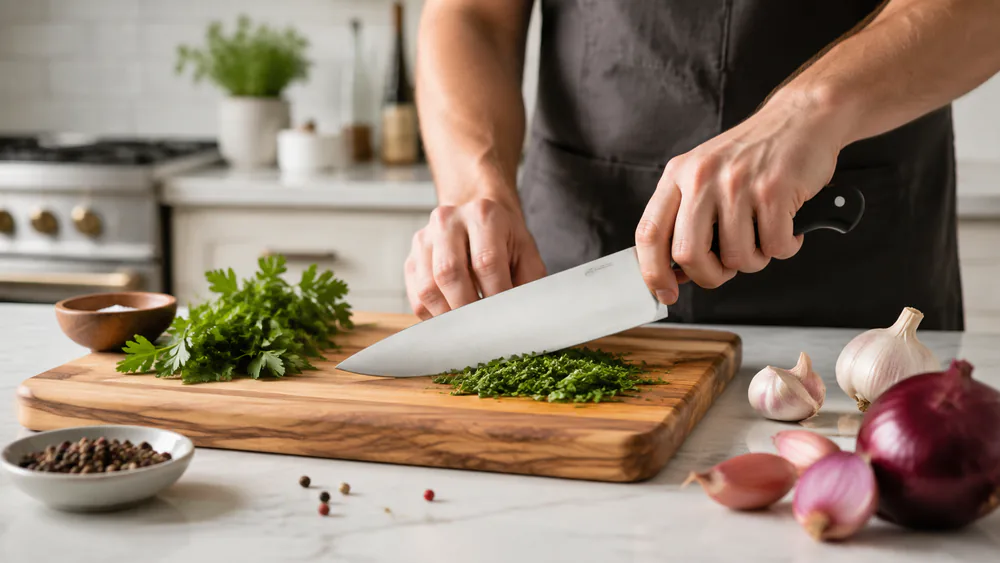
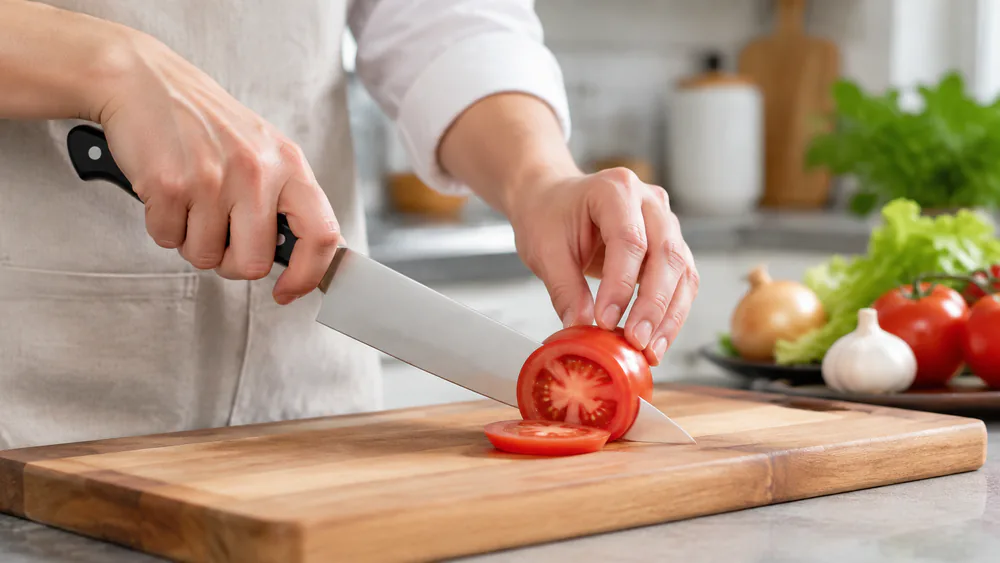
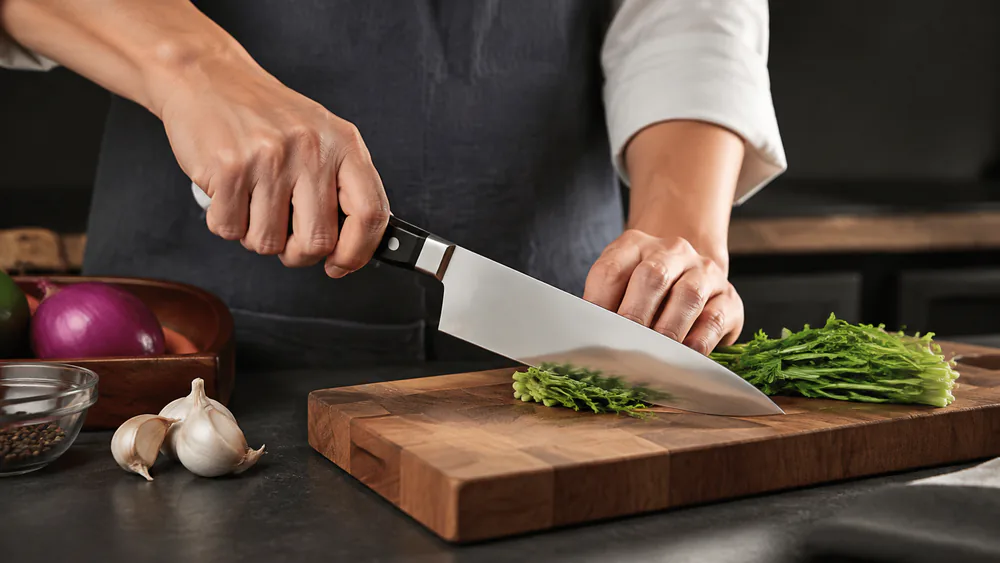
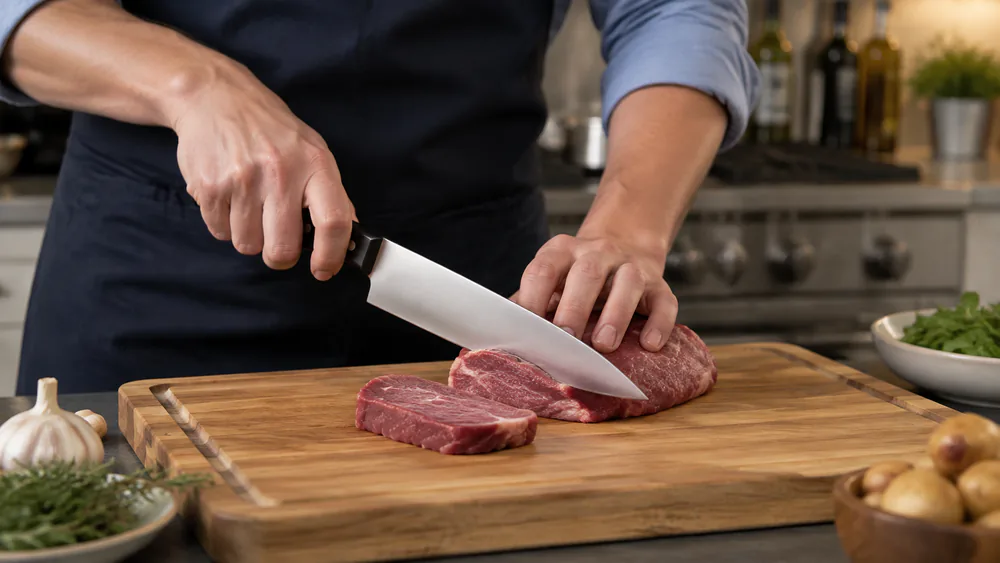
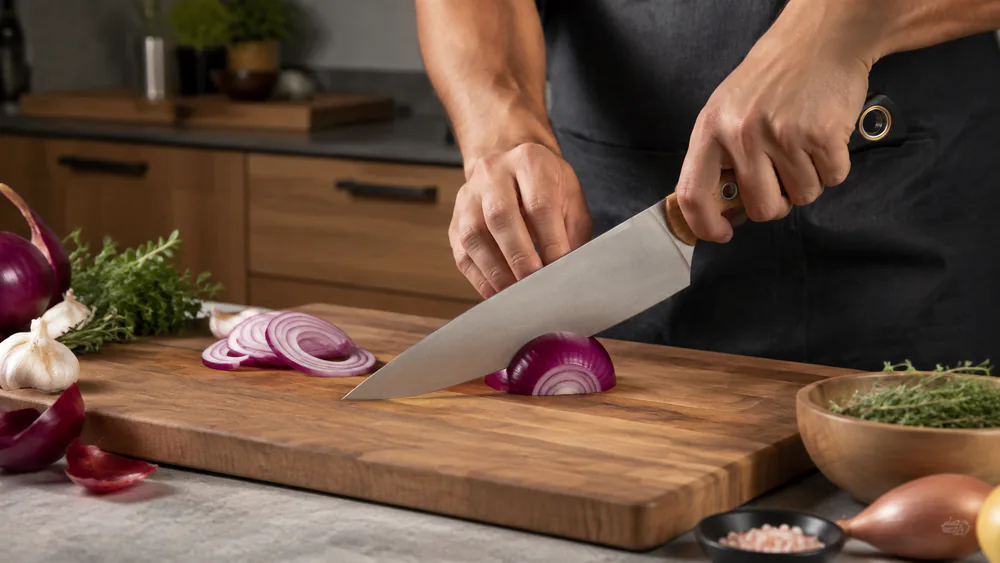
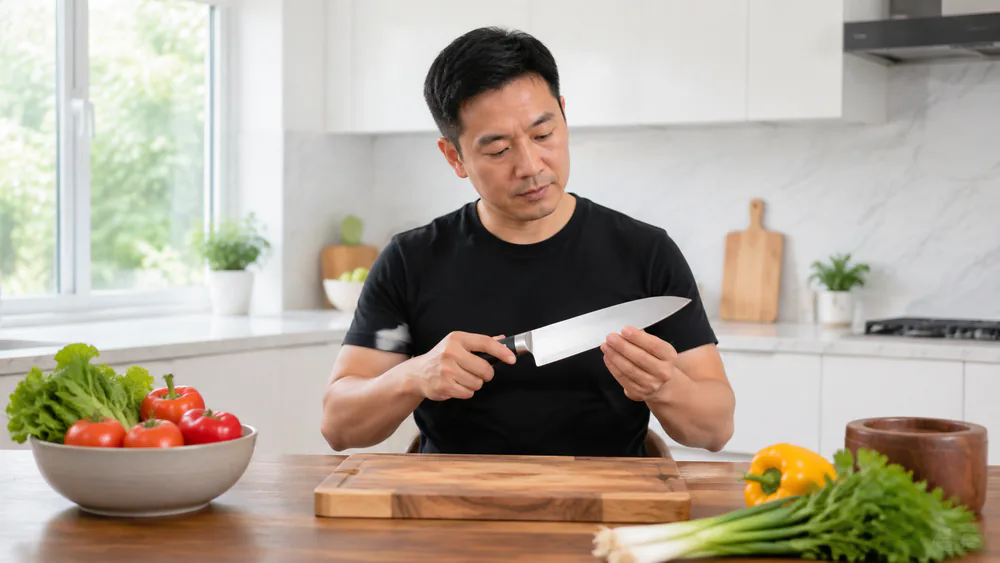
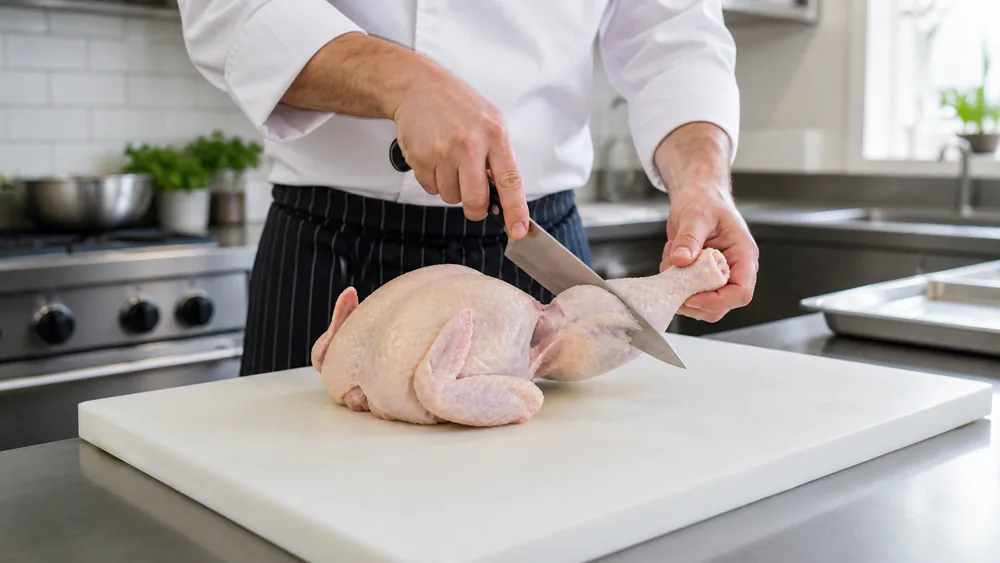
We judge knives the way working kitchens do, which means the sharpness test is the least interesting part of the month. Each of the 8 knives ran a month of real prep in rotation, about 30 days of daily cutting, with an edge check after every session. We sliced ripe tomatoes for the classic edge test and diced onions and carrots for geometry. We chopped sweet potatoes for weight and balance, broke down whole chickens for butchering work, and trimmed stew meat the way a butcher counter would.
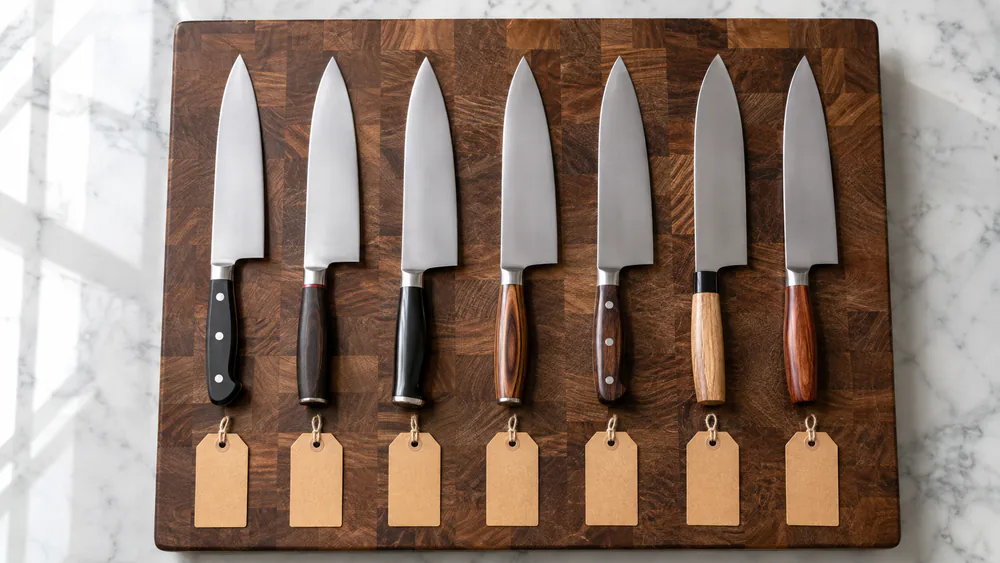
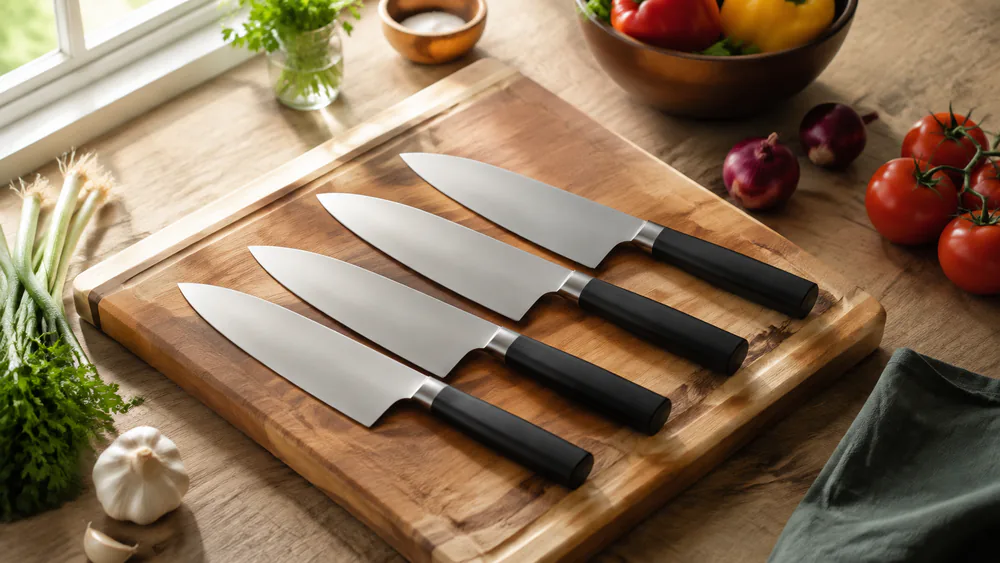
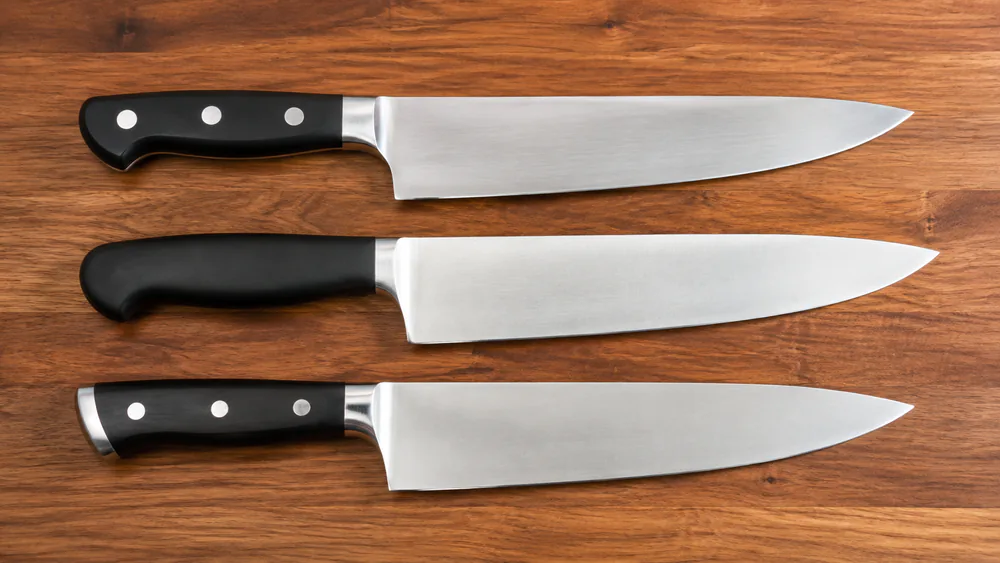
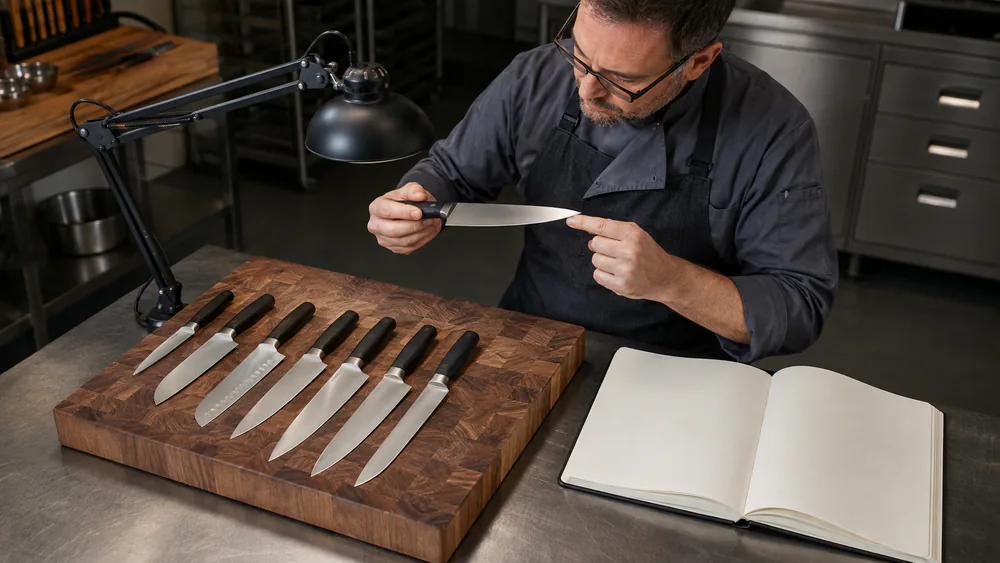
The 2026 test rotation: seven knives, one month, edge checks after every session.
We scored three things and nothing else. Edge retention: how a blade still cut after a week of prep, not just out of the box. Handle feel: how the handle wore on the hand in hour three of a long session, not in the first thirty seconds of a store demo. Re-sharpening: how easily each steel took a fresh edge on a home sharpener, from a quick steel to a whetstone. A razor-sharp day one earned a knife attention; it never won a ranking by itself.
Every knife in this roundup was purchased at full retail through normal channels, the same way you would buy it. Seven of the eight knives came through online retail at street price. The Benchmade, which has no Amazon listing, came direct from the maker's dealer network at its $400 launch price. No manufacturer supplied a sample, and no maker paid for a slot.
We also ran the controlled repeats that separate knives: the day-one out-of-box sharpness check, the week-one edge check, and the end-of-month retention reading. One ground rule applied to every blade: nothing frozen, no heavy bone work, and no glass or stone cutting boards, because those damage any edge and tell us nothing about real prep. What survived the month without complaint, and sharpened back to new on a stone, is what you see ranked above.
What to Look For in a Chef's Knife
Japanese vs. German blade style
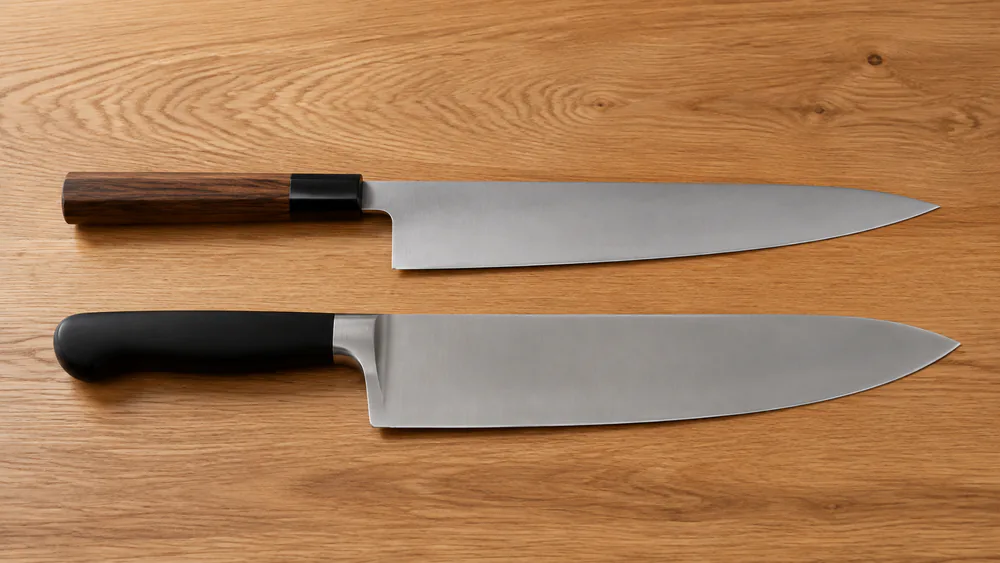
The biggest fork in the road is where the knife was made and how it was made. Japanese knives like the Shun and Misono are forged harder (60 to 61 HRC and 59 to 60 HRC), ground thinner, and sharpened to a keener angle. They take a sharper edge, stay sharp longer, and chip more easily. German knives like the Wüsthof and Mercer run softer (56 to 58 HRC), heavier, and tougher; they forgive mistakes, shrug off occasional bone contact, and come back on a steel rod in seconds. The geometry differs too: Japanese blades cut with a flatter push stroke, while the German chef's knife rocks. The Misono we tested is technically a gyuto, the Japanese take on a Western chef's knife, and it cuts with exactly that flatter stroke. If you prep for an hour a day and sharpen your own blades, go Japanese. If you want one tough knife that asks nothing of you, go German.
Blade size and shape (8-inch sweet spot)
Eight inches is the sweet spot for most home kitchens: long enough to slice a roast or a melon in one pass, short enough to control with one hand. The curved belly of a chef's knife is built for rocking, chopping an onion by rolling the blade across the board instead of pressing straight down. Japanese blades carry less belly and reward a push cut. Blade height matters more than most buyers expect; the Shun's 2-inch blade width keeps your knuckles clear of the board, and a taller blade steers your grip away from the edge. The point earns its keep on detail work, trimming silver skin and scoring chicken breasts.
Steel type, hardness, and edge retention
The single best predictor of edge life is hardness, measured on the Rockwell scale; steel composition and hardness is worth a five-minute read before you buy. The practical range for kitchen knives is 56 to 61 HRC, and everything in this guide sits in it. Harder steel (60 to 61 HRC, the Shun and Benchmade territory) takes a finer edge and holds it for weeks; softer steel (56 to 58 HRC, the Mercer and Victorinox) dulls sooner but sharpens in minutes and resists chipping. All seven picks here are stainless, which keeps maintenance honest for home cooks: you trade a little peak edge for never chasing rust. Edge retention is the number that actually predicts your weeknight experience, and it is why we test for a month rather than a weekend.
Warning. Harder steel stays sharp longer and chips more easily. A blade at 60 HRC or above should never meet bones, frozen food, or a glass cutting board, and it wants hand washing and a stone, not a dishwasher and a pull-through sharpener.
Handle, weight, and balance
The handles on this list weigh anywhere from 5.6 to 8.8 oz, and the difference in the hand is larger than the numbers suggest. A forward balance point does the work for you: the Mac balances exactly at the bolster, which is why its thin blade cuts with so little effort. Handle shape is personal, and it is the reason we test in hour three, not the store aisle: the Shun's D-shaped handle is right-hand oriented, the Victorinox's textured TPE grip is nearly impossible to drop when wet, and the Mercer's rounded spine stays comfortable under a hard grip. The Mac's handle runs about an inch shorter than the Wüsthof's, the clearest hand-size signal in this guide. If a handle bothers you in the store, it will still bother you in year two.
Budget: how much to spend
A good chef's knife no longer needs a triple-digit price. Under $100, the Victorinox Fibrox Pro (about $45 to $60) and the Mercer Renaissance (about $48 to $72) are both genuinely excellent, and for most home cooks the Victorinox is all the knife they will ever need. The $100 to $200 band is where most serious buyers land: the Mac MTH-80 ($145 to $175), the Wüsthof Classic ($135 to $170 on sale), and the Shun Classic ($170 to $205) each earn their price with edge retention and construction you can feel. Above $200, the Misono UX10 ($175 to $326 depending on the retailer) and the Benchmade ($400 at launch) buy specific things: edge life, craftsmanship, and rarity. Street pricing moves week to week and varies by seller, so treat every figure here as a starting point. And at the top of the market, the ceiling is much higher: custom blades regularly go for tens of thousands of dollars. Paying more does not automatically buy a better knife; it buys a sharper edge, a tougher blade, or a prettier handle, and you should know which one you are buying.
Other Chef's Knives We Tested
Eight knives earned slots in our final list, and a few more familiar names deserve a mention before you shop. These blades are worth knowing about even though they did not win a slot here, either because they overlap with a pick that beat them or because they suit a narrower kind of buyer. We kept the list at eight because every slot had to survive a month of real prep; we would rather rank a few knives we trust completely than pad the page with names.
9
Benchmade Chef Knife 4025BK-01 (OD Green)
4.2
The same CPM-154 blade as our splurge pick in an OD green G10 handle with a black DLC finish.
The classic German name that comes up in every comparison with the Wüsthof, and a sensible second look for anyone deciding between German brands.
About $56 street, $49 to $67 across retailers; list price near $80Check Price
11
Zwilling Four Star 8-Inch Chef's Knife
4.0
A storied German forged line worth a look alongside the Wüsthof, for cooks who want a different handle on the same tradition.
About $87 street; market rates run $85 to $100, sales near $70Check Price
12
Miyabi Birchwood SG2 8-Inch Chef's Knife
4.5
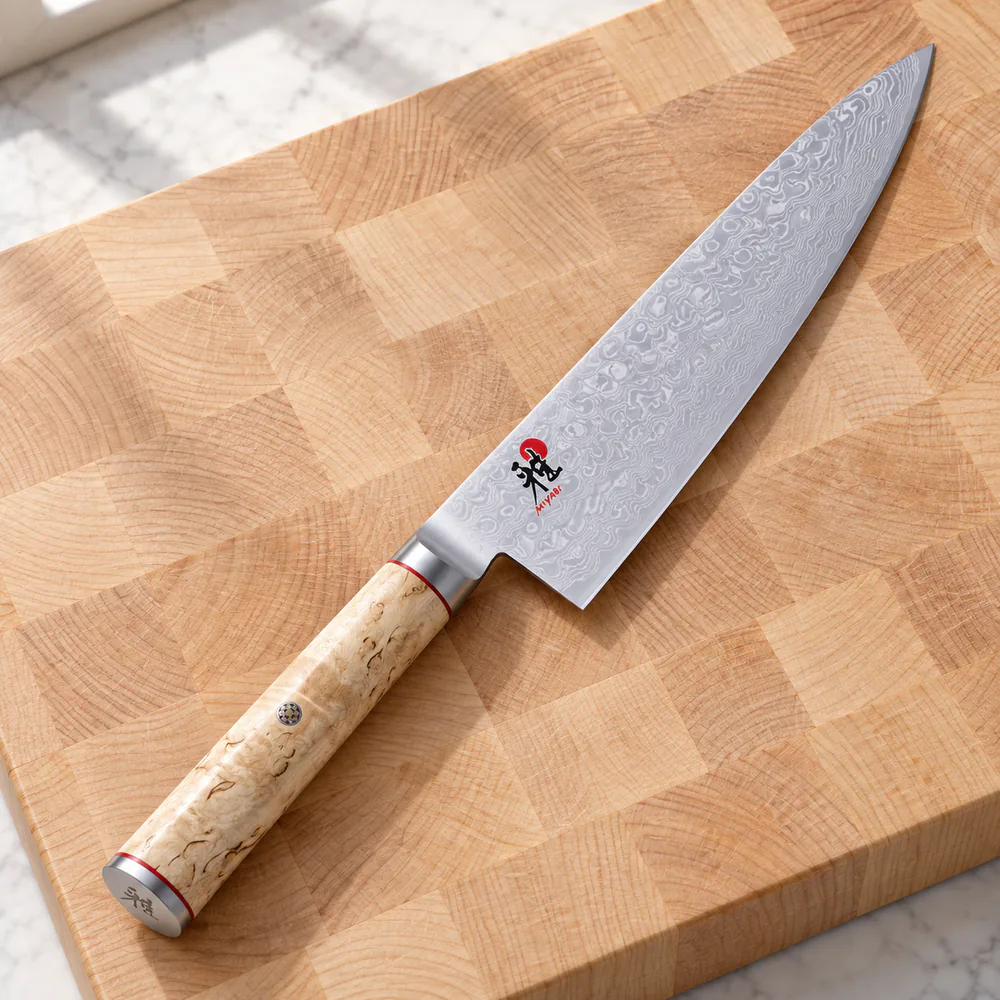
An SG2 powder steel core at 63 HRC under 100-layer Damascus, hand honed to between 9.5 and 12 degrees per side. The birch handle needs to stay dry, and it is more knife than most home kitchens need.
Forged X50CrMoV15 steel at a stamped-knife price, with a short bolster that leaves the whole edge sharpenable. The edge dulls sooner than the pricier knives here, and the soft, rubbery handle feel divides people.
A word on what to avoid while you shop. Do not buy a hard Japanese steel if you will not hand wash it and sharpen it on a stone; the Mac's rust spotting and the Shun's chipping both trace to that mismatch. Do not buy a knife you cannot re-sharpen at home; if a maker tells you to send it in forever, the edge is not really yours. And never cut on glass or stone boards with a thin edge, because that dulls and chips steel faster than any test we run.
How to Care for Your Chef's Knife
Honing vs. sharpening
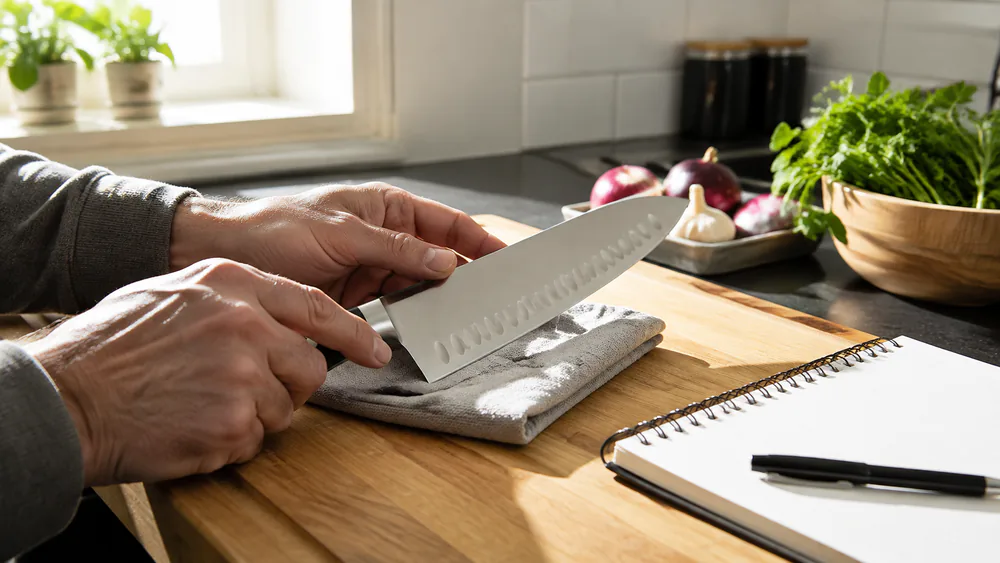
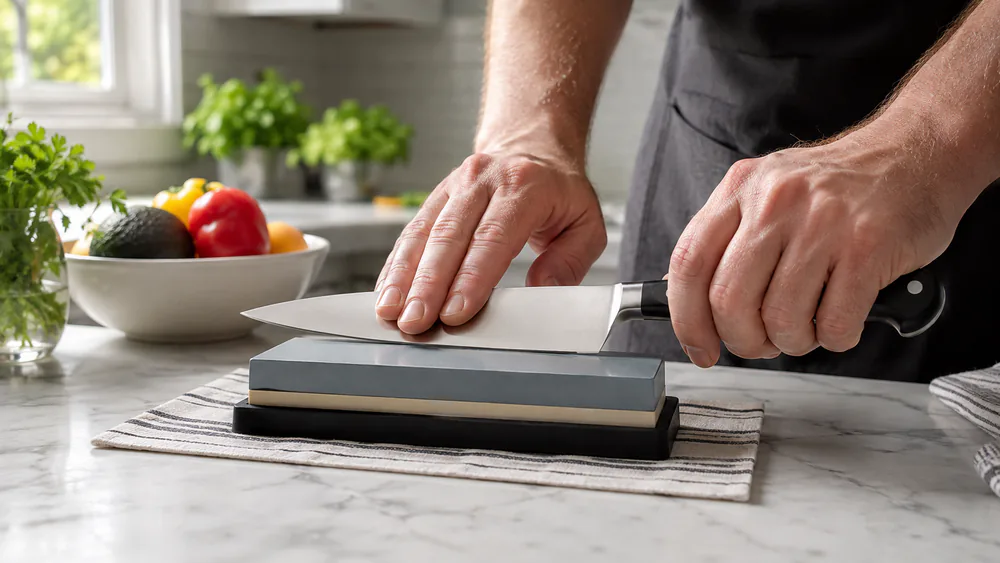
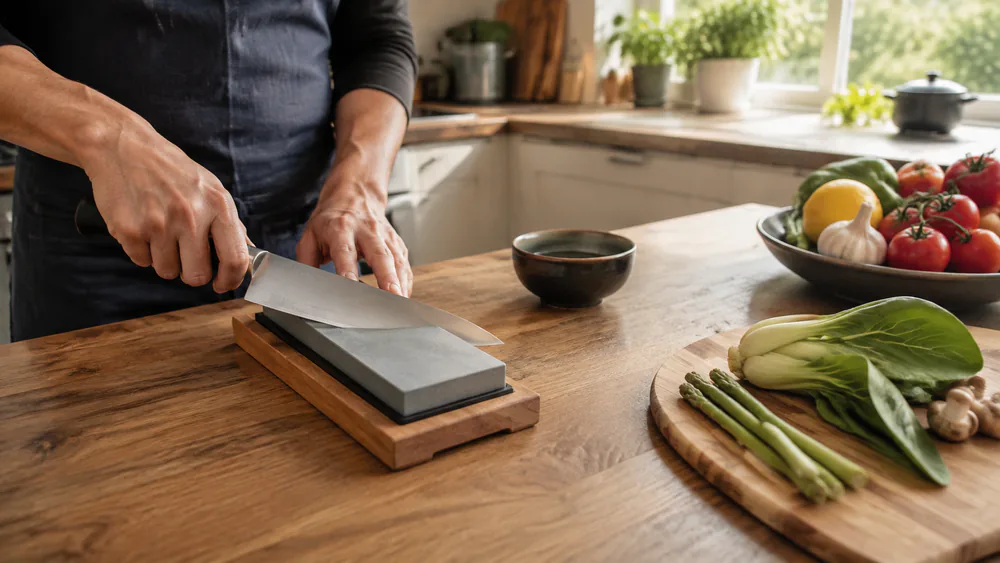
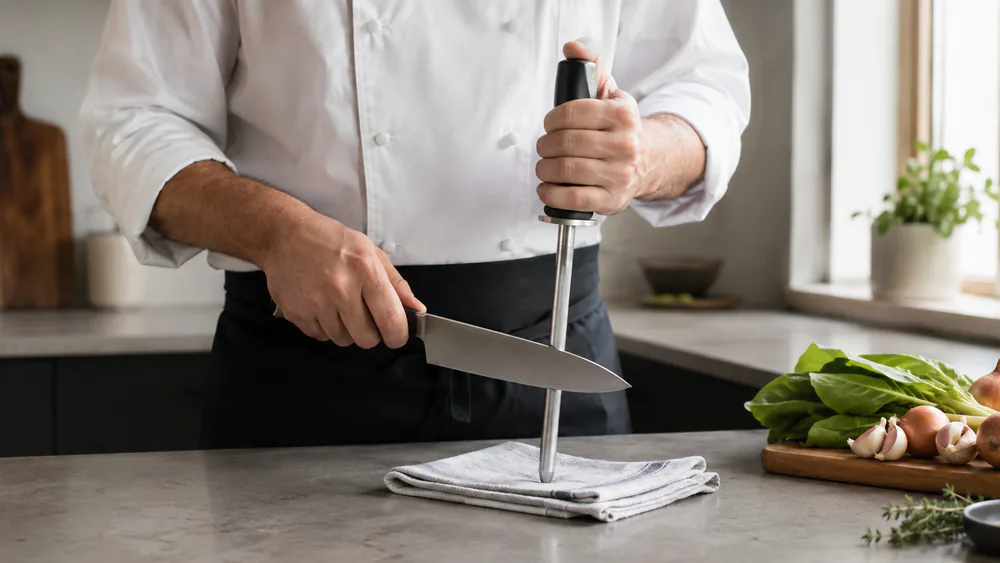
Honing and sharpening are different jobs, and most dull knives only need the first one. A honing steel realigns the edge that folds over during cutting; it removes no steel and takes ten seconds. Sharpening actually grinds a new edge, and it is what you do on a whetstone or a guided sharpener. The tell is simple: if the knife still slices a tomato but drags on the skin, hone it. If it pushes rather than cuts, sharpen it. Every pick in this guide sharpens differently: the Mercer comes back fast on a whetstone, the Mac wants a whetstone and rejects pull-through sharpeners, and the Victorinox forgives whichever method you own. A decent honing steel costs little, and for most home sharpeners a single medium-grit whetstone is enough to keep any knife on this list cutting. If you are learning, a set of Japanese stones plus one decent knife beats any knife collection without a way to maintain it.
Tip. Hone before every big session. When the edge starts to drag on a tomato skin, that is the signal for ten minutes on the whetstone, not a new knife.
Cleaning and storage
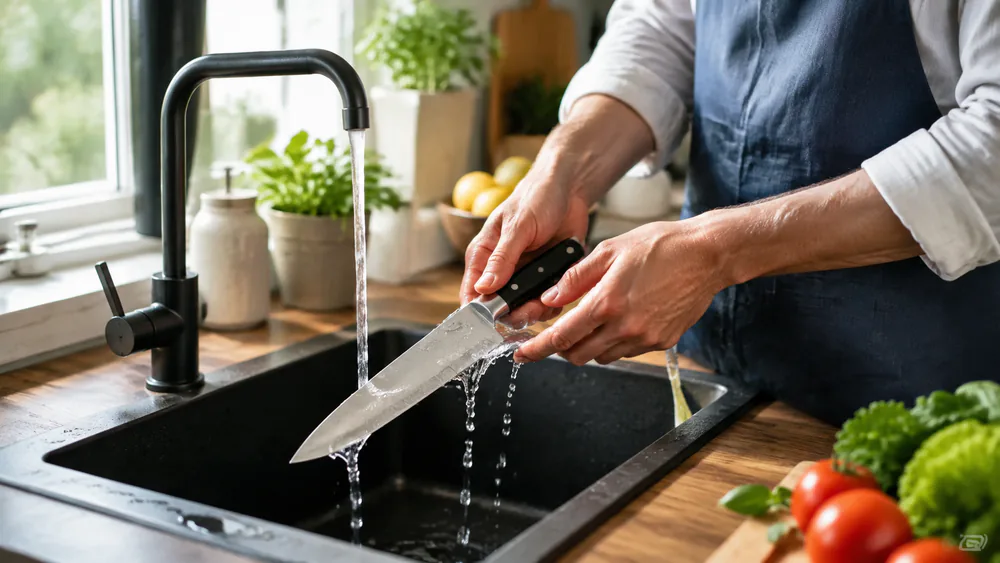
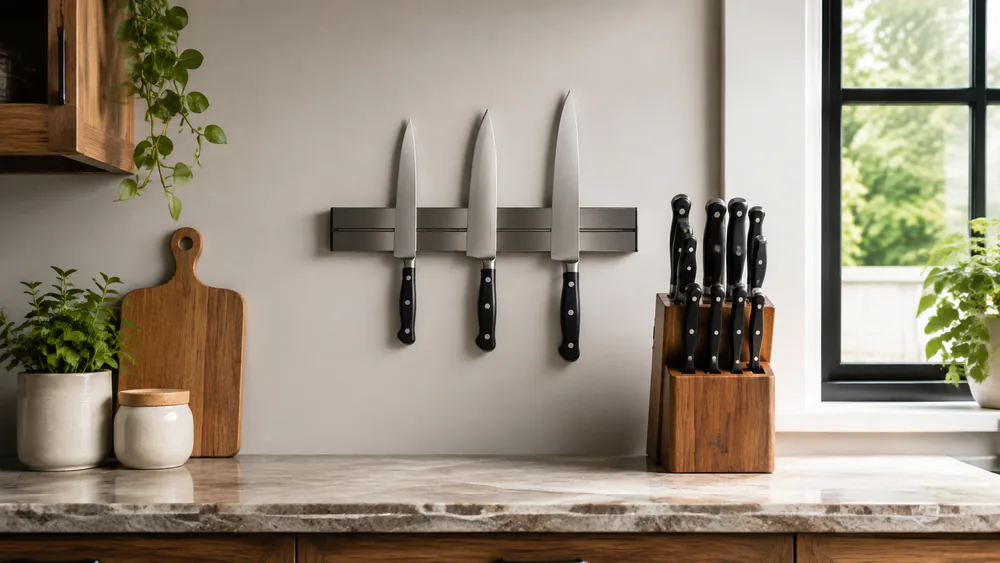
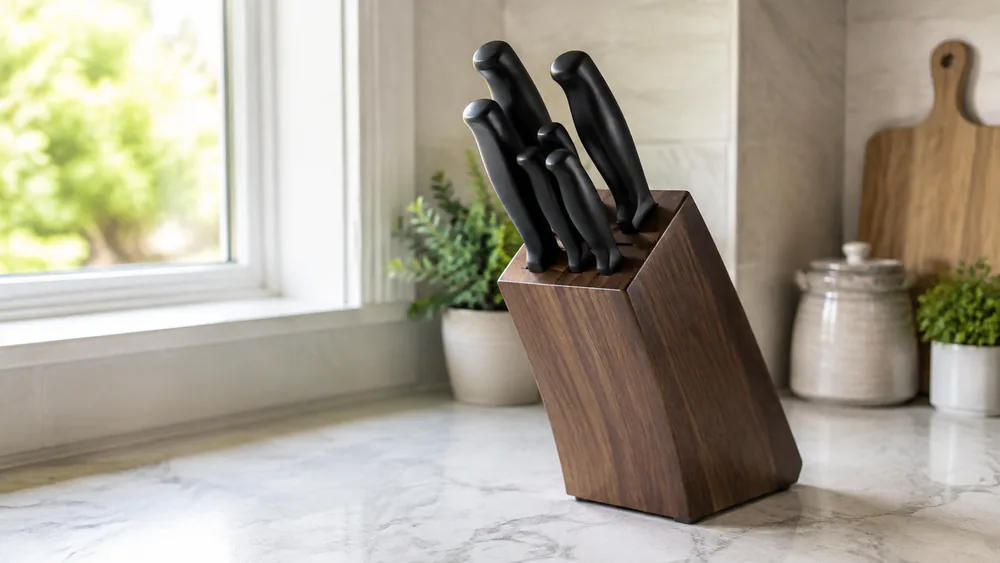
Hand washing and immediate drying is the rule for seven of the eight knives here. The Mac is the strictest about it: a wet blade left to sit developed rust spots within weeks in our notes, and the boxed instructions warn about it. The one exception is the Victorinox Fibrox Pro, which is NSF certified to withstand dishwasher temperatures up to 230 F, though even it will live longer with hand washing. Store the blade so nothing knocks against the edge: a knife block, a magnetic strip, or a blade guard, never loose in a drawer where it will collide with metal. And once a year, spend ten minutes on the stone even if the knife seems fine; the edge you keep is cheaper than the edge you rebuild.
Our standing advice for most buyers is simple: buy one good chef's knife, a board that will not dull it, and learn ten minutes of sharpening. Your cooking will thank you.
FAQ
What size chef's knife should I buy?
If the Mac's shorter handle felt right in your hand, trust that signal: handle fit matters more than another half-inch of blade. As covered above, eight inches is the sweet spot for most home cooks, so spend your shopping time on the handle, not the blade length.
Which is better: a Japanese or German chef's knife?
Neither is better; they are built for different habits. Japanese blades like the Shun and Misono take a keener edge and stay sharp longer, but they chip more easily and want hand washing. German blades like the Wüsthof and Mercer are tougher and more forgiving, and they trade some edge life for that forgiveness. Buy Japanese if you sharpen your own blades; buy German if you want one tough knife.
How often should I sharpen my chef's knife?
With typical home use, plan on sharpening every four to eight weeks, and hone with a steel rod in between sessions. Harder blades at 59 to 61 HRC stay sharp the longest; softer steel at 56 HRC needs attention sooner but is far easier to bring back. If you have to press to slice a ripe tomato, it is past time.
Can I put my chef's knife in the dishwasher?
Only one pick in this guide is dishwasher safe: the Victorinox Fibrox Pro, which is NSF certified to withstand dishwasher temperatures up to 230 F. Every other knife here is hand wash only.
What's the difference between a chef's knife and a santoku?
A santoku is a Japanese all-purpose blade, typically shorter and flatter than a Western chef's knife, with a rounded sheep's-foot tip and little or no belly. Standard santoku blade lengths run 165 to 180 mm, about 6.5 to 7 inches, with 170 to 180 mm the most common home-kitchen sizes. The nearly flat edge and taller blade suit cooks who prefer a push-pull cut, while a chef's knife's curved edge is built for rocking. The Misono we tested is actually a gyuto, the Japanese interpretation of a Western chef's knife, and it behaves more like a chef's knife than a santoku.
Why Trust Mr. Kitchen Adviser
We have tested chef's knives since 2013, and the Mac MTH-80 has sat near the top of our list for most of that run. Our test kitchen has chopped more than 70 pounds of produce in chef's knife testing alone, alongside tomato slices, chicken breakdowns, and month-long edge-retention runs. Every knife in this guide survived a month of real prep in rotation, and every edge was checked after each session.
We score knives the way working kitchens do: edge retention after a week of prep over out-of-box sharpness, handle comfort in hour three, and how easily the steel takes a fresh edge on a home sharpener. A knife that arrives razor sharp but cannot be re-sharpened at home never makes our list. Our rankings come from what we measured, not from manufacturer claims, and no maker pays for a slot.