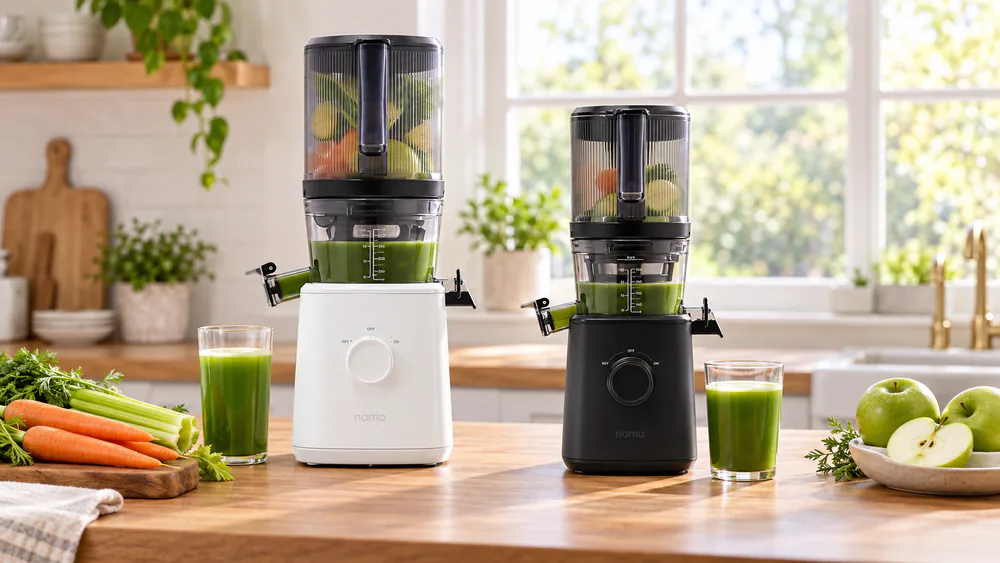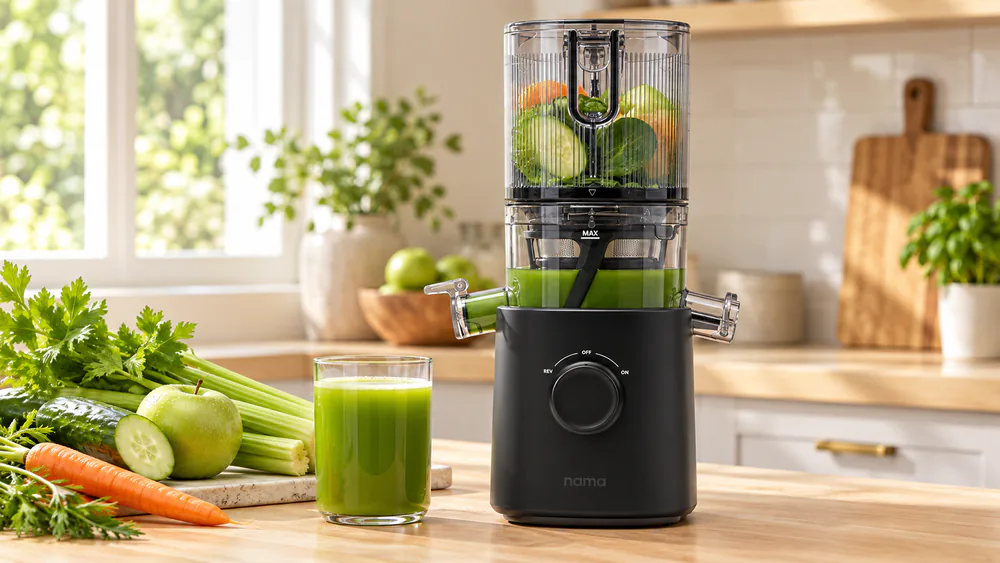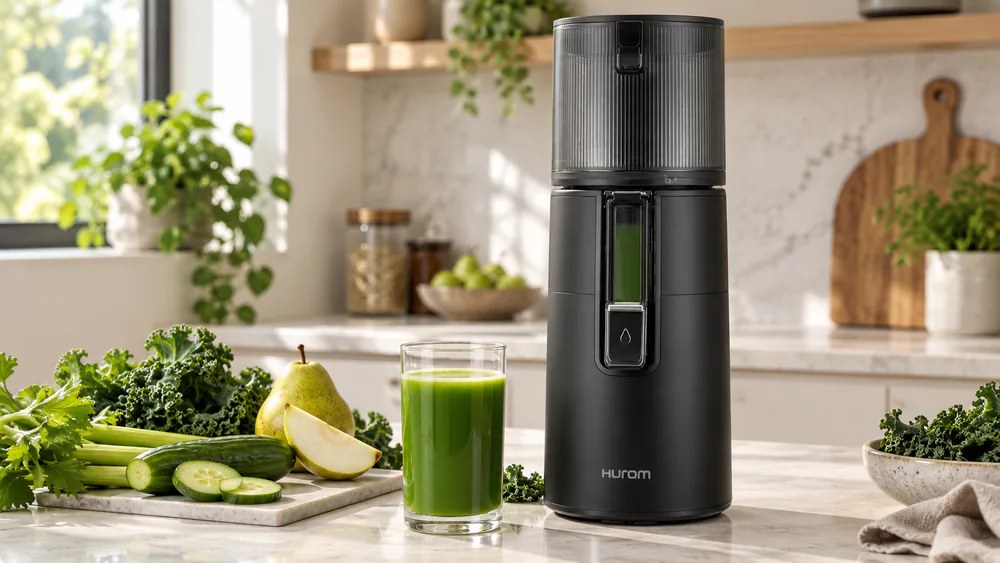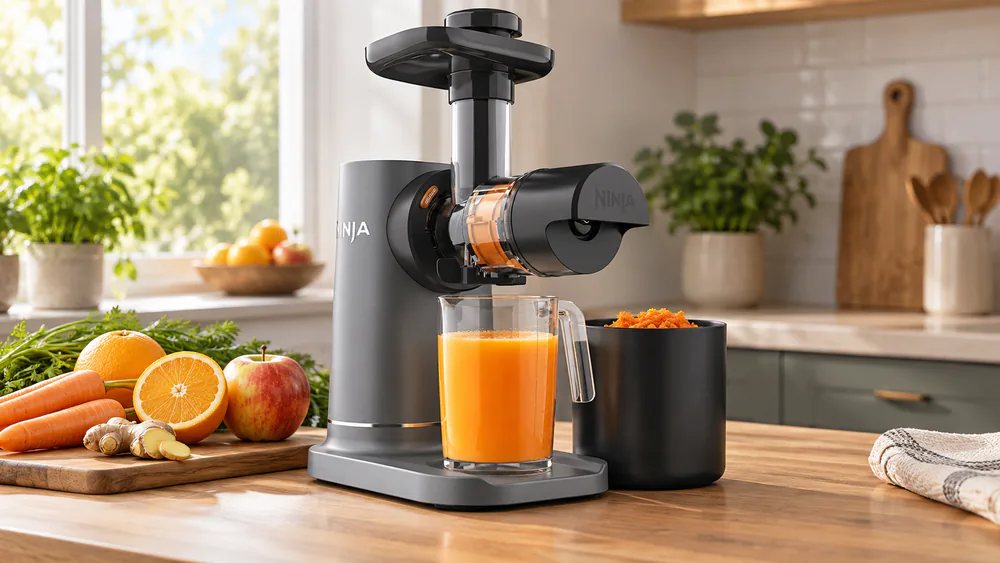

Helping you create a kitchen you love.

Kitchen Appliances

We Tested 20+ Vegetable Juicers to Find the 5 Best of 2026

As an Amazon Associate we earn from qualifying purchases. We may earn a commission from links on this page, at no extra cost to you. Learn more.

We Tested 20+ Vegetable Juicers to Find the 5 Best of 2026

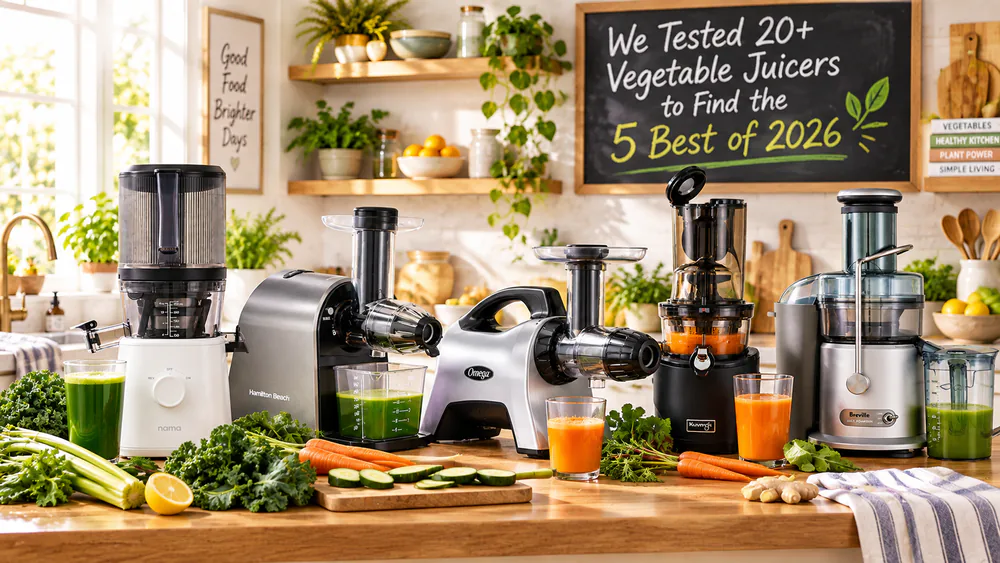
The first lesson this roundup taught us arrived mid-batch, between the twenty-first carrot and the first unclogging of a pulp chute: the best juicer is the one you will actually use on a Tuesday morning. So we tested more than 20 vegetable juicers on pounds of carrots, kale, and celery, and scored every machine on yield, pulp dryness, foam, noise, and cleanup. Five machines earned a spot in this guide, from a $64 cold press to a $700 whole-produce model. Prices below are street prices at the time of writing.

Our Top Picks at a Glance

RankProductBest forKey specsRatingBuy
1

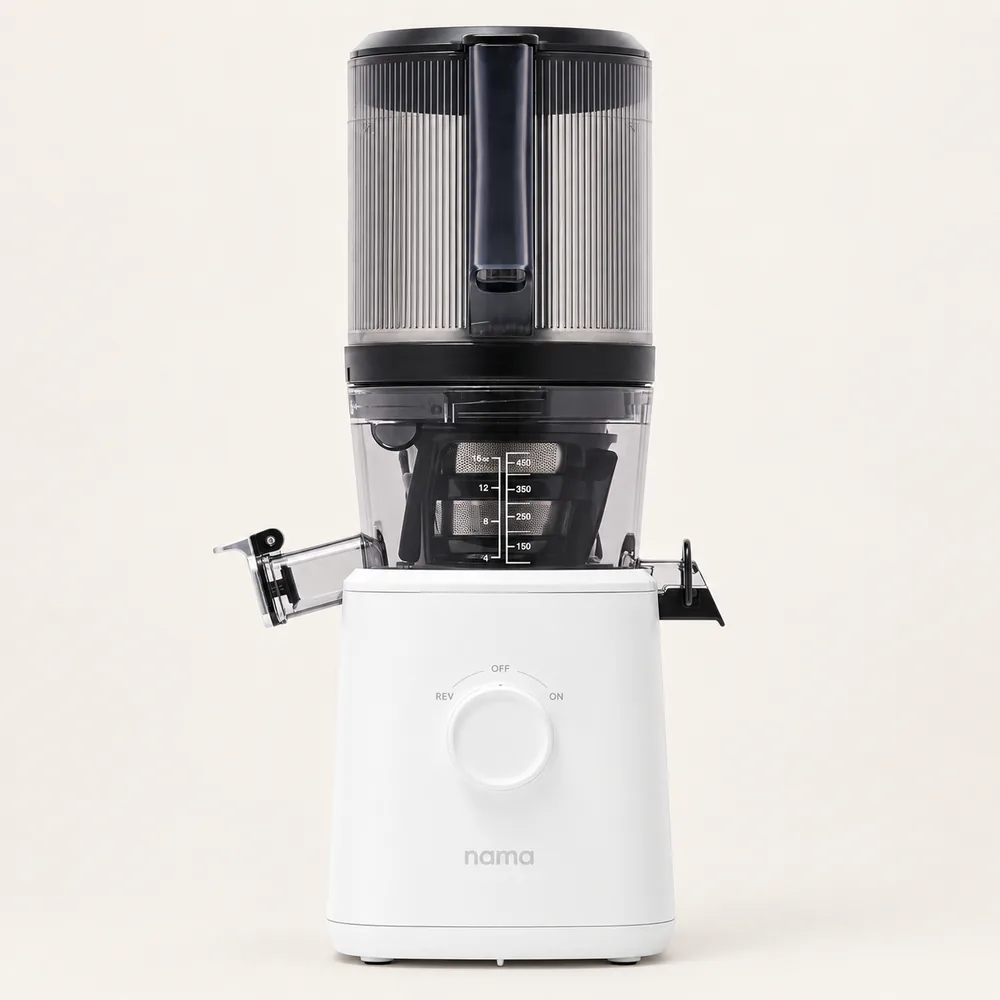
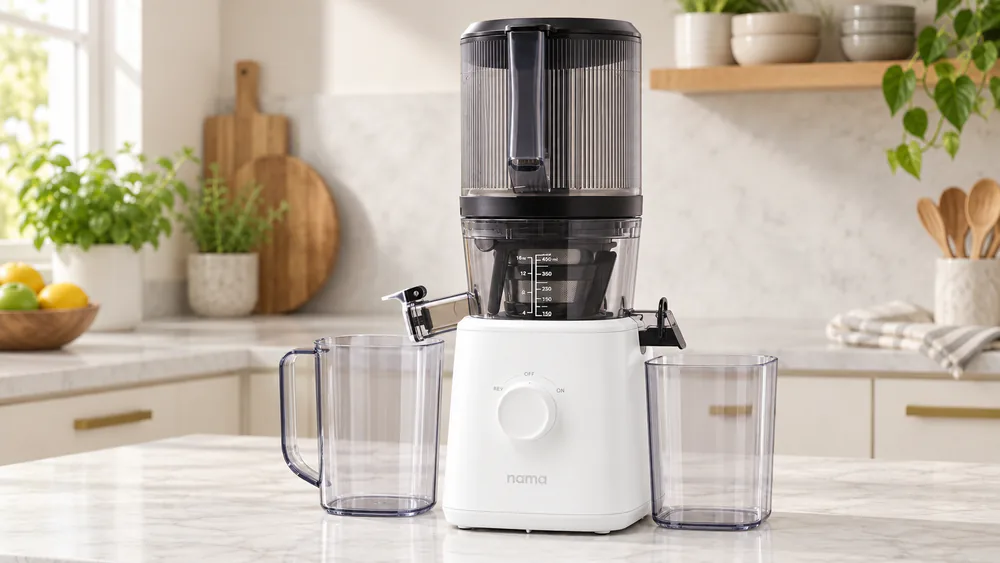
Nama J2 Cold Press Juicer

Best Overall
Hands-free batch juicing 200W, 50 RPM; whole-recipe hopper; about $599 4.8 View on Amazon
2

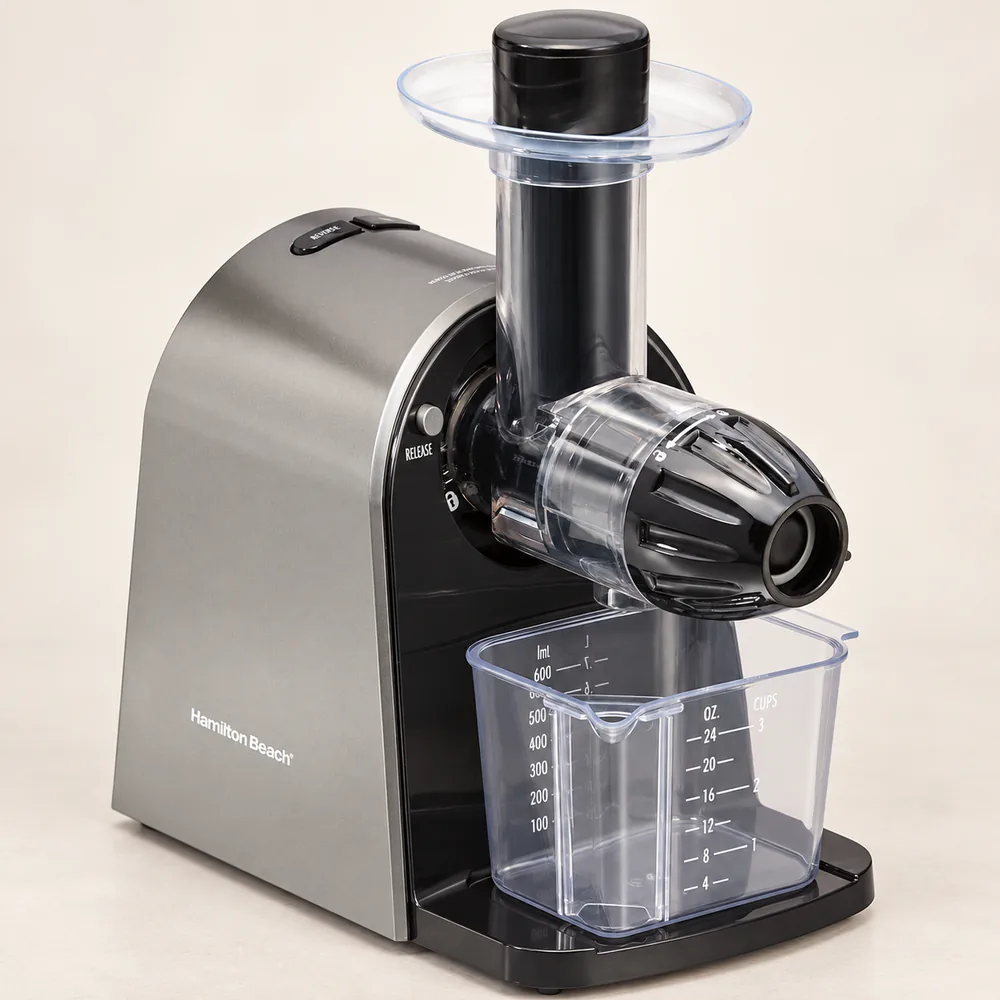
Hamilton Beach Cold Press Masticating Juicer 67951

Best Budget
Budget buyers who juice hard produce 150W; 24 oz cup; about $64 4.0 View on Amazon
3

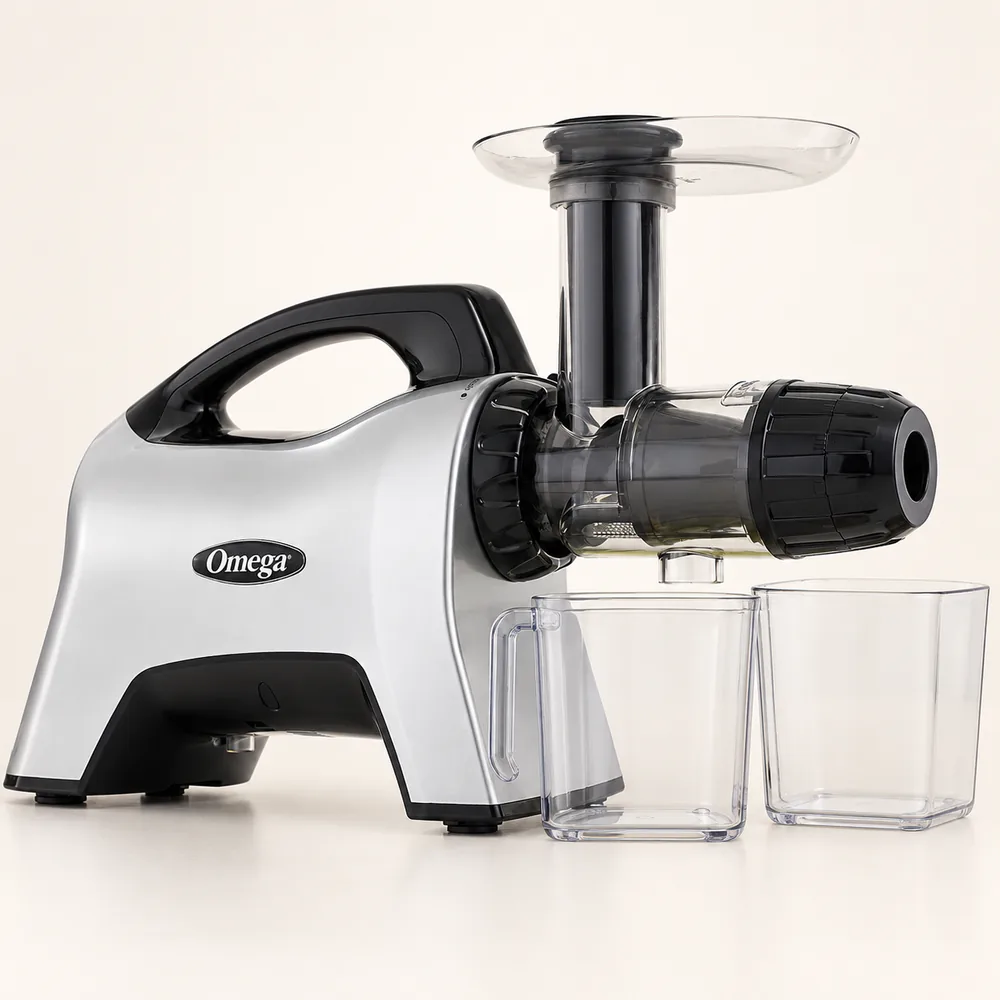
Omega NC1000HDS Masticating Juicer

Best for Leafy Greens
Kale, spinach, and wheatgrass 200W, 80 RPM; about $185.99 4.3 View on Amazon
4

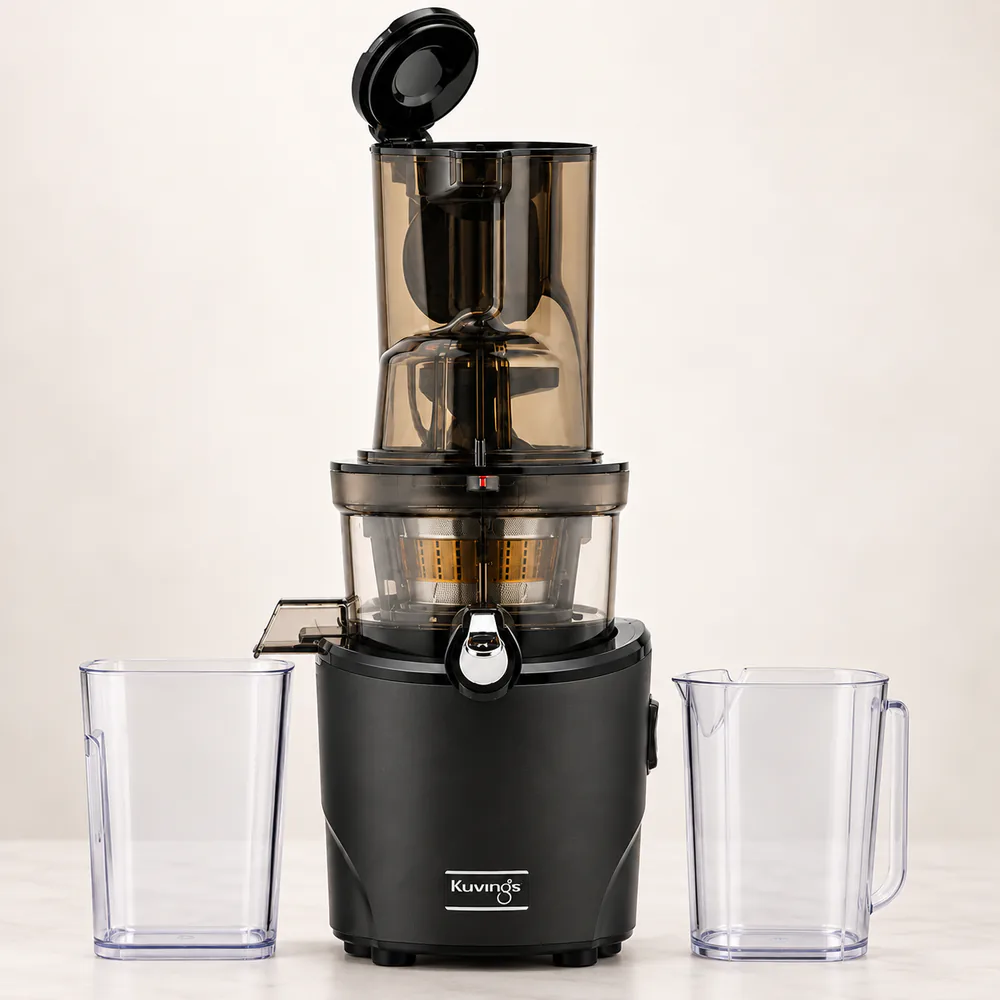
Kuvings Whole Slow Juicer REVO830

Best for Carrots & Root Vegetables
Whole carrots and beets, no chopping 200W, 50 RPM; 88mm chute; about $699.99 4.4 View on Amazon
5

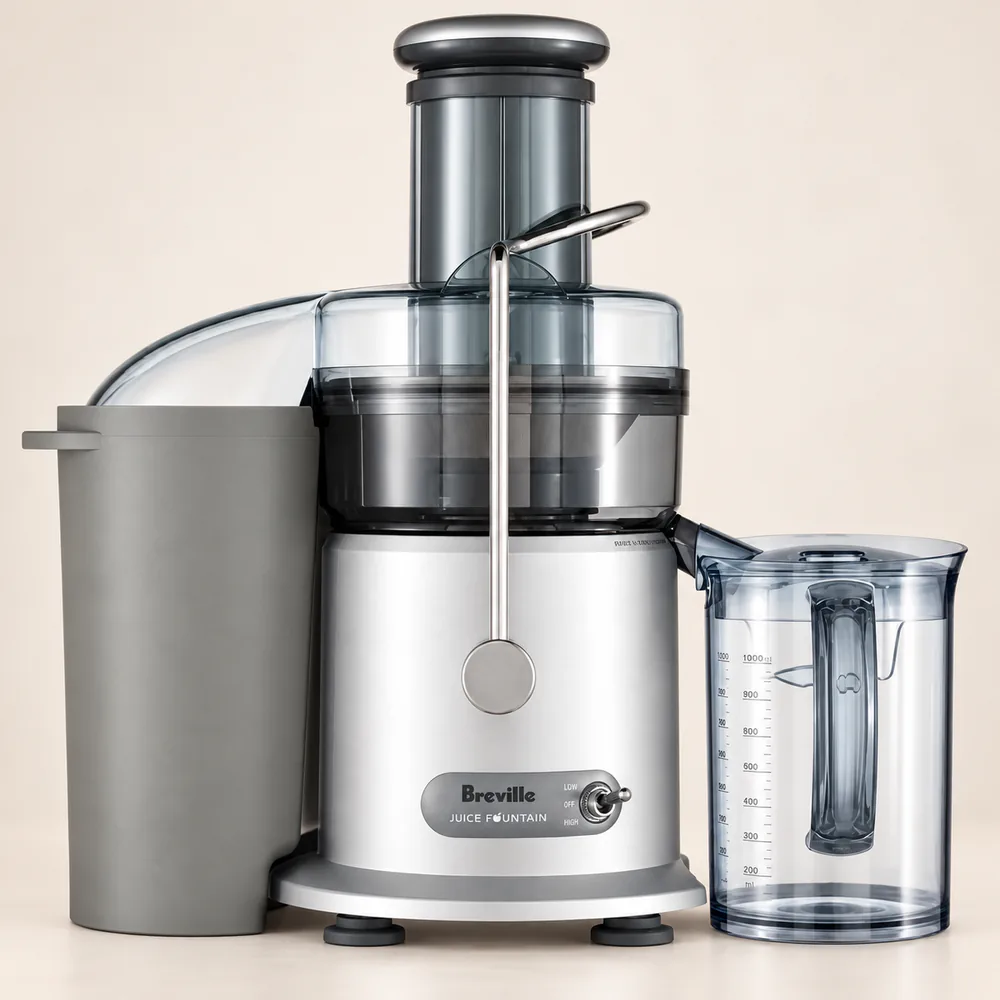
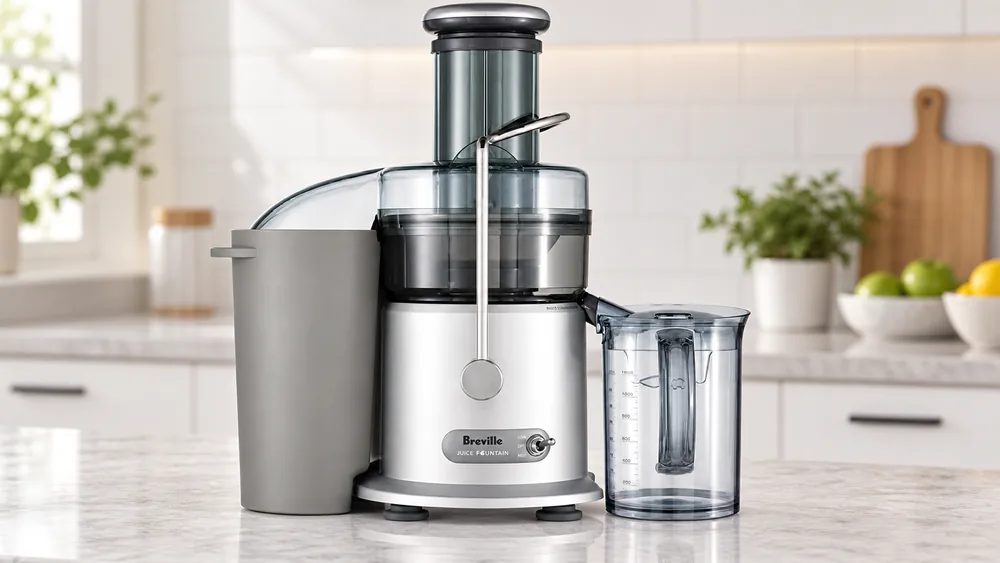
Breville JE98XL Juice Fountain Plus

Best Centrifugal
Speed and whole produce 850W; 3-in chute; about $149.95 4.2 View on Amazon

We earn a commission if you make a purchase, at no additional cost to you.

See full comparison table

Comparison Table

ProductTypeFeed chuteJuice yieldCleaning easeNoiseBest forPrice
Nama J2 Masticating, self-feeding Hopper takes a whole recipe 20-30 oz per load, dry pulp 13 parts, then easy Quiet Hands-free batch juicing $599
Hamilton Beach 67951 Masticating Narrow; cut produce small Good on hard produce; wetter on soft fruit Rinse + dishwasher-safe parts Quiet Budget cold press $64
Omega NC1000HDS Masticating (80 RPM) Narrow; cut produce small High yield, dry pulp About 5 minutes Quiet Leafy greens and wheatgrass $185.99
Kuvings REVO830 Masticating, auto-cut 88mm wide; whole carrots and beets High yield, dry pulp Easy; breaks down small Quiet Whole carrots, beets, roots $699.99
Breville JE98XL Centrifugal (850W) 3 in wide Fast, wetter pulp Fast if immediate Loud Speed and whole produce $149.95

How We Tested Vegetable Juicers

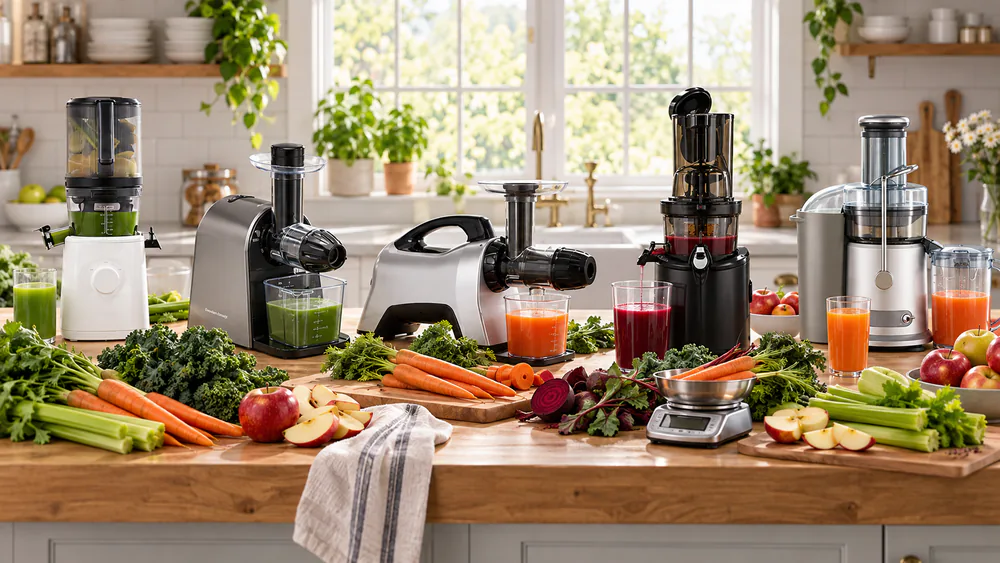
We tested more than 20 vegetable juicers, masticating and centrifugal. Every machine ran the same battery: pounds of carrots, kale, celery, and apples, plus beets and ginger. We scored yield and pulp dryness, foam, noise, cleanup time, and prep time.

The type difference showed up fast: masticating machines left pulp drier and juice smoother, while centrifugal machines foamed and left wetter pulp, so kale juiced with visible foam and more waste. A batch for four people took about an hour on the J2, and the Breville cleaned up in about three minutes if rinsed right away.

We also logged durability notes on every unit, because a cheap machine is only cheap if it lasts.

Our test kitchen juicer station with pounds of carrots, kale, celery, and apples lined up beside five juicers, a kitchen scale and measuring cups at the front of the counter.
Every machine ran the same produce battery.

Best Overall Vegetable Juicer: Nama J2

Nama J2 Cold Press Juicer
1

Nama J2 Cold Press Juicer

Best Overall
Check Price on Amazon
4.8/5

The Nama J2 is our Best Overall vegetable juicer of 2026. Three and a half oranges gave about 13.5 ounces of clear juice in seconds, and four medium carrots produced bright juice with dry pulp behind them. A full hopper load returns 20 to 30 ounces, and a four-person batch took about an hour, prep included. It is quiet at 50 RPM and fits under cabinets, but count on about 13 parts to assemble. See the current price of the Nama J2 Cold Press Juicer, $599 from Amazon.

  • Self-feeding hopper handles a whole recipe with no per-piece feeding
  • 20-30 oz of juice per load with dry, crumbly pulp
  • Fine and coarse strainers plus attachments for smoothies and plant milks
  • Quiet 200W motor at 50 RPM with a 15-year parts warranty

Specifications

Motor
200W, 50 RPM
Feed chute
hands-free self-feeding hopper, whole recipe
Yield
20-30 oz per hopper load
Dimensions
17.7 x 9.8 x 9.0 in; 12.1 lb
Warranty
15-year parts; 30-day guarantee
Pros

  • Hands-free hopper: load a whole recipe at once
  • Best yield of our picks, with dry pulp
  • Quiet enough for early mornings

Cons

  • $599 is a serious outlay
  • About 13 parts to assemble; a learning curve at first
  • Containers are plastic, not glass, at this price

Bottom Line

If you juice vegetables more than twice a week, the J2 pays for itself in the prep time it saves. Buy it via Amazon for return protection or direct from Nama.

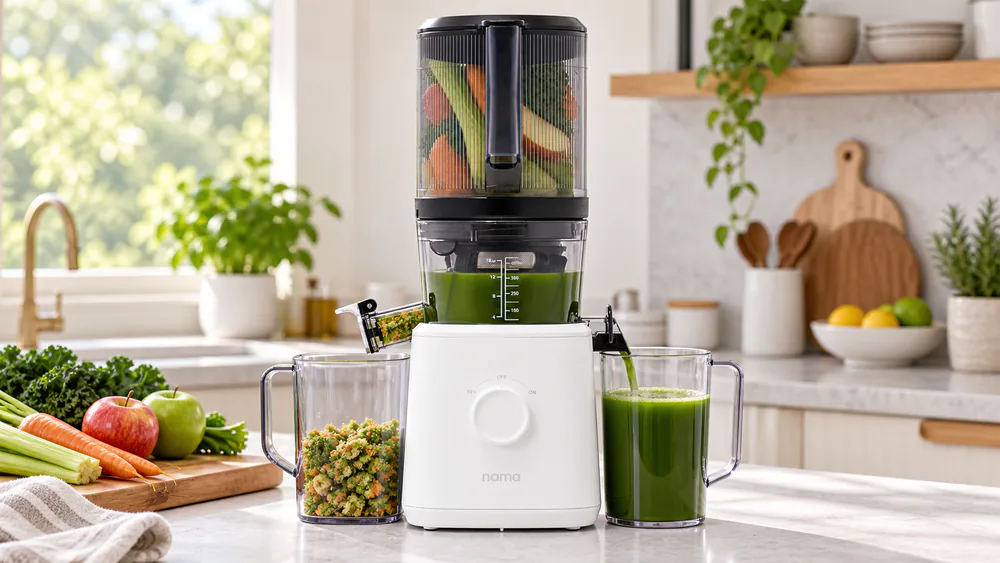
The Nama J2 self-feeding hopper loaded with carrots and leafy greens, a glass of green juice and dry crumbly pulp beside it.
The J2's hopper takes a whole recipe at once.

Best Budget Vegetable Juicer: Hamilton Beach 67951

Hamilton Beach Cold Press Masticating Juicer 67951
2

Hamilton Beach Cold Press Masticating Juicer 67951

Best Budget
Check Price on Amazon
4.0/5

Where the J2 asks for a big budget, the Hamilton Beach 67951 delivers a real cold press for $64 and earns our Best Budget pick. One of our testers double-checked that it was actually on during the first batch; the motor hums rather than screams. Daily runs of carrots, beets, celery, apples, and ginger kept the yield good with dry-ish pulp, though soft fruit turns to mush.

  • 150W slow masticating action with a reverse function
  • 24 oz BPA-free juice cup with froth separator
  • Quiet enough that you will double-check it is running
  • Dishwasher-safe pulp bin, juice bowl, lid, and pusher

Specifications

Motor
150W, slow single-speed masticating
Feed chute
narrow; cut produce into small pieces
Cup
24 oz with froth separator
Dimensions
about 9.5 x 7.1 x 11.9 in (retailer listings vary)
Warranty
3-year limited

Two habits keep it happy. The narrow feed chute means cutting produce into small pieces, and the pulp chamber clogs on fibrous or foamy loads, forcing a mid-session rinse. Most parts drop in the dishwasher. Durability is the long-term question: a minority of units develop grinding noises within weeks, and one strainer in our notes cracked just after the return window.

Pros

  • $64 for a true cold press, the lowest price in the roundup
  • Quiet action that hums instead of screams
  • Good yield on carrots, beets, celery, and ginger

Cons

  • Narrow chute means cutting every piece of produce
  • Pulp chamber clogs on fibrous or foamy loads
  • Soft fruit turns to mush

Bottom Line

For a first juicer or a press-once-a-week habit, the 67951 is the value pick: a real masticating machine at about $64 from Walmart. Expect to cut produce and rinse mid-session.

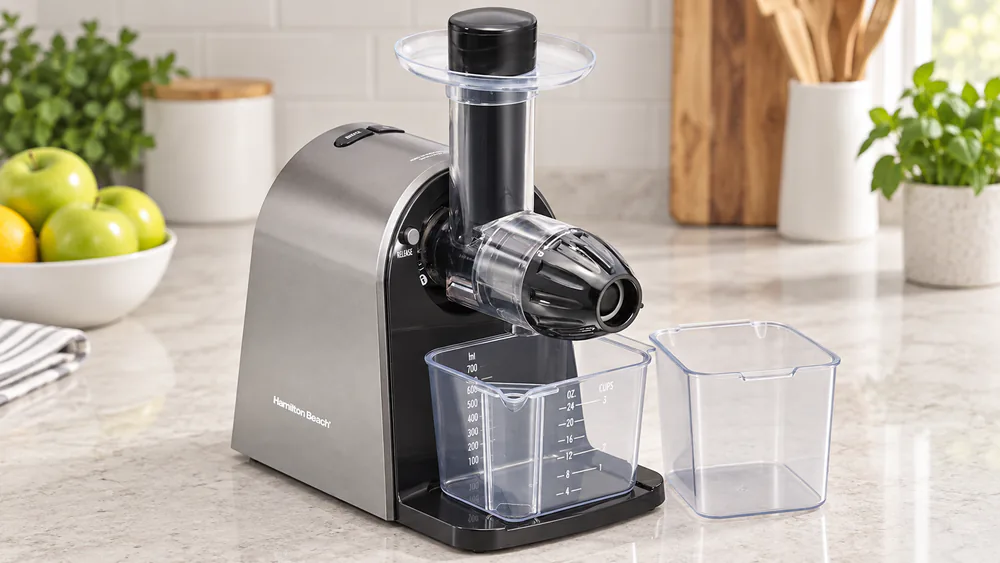
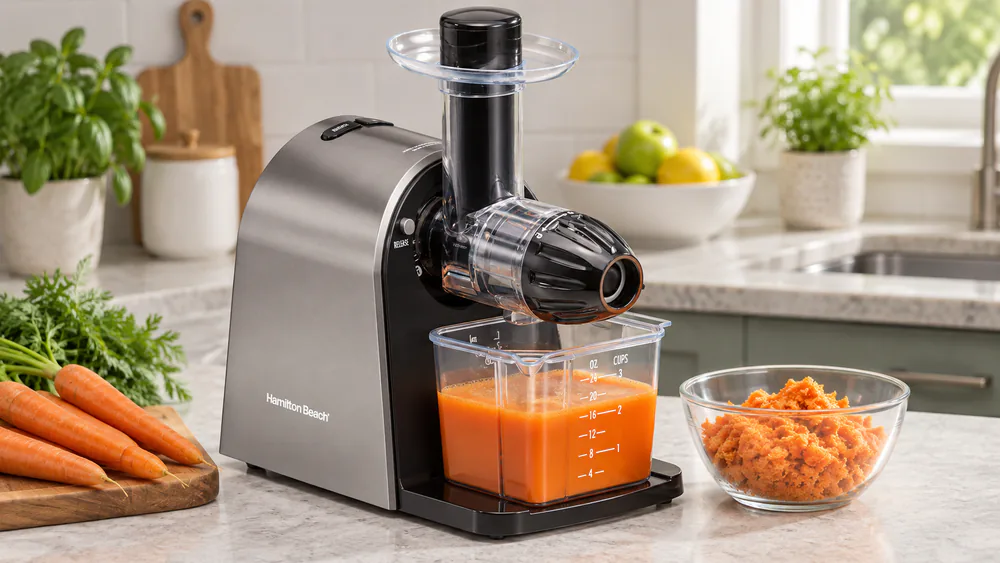
The Hamilton Beach 67951 masticating juicer on a kitchen counter with its clear 24-ounce juice cup and froth separator in place, a bowl of juiced carrots and dry-ish pulp beside it.
The 67951's 24-ounce cup catches juice with its froth separator.

Best for Leafy Greens (Kale & Spinach): Omega NC1000HDS

Omega NC1000HDS Masticating Juicer
3

Omega NC1000HDS Masticating Juicer

Best for Leafy Greens
Check Price on Amazon
4.3/5

If the budget pick is about hard produce, the Omega NC1000HDS is about the greens that choke centrifugal machines, and our kale and spinach runs made the case. The 200W motor at 80 RPM squeezed greens dry, cleanup took about five minutes, and the juice stayed bright for 48 to 72 hours refrigerated. It is quiet, though heavy to move around.

  • Official greens and wheatgrass specialization
  • 200W motor at 80 RPM with a reverse function
  • Cleanup about 5 minutes; parts dishwasher safe on the cold cycle
  • 15-year coverage on parts and performance

Specifications

Motor
200W, 80 RPM
Type
horizontal masticating
Feed chute
narrow; cut produce into pieces
Cleaning
about 5 minutes; cold dishwasher cycle
Warranty
15-year parts and performance

The weak point is plastic. Locking rings crack, plastic pieces can shoot out mid-juice, and chute and end pieces break after a couple of years in some units. Replacement parts for US models are not always available: the 15-year coverage is generous, but coverage only matters if parts exist to ship.

Pros

  • The best leafy-green and wheatgrass performance in the roundup
  • Quiet, efficient, and quick to clean at about 5 minutes
  • Juice holds 48-72 hours refrigerated

Cons

  • Plastic locking rings and pieces are the known weak point
  • Replacement parts for US models are not always available
  • Heavy for its size; not a machine you move around

Bottom Line

If your juice is mostly kale, spinach, and celery, the NC1000HDS is the specialist that gets the most out of them at $185.99.

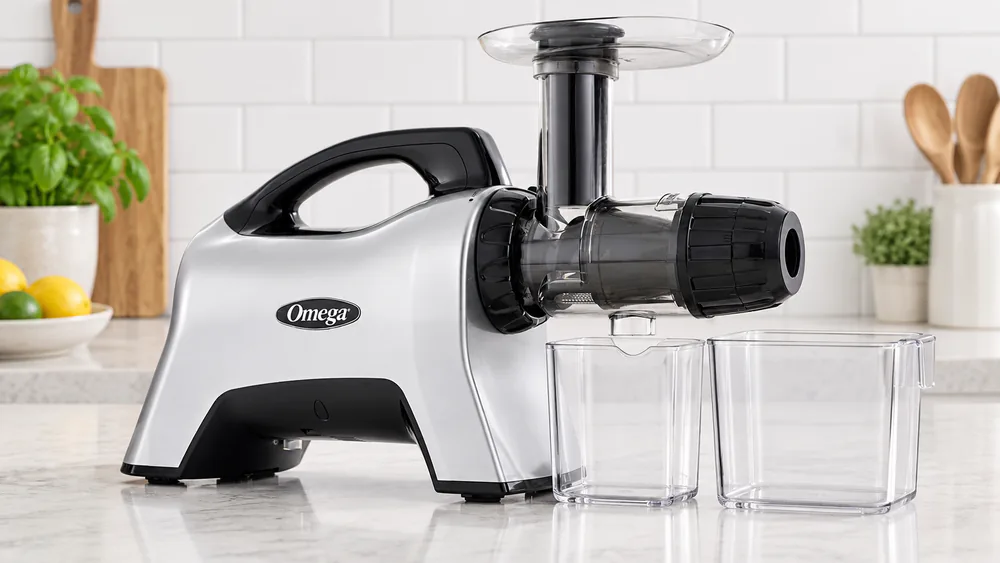
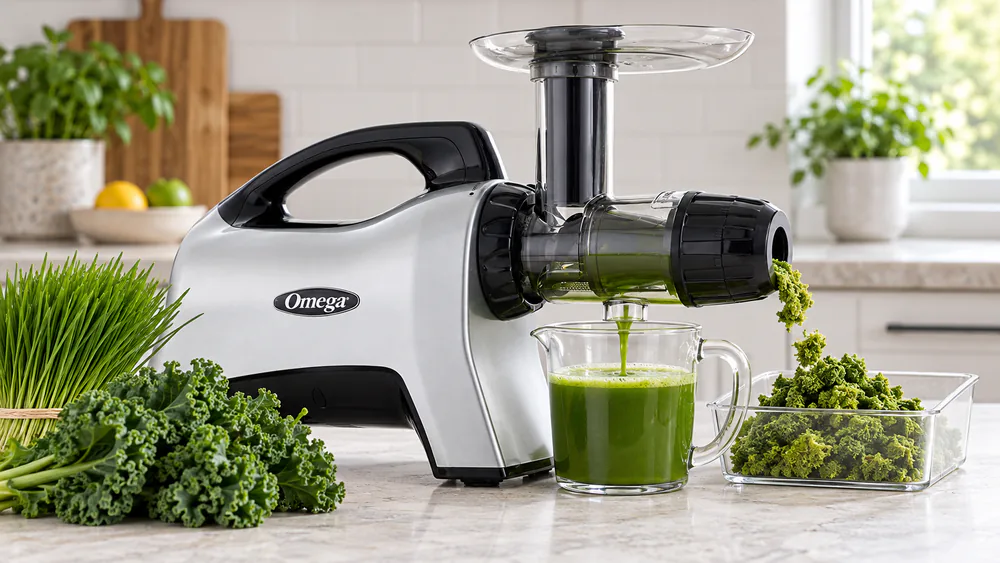
The Omega NC1000HDS horizontal masticating juicer on a counter with a bundle of wheatgrass and a pile of kale beside it, the juice pitcher in place and pulp collecting in the front tray.
The NC1000HDS is built for wheatgrass and leafy greens.

Best for Carrots & Root Vegetables: Kuvings REVO830

Kuvings Whole Slow Juicer REVO830
4

Kuvings Whole Slow Juicer REVO830

Best for Carrots & Root Vegetables
Check Price on Amazon
4.4/5

The Kuvings REVO830 attacks the prep problem from the other side. We fed it whole carrots and beets, no cutting board in sight, and the bladeless auto-cut screw handled the long, fibrous loads on its own. It juices fast and clean for daily use, and for daily root-vegetable drinkers the price justifies itself against bottled juice, which held up in our kitchen.

  • 88mm extra-wide chute takes whole carrots, beets, and fibrous produce
  • Bladeless auto-cut screw; no pre-chopping on most produce
  • Smoothie and sorbet attachment included
  • Quiet 200W motor at 50 RPM; breaks down small for storage

Specifications

Motor
200W power consumption, 50 RPM
Feed chute
88mm extra-wide (3.5 in), whole produce
Type
vertical masticating with auto-cut screw
Cleaning
quick; parts break down small
Warranty
15-year assurance per listing (terms vary by retailer)

Two cautions from our notes. Very hard produce can still bind the auger, so we halve the occasional rock-hard beet. Warranty terms are quoted differently across listings, so read the fine print. The 200W power consumption at 50 RPM keeps the motor quiet.

Pros

  • Whole carrots and beets go in uncut
  • Fast, clean daily juicing with dry pulp
  • Smoothie and sorbet attachment included

Cons

  • $699.99, the most expensive pick in the roundup
  • Rock-hard beets can still bind the auger
  • Warranty terms vary by retailer listing

Bottom Line

Buyers who juice a pound of carrots a day and hate prep should save for the REVO830. The Kuvings REVO830 product page has the full specs.

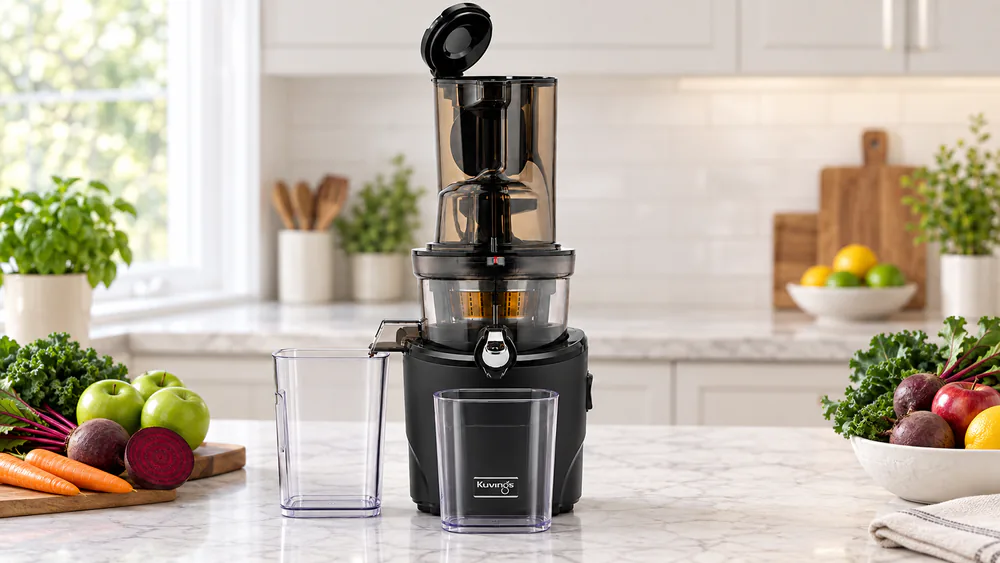
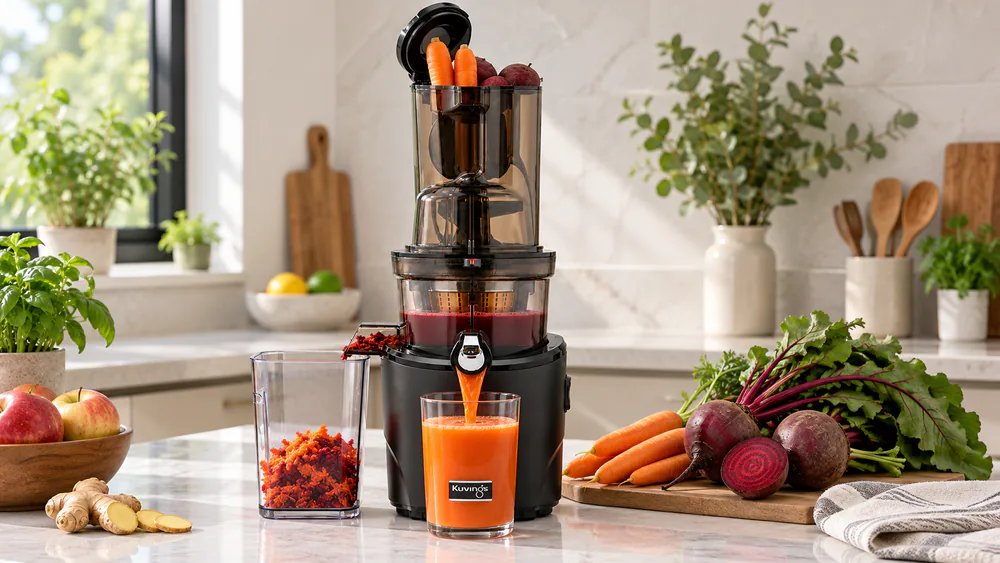
A Kuvings REVO830 with whole carrots and beets standing by the wide 88mm feed chute on a kitchen counter, a glass of orange carrot juice in front of the pulp container.
Whole carrots go in; the REVO830 does the cutting.

Best Centrifugal Vegetable Juicer: Breville JE98XL

Breville JE98XL Juice Fountain Plus
5

Breville JE98XL Juice Fountain Plus

Best Centrifugal
Check Price on Amazon
4.2/5

Every pick so far presses slowly, which makes the Breville JE98XL the deliberate opposite: our Best Centrifugal pick is for people who want juice now. Whole produce went in through the 3-inch feed chute, and the 35.2-ounce jug filled in seconds while the slow presses were still grinding through their first batch. The trade-offs show up in the glass and the ears: pulp comes out wetter than any masticating machine we tested, and the unit is loud. Cleanup discipline is the whole game: rinse right away, about three minutes, or the dried pulp becomes a nightmare.

  • 850W dual-speed centrifugal; high speed for dense produce
  • 3-inch extra-wide feed chute for whole produce
  • 35.2 oz juice jug with built-in froth separator
  • Italian-made micro-mesh stainless filter basket
  • Titanium-reinforced cutting disc

Specifications

Motor
850W centrifugal, dual speed
Feed chute
3-inch extra-wide
Jug
35.2 oz with froth separator; 2.6 qt pulp container
Type
centrifugal
Warranty
1-year limited

Pros

  • The fastest juicer in the roundup: juice in seconds
  • 3-inch chute takes whole apples and vegetables
  • 850W dual-speed motor handles dense produce

Cons

  • Loud, and the chute can leak while feeding
  • Pulp comes out wetter, so yield is lower
  • Dried pulp demands immediate cleanup

Bottom Line

If speed is the priority and noise is fine, the JE98XL is the centrifugal to buy at about $149.95.

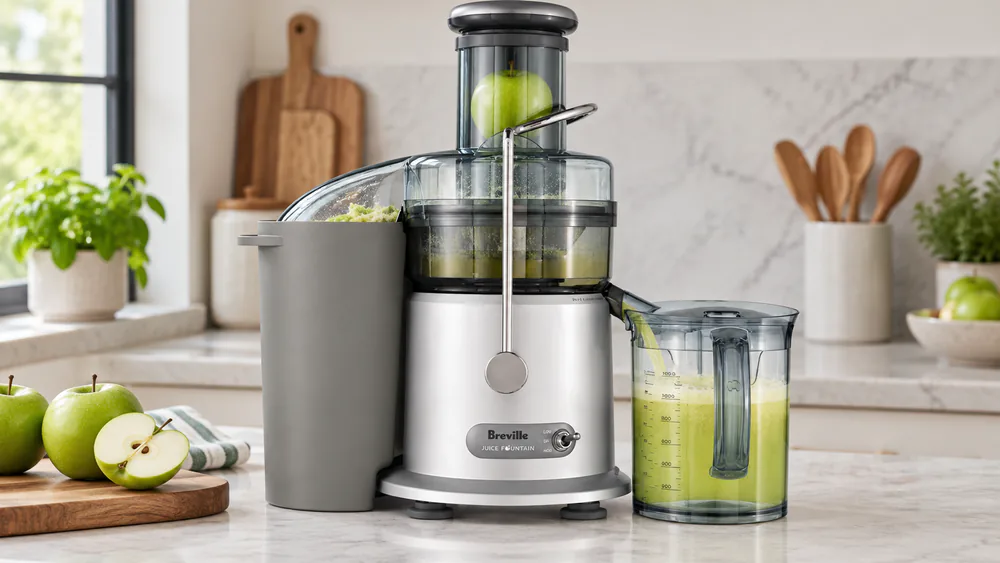
The Breville JE98XL centrifugal juicer mid-run on a counter with a whole apple at the 3-inch feed chute, the 35.2-ounce juice jug filling and the clear pulp container collecting wet pulp.
Whole apples go in and juice comes out in seconds.

Other Vegetable Juicers We Tested

Six more machines spent time on our counter.

The Ninja NeverClog Cold Press Pro JC151 looks like a centrifugal machine, but it is not: it is a masticating juicer with a 150W auger, so it competes in the slow-press lane. It juiced well, with dry pulp and dishwasher-safe cleanup, but its small feed opening meant real prep time.

The Tribest Shine Kitchen Co. Multi-Batch SMB-1 was our original candidate for the leafy-greens slot, and it lost it in testing: it does poorly with leafy greens, celery clogs the short pulp ejector, and a rod wedges during use, leaving it nearly impossible to take apart while covered in juice. We could not recommend it over the Omega for greens.

The compact Nama J3 standing next to the larger Nama J2 on a kitchen counter, showing the size difference between the two hands-free hopper juicers.
The J3 is the J2's compact sibling.
6
Nama J3 Compact Cold Press Juicer

Nama J3 Compact Cold Press Juicer

4.6

The J2's hands-free hopper technology in a shorter, travel-ready body: 34 oz hopper, 10-15 oz per load, hand-wash recommended.

7
Hurom H400 Easy Clean Cold Press Juicer

Hurom H400 Easy Clean Cold Press Juicer

4.5

The easiest machine to clean in the roundup: strainer-free two-part auger, whisper-quiet, 30-minute continuous run, 15-year warranty.

8
Ninja NeverClog Cold Press Pro JC151

Ninja NeverClog Cold Press Pro JC151

4.2

A masticating slow juicer despite the branding: nearly dry pulp, dishwasher-safe parts, but a small feed chute that means real prep.

$149.95 Check Price
9
Tribest Shine Kitchen Co. Multi-Batch SMB-1

Tribest Shine Kitchen Co. Multi-Batch SMB-1

3.0

Compact batch juicing with a 24 oz hopper, but durability and cleaning red flags, and it struggles with leafy greens.

$149.95 Check Price
10
Cuisinart CSJ-300 Easy Clean Slow Juicer

Cuisinart CSJ-300 Easy Clean Slow Juicer

3.5

Quiet with dry pulp and a mesh-free filter, but cracked feeder tubes and no replacement parts sold, so daily juicing is a risk.

$140.99 Check Price
11
nutribullet Juicer NBJ50100

nutribullet Juicer NBJ50100

3.6

A true beginner centrifugal: simple assembly, 27 oz sealing pitcher, juice in seconds, but wet pulp and a footprint too big for small kitchens.

$79.99 Check Price

What to Look For in a Juicer for Vegetables

Vegetables punish the wrong juicer faster than fruit does.

Cold Press vs. Centrifugal for Vegetables

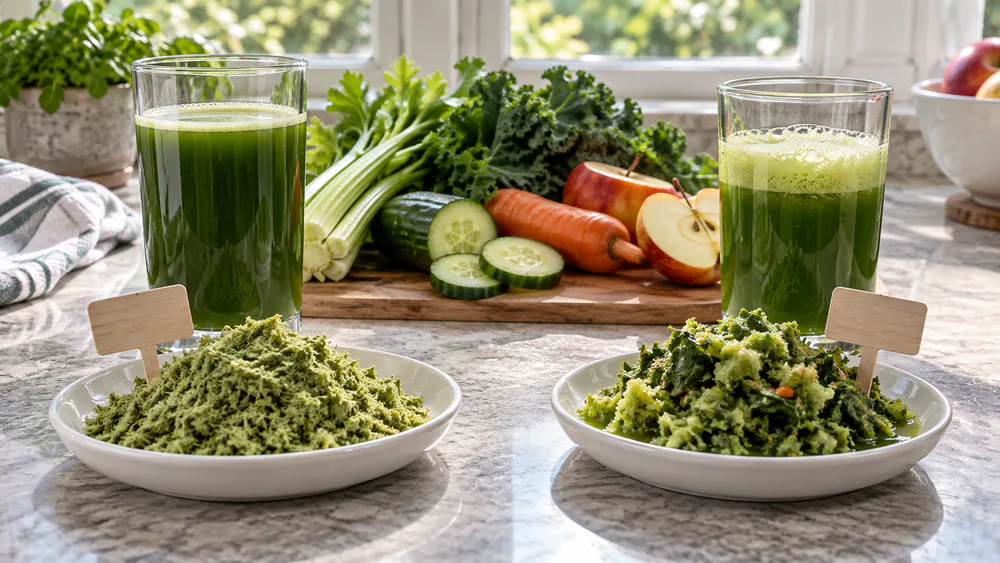
Masticating (cold press) machines crush and press slowly, leaving pulp drier and juice smoother, with less separation in the glass. That matters most for leafy greens: Hamilton Beach claims its $64 model extracts twice as much juice from leafy greens as a centrifugal. Centrifugal machines spin fast, foam, and waste more kale, but they are faster and handle carrots and beets well.

Side by side pulp from a masticating and a centrifugal juicer on parchment paper on a counter, the masticating pulp dry and crumbly, the centrifugal pulp wet and clumped.
Dry masticating pulp versus wet centrifugal pulp from the same kale and carrot batch.

Feed Chute Size

A 3-inch chute takes whole apples and carrots, and the REVO830's 88mm opening swallows whole beets. Narrow chutes, like those on the Hamilton Beach and Omega, mean cutting every piece before feeding. If you hate the cutting board, buy the chute.

Juice Yield and Pulp

Yield is a pulp-moisture story. Masticating machines press more juice from the same produce because their pulp comes out drier; wet centrifugal pulp means some of your juice went into the compost. Squeeze a handful of pulp before buying: drier pulp and slower separation are the cold-press signatures.

Ease of Cleaning

Cleaning decides whether a juicer gets used. Our timed runs ranged from about three minutes on the Breville, cleaned immediately, to about five minutes on the Omega, with the Hamilton Beach and Ninja easiest because their parts go in the dishwasher. Nama recommends hand-washing the J3.

Motor Power and Noise

Slow motors win for noise. The J2 and REVO830 run at 50 RPM, the Omega at 80 RPM, and all three are quiet enough for early mornings. Centrifugal machines are a different world: the Breville's 850W motor is loud, closer to a lawnmower.

Is Vegetable Juicing Actually Good for You?

The honest version of the health pitch: juicing is not healthier than eating whole fruits and vegetables. The Mayo Clinic is blunt that most of the fiber is lost when skin and pulp are removed, and fiber aids digestion, cholesterol, heart-disease risk, and fullness.

The science agrees. A Nutrition Bulletin review published in 2025 found that processing and storing juice reduces its fiber, vitamins, and antioxidants and turns intrinsic sugars into free sugars, while whole fruit gives more satiety and feeds the gut microbiome. An umbrella review in Nutrition Reviews, across 15 systematic reviews, found health benefits from 100% juice in 19.6% of meta-analyses, adverse associations in 5.9%, and no effect in 74.5%, with no eligible vegetable-juice studies.

None of that means vegetable juice is bad for you. It is a supplement to whole produce, not a replacement. Mayo's guidance matches what we tell shoppers: blending keeps the fiber, wash produce thoroughly, and use leftover pulp in soups or baked goods. Vegetables are the best thing to juice: less sugar, more of the nutrients worth pressing for.

Warning. Make only as much juice as you will drink that day. Bacteria grow quickly in fresh juice, and the pulp you strain out is where the fiber went, so use it in soups, stocks, or baked goods.

A bowl of leftover dry vegetable pulp from juicing on a kitchen counter, a loaf of pulp-enriched bread on a cooling rack behind it.
Leftover pulp goes into soups and baked goods.

Frequently Asked Questions

What type of juicer is best for leafy greens like kale and spinach?

A masticating (cold press) juicer. The slow auger presses greens dry, which is why the Omega NC1000HDS is positioned for greens and wheatgrass. Centrifugal machines foam and waste more of them. Feed greens slowly, in loose handfuls.

Can a centrifugal juicer handle carrots and beets?

Yes. Hard, dense produce is exactly what the high-speed setting is for, and both the Breville JE98XL and the Nutribullet Juicer run dual speeds. Carrots and beets juice fast with good yield; you give up dry pulp and quiet, not performance. Halve whole beets before feeding.

Why does vegetable juice separate so quickly?

Because the fiber that held the juice together went into the pulp. Particles settle quickly, and centrifugal juice separates faster because it holds more foam and finer air. Stir or shake before drinking; separation is a sign the juice is fresh, not spoiled.

How do you clean a juicer after juicing vegetables?

Rinse every part right after the last pour, before the pulp dries; that single habit separates a three-minute cleanup from a soak-and-scrub session. The Breville's micro-mesh filter basket also needs a brush to clear pulp from the mesh. If plastic-on-plastic fittings start to stick after months of use, a little oil on the rims eases assembly.

How noisy are vegetable juicers?

Masticating machines are quiet: the Hamilton Beach hums so softly you may double-check it is on, and the J2 and REVO830 run near conversation level at 50 RPM. Centrifugal machines are loud. If you juice before the household wakes, buy masticating.

What can you do with leftover vegetable pulp?

More than you think. The Mayo Clinic suggests soups and baked goods, and dry masticating pulp is a good add-in for muffins, veggie burgers, or stock. Wet centrifugal pulp is better for compost.

Why Trust Mr. Kitchen Adviser

Every pick in this guide is the result of hands-on testing in our own kitchen, not a repackaging of spec sheets. We tested more than 20 vegetable juicers, ran each through the same produce battery, and scored yield, pulp dryness, foam, noise, cleanup, and prep time on every unit.

We also logged durability notes, because the machine that breaks in month two is the expensive one; the reviews above say when a strainer cracked or a chute wedged.

When a manufacturer revises a model, we update the guide.

Final Verdict

Not every budget stretches to the J2. If yours stops at $64, the Hamilton Beach 67951 delivers a real cold press and is our pick for a first juicer.

Two runner-ups deserve a second look. The Nama J3 packs the same hands-free hopper technology into a shorter, lighter body for $100 less, which makes it the right call for small kitchens. And the Hurom H400 is the lowest-maintenance machine we have ever tested, for buyers whose budget starts closer to $749.

What we would do differently next round: run the REVO830 against the J3 on identical batches, and re-check replacement-part availability across every brand, since parts matter most after the warranty ends.

Read next

Ready to upgrade your kitchen?

Five tested juicers, from the $64 budget cold press to the $700 whole-produce model, with one for every vegetable habit.