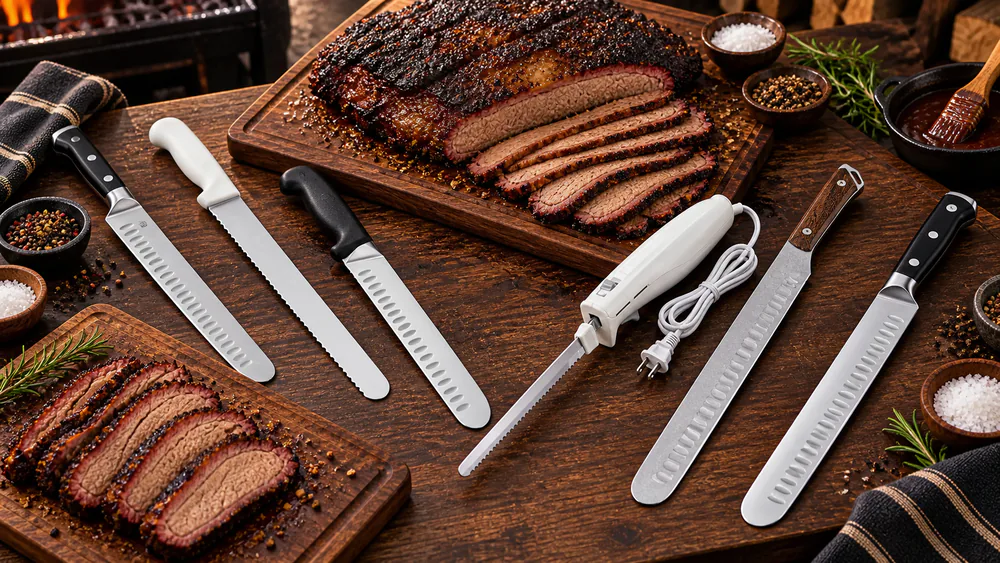
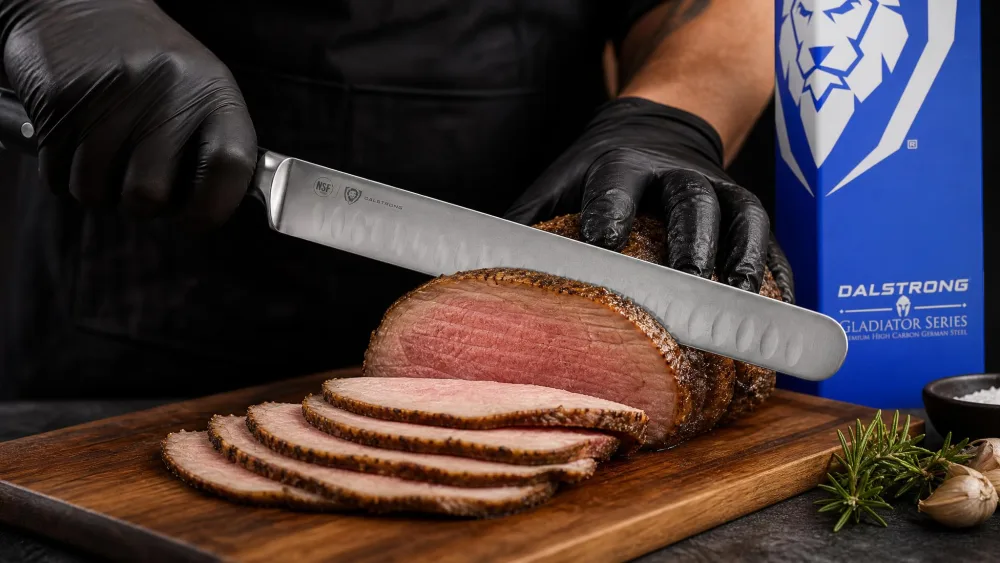
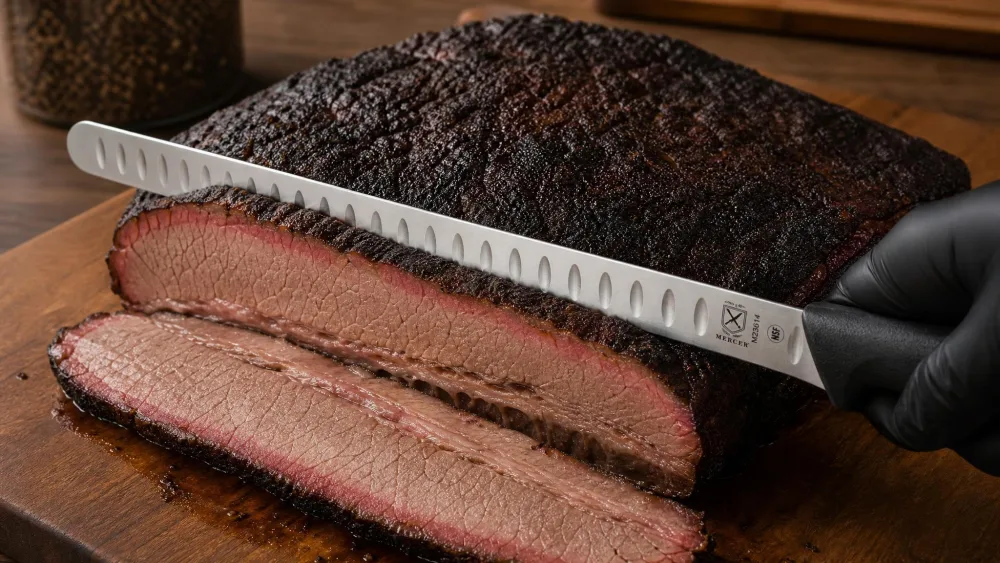
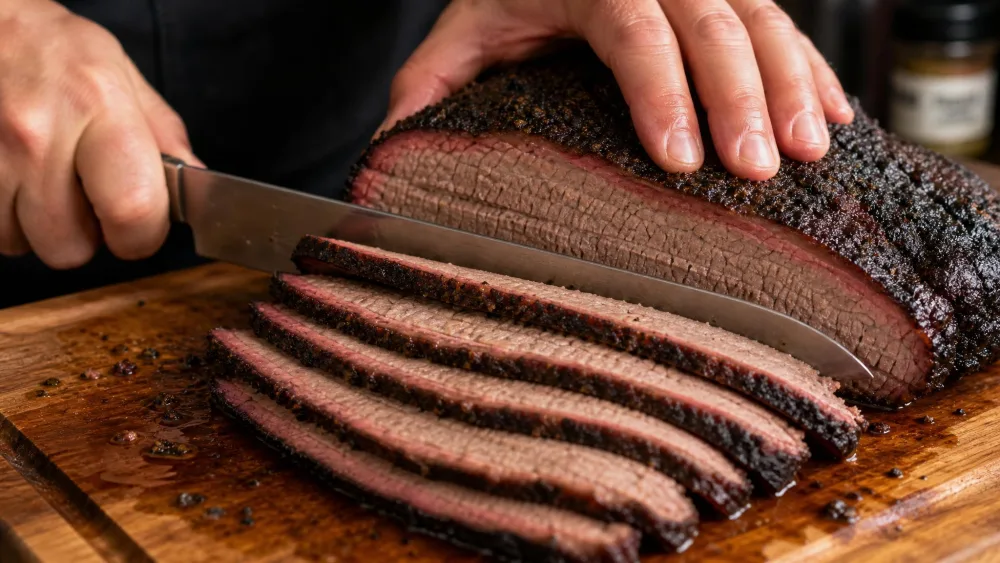
Any knife will cut a cooked brisket. A great one makes clean, even slices that hold their juice and show the smoke ring.
Blade Length: 12 Inches or Longer
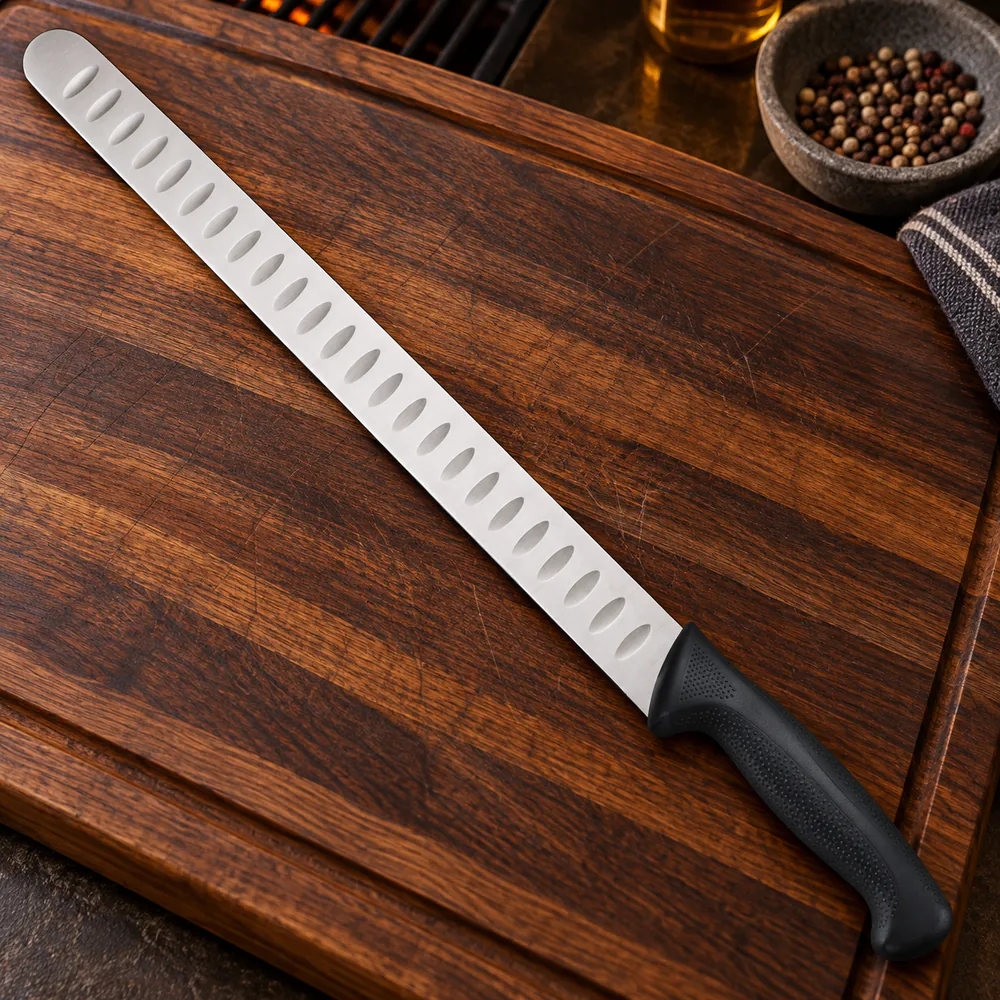
A brisket is a wide, heavy cut; 12 inches suits most briskets, and 14 inches suits a full packer or very large cut. A 12 to 14 inch blade lets one long pull cross the flat. An 8-inch chef's knife forces sawing and leaves jagged edges.
Granton Edge vs. Serrated vs. Straight Edge
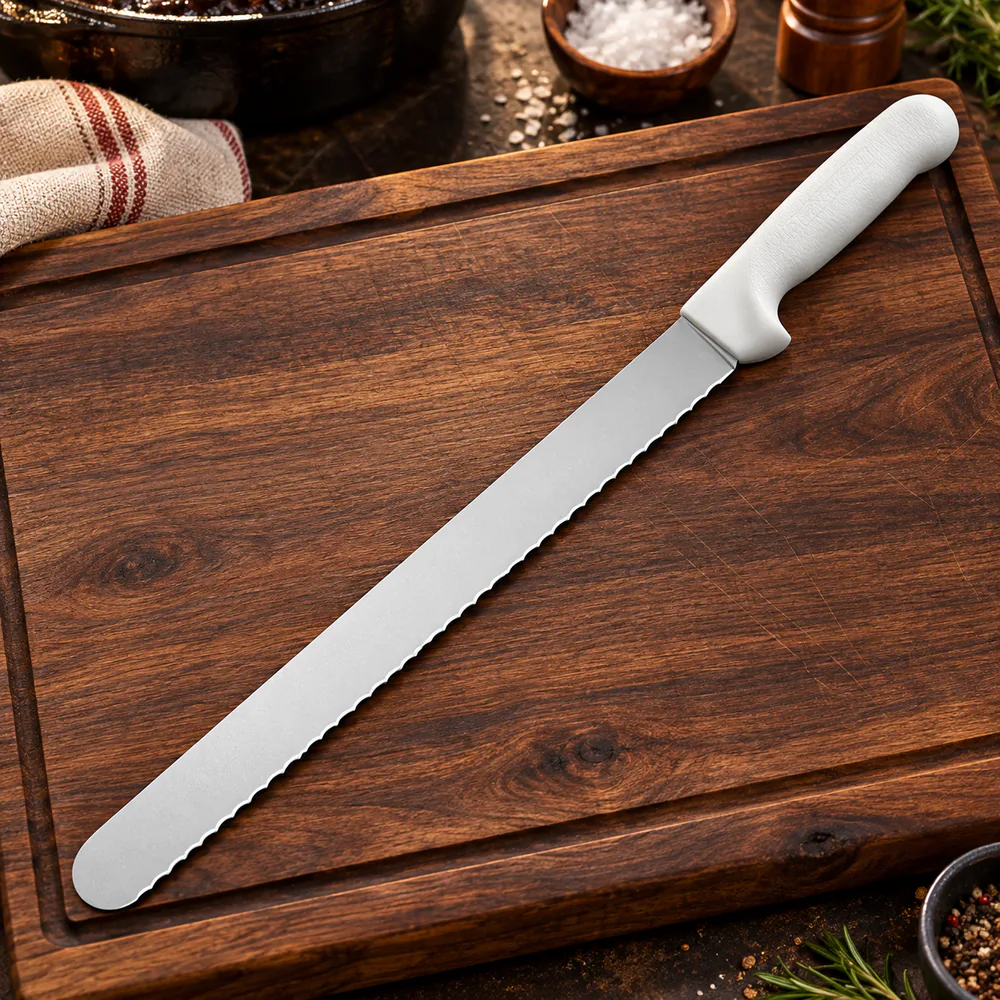
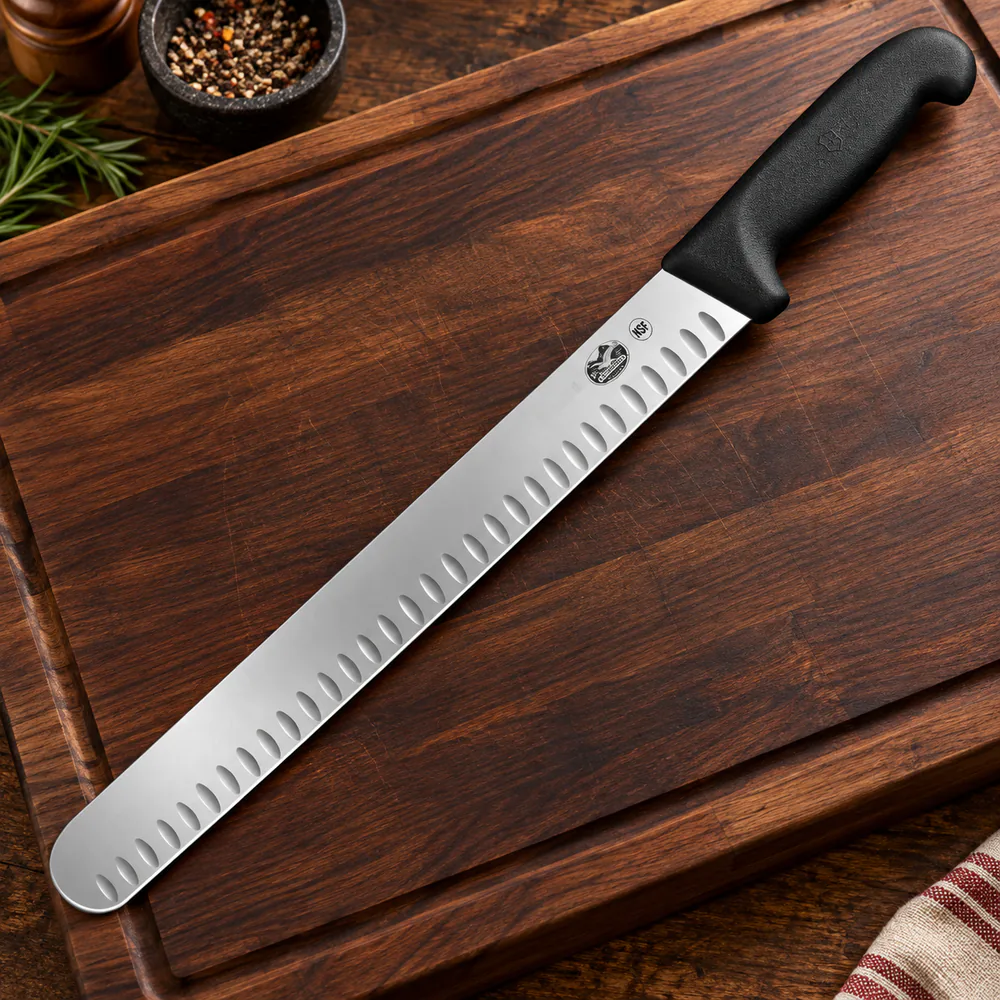
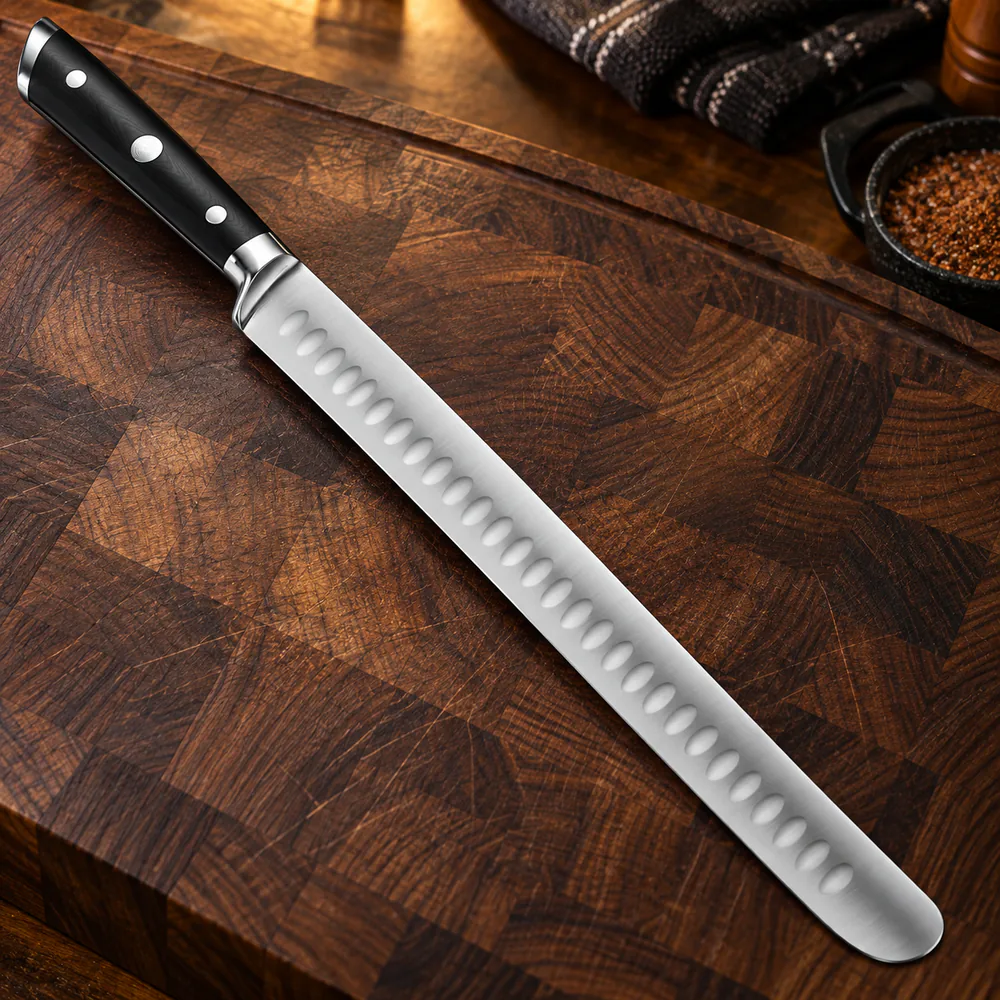
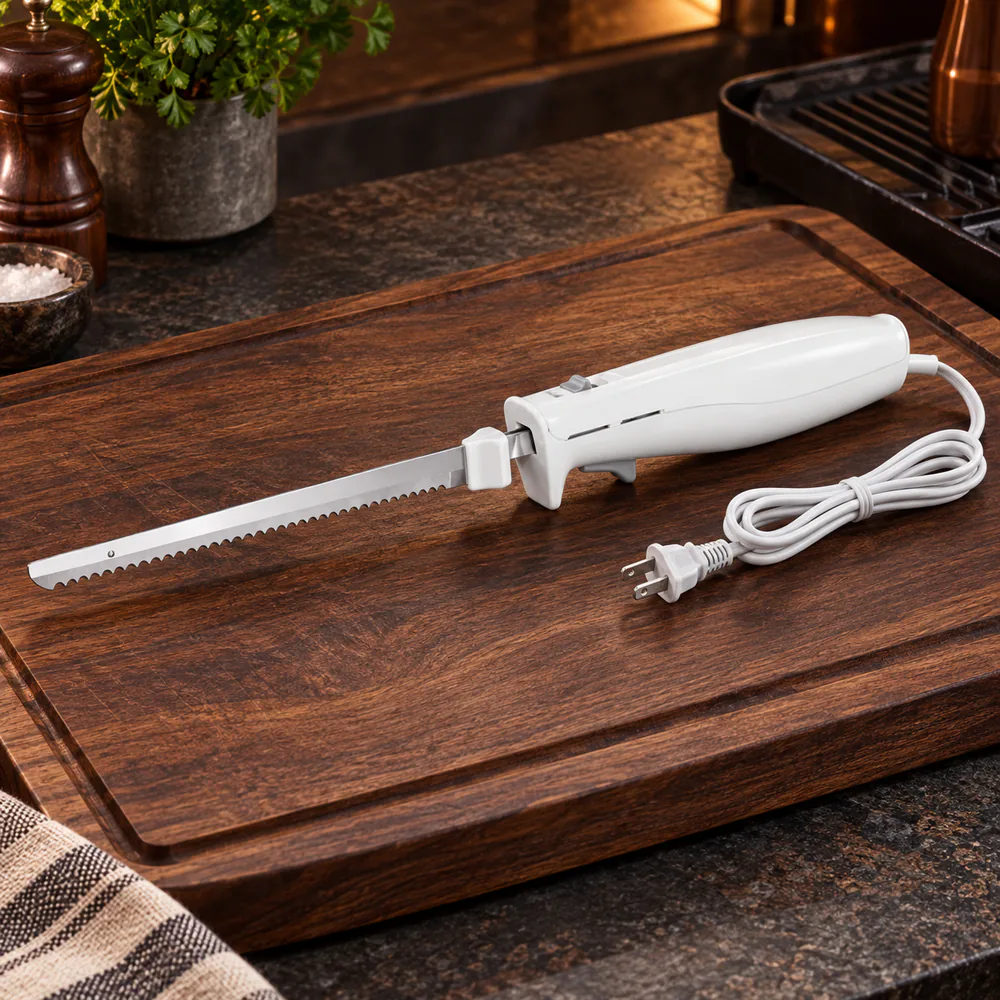
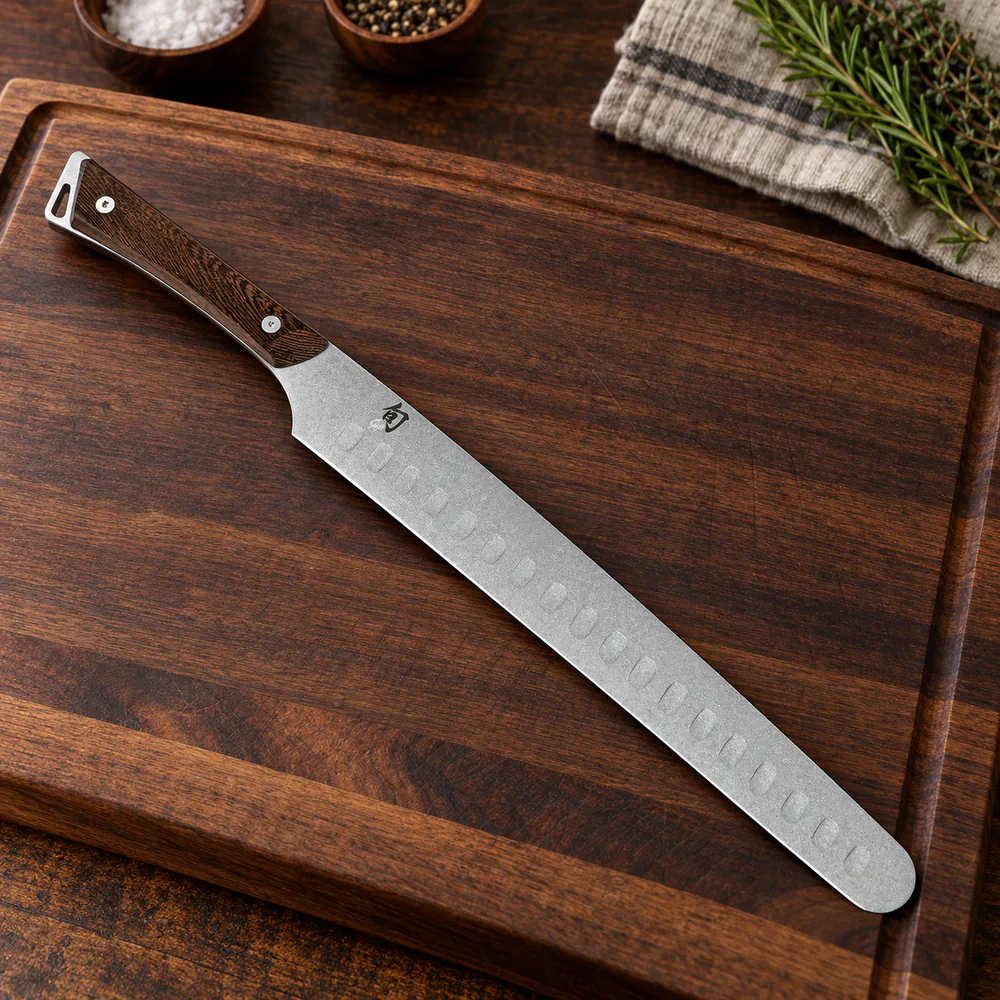
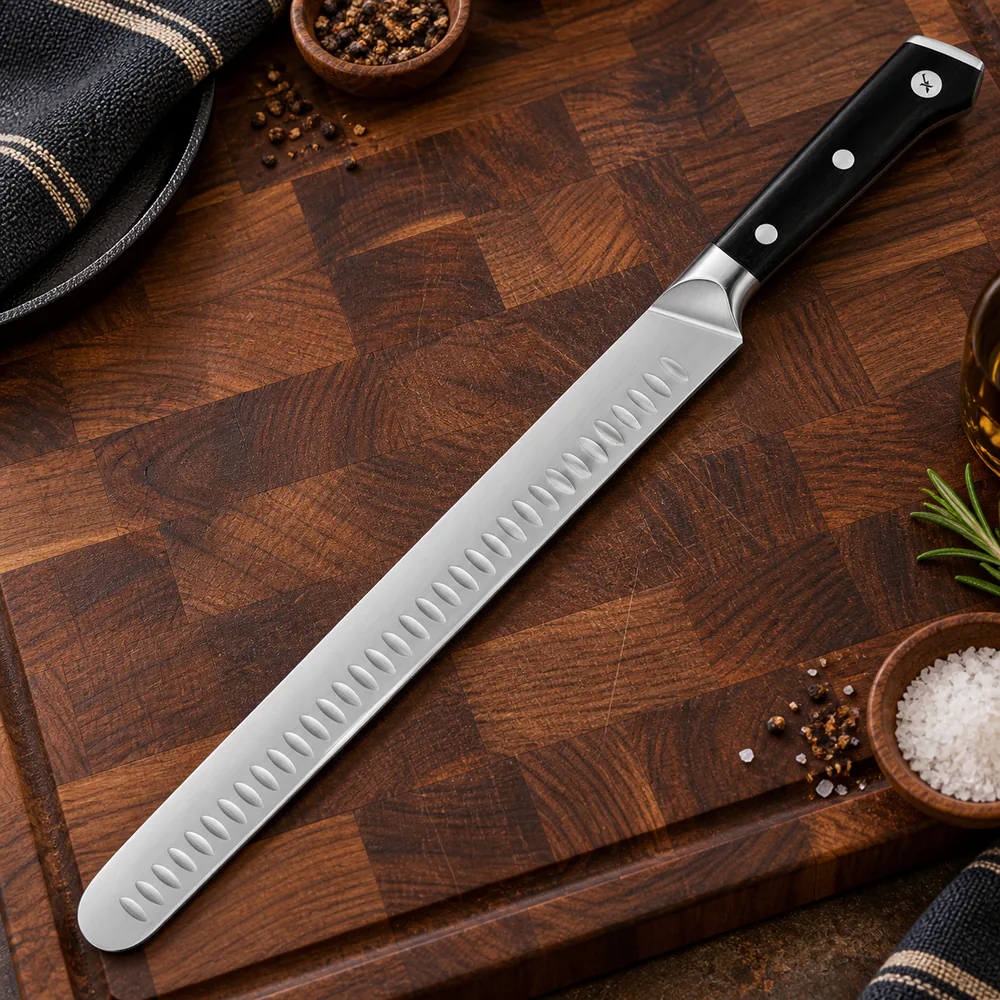
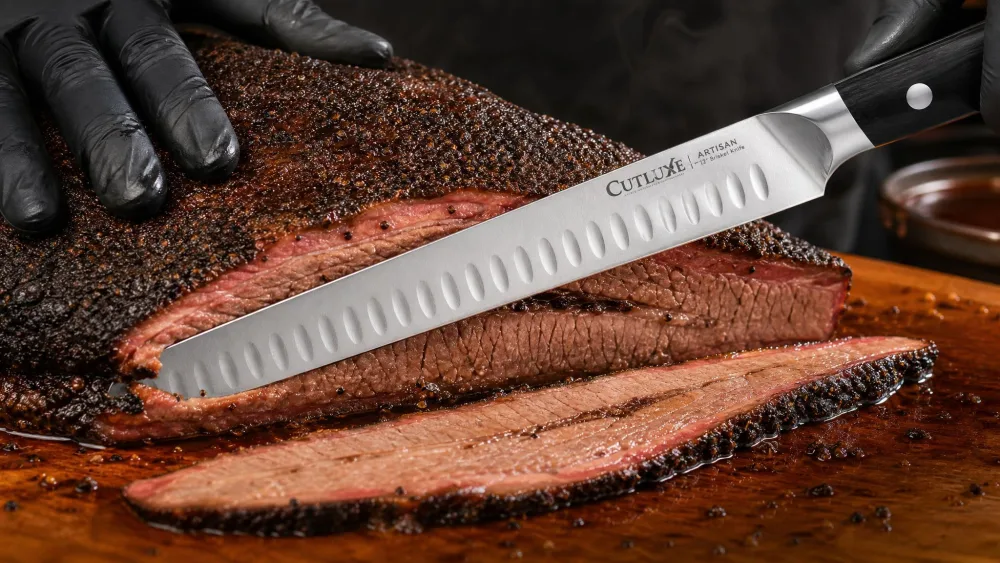
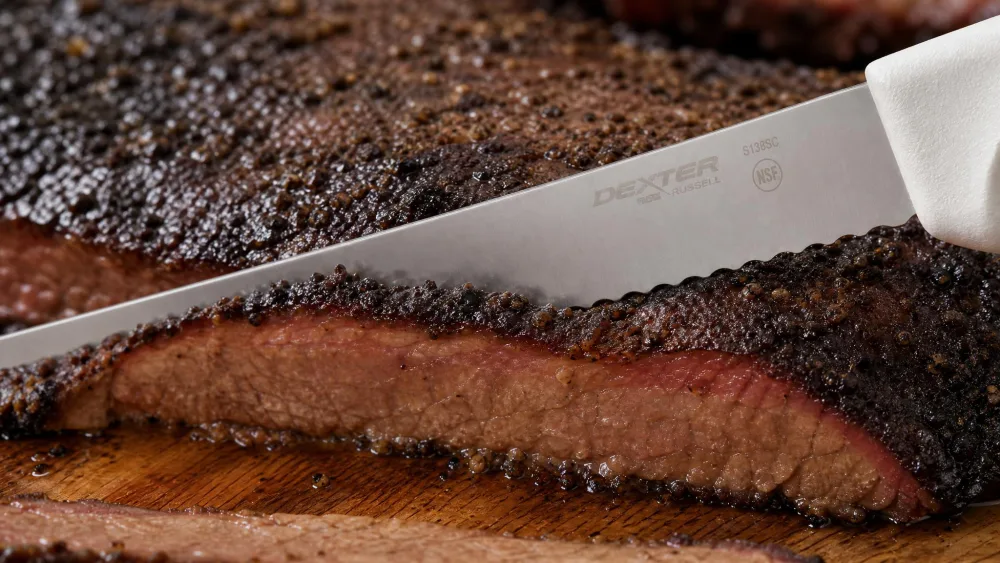
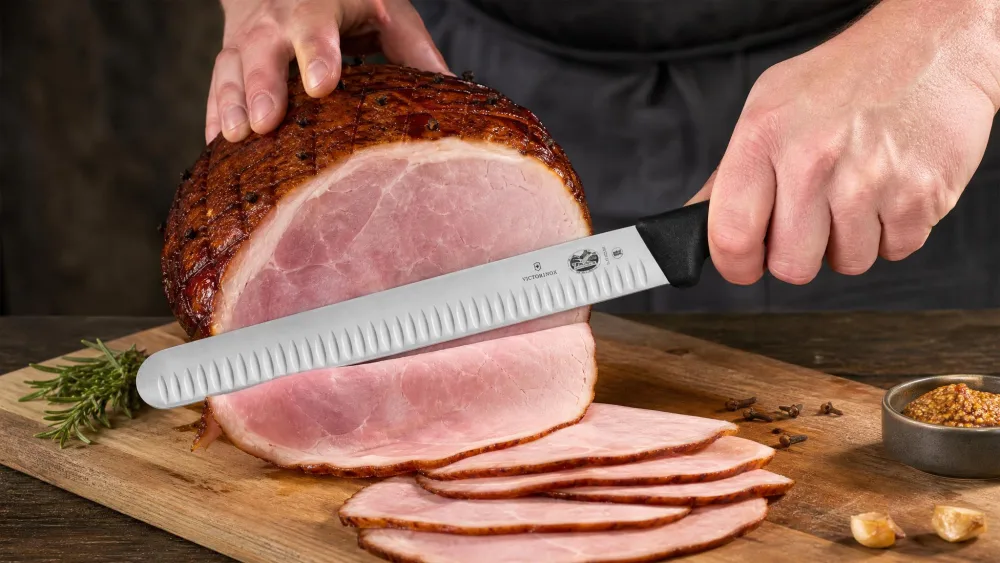
A Granton edge carries hollow ovals that create air pockets, so moist meat releases cleanly instead of sticking to the steel; on smoked brisket the difference shows as smooth slices instead of torn bark. Serrated teeth tear meat fibers, which is why a bread knife is the wrong tool. A scalloped edge, like the Dexter-Russell, pierces the bark and slices the soft interior.
Steel Quality and Edge Retention
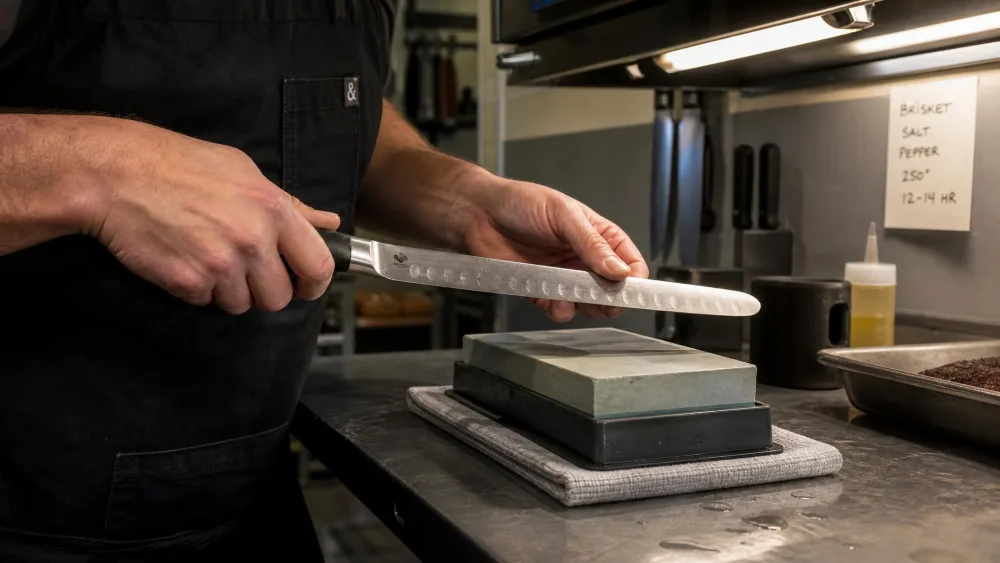
High-carbon stainless steel is the standard. Stamped blades are light and inexpensive, and the Victorinox proves one can be a lifetime workhorse. Forged blades carry more weight and rigidity, as the DALSTRONG and Cutluxe show. Hardness runs around 56 HRC, a balance that holds an edge without turning brittle.
Handle, Weight, and Balance
A slicer works in long, horizontal pulls, so the handle decides how hour three feels. Textured handles like Victorinox's Fibrox and Mercer's Santoprene stay secure when wet. The blade should flex a little to follow the meat's contours without feeling flimsy.
Full-Tang Construction and Durability
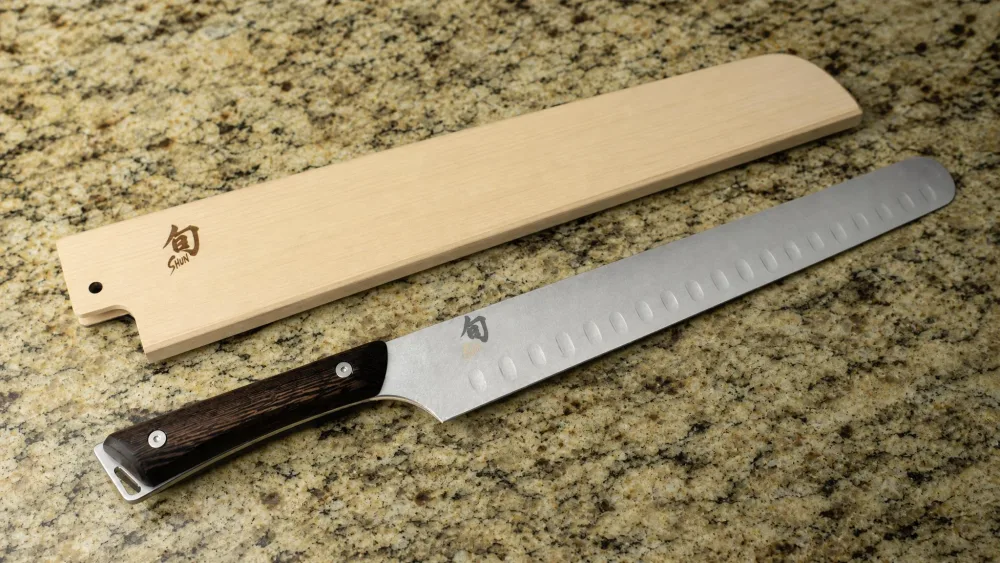
Full tang means the steel runs from tip to handle end. It signals a durable knife and shifts the balance toward your hand, which makes a long blade easier to control. The Cutluxe, DALSTRONG, and Shun all use it.
Price vs. Performance
A great slicer does not have to cost a lot. The Mercer 14-inch and Dexter-Russell land around $40, the Victorinox about $70, the forged DALSTRONG near $99, and the Shun at about $235 is the splurge. The gap between a $40 and a $100 blade showed up more in handle feel and edge longevity than in slice quality.