A chef's knife is the one tool you will use every day, so it is worth buying slowly. Here is what actually matters, and what you can ignore.
Blade Material: What the Steel Specs Actually Mean
The steel is the personality of the knife, and the two numbers that tell you the most are the alloy and the hardness. Hardness is measured on the Rockwell scale, and it explains most of the trade-off between German and Japanese knives. Softer steels around 56 to 58 HRC are tougher and chip-resistant, and they take a fresh edge easily at home, which is why steel hardness matters as much as raw sharpness. Harder steels in the 60 to 67 HRC range hold an edge longer and cut more cleanly, but they are more brittle and chip on bone or frozen food. The alloy matters too. Japanese steel is typically a high-carbon stainless forged thin and hard, while German steels like X50CrMoV15 are formulated to be tough and easy to maintain, with molybdenum in stainless steel contributing to that toughness. Neither is better; they are different trade-offs.
German vs. Japanese: Which Style Is Right for You?
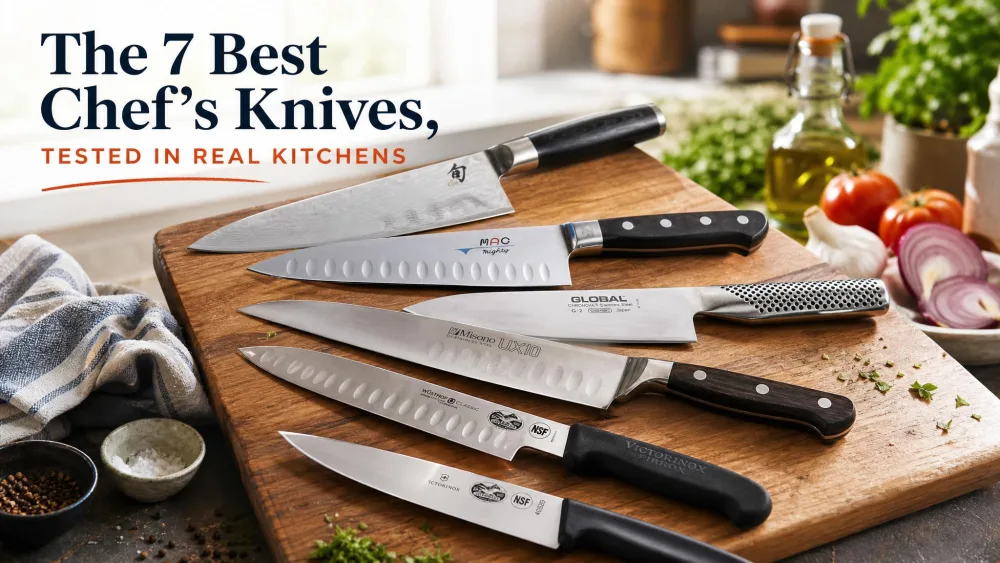
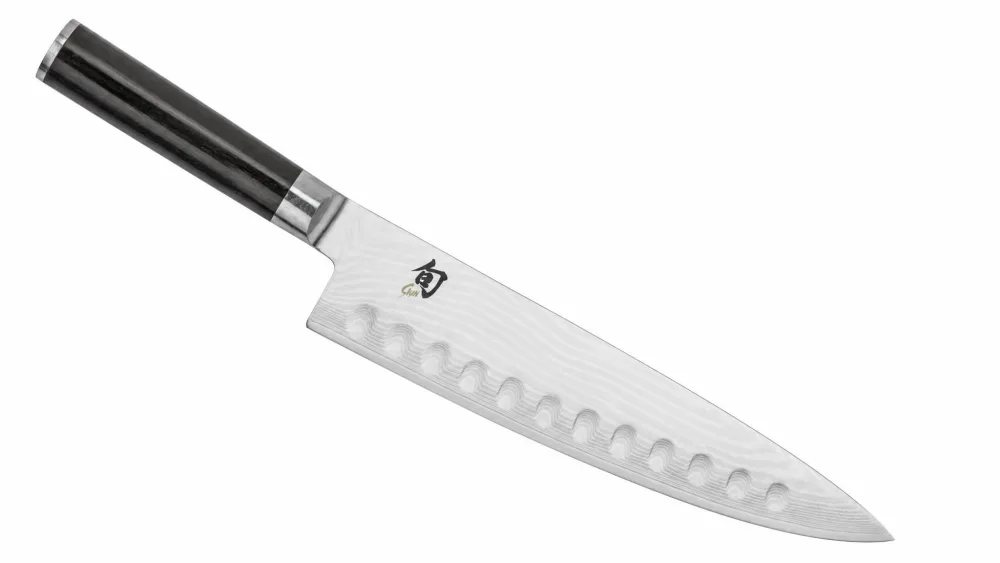
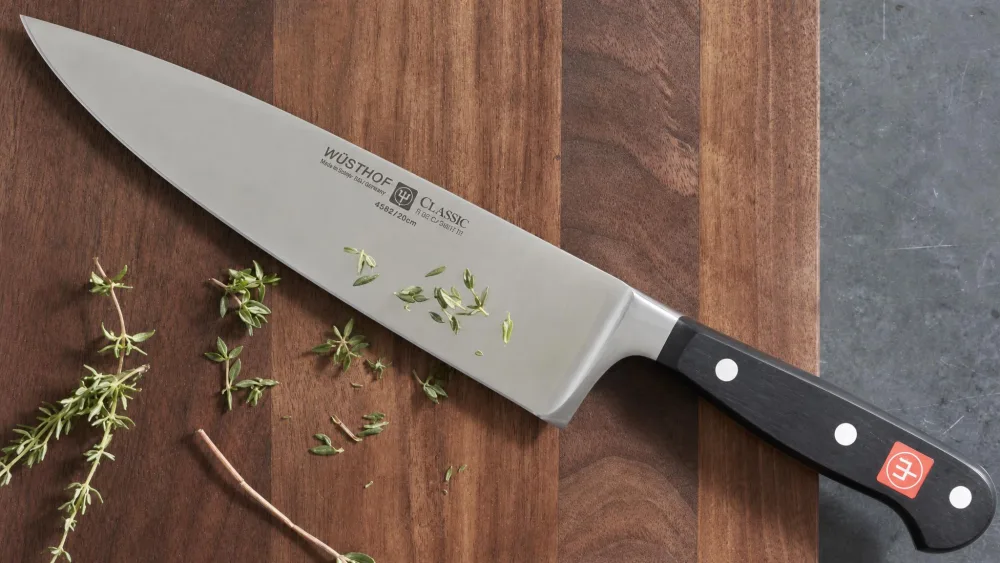
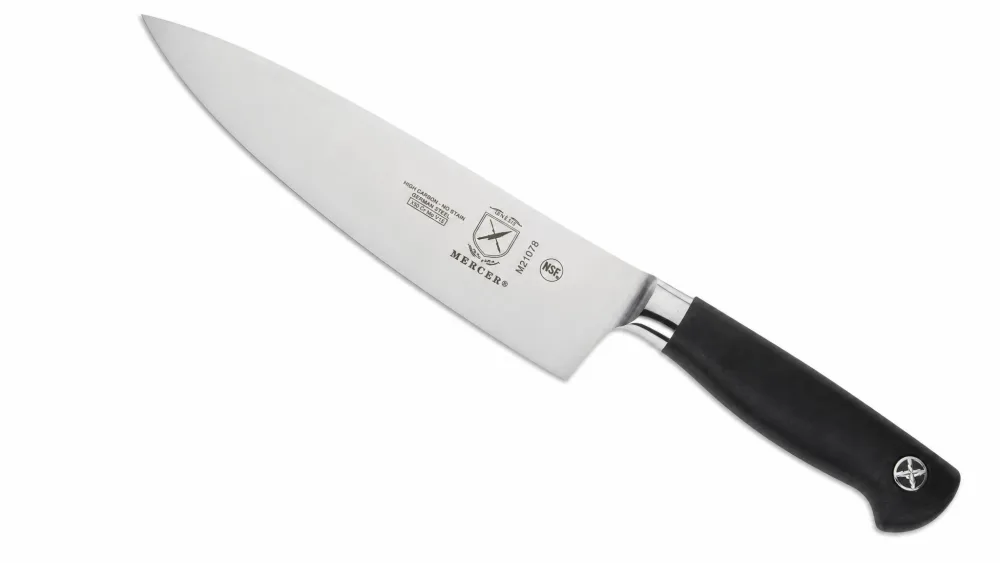
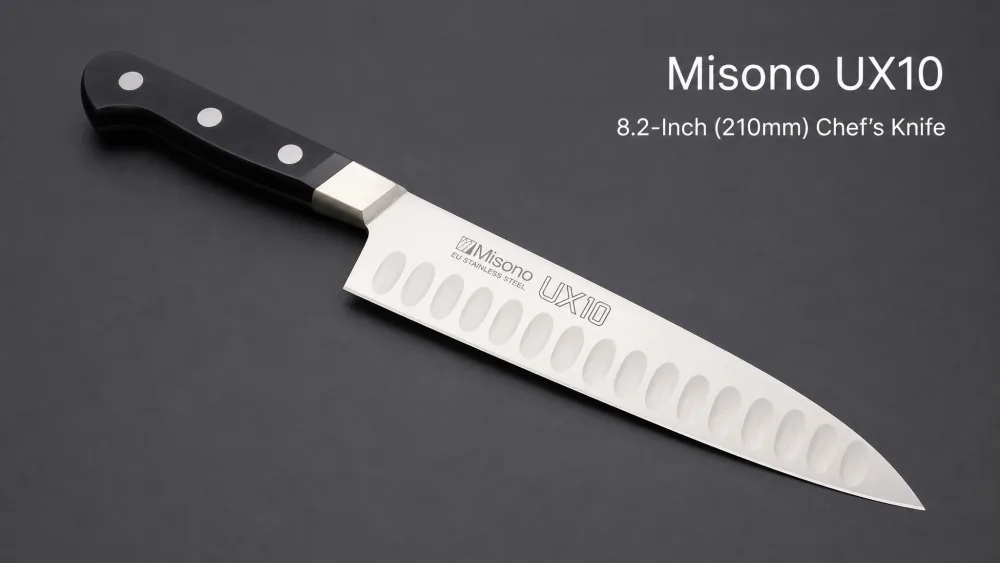
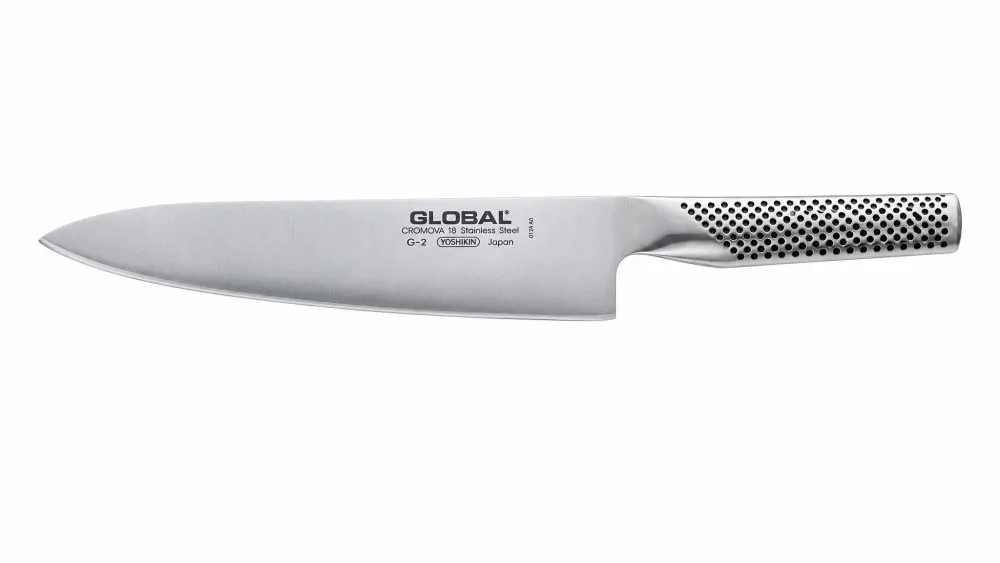
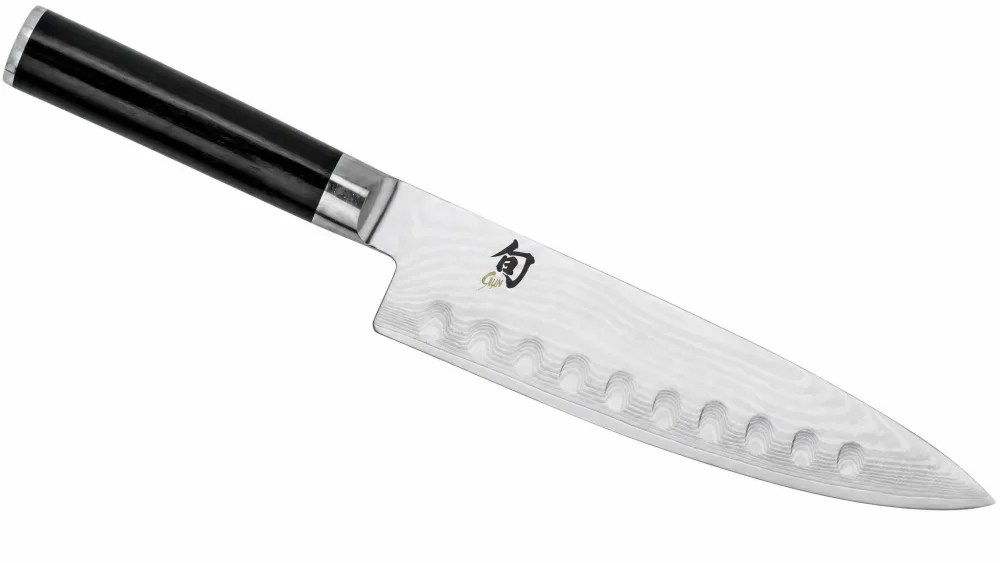
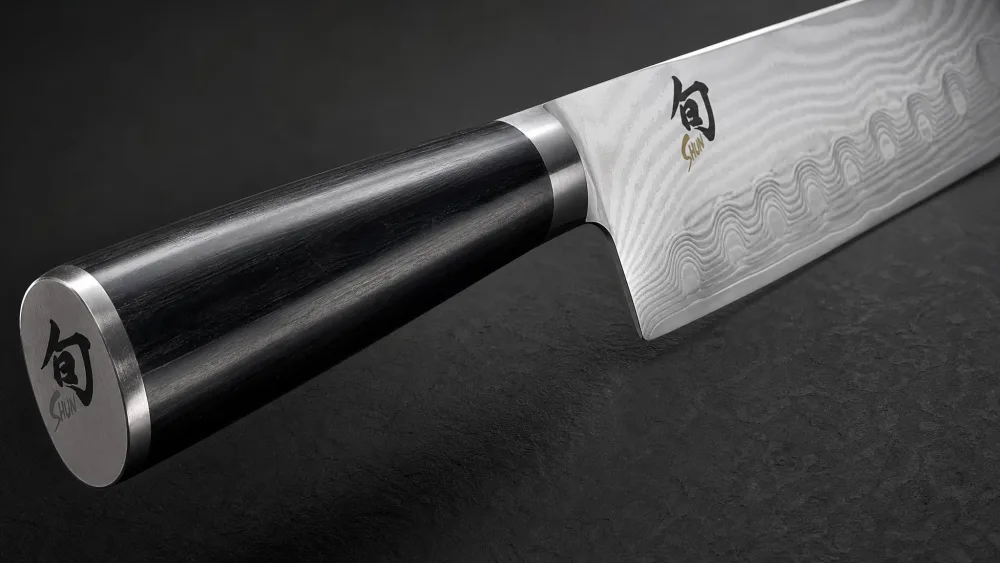
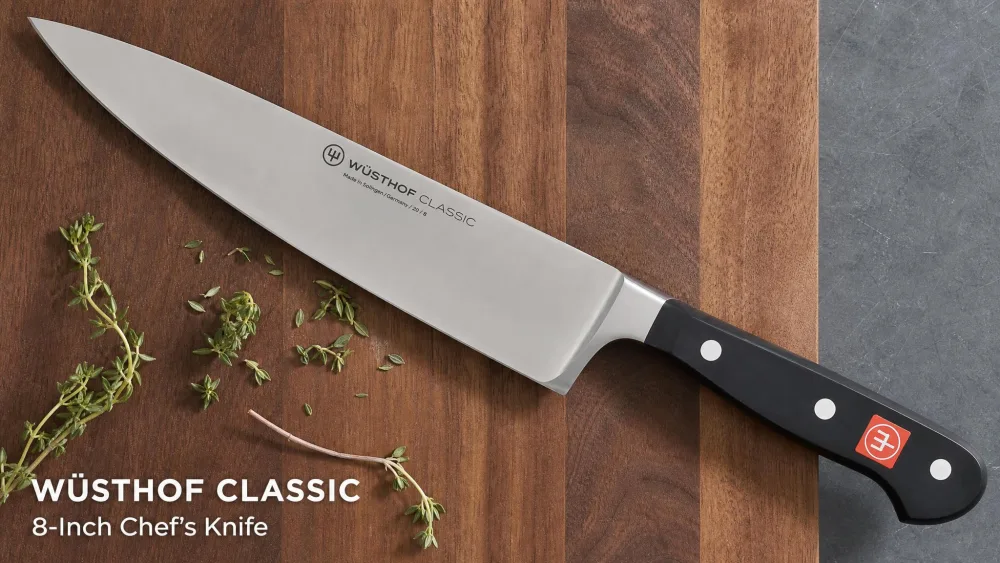
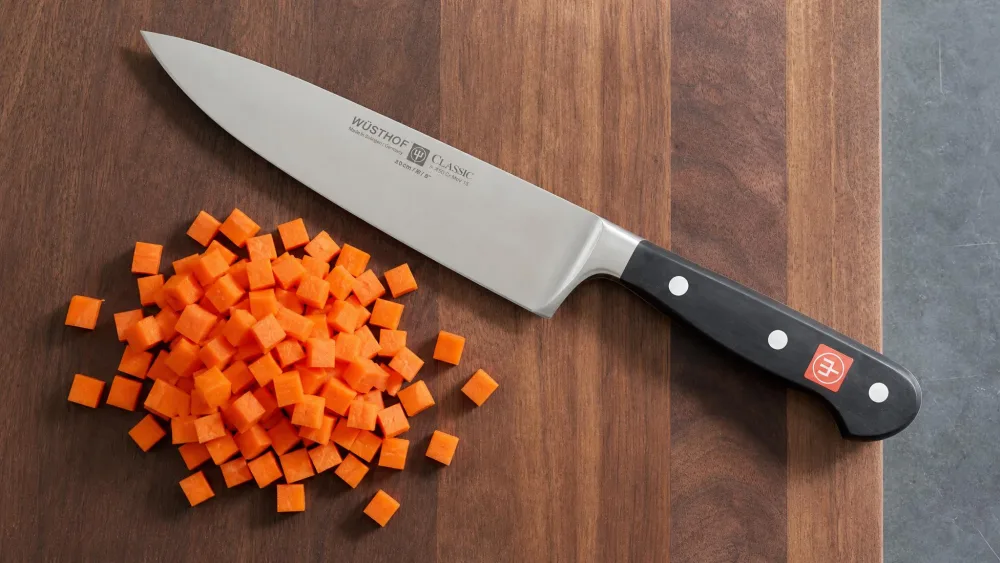
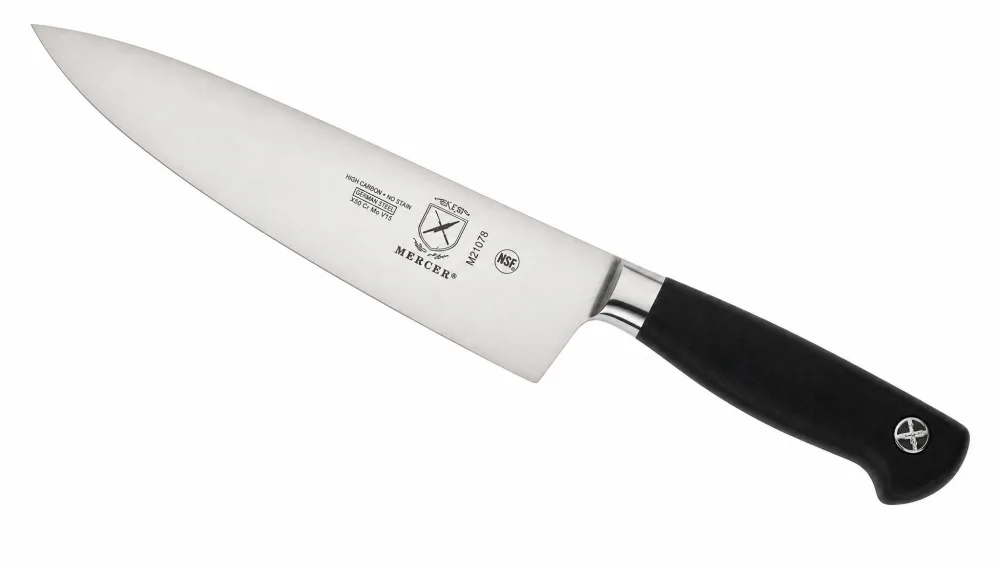
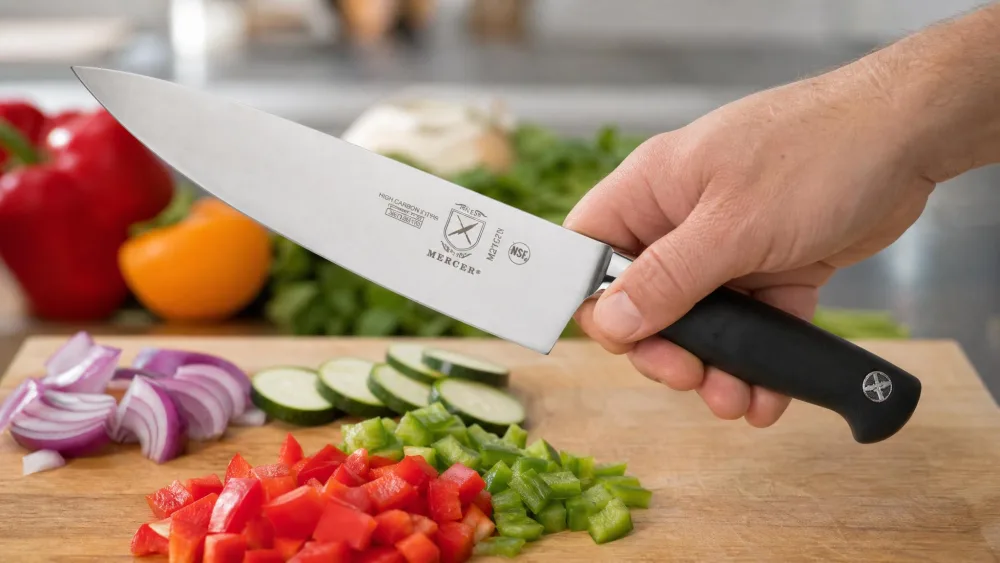
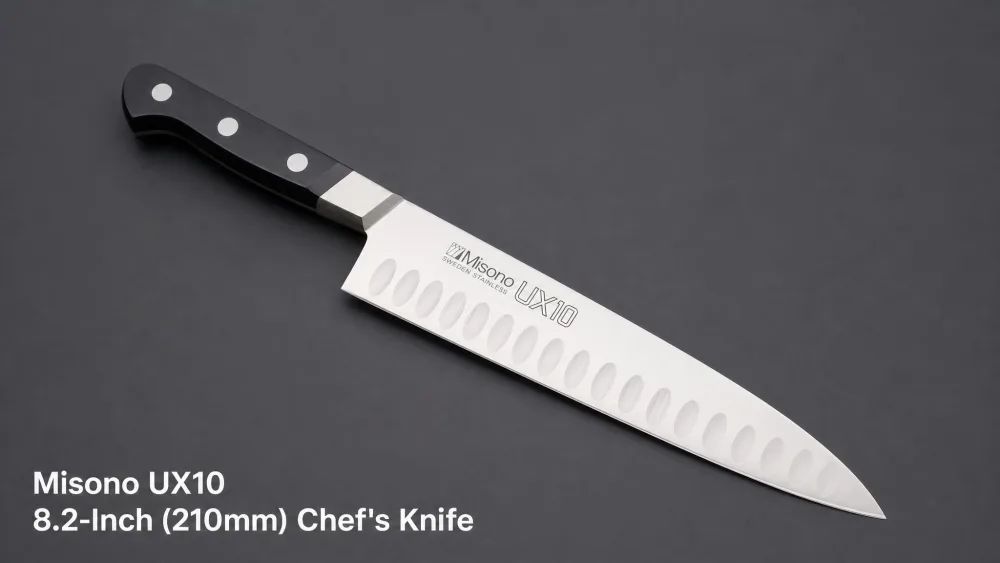
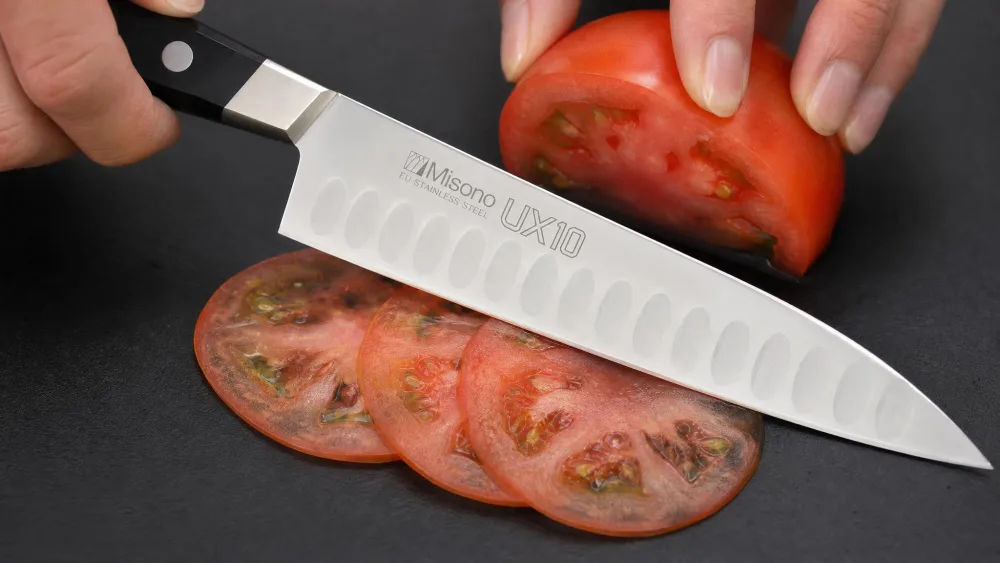
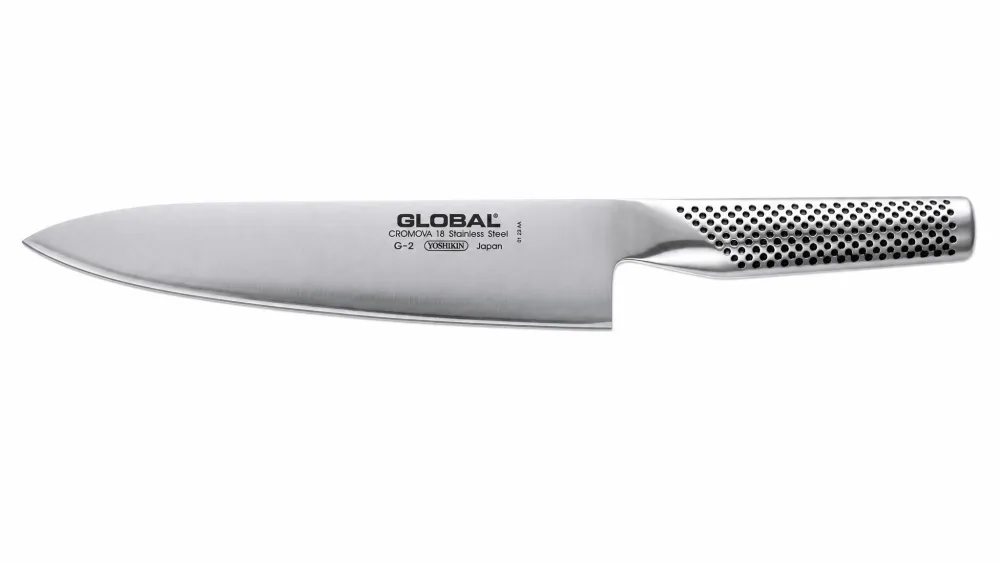
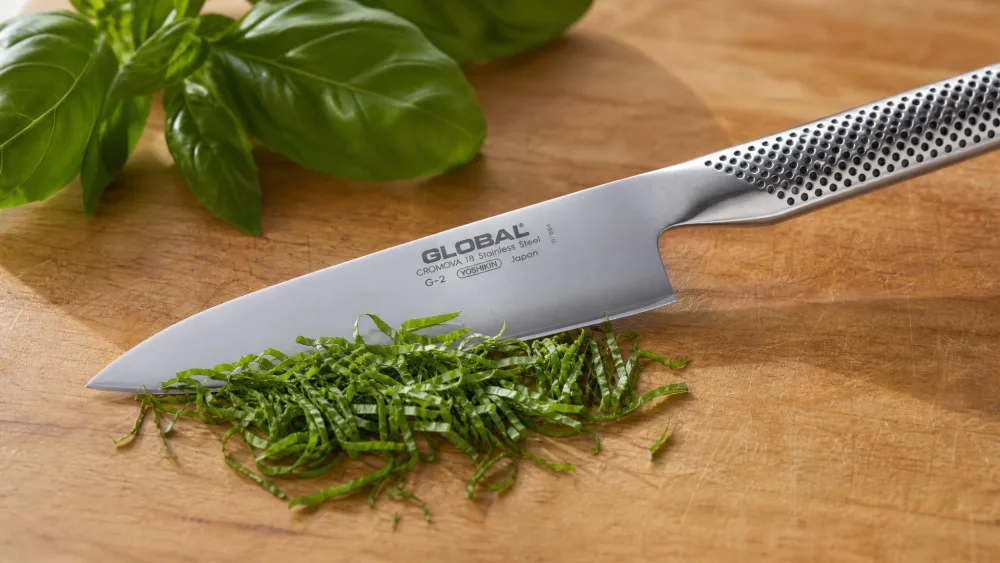
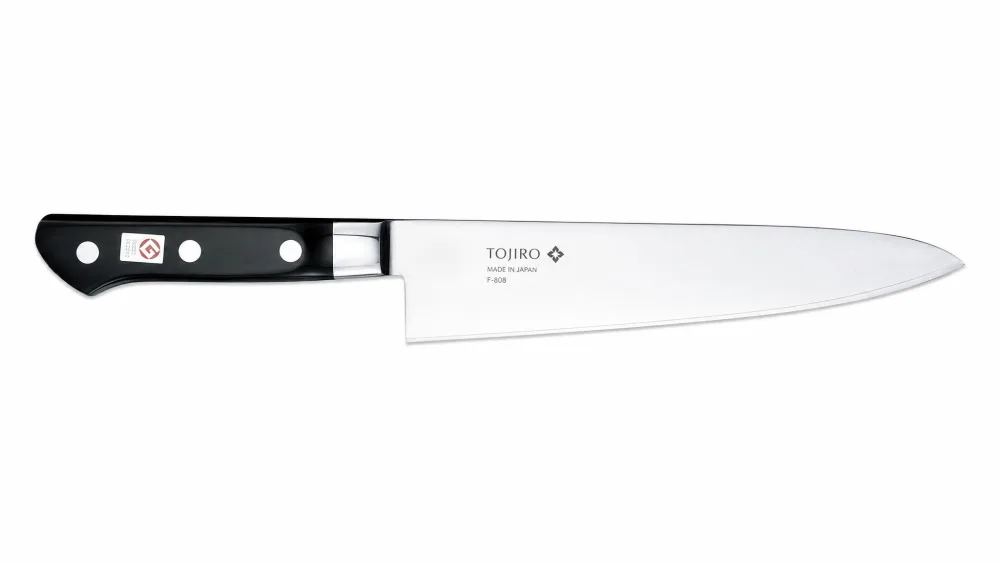
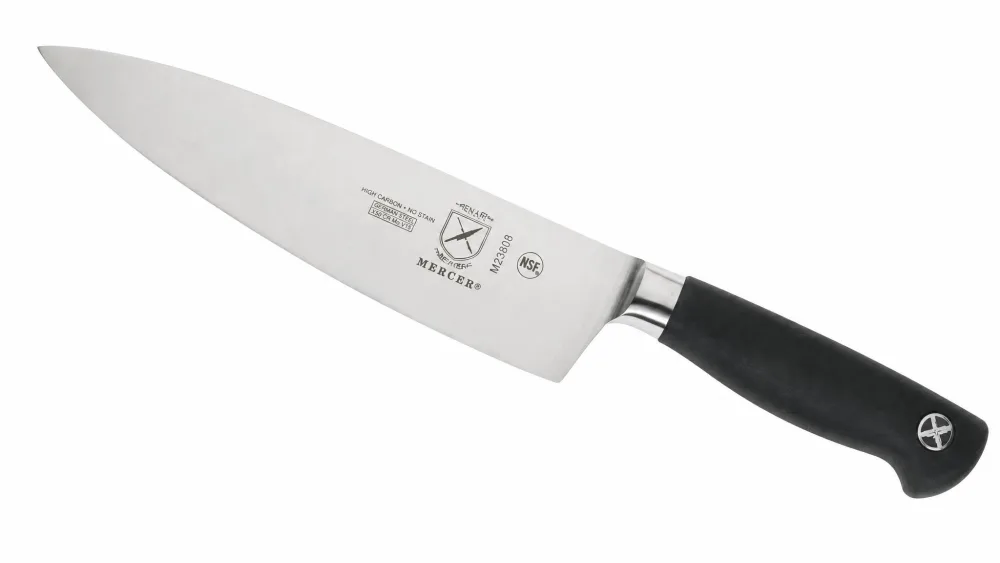
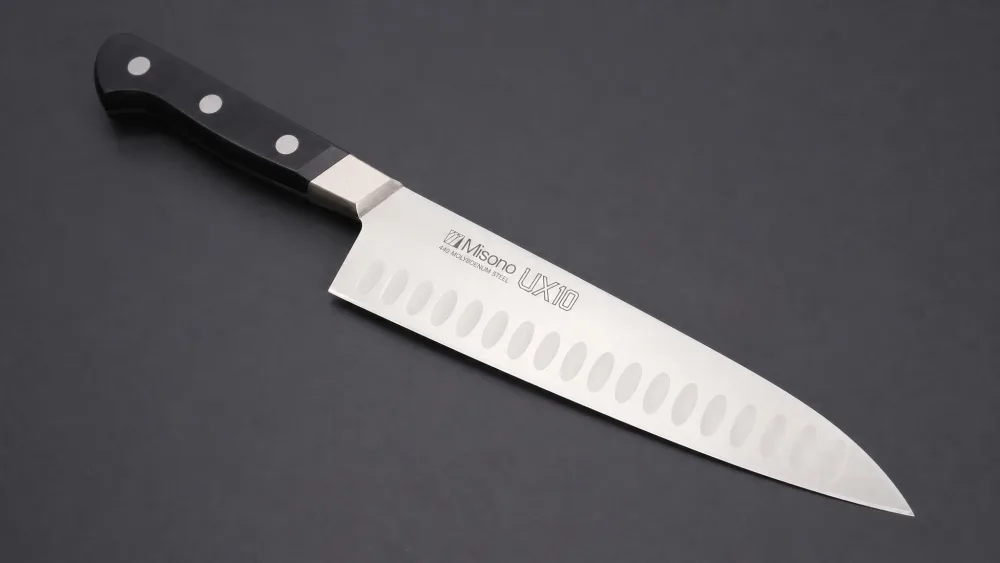
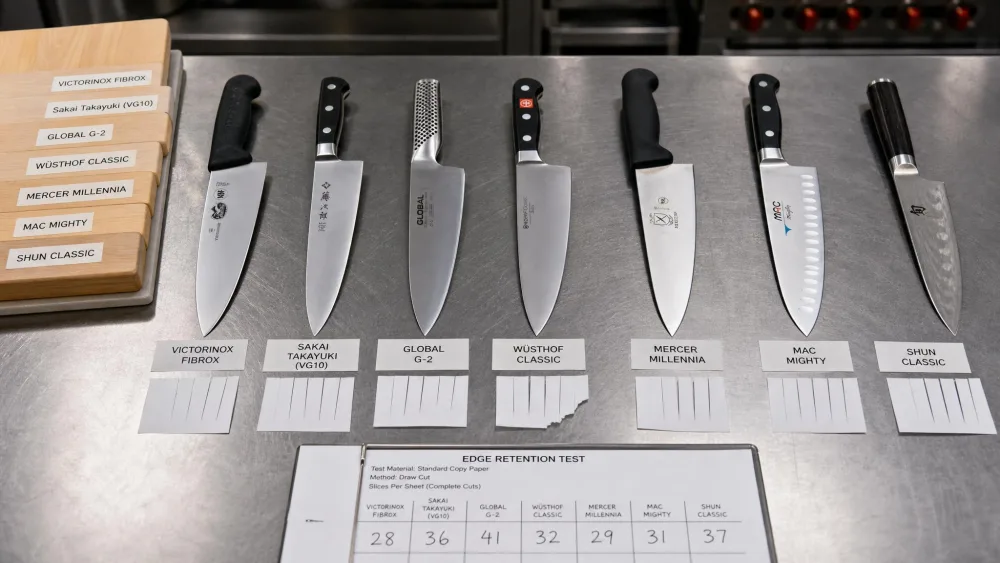
This is the question every chef's knife buyer ends up asking, and the answer comes down to how you cut. German knives, like the Wüsthof and the Mercer on this list, are heavier with thicker, tougher, chip-resistant blades and softer steel that does not hold an edge as long. They are easier to sharpen at home and shrug off the bumps and bones of everyday cooking. Japanese knives, like the Shun, the Misono, and the Global, are lighter, thinner, and sharper out of the box. They hold an edge longer and make cleaner cuts, but they chip more easily and demand careful hand-washing. Handle style follows the same split, and the differences between Japanese vs. Western knife handles come down to grip and weight placement. If you want a knife that takes abuse, go German; if you want the thinnest slice and will treat the blade with care, go Japanese. For a deeper look, see our guide to the best Japanese knives for home use.
Weight, Balance, and Handle Comfort
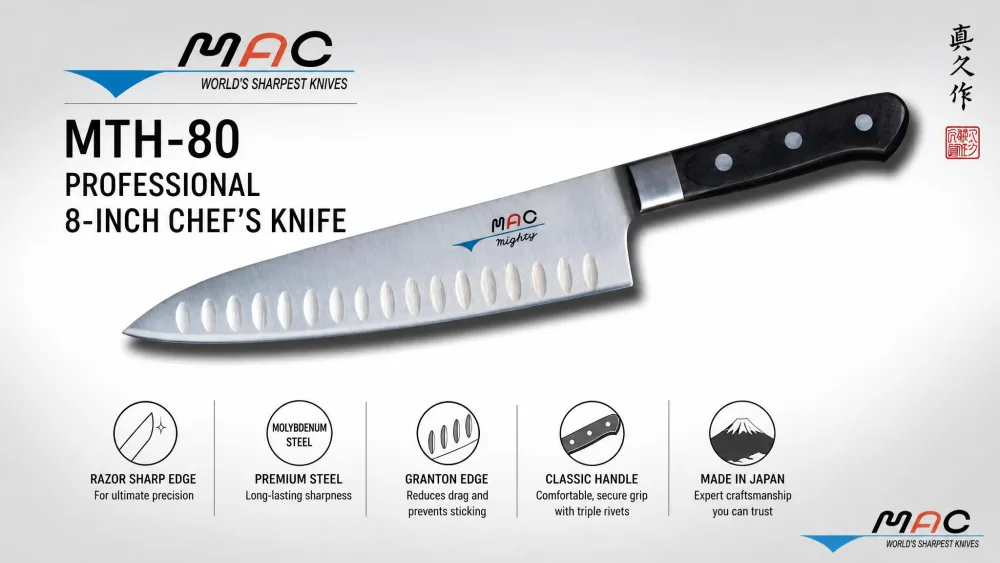
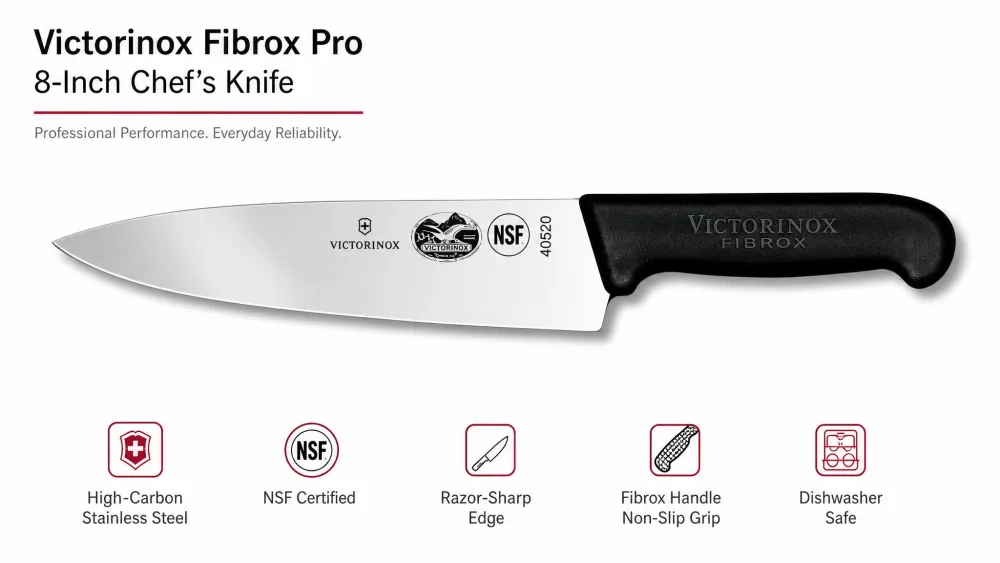
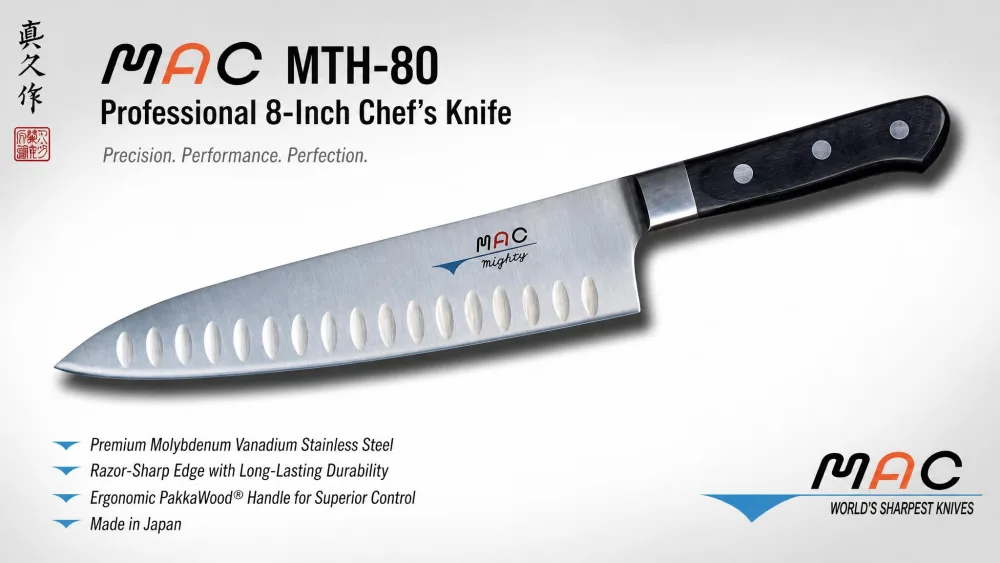
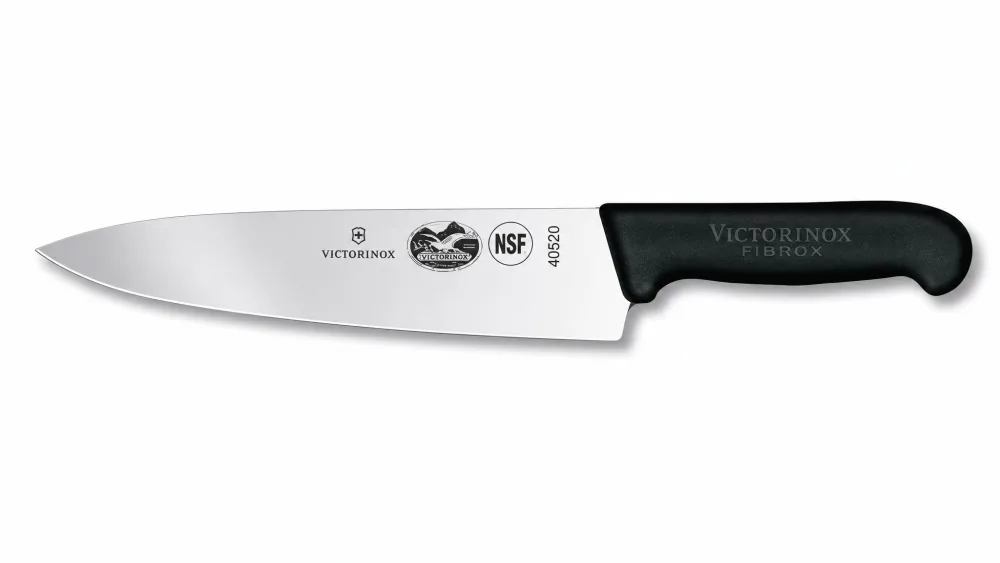
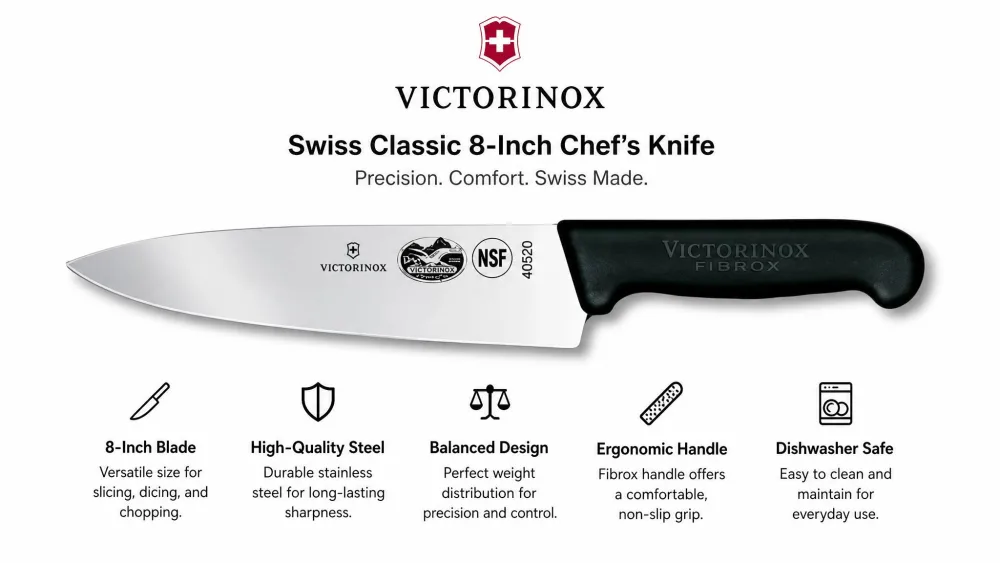
Weight is the first thing you will notice, and our testing found the sweet spot for an 8-inch chef's knife sits at about 7 to 8 ounces. Much heavier and the knife feels clunky; much lighter and it lacks the momentum to push through hardy produce. The knives on this list run from the featherweight 5.6 ounce Misono to the hefty 9 ounce Wüsthof. Handle material matters for grip, especially when your hands are wet. The Fibrox and Mercer handles are grippy TPE, the Pakkawood handles on the Mac and Shun are comfortable and warm, and the Global's all-metal handle is polarizing. Balance is harder to judge on paper, so hold the knife with a pinch grip at the bolster and see whether it tips forward or back.
Blade Length: Is 8 Inches Right for Most Cooks?
For most home cooks, an 8-inch blade is the sweet spot. It is long enough for large produce and butternut squash, and short enough for precise work like segmenting oranges or mincing shallots. It is also the most common length, so you get the widest selection and the easiest time finding a sharpener or block slot. Some cooks prefer a 6-inch knife for small hands, and cooks who break down large roasts may want a 10-inch blade. But for a first chef's knife, start at 8 inches, which is why every knife on this list is an 8-inch or 8.2-inch model.
Knife Care: Honing, Sharpening, and Storage
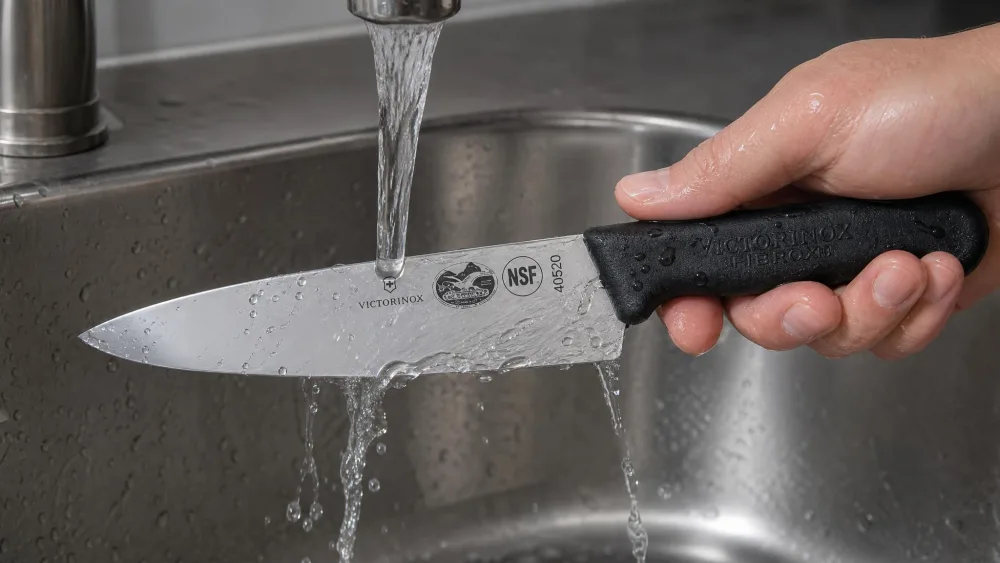
A good chef's knife is not maintenance-free, but the maintenance is simple once it becomes a habit. Hone the edge on a steel before or after each prep session, and sharpen with a whetstone or a quality sharpener every two to three months. If you want to learn freehand sharpening, Japanese sharpening stones are the traditional tool and a skill worth building, and our guide to the best knife sharpeners for kitchen knives can help you choose. Hand-wash every knife on this list except the Victorinox, and dry it immediately, because a high-carbon edge will stain and rust if left wet. Never leave a knife in a sink full of dishes, and store it in a block, on a magnetic strip, or in a blade guard. Our standing advice to any home cook is simple: buy one good chef's knife, a board that will not dull it, and learn ten minutes of sharpening.
Knife Sets vs. Buying Individual Chef's Knives
A common trap is buying a 12-piece set and using two knives from it. Most sets include knives you will rarely reach for, and the money tied up in the block could buy one excellent chef's knife, a paring knife, and a bread knife. We recommend buying a single great chef's knife first and adding pieces as you need them. If a set makes sense for your kitchen, see our guide to the best chef knife sets for home cooks.