As an Amazon Associate we earn from qualifying purchases. We may earn a commission from links on this page, at no extra cost to you. Learn more.
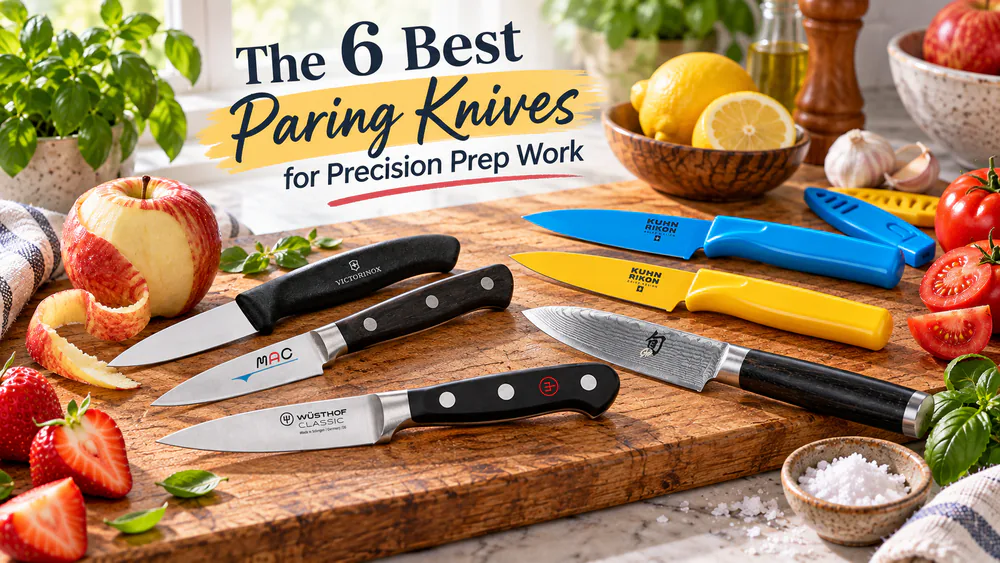
The paring knife is the small blade you reach for when the big knife is too much: hulling strawberries, coring tomatoes, deveining shrimp, and peeling an apple in one long ribbon over the sink. We tested 16 paring knives through a month of real prep in rotation, checking edges after every session, to find the six that earned a spot in a home cook's drawer. The Victorinox Swiss Classic took Best Overall, and at about eight dollars it is also the cheapest knife here. Around it sit a Japanese precision pick, a forged German favorite, a budget workhorse, a Damascus splurge, and a beginner-friendly set.
Street prices move week to week, so treat these figures as a guide rather than a quote.
Why You Should Trust Us
This guide comes from a month of real work with real edges. We bought all 16 paring knives ourselves and ran them through daily prep in rotation, checking edges after every session and resharpening each on the stones we recommend to home cooks. We score what a working kitchen scores. The edge must hold after a week of prep, the handle must stay comfortable through a long session, and the steel must take a fresh edge easily. Out-of-the-box sharpness wins you one good dinner; the rest separates the knives we kept from the knives we didn't.
How We Tested Paring Knives
Sixteen knives went into our rotation, from $8 stamped blades to $100-plus forged steel. Each ran a month of real prep, peeling, hulling, coring, trimming, and slicing, with an edge check after every session. Six made the cut, and what separated them was edge retention on the gauge, handle feel through long prep, and how easily the steel sharpened back to new.
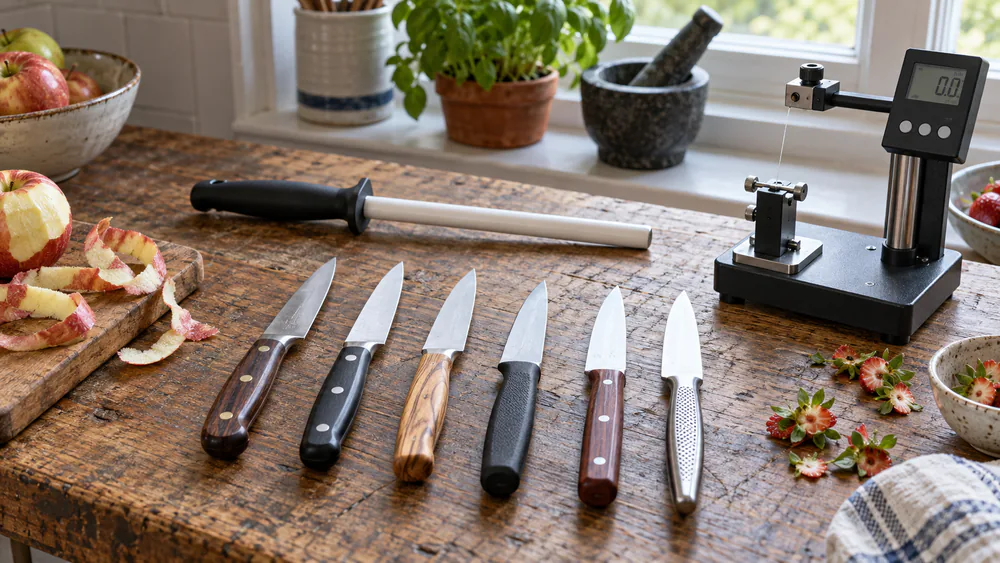
The rotation in our test kitchen: six picks, a honing rod, and an edge check after every session.
What we test for: sharpness, edge retention, comfort, and control
We measure sharpness twice, out of the box and again after a week of work. Edge retention took a battery of produce and cardboard cuts, and one blade dulled 78 percent on the gauge yet still felt sharp in the hand. Comfort is the hour-three test: a handle that cramps, slips, or forces a death grip fails. Control covers tip work, coring, in-hand peeling, and board slicing, and steel hardness from 56 to 61 HRC explained most of the spread between easy-sharpening stamped blades and hard, chip-prone forged ones.
Paring knives we tested but didn't pick
The ten that dropped out failed on patterns rather than personalities: dull-out-of-the-box edges that needed a first sharpening, handles that forced a bad grip during long prep, tips that chipped, and blades that rusted when left damp. None was broken; they just did not earn a spot in the rotation.
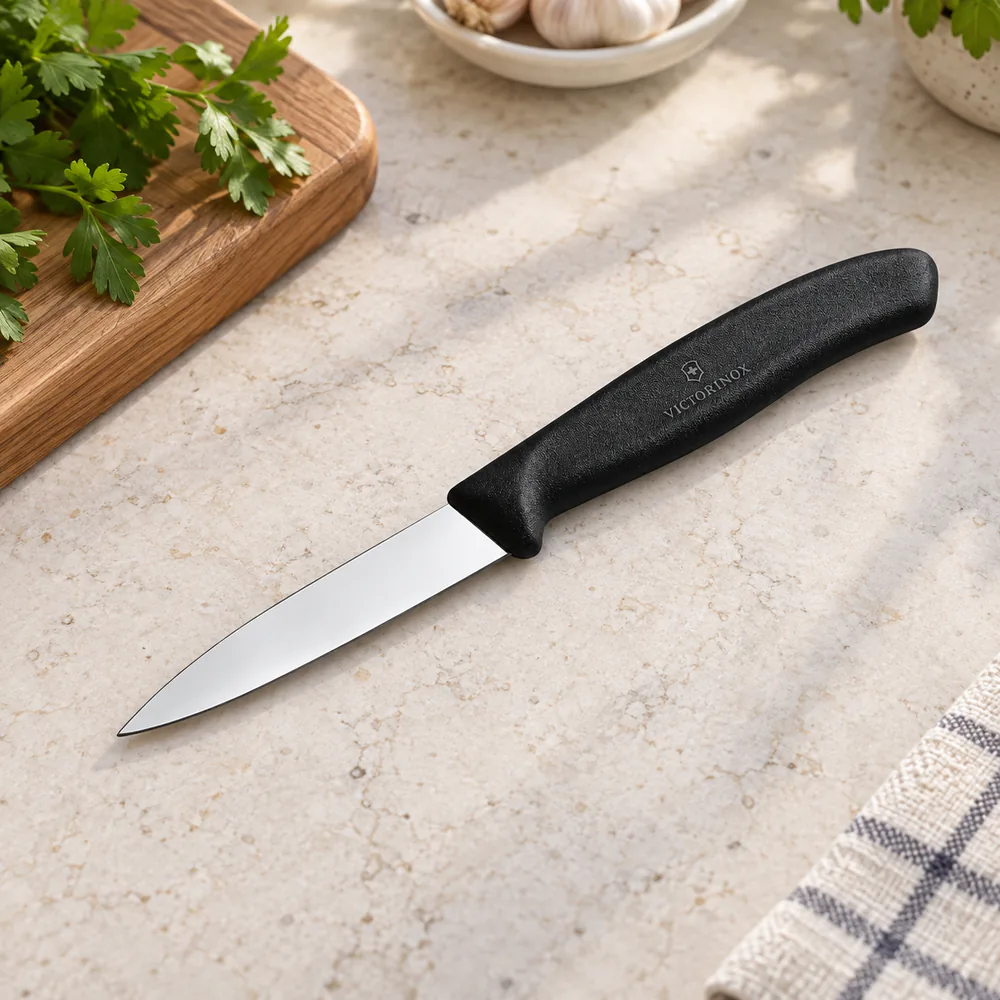
Best Overall: Victorinox Swiss Classic 3.25-Inch Paring Knife
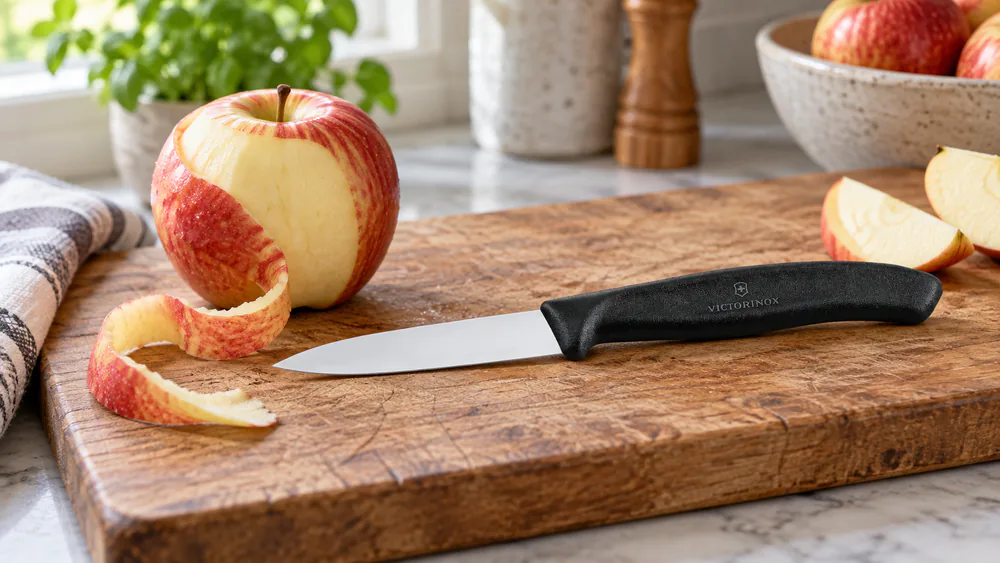
If you buy one paring knife, make it this one. The Swiss Classic has been the go-to paring knife in working kitchens for a decade, it arrives razor sharp, and at about eight dollars it is the cheapest knife on this list.
Pros
Painless to replace or buy in multiples
Resharpens easily on a steel or stone and survives the dishwasher without discoloring
Cons
Skinny handle reads toothpick-like in large hands
Flexible blade needs frequent touch-ups on dense vegetables
In our edge checks it dulled 78 percent across a battery of produce and cardboard cuts and still felt sharp in hand, which is why we check both. The thin, flexible blade glides through apple peel and hulls berries cleanly, handling about 90 percent of our paring jobs.
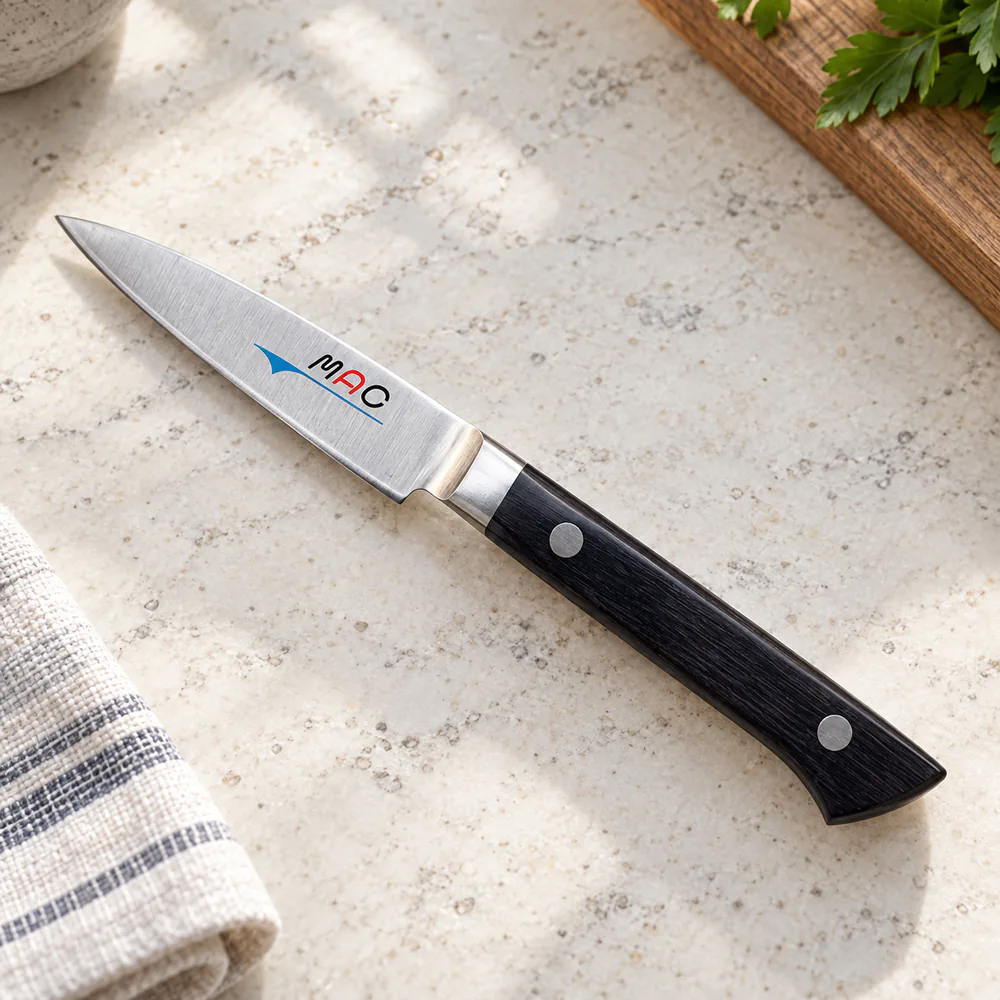
Best Japanese: Mac Professional PKF-30 3.25-Inch Paring Knife
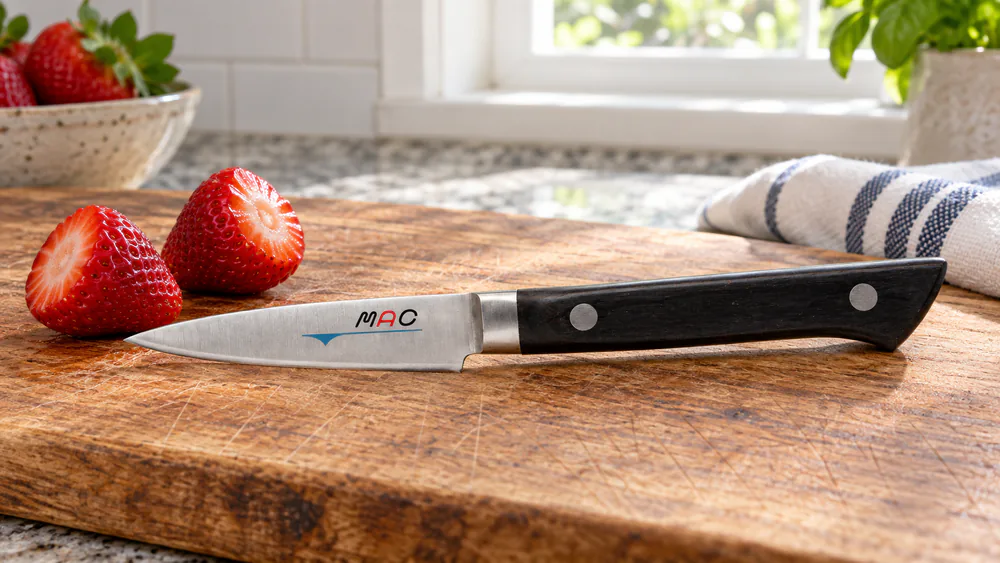
If Victorinox is the pragmatic workhorse, the Mac Professional is the specialist. Out of the box it was the sharpest knife in our lineup, and that edge makes in-hand work feel effortless: coring a strawberry cleanly, trimming a single herb leaf.
Pros
Pakkawood handle stays sure in hand even when wet
Light 2.1-ounce build with a full tang and stainless bolster
Cons
Must be dried after every use or it throws rust spots quickly
A few units ship dull enough to need a first sharpening
The trade-offs come down to care. Left damp even briefly, the 2.0 mm blade throws rust spots, so it gets dried after every use. Edge retention is the most argued-over point on this list. Serious Eats' 2026 eleven-knife test measured the heaviest dulling of the group, a 375 percent rise in cutting force, and dropped the knife on that metric, while our long-term checks found a middle ground where a honing pass every couple of weeks kept the edge working for months.
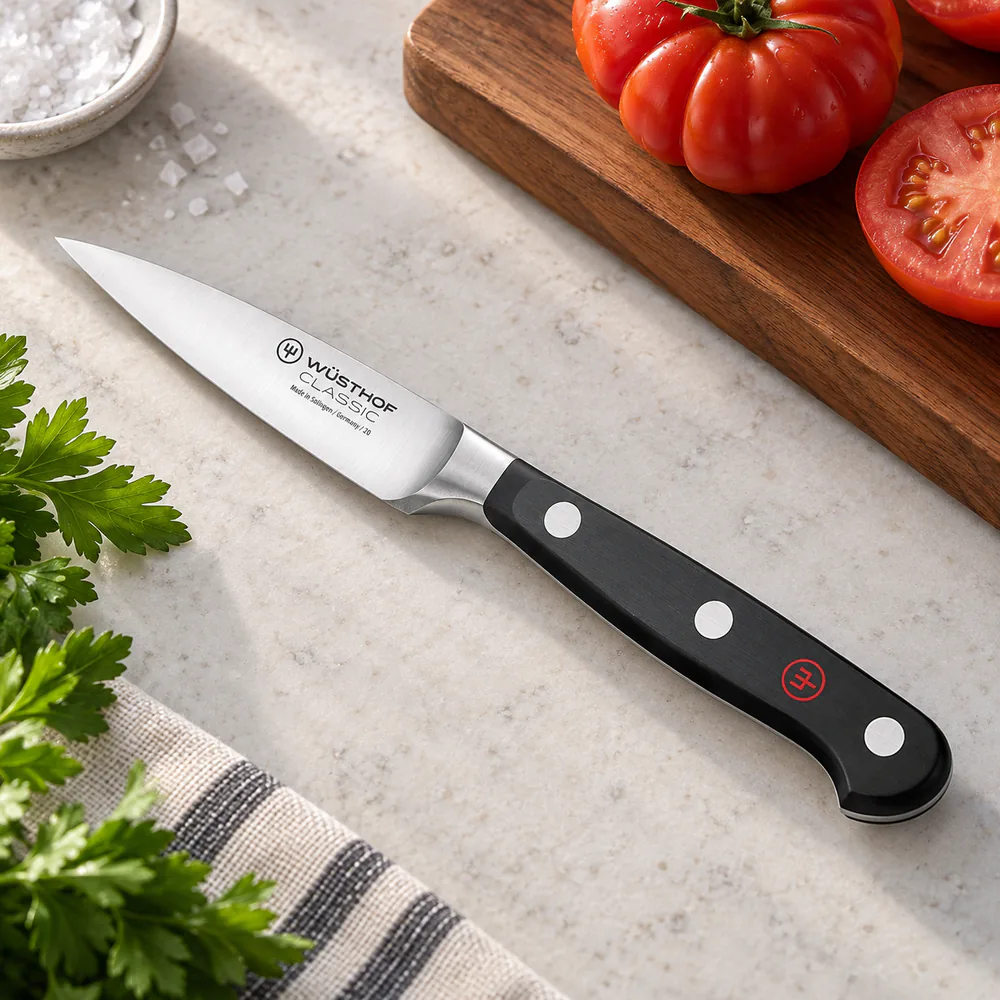
Best German: Wüsthof Classic 3.5-Inch Paring Knife
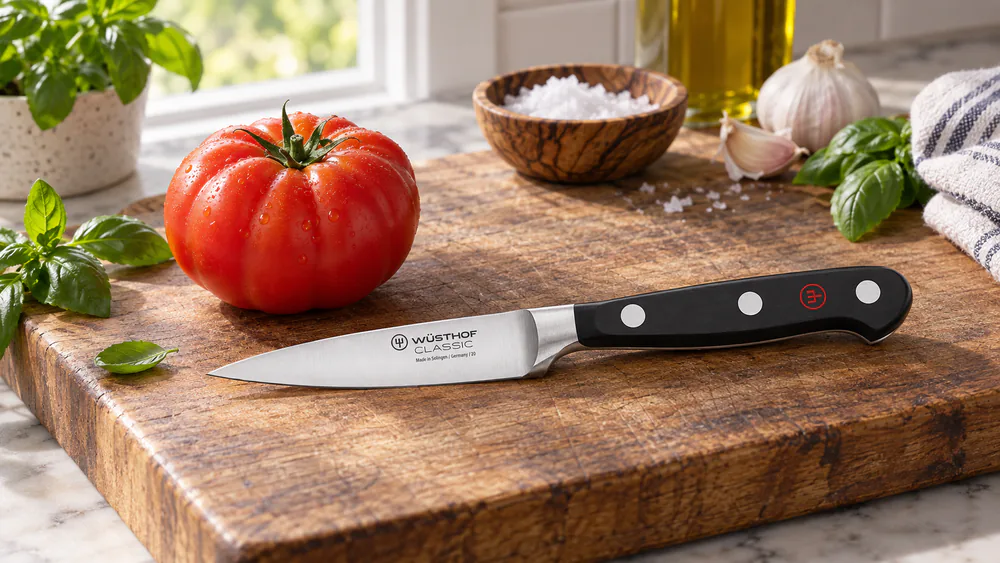
Where the Mac chases precision, the Wüsthof Classic delivers control with heft behind it. Serious Eats named it the best paring knife in its 2026 eleven-knife test, and the feel explains why: the edge slices through tomato skin without hesitation and the matte handle stays grippy.
Pros
Precise, petite handle that suits smaller hands
Edge life in months with a weekly honing; easy to resharpen on a stone or pull-through
Cons
Short handle forces large hands into a pencil grip
Dense steel can snap or lose a tip when abused on frozen food
In our rotation it needed more pressure on tomato skin than the best Japanese blades, but that pressure returned as control. It is hot-drop forged from one piece of X50CrMoV15 steel in Solingen at 58 HRC and carries a limited lifetime warranty.
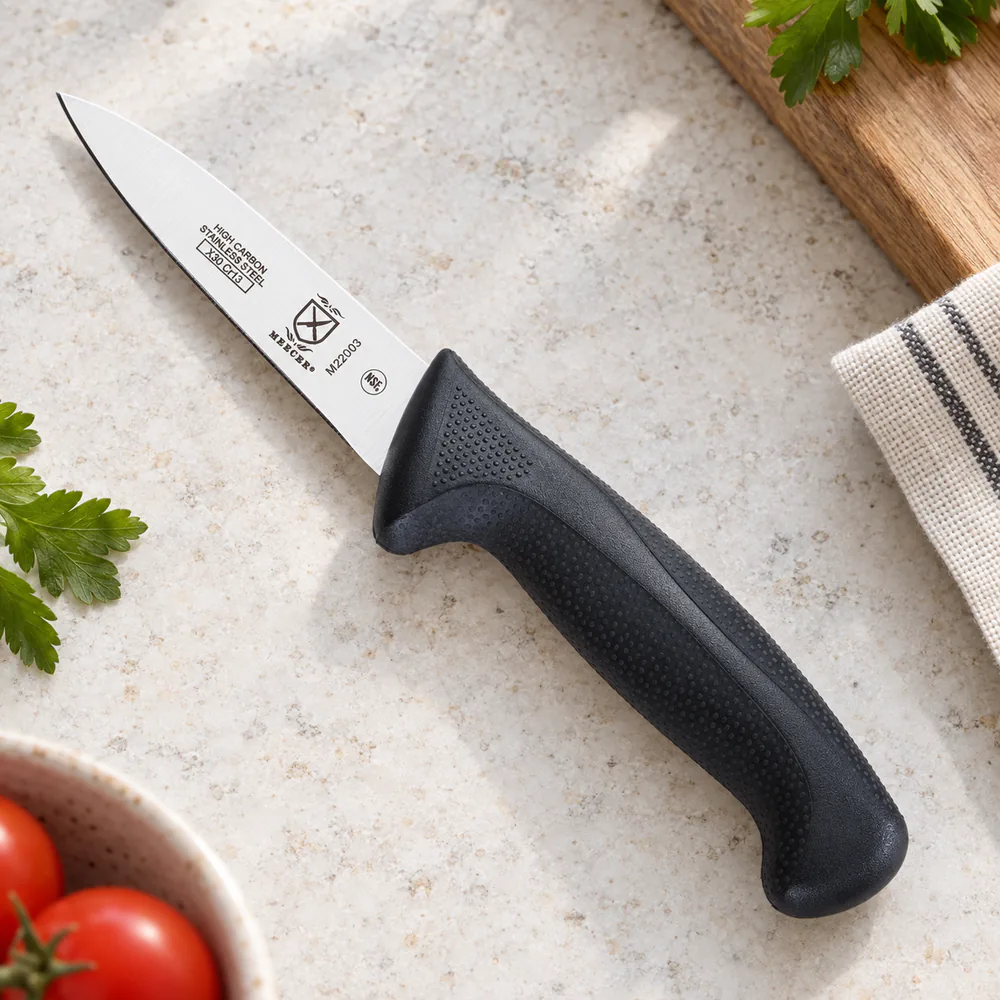
Best Budget: Mercer Culinary Millennia 3.5-Inch Paring Knife
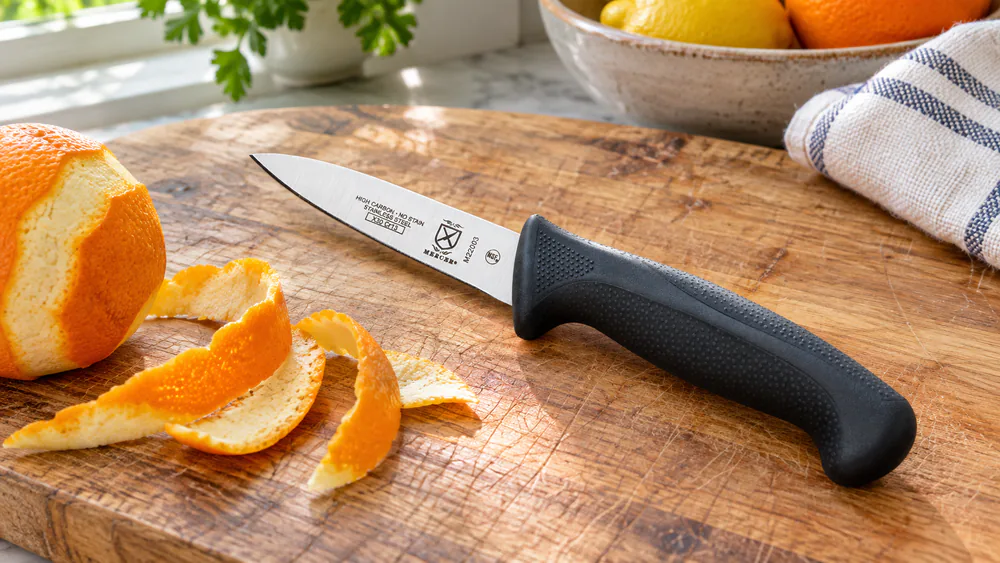
From a $70 knife to a $10 knife, and the budget pick does not embarrass itself. The Millennia is the abuse-friendly workhorse of our lineup, the knife that shrugs off a pro kitchen's daily use.
Pros
About $10 and sharpens back easily
Textured rubber grip holds firm even when wet with citrus juice
Cons
Out-of-box edge is coarser than pricier blades
Thick handle is too beefy for small hands
The beefy Santoprene handle is the whole story for grip. Finger points and a finger guard lock the grip in, and cooks who like a beefy grip love it. Daily use with occasional ceramic-hone touch-ups kept ours shaving sharp, and it is NSF certified.
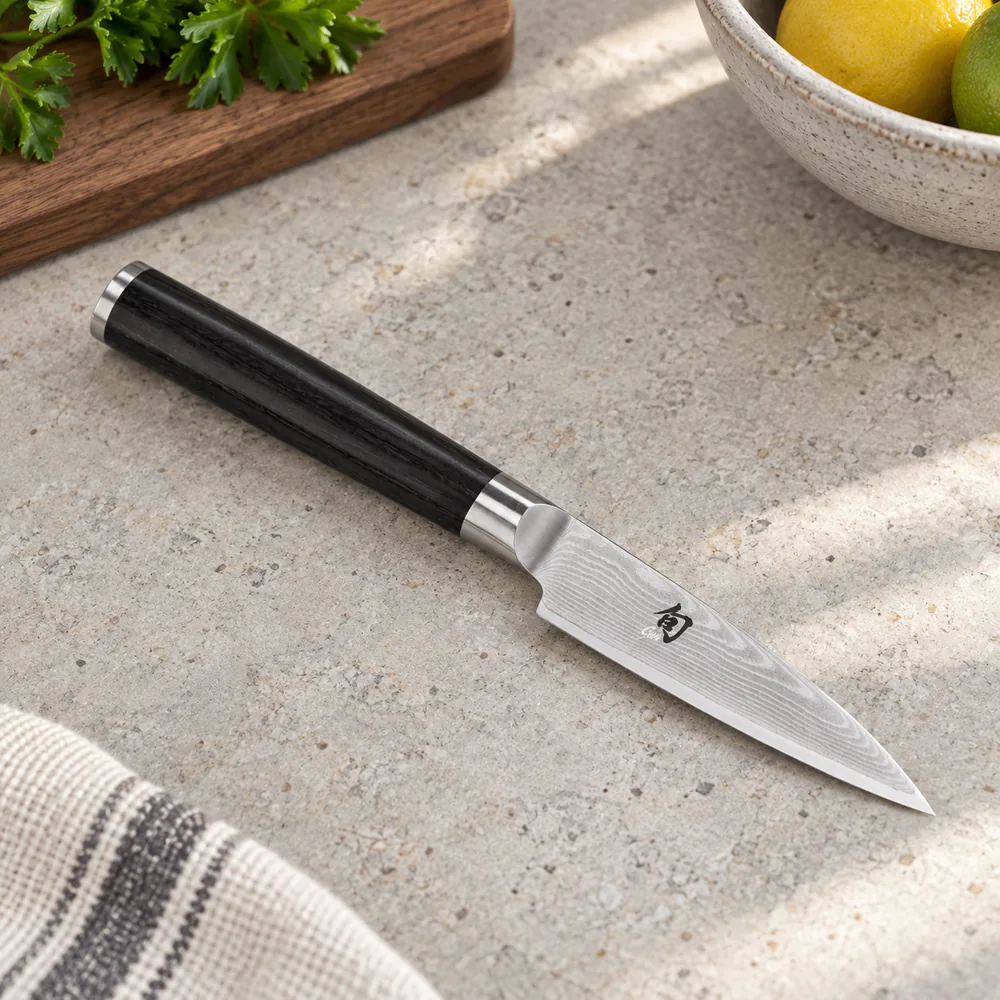
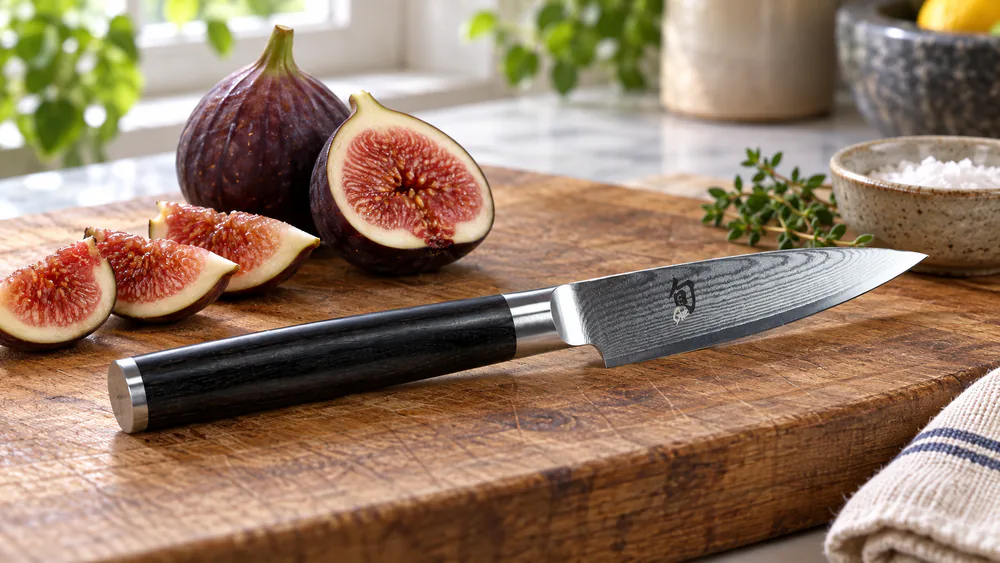
The Mercer shrugs off abuse; the Shun Classic demands care and rewards it. It was the easiest knife in its group to use. Under the hood sits a VG-MAX cutting core wrapped in Damascus cladding, ground to a 16-degree edge on each side.
Pros
Best balance and weight in our lineup; the belly peels fruit effortlessly
Free sharpening and honing service from the maker
Cons
Hard Damascus steel chips or loses a tip if you are not gentle
Rounded handle can feel slippery in hand
The hard steel is the trade-off. In our checks the tip ran duller than its rivals, which made strawberry hulling a chore, and durability stories split two ways: chipped edges and broken tips after a couple of months of routine use, or years of faithful service when the knife is treated like the jewel it is. Hand wash, dry, and put away quickly, and the edge holds through months of prep.
Best Set for Beginners: Kuhn Rikon Original 3-Piece Paring Knife Set
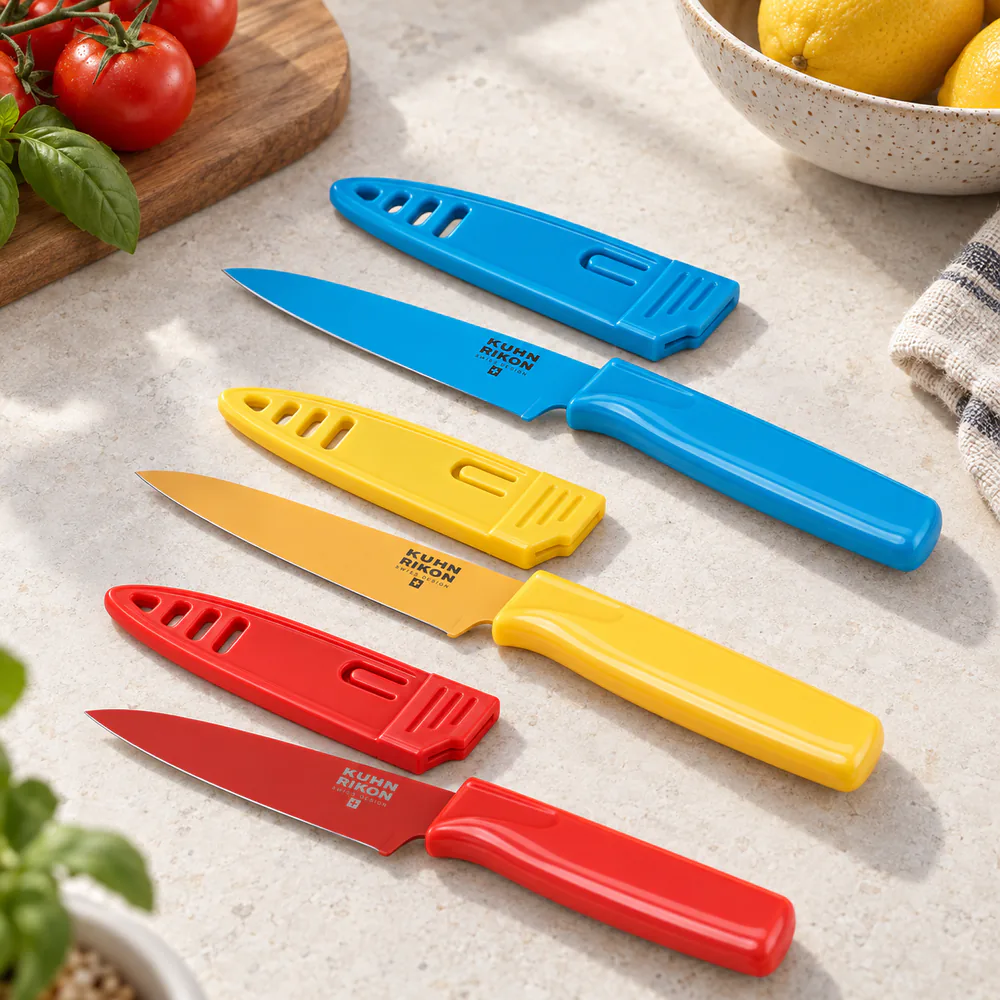
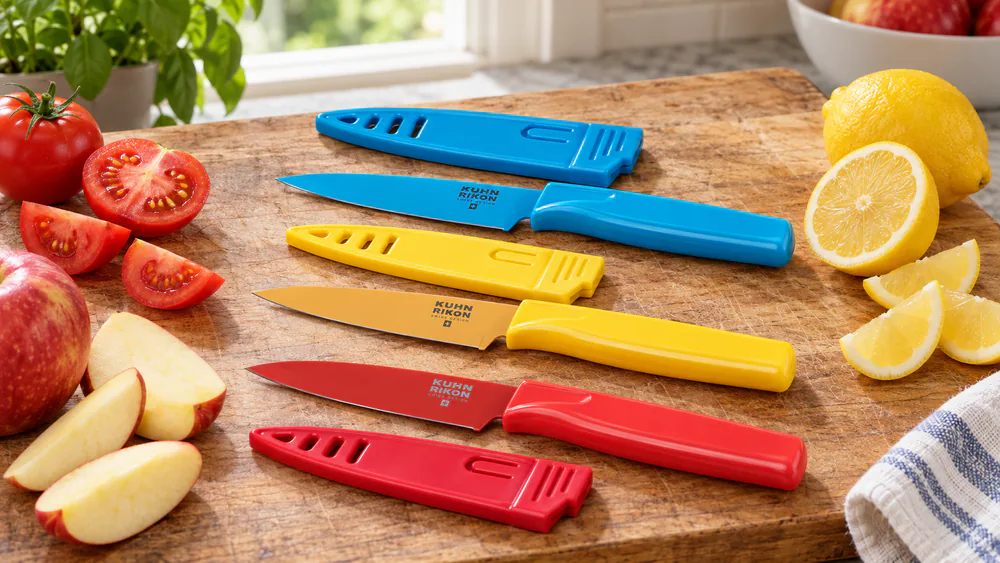
The Shun is a knife you pamper; the Kuhn Rikon set is the opposite, three cheerful 4-inch blades that a new cook can grab without a second thought. At about $25 you get red, yellow, and blue knives, and the set is Swiss-designed (model 2847).
Pros
Three knives with sheaths for about $25
Sharp heel to tip with a nonstick coating that sheds sticky foods
Cons
Re-sheathing can catch a hand if you miss the opening
Coating durability varies; hand washing is the safe route
The color coding earns its keep in a divided-prep kitchen, where one knife stays for produce, one for raw meat, and one for the lunch box. The sheaths make drawer and travel storage safe. Dishwasher durability is the one real gamble: one kitchen ran its set through nine months of daily dishwasher cycles with no chipping or fading, while another saw color flake off onto food within months.
How to Choose a Paring Knife
A paring knife is a small purchase you use daily, so choose on more than looks.
Blade length and shape: spear point, sheep's foot, and bird's beak
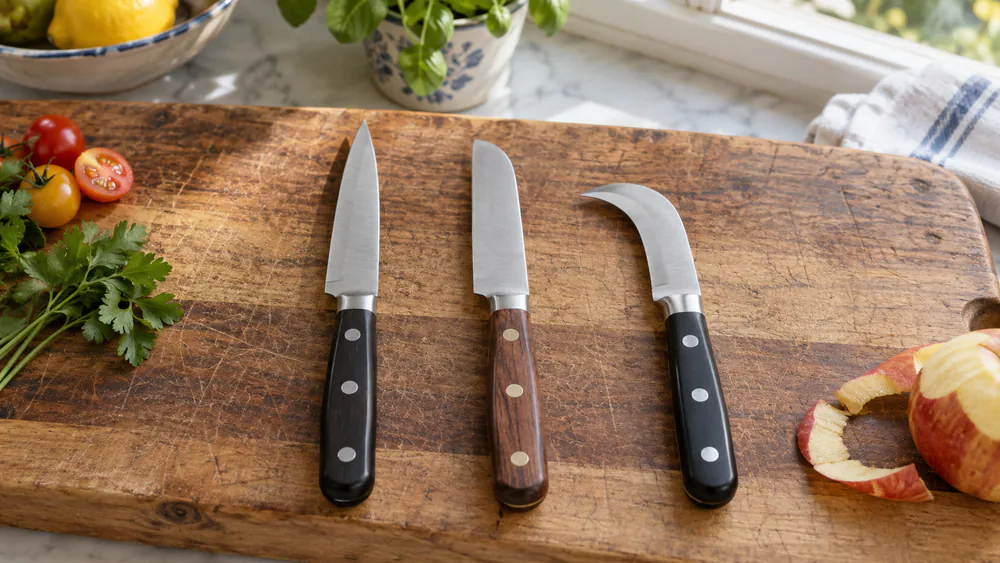
Blade length runs from 3 to 4 inches. A 3.25-inch blade is nimblest for in-hand work like hulling and coring, 3.5 inches is the sweet spot for most hands, and 4 inches gives you more blade for slicing. A spear point with a straight edge is the all-rounder, the shape of most of our picks: its tip cores and hulls while the straight edge slices. A sheep's foot swaps the pointed tip for a blunt, rounded nose that will not stab the food or your hand, a controlled pick for peeling round vegetables. A bird's beak curves down toward the tip and follows the curve of round fruit.
Spear point, sheep's foot, and bird's beak: the three tip profiles that define how a paring knife cuts.
Steel type and edge retention
High-carbon stainless steel is the norm, and hardness predicts how a blade behaves. A 56 HRC blade like the Victorinox takes a fresh edge easily; a 60 to 61 HRC blade like the Shun holds an edge longer but chips when abused. The Wüsthof sits at 58 HRC, a middle ground, and Mac's steel runs around 60 HRC per spec sheets.
Handle comfort and ergonomics
The handle is where paring knives live or die, because you hold this knife in hand. If a handle cramps, slips, or forces a death grip after a long prep, it fails. Handles that are too thick punish small hands, too short force large hands into a pencil grip, and too slick turn scary once citrus juice arrives. Textured grips win in our kitchen. Santoprene, POM, and polypropylene beat bare smooth wood when wet.
Stamped vs forged
Stamped blades are cut from a sheet of steel and ground to an edge, which makes them cheaper, lighter, and quicker to sharpen back; the Victorinox and Mercer are stamped, and that simplicity keeps the price low. Forged blades are hot-drop-forged from a single billet, denser and heavier, with more material behind the edge; the Wüsthof is forged in Solingen. On a paring knife the difference matters less than on a chef's knife, but the bolster still changes the feel.
Serrated vs plain edge
A plain edge does nearly every paring job, from peeling and hulling to coring, trimming, and detail work. Serrated blades exist for one job family, food with tough skins such as ripe tomatoes, citrus, and bread. The teeth grab and saw instead of pushing, which is why they are worse for everything else and a pain to sharpen at home. Unless you slice tomatoes or citrus nearly every day, buy the plain edge.
Care and Maintenance
Sharpening and honing
Most paring knives dull slowly enough that a routine beats a rescue. Hone before each prep session, or at least weekly: a steel or ceramic rod realigns the edge, and on softer stamped steel a hone postpones sharpening for weeks. When honing stops helping, sharpen on a stone or pull-through. Our step-by-step knife sharpening guide walks through the process, and the best knife sharpeners of 2026 roundup covers dedicated tools.
Tip. Hone before you sharpen. On the softer stamped blades in this guide, a quick pass on a steel before most sessions postpones real sharpening for weeks; on harder forged steel, a weekly pass keeps the edge fresh for months.
Hand-washing, drying, and storage
Hand washing and drying beats the dishwasher for every blade here. The Victorinox and Kuhn Rikon survive it, but the other four are hand wash only, and the Mac throws rust spots if left damp. Dry every blade and store it in a block, on a magnetic strip, or in the Kuhn Rikon sheaths; a loose drawer does not. The U.S. Department of Labor makes the same point in its ergonomics guidance for hand tools: a tool should let you keep a neutral grip, which for a paring knife means a handle that fills the hand without a squeeze.
Paring Knife FAQs
What length paring knife should you buy?
Start at 3.5 inches; it suits most hands and jobs. Drop to 3.25 if you mostly hull and core in hand, or go to 4 inches if you also slice small fruit on a board. Blade length is only half the fit. The Wüsthof's blade is 3.5 inches and its handle still runs short for large hands, so grip any candidate before you settle on a number.
Is a serrated or plain-edge paring knife better?
Plain edge for nearly everyone. Serrated teeth grip tough skins, but they are worse on everything else, and once a serrated paring knife dulls you cannot restore it on a flat stone; it needs a specialty sharpener or a replacement. If you slice tomatoes, citrus, or bread nearly every day, keep one serrated blade for those jobs and a plain edge for everything else.
Spear point, sheep's foot, or bird's beak: which is right for you?
Pick the shape that matches your most common task. A spear point handles nearly everything, from hulling to slicing, which is why most of our picks are spear points. If peeling round vegetables becomes a daily job, a sheep's foot or a bird's beak earns its keep; otherwise, buy the spear point first and add a specialty shape only when one task keeps coming up.
What paring knife does America's Test Kitchen recommend?
America's Test Kitchen has recommended a budget-priced, plain-edge stainless paring knife for years, and it still names the Victorinox Swiss Classic as its Best Buy at $12.25 at time of testing, the same knife we chose as our Best Overall. ATK's overall winner has moved to the Mercer Culinary Renaissance at $26.79, so the Swiss Classic holds the Best Buy slot rather than the top spot.
How do you keep a paring knife sharp?
Hone often, sharpen rarely, and scale the schedule to the steel. On a 56 HRC stamped blade like the Victorinox, a hone before most sessions postpones sharpening for weeks. On the 58 HRC Wüsthof, a weekly hone keeps the edge fresh for months. On a 60 to 61 HRC blade like the Shun, the edge lasts through months of prep with gentle use, but it chips more easily, so sharpen rarely and carefully. When honing stops helping and the edge will not hold, it is time to sharpen, or on an eight-dollar knife, to replace it.
Can a paring knife replace a chef's knife?
No. A paring knife is the specialist for in-hand detail work, the jobs where food never touches the board; a chef's knife does board work such as chopping, mincing, and slicing anything larger than a fist. A good kitchen runs both, so start with the chef's knife.
Final Thoughts
Six knives, one lesson: a good paring knife is a small tool that solves a big share of daily prep, and our picks differ mostly in fit. The Victorinox is the sensible starting point, and the Mercer is the budget blade you will beat on without guilt. The Mac rewards cooks who baby their steel, the Wüsthof suits smaller hands that want heft, the Shun is the gift that gets used, and the Kuhn Rikon is the easiest first knife. Pair any of them with ten minutes of sharpening skill; our best knife sets of 2026 roundup covers the rest of the drawer.