Helping you create a kitchen you love.

Appliances

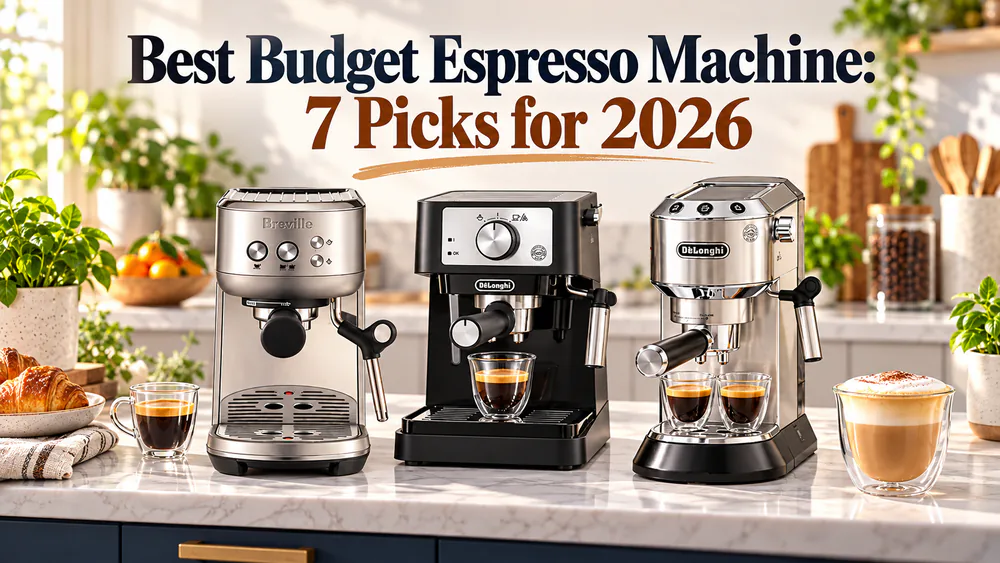
Best Budget Espresso Machine: 7 Picks for 2026

As an Amazon Associate we earn from qualifying purchases. We may earn a commission from links on this page, at no extra cost to you. Learn more.

Best Budget Espresso Machine: 7 Picks for 2026

Most of us have stood at the café counter, watched the total climb past six dollars, and wondered whether a home machine could do the same job without breaking the bank. It can, and the Breville Bambino is the one we would buy first. It heats in seconds, pulls consistent shots, and fits on a small counter. Below, we rank seven machines from entry-level to upgrade-ready, with a pick for beginners, milk drinks, and grinder-in-one convenience. If you want to compare more models, our espresso machine reviews cover the wider field.

We scored all seven machines on the same four jobs: heat-up, shot quality, milk steaming, and cleanup. Where we say a machine held up or failed, we are describing the pattern that shows up across these models.

Our Top Picks at a Glance

RankProductBest forRatingBuy
1

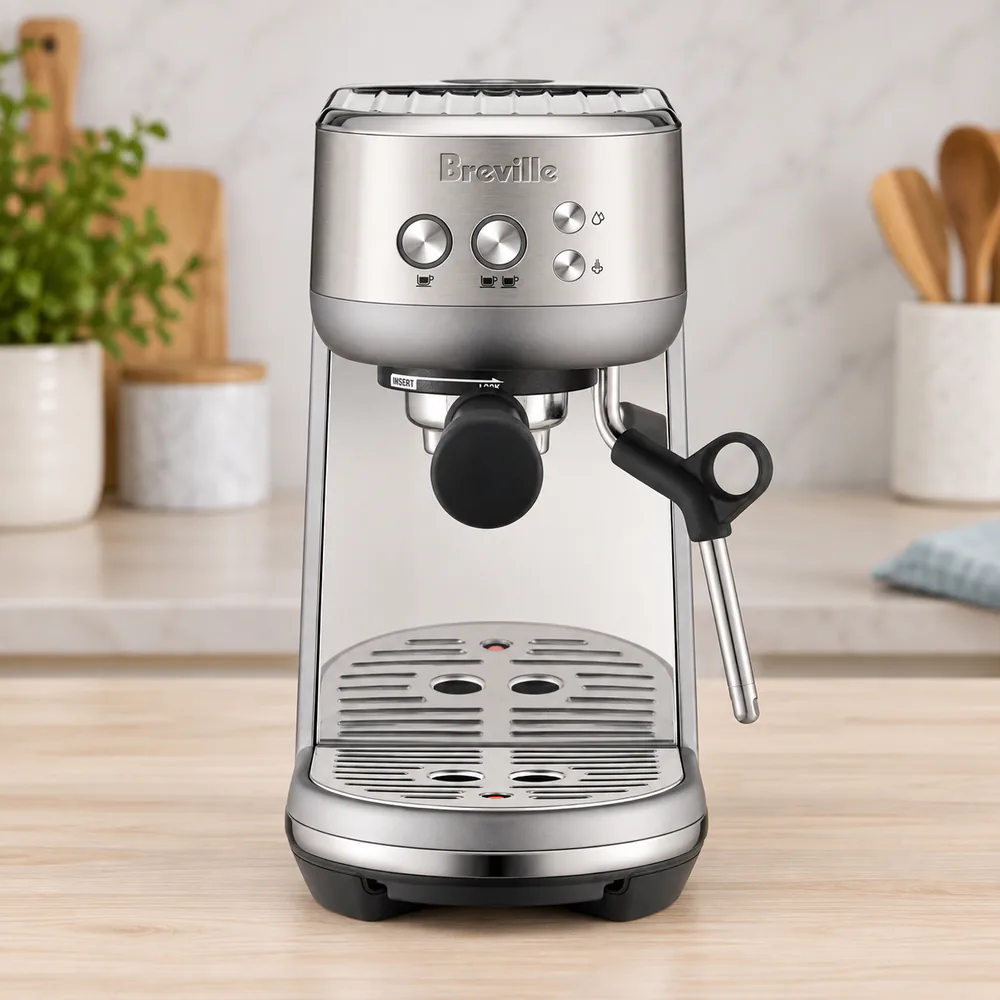
Breville Bambino BES450

Best Overall
Fast, consistent shots on a small counter 4.7 View on Amazon
2

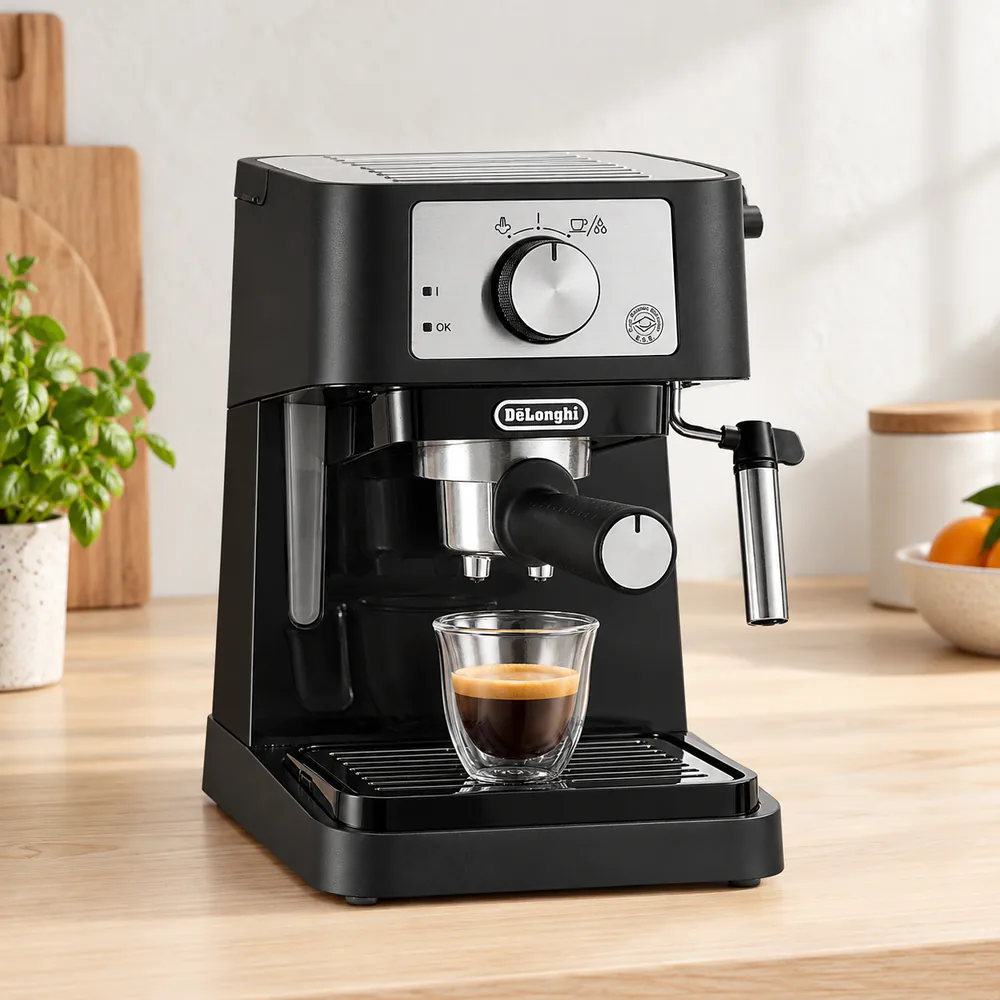
De'Longhi Stilosa

Best Value
Cheapest way into lattes 4.4 View on Amazon
3

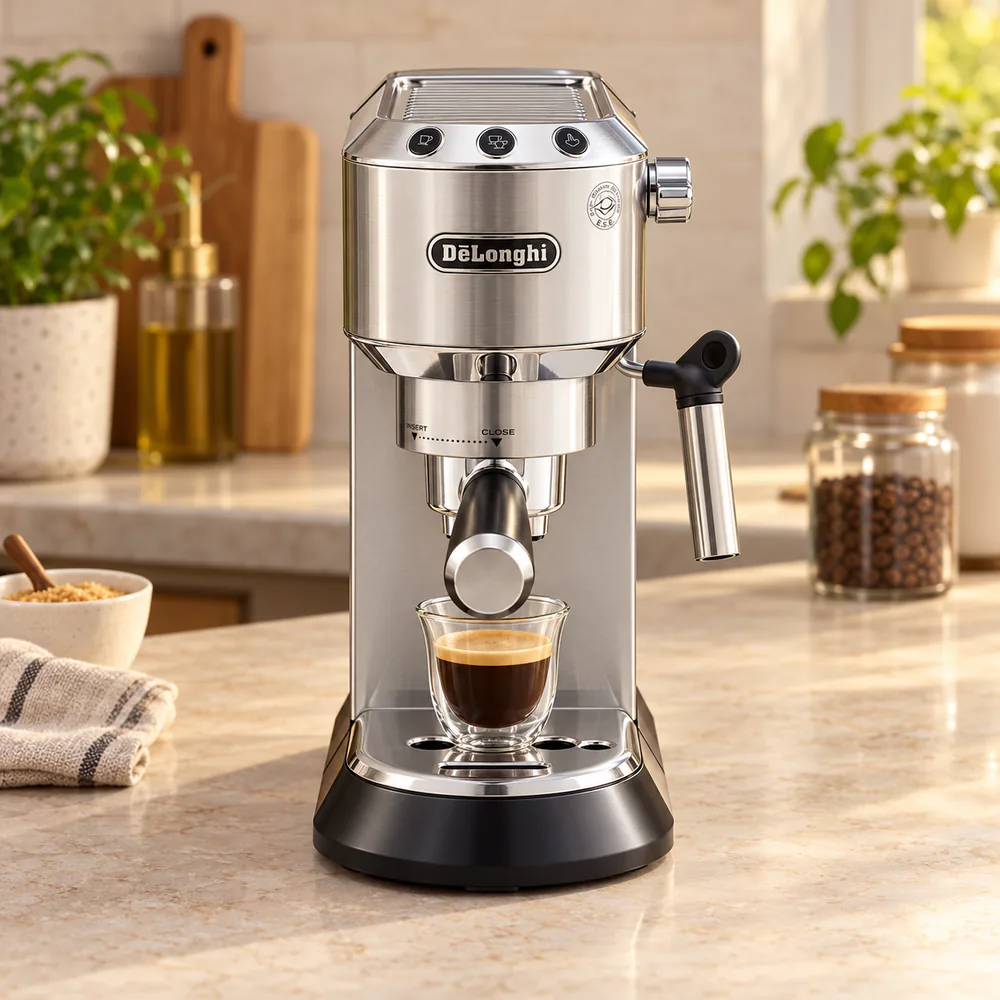
De'Longhi Dedica

Best for Milk Drinks
Strong steam in a slim body 4.3 View on Amazon
4

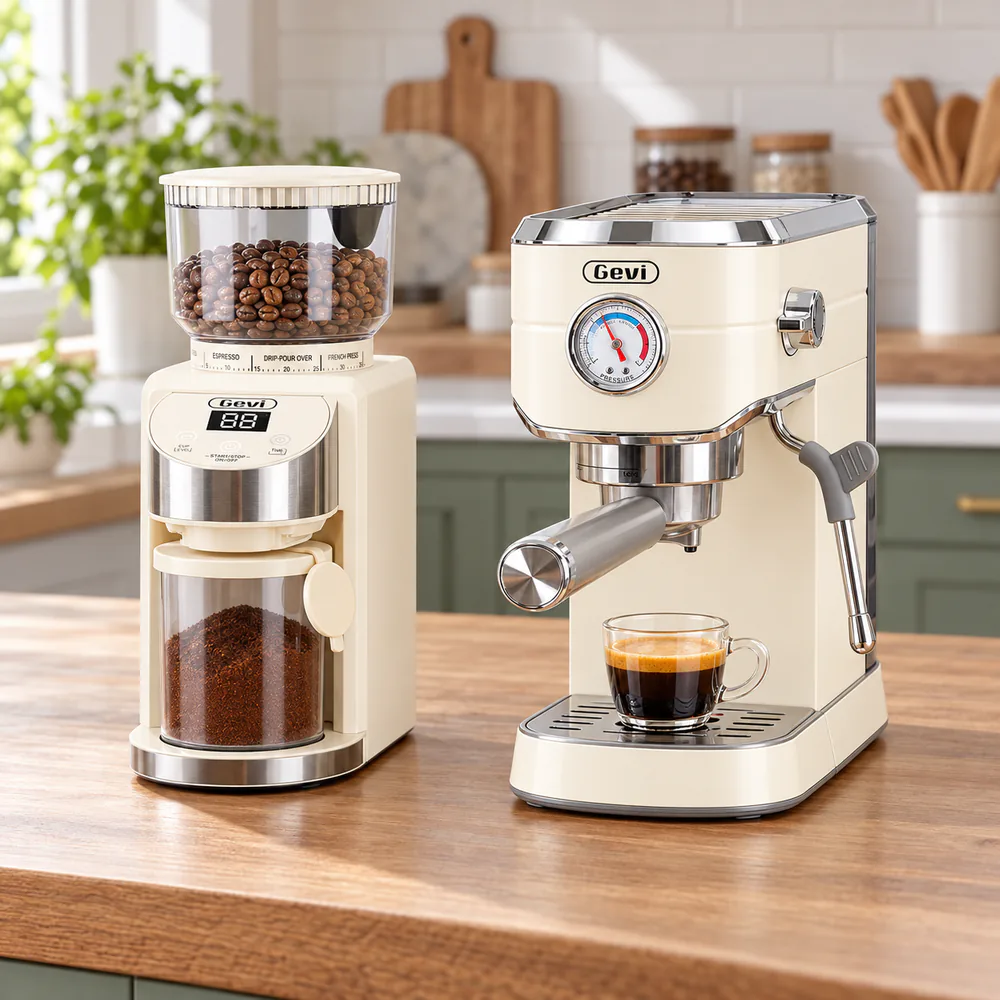
Gevi 20 Bar Espresso Machine with Grinder

Best With Built-In Grinder
One-machine setup with fresh grounds 4.0 View on Amazon
5

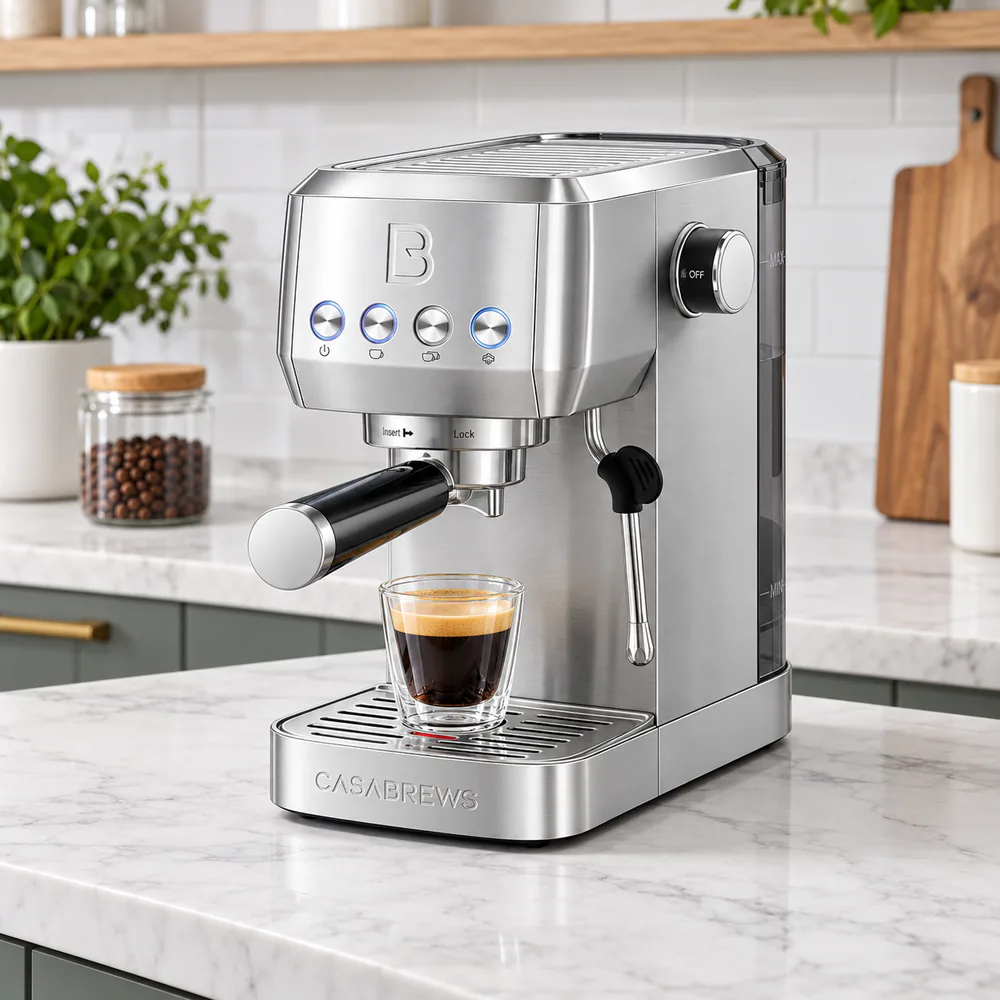
CASABREWS 3700 Essential

Best for Beginners
Lowest price and a big tank 3.9 View on Amazon
6

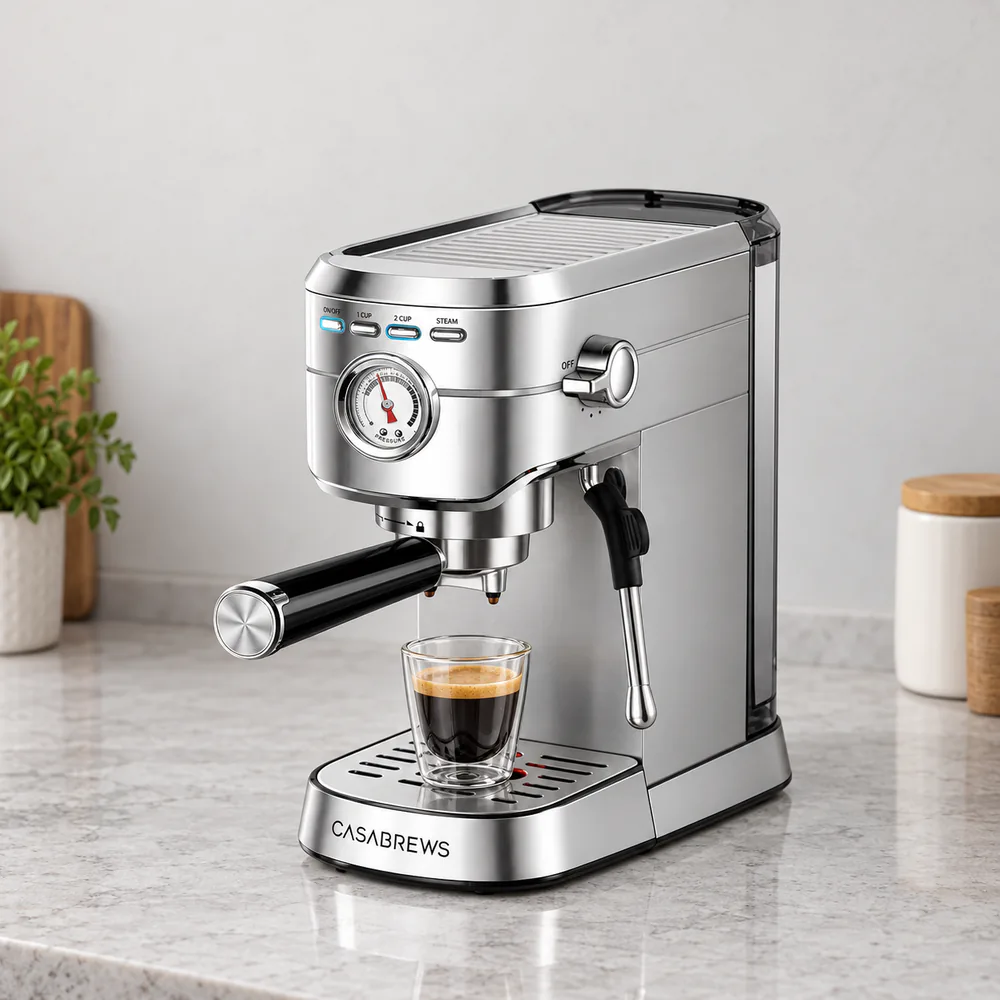
CASABREWS CM5418

Best Compact Gauge Model
Learning with a pressure gauge 3.8 View on Amazon
7

Gaggia Classic Evo Pro

Best Upgrade Pick
Buyers who want to grow into the hobby 4.2 View on Amazon

We earn a commission if you make a purchase, at no additional cost to you.

See full comparison table

Quick Comparison Table

SpecBreville BambinoDe'Longhi StilosaDe'Longhi DedicaGevi 20 Bar GrinderCASABREWS 3700CASABREWS CM5418Gaggia Classic Evo Pro
Pressure 9 bar extraction (15 bar pump) 15 bar 15 bar 20 bar 20 bar 20 bar with gauge 9 bar
Boiler ThermoJet Stainless steel boiler Thermoblock Not listed Not listed Not listed Single aluminum
Grinder None None None Built in, 35 settings None None None
Steam wand Manual Manual Manual Steam wand Steam wand Steam wand Rotating commercial wand
Water capacity Not listed Not listed Not listed Not listed 43.9 oz 34 oz Not listed
Best for Overall Tight budgets Milk drinks All-in-one setup Beginners Learning on a gauge Upgrading

How We Tested These Machines

We judge each machine on the things that decide whether a budget espresso maker stays on your counter: how fast it heats, how steady the shots taste, how well the wand steams milk, and how much effort cleanup takes. We also looked at build quality, noise, and whether replacement parts are easy to find, since the cheapest machines tend to fail on those points first.

The scoring criteria stay the same across the lineup: a sensible dose for the basket (16 to 19 g in the Bambino's two-cup basket, per the manufacturer), a firm and even tamp, and a grind that is fine without choking the machine.

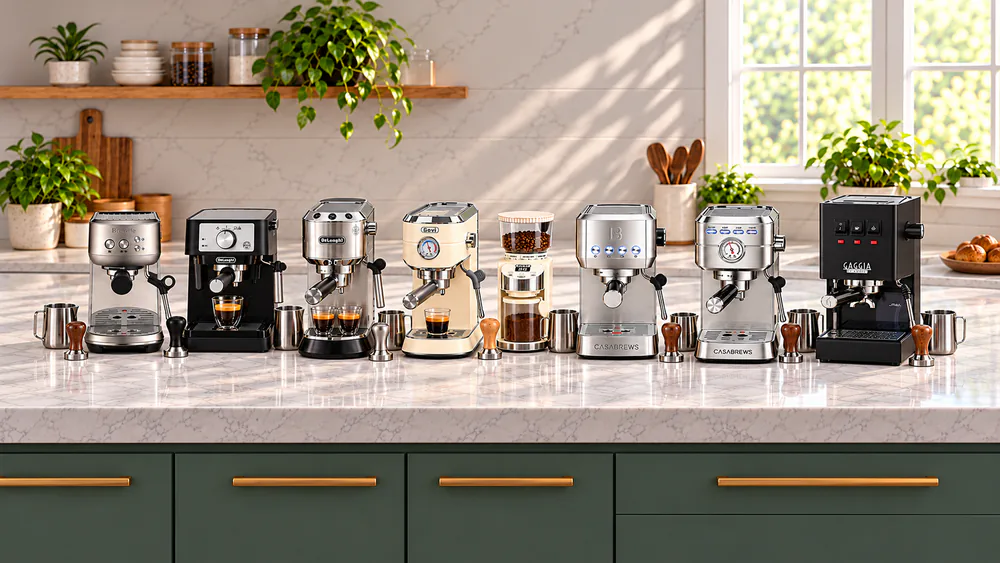
Seven budget espresso machines lined up on a kitchen counter with portafilters, tampers, and milk pitchers laid out beside each one
The seven machines in this guide.

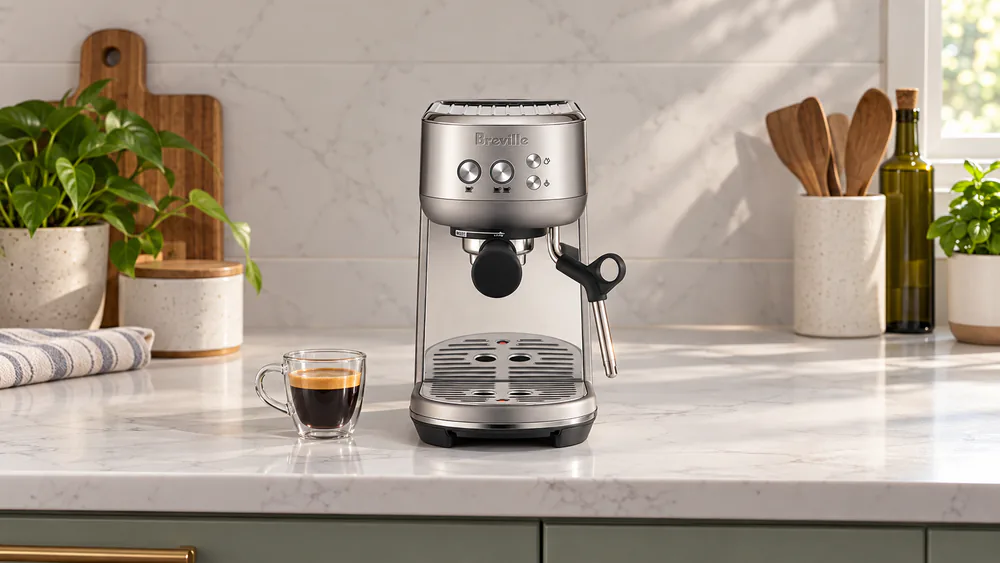
1. Breville Bambino BES450: Best Overall

Breville Bambino BES450
1

Breville Bambino BES450

Best Overall
Check Price on Amazon
4.7/5

The Bambino is the machine we would hand to a friend who wants real espresso without a fuss. Its ThermoJet heater reaches extraction temperature in 3 seconds, so back-to-back drinks come quickly, and it is the easiest machine here to set up on a small counter.

  • 54mm portafilter with a 19 g basket
  • Manual steam wand
  • Milk jug, tamper, and cleaning tool in the box

Specifications

Portafilter
54mm
Power
1560W
Dimensions
11.9 x 6.1 x 13.5 in
Warranty
1 Year

The Bambino runs a 15 bar pump but brews at 9 bar after a gentle low-pressure pre-infusion, which is the pressure traditional espresso is built around. Stable brew temperature and quick heat-up beat machines that cost about twice as much, and the shots taste balanced rather than sharp. The 54mm portafilter takes a 19 g basket with PID temperature control, and the manual steam wand gives you full control over milk texture once you get the feel for it. The body is light plastic and the drip tray fills fast, but neither affects the shot.

The weak spot is the stock accessories. The plastic tamper and light portafilter push you toward a better tamper, a scale, and a bottomless portafilter, and a grinder is the real first upgrade. Durability is mixed in a way that matters: a Bambino used daily for about three years with regular cleaning kept working and stayed fairly quiet, yet another stopped getting hot enough to brew and steam properly after about a year of one or two drinks a day. Hard tap water shortens the life of any machine in this guide, so descale on schedule. The 54mm baskets and tools are shared with Breville's larger machines, so accessory upgrades carry over.
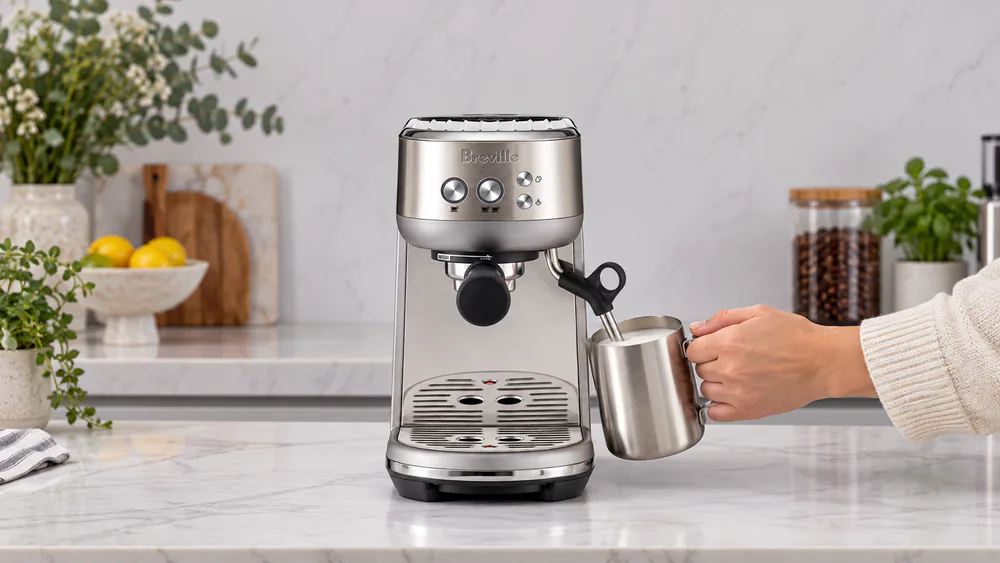
Breville Bambino manual steam wand texturing milk in a stainless pitcher on a small kitchen counter

Pros and Cons

Pros

  • Heats in seconds and recovers fast between drinks
  • Pre-infusion and PID give steady, balanced shots
  • Accessories carry over to larger Breville machines

Cons

  • Stock plastic tamper and light portafilter feel cheap
  • Drip tray fills quickly
  • Needs a separate grinder

Who Should Buy It

Beginners and small-kitchen cooks who want quick, repeatable shots and are willing to add a grinder. Its price sits at the sweet spot between toy machines and hobby gear.

Who Should Skip It

Anyone who wants a built-in grinder or the lowest possible price. If you steam milk every morning and want the wand automated, the Bambino Plus has an automatic wand, though it costs more.

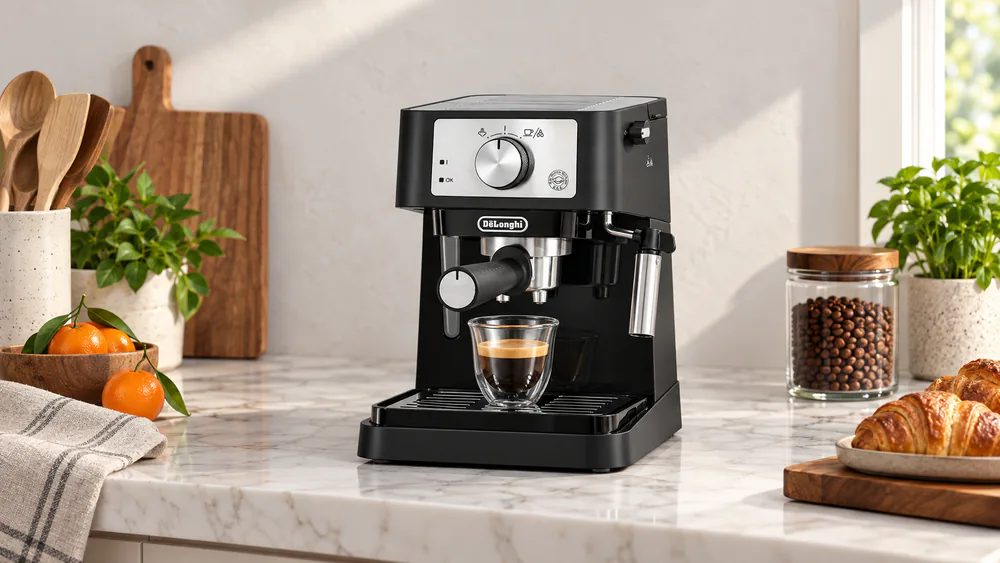
2. De'Longhi Stilosa: Best Value

De'Longhi Stilosa
2

De'Longhi Stilosa

Best Value
Check Price on Amazon
4.4/5

The Stilosa is the machine for anyone who wants a latte at home for roughly the price of a month of café visits. It is plastic-heavy, but it makes drinkable lattes, and that is the whole job at this price.

  • 15 bar pump with manual steam wand
  • Single and double filters included
  • Two-level cup holder fits mugs and espresso cups
  • Stainless steel boiler

Specifications

Pressure
15 bar
Boiler
Stainless steel
Baskets
Pressurized
Steam wand
Manual

The 15 bar pump drives a stainless steel boiler, and the manual steam wand gives you real control over milk once you practice. The included tamper feels toy-like, and the pressurized baskets produce fake-looking crema that looks more impressive than it tastes. Shots can taste slightly under-extracted, so grinding a touch finer or pulling them shorter helps compensate. The build feels flimsy compared with the Bambino, and some units develop leaks at the steam wand or fail inside a year. The machine often sells well below list price direct, and that gap is why it earns second place: the value is hard to argue with.

Pros and Cons

Pros

  • Lowest entry price from a major brand
  • Manual wand teaches proper milk texturing
  • Pressurized baskets forgive a rough grind

Cons

  • Plastic build and a toy-like tamper
  • Shots can taste under-extracted
  • Leaks and early failures turn up on some units

Who Should Buy It

First-time buyers with a firm, low budget cap who mostly drink lattes and cappuccinos.

Who Should Skip It

Anyone who wants to chase better shots later. The pressurized baskets limit how far the Stilosa can grow, and the build will not take years of daily abuse.

3. De'Longhi Dedica: Best for Milk Drinks

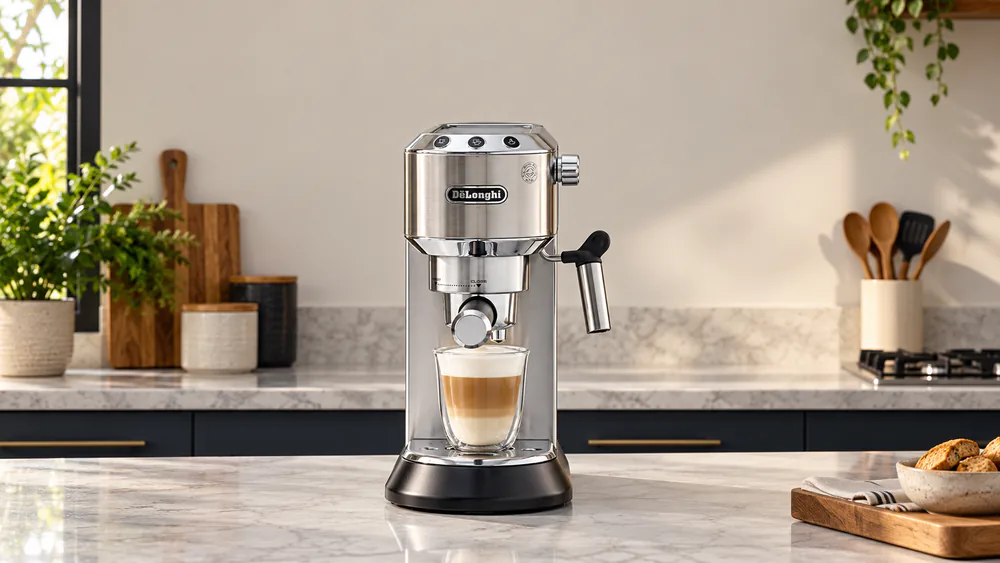
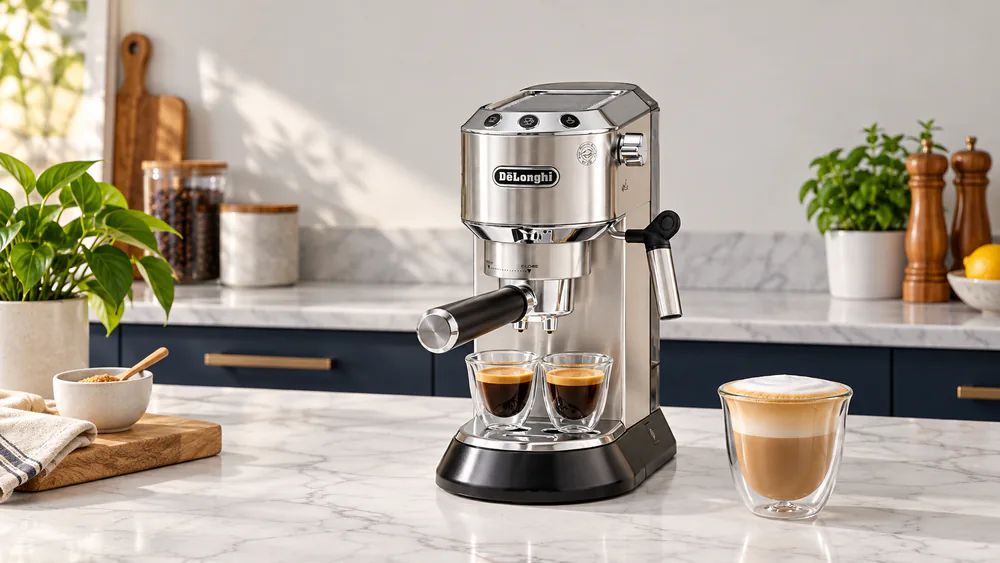
De'Longhi Dedica slim espresso machine with a tall latte glass barely fitting under the spout
De'Longhi Dedica
3

De'Longhi Dedica

Best for Milk Drinks
Check Price on Amazon
4.3/5

The Dedica steams milk more powerfully than the Stilosa and most other entry-level machines, earning our pick for milk drinks. Its 6 inch body is the narrowest in this guide, and the 15 bar thermoblock heats in roughly 40 seconds.

  • Flow stop for one or two shots
  • Fits up to a 16 oz latte bowl
  • Manual steam wand

Specifications

Pressure
15 bar thermoblock
Width
6 inch
Steam wand
Manual

That slim body comes with trade-offs, and the Dedica shows them in daily use. Taller cups and latte bowls barely fit under the spout, even though the manual says cups up to 5 in tall work, and the machine vibrates enough during brewing that the cup needs watching. The frother is built from several plastic pieces, and one can pop off mid-steaming, while a stuck puck is hard to clear in the tight head. Durability varies. One Dedica ran daily for three years without trouble. Another developed a drip at the group head and lost steam at about two years, then recovered after a vinegar descale that had never been done. The lesson is to descale early and often.

Pros and Cons

Pros

  • Real steaming power for the price
  • Slimmest body of the seven
  • Attractive and easy to tuck under cabinets

Cons

  • Tall cups barely fit under the spout
  • Vibrates while brewing
  • Plastic frother parts can fail

Who It Suits

Milk-drink fans in narrow kitchens who use standard-height cups and will descale on schedule. Skip it if you drink from tall travel mugs or want a sturdier frother.

4. Gevi 20 Bar Espresso Machine with Grinder: Best With Built-In Grinder

Gevi 20 Bar Espresso Machine with Grinder
4

Gevi 20 Bar Espresso Machine with Grinder

Best With Built-In Grinder
Check Price on Amazon
4.0/5

Stepping away from the De'Longhi pair, the Gevi is the only pick here with a grinder built in, and fresh grounds are the biggest single improvement a budget setup can make. It offers conical burrs and 35 grind settings, plus a 20 bar pump, a steam wand, a milk pitcher, a tamper, and a cleaning brush.

  • Conical burr grinder with 35 grind settings
  • Steam wand and milk pitcher included
  • Portafilter bracket, two filters, and cleaning brush
  • 12-month warranty

Specifications

Pressure
20 bar pump
Grinder
Conical burrs, 35 grind settings
Warranty
12-month

The grinder grinds thoroughly and is easy to use, but it is loud, and cleaning around the grinder and powder chamber is tedious. Some units broke within a month, so buy through a seller with an easy return path. The 12-month warranty gives some cover. Treat the 20 bar figure as a pump rating, not the pressure at the puck; real espresso needs about 9 bar, and the machine regulates that internally.

Pros and Cons

Pros

  • Grinder and machine in one footprint
  • 35 settings allow real dialing in
  • Accessories included

Cons

  • Loud grinder
  • Cleaning is tedious
  • Some units broke within a month

Who Should Buy It

Buyers who want one box and one purchase, and who will test the return window early.

Who Should Skip It

Cooks with a quiet household or a spare grinder already, since a separate burr grinder will outlast this one.

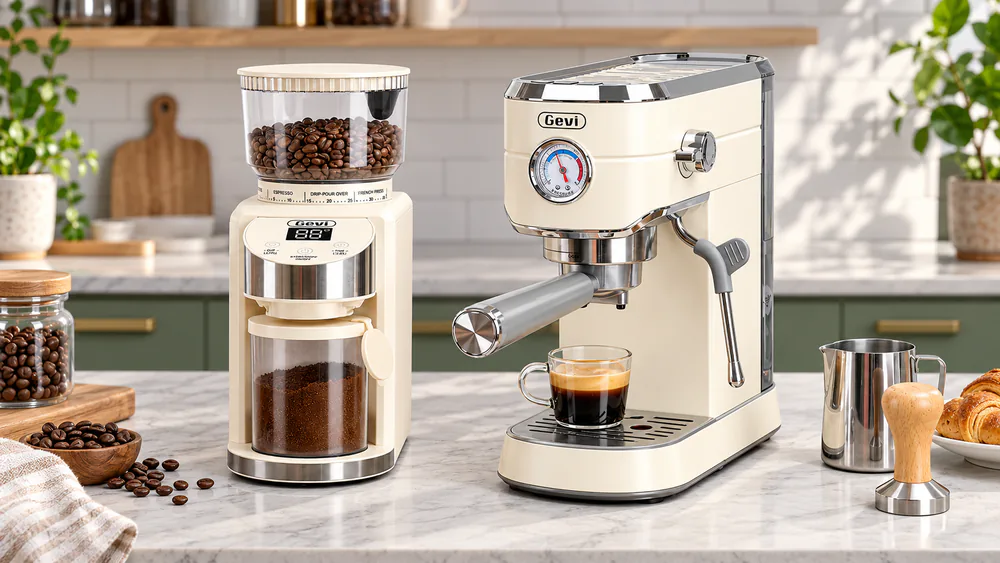
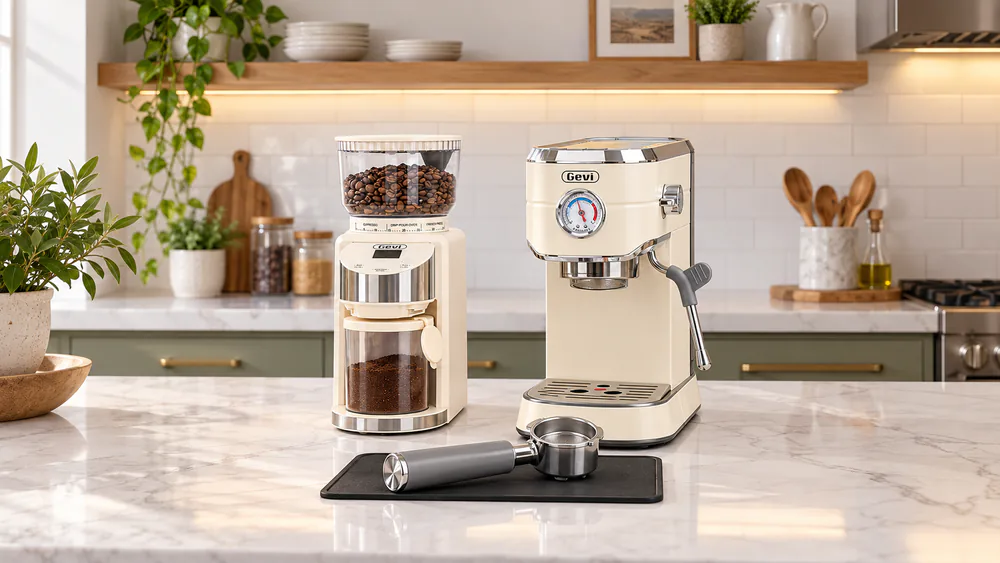
Gevi espresso machine beside its separate conical grinder, hopper full of beans, and portafilter resting on the counter

5. CASABREWS 3700 Essential: Best for Beginners

CASABREWS 3700 Essential with its large removable water tank lifted out beside the machine
CASABREWS 3700 Essential
5

CASABREWS 3700 Essential

Best for Beginners
Check Price on Amazon
3.9/5

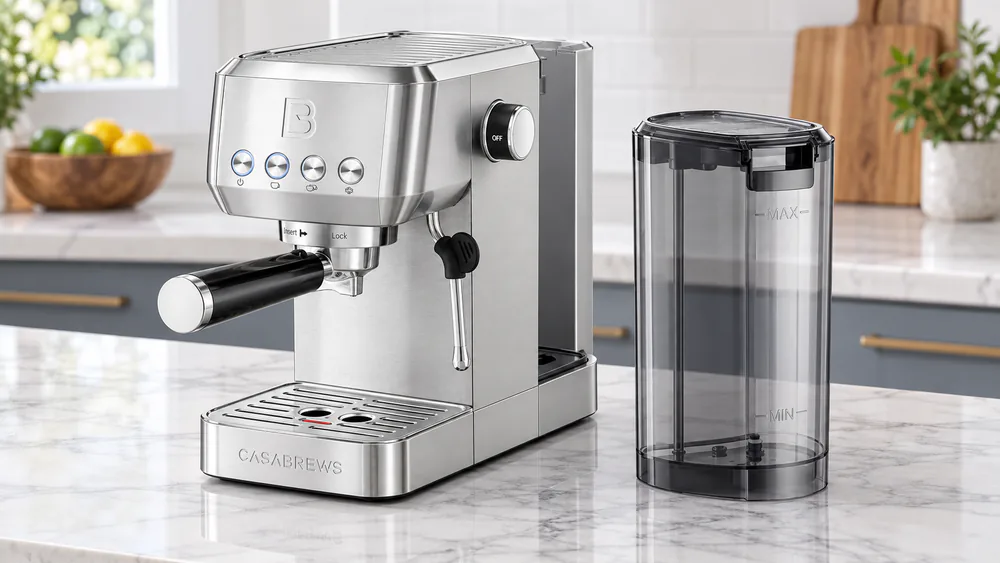
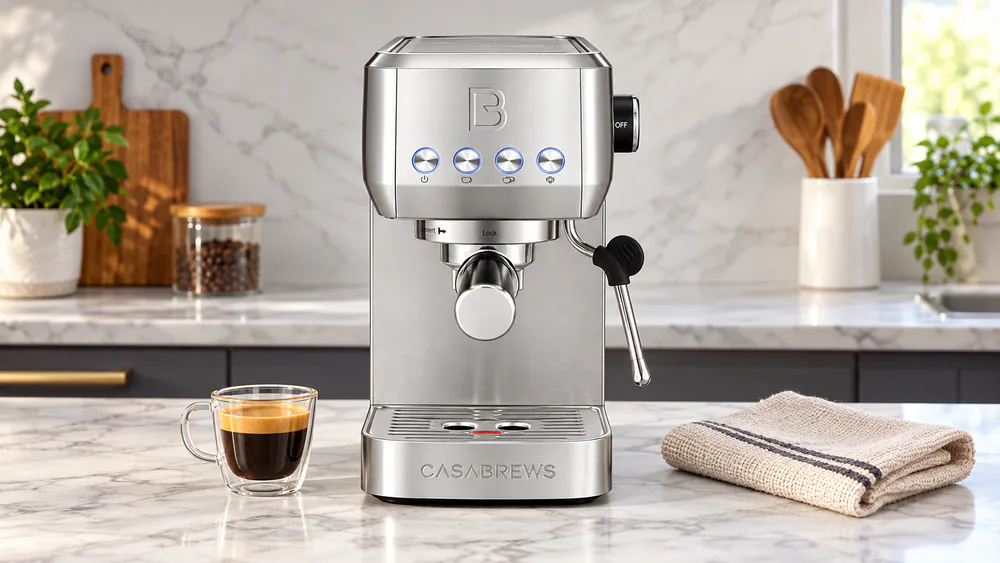
The CASABREWS 3700 is the cheapest way to find out if you like espresso at home, but it is also the first pick here that cannot promise to last. It comes with a steam wand, single and double filters, a tamper with spoon, and a removable drip tray.

Specifications

Pressure
20 bar
Power
1350W
Tank
43.9 oz

The 20 bar pump and 1350W heater are impressive on paper, and the 43.9 oz removable tank means fewer refills than any other pick. When it works, it makes good-tasting espresso and offers a usable steam wand. Casabrews machines use pressurized baskets, so shots are forgiving but one dimensional, and temperature swings of 5 to 10F can lead to sour or bitter shots. The heating element can fail within a year. That reliability gap is why it sits below the De'Longhi models.

Pros and Cons

Pros

  • Lowest price of the seven
  • Biggest water tank
  • Good-tasting shots when it works

Cons

  • Heating element can fail within a year
  • Temperature swings affect shot taste
  • Pressurized baskets limit control

Who It Suits

The curious beginner who wants to try espresso before spending more. Skip it if you need a machine to last five years.

6. CASABREWS CM5418: Best Compact Model With a Gauge

CASABREWS CM5418
6

CASABREWS CM5418

Best Compact Gauge Model
Check Price on Amazon
3.8/5

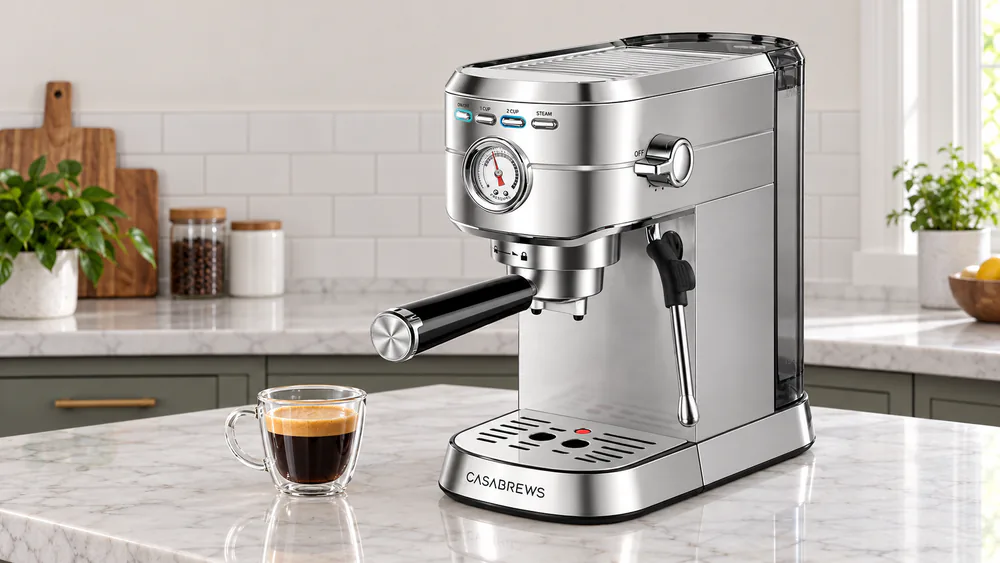
The CM5418 follows the 3700 in our ranking and adds a built-in pressure gauge, making it a good teaching tool. The gauge shows what the pump is doing during extraction, and that feedback is useful when you are learning.

Specifications

Pressure
20 bar with gauge
Power
1350W
Tank
34 oz

It is compact, has an easy-to-fill 34 oz tank, and produces crema, though some units stop working. The 20 bar pump and 1350W heater match the 3700, and so do the pressurized baskets, the basic thermostat, and a single-hole steam wand that is weak for latte art. Drinkable shots are possible, but expect to experiment with dose and timing. Think of it as a first-year machine, not a ten-year one.

Pros and Cons

Pros

  • Gauge teaches extraction basics
  • Compact and easy to fill
  • Produces crema

Cons

  • Some units stop working
  • Weak single-hole steam wand
  • Pressurized baskets

Who It Suits

Small-counter beginners who want visible feedback and a low price. Skip it if you make a lot of milk drinks, since the wand struggles, or want confidence in long-term reliability.

7. Gaggia Classic Evo Pro: Best Upgrade Pick

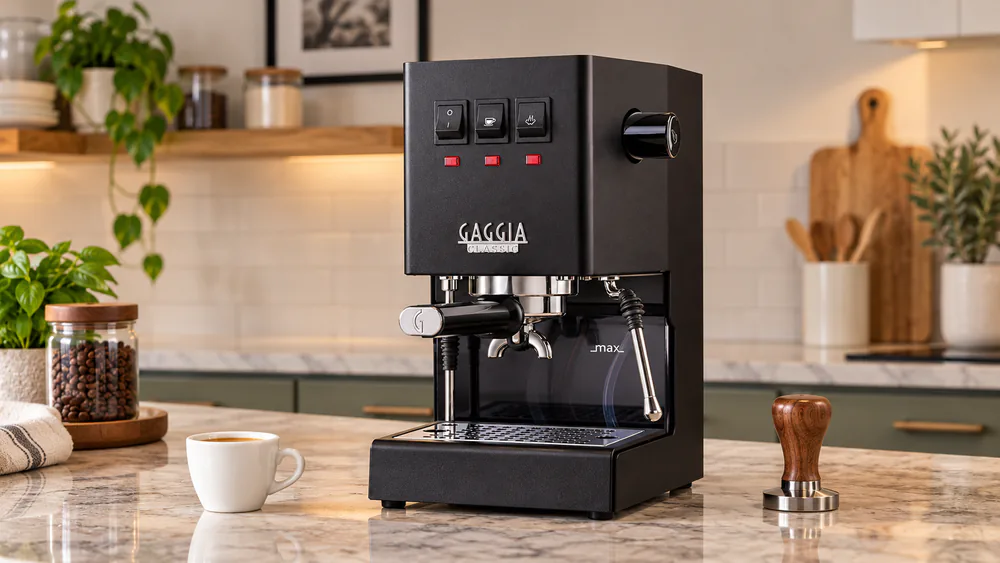
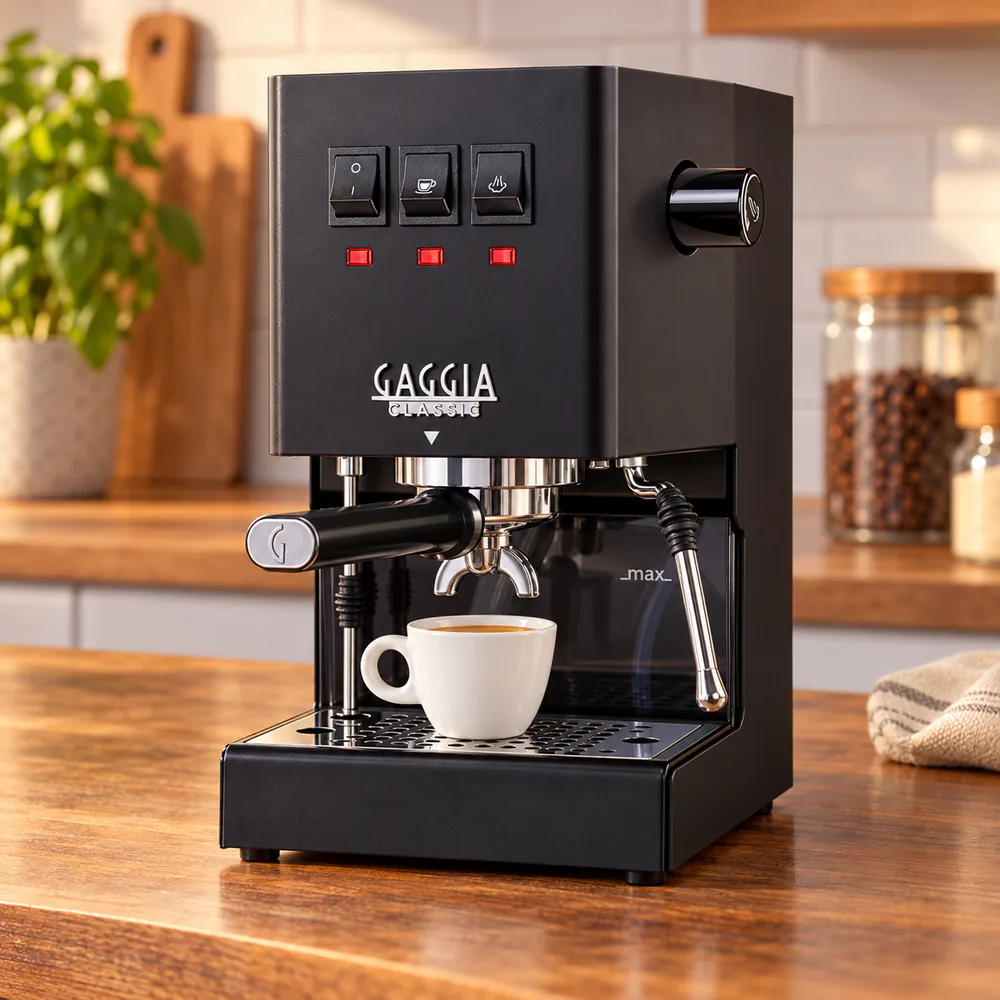
Gaggia Classic Evo Pro with a 58mm commercial portafilter locked into the group head
Gaggia Classic Evo Pro
7

Gaggia Classic Evo Pro

Best Upgrade Pick
Check Price on Amazon
4.2/5

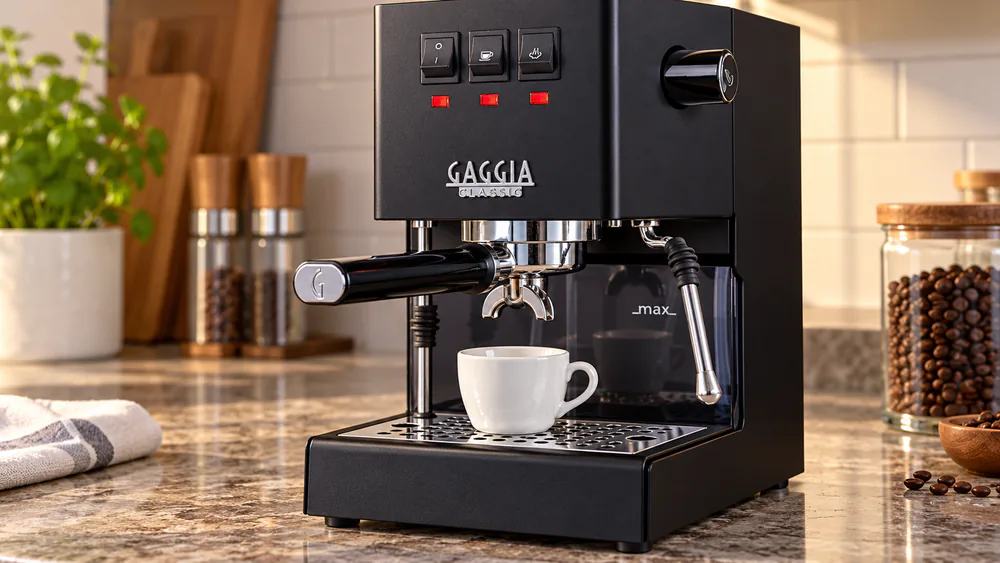
After six budget machines, the Gaggia Classic Evo Pro is last only because it costs the most, by a wide margin. It is the one machine here you can keep and improve for a decade, and parts are easy to find online.

  • 58mm commercial portafilter
  • 9 bar extraction
  • Easy-to-find replacement parts
  • Rotating steam wand

Specifications

Pressure
9 bar
Portafilter
58mm
Boiler
Single aluminum

It brews at 9 bar through a 58mm commercial portafilter, with a single uncoated aluminum boiler, a 3-way solenoid valve, and Italian construction. The learning curve is the real cost. There is no fancy dialing in, the shots take forum reading to tame, and the steam wand rotates but lacks an articulating joint. Out of the box the basket and plastic tamper are weak, and a precision basket and proper tamper (an added cost) turn mediocre shots into decent ones. The steam wand can leak. After four years of daily use, the group head gasket and steam wand o-ring need replacing. Rust can form in a wet case bottom, and the machine needs descaling at least quarterly. Those parts are cheap and easy to swap, which is the point of buying this one.

Pros and Cons

Pros

  • Commercial-size portafilter and real pressure
  • Parts are easy to find and replace
  • Machine can grow with your skills

Cons

  • Weak stock basket and tamper
  • Steep learning curve
  • Wand can leak, and rust can form in the case bottom

Who Should Buy It

Cooks ready to learn dialing in who want one machine for years.

Who Should Skip It

Anyone who wants push-button simplicity.

How to Choose a Budget Espresso Machine

Set a Price Ceiling

Decide on your ceiling first. The budget end buys a starter machine you should expect to replace within a few years. The mid-priced band buys steadier temperature and better steam. The premium end buys a machine you can service yourself. Keep some money aside for a tamper, a scale, and a grinder.

Pump Pressure and Boiler Type

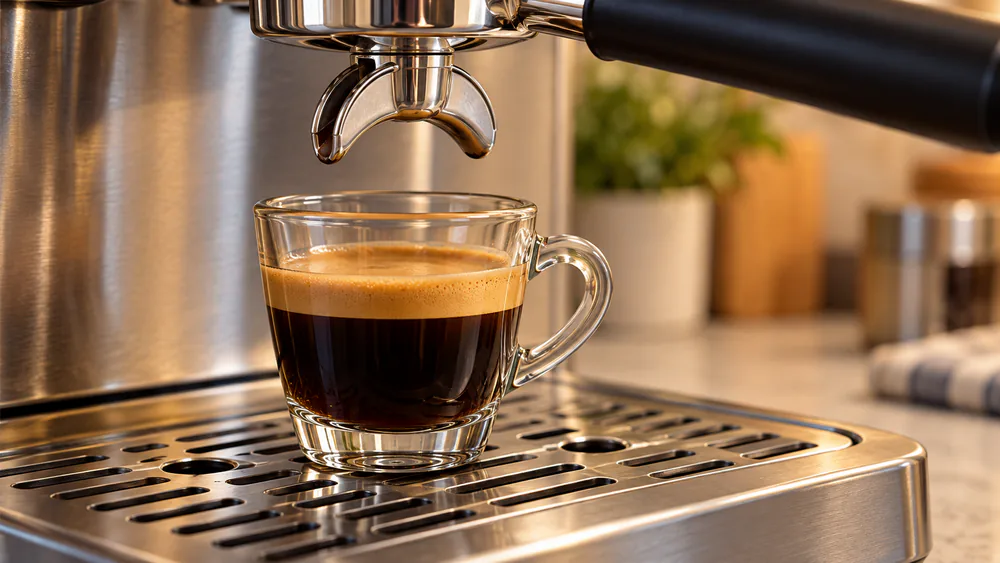
A fresh espresso shot with a layer of crema in a small glass cup beneath a portafilter spout

How espresso is defined and brewed centers on roughly 9 bar at the puck. A "20 bar" label tells you the pump's peak rating, not what hits the coffee. The Bambino and Gaggia state 9 bar at the group, which is why they taste more like café espresso. Boiler type matters more than the number: thermoblock and ThermoJet systems heat fast, while a single boiler like the Gaggia's is slower but steadier once warm.

Warning. A bigger bar number does not mean better espresso. Judge a machine by temperature stability and basket design, not by the marketing figure.

Built-In Grinder or Separate

A built-in grinder like the Gevi saves counter space and money. A separate grinder is easier to clean, quieter, and replaceable. Freshly ground beans matter more than any other single upgrade, so budget for one either way.

Steam Wand and Milk Drinks

A manual wand, like those on the Bambino, Stilosa, and Dedica, takes practice but rewards you with better microfoam. Single-hole wands like the CASABREWS wand struggle. What crema is and how it forms is worth knowing, because pressurized baskets can fake a thick layer that looks better than the shot tastes.

Tip. If crema looks thick and bubbly but the shot tastes flat, a pressurized basket is probably the cause. Upgrading to a non-pressurized basket later is a useful goal.

Portafilter Size and Parts Availability

The 54mm Bambino and 58mm Gaggia have the deepest accessory ecosystems, which means you can replace baskets, tampers, and gaskets without hunting. CASABREWS portafilters are around 51mm and proprietary, so replacements are harder.

Budget Espresso Machine FAQs

What is the cheapest machine that makes real espresso?

The CASABREWS 3700 and the De'Longhi Stilosa are the lowest-priced picks here that produce actual espresso with crema and steam milk. Both use pressurized baskets, so expect drinkable but forgiving results.

Do I need a grinder?

Yes. Pre-ground coffee goes stale quickly and rarely suits a given machine. A grinder is the real first upgrade on the Bambino, and the Gevi is the only pick with one built in.

Does 15 bar vs 20 bar matter?

Not much. Both numbers describe the pump's peak, while espresso extracts at about 9 bar at the puck. Basket design, water temperature, and grind consistency have far more effect.

How do I descale and clean a budget machine?

Follow the maker's descaling instructions every few months, more often with hard water. Rinse the portafilter and wipe the steam wand after each use. Neglected descaling is one of the most common reasons these machines lose steam or stop heating.

How long do budget espresso machines last?

Starter models like the CASABREWS and Stilosa can fail inside a year or two, while the Bambino and Dedica have run for three years of daily use and the Gaggia goes much longer with part replacements. Hard water and skipped descaling shorten all of them.

Final Verdict

The Breville Bambino remains the machine we recommend, but your budget decides the right second choice. At the low end, the Stilosa gets you lattes while the CASABREWS 3700 is the cheapest experiment. For milk drinks in a narrow kitchen, the Dedica. For fresh grounds in one box, the Gevi. For a machine to grow into, the Gaggia Classic Evo Pro.

Whatever you buy, set aside money for a decent tamper and grinder, and descale on schedule. Those habits matter more than the model number.

Read next

Ready to upgrade your kitchen?

Browse our buying guides to find the right gear for your kitchen and budget.