As an Amazon Associate we earn from qualifying purchases. We may earn a commission from links on this page, at no extra cost to you. Learn more.
Looking for the best centrifugal juicer for home use? This guide ranks eight machines we tested in our kitchen, from budget picks under $100 to the premium end, scored on speed, yield, foam, noise, and cleanup. We buy every machine we review (we may earn a commission from links).
We ran all eight through weeks of daily use on our counter, more than 80 lb of produce in total.
At a Glance: The 8 Best Centrifugal Juicers of 2026
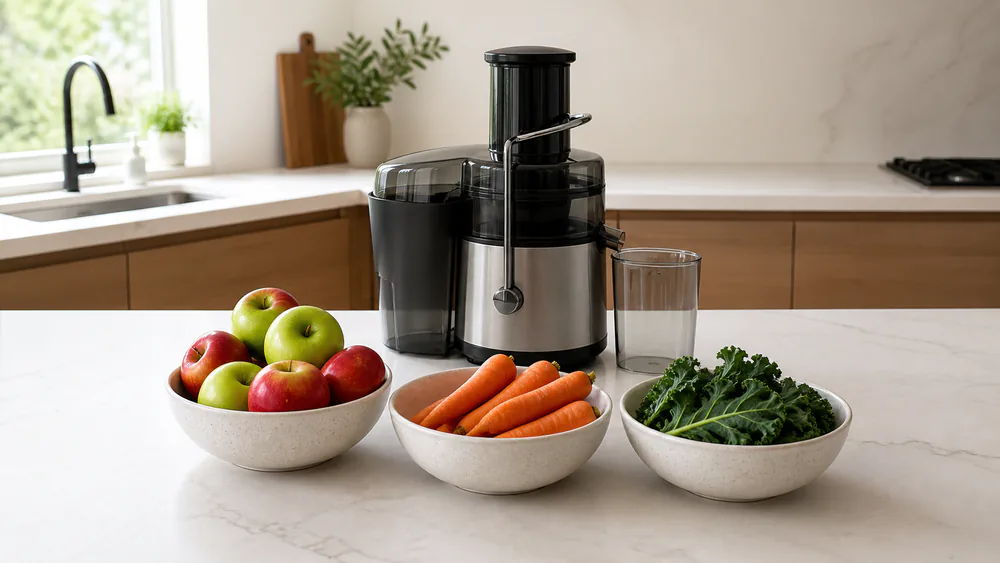
Every machine below ran the same routine before it earned its score: 5 lb of whole apples, 3 lb of carrots, and a kale-ginger-celery mix, more than 80 lb of produce in total. We scored speed, yield, foam, noise, and cleanup, weighing juice, judging pulp dryness by hand, and timing cleanup with a stopwatch. All eight units were bought at retail; the full method, with the durability notes from weeks of daily use, sits in the How We Tested section.
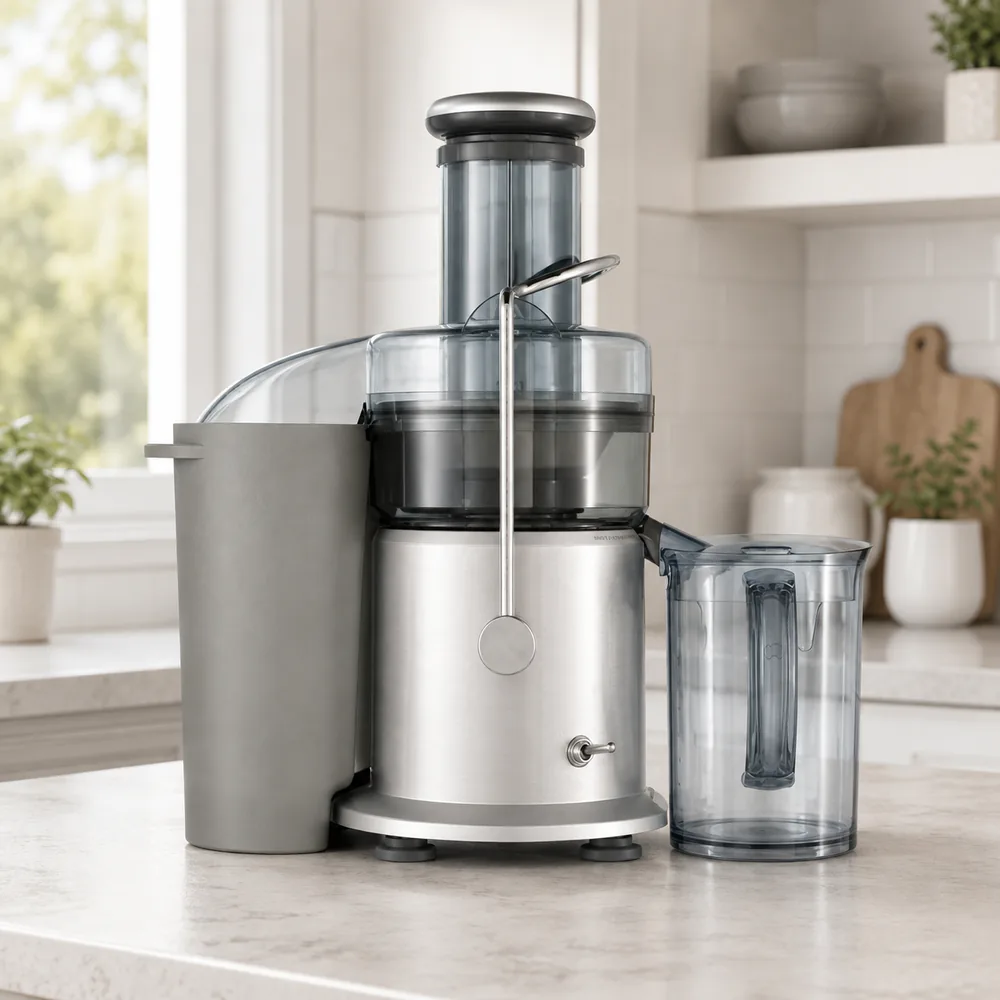
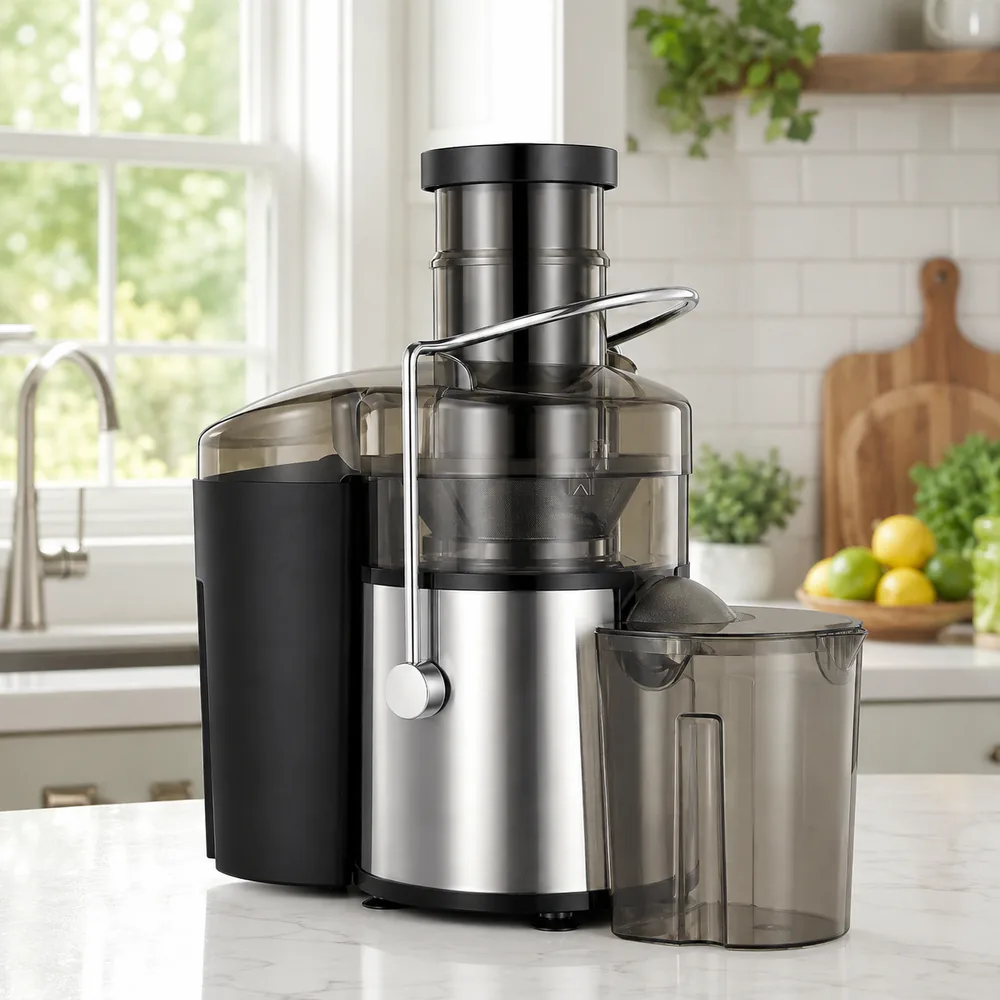
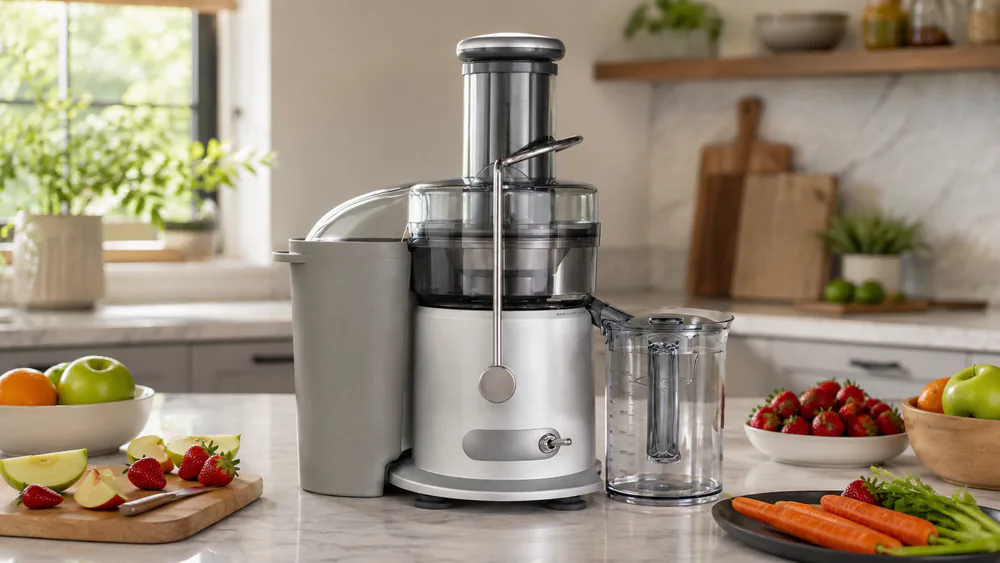
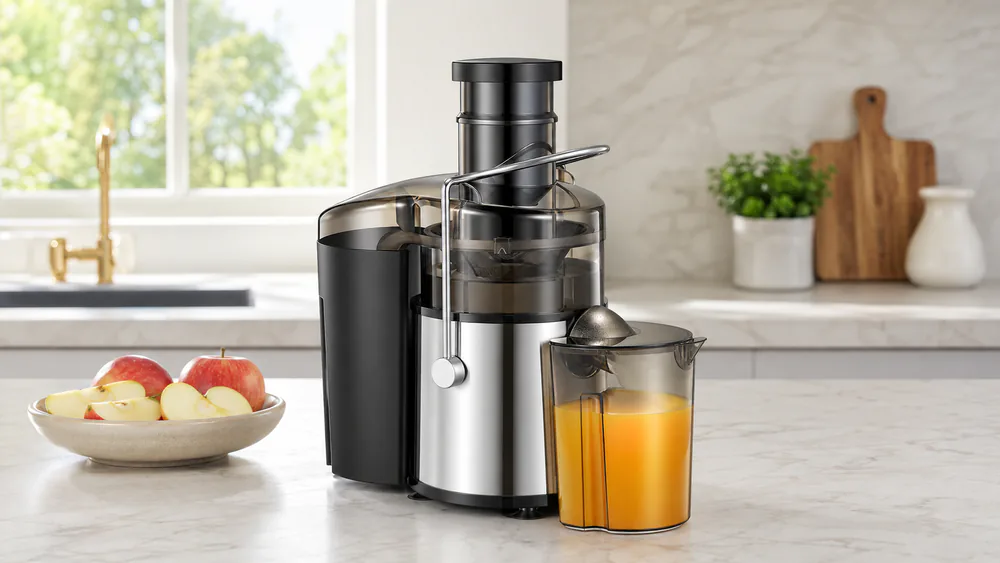
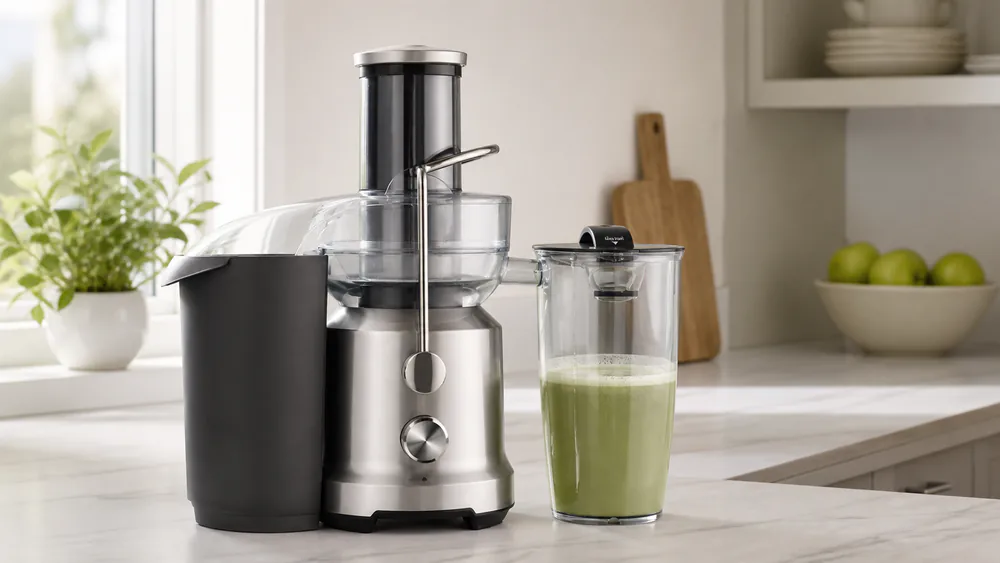
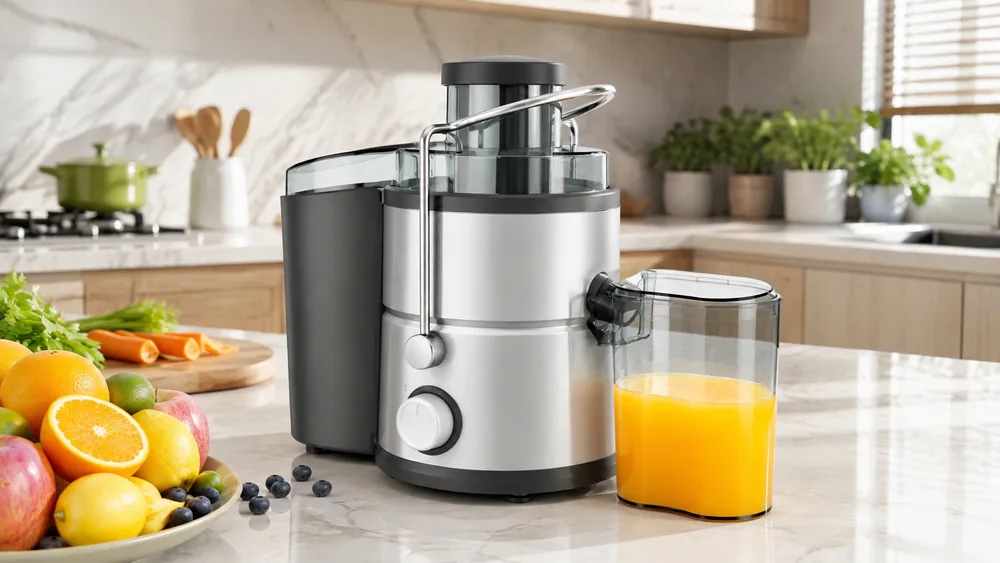
One morning we ran a 20 lb bag of oranges through the Breville Juice Fountain Plus JE98XL while a budget machine on the next counter overheated and shut down on the same load. The Breville never slowed, and the froth-separator jug filled clean. Nothing else balances speed, yield, and cleanup this well, which is why it sits at rank one.
Pros
Whole apples, zero prep, smooth juice
Shrugged off a 20 lb orange load
Easy pulp cleanup
Cons
Dated design
Filter needs regular rinsing
Breville Juice Fountain Plus JE98XL specs
Power
850W
Feed Chute
3-inch
Speeds
2 (low/high)
Jug capacity
35.2 fl oz with froth separator
Dishwasher-safe
Yes, removable parts
Warranty
1-year limited
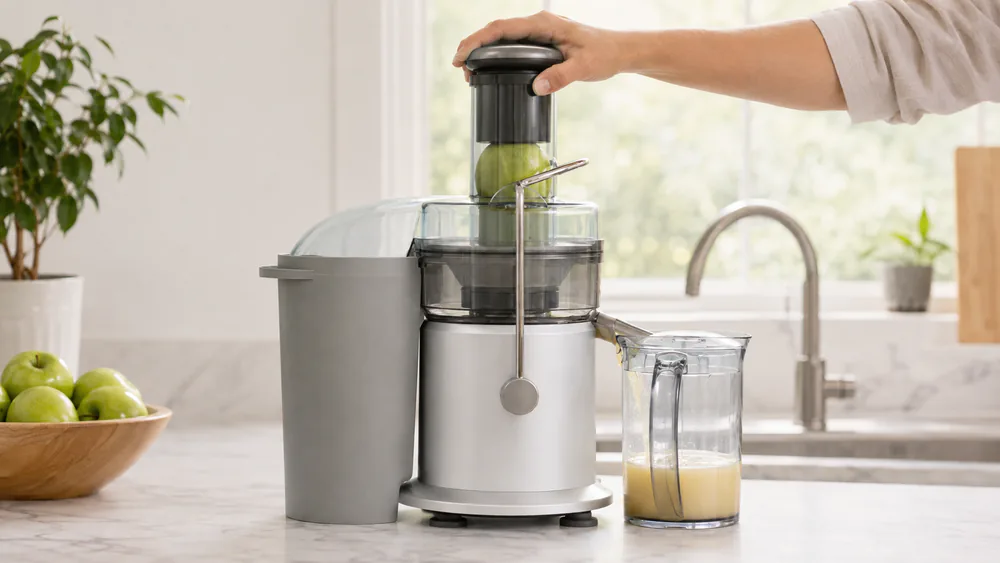
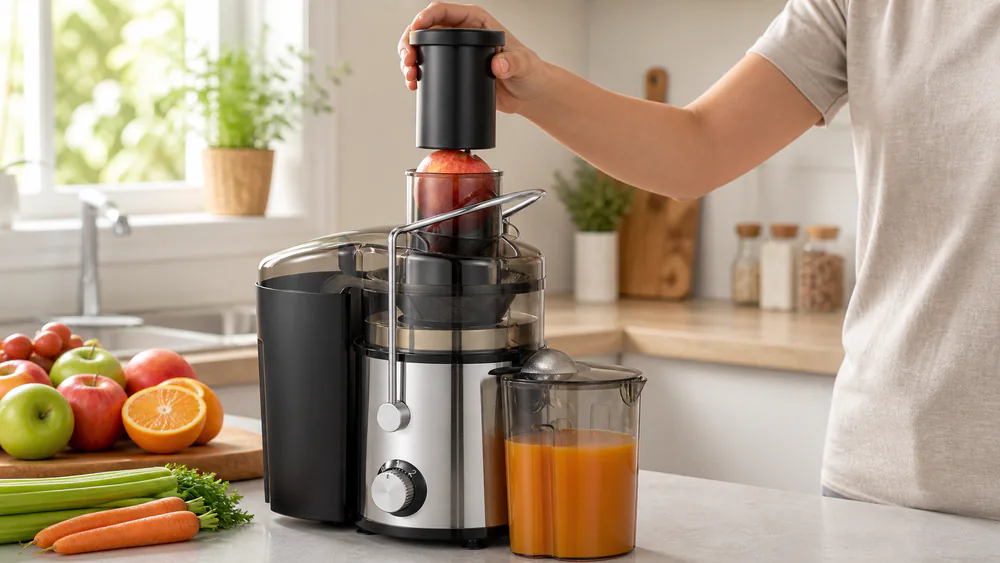
Whole apples in, smooth juice out.
Hamilton Beach Big Mouth Juice Extractor 67601: Best Budget
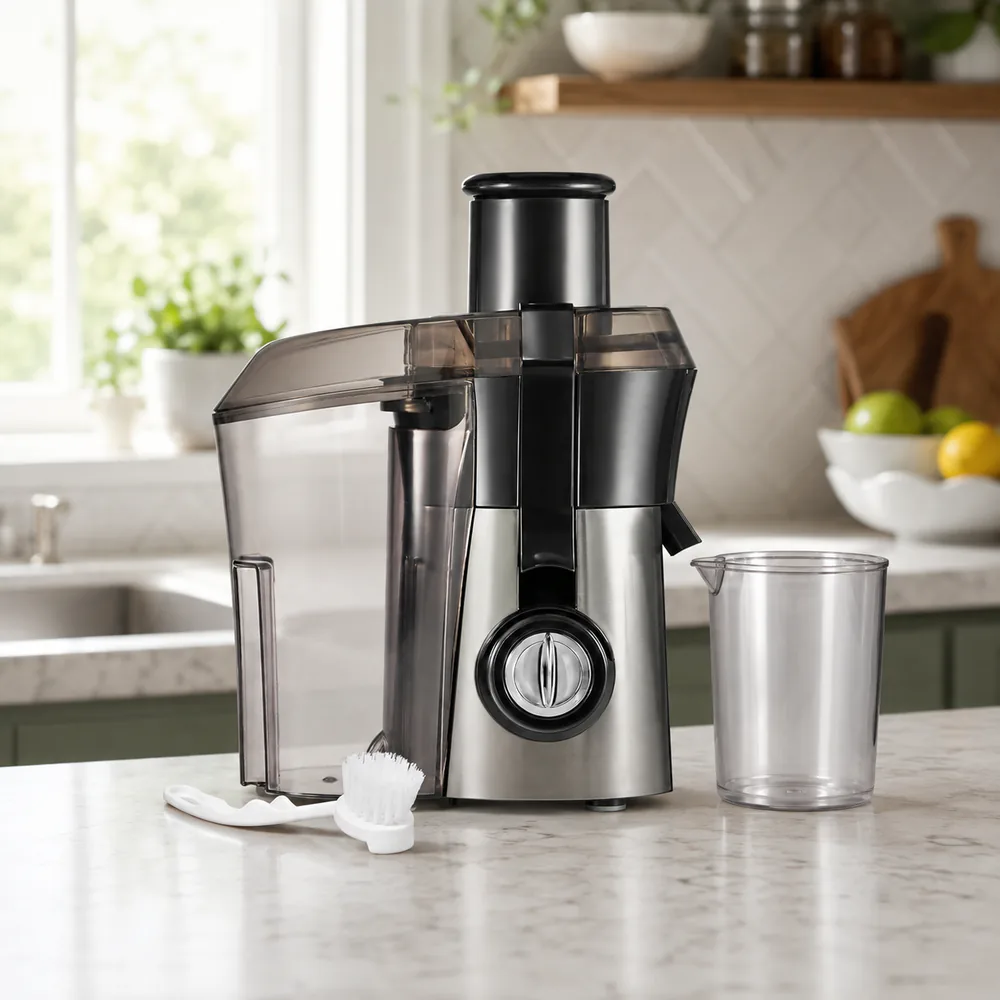
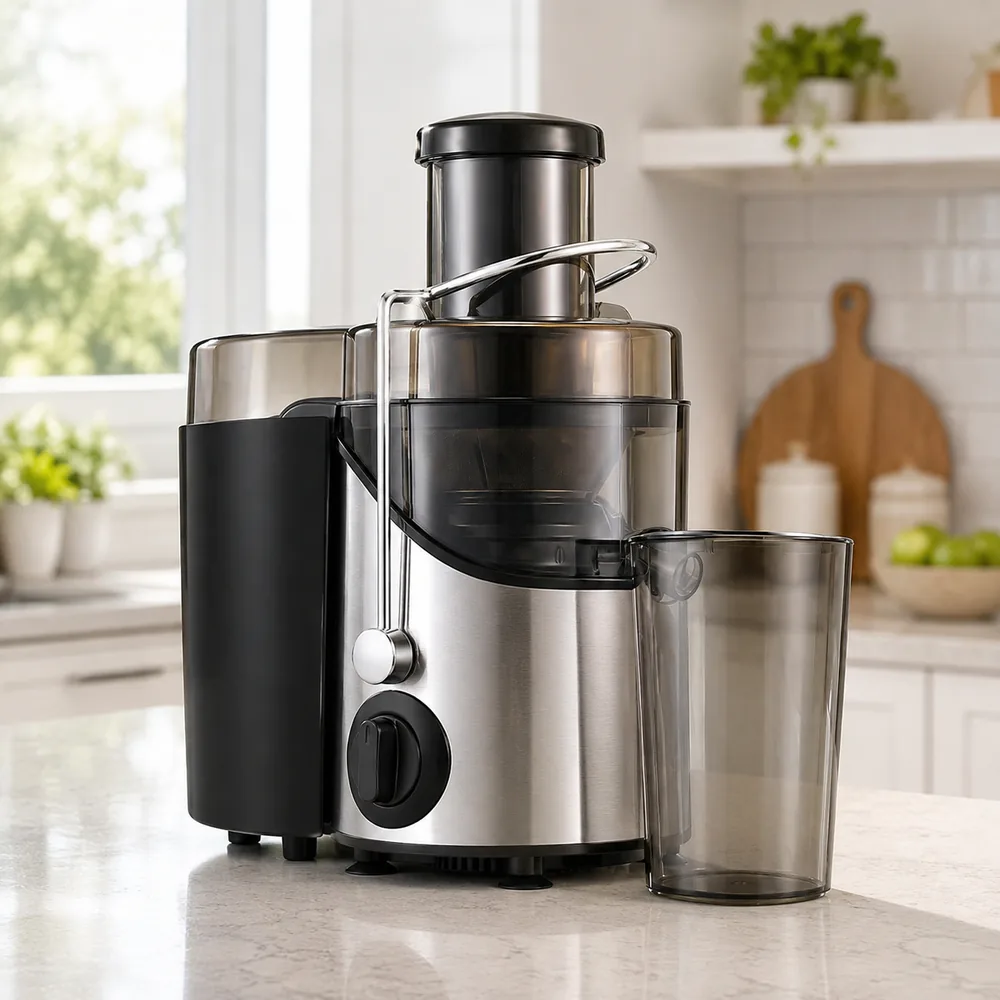
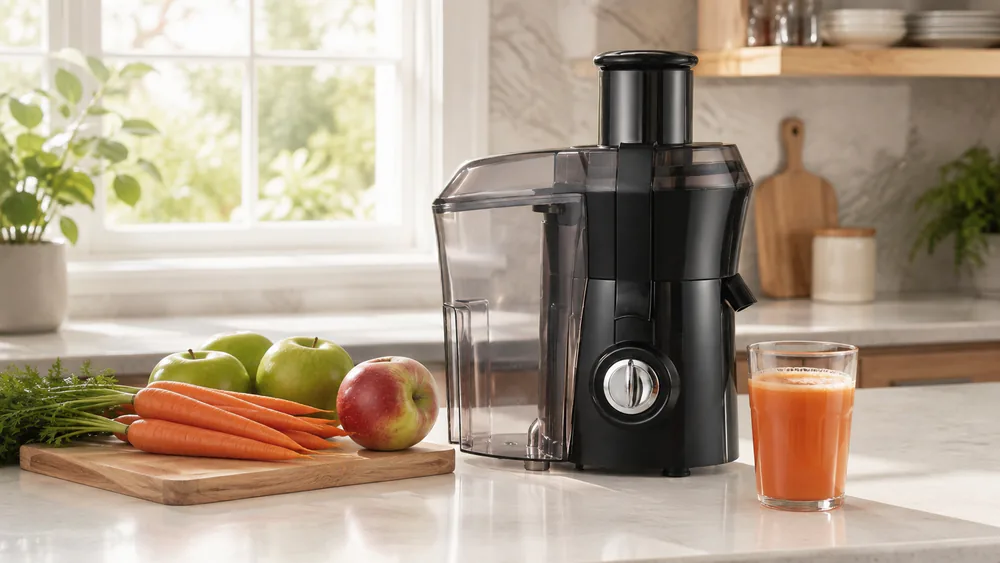
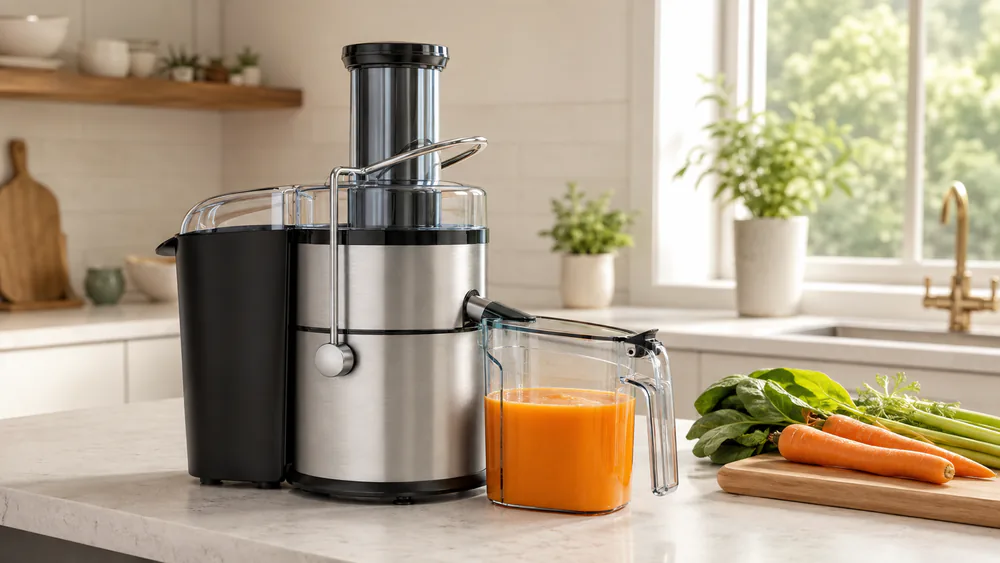
The first time you switch on the Hamilton Beach Big Mouth Juice Extractor 67601, it lurches once from the torque of the motor, so we held it steady for the first couple of seconds. From there it handled beets, carrots, celery, and lemons, and the lemon pulp came out very dry. That earns its Best Budget award.
Pros
About 90 seconds of cleanup when rinsed
3-inch chute and 80 oz pulp bin
3-year warranty, longest we tested
Cons
Single speed foams on soft produce
Big batches leave juice in the pulp
Hamilton Beach Big Mouth 67601 specs
Power
800W
Feed Chute
3-inch
Speeds
1 (single)
Jug capacity
None; juice collects in a bowl
Dishwasher-safe
Yes, removable parts
Warranty
3-year limited
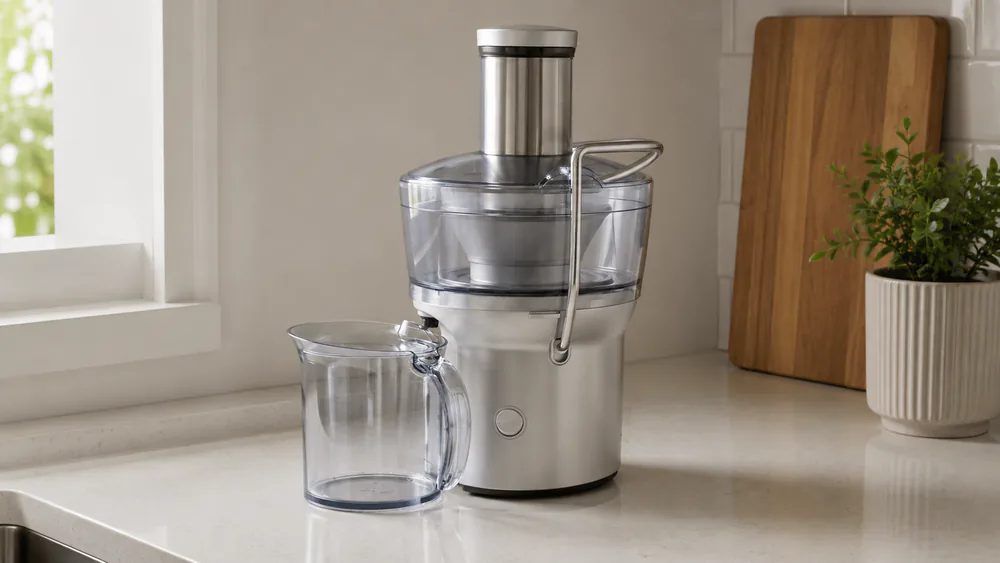
Breville BJE200XL Juice Fountain Compact: Best Compact
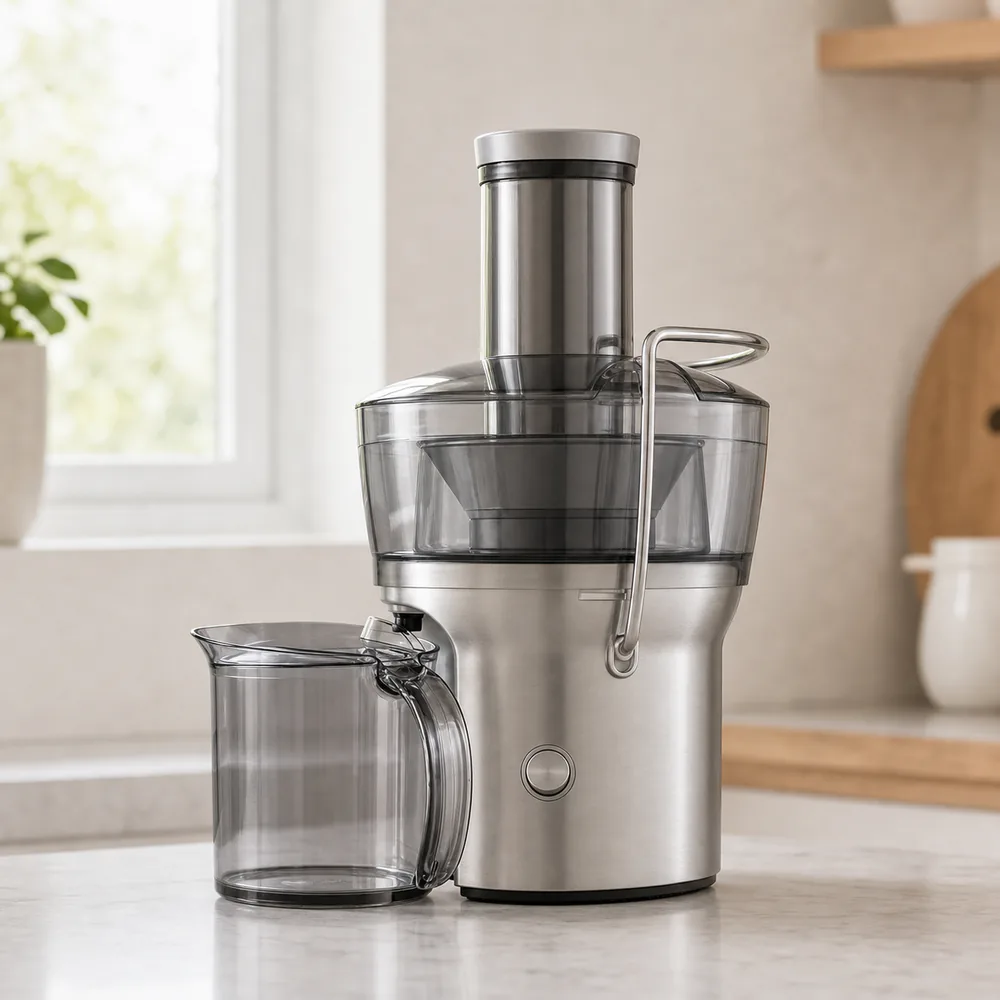
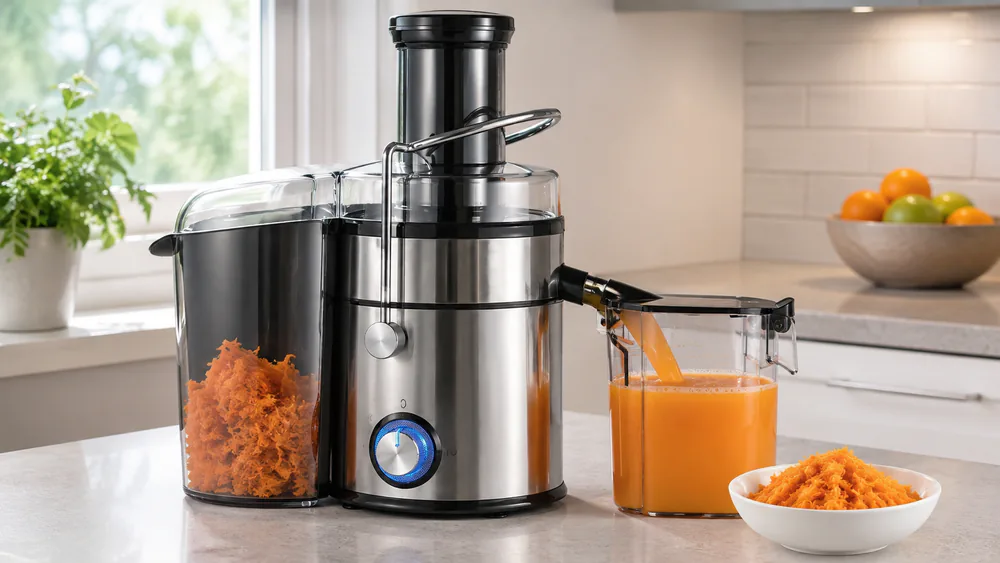
We lived with the Breville BJE200XL Juice Fountain Compact on a crowded counter, and its trick is collecting pulp inside its own footprint: you clear the bin mid-batch more often than with a conventional machine, but the unit never sprawls past its base. The pulp came out fine and about 95% dry, and the motor was fairly quiet for a centrifugal machine. It suits two-person kitchens at roughly $100.
We fed the Qcen 800W juicer the way its motor wants to be fed: one item at a time, waiting a beat between pieces while the basket cleared. Paced like that, whole apples went through its extra-wide mouth cleanly, the point of this pick at about $57. Qcen markets the mouth extra wide without stating an inch measurement.
Pros
Extra-wide mouth, whole-fruit speed, low price
Safety locking arm and overload protection
Detachable parts for simple cleaning
Cons
New to market, thin review history
No inch measurement stated for the chute
Qcen 800W Juicer specs
Power
800W
Feed Chute
Extra-wide (inches not stated)
Speeds
2 (12,000-18,000 RPM)
Jug capacity
Not stated
Dishwasher-safe
Not stated; detachable parts
Juilist 3-inch Wide Mouth Juicer: Best for Hard Produce
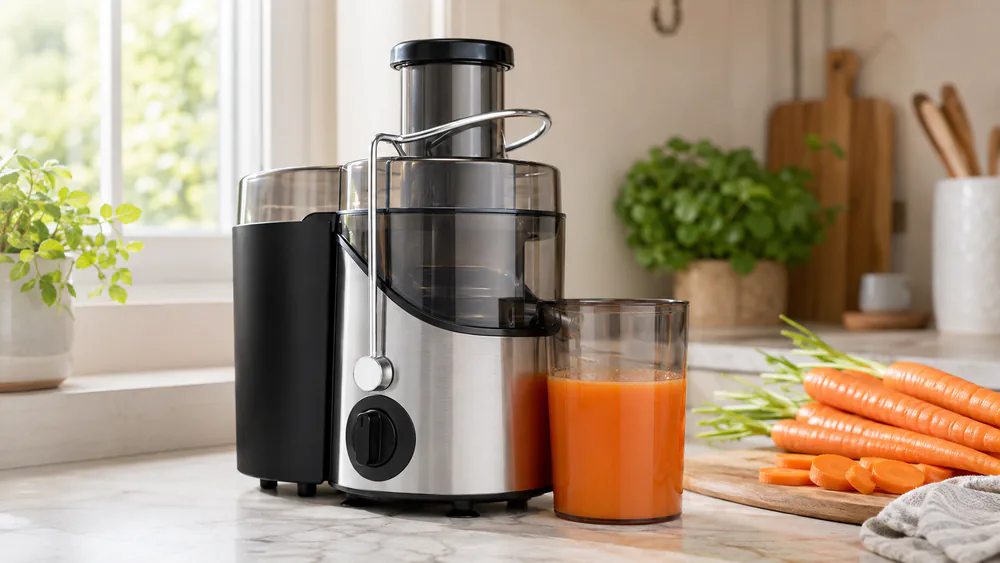
The Juilist 3-inch wide mouth juicer took over our daily carrot-juice routine, the workload that has burned out weaker budget motors, and suction-cup feet kept it planted while the basket spun. After each batch the spout kept dripping, so we left a cup under it or moved the machine to the sink. At about $40, it is a planted workhorse for hard produce.
Pros
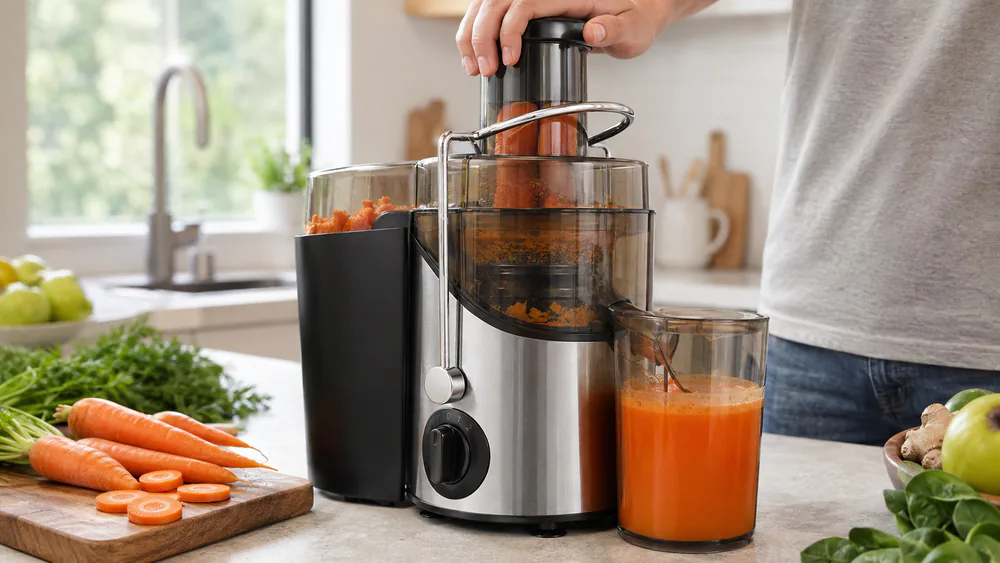
Handled daily carrot and beet batches with ease
Suction-cup feet keep it planted
Double safety lock and overheat protection
Cons
Spout drips after juicing
800W max rating on a 400W motor
Juilist 3-inch Wide Mouth Juicer specs
Power
800W max (400W rated motor)
Feed Chute
3-inch
Speeds
3 (low, high, P max)
Jug capacity
Not stated
Dishwasher-safe
Yes, accessories
Breville Juice Fountain Cold BJE430SIL: Best Premium
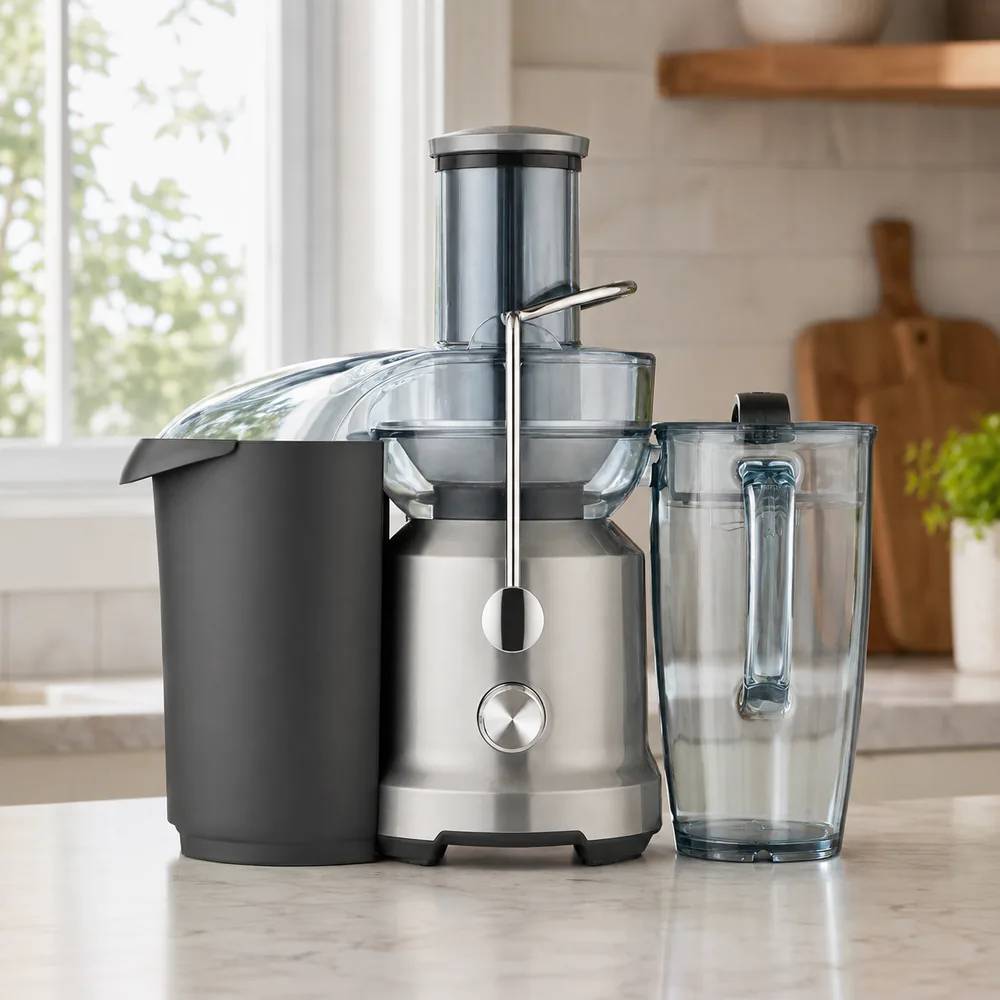
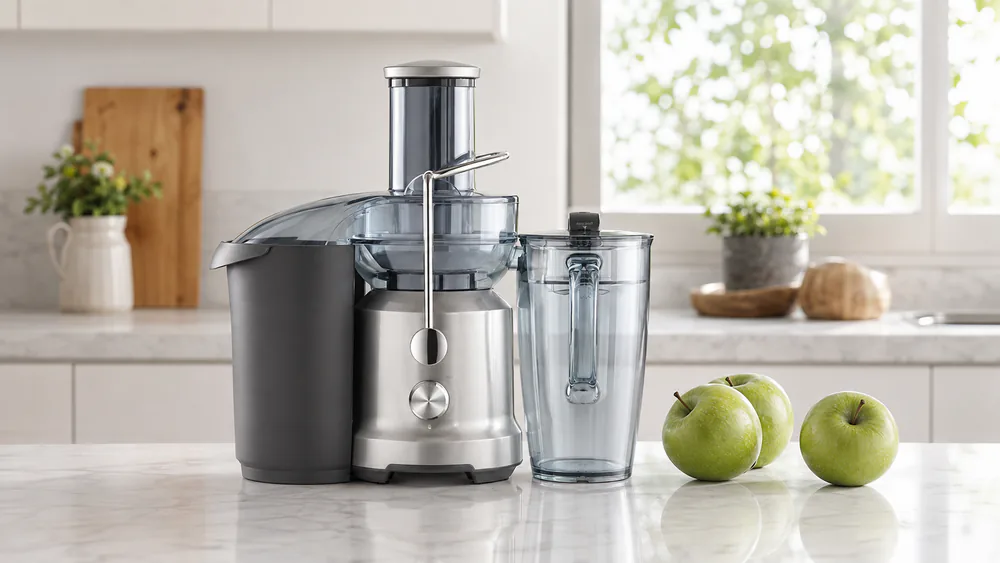
We dropped a 5 lb bag of whole apples into the Breville Juice Fountain Cold BJE430SIL and clocked the batch at under 90 seconds, with pulp noticeably drier than the Hamilton Beach on the same load. The juice ran cooler than anything else, and the froth separator cut foam by roughly 80%. That is the best glass a centrifugal machine makes, and it is our Best Premium pick.
Pros
5 lb of whole apples in under 90 seconds
Cooler juice, 80% less foam
70 oz Seal and Store jug
Cons
Loud, heavy, wide on the counter
Hand washing parts adds three minutes
Breville Juice Fountain Cold BJE430SIL specs
Power
850W
Feed Chute
Extra-wide 3-inch
Speeds
2 (low/high)
Jug capacity
70 fl oz Seal and Store jug
Dishwasher-safe
Yes, removable parts
Warranty
1-year limited
KOIOS 1300W Centrifugal Juicer: Most Powerful Motor
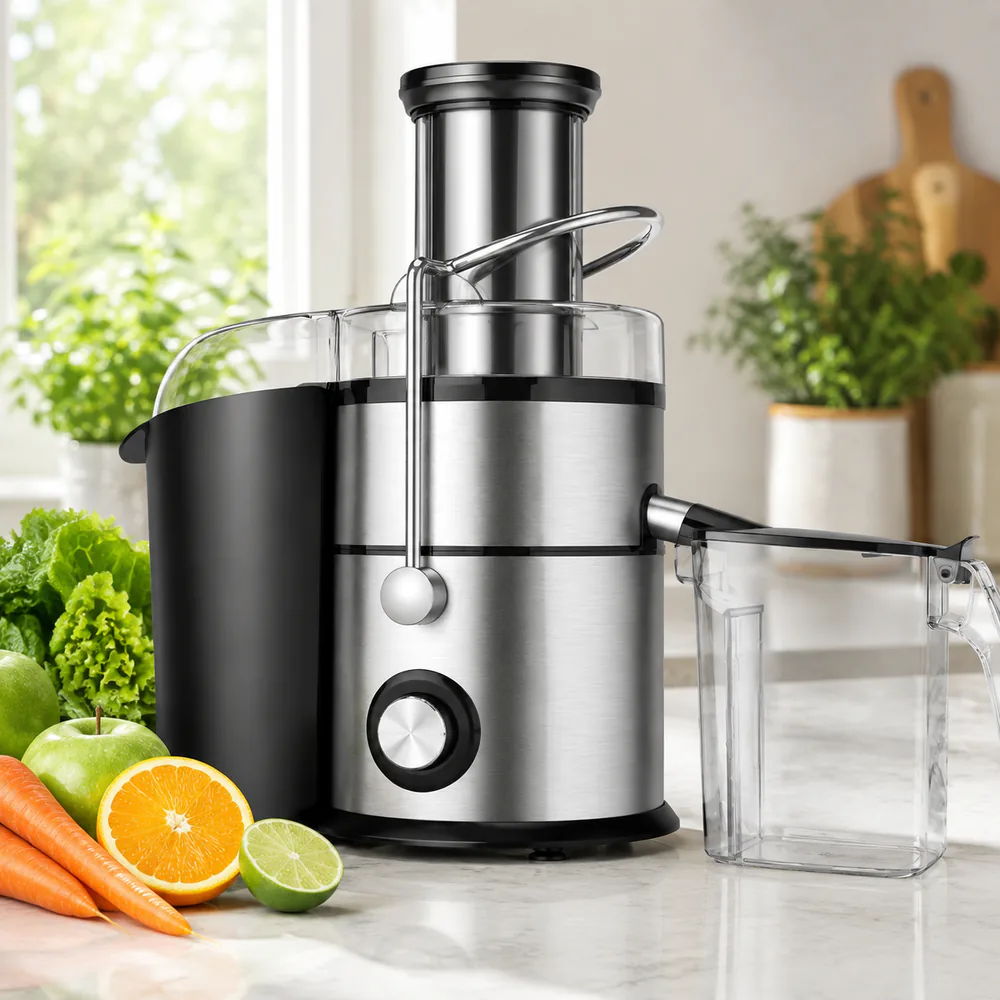
We ran three bags of apples through the KOIOS 1300W juicer in one session without a struggle, and the pulp came out bone dry. The motor is loud like a power tool, so this is not a machine for quiet mornings. If you juice in volume, the 1300W all-copper motor and 100 oz pulp bin make it the strongest motor per dollar.
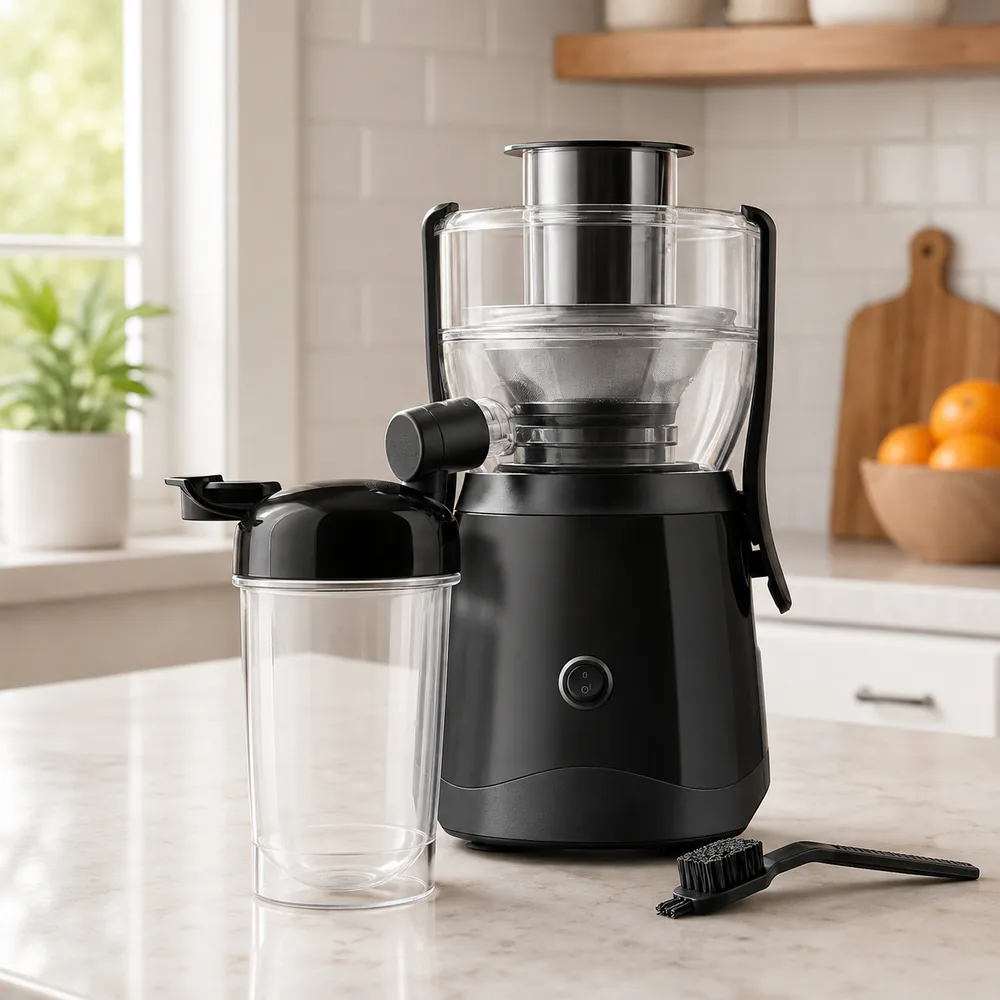
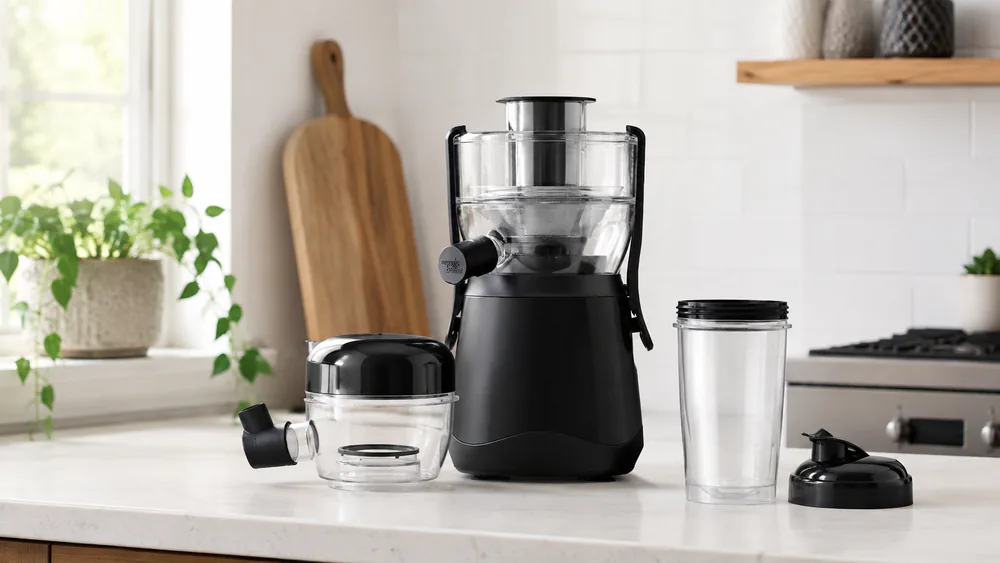
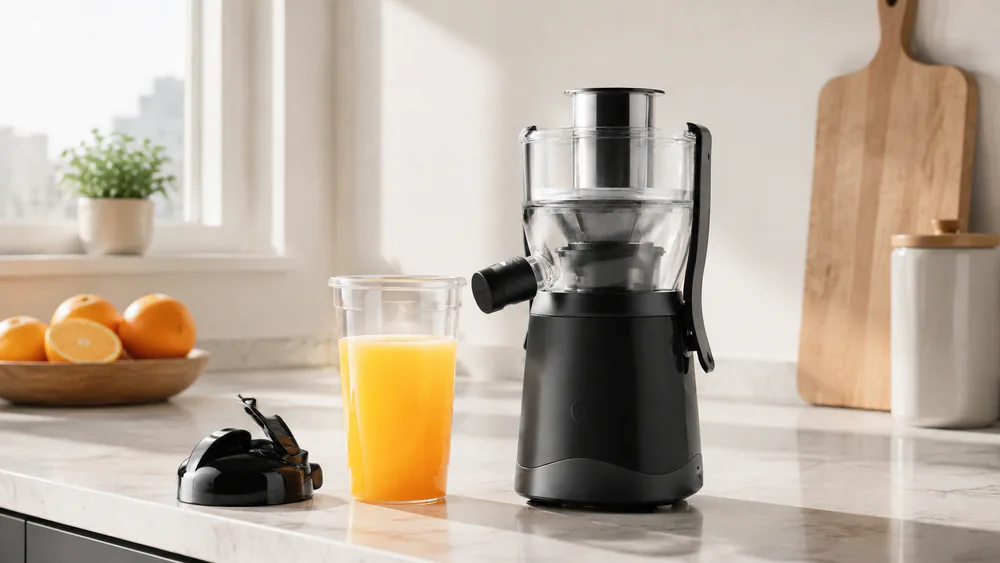
We made a single morning glass on the Magic Bullet Mini Juicer: an apple chopped into pieces first, because the 2-inch chute will not take it whole, plus a few carrot chunks. The juice landed straight in the 16 oz cup, and the same cup screws onto the twist-on lid, so we drank from it. For one glass a day in a small kitchen, that is the job.
Pros
16 oz to-go cup with twist-on lid
Stores easily in a cabinet
Top-rack dishwasher-safe attachments
Cons
2-inch chute means chopping first
Not for leafy greens or heavy use
Magic Bullet Mini Juicer specs
Power
400W
Feed Chute
2-inch
Speeds
1 (single)
Jug capacity
16 oz cup with to-go lid
Dishwasher-safe
Yes, top-rack attachments
Warranty
1-year limited
Honorable Mentions: Worth a Look
9
NutriBullet Juicer Pro NBJ50200
4.0
1000W, three speeds, 3-inch chute, 27 oz pitcher; the spout is hard to clean and stains.
How We Tested and Ranked These Centrifugal Juicers
We bought all eight machines at retail and pushed over 80 lb of produce through them, weighing juice, judging pulp dryness by hand, timing cleanup with a stopwatch, and logging noise against the 80 to 95 dB range.
We also lived with the machines, not just the bench tests, and weeks of daily use on the counter surfaced the parts that wear first. The BJE200XL's mesh filter basket began puckering at the top edge where it welds to the basket frame; it still juiced fine but demanded more diligent cleaning, and its plastic parts stained from daily veggie loads even though no original part ever broke or cracked. The Hamilton Beach's strainer has to be pushed down and locked into place before every batch, or the metal mesh can shed shavings into the juice, and the motor smells hot if you press the pusher too hard.
The NutriBullet's big lid latch feels fragile, the part we would bet on failing before the motor. The KOIOS taught us the pit rule the hard way: a peach pit broke off parts of its inner plastic housing mid-batch, and the replacement feeder tube and lid arrived free. The BJE430SIL's smokey plastic stained from a single glass of carrot juice, though the machine still ran and juiced exactly as well as it did on day one. Long-term durability is a mixed bag: the JE98XL strains when you feed it whole apples and oranges day after day but purrs on chopped produce, and the Juilist is a durability lottery, some units failing within days and others running daily without issue.
Pulp dryness mattered more than raw yield: drier pulp means more juice in the glass. On carrots the KOIOS returned roughly 15% more juice than the Hamilton Beach.
Buying Guide: How to Choose a Centrifugal Juicer
A centrifugal juicer works fast: a spinning disc shreds produce against a micro-mesh basket, juice passes through, and pulp is flung into a catch bin.
Motor Power and RPM
Motor power is the first spec to check. For most homes, 700 to 850W is the sweet spot; under 600W machines struggle with carrots and beets. Watts describe power draw, not juice quality.
Feed Chute Size and Safety Locks
A 3-inch chute fits whole apples, bunches of celery, and handfuls of carrots, so you skip the cutting board. Six of our eight picks have one, and every machine has a locking arm that stops the motor when the cover is open.
Warning. Never reach into the chute while the machine runs. Seat the locking arm fully before starting; the blades are razor sharp.
Juice Yield, Foam, and Oxidation
High-speed spinning whips air into the juice, creating foam and oxidation, so drink same-day. Froth separators help; drier pulp is the other half of yield.
Noise and Heat
Centrifugal juicers are the loudest juicer class, roughly 80 to 95 decibels at high speed, though models differ. Cold Spin on the BJE430SIL keeps extraction temperature rise below 1.8 degrees F.
Cleanup and Dishwasher-Safe Parts
Rinse the mesh basket right after each batch; dried pulp turns a quick rinse into a scrub. Most parts here are dishwasher-safe, but hand-wash the micro-mesh filters.
Build Quality, Warranty, and Parts
One-year limited warranties are the norm; the Hamilton Beach's 3-year warranty is the standout. Parts availability decides whether a worn part ends the machine or becomes a repair.
Centrifugal vs Masticating (Cold Press) Juicers
Centrifugal juicers spin fast, around 8,000 to 20,000 RPM, and use centrifugal force to fling juice through a mesh basket. Masticating, or cold press, juicers crush and chew produce at just 50 to 150 RPM.
Masticating machines typically extract more juice, especially from leafy greens and wheatgrass, with less foam. Centrifugal machines make the same glass in a fraction of the time but trade some yield for speed.
Juice leafy greens daily? Buy a masticating machine. Want a fast glass most mornings without spending $300? Buy a centrifugal juicer from this list.
Tips for Getting the Best Results From Your Centrifugal Juicer
Feed slowly, one item at a time; ramming produce through makes poor juice. Rinse the mesh basket the moment you finish pouring; the included brush handles the mesh. The BJE430SIL's 70 oz jug keeps juice fresh up to three days, and the NutriBullet's 27 oz pitcher up to 48 hours.
How Much Should You Spend? (Price Guide)
Prices are from the day we checked; street pricing moves week to week.
Under $100. The Hamilton Beach Big Mouth Juice Extractor is the best value at about $75, the KOIOS 1300W the most power at about $90, the Qcen 800W about $57, the Juilist 3-inch wide mouth juicer about $40, and the Magic Bullet Mini about $45.
$100 to $200. The Breville Juice Fountain Plus JE98XL ran about $150, the BJE200XL about $100, and the NutriBullet Juicer Pro about $120; the Breville Juice Fountain Cold BJE430SIL tops the band at about $200.
Above $200. Masticating machines dominate, trading speed for yield and quieter operation.
Rule of thumb: spend on chute size and build before you spend on watts.
Frequently Asked Questions
What is the best centrifugal juicer right now?
The Breville Juice Fountain Plus JE98XL is our pick for most households: whole apples go in the chute, the juice comes out smooth, and the froth-separating jug holds a full day's batch. Its design has not changed since 2009, so what you buy today is what we tested. If juice quality matters more, the BJE430SIL makes the better glass.
Why does the Qcen juicer warn against running it for more than five minutes?
The Qcen 500W, the proven sibling to our 800W pick, carries a sticker warning against more than five minutes of continuous running, and exceeding that limit has stopped units mid-session. That is why we fed the 800W slowly with rests between pieces, and why heavy daily batches are not its job.
Can you get replacement parts for these juicers?
It depends on the brand; check before you buy. Breville sells replacement baskets and discs for the BJE200XL, and KOIOS replaced a damaged feeder tube and lid at no charge when a peach pit was fed through. The HOUSNAT sells no replacement blades, which turns a worn blade into a dead machine.
Can you juice leafy greens with a centrifugal juicer?
Yes, on the right machine. Dual-speed models like the JE98XL and BJE430SIL have a low setting that handles greens acceptably; single-speed machines like the Hamilton Beach and BJE200XL have no low setting, so greens come out foamier with less yield. Either way, expect less juice than a masticating machine.
How often should you replace the filter basket?
Treat the mesh filter as a consumable. The BJE200XL's filter began leaving chunks after about 12 uses and a couple of dishwasher cycles. Plan on replacing it, and confirm the brand sells one.
Does high-speed juicing destroy nutrients?
Heat and oxidation are the real culprits, not the spinning. Cold Spin on the BJE430SIL holds extraction temperature rise below 1.8 degrees F, and its juice exits near 50 degrees F, about 15 degrees cooler than most machines. Refrigerate and drink same-day.
Which centrifugal juicer is best under $100?
The Hamilton Beach Big Mouth at about $75, for the 3-inch chute, the 3-year warranty, and the fastest cleanup in the group. The Qcen 500W sibling costs about $38 but yields 15 to 20% less juice than the Hamilton Beach, so it is not the pick.
Are centrifugal juicers loud?
Mostly yes: expect roughly 80 to 95 decibels at high speed, and the noise varies with what you are juicing as much as with the model. Among our picks, the BJE200XL is the quietest, the KOIOS is loud like a power tool, and the Magic Bullet Mini is noisy for its size.
The Bottom Line
Match the machine to your kitchen: the BJE200XL for small counters, the KOIOS for heavy volume, the Magic Bullet Mini for single servings. Buy for the chute and the build.