As an Amazon Associate we earn from qualifying purchases. We may earn a commission from links on this page, at no extra cost to you. Learn more.
Most home cooks reach for a cleaver only when something needs to be hit hard, then put it away. The right cleaver is not a one-trick blade. It is a workhorse that breaks down a whole chicken, smashes a clove of garlic flat, minces a pile of herbs, and slices a squash in one pass. The cleaver has a long history that spans Chinese kitchens and Western butcher blocks, and in a busy kitchen one good cleaver can replace half the block.
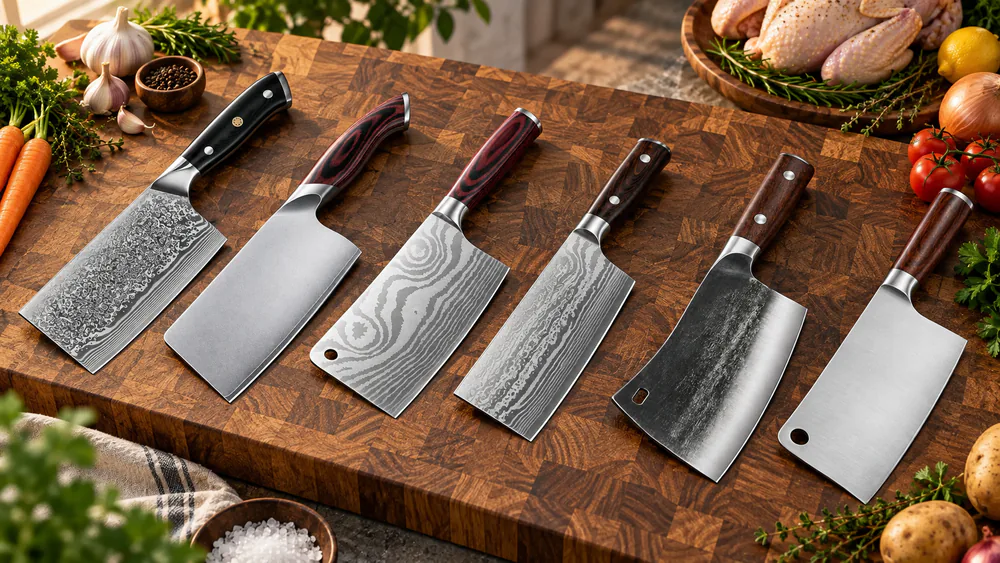
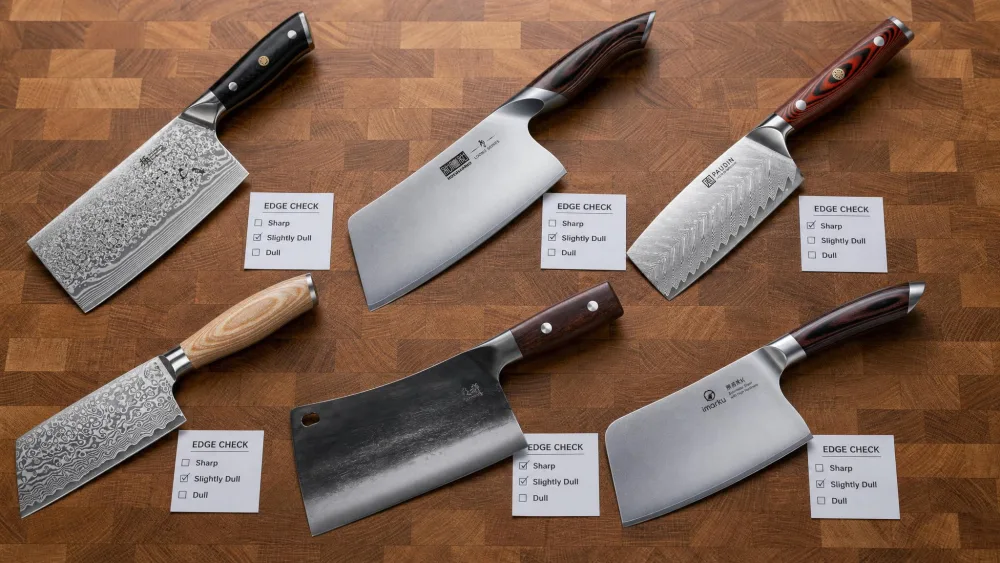
We ran dozens of cleavers through a month of real prep, including blades from Dalstrong, Global, and Victorinox that did not make the cut: breaking down chickens, smashing garlic, mincing herbs, and checking the edges after every session. We scored edge retention, balance, weight, handle comfort, and blade geometry. Six knives earned a permanent spot in our daily rotation.
Below you will find our six winners, how we tested them, and what to look for when you buy. Whether you want a premium Damascus blade or a budget bone chopper, one of these picks fits your kitchen.
Every knife in this guide ran a month of real prep in rotation. We used each one for the jobs a cleaver actually does: breaking down whole chickens, smashing garlic, mincing herbs, and cutting through squash and root vegetables. After every session we checked the edge and noted how each handle felt in hour three, not just out of the box. Blades that dulled fast, chipped when pushed, or fatigued the hand were cut from the list.
Every candidate ran a month of real prep before we picked our six winners.
What We Evaluated
Edge retention came first. We tracked how long each blade stayed sharp and how easily it sharpened back to new on a whetstone. Balance and weight told us which knives felt natural through long prep sessions. Handle comfort mattered in hour three, and blade geometry decided what each cleaver could do, because a low-angle edge slices vegetables beautifully while a thicker, heavier blade powers through bone.
Tip. We judge out-of-box sharpness, but we weigh edge retention heavier. A knife that arrives sharp and dulls in a week loses to one that stays sharp for a month, even if it is duller at first.
The 6 Best Cleaver Knives of 2026
Six knives survived our month of prep, and each one earned its spot for a different reason. Every review below covers how it performed, who it suits, and where it falls short.
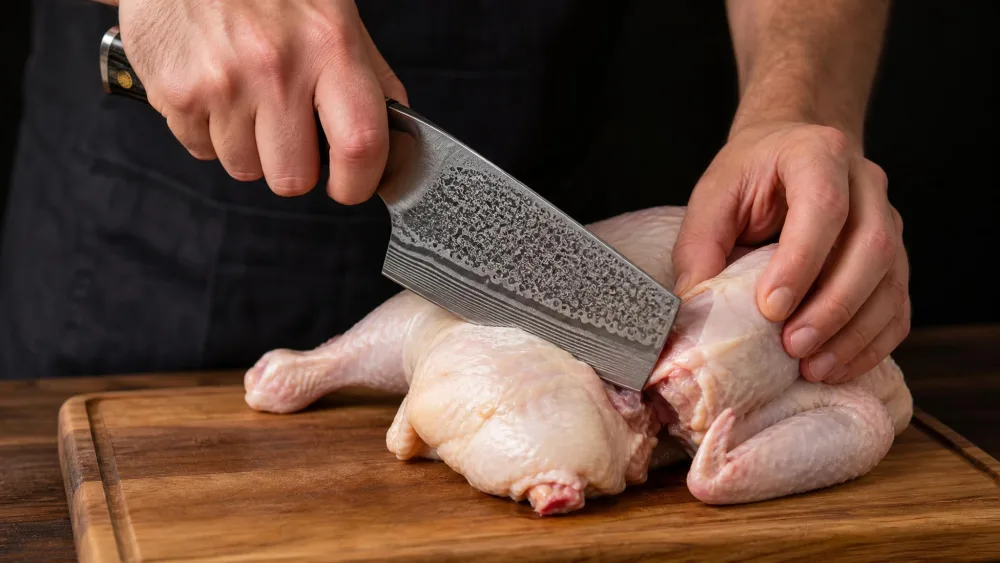
Breaking down a chicken is the first test every cleaver in our lineup had to pass.
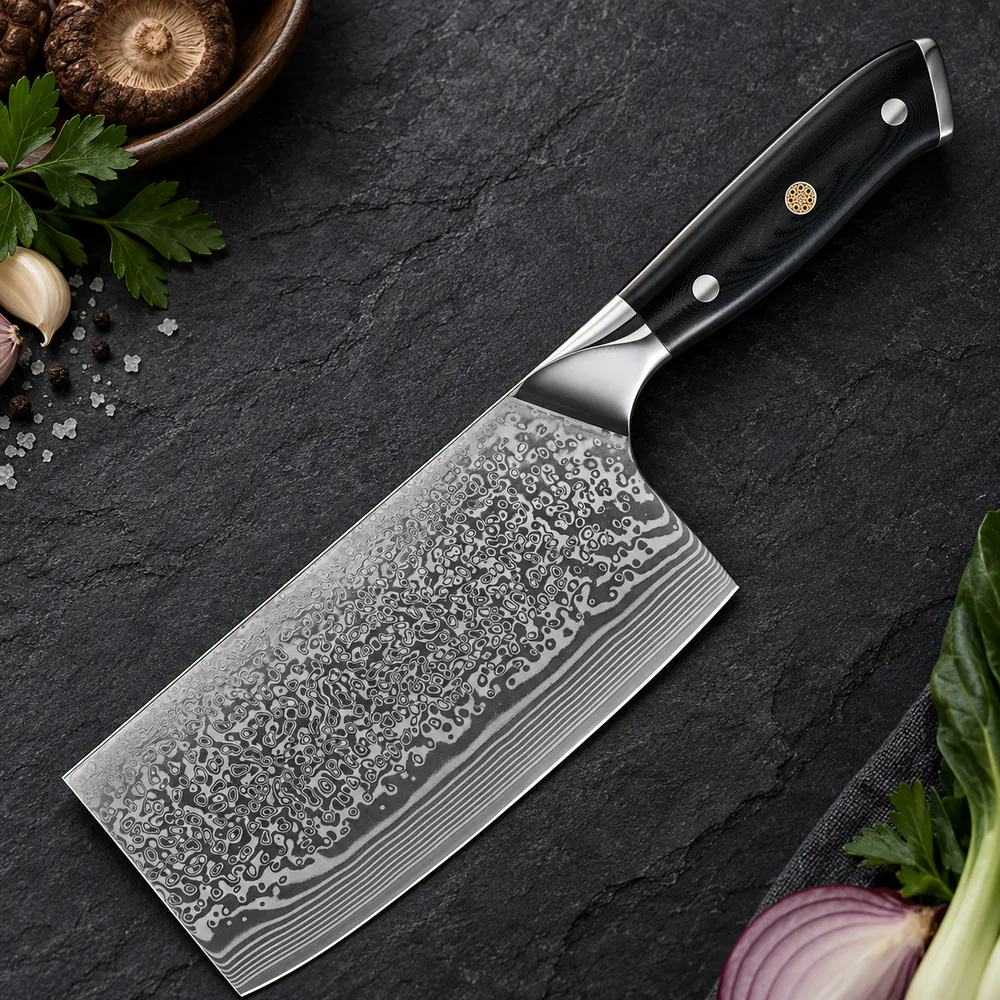
The KYOKU Shogun is the sharpest cleaver we pulled from a box this year. It stayed razor sharp through a month of daily use, sailed through carrots, cucumbers, and peppers, and took a fresh edge easily on a stone. The VG-10 Damascus core, hardened to 58 to 60 HRC and sharpened to an 8 to 12 degree double-sided edge, cuts with a precision most cleavers never approach. The triple-riveted G10 handle is impervious to heat, cold, and moisture, and a sheath and gift case come in the box.
Buy it if you want a premium vegetable cleaver that holds a razor edge through a month of prep. Skip it if you need one blade for bones as well as vegetables; that is the meat cleaver's job in this lineup.
Pros
Sharpest out-of-box edge we tested; held through a month of daily use
VG-10 Damascus steel, 58 to 60 HRC, cobalt-added and cryogenically treated
G10 handle is impervious to heat, cold, and moisture
Sheath and gift case included
Cons
Low-angle edge is too delicate for bones and acorn squash
Heavy in hand; some testers preferred it for chopping over slicing
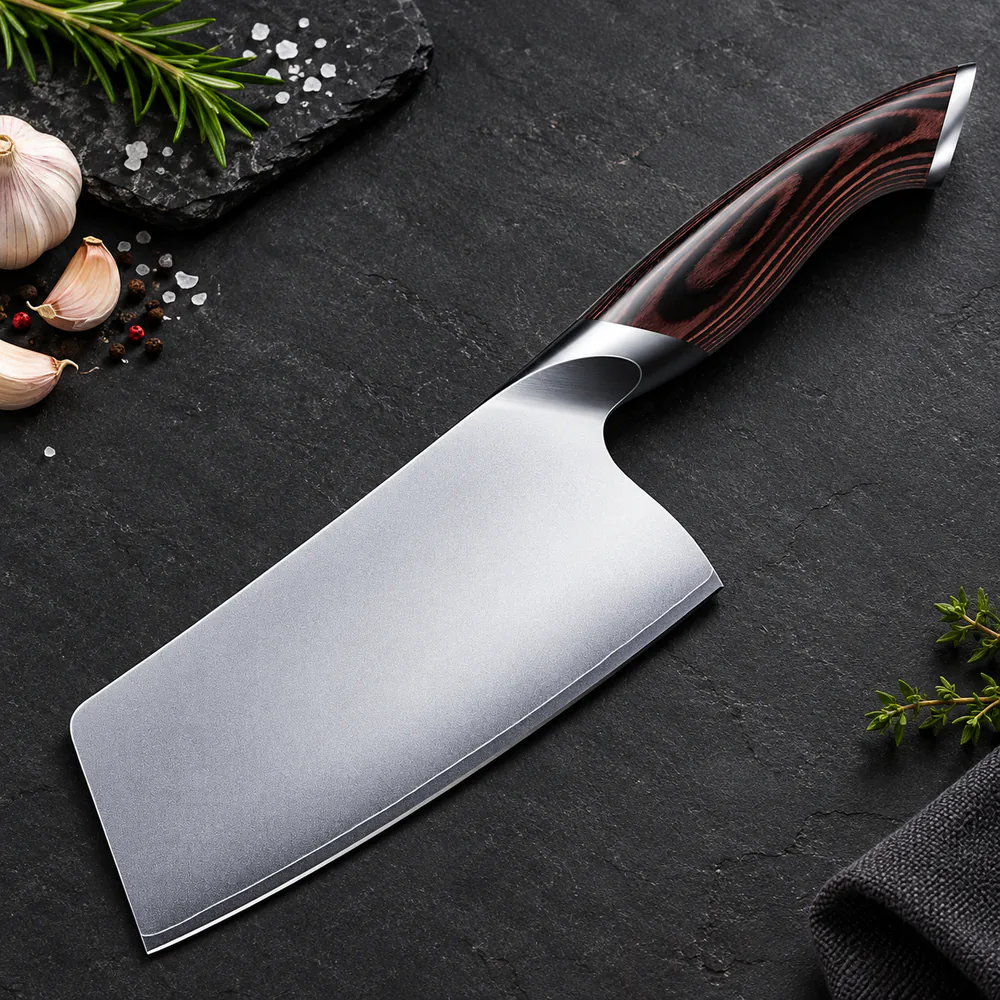
The HOSHANHO became the most-reached-for blade in our test block. It needed roughly two sharpenings in six months of regular use, the best edge retention we recorded, and the 10Cr15CoMoV steel held its edge with only the light maintenance the care notes describe.
What It Did Best
The mirror-polished low-stick surface is what makes it a one-knife prep blade. Fish, chicken, and vegetables moved across it without dragging, so a full meal's prep finished on this single knife. The ergonomic Pakkawood handle fit naturally in hand, though it lacks grip texture when things get slick.
Buy it if you want one everyday Chinese cleaver that stays sharp for months. Skip it if you regularly chop heavy bone; that work calls for a heavier blade.
Pros
Balanced and razor sharp out of the box
10Cr15CoMoV steel with a 15 degree per side edge
Multifunction prep for fish, chicken, and vegetables
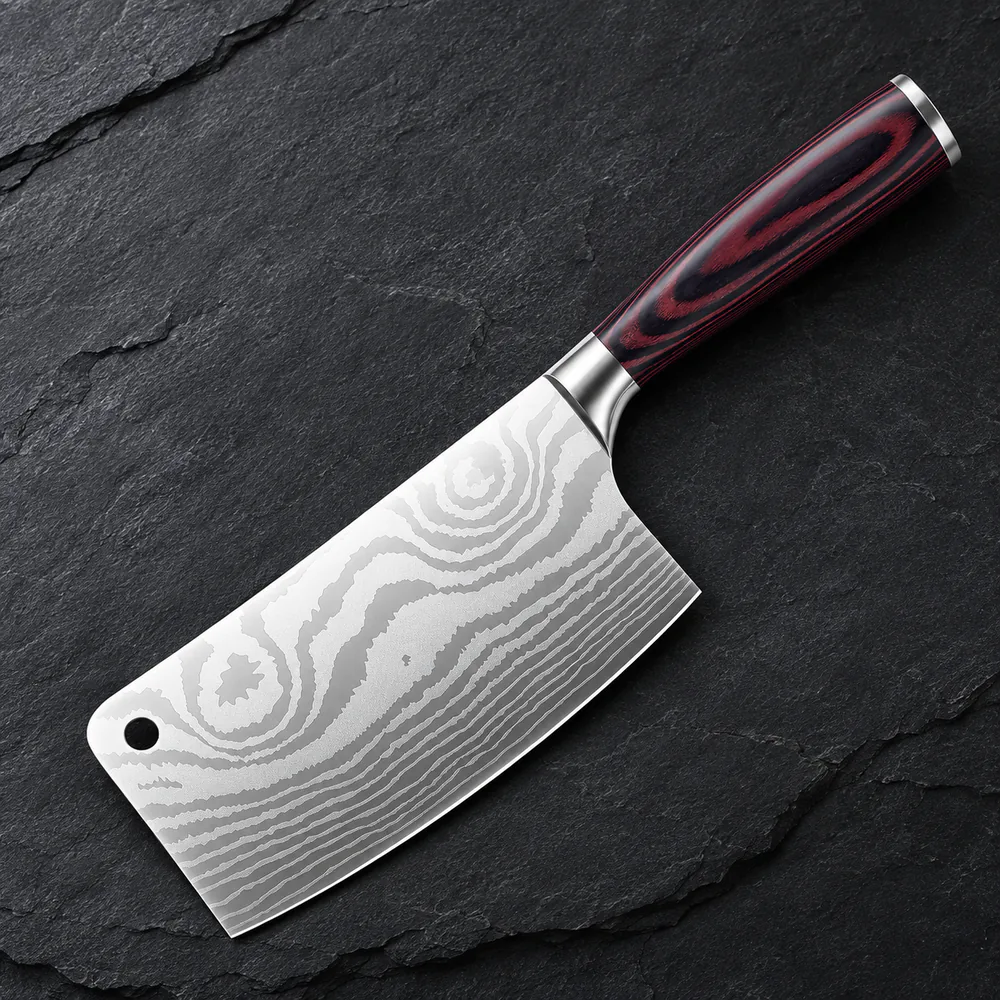
The PAUDIN cleaver is the value pick we kept reaching for. It stayed sharp for several weeks of regular use with light touch-ups, and the wide blade made onion and pepper prep feel safer because the steel stays away from your fingers. The slightly curved edge cut squash and root vegetables evenly, and the luxury Pakkawood handle stayed put in hand. The balance runs a little handle-heavy, and the blade pattern is printed rather than true Damascus, but at about $30 we are not complaining.
Buy it if you want a do-everything cleaver under $35 for vegetables and lighter meat. Skip it if you need heavy bone-chopping power; that is the meat cleaver's job in this lineup.
Pros
Stays sharp for weeks with light touch-ups
Wide blade keeps fingers clear during prep
High-carbon stainless steel, 56+ HRC
Lifetime warranty against defects in material and workmanship
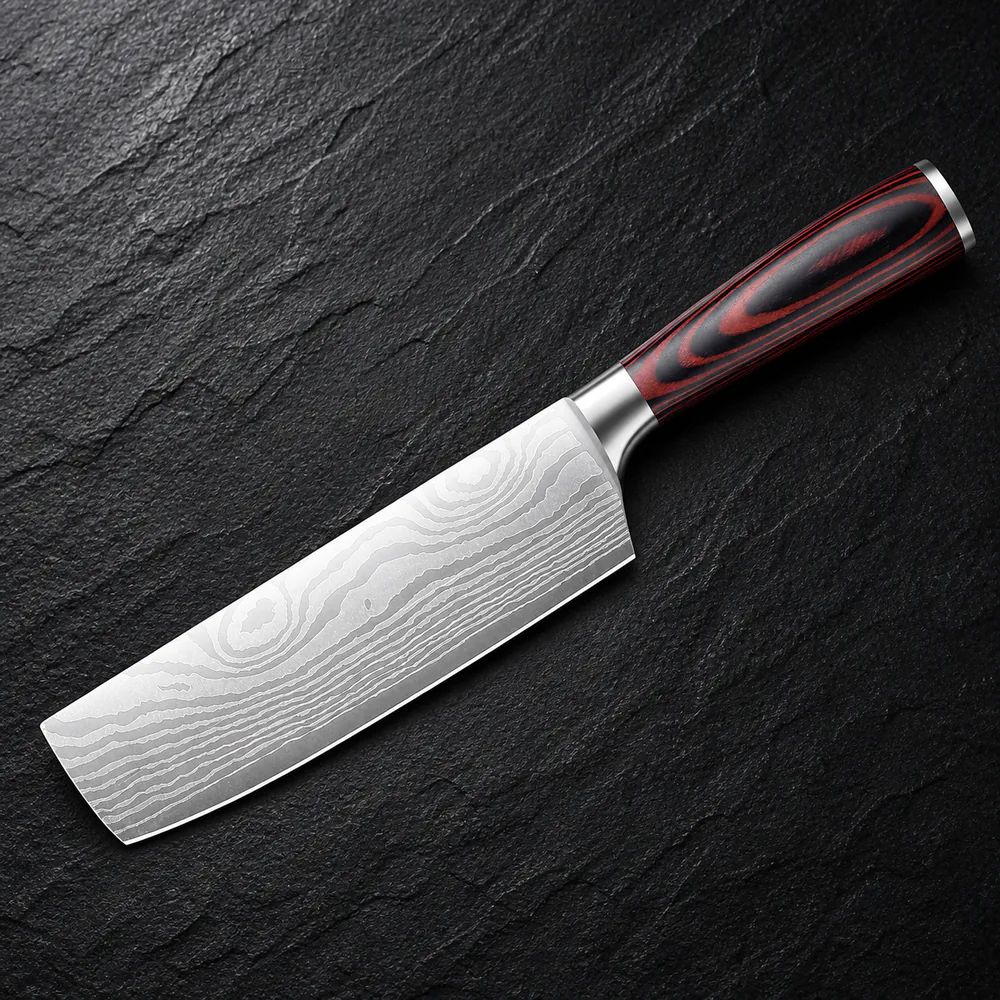
Where the PAUDIN cleaver is the all-round value pick, its nakiri sibling is a specialist: the flat profile makes push-cutting feel like cheating. It sliced a whole butternut squash end to end with relative ease, cut through pineapple like butter, and kept its edge through daily meal prep. The waved pattern lowers food friction, so sticky cuts released cleanly, and the soft Pakkawood handle, integrated with the blade, was comfortable hour after hour. It became the go-to knife at our vegetable station.
Buy it if you do most of your prep on vegetables and fruit and want a dedicated push-cutter. Skip it if you need one blade for meat and bones; the nakiri is a specialist.
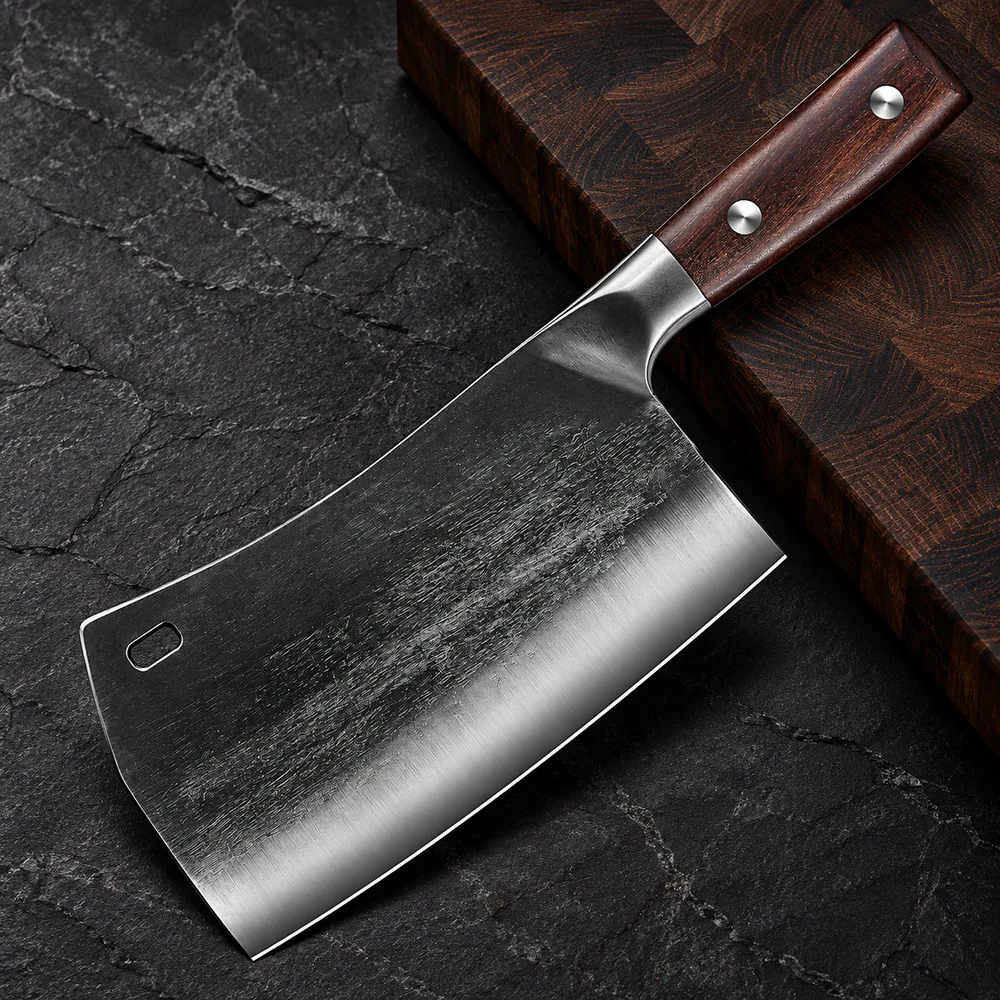
The ENOKING is thicker and heavier than the rest of our picks, and that weight gives every stroke more momentum with less fatigue on volume cuts. It made short work of chicken wings and smaller bones straight out of the box, and the full-tang, triple-riveted wood handle gave a solid grip through a whole bird. The hand-polished V-shaped edge came ready to work.
Buy it if you want a budget meat cleaver with real heft for breaking down poultry and small bones. Skip it if you want low-maintenance steel; the care routine here is the trade-off.
Pros
Heavy blade gives more momentum per stroke and less fatigue
Sharp out of the box; great on chicken wings and small bones
Full-tang, triple-riveted wood handle
Around $28 with a gift box
Cons
High-carbon blade rusts fast if not dried and oiled
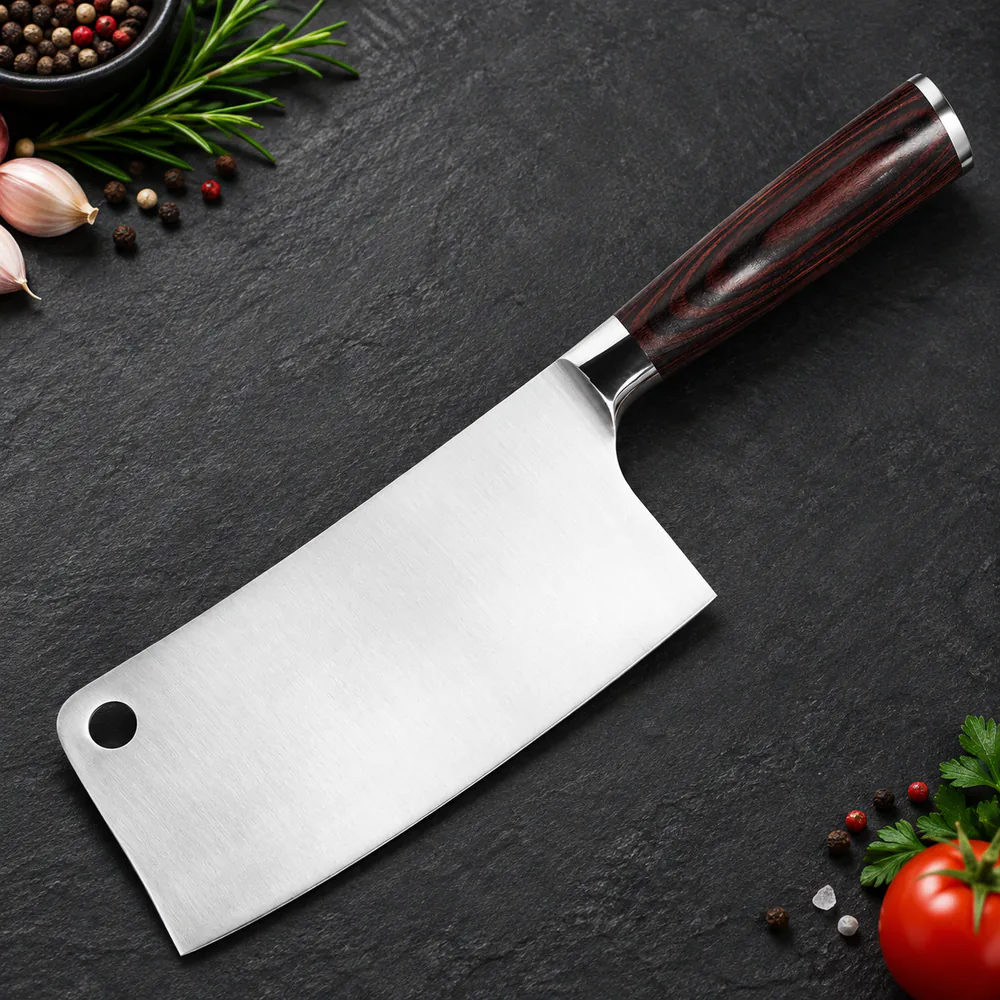
The imarku is the budget pick that does not feel like one. It arrived sharp, with a thick spine and a firm FSC-certified Pakkawood handle, and it cut meat smoothly, with no drag through a full prep session. It is lighter than most cleavers, so it maneuvers easily, and testers with larger hands liked the handle fit. It will not power through pork bones, and the thin blade struggled on rib bones, so keep it to smaller chicken bones and vegetables.
Buy it if you want a light everyday cleaver that flatters a bigger hand for about $46. Skip it if thick bones are a regular job; this is a light blade for lighter work.
Pros
Light and easy to maneuver for a cleaver
Arrived sharp with a thick spine and firm handle
Feels far more premium than its price
Cons
Will not power through pork bones; rib bones gave it trouble
Thin blade, just over 2 mm, flexes on heavy work
Handle feel skews light for cooks who want a heavy cleaver
Comparison Table
Product
Blade Material
Blade Length
Handle Material
Hardness (HRC)
Best For
Price
KYOKU Shogun 7"
VG-10 Damascus core
7 in
G10, triple-riveted
58-60
Premium vegetable prep
~$80-$110
HOSHANHO 7"
Japanese 10Cr15CoMoV
7 in
Pakkawood
58-62
Everyday Chinese-style cooking
~$40-$90
PAUDIN Cleaver 7"
High-carbon stainless
7 in
Pakkawood
56+
Do-everything prep on a budget
~$30
PAUDIN Nakiri 7"
5Cr15MoV
7 in
Pakkawood
56+
Vegetable push-cutting
~$33
ENOKING 7.5"
German high-carbon stainless
7.5 in
Wood, full tang
Not published
Meat, poultry, and small bones
~$28
imarku 7"
Japanese high-carbon stainless
7 in
FSC Pakkawood
57-62
Light prep, larger hands
~$46
How to Choose the Right Cleaver Knife (Buying Guide)
A cleaver is a simple tool, but the differences between styles and steels decide whether it becomes a workhorse or stays in the drawer. Here is what we look for when we test.
Chinese Cleaver vs Meat Cleaver vs Vegetable Cleaver
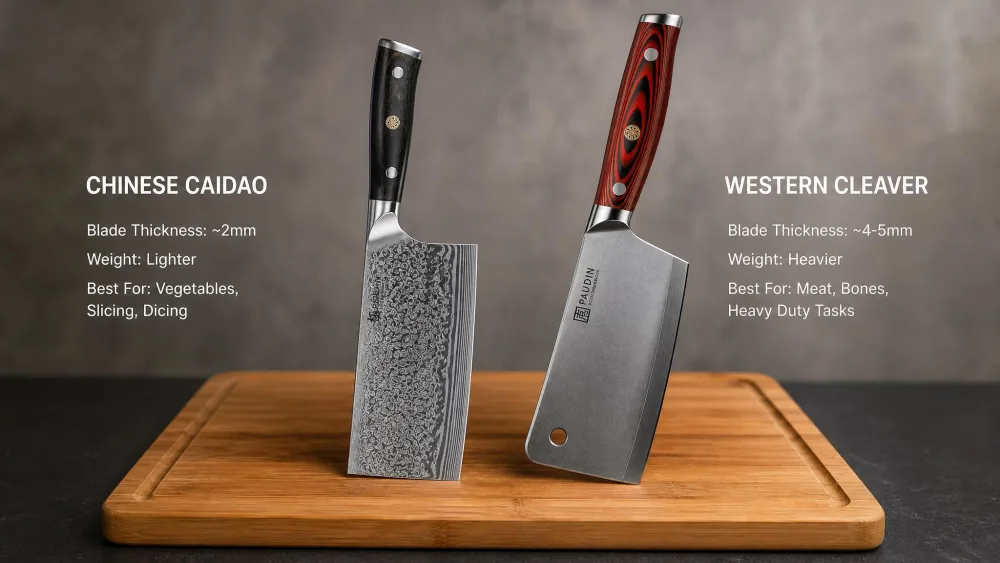
A Chinese cleaver, or càidāo, is a thin, rectangular blade that does everything in a Chinese kitchen: slicing, chopping, smashing garlic, and scooping food up with the flat of the blade. A Western meat cleaver is thicker and heavier, built to power through bone. A vegetable cleaver, like the nakiri profile, sits between them with a flat edge designed for push-cutting. Our rotation carries at least one of each style.
Thin Chinese-style blades slice and smash; thick Western blades power through bone.
Blade Material and Steel Type
Most cleavers use high-carbon stainless steel, which balances edge holding with rust resistance. Premium blades step up to Damascus steel, a layered steel prized more for how it is forged than for the pattern on the surface. Look for full-tang construction, where the steel runs the full length of the handle, because it adds balance and durability. Hardness is measured on the Rockwell scale, and the sweet spot for a cleaver is usually 56 to 60 HRC: hard enough to hold an edge, soft enough to sharpen easily and resist chipping.
Note. Not every patterned blade is Damascus. Several budget knives print or etch a wave pattern onto plain stainless steel, which is fine if you like the look, but it is not the forged layered steel of a true Damascus blade.
Weight and Balance
Weight does the work in a cleaver. A heavier blade gives more momentum per stroke, which means less fatigue on volume cuts, and a lighter blade is easier to maneuver and kinder to smaller hands. The balance point matters too, because a cleaver that feels handle-heavy will wear on your wrist through a long prep session.
Handle Material and Ergonomics
Handle materials run from stainless steel to wood to synthetic composites like G10 and Pakkawood. In our testing, the handle that fits your hand matters more than the material. A round steel handle can get slippery when wet, while an ergonomic wood or composite handle tends to stay put in hour three.
Blade Thickness and Hardness
Blade thickness and hardness go together. A thin blade around 2.3 mm is nimble for vegetables but flexes on heavy bones. A thicker blade has the backbone to chop, and it trades away some slicing finesse. High hardness, in the upper 50s HRC, holds an edge longer and is more likely to chip if you twist it into bone. There is no single right answer, only the trade-off that fits your cooking.
Size Considerations
Cleaver blades run from about 6.7 inches to 8 inches. The 7 inch blade is the sweet spot for most home kitchens, long enough to slice a large squash in one pass and short enough to control. If you break down whole birds regularly, the extra length of a 7.5 inch blade helps. If you mostly do vegetables, a 7 inch blade is plenty.
How to Care for and Sharpen Your Cleaver
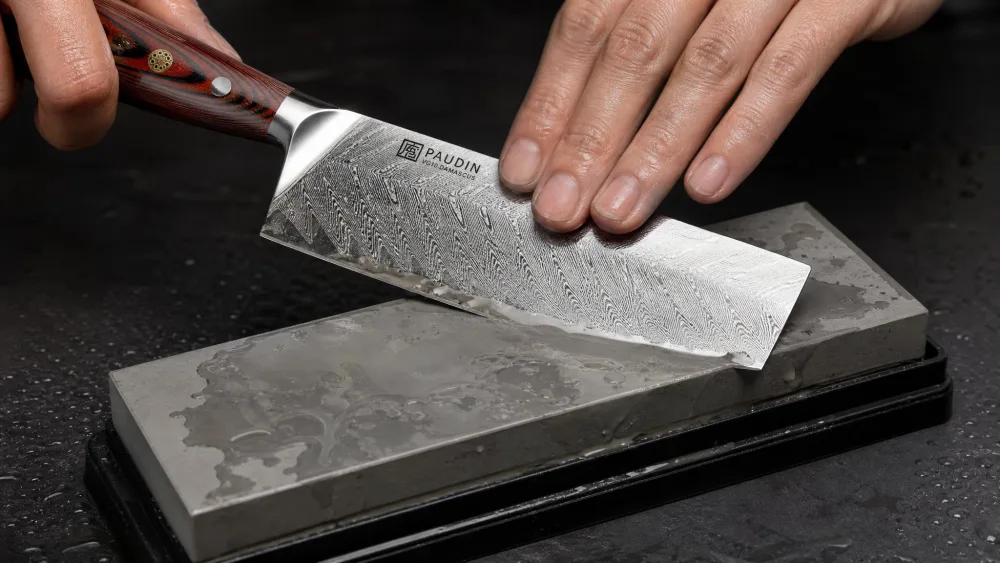
Hand wash every cleaver, dry it immediately, and store it in a sheath or on a magnetic rack. High-carbon blades need a light coat of food-grade mineral oil after each use. For knife sharpening, a whetstone is the best investment, and a honing rod between sessions keeps the edge true; ten minutes on the stone brings a tired edge back to new. A dull cleaver is more dangerous than a sharp one because it slips, so hold the angle steady on low-angle Japanese-style edges.
Ten minutes on a whetstone keeps a cleaver working like new.
Warning. Never put a cleaver in the dishwasher. Heat and detergent dull the edge, and high-carbon steel rusts and spots. It is the fastest way to ruin any blade in this guide.
Frequently Asked Questions
Can a Chinese cleaver replace a chef's knife?
For most home prep, yes. A Chinese cleaver slices, minces, smashes garlic, and scoops food up with the flat of the blade, so it covers the same ground as a chef's knife with more blade height. What it does not do is chop through bone; that is the Western meat cleaver's job. If your prep is almost all vegetables and fruit, a flat-edged vegetable cleaver, the nakiri shape, does the push-cutting work even better.
Can a cleaver cut through bone?
Western meat cleavers handle small bones like chicken legs and thighs, and some manage larger bones with a heavy stroke. No cleaver replaces a bone saw on large cuts, so for breaking down poultry joints, a cleaver is plenty.
How often should I sharpen my cleaver?
Plan on a light touch-up every few weeks and a full whetstone pass a few times a year. Hone between sharpenings to keep the edge true, and let the blade tell you when it needs work: if it slips instead of biting, it is time to sharpen.
What is the best cleaver for a beginner cook?
A 7 inch everyday cleaver in high-carbon stainless steel is the best starting point. It is long enough to slice a large squash in one pass, light enough to control, and easy to sharpen as you learn. Our value pick, the PAUDIN cleaver, is a strong first knife, but any of the budget picks in this guide will serve a beginner well.
Are expensive cleavers worth the price?
A premium blade earns its price in edge life and materials. The KYOKU Shogun costs more for its VG-10 Damascus core and precise grind. But a cleaver around $30 covers most home kitchens well. Spend more if you value edge performance and materials; spend less if you want a solid workhorse.
Can I put my cleaver in the dishwasher?
The short answer is no, for every cleaver in this guide. Dishwasher detergent is strongly alkaline, and at sanitize-cycle heat it strips the oil film that protects a high-carbon blade, then attacks the steel itself. That is why the ENOKING and HOSHANHO, the two most rust-prone blades here, need hand drying and oiling after every session. The full routine is in the care notes above.
The Bottom Line
A cleaver belongs in every kitchen, and the six picks above cover the full range, from a meat cleaver around $28 with real heft to a premium Damascus blade for serious edge performance. If one knife has to do everything and stay sharp for months, the HOSHANHO is the one our testers reached for most, while the KYOKU Shogun is the edge-performance champion. The PAUDIN cleaver is the value play for most households, and the imarku is the light pick for bigger hands. Buy the one that matches the way you cook, follow the care notes above, and learn ten minutes of sharpening. Your prep will thank you.