
Helping you create a kitchen you love.

Knives & Cutlery

The 7 Best Deba Knives for Home Cooks and Fish Butchery

As an Amazon Associate we earn from qualifying purchases. We may earn a commission from links on this page, at no extra cost to you. Learn more.

The 7 Best Deba Knives for Home Cooks and Fish Butchery

A deba is a thick-spined Japanese knife built to take the head off a fish, open the belly, and fillet along the bones. For most home cooks, the Kai Seki Magoroku Kinju ST 150mm is the one to buy: a stainless single-bevel knife that is sharp and easy to look after. Cooks who prefer a traditional carbon-steel single-bevel blade should look at the white steel picks below. Our dozen years running a whetstone sharpening service at a Japanese knife shop taught us how readily each of these steels takes a keen edge. That experience shaped every ranking here.

We judged each knife on the jobs a deba exists for: heads, bellies, fillets along the backbone, and small bones and fins.

If you want the wider picture first, our Japanese knife reviews cover the rest of the family.

Quick Picks at a Glance

RankProductBest forBlade lengthRatingBuy
1

Kai Seki Magoroku Kinju ST Deba 150mm

Best Overall
Home cooks starting on whole fish 150mm 4.7 View on Amazon
2

Sakai Takayuki Kasumitogi Deba 165mm

Best Traditional Single-Bevel
Carbon steel on a sensible budget 165mm 4.5 View on Amazon
3

JapanBargain Japanese Deba 160mm

Best Budget
Tight budgets and light jobs 6-1/4 inch 4.0 View on Amazon
4

Kai Seki Magoroku Ginju Deba 165mm

Best for Beginners (Stainless)
Low-maintenance starter 165mm 4.4 View on Amazon
5

Yoshihiro Shiroko Kasumi Deba 165mm

Best Premium Carbon
Sharpening-minded cooks 165mm 4.3 View on Amazon
6

Global G-7 Deba 7 inch

Best Western-Style Stainless
Filleting with a Western grip 7 inch 4.1 View on Amazon
7

Kai Seki Magoroku Kinju ST Deba 105mm

Best Compact for Small Fish
Mackerel, herring and garfish 105mm 3.8 View on Amazon

We earn a commission if you make a purchase, at no additional cost to you.

See full comparison table

How We Rate These Knives

We rate debas the way we rate any blade at the sharpening counter: sharpness, balance and weight behind the heel, grip when wet, and how easily the steel returns on the stones.

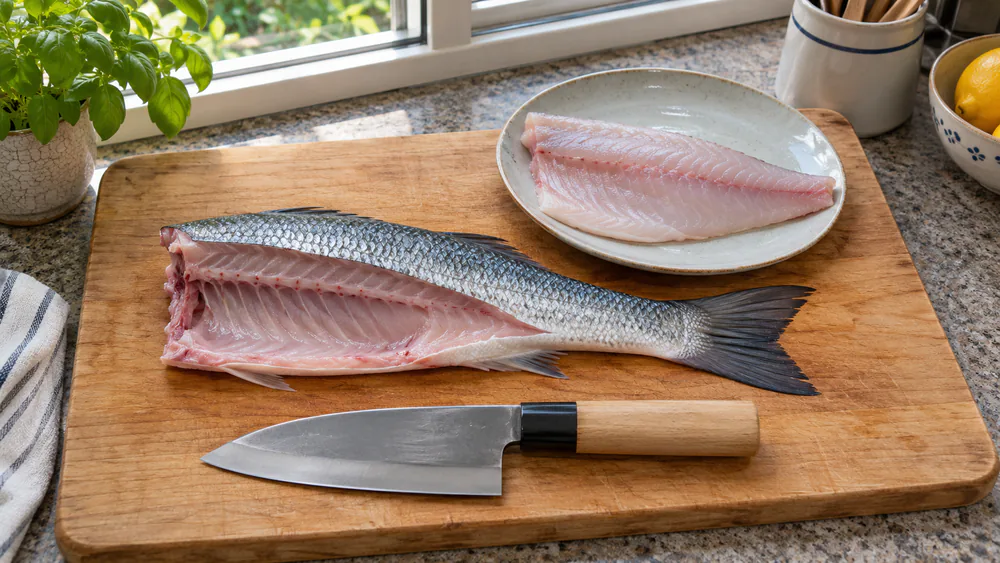
A deba knife resting beside a half-filleted whole fish on a wooden cutting board, with the head removed and the spine cavity wiped clean
A deba beside a half-filleted fish.

A slippery handle matters more than an extra millimeter of blade. A rounded plastic grip gets slick during filleting, while rough wood or an angled pakkawood handle stays grippy on a bloody bluefish.

The Reviews

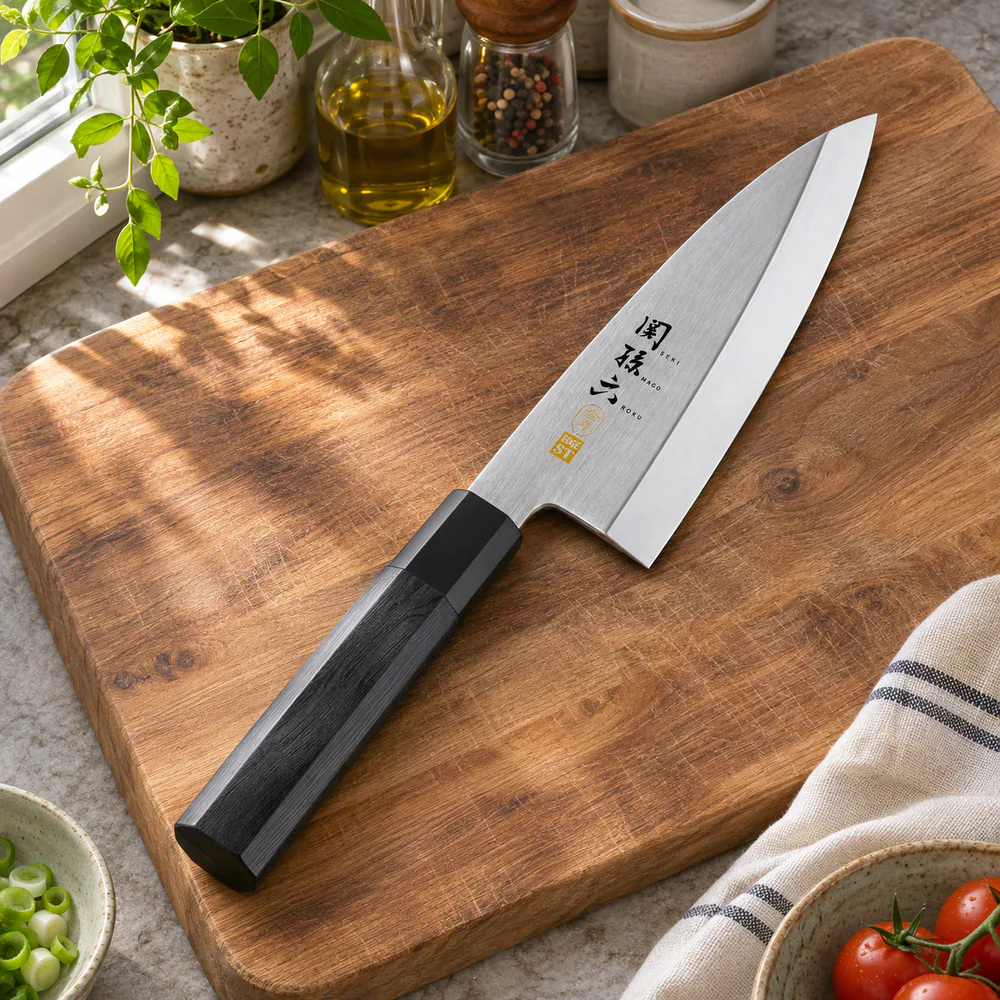
1. Best Overall: Kai Seki Magoroku Kinju ST 150mm

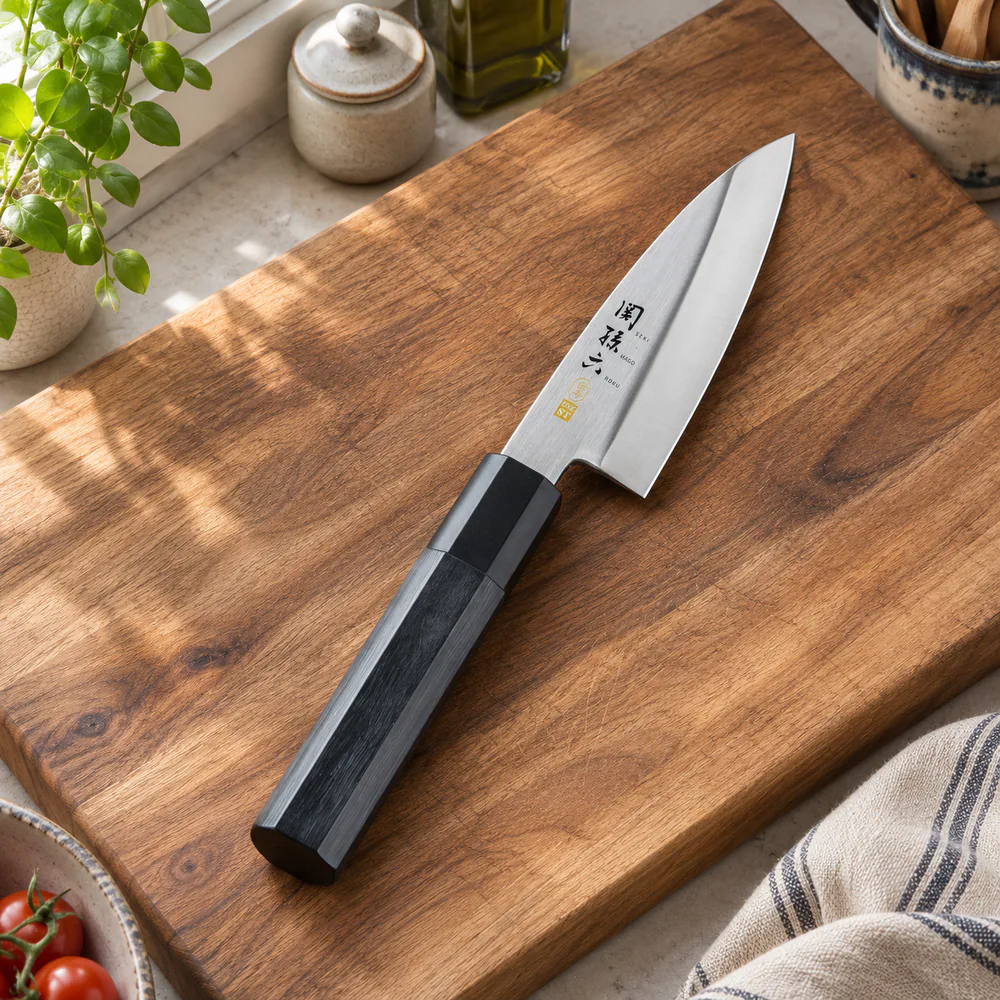
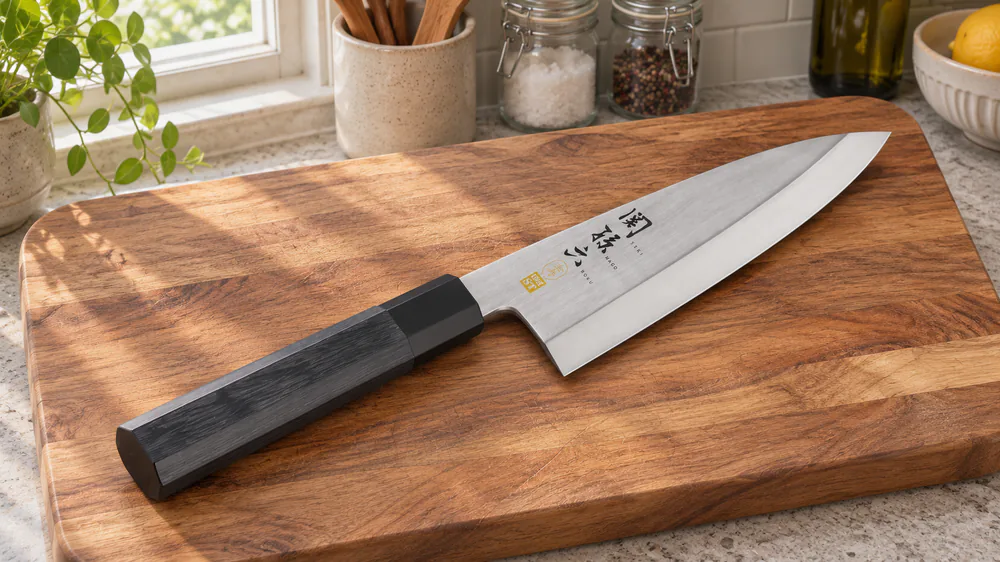
Kai Seki Magoroku Kinju ST Deba 150mm
1

Kai Seki Magoroku Kinju ST Deba 150mm

Best Overall
Check Price on Amazon
4.7/5

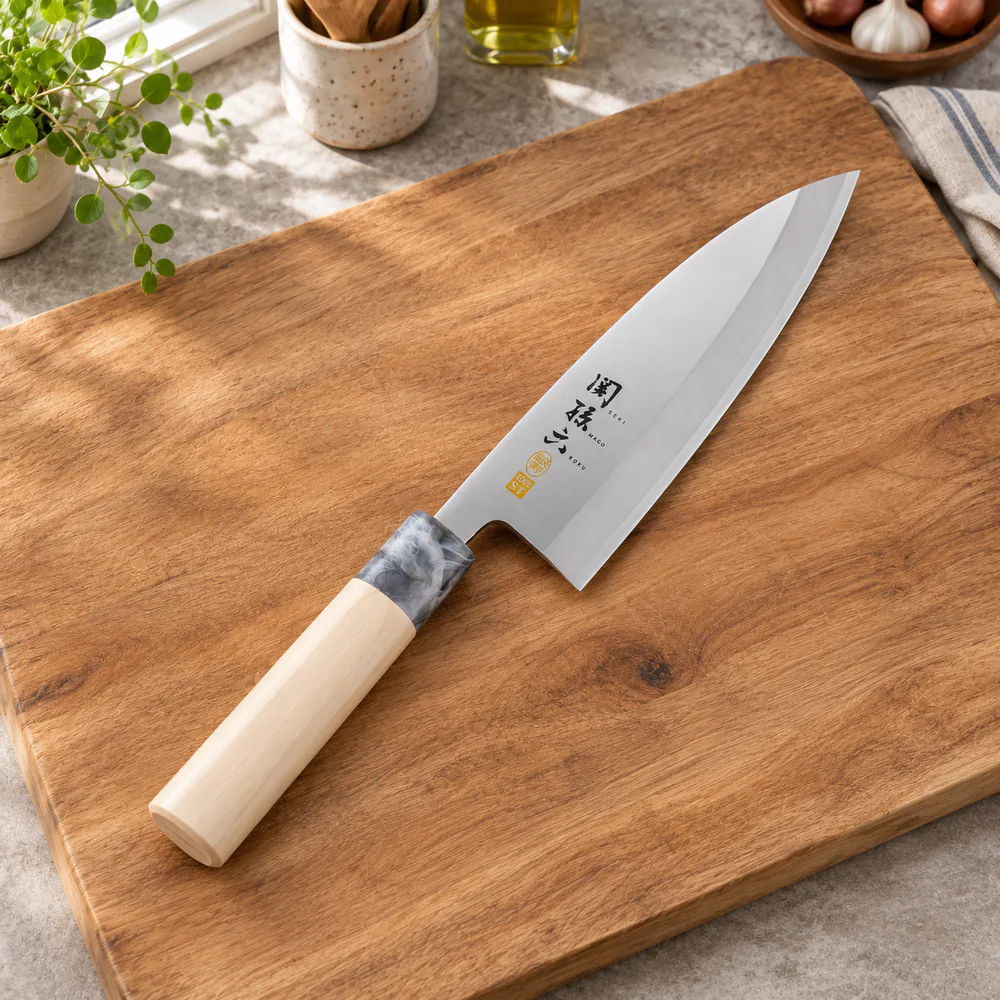
A stainless single-bevel deba with a 6-inch blade is our top choice for getting into whole-fish work, and this is the best one in the group. We worked it through a large bluefish and a few small sea bass, and it filleted all of them cleanly and cut through the heads and bones without a fight. That is the scene that settled the ranking for us. If you want a single deba and do not want to oil a carbon blade after every use, buy this one.

Pros

  • Easier to sharpen than carbon
  • Stainless, so it forgives a wet board and a late wipe-down
  • Balanced weight that makes heads and small bones easy
  • Single-bevel edge can be maintained on whetstones

Cons

  • Handle runs large for smaller hands
  • Thin 5 millimeter spine, so no large-bone chopping
  • Loses its edge a little faster than white steel

The blade is molybdenum vanadium stainless at 8.6 ounces, a weight that carries through a head on its own. Check the handle against your hand size before you commit.
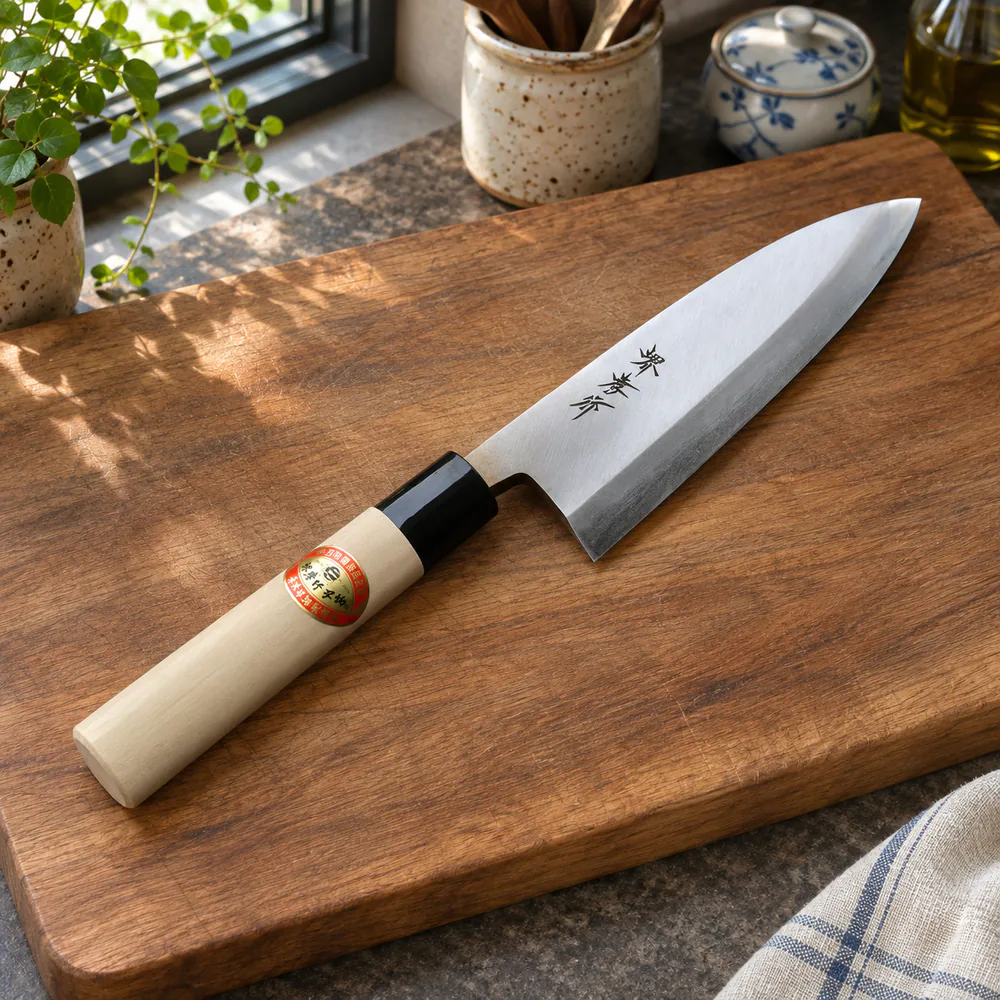
2. Best Traditional Single-Bevel: Sakai Takayuki Kasumitogi 165mm

Sakai Takayuki Kasumitogi Deba 165mm
2

Sakai Takayuki Kasumitogi Deba 165mm

Best Traditional Single-Bevel
Check Price on Amazon
4.5/5

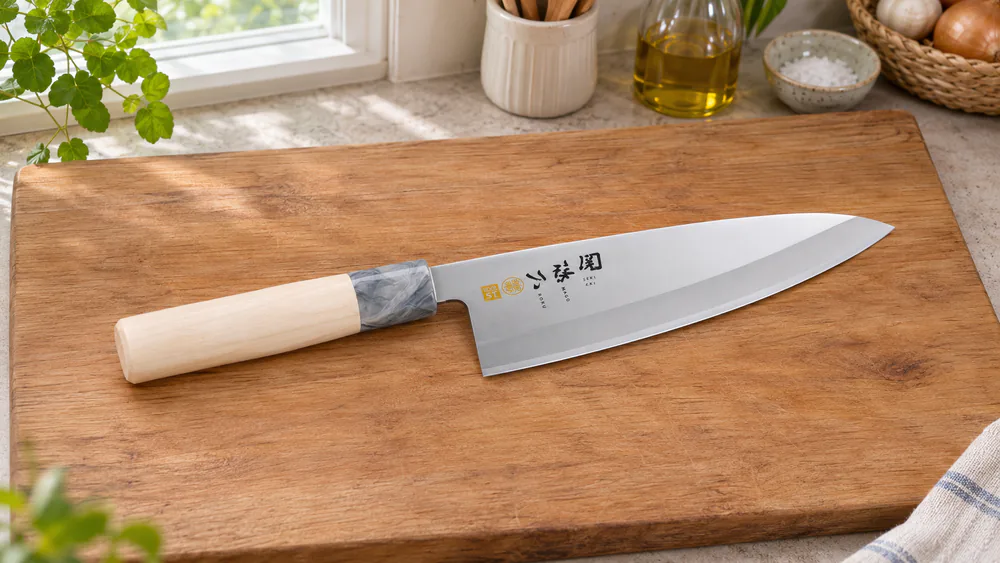
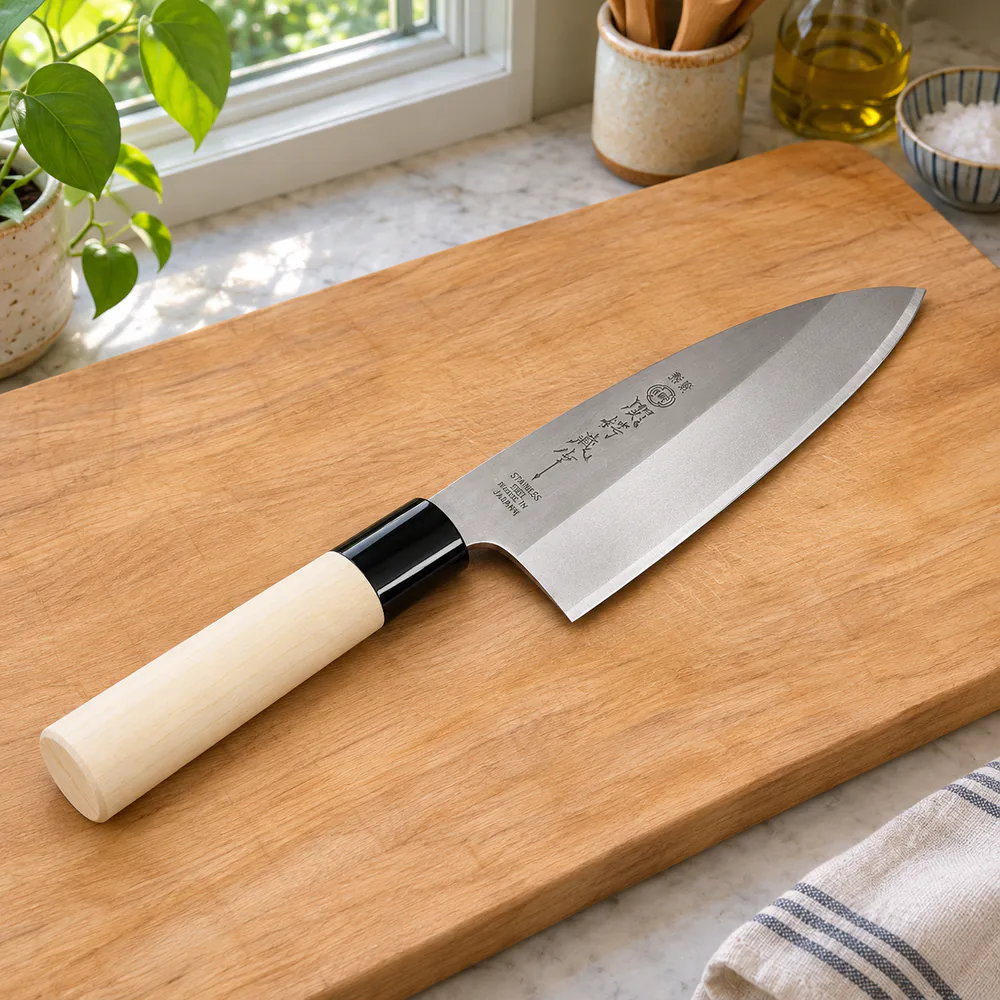
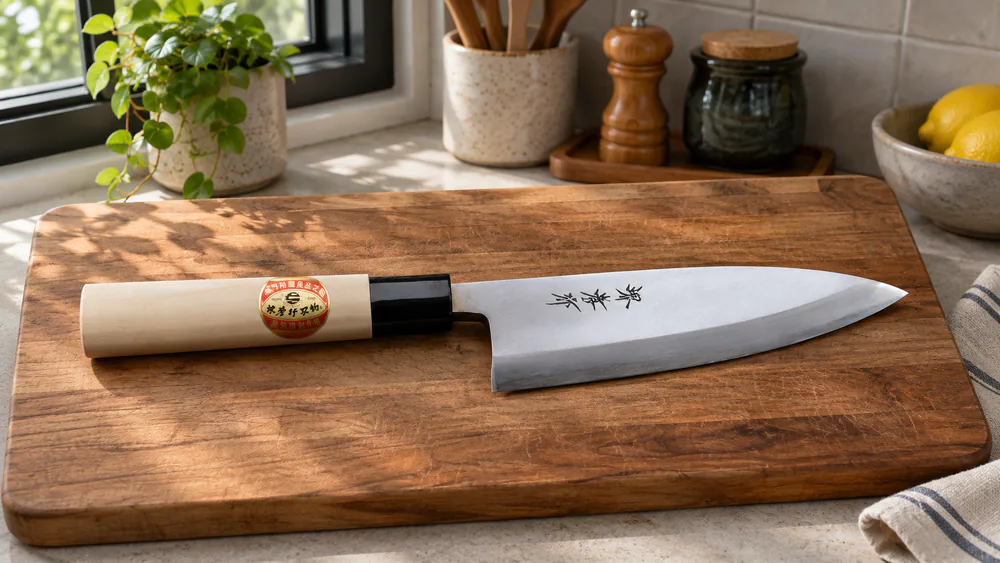
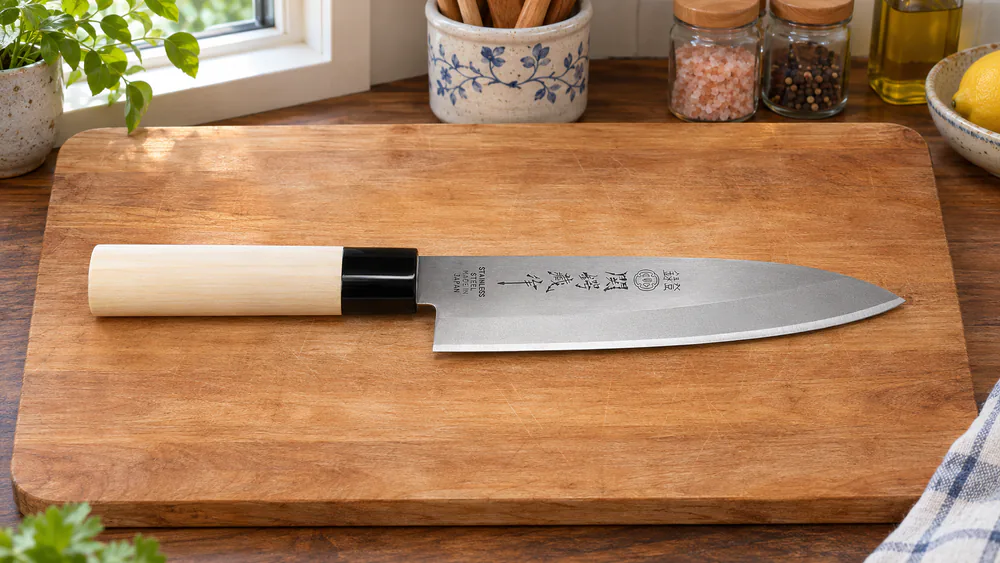
The Sakai needs more care and oiling than the Kinju, but offers a traditional single-bevel blade without the price of a showpiece. The blade has a Yasuki white steel core clad in soft iron and a kasumi finish. Its magnolia handle narrows toward the bolster, making the knife easy to control around the spine. It is balanced and small enough to maneuver along a backbone. Wipe it dry and oil it, or it spot-rusts, and confirm the blade length at checkout, since the listed length and weight (about 7.8 ounces) depend on the variant.

Pros

  • White steel takes and holds a very fine edge
  • 7 millimeter spine gives real heel authority
  • Handle narrows toward the bolster for control

Cons

  • Needs wiping and oiling after every use
  • Right-handed by default
  • Length and weight vary by variant

3. Best Budget: JapanBargain Japanese Deba 160mm

JapanBargain Japanese Deba 160mm
3

JapanBargain Japanese Deba 160mm

Best Budget
Check Price on Amazon
4.0/5

This knife trails the Sakai in every respect except cost. Its light, thin blade is closer to a double-bevel utility knife in a deba shape, so it cannot do the work of a true deba and should not be pushed through bone. Within those limits it is the cheapest pick here by a wide margin and handles chicken joints and deboning well. The unfinished raw wood handle is the weak spot, and a quick coat of stain fixes it.

Pros

  • Lowest cost of the seven by far
  • Stainless and easy to resharpen
  • Fine for chicken joints and deboning

Cons

  • Not a true deba
  • Raw wood handle needs sealing
  • Some samples are hard to get truly keen

4. Best for Beginners (Stainless): Kai Seki Magoroku Ginju 165mm

Kai Seki Magoroku Ginju Deba 165mm
4

Kai Seki Magoroku Ginju Deba 165mm

Best for Beginners (Stainless)
Check Price on Amazon
4.4/5

Stepping up from the Kinju in length, the Ginju is a stainless single-bevel option for beginners. Its 165mm molybdenum vanadium blade is rust resistant; just dry it promptly after use to avoid discoloration. A missed angle at the spine forgives more than it would on white steel.

Pros

  • Rust resistant and easy to maintain
  • 165mm length suits medium fish
  • Resists chipping better than carbon

Cons

  • Edge fades a little faster than white steel
  • Plain handle with no standout grip shape
  • Single-bevel edge requires the correct sharpening technique

5. Best Premium Carbon: Yoshihiro Shiroko Kasumi 165mm

Yoshihiro Shiroko Kasumi Deba 165mm
5

Yoshihiro Shiroko Kasumi Deba 165mm

Best Premium Carbon
Check Price on Amazon
4.3/5

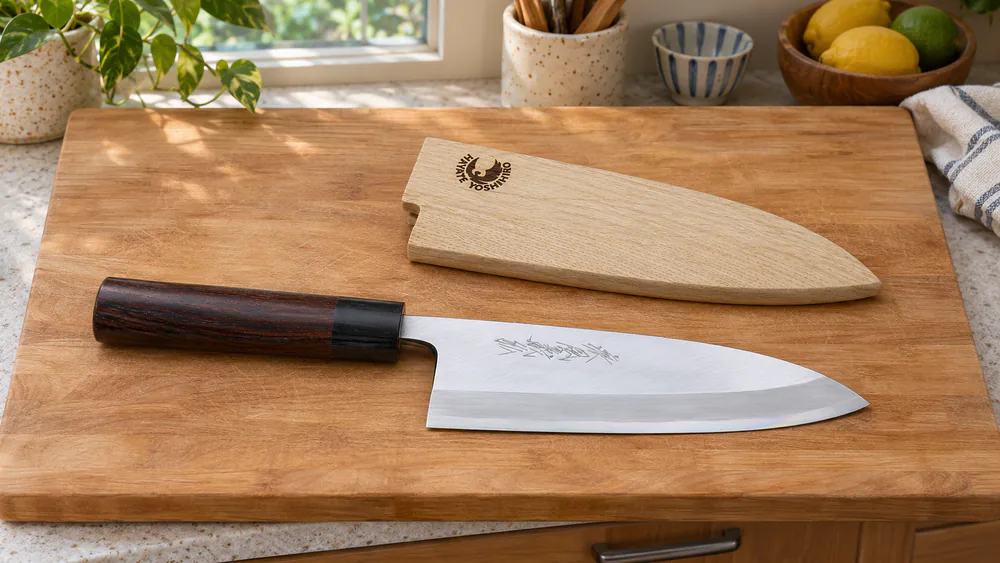
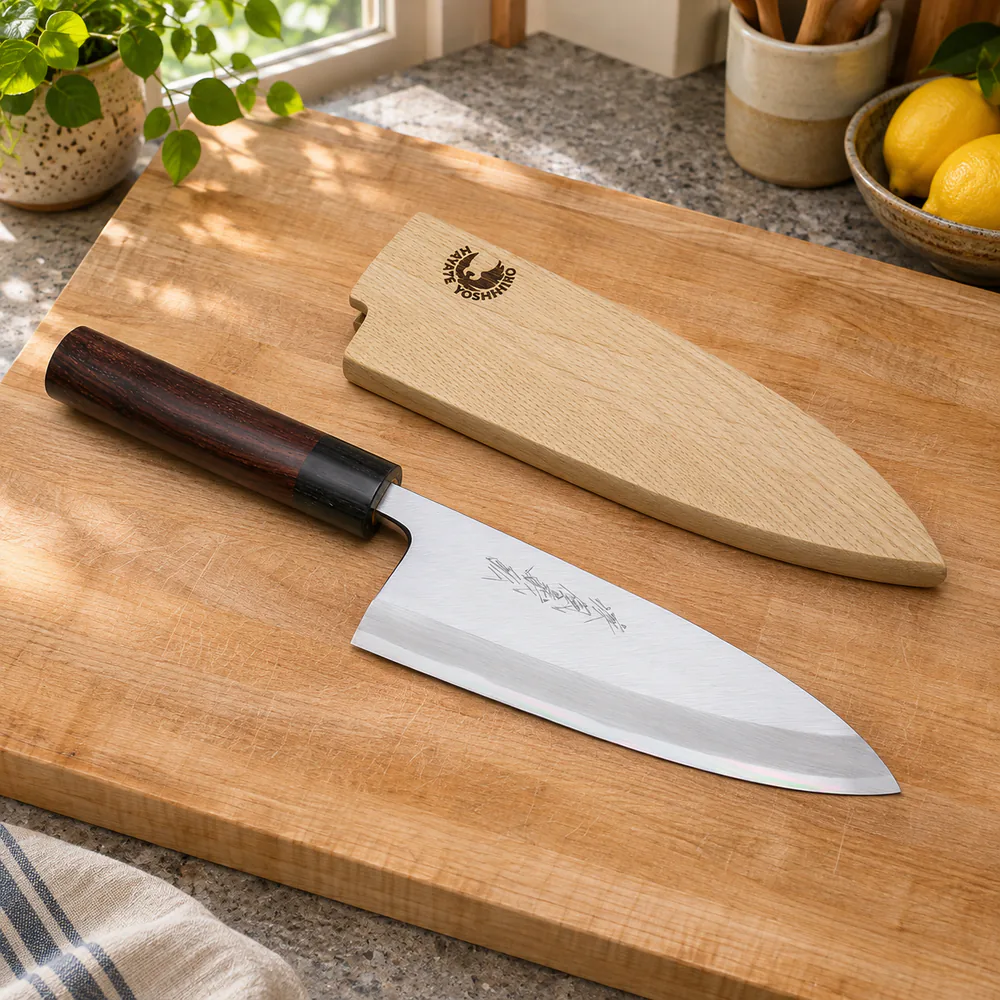
Where the Ginju forgives, the Shiroko asks for stones. The decisive trait is the steel. Shiroko, or White Steel #2, is hardened to HRC 62-63 and takes a keen edge on stones, the exact response we look for at the sharpening counter. It suits small to medium fish, and the round shitan rosewood handle and included wood saya (a protective sheath) make it feel like a finished tool. Wipe it and oil it after every use, and expect a patina to develop.

Pros

  • White Steel #2 at HRC 62-63 sharpens beautifully
  • Arrives very sharp
  • Rosewood handle and saya included

Cons

  • Needs oiling and careful drying
  • Tip can chip if pried against bone
  • The most expensive pick here

When we ran it over the stones, the edge came up keen quickly, which is why we place it above the Global for anyone who enjoys sharpening.

6. Best Western-Style Stainless: Global G-7 Deba 7 inch

Global G-7 Deba 7 inch
6

Global G-7 Deba 7 inch

Best Western-Style Stainless
Check Price on Amazon
4.1/5

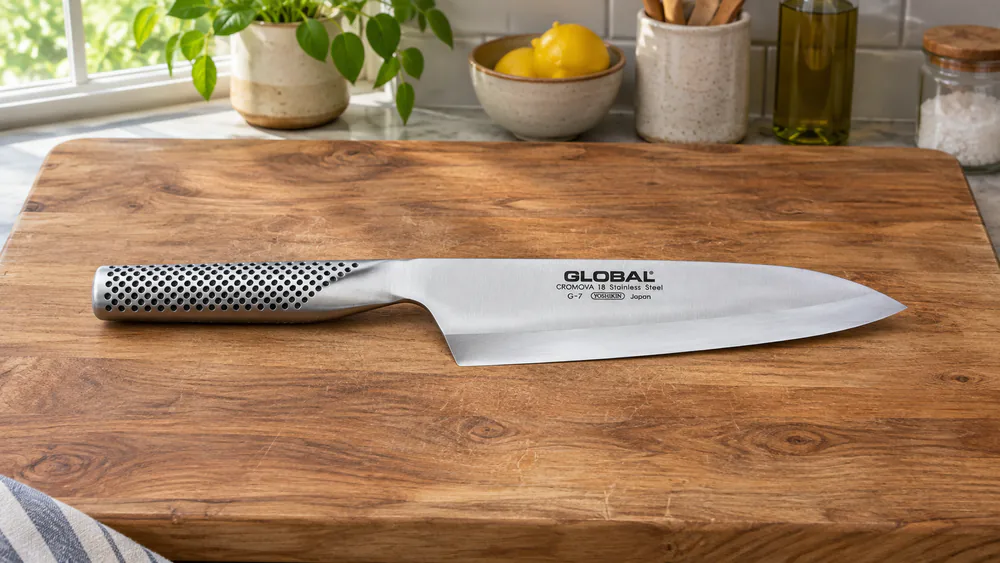
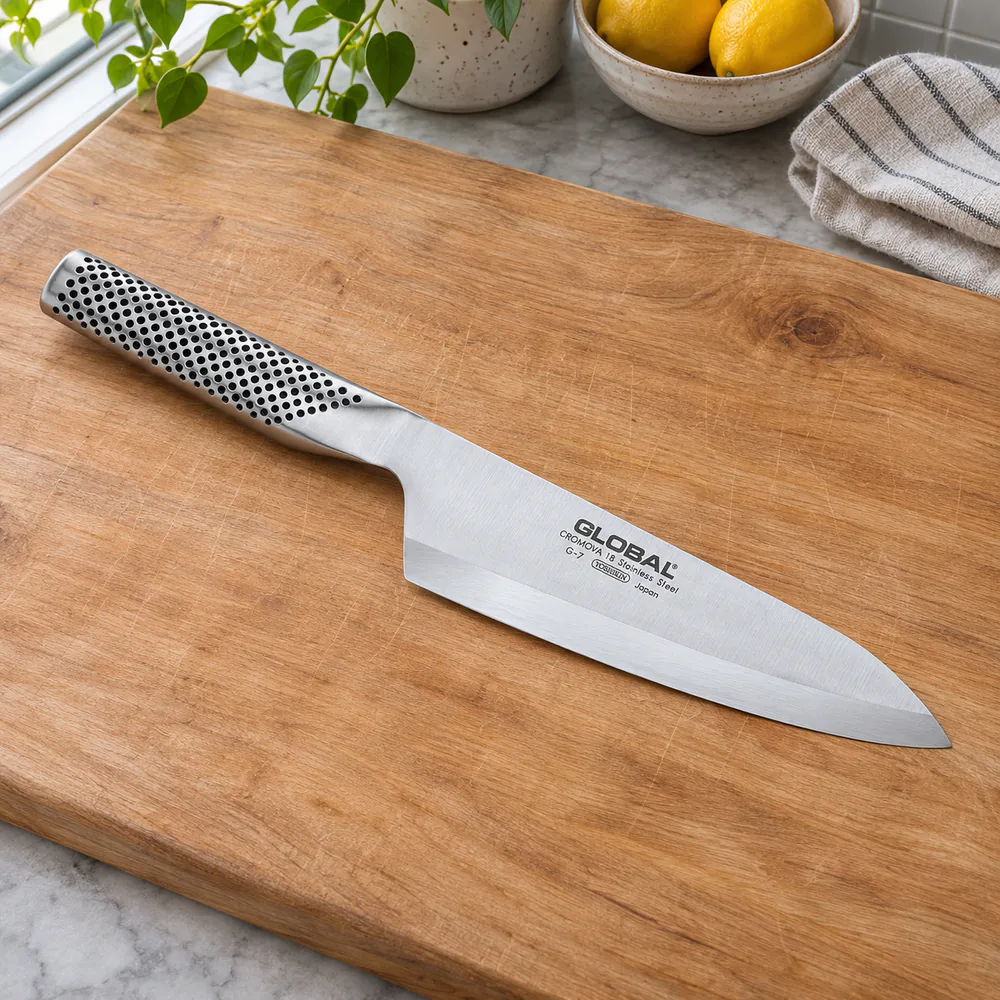
After the wood handles above, the Global is the outlier: a single-bevel blade in molybdenum vanadium stainless with a Western-style one-piece handle. The dimpled metal grip is the part to try in your own hand before buying. If you already like Global knives, this is the sweet spot for you; everyone else should prefer wood.

Pros

  • Sharpens easily on 1000 and 4000 grit stones
  • Seamless one-piece stainless build
  • Lifetime warranty against defects and breakage

Cons

  • Dimpled metal handle can be slippery on fish
  • Lighter spine, so not for heavy bone work
  • Uncomfortable for some hands

7. Best Compact for Small Fish: Kai Seki Magoroku Kinju ST 105mm

Kai Seki Magoroku Kinju ST Deba 105mm
7

Kai Seki Magoroku Kinju ST Deba 105mm

Best Compact for Small Fish
Check Price on Amazon
3.8/5

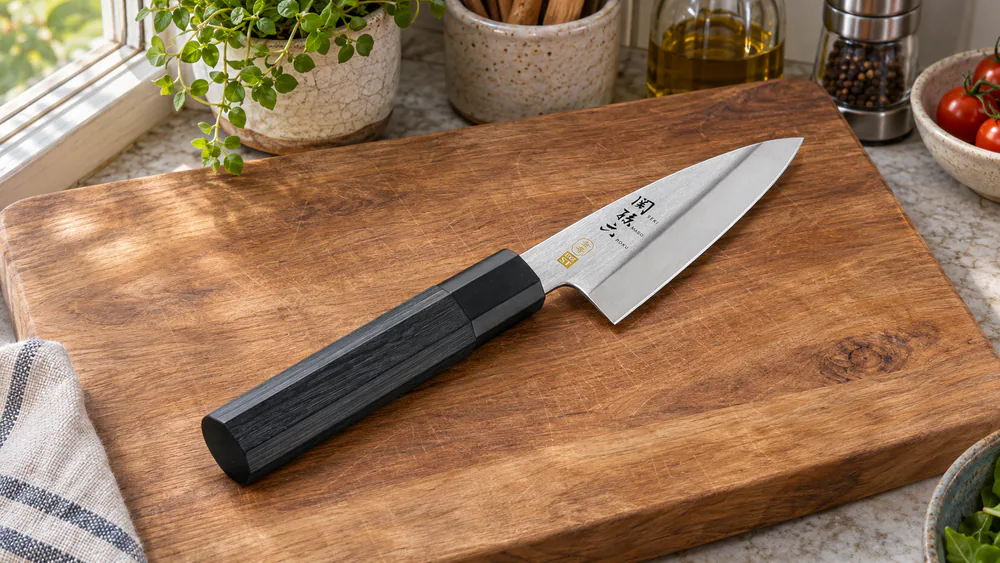
After the full-size Kinju, this 105mm version is a narrow specialist for fish small enough for a blade of 120mm or less. Buy it if you cook garfish, mackerel and herring often; skip it if this will be your only deba.

Pros

  • Fits small fish like mackerel and herring
  • Flexes and skins fish well
  • Molybdenum vanadium stainless with laminated wood handle

Cons

  • Too light for bone
  • Not a true thick deba

What a Deba Is (and Single vs Double Bevel)

A deba is a short, heavy Japanese knife with a thick spine and a broad blade. The thick heel halves fish heads and cuts small bones and fins, while the keen edge handles fillets.

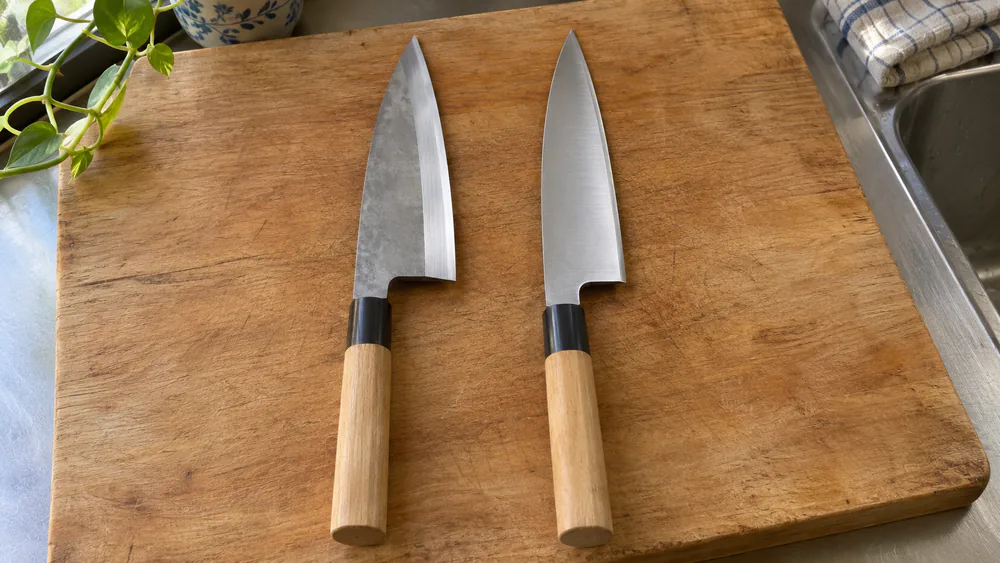
Bevel is the angle ground onto the edge. A single-bevel blade is sharpened on one face only, with a flat back called the ura, and a hybrid is ground on both sides like a Western knife.

Two deba knives side by side showing a single-bevel kasumi blade with flat back and a double-bevel hybrid stainless blade
Single-bevel on the left, hybrid on the right.

Hybrid (Western-style) deba

Hybrids are easier to maintain and less likely to chip, which makes them the right first deba. Of these picks, the JapanBargain has a hybrid-style edge. The Kinju AK1101 and AK1100, Ginju AK5063, and Global G-7 have single-bevel edges; stainless steel does not make a knife double-beveled.

Traditional single-bevel deba

White carbon steel rusts and chips more easily, but it gives much better sharpness and edge retention when used properly. The Sakai Takayuki and Yoshihiro are our traditional picks.

What to Look For in a Deba Knife

The right deba is the one whose upkeep you will actually do.

Size (150-180mm) and fish size

For home cooks, 150 to 180 millimeters is the sweet spot. Blades of 120mm or less suit small fish such as garfish, mackerel and herring. The 150-180mm range suits small snapper, trout and flounder. Salmon, sea bass and grouper call for 195-225mm, and swordfish or small tuna need 240mm and up.

Handedness and bevel

Single-bevel debas are right-handed by default. A left-handed cook needs a hidari build or a special-request bevel switch, which often costs 10 to 20 percent more.

Stainless vs carbon steel

Stainless is the low-effort choice. White steel gives a finer edge and holds it longer, but if you will skip the oiling habit, pick stainless.

Weight and handle

Weight is what pushes a blade through a fish head. A very light knife struggles, while a heavy white steel deba still stays controllable. Grip matters just as much: rough wood or angled pakkawood stays secure when wet, while rounded plastic and dimpled metal can slip. A wa handle (a straight Japanese handle, as on the Yoshihiro) is lighter in the heel than a yo handle (a Western-style grip, as on the Global and Kai picks).

Warning. A deba is not a cleaver. Pry it against a large bone or a frozen fish and the hard edge can chip.

Deba Comparison Table

ProductSteelBlade lengthHandleWeightBevelBest for
Kai Kinju ST 150mm Mo-V stainless 150mm Laminated wood, nylon ferrule 8.6 ounces Single Home cooks, all-round
Sakai Takayuki Kasumitogi White steel (Yasuki) 165mm (varies by variant) Magnolia, resin ferrule About 7.8 ounces Single Traditional carbon
JapanBargain 160mm Stainless 6-1/4 inch Raw wood Not published Hybrid-style Tight budgets
Kai Ginju 165mm Mo-V stainless 165mm Natural wood, nylon ferrule Not published Single Low-maintenance starter
Yoshihiro Shiroko 165mm White #2 165mm Shitan rosewood Not published Single Carbon splurge
Global G-7 Mo-V stainless 7 inch Stainless steel Not published Single Western grip filleting
Kai Kinju ST 105mm Mo-V stainless 105mm Laminated wood Not published Single Small fish

Care, Sharpening and Use

White steel debas need wiping and a light oil coat after every use. Stainless debas are easier to care for: hand wash and dry them promptly.

Tip. Sharpen a single-bevel deba on the bevel side at its existing angle, then remove the burr with a few light passes on the flat back. Never grind the back.

Work the bevel on 1000 grit, finish on 4000, and keep the ura flat.

To use a deba on a whole fish, cut behind the gills on each side and remove the head. Open the belly, clean the guts, and wipe the spine cavity. Then fillet belly-to-tail and tail-to-head along the bones, and listen for the scraping sound along the spine.

Frequently Asked Questions

What is the difference between a deba and a yanagiba?

A deba breaks down whole fish; a yanagiba is a long, thin slicer for finished sashimi cuts.

Can a deba replace a santoku or chef knife?

No. A deba is for fish and small bones and is not meant for chopping vegetables, so keep your everyday knife for that.

Can I use a deba on frozen fish?

Not safely. Frozen flesh and bone behave like large bone, and the hard edge can chip, so thaw the fish first.

How should I store a carbon deba?

Dry it fully, wipe on a light coat of oil, and keep it in a sheath or on a magnetic strip away from damp air.

Are debas for home cooks or only for pros?

Home cooks who buy whole fish get plenty from a stainless deba, including the single-bevel Kinju and Ginju picks. Pros and keen sharpeners will enjoy a white steel single-bevel.

Final Thoughts

If you want a second deba after the Kinju, the choice is the Sakai Takayuki for cooks who enjoy the stones, or the JapanBargain as the cheap way to learn the shape. Match the knife to the habit you will actually keep.

Read next

Ready to upgrade your kitchen?

Match the knife to the habit you will keep, and browse our buying guides for the rest of your drawer.