As an Amazon Associate we earn from qualifying purchases. We may earn a commission from links on this page, at no extra cost to you. Learn more.
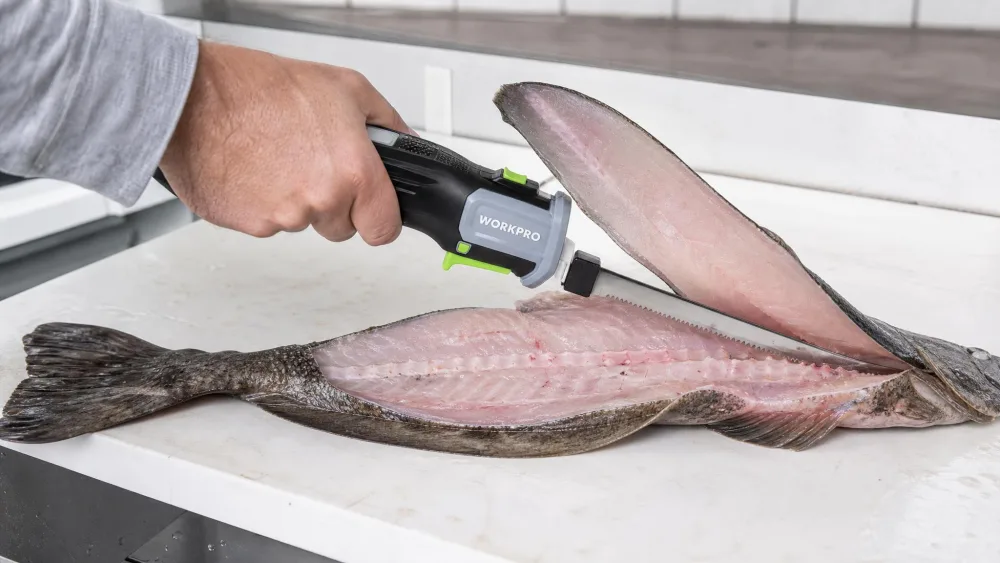
Anyone who has spent an evening hunched over a cleaning table, sawing a tired fillet knife through a limit of bluegill, knows why electric fillet knives exist. The motor does the work, and a good one turns an hour of frustrating slicing into twenty minutes of clean, meaty cuts. The category is crowded and the price spread is wide.
Cordless and corded models run from under forty dollars to more than two hundred. The gap between a keeper and a garage-dweller comes down to motor power, blade quality, and handle comfort an hour into the job. We put seven of the best through a full season of cleaning fish in rotation to find the fastest, cleanest cuts at every budget.
Our Top Electric Fillet Knife Picks at a Glance
Rank
Product
Best for
Price
Rating
Buy
1
BUBBA Pro Series Lithium-Ion Electric Fillet Knife
How We Tested and Chose These Electric Fillet Knives
We bought all seven knives at retail and ran them through a full season of cleaning fish in rotation, scoring each on cut speed, backbone tracking, edge retention, grip in fish slime, battery runtime, and cleanup. Every battery figure in the reviews below is one we clocked ourselves.
A season of fillet work teaches you what a listing cannot: which motor bogs, which blade dulls mid-limit, and which handle leaves your hand cramping. Those judgments drive the ratings, and we called out flaws rather than burying them.
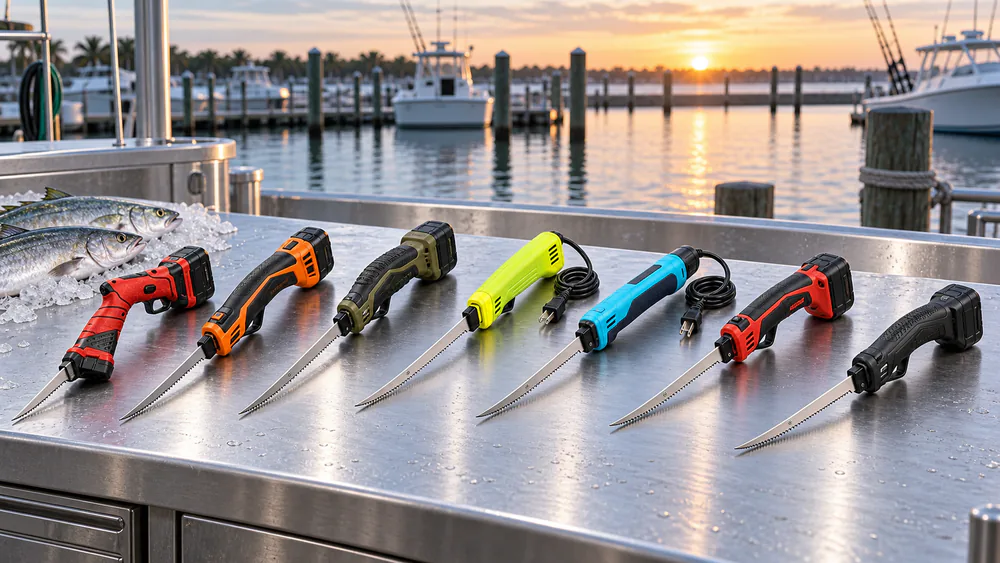
We spent the season at the cleaning table timing cuts and checking edges.
The 7 Best Electric Fillet Knives of 2026
1. BUBBA Pro Series Lithium-Ion Electric Fillet Knife
1
BUBBA Pro Series Lithium-Ion Electric Fillet Knife
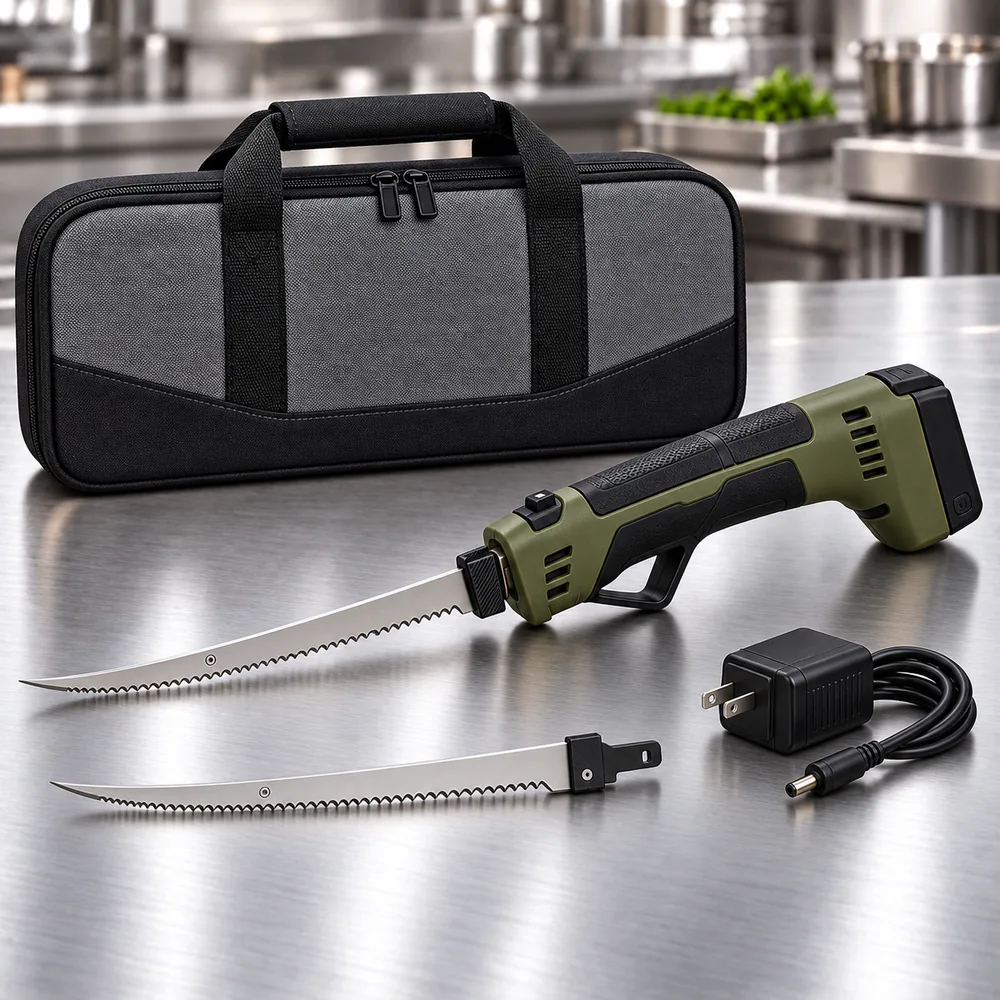
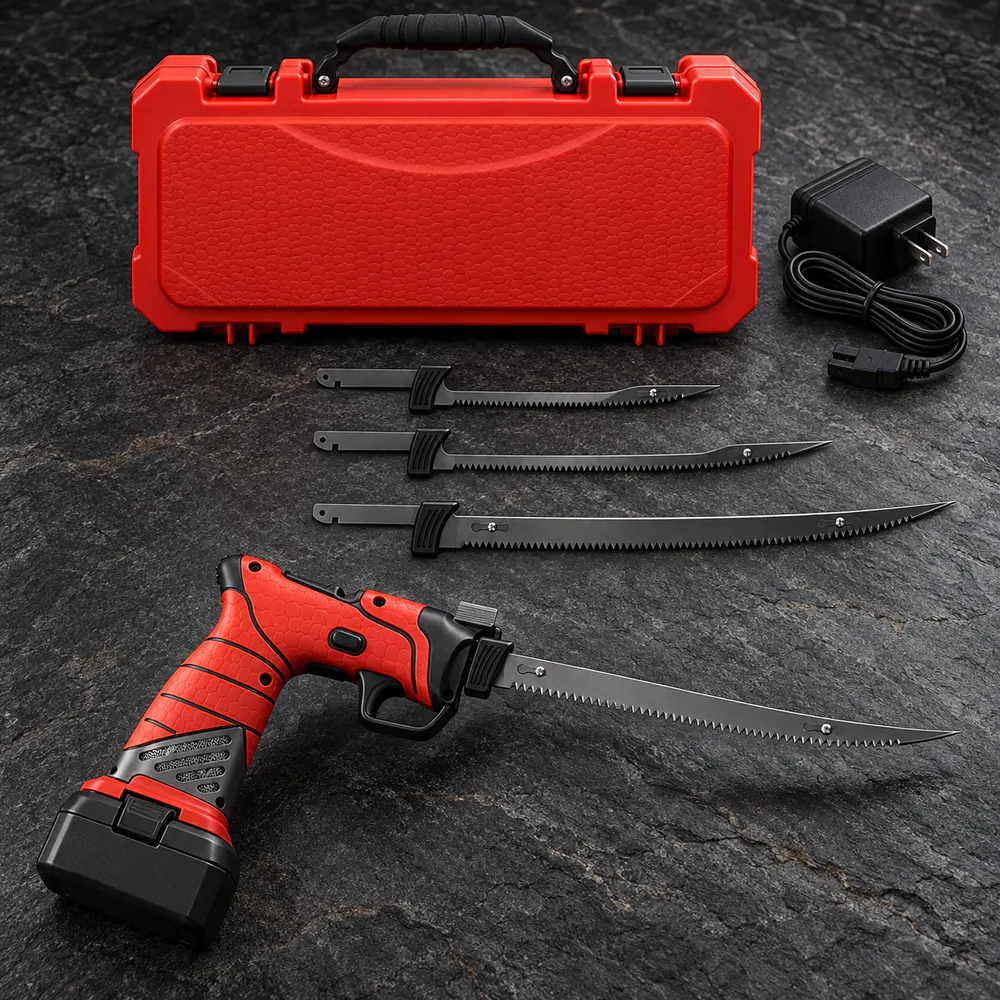
The best all-around electric fillet knife we tested, and the first one we would buy again. A brushless motor, two batteries that swap in seconds, and four non-stick blades make it the most capable kit on this list.
Brushless motor, two lithium-ion batteries, and a charging station
Four Ti-nitride coated non-stick blades, 7 to 12 inches
LED battery indicator and trigger guard
Hard zippered storage case
Specifications
Power
Cordless lithium-ion, brushless
Blades
4 TiN-coated stainless, 7, 9, 9, and 12 in
Weight
1.11 lb, 8.5-inch handle
Batteries
2 packs plus charging station
Price
Around $220
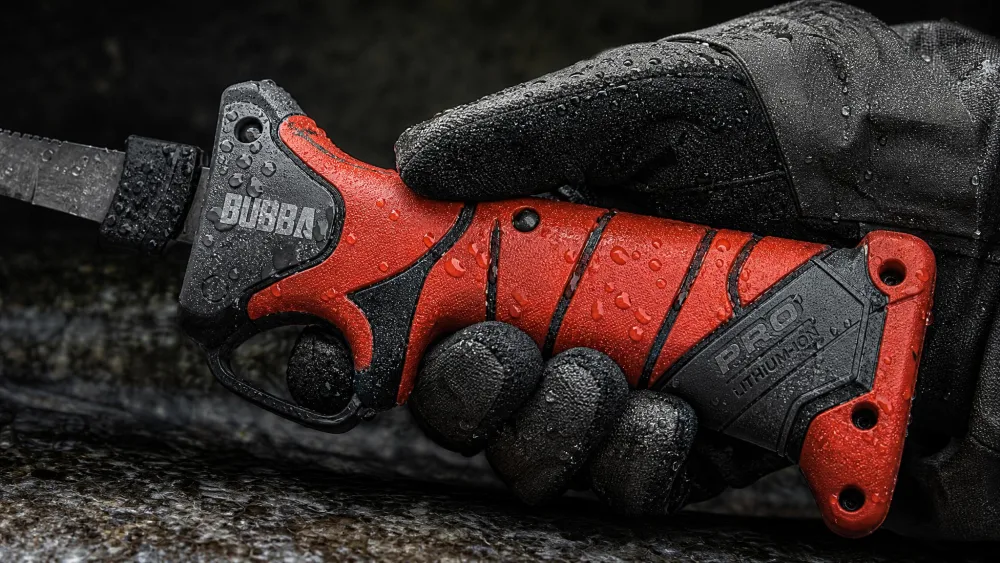
The tacky rubber grip shrugged off slime and blood all season. The handle runs thick, so smaller hands will find a secure grip harder to come by, and there is a slight delay between trigger pull and blade start. Neither slowed us down: two batteries and fast charging cleaned forty fish over two days without stopping.
Pros
Brushless motor with real torque and long run time
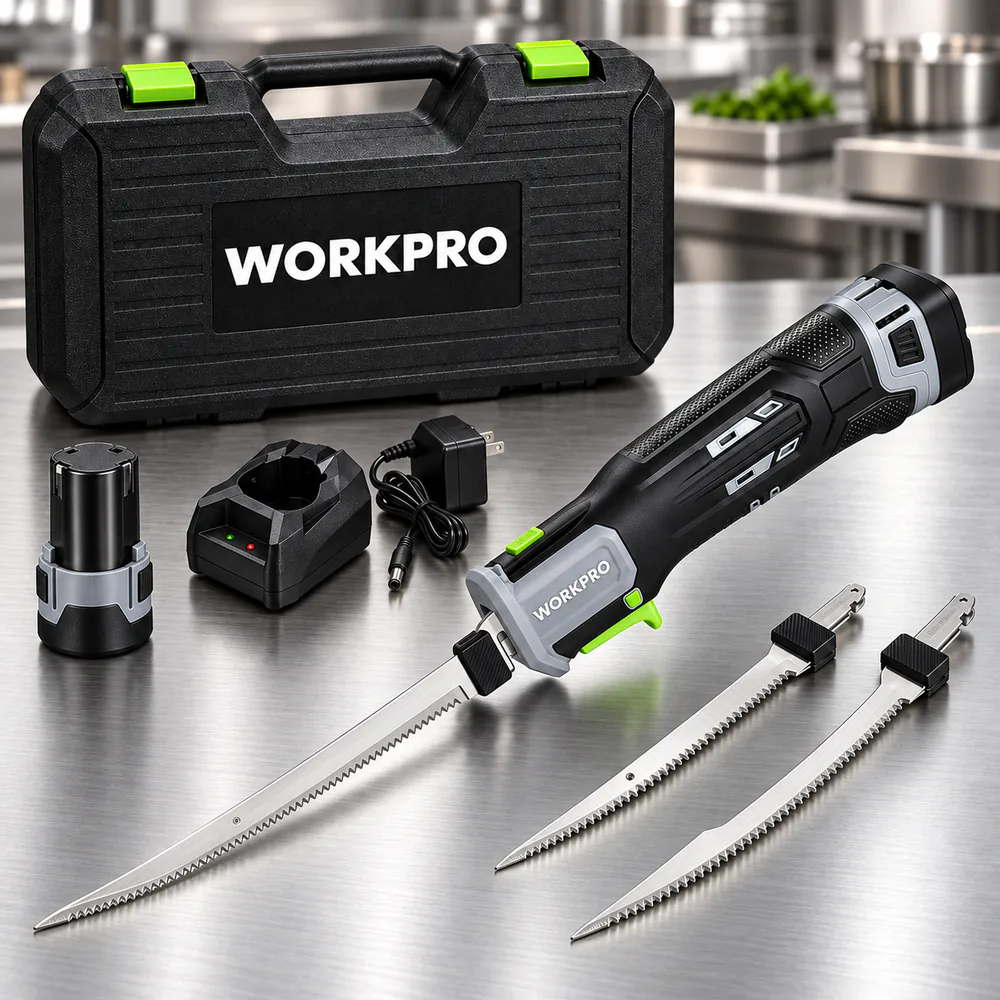
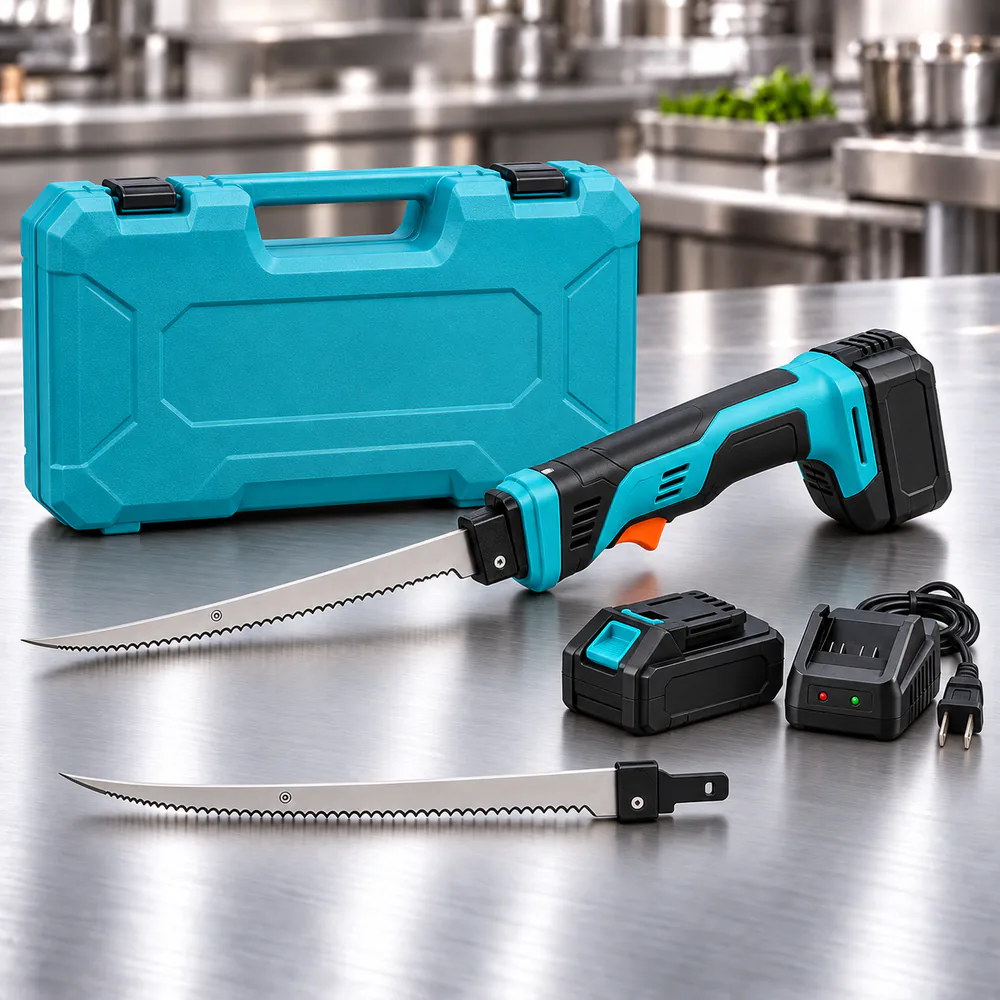
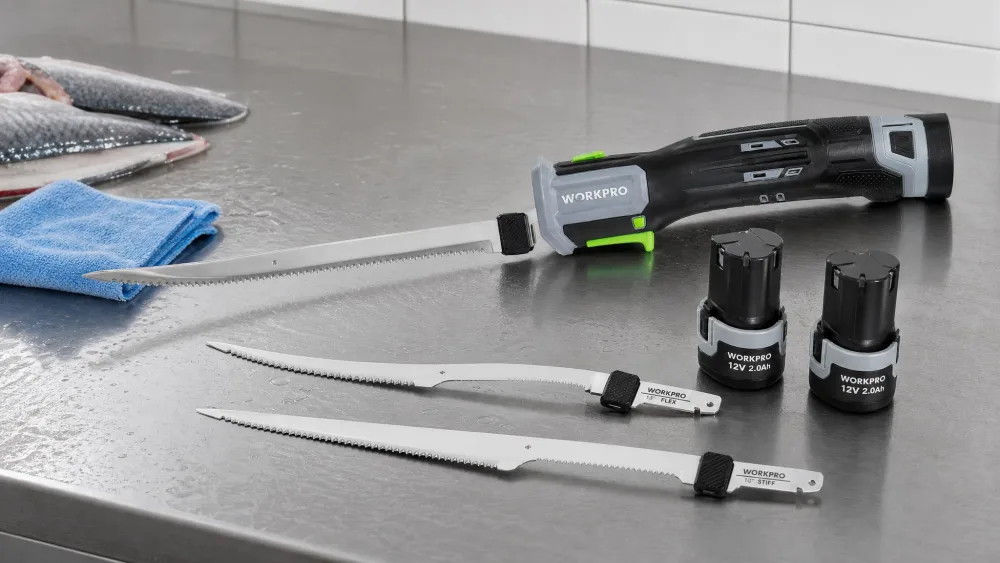
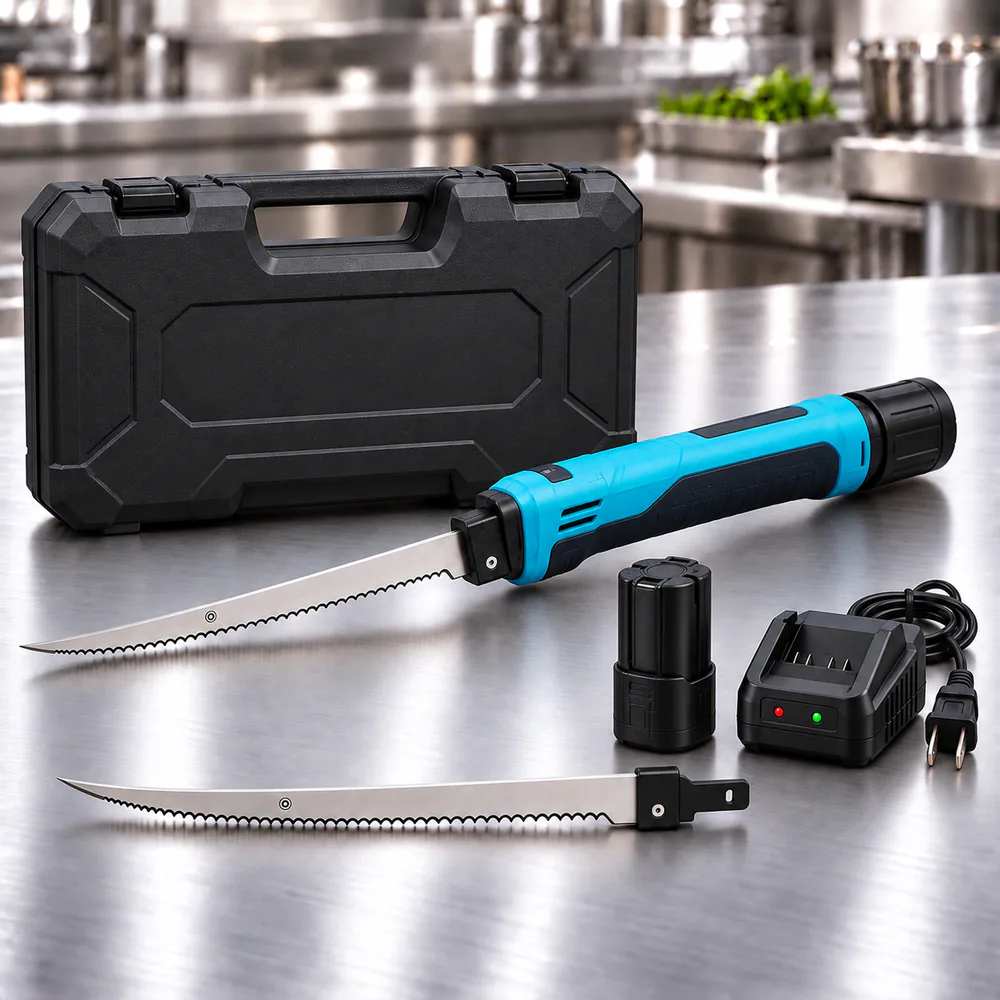
Where the BUBBA Pro charges a premium for serious-angler power, the WORKPRO 12V wins on price per runtime. Two batteries, two blades, and real-world runtime for well under a hundred dollars make it the sensible choice for most anglers.
Two removable 2.0Ah lithium-ion batteries
8-inch flex and 10-inch stiff blades
Rubber-coated non-slip handle with safety lock
Heavy-duty storage case
Specifications
Power
12V cordless
Runtime
Up to 1 hour per battery
Charge time
About 1 hour
Blades
8 in flex, 10 in stiff, high-carbon stainless
Weight
About 1 lb, body only
Price
$79.99
We clocked 35 to 40 minutes of continuous cutting per battery, well short of the advertised hour, and a dead-to-full charge at about 58 minutes. The rubber-coated grip stayed secure in fish slime, and a single battery handled an 85-fish haul and a 36-walleye boat limit. The body got a little warm but never stopped; the shorter blade just did not feel razor sharp out of the box.
Pros
Two 2.0Ah batteries with honest, clocked runtime
Rubber-coated grip stays secure in fish slime
Well under $80 for a complete cordless kit
Cons
Shorter blade did not feel razor sharp out of the box
Body gets a little warm on long sessions
3. KastKing Speed Demon Pro Cordless Electric Fillet Knife
3
KastKing Speed Demon Pro Cordless Electric Fillet Knife
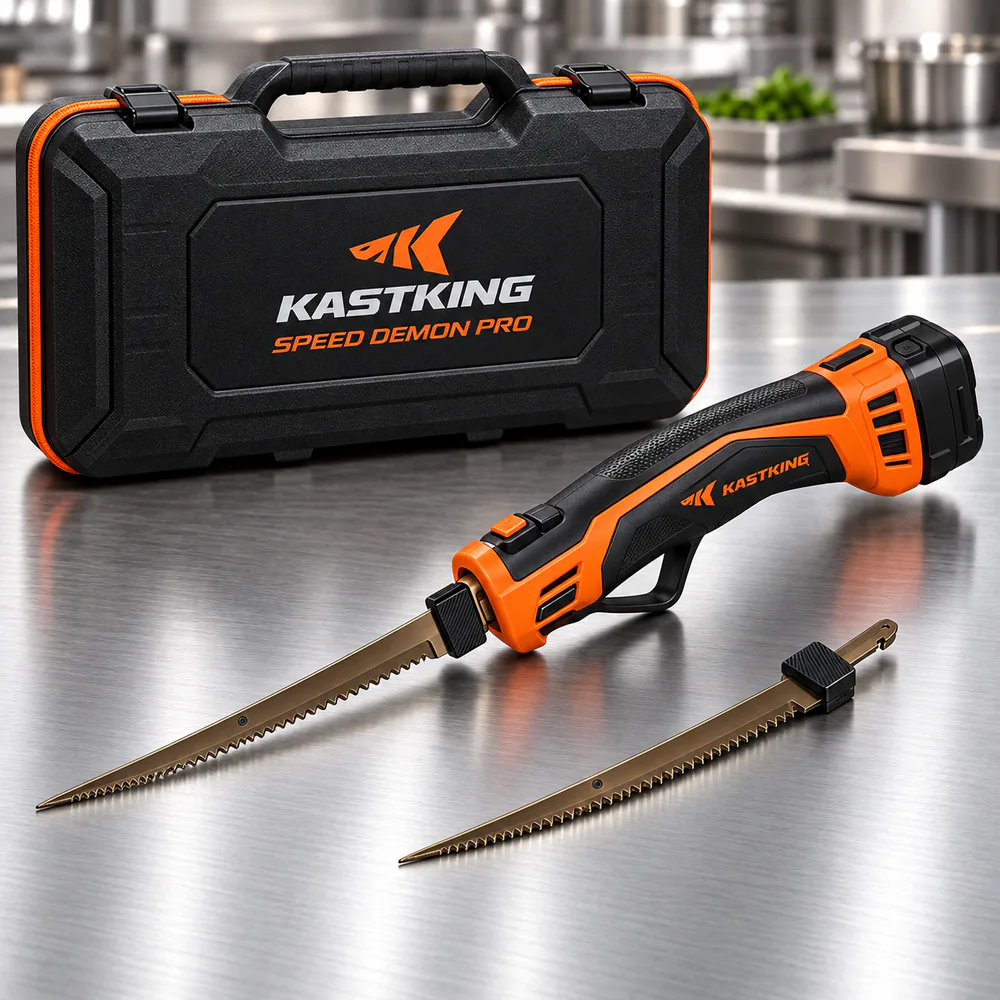
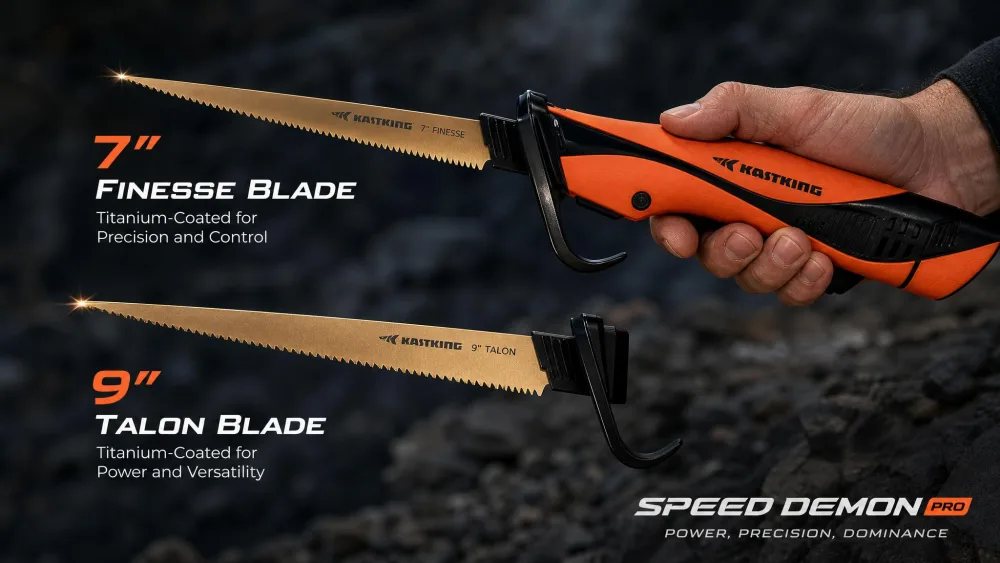
If the WORKPRO is the value play, the KastKing is the runtime king. It cut a 3-pound bass in about 18 seconds and never ran out of steam before we did, which is why it is our cordless pick for anglers who want to keep cutting all day.
Up to 100 minutes of continuous runtime per charge
7-inch Finesse and 9-inch Talon blades
Battery-level indicator
Soft TPR non-slip handle and EVA carry case
Specifications
Power
12.6V cordless, high-torque motor
Runtime
Up to 100 minutes per charge
Blades
7 in Finesse, 9 in Talon, titanium-coated 420 stainless
Price
$76.49
The 100-minute runtime is real: a single charge carried us through 47 crappie and, on another day, eight 6-pound pike. The titanium coating on the 420 stainless blades showed no degradation after three months of saltwater exposure. The blades are razor sharp but fidgety to install, and the motor has enough punch that beginners should use a light touch.
Pros
Up to 100 minutes of runtime, the longest we measured
Titanium-coated blades survived months of saltwater use
Razor sharp out of the box
Battery-level indicator
Cons
Easy to over-cut with; beginners need a light touch
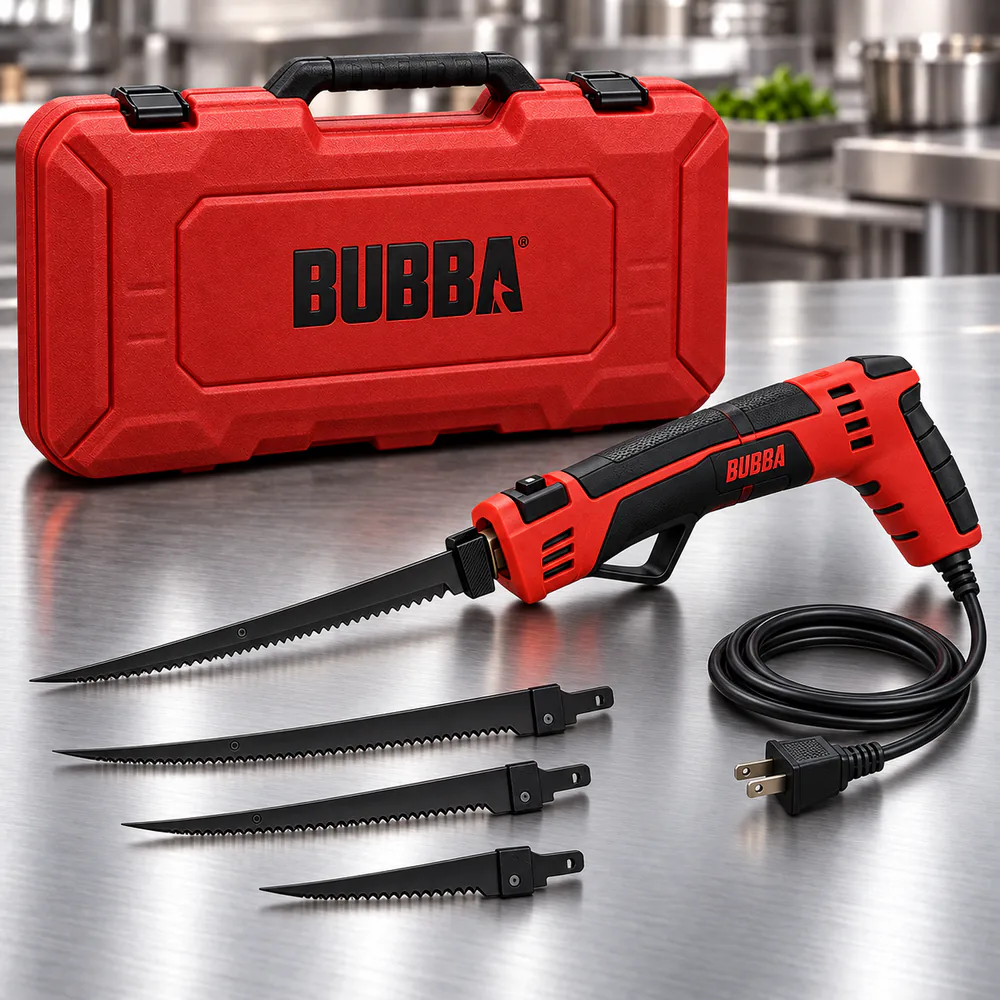
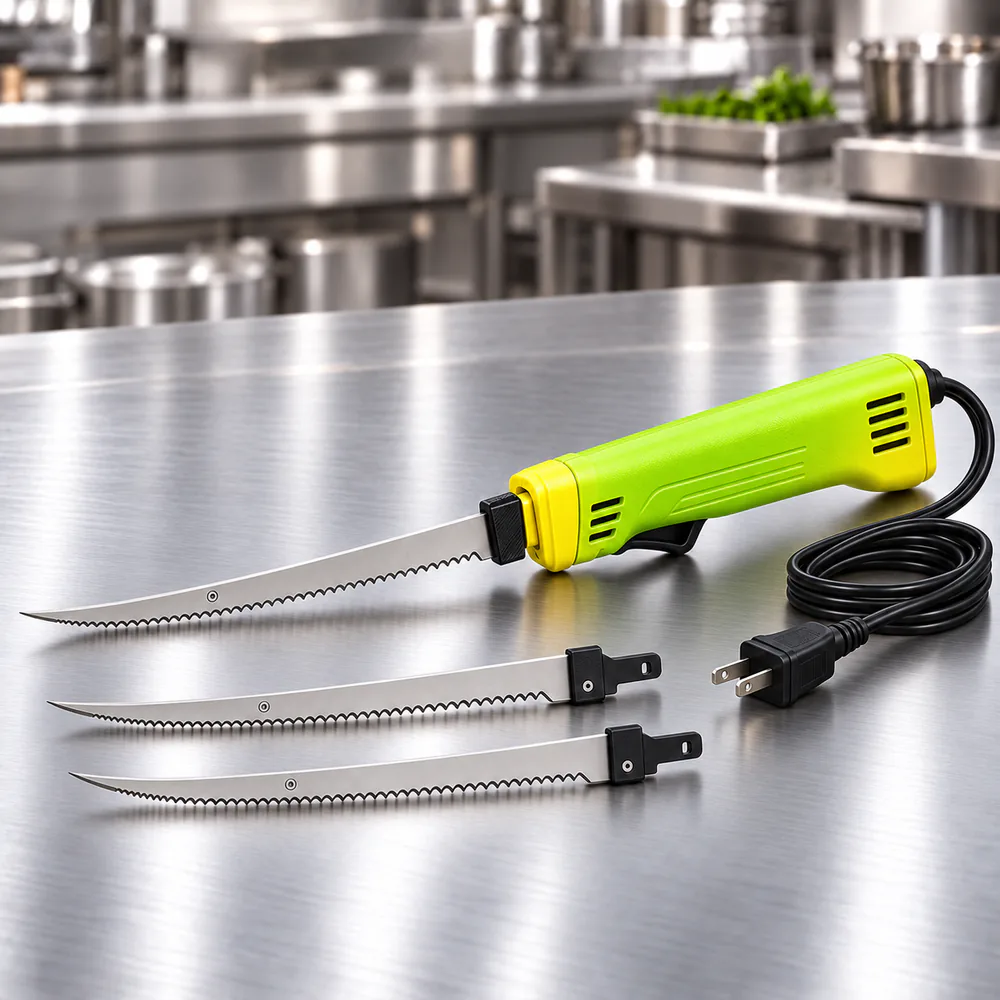
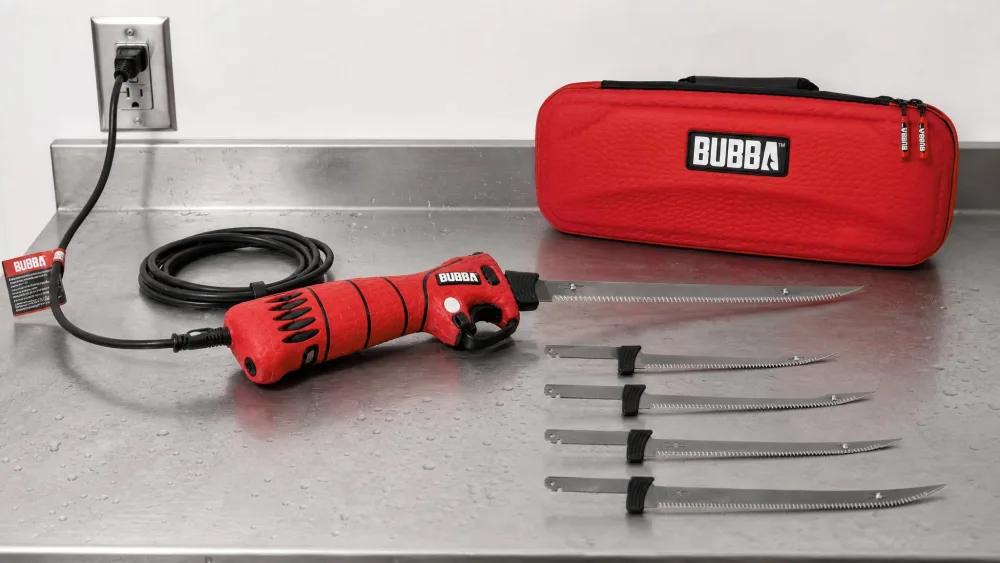
Plugged in, the motor ran cool for three hours straight, then the thermal protection tripped with two fillets left on a five-man walleye limit. Up to that moment it had cleaned over 200 pounds of mixed species without slowing, which is why it earns the corded workhorse spot for docks and fish camps.
110V corded motor with an 8-foot power cord
Four Ti-nitride coated non-stick stainless steel blades
Quiet operation with ergonomic trigger and guard
Blades store in a zippered EVA case
Specifications
Power
110V corded, 8-ft cord
Blades
4 TiN-coated stainless, dual-rivet design
Warranty
Limited 1-year
Price
$134.74
It is quiet enough that conversation never stopped, and it handles like a power tool rather than a kitchen gadget. Blade changes were the easiest we tested. Give it a rest after a heavy group limit; the cool-down after a shutdown runs about an hour.
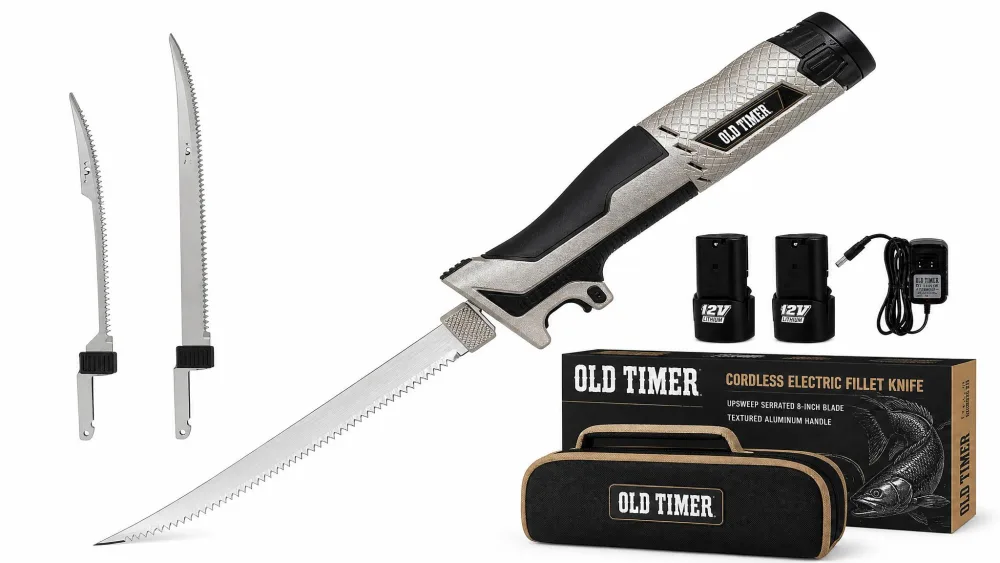
The moment we dropped the Old Timer onto a bluegill, the rocker cut came back like muscle memory. The upswept, fixed-blade-style profile rides the backbone the way a manual knife does, so the transition from a traditional fillet knife is nearly effortless. That is why it earns the traditional-feel spot on this list.
Rechargeable battery with built-in battery indicator
Textured comfort grip and safety lock
Carrying bag included
Specifications
Length
16.5 in overall, 8 in blade
Weight
1.4 lb
Power
Cordless, rechargeable
Runtime
About 25 to 30 min per charge
Price
$47.49
We ran the fully serrated edge through a heavy panfish season, and it went through 300 bluegill without slowing down. It tears through scaled fish without a fight, though the serrations leave slightly rougher fillet edges than the premium flex blades. The handle is the catch: very large and cumbersome, with a stiff trigger pull. Run time per charge is not officially published; we measured roughly half an hour. Reliability is the wildcard, so test yours early.
Pros
Familiar upswept profile eases the move from manual knives
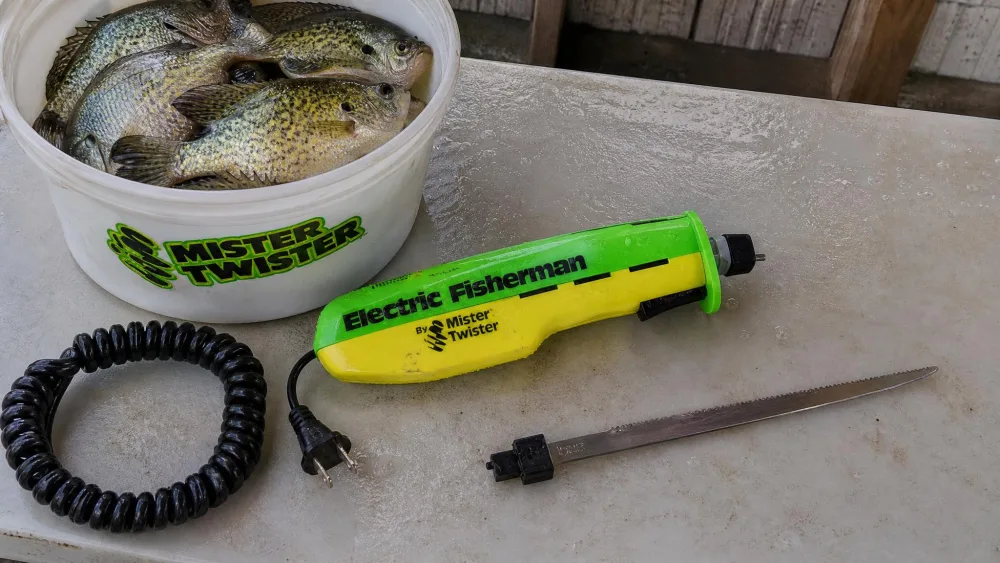
Between fishing trips, this corded classic earns its keep in our kitchen, slicing bread and thin-slicing chicken breast for the freezer. That double life is a bonus on the budget pick that has probably filleted more bluegill and crappie than anything else on the market.
7-inch serrated stainless reciprocating blade included
Quick blade release and positive safety lock
Steel primary worm gear with high-impact motor housing
Expandable recoil power cord
Specifications
Power
120V corded, draws about 1.2A (about 144W)
Blade
7 in serrated stainless, reciprocating
Warranty
2-year
Price
$39.49
It ran cool through panfish work without bogging, and its ultra-light build kept our hands fresh on a 30-crappie haul. The 7-inch serrated blade held its edge and resisted corrosion, and the quick-release stayed smooth after months of use. The cord is short, and this is a countertop knife, not one for the dock.
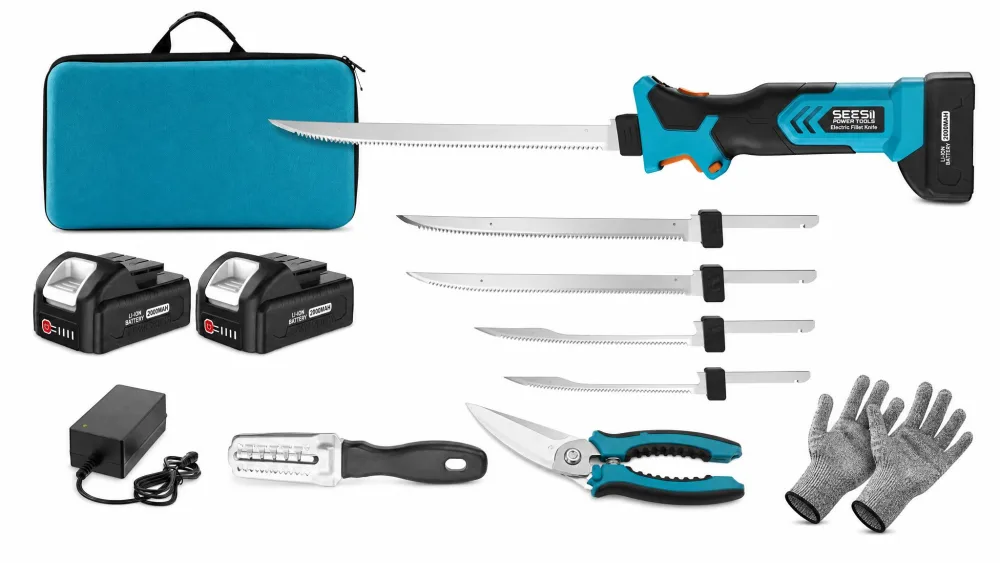
The Seesii divides opinions more than any knife we tested, because quality control is genuinely inconsistent. When you get a good unit it cuts like butter at a fraction of the price of the big names, which is why it is the full-kit pick for new anglers who want everything in one bag.
Four interchangeable razor-sharp blades
Two rechargeable 2000mAh batteries, about 50 minutes each
Out of the box it is a complete fish-processing station: four blades, two batteries, a scaler, fin shears, and gloves in a carry bag. Each battery ran about 50 minutes, enough for roughly 15 fish of about 3 pounds each. The quality control split is the catch: some units arrive with blades that do not reciprocate at all, and one stopped on a single side after a dozen panfish. The combo safety switch is good, but it needs a second hand to hold.
Pros
Full kit: four blades, two batteries, scaler, fin shears, gloves
Cuts like butter when you get a good unit
About 50 minutes per battery
Combo safety switch prevents accidental start
Cons
Quality control is inconsistent between units
Safety release must be held with a second hand while running
Beyond those seven, one more cordless earns a look. The FLISSA ships with 8- and 10-inch blades and two 2.0Ah batteries for about $67, and it chewed through 100-plus sunfish in under an hour. It struggled on thick catfish rib bones, so it reads as a budget alternative, not a workhorse.
8
FLISSA Cordless Electric Fillet Knife
4.1
A two-battery cordless with 8- and 10-inch blades for anglers who want a bigger cutting surface on a budget.
A few specs separate the keepers from the frustrations. Here is what to weigh before you buy.
Cordless vs. Corded: Which Is Right for You?
Cordless knives have taken over for a reason: no cord to snag, and they follow you from dock to tailgate. The trade-off is runtime and weight, since you carry the battery. Corded models like the BUBBA 110V and Mister Twister never run out and cost less, but you are tied to wherever the cord reaches.
Note. A cordless knife with two batteries covers a mix of cleaning spots better than any corded model we tested. One pack runs while the other charges, so you are never waiting.
Blade Length and Blade Material
Blade length should match the fish you clean most: 7 inches for bluegill and crappie, 8 to 9 for walleye and pike, 10 to 12 for big salmon. Longer is not better, since a long flex blade is harder to control on a small fish.
Material matters for edge retention and rust. High-carbon stainless, like the steel in the WORKPRO and Old Timer blades, takes a keen edge and holds it. Coatings such as the titanium PVD on the KastKing or the Ti-nitride on the BUBBAs add saltwater corrosion resistance. The trade-off with high-carbon steel is care: keep it dry and lightly oiled. Match flex to the job: a flex blade rides the backbone for the cleanest fillet, while a stiff blade powers through rib bones.
Motor Power and Speed
Motor quality shows up as torque, not just top speed. A high-torque motor like the brushless unit in the BUBBA Pro keeps the blade moving through rib bones without bogging. Speed matters too: the KastKing Speed Demon Pro cut a 3-pound bass in about 18 seconds. More power means more to control, and a hot motor means you are pushing past its limit. Look for a motor that stays cool through a full session.
The fastest knife on the table is not the one that wins. The one that keeps running, stays cool, and still feels right in your hand at the end of a limit is.
Battery Life and Charging Time
Battery life is the cordless knife's whole argument, and the range is wide: about 50 minutes per battery for the Seesii, roughly half an hour for the Old Timer, and up to 100 minutes for the KastKing Speed Demon Pro. Two batteries beat one, since you can charge one pack while the other runs. Charge time matters too; the WORKPRO went from dead to full in about 58 minutes.
Warning. Keep the battery contacts dry. Moisture that reaches the connections can corrode the packs, and a few brands do not sell replacements at all, which turns a dead battery into a dead knife.
Ergonomics, Safety, and Grip
Grip is the spec nobody checks until hour three, and it decides whether you keep the knife. A handle that stays put in fish slime beats one that looks good in the box, so look for a tacky or rubber-coated surface and a shape that fits your hand. Thick handles are the most common comfort complaint we hear: a grip that feels secure to a large palm can be a stretch for a smaller one. Test the trigger before you commit, since a stiff pull or a reachy guard slows you down on the last fish of a limit. Safety matters too. Look for a safety lock or a two-handed switch and a trigger guard that keeps your fingers clear.
Cleaning and Maintenance
An electric fillet knife spends more time getting clean than cutting, so pick one that comes apart easily. Blades should release without a tool and rinse clean in seconds; the BUBBA 110V was the easiest to swap. Dry the blades after washing and oil lightly if you fish in saltwater, since coated steel will pit when wet. A case that drains, like the Old Timer's, keeps odor down. The habits you already use for cleaning fish apply to the knife itself.
Frequently Asked Questions
Are electric fillet knives worth the investment?
If you clean more than a handful of fish a year, yes. A good one saves you time and spares your hand on every trip, and the motor does the repetitive sawing a manual blade would. If you only fish a couple of times a season, a manual knife and a sharpening stone will do.
Cordless or corded, which is better?
Budget for a spare battery no matter which you choose, because the packs wear out before the knife does. For most anglers, cordless with two batteries is the better all-rounder, since you can clean fish anywhere and swap packs. Buy corded only if you always clean at a fixed table.
How long do electric fillet knife batteries last?
In usable life, lithium-ion packs last several hundred charge cycles, so a battery used one day a week should last years. Run time per charge ranges from about half an hour to 100 minutes across the models we tested. Buy a brand that sells replacements; a knife with sealed batteries is hard to keep alive.
Can an electric fillet knife be used for meats other than fish?
Yes, and more multipurpose than most expect. The KastKing Speed Demon Pro handled a roast with clean cuts in our testing, and electric knives in general do their best work on soft, boneless foods like chicken breast. For anything with bones, a manual knife gives you more control.
Is it safe to use near water or around children?
The knife is built for fish and water, but the motor housing and battery are not meant to be submerged. Wipe the body down rather than rinsing it, and dry the battery contacts before storing. As for kids, treat it like any power tool: engage the safety lock, unplug corded models, and store it out of reach.
Can I put an electric fillet knife in the dishwasher?
No. Heat and water dull the blades and damage the motor housing, and every manufacturer on our list says hand wash. Rinse the blades right after use, dry them completely, and oil lightly for saltwater.
What blade length do I need, and how many blades?
For most anglers, one flex and one stiff blade covers it, and that is what the WORKPRO, KastKing, and FLISSA kits include. Match the length to the fish you clean most using the blade-length breakdown in the buying guide above, and add a longer blade only if you regularly clean big fish.
Final Verdict
If you clean fish every week, the BUBBA Pro Series is worth its premium price. Fish a few times a season? The Mister Twister 120V is the smart budget buy, and the WORKPRO 12V adds cordless freedom for well under a hundred dollars. The corded BUBBA 110V suits group trips at a fixed cleaning table, and the KastKing Speed Demon Pro suits long days on the water. Skip the Seesii unless you are on a tight budget, and the Old Timer will feel like home if you are coming from a manual fillet knife. Next time we would buy two batteries from a brand that sells replacements, since that part wears out first.