Helping you create a kitchen you love.

Knives & Cutlery

Best Gyuto Knife: Top Picks by Steel and Blade Length

As an Amazon Associate we earn from qualifying purchases. We may earn a commission from links on this page, at no extra cost to you. Learn more.

Best Gyuto Knife: Top Picks by Steel and Blade Length

A gyuto is the Japanese take on the Western chef's knife. It is usually thinner and lighter than a German blade, with a flatter profile and a pointed tip that suits slicing, dicing, and fine herb work. That slim geometry is why so many home cooks end up reaching for one every night. We ran six gyuto-style knives through a month of real prep each, in rotation, with an edge check after every session. The review boxes below show which one fits which cook. If you want to browse the wider category first, start with our Japanese knife reviews.

Best Gyuto Knives at a Glance

Six knives, six different buyers: two Western-handled stainless knives, one slim all-metal knife, one premium Damascus-clad blade, one carbon-steel knife, and one long 240mm blade.

ModelBest forBlade lengthSteelHandle
MAC Professional MTH-80Best overall200mmMolybdenum-vanadium stainlessWestern pakkawood
Tojiro DP F-808Best budget210mmVG10 core, stainless cladWestern reinforced laminate
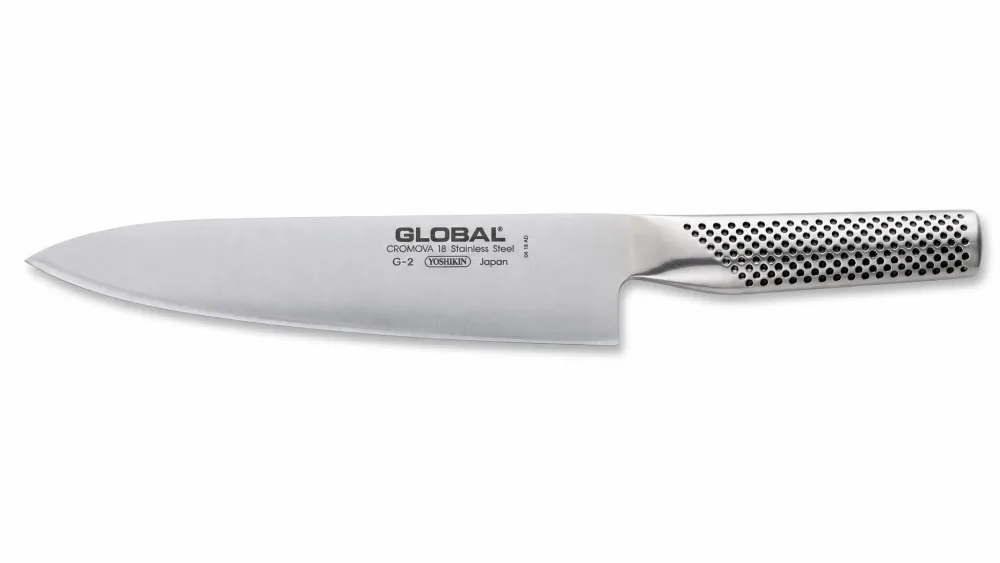
Global G-2Best for beginners who like a slim metal grip200mmCROMOVA 18 stainlessDimpled stainless
Miyabi Birchwood SG2Best premium stainless8-inch nominalSG2 stainless coreKarelian birch, D-shaped
Misono Swedish Carbon DragonBest carbon steel240mmEU carbon, non-stainlessWestern reinforced black wood
Misono UX10 No. 713Best 240mm240mmHigh-purity EU stainlessWestern reinforced black wood

How We Tested These Gyuto Knives

We judge knives the way working kitchens do. Every knife went into a month of real prep in rotation, and we checked the edge after each session rather than waiting for a problem. We scored each knife on how well its edge held up through repeated prep, how comfortable its handle remained during longer sessions, and how easily a home sharpener restored its edge.

Our butcher and sharpening background shapes what we look for: edge geometry, balance point, and what happens at the heel and spine when your hand gets tired.

Our star ratings are editorial judgments from that hands-on work, scored out of five. They are not marketplace averages and we do not convert anyone else's numbers into ours. We also do not compare picks by price here. Instead we describe each one as budget, mid-priced, or premium so you can see what extra spending buys.

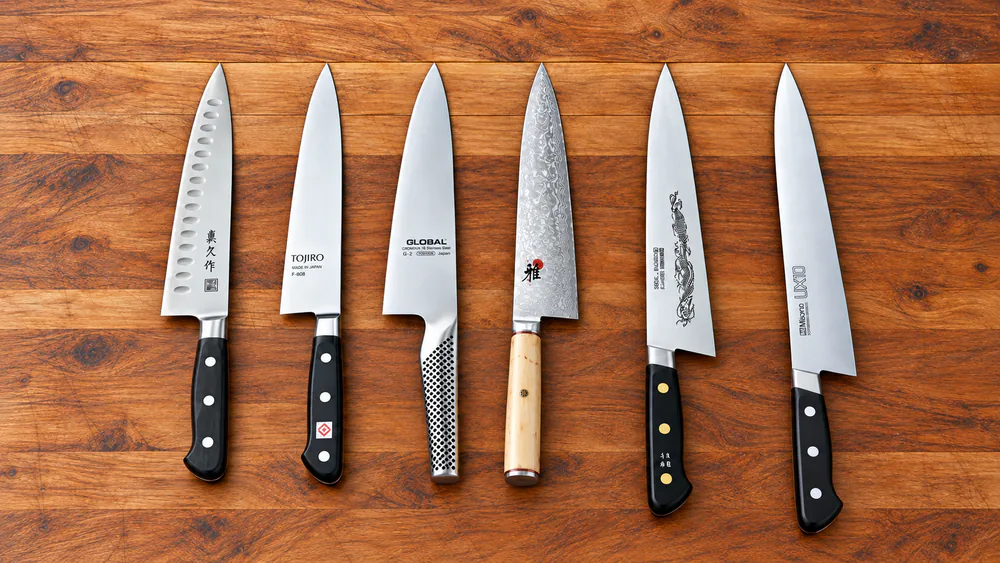
Six gyuto knives laid side by side on a wooden cutting board with the tips aligned to show differences in blade length and profile

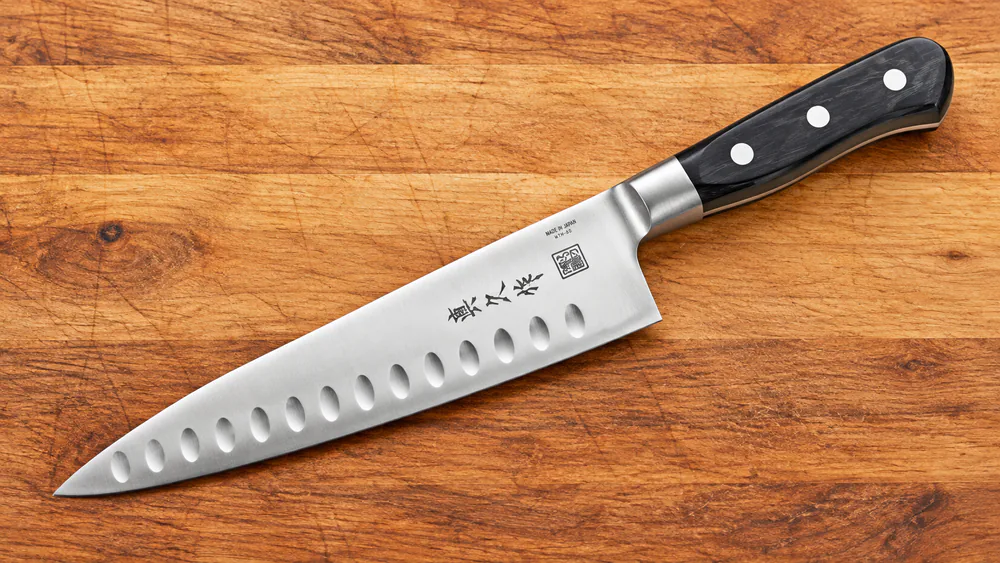
1. Best Overall Gyuto Knife: MAC Professional MTH-80

MAC Professional MTH-80
1

MAC Professional MTH-80

Best Overall
Check Price on Amazon
4.6/5

This is the knife we would buy again. The Western handle gives it a familiar, planted feel, so the move from a German chef's knife takes almost no adjustment, and the thin blade feels nimble through family meal prep.

Pros

  • Familiar Western grip makes the switch from a German knife easy
  • Compact 200mm blade maneuvers easily on a small board
  • 25-year US warranty against material and workmanship defects

Cons

  • Handle can feel short in very large hands
  • Exposed heel can chip if the knife drops onto tile

The thicker spine gives more substance than a very thin gyuto, so slicing stays controlled and comfortable. Heavy cutting suits a thicker knife better, and the handle can feel short in very large hands.

Why This Pick Stands Out

The MTH-80 is built around a molybdenum-vanadium stainless blade with a 2.5mm spine, a bolster, and a pakkawood handle. That spine is the sweet spot for this knife. It gives more substance than a razor-thin gyuto while slicing stays controlled and comfortable.

It is made in Japan, and the 200mm blade is marketed as an 8-inch knife. The maker's 25-year US warranty covers material and workmanship defects for the original purchaser. Accidental damage, corrosion, and chips from normal use are excluded, so read that as defect cover rather than a promise against abuse.

Who Should Skip It

Skip it if your main jobs are heavy chopping, where a thicker knife earns its keep, or if you want the long reach of a 240mm blade.

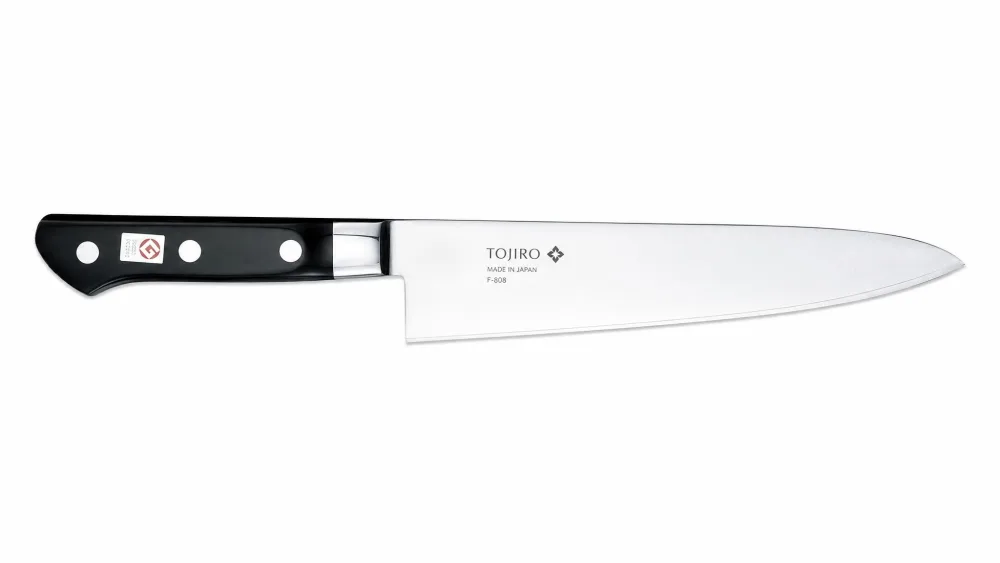
2. Best Budget Gyuto Knife: Tojiro DP F-808

Tojiro DP F-808
2

Tojiro DP F-808

Best Budget
Check Price on Amazon
4.4/5

Where the MAC is nimble and familiar, the Tojiro is the cheapest honest route into Japanese steel. For the money, the F-808 is the best way in. Thin beef and vegetable slices take little effort, tomato skins yield readily, and the edge responds well when it needs sharpening.

Pros

  • VG10 core with stainless cladding in a budget-tier knife
  • 210mm length is a useful general-purpose size
  • Flatter edge favors clean push cuts on herbs

Cons

  • Exposed heel corner can catch the index finger
  • Lettering can wear away and small edge chips can develop with extended use
  • Less knuckle clearance for large hands

The Western handle fits small and medium hands securely, and the pinch grip has useful room. The one catch is the exposed heel corner, which can catch the index finger when your grip crowds the handle.

Why This Pick Stands Out

The F-808 has a 210mm blade, a VG10 core with stainless cladding, a full tang, and a riveted, reinforced laminated handle with a metal bolster. The finish is plain, and that is part of the value.

The flatter edge favors push cuts and left clean herb cuts in our prep. If you want to see what a step up from a basic German chef's knife feels like, this is the entry point. Skip it if you have large hands or want a polished, showpiece finish. Lifetime language appears in the product copy, but we could not confirm the issuer or exclusions, so do not buy on that promise alone.

3. Best Gyuto Knife for Beginners: Global G-2

Global G-2
3

Global G-2

Best for Beginners
Check Price on Amazon
4.2/5

The G-2 cannot give you the heft or the grippy handle of the knives before it, and it makes no pretence of doing so. What it offers is the lightest blade in this group, agile from the first cut. Cleanup is quick with a simple hand wash, and the light blade moves easily through mixed vegetable prep.

Pros

  • Light, agile balance for fast vegetable prep
  • All-metal construction with a quick hand-wash cleanup
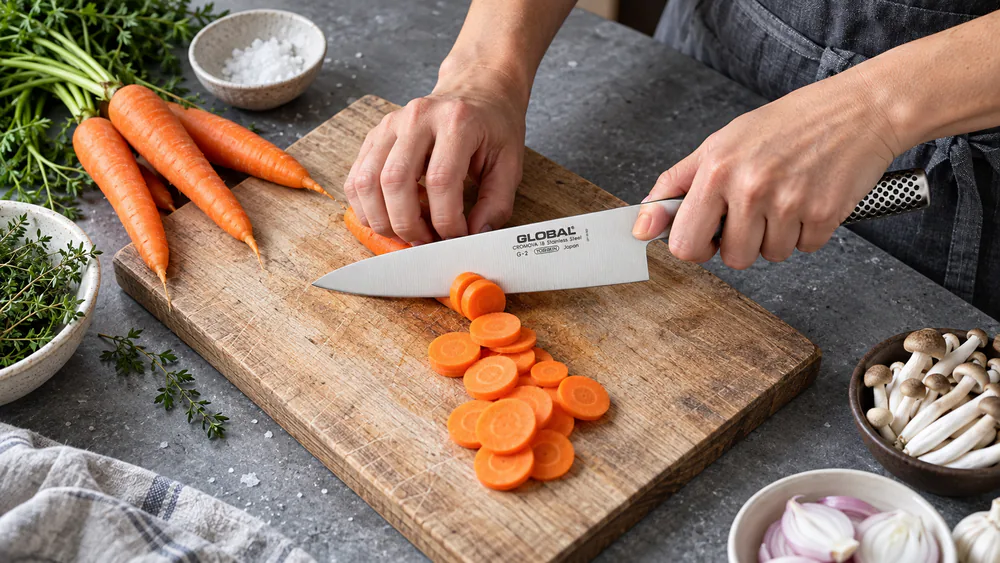
  • Edge separates carrots smoothly

Cons

  • Narrow steel handle is less accommodating to large or greasy hands
  • Moisture in the handle dimples can encourage a tighter, tiring grip

The trade-off is the handle. Moisture held in the dimples can encourage a tighter, tiring grip, and the narrow steel is less accommodating to large or greasy hands than a fuller Western handle.

Why This Pick Stands Out

The G-2 pairs a 200mm blade of CROMOVA 18 stainless with a dimpled stainless handle in one all-metal piece. The double bevel is made for either hand. For a beginner, this is the middle ground between a short utility knife and a full-size chef's knife.

The edge separates carrots smoothly. We did see fine edge rolls appear before meal-prep cutting felt much worse, which is the sort of thing a few passes on a sharpener can fix. Note that the maker advertises limited lifetime defect coverage, but eligibility depends on your country and the seller, so check before assuming a replacement.

Who Should Skip It

Skip it if you cook with wet hands or like substantial weight behind the blade.

A cook holding the Global G-2 dimpled stainless handle in a pinch grip while slicing carrots on a board

4. Best Premium Stainless Steel Gyuto Knife: Miyabi Birchwood SG2

Miyabi Birchwood SG2 8-inch
4

Miyabi Birchwood SG2 8-inch

Best Premium Stainless
Check Price on Amazon
4.5/5

Step up from the Global and the difference shows at once. We would recommend it to a cook who values comfortable handling and easy slicing. Meat and vegetable slicing feels low-effort, the grip is comfortable, and the balance never fights you.

Pros

  • SG2 powder-steel core at 63 HRC with a hand-honed 9.5-12 degree edge
  • Rounded spine and heel avoid corners that press into a pinch grip
  • Low-effort slicing on meat and vegetables

Cons

  • Heavily polished edge can need frequent touch-ups in high-volume prep
  • Natural wood handle calls for gentle washing and prompt drying

The rounded spine and heel avoid the sharp corners that can press into a pinch grip, which keeps the knife comfortable through long slicing. The polished edge can need frequent touch-ups in high-volume prep.

Why This Pick Stands Out

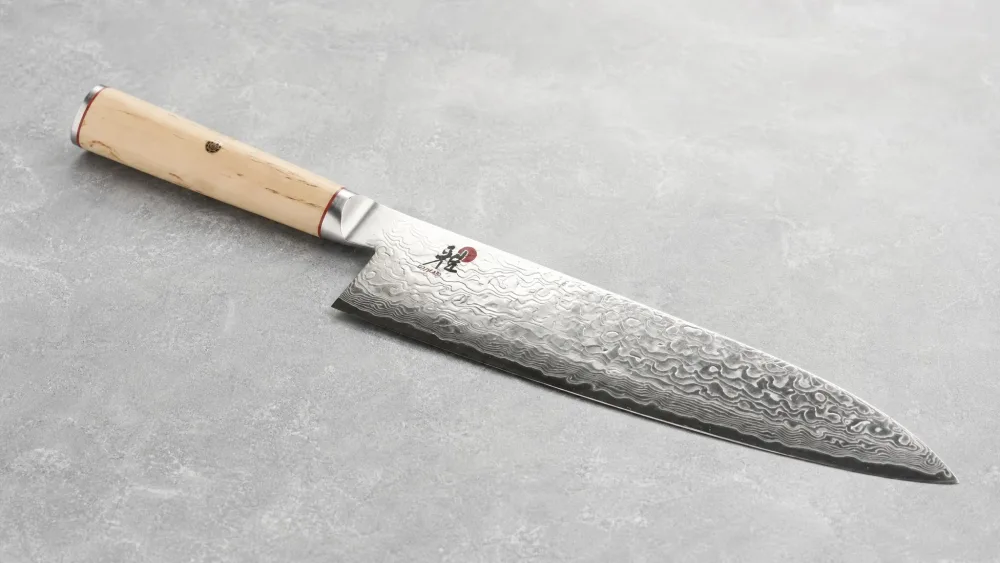
The Miyabi Birchwood is an 8-inch nominal knife with an SG2 powder-steel core, hardened to 63 HRC. It uses a 101-layer construction, meaning the core plus 100 protective layers, finished in flower Damascus with a hand-honed 9.5-12 degree edge. It has a concealed tang and a Karelian birch handle.

What won us over is the rounded spine and heel. Those soft corners avoid the sharp spots that press into a pinch grip. Premium steel does not guarantee a fixed service interval, and an edge sheath may be a separate purchase. Skip it if you want a knife that shrugs off neglect or would rather spend less.

5. Best Carbon Steel Gyuto Knife: Misono Swedish Carbon Dragon

Misono Swedish / EU Carbon Dragon 240mm
5

Misono Swedish / EU Carbon Dragon 240mm

Best Carbon Steel
Check Price on Amazon
4.3/5

Leave the stainless picks behind and the Misono Carbon Dragon asks more of you in return for feel. This is the knife for the cook who wants to feel the steel. A pinch at the bolster balances the blade nicely, and bringing the edge back on a whetstone is straightforward.

Pros

  • Carbon steel that is simple to bring back on a whetstone
  • Relatively flat profile suits push and pull cuts
  • Long 240mm blade with good reach

Cons

  • Reactive blade needs wiping during prep and thorough drying

The engraved grooves need careful drying, the heel can feel sharp, and changes in humidity can make the handle shift enough to leave slight protrusions. The reward is an edge that comes back on a whetstone without a fight.

Why This Pick Stands Out

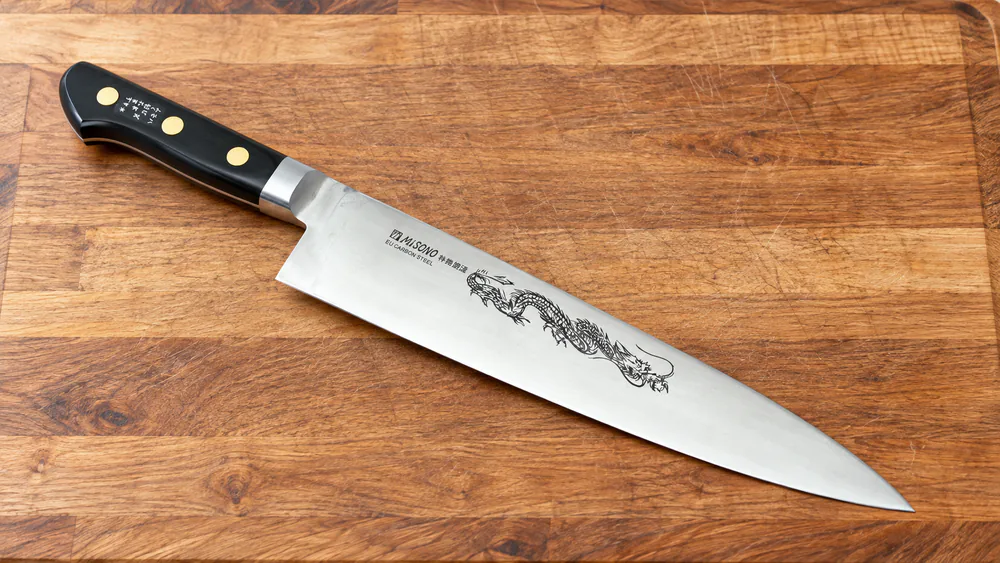
This is a non-stainless EU carbon steel gyuto with a 240mm blade, a 70/30 asymmetric edge, a dragon engraving, and a reinforced black wooden Western handle with a bolster. Pinched at the bolster, the blade balances. Moving back to the handle makes it feel more forward-heavy.

The relatively flat profile suits push and pull cuts better than repeated rocking over herbs, so it rewards a cook who slices rather than chops. Sharpening is the payoff. The steel comes back on a whetstone without drama.

Care Habits and Who Should Skip It

Carbon steel asks for habits. Wipe the blade during prep, dry it before storage, and use a thin coat of food-safe mineral oil for extended storage. A patina does not eliminate the risk of rust, and the engraved grooves need careful drying. We could not confirm the warranty terms for this line. Skip it if you leave knives in the sink or want stainless peace of mind.

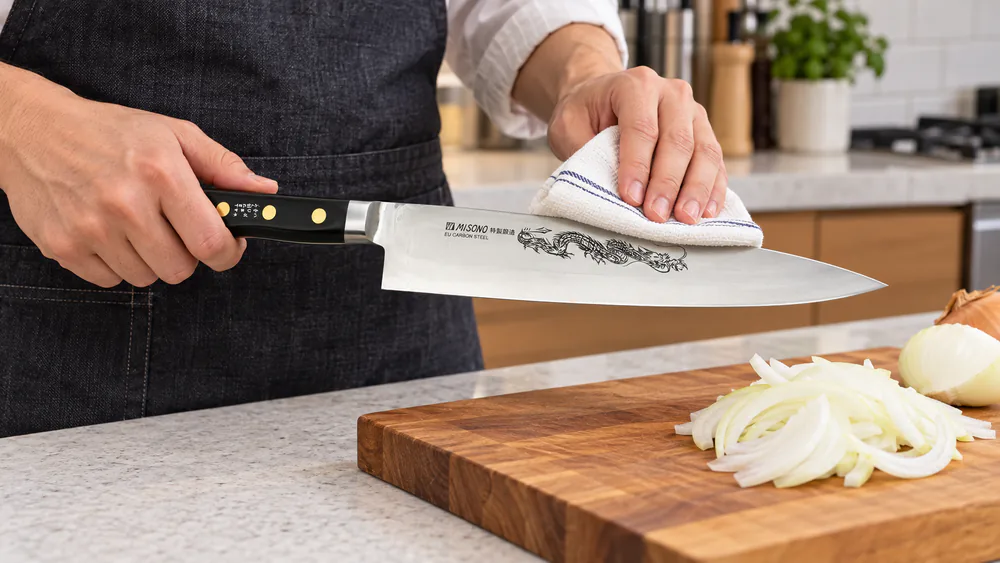
A carbon-steel gyuto with a dragon engraving being wiped dry with a cloth beside a cutting board of sliced onions

6. Best 240mm Gyuto Knife: Misono UX10 No. 713

Misono UX10 No. 713 240mm
6

Misono UX10 No. 713 240mm

Best 240mm
Check Price on Amazon
4.4/5

The UX10 offers the same 240mm reach as the Dragon in stainless steel, with handling that makes a long blade manageable. Its balance makes the 240mm length feel surprisingly controlled, and fine herb slicing and meat cutting stay precise with the slightly blade-forward weight on a roomy board.

Pros

  • 240mm blade gives long slicing travel on a large board
  • Substantial geometry cuts well without feeling like an ultrathin laser
  • Stainless steel at 59-60 HRC

Cons

  • Spine and choil corners can irritate the hand during sustained prep
  • 70/30 asymmetric edge is more demanding to keep sharp

The spine and choil corners can irritate the hand during sustained prep, and harder vegetables demand more effort than the long blade first suggests. On a small board the length feels oversized.

Why This Pick Stands Out

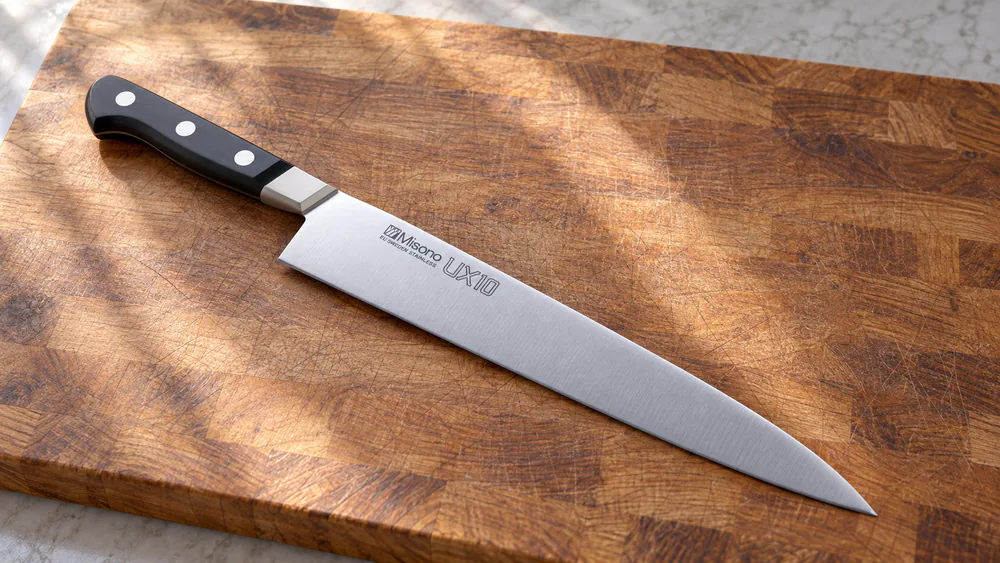
The No. 713 is a 240mm gyuto in high-purity EU stainless steel, with a reinforced black wood handle, a nickel-silver bolster, and a plain blade. It measures 59-60 HRC, a touch softer than the Miyabi, with a 70/30 asymmetric edge on the right-handed version we link. We left exact weight out because published and measured numbers differ; handling is what matters at the board.

Its substantial geometry cuts well without feeling like an ultrathin laser, although harder vegetables can demand more effort. If you want a stainless gold standard for long-blade slicing, this is the closest we found.

Space is the first cost, so skip it if you cook on a compact counter. We could not confirm the warranty terms for this line either.

How to Choose a Gyuto Knife

Blade Length: 180mm, 210mm, or 240mm

A 180mm blade suits a confined board. A 210mm blade is a useful general-purpose starting point, and it is the size most cooks should try first. A 240mm blade gives more slicing travel but needs room, and on a small counter it can feel oversized. Note that two of our picks are 200mm, which sits close to 210mm in practice, and the Miyabi is a nominal 8-inch knife.

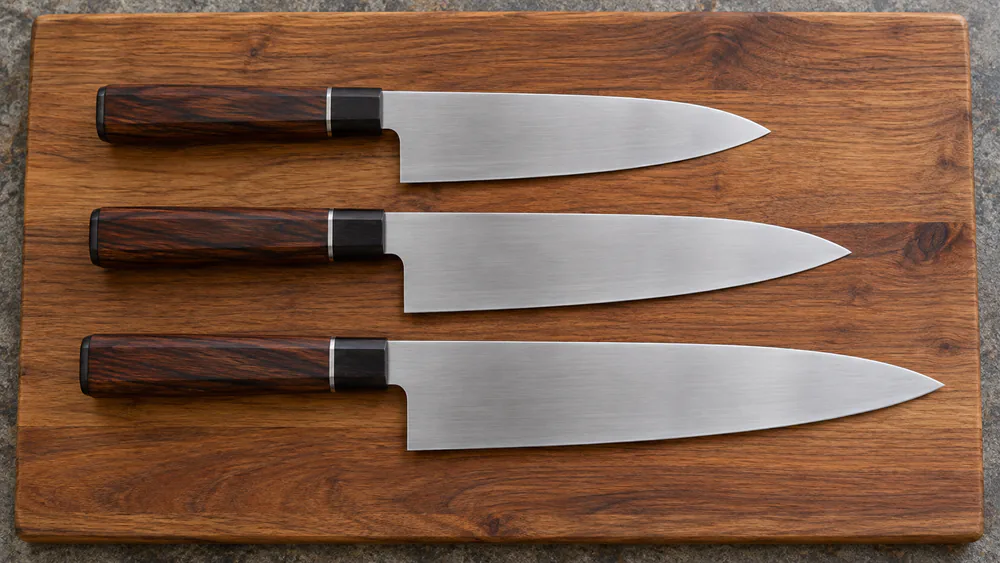
Three gyuto blades of 180mm, 210mm, and 240mm lengths laid next to each other on a board to show the difference in reach

Stainless or Carbon Steel: Maintenance and Edge Retention

Stainless steel is the lower-maintenance choice and covers most of our picks. Carbon steel, like the Misono Dragon, sharpens easily but reacts with food and moisture, so it must be wiped and dried. We cannot promise a universal sharpening interval, because workload, board choice, and edge preparation change the result.

Blade Geometry, Hardness, and Cutting Style

The Miyabi sits at 63 HRC, while the UX10 sits at 59-60 HRC. Geometry matters just as much. A thicker spine, like the MAC's 2.5mm, gives more substance. A flatter profile suits push and pull cuts, while a more curved belly suits a rocking cut. Asymmetric edges, like the 70/30 on both Misono knives, cut well but are harder to keep true.

Western or Wa Handle: Fit, Balance, and Grip

Western handles give a familiar, solid grip. Wa handles are often lighter and move the balance point forward. All six of our picks use a Western-style or all-metal handle, which suits cooks coming from German knives. Hand fit and blade geometry matter more than a decorative pattern, so if you can hold one before buying, do.

Budget, Build Quality, and What You Pay For

Think in tiers. The Tojiro is the budget VG10 pick, though it is not always the cheapest knife on the market. The MAC and the Misono Dragon are mid-priced, the Miyabi is premium, and the UX10 is the splurge pick. Spending more buys better steel, finer finish, and sometimes better comfort. It does not buy a care-free knife, and the premium picks need as much attention as the cheaper ones.


How to Care for a Gyuto Knife

Cleaning, Drying, and Storage

Wash by hand, dry the blade right away, and protect the edge in storage. Use wood or soft plastic boards. Avoid bones, shells, and frozen ingredients, and do not twist through hard food. Natural wood handles like the Miyabi's need gentle washing and prompt drying. For carbon steel, wipe it during prep and add a thin coat of food-safe mineral oil before any long storage.

Sharpening and Everyday Edge Care

Preserve the original edge geometry. Use suitable stones or a competent sharpening service, and keep a light touch on the edge rather than grinding it back every week. Touch up the edge when the knife starts to skate on a tomato skin, before it becomes a chore. The 70/30 edges on both Misonos reward patience.

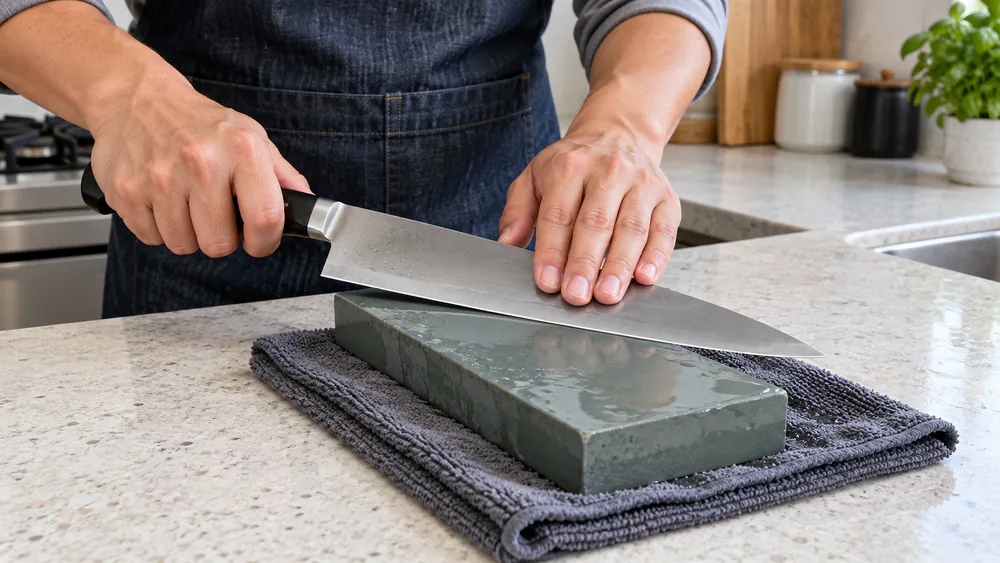
A gyuto knife resting on a wet whetstone at a low sharpening angle with a folded towel underneath

Gyuto Knife FAQs

Gyuto or santoku: which should you choose?

A santoku is generally shorter with a less pointed tip, which suits small boards and simple chopping. A gyuto gives you a longer blade and a point for fine work, so choose it if you want one knife to handle most jobs.

Which sharpening stone should a first-time gyuto owner buy?

A combination whetstone with a medium grit on one side and a fine grit on the other covers routine touch-ups. Keep the original bevel angle, and use a professional service for the 70/30 asymmetric edges until you are confident.

What should you do after chipping the edge?

Stop cutting with it. A tiny chip often sharpens out on a coarse stone, while a larger one is worth taking to a competent sharpener rather than grinding away at home.

Can left-handed cooks use the 70/30 Misono edges?

The UX10 we link is the right-handed version, so left-handed cooks should look for a left-handed edge. The Global G-2 double bevel suits either hand.

Does Damascus steel make a better gyuto?

Not by itself. The Damascus pattern does not establish better cutting. Core steel, heat treatment, and geometry determine performance.

Final Verdict: Which Gyuto Should You Buy?

Match the knife to the cook, not to the badge. On a modest budget, the Tojiro F-808 is the entry point. If you like a light grip, the Global G-2 is the beginner-friendly middle ground. If you enjoy caring for a knife, the Misono Dragon rewards a carbon-steel routine and the Miyabi rewards gentle washing. With a roomy counter and a love of long slicing strokes, the UX10 is the one to step up to.

If none of those describes you, start with the top-ranked pick through the button below.

Read next

Start with our top gyuto

Explore more knife guides and kitchen advice to make your next prep session easier.