
Knives & Cutlery
How to Use a Honing Rod

As an Amazon Associate we earn from qualifying purchases. We may earn a commission from links on this page, at no extra cost to you. Learn more.
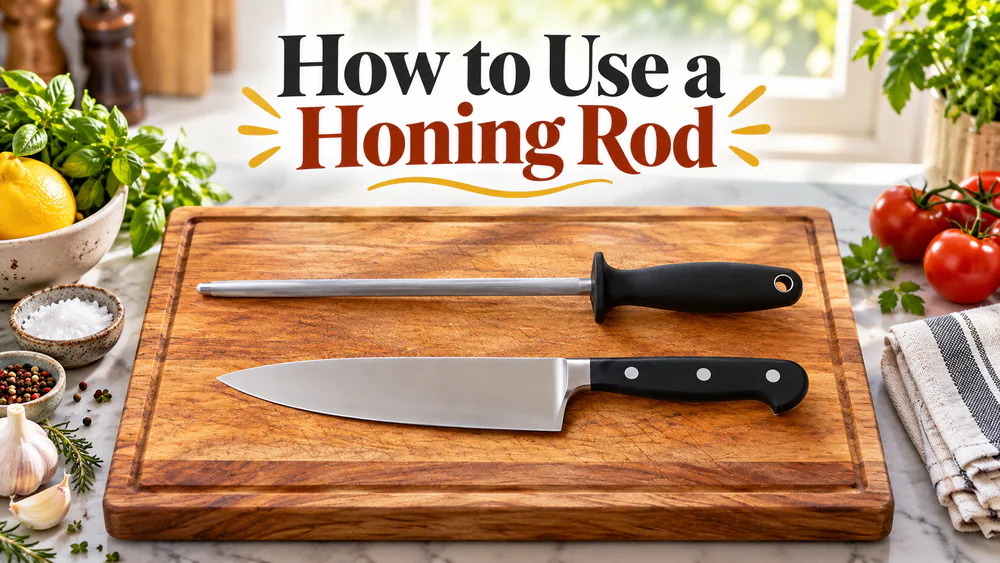
A honing rod maintains the edge you already have between sharpenings. You stand the rod on a board, draw the blade down its length at a steady angle, and use light pressure on alternating sides. A few gentle passes can bring a slightly dulled knife back to useful work. Here is the routine we use and how we tell when a knife needs sharpening instead. Pair it with a good knife sharpener for the rest.
Before you start: check your knife and rod
Not every knife suits every rod. This routine is for straight-edged steel kitchen knives. Serrated, ceramic, and some thin Japanese blades need their maker's care method, which we cover in the FAQ.
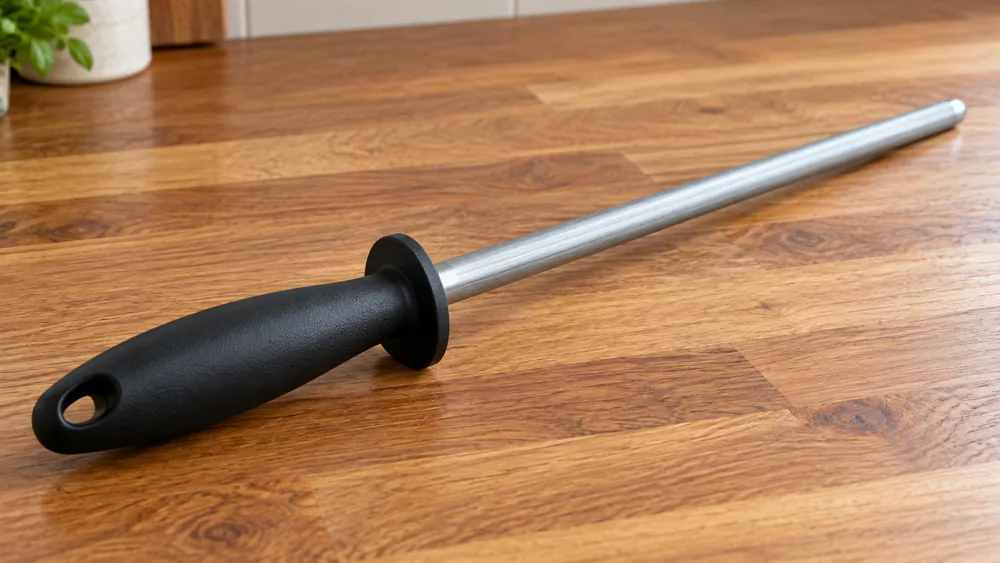
Choose a rod at least as long as the blade. Extra length gives a long chef's knife room for an unhurried sweep, though it makes storage more awkward.
A steel rod handles routine maintenance. Ceramic rods also remove metal, and they chip if dropped. Diamond-coated rods are abrasive sharpening tools, so they are not a light daily touch-up.
Finally, find your knife's honing angle. There is no angle that fits every blade. Shun, for example, sets its honing guide to 16 degrees per side, while other makers specify different numbers. Check the maker's guidance for your knife.
Warning. Keep your holding hand behind the rod's guard and the blade clear of your fingers. Never strike the guard with the knife, and never test sharpness by running a finger along the edge.
How to use a honing rod, step by step
1. Set the rod vertically on a stable surface
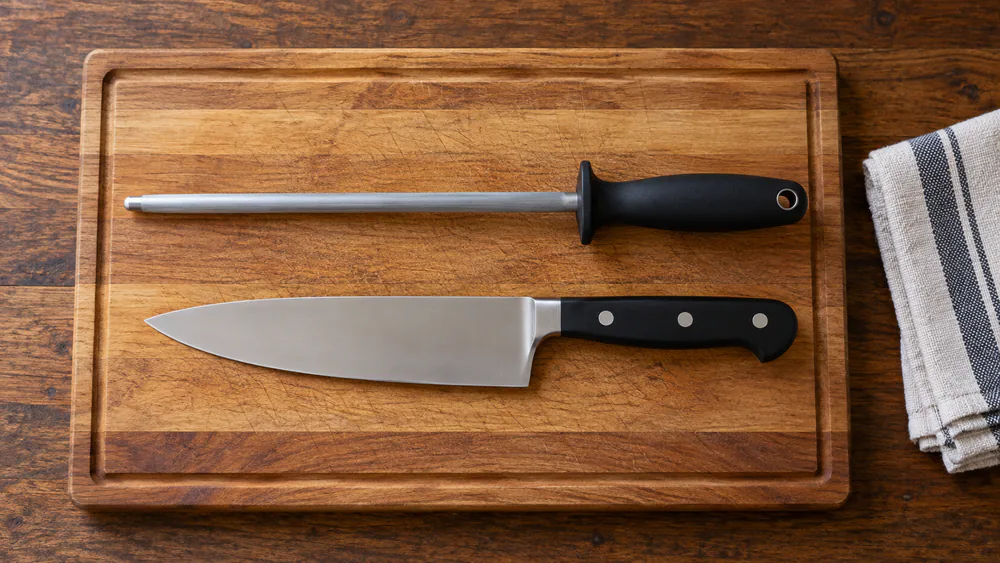
Hold the rod upright in your non-dominant hand. Rest its tip on a dry, firm cutting board, and hold the knife in your other hand.
A supported vertical rod makes a steady angle much easier to hold through the whole stroke. A rubber tip helps keep it from sliding on the board.
2. Match the knife's existing edge angle
Tilt the blade so the edge meets the rod at your knife's honing angle. An angle guide can help you find the starting position, and a nonslip grip makes the rod easier to control.
3. Sweep from heel to tip with light pressure
Start with the heel near the top of the rod, just below the guard. Sweep downward and draw the blade through so contact travels from heel to tip. Keep the angle steady the whole way.
Pressure should be light. A loud rasp tells you that you are pressing too hard, while a light pass sounds much quieter. We listen for the quiet version.
4. Alternate sides and reassess the edge
Switch sides with each pass and work the whole edge. Keeping the angle matters more than speed.
Use a few light alternating strokes, then check the edge. The number of passes you need depends on the edge and the rod, so a fixed count does not guarantee a better result.
5. Clean the blade and check its cutting performance
Wipe the blade after honing to remove metal residue before you cut food. Then slice a sheet of paper in a controlled way. An edge that still tears or will not slice cleanly needs sharpening, not more honing.
Common honing mistakes and how to fix them
Pressing hard. Heavy pressure produces that loud rasp. Lighten up until the stroke sounds quiet.
Changing the angle mid-stroke. Rolling your wrist wobbles the edge. Slow down and let the supported rod do the guiding.
Rushing the count. Extra passes do not rescue a worn edge. Hone a few times, reassess, and stop.
Using the wrong rod. A diamond-coated rod can remove metal you did not need to lose if you use it as a daily touch-up. Save it for sharpening.
Honing an incompatible blade. Serrated and ceramic knives need different care, so skip this routine for them.
How to clean and store your honing rod
Start with a clean blade, wipe a steel rod with a dry cloth after use, and store it dry.
Ceramic needs more care. Removed steel leaves grey or black streaks on the rod, and that buildup can make the surface feel less effective. Scrub the deposits with the rod maker's approved cleaner and scrubber, then rinse and dry. Follow the particular rod's care instructions, because what suits one rod and handle may not suit another.
Handle a ceramic rod gently. It can break from impact, so do not toss it into a crowded utensil drawer.
When to sharpen instead of honing again
Hone when cutting performance starts to slip. Sharpen when honing stops restoring it.
If the edge still struggles to start a tomato slice after honing, more honing is not the next step. Uneven cutting along the edge or corrosion also calls for attention beyond the rod.
Honing keeps a good edge going, and sharpening restores one that has worn away. When the rod stops helping, move to a sharpener rather than repeating the routine.
Frequently asked questions
How often should you hone a knife?
There is no universal schedule. Some makers allow honing after each use, while others suggest weekly or monthly depending on workload. Let changes in cutting performance guide you, since honing frequency depends on the steel, how much you cook, and your cutting surface.
Can you use a honing rod on hard or thin Japanese knives?
Sometimes. Some Japanese knives are designed for a compatible steel, but Japanese origin alone does not settle it. Delicate hard or thin blades need their maker's specific care method, so check before you start.
Can you hone serrated or ceramic knives?
Not with the straight-edge routine above. Serrated knives need the maker's care instructions or a suitable professional service. Ceramic knives need ceramic-compatible sharpening equipment or a specialist, and a ceramic rod made for steel knives is not the same thing.
Read next
Ready to upgrade your kitchen?
Browse our kitchen guides or join our newsletter for more practical advice.