As an Amazon Associate we earn from qualifying purchases. We may earn a commission from links on this page, at no extra cost to you. Learn more.
An 8-inch chef's knife is the one blade every home cook should own. It chops, slices, minces, and handles light butchering, so it does more work than the rest of the drawer combined. Everything else is support: a paring knife, a serrated bread knife for crusty loaves, and maybe a santoku.
To crown the best of them, we put every pick here through a month of real prep, checking edges after each session, and we ran 30+ kitchen knives for this guide. We scored how the edge held up, how the handle wore on the hand, and how easily each steel sharpened back to new. The seven below are the ones we would buy for our own kitchens.
Note. Every knife below earned its rating on the same rubric: edge retention across a month of prep, how the handle wore on the hand in hour three, and how easily the steel sharpened back to new. The full method is spelled out in How We Tested.
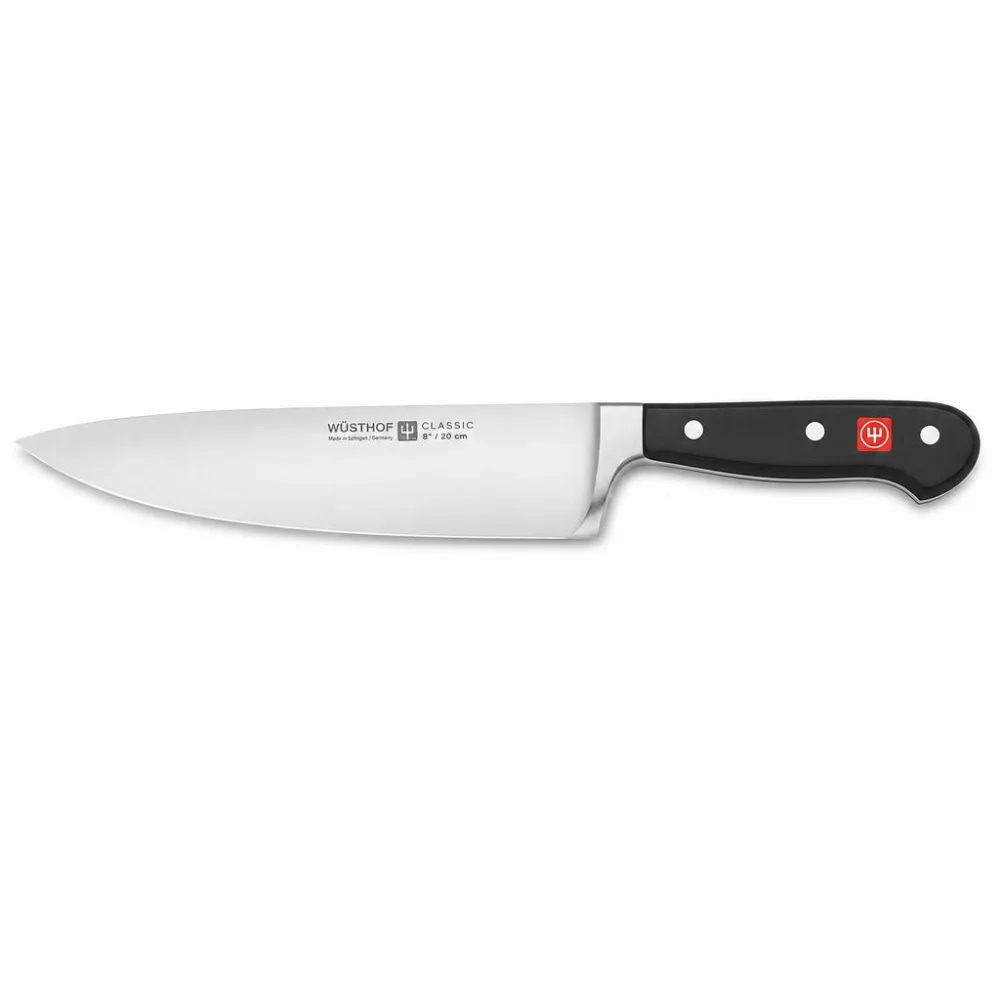
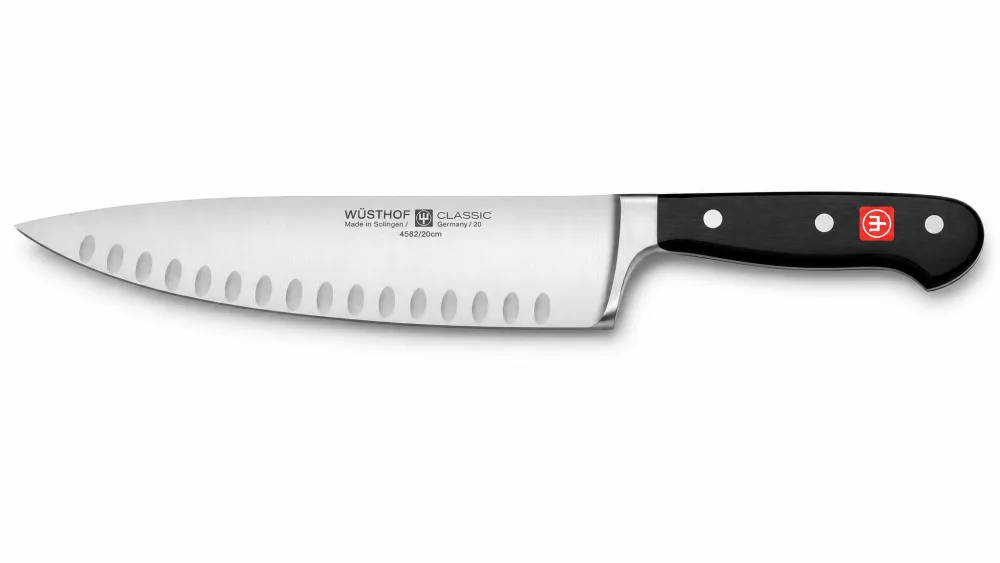
Best Overall Kitchen Knife: Wüsthof Classic 8-Inch
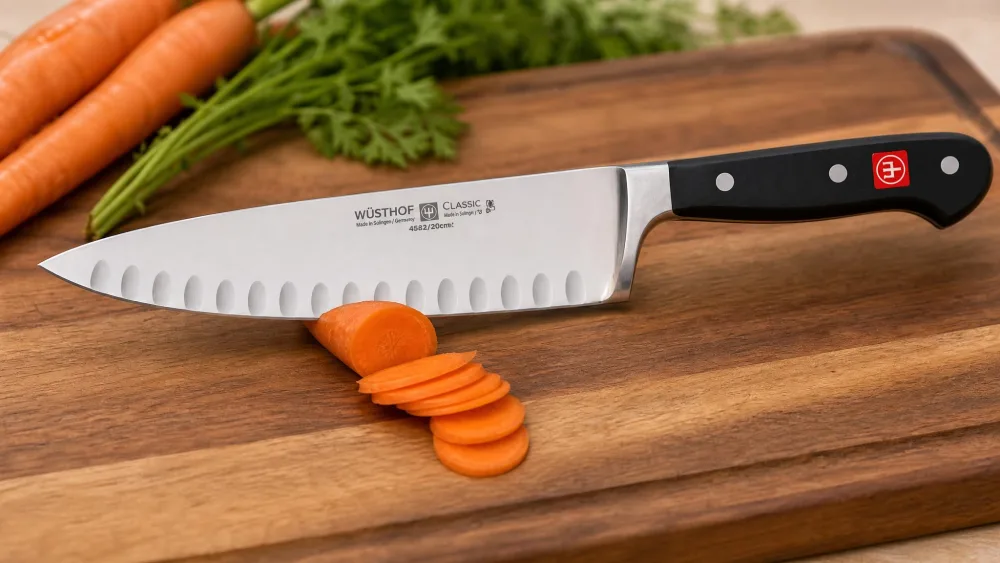
After a month of prep, this is the knife we would keep if we could keep only one. The Wüsthof Classic 8-Inch arrives razor sharp out of the box and cuts through carrots and onions like butter. It is the balanced workhorse of the lineup, and it handled every prep task without fatigue.
Forged steel sharpens back quickly on a home whetstone
Cons
Feels heavy to some cooks
Must be hand-washed and dried immediately
The blade slid through the first onion without pressure, and after a month of carrots and hard squash it showed no chips or scratches. When the edge finally dulled, it came back fast on a whetstone. It spots if left wet, so it needs a hand wash and a dry every time.
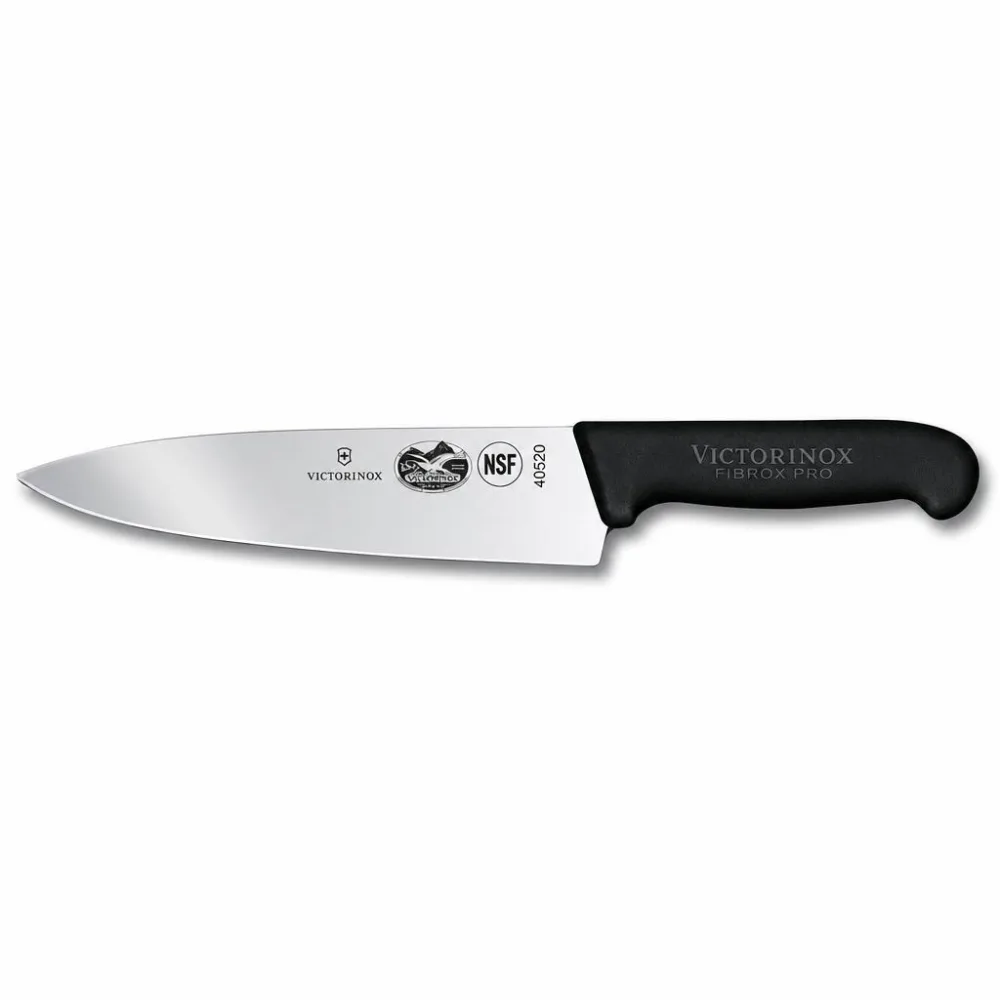
Best Budget Kitchen Knife: Victorinox Fibrox 8-Inch
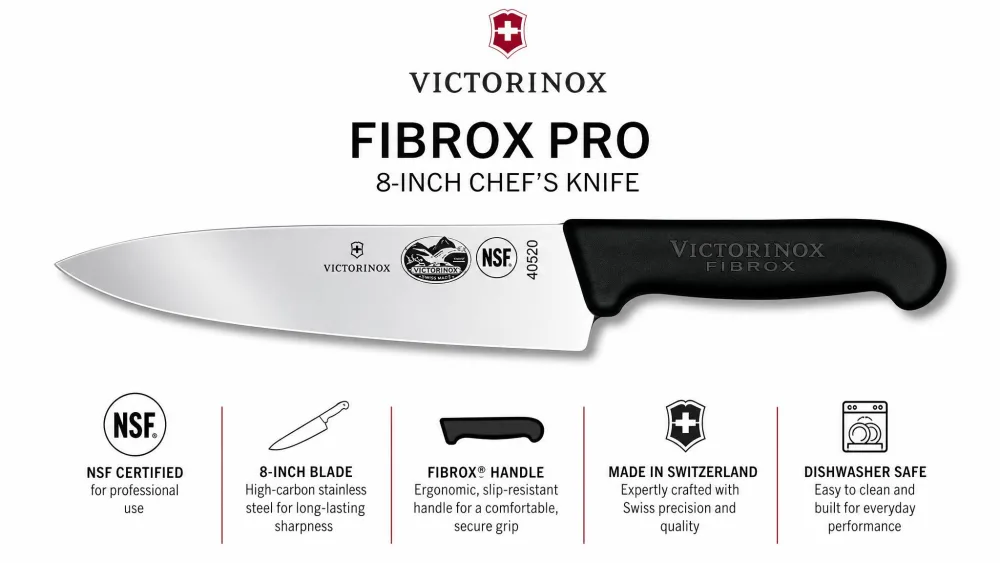
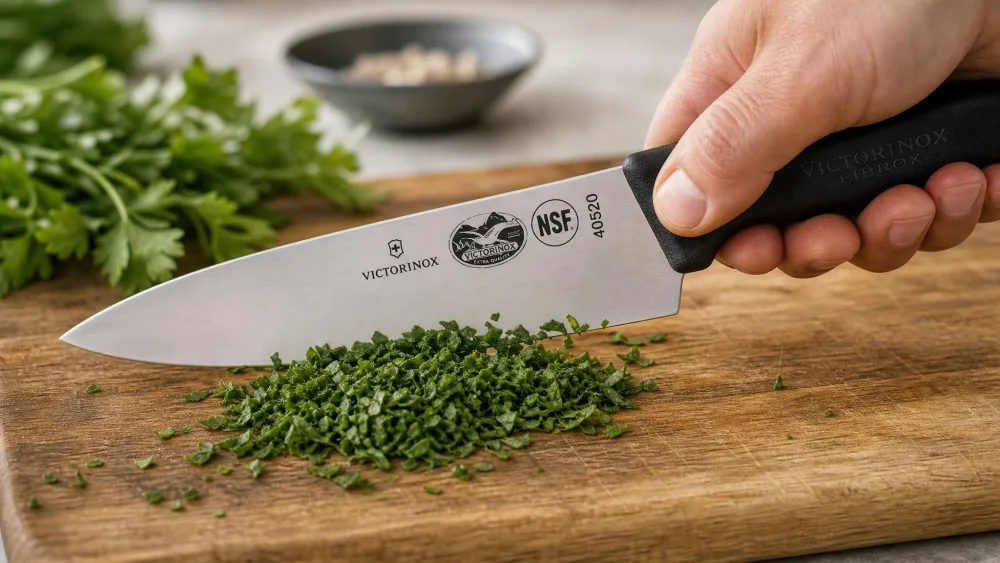
Where the Wüsthof is the knife for a lifetime, the Victorinox Fibrox 8-Inch is the knife for right now, at a fraction of the price. It cuts with near-scalpel ease and sits well balanced with a comfortable non-slip handle, and it is the best chef's knife we tested under $100. It is the obvious first knife or rental-kitchen pick.
Specifications
Blade length
8-inch (7.9 per official specs)
Steel
high-carbon stainless, stamped
Handle
Fibrox TPE, non-slip, dishwasher safe
Weight
about 6.1 to 6.4 oz
Best for
budget workhorse and first knife
Pros
Near-scalpel edge at a budget price
Comfortable non-slip grip
So durable it is almost disposable
Cons
Wide blade is less precise for delicate work
Contoured handle is not for every pinch grip
We treated the Fibrox as a near-disposable workhorse for a month, and it never quit. The factory edge split the occasional carrot at first, but it cleanly halved a butternut squash when we asked. That is the point at this price: you can dull it, replace it, and keep cutting.
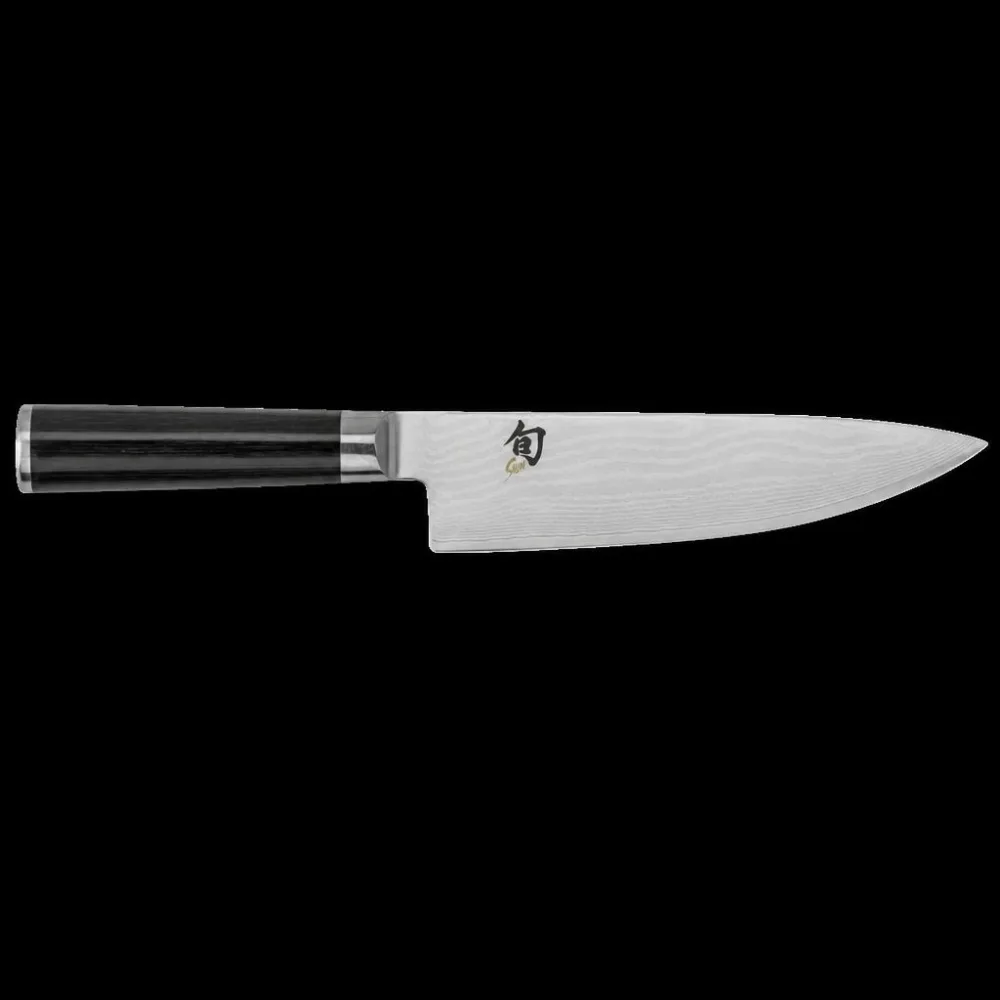
Best Japanese-Style Kitchen Knife: Shun Classic 8-Inch
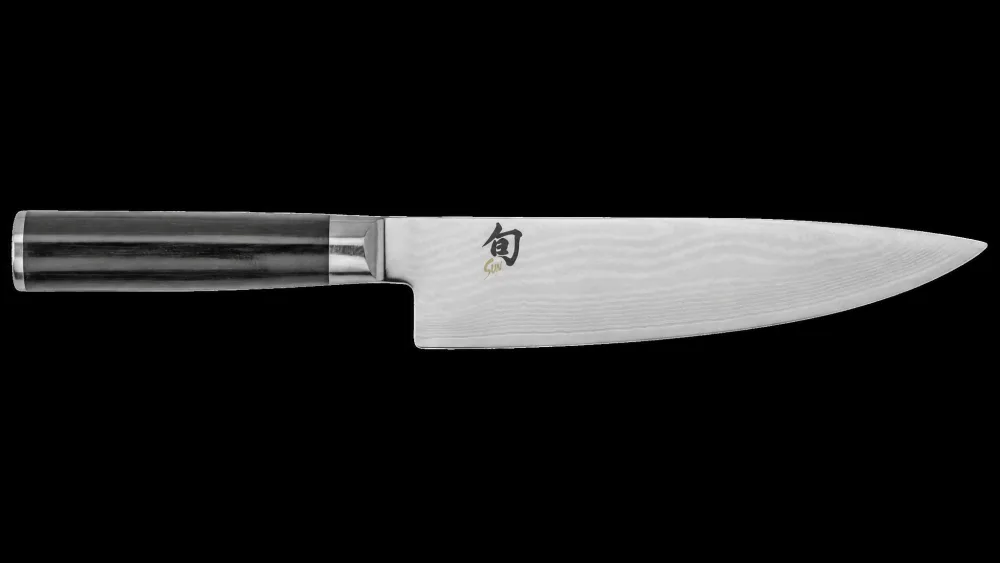
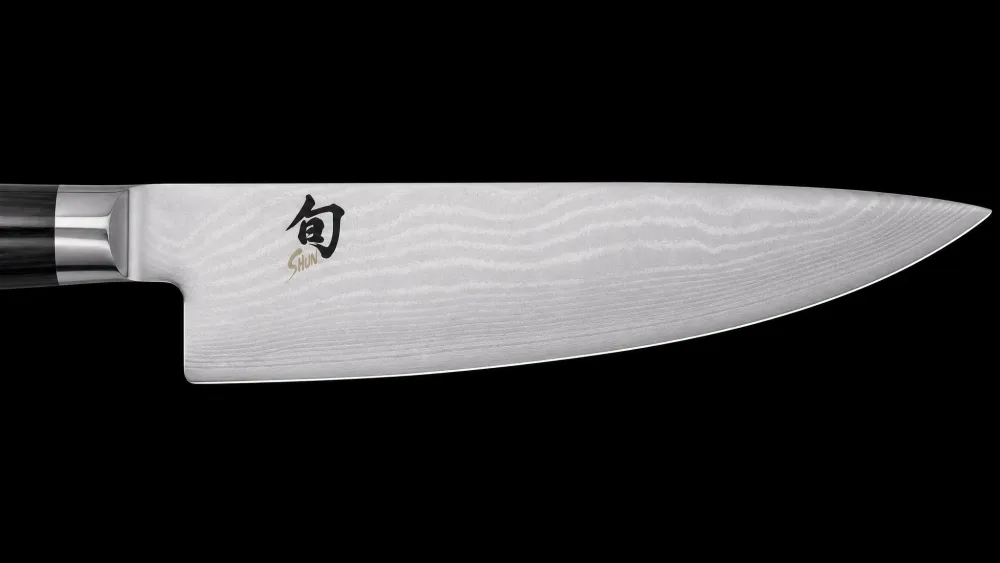
The Shun Classic 8-Inch is the keenest blade in this lineup, and it asks the most care in return. Its VG-MAX core is clad in 68 layers of Damascus steel, hardened to 60-61 HRC and finished to a 16-degree edge, so it cuts keener than the German pair. It is the knife you reach for when you want to feel the cut.
Specifications
Blade length
8-inch
Steel
VG-MAX core clad in 68 layers of Damascus, 60-61 HRC
Handle
D-shaped Pakkawood with steel bolster
Weight
about 6.6 to 7.5 oz
Best for
cooks who want maximum sharpness and careful handling
Pros
Hard Damascus edge glides through produce
Holds its edge for a long stretch
Handcrafted in Seki City, Japan
Cons
Hard steel chips on bone and hard squash
Damages easily if left in the sink
The Shun glided through onions with zero resistance and still sliced clean strips of paper after 60 chops against the board. That performance has a cost: the hard blade chipped on us when we got careless with a hard squash, and it will damage easily if left in the sink.
Shun also offers free sharpening and honing support on its knives, which softens the ownership cost of a blade this hard. A cheaper alternative, the Tojiro DP, gets you much of the sharpness for less.
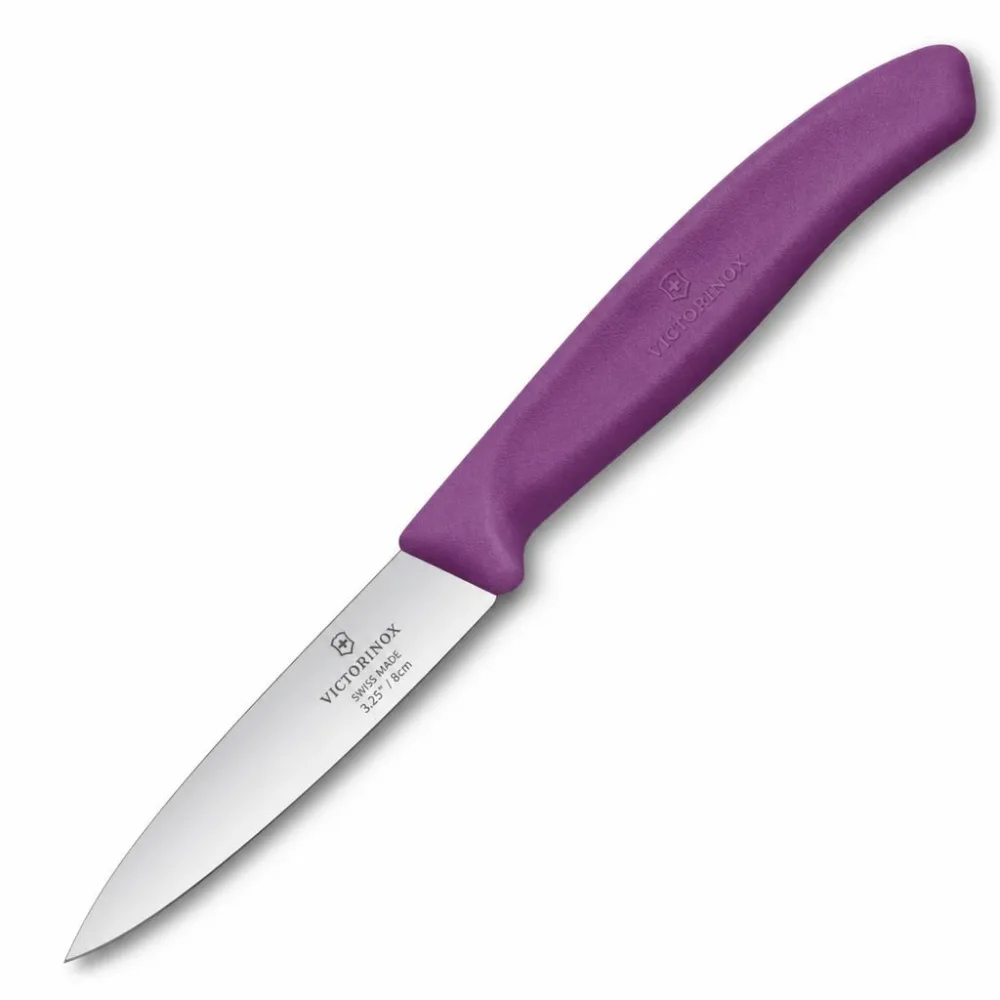
Best Paring Knife: Victorinox Swiss Classic 3.25-Inch
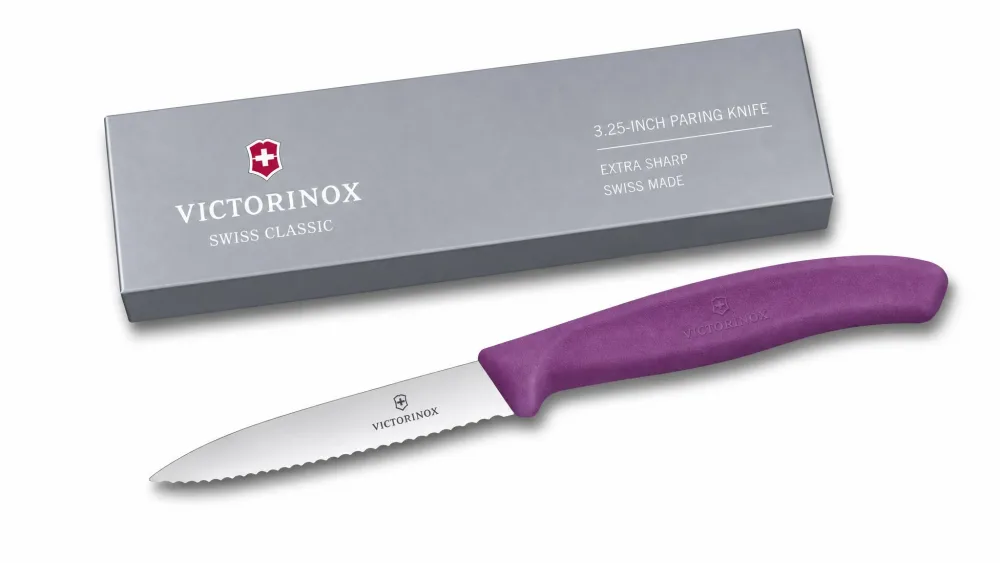
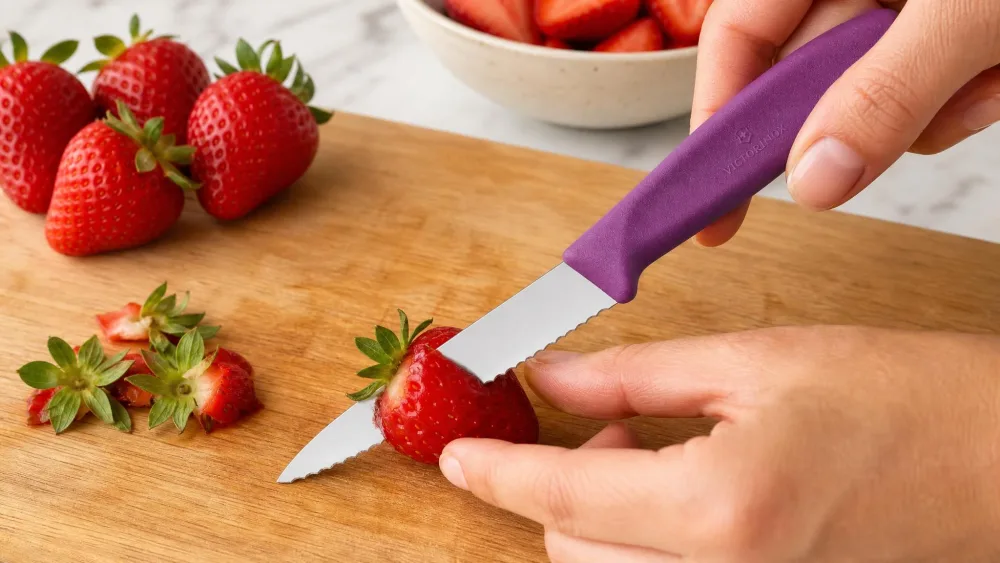
The chef's knives do the heavy work, but the Victorinox Swiss Classic 3.25-Inch Paring Knife is the one we reached for most often. It is the favorite little blade of our test kitchen, sharp enough for peeling, coring, and trimming. At about $8, it costs less than a takeout lunch, so most of us own backups.
Specifications
Blade length
3.25-inch spear point
Steel
stainless steel
Handle
textured polypropylene, non-slip, dishwasher safe
Weight
about 0.7 oz
Best for
peel, trim, and detail work
Pros
Stays sharp through constant use
Takes a fresh edge quickly
Costs about $8, so backups are painless
Cons
Handle is molded plastic, not premium
Too small for heavy chopping
We used it constantly for a month, hulling strawberries and peeling apples. The textured non-slip handle stayed secure through wet prep. After repeated trips through the dishwasher with the rest of the load, it did not discolor or tarnish.
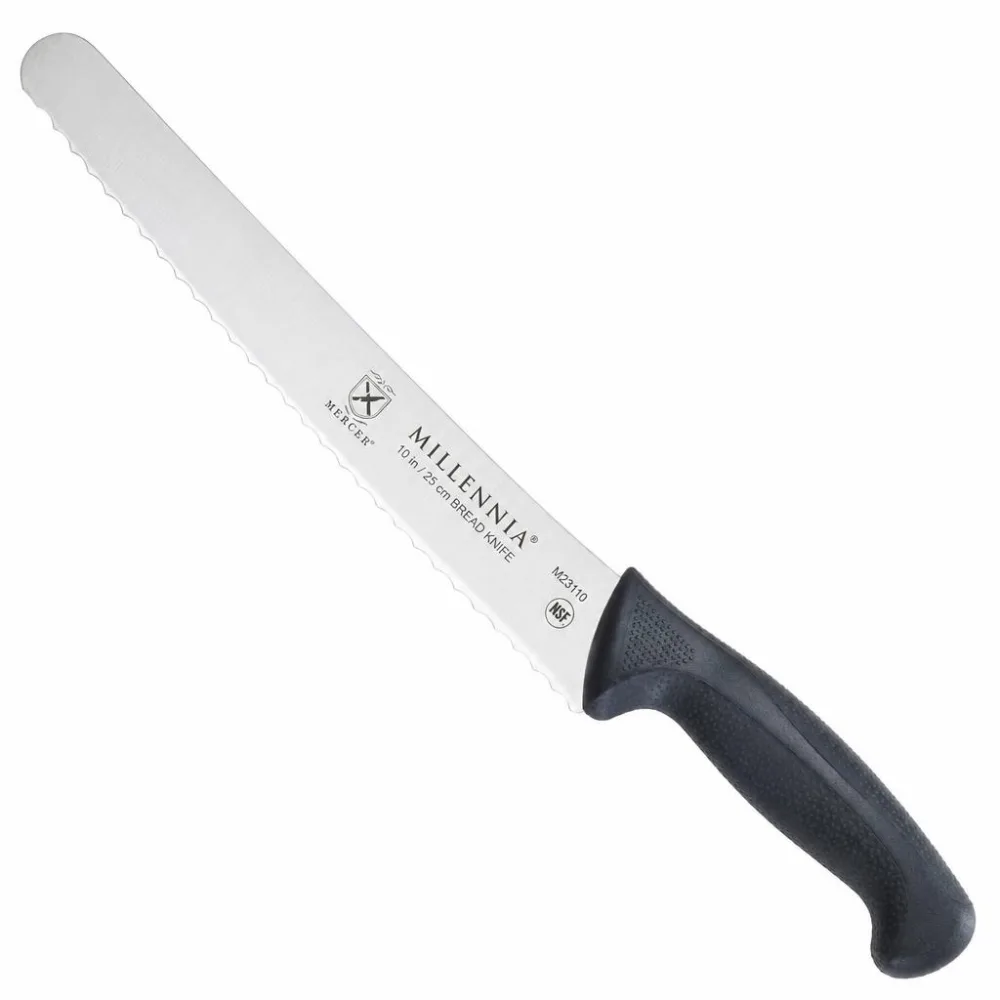
Best Bread Knife: Mercer Culinary Millennia 10-Inch
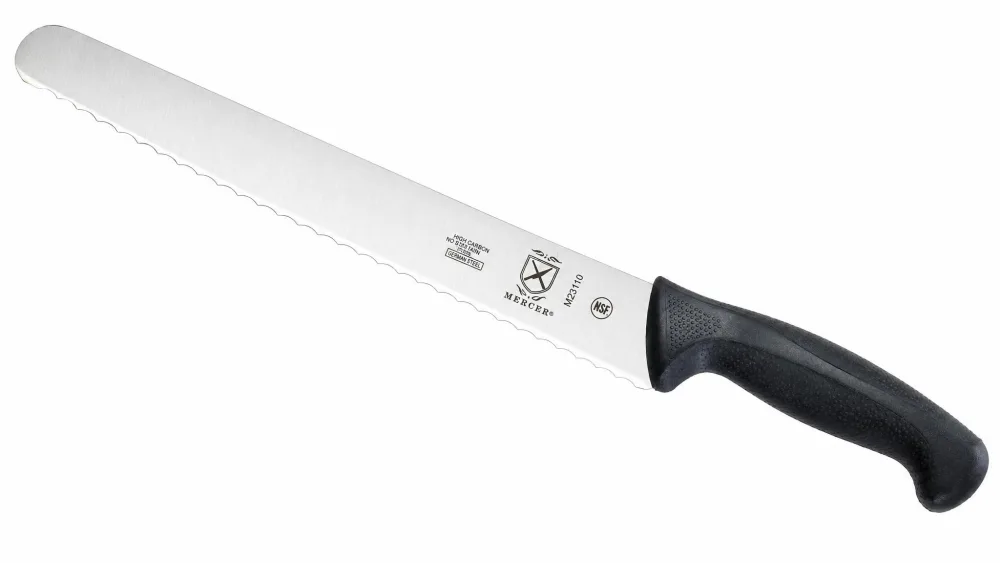
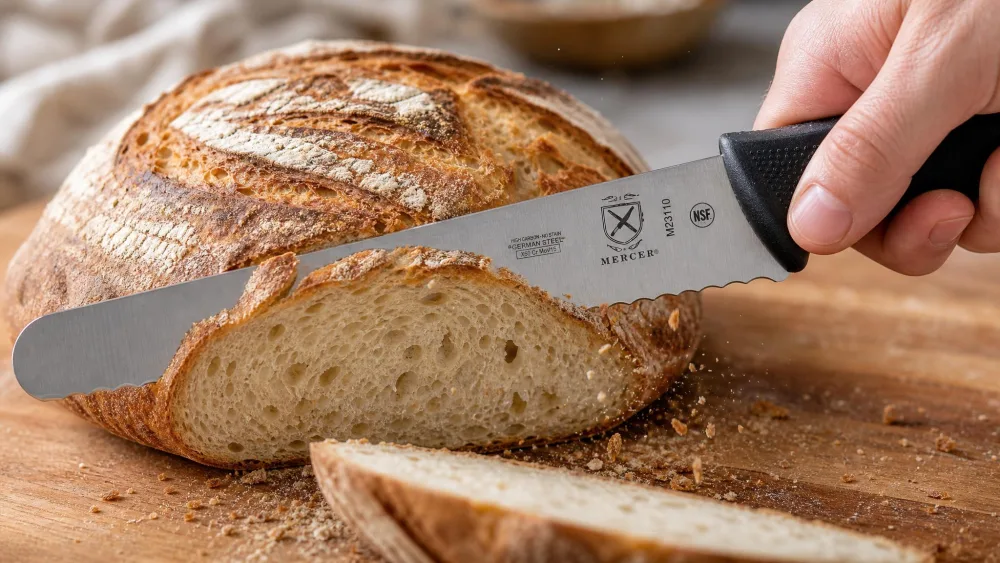
No chef's knife, whatever the steel, saws through a crusty loaf as cleanly as a dedicated serrated blade, and the Mercer Culinary Millennia 10-Inch Bread Knife is the best value we found. Its wavy-edge blade cut through thick-crust artisan loaves with no effort and did not crush a single crumb. For about $16, it replaces bread knives that cost three times as much.
Specifications
Blade length
10-inch wavy serrated edge
Steel
high-carbon Japanese steel, stamped
Handle
textured Santoprene over polypropylene
Weight
not published
Best for
crusty and artisan loaves
Pros
Saws crusty loaves without crushing the crumb
Balanced with a grippy handle
A fraction of the price of premium bread knives
Cons
Handle feels less premium
Not dishwasher safe
We ran the Mercer across sourdough, rye, and baguette every week for a month, and it never dragged or tore. The serrations do the work, so the edge barely wears, and the handle grips well and sits balanced in hand. It is not dishwasher safe, so we hand-washed it after every loaf.
Bread is the one job this blade exists for, and it is the pick we would hand to anyone who bakes at home. If you only slice the occasional sandwich loaf, a chef's knife will do; for real crusty bread, this is the tool.
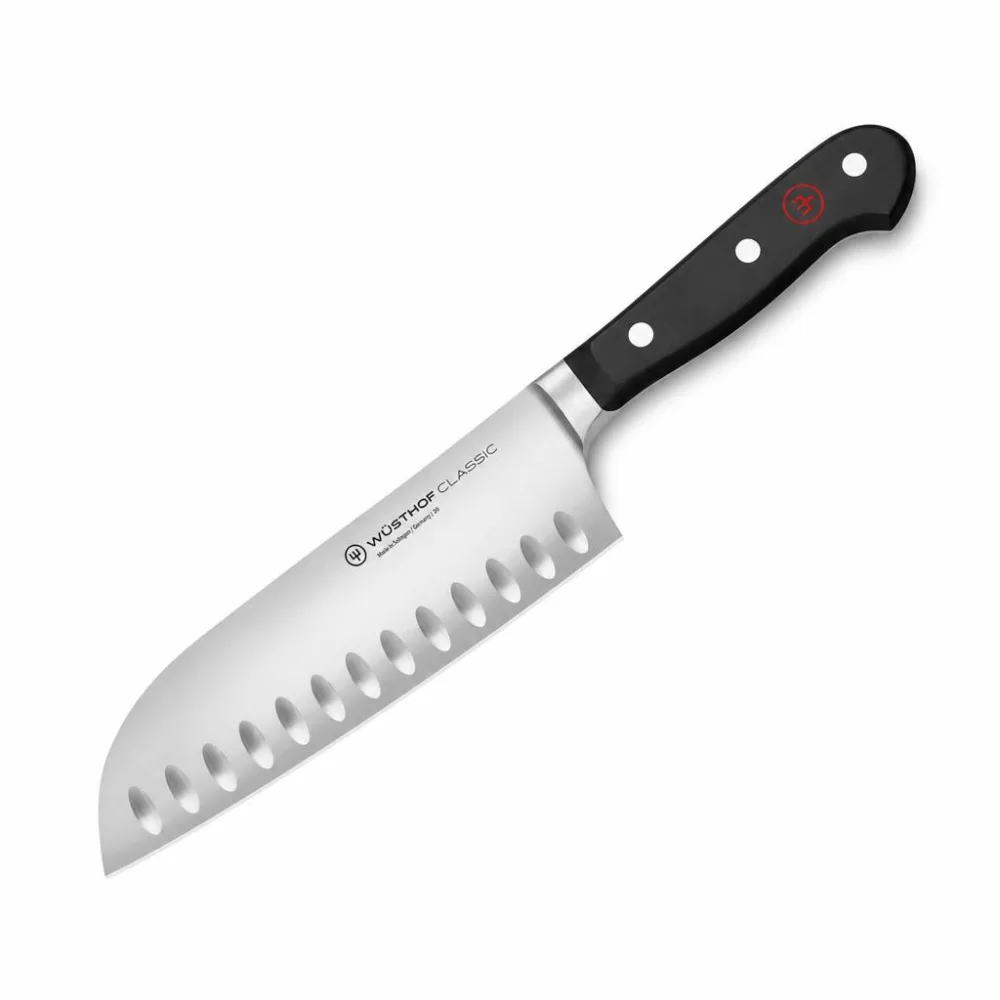
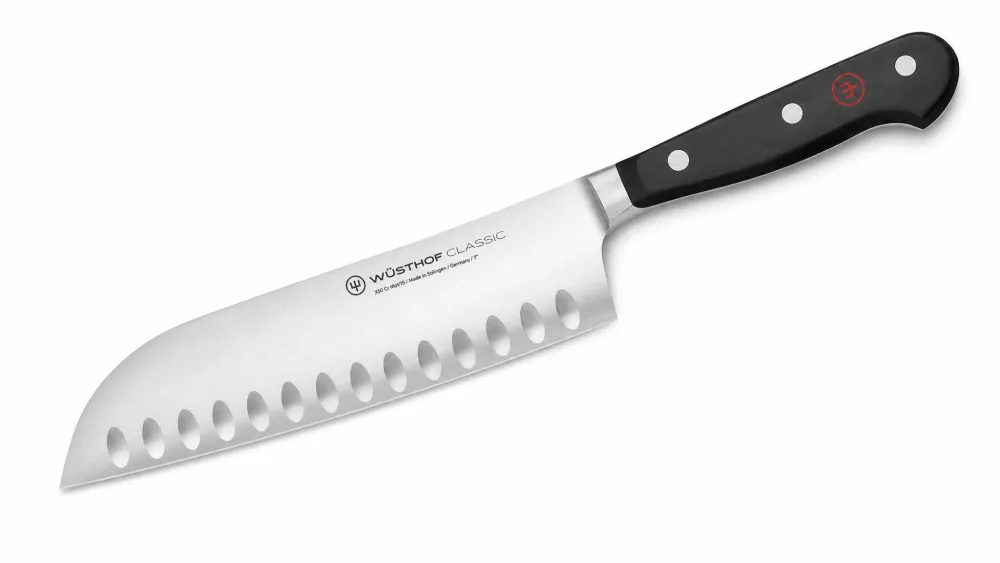
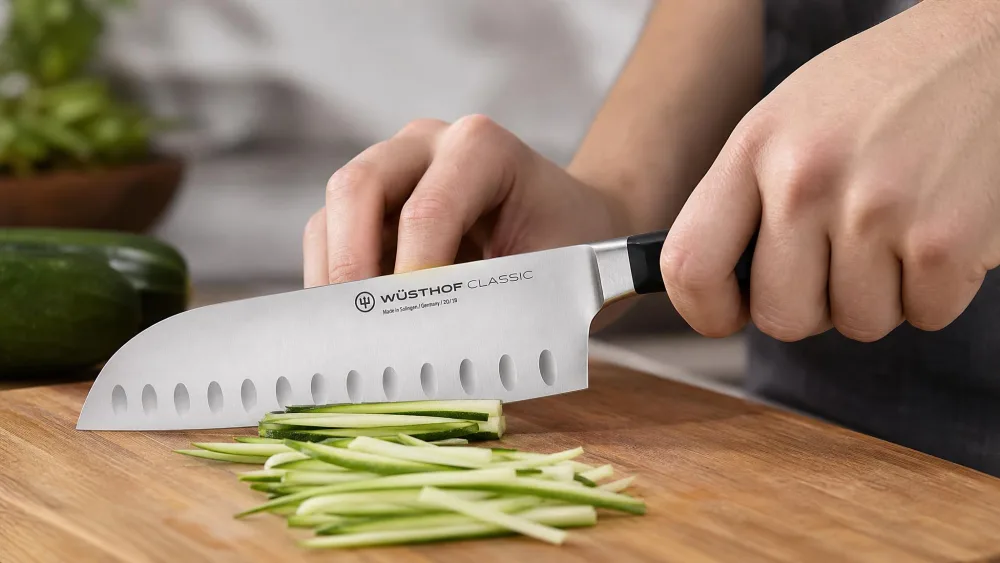
The santoku splits the difference between a chef's knife and a Japanese blade, and the Wüsthof Classic 7-Inch Santoku became the mincing machine of our kitchen. It quickly became the first knife we grabbed when the pile of vegetables was tallest.
Specifications
Blade length
7-inch hollow edge (granton)
Steel
X50CrMoV15, precision forged, 58 HRC
Handle
POM, triple-riveted, no bolster
Weight
about 8.3 oz
Best for
vegetables and fine slicing
Pros
Thin blade makes very thin slices
Lighter than a chef's knife in hand
The mincing machine of the kitchen
Cons
Narrower blade suits less heavy chopping
No bolster to protect the grip
We used the hollow-edge blade for a full month of slicing and mincing. Thin slices of carrot came out clean, and soft produce did not stick to the blade thanks to the granton edge. The balance stayed comfortable through long prep sessions, though this is a specialist blade, so we would not reach for it on a whole chicken.
Best Kitchen Knife Set: Material The Knives + Stand
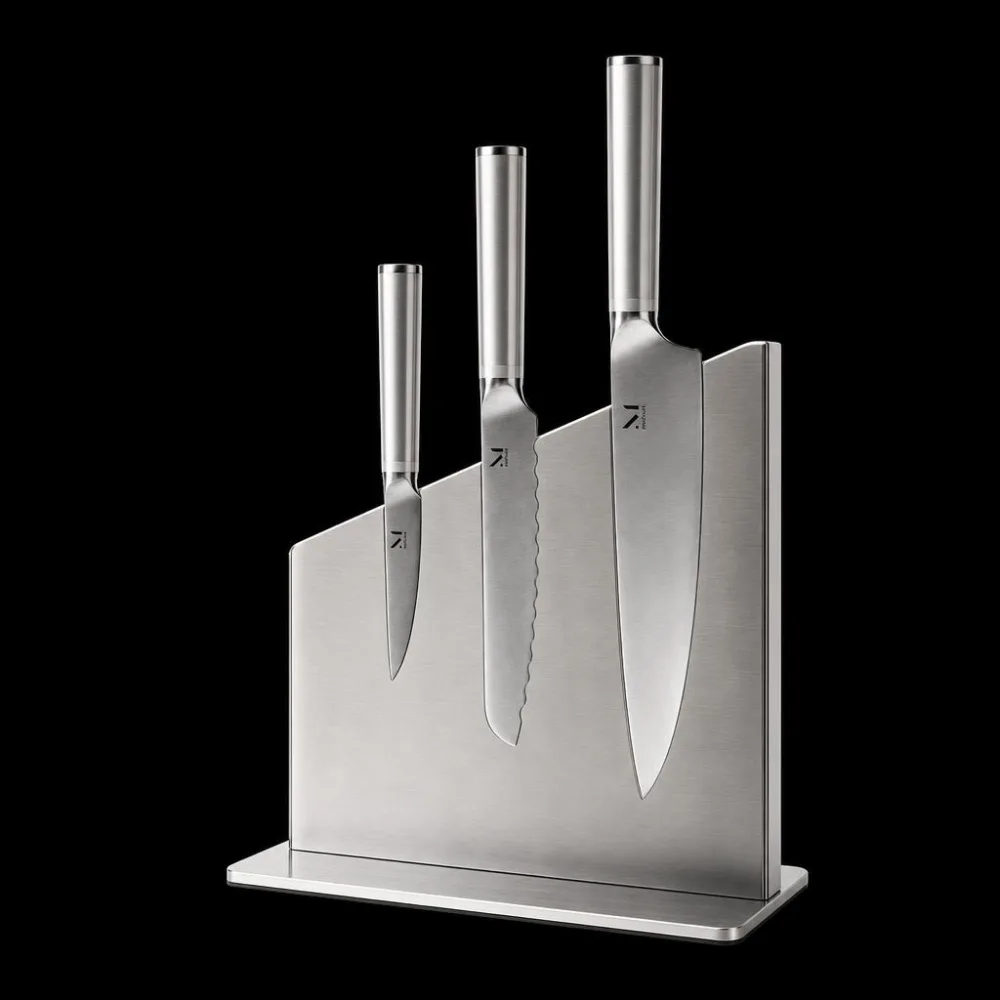
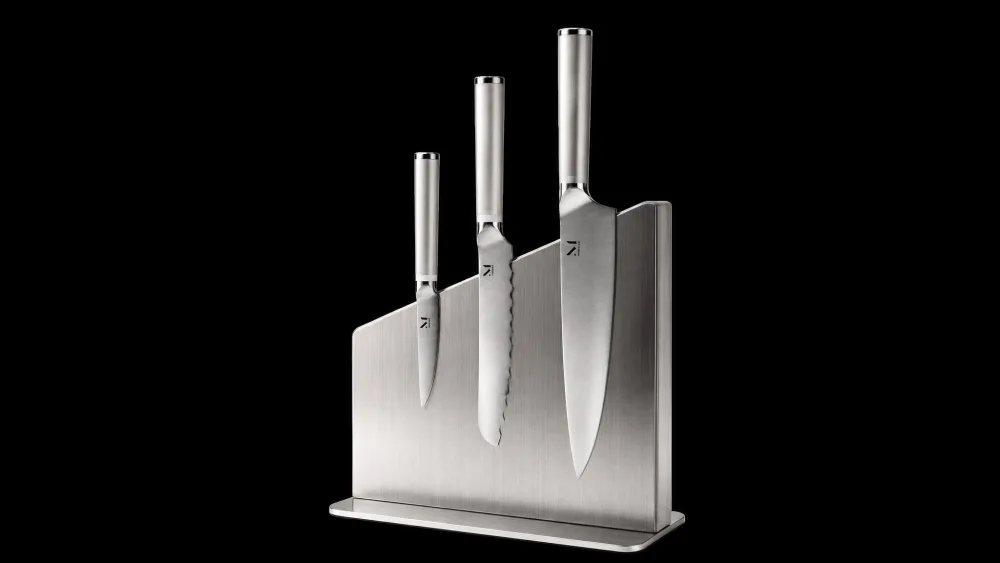
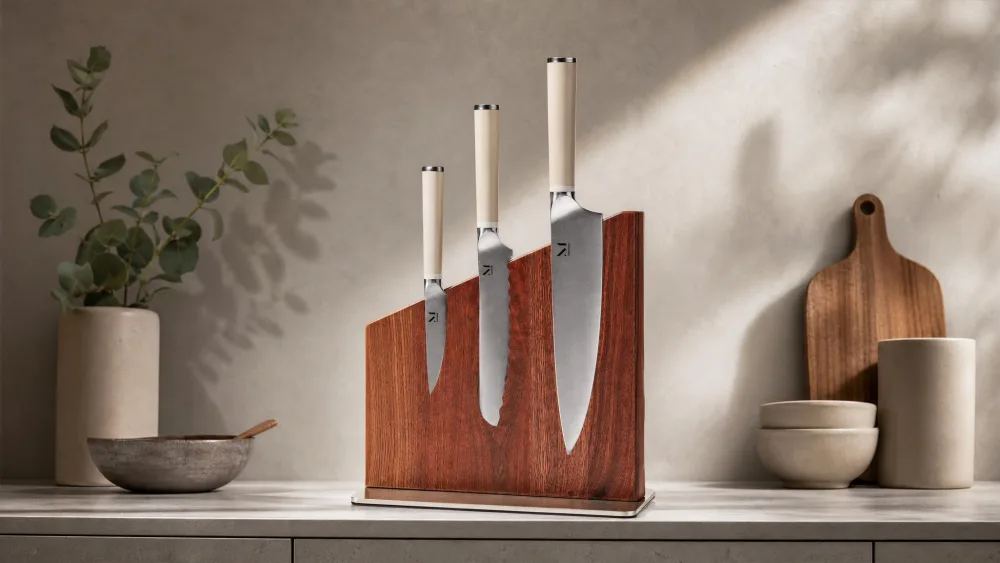
If you want a complete kit in one box, Material The Knives + Stand is the only set in this guide. It bundles a chef's knife, a serrated bread knife, and a paring knife into a magnetic walnut or beech stand, and the flagship Material The 8″ Knife is the best of the three.
Specifications
Contents
3-knife set (8-inch chef, 6-inch serrated, 3.5-inch paring)
Steel
Japanese high-carbon and stainless, cryo-tempered
Handle
matte composite, full tang
Stand
FSC-certified walnut or beech, magnetic
Best for
compact design-forward kitchen
Pros
Magnetic stand beats slotting into a block
Chef's and bread knives handle everyday prep
Compact, design-forward footprint
Cons
Blades run thicker than premium Japanese steel
Knives are hand wash only
The magnetic stand took us a day to get used to, because you pull the knives up rather than out, but it beats fishing a blade out of a narrow slot. The chef's knife cut through soft and hard ingredients with ease, and the serrated blade stayed gentle on croissants.
The blades run slightly thicker than premium Japanese steel, the trade for everyday toughness. The stand holds up to eight knives, so this set leaves room to grow. It is the pick for a design-forward kitchen that wants a full kit without a bulky block.
The Kitchen Knives Compared
Here is how the seven picks line up. Prices are the reference values we tracked while testing and drift across retailers and weeks; weights are approximate.
Product
Price
Blade length
Steel type
Handle
Weight
Rating
Wüsthof Classic 8-Inch Chef's Knife
$170
8-inch
X50CrMoV15 forged, about 58 HRC
POM triple-riveted
about 8.5 oz
4.8
Victorinox Fibrox Pro 8-Inch
$44
8-inch
high-carbon stainless, stamped
Fibrox TPE
about 6.1-6.4 oz
4.7
Shun Classic 8-Inch
$186.99
8-inch
VG-MAX Damascus, 60-61 HRC
D-shaped Pakkawood
about 6.6-7.5 oz
4.6
Victorinox Swiss Classic 3.25-Inch
$8
3.25-inch
stainless steel
textured polypropylene
about 0.7 oz
4.6
Mercer Millennia 10-Inch Bread Knife
$16.15
10-inch
high-carbon Japanese steel
Santoprene
not published
4.7
Wüsthof Classic 7-Inch Santoku
$170
7-inch
X50CrMoV15 forged, 58 HRC
POM triple-riveted
about 8.3 oz
4.7
Material The Knives + Stand
about $284-$355
8-inch (set flagship)
Japanese high-carbon + stainless, cryo-tempered
matte composite
not published
4.5
If you are willing to buy direct, the Made In 8-Inch Chef's Knife is a forged French blade worth considering, though its edge dulled faster than the German pair on delicate work.
How We Tested Kitchen Knives
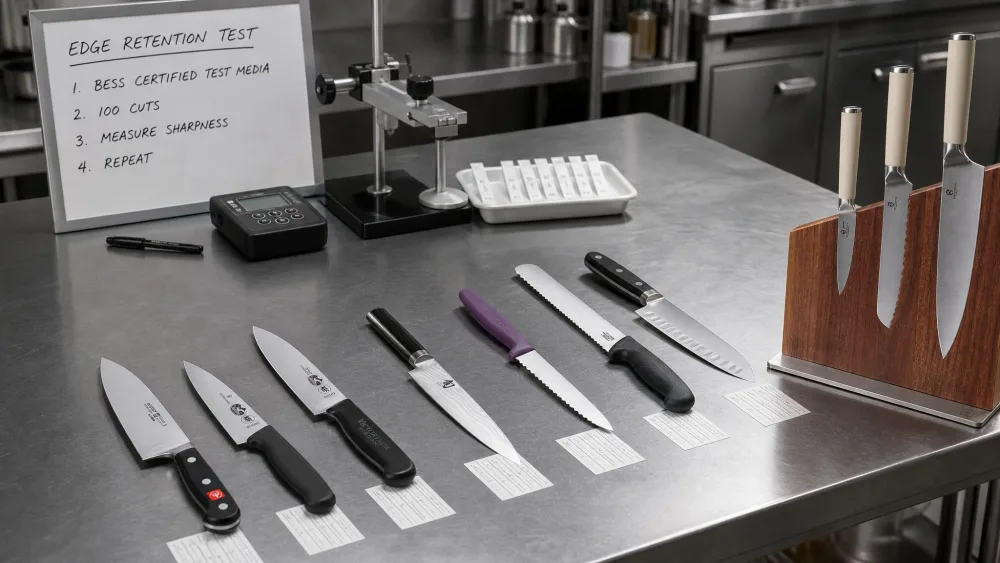
We ran 30+ kitchen knives for this guide, and every pick here went through a full month of real prep in rotation, with edge checks after each session. We bought every blade and set we tested with our own money, at retail. No manufacturer sent us samples for this guide, no brand paid for a place in the rankings, and we take no placement fees. The same policy stands behind every knife guide we publish.
Each knife started with a paper-slice test for factory-edge sharpness, then moved into real cutting: onions, carrots, celery, tomatoes, herbs, and hard squash. We repeated chops against the board and re-checked sharpness after each session. We also scored handle comfort in hour three, balance, and how easily the steel sharpened back to new, because an edge you cannot refresh is a knife you will stop using.
That 30+ field is the standard scope for a rigorous roundup. Good Housekeeping has evaluated 45+ chef's knives in the last three years, Bon Appétit tested more than 30, and Wirecutter has chopped through 100+ since 2013, so our field sits in the peer norm.
How to Choose Kitchen Knives
A good knife comes down to a handful of choices: the steel, the construction, the handle, and how you care for it. Here is what matters, in the order it matters.
Blade Material: Carbon vs Stainless vs Damascus
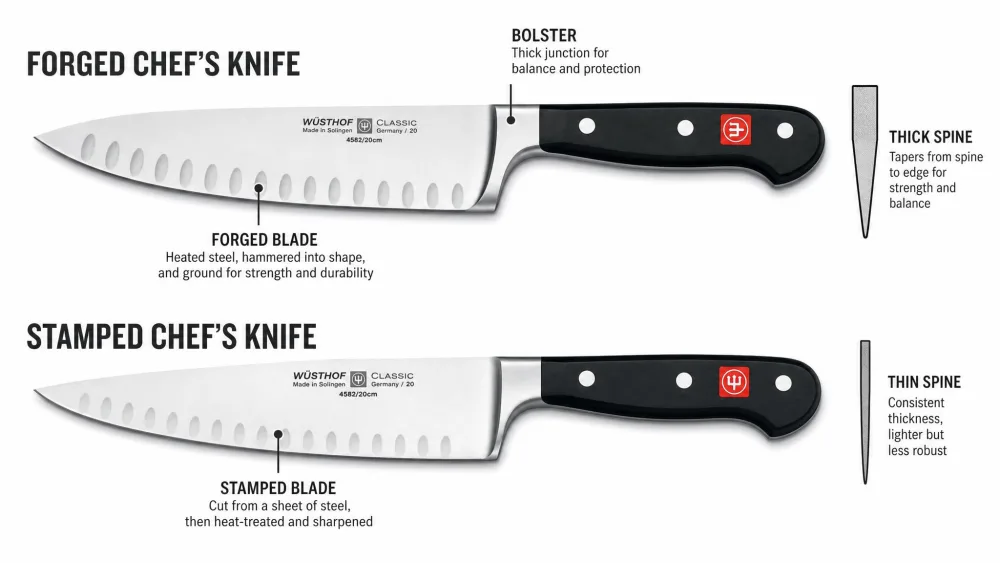
Most kitchen blades are stainless or high-carbon stainless, which resists rust. True carbon steel takes a stunning edge but stains and rusts quickly, so it suits cooks who love sharpening. Damascus is a cosmetic layering of steel, like the 68 layers on the Shun, that does not change how the blade cuts. Construction matters too: forged knives are hammered from a single piece of steel and balance better, while stamped knives are punched from a sheet, cost less, and weigh less. For the full argument, read about forged versus stamped knives.
German vs Japanese Steel
German knives like Wüsthof and Henckels run on softer steel, around 55 to 58 on the HRC scale, which makes them tougher and more forgiving. Japanese knives from Shun, Miyabi, Tojiro, and MAC use harder steel, closer to 60 to 62 HRC, so they take a keener edge but chip more easily. The number itself, hardness on the Rockwell scale, is the whole trade: harder steel holds an edge longer and sharpens finer, while softer steel bends rather than breaks and comes back fast on a steel rod.
Criterion
German / Western
Japanese-style
Hardness
55-58 HRC
60-62 HRC
Edge angle
15-20 degrees
10-15 degrees
Edge retention
Good, but softens sooner
Longer-lasting hard edge
Chip resistance
Tough and forgiving
Harder, chips more easily
Sharpening
Easy to hone on a steel rod
Needs whetstone work
Best for
Day-to-day all-purpose prep
Precision slicing and fine work
Handle, Weight, and Grip
The handle decides whether you will still like the knife in hour three of prep. Look for a full tang, where the blade runs through the handle, because that gives balance and durability. A full bolster protects your grip but makes the heel hard to sharpen, while a bolsterless heel lets you choke up into a pinch grip. Weight is personal: the Wüsthof Classic, at about 8.5 ounces, feels solid but heavy to some, while the Fibrox, around 6 ounces, is lighter on the wrist.
Knife Care, Honing, and Sharpening
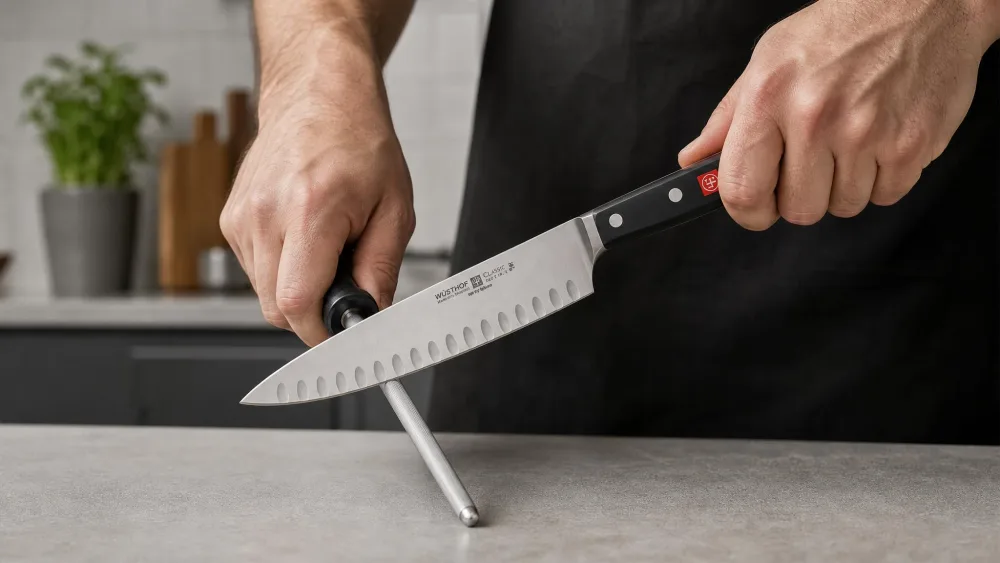
Honing with a steel realigns the edge and should happen before each use, and it takes ten seconds. A full sharpening removes steel and is only needed every 6 to 12 months, so more than one pro sharpening a year is usually a waste. If you want to do it yourself, Japanese sharpening stones are the standard tool, and a cheap two-sided stone beats any pull-through gadget. Cut only on wood, plastic, or rubber boards, never on glass, granite, or ceramic.
Tip. Hone with a steel before each use and sharpen every 6 to 12 months. Ten seconds of honing keeps an edge working far longer than any sharpening routine.
Warning. Never put a good knife in the dishwasher. The blade knocks against glass and ceramic, both harder than steel, and that dulls the edge fast. Hand wash and dry after every use.
The Best Kitchen Knife Brands to Know
If you are starting from a blank drawer, these are the brands worth knowing. Wüsthof and Zwilling (Henckels) are the German heavyweights, both forged in Solingen and built for decades of abuse. Shun and Miyabi are the premium Japanese names, with hard Damascus blades that need more care. For the best value on the shelf, Victorinox makes the Fibrox and Swiss Classic lines we recommend, and Mercer supplies much of the commercial kitchen gear you see in restaurants. Tojiro is the Japanese value pick, while Global and MAC offer hard, light blades.
Frequently Asked Questions
Are expensive kitchen knives worth it?
If you cook several times a week and maintain the edge, a knife in the $100 to $250 range pays for itself, and our Best Overall pick is proof. Occasional cooks can get a perfectly good chef's knife for around $50. Above $250 you are mostly paying for design and materials, which is why a knife can cost $2,000.
How many kitchen knives do you really need?
Three. An 8-inch chef's knife does the bulk of the work, a paring knife handles detail, and a serrated bread knife deals with crusty loaves. A santoku is a useful fourth for vegetable-heavy cooks.
Which knife handles are actually dishwasher safe?
Fewer than you would think. Among our picks, the Victorinox Fibrox's TPE handle and the Swiss Classic paring knife's polypropylene handle both carry a dishwasher-safe label. The Wüsthof forged knives, the Mercer bread knife, and the Material set are hand wash only, so read the label before you load the basket.
Is a knife set worth it, or should I buy individual knives?
Buy individual knives unless the set earns its place. Our Best Knife Set pick, Material, wins because the magnetic stand is genuinely better than a slot block. Most sets pad the count with knives you will never use, so three good individual knives beat a block of eight.
How long do quality kitchen knives last?
Decades, if you care for them. Good Housekeeping's long-term testing found the Wüsthof Classic still in fine shape after years of use, and Wüsthof's lifetime warranty backs it. A knife is not a gadget you replace; it is a tool you maintain.
Final Verdict: Which Kitchen Knives Should You Buy?
If you only buy one knife, make it an 8-inch chef's knife and buy the best one your budget allows. The Victorinox Fibrox delivers most of the Wüsthof's performance for about a quarter of the price, making it the smarter buy for a first kitchen or a rental. Add a paring knife and a serrated bread knife, and you have a complete kit for less than most knife blocks cost. Then learn ten minutes of sharpening, because a maintained $50 knife out-cuts a neglected $200 one every time. If you already own a solid chef's knife, the santoku is the upgrade we would make next.