As an Amazon Associate we earn from qualifying purchases. We may earn a commission from links on this page, at no extra cost to you. Learn more.
Wondering which knife brand actually holds an edge through a week of dinner prep? We put that question to the test, because a chef's knife is the one tool you touch every time you cook, and the name on the blade tells you a lot about how it will feel in hour three of a long prep session.
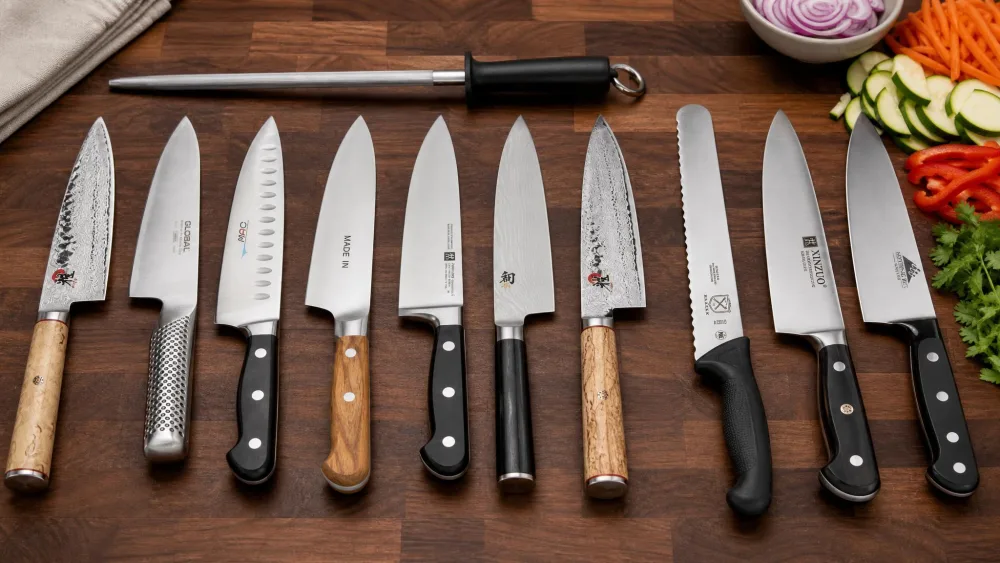
Our test kitchen runs knives the way a working butcher does: weeks of daily prep, month-long edge-retention checks, and a hard look at how easily each blade takes a fresh edge on an ordinary home sharpener. We judged every brand by edge retention after a week of real cutting, handle comfort deep into a session, and how the steel behaves when it is time to sharpen. We bought and used the flagship 8-inch chef's knife from each brand, the fair way to compare one maker against another. Below are the ten we would spend our own money on, plus a plain-language guide to the steel, the grind, and the trade-offs that separate a great knife from a shiny one.
What Makes a Great Kitchen Knife Brand
A brand earns its reputation on four things, and price is not one of them.
Blade steel and hardness. Harder steel, measured on the Rockwell scale (HRC), takes a keener edge and holds it longer, but grows more brittle and chip-prone. German makers like Wusthof and Zwilling sit around 57 to 58 HRC, tough steel that shrugs off abuse and sharpens fast. Japanese steels climb higher, up to 63 HRC on Miyabi's powder-metal blade, for an edge that lasts far longer but asks for gentler treatment.
Forged versus stamped. A forged blade is pounded from a single block, usually with a bolster and more heft; a stamped blade is cut from a sheet and tends to be lighter and cheaper. Forged is not automatically better. Victorinox's stamped Fibrox is beloved by pros, and Global's one-piece body sidesteps the debate entirely.
Handle and balance. A knife you fight with is a knife you leave in the drawer. We look for a handle that stays secure when your hands are wet and a balance point near the bolster, so the blade feels like an extension of your arm.
Edge geometry. The angle on each side of the edge decides how the knife bites. A thinner Japanese grind near 12 to 16 degrees glides through a tomato; a broader German grind near 15 to 20 degrees stands up to dense squash. Neither is wrong; they suit different cooks.
The Best Kitchen Knife Brands at a Glance
Our ten ranked picks side by side, with our own ratings weighted for edge retention, comfort, and long-term value.
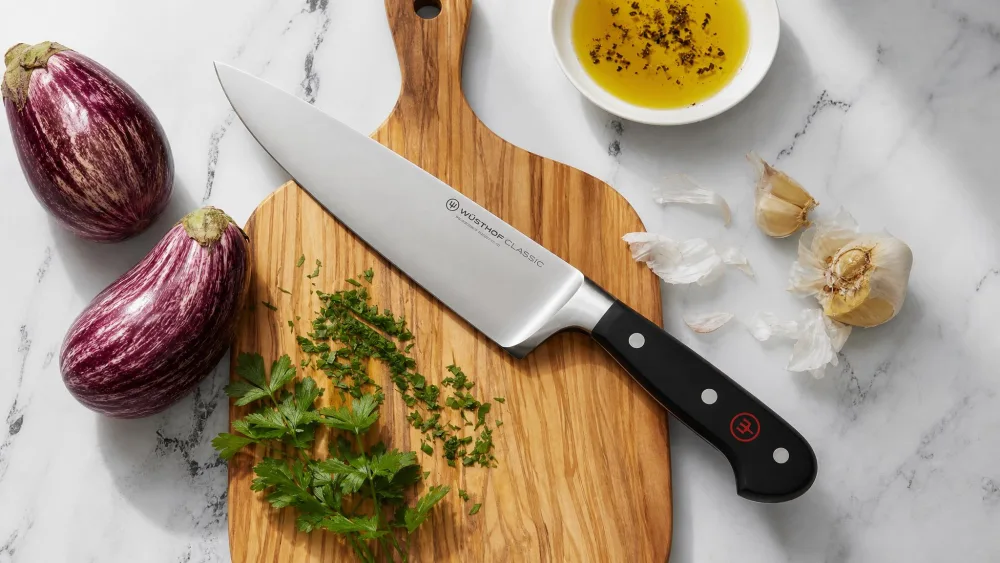
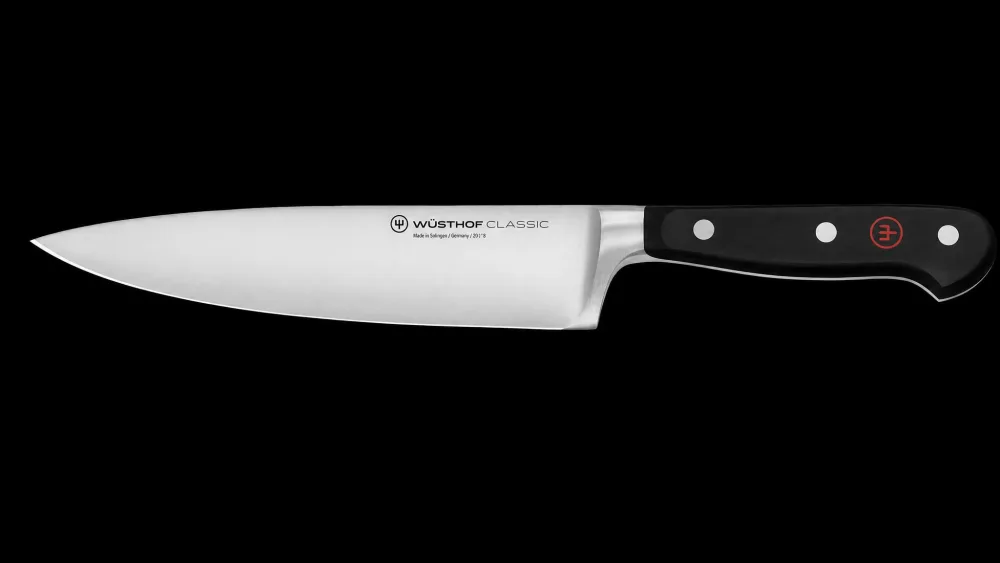
The Wusthof Classic holds its edge well between sharpenings and quietly does the work for you, which is why it tops our list. It is precision forged from a single block of high-carbon stainless steel with a full bolster and a keen 14-degree edge. It demands a hand-wash and immediate dry to avoid rust spots, and its heft can tire the wrist across a long prep. But it stays serviceable for many years, which makes the roughly $150 price read as money well spent.
Pros
Excellent edge retention with less frequent touch-ups
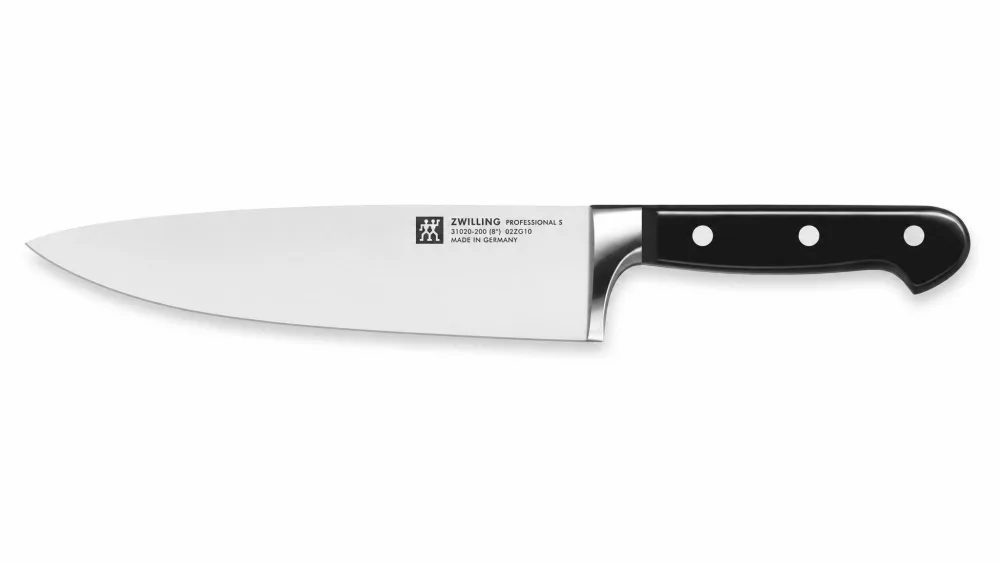
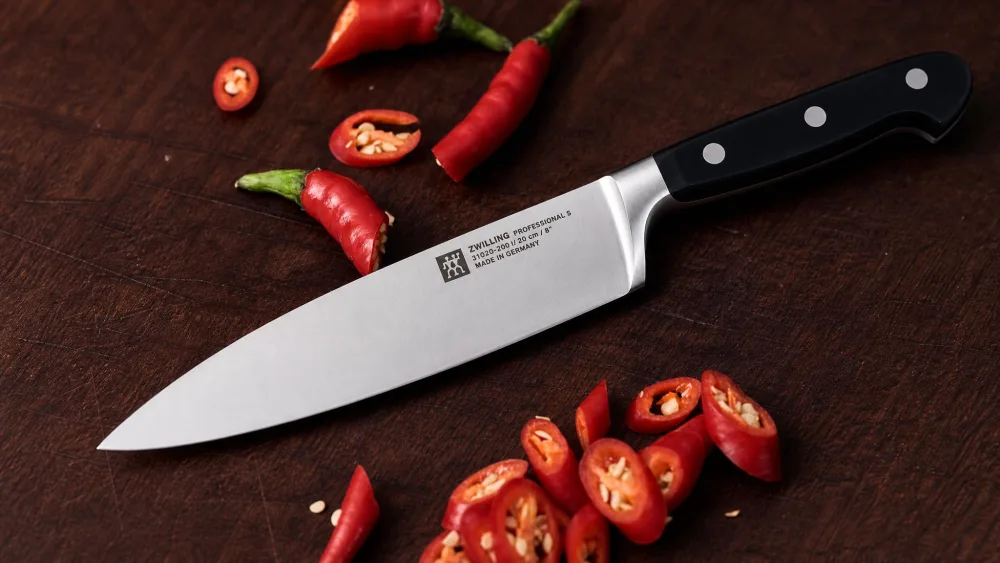
The Zwilling J.A. Henckels Professional S arrives well-sharpened, feels reassuringly heavy and balanced, and sharpens easily, which is how it becomes the knife you reach for over older ones. The blade is Sigma-forged from a no-stain steel, ice-hardened with Zwilling's FRIODUR process and ground to a laser-controlled 15-degree edge. A full tang runs into a three-rivet polymer handle. At around $100 it undercuts our top pick while giving up very little.
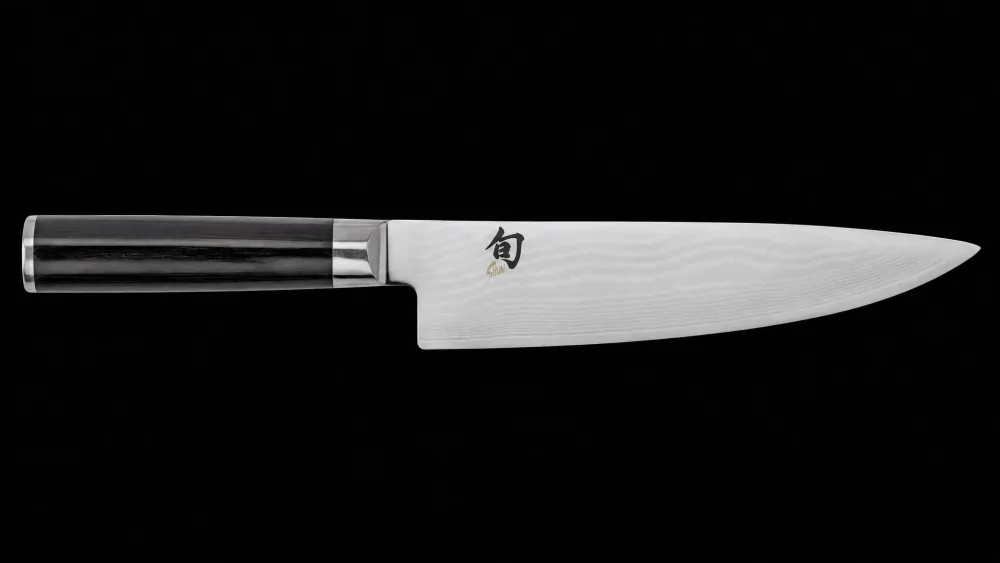
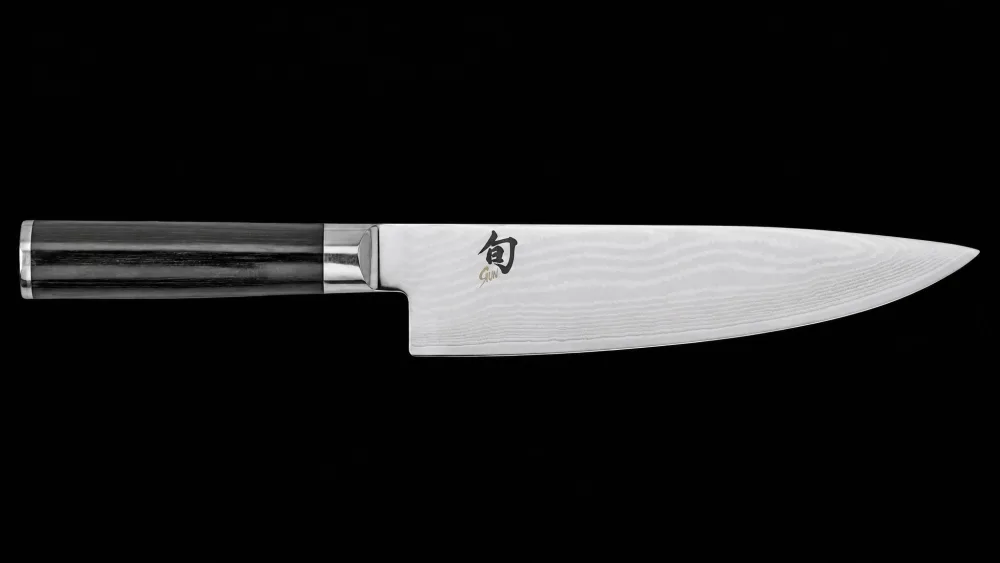
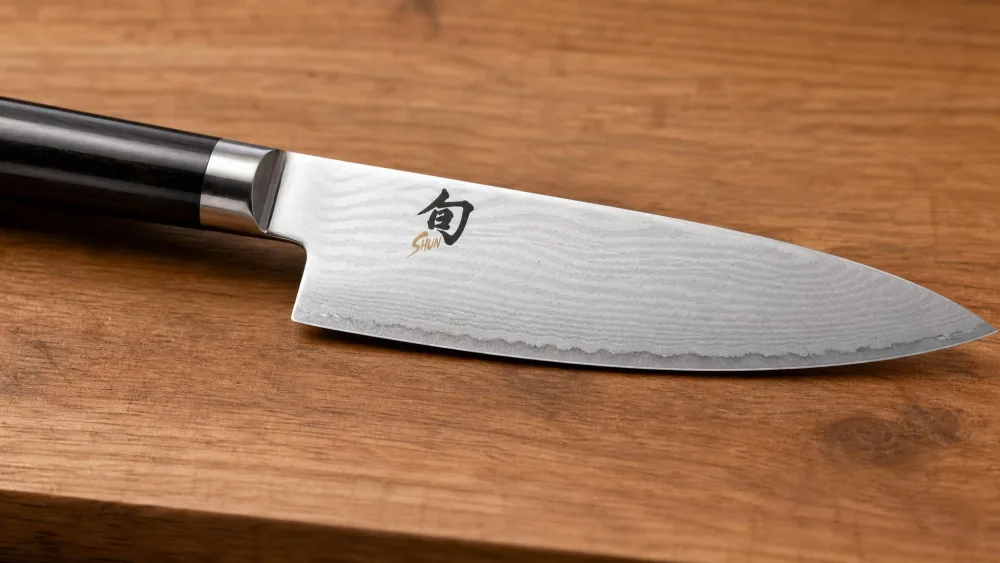
The Shun Classic is so sharp out of the box that we tell new cooks to slow down at first. Its lightweight body and thinner blade beat heavier European competitors for nimble work, and the D-shaped Pakkawood handle stays comfortable in either hand. The blade is a VG-MAX core clad in 68 layers of Damascus stainless steel, handcrafted in Japan. That thin, hard edge is the trade-off: treat it carelessly against bone or glass and it can chip. At around $185 it rewards anyone who values a keen, agile blade.
Pros
Exceptionally sharp out of the box
Light and agile with a comfortable handle
Cons
Thin hard edge can chip if mistreated
Premium price for an 8-inch knife
The 68-layer Damascus cladding on a Japanese blade is more than decoration; it protects a very hard core.
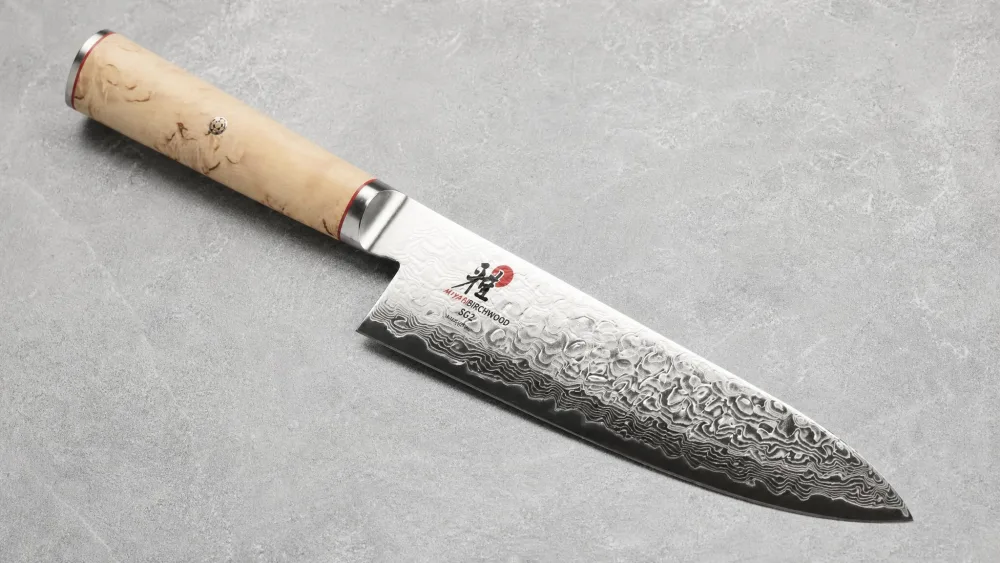
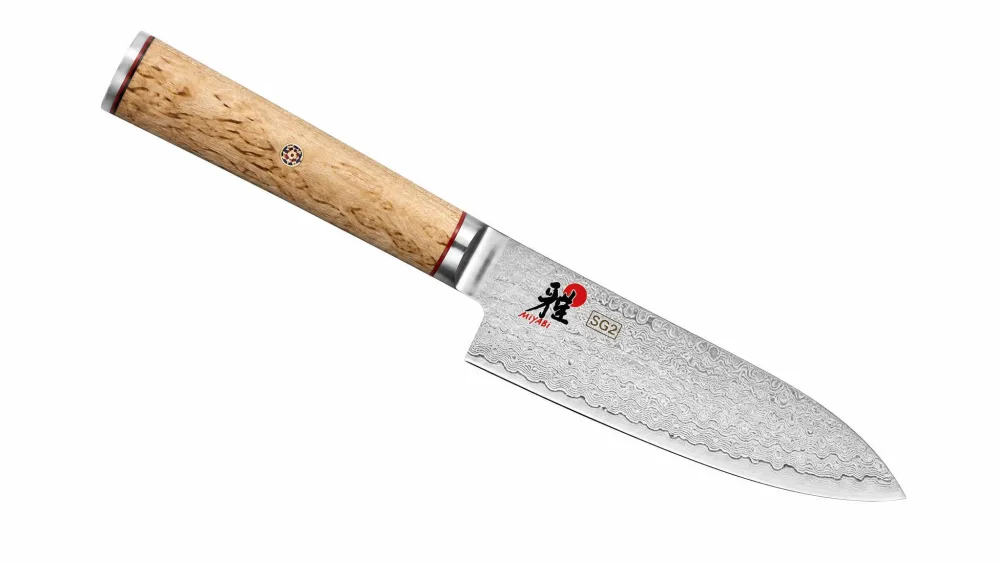
The Miyabi Birchwood SG2 holds razor sharpness across months of use, the best edge retention we saw here. It is SG2 micro-carbide powder steel in a 100-layer flower Damascus pattern, handcrafted in Seki, Japan and hand-honed to a remarkable 9.5 to 12 degree edge. That hardness is its one weakness: it is more chip-prone than softer blades, a genuine trade-off rather than a flaw. Despite its premium build it is strikingly light and well balanced. At roughly $330 it is a splurge, and it earns it.
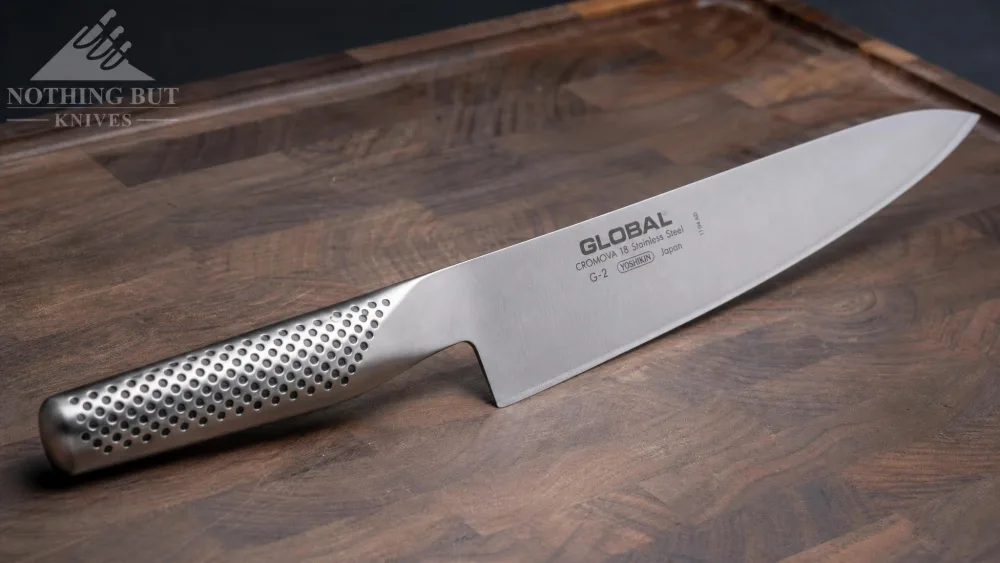
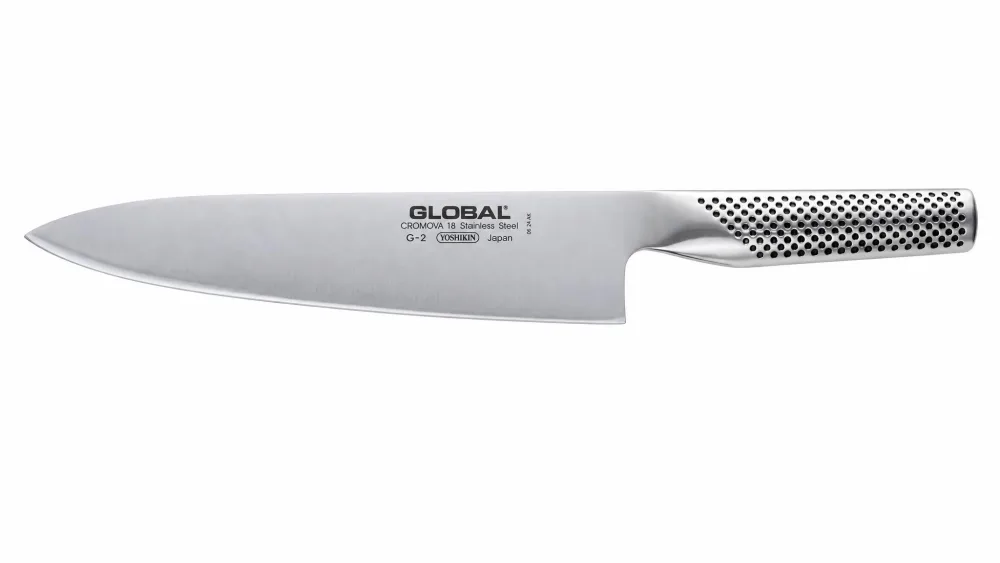
The Global G-2 is one continuous piece of stainless steel, so there is no handle to loosen or break off, it wipes clean easily, and it holds its edge over long ownership. The blade is CROMOVA 18 molybdenum-vanadium steel, ice-tempered and made in Japan. The dimpled, sand-filled handle balances well, and the edge stays keen enough to slice paper after months of use. The all-metal grip feels slick to some hands, so try the feel first. At around $115 it essentially cannot come apart.
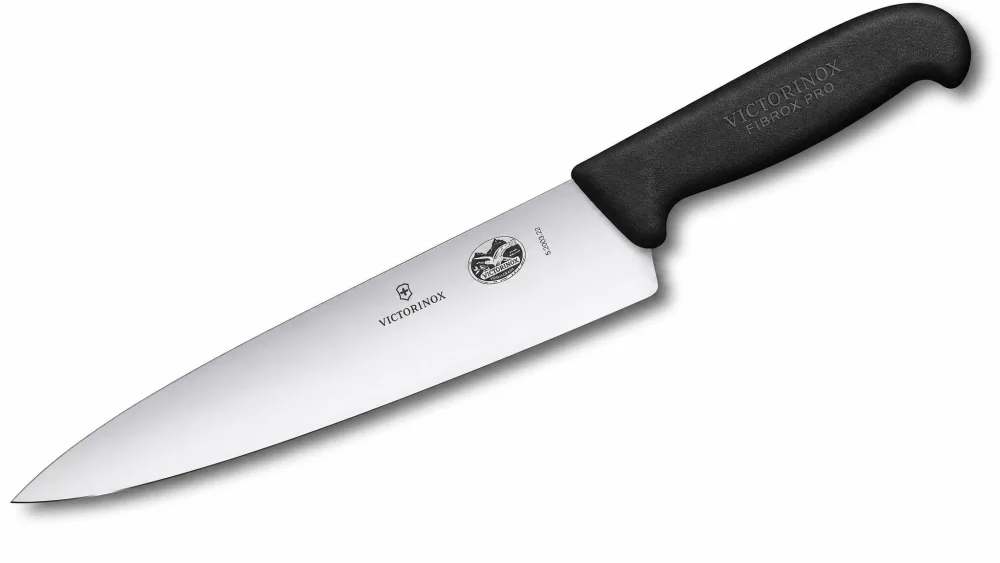
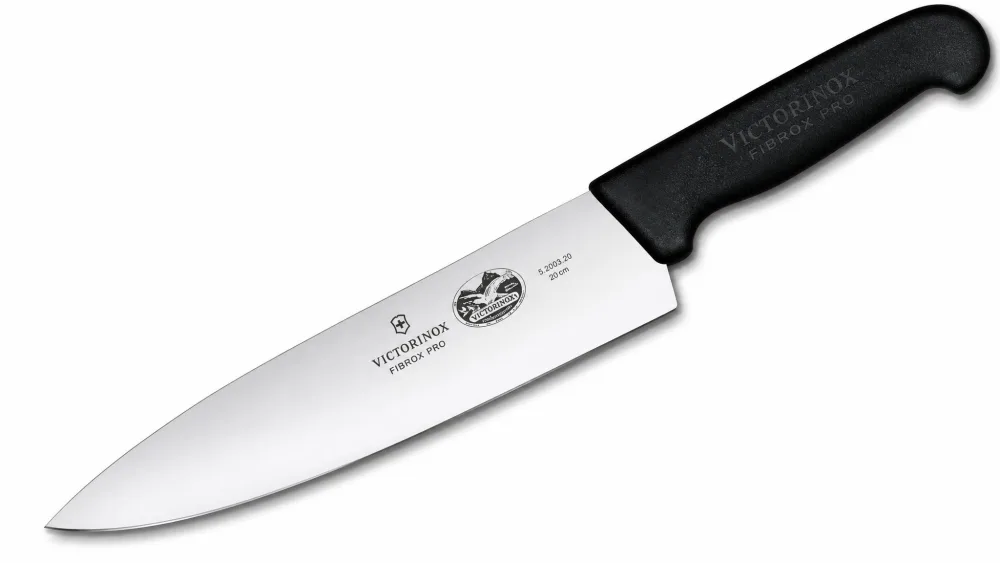
The Victorinox Fibrox Pro is the knife we reach for on messy prep days, because its non-slip Fibrox handle shrugs off dishwasher cycles and raw-meat cleanup without rusting or degrading. This Swiss-made blade is stamped from high-carbon stainless steel. It is light and agile, though it lacks the heft to power through dense produce like butternut squash. Its thin edge takes little tears sooner than a broader European grind, so it needs touch-ups more often. At around $50 it is the easiest recommendation in this guide.
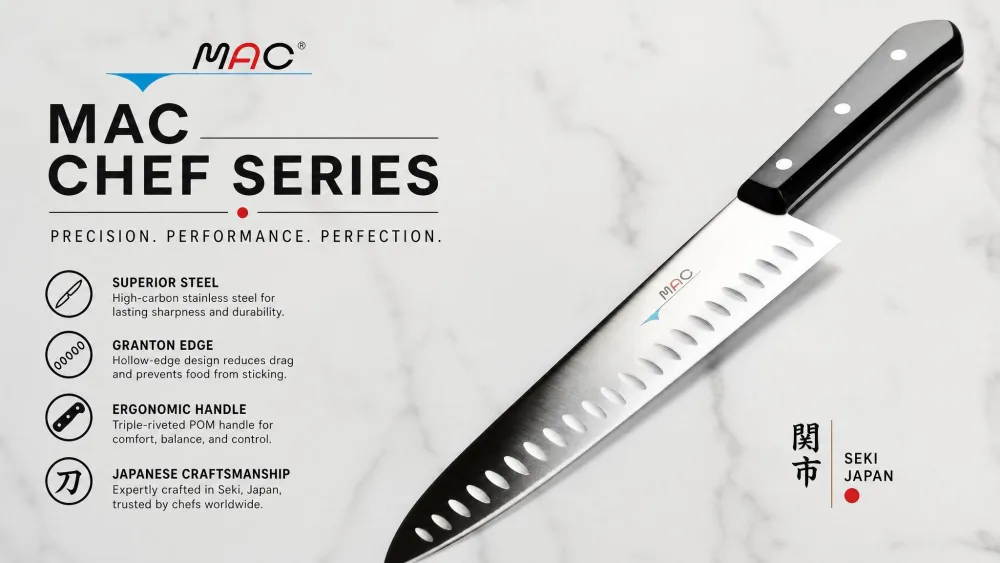
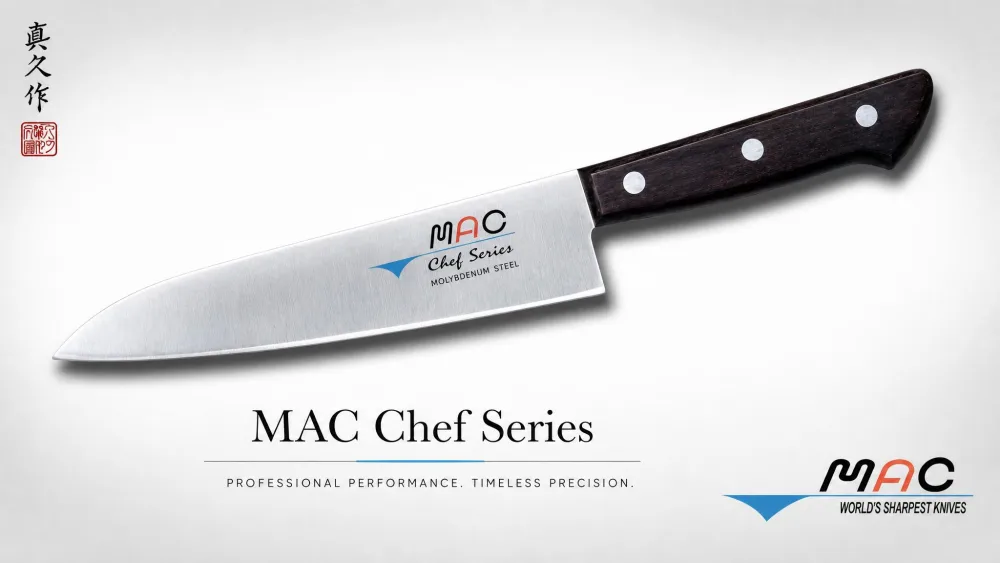
The Mac Knife Chef Series arrives extremely sharp and stays a balanced everyday workhorse, the kind of knife that disappears into the work. It is high-carbon molybdenum steel with a thin 2mm blade and a Pakka wood handle, made in Japan. The catch is care: it is hand-wash only and rusts quickly if left wet, so a quick dry is non-negotiable. At around $115 it rewards cooks who value a fast, precise blade.
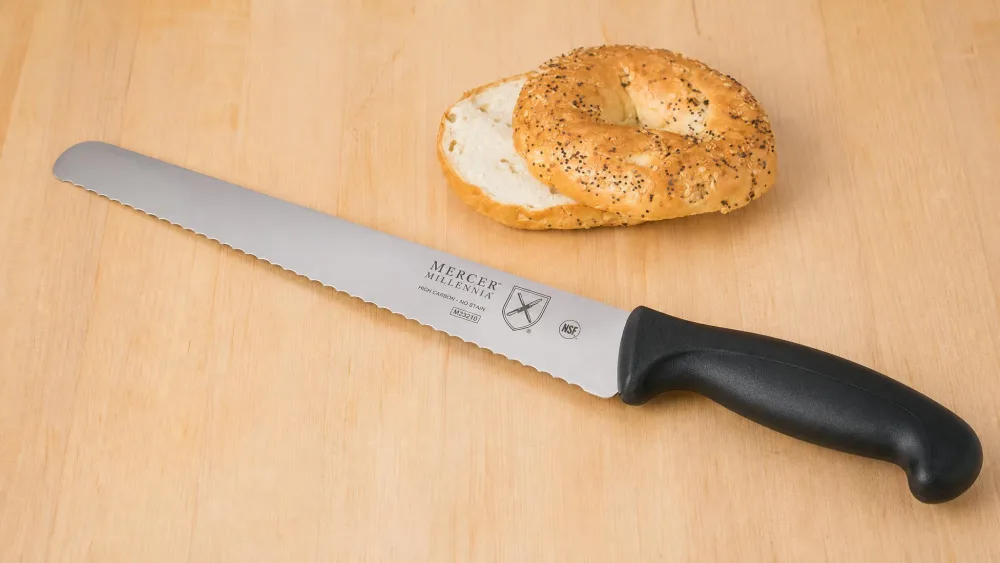
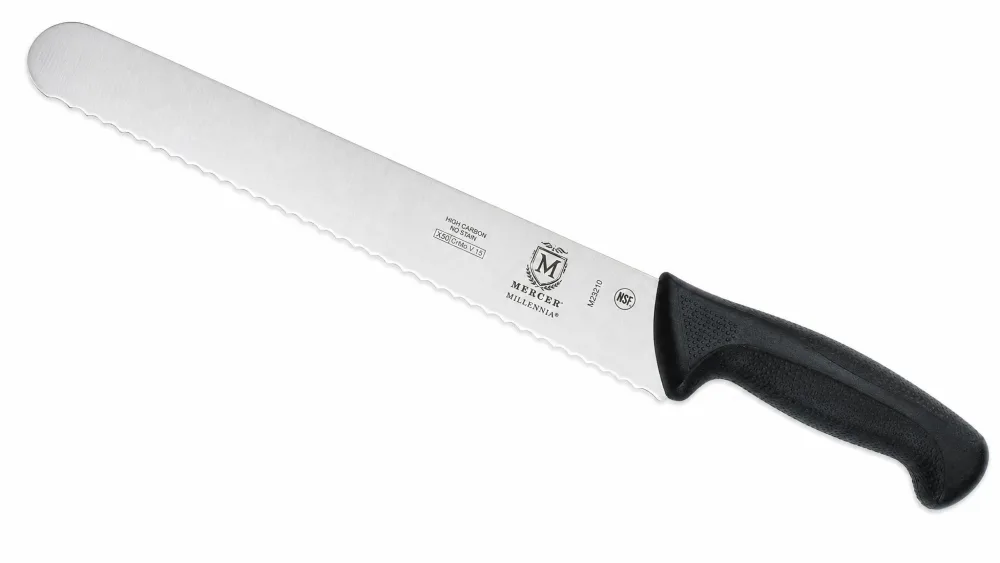
The Mercer Culinary Millennia is a genuine daily workhorse that punches well above its low price on sharpness and comfort, which is why it is standard issue in so many culinary schools. It is one-piece high-carbon Japanese steel, stamped, with a textured non-slip handle that reduces hand fatigue over longer sessions. Its thin blade is very sharp but dulls faster than a German blade, so a beginner learns to touch it up often. At around $30 it is the smartest way to start cooking with a real knife.
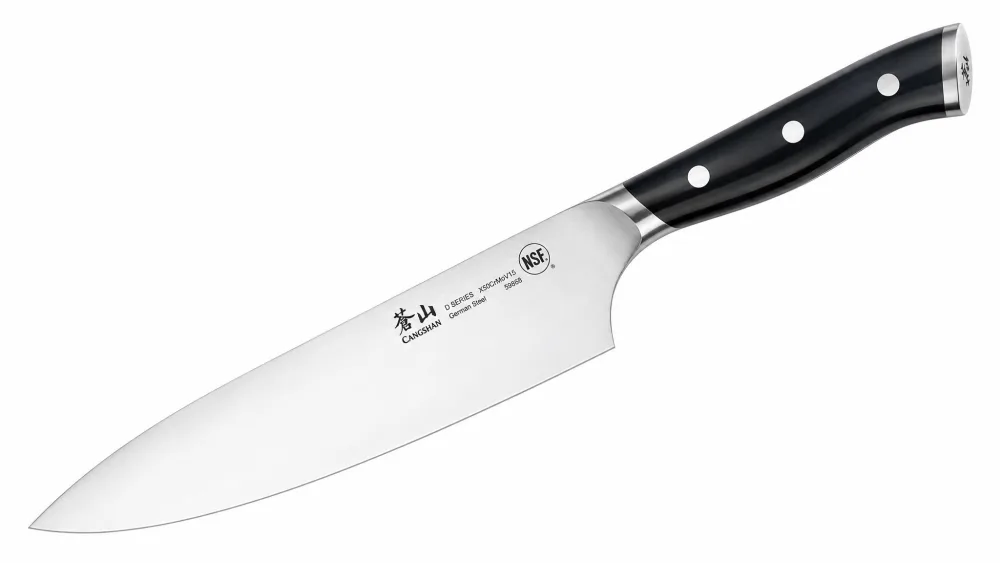
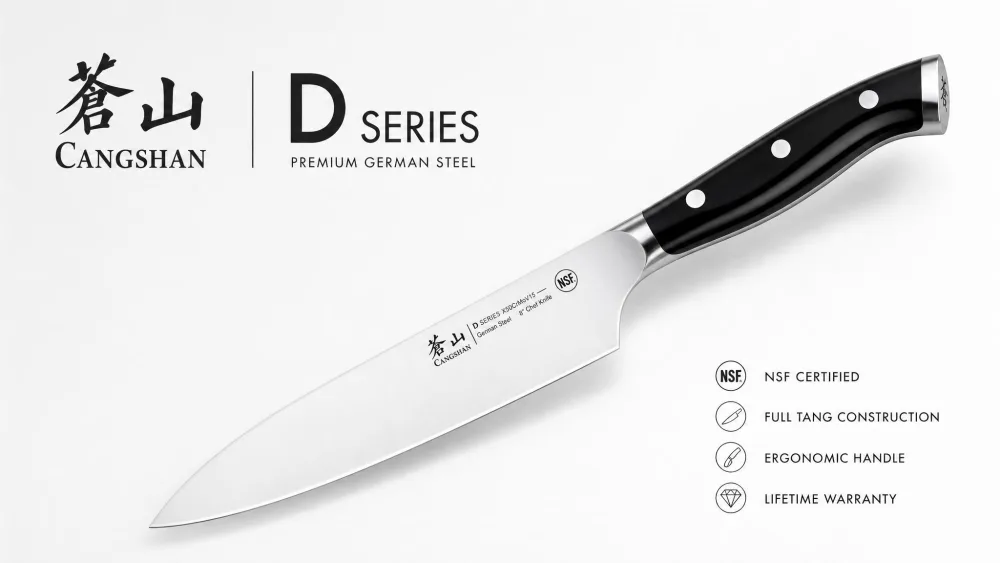
The Cangshan D Series holds a good edge with its hard steel and a curve that rocks naturally for chopping, and it holds its own against pricier brands as a strong value. It is German X50CrMoV15 forged steel with a full tang and a six-stage heat treatment, NSF certified. In heavy use it earns its keep, surviving months of hard line-cook duty next to shared house knives. Backed by a lifetime warranty and priced around $25, it is the value surprise of this list.
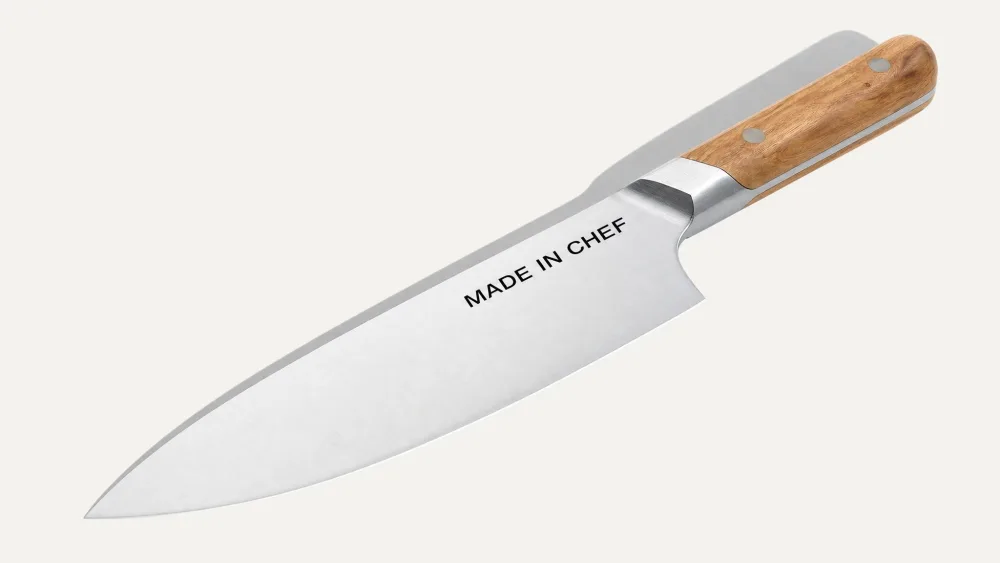
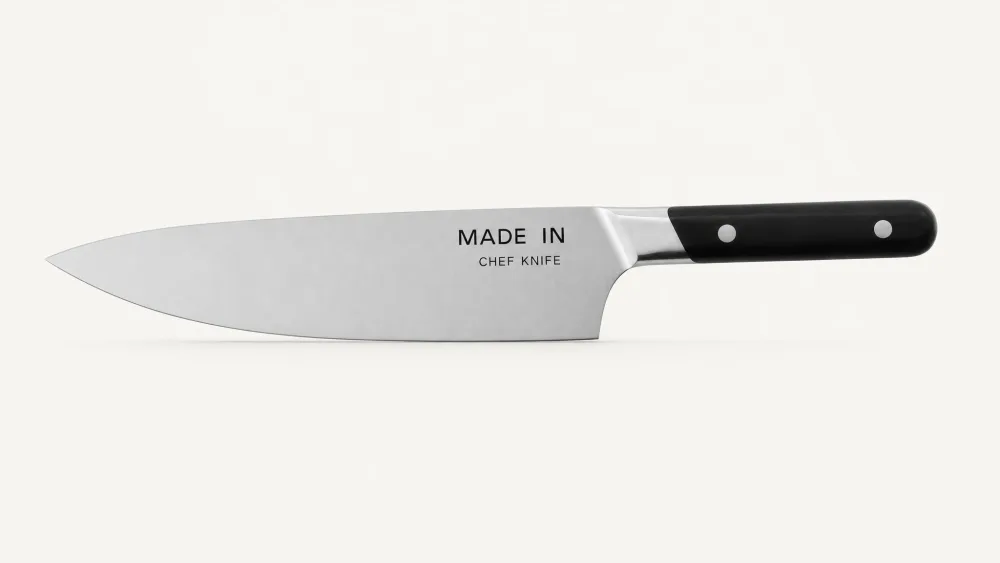
The Made In chef knife is razor sharp and well balanced out of the box, a French-forged blade that skips the retail markup by selling direct. It is nitrogen-treated X50CrMoV15 stainless steel, fully forged from a single rod with a full tang in Thiers, France. Sharpness is a touch inconsistent: it is excellent overall, though it can arrive slightly less keen than expected. Backed by a lifetime warranty and priced around $99 direct, it is a solid, honest knife worth watching.
Pros
Forged French steel with a full tang
Well balanced, lifetime warranty, sold direct
Cons
Sharpness feedback is mixed
Shorter brand history than the classics
German vs Japanese Knife Brands: Which Is Right for You?
The oldest debate in cutlery is a trade-off between toughness and keenness. German knives from Solingen and French-forged blades from Thiers use softer, tougher steel around 57 to 58 HRC; they take abuse, sharpen fast, and power through dense work. Japanese knives from Seki run harder, up to 63 HRC, with thinner, keener edges that stay sharp far longer but ask for gentler handling. Neither wins outright; it depends on how you cook and how much care you want to give.
Feature
German (Wusthof, Zwilling, Cangshan, Made In)
Japanese (Shun, Miyabi, Global, Mac)
Origin
Solingen and Thiers forging tradition
Seki and Japanese forging tradition
Steel hardness (HRC)
57 to 58, softer and tougher
56 to 63, harder and keener
Edge angle per side
14 to 18 degrees, broader
9.5 to 17 degrees, thinner
Forged vs stamped
Mostly forged, full bolster
Forged or one-piece, thin-ground
Price tier
Budget (Cangshan) to premium (Wusthof)
Budget (Global) to luxury (Miyabi)
If you cook big batches and want a knife you can sharpen in ten minutes and forget about, go German. If you value a scalpel-keen edge for tomatoes, fish, and fine slicing, go Japanese. Plenty of serious kitchens keep one of each.
How to Choose the Right Knife Brand for Your Kitchen
Start with one good 8-inch chef's knife rather than a block set. A single well-made knife does more real work than a drawer of mediocre ones.
Tip. Buy one good chef's knife, a board that will not dull it (wood or soft poly, not glass or stone), and spend ten minutes learning a honing rod. That trio outperforms any block set at the same price.
Match the knife to your grip and habits. If you have larger hands or cook long sessions, a heavier German knife with a full bolster feels planted and secure. If you prize speed, or your wrists tire, a light Japanese blade or the one-piece Global serves you better. Handle any knife you can before buying; balance is personal.
Be honest about maintenance. A high-HRC Japanese blade holds its edge for months but chips if you twist it through bone. A German blade forgives more but wants a hand-wash and dry to stay spot-free. The stainless Victorinox survives real neglect, which is why it lives in so many professional kitchens.
The best knife is not the most expensive one; it is the one you keep sharp, keep dry, and actually enjoy picking up.
Finally, weigh the warranty and track record. Global, Cangshan, and Made In back their knives with lifetime coverage, and the heritage German makers have proven their steel over generations. A knife is a decade-long purchase, so buy the brand you trust to still stand behind it.
How We Chose These Brands
We approached this roundup the way a working kitchen judges a knife: over weeks of real prep, not a single afternoon. Each brand is anchored to its flagship 8-inch chef's knife, the fairest unit for comparison, and we bought the knives ourselves rather than accepting samples.
Our scoring weighted edge retention most heavily, tracking how each blade held up across a week of daily cutting and a month of ordinary use. We rated handle comfort deep into long sessions, noted how readily each steel took a fresh edge on a standard home sharpener, and factored in care demands, durability, and value.
Every brand was judged on its flagship 8-inch chef's knife across weeks of real prep.
Frequently Asked Questions
Which knife brand is best for a home cook?
For most home cooks, Wusthof is the best all-around choice. Its forged German blade holds an edge well, sharpens easily, and lasts for decades. To spend less, the Victorinox Fibrox Pro delivers professional performance for around $50.
Are German or Japanese knives better?
Neither is universally better. German knives use softer, tougher steel that handles heavy work; Japanese knives use harder steel that takes a keener edge and holds it longer but chips more easily. Choose German for durability, Japanese for precision.
What is the difference between forged and stamped knives?
A forged knife is pounded from a single block and usually carries more heft and a bolster; a stamped knife is cut from a sheet and tends to be lighter and cheaper. Forged is not automatically better; a well-made stamped Victorinox outperforms many budget forged blades.
Is Wusthof or Shun worth it?
Both are worth the money if they match how you cook. Wusthof suits cooks who want a tough, low-maintenance workhorse. Shun suits cooks who want a light, razor-sharp blade and will hand-wash and dry it carefully.
Which knife should I buy first?
Buy one good 8-inch chef's knife before anything else. It handles the large majority of kitchen tasks, and a single quality blade beats a full block of mediocre ones.
Final Thoughts
Any of these ten brands will serve you well; the trick is matching the knife to your hand and habits rather than chasing a name. For one pick to act on, the Wusthof Classic is the safest bet for most kitchens, and the Victorinox Fibrox Pro is the value choice that never disappoints. Buy one good chef's knife, protect it with a decent board, learn ten minutes of sharpening, and it will outlast every gadget in your drawer.