As an Amazon Associate we earn from qualifying purchases. We may earn a commission from links on this page, at no extra cost to you. Learn more.
A multicooker is one countertop appliance that replaces several single-job gadgets. Depending on the model, it can pressure cook, slow cook, steam, saute, make rice, or even air fry. For a busy family, that means fewer pots on the stove and a dinner you can mostly set and forget.
Not every multicooker does the same job, though. Some seal and build pressure, and others only slow cook, sear and steam. We chose four that cover the real choices, and you can see more models in our pressure cooker reviews.
Here is how our family-kitchen test approach sorted them: capacity first, then cleanup, noise and how safe each one feels for a teenager to use.
Best multicookers at a glance
The comparison below keeps pressure-capable models separate from the two that never build pressure. Capacity figures are nominal, not permission to fill to the rim.
Product
Capacity
Pressure cooking
Air frying
Best use
Main trade-off
Instant Pot Pro 6-Quart
6-quart nominal pot
Yes
No
Everyday pressure cooking with easier pot handling
Premium tier; searing and slow-cook results vary
Instant Pot Duo Mini 3-Quart
3-quart nominal pot
Yes
No
Small kitchens, small meals and family side dishes
Too small for a large-family main; rice can stick
Ninja PossibleCooker Pro MC1001
8.5-quart nominal pot
No
No
Large-family slow cooking and in-pot searing
Wide footprint; nonstick needs gentle care
Ninja Combi SFP701
Fits a 10-inch pizza; meal portions vary
No
Yes
Steam meals, baking and air frying
Bulky; standalone crisping can be uneven
How we tested these multicookers
We judge a multicooker the way a family week judges it: full-size dinners, rushed breakfasts, and kids of every age reaching for the buttons. Every pick here had to earn its counter space on a Tuesday night when everyone is hungry.
We asked the same questions of all four models: what does each cook well, where does it struggle, how loud does it get, and how much cleanup does it leave?
Cooking performance and evidence quality
We looked at what each cooker did well and where it stumbled. Pressure-cooked chicken on the Pro became tender enough to pull from the bone. Slow-cooked lamb in the PossibleCooker went pull-apart tender, though the sauce needed reducing at the end.
We also noted failures plainly. Ribs in the Duo Mini stayed firmer and drier than we wanted, even after we adjusted the timing. Air-fry batches in the Combi came out with browned pieces next to pieces that needed longer.
Ease of use, cleaning and value
We scored controls, steam release, noise and cleanup, because those decide whether a gadget gets used after the first week. Cost matters too, so we place each pick in a tier (budget, mid-priced or premium) instead of quoting figures that change daily.
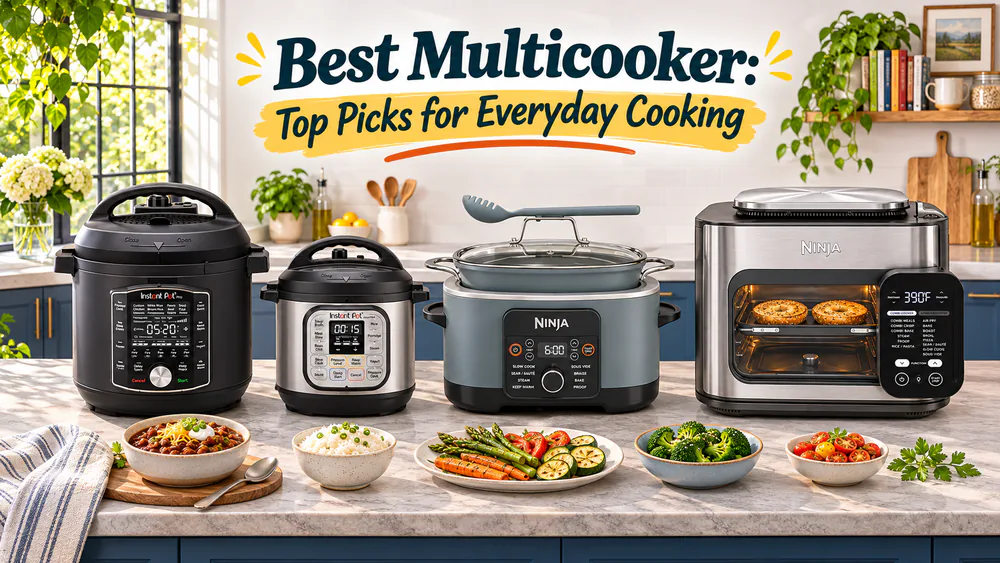
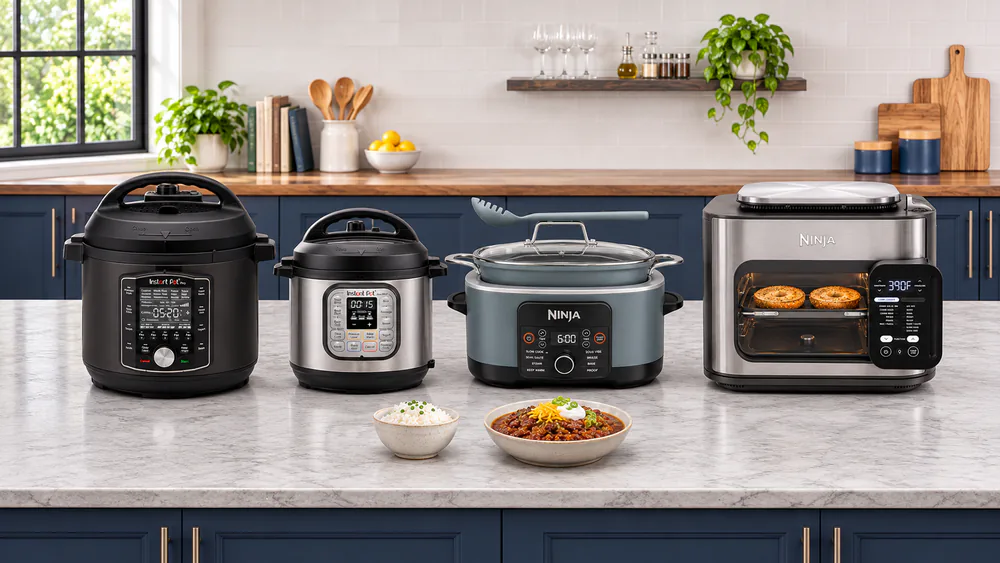
The four finalists on our counter.
Our multicooker picks
Two of our picks are pressure cookers; the other two never build pressure. We say which is which in every review, because that difference changes what you can cook.
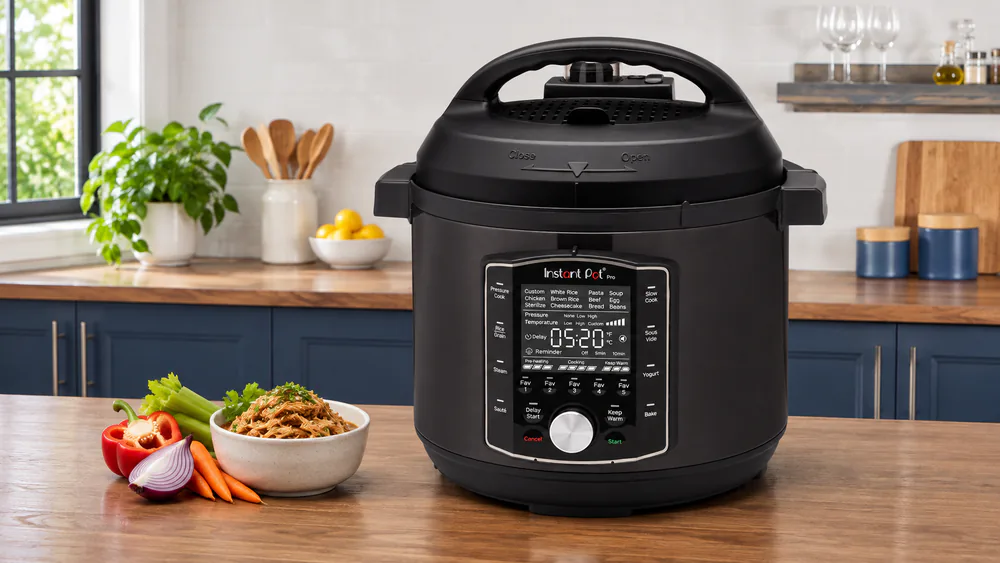
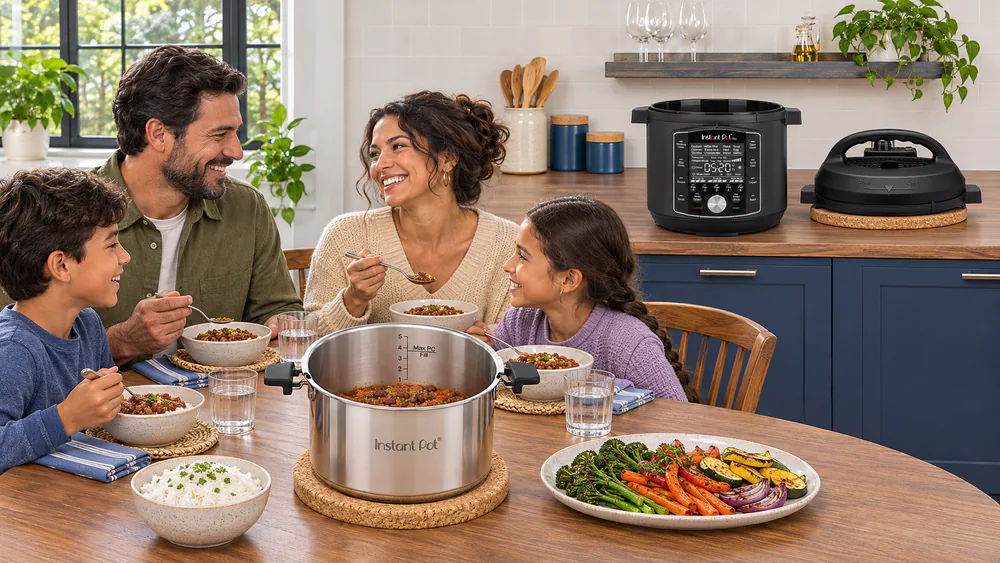
The Instant Pot Pro is the multicooker we would buy first for a family that wants real pressure cooking. It packs 28 one-touch programs into a 6-quart pot, and the handled stainless insert stays put while we stir and lifts out of the base easily.
Venting is less awkward here than on older designs. A separate release switch and diffuser mean we are not reaching over an exposed valve, though steam release is plainly audible and the lid gets hot. Slow cooking is quiet.
Searing is the weak spot. The stainless pot can hold stuck-on meat after browning, and results vary with the food and the batch size, so do not expect stovetop-strength color. Slow cooking is also not uniformly reliable, so if that is your main job, look at the PossibleCooker below. The supplied open rack lets small broccoli pieces fall into the water, so we would add a vegetable basket.
At 1200W, it handles the usual weeknight recipes. The lid and inner pot go in the dishwasher, but the electric base must stay out. The 6-quart pot holds less than its nominal capacity when pressure cooking, so a household of seven should not expect a full main course plus leftovers.
Strengths: pull-from-the-bone chicken under pressure; handled insert; separate release switch; 28 programs; 1-year limited warranty.
Limitations: premium tier within this group; sticking after searing; open rack lets small vegetables slip; steam is loud.
Who should skip it: anyone cooking mostly for one or two people, or anyone whose main need is slow cooking for a crowd.
Best budget multicooker for small kitchens: Instant Pot Duo Mini 3-Quart
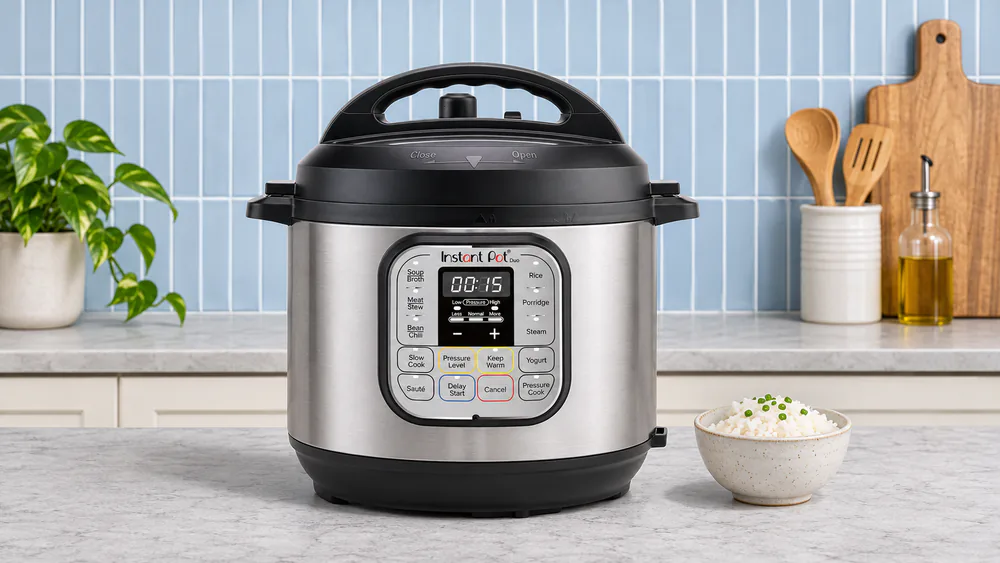
The Duo Mini is the cheapest pressure cooker on our list, and it is easy to move onto a pantry shelf when the counter is full. At 11.4 x 10.0 x 11.2 inches with a 3-quart pot, it suits solo meals, small portions, breakfast grains, and a rice side much better than a whole chicken or a large soup batch.
The push-button controls take a little getting used to, and then routine cooking is straightforward. It has 11 one-touch programs and runs at 700W. Sauteed vegetables kept good color and texture, but oil left stubborn marks on the stainless pot.
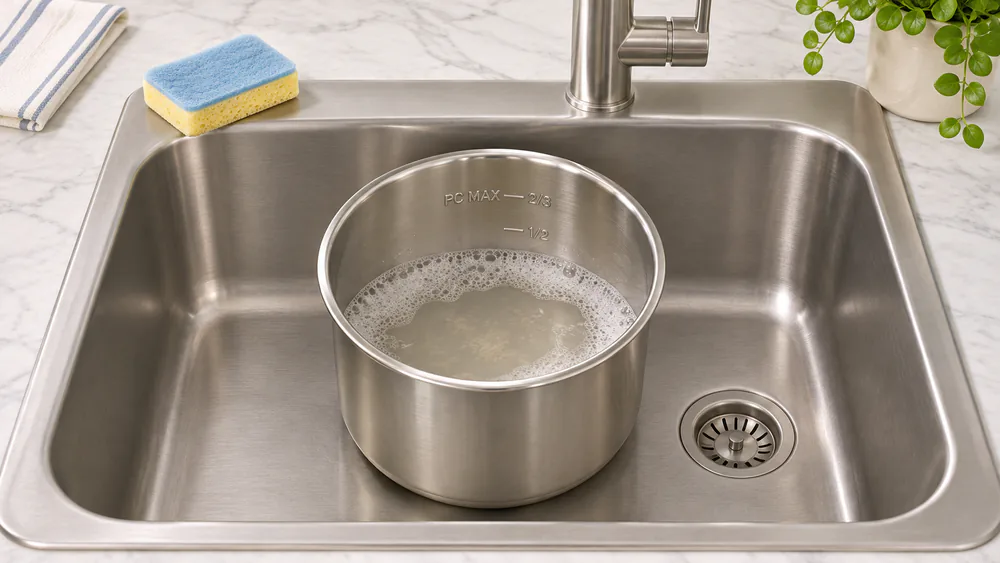
Cleanup needs patience. Rice residue needs a hot soapy soak before scrubbing, and rice can stick depending on the recipe, so you may need to adjust the water or timing. The lid and inner pot are dishwasher safe, and the sealing ring is removable. That ring can hold onto curry aromas after ordinary washing, so a spare ring for savory and delicate dishes helps.
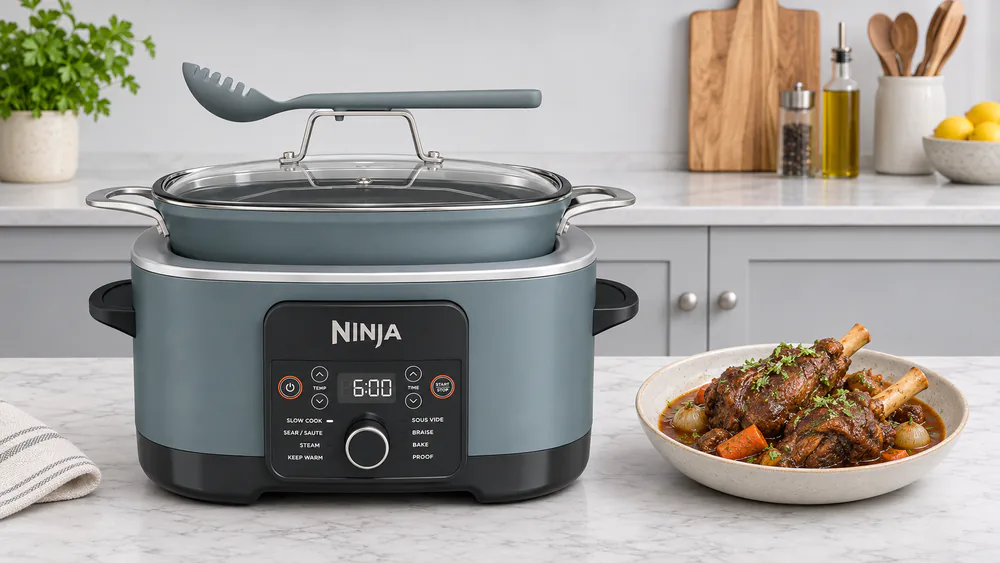
The PossibleCooker Pro is our pick for batch cooking, and it does not pressure cook or air fry. Instead, its 8.5-quart nominal pot is built for stews, braises and big slow-cooked roasts. It runs at 1200W with eight cooking functions; the "14-in-1" label counts the tools it replaces, not fourteen modes.
Browning onions and meat in the same vessel keeps the cooking juices with the stew and skips a separate frying pan. Searing needs preheating, since cold ingredients drop the heat, and steam can make an extractor useful. The temperature-ready alert makes it easier to know when to start browning.
Slow-cooked lamb became pull-apart tender, though the sauce needed reducing at the end. The removable pot is oven safe to 500F, but that limit does not cover the electric base. The large vessel is useful for family batches and feels cumbersome to carry when full.
The start button needs a deliberate press, so check that the cycle actually begins. The nonstick interior washes easily by hand, but sauce that spills over the outside can leave stubborn marks underneath. The manufacturer lists 18.31 x 14.8 x 12.8 inches, though published measurements differ, so reserve wide counter space.
Strengths: the largest capacity here; searing and slow cooking in one pot; oven-safe pot; mid-priced tier; 1-year limited warranty.
Limitations: wide footprint; hand washing is the careful choice for the nonstick pot; heavy when full.
Who should skip it: anyone who wants pressure cooking or a small footprint.
Best multicooker with air frying: Ninja Combi SFP701
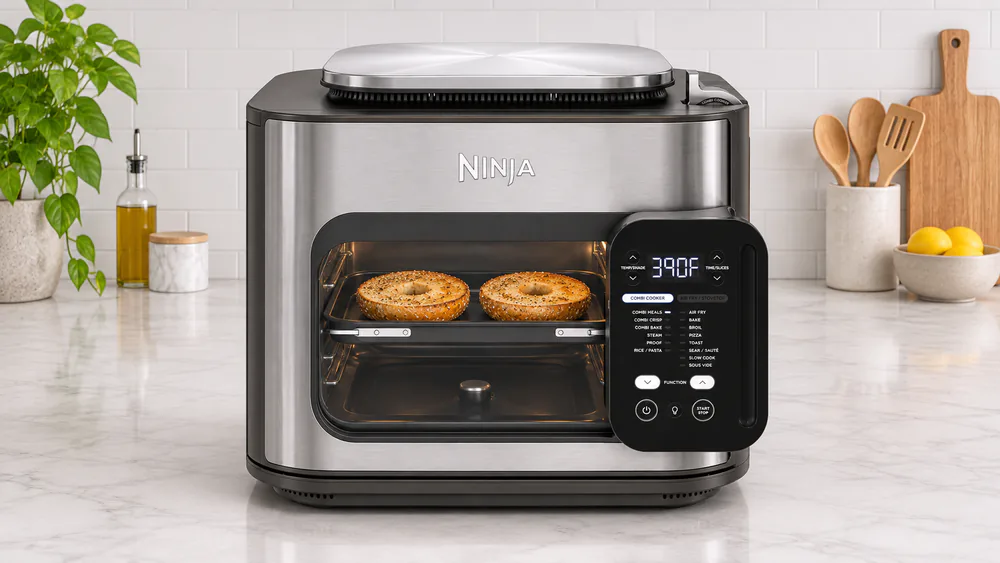
The Ninja Combi is the most versatile appliance on this list, but it is not a pressure cooker. It cooks with steam and convection through a front-opening door, and a 10-inch pizza fits. Its 1760W element covers combi meals, baking, toasting, proofing, sous vide, slow cooking and air frying.
We recommend it for combined cooking, not as the best air fryer you can buy. Air-fry batches contain browned pieces beside pieces that need longer, so checking and repositioning is worthwhile. The wide tray helps spread food in a single layer. Proofing worked well for enriched dough, and the same appliance toasts a bagel with a browned top and a soft center.
Meal programs need preheating or steam buildup before the countdown starts, so advertised times are not start-to-table times. Capacity depends on the dish. The advertised meal capacity reaches eight servings, but an air-fry batch is closer to four portions, so it does not cook dinner for seven in one go.
Cleanup is friendlier than we expected. The removable trays go in the dishwasher, and we wiped the cavity once it cooled. The body measures 18.31 x 17.13 x 16.93 inches, and it is awkward to store in a small cupboard.
Strengths: steam, bake and air fry in one; dishwasher-safe trays; useful for proofing and toasting; 1-year limited warranty.
Limitations: premium tier; bulky; uneven standalone crisping; no pressure mode.
Who should skip it: anyone who wants a pressure cooker, or a compact dedicated air fryer.
One appliance, a few different dinners.
How to choose the best multicooker
The right model comes down to the way your family cooks, not the longest feature list.
Pressure cooking, rice, slow cooking and air frying: which functions do you need?
Start with the one job you will do most. If it is fast braises, beans and tender meat, buy a pressure-capable model. If it is batch slow cooking, a non-pressure cooker like the PossibleCooker is simpler. If it is baking and crisping, the Combi fits.
Be honest about the extra functions. Yogurt and sterilize modes sound appealing, but most families lean on three or four settings. Rice works on the pressure models, though it may need small water adjustments.
Warning. No pressure cooker is a toy for unsupervised kids. Release steam only as the manual says, keep hands away from the vent, and never force a pressurized lid. The May 1, 2025 Ninja Foodi pressure-lid recall covers OP300-series cookers and their replacement pressure lids; it is not a notice for the MC1001 or the SFP701.
Capacity, usable space and countertop footprint
Nominal capacity overstates what you can cook. For ordinary pressure recipes, never go past the 2/3 line, and for expanding foods such as rice and dried beans, keep to the 1/2 line. A 6-quart pot is therefore a family-of-four main course, not a feast.
Footprint matters as much as quarts. The manufacturer lists the Pro at 13.0 x 12.7 x 12.8 inches, but allow clearance for the lid and vent. The PossibleCooker and the Combi both measure 18.31 inches long, so measure your cabinet before you buy.
Inner pot materials and cleaning
Stainless steel pots, as on both Instant Pots, go in the dishwasher and resist scratches, but they can hold stuck-on food after searing and oil marks. Nonstick pots, as on the Ninja models, release food easily, but gentle utensils and hand washing keep the surface in better shape.
The electric base never goes in the dishwasher. Sealing rings on pressure models can hold odors, so a spare is cheap insurance.
Rice residue releases after a hot soapy soak.
Controls, steam release and replacement parts
Look for a steam release that keeps your hand away from the vent. Clear buttons matter when a teenager is cooking. Check that the cycle started, because the PossibleCooker needs a deliberate press.
Replacement parts are a quiet deal-breaker. Use authorized seals matched to the exact model and capacity, and replace a stretched or damaged one. Combi pans and crisper trays and PossibleCooker glass lids are listed on the manufacturer pages, but check stock and fit by model.
Price, warranty and long-term value
Every model here carries a 1-year limited warranty, but that coverage does not predict how long the appliance will last. Among these four, the Duo Mini is the budget pick, the PossibleCooker is mid-priced, and the Pro and the Combi are the premium choices.
Buy through a retailer whose return policy you have read. A manufacturer's direct-store money-back window does not carry over to every other seller.
Tip. Before the first real dinner, run a short water test on any pressure cooker. It teaches you how the release switch behaves and how loud the steam is in your kitchen.
Common mistakes
Shoppers buy the largest nominal size, then discover that the fill lines leave room for less food. They also assume that a Ninja with "multicooker" in the name pressure cooks, when neither Ninja here does.
Another mistake is skipping the footprint check. A cooker that cannot live on the counter ends up in a cabinet and never gets used.
Multicooker FAQs
Can a multicooker replace a slow cooker and rice cooker?
Usually yes. The Instant Pots slow cook and make rice, and the PossibleCooker is a dedicated slow cooker with a sear function. Slow-cook performance is not uniform across models, so choose the PossibleCooker if slow cooking is the main job, and expect rice to need small water adjustments.
Is an air-frying multicooker worth the extra cost?
Only if you will use its steam, bake and air-fry range. The Combi is the stronger buy for mixed meals, but standalone crisping is uneven, so a dedicated air fryer still wins for pure crunch.
Do multicookers save energy?
Pressure cooking can reduce energy use on long-cooking foods, but total use depends on power over time, portion size, mode and the appliance you would otherwise use. Rated watts alone do not predict the energy used per dinner.
What should you check before using pressure-cooking mode?
Confirm the sealing ring is installed correctly and undamaged, clear food from the float and vent, and fit the correct inner pot. Follow your model's liquid and release instructions, and never force a pressurized lid.
Final verdict: which multicooker should you buy?
Buy the Instant Pot Pro if you want one pressure cooker for most dinners. Choose the Duo Mini for a small kitchen, the PossibleCooker for big slow-cooked batches, and the Combi if baking and air frying matter as much as steaming.