
Kitchen Appliances
Best Oranges for Juicing: Pick Your Variety by Taste and Season

As an Amazon Associate we earn from qualifying purchases. We may earn a commission from links on this page, at no extra cost to you. Learn more.

Valencia is the orange we reach for first when we want a glass of juice. It balances sweetness and tang instead of finishing flat, and it works for almost any squeezing method. Navel oranges are the easiest to prepare, blood oranges add color and a berry note, and Cara Caras make the sweetest glass. Below we compare seven varieties by flavor, juice yield, and season, so you can match the fruit to your morning.
Best Oranges for Juicing at a Glance
Not all oranges are created equal once they reach the juicer. Sweet-orange varieties such as Valencia and navel give juice its classic orange flavor; clementines and tangerines belong to the related mandarin group. The table sums up what each variety offers. Seasons are regional guides, not promises of what your local store stocks, and we do not claim a measured ranking of juice volume.
| Variety | Flavor | Juice yield and extraction | Practical drawback | Season |
|---|---|---|---|---|
| Valencia | Balanced sweet-tart | High juice content, good all-purpose squeeze | Occasional seeds | US spring and summer |
| Navel | Sweet, familiar orange | Juicy and seedless, easy to prepare | Bitterness can develop if juice sits | US winter and spring |
| Blood | Berry-like citrus, tartness varies | Juicy flesh, vivid colored juice | Color and acidity vary by cultivar | Winter into spring |
| Cara Cara | Sweet, low acid | Juicy navel type, easy to prepare | Lacks a tart edge in a blend | Winter into spring |
| Hamlin | Mild and sweet, low acid | Juicy early-season orange | Regional availability, size varies | Fall into winter, mainly Florida |
| Clementine | Sweet, mild mandarin | Small fruit, more handling per glass | More fruit to peel, check for seeds | Late fall and winter |
| Tangerine | Aromatic sweet-tart | Juicy segments, easy peeling | Seeds and small fruit | Fall through spring |
Orange Varieties to Consider for Fresh Juice
1. Valencia Oranges
Valencia is our default juicing orange. Its juice balances sweetness and tang without a flat sweet finish. The fruit is also known for its high juice content, making it a practical all-purpose choice. It usually has few seeds, but it is not guaranteed seedless, so keep a strainer handy. Spring through summer is the useful shopping guide in the US, and supply can stretch from April through October. Harvest timing varies by growing region and imports.
2. Navel Oranges
Navels are the convenient choice. They have no seeds to pick out, the peel comes off cleanly, and the flavor is the sweet, familiar orange most people expect. They are primarily a winter-to-spring fruit in the US, with imports extending availability. The catch is that navel juice can turn bitter after extraction, so squeeze close to serving time rather than prepping a pitcher for the next day.
3. Blood Oranges
Blood orange juice brings a berry-like note and a deeper color to a glass. The red comes from anthocyanins, and the tartness varies with cultivar and growing conditions. Winter into spring is the shopping window. We like to blend tart blood oranges with sweeter varieties to balance the juice.
4. Cara Cara Oranges
Cara Caras are pink-fleshed navel oranges with low acidity. Their pink comes from lycopene, not the anthocyanins of blood oranges. The juice tastes sweeter and less sharp than standard navel juice, which suits anyone who finds regular orange juice too sour. If you want more tang, pair them with a blood orange. They share the navel's winter-to-spring season.
5. Hamlin Oranges
Hamlin is an early-maturing sweet orange tied closely to Florida juice production. The flesh is juicy and mild, with less acid bite than a sharper citrus blend, and the fruit has very few or no seeds. Size is often medium-small and depends on climate, so do not count on large fruit or assume size predicts yield. Its early fall-into-winter season is a Florida guide, not a promise of national supermarket stock.
6. Clementines
Clementines are small, sweet mandarins that peel easily. They are not a sweet-orange cultivar, and their small size means more fruit to prepare for each glass. They are often sold seedless, but seeds can occur, so check the segments before blending. Late fall and winter are the common seasons. Check the label on the bag too, since some bags mix other mandarin types.
7. Tangerines
Tangerines are mandarins as well, with easy-peeling skin and aromatic, sweet-tart flesh. They peel easily, but visible seeds need attention before the segments go into a blender. The name covers several cultivars with different harvest windows, so expect fall through spring depending on origin.
A few relatives deserve a brief caveat. Satsumas give a mild, sweet mandarin juice and peel easily. Tangelos add sweet-tart complexity. Seville oranges are sour and bitter, better for cooking than as a default drinking juice.
How to Choose Oranges for Juicing
Match the Flavor and Juice Yield to Your Needs
Start with the glass you want. For a balanced everyday juice, choose Valencia. For the sweetest, mildest glass, choose Cara Cara or Hamlin. For color and a berry note, add blood oranges. If you need minimal prep, navels are the easiest. Clementines and tangerines are fun for small batches, but the extra handling makes them a poor choice for juicing a family pitcher.
Check Freshness, Seasonality, and Local Availability
Choose fruit that feels heavy for its size and firm with a little give. Skip anything with soft damaged spots or rot. Skin color alone is an imperfect guide, so go by weight and feel. Shop in season when you can, and rely on our juicer reviews if you are deciding how to squeeze whatever your store has that week. Imports extend most seasons, so what you find may not match the regional windows above.
How to Get the Most from Your Oranges
Prepare the Fruit for Your Juicing Method
Wash the fruit under running water before cutting, even when you plan to remove the peel, and dry it with a clean towel. Do not use soap or detergent. Rolling an orange on the counter before halving it helps loosen the juice-bearing flesh.
For a citrus reamer, halve the fruit across the middle and leave the rind as a handhold. For a blender or general-purpose juicer, remove the peel and follow the machine's instructions. Strain out seeds and unwanted pulp either way.
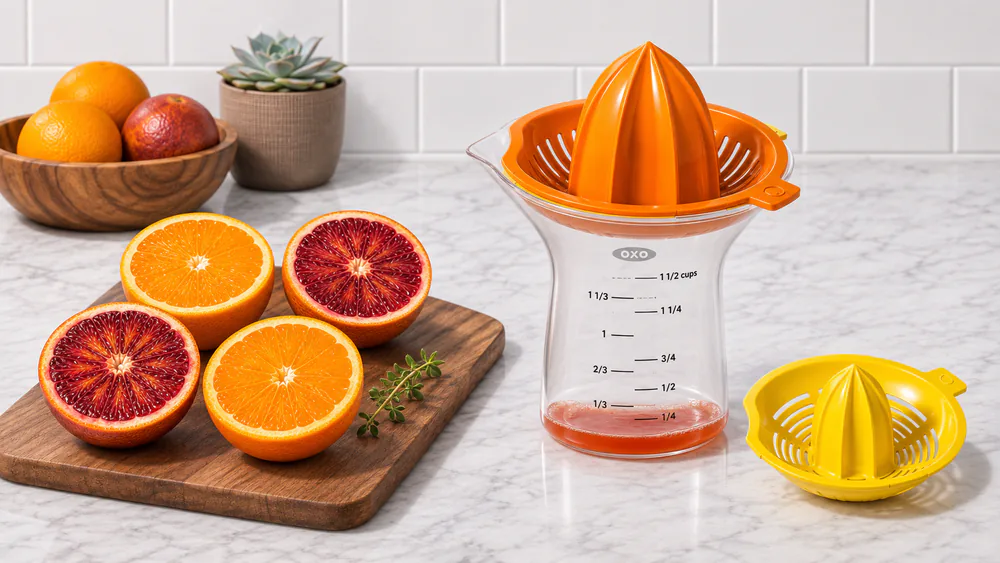
For small batches, a manual reamer is a breeze to use and clean. The OXO Good Grips 2-in-1 Citrus Juicer has a narrow middle that is comfortable to hold while twisting the fruit, a top that lifts off for washing, and snap-fit heads that stay secure. Its cup markings reach 1.5 cups, so you can measure straight into a recipe. It is compact to store, but a large batch means repeated cup-emptying and clearing pulp from the strainer.
Manage Seeds, Pulp, and Bitter Flavors
Press fruit slowly on a reamer to make less mess. Pulp can build up and slow drainage, and pulp caught in the head takes extra effort to remove. The OXO catches most seeds, but completely pulp-free juice still benefits from another strain. Blending peeled citrus makes a pulpy drink, and sieving moves the texture toward strained juice.
Bitterness often comes from navel juice sitting after extraction or from pith in the glass. Squeeze gently and serve soon.
Tip. Juice navels last and drink them first. Their delayed bitterness is the main reason to serve navel juice soon after squeezing.
Store Freshly Squeezed Juice
Refrigerate juice promptly in a clean, closed container, and keep it at 40 F or below. Do not leave refrigerated juice at room temperature for more than 2 hours. Make small batches for the freshest flavor, and freeze extra juice rather than counting on a long refrigerated shelf life.
Frequently Asked Questions
How many oranges do you need for a cup of juice?
Around three medium oranges is a rough starting estimate. Fruit size, freshness, variety, and extraction method all change the yield, so squeeze and measure instead of treating a fruit count as exact.
Can you juice oranges with the peel on?
Not for a glass of juice. Wash the fruit first, then remove the peel for a blender or general-purpose juicer, or halve it and use a reamer. The rind is only a handhold.
Why does fresh orange juice sometimes turn bitter?
Navel juice can develop delayed bitterness after extraction, and pith can add a bitter edge. Squeeze close to serving and strain out the pith. Bitterness is a flavor change, not a spoilage test.
Can you mix different orange varieties?
Yes. A tart blood orange balances sweet Cara Cara juice, and a Valencia base keeps a blend balanced. Mixing is a good way to tune sweetness and color.
Read next
Ready to upgrade your kitchen?
Explore our buying guides for more ways to make fresh juice at home.