Helping you create a kitchen you love.

Kitchen Appliances

Best Sugarcane Juicer Picks for Juice Yield and Easy Cleanup

As an Amazon Associate we earn from qualifying purchases. We may earn a commission from links on this page, at no extra cost to you. Learn more.

Best Sugarcane Juicer Picks for Juice Yield and Easy Cleanup

A sugarcane juicer is a roller press, not a blender or a centrifugal juicer. It squeezes whole stalks between metal rollers, sending sweet liquid one way and dry fibrous bagasse the other. That difference shapes every buying decision, because a press lives or dies on how it feeds, how it handles a heavy load, and how quickly it rinses clean.

In our kitchen we cared less about the biggest throughput number on the box and more about what each press asked of us before, during and after a batch. We put a manual press and two electric presses through the same questions about sliding, noise, feeding and cleanup. If you are comparing them against the rest of our juicer reviews, expect this category to behave differently from a citrus or slow juicer.

Best Sugarcane Juicers at a Glance

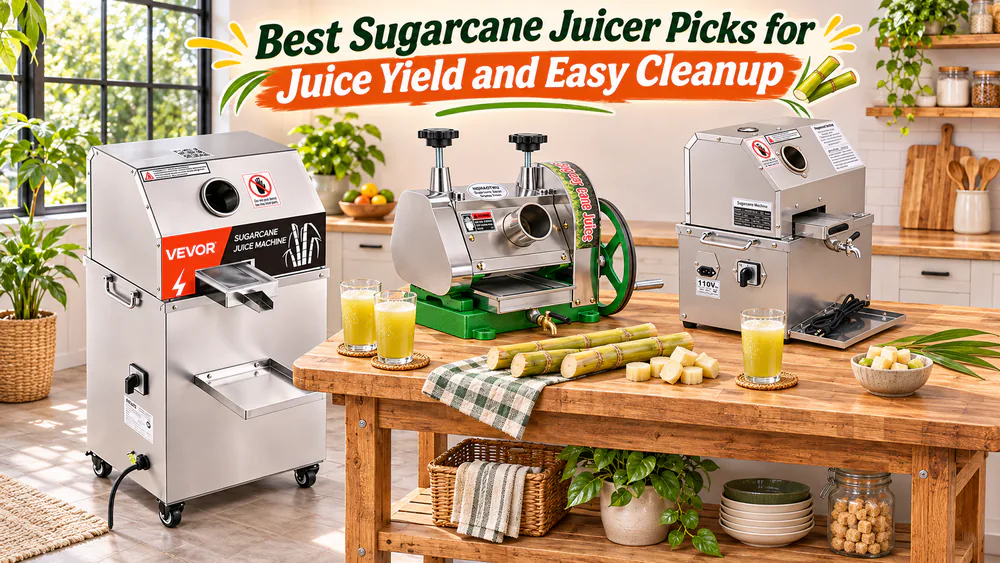
Here is the quick view of our three picks. Each one is a distinct machine with a different drive, so the right choice depends on how often you press and how much space you can spare.

RankProductBest forDriveRatingBuy
1

VEVOR 800W Three-Roller Wheeled Sugarcane Press

Best Overall
Repeat batches at home or a trial stall800W electric, on wheels 4.3 View on Amazon
2

HQHAOTWU Manual 330LBS/H Sugarcane Press

Best Manual Press
Occasional batches and tight budgetsHandwheel, 2 adjustment knobs 4.1 View on Amazon
3

INTBUYING 110V 800W Three-Roller Sugarcane Press

Best Electric for Easy Rinsing
Cooks who prize roller access and fine filtering110V, 800W electric 4.0 View on Amazon

We earn a commission if you make a purchase, at no additional cost to you.

See full comparison table

Side-by-side comparison

Headline capacities below are the makers' advertised cane-processing claims, which measure pounds of cane fed per hour, not finished juice. We have no comparable measured yield for any of the three, so that row says so.

FeatureVEVOR electricHQHAOTWU manualINTBUYING electric
Drive and use case800W; repeated batches without crankingHandwheel; intermittent batches110V, 800W; alternative electric press
Roller construction3 SUS304 rollers; SUS201 housing3 rollers; stainless claim disputed3 rollers, 304 stainless
Roller adjustmentAutomatic2 manual knobsAutomatic
Inlet2.4-inch (62mm)2.4-inch opening; cane up to 2 inches thickNot verified
Claimed cane throughput661LBS/H, advertised330LBS/H, advertised660LB/h, advertised
Measured juice yieldUnknownUnknownUnknown
Footprint and weightFootprint unverified; 117 lbs for the matching modelUnverifiedUnverified
Cleaning accessFeed-port or cover access to rollers; tray belowRemovable juice tray; rinse-clean rollersTop water-injection opening
Movement4 wheels; heavy to liftMust be secured while crankingAwkward to lift
Our rating4.34.14.0

How We Tested These Sugarcane Juicers

We judged each press the way a busy family kitchen would live with it: how it sits on the counter, how much effort a batch takes, how loud it gets, and how much work cleanup leaves behind. Capacity claims and sheer horsepower came second to those questions, because a press that is a chore to set up or wash ends up in the cupboard.

For each press, we assessed stability, feeding, noise and how easily the rollers and juice path rinse clean after a batch. We gave cleanup as much attention as pressing.

Our scoring covered five things. First, feeding: how easily a stalk entered the inlet and whether it needed trimming. Second, stability: whether the machine stayed put under load. Third, noise. Fourth, cleaning access to the rollers and juice path. Fifth, how clear the maker's own safety and maintenance guidance was.

We kept two kinds of numbers apart on purpose. Advertised throughput tells you how much cane a press is rated to take in. Juice yield tells you what ends up in the glass. Because we have no comparable measured yield across the three, we do not rank on it, and we flag every claimed figure as a claim.

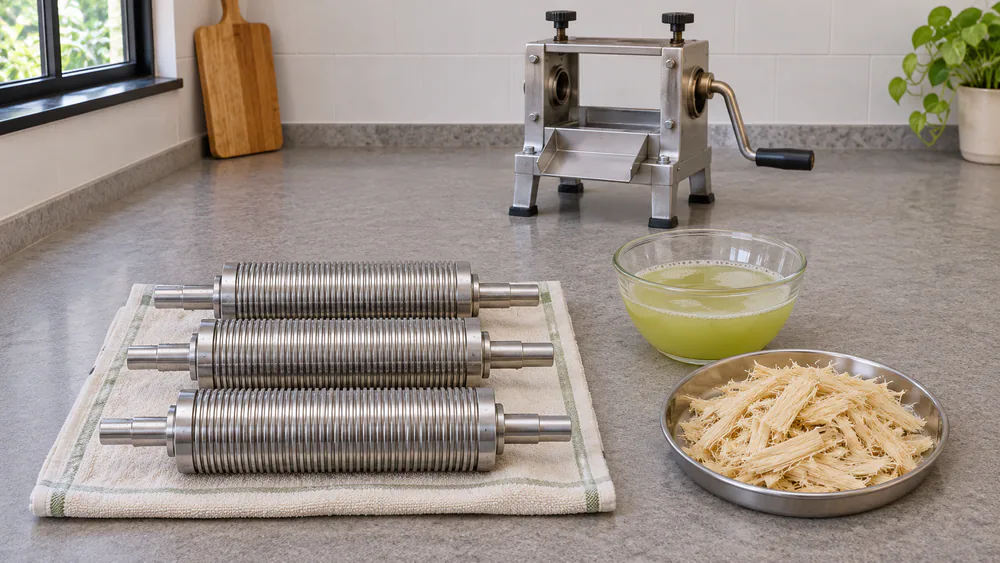
Three stainless steel sugarcane press rollers on a kitchen counter after a rinse, with a bowl of pale green cane juice and a pile of dry bagasse beside the machine
Rollers after a rinse, with juice and bagasse collected separately.

Our Sugarcane Juicer Picks

Three presses made the cut, and each fills a different job. We merged the usual "small space" and "commercial" slots into these picks, because case size and a commercial label alone do not tell you whether a press fits a counter or a stall.

1. Best Overall: VEVOR 800W Three-Roller Wheeled Sugarcane Press

VEVOR 800W Three-Roller Wheeled Sugarcane Press
1

VEVOR 800W Three-Roller Wheeled Sugarcane Press

Best Overall
Check Price on Amazon
4.3/5

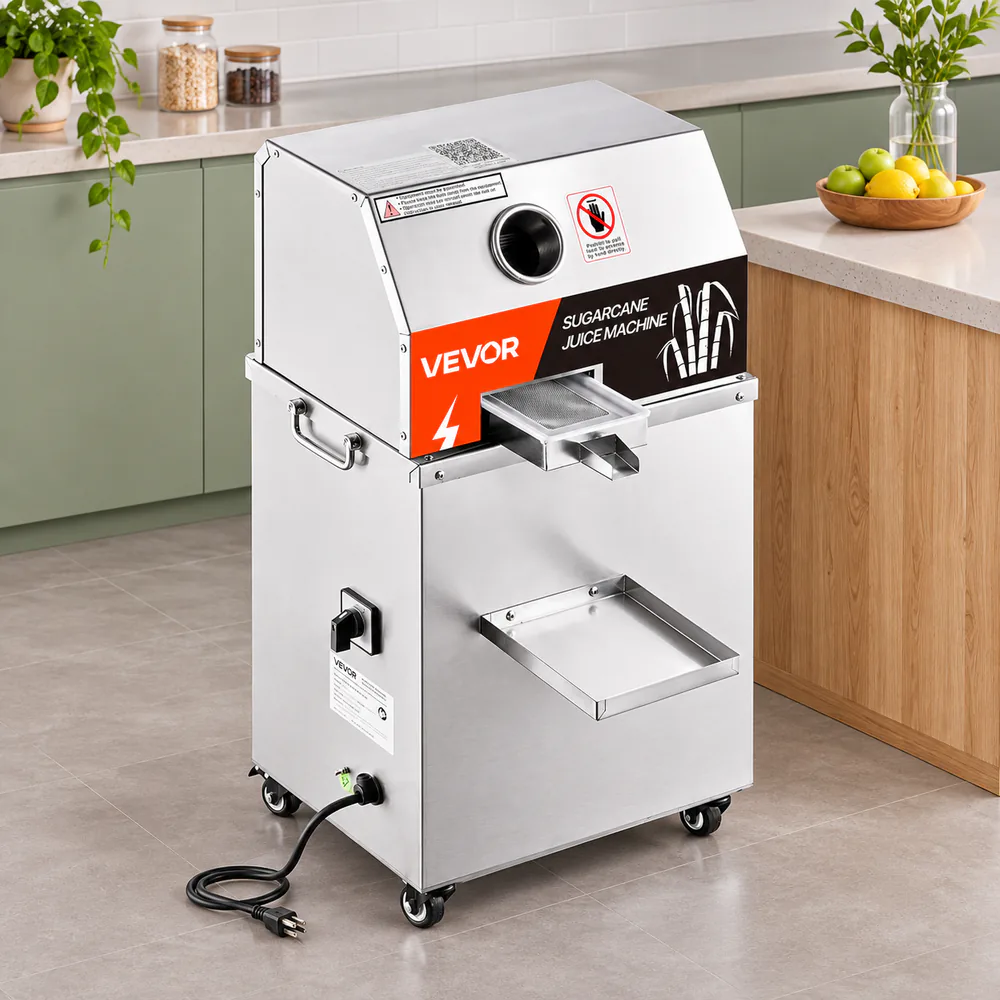
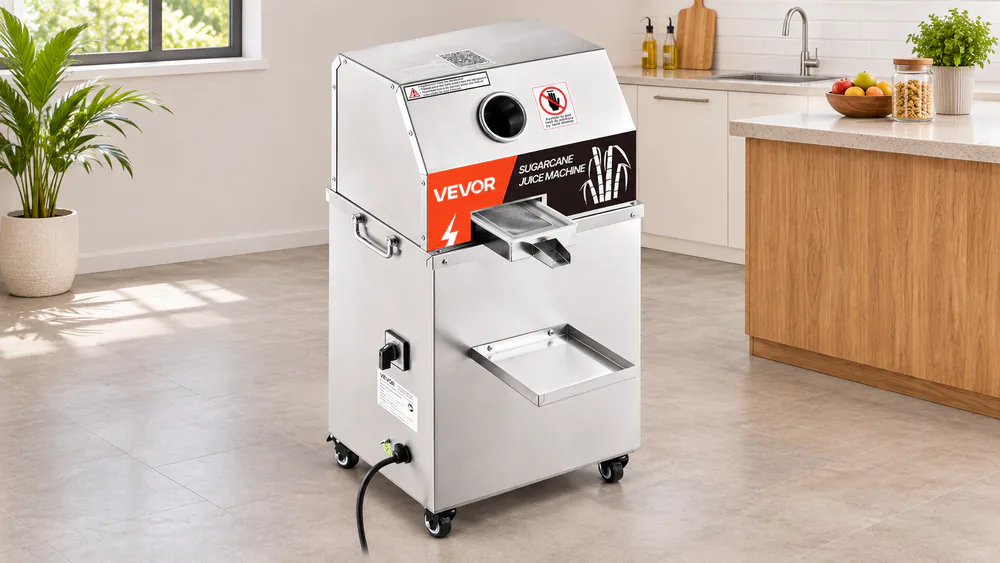
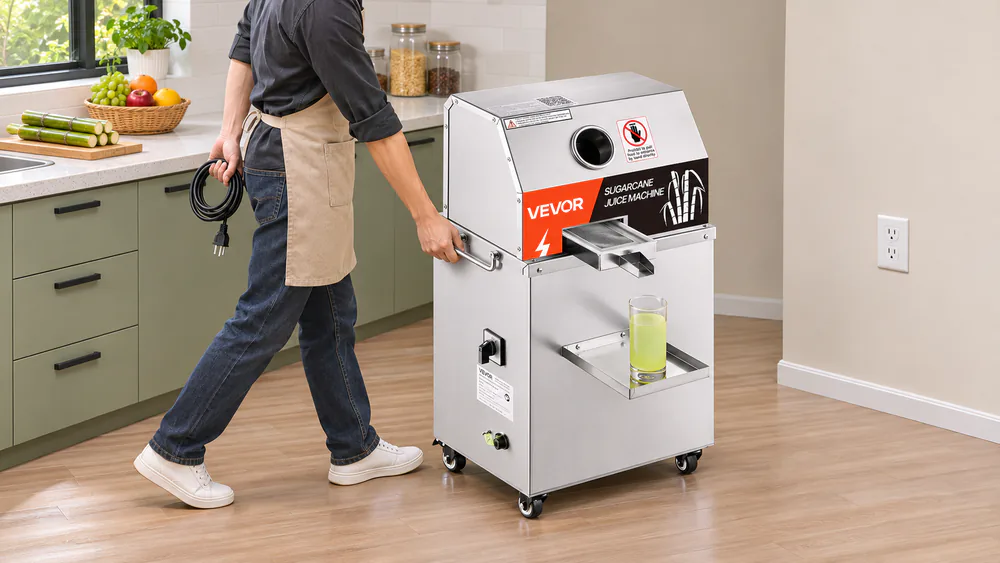
This is the press we would buy first for a household that juices cane more than once in a blue moon. The 800W motor drives 3 SUS304 stainless rollers that adjust their gap automatically. At 117 lbs for the matching three-roller model, the machine is much easier to reposition on its 4 wheels than to lift.

Pros

  • Wheels make it far easier to reposition than lifting it
  • Automatic roller-gap adjustment with a separate bagasse discharge
  • 800W motor handles repeat batches without cranking
  • Roller access through the feed port with a tray for rinse water

Cons

  • Noticeable motor noise
  • Heavy, with no confirmed footprint
  • Not ETL or NSF certified
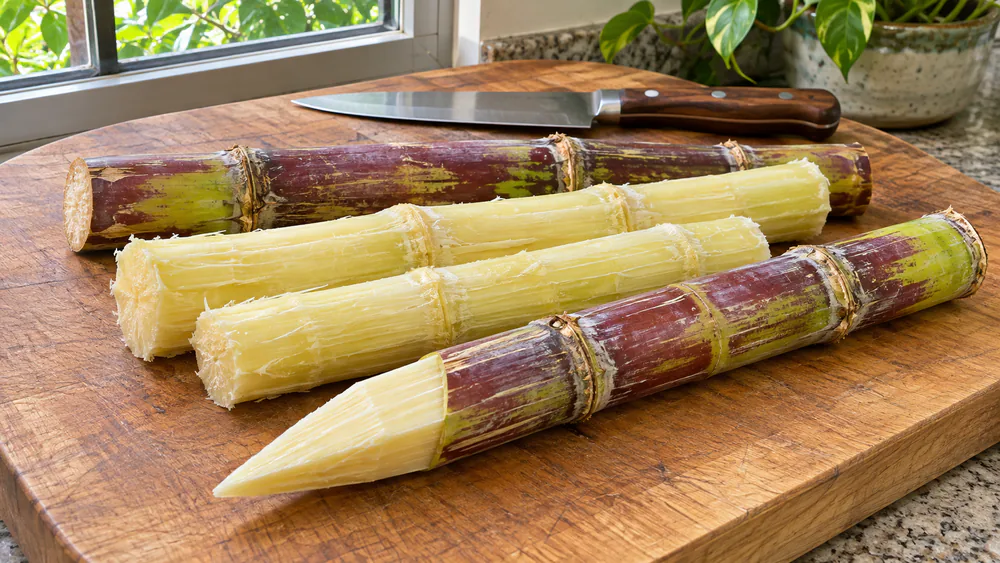
  • Leading cane end must be sharpened before every stalk

Feeding takes some prep. You sharpen the leading end of each stalk to a point before the rollers grab it, and that extra step adds work before the automatic feed begins. Once it bites, the stalk pulls through steadily and the bagasse leaves by its own discharge, so juice and fibre stay apart. The 2.4-inch (62mm) inlet is generous, though we would still trim thick stalks to size.

It is not a quiet machine. The motor noise is noticeable in an open kitchen, and cleanup takes attention around the motor enclosure, because water has to stay out of the base. The rollers flush through the feed port with a tray underneath to catch the rinse water, which is far less fuss than taking a press apart.

The VEVOR is not ETL or NSF certified, which matters if you plan to sell the juice. Its manual also prohibits child operation, so this is a press for adults only; keep little ones well clear of the rollers. For the direct US sale, VEVOR lists a 12-month warranty and a 30-day standard return window for most items in original condition, though the seller you buy from sets the terms that actually apply.
A VEVOR three-roller electric sugarcane press on its four wheels being rolled across a kitchen floor toward a wall outlet
The VEVOR press on its four casters.

2. Best Manual Press: HQHAOTWU Manual 330LBS/H Sugarcane Press

HQHAOTWU Manual 330LBS/H Sugarcane Press
2

HQHAOTWU Manual 330LBS/H Sugarcane Press

Best Manual Press
Check Price on Amazon
4.1/5

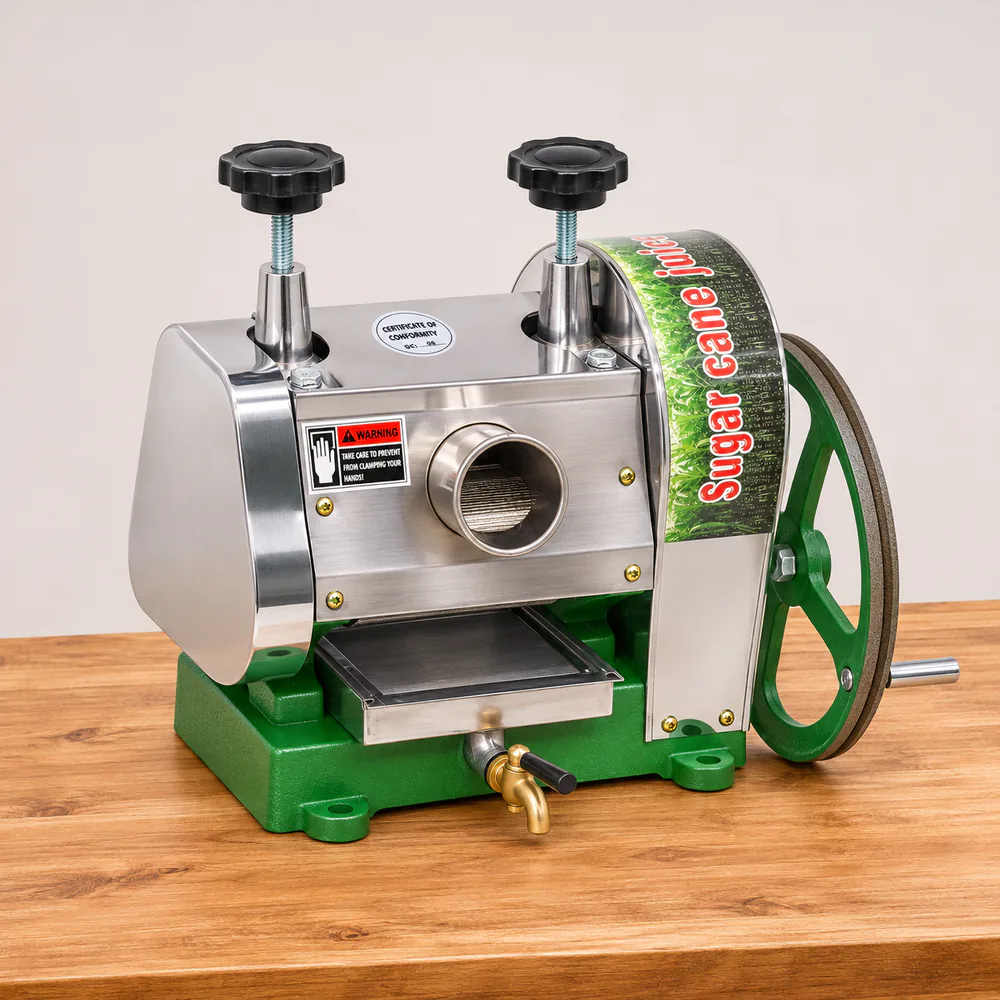
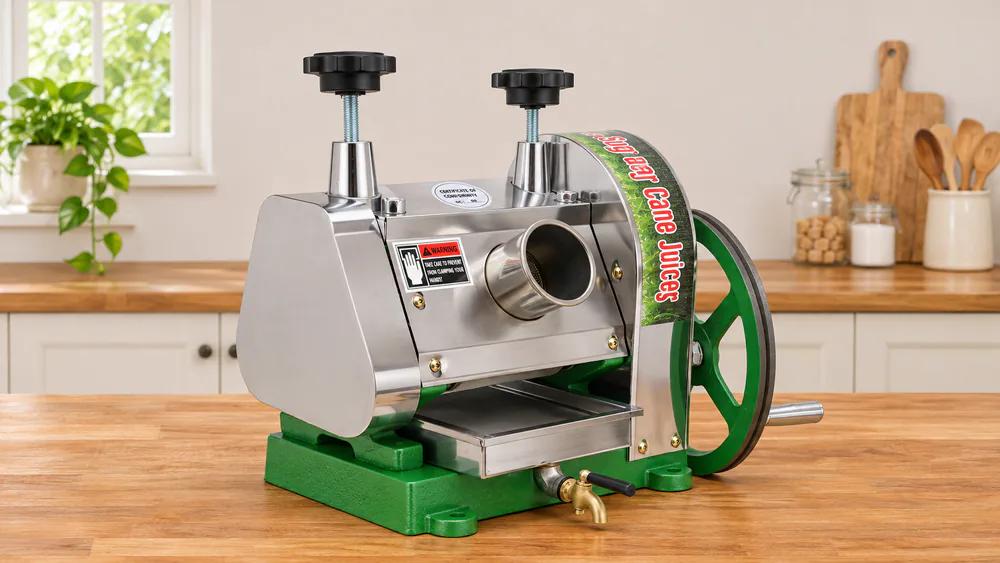
If you press cane now and then and do not want a motor in the house, this is the pick. It has 3 rollers with manually adjustable spacing, and 2 knobs set that spacing to suit the thickness of the cane. A handwheel drives it, so there is no cord, and the gear-reduction design keeps cranking noise relatively subdued.

Pros

  • Budget-friendly relative to the electric picks
  • No motor and no cord, with fairly quiet cranking
  • Removable juice tray makes rinsing simple
  • Faucet controls discharge and keeps the front tidy

Cons

  • Base can slide under hard cranking unless secured
  • Roller alloy not independently established
  • Gear lubrication is poorly explained
  • Throughput depends entirely on the person turning it

Turning the handwheel takes most of the effort. Hard turning can make the base slide, so a secure work surface matters more than the portable label suggests. Clamp or weigh it down before you start. The roller adjustment helps with stalks that change in thickness, and the faucet gives useful control over juice discharge while keeping the front of the press tidy.

Cleanup is the easy part. The removable juice tray simplifies rinsing after a batch, and the rollers are built to rinse clean. What is less clear is how to reach and lubricate the gears, which the instructions explain more vaguely than the routine tray rinse. The maker says to clean cane thoroughly when pressing it with its peel, and to reverse the handwheel if the load becomes excessive.

Treat the specs with care. The maker advertises 330LBS/H of cane, but a sustained manual pace depends on your arm, your cane preparation and repeat passes, so that figure is not a juice volume. The 2.4-inch inlet designation is the opening, while operating guidance limits cane to 2 inches thick. Stainless rollers are specified, but we could not establish the alloy, so inspect the machine when it arrives and do not count on rust immunity.

3. Best Electric Juicer for Easy Rinsing: INTBUYING 110V 800W Three-Roller Sugarcane Press

INTBUYING 110V 800W Three-Roller Sugarcane Press
3

INTBUYING 110V 800W Three-Roller Sugarcane Press

Best Electric for Easy Rinsing
Check Price on Amazon
4.0/5

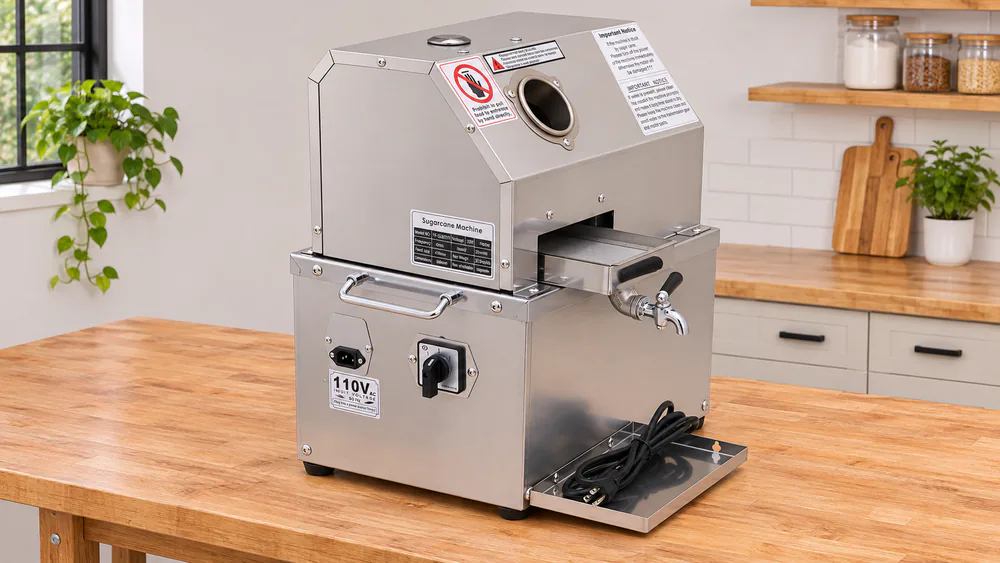
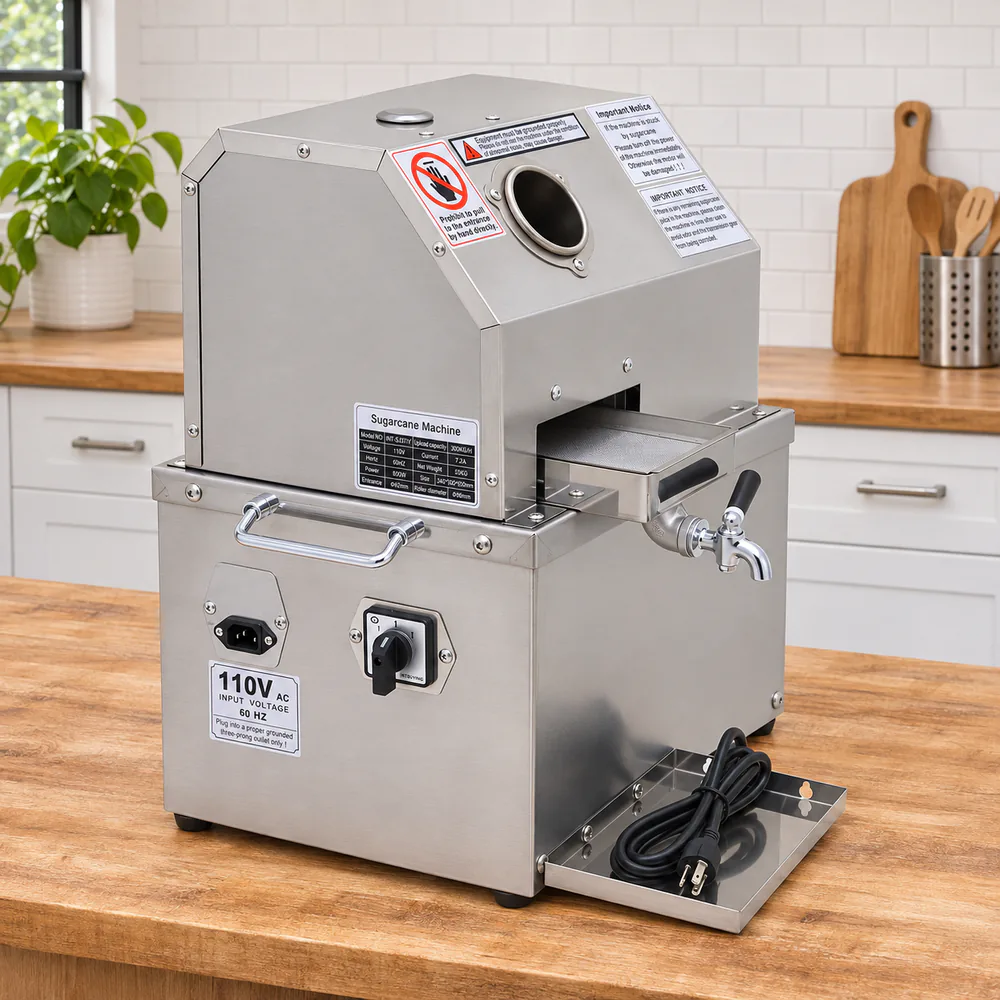
The INTBUYING is the electric press we would pick if rinsing the rollers is your biggest worry. It runs on 110V with an 800W copper motor, 3 rollers in 304 stainless steel, a 5-grade gear transmission and 2 cane preparation knives in the box. Roller pressure adjusts automatically, and a forward and reverse switch helps when a stalk jams.

Pros

  • Top cleaning opening for easy roller rinsing
  • Fine filter reduces coarse residue in the juice
  • Automatic roller pressure and a forward and reverse switch
  • Two cane preparation knives included

Cons

  • Premium within this shortlist
  • Audible motor and awkward to lift
  • Possible early failure, with warranty terms unverified
  • Inlet size and footprint not confirmed

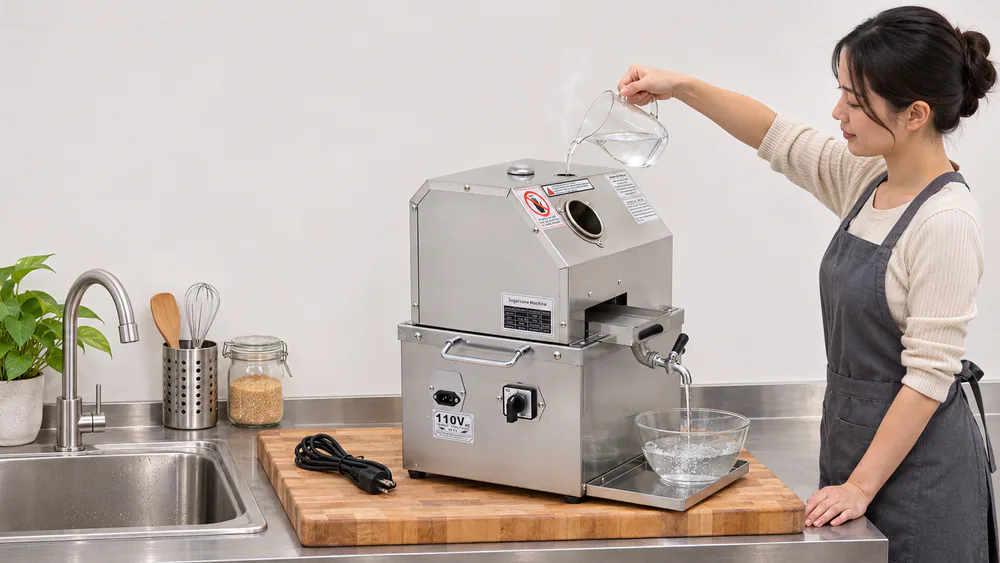
The top water-injection opening is what sets it apart. It makes roller rinsing more accessible than on a press you have to feed through the inlet, and the separate juice and bagasse paths keep the mess organised. The fine stainless filter also cuts down on coarse cane residue in the collected juice, so the glass looks cleaner. Like the VEVOR, you cut a wedge on the leading end of the cane before feeding.

The trade-offs are weight and sound. The motor is audible while it juices, and lifting the machine is awkward, so decide where it will live before you buy. Durability is the open question. Early loss of operation is a possible failure, not an established service life, but it tells us to buy through a seller that handles returns and parts properly.

Its advertised 660LB/h is a cane-processing claim, and the maker's 80% maximum extraction claim varies between similar configurations, so do not expect either number in everyday use. We could not verify the exact inlet size, footprint or warranty for this model. Filters, filter boxes and cane knives appear in the maker's parts catalog, but confirm they fit your press before ordering.

Warm water being poured into the top cleaning opening of an INTBUYING electric sugarcane press set on a cutting board beside a sink
The top opening is where this press earns its place.

How to Choose a Sugarcane Juicer

Specs on a cane press can look alike while the daily experience differs a lot. After the three reviews above, these are the points that shaped our picks.

Manual vs. Electric: Match the Machine to Your Workload

A manual press suits a few stalks at a time. You supply the power, so the pace is yours, and the whole thing stays quiet. An electric press suits repeat batches, because the motor does the work and your hands stay free to feed and collect.

Be honest about how often you will press. If it is a weekend treat, a handwheel is plenty and costs the least. If you press several times a week, or serve guests, the motor is worth the extra money and the extra noise.

Roller Materials, Roller Gap and Inlet Size

Look for stainless rollers and ask what grade they are. The VEVOR lists SUS304 rollers with an SUS201 housing, and the INTBUYING lists 304 stainless rollers. The HQHAOTWU specifies stainless without a confirmed alloy, so inspect it on arrival.

Roller gap matters because cane thickness varies. Manual knobs let you adjust by hand, while automatic gap systems adjust under load. Inlet size is the opening, not a promise that every thick stalk will press whole, so check the maker's maximum cane diameter as well.

Cane Throughput vs. Juice Yield

Throughput and juice yield measure different things, and confusing them is the most common mistake in this category. Throughput is pounds of cane fed per hour. Yield is how much liquid you collect from that cane.

Crushing separates liquid from fibrous bagasse, so a press can take in a lot of cane and still leave juice behind if the rollers are set wide or the cane is dry. Extraction figures such as 60 to 80 percent come without a stated measuring basis, which makes them poor guides to juice per stalk. Treat every figure as a claim until someone measures it.

Footprint, Weight, Mounting and Power Requirements

Weight and footprint decide where a press can live. A heavy electric press needs a floor spot or a sturdy bench, and wheels help only when there is a clear path. A manual press must be anchored, because hard cranking moves it.

Check the supply too. The VEVOR copy describes a 110V plug while its manual lists AC115V for the US model family, so read the rating plate on the unit you receive and match the supply. Keep the base dry and plan for an outlet near the work area.

Cleaning Access, Replacement Parts and Support

The best press is one you will actually rinse. Look for a removable tray, a top flushing port or feed-port access to the rollers. Rinse access does not make a press dishwasher-safe or fit to submerge, so never assume it does.

Parts and support matter if you plan heavy use. Filters, knives and gears wear, and exact-model compatibility is not guaranteed. Before you buy, ask the seller who handles warranty claims, who pays freight on a return, and whether replacement rollers or gears exist. A direct-sale policy from the maker does not carry over to a different seller.

Can You Use a Regular Juicer for Sugarcane?

Having looked at presses built for cane, it is fair to ask whether a juicer you already own could do the job. Not safely, and usually not well. A general-purpose juicer is not automatically a cane press. Kuvings, for one, explicitly excludes sugarcane from its whole slow juicers, which tells you how hard the fibre is on a household auger.

Cane is dense, woody and wet. A press with big, strong rollers and a gear reduction is built to crush it, while a citrus reamer, centrifugal juicer or slow juicer is built for soft produce. Forcing cane into one risks jammed parts, a burned-out motor and a voided warranty. If you want cane juice at home, buy a press designed for it.

Setup, Cleaning and Maintenance

Once you have chosen a press from the reviews above, the routine around it matters as much as the machine. Plan about as much attention for setup and cleanup as for the pressing itself.

Preparing the Cane and Securing the Machine

Set the machine on a flat, stable surface first. On the manual press that means clamping or weighing it down; on the electric presses it means checking the wheels are locked or the unit sits on a firm base. Keep children away from the work area, and keep hands away from moving parts.

Clean the cane well, particularly if you press it with its peel on. The HQHAOTWU accepts peel-on or peeled cane, and the same cleaning rule applies. Cut each stalk to a manageable length, and sharpen or wedge the leading end on the electric presses so the rollers grab it.

Peeled and unpeeled sugarcane stalks on a cutting board, one with a freshly sharpened pointed end ready to feed into a press
A pointed leading end helps the rollers take hold.

Cleaning the Rollers and Juice Path

Rinse right after pressing, before sugar dries on the metal. Flush water through the feed port or top opening, wipe the tray and collect the rinse water below. On the manual press, pull the juice tray and rinse it under the tap.

Never spray the motor base. Keep water and oil out of the base, and disconnect the power before any maintenance. If you see smoke, stop immediately and contact the maker; do not treat it as normal.

Handling Jams and Routine Maintenance

A jam is usually a thick or knotty stalk. On the manual press, reverse the handwheel when the load becomes excessive. On an electric press, stop the motor before changing roller direction, and disconnect power before you reach in or take anything apart.

For routine care, wipe down after each batch, check for loose fittings and keep an eye on the gears. The HQHAOTWU gears are less clearly explained, so read the instructions before you lubricate anything.

Warning. Never reach into the inlet while an electric press is plugged in. Stop the motor, unplug it, and only then clear a jam.

Sugarcane Juicer FAQs

What ownership costs should you consider?

Beyond the purchase, plan for replacement filters and cane knives, the electricity for an 800W motor, and the time cleanup takes. Parts support varies by seller, so confirm who handles warranty claims and return freight before you buy. The manual press costs the least to own, while the premium electric press asks the most from your wallet.

How much juice can you expect from a stalk?

There is no reliable glasses-per-stalk figure, because it depends on the cane, how fresh it is and how tightly the rollers are set. Advertised extraction ranges of 60 to 80 percent come with no stated measuring basis. Treat them as optimistic marketing, not a prediction.

Is a 110V press the same as a 115V press?

Not on paper. The VEVOR product copy describes a 110V plug, while its manual lists AC115V for the US model family, so read the rating plate on the unit you receive and match it to your outlet. The INTBUYING is listed as a 110V model. If a press arrives that does not match its listing, ask the seller who pays return freight before you send it back.

Can a sugarcane juicer process other ingredients?

Do not assume so. The VEVOR manual restricts feeding to cane, and we would not transfer ginger, citrus or other produce between models without the maker's approval. Use a regular juicer for those instead.

What should you check before buying for a juice stall?

Check the exact model's certifications, supply requirements, cleaning access and service arrangements. A commercial-use description does not establish certification, and the VEVOR is not ETL or NSF certified. Confirm continuous-duty limits too, since we found no verified duty-cycle data for any of these three.

Final Verdict: Which Sugarcane Juicer Should You Buy?

Our pick depends on your workload more than on any spec. If you press cane regularly and have the floor space, the VEVOR is the all-round choice. The manual HQHAOTWU is the sensible buy for light, occasional use, provided you clamp it down. The INTBUYING suits cooks who want the easiest roller rinse and cleaner juice, and who are willing to pay a premium and check the seller's support.

None of the three is a young-cook appliance, so keep kids well clear of the rollers. If you plan to sell juice, verify certifications and service before you buy rather than trusting a commercial label. Pick the one that fits your counter and your week.

Read next

Final Verdict: Which Sugarcane Juicer Should You Buy?

Find more buying guides to help you choose equipment that fits your kitchen and your routine.