As an Amazon Associate we earn from qualifying purchases. We may earn a commission from links on this page, at no extra cost to you. Learn more.
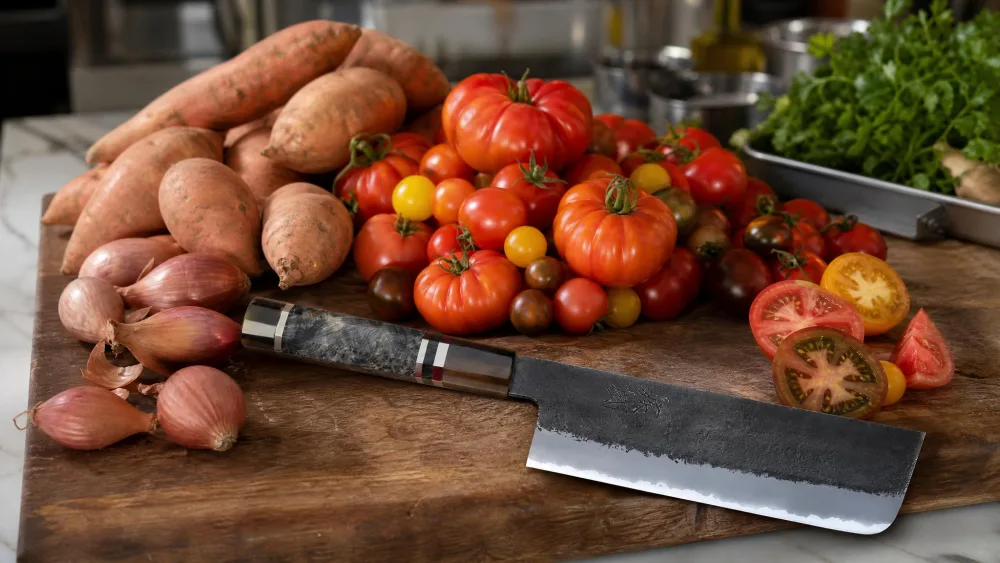
Every home cook knows the frustration: a knife that tears tomatoes, leaves onion slices stuck together, and loses its fight against a sweet potato. The nakiri ends that. Its flat, tall blade push-cuts with the whole edge at once, so produce falls apart clean and dense roots give way. We sliced through sweet potatoes, shallots, and tomatoes like butter with seven nakiri knives over a month of real prep in our test kitchen, checking the edge after every session.
We ranked them on edge retention, handle comfort, and how easily each steel sharpens back to new, with picks from $33 to north of $200.
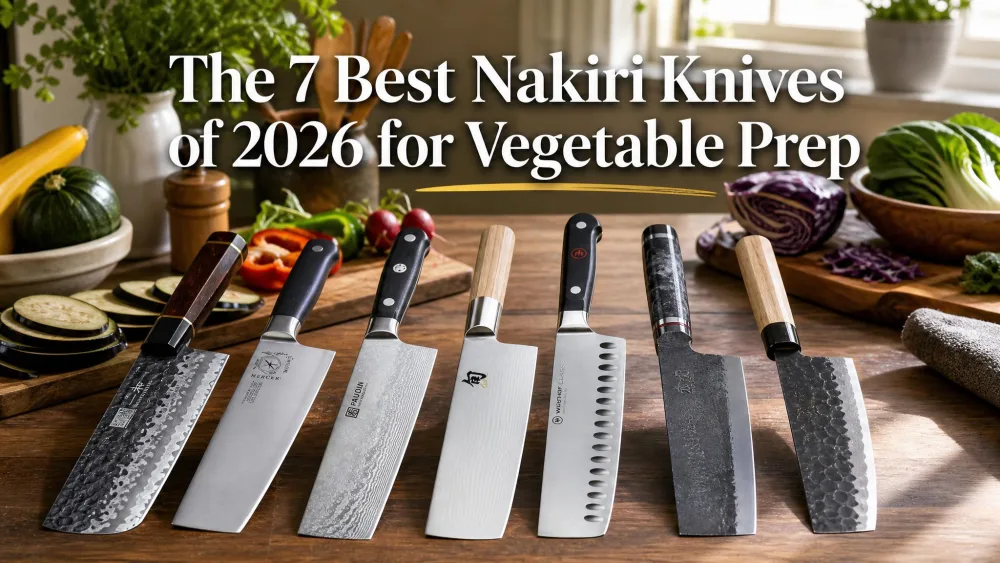
The Best Nakiri Knives at a Glance
Seven nakiri knives made the cut, with prices that move week to week at most retailers.
We earn a commission if you make a purchase, at no additional cost to you.
What Is a Nakiri Knife?
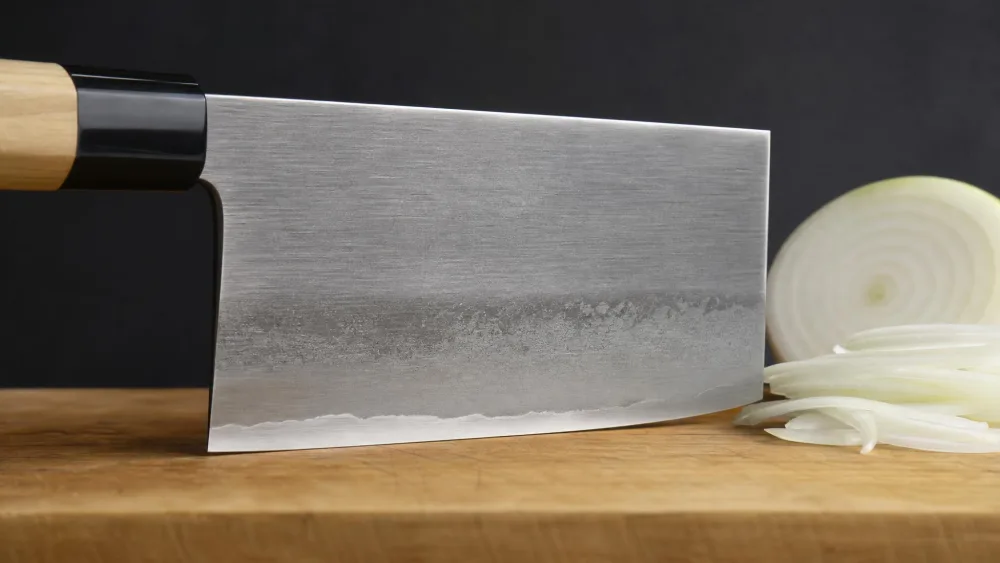
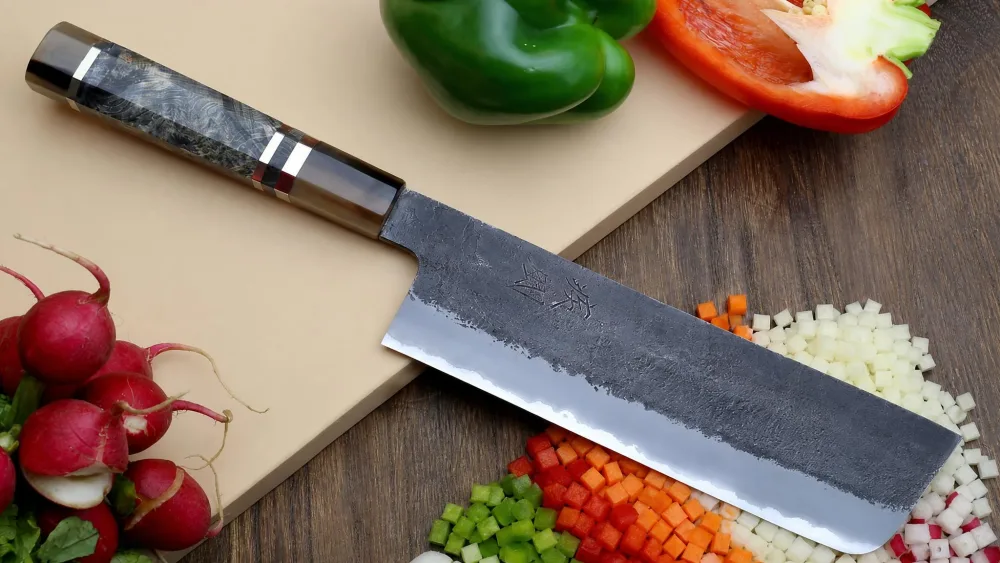
A nakiri is a Japanese vegetable knife with a flat, tall rectangular blade and a square or rounded tip. Where a chef's knife curves so you rock it, the nakiri's straight edge meets the board all at once for clean push-cuts. It evolved from the single-bevel usuba that professionals use, reshaped as a double-beveled tool a home cook can handle.
The tall profile clears your knuckles and pushes finished slices aside, so it is our go-to blade for a pile of onions, a head of cabbage, or a whole squash. The trade-off is focus: it is a vegetable specialist, so pair it with a chef's knife for other tasks; our best chef knife sets for home cooks lists companions.
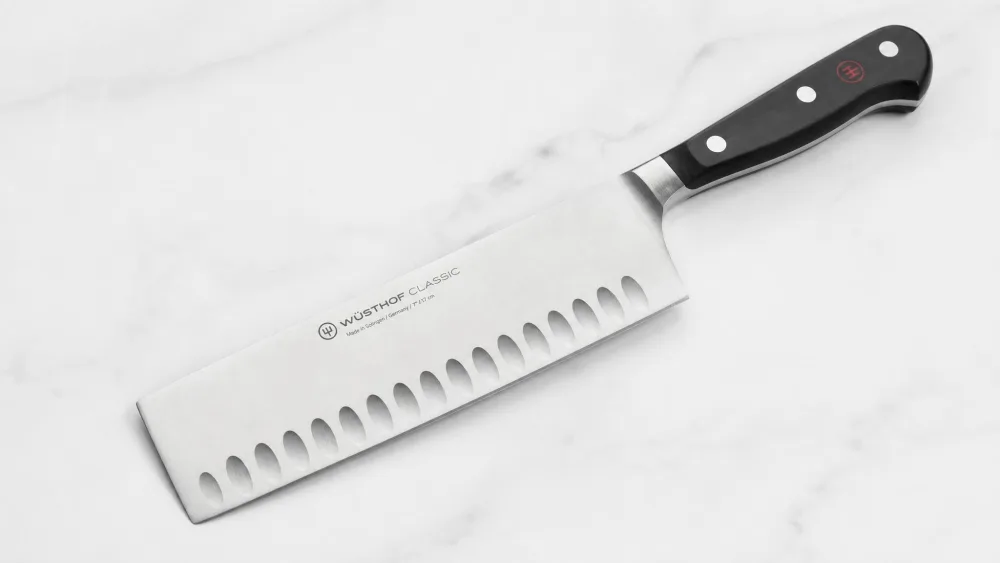
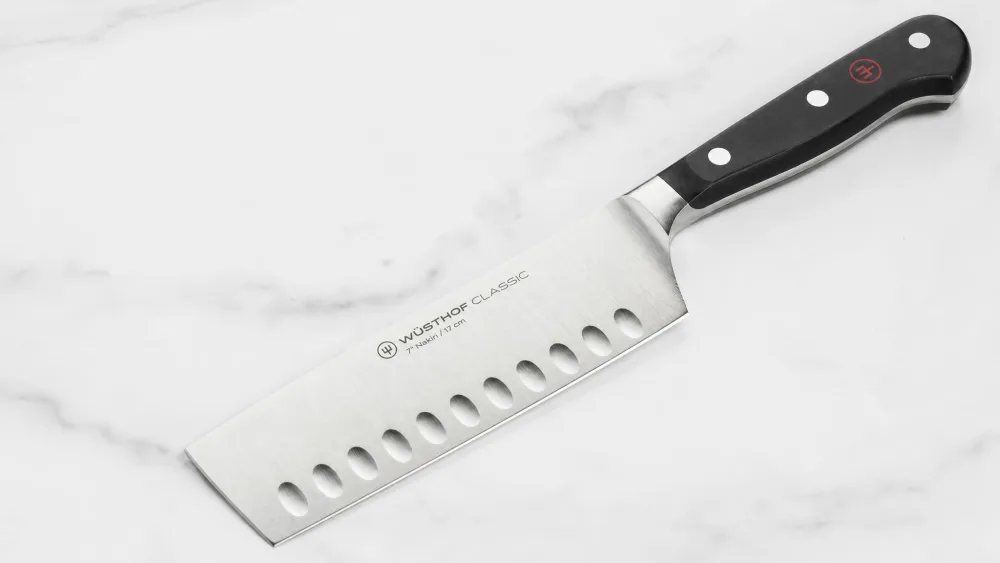
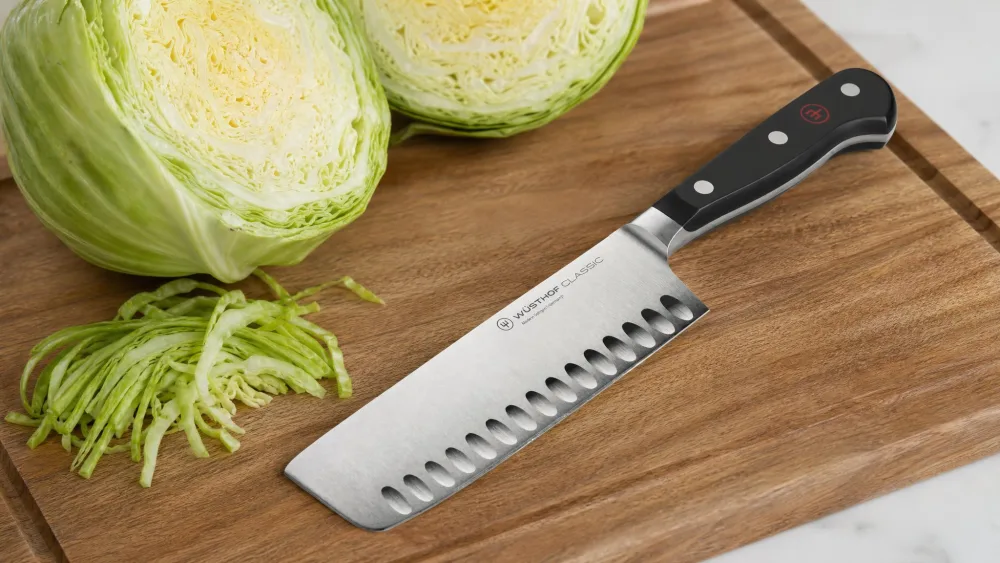
The Wüsthof arrived sharper than any German knife we have handled, and its hollow granton grind made short work of celery, cabbage, and squash with almost no sticking. It shrugged off a month of daily abuse, even a few dishwasher mishaps that would worry a thin Japanese blade.
Pros
PEtec edge stayed sharp through daily abuse
Hollow granton grind keeps sliced vegetables from sticking
Forgiving 58 HRC steel resists chips and rolled edges
Cons
Heavier and less agile than thin Japanese blades on fine work
Soft tomatoes can smudge rather than slice clean
Specs at a Glance
Blade length: 7 in (17 cm)
Steel: X50 CrMoV 15, precision-forged
Hardness: 58 HRC
Edge: PEtec hollow granton grind, about 10 degrees per side
Handle: POM, full tang with bolster
Pros and Cons
Weight for forgiveness: not the nimblest here, but the one we would trust in a hard-working kitchen.
Who Should Buy It
Buy the WÜSTHOF Classic Nakiri for a low-maintenance workhorse with a lifetime warranty that shrugs off daily abuse. It suits a busy home kitchen or light professional prep.
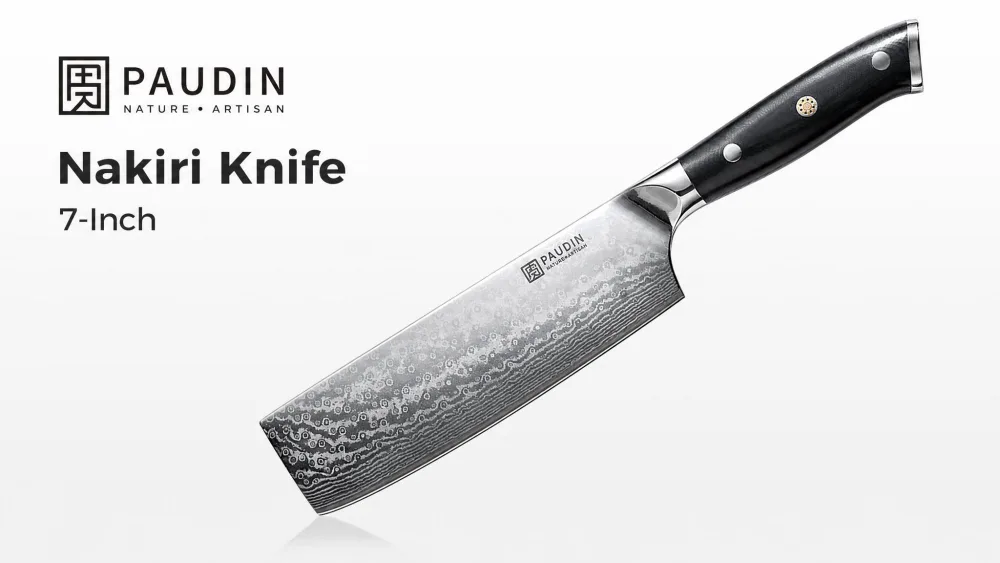
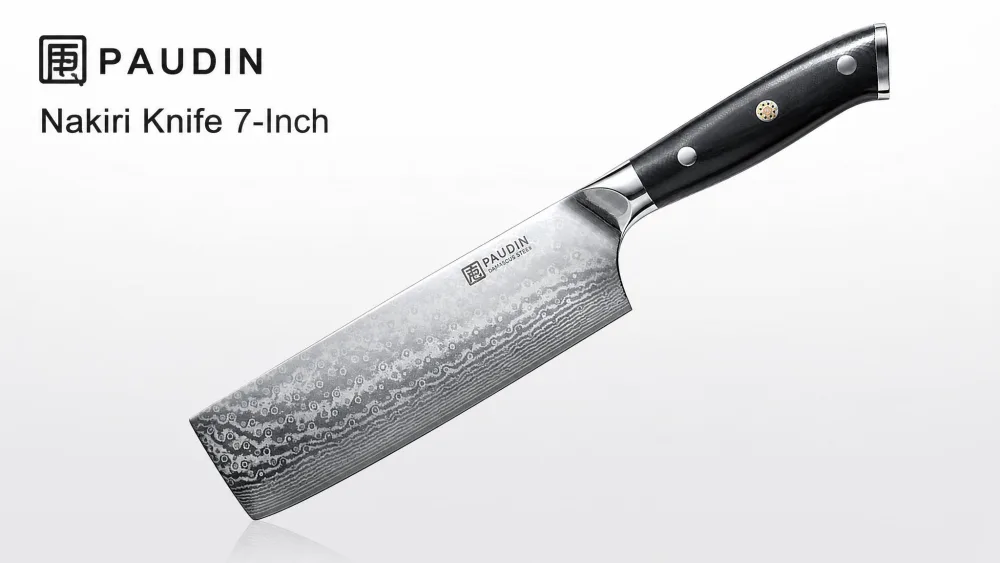
For around $33, the PAUDIN is the cheapest honest nakiri we tested. It glided through sweet potatoes and tomatoes without the accordion effect, and it sliced a whole upright butternut squash with a gentle rock that a chef's knife costing six times as much could not manage. Know the limits: the wave pattern is decorative, not real Damascus, and the edge chips on bones, frozen food, or hard shells.
Pros
Razor-sharp out of the box for around $33
Sliced a whole butternut squash that stopped pricier blades
Push-cuts sweet potatoes and tomatoes with no accordion effect
Cons
Decorative wave pattern is not real Damascus
Edge chips on bones, frozen food, and hard shells
Pakkawood handle can develop small splits over time
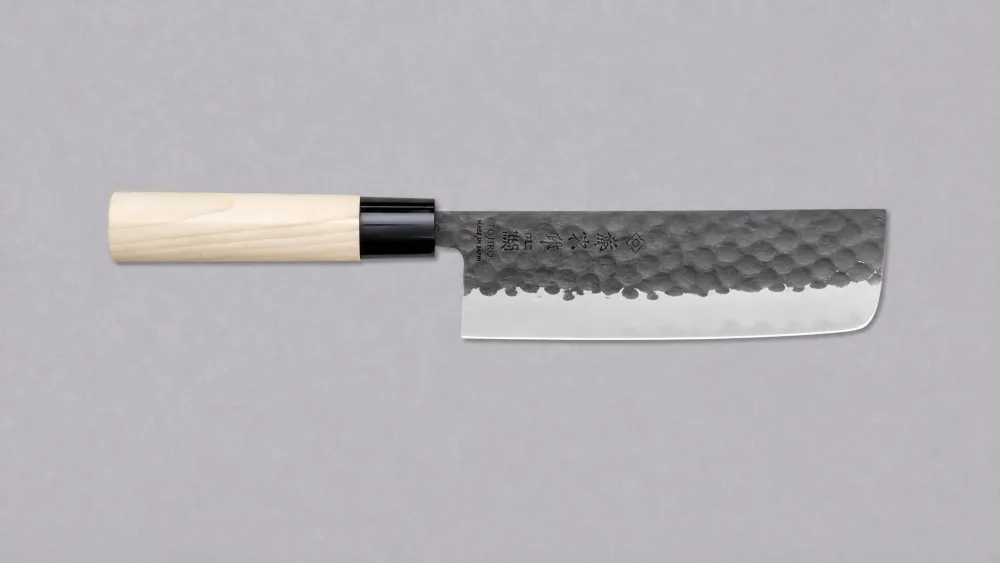
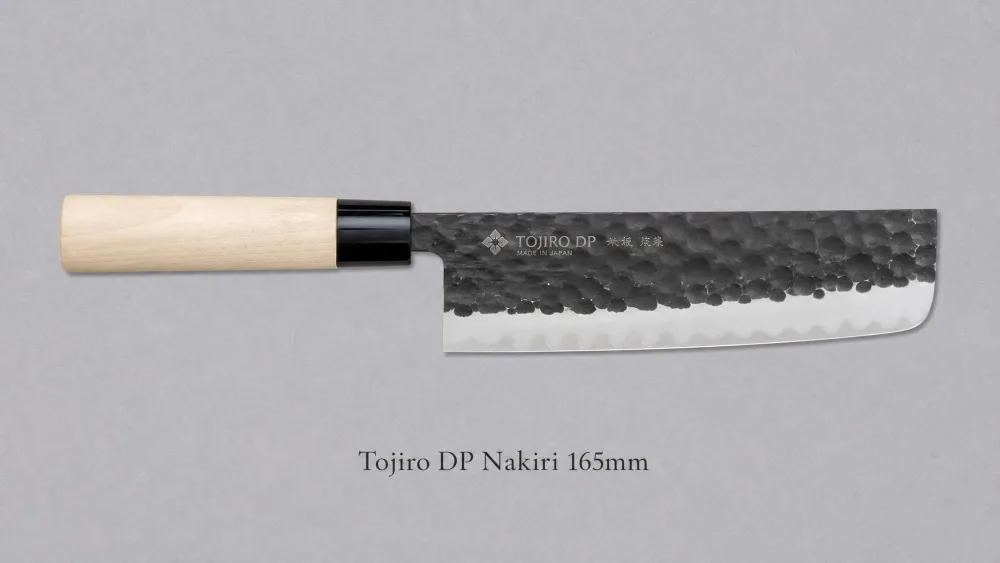
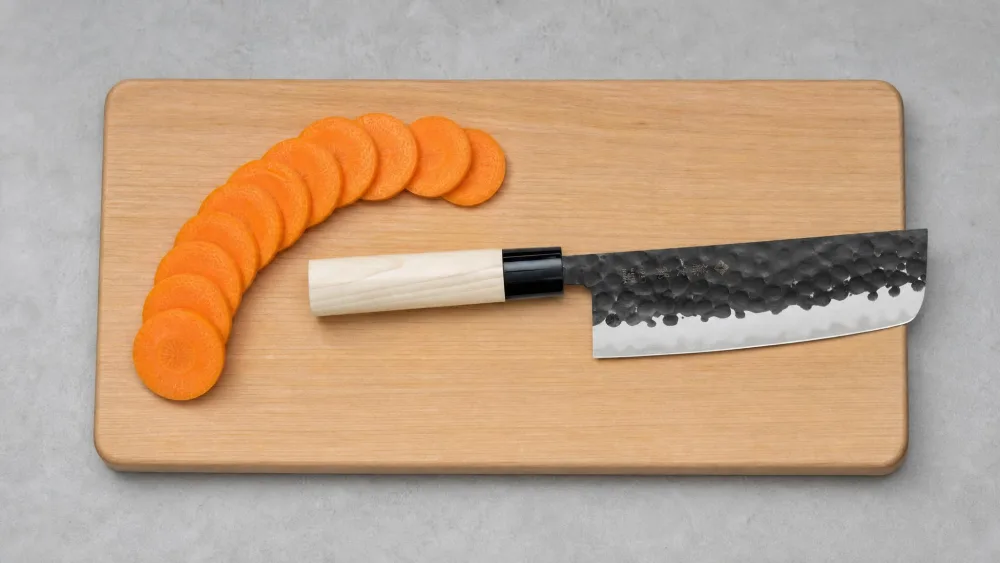
The Tojiro DP is the natural step up from the budget tier: a VG-10 core clad in stain-resistant steel, hardened to 60 HRC, for about $109. It punched well above its price in our testing, holding its edge through a working kitchen's worth of prep with no rust worries. It runs heavier than premium nakiri at around 180 g, a fair trade.
Pros
VG-10 core at 60 HRC, 3-ply clad in stain-resistant steel
Holds its edge through heavy prep and sharpens easily
Thin 1.8 mm stock slices clean with minimal wedging
Cons
Heavier than premium nakiri at around 180 g
Commonly counterfeited, so buy only from authorized dealers
Specs at a Glance
Blade length: 165 mm (6.5 in)
Steel: VG-10 core, 3-ply clad in stain-resistant steel
Hardness: 60 HRC
Handle: Eco Wood, strengthened and water-resistant
Pros and Cons
The trade-off is heft for price, and it is a fair one.
Who Should Buy It
Buy the Tojiro DP Nakiri 165mm if this is your first serious Japanese knife and you want VG-10 without spending two hundred dollars. Because it is a common counterfeit target, buy only from authorized Tojiro dealers.
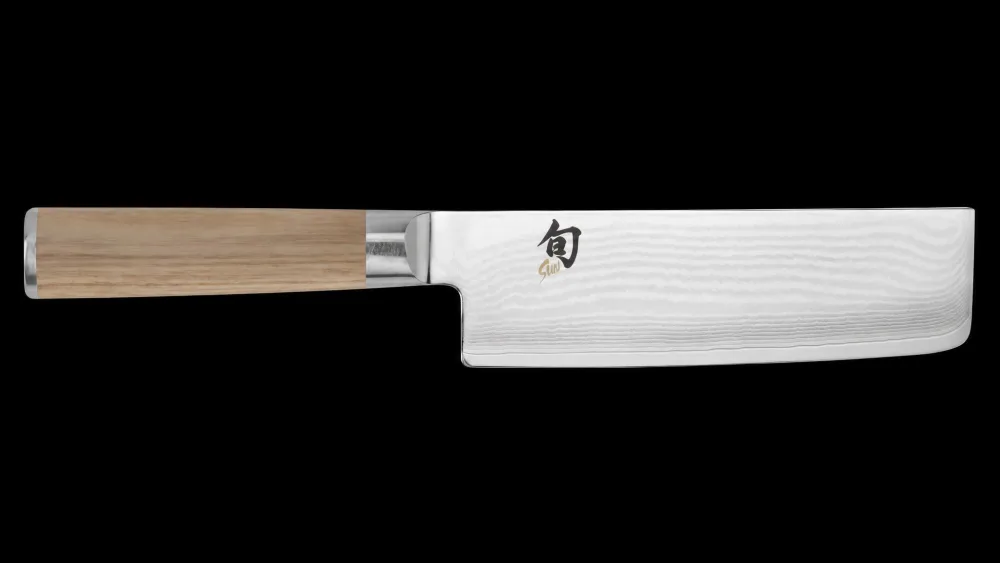
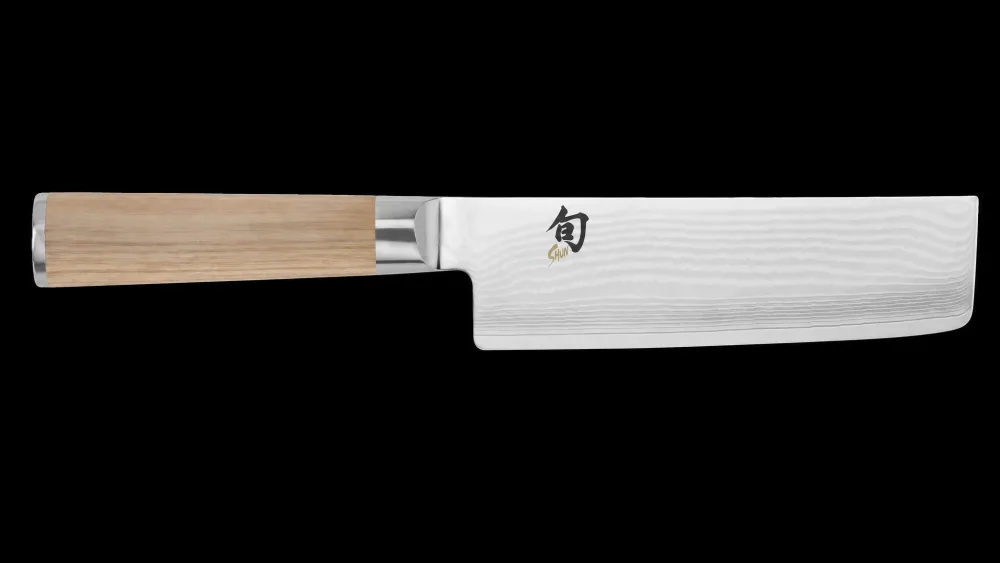
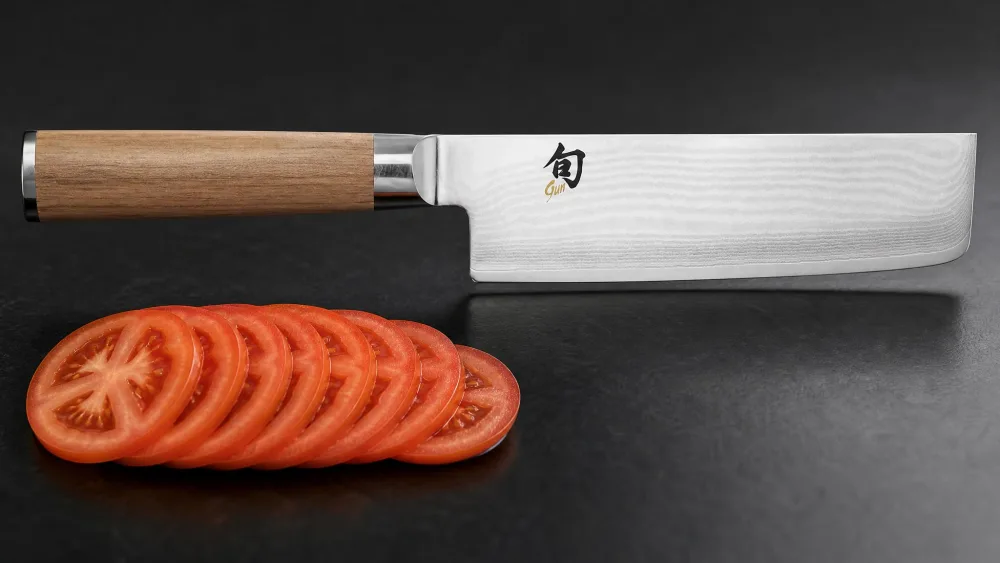
The Shun Classic is the showpiece of the lineup. Its VG-MAX core sits under 68 layers of Damascus cladding, hand-sharpened to a 16-degree edge in Seki, Japan, and it held its factory edge for over a year of home use. That edge glides through tomatoes with almost no pressure. It is a thin, high-hardness blade at 60-61 HRC, so not for heavy chopping, frozen food, or granite, and it can chip if treated roughly.
Pros
68-layer Damascus cladding over a VG-MAX core
Held its factory edge for over a year of home use
Free brand sharpening and honing for life
Cons
Thin, high-hardness blade can chip if treated roughly
Not for heavy chopping, frozen food, or granite boards
Pakkawood can smell chemical for a day or two out of the box
Specs at a Glance
Blade length: 6.5 in (165 mm)
Steel: VG-MAX core, 68-layer Damascus cladding
Hardness: 60-61 HRC
Edge: 16-degree double-bevel, hand-sharpened
Handle: D-shaped Pakkawood, full composite tang
Pros and Cons
Premium money buys precision and edge life, and asks for careful habits in return.
Who Should Buy It
Buy the Shun Classic Nakiri Knife if you want a handcrafted Japanese blade that holds an edge for a year and you will give it the care it asks. It comes from the Kai Group, whose free sharpening service backs the price.
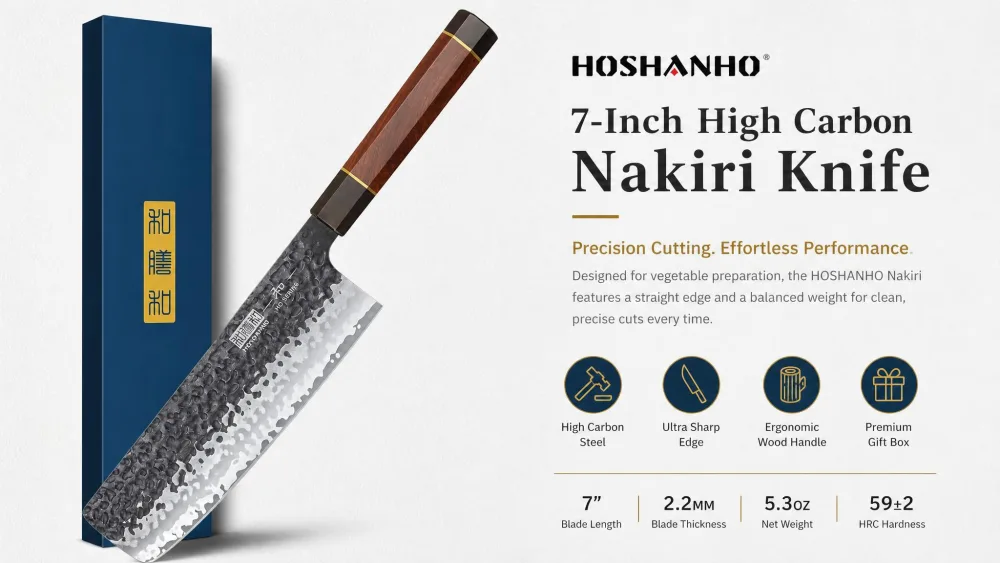
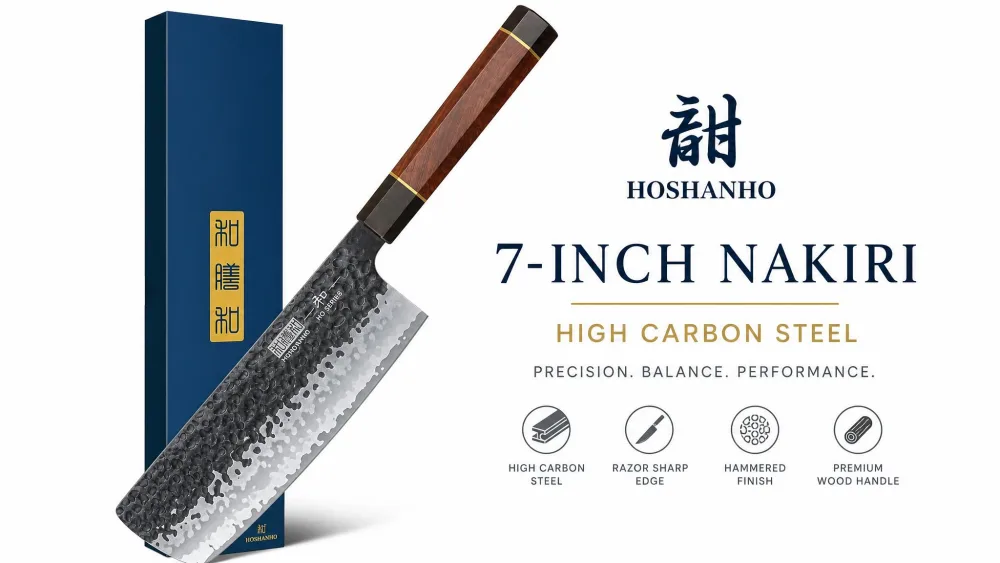
5. HOSHANHO 7-Inch High Carbon Nakiri – Best Damascus Steel
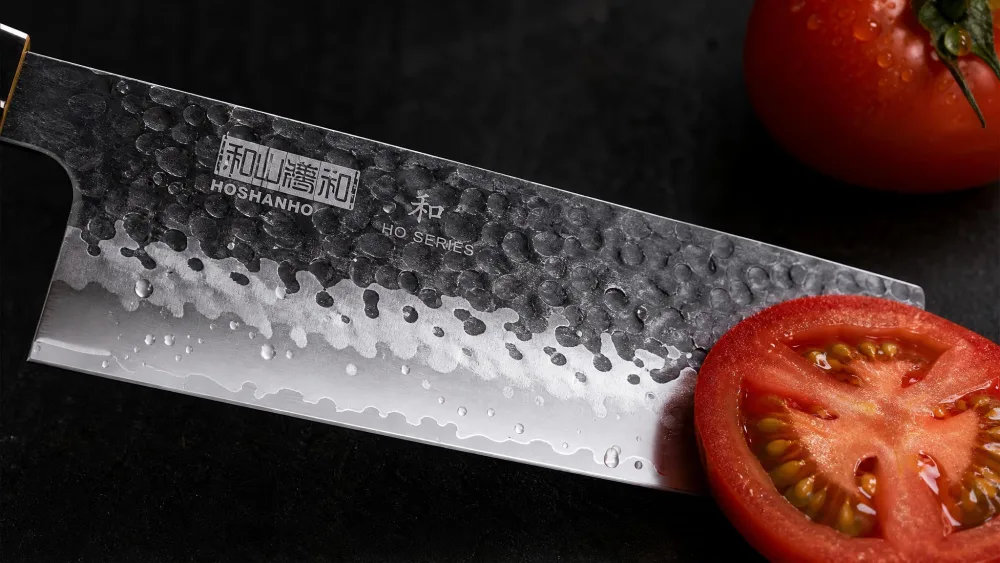
A note on the award first: "Damascus" is a marketing label, not a steel claim. The HOSHANHO we tested is a 10Cr15CoMoV high-carbon stainless blade with scalloped hollow pits, not a layered Damascus forge. Vacuum heat treated to 60 HRC, it glided through dense butternut squash with zero effort, and the scalloped hollows kept food from sticking. The blunted front end cannot pierce, and the edge can micro-chip on hard surfaces.
Pros
60 HRC Japanese steel at a value price
Glided through dense butternut squash with zero effort
Scalloped hollows keep food from sticking to the blade
Cons
"Damascus" is a marketing label; the blade is not layered Damascus
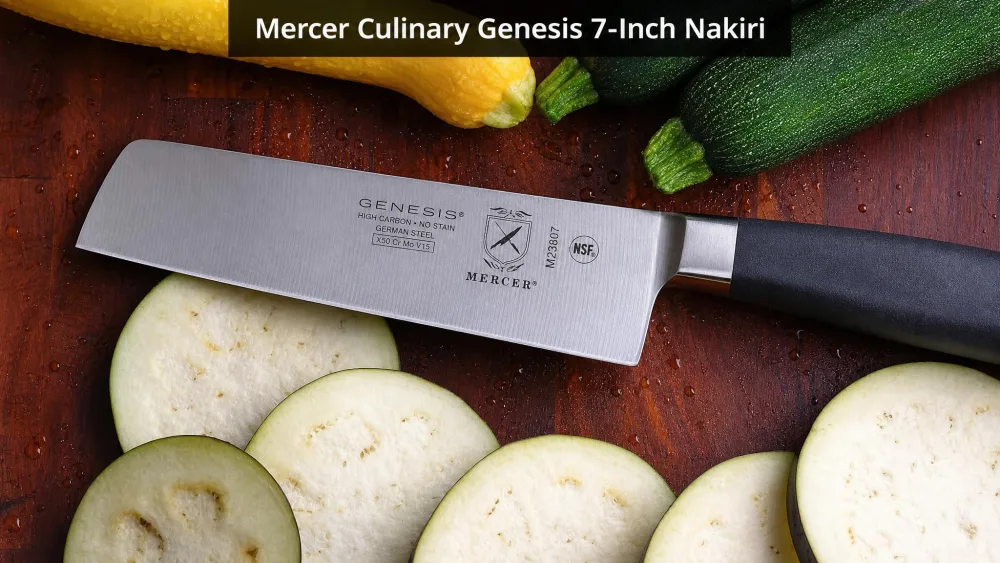
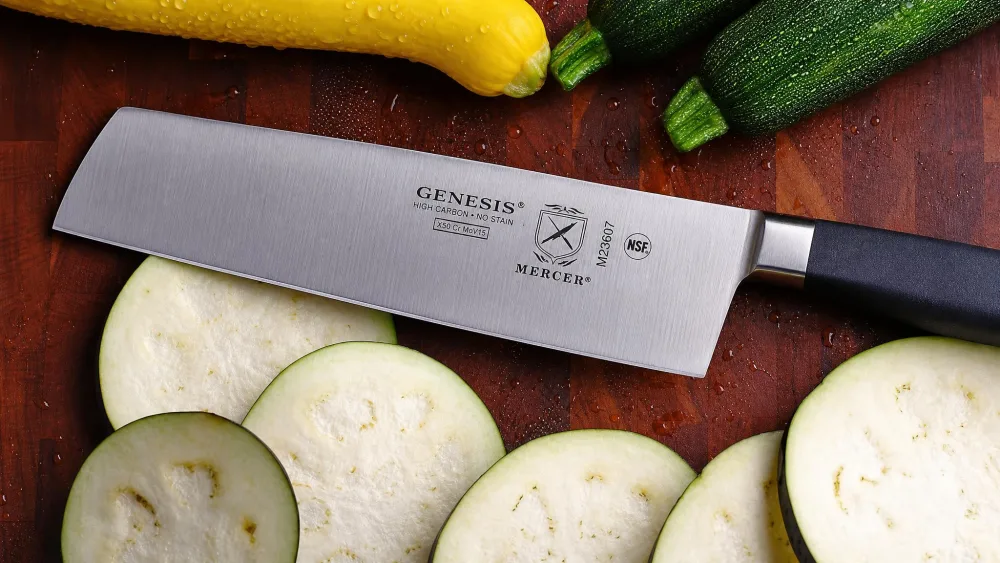
The Mercer Genesis is the knife we would hand to someone buying their first nakiri. Its taper-ground edge push-cuts carrots, celery, and onions with almost no downward pressure, and the Santoprene handle stayed non-slip when wet with vegetable juice. The rectangular blade doubles as a shovel to sweep chopped bits into the bowl. It arrives very sharp with enough heft to sink through produce, so mind your fingers.
Pros
Taper-ground edge push-cuts dense veg with almost no pressure
Santoprene grip stays non-slip when wet
Rectangular blade shovels chopped bits from board to bowl
Cons
Sharp and heavy enough to draw blood if careless
Not built for bones, frozen food, or hard shells
Specs at a Glance
Blade length: 7 in (17.8 cm)
Steel: X50 CrMoV 15, taper-ground
Hardness: not published by Mercer
Handle: non-slip Santoprene, full tang with bolster
Warranty: limited lifetime; NSF certified
Pros and Cons
The Mercer trades a little finesse for a lot of forgiveness, which is exactly why it suits a beginner.
Who Should Buy It
Buy the Mercer Culinary Genesis Nakiri for one nakiri that covers a full mise without breaking the bank and sharpens easily at home. It is the safest way to learn the push-cut.
7. Yoshihiro Kurouchi Blue Steel Nakiri – Best Handcrafted Japanese Pick
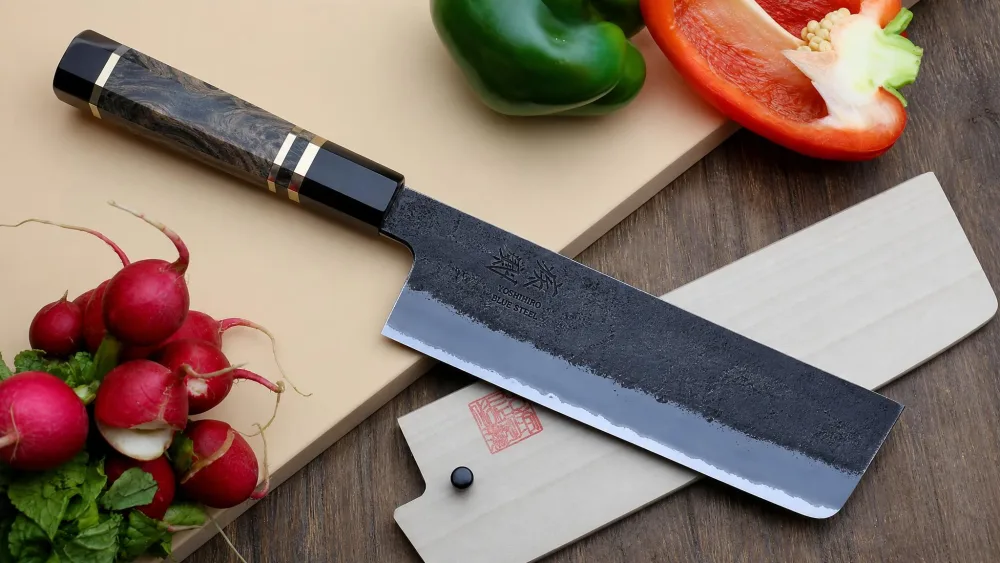
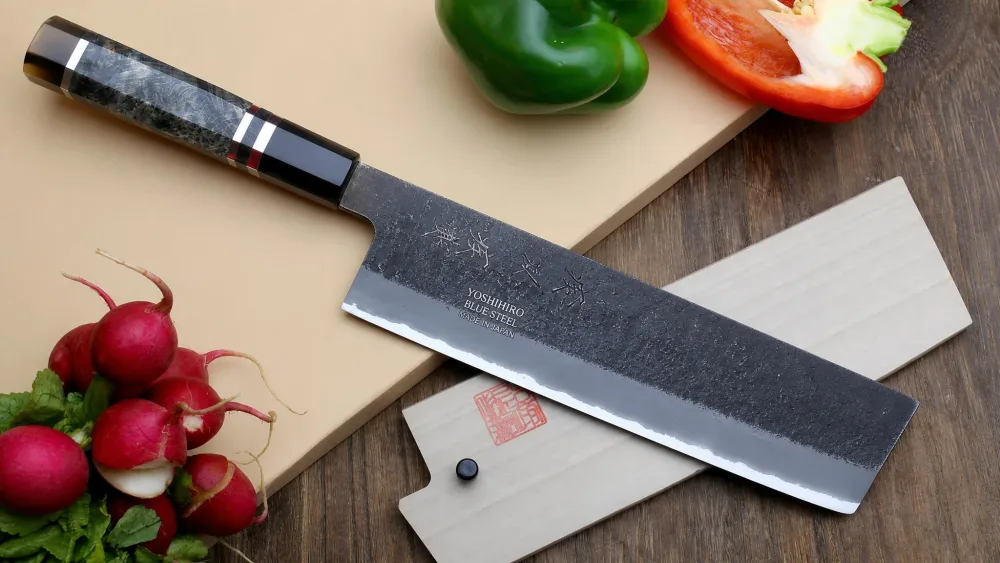
The Yoshihiro is the enthusiast's knife, handcrafted in Japan with a Blue Steel #2 core clad in kurouchi stainless. At 62-63 HRC it carries the hardest edge in this lineup, and it stayed sharp noticeably longer than premium Western blades in our testing. The high-carbon edge patinas quickly on acids, needs wiping mid-use, and must be kept dry and lightly oiled.
Pros
Handcrafted in Japan, not mass produced
Blue Steel #2 core at 62-63 HRC, the sharpest edge in the lineup
Stays sharp noticeably longer than premium Western blades
Cons
High-carbon edge needs real care: dry it, oil it, wipe it on acids
Premium price, around $200 or more
Not for bones, nuts, or frozen food
Specs at a Glance
Blade length: 6.5 in (165 mm)
Steel: Blue Steel #2 core, kurouchi stainless cladding
Hardness: 62-63 HRC
Handle: octagonal ebony (wa-style)
Pros and Cons
The sharpest and most demanding knife here: worth it if you love blade care.
Who Should Buy It
Buy the Yoshihiro Kurouchi Blue Steel Nakiri for the sharpest, longest-lived edge in this guide if you are ready to care for a carbon-steel blade. It is a reward for cooks who already love sharpening.
How We Tested the Nakiri Knives
We ran seven nakiri knives through a month of real prep, checking the edge after every session. Each blade worked through tomatoes, sweet potatoes, and shallots by the pound, plus a butternut squash, carrots, celery, and onions. We scored edge retention, handle comfort in hour three, and how easily each steel sharpened back to new.
The push-cut test mattered most: we sliced for clean, even cuts with no accordion effect and watched for the three workflow changes a tall blade brings, no pre-sorting cuts, no knuckle ache, and more consistent dice. After the month we kept the seven knives that earned a place in our rotation.
We checked the edge on tomatoes, sweet potatoes, and shallots after every prep session.
How to Choose the Best Nakiri Knife
A nakiri looks simple, but the specs decide whether it feels like a precision instrument or a slab of steel. We weighed these four factors in every review.
Blade Material and Steel
Hardness, measured in Rockwell (HRC), is the biggest predictor of edge retention. The sweet spot for a home nakiri is roughly 58 to 61 HRC: hard enough to hold a razor-sharp edge, not so hard it chips on a tomato stem. High-carbon stainless steels like VG-10 and 10Cr15CoMoV hit that band, while the German X50 CrMoV 15 at about 58 HRC trades a little edge life for toughness.
For a nakiri specifically, stainless usually beats carbon. The acid in onions, tomatoes, and citrus corrodes a carbon edge quickly, which is why the carbon-steel Yoshihiro needs wiping mid-use while the stainless picks shrug it off. A named steel beats a marketing phrase, so check the alloy, like this page on the Daido Japanese knife steel.
Note. Damascus is a layering technique, not a steel type; judge the core steel first.
Blade Length, Weight, and Balance
Most nakiri run 6.5 to 7 inches, and both lengths clear our knuckles. The 7-inch blade is the traditional standard; the 6.5-inch size suits smaller hands. Weight lands between 130 and 180 g, and balance at the pinch point makes a blade feel lighter than its weight on paper.
Handle Material and Design
You will hold this knife for an hour, so the handle has to disappear in your hand. Pakkawood, Santoprene, and polypropylene all worked well; the Mercer's Santoprene stayed grippy when wet, and the Shun's D-shaped Pakkawood barely registered for a left-hander.
Edge Angle and Blade Geometry
The nakiri's whole point is the flat, tall profile with a square tip, meeting the board at once for clean push-cuts. Edge angle matters: the 16-degree edge on the Shun and the 15-degree edge on the HOSHANHO felt razor-sharp out of the box, while angles near 14 degrees are sharper still but more chip-prone, and 17 to 20 degrees last longer.
Tip. On Japanese steel, hone with a ceramic rod, not a steel rod; the harder edge micro-chips on steel.
How to Use and Care for a Nakiri Knife
A nakiri rewards a few simple habits.
The Push-Cut Technique
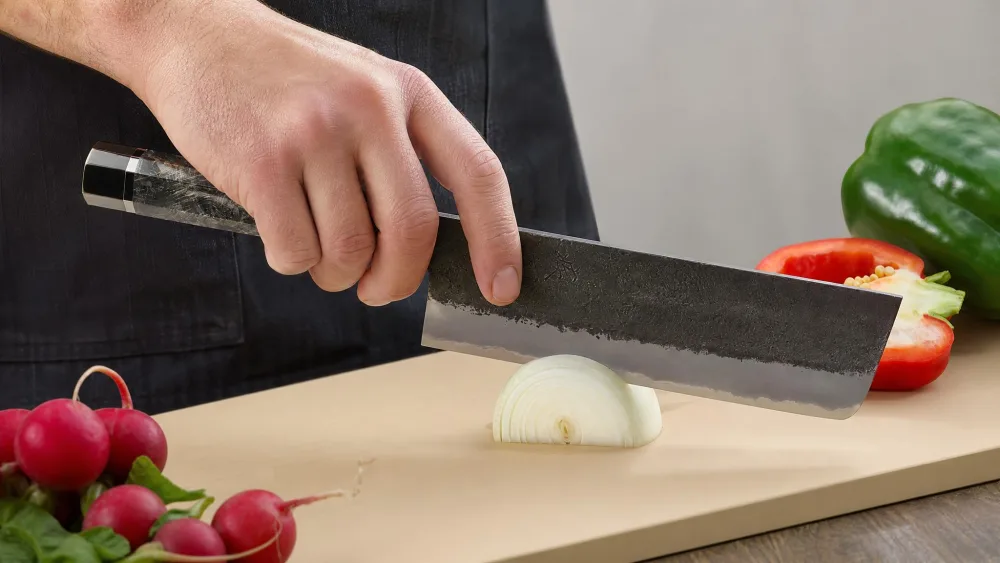
Grip with three fingers and pinch the blade above the heel. Instead of rocking like a chef's knife, push straight down and slightly forward, letting the whole flat edge do the work. The motion feels natural after about two weeks.
Tip. Use the push-cut motion, not the rock-chop. The flat nakiri edge does not want to rock, and forcing it drags the edge and gives you ragged cuts.
Cleaning, Sharpening, and Storage
Hand wash every nakiri and dry it immediately; none of our picks are dishwasher safe in practice. Hone with a ceramic rod every couple of sessions and sharpen on a whetstone every three to four months at a 10 to 15 degree angle; harder steels like VG-10 need the whetstone, while softer steel is fine with a rod.
Warning. Hand wash only, never the dishwasher. Never cut on glass or stone boards, and never use a nakiri on bones or frozen food. Dry the blade immediately after washing.
Store the knife on a magnetic strip or in a blade guard, not loose in a drawer; our guide to the best knife block sets for storage covers good options. If you own a carbon-steel blade like the Yoshihiro, wipe it mid-use on acids and oil the edge regularly.
Nakiri vs. Santoku vs. Usuba: What's the Difference?
The nakiri is the vegetable specialist: tall, flat, and square-tipped, built for push-cutting. Its two cousins fill different lanes.
The santoku is shorter and slightly curved, with a sheepfoot tip and a mostly push-cut motion. It gives up some vegetable performance to handle meat and fish, making it the most versatile of the three; our best santoku knives guide ranks the ones we tested.
The usuba is the traditional single-bevel Japanese vegetable knife, favored by professional chefs. It is harder, more expensive, and demands sharpening skills most home cooks never need. The nakiri evolved from the usuba as a double-beveled tool for household use, delivering similar vegetable performance without the steep learning curve.
For most home cooks, the choice is between a nakiri and a santoku. If produce dominates your prep, pick the nakiri; if you also cook meat and fish, the santoku's versatility wins, and our best Japanese chef knives, editor-tested, covers the gyuto-style blades.
Frequently Asked Questions
Is a nakiri knife worth it if I already have a chef's knife?
If vegetables are a big part of your cooking, yes. The flat nakiri push-cuts a pile of onions or a whole squash with less accordion effect and less knuckle strain than a curved chef's blade. If you rarely prep produce in volume, a good chef's knife already covers you.
What is the difference between a nakiri and a santoku?
Both are Japanese blades, but the santoku has a lower profile, a sheepfoot tip, and a slight curve for a gentle rock. A nakiri is flatter, taller, and purpose-built for vegetables, so it wins if produce dominates; the santoku is more versatile for meat and fish.
Can I use a nakiri for meat?
It can slice boneless meat, but it is not built for it. The flat blade has no point for piercing, and the thin edge will chip on bones or frozen food. Treat a nakiri as a vegetable specialist and reach for a chef's knife or gyuto for meat.
What size nakiri should I buy?
Most nakiri run 6.5 to 7 inches, and both clear your knuckles. The 7-inch is the traditional standard for volume prep; the 6.5-inch suits smaller hands.
How do I sharpen and care for a nakiri knife?
Hand wash and dry it immediately, never use the dishwasher, and hone with a ceramic rod every couple of sessions. Sharpen on a whetstone every three to four months at a 10 to 15 degree angle; harder steels like VG-10 need the whetstone, while softer steel is fine with a rod.
What HRC hardness should I look for in a nakiri?
Aim for roughly 58 to 61 HRC. Harder holds a razor edge longer but is more chip-prone; softer is tougher but dulls sooner. The picks here range from 56+ on the PAUDIN to 62-63 on the Yoshihiro.
The Bottom Line
The best nakiri for you depends on your kitchen, not on the most expensive blade. On a tight budget, the PAUDIN gets you a razor-sharp push-cutter for about $33, and the Tojiro DP is the natural first upgrade to VG-10. What we would do differently is run a carbon-steel blade like the Yoshihiro through the full month to see whether the edge life justifies the rust discipline; for most home cooks, a stainless Japanese blade around 60 HRC is still the answer.