Helping you create a kitchen you love.

Kitchen Appliances

Best Omega Juicer for Your Produce and Daily Routine

As an Amazon Associate we earn from qualifying purchases. We may earn a commission from links on this page, at no extra cost to you. Learn more.

Best Omega Juicer for Your Produce and Daily Routine

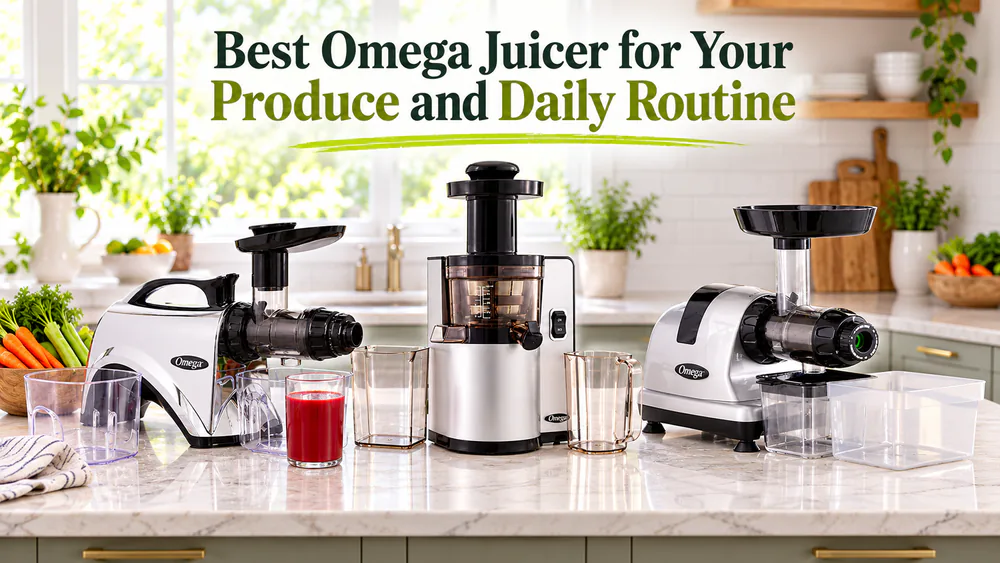
Which Omega fits the produce you actually buy and the routine you actually keep? Our answer depends on whether you juice celery every morning, feed carrots and greens to a family, or want one machine that also makes nut milk.

We chose five models, from the full-size horizontal nutrition system to a slim juice-only budget unit. All five are slow, auger-driven machines. The differences come down to design, feeding effort, cleanup and what else each one can do. If you want to see the wider field first, our juicer reviews cover centrifugal and masticating models from other brands.

We rate each one on what it juices well, how hard it is to feed and clean, and its footprint and warranty.

Best Omega Juicers at a Glance

RankProductBest forDesignRatingBuy
1

Omega NC900HDC

Best All-Purpose
Mixed produce, greens and food processingHorizontal nutrition system View on Amazon
2

Omega VSJ843QS

Best Vertical
Upright everyday juicingVertical, 43 RPM View on Amazon
3

Omega MM900HDS

Best for Celery
A daily celery routineHorizontal, 2 end caps View on Amazon
4

Omega H3000D

Best Budget
Small batches on a tighter budgetSlim horizontal, juice-only View on Amazon
5

Omega CNC80S

Best Compact Nutrition System
Small kitchens that want more than juiceCompact horizontal, 80 RPM View on Amazon

We earn a commission if you make a purchase, at no additional cost to you.

See full comparison table

Omega Model Selection by Use Case

Celery drinkers should look at the MM900HDS, since its celery-only end cap is built for the job. Households that juice a wide mix of vegetables, or want nut milk and nut butter from the same machine, belong with the NC900HDC.

If counter height matters more than depth, the VSJ843QS stands upright. The H3000D offers the lowest-cost introduction to slow juicing, while the CNC80S brings nutrition-system functions to smaller kitchens.

Compare the Omega Juicers on Our Shortlist

These are use-case awards from our shortlist, not measured yield rankings. The footprint entries note conflicting published dimensions, so measure your cabinet before choosing a model.

UseNC900HDCVSJ843QSMM900HDSH3000DCNC80S
Intended useMixed produce, greens and food processingUpright everyday mixed-produce juicingCelery-focused routineSmall batchesCompact multipurpose setup
DesignHorizontal nutrition systemVertical square bodyHorizontal celery juicerHorizontal, juice-onlyCompact horizontal nutrition system
Prep and feedingTrim produce; adjust end capSmall pieces; trim stringy greensLong crisp celery stalks; correct end capSmall portions; avoid forcingNarrow chute needs extra chopping
CleaningBrush small screen; rinse promptlyWash bowl, screen and wipersBrush screen; clean celery cap before 16 ozBrush mesh; hand-wash drumBrush screen; nut butter needs extra work
FootprintLong base plus vessels; dimensions conflictUpright body plus vessels; dimensions conflictSubstantial base; verify clearanceSlim body; regional dimensions varyCompact; manual and sheet dimensions differ
Nut milk, nut butter, pastaSupportedNut milk supported; butter and pasta not verifiedNot verifiedNot verifiedSupported with supplied attachments
Warranty (check purchase terms)US/Canada: 15-year motor, 1-year partsUS/Canada: 15-year motor, 1-year partsUS/Canada: 15-year motor, 1-year parts; older promises differUS 1 year; UK 2 years; confirm sellerUS/Canada: 1 year motor and parts

How We Selected These Omega Juicers

We chose five models to cover the jobs people buy an Omega for: all-purpose juicing, a vertical body, celery, a lower cost of entry and a compact nutrition system.

We rate each machine on what it juices well, how hard feeding is, how much cleanup follows and what its footprint and warranty look like. We do not publish measured yield percentages, decibel readings or timed cleanups, because we did not measure them across all five.

Our Top Omega Juicer Picks

Omega NC900HDC

Omega NC900HDC
1

Omega NC900HDC

Best All-Purpose
Check Price on Amazon

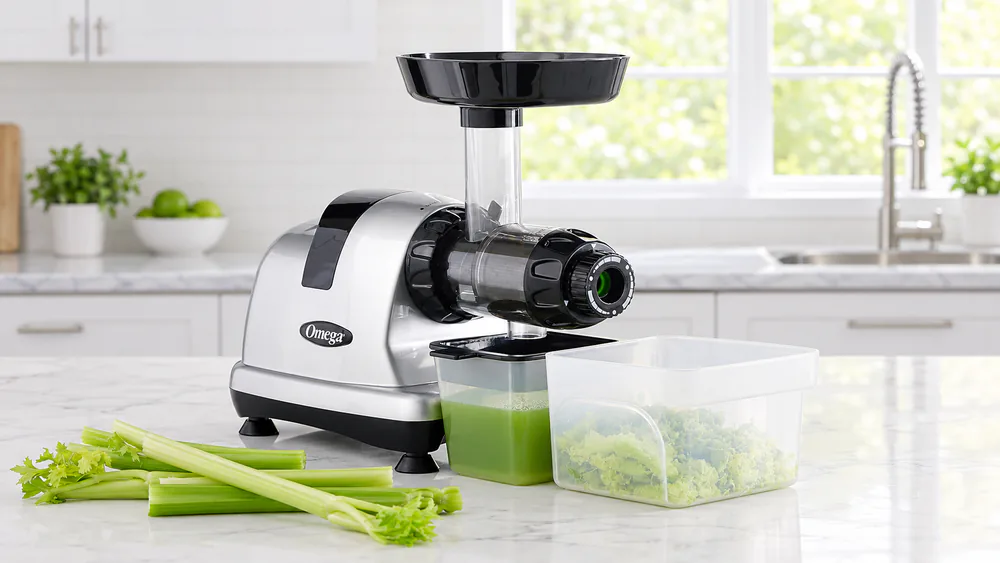
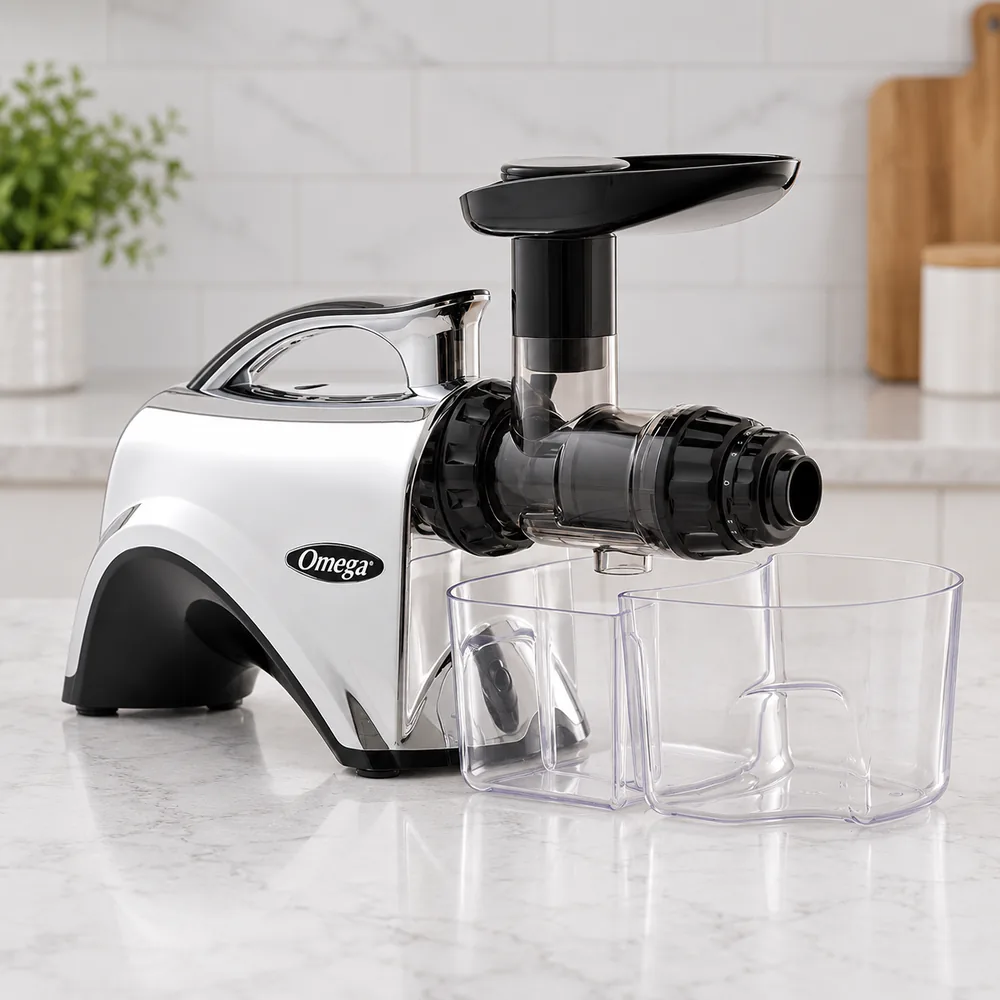
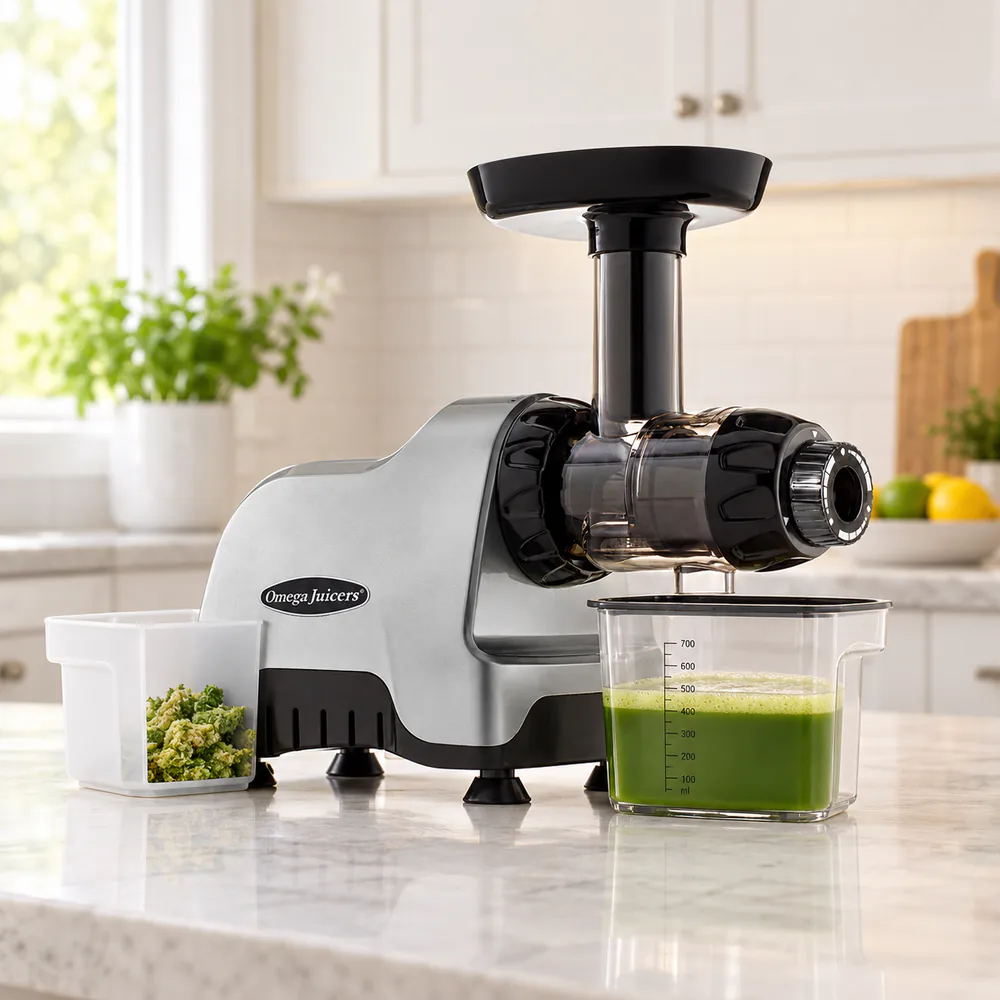
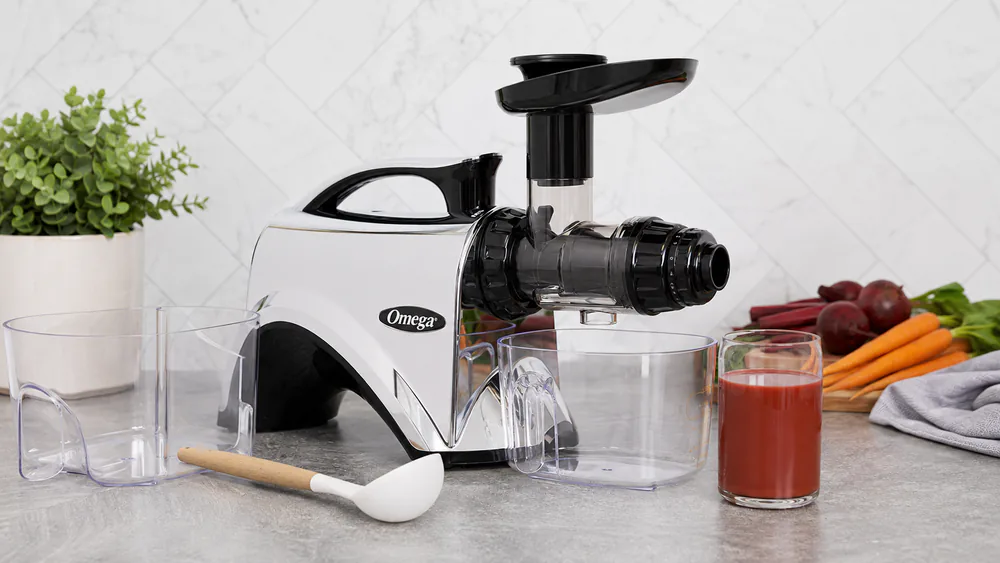
This is the Omega we would hand to someone who has not settled on one routine yet. Carrot, ginger and celery come out as dry pulp. Leafy greens process well. The 80 RPM auger sounds far quieter than a fast centrifugal juicer. It is our top pick because it also handles nut milk, nut butter and pasta extrusion with its nutrition-system kit.

Pros

  • Handles hard roots, celery and greens with dry pulp
  • Nut milk, nut butter and pasta extrusion in one machine

Cons

  • Slow feeding, and bulky produce needs trimming
  • Long horizontal footprint plus two vessels

The 150W machine has 5 pressure settings on the adjustable end cap. Feeding is slower than on a wide-chute centrifugal machine, and bulky produce needs trimming first. When pineapple clogs the screen, we reverse the auger or rinse the screen before going on. Berries can do the same.

Cleanup is easy if you do it before the pulp dries. The small screen needs a brush, while the other juicing parts rinse readily. Dimensions differ between Omega documents, so confirm the footprint.
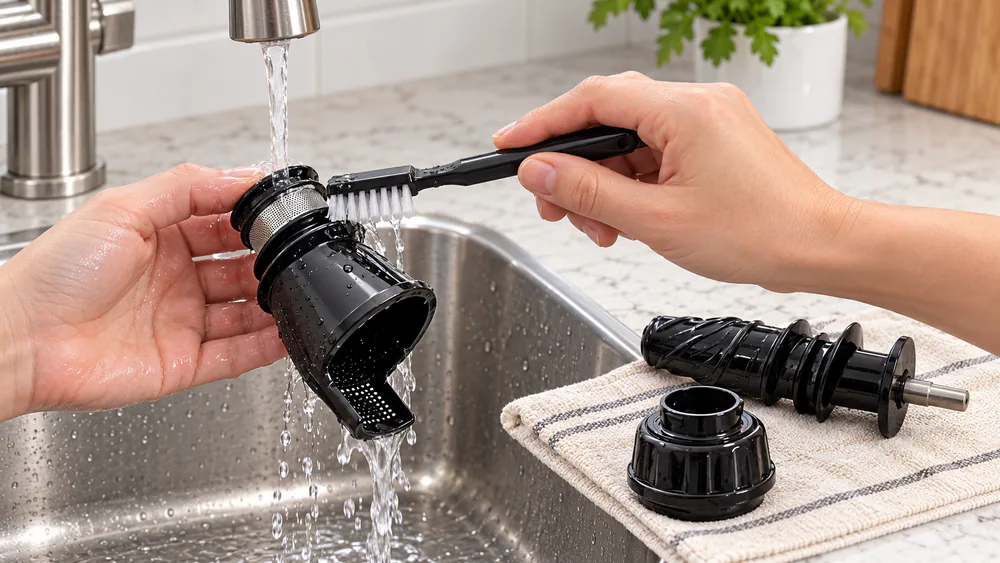
The small juicing screen of an Omega NC900HDC being brushed under running water beside the rinsed auger and end cap
The small screen is the one part that always needs a brush.

Omega VSJ843QS

Omega VSJ843QS
2

Omega VSJ843QS

Best Vertical
Check Price on Amazon

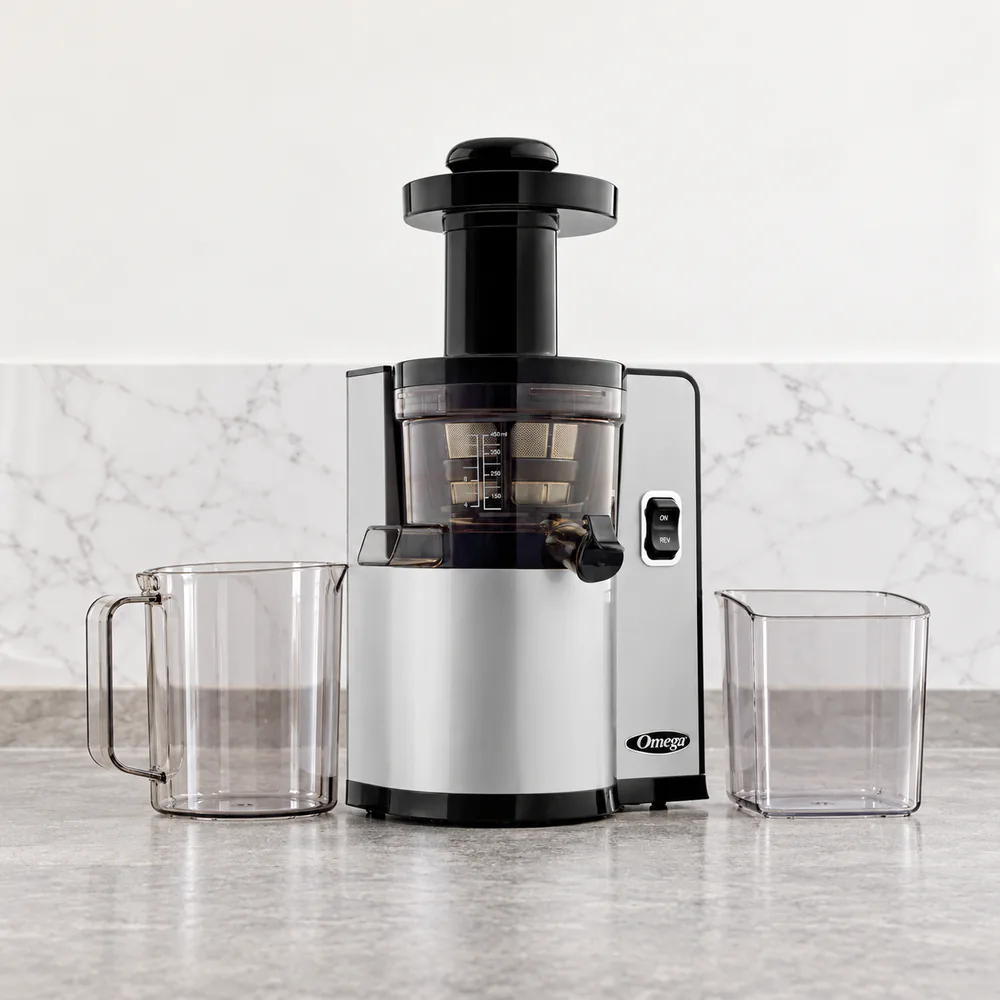
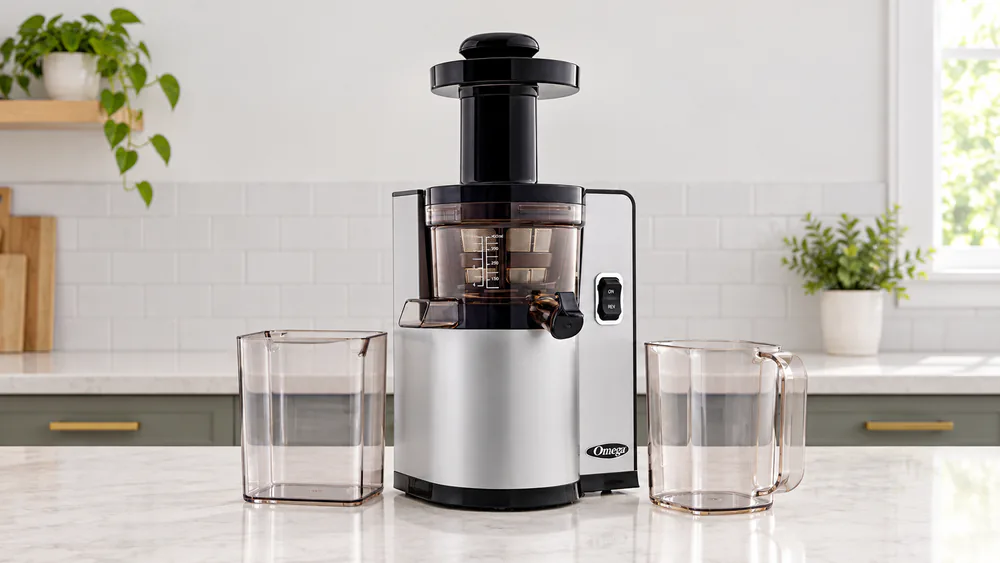
Where the NC900HDC lies flat, the VSJ843QS stands upright. Its 43 RPM auger draws produce downward with very little help from the pusher. Cucumber juice comes out with little residual pulp.

Pros

  • Upright layout and a pusher-light feeding action
  • Closing juice tap for mixing and drip control
  • Rotating screen wipers cut buildup during juicing

Cons

  • Stringy greens can clog the juice path
  • Start interlock alignment can be fussy

Cleanup needs the full routine. The screen wipers reduce buildup mid-juice. They do not replace taking the bowl and screen apart to wash them. The filter basket needs more scrubbing than the smooth removable parts. Stringy greens can clog the juice path, and lining up the start interlock can be fussy.

Omega's documents list both 150W and 250W, so check the rating plate rather than judging motor strength from wattage. Nut milk is supported, but we could not verify nut butter or pasta.

Omega MM900HDS

Omega MM900HDS
3

Omega MM900HDS

Best for Celery
Check Price on Amazon

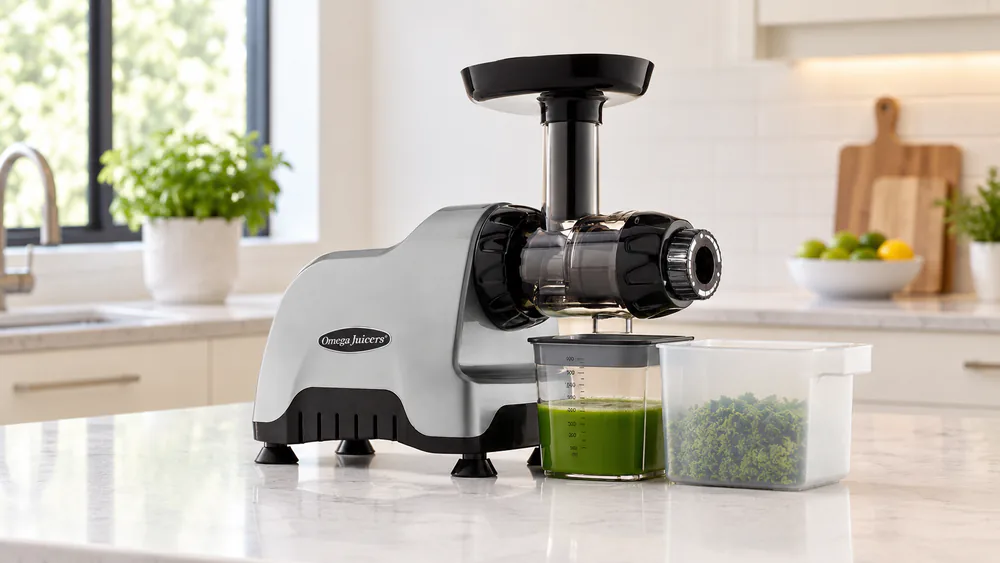
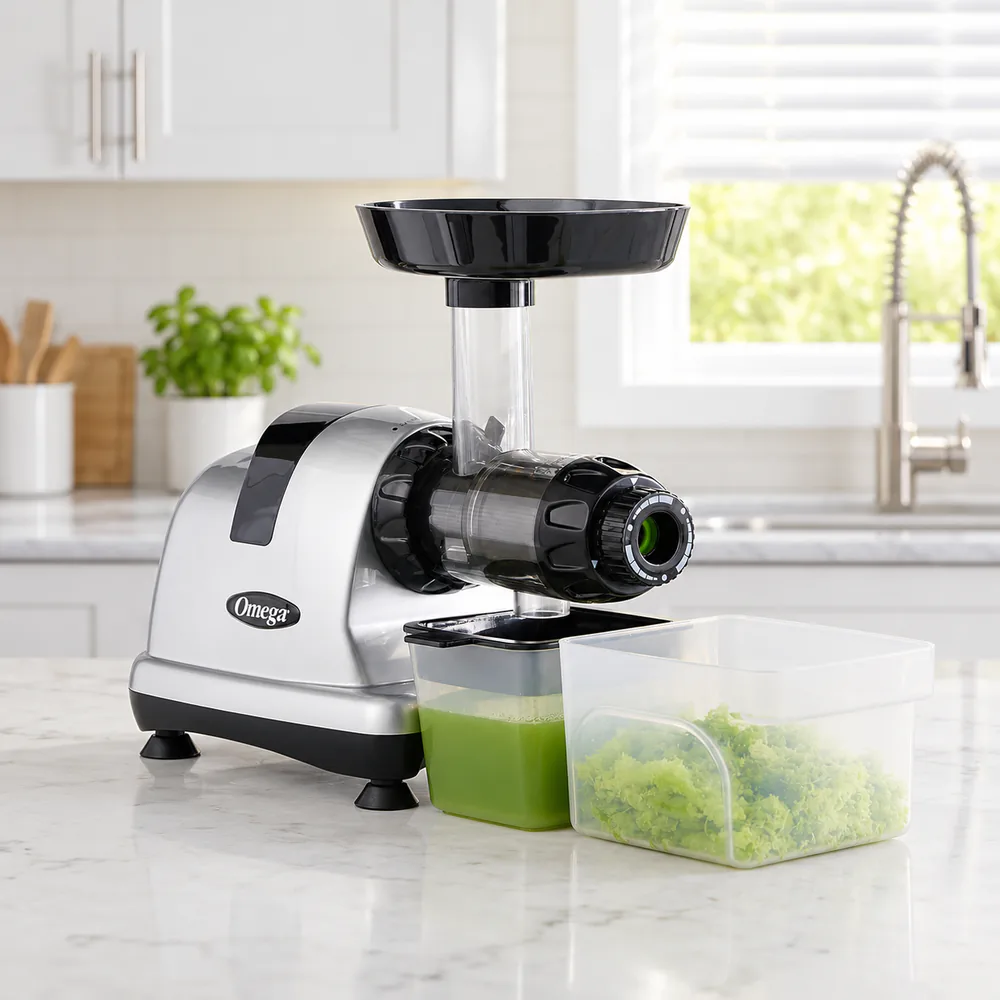
Where the VSJ843QS is a generalist, the MM900HDS is built for one job: daily celery. It ships with 2 end caps, a celery-only cap with a green insert and a standard cap for other produce. The 200W motor runs at 80 RPM. Celery gives very dry pulp, and the motor is quiet enough for ordinary conversation.

Pros

  • Dedicated celery cap and a standard cap for other produce
  • Very dry pulp from celery
  • Quiet enough to talk over

Cons

  • Screen gasket can detach or tear
  • Pulp packs around the screen in larger mixed runs
  • Repair parts may be hard to match

Follow the celery routine. Feed crisp stalks as whole as practical. Clean the celery cap before you pass 16 oz of juice in a run. When a larger mixed-produce run packs pulp around the screen, we stop, take it apart and rinse before continuing.

The screen gasket can detach or tear, so do not assume it lasts as long as the motor. Replacement-part fit and regional availability can complicate a repair.

Omega H3000D

Omega H3000D
4

Omega H3000D

Best Budget
Check Price on Amazon

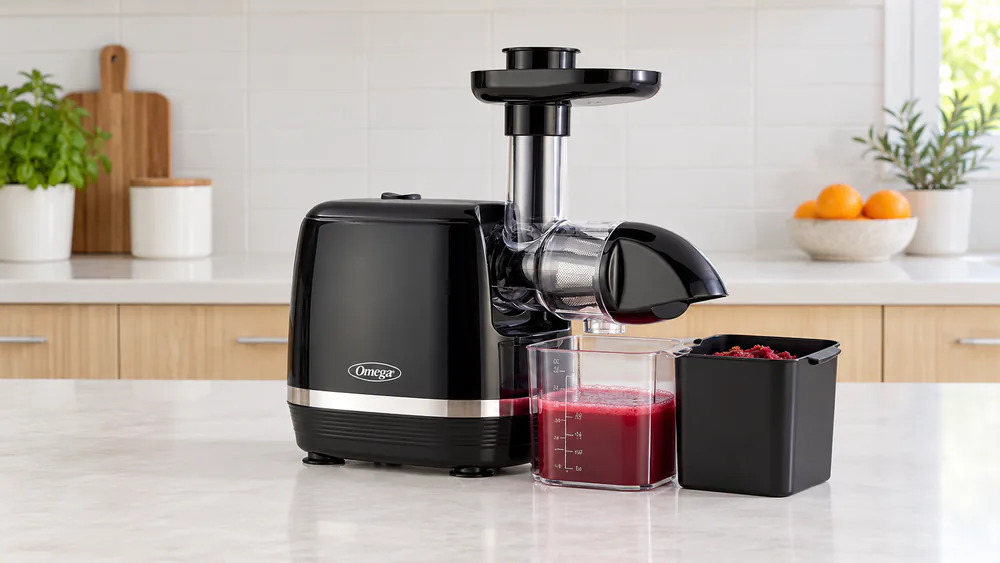
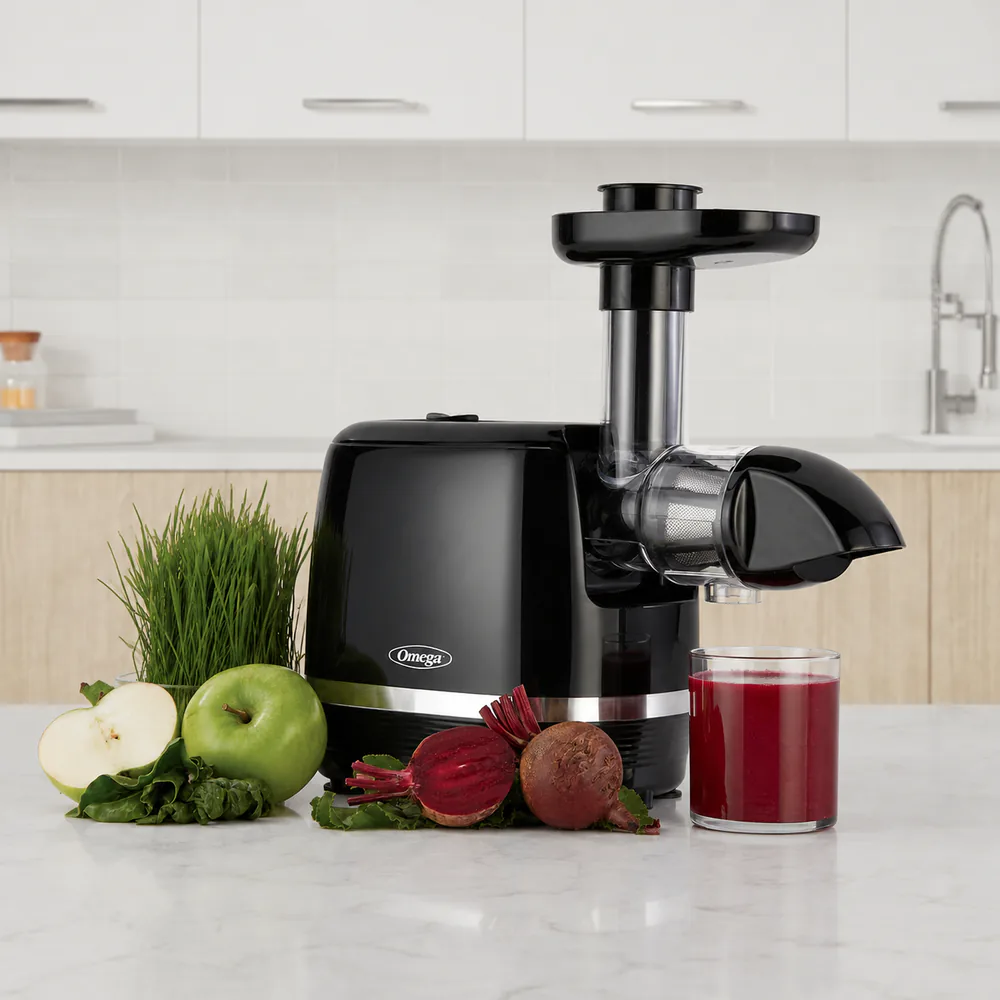
The H3000D is our budget pick, and we treat it as a juice-only machine. Assembly and routine rinsing are approachable for a beginner, though the mesh needs brushing. Small batches of celery, roots and cabbage work well. The included brush helps clear pulp during cleanup.

Pros

  • Lowest-cost Omega on our shortlist
  • Reverse control helps clear jams
  • Most removable parts are top-rack safe, except the drum

Cons

  • Juice-only; non-juice attachments not verified
  • Plastic chute can break under load
  • Warranty and speed vary by region

Keep batches modest. Stringy ingredients can clog the pulp path, so small runs are more comfortable than prolonged feeding. Cut ginger into smaller pieces to make feeding easier. If a jam forms, the reverse control releases it.

The plastic feed chute and its retaining clip can break under load. Pressure at the drum and end-cap joint can loosen the end cap with harder produce. Most removable parts rinse easily and sit on the top rack, but the drum needs separate hand cleaning. The motor is 150W. Warranty is regional, so confirm the seller and written terms.

Omega CNC80S

Omega CNC80S
5

Omega CNC80S

Best Compact Nutrition System
Check Price on Amazon

Where the H3000D only juices, the CNC80S packs a nutrition system into a smaller body. It has a 200W motor, an 80 RPM auger and reverse operation, plus a pressure cap, juice screen, blank cone, pasta nozzles and sieve. Juice, nut milk, nut butter and baby food are all in range.

Pros

  • Nutrition-system functions in a smaller body
  • Top-rack cleanup for removable parts

Cons

  • Narrow feed opening means more chopping
  • Juice can keep noticeable pulp
  • One-year warranty under current policy

The smaller feed opening means more trimming than the larger NC800 or NC900, especially for broad carrots or celery stalks. Juice can keep noticeable pulp, so use the sieve for a smoother drink.

Removable parts can go on the top rack under the 2021 manual. Cleaning nut-butter residue takes more work. Current US/Canada policy gives the CNC80 one year of coverage, so do not rely on older 15-year claims. We could not confirm a direct product listing, so the button opens an Amazon search.

How to Choose the Best Omega Juicer for You

Cold-Press Operation and Practical Trade-Offs

Omega's slow juicers crush produce with an auger and press juice through a screen. Centrifugal machines grate and spin at high speed instead. You trade speed for quiet. Feeding takes longer and chutes are narrower. The sound is low, though, and greens and roots give up their juice.

Cold-press does not guarantee more nutrients or longer storage, so choose on feeding effort and cleanup.

Vertical Options, Horizontal Options and Footprint

Horizontal models like the NC900HDC, MM900HDS, H3000D and CNC80S need depth plus room for a juice cup and a pulp bowl. The vertical VSJ843QS needs height and feeding clearance instead. Published dimensions disagree for most of these models, so measure the cabinet and the counter before ordering.

Masticating Suitability for Produce and Daily Workflow

Masticating machines suit hard roots, celery and leafy greens best. Pineapple, berries and stringy greens can clog any of these. Cut them down and feed in small amounts. If you want nut milk, nut butter or pasta too, only the NC900HDC and CNC80S are verified for that.

Prep, Cleaning, Attachments and Warranty

Prep means trimming and peeling, and every model here needs a brush for its screen. Rinse right after juicing, before pulp dries. Dishwasher guidance has changed over time, so follow the manual supplied with your unit.

Match replacement parts by exact model suffix, not by how the machine looks. Warranty differs by model, region and purchase date. Current US/Canada policy covers original household purchasers with proof of purchase, and direct Omega purchases come with a 30-day return window.

Pick the Omega whose cleanup you will actually do every morning.

Omega Juicer FAQs

Is an Omega juicer good for beginners?

Yes, and the H3000D is the easiest start. Assembly and rinsing are approachable, and the reverse control clears jams.

Can these Omega models make nut milk, nut butter or pasta?

The NC900HDC and CNC80S are the two with supplied nutrition-system attachments. The VSJ843QS supports nut milk, but we could not verify nut butter or pasta. The MM900HDS and H3000D are best treated as juice-only machines.

What is the difference between the NC800 and the NC900?

They share one nutrition-system platform. The silver NC800HDS and red NC800HDR differ from the chrome NC900HDC in finish, and finish is not a juicing upgrade.

Is an Omega worth it for occasional juicing?

It can be, if you accept the cleanup. A slow juicer rewards regular use, and the H3000D is the lowest-commitment choice. If you juice once a month, a model that stays quick to rinse matters more than extra attachments.

Final Verdict: Which Omega Juicer Should You Choose?

Match the machine to your routine. Choose the MM900HDS for daily celery, the VSJ843QS if you want an upright body, and the H3000D if you want to try slow juicing without a big commitment. Take the CNC80S when space is tight and you still want nut milk or nut butter.

Read next

Final Verdict: Which Omega Juicer Should You Choose?

Explore more buying guides to find the right tools for your daily kitchen routine.