As an Amazon Associate we earn from qualifying purchases. We may earn a commission from links on this page, at no extra cost to you. Learn more.
Choosing the right sushi knife can feel overwhelming. There are single-bevel yanagibas and double-bevel sujihikis, carbon cores and stainless cladding, and price tags from about $16 to well past $200. You do not need a drawer full of blades to make clean, precise sashimi slices at home. You need the right one for how you cook.
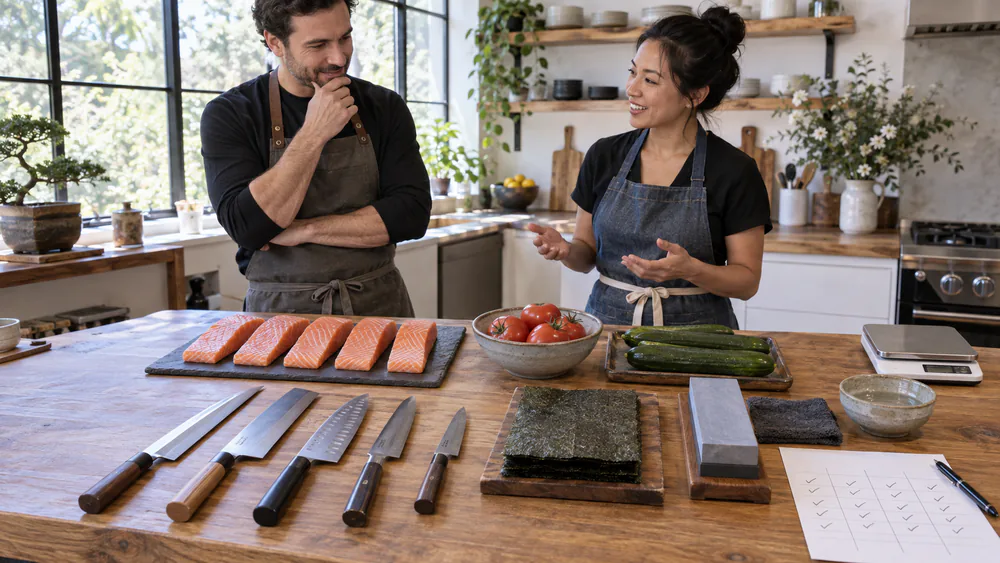
We tested 10 top sushi knives for sharpness, edge retention, and value. Every knife ran a month of real prep in our kitchen, slicing raw fish, mincing tuna for rolls, and handling ordinary weeknight cooking, with edge checks after each session. We scored how the edge holds, how the handle wears, and how easily the steel sharpens back to new. The list below ranks the 10 that earned a spot, from the best overall yanagiba to the best all-rounder.
Every knife in this roundup ran a month of real prep in our kitchen, with edge checks after each session. We bought every blade ourselves, so no maker got a pass for sending a free sample. We sliced raw fish, minced tuna for rolls, trimmed loins, and put the blades through weeknight cooking, because a sushi knife that only shines on fish is only half useful.
We scored each knife on out-of-box sharpness, edge retention across the month, handle comfort in hour three, ease of resharpening on a water whetstone, and value for the price. Ratings run on a 5-point scale. The lineup spans 6 to 10.5 inch blades, hardness from 56 to 62 HRC, edge angles from 11 to 16 degrees, and prices from about $16 to $220, so very different tools met the same standard. We also compared fit and finish against the level we expect from custom makers, the sort of work The Knifemakers' Guild represents.
Every knife in the lineup ran a month of real prep before we scored it.
Product
Steel Type
Blade Length
Handle Material
Bevel
Best For
Price
KYOKU Samurai 10.5"
Cobalt-added high-carbon
10.5 in
Wenge wood
Single
Best Overall
$49.99
Lucky Cook 10"
5Cr15MoV
10 in
Pakkawood
Single
Best Value
$27.99
SHAN ZU 10"
10Cr15MoV, 9-layer
10 in
Red sandalwood
Single
Best Budget Single-Bevel
$65.98
Rondauno 10"
High-carbon Japanese stainless
10 in
Red sandalwood
Single
Best Entry-Level Yanagiba
$15.98
KEEMMAKE 10"
440C
10 in
Rosewood + G10
Single
Best Low-Maintenance
$49.99
HOSHANHO 10"
10Cr15CoMoV, 8-layer
10 in
Rosewood + copper
Double
Best Damascus Design
$84.99
Mercer Deba 6"
High-carbon German
6 in
Wood
Single
Best Deba for Commercial Kitchens
$30.59
Yoshihiro Sujihiki 9.5"
VG10, 46-layer Damascus
9.5 in
Rosewood (shitan)
Double
Best Premium Investment
$194.99
DALSTRONG Phantom 9.5"
AUS-8
9.5 in
Black Pakkawood
Single
Best Professional Pick
under $100
Shun Premier 8"
VG-MAX Damascus
8 in
Pakkawood
Double
Best All-Rounder
$219.95
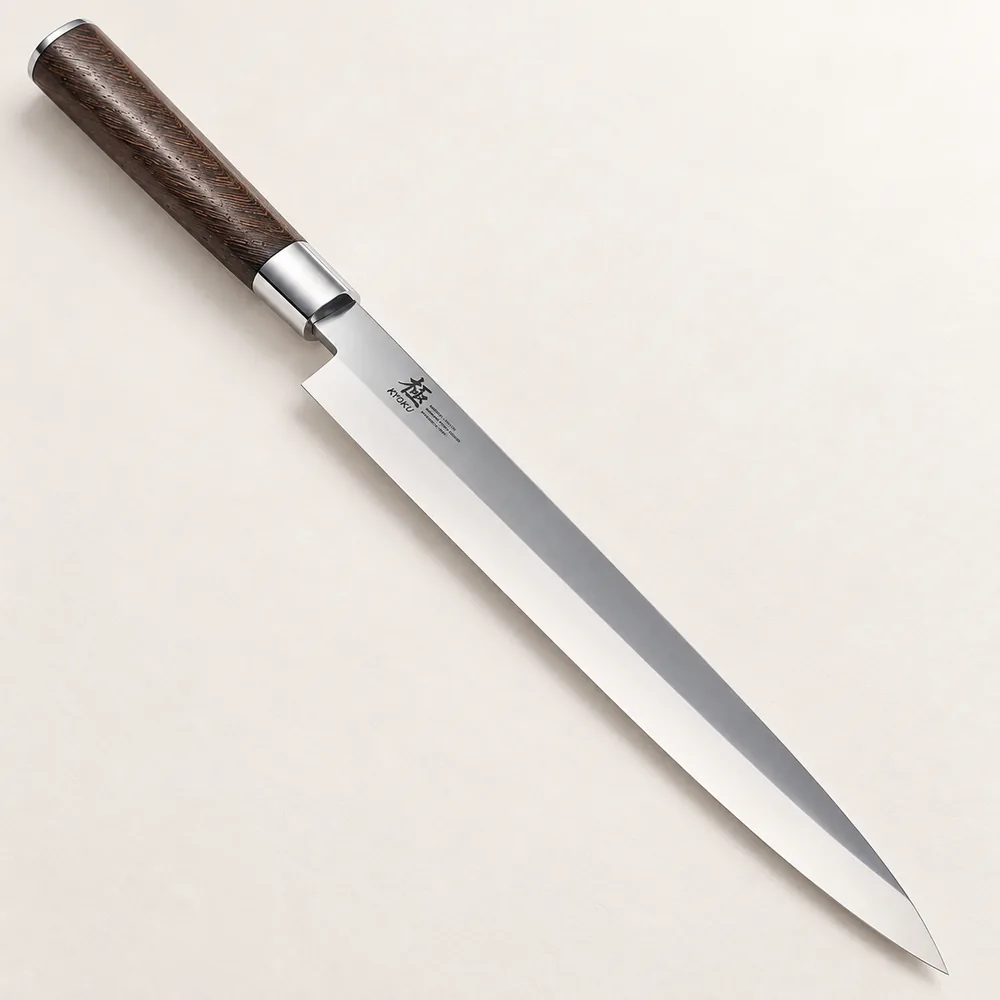
1. KYOKU Samurai Series 10.5" Yanagiba: Best Overall
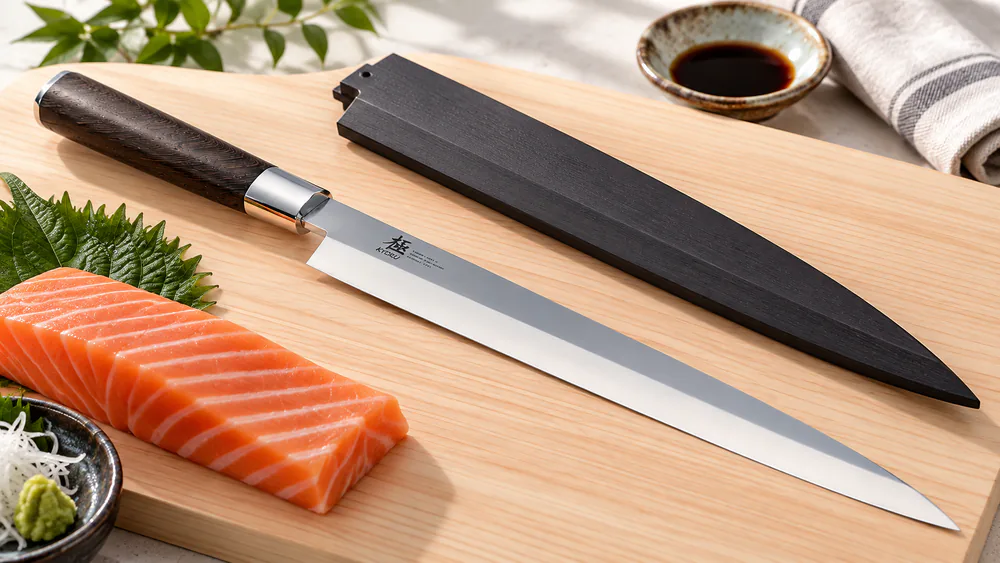
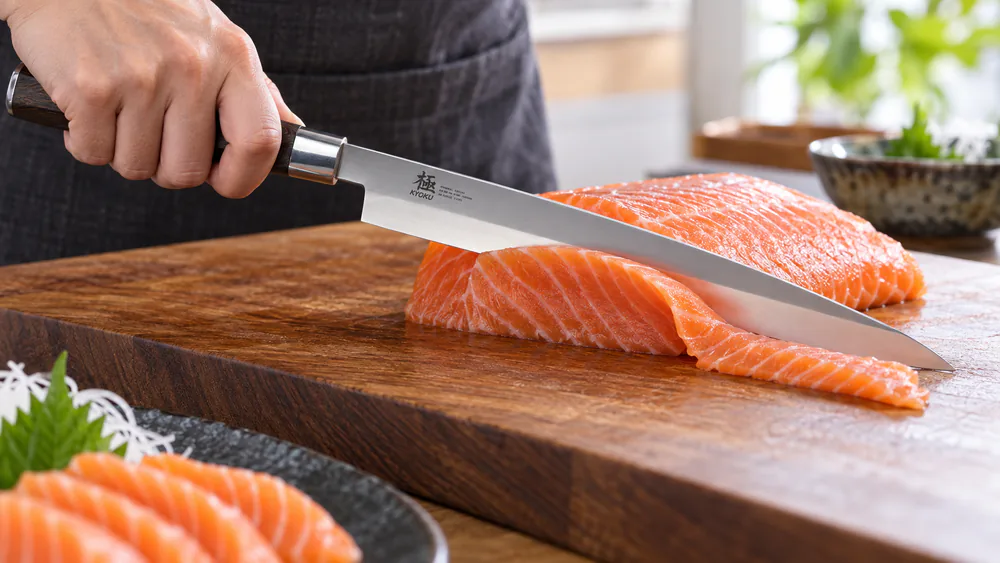
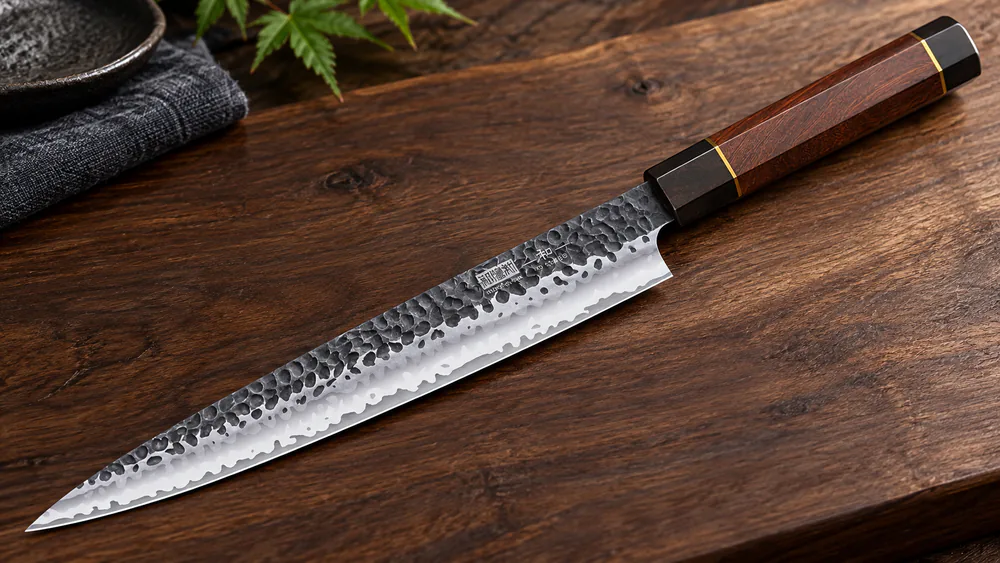
Open the box and you may be disappointed with the KYOKU Samurai Series 10.5" Yanagiba. Our first unit cut fish only fairly well, and one sample carried sharpening scratches and a twisted edge near the base that no hone could fix. Put the blade on a whetstone and everything changes. Once we reset the 11 to 13 degree bevel on the 56 to 58 HRC core, the blade drove through a salmon loin in one confident draw and stayed razor sharp for the rest of the month. The blade runs heavier than most cheap imports, which takes a beat to get used to, but the raw material is there for a knife that costs a fraction of what it performs like.
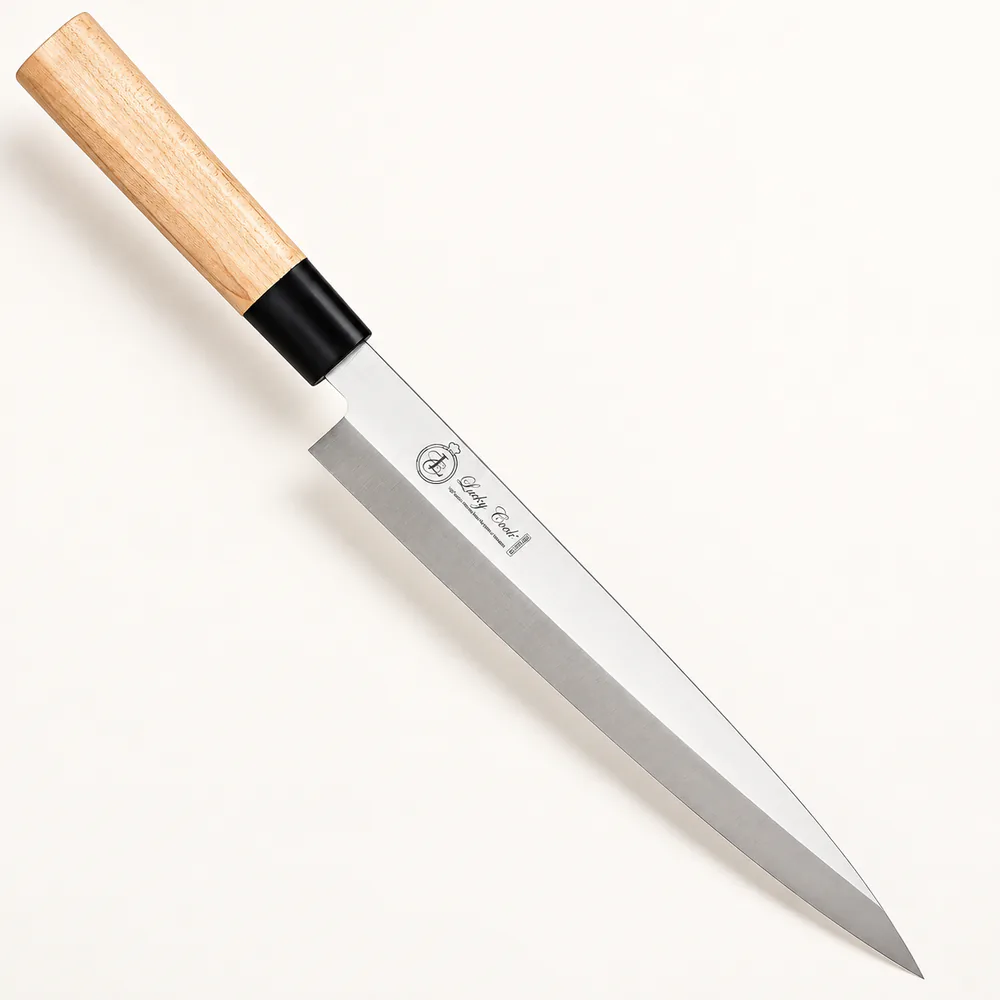
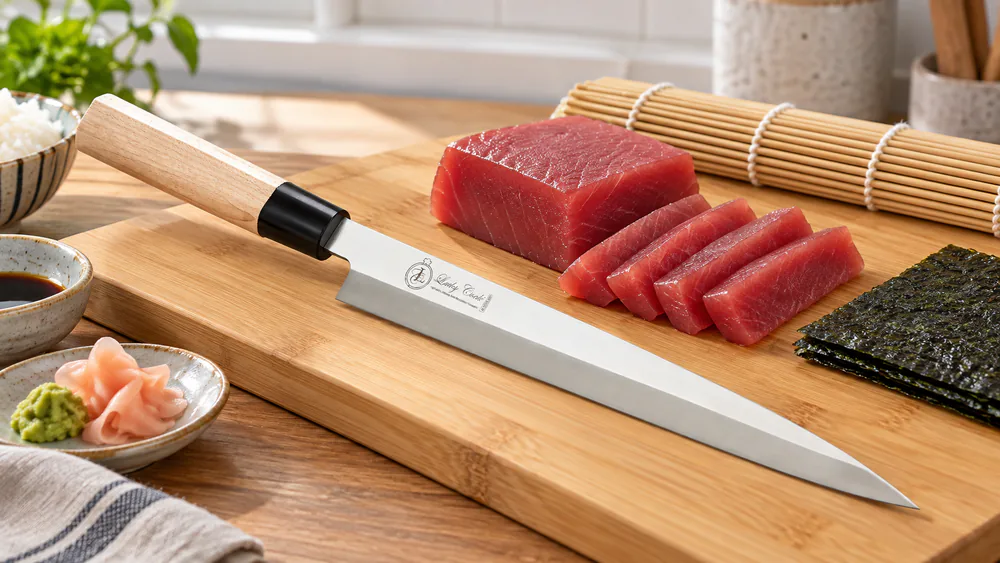
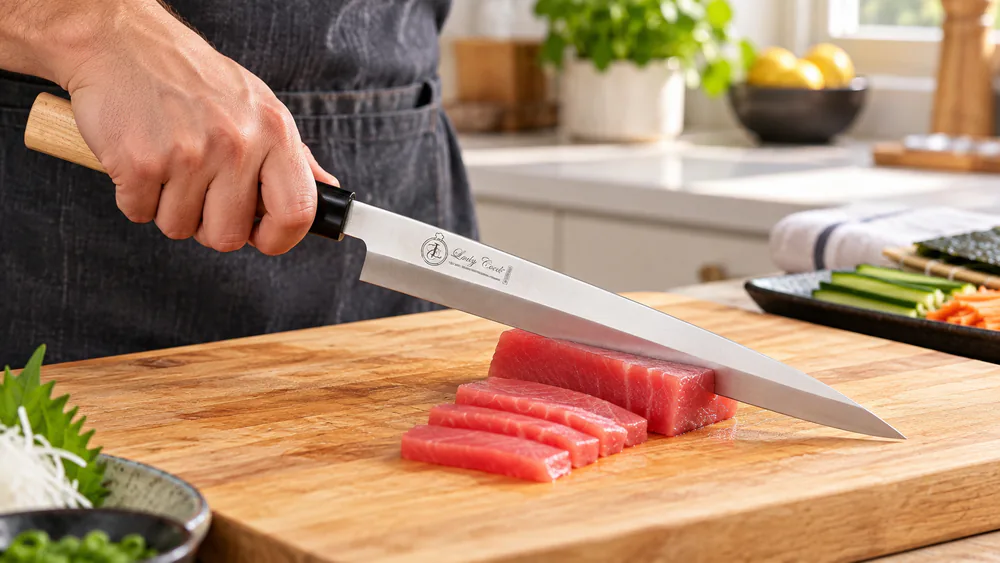
Where the KYOKU demands a whetstone to reach its best, the Lucky Cook 10" Sashimi Sushi Knife was the knife a first-time sushi cook in our kitchen reached for all month. It turned a half-pound block of tuna into roll-ready mince with very little effort, and the sashimi slices came out clean and effortless. The corners it cuts are easy to spot and just as easy to forgive at this price.
10-inch single-bevel 5Cr15MoV stainless blade
55 to 57 HRC, reported figures vary a point or two
Pakkawood handle
Gift box and plastic tip protector included
Specifications
Steel
5Cr15MoV stainless
Hardness
55 to 57 HRC (reported figures vary a point or two)
Blade length
10 in
Bevel
single-bevel, traditional yanagiba style
Handle
pakkawood, not full tang
Edge angle
not published by the maker
Pros
Costs less than dinner out
Minces a half-pound block of tuna for rolls with little effort
Holds an edge through daily abuse in a working kitchen
Cons
Bolster is plastic
Handle is not full tang
One unit shipped with a rough spine and a small grind flaw
3. SHAN ZU 10" Japanese Sushi Knife: Best Budget Single-Bevel
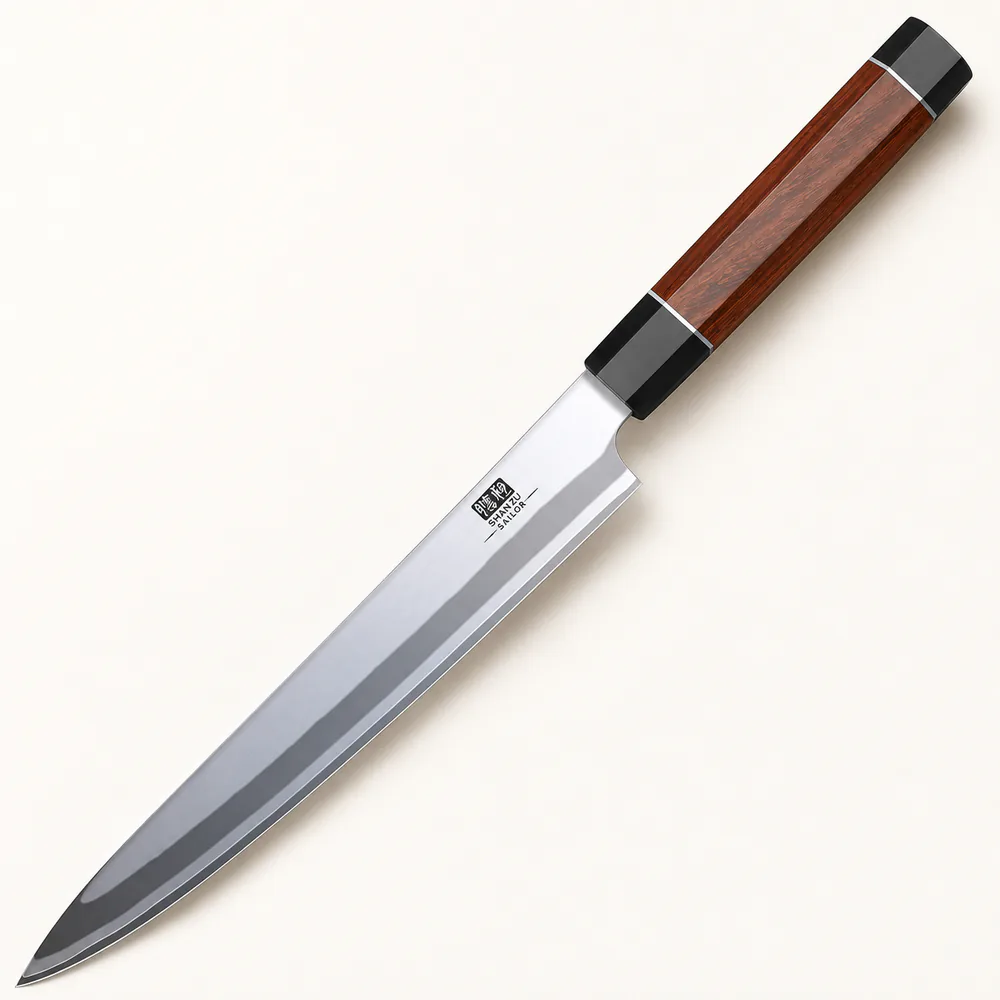
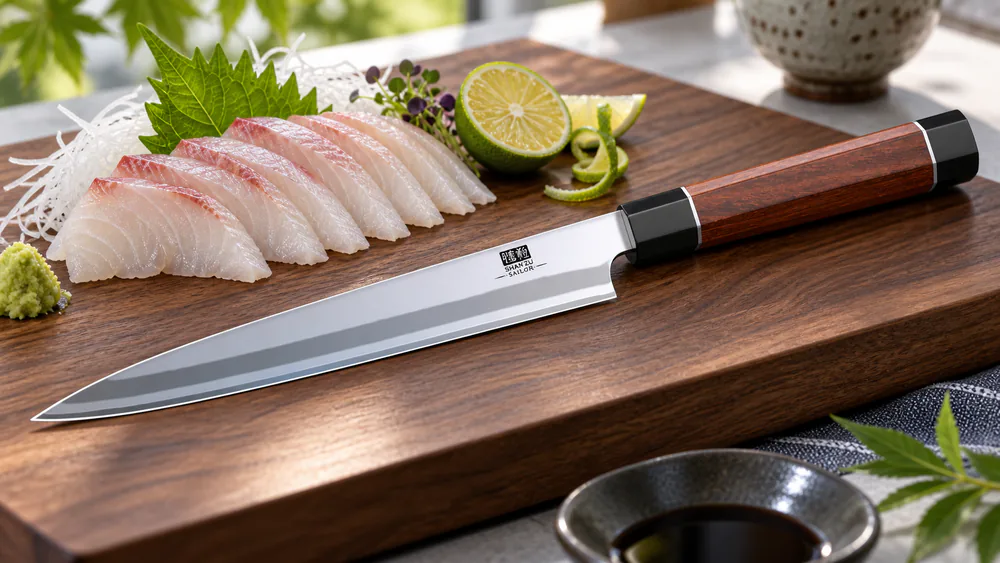
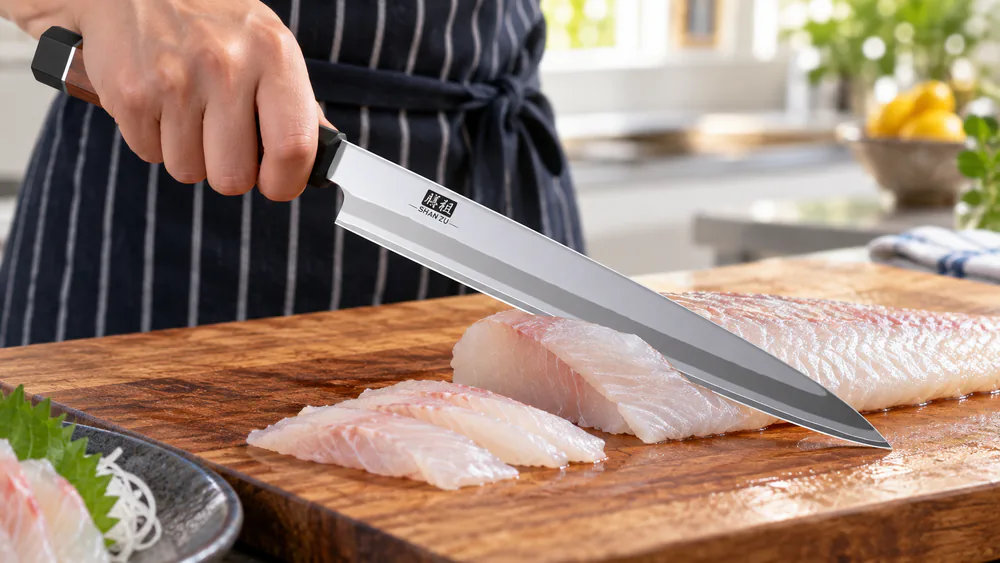
If the Lucky Cook is the value move, the SHAN ZU 10" Japanese Sushi Knife is the budget single-bevel for cooks who already know they want a real yanagiba. Our first unit arrived with a slight bend near the tip, which would have sent a cheaper blade to the reject pile, but the edge geometry and heat treatment were otherwise solid. Inspect yours on arrival and you will be rewarded with a serious sushi slicer for the money.
62 HRC 10Cr15MoV core in 9-layer forged construction
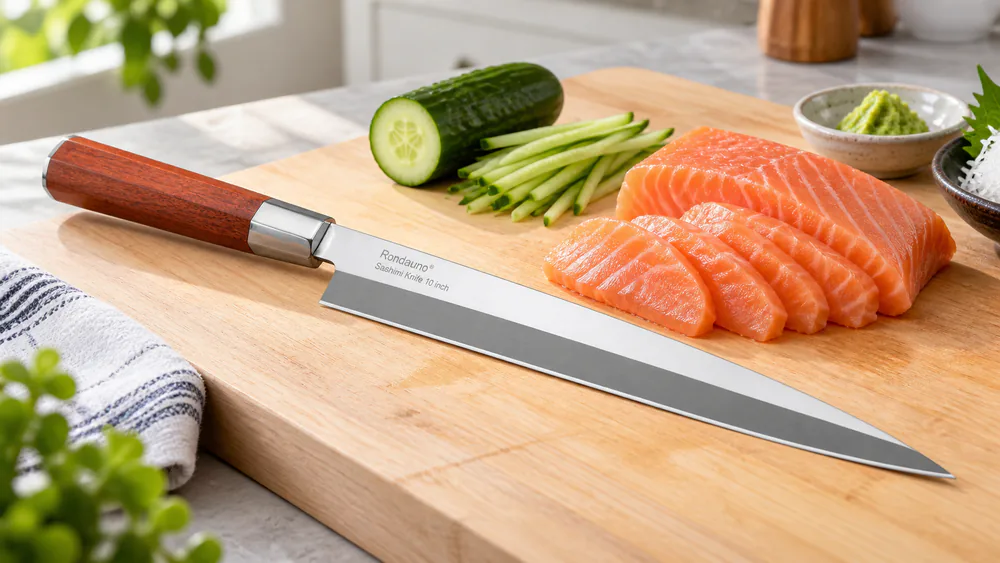
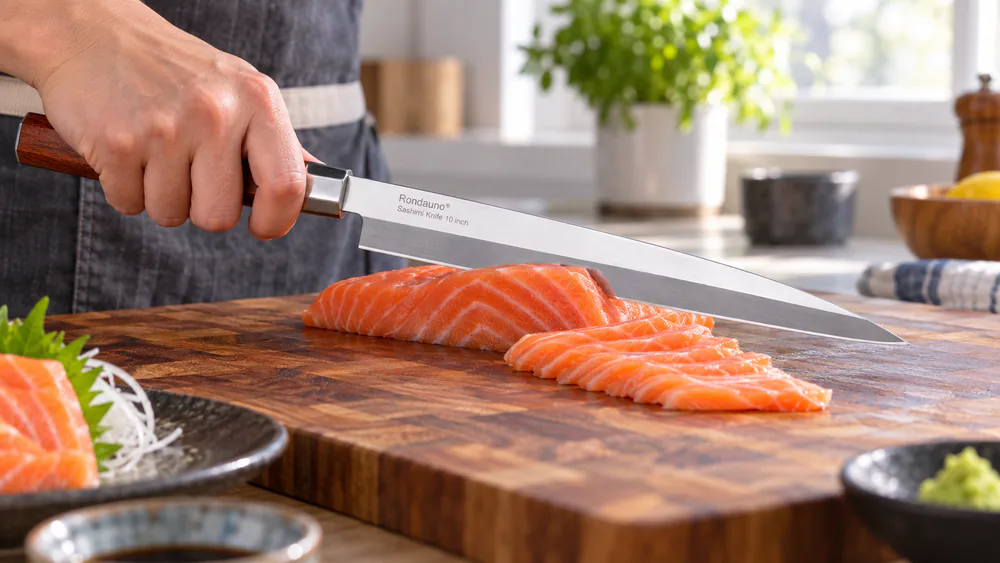
Where the SHAN ZU punches above its price, the Rondauno Sashimi Knife Yanagiba 10" is the cheapest honest way to learn single-bevel slicing. On our first sashimi night, it cut through a fillet in clean, even strokes straight from the box. A long prep session left our wrist more tired than with better-balanced blades. It is the smart first knife to practice on before you put a stone to something expensive.
Full-tang octagonal red sandalwood handle
10-inch single-bevel traditional Japanese oblique edge
High-carbon Japanese stainless steel
Specifications
Steel
high-carbon Japanese stainless
Hardness
not published by the maker
Blade length
10 in
Bevel
single-bevel traditional oblique edge
Handle
octagonal red sandalwood, full tang
Edge angle
not published
Pros
Razor sharp out of the box; glides through fish
Handsome red sandalwood handle that looks far pricier
Full tang at an entry-level price
Cons
Front-heavy; wrist fatigue sets in faster than on better-balanced blades
Hardness not published by the maker
A home-cook tool rather than a professional bar knife
5. KEEMMAKE 10" Yanagiba: Best Low-Maintenance Option
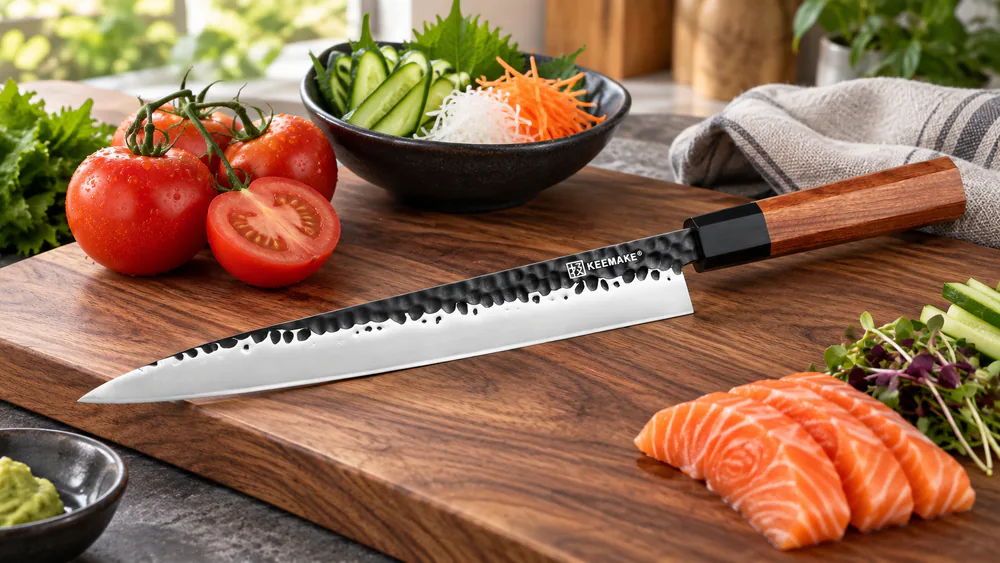
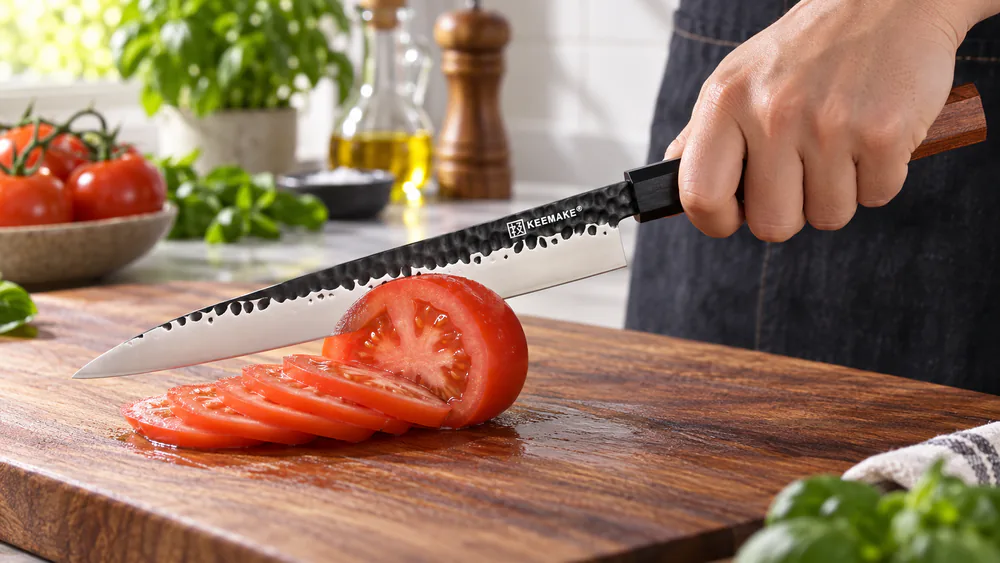
If the Rondauno runs front-heavy, the KEEMMAKE 10" Yanagiba is balanced at the bolster and built to be set-and-forget. Out of the box it sliced a ripe tomato into clean rounds without smashing a single one. A working sushi chef in our kitchen keeps one for slicing rolls all week and reaches for a real yanagiba when a loin needs skinning, which tells you exactly where it sits: a capable daily slicer rather than a precision sashimi tool.
Japanese 440C high-carbon stainless at 58 HRC
10-inch single-bevel yanagiba
Rosewood handle with carbon-fiber G10 bolster, octagonal profile
24/7 service guarantee with replacement or refund
Specifications
Steel
Japanese 440C high-carbon stainless
Hardness
58 HRC
Blade length
10 in
Bevel
single-bevel yanagiba
Handle
rosewood with carbon-fiber G10 bolster, octagonal profile
Edge angle
not published
Pros
Cuts clean through tomatoes without smashing them, straight out of the box
Comfortable, balanced hand feel at the bolster
Hydrophobic coating resists rust and is easy to clean
Cons
Not a precision sashimi tool; a pro reaches for a real yanagiba to skin loins
Expect a whetstone touch-up every other week to a month
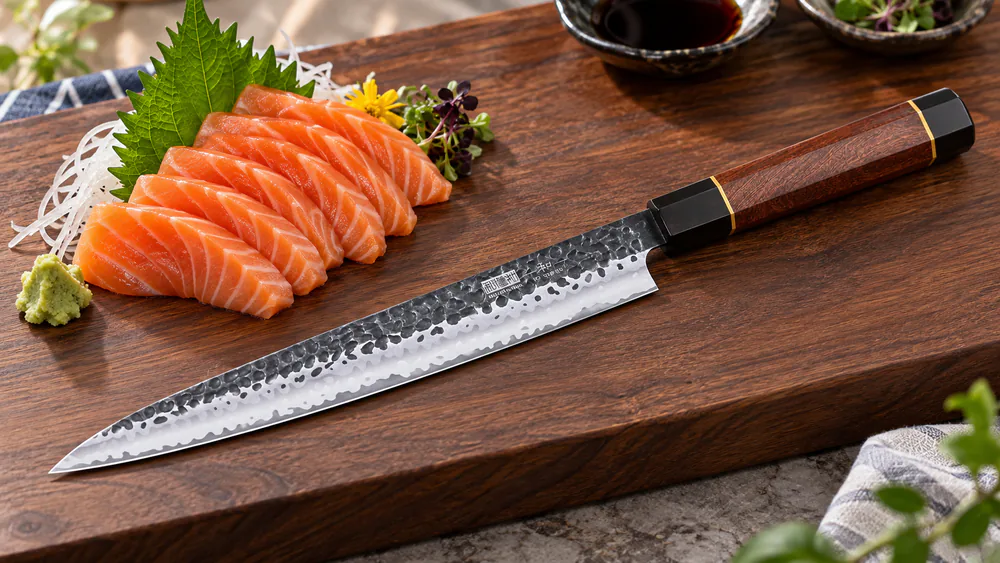
Where the KEEMMAKE is the set-and-forget workhorse, the HOSHANHO 10" Sushi Knife is the one you buy to show off. On the board, the 8-layer Damascus pattern catches the light, and repeated slicing sessions showed edge retention that never disappointed. Quality control varies enough that we called it a lottery, so inspect your unit carefully on arrival. Note that it is double-beveled, unusual for a yanagiba, which makes it friendlier for cooks who have not mastered single-bevel sharpening. At a whisker over eighty dollars, it is the blade we would choose when the look matters as much as the cut.
8-layer Damascus cladding over a 10Cr15CoMoV core
60 HRC (plus or minus 2), hand-polished 12 to 15 degrees per side
Double-bevel grind, unusual for a yanagiba
Octagonal rosewood handle with copper-wire accents
Specifications
Steel
10Cr15CoMoV core, 8-layer composite cladding
Hardness
60 HRC (plus or minus 2)
Blade length
10 in
Bevel
double-bevel, unusual for a yanagiba
Handle
octagonal rosewood with copper-wire accents
Edge angle
hand-polished 12 to 15 degrees per side
Pros
Gorgeous 8-layer Damascus blade
Very sharp with consistent edge retention
Double-bevel grind suits western cooks
Cons
Inconsistent QC; handle roughness and off-center edges on some units
Pommel on one unit had a raised trim edge that snagged the hand
Included plastic wrap is a poor stand-in for a real sheath
7. Mercer Culinary Deba Knife: Best Deba for Commercial Kitchens
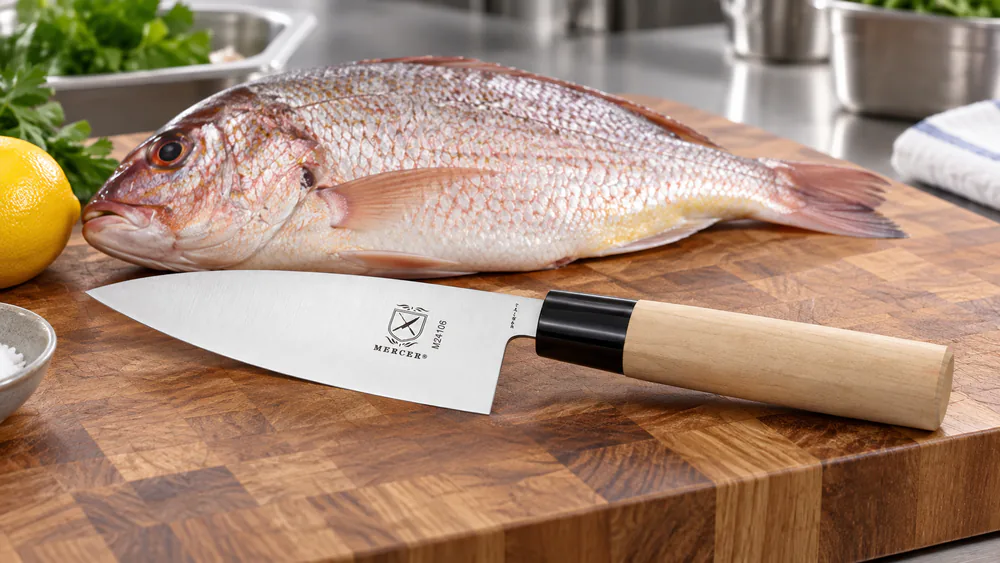
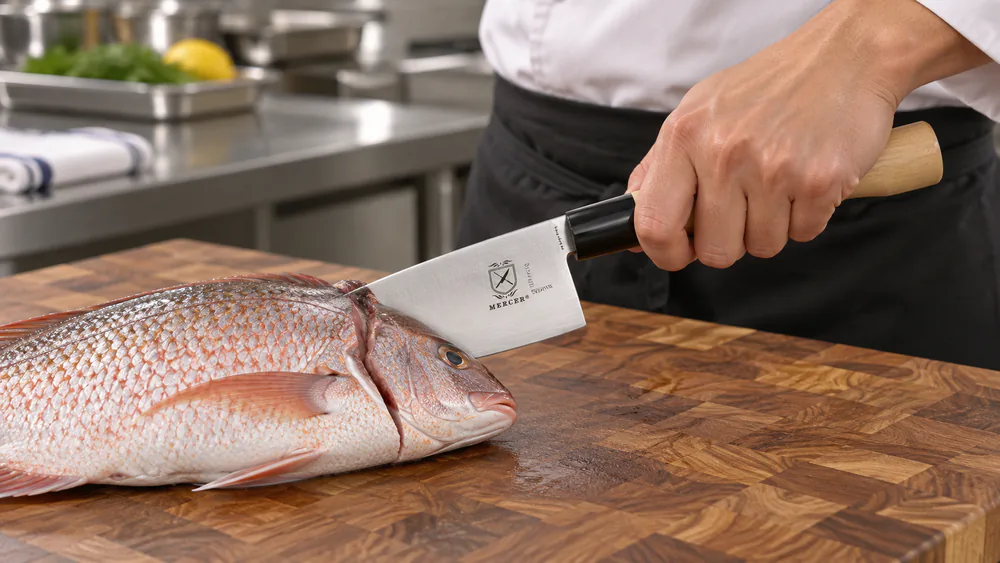
The HOSHANHO slices fish with flair, but the Mercer Culinary Deba Knife takes on a different job entirely: heavy fish prep. In our kitchen it severed a fish rack cleanly and cut sushi rolls without mangling them, straight out of the box. This is a specialist for experienced cooks, not a first knife; if you already know how to hold a deba, it earns its keep without making you spend real money.
High-carbon German steel, taper-ground with a fine stone finish
6-inch single-edge Japanese-style deba profile
Roughly 6 degrees one side, 15 degrees the other
Traditional wood handle; Santoprene version also available
Specifications
Steel
high-carbon German steel, taper-ground with a fine stone finish
Hardness
not published
Blade length
6 in
Bevel
single-edge Japanese-style deba profile
Handle
traditional wood (Santoprene version also available)
Edge angle
roughly 6 degrees one side, 15 degrees the other
Pros
Razor sharp out of the box
Severs a fish rack cleanly and cuts sushi rolls without mangling
Affordable for a commercial-kitchen deba
Cons
Not a beginner blade; small oval handle needs proper technique
Untreated wooden handle soaks up moisture and stains unless oiled
Flat back is not hollow-ground the way a true deba is
8. Yoshihiro VG10 Hammered Sujihiki: Best Premium Investment
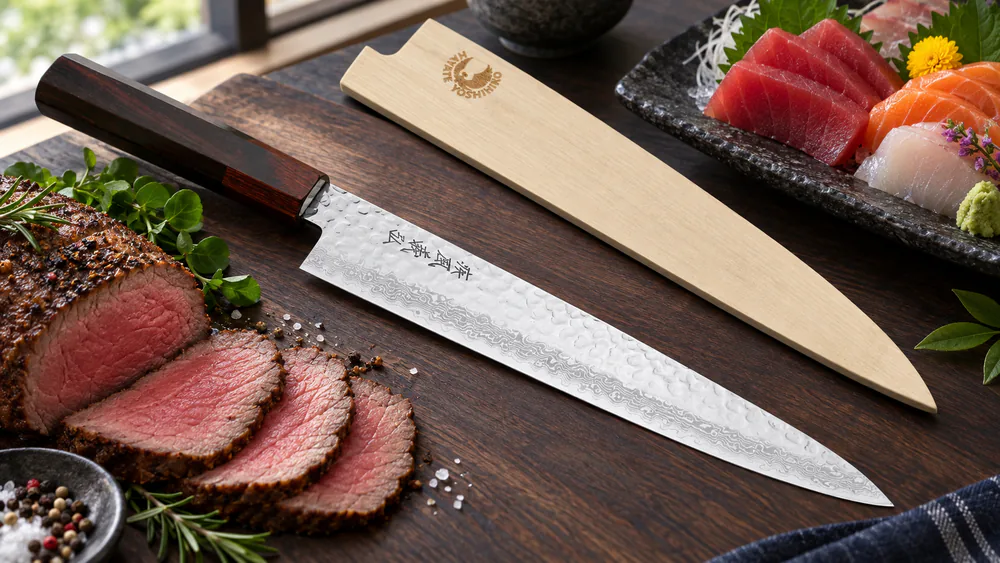
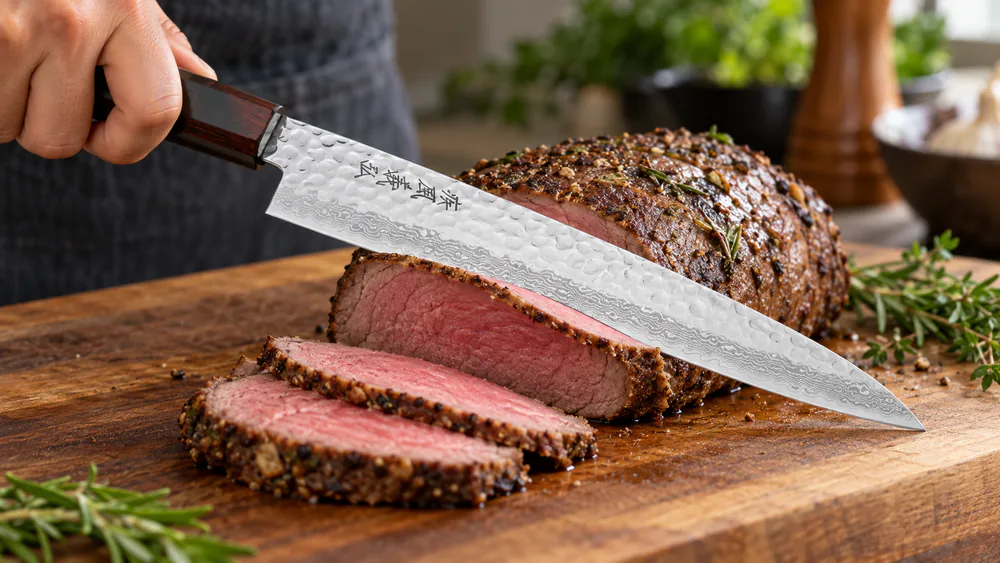
Where the Mercer is a budget specialist, the Yoshihiro VG10 Hammered Sujihiki is the premium investment that earns its price over months. In our rotation it held its edge through long shifts of roll banging and carving, and the long 9.5-inch blade cleared a brisket in one draw. A month in, the edge was still as sharp as the day it arrived, which is why a sushi pro in our kitchen runs one as a lower-maintenance stand-in for a carbon yanagi. At a whisker under two hundred dollars, it is the knife we kept reaching for.
Natural magnolia wood saya included
VG10 core with 46-layer hammered Damascus at 60 HRC
9.5-inch (240 mm) double-edged sujihiki, works for either hand
Octagonal rosewood (shitan) handle, full tang with double redwood bolster
Specifications
Steel
VG10 stainless core, 46-layer hammered Damascus
Hardness
60 HRC
Blade length
9.5 in (240 mm)
Bevel
double-edged sujihiki, works for left- or right-handed users
Handle
octagonal rosewood (shitan), full tang with double redwood bolster
Edge angle
not published
Pros
Holds its edge through long shifts and for months of home use
Semi-stainless VG10 needs no constant babysitting
Cons
Priciest knife on this list alongside the Shun
Damascus layer count differs by source (46 listing-verified)
Sharpen with water whetstones only
9. DALSTRONG Phantom Yanagiba: Best Professional Pick
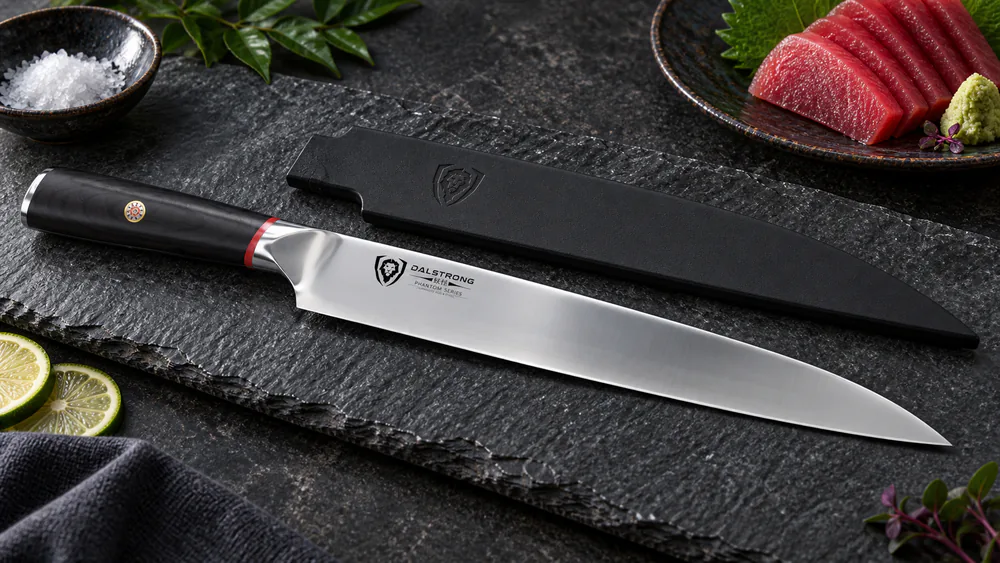
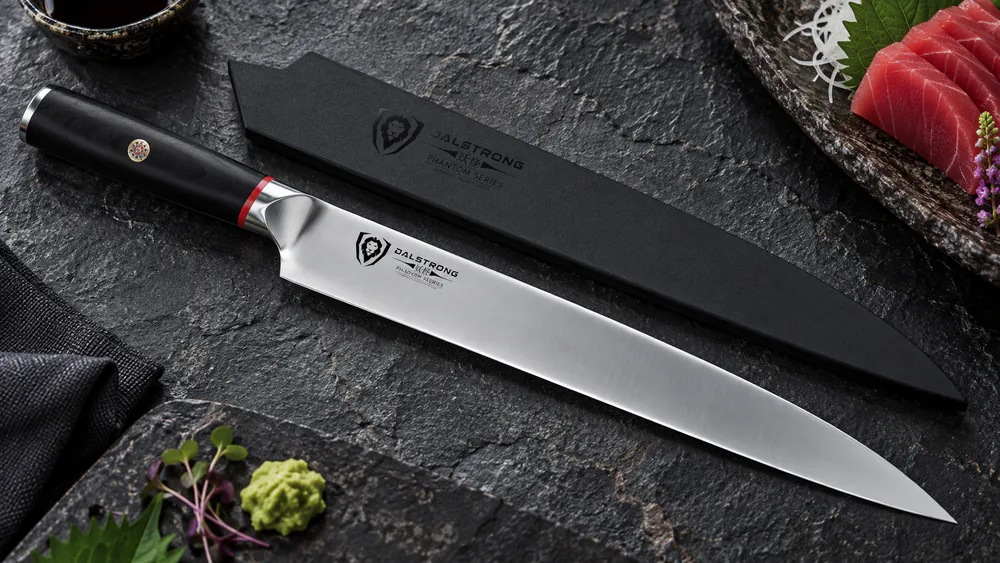
If the Yoshihiro is the premium double-bevel play, the DALSTRONG Phantom Yanagiba is the premium single-bevel for pros who want that traditional grind. It arrived scalpel-sharp, and the mirror-polished edge glided through fish and stayed true through a full prep session. Storage, normally the chore with a single-bevel slicer, is a non-event thanks to the DragonLock saya. If you want the traditional yanagiba feel with a modern, low-maintenance steel, this is the pick.
Polymer DragonLock saya included
Ice-tempered AUS-8 high-carbon stainless, 3.5 mm thick, single-bevel yanagiba
58 to 60 HRC, hand-sharpened 13 to 15 degree bevel
Black Pakkawood D-shaped handle, full tang
Lifetime warranty
Specifications
Steel
ice-tempered Japanese AUS-8 high-carbon stainless, 3.5 mm thick
Hardness
58 to 60 HRC
Blade length
9.5 in
Bevel
single-bevel yanagiba
Handle
black Pakkawood, D-shaped, full tang
Edge angle
hand-sharpened 13 to 15 degrees
Pros
Scalpel-sharp mirror-polished edge out of the box
Holds its edge well through full prep sessions
DragonLock saya is the easiest pro-style storage solution
Cons
Single-bevel means a right-hand bias
AUS-8 is a workhorse steel, not the hardest edge in the lineup
Street pricing drifts by retailer, though it sits below $100
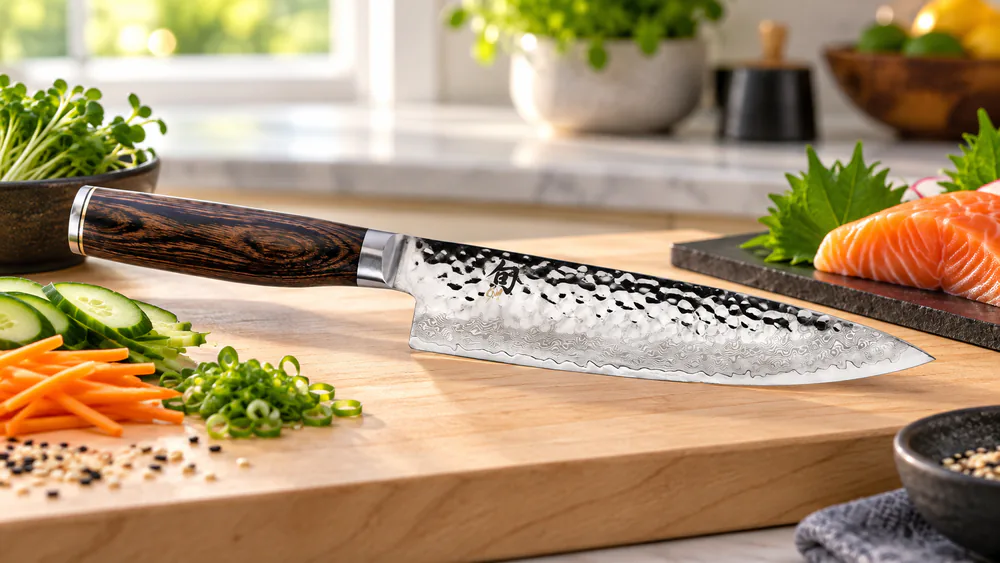
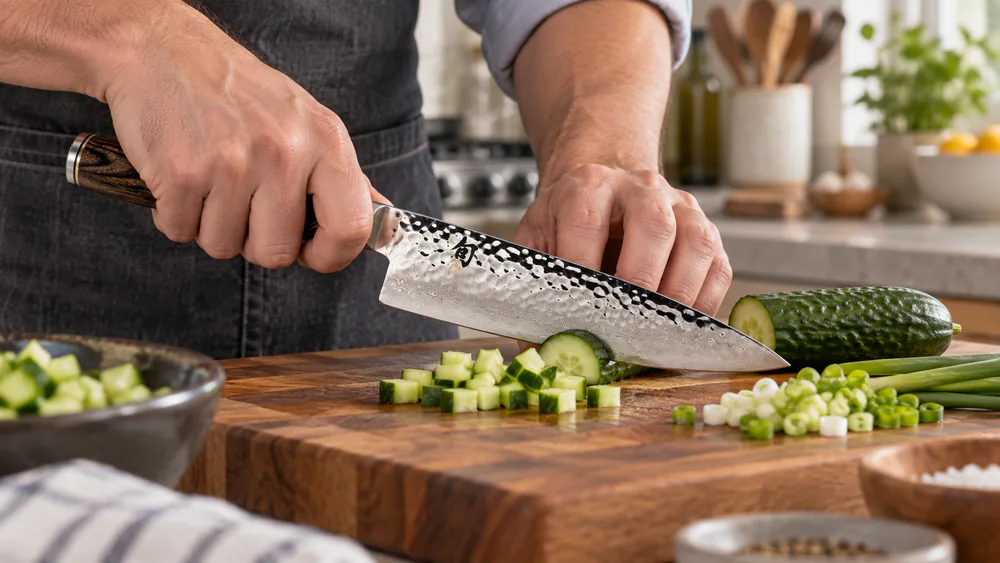
10. Shun Premier 8" Chef's Knife: Best All-Rounder for Versatile Kitchens
The DALSTRONG is a dedicated slicer, and the Shun Premier 8" Chef's Knife takes the opposite approach: one double-bevel blade for sushi and everything else. After a month of cooking five-plus days a week, it was still as sharp as the day it arrived, and the thin VG-MAX blade floated through fish and vegetables alike. The 16 degree per side edge is delicate and will chip if you hit a bone, so it asks for a soft board and a careful hand.
VG-MAX cutting core with Damascus stainless cladding
8-inch (203 mm) double-bevel chef's knife
60 to 61 HRC, 16 degrees per side
Contoured walnut-colored Pakkawood handle
Specifications
Steel
VG-MAX cutting core with Damascus stainless cladding
Hardness
60 to 61 HRC
Blade length
8 in (203 mm)
Bevel
double-bevel chef's knife
Handle
contoured walnut-colored Pakkawood
Edge angle
16 degrees per side
Pros
Still sharp after a month of cooking five-plus days a week
Thin blade floats through food
Free lifetime sharpening service
Cons
High-hardness edge chips if you hit bones
Hammered finish did little to stop food sticking in our tests
Expensive; the list's priciest alongside the Yoshihiro
Sushi Knife Buying Guide: How to Choose
Understanding the Knife Types: Yanagiba, Sujihiki, Gyuto, Deba, Usuba
The names tell you what each blade is for. The yanagiba is the traditional single-bevel sashimi slicer, a long, slim blade that cuts raw fish in one draw. The sujihiki is the double-bevel western-style slicer, easier for cooks who learned on European knives. The gyuto is the all-rounder chef's knife and what most home kitchens actually need. The deba is the heavy single-bevel filleter for breaking down whole fish. The usuba and nakiri are the squared-off vegetable blades. Most home sushi cooks need one of the first two; the others are specialists.
Single-Bevel vs. Double-Bevel Sushi Knives
Single-bevel blades are ground on one side only, which is why they cut cleaner and take a sharper edge than double-bevel knives. That sharpness comes with strings attached: a single-bevel yanagiba is hand-specific, usually right-hand biased, and sharpening it on a whetstone takes practice. Double-bevel blades like the sujihiki and gyuto behave like the western knives most cooks already own, which makes them the friendlier first buy. For a dedicated sashimi slicer, go single-bevel; for one blade that does everything, go double-bevel.
Warning. A single-bevel yanagiba is ground for one hand. If you are left-handed, a standard model will pull to the side instead of cutting straight; look for an explicit left-handed version.
Blade Material and Hardness (Carbon vs. Stainless)
Carbon steel takes a sharper edge and holds it longer, but it rusts if you do not dry it immediately after every use. Stainless steels like VG-10, AUS-8, and 440C are lower maintenance and more forgiving. Hardness matters: quality sushi knives run about 58 to 64 HRC. A harder blade stays sharp longer but is more brittle, so a 62 HRC edge like the SHAN ZU's needs gentle use, while a softer 55 to 57 HRC blade like the Lucky Cook's is tougher and easier to sharpen.
Blade Length and Weight
Blade length drives reach. An 8 to 10.5 inch blade works well for sushi at home; longer yanagibas in the 10.5 to 12 inch range suit professionals. Weight is about feel. A heavier blade like the KYOKU drives through fish and gives confident slices, but it takes a beat to get used to. A light blade reduces fatigue in long sessions, though some budget knives run front-heavy and tire the wrist faster, as the Rondauno did.
Handle Material and Ergonomics
Handle material shapes both grip and maintenance. Wood handles like wenge, sandalwood, and rosewood look great and feel warm in the hand, but some are not full tang, and untreated wood like the Mercer's soaks up moisture and stains unless you oil it. Pakkawood is a stabilized composite that needs less care, which is why so many Japanese knives use it. Look for a full tang and a profile that fits your grip; octagonal handles suit a pinch grip, while D-shaped handles like the DALSTRONG's guide the hand.
Skill Level: Beginner vs Professional
Most single-bevel yanagibas take a while to master. Beginners are better served starting with a double-bevel sujihiki or a gyuto, then graduating to the yanagiba once the slicing motion feels natural. The knives that frustrated novices most in our testing were the ones that punished bad technique, like the Mercer deba, while forgiving picks like the value pick and the low-maintenance option let a first-time sushi cook get clean slices without a steep learning curve.
Left-Handed Sushi Knives
Single-bevel yanagibas are right-hand biased because the bevel is ground on the right side of the blade. Left-handed cooks have two options: buy an explicit left-handed version, which some Mercer and Yoshihiro models offer, or switch to a double-bevel sujihiki, which works for either hand. Do not buy a standard single-bevel and hope to adapt; it will pull to one side.
Budget and Value Tiers
Sushi knives span a wide price range, and the tiers are honest. Entry-level blades from about $16 to $30, like the Rondauno and Lucky Cook, are sharp but cut corners on balance and finish. The roughly $50 to $85 sweet spot, where the KYOKU, KEEMMAKE, SHAN ZU, and HOSHANHO sit, buys the best steel, edge retention, and build quality for home cooks. Premium blades from $195 to $220, like the premium investment and the all-rounder, justify their price with edge retention and fit, and the all-rounder even includes free lifetime sharpening. For deeper research beyond the big marketplaces, specialty Japanese knife retailers are a good place to compare options.
How to Care for and Maintain Your Sushi Knife
Cleaning and Storage
Every sushi knife in this roundup is hand wash only, and we mean it. Wash with warm soapy water, dry immediately, and never leave a blade to soak. High-carbon blades like the KYOKU's need the wipe-dry habit most; stainless blades are more forgiving but deserve the same care. Store the knife in its sheath or saya when it is not in use, and never toss it loose in a drawer.
Honing and Sharpening
Skip the pull-through sharpener. Single-bevel blades are ground on one side, so they need a water whetstone and a specific angle, and a pull-through tool can wreck the edge. For carbon and semi-stainless blades, a few passes on a finishing stone every couple of weeks keeps the edge alive; expect a real whetstone session every month or so. The KEEMMAKE, for example, wanted a touch-up roughly every other week to a month in our rotation.
Tip. On a single-bevel yanagiba, sharpen only the bevel side, then gently remove the burr on the flat side. Practicing on a cheap knife like the Rondauno is the smart way to learn before you put a stone to a $195 Yoshihiro.
Cutting Surface Matters
Your cutting board is part of your knife's care. Hard surfaces like glass, stone, and bamboo dull an edge fast, and a hard board is the fastest way to chip a delicate high-hardness blade. Use a wooden or soft synthetic board, keep it clean, and never cut on a metal or ceramic surface. A good board is the cheapest edge-retention upgrade you can buy.
Frequently Asked Questions
What is the best knife for making sushi?
For most home cooks, a 10-inch yanagiba is the classic choice, and our Best Overall pick delivers that profile at a price that will not scare you off. If you are just starting out, the value pick is the way to go. Cooks who want one blade for everything might prefer a double-bevel sujihiki or a gyuto.
Are all yanagibas single-bevel?
No. Most traditional yanagibas are ground on one side only, which is why they separate fibers so cleanly. A few, like the HOSHANHO we tested, are double-beveled, which makes them friendlier for cooks who have not mastered single-bevel sharpening. The trade-off is that you give up some of the clean cut a true single-bevel edge delivers. If a listing calls a knife a yanagiba but lists a double bevel, that is exactly what is going on.
Do I need a deba knife for sushi?
Only if you break down whole fish. A deba is the heavy single-bevel knife for filleting and chopping through bones; a yanagiba slices the finished pieces. If you buy fish as fillets, you do not need a deba. If you do want one on a budget, the Mercer we tested is razor sharp but its back is flat rather than hollow-ground like a true deba, so purists call it trainer-grade.
Why do some single-bevel knives pull to one side when I slice?
A single-bevel blade is ground on one side only, usually the right side, so the edge geometry steers the cut. When you slice with a right-handed yanagiba, the blade naturally wants to arc to one side, and if you do not angle it slightly, the cut drifts. Left-handed cooks feel this most, because a standard yanagiba is ground for the right hand. That is why left-handed cooks should buy an explicit left-handed version or use a double-bevel sujihiki.
Can I make sushi with a regular chef's knife?
Yes. A sharp gyuto or western chef's knife can produce very good sushi, especially for rolls. The main difference is that a single-bevel yanagiba makes cleaner, more precise slices of raw fish with less drag. If you are just starting, a sharp chef's knife beats a dull yanagiba.
Does a $200 sushi knife really outlast a $30 one?
In our testing, yes, mostly in the edge. The premium blades stayed sharp far longer, which means fewer sharpening sessions and less frustration over a year. The Shun also bundles free lifetime sharpening, so its running cost drops the longer you own it. A budget blade like the Rondauno needs more frequent touch-ups and a steadier hand, but it is the cheapest way to learn. If you slice fish weekly, the premium knife pays for itself; if sushi night is a few times a year, the budget blade is enough.
The Bottom Line: Which Sushi Knife Should You Buy?
For most home cooks, the decision comes down to how much fish you actually slice. If sushi night is a weekly ritual, buy the best single-bevel slicer your budget allows; our Best Overall pick is the natural starting point. If you are testing the waters, the Lucky Cook gets you a real yanagiba for less than dinner out. If you want one premium blade for sushi and the rest of the week, the Shun Premier is the all-rounder, and the Yoshihiro is the investment for dedicated slicers. Left-handed cooks should steer toward a double-bevel sujihiki or an explicit left-handed yanagiba.
The most important advice we can give is simple: buy the knife that fits how you cook, keep it sharp on a whetstone, and store it in its sheath. That combination delivers clean, precise slices for years.