
Kitchen Appliances
Can You Freeze Cooked Rice? How to Freeze and Reheat It

As an Amazon Associate we earn from qualifying purchases. We may earn a commission from links on this page, at no extra cost to you. Learn more.
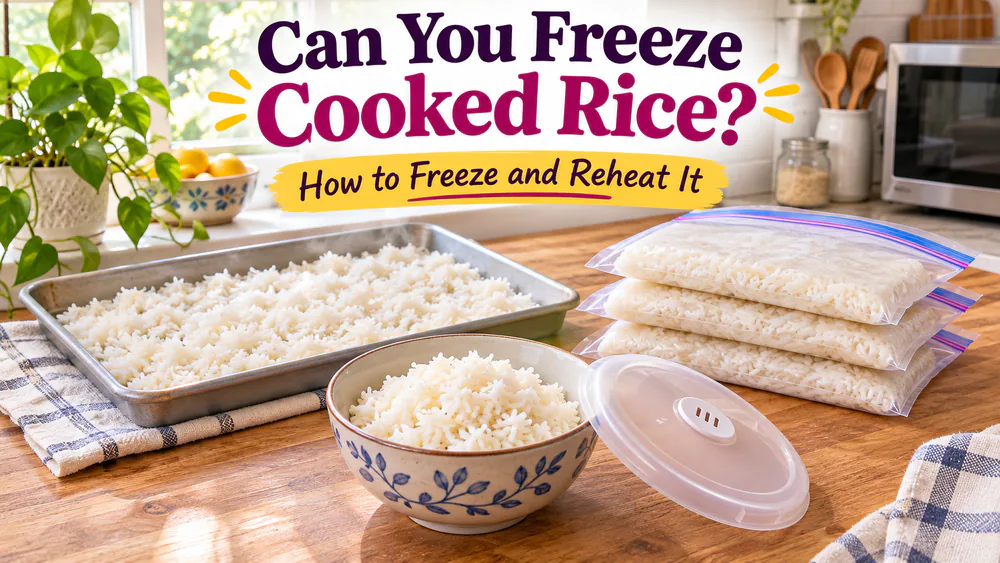
Yes, you can freeze cooked rice, as long as you cool it fast and get it into the freezer promptly. Do that, and a batch from the rice cooker becomes several ready-to-go meals. Cooking big batches? See our rice cooker reviews.
How to Freeze Cooked Rice
Cool the Rice Quickly
Speed matters more than anything else here. Cooked rice can carry Bacillus cereus spores that survive cooking, and slow cooling lets them grow and make a toxin that reheating cannot destroy. So we aim to cool and freeze rice within 1 hour of cooking, and we never leave it cooling in the cooker or pan.
Spread the rice in shallow portions, or set the container in a cold-water bath, instead of waiting for a big pot to cool on the counter.
Warning. Rice that sat at room temperature for more than 2 hours should be thrown out, not frozen. Freezing does not rescue it.
Portion and Pack the Rice
Divide the cooled rice into meal-size portions so you only reheat what you will eat. We pack it this way:
- Use freezer-safe bags or airtight containers.
- Press out as much air as you can before sealing.
- Write the date and amount on each bag.
Label and Freeze Flat
Lay the bags flat in the freezer. In our kitchen, flat bags stack neatly and fit into freezer space more easily than bulky tubs.
Which Types of Cooked Rice Freeze Well?
Plain white, brown, basmati, and other aromatic rice all freeze well. Brown rice keeps its chewy character, while jasmine and basmati may need a little extra moisture when you reheat them. Rice mixed with meat or vegetables can also go in the freezer, provided every ingredient was handled safely.
How Long Can You Freeze Cooked Rice?
Safety and quality are two separate questions. Food that was handled safely and stays at 0 F (-18 C) or below remains safe indefinitely, so freezer time is about texture, not a safety deadline. For good texture, we use frozen rice within about 1 to 2 months. Longer storage can leave the grains dry. For fridge timing, see how long cooked rice lasts.
How to Reheat Frozen Rice
You do not need to thaw it first. Rice can go straight from frozen into reheating, or you can thaw it in the refrigerator if you plan ahead. Either way, heat it until it reaches 165 F throughout, and check with a food thermometer.
A frozen bag becomes a solid block. Break it into chunks while it is still inside the bag to make transferring it to a bowl less messy.
In the Microwave
Put the chunks in a microwave-safe bowl, add a splash of water, and cover with a vented lid. Stir partway through, then let it stand and check for cold spots. A small portion often needs about 2 to 3 minutes on high. Power and portion size affect the timing, so rely on the thermometer, not the clock.
On the Stovetop
Add the frozen rice to a saucepan with a splash of water, cover, and heat gently. Stir, and add more water if it starts to stick. Keep going until it is hot all the way through.
A little extra water helps soften dry rice when a covered bowl or pan traps the steam. Reheated rice also dries out fast while it sits, so serve it right away.
For soups and chili, drop the frozen chunks straight into the simmering liquid. They heat evenly there, but give the whole pot enough time to reach 165 F.
Frequently Asked Questions
Can you freeze rice that has been in the fridge?
Yes, if it was cooled promptly and is still fresh. We play it safe and freeze it within 24 hours of cooking.
Can you freeze takeaway rice?
Be careful with it. Takeaway rice may already have been reheated, so ask how it was cooked and held. If you are unsure, skip freezing it.
Can you refreeze cooked rice?
We avoid it. Freeze meal-size portions and reheat only what you will eat. Refreezing after reheating adds handling risk and damages the texture, even though general leftover rules allow it in some cases.
Read next
Ready to upgrade your kitchen?
Browse our kitchen guides or join our newsletter for more everyday cooking tips.