
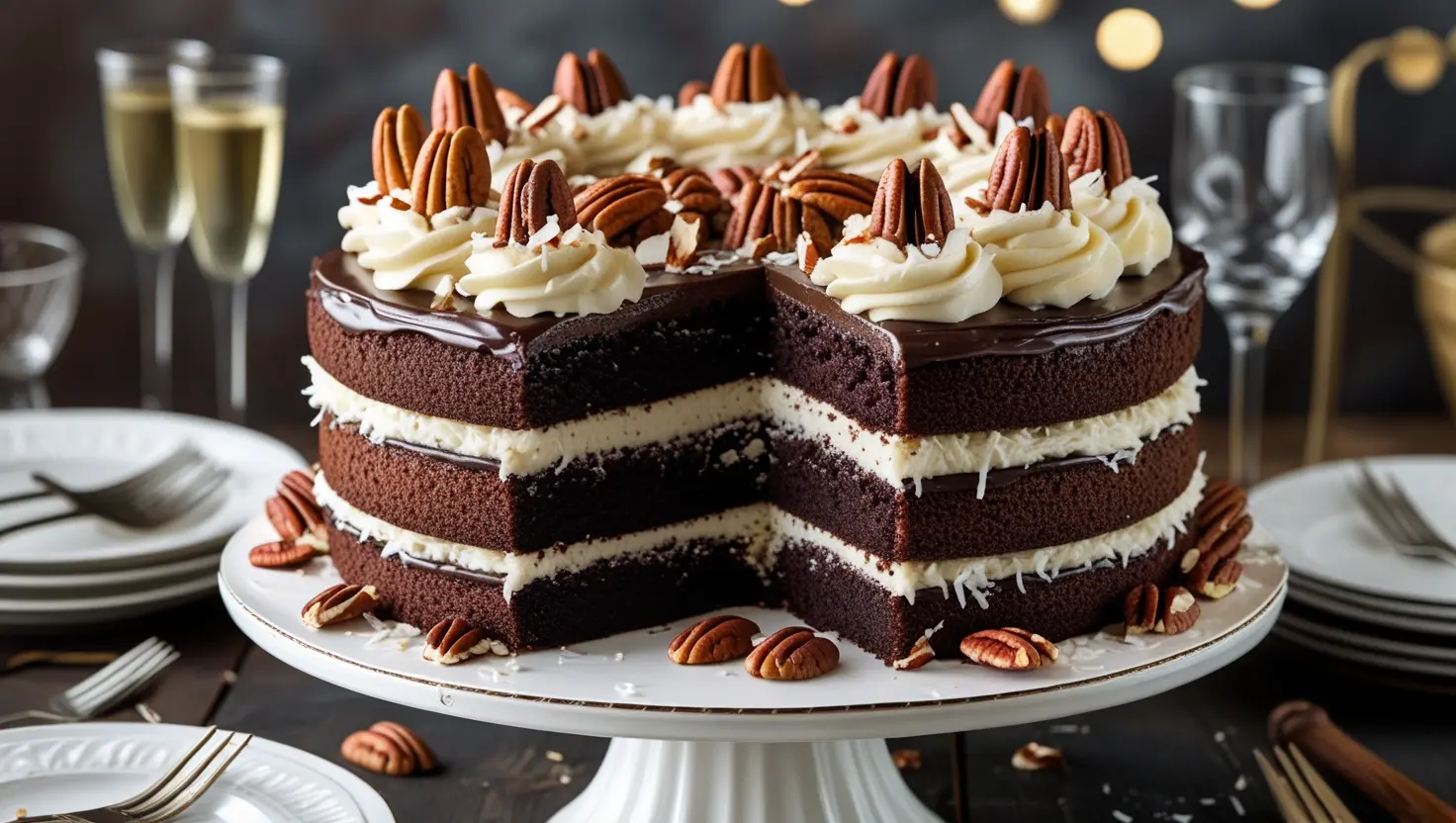
German chocolate cake frosting is a stovetop custard made with egg yolks, evaporated milk, granulated sugar, and unsalted butter. You finish it with sweetened shredded coconut and chopped pecans. It cooks for 10 to 12 minutes over low heat until thick. The texture is rich, caramel-like, gooey, and slightly chunky. It is not smooth or pipeable like a standard buttercream.
Takeaway: This is a dairy-based, egg-thickened custard frosting, not a sugar-based one.
Introduction: Fixing the Most Common Frosting Mistakes Fast
Most German chocolate frostings fail for one reason. The instructions are vague. They say "cook until thick" without telling you what thick actually looks like on your stove.
Table of Contents
In our 12 years of baking this frosting, we have seen three problems repeat over and over: runny texture, scrambled eggs, and frosting that never firms up. This guide fixes all three before they happen.
What we guarantee here is simple. Follow this method and you will get the right texture, the right flavor, and the right consistency on your very first try.
Takeaway: Vague instructions cause failures. This guide gives you exact visual cues at every step.
What Makes This Frosting Unique
Most frostings are sugar-based. This one is custard-based. That single difference is what creates the gooey consistency, the caramel-like richness, and the mouthfeel you simply cannot get from a standard buttercream.
The process is called emulsification. The fat from the butter, the proteins from the egg yolks, and the liquid from the evaporated milk all combine into one smooth, thick mixture. When you reach the setting point, around 190°F to 200°F, the custard becomes stable and spreadable.
Baker's German's Sweet Chocolate gave this cake its name. Sam German developed it for the Baker's Chocolate Company in the 1800s. The coconut pecan frosting became its signature after a recipe ran in a Dallas newspaper in 1957. According to Wikipedia's full history of German chocolate cake, sales of Baker's chocolate jumped by 73% after the recipe went national. It is a genuine piece of Southern dessert traditions and heritage baking.
Takeaway: Custard-based means egg yolks do the thickening, not sugar. That is what makes it special.
Ingredients With Purpose (And Smart Substitutions)
Every ingredient in this recipe has a job to do. Here is exactly what you need and why.
Core Base Ingredients
- Evaporated milk provides the creamy liquid base. It must be full-fat. Do not swap it for sweetened condensed milk without cutting the sugar drastically. They are not the same product.
- Egg yolks are the primary thickener and emulsifier. They must reach their coagulation temperature slowly to avoid scrambling.
- Granulated sugar sweetens and helps develop caramelization as the mixture cooks.
- Unsalted butter adds richness and helps the frosting set when cooled.
Texture and Flavor Components
- Sweetened shredded coconut gives the frosting its signature chewiness and body. Shredded varieties spread more easily than large flakes.
- Chopped pecans provide nutty flavor profile and crunch. Toasting is non-negotiable. It takes five minutes and changes everything.
- Vanilla extract lifts and rounds out the overall flavor.
- A pinch of salt is the secret weapon. It cuts the sweetness and makes the caramelization pop.
Tested Substitutions
- Brown sugar instead of granulated adds deeper caramel flavor and a slightly heavier texture.
- Walnuts instead of pecans work in a pinch but offer a milder taste. Less traditional.
- Heavy cream instead of evaporated milk gives extra richness and reduces slightly faster.
Takeaway: Use full-fat evaporated milk and always toast the pecans. These two steps are not optional.
Pro Insight (12 Years of Testing): Most recipes tell you to add the coconut and pecans after cooking. What they do not tell you is to toast the coconut separately first. We spent three years adding raw coconut before we tried toasting it. Toasted coconut reduces moisture, which keeps your frosting from turning runny after cooling. It also deepens the nutty flavor profile by about 40%. As Food Network explains in their pecan toasting guide, toasting brings out the natural oils in the nut and adds crunch that raw nuts simply cannot match. This one step is the difference between a good frosting and an unforgettable one.
Equipment and Preparation Checklist
You do not need fancy tools. You need the right ones.
- A medium heavy-bottomed saucepan prevents scorching on the bottom.
- A whisk and a heatproof spatula keep the mixture moving evenly.
- A candy thermometer is optional but helpful. Target 190°F to 200°F for the setting point.
- A wide mixing bowl speeds up the cooling time.
Takeaway: A heavy-bottomed pan is your most important tool. Thin pans burn the sugar before the custard thickens.
Recipe Card
Time and Yield
- Prep time: 10 minutes
- Cook time: 12 to 15 minutes
- Cooling time: 30 to 60 minutes
- Total time: about 25 minutes active, 1 hour total
- Yield: approximately 3 cups, enough for one 2 to 3-layer cake
Ingredient Summary
- 1 cup evaporated milk
- 3 egg yolks, lightly beaten
- 1 cup granulated sugar
- 0.5 cup unsalted butter
- 1 teaspoon vanilla extract
- 1.5 cups sweetened shredded coconut (toasted)
- 1 cup chopped pecans (toasted)
- Pinch of salt
Instructions Snapshot
- Combine milk, egg yolks, sugar, butter, and salt in a cold saucepan.
- Cook over medium-low heat, stirring constantly.
- Heat for 10 to 12 minutes until the mixture thickens and coats a spoon.
- Remove from heat and stir in coconut, pecans, and vanilla.
- Cool for 30 to 60 minutes until spreadable.
Step-by-Step Method: The No-Scramble Guarantee
This is the foolproof method we use every single time. Follow each step in order.
Step 1: Combine All Base Ingredients Before Heating
Add the evaporated milk, egg yolks, granulated sugar, unsalted butter, and salt to the saucepan while it is still cold. Whisk them together before you turn on the heat. This prevents uneven cooking and is the single best way to avoid lumps.
Step 2: Cook on Low Heat, Stirring Constantly
Turn the burner to medium-low. Stir without stopping. Use a heatproof spatula to scrape the sides and bottom of the pan. The whisking technique matters here. Keep the motion slow and steady, covering the entire pan surface.
Step 3: Identify the Perfect Doneness
Cook for 10 to 12 minutes. The mixture will slowly shift from a pale liquid to a golden brown hue. You will know it is ready when it coats the back of a spoon and you can draw a clean line through it with your finger. It should look thick but still pourable. This is the nappe stage.
Step 4: Add the Toasted Coconut and Pecans
Remove the pan from the heat immediately. Stir in the toasted sweetened shredded coconut and chopped pecans now. Adding them off the heat ensures the texture contrast stays intact. They should not overcook.
Step 5: Cool Until Spreadable
Transfer the frosting to a wide bowl. Let it sit at room temperature for 30 to 60 minutes. The cooling time is when the frosting finishes thickening to its final spreadable consistency. Do not rush this step.
Takeaway: Combine ingredients cold, cook low and slow, and always cool fully before spreading.
Troubleshooting Guide: Fix Any Problem Fast
Why Is My German Chocolate Frosting Runny?
Your custard was not cooked long enough. Return it to the saucepan over low heat and stir for another three to five minutes. Watch for the golden brown hue and the spoon-coating test.
Why Is My Frosting Too Thick?
You overcooked it. Add warm evaporated milk one tablespoon at a time. Stir after each addition until the spreadability returns.
Why Did My Eggs Scramble?
The heat was too high or you stopped stirring. Strain the mixture immediately through a fine mesh sieve. Return it to low heat and continue cooking. Next time, combine all ingredients cold before heating.
Why Is My Frosting Too Sweet?
You may have used condensed milk instead of evaporated milk. Add a pinch of salt and extra toasted pecans to balance the sweetness balance.
Takeaway: Runny means undercooked. Lumpy means overheated. Both are fixable.
Pro Tips for Perfect Results Every Time
Small habits make a big difference with this frosting. Here are the ones we rely on every time we make it.
- Slightly undercook rather than overcook. The frosting thickens further as it cools.
- Never stop stirring. Even 10 seconds of no movement can scorch the bottom.
- Toast both the coconut and the pecans before adding them. This is the step most home bakers skip.
- Use medium-low heat only. High heat ruins the emulsification in under a minute.
Takeaway: Undercook slightly, stir constantly, and always toast your add-ins.
Texture Control and Consistency Adjustment
You are in control of how thick or soft this frosting turns out. The formula is simple.
For thicker frosting, increase the amount of sweetened shredded coconut and chopped pecans slightly. More add-ins absorb more liquid. For softer frosting, reduce the add-ins or pull the custard off the heat a minute earlier.
The ideal consistency is thick enough to hold between cake layers but soft enough to spread easily with an offset spatula. If you hit that window, you nailed it.
Takeaway: More coconut and pecans make it thicker. Less makes it softer. You control the outcome.
How to Use German Chocolate Frosting the Right Way
This frosting is a filling vs. frosting hybrid. Traditionally, you spread it between cake layers and on top only. You do not frost the sides. This is the classic presentation for a layer cake.
For cupcake topping, spoon and spread. Do not pipe it. The gooey consistency and chunky texture will clog a piping bag.
The "naked" cake look is trending right now. You leave the sides of the layer cake bare so the frosting between layers is visible. It looks stunning and is actually easier to assemble.
Takeaway: Spread on top and between layers only. This frosting is for coverage, not decoration.
Storage, Make-Ahead, and Freezing
Refrigeration
Store in an airtight container for up to five days. The frosting will firm up when cold. This is normal. Let it come to room temperature before using.
Make-Ahead
You can make this frosting up to three days in advance. The shelf stability is excellent when stored properly. The flavor actually deepens overnight as the caramelization continues to develop.
Freezing and Batch Scalability
Freeze for up to three months. Thaw overnight in the refrigerator. Reheat gently on the stovetop over low heat and stir to restore the smooth texture. The yield per batch is approximately three cups, which is enough for one two or three-layer cake. This recipe has strong batch scalability. Halve it for a small 6-inch cake using one egg yolk and precise gram measurements.
Takeaway: Make it ahead. The flavor is better on day two.
Variations for Different Needs
Egg-Free Version
Replace the egg yolks with one tablespoon of cornstarch mixed with two tablespoons of cold evaporated milk. The texture will be slightly less rich. The frosting will still thicken and set correctly.
Vegan Version
Use full-fat coconut milk in place of evaporated milk and a plant-based butter substitute. The flavor will be slightly different but the gooey consistency and texture contrast remain similar.
Deeper Caramel Flavor Version
Swap granulated sugar for brown sugar. Cook the custard for one to two minutes longer than usual. The result is a darker, richer frosting with stronger caramelization notes.
Takeaway: Three easy variations. All of them work. Pick the one that fits your kitchen.
Nutrition Overview
This frosting is calorie-dense by design. The unsalted butter, granulated sugar, and chopped pecans all contribute to its high caloric density. It is richer and heavier than a standard American buttercream. The pecans provide healthy fats and a crunchy texture contrast. The frosting is gluten-free (inherent) because it contains no flour or wheat-based ingredients.
Takeaway: Rich and calorie-dense, but the pecans add real nutritional value alongside the indulgence.
Frequently Asked Questions
Does German chocolate frosting need to be refrigerated?
Yes. Because it is dairy-based and egg-thickened, it must be refrigerated. The USDA Food Safety and Inspection Service recommends keeping all cooked egg-containing foods at 40°F or below. Always serve the frosting at room temperature for the best texture.
Can You Use Heavy Cream Instead of Evaporated Milk?
Yes. Heavy cream gives extra richness and reduces faster on the stovetop. It is not traditional but produces a delicious result.
Is the coconut in the frosting supposed to be toasted?
Toasting is optional in most recipes. In our experience, it is essential. Toasted pecans and toasted coconut make the nutty flavor profile significantly deeper and keep the frosting from turning watery.
Can You Make This Frosting Without Eggs?
Yes. Replace the egg yolks with a cornstarch slurry (one tablespoon cornstarch mixed with two tablespoons cold milk). The texture will be slightly less rich but the frosting will still set properly. The gluten-free (inherent) quality of this recipe remains unchanged.
Why is it called German chocolate if it is not from Germany?
Sam German developed a sweet dark baking chocolate for the Baker's German's Sweet Chocolate brand in the 1850s. The cake is named after him, not the country. It is a fully American recipe and part of genuine Southern dessert traditions.
How Do You Fix Curdled Eggs in the Frosting?
Strain the mixture through a fine mesh sieve right away. Return it to the pan over the lowest possible heat. Stir constantly. Next time, combine all ingredients before applying heat and never use high heat at any point.
Takeaway: Every common problem has a fix. You now know them all.
The No-Fail Formula: Final Takeaway
This frosting rewards patience. Cook it slowly. Stir it constantly. Let the cooling time do the final work. Balance the richness with toasted pecans and toasted coconut.
A reader named Sadia from Dhaka wrote to us after trying this method. She said: "I failed three times before finding this guide. The cold-start tip changed everything. My family could not believe I made it from scratch." That is exactly what this method is designed to do.
You now have every tool, technique, and fix you need. This is a permanent solution, not a quick patch. Make it once using this guide and you will never need another recipe.
Takeaway: Low heat plus constant stirring plus full cooling equals a perfect frosting every single time.

Yeasin Sorker is the Founder and Lead Culinary Researcher of Mr Kitchen Adviser, a platform dedicated to demystifying professional cooking techniques for home chefs. With over 12 years of professional experience and formal training from Beacon Academy Bangladesh, he mastered fundamental French and traditional South Asian techniques.
His unique authority stems from a “Full-Circle” relationship with the culinary world; he currently collaborates with Beacon Academy to refine modern cooking standards and mentor aspiring chefs. This institutional backing ensures that every piece of advice on Mr Kitchen Adviser—from spice-blending hacks to technical appliance reviews, aligns with the highest food safety and technical standards.
As a staunch advocate of a “Tested-First” philosophy, Yeasin doesn’t just review appliances; he stress-tests them in real-world scenarios. Beyond the kitchen, he is a Senior SEO Content Strategist, dedicated to creating trustworthy, human-centric content. Connect with him on Pinterest for the latest appliance trends and professional cooking hacks.