
Kitchen Appliances
How Does a Pressure Cooker Work?
As an Amazon Associate we earn from qualifying purchases. We may earn a commission from links on this page, at no extra cost to you. Learn more.
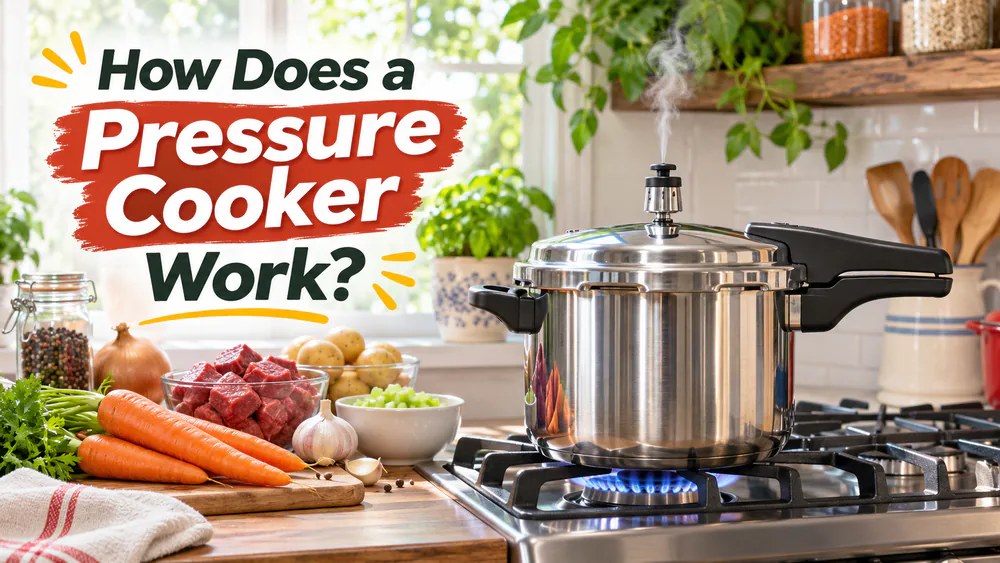
A pressure cooker is a sealed pot that traps the steam rising from its liquid. Because that steam cannot escape, the pressure inside climbs, and water has to get hotter before it boils. The food sits in liquid and steam well above the normal boiling point, so tough cuts soften and dried beans turn tender in less time than an open pot would need.
This guide follows the steam from the first bubble to the moment you open the lid. If you are looking for gear rather than theory, our pressure cooker reviews cover the models themselves.
How trapped steam raises the cooking temperature
Inside the pot, three things work together: liquid, a sealed space above it, and a heat source. As the liquid warms, it turns to steam. A normal pot lets that steam drift away, but a pressure cooker holds it in, and the pressure rises.
Why pressure raises water's boiling point
Water boils when its vapor pressure matches the pressure around it. At standard atmospheric pressure, water boils at 100 C (212 F), and no amount of extra heat makes an open pot hotter than that. The water just turns to steam faster.
Raise the surrounding pressure and water needs more heat before it boils. At sea level, about 15 psi of gauge pressure lifts the boiling temperature to roughly 121 C (250 F). That is an example operating point, not a figure every cooker reaches.
Note. Gauge pressure is measured above the air around us. So 15 psi gauge is about 30 psi absolute at sea level. Cooker specifications use gauge pressure, so do not confuse it with absolute pressure.
Why hotter water and steam cook food faster
The food is not squeezed or pushed by pressure. It simply sits in liquid and steam that are hotter than boiling water can ever be in an open pot. Heat moves into the food faster, and the connective tissue in tough meat breaks down sooner. That is why pressure cooking suits braises, stews, beans, and other moist dishes.
How much time you save depends on the food, the load, the pressure setting, and how long the pot takes to heat and release.
Why altitude changes pressure cooking
Air pressure drops as you climb. A cooker holding the same gauge pressure at altitude reaches a lower absolute pressure, so the cooking temperature is lower. Recipes at altitude often need extra time for that reason.
The parts that seal and control the pressure
Designs and names vary, but nearly every cooker relies on the same handful of parts.
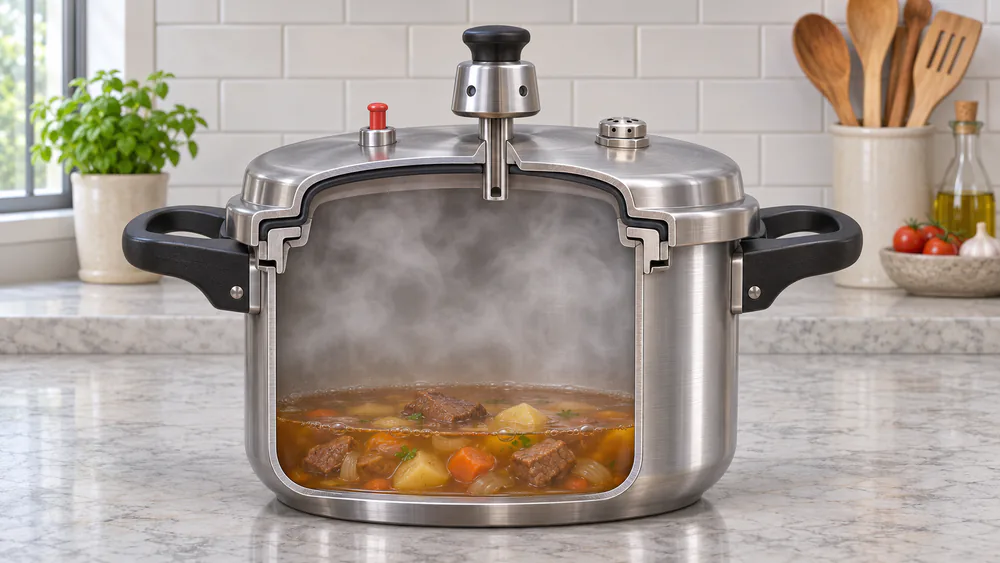
- Sealing ring: closes the joint between lid and pot.
- Lid lock: holds the lid shut while pressure is up.
- Pressure regulator: controls how much steam escapes to hold the working pressure.
- Pressure indicator: shows that the pot is pressurized.
- Safety valve: a separate backup that releases steam if pressure goes too high.
The lid, sealing ring, and locking mechanism
The sealing ring is the part that makes the pot a closed vessel. A misplaced, stretched, or damaged ring leaks steam at the lid, and the cooker never reaches full pressure. Food can also collect in the ring's rim groove, where washing the bowl alone will not remove it.
The pressure regulator, indicator, and safety valve
The regulator lets just enough steam out to hold the target pressure. On a stovetop cooker with a weighted regulator, you hear it as a steady rocking sound, while spring-valve designs can run more quietly. The indicator tells you pressure has built, and it is also what tells you the lid is still locked. The safety valve is the backup that vents steam if the main path is blocked.
What happens during a pressure-cooking cycle
The steps are the same across models. For the full walkthrough, see our guide on how to use a pressure cooker.
- Add liquid and food, check the vent is clear and the seal is seated, then lock the lid.
- Heat until the cooker reaches operating pressure.
- Hold that pressure for the recipe time.
- Depressurize before opening.
Heating up and building pressure
As the pot warms, air inside is vented while the cooker seals, and then steam fills the space. Pressure buildup takes time before the cooking countdown begins, so a short programmed cycle does not necessarily mean dinner will be ready quickly. We plan for the preheat and the release on top of the cook time.
Maintaining pressure during cooking
On a stovetop model, you lower the burner once operating pressure is reached. Too much heat wastes steam and can boil the pot dry. An electric model manages this itself, with a built-in heater and electronic control. The pressure-cooking countdown on an electric cooker starts only after preheating and reaching pressure, so the displayed time leaves out both buildup and release.
Releasing pressure before opening
Never open the lid while the pot is pressurized. Wait for full depressurization and your model's unlocking indication, and follow the manual's opening procedure.
How stovetop and electric pressure cookers differ
The principle is identical; the difference is who manages the heat. A stovetop cooker uses your burner, and you adjust it once pressure is reached. An electric cooker has its own heater and controls the cycle for you, which makes it more hands-off.
Pressure settings depend on the model and the setting you choose. Some electric cookers reach the same gauge pressure as a stovetop cooker, so check your manual rather than assuming one is stronger. Both types need the same basics: liquid, a sound seal, a clear vent, and a safe release.
Natural release and quick release explained
The way you release pressure is part of the recipe. Release time varies with the load, the food, and the liquid temperature, so follow the recipe and the pressure indicator rather than a fixed countdown.
What happens during natural release
With natural release, you leave the closed cooker alone as it cools and loses pressure gradually. Food keeps cooking as the pot cools. This suits foaming, starchy, or liquid-rich dishes, which would otherwise surge through the vent.
What happens during quick release
Quick release opens the designated steam outlet, so pressure falls fast and a jet of steam escapes. Venting quickly can make the liquid boil vigorously as the pressure falls. It suits delicate foods when the recipe calls for it, but starchy liquids can splatter through the vent.
Warning. Keep your hands and face clear of the steam outlet, and never force a lid that will not turn. If it resists, the pot is still pressurized.
What pressure cooking does well and its limits
Pressure cooking is at its best with tough meat, beans, stocks, and other moist dishes. Its higher temperature speeds the softening of connective tissue.
The limits are real, though. The pot retains its liquid instead of reducing a sauce the way an uncovered pan does, so you may need to simmer afterward. Delicate foods can overcook quickly. And you cannot taste as it cooks, so the cycle has to finish before you check. Keep the pot no more than 2/3 full, and no more than half full for foods that expand, such as rice and dried vegetables, or the lower limit your model sets.
Safety features and common pressure problems
Modern cookers pair the lid lock with a pressure indicator and a backup safety valve. Keep the vent passages clean, because a blocked path defeats the design.
Why a cooker may fail to build pressure
If steam hisses out and the pot never seals, check these causes, but only after you switch off and fully depressurize:
- Too little liquid: the minimum depends on cooker size, model, and recipe, so use the amount in your manual.
- Open release valve: the vent must be in its sealing position.
- Missing or damaged sealing ring: a stretched or misplaced ring, or a damaged float-valve seal, leaks at the lid.
Read next
Ready to upgrade your kitchen?
Browse our kitchen buying guides, or subscribe for more practical cooking advice.