
Kitchen Appliances
How Much Rice Per Person? Portions for Sides and Mains

As an Amazon Associate we earn from qualifying purchases. We may earn a commission from links on this page, at no extra cost to you. Learn more.
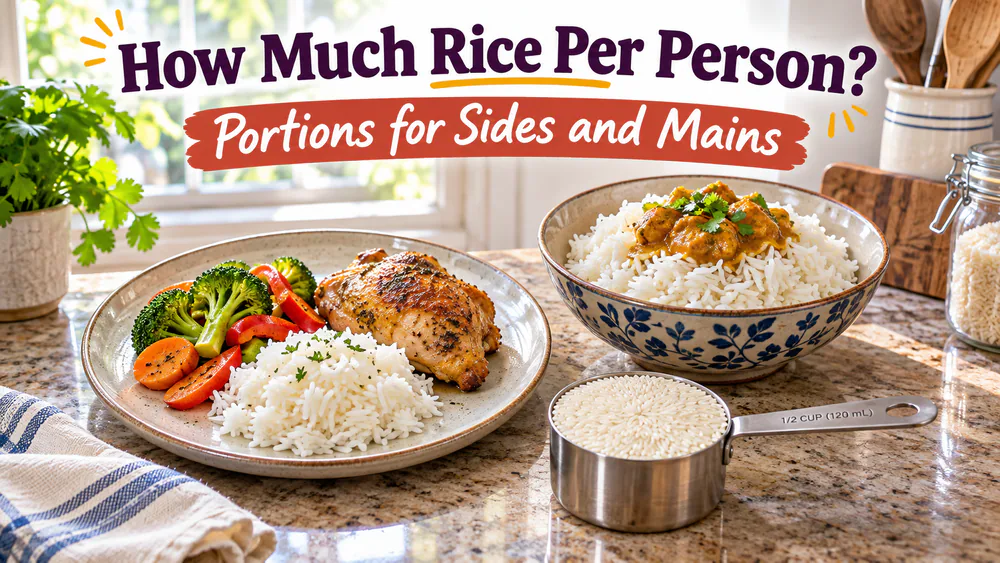
Plan on 1/4 cup of dry rice per adult for a side dish and 1/2 cup for a generous, rice-centered main. Those are starting points, not strict rules, because appetite and the other dishes on the table change what you need. In a family kitchen that feeds a wide range of ages, we measure dry rice first and adjust from there.
How Much Dry Rice Per Person? The Quick Answer
Every amount in this guide is dry (uncooked) rice, measured in a standard US kitchen cup of approximately 240 mL. Cooked amounts appear only where we label them as cooked. Mixing the two is the most common reason a pot comes out too big or too small.
Rice as a Side Dish
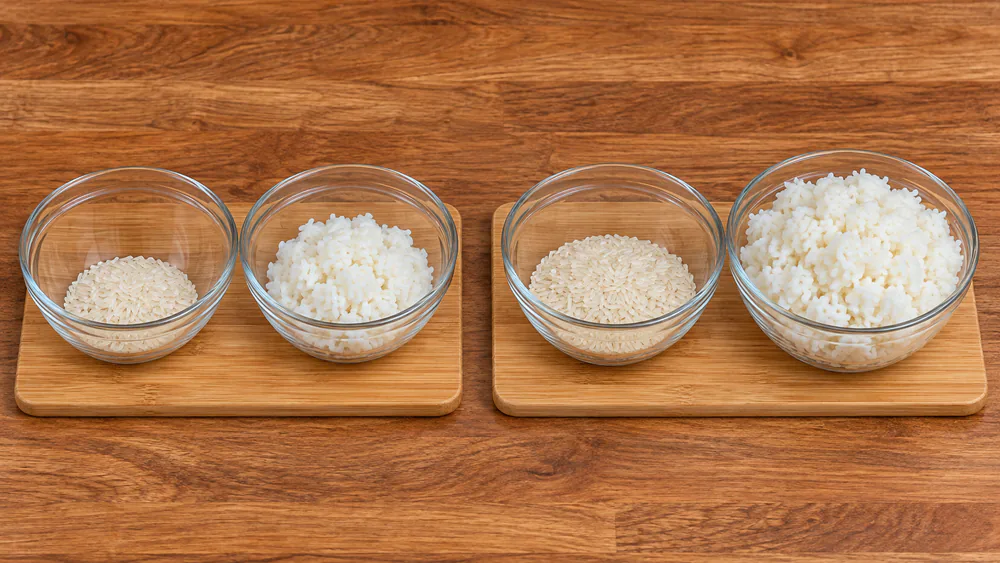
For a side, start with 1/4 cup of dry rice per adult, which is about 45 g. That cooks up to roughly 3/4 cup of white rice, a modest scoop beside a protein and a vegetable.
Rice as a Main Dish
When rice is the center of the plate, allow 1/2 cup of dry rice per adult, about 90 g. That is a generous portion that cooks to about 1 1/2 cups of white rice.
Substantial toppings, such as a saucy curry, often let people eat less.
Rice Serving Chart for 1 to 10 People
Note. Cups mean standard US kitchen measuring cups (about 240 mL). Grams are approximate and use 180 g per dry cup, so a different grain or a heaped cup will shift the weight. Cooked columns are for regular white rice at about three times the dry volume. Do not treat cooked cups as a gram conversion.
| People | Side dry cups | Side dry g | Main dry cups | Main dry g | Side cooked cups, approx. | Main cooked cups, approx. |
|---|---|---|---|---|---|---|
| 1 | 1/4 | 45 | 1/2 | 90 | 3/4 | 1 1/2 |
| 2 | 1/2 | 90 | 1 | 180 | 1 1/2 | 3 |
| 3 | 3/4 | 135 | 1 1/2 | 270 | 2 1/4 | 4 1/2 |
| 4 | 1 | 180 | 2 | 360 | 3 | 6 |
| 5 | 1 1/4 | 225 | 2 1/2 | 450 | 3 3/4 | 7 1/2 |
| 6 | 1 1/2 | 270 | 3 | 540 | 4 1/2 | 9 |
| 7 | 1 3/4 | 315 | 3 1/2 | 630 | 5 1/4 | 10 1/2 |
| 8 | 2 | 360 | 4 | 720 | 6 | 12 |
| 9 | 2 1/4 | 405 | 4 1/2 | 810 | 6 3/4 | 13 1/2 |
| 10 | 2 1/2 | 450 | 5 | 900 | 7 1/2 | 15 |
Scaling Portions for 20, 50, or 100 People
For a crowd, multiply the per-person amount by the head count. Here is a worked example for 20 adults serving rice as a side: 20 x 1/4 cup is 5 dry cups. At 180 g per cup, that is about 900 g of dry rice, and it cooks to roughly 15 cups of white rice.
On the same basis, 50 adults need about 12 1/2 dry cups for a side or 25 for a main. For 100 adults, plan on 25 or 50 dry cups.
Tip. These numbers scale the ingredient only. They do not tell you how much your pot or cooker can hold, and a small recipe's water and cooking time should not be multiplied blindly. Split a big batch between two pots so each has room to cook evenly.
Dry Rice to Cooked Rice: How Much Does It Make?
One dry cup of regular white rice makes about 3 cups cooked. Because rice expands so much, judging a dry portion by eye can leave you with more cooked rice than you intended.
As a quick check, one dry cup covers 2 generous main portions or four side portions.
Measuring Cups, Grams, and Rice Cooker Cups
A scale is the most consistent tool, but level dry measuring cups work too. A drinking mug is not a standardized measure.
Watch the cup that comes with a rice cooker. The conventional rice-cooker cup is approximately 180 mL, smaller than a standard US kitchen cup of 240 mL. Check the supplied cup and the manual before relying on the pot's water markings.
How Rice Type Changes Cooked Yield
White rice is the basis for the chart. Brown rice can yield about 4 cooked cups per dry cup, though the number depends on the variety, the water, and the method, so use the package yield when one is printed.
We would not stretch the white-rice multiplier to basmati, jasmine, instant, wild, sushi, or Arborio rice. Follow the package or recipe for those.
Adjusting Portions for Your Meal and Guests
Children, Appetites, and Other Side Dishes
Teenage appetites can outgrow a standard portion, so a mixed-age table needs flexible serving amounts. We start from the chart and offer seconds. Adjust by appetite, not by a fixed multiplier.
Our rule of thumb is to use the side amount when rice accompanies other dishes and the main amount when rice is the focus of the meal.
Rice Bowls, Fried Rice, and Risotto
For bowls with plenty of other filling ingredients, the side portion usually works. It also suits rice added to tacos.
Risotto makes rice central to the meal, so use the main amount, and follow the recipe's yield. For fried rice, plan on a main portion and make the batch a day ahead, since drier leftover rice works well in the pan.
Tip. Serving several rice dishes? Calculate each by its role, then add the dry cups together.
What to Do With Leftover Rice
Chill leftover rice quickly. Cool it within 1 hour, dividing it into smaller portions rather than leaving it in the cooking pot. Slow cooling gives Bacillus cereus spores time to grow and make a toxin that reheating cannot destroy.
Warning. Bacillus cereus spores can survive cooking, and rice left warm can allow bacteria or toxins to develop. We use the conservative rice-specific approach: refrigerate promptly and use it within 24 hours, or freeze it for later. Reheat only once, and make sure it is steaming hot all the way through.
Frozen portions of cooked rice shorten dinner preparation, because you skip cooking a fresh pot. Use leftover rice to bulk out soups, build a rice bowl, or make rice pudding instead of serving it again as the same side dish.
Rice Portion FAQs
Is 1 cup of uncooked rice enough for 2 people?
Yes, for generous mains. One dry cup covers 2 main portions, or four side portions if rice is only a side.
How can I measure rice without a scale?
Use level, dry measuring cups and the cup amounts in the chart. Level each cup with a knife. If you are using a rice cooker, check whether its included cup is the smaller 180 mL size before you measure.
Read next
Ready to upgrade your kitchen?
Explore more kitchen guides and get practical meal-planning ideas in our newsletter.