
Appliances
How to Clean a Waffle Maker (Fixed and Removable Plates)

As an Amazon Associate we earn from qualifying purchases. We may earn a commission from links on this page, at no extra cost to you. Learn more.
A clean iron makes better waffles and keeps the nonstick coating working for years. The short version: unplug it, let it cool until warm, brush out the crumbs, and wipe the plates with a damp cloth. Removable plates can be washed at the sink, while fixed plates need a wipe-down only. Across all the waffle makers we cover, the routine is the same, and it takes a few minutes.
How Often to Clean a Waffle Maker
Wipe the plates after every use, once the iron has cooled. A two-minute wipe-down right after breakfast saves a much longer deep clean later, because burnt sugar and caramelized batter set hard if you leave them.
A deeper clean depends on how often you cook. If you make waffles often, deep clean the iron roughly once a week; if you use it occasionally, once a month may be enough. Clean right away after sticky or sugary batters, whatever the calendar says.
What You'll Need
Most of it is already in your kitchen:
- A soft pastry brush for loose crumbs
- A damp cloth or damp paper towels
- A cotton swab and a toothpick for the grid wells and tight crevices
- An old toothbrush for the grooves
- A wooden chopstick or silicone spatula
- Mild dish soap and baking soda
Leave the metal tools in the drawer. Metal scratches nonstick, and once the plates are scratched, they stick worse.
How to Clean a Waffle Maker After Every Use
1. Unplug and Let It Cool
Unplug the iron first. Then wait until the plates are warm, not hot. Clean when the plates are warm enough for batter to lift easily but cool enough to touch without burning your fingers. A full cool-down can take 15 to 30 minutes.
Warning. Unplug the waffle maker and let it cool before you touch the plates. Never submerge the unit or run water over a fixed-plate iron.
2. Brush Out Loose Crumbs
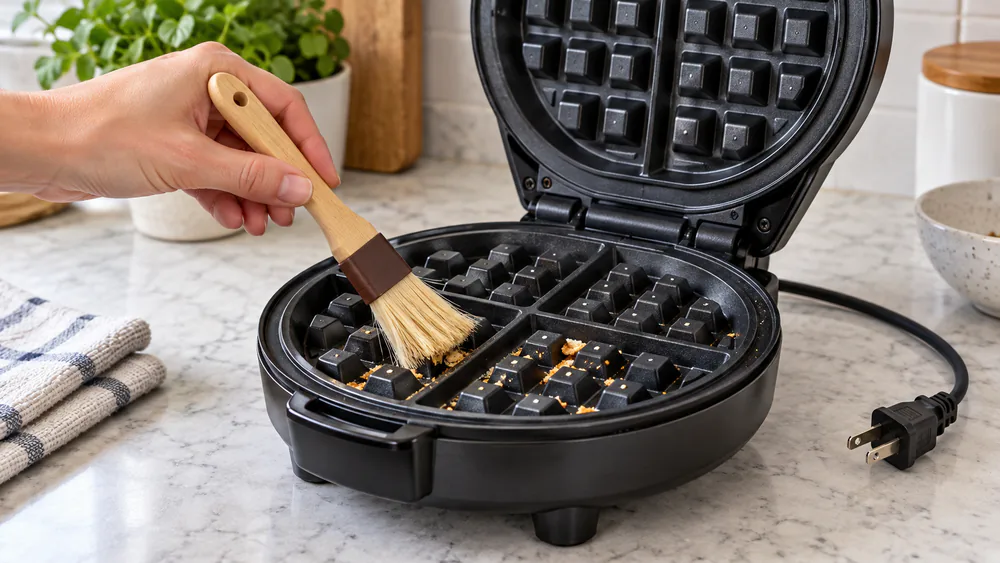
Open the iron and sweep crumbs out of the grids with a dry pastry brush.
3. Wipe the Plates
Wipe both plates with a damp cloth or paper towel. It should be damp, never dripping, because too much water near the heating element and electrical parts is the most common way to ruin a fixed-plate iron.
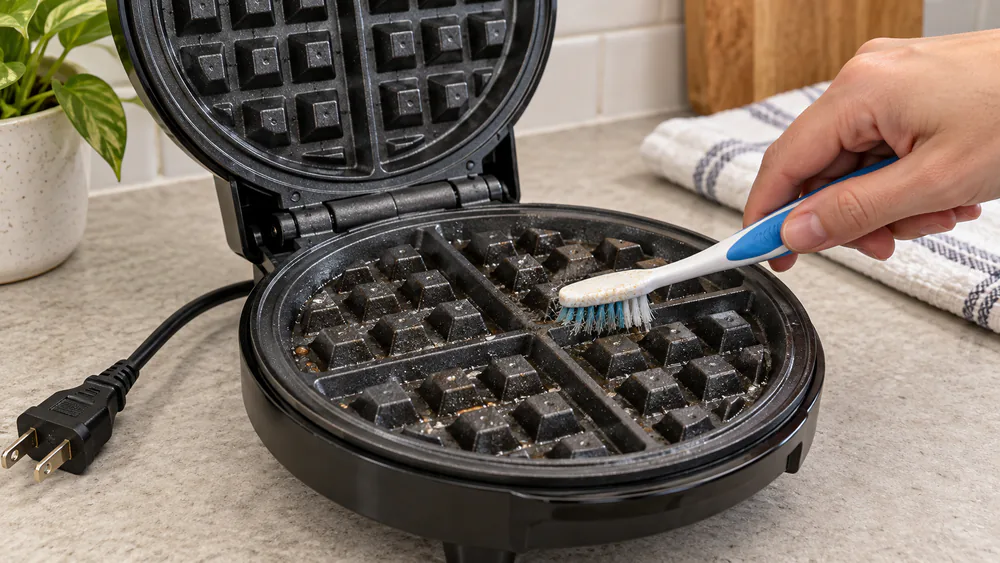
For a light film, use a cloth with a drop of mild dish soap, then wipe again with a clean damp cloth. A cotton swab dipped in soapy water gets into the grid wells, and a toothpick clears batter from tight crevices and around the controls.
4. Wipe the Outside
Wipe the housing, hinge, and handle with the same damp cloth. Wipe away excess oil as well: it can seep into crevices and controls, then smoke the next time you preheat the iron.
5. Dry Completely
Leave the lid open for a few minutes, or pat the plates with a dry towel. Close the iron only when the plates are fully dry.
Removable vs. Fixed Plates: What Changes
Removable Plates
Once cool, pop the plates out and wash them by hand in warm soapy water with a soft sponge. Rinse and dry them fully before you snap them back in. Only put them in the dishwasher if the manual explicitly says they are dishwasher-safe. If you are shopping, waffle makers with removable plates make this step far easier.
Fixed Plates
Fixed plates never go under the tap. Stick to the damp-cloth wipe, the steam method below, and cotton swabs for the corners. The rule is damp, never dripping.
Note. Belgian irons have deeper wells, so plan on more time with the toothbrush and swab. Flip models trap batter along the seam, and cast iron plates follow their own rules (see below).
How to Deep Clean Baked-On Batter and Burnt Sugar
Burnt sugar sets hard, so cleaning right after cooking is far easier than a deep clean later. When you do need one, start with steam.
Steam Method
Lay a damp (not dripping) cloth or a few paper towels across the plates, close the lid, and wait. On a still-warm iron, one to two minutes is often enough. With a cooled iron, give it about 5 minutes. For tough burnt-on batter, leave it for about 10 minutes, then lift the softened bits with a wooden or silicone spatula and wipe.
Tip. Press a damp towel on a closed, warm iron and let it steam the residue loose while you eat. The batter wipes off with almost no effort.
Baking Soda Paste
If steam doesn't finish the job, mix baking soda with just enough water to make a thick paste. Spread it on the stuck spots, leave it for 10 to 15 minutes on burnt batter, then scrub gently with a soft cloth or non-abrasive sponge. Wipe the plates with a clean damp cloth until no grit remains.
For melted cheese or sugar, warm the unit slightly to soften it, apply the paste for several minutes, and lift the residue with a wooden scraper.
Cast Iron and Nonstick Care: What to Avoid
Seasoned cast iron plates rust if soaked or left damp. Wipe them, dry them at once, and rub on a thin film of oil. Never put them in the dishwasher.
On nonstick plates, skip steel wool, metal tools, and scouring powder. Magic erasers are mildly abrasive and slowly wear the coating, so they are a poor choice for regular use. Nonstick cooking spray is another trap: it burns onto the plates and leaves a sticky film that builds up and wrecks the coating over time. Brush on a little melted butter or oil instead.
Warning. Do not soak seasoned cast iron plates, and do not use metal tools or abrasive pads on nonstick.
Mistakes to Avoid
- Pouring too much batter. Overflow into the edges and hinge is the main cause of baked-on mess. Use a ladle or measuring cup.
- Prying out a stuck waffle. It damages the coating. Let it finish cooking and it releases on its own.
- Using too much oil. It pools in crevices and smokes on the next preheat.
- Soaking or submerging a fixed-plate iron. Water in the electrical parts is hard to undo.
How to Keep Your Waffle Maker Clean Longer (and When to Replace It)
Slide a sheet of foil or parchment under the iron to catch overflow. Lift waffles with a wooden chopstick, brush on fat sparingly, and wipe the plates while they are still warm.
Know when to retire the iron. Replace the iron if its coating flakes or peels, food still sticks badly after a deep clean, or a burnt smell persists. If you are replacing yours, start with our picks for the best waffle makers.
FAQs
Can you put a waffle maker in the dishwasher?
Never put the whole unit in. Only removable plates that the manual marks dishwasher-safe can go in, and cast iron plates never can.
Can you use vinegar to clean a waffle maker?
Yes, for greasy spots and odors. Wipe on equal parts white vinegar and water, wait a few minutes, then wipe it off with a damp cloth. You don't need it for batter, where steam and baking soda work better.
How do you get melted cheese or sugar out of a waffle maker?
Warm the iron slightly so the residue softens, then apply baking soda paste for several minutes. Lift it with a wooden scraper and wipe the plates clean.
Why does my waffle maker smell burnt after cleaning?
Usually there is hidden residue in the corners or under the plates, and a baking soda deep clean fixes it. If the smell persists, the coating may be worn or the unit may be aging.
Is it safe to use a scratched non-stick waffle maker?
Scratched plates stick worse and are harder to clean. If the coating is flaking or peeling, replace the iron rather than keep using it.
Read next
Ready to upgrade your kitchen?
Browse our buying guides for appliances that are easier to keep clean.