
Kitchen Appliances
How to Froth Milk With or Without a Frother

As an Amazon Associate we earn from qualifying purchases. We may earn a commission from links on this page, at no extra cost to you. Learn more.
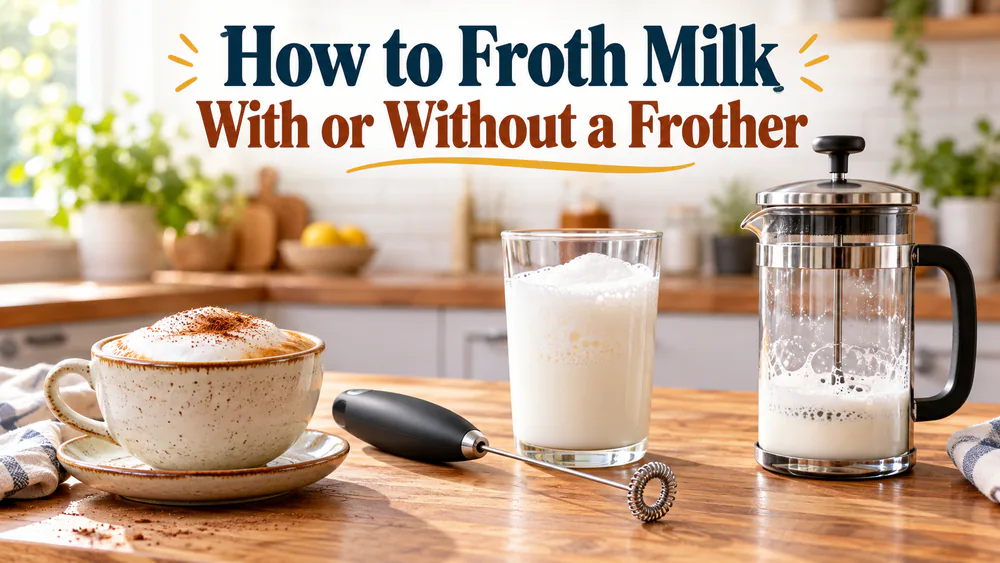
Frothing pushes tiny air bubbles into milk so it turns light, creamy and spoonable. The easiest way to start is a handheld frother. Pour warm milk into a tall cup, hold the whisk just under the surface, and switch it on until the foam looks glossy. No frother? A French press or a jar works in a pinch. Below, we walk through every method, the milk that suits each one, and how to fix foam that goes wrong.
Choose Your Milk-Frothing Method
Pick the method that matches the tools already in your kitchen and the drink you want. Any of these methods can make good foam, and our milk frother reviews cover the machines.
| Method | Expected foam | Best use |
|---|---|---|
| Steam wand | Silky microfoam with practice | Lattes, flat whites, cappuccinos |
| Handheld frother | Airy foam you can adjust | Everyday foamy drinks and cold foam |
| French press | Generous but often coarser foam | Frothing with gear you already own |
| Jar | Coarse topping foam | Simple cold foam in a pinch |
| Manual whisk | Loose foam with larger bubbles | Warm foamy milk with basic tools |
| Automatic frother | Depends on the model and mode | Repeatable, hands-off results |
Choose the Right Milk and Temperature
Frothing and steaming are related processes. Frothing adds air to milk. Steaming does that and heats the milk at the same time, which is why only a steam wand or a heating automatic frother does both in one step. A handheld whisk, a French press, a jar and a manual whisk do not heat anything.
Dairy milk and plant-based barista blends
Whole milk gives the richest, most supple texture in the cup. Reduced-fat milk also froths well, while skim makes lighter foam that can feel stiff and less creamy.
For plant milks, buy a barista blend. These are made for coffee foam, and an oat barista blend can form real microfoam. Results depend on the formula rather than the plant, so a carton labeled for coffee beats a standard one.
When to start cold and when to heat the milk
For a hot latte on a steam wand, start with cold milk and stop heating at around 140-150 F (60-65 C). Use that range as a practical target rather than an exact cutoff.
With a handheld frother, French press or whisk, heat the milk separately to about 150 F before frothing. For iced drinks, skip the heat entirely and use cold milk. For plant milk, follow the carton's steaming guidance, since blends differ in how they handle heat.
How to Froth Milk With a Steam Wand
A steam wand heats and textures the milk in one go, so it gives the silkiest result. A weaker home wand needs a more deliberate pitcher tilt to get the milk rolling.
Add air, then swirl the milk into microfoam
- Pour cold milk into a metal pitcher, up to the bottom of the spout so the milk has room to expand.
- Point the wand at a drip tray and purge it briefly to clear condensation.
- Place the tip just below the milk's surface and turn the steam on.
- Listen for a gentle paper-tearing sound as air goes in. A loud squeal usually means the tip is too deep.
- Add air early. Air added late leaves little time to work the bubbles into the milk, and the texture comes out uneven.
- Sink the tip slightly so the milk spins in a steady whirlpool until it reaches 140-150 F.
- Turn the steam off before you lift the pitcher away.
Judge the milk by sound and texture instead of a stopwatch.
Finish, pour and clean the steam wand
Tap the pitcher on the counter to pop big surface bubbles, then swirl so the foam and liquid join again. Pour right away. As the milk stands, it separates and becomes harder to pour evenly.
Tip. Wipe the wand with a damp cloth the moment you finish and purge it into the tray. Milk dries onto a hot wand fast, and cleaning it right away is far easier than scrubbing later.
How to Froth Milk With a Handheld Frother
A handheld frother is quick to set up and works with smaller amounts of milk than a French press. It does not heat, so warm the milk first if you want a hot drink.
- Pour about 150 F milk (or cold milk for an iced drink) into a tall mug or jug, filling it no more than halfway.
- Make sure the whisk is clean, then rest its head just below the surface.
- Switch it on and move it gently to draw in air.
- Switch it off before lifting it out, so the milk does not splash.
- Stop once the foam looks right. About 20 seconds is a fair starting point, but milk type and whisk power change that.
How to Froth Milk Without a Frother
A press, a jar or a whisk will all make foam, with a looser texture than a steam wand.
French press method
French-press milk expands readily, but the foam can look bubbly rather than silky enough for latte art.
- Add warm or cold milk, deep enough for the filter to reach it and below the halfway mark of the press.
- Fit the lid and pump with short strokes.
- Stop as soon as the milk turns foamy. Oat milk foam can collapse if you keep pumping to chase volume.
- Pour into a cup, tap to settle large bubbles, and swirl before pouring.
Jar method
The jar is our go-to for cold foam. It gives a usable topping, though its bubbles are less refined than steam-wand microfoam.
- Pour 4 ounces of cold milk into a 16-ounce jar so there is plenty of room to shake.
- Screw the lid on tightly.
- Shake hard until the milk looks foamy.
- Open the jar and use the foam right away.
We stick to cold milk here. Shaking a sealed jar of hot milk is not worth the risk.
Whisk method
A whisk takes more effort and builds a looser foam with larger bubbles than a handheld frother.
- Warm the milk in a saucepan, then take it off the heat.
- Whisk briskly from side to side until foam forms.
- Pour promptly into your cup.
How to Use an Automatic Milk Frother
Follow your model's markings, because heating-only capacity can be higher than the foaming limit.
- Fit the correct whisk for hot or cold frothing.
- Add refrigerated milk, staying under the froth line.
- Close the lid and pick hot or cold mode.
- Pour when it finishes, then clean the milk-contact parts per the manual, keeping electrical connections dry.
Match the Foam to Your Drink
More foam does not mean bigger bubbles.
Smooth foam for lattes and flat whites
Lattes use silky, well-blended milk with a thin foam layer. Flat whites use even less foam. A steam wand or a gentle handheld pass fits these drinks best, with a swirl before the pour.
Airier foam for cappuccinos
Cappuccinos take a thicker foam layer, so add air a little longer. A handheld frother, French press or automatic frother all work well here.
How to Make Cold Foam
Cold foam starts with chilled milk and no heat at all.
- Pour cold milk into a tall cup, or into a French press or jar.
- Aerate it with a handheld whisk, a few press strokes, a hard shake, or a machine's cold-foam setting.
- Stop when the milk looks thick and airy.
- Spoon or pour it over an iced drink. Sweet cream foam is a different recipe, so do not expect plain milk foam to taste the same.
Why Your Milk Is Not Frothing
Large bubbles or foam that collapses
Coarse bubbles mean you added air too aggressively. Add it more gently and keep the milk spinning so the bubbles break down. Tap and swirl before pouring. Foam that vanishes often means you pumped or whisked too long, or the milk sat before you poured.
Flat milk or foam that is too stiff
For thin, flat milk, add air earlier and with more control. For stiff, dry foam, add less air next time. Resist the urge to heat more, since extra heat spoils flavor and never rescues weak foam. If a Ninja Luxe Café still will not froth, try our guide to fixing Ninja Luxe Café frothing problems. Otherwise, pick one method above and repeat it until the texture is steady.
FAQ
Is frothed milk the same as steamed milk?
Not quite. Frothing adds air to the milk. Steaming adds air and heats it at once, which gives a smoother, more integrated texture.
Can I use a blender to froth milk?
Yes, a blender can aerate cold milk, though the texture depends on the appliance and your technique. For hot milk, follow the blender's own instructions.
Can I froth milk ahead of time?
It is better not to. Foam separates from the liquid as it stands, so froth close to serving time and pour right away.
Read next
Ready to upgrade your kitchen?
Browse our buying guides for more ways to make coffee at home.