
Appliances
How to Use a Waffle Maker: Preheat, Pour, Cook and Clean
As an Amazon Associate we earn from qualifying purchases. We may earn a commission from links on this page, at no extra cost to you. Learn more.
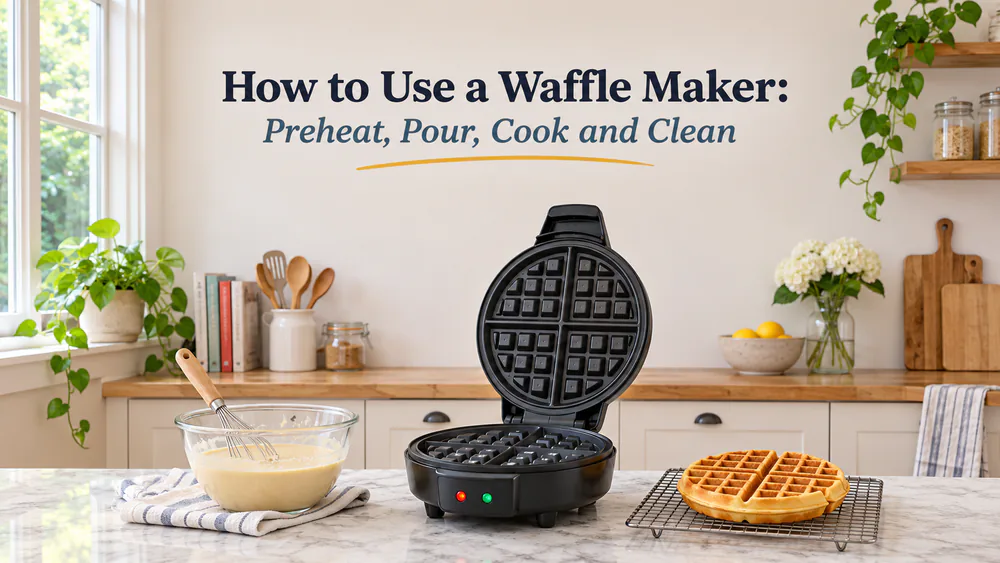
If your first waffle sticks, comes out pale, or oozes over the sides, the machine is rarely the problem. Using a waffle maker well comes down to a few small habits: let it fully preheat, pour the right amount, and wait for the steam to taper before you open the lid.
We look at kitchen gear from a repair technician's perspective, paying attention to what keeps a machine working well and what wears it out. This guide walks through every step in the order you will do it, and it works with any model, from a basic classic grid to a deep Belgian one. If you are still choosing a machine, our waffle maker reviews cover the options.
What You Need Before You Start
You do not need much, but having everything within reach before the plates get hot makes the process calmer.
Equipment and Tools
Gather these before you plug in the machine:
- The waffle maker and a heat-safe surface near an outlet
- A large mixing bowl and a whisk or spatula
- A liquid measuring cup or a ladle for pouring
- A pastry brush if you plan to oil the plates
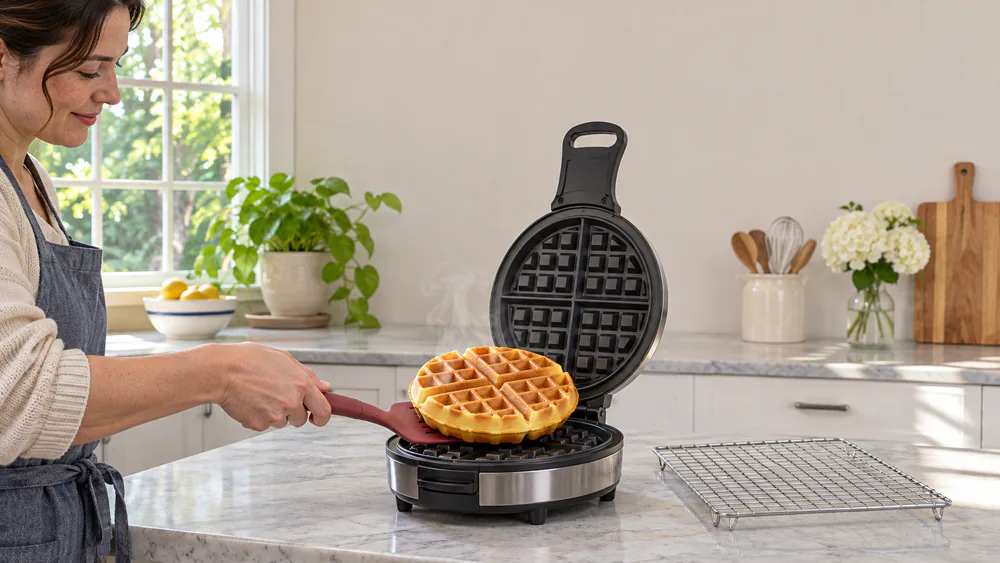
- A fork with plastic or wooden handle, or a silicone spatula, for lifting waffles out
- A wire rack, plus a baking sheet if you want to keep waffles warm in the oven
To avoid scratching the nonstick plates, lift the waffle with a silicone tool or use a fork to spear only its edge without touching the plates.
Basic Waffle Batter Ingredients
A simple batter makes about four Belgian waffles and uses pantry staples:
- 2 cups flour
- 2 tablespoons sugar
- 2 teaspoons baking powder
- 1/2 teaspoon salt
- 2 eggs
- 1 3/4 cups milk
- 1/2 cup melted butter or oil
- 1 teaspoon vanilla
A boxed mix works just as well for a first try. It also cooks faster, which we cover in the timing section below.
How to Use a Waffle Maker: 8 Steps
Follow these in order. Each one has a reason behind it, and skipping a step is where most beginner problems start.
Step 1: Wash and Season the Plates (First Use)
Before the first use, wipe the grids with a damp cloth. Never immerse the machine in water. On the first heat, you may notice a slight odor or a little smoke. That is normal manufacturing residue burning off.
For seasoning, a light brush of vegetable oil on the plates at first use is a common approach. Manuals differ, though, so check yours: some nonstick makers say to skip oil entirely.
Step 2: Mix the Batter
Whisk the dry ingredients together, then add the eggs, milk, melted butter and vanilla. Stir until just combined. A few lumps are fine, and overmixed batter makes chewy, dense waffles.
If you have a few minutes, let the batter rest for 5-10 minutes. It gives you a fluffier waffle, and the rest time overlaps with preheating anyway.
Step 3: Preheat the Waffle Maker
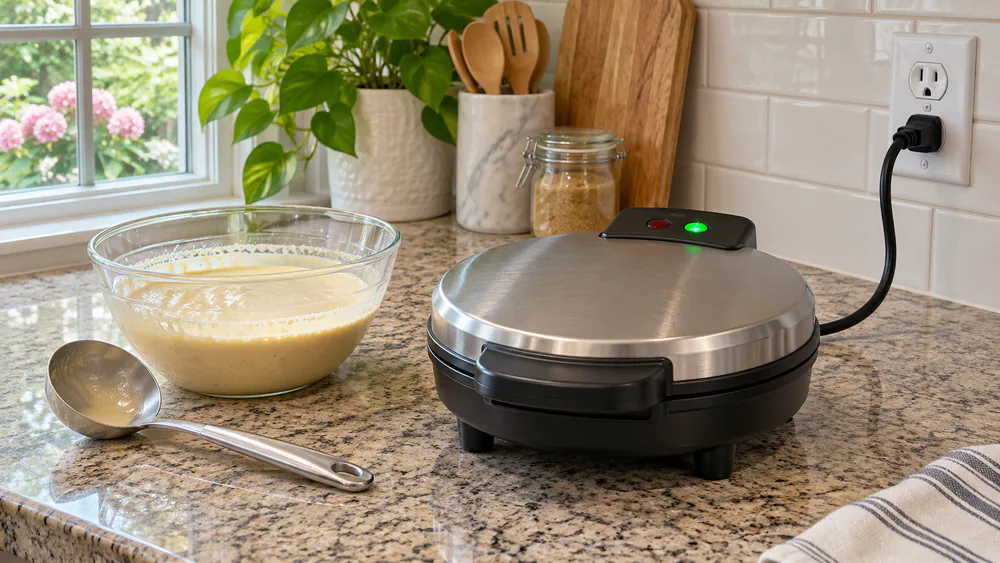
Close the lid, plug it in, and wait. Most machines need 3-5 minutes until the ready light changes.
Tip. Treat the ready light as a starting signal, not a promise. Let the machine sit a moment past the light before the first pour. Batter poured onto cold plates sticks and cooks unevenly, and waiting for the ready signal fixes most sticking.
Step 4: Grease the Plates
Greasing depends on your machine. Nonstick plates often need no oil, while a light brush of vegetable oil helps at first use or with dessert batters. Check your maker's manual for greasing advice, since it varies with the coating and model.
Avoid aerosol cooking spray. It leaves a tacky, mottled film on nonstick plates over time, and too much oil of any kind gradually causes sticking. A thin coat with a brush is plenty.
Step 5: Pour the Right Amount of Batter
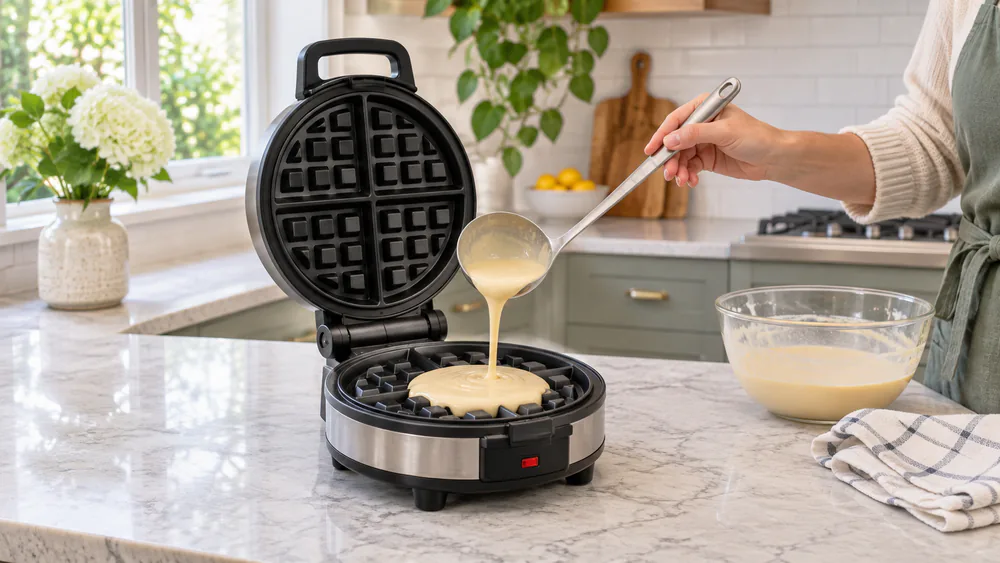
Pour into the center of the bottom plate and let it spread. Start with less than you think you need. Many standard grids take about 3/4 cup, while smaller or classic grids take 1/2 to 2/3 cup. Batter volume depends on grid size and depth, so the right amount varies by machine; start low and adjust.
For a flip-style Belgian maker such as the Presto FlipSide, the instructions call for 3/4 to 1 cup, and never more than 1 cup.
Warning. Overfilling sends batter out the sides, where it burns onto the edges. The plates are hot, so keep your hands clear and use less next time.
If your batter is thick and does not flow, spread it toward the edges with a heat-safe spatula. On a flip model, rotate the unit 180 degrees after pouring so the batter spreads evenly.
Step 6: Close the Lid and Cook
Close the lid gently and leave it alone. Most homemade batter takes about 4 minutes, within a range of 3 to 5 minutes. Packaged mix can be done by 2 minutes.
Resist the urge to peek. Lifting the lid before the steam stops tears the waffle in half, because the batter has not set yet.
Step 7: Check Doneness and Remove the Waffle
The best cue is the steam. When it stops escaping from the sides, the waffle is usually golden and releases easily. The ready light is not fully reliable, so use tapering steam as the main signal and golden color and crisp edges as your check.
Lift the waffle out with a fork or silicone tool. Put it on a wire rack, not a plate. Stacking hot waffles on a plate traps steam and makes them soggy.
To serve a crowd, keep finished waffles in a single layer on a rack in a 200F oven.
Step 8: Cool, Clean, and Store the Waffle Maker
Unplug the machine and let it cool until it is just warm. Batter spills cleaned while the plates are still warm need much less scrubbing. Wipe with a damp cloth, and never immerse the unit. For the full routine, see our guide on how to clean a waffle maker.
Once it is fully cool and dry, store it upright or flat with the cord wrapped loosely, away from heavy items that could press on the lid.
Types of Waffle Makers (and How They Change the Steps)
The steps stay the same across models, but batter amount and cook time shift with the grid. If you want the background, there is a good overview of the history and design of the waffle iron.
Belgian grids need more batter and a slightly longer cook. Flip models rotate 180 degrees after pouring to spread the batter. Minis, at about 4 inches, make a single waffle. Double makers cook two at once, and stovetop versions need no electricity at all, so you watch the heat yourself.
How to Know When a Waffle Is Done (Settings and Timing)
Many machines have a browning dial. Light gives a pale, soft waffle, medium gives golden, and dark gives deep brown and crisp. Start on medium, then adjust by one notch at a time.
Timing is a guide, not a rule. Steam tapering, golden color and an easy release all confirm it.
The first waffle often sticks or looks odd. The next ones cook more evenly as the plates settle in, so treat the first as a test run.
Common Mistakes and Safety Tips
Most problems trace back to a handful of mistakes:
- Pouring onto cold plates. The batter sticks and cooks unevenly.
- Overfilling. Batter escapes and burns onto the edges.
- Opening the lid early. The waffle tears in half.
- Using cooking spray. The film builds up and the plates start to grab.
- Overmixing. You get chewy, dense waffles.
- Reaching for metal tools. They scratch the coating.
Warning. Unplug the waffle maker before any cleaning, keep the cord away from the hot plates, and never immerse the unit in water. The plates and the outer edge stay hot after cooking, so let them cool before you handle them.
Troubleshooting: Sticking, Soggy Waffles, and Overflow
Waffles Stick to the Plates
Check three things in order. First, was the machine fully preheated? Cold plates cause most sticking. Second, are you using aerosol spray? Switch to a thin brushed coat, or none if your manual says so. Third, did you lift the lid too soon? Wait for the steam to taper.
Waffles Are Soggy
Soggy waffles come from two places. A batter that is too wet gives soft results, and a spoonful more flour thickens it. After cooking, stacking hot waffles on a plate traps steam, so move each one to a wire rack.
Batter Overflows
Overflow means too much batter or batter that is too runny. Pour less next time, and thicken a runny batter with a spoonful of flour. Cleaning the edges while warm keeps burned-on batter from building up.
How to Clean and Store a Waffle Maker
Unplug the machine and let it cool until warm. Wipe the plates with a damp cloth, and use a soft brush or rubber spatula for crumbs. Do not use metal or scouring pads.
For stubborn batter, brush on cooking oil, wait about 5 minutes, then wipe. Baked-on bits lift easily after that. Never immerse the unit or put it in the dishwasher, unless the plates are removable and your manual says they are dishwasher safe. Our walkthrough on how to clean a waffle maker covers deeper cleaning.
Leftover waffles freeze well. Cool them fully, layer them with waxed paper in a freezer bag, and freeze for up to 1 month. Reheat in a toaster or a 350F oven for about 10 minutes.
Creative Things to Cook in a Waffle Maker
Once you are comfortable, the plates handle more than batter:
- Hash browns and quesadillas
- Brownies and doughnut batter
- Omelets
- Cookie dough, in about 4 to 5 minutes
- Cinnamon rolls, in about 2 to 4 minutes
- Pizza
Messy batters like brownie or doughnut drip, so set a baking sheet under the machine to catch them.
Frequently Asked Questions
Can I use pancake batter in a waffle maker?
You can, but the result is softer and paler than a true waffle. Pancake batter has less fat and sugar structure for crisping, so expect a tender waffle. A thicker pancake batter works better than a thin one.
Do I need to grease a nonstick waffle maker?
Often not, but it depends on the coating and your manual. A light brush of vegetable oil at first use or with dessert batters helps. Skip aerosol spray, which leaves a tacky film over time.
How do I make waffles crispier?
Make sure the machine is fully preheated, wait for the steam to taper before opening, and cool waffles on a wire rack. Setting the browning dial one notch higher also helps.
Is it safe to open the lid while cooking?
It is safe if you are careful, since the plates are hot, but it ruins the waffle. Lifting the lid before the steam stops tears the waffle in half because the batter has not set.
How do I clean stuck-on batter?
Unplug the machine and let it cool until warm. Brush on cooking oil, wait about 5 minutes, then wipe with a damp cloth or soft brush. Avoid metal tools and never immerse the unit.
Conclusion
A good waffle comes from patience more than skill. Preheat fully, pour a modest amount into the center, keep the lid closed until the steam fades, and lift the waffle onto a rack. Avoid cooking spray and metal utensils on the plates, and clean them while they are still warm. Do that, and the second waffle will already be better than the first.
Read next
Ready to upgrade your kitchen?
Browse our tested buying guides and find the right gear for your next batch.