
Kitchen Appliances
How to Use an Instant Pot as a Slow Cooker
As an Amazon Associate we earn from qualifying purchases. We may earn a commission from links on this page, at no extra cost to you. Learn more.
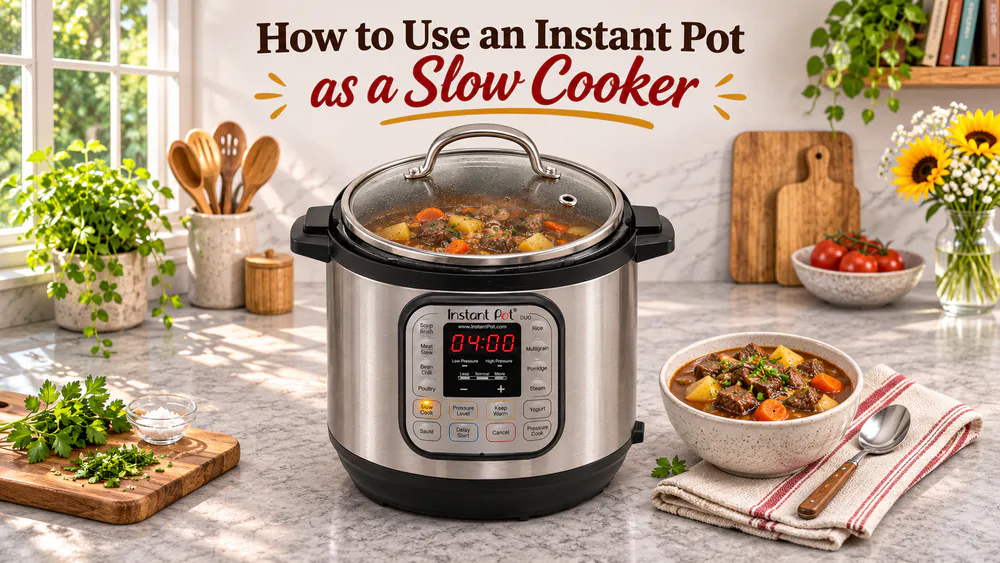
You can make your favorite slow cooker recipe in an Instant Pot using its non-pressure Slow Cook function. The steps are simple, but control labels differ by model, so we use the 6-quart Duo as our example and point out where yours may differ.
How to Use the Slow Cook Function, Step by Step
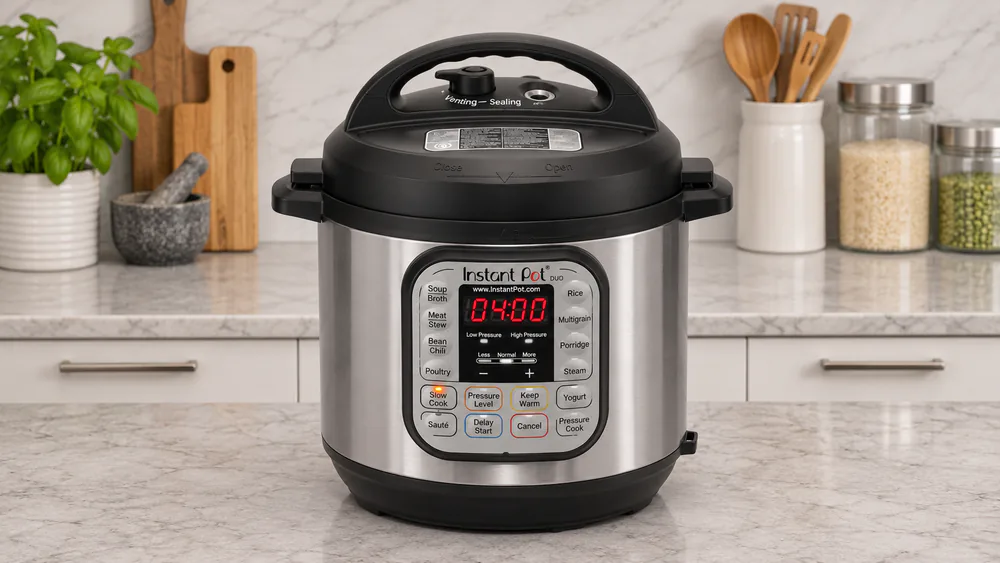
Here is the routine for the illustrated 2021 Duo, so check your own manual if your model looks different.
- Add your food and liquid to the inner pot, then set the pot into the base.
- Close the lid and turn the steam release handle to Venting.
- Press Slow Cook repeatedly to cycle through Less, Normal and More.
- Use the plus and minus buttons to set the cooking time.
- Choose whether you want Keep Warm to follow the cycle.
- Walk away, because the Duo starts counting down after 10 seconds without another button press.
Keep the float valve down the whole time, because Slow Cook is a non-pressure program, and of the 13 one-touch programs on the Duo this is the one built for the job.
Which Instant Pot Slow Cook Setting Should You Use?
Less, Normal and More: Check Your Model's Labels
On the Duo the three levels are Less, Normal and More. Other models use different controls, and the 2021 Pro, for example, uses a dial to pick the Slow Cook preset, then High or Low, then a duration, and its countdown begins immediately during pre-heating.
How Instant Pot Settings Compare With Slow Cooker Low and High
The official Duo guidance maps Less, Normal and More to Low, Medium and High. Many cooking guides instead treat Normal as the equivalent of a traditional Low. We would not trust a universal conversion: follow your exact manual and check the food rather than assuming the recipe timing will transfer. Keep Warm is a separate program and will not finish an undercooked meal.
Which Lid Should You Use for Slow Cooking?
Using the Standard Lid and Steam Release Control
The standard lid works fine with the handle set to Venting, and Slow Cook is the one mode where you can lift the lid to stir or check, though every peek lets heat escape. If the float valve ever rises, move the release switch to Vent and never force a pressurized lid open.
Using a Compatible Vented Glass Lid
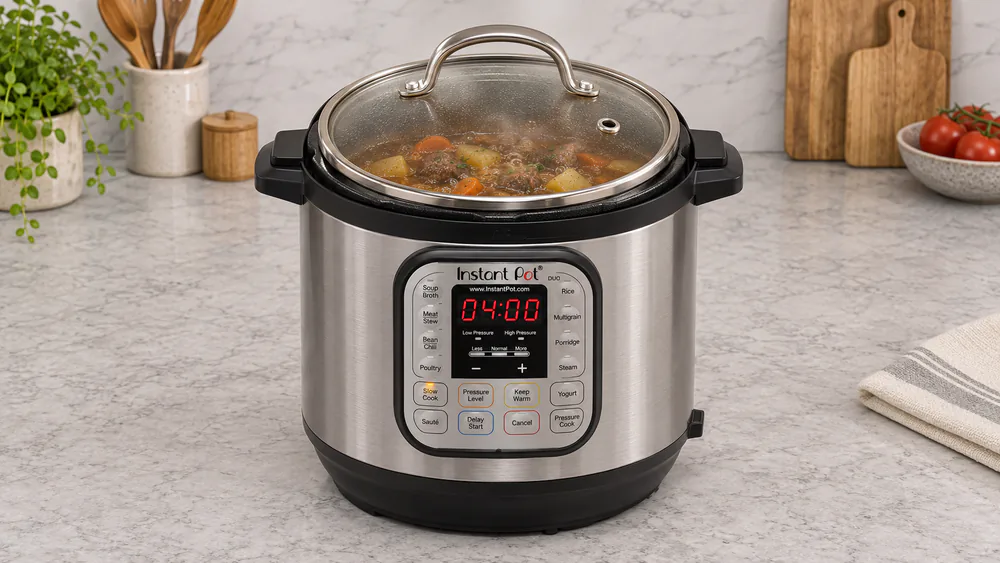
We like a vented glass lid for long braises because you can watch the pot without lifting the lid and losing heat. Choose one made for your exact model and confirm compatibility in your manual; its vent hole keeps the pot from sealing.
How to Adapt a Slow Cooker Recipe for Your Instant Pot
The stainless insert and bottom heat behave differently from a thick ceramic crock heated around its sides, so recipe timing does not transfer perfectly and the written time is only a starting point. Pressure cooking is a different job, and our pressure cooker reviews cover that side of the machine.
Adjusting Cooking Time and Checking Doneness
Batch size, chunk size, starting temperature, model and heat level all move the clock. Start checking at the recipe's earliest finish time and keep going until the food is ready. Also fill the pot no higher than 2/3 full, or 1/2 for foods that expand or foam, which is the limit in the Duo manual.
Warning. Tenderness and safety are separate checks. Poultry must reach 165 F in the thickest part, away from bone. Ground beef and pork need 160 F. Whole cuts of beef, pork, lamb and veal need 145 F plus a 3-minute rest. Thaw meat first, and refrigerate leftovers within 2 hours.
Managing Liquid and Thick Sauces
Start with the liquid the slow cooker recipe calls for, and do not import a pressure cooking minimum, though we find that dishes taste good but often finish with a thinner, more watery sauce than a dedicated slow cooker gives you. Thick tomato or barbecue sauces can also heat less reliably than a thinner braising liquid, so stir them in later or thin them slightly. Adjust the next batch based on how this one turned out.
Choosing Recipes and Adding Delicate Ingredients
Braises, soups, stews and shredded meats suit this setup, so put slower-cooking vegetables under the meat, and stir in fresh herbs and dairy near the end to protect their flavor and texture. Our Instant Pot reviews include the other models you may be cooking on.
Why Is Your Instant Pot Slow Cooker Food Still Undercooked?
Checking the Program, Heat Setting and Timer
First confirm that you selected Slow Cook rather than Keep Warm, and that you did not choose Less for a recipe calling for High. Then check that the timer has started, since countdown behavior varies by generation.
Understanding Heat Distribution and Batch Size
A full pot of large cuts takes longer than a half-full pot of small pieces, so cut food into even sizes, keep the lid closed between checks, and stay within the fill line, remembering that thick sauces can slow heating too.
When Should You Use a Dedicated Slow Cooker?
If you slow cook often with recipes written for that appliance, a dedicated slow cooker gives more predictable results, while the Instant Pot is the better choice when you already own it and want sauteing and slow cooking in one pot on a small counter. For the full showdown, see our Instant Pot vs. slow cooker guide.
Instant Pot Slow Cooking FAQs
Does Slow Cook use pressure?
No. Slow Cook is a non-pressure program. On the Duo, the lid sits on with the handle at Venting and the float valve stays down.
Can you open the lid during slow cooking?
Yes, on models like the cited Pro and Duo. Each peek lets heat out, so lift it only to stir or check the food.
Can you use Delay Start or cook overnight?
We avoid Delay Start with raw meat or other perishable food, since it should start cooking promptly. An overnight recipe is an active cooking cycle, and suitability depends on your model's safeguards and the recipe length.
What happens when the cooking time ends?
With Keep Warm off, the cited Duo displays End. With it on, the pot counts upward for up to 10 hours, but warming does not finish an undercooked meal.
Read next
Ready to upgrade your kitchen?
Browse our buying guides for more ways to make the most of your kitchen appliances.