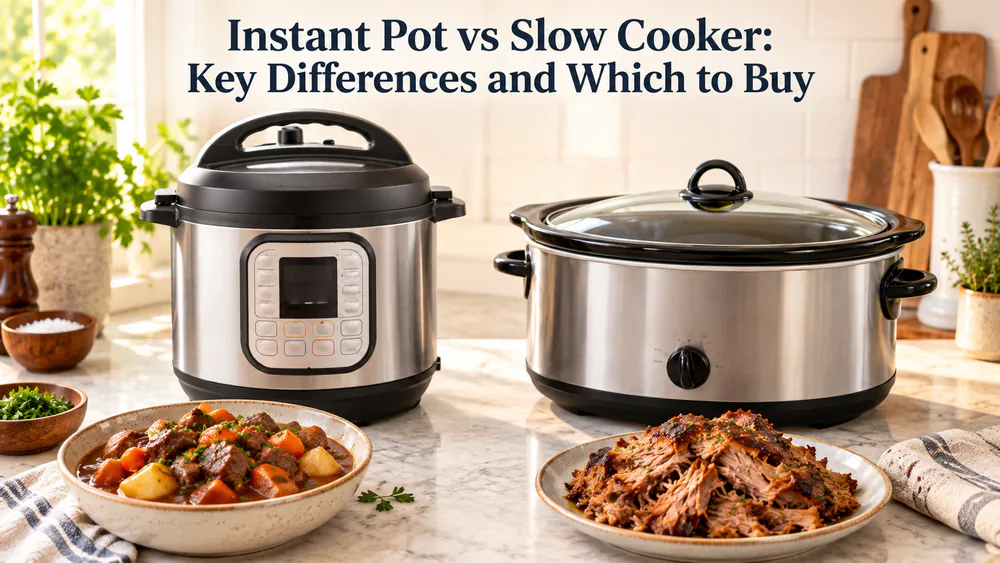
The Instant Pot wins on speed and versatility, cutting cook times by up to 70% using pressure up to 15 PSI. The slow cooker wins on simplicity and flavor depth, making it the better tool for hands-off, all-day braising.

I ( Engr. Tanvir Ahmed ) tested both side-by-side cooking the same Salisbury steak, bone broth, pulled pork, and dried beans. The Instant Pot finished a pot roast in 60 minutes. The slow cooker took 8 hours and produced a noticeably thicker, darker sauce.

The Instant Pot does one thing poorly: its built-in slow cook mode underperforms a dedicated Crockpot. Know that trade-off before buying.

Instant Pot Duo 7-in-1 Cooker with lid removed and plastic packaging

Quick Answer: The 10-Second Decision Rule

Need dinner in under an hour? Buy the Instant Pot. Want to set it and forget it all day? Buy the slow cooker.

  • Instant Pot = best for fast, last-minute, versatile one-pot meals
  • Slow Cooker (Crockpot) = best for hands-off, long, predictable cooking
  • Cook on demand: Instant Pot. Plan ahead: slow cooker.

Side-by-Side Comparison Tablete

Feature

Instant Pot (Duo 6-Quart)

Slow Cooker (Crockpot)

Price (approx.)

$80 to $130 USD

$20 to $50 USD

Wattage

1,000W to 1,200W

200W to 300W

Cooking Time (pot roast)

60 minutes

8 hours

PSI Levels

Up to 15 PSI

None (0 PSI)

Quart Capacity

3-quart, 6-quart, 8-quart

3-quart, 6-quart, 8-quart

Inner Pot Material

Stainless steel

Ceramic / stoneware

Lid Type

Locking lid with silicone sealing ring

Simple glass lid

Heating Element

Bottom only

Wraparound sides

Preset Programs

7 to 15 modes

Low, high, warm

Dishwasher Safe

Yes (insert)

Yes (insert)

Browning / Saute

Yes (built-in)

No

Countertop Footprint

Taller, compact

Wider, shorter

Best Use Case

Speed, versatility, batch cooking

Hands-off, flavor depth, simplicity

Smart Features

Wi-Fi / Bluetooth (Pro models)

None

Key Takeaway: The Instant Pot costs 2x to 3x more upfront. The slow cooker costs less per hour to run but operates 6 to 10 times longer per meal.

Instant Pot vs Slow Cooker: Product Overviews

What Is the Instant Pot?

The Instant Pot is a multi-cooker that combines up to 10 appliance functions in one unit using a sealed, high-pressure cooking system.

Instant Pot Duo 7-in-1 Cooker with lid removed and plastic packaging

It is best for: busy households that need fast, flexible one-pot meals with minimal cleanup.

  • 1,000W to 1,200W heating element drives pressure from 0 to 15 PSI, cutting cook times by up to 70%
  • Digital display and preset programs (pressure cook, saute, steam, rice, yogurt, slow cook) remove guesswork from timing
  • Stainless steel inner pot is lighter than ceramic, dishwasher safe, and handles searing directly on the sauté setting
  • Locking lid with silicone sealing ring creates the sealed environment pressure cooking requires; the float valve confirms when pressure is fully built

Current price range: $80 to $130 USD for the Duo 6-quart. The Instant Pot Pro and Smart WiFi models add an LCD screen, Wi-Fi integration, and Bluetooth connectivity for remote monitoring and custom cooking cycles, starting around $150.

My first impression: the control panel feels more like a small appliance computer than a kitchen tool. It takes one or two test runs before it feels natural.

What Is the Slow Cooker?

The slow cooker is a single-purpose appliance that uses low, wraparound heat over 4 to 10 hours to produce deeply flavored, tender meals with zero supervision.

It is best for: anyone who wants to load ingredients in the morning and return to a finished dinner.

  • 200W to 300W wraparound heating element provides even, gentle heat through the ceramic stoneware insert, which cannot be replicated by a bottom-only element
  • Manual dial controls (low, high, warm) require no learning curve and no digital display
  • Ceramic or stoneware insert holds heat steadily and distributes it evenly, producing better braising texture than stainless steel under slow-cook conditions
  • Simple glass lid lets you monitor food without lifting it and losing heat

Current price range: $20 to $50 USD for reliable models from Crockpot, Hamilton Beach, and Cuisinart. Premium programmable models with a digital display from Breville (sold as Sage in the UK) or the Crockpot MyTime run $60 to $100.

My first impression: I plugged it in, added ingredients, and walked away. There is genuinely nothing else to learn.

Key Takeaway: The Instant Pot requires a short onboarding period. The slow cooker requires none. Both earn their place depending on your cooking rhythm.

Industry Myths and Reality Check

"The Instant Pot Replaces All Kitchen Appliances" — Partly True

The Instant Pot replaces a dedicated rice cooker, steamer, yogurt maker, and basic saute pan. It does not replace a slow cooker for genuine low-and-slow braising.

Its slow cook mode runs too cool on the "Low" setting. Its sealed lid prevents the natural evaporation that thickens slow-cooked sauces. For most functions it is excellent. For slow cooking specifically, a dedicated Crockpot still wins.

"Slow Cooker Food Always Tastes Better" — It Depends on the Recipe

Slow cooking produces better flavor in braises, stews, and pulled pork. Pressure cooking produces better flavor in beans, grains, and bone broth.

The slow cooker wins on depth of sauce flavor. The Instant Pot wins on ingredient-forward clarity, because shorter cooking time preserves distinct flavors rather than blending them.

"The Instant Pot Is Dangerous" — False for Modern Models

The Instant Pot Duo, Pro, and Max models include redundant electronic sensors, a float valve, and a steam release valve that make unintended pressure release nearly impossible.

The danger association comes from older stovetop pressure cookers. Modern electric multi-cookers like the Instant Pot are among the safest appliances in the kitchen.

"Slow Cookers Are Outdated" — False

The slow cooker remains the most forgiving cooking tool in a home kitchen. An extra hour rarely damages a slow-cooked dish. Five extra minutes under high pressure can overcook chicken breast completely. For hands-off cooking lifestyles, the slow cooker is as relevant in 2026 as it has ever been.

My Exclusive Discovery: The Slow Cook Mode Trap

Most reviews miss this. The Instant Pot's built-in slow cook mode is not a real slow cooker.

I tested this directly. I set the Instant Pot to "Slow Cook Low" for 8 hours on a chuck roast. The meat was undercooked. The "Low" setting on the Instant Pot functions closer to a "Keep Warm" setting on a traditional Crockpot.

The reason is physics. A slow cooker uses wraparound heating elements along the sides of the ceramic stoneware insert. This creates gentle, even convection heat. The Instant Pot heats only from the bottom, through a stainless steel inner pot. That single bottom heating element cannot replicate the gentle all-around warmth of a dedicated slow cooker.

Pro Tip: If you use the Instant Pot for slow cooking, set it to "Slow Cook More" or "High" to get results similar to a Crockpot's "Low" setting. Most recipe instructions do not tell you this.

Key Takeaway: The Instant Pot is a 7-in-1 appliance that does 6 things excellently. Slow cooking is the one exception.

How Each Appliance Actually Works

How the Instant Pot Works

The Instant Pot uses pressure and heat together to cook food up to 70% faster than traditional methods.

It works by sealing liquid inside a stainless steel inner pot with a locking lid and a silicone sealing ring. As the liquid heats, steam builds up. The internal pressure rises to 11.6 to 15 PSI. This raises the boiling point of water from 212 degrees Fahrenheit to approximately 240 to 250 degrees Fahrenheit.

At that temperature, a pot roast that normally takes 8 hours cooks in 60 minutes. Dried beans that need overnight soaking are ready in 30 minutes with no soaking required. Hard-boiled eggs peel cleanly every time.

The digital display and preset programs handle timing automatically. The steam release valve (the venting knob on top) controls manual pressure release. The float valve is a separate pin that rises to signal the pot is fully pressurized. You can use a quick release for speed or a natural release for better texture in meats. The Instant Pot uses a PID controller on Pro and higher-end models, which is a smart thermal control system that adjusts wattage in real time to hold the exact target temperature. Entry-level Duo models use standard on/off thermal regulation.

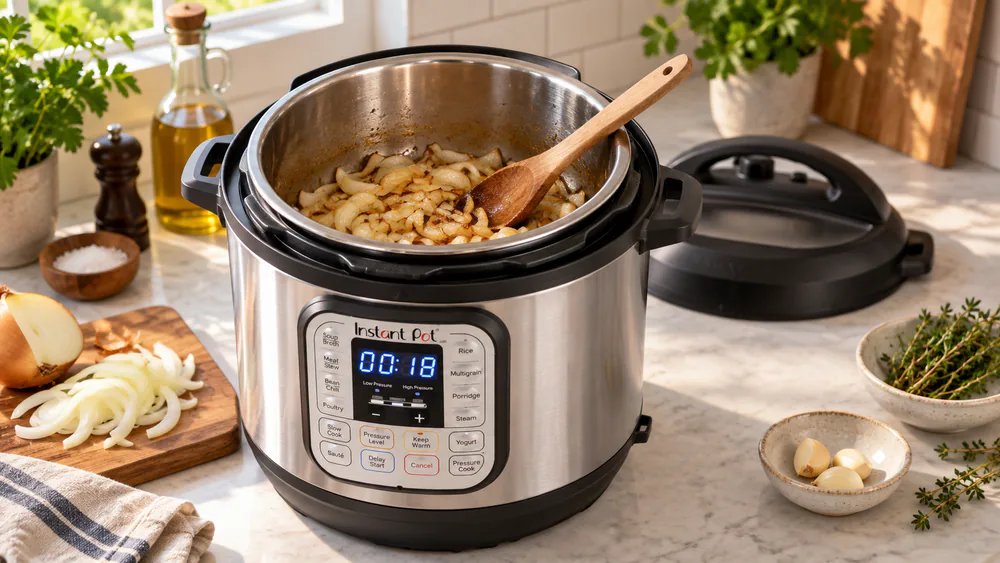
The sauté function is the Instant Pot's secret weapon. You can brown meat directly in the inner pot before pressure cooking. No second pan. No extra dishes. This browning step, called the Maillard reaction, adds deep flavor that dump meals cooked without searing simply cannot match.

Key Takeaway: Pressure cooking is a barothermal process, meaning it uses both pressure and heat together. This combination is why the Instant Pot is fundamentally faster than any slow cooker.

How the Slow Cooker Works

The slow cooker uses low, steady heat over 4 to 10 hours to break down tough proteins and develop deep flavor.

A traditional Crockpot or Hamilton Beach slow cooker has a simple design. A ceramic or stoneware insert sits inside a metal housing. Wraparound heating elements warm the sides evenly. There is no pressure, no sealing ring, and no locking lid. The glass lid lets you check the food without lifting it.

The controls are a manual dial. Low, high, and warm. That is it.

This simplicity is the point. You load the ingredients in the morning, set it on low, and return to a fully cooked meal 8 hours later. The house smells like dinner all day because the slow cooker is not sealed. That aroma is a real benefit that the Instant Pot, with its sealed locking lid, cannot produce.

The ceramic stoneware insert is heavier than the Instant Pot's stainless steel pot. It takes longer to clean and takes up more space in the dishwasher. But it holds and distributes heat beautifully for braises and stews.

Key Takeaway: The slow cooker is a specialist. It does one thing. It does it with consistency and ease that no multi-cooker has fully replicated.

Can One Appliance Replace the Other?

Short answer: partly. The Instant Pot can slow cook, but not as well. The slow cooker cannot pressure cook at all.

The Instant Pot includes a slow cook mode. It covers most slow cooker recipes if you set it to "More" or "High" and use a glass lid instead of the standard locking lid. The locking lid traps too much moisture on slow cook mode, producing a waterlogged result.

Certain recipes genuinely perform better in one appliance. Pot roast, pulled pork, and dump meals with long marinade times belong in the slow cooker. Steel-cut oats, bone broth, dried beans, and sous-vide style precision cooking belong in the Instant Pot.

The overlap is real but incomplete. The Instant Pot is a 90% replacement for the slow cooker in most kitchens. The slow cooker is a 0% replacement for the Instant Pot's pressure, steam, and saute functions.

Key Takeaway: Buy the Instant Pot if you want one appliance that handles most situations. Add a slow cooker only if braising and all-day hands-off cooking are central to how you cook.

Real-Life Cooking Scenarios

Weeknight Dinner Rush (Time-Critical Cooking)

Winner: Instant Pot. A complete one-pot meal is on the table in under 90 minutes from a cold start.

I came home at 6pm with a frozen chicken breast and no plan. The Instant Pot cooked it from frozen at high pressure in 25 minutes, including preheat time. A slow cooker is a risky option for frozen meat. The USDA recommends always thawing meat before slow cooking, warning that frozen meat may spend too long in the bacterial danger zone (40 to 140 degrees Fahrenheit) before reaching a safe internal temperature, particularly for large cuts. For smaller frozen pieces, some slow cookers can manage safely, but the Instant Pot removes the risk entirely.

For emergency dinners, the Instant Pot is the faster and lower-risk choice. If you are still building your weeknight cooking confidence, at Mr. Kitchen Adviser we have put together easy air fryer recipes for beginners that pair well with an Instant Pot-cooked protein base.

Hands-Off Cooking Lifestyle

Winner: Slow Cooker. Load it at 7am, eat at 6pm, with zero interaction required.

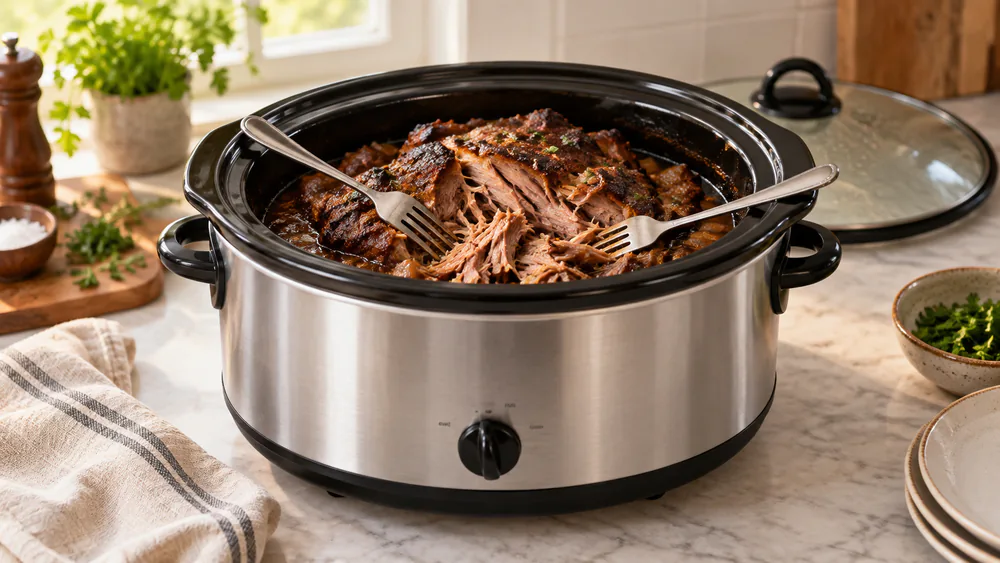
I set a Crockpot to low with a chuck roast, onions, and broth before leaving for the day. Eight hours later the meat shredded with a fork and the sauce had reduced into a deep, dark gravy without any reduction step. The house smelled like dinner for the last three hours of the work day.

The Instant Pot's delay start feature exists, but I do not use it for raw meat. Meat sitting at room temperature for hours before cooking begins is a food safety risk.

Batch Cooking and Meal Prep

Winner: Instant Pot. It cuts batch cooking time by 60 to 70% compared to stovetop or slow cooker methods.

I cooked 2 pounds of dried chickpeas in 35 minutes with no soaking. The same batch in a slow cooker would have required overnight soaking plus 6 to 8 hours of cooking. For weekly meal prep, the time savings compound significantly. If rice is a staple in your batch cooking, read our Zojirushi NS-ZCC10 rice cooker review to see whether a dedicated rice cooker still earns its counter space alongside the Instant Pot.

Head-to-Head: 6 Real-World Categories

Cooking Speed

Winner: Instant Pot by a wide margin.

A 3-pound pot roast takes 60 minutes under high pressure versus 8 hours in a slow cooker — an 87% reduction. Factor in 15 to 20 minutes of preheat time and your real time-to-table is still under 80 minutes.

  • Steel-cut oats: 3 minutes (Instant Pot) vs. 30 minutes stovetop
  • Bone broth: 2 hours (Instant Pot) vs. 12 to 24 hours
  • Dried beans: 30 minutes, no soaking (Instant Pot) vs. 6 to 8 hours

Flavor Development

Winner: Slow Cooker for braises. Instant Pot for grains, beans, and broths.

I cooked the same Salisbury steak in both. The slow cooker produced a thicker, darker sauce. The Instant Pot version was thinner and needed a post-cooking reduction. The reason is evaporation: the slow cooker is open, so liquid concentrates naturally. The Instant Pot is sealed, so zero evaporation occurs.

One important note: alcohol from wine or beer does not burn off under pressure. Add it after cooking, not before. For a quick finishing sauce, our 5-minute chimichurri recipe pairs well with either method.

Key Takeaway: Slow cooker sauces thicken naturally. Instant Pot sauces need a cornstarch or reduction step.

Meat Texture

Winner: Slow Cooker for collagen-rich braises. Instant Pot for bone broth and beans.

Both convert collagen in tough cuts into gelatin. The difference is in feel. The slow-cooked pot roast shredded in long, melt-in-mouth strands. The pressure-cooked version was "firmly tender" — still great, but slightly more uniform. For bone broth, the Instant Pot wins outright: maximum gelatin in 2 hours versus 12 to 24 hours.

Ease of Use

Winner: Slow Cooker for beginners. Instant Pot for experienced cooks.

  • Slow Cooker: Three settings, glass lid, zero learning curve. Plug in and walk away.
  • Instant Pot: Digital display, multiple presets, locking lid, and a silicone sealing ring that needs regular checks. New users commonly hit the "Burn" error on their first few cooks.

Both inserts are dishwasher safe. See our guide on how to clean kitchen appliances the right way for residue tips on stainless and ceramic surfaces.

Safety and Unattended Use

Winner: Slow Cooker for all-day unattended cooking. Instant Pot for frozen ingredients.

Modern Instant Pot models are safe — redundant sensors and a float valve prevent pressure buildup issues. But for unattended 8-hour cooking, the slow cooker's passive low heat feels more reliable. Never use the Instant Pot's delay start with raw meat; food sitting at room temperature enters the bacterial danger zone (40 to 140°F).

For frozen ingredients, the Instant Pot is the clearly safer option. The USDA's official slow cooker food safety guidance confirms that large frozen cuts in a slow cooker may not reach a safe temperature fast enough.

Energy Efficiency and Cost

Winner: Slow Cooker on hourly rate. Instant Pot on total energy per meal.

Instant Pot

Slow Cooker

Wattage

1,000 to 1,200W

200 to 300W

Run time (pot roast)

60 to 75 min

8 hours

Entry price (USD)

$80 to $100

$20 to $50

UK hourly cost

Higher

4p to 33p per hour

Total energy per meal often favors the Instant Pot because it runs for a fraction of the time. For UK buyers, Ideal Home's multi-cooker energy cost guide breaks down real running costs for Ninja Foodi and Sage models under the current energy price cap. For a broader appliance energy comparison, see our air fryer vs convection oven energy test.

Key Takeaway: Slow cooker costs less to buy and less per hour. Instant Pot uses less total energy per meal.

Nutrition: Which Method is Healthier?

The Instant Pot preserves more heat-sensitive vitamins. The slow cooker is better for collagen and bone marrow extraction.

Nutrition is one area where we insist on citing peer-reviewed sources rather than anecdotal claims. Heat-sensitive vitamins like Vitamin C and the B-vitamin group degrade over time when exposed to heat. A peer-reviewed study published on PubMed Central (NIH) found that the retention of vitamin C ranged from 0 to 91.1% across cooking methods, with longer exposure to heat and water causing the greatest loss. Pressure-cooked vegetables consistently showed higher retention than boiled or steamed counterparts due to shorter cooking times. The shorter cook time is the key variable, not the higher temperature.

Slow cooking over 8 to 10 hours causes water-soluble nutrients to leach into the cooking liquid. If you eat the broth or sauce, you recover those nutrients. If you discard the liquid, you lose them.

The Instant Pot also neutralizes antinutrients (ANFs) like lectins, tannins, and phytic acid more effectively than the slow cooker. These compounds in beans and grains can block mineral absorption. The high-pressure, high-heat environment breaks them down faster and more completely. Kidney beans, which must be boiled before slow cooking to neutralize toxins, are handled safely by the Instant Pot's pressure setting automatically. If gut health and fermented foods are part of your diet, our fermentation salt calculator helps you nail the salt ratios for probiotic vegetables that complement slow-cooked meals.

Key Takeaway: For vegetables and grains, the Instant Pot is nutritionally superior. For collagen-rich dishes like bone broth, both methods work, but the slow cooker requires 6 to 12 times longer.

Common Mistakes to Avoid

Instant Pot mistakes:

  • Overfilling past the two-thirds capacity line (pressure cannot build safely)
  • Using quick release on large cuts of meat (rapid pressure drop causes fibers to seize and toughen)
  • Adding dairy like cream or milk before pressure cooking (it curdles; add it after)
  • Adding wine or alcohol before sealing (it does not burn off; add after cooking)
  • Forgetting the minimum liquid requirement (at least 1 cup to generate steam)

Slow Cooker mistakes:

  • Lifting the lid during cooking (each lift loses 20 to 30 minutes of heat)
  • Adding delicate vegetables like zucchini at the start (they turn to mush)
  • Using frozen meat without thawing first (per USDA freezing and food safety guidelines, always thaw meat before slow cooking)
  • Overfilling past three-quarters capacity (no room for steam and liquid expansion)

The Strategic Problem-Solver: Which Appliance Fixes Your Actual Problem?

If your biggest kitchen problem is time, the Instant Pot is the solution because it reduces most cook times by 70% without sacrificing nutrition.

At Mr. Kitchen Adviser, we match appliance recommendations to real cooking friction, not spec sheets. Most people do not struggle to choose between appliances in the abstract. They struggle because dinner needs to be on the table in 45 minutes and they have no idea if pressure cooking or slow cooking even matters for that problem.

If your goal is to stop relying on takeout because home cooking takes too long: the Instant Pot solves this. A full chicken and rice dish is done in 30 minutes. A pot of dried beans is done in 35 minutes with no soaking.

If your goal is to stop spending money on rotisserie chicken every Sunday: the slow cooker solves this. One 4-pound chicken on low for 6 hours costs a fraction of a store-bought bird and produces better flavor.

If your goal is to own fewer appliances and free up counter space: the Instant Pot wins. One 6-quart unit with a stainless steel inner pot replaces a rice cooker, steamer, saute pan, and yogurt maker. See our full list of essential kitchen appliances to decide what else your kitchen actually needs. The countertop footprint stays the same.

Key Takeaway: Match the appliance to the friction in your actual cooking routine. Time-poor cooks need the Instant Pot. Schedule-flexible cooks who value flavor depth need the slow cooker.

Pro Tips for Better Cooking Results

These tips come from my own repeated testing across dozens of meals, not the instruction manual.

  • Use the saute function before every braise. Brown the meat in the stainless steel inner pot first. Switch to pressure cook without moving the meat. The flavor difference is significant. If you also cook on the stovetop, check our All-Clad D3 vs D5 cookware comparison for the best searing pans to pair with your pressure cooker workflow.
  • Always use natural release for meat. Quick release causes muscle fibers to contract suddenly, squeezing out moisture. Natural release for 10 to 15 minutes produces noticeably juicier results.
  • Layer dense ingredients at the bottom of the slow cooker. Root vegetables like carrots and potatoes go on the bottom, closest to the heating element. Delicate vegetables like zucchini or spinach go in during the last 30 minutes only.
  • Never skip the trivet for egg dishes or delicate fish. The trivet keeps food elevated above the liquid so it steams rather than boils, protecting texture integrity.
  • Add dairy and alcohol after pressure cooking. Cream, milk, and wine do not behave well under pressure. Cream curdles. Alcohol does not evaporate. Both are best stirred in after the pressure is released.
  • Use a glass lid for slow cook mode on the Instant Pot. The standard locking lid is too tight for slow cooking and traps excess condensation. A universal glass lid produces results much closer to a dedicated Crockpot.

Recipe Conversion Cheat Sheet

Slow Cooker to Instant Pot

Need to scale ingredients up or down for your household size? Use our recipe scaling calculator alongside the conversion times below.

Slow Cooker Time

Instant Pot High Pressure

4 hours (Low)

25 to 30 minutes

6 hours (Low)

35 to 45 minutes

8 hours (Low)

45 to 55 minutes

10 hours (Low)

55 to 65 minutes

The rule of thumb: 8 hours on Low in a slow cooker equals approximately 30 minutes at high pressure in the Instant Pot.

Important: These times show active cook time only. Add 15 to 20 minutes for the Instant Pot to build pressure before cooking begins. A recipe showing 30 minutes of pressure cook time means roughly 45 to 50 minutes total time-to-table.

Adjustments: Increase liquid slightly for pressure cooking. Decrease liquid slightly when converting back to slow cooking. Use a glass lid (sold separately) on the Instant Pot when using it in slow cook mode, because the standard locking lid restricts steam too much.

Regional Buying Guide: USA, UK, and Canada

USA and Canada

The Instant Pot Duo 6-quart is the default recommendation for North American households at $80 to $100 USD.

At Mr. Kitchen Adviser, we track regional pricing and parts availability so our readers do not get caught out after purchase. Crockpot has been synonymous with slow cookers in North America for decades. Entry-level models start at $20 at Walmart and Target. The Crockpot PossibleCooker is a newer multi-cooker option from the same brand, targeting Instant Pot buyers directly.

Canadian buyers should note that replacement parts including the silicone sealing ring are harder to source for off-brand multi-cookers. The Instant Pot brand went through a corporate restructuring in 2023 when parent company Instant Brands filed for bankruptcy, but was acquired and continues operating with full retail and parts availability across North America as of 2026. North American 110V electrical systems mean slightly longer preheat times compared to UK models on 220V systems.

United Kingdom

In the UK, Ninja and Sage (the Breville equivalent) lead the premium multi-cooker market. The Instant Pot is available but less dominant than in North America.

Our editorial team monitors UK appliance trends closely, and energy efficiency consistently tops the priority list for British buyers. Which? testing found slow cookers cost 4p to 33p per hour to run, making them one of the cheapest appliances to operate. The Ninja Foodi multi-cooker, which combines pressure cooking with air frying, is the most popular premium choice.

UK recipes often require adaptation from US Instant Pot guides. "Chuck roast" becomes "braising steak." Cup measurements convert to grams. The core cooking times remain identical.

Key Takeaway: In the USA and Canada, buy the Instant Pot Duo. In the UK, compare the Ninja Foodi and Sage multi-cookers before defaulting to the Instant Pot. Slow cooker brands like Morphy Richards and Hamilton Beach are widely available across all three regions.

Who Should Buy What

Choose the Instant Pot if you:

  • Need dinner ready in under 60 to 90 minutes on weeknights
  • Cook dried beans, grains, or rice regularly and want no soaking or babysitting
  • Cook large cuts from frozen (the safer and faster option for frozen proteins)
  • Want one appliance to replace a rice cooker, steamer, yogurt maker, and saute pan
  • Do batch cooking or meal prep in large quantities on weekends

Choose the Slow Cooker if you:

  • Leave for work in the morning and want dinner ready when you return
  • Prefer simple, 3-control operation with zero learning curve
  • Cook primarily braises, stews, soups, or pulled pork where long flavor development matters
  • Are on a tight budget ($20 to $50 versus $80 to $130)
  • Want the house to smell like home cooking all day

When it makes sense to own both:

Some households use the Instant Pot for weeknight speed and the slow cooker for weekend long-cook meals. Given the price gap, this is a reasonable investment for households that cook daily. If you are still deciding which appliances your kitchen actually needs, our guide on how to choose the right kitchen appliances walks through the full decision framework.

My Personal Pick

If I were spending my own money today, I would buy the Instant Pot Duo 6-quart first.

The ability to saute, pressure cook, steam, and make rice in one stainless steel pot eliminates clutter and saves real time. The sauteing function alone changed how I cook. Browning aromatics in the same vessel before pressure cooking produces flavor that a slow cooker cannot replicate without a separate pan on the stove.

The slow cooker makes better braises. I will not argue otherwise. But the Instant Pot's versatility handles 90% of my weekly cooking, and the slow cook mode, set to "High," covers most braising recipes well enough.

If I cooked primarily low-and-slow dishes, meal-prepped only on weekends, or had a very tight budget, I would buy the slow cooker without hesitation.

Final Verdict

In the Instant Pot vs slow cooker battle: the Instant Pot is the better overall investment for most modern households. The slow cooker is the better tool for a specific, focused cooking style.

The Instant Pot Duo replaces multiple single-use appliances. It cooks safely from frozen. It handles dried beans, bone broth, and one-pot meals with speed that a slow cooker cannot approach. It does have a learning curve and a weak slow-cook mode.

The Crockpot or any traditional slow cooker offers something the Instant Pot genuinely cannot: forgiving, aromatic, all-day cooking with zero complexity. An extra hour in the slow cooker rarely ruins a dish. An extra five minutes under high pressure often does.

The tie-breaker is time. If you have 60 to 90 minutes, the Instant Pot wins every day. If you have 8 hours and want to walk away, the slow cooker wins.

FAQ

Is an Instant Pot the same as a slow cooker?

No. The Instant Pot includes a slow cook mode, but its bottom-only heating element produces different results than a traditional slow cooker's wraparound side heating. For true slow cooking, a dedicated Crockpot performs better.

Which cooking method is healthier?

Pressure cooking retains more heat-sensitive vitamins (Vitamin C, B-group) due to shorter cooking times. Slow cooking better extracts collagen and bone marrow. Neither is universally healthier. It depends on what you are cooking.

Can I leave an Instant Pot unattended?

Yes, once it reaches pressure and the float valve is sealed, it is safe. The electronic sensors and steam release valve handle safety automatically. That said, most users feel more comfortable leaving a slow cooker unattended for 8-hour workday sessions.

Which is better for beginners?

The slow cooker. Three settings, a glass lid, and a ceramic insert require no instruction. The Instant Pot needs an initial learning period to understand pressure building, steam release, and the minimum liquid requirement.

Which is better for meal prep?

The Instant Pot. It cooks large batches of beans, grains, and proteins in a fraction of the time. Batch cooking a week of steel-cut oats takes 3 minutes under pressure versus 30 minutes on the stovetop.

Can I cook all recipes in one appliance?

Not perfectly. Recipes requiring browning are difficult in a slow cooker. Recipes requiring gradual flavor development through long evaporation are better in a slow cooker than the Instant Pot. Owning both covers every scenario.