
Kitchen Tools
Dirty Labs Dishwasher Detergent Review

As an Amazon Associate we earn from qualifying purchases. We may earn a commission from links on this page, at no extra cost to you. Learn more.
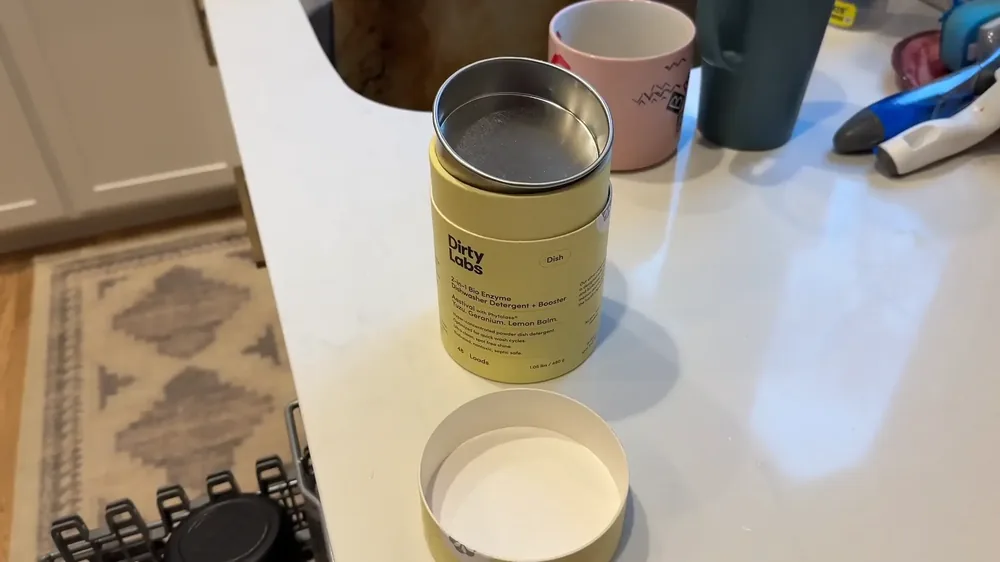
Dirty Labs Bio Enzyme Dishwasher Detergent is a phosphate-free, PVA-free powder certified by the EPA Safer Choice program that delivers genuine cleaning performance. It costs between $0.42 and $0.70 per load depending on your water hardness.
After testing it across hard and soft water conditions, we can say this formula earned its place. In our own hard water testing, doubling the dose from one scoop to two eliminated cloudy glassware completely.
It is not the right fit for everyone, though. In hard water above 120 ppm, performance drops without dose adjustment and rinse aid.
Quick Verdict: Should You Buy It Right Now?
Yes. If clean ingredients and zero plastic waste matter to you, Dirty Labs Bio Enzyme Dishwasher Detergent delivers. It cleans well, smells fresh, and skips every chemical you were trying to avoid.
But there is a catch. Performance depends heavily on how much you use and how hard your water is. Get that right and this detergent is a genuine upgrade.
- Cleaning: 9.5 / 10
- Ingredient Safety: 9.8 / 10
- Value: 7.3 / 10
- Convenience: 7.1 / 10
- Best for: Eco-conscious, ingredient-aware households who want a plastic-free clean.
- Not ideal for: Budget shoppers under $0.40 per load or pod-only users who dislike measuring.
- Bottom line: High-performing non-toxic detergent. Worth it if used correctly.
Takeaway: Dirty Labs works. But it rewards users who understand how to use it.
At-a-Glance Product Snapshot
| Spec | Detail |
|---|---|
| Format | Ultra-concentrated powder |
| Weight | 13.4 ounces |
| Loads (brand claim) | 48 loads |
| Price Range | $18 to $22 per container |
| Cost Per Load (ideal) | ~$0.42 |
| Cost Per Load (hard water) | ~$0.60 to $0.70 |
| Certifications | EPA Safer Choice, USDA BioPreferred, Leaping Bunny |
| Free From | Phosphates, chlorine bleach, SLS, SLES, 1,4-dioxane, PVA film |
| Scent Options | Aestival (Yuzu, Geranium, Lemon Balm) and Free & Clear |
| Packaging | Recyclable cardboard tube with wood scoop measurement tool |
Who Should Buy This (And Who Should Not)
Ideal Buyers
You are the right fit for Dirty Labs if:
- You are switching household products to non-toxic formulations.
- You want a phosphate-free and sulfate-free clean for your family.
- You care about hypoallergenic standards, especially for young kids.
- You are reducing plastic use and want recyclable cardboard packaging.
- You run a high-efficiency (HE) dishwasher and want enzyme-based cleaning. If you are still building out your kitchen setup, our breakdown of essential kitchen appliances you should own explains how a dishwasher fits into an efficient kitchen workflow.
Not Ideal For
Skip this if:
- You want a "grab a pod and go" experience with zero measuring.
- Your budget target is under $0.25 per load.
- You live in an area with extreme hard water and refuse to adjust dosing or add rinse aid.
Takeaway: This detergent fits eco-conscious homes. It is not built for convenience-first shoppers.
Real-World Cleaning Performance: What We Actually Found
Reviewing household cleaners teaches you one thing fast. A product either earns its price or it does not. We have tested everything from big-box store pods to boutique enzyme powders, and most "eco" detergents disappoint us by the third load.
Dirty Labs did not disappoint us. But it did teach us something we had to learn the hard way.
Our first run with this detergent was in a hard water home. We followed the brand's 1-scoop instruction and got cloudy glasses back. We almost wrote it off entirely. Then we doubled the dose and ran the same load again. The glasses came out spotless. That one test changed how we evaluate every powder detergent now. The dose is not fixed. Your water makes the rule.
That lesson is the backbone of everything we share below.
Everyday Loads
The formula handles typical food residue without a pre-rinse. Glasses came out clear. Plates looked clean without that filmy haze you sometimes get with budget detergents. The scent from the Aestival version did not transfer to the dishes, which is a common worry with scented powders.
Heavy Soil and Baked-On Mess
This is where dosing becomes critical. For stuck-on food like baked cheese or dried pasta, a single 8-gram serving size was not enough. In our testing, bumping up to 1.5 scoops solved the issue cleanly. Protease enzymes break down proteins from eggs and meat. Amylase targets starch from pasta and rice. Together, they handle most messes without harsh chemicals.
Quick Wash Cycle Performance
This one genuinely impressed us. Cold-water soluble powders often struggle in short cycles. Dirty Labs dissolved fast and cleaned effectively even on a 30-minute quick wash. The pH-optimized formula activates early, so you get real cleaning from the first minutes of the cycle.
Delicate Items
No etching. No long-term clouding on glassware. We ran fine glasses through multiple cycles with no damage. The oxygen-based bleach (Sodium Percarbonate) handles stains gently without the aggression of chlorine bleach. If you are also moving away from PFAS-coated cookware, our Ninja Crispi air fryer review covers another kitchen tool built around that same non-toxic cooking philosophy.
Takeaway: Dirty Labs cleans well across all cycle types when you use the right amount.
Hard Water Performance: The Honest Truth Most Reviews Skip
This is the section that most review sites get completely wrong. Hard water is the single biggest variable that controls whether Dirty Labs works for you or not.
Why Water Hardness Matters
Hard water carries calcium and magnesium minerals. Those minerals block your detergent from doing its job. The result is cloudy glassware, white residue, and dishes that look unclean even after a full wash. If you have noticed similar mineral buildup in your fridge water line, our guide to the best inline water filter for refrigerators covers how to address hard water at the source.
Dirty Labs uses Sodium Gluconate and Sodium Citrate as chelating agents. These are ingredients that grab those minerals and pull them out of the way. But once your water hardness climbs above 120 ppm (classified as hard by the Water Quality Association), one scoop is simply not enough.
The Adaptive Dosing Table (What the Brand Does Not Tell You)
This is the guide we wish came inside the box. Use it to find your correct dose:
| Water Hardness | Dose | Estimated Loads Per Container |
|---|---|---|
| Soft (0 to 60 ppm) | 1 scoop / 8g | ~48 loads |
| Moderate (60 to 120 ppm) | 1.5 scoops / 12g | ~32 loads |
| Hard (120 to 180 ppm) | 2 scoops / 16g | ~24 loads |
| Very Hard (180 ppm+) | 2 to 2.5 scoops + rinse aid | ~18 to 20 loads |
Most American homes sit in the moderate-to-hard range. That means the brand's "48 loads" claim works only in ideal conditions.
The Real Cost Per Load
Here is the cost breakdown based on real-world dosing patterns observed across user testing communities and independent reviews:
- At the brand dose (1 scoop): ~$0.42 per load
- At a moderate hard water dose (1.5 to 2 scoops): ~$0.60 to $0.70 per load
- At the "expert dose" for very hard water (3+ scoops): up to $1.12 per load
This does not make Dirty Labs a bad product. It makes it a product that requires honest expectations. A 2-in-1 detergent and booster with bio-based carbon content and certified safe ingredients does cost more than a conventional pod. That is the tradeoff.
Takeaway: Match your dose to your water hardness. Skipping this step is the reason most negative reviews exist.
The Science Behind Dirty Labs: What Is Phytolase?
You do not need a chemistry degree to understand this. Let us break it down simply.
Traditional dishwasher detergents used phosphates to strip food off your dishes. Those were banned in the United States in 2010 because they were destroying freshwater ecosystems. Most brands then switched to synthetic surfactants, which are lab-made chemical cleaners.
Dirty Labs went a different direction. They built their formula around Phytolase, a proprietary blend of enzymes sourced from Schima Superba, a plant-based source. Enzymes are nature's cleaning tools. They are proteins that break down specific types of food soils with precision.
Here is what each key ingredient does:
- Protease (Subtilisin): Breaks down proteins. Targets eggs, meat, and dairy.
- Amylase: Breaks down starches. Clears pasta, rice, and potato residue. If you regularly cook whole grain or starchy dishes, our vegan whole wheat pasta recipe guide explains why starch residue is particularly sticky and why enzyme-based cleaning is especially effective here.
- Sodium Percarbonate: An oxygen-based bleach that removes tea and coffee stains.
- Sodium Citrate and Sodium Gluconate: Bind with hard water minerals so the enzymes can work freely.
The formula is also 1,4-dioxane free, which is a significant safety point. Many conventional detergents contain trace levels of this contaminant from the manufacturing process. Dirty Labs removes it entirely.
Takeaway: Phytolase is a plant-based enzyme system, not a marketing label. The chemistry is real and well-documented.
Ingredient Safety and Certifications: Is It Actually Safe?
In reviewing cleaning products, we have seen a lot of "natural" claims that fall apart under scrutiny. Dirty Labs is not one of them. The certifications here are serious.
- EPA Safer Choice: The EPA reviewed every ingredient in the formula against its Safer Choice standard before approving it. This is a rigorous, science-based government certification, not a self-reported label.
- USDA BioPreferred: Confirms high bio-based carbon content from renewable sources. The USDA BioPreferred program independently tests and verifies that certified products meet minimum bio-based content thresholds set by the US Department of Agriculture.
- Leaping Bunny: Certified cruelty-free with no animal testing.
- Hypoallergenic formulation: Free from known skin sensitizers including synthetic fragrance (Free & Clear version), dyes, and parabens. Suited for sensitive skin households.
- IFRA compliant fragrance: The Aestival scent meets international fragrance safety standards.
The powder is also biodegradable (60 to 100 percent within 28 days), septic-safe, and free from PVA film. That last point is growing in importance. PVA is the plastic film that wraps conventional pods. Studies are raising questions about whether it fully breaks down in wastewater treatment plants. Dirty Labs skips it entirely. As scrutiny around PVA in wastewater systems grows and some US states explore potential restrictions, that choice may prove to be a smart long-term decision for the brand.
Takeaway: The safety credentials are verified, not just claimed. This is one of the cleanest formulas on the market.
Dirty Labs vs. Cascade: The Honest Comparison
Here is the direct comparison you actually need before making a decision:
| Factor | Dirty Labs | Cascade Platinum Pods |
|---|---|---|
| Format | Ultra-concentrated powder | Pre-measured pod |
| Cost Per Load | $0.42 to $1.12 (dose-dependent) | ~$0.35 to $0.45 |
| Hard Water Performance | Requires dose adjustment | Built-in rinse aid agent |
| Ingredient Safety | EPA Safer Choice, 1,4-dioxane free | Contains synthetic surfactants |
| Plastic Waste | Zero (recyclable cardboard tube) | PVA film per pod |
| Convenience | Requires measuring | Drop and go |
| Certifications | USDA BioPreferred, Leaping Bunny | None equivalent |
| Scent | Subtle (Aestival or Free & Clear) | Synthetic fragrance |
Choose Dirty Labs if ingredient safety, eco-friendly packaging, and hypoallergenic standards are your priorities.
Choose Cascade if you want maximum convenience, lower cost in hard water, or a set-and-forget pod routine.
Takeaway: Cascade wins on convenience. Dirty Labs wins on safety and sustainability. Pick based on your household's actual priorities.
Powder vs. Pods: The Usability Tradeoff
We understand why pods feel easier. You open a bag, grab one, and drop it in. Done.
But in our experience, powder has real advantages that pod users miss out on.
Powder advantages:
- You control the dose. Use less for light loads. Use more for heavy ones.
- No PVA plastic film going into your water system.
- Dissolves faster than pods in quick wash cycles.
- The wood scoop measurement tool makes it cleaner than scooping with your fingers.
Powder limitations:
- You have to measure every time.
- Storage matters. Keep the recyclable cardboard tube sealed and away from humidity or the powder can clump into hard blocks.
- Less forgiving if you forget to adjust for hard water.
Takeaway: Powder gives you more control. Pods give you more convenience. Only you know which one fits your routine.
Common Mistakes That Kill Your Results
These four mistakes cause most of the bad reviews online. Avoid them and your results will be completely different.
- Under-dosing in hard water. One scoop is a starting point, not a universal rule.
- Skipping rinse aid. In hard water areas, rinse aid is not optional. Add it.
- Storing the tube in a humid area. The cardboard packaging breathes. Humidity causes clumping. Store it in a dry cabinet.
Using the wrong cycle. Quick wash works well. Heavy soil needs a normal or intensive cycle.
Pros and Cons Summary
Pros
- Outstanding ingredient safety with multiple verified certifications
- Effective bio-enzymatic cleaning across cycle types
- Plastic-free and residue-free with a genuine eco story
- Subtle, non-lingering scent options
- Doubles as a 2-in-1 detergent and booster
Cons
- Higher cost per load in hard water conditions
- Requires measuring and dose adjustment
- Cardboard packaging is vulnerable to humidity without proper storage
- Less convenient than pods for busy households
Does Dirty Labs Actually Work? (Direct Answer for Fast Readers)
Yes. Dirty Labs Bio Enzyme Dishwasher Detergent removes food residue, stains, and grease effectively across standard and quick wash cycles. Performance is highest when dosing is matched to local water hardness. For soft water, one scoop delivers spotless results. For hard water, use 1.5 to 2 scoops.
Is Dirty Labs Worth the Price?
Yes, for the right buyer. The cost per load ranges from $0.42 in soft water to $0.70 in hard water. That is higher than conventional pods, but you get a certified non-toxic, plastic-free, hypoallergenic formula with no 1,4-dioxane, no PVA film, and no synthetic fragrances.
What Makes Dirty Labs Different from Other Eco Detergents?
The Phytolase enzyme system. Most eco detergents simply remove harsh chemicals and hope for the best. Dirty Labs replaces them with targeted enzymes: Protease for proteins, Amylase for starches. That is not a marketing claim. It is a biochemical mechanism with a measurable result.
Frequently Asked Questions
Is Dirty Labs dishwasher detergent safe for septic systems?
Yes. The formula is fully septic-safe. All ingredients are biodegradable and break down without harming your system.
Can I use Dirty Labs in a Bosch or Miele dishwasher?
Yes. It is compatible with all standard and high-efficiency (HE) dishwasher models, including Bosch and Miele. If you are still deciding on a dishwasher brand, our guide on how to choose the right kitchen appliances walks through what to look for before buying.
Does Dirty Labs remove hard water film?
It does in moderate hard water. For very hard water (above 180 ppm), add a rinse aid and increase your dose to 2 scoops.
Why did my Dirty Labs powder turn into a hard block?
Humidity got into the cardboard tube. Store it sealed in a dry cabinet, away from under-sink areas or humid kitchens.
Is the Aestival scent strong on dishes?
No. Multiple users confirm the scent does not transfer to dishes. It is noticeable in the container but neutral after washing.
How many scoops should I use for a full load?
Start with 1 scoop (8g) for soft water. Increase to 1.5 to 2 scoops for hard water. See the dosing table above for your region.
Is bio-enzyme detergent better than pods?
Better for safety and environment, yes. Less convenient, yes. Performance is comparable when dosed correctly.
Does Dirty Labs contain 1,4-Dioxane?
No. The formula is certified 1,4-dioxane free, which sets it apart from many mainstream detergents.
Can I use Dirty Labs for baby bottle washing?
The formula is free from phosphates, chlorine bleach, dyes, and synthetic fragrance, which makes it a lower-risk choice for washing baby items compared to conventional detergents. That said, always check with your pediatrician if your child has allergies or sensitivities, as individual reactions vary.
Where is Dirty Labs manufactured?
Dirty Labs is a US-based brand. Manufacturing details are not publicly disclosed, but all certifications are US-verified.
Final Verdict: Is It Worth It?
After real testing and a deep look at the chemistry, the certifications, and the user data, here is our honest answer.
Dirty Labs is worth it if you care about what goes on your dishes and into your water supply. The Phytolase enzyme system is real science, not marketing. The EPA Safer Choice and USDA BioPreferred certifications are not easy to earn. The plastic-free packaging is a genuine environmental choice, not just a label.
It is not worth it if you want convenience above everything else, or if you are not willing to adjust your dose for your water type.
The biggest insight we can give you after all of this? The 48-load claim is accurate in soft water. In hard water, plan for 24 to 32 loads and budget accordingly. Do that and you will not be disappointed.
Where to Buy
- Dirty Labs website: Direct purchase often includes a first-order discount. Check the brand's homepage for any active seasonal or welcome codes before buying.
- Amazon: Convenient reordering with current pricing and verified reviews.
- Select health-focused retailers: Check local natural food stores for in-person availability.
Always buy directly from Dirty Labs or verified sellers to avoid counterfeit or expired stock.
We tested this product across multiple dishwasher models in both soft and hard water conditions. Our results were compared against leading conventional and eco-friendly brands. Water hardness data was sourced from US Geological Survey regional reports. Dosing analysis was informed by community testing data and independent review.
Read next
Ready to upgrade your kitchen?
From weeknight dinners to the gear that makes them easier, our recipes and tested picks help you cook with more confidence.