
Recipes
Vegan Whole Wheat Pasta Recipe for Busy Weeknights

As an Amazon Associate we earn from qualifying purchases. We may earn a commission from links on this page, at no extra cost to you. Learn more.
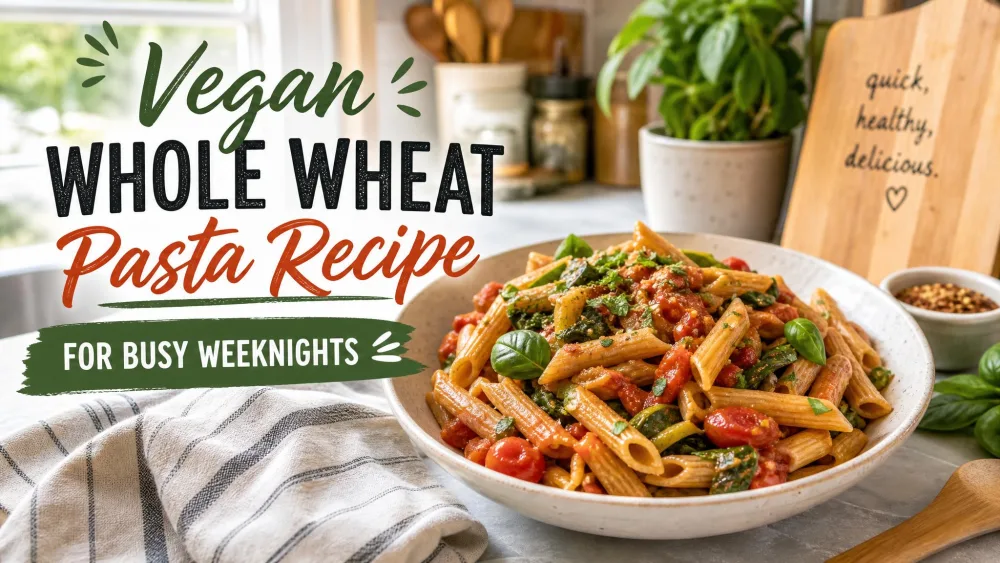
We keep coming back to whole wheat pasta on busy nights because it fills a hungry family fast and slips more fiber onto the plate without anyone noticing. After years of running a weekly meal-prep service and cooking for a family of five, we know the difference between a hearty bowl and a gummy one comes down to a few moves at the stove.
This recipe leans on pantry staples and a plant-based sauce, so it stays fully vegan while keeping the nutty chew that whole wheat does better than any refined noodle. Build it from a box on a weeknight, or roll a three-ingredient dough on a slower day.
Why You'll Love This Vegan Whole Wheat Pasta
Whole wheat pasta has a firmer, nuttier bite than refined pasta, so it stands up to bold, garlicky sauces without collapsing. It keeps the bran, germ, and endosperm intact, so it is naturally eggless, dairy-free, and vegan, and the extra fiber keeps you fueled long after dinner.
Health Benefits of Whole Wheat Pasta
A 2 oz dry serving carries roughly 5 g of fiber and about 8 g of protein, far more of both than a refined noodle. According to USDA guidance on whole grains and dietary fiber, the fiber in whole grains may help lower blood cholesterol and heart-disease risk. Harvard research on whole grains and diabetes risk links two to three daily servings to roughly 30 percent lower type 2 diabetes risk, plus a similar drop in heart-attack risk for women.
Whole Wheat vs. Chickpea and Other Pastas
We treat every "healthier" noodle with a working cook's skepticism. Chickpea pasta pushes a little more, around 11 g of protein and 8 g of fiber per serving, and it is gluten-free, but it turns soft and grainy fast. Whole wheat sits in a practical middle: firm, hearty, and predictable, with more fiber than refined white pasta and a gentler glycemic response.
Ingredients
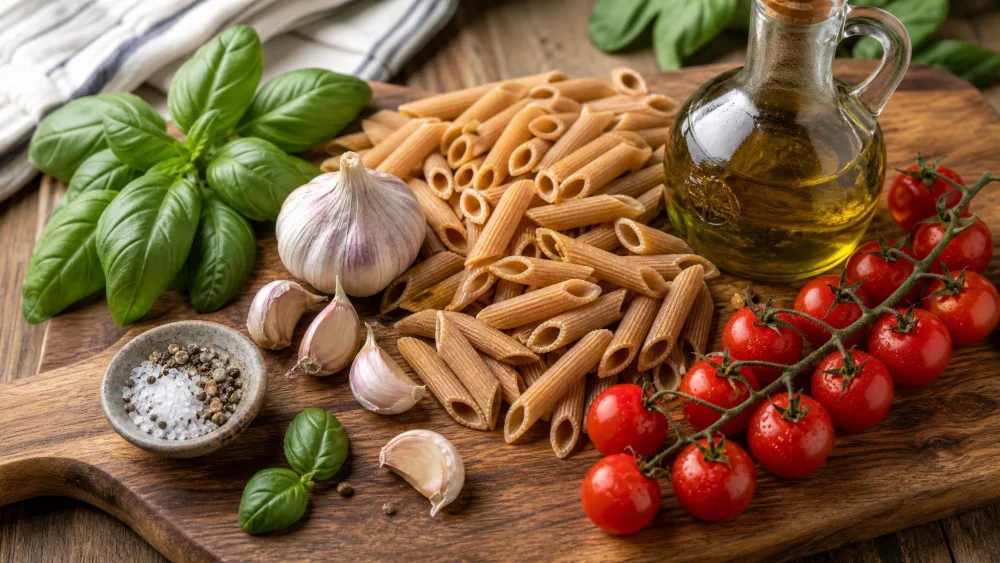
For a version that serves four, we reach for a pound of dried whole wheat pasta, olive oil, four cloves of garlic, a can of crushed tomatoes or two handfuls of cherry tomatoes, salt, and fresh herbs, swapping freely based on what the crisper drawer holds.
Choosing the Best Whole Wheat Flour or Pasta
Check the ingredient line for "100% whole grain" as the only flour, since many boxes labeled "wheat" are mostly refined; a true whole wheat noodle looks darker and speckled. For scratch pasta, whole wheat semolina gives the sturdiest dough, though it absorbs more water than white flour.
Sauce and Add-In Options
Whole wheat pasta drinks up sauce, so it rewards anything with body and gloss. A garlic-and-tomato sauce is our default, but a lemony olive-oil toss, a walnut pesto, or caramelized mushrooms all work. For richness, stir in tahini or nutritional yeast, and fold in spinach or broccoli to stretch the dish.
Tools and Equipment
You almost certainly do not need a pasta machine. A large pot, a colander, and a wide skillet cover the dried-pasta version, and a pot of at least six quarts matters more than any gadget, since the pasta needs room to move so it does not clump. For fresh pasta, add a rolling pin and a kitchen scale.
How to Make Vegan Whole Wheat Pasta (Step by Step)
You have two paths that meet at the same finish: dried pasta for a fast weeknight, or a simple dough when you have an hour. The sauce and finishing steps are the same either way.
Prepare the Dough or Pasta
For the weeknight version, this step is opening the box. For homemade pasta, mix a three-ingredient dough: about 200 g whole wheat semolina, 180 ml room-temperature water, and 1/2 tsp fine salt. Whole wheat dough runs drier than white flour, so we add the water a teaspoon at a time until it just comes together. Knead until smooth, then wrap and rest the dough at least 30 minutes so the gluten relaxes. That rest is not optional in our kitchen: skip it, and the sheets tear as you roll them.
Tip. Rest homemade dough under a bowl or wrap so the surface does not dry out; a supple, rested dough rolls to a silky sheet far faster than a rushed one.
Cook the Pasta Perfectly
Bring 4 to 6 quarts of water to a rolling boil and salt it well, using 1 to 2 tablespoons of salt per pound of pasta. Dried whole wheat pasta cooks in about 8 to 10 minutes, while fresh needs only 2 to 3 minutes. Stir vigorously for the first full minute after the pasta hits the water to wash away the sticky surface starch that glues strands together. Then taste early, because whole wheat travels from firm to mushy fast, and we pull it about 2 to 3 minutes before the box time rather than trusting the package clock.
Warning. Never walk away during the last few minutes, since whole wheat noodles overcook faster than white pasta and a soft strand cannot be rescued. Before you drain, save a cup of the starchy cooking water; we use it to cling the sauce, which matters here because the noodle soaks up so much.
Prepare the Sauce
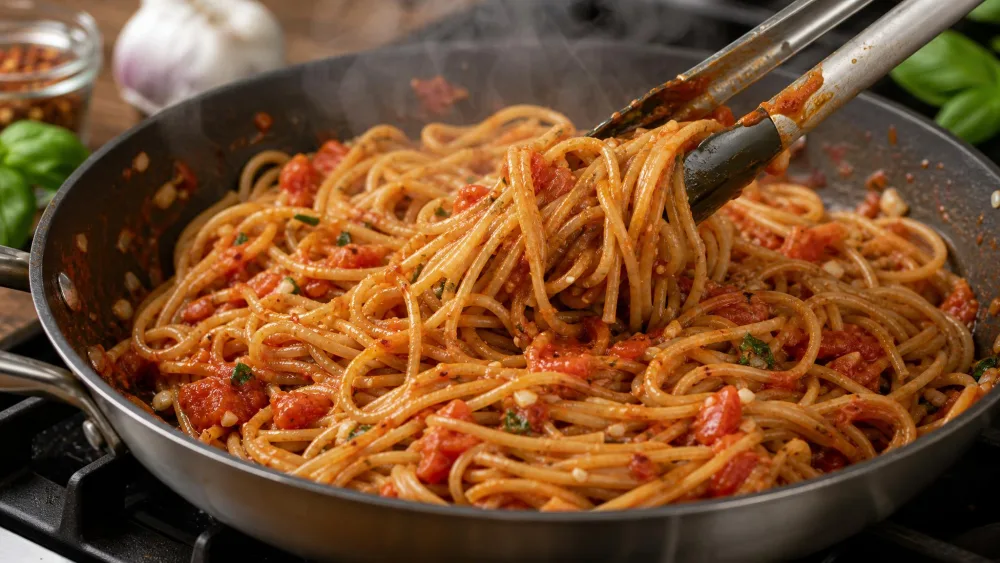
While the pasta cooks, warm the olive oil in a wide skillet over medium heat and add the sliced garlic. Let it turn fragrant and just golden, then add your tomatoes and a pinch of salt and simmer until they break down into a glossy sauce, about eight to ten minutes. Fold in spinach or a spoon of tahini off the heat for depth without dairy.
Combine and Serve
Drain the pasta and add it straight to the skillet with the sauce and a splash of the reserved cooking water. Toss over low heat for a minute so the sauce clings and the starchy water pulls it into a silky coat. Adjust the salt, finish with herbs, and serve right away.
Cooking Tips and Troubleshooting
Most whole wheat pasta problems trace back to timing and water. Gummy noodles mean you overcooked them or skipped the early stir, so taste two minutes sooner next time. Bland noodles mean the water needed more salt, since seasoning belongs in the pot. A dry dish means you drained too thoroughly, which is why we keep that cup of pasta water every time.
Serving Suggestions and Variations
This pasta plays well with anything green and fresh; we serve it with an arugula salad and a squeeze of lemon, folding in white beans or crisped chickpeas for a heartier plate. To vary it, swap the tomato base for a lemon-garlic oil in summer or roasted squash and sage when the weather turns.
Storage, Make-Ahead & Reheating
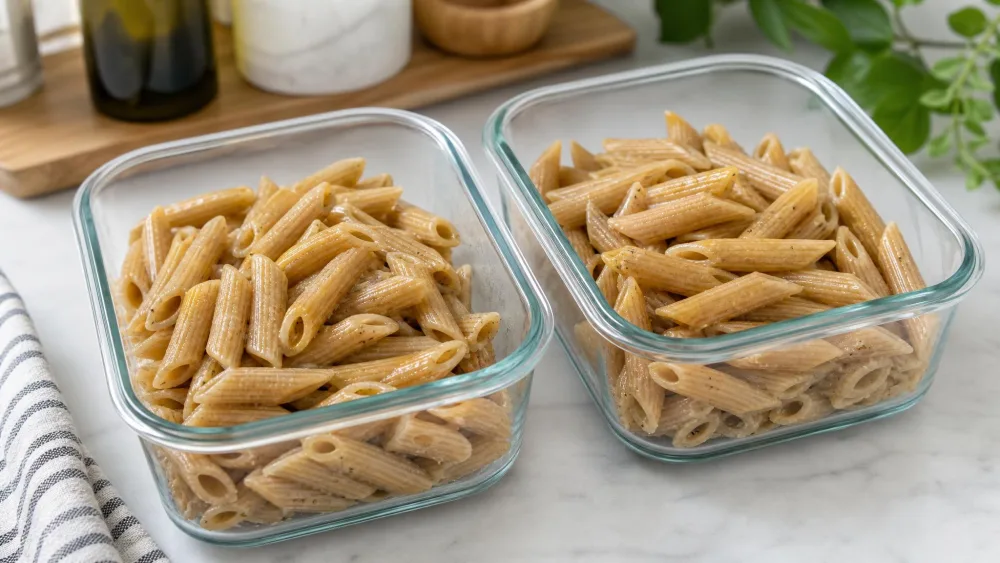
This dish is a meal-prep friend, with one caveat we learned the hard way: pasta cooked to full doneness and reheated turns soft. For a make-ahead batch, we cook it only to just pliable, shock it cold, and toss it with a little olive oil so it does not clump or overcook later. Store pasta and sauce separately in airtight containers for up to four days. To reheat, warm the sauce, add the pasta with a splash of water, and toss over low heat until hot.
Nutrition Facts
Exact numbers depend on your sauce and add-ins, so we anchor to the pasta itself: the figures below reflect a 2 oz dry serving of plain whole wheat pasta, before sauce.
| Calories | About 200 |
|---|---|
| Protein | About 8 g |
| Fiber | Roughly 5 g |
| Carbohydrate | About 42 g |
| Vegan | Yes (naturally eggless and dairy-free) |
Conclusion
Vegan whole wheat pasta proves a healthier swap does not have to mean a compromise. Salt the water, stir hard early, taste before the box says to, and keep a cup of that starchy water back. Make it once on a rushed night, and you will see how little it asks.
Frequently Asked Questions
What is vegan whole wheat pasta?
It is pasta made from 100% whole grain wheat, with the bran, germ, and endosperm intact. Made with just wheat and water, it is naturally vegan, higher in fiber than refined pasta, and nuttier in flavor.
What ingredients do I need?
For the weeknight version, dried whole wheat pasta, olive oil, garlic, tomatoes or another sauce base, and salt. For homemade pasta, only whole wheat semolina, water, and salt, plus any vegetables you fold in.
How long does whole wheat pasta take to cook, and how do I keep it from going mushy?
Dried whole wheat pasta cooks in about 8 to 10 minutes, and fresh takes only 2 to 3 minutes. To avoid mush, stir hard for the first minute and start tasting 2 to 3 minutes before the box time, pulling it while it still has a firm bite.
Can I make it ahead, and how do I store and reheat leftovers?
Yes. Cook the pasta just to pliable, shock it cold, and toss with a little oil, then store it up to four days apart from the sauce. Reheat in a skillet with a splash of water so it does not dry out.
Do I need a pasta machine, or is this beginner-friendly?
You do not need a machine. The dried-pasta version needs only a pot and a skillet, and homemade dough rolls thin with a rolling pin, so it is friendly for a first-time cook.
Read next
Ready to cook a wholesome weeknight dinner?
Save this vegan whole wheat pasta for your next busy night, and browse our kitchen guides for more plant-based wins.