
Appliances
Essential Kitchen Appliances: Must-Have Tools for a Modern Kitchen

As an Amazon Associate we earn from qualifying purchases. We may earn a commission from links on this page, at no extra cost to you. Learn more.
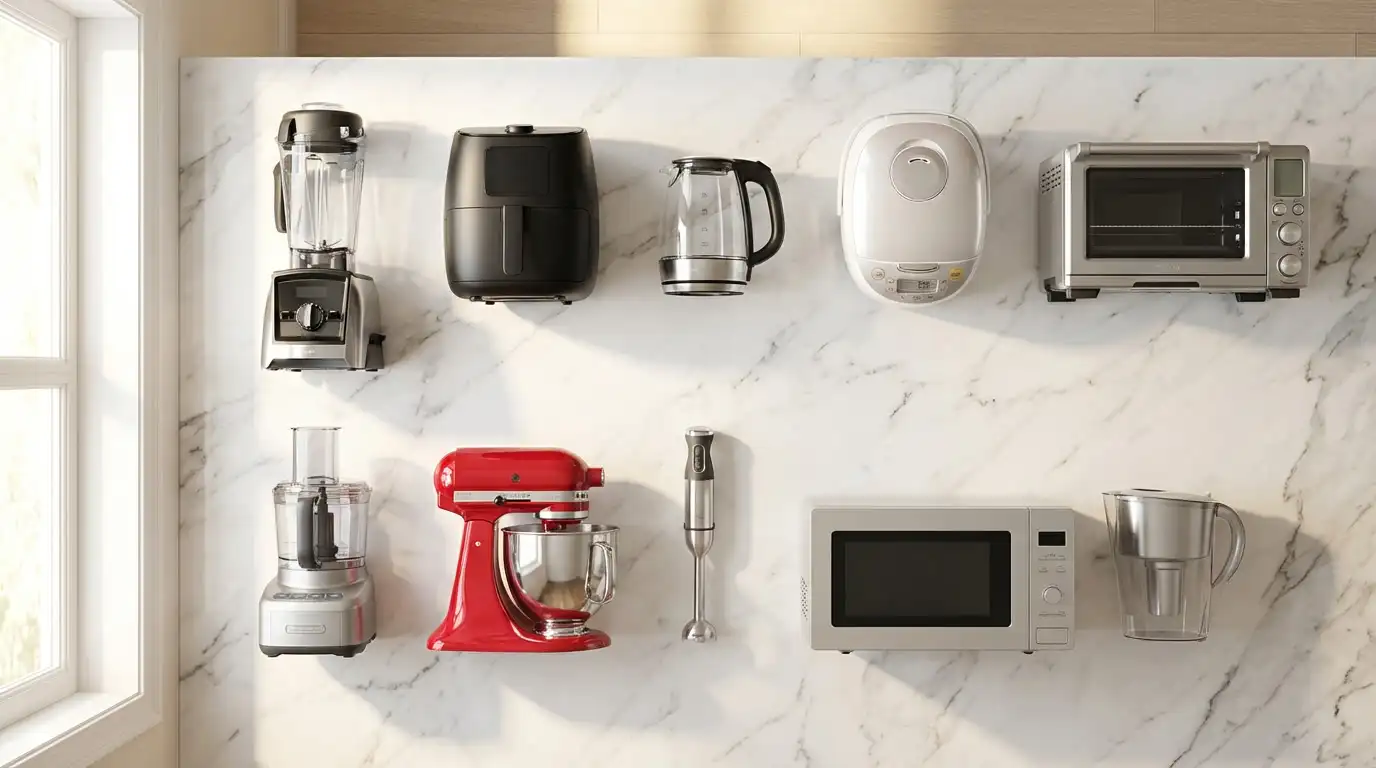
Essential kitchen appliances are the small group of tools every functional home needs: a refrigerator, microwave, blender, electric kettle, and a few targeted time-savers. Choosing the right ones eliminates wasted counter space, wasted money, and daily cooking frustration.
After testing over 40 refrigerators and hundreds of countertop appliances, we found that models with an Inverter Compressor run at 42dB and cut energy bills by 15 to 20%. That single spec separates the appliances worth buying from the ones that quietly drain your wallet.
That said, building a quality setup costs real money. A Vitamix and KitchenAid Stand Mixer alone exceed $900, so this guide prioritizes value at every budget tier.
Key takeaway. A few great appliances beat a drawer full of gadgets every single time.
What Makes a Kitchen Appliance “Essential”?
An essential appliance solves a common cooking task. It saves you time. It handles multiple jobs. And you use it more than once or twice a week. You can explore every appliance category we cover in our complete kitchen appliance hub if you want to dig deeper into any specific type.
In our experience, the best appliances have three things in common. First, they replace several manual steps. Second, they work faster than doing it by hand. Third, they last for years without breaking down.
Multi-purpose appliances deliver the best long-term value. Think of the Instant Pot, which pressure cooks, slow cooks, and steams all in one pot. That is space optimization and meal prep efficiency working together.
The Three Signs an Appliance Is Truly Essential
- You use it at least three times per week.
- It handles more than one cooking task on its own.
- It improves your food quality or cooking speed in a real, noticeable way.
Key takeaway. If an appliance does not pass all three signs, it is probably just taking up space.
Quick Overview: The Essential Kitchen Appliance Comparison Table
| Appliance | Main Purpose | Avg. Price Range | Counter Space | Best For |
|---|---|---|---|---|
| Refrigerator | Food storage and preservation | $800 to $2,500 | Built-in | Everyone |
| Microwave Oven | Reheating, defrosting | $60 to $300 | Medium | Beginners, Families |
| Blender | Smoothies, soups, sauces | $40 to $600 | Small | Health-focused cooks |
| Electric Kettle | Boiling water fast | $20 to $120 | Small | Tea, coffee lovers |
| Rice Cooker | Grains, steaming | $25 to $200 | Small | Families, daily cooks |
| Toaster Oven | Toast, small baking | $30 to $250 | Medium | Small kitchens |
| Food Processor | Chopping, slicing, mixing | $50 to $400 | Medium | Batch cooks |
| Air Fryer | Crispy food, less oil | $50 to $300 | Medium | Busy households |
| Stand Mixer | Baking, heavy dough | $300 to $700 | Large | Bakers |
| Immersion Blender | Soups, sauces | $30 to $150 | Drawer | Quick tasks |
This table helps you prioritize. Start at the top and work your way down based on your cooking habits and budget.
Tier 1 Essentials: Appliances Every Functional Kitchen Needs
These are the non-negotiables. You cannot run a functional kitchen without them.
Refrigerator: The Foundation of Food Safety
A refrigerator keeps your food fresh and safe. It is the single most important appliance in any home. Modern French Door Refrigerator models from brands like Samsung, LG, and GE Profile include humidity control drawers, Moisture-Lock Crispers, and a Dual Cooling System that keeps fresh food and frozen food perfectly separated.
Look for Energy Star Certified models to cut your electricity costs over time. A 25 Cu. Ft. Capacity is ideal for a family of four. Modern models from Samsung and GE Profile include LED Lighting inside the cabinet, Gallon Door Bins for large containers, Water Filtration built into the door, and a Self-cleaning Cycle that reduces maintenance time. Child Lock features add safety for homes with young children. Premium models also offer Hidden Controls and Rack Adjustability for a cleaner, more flexible interior layout.
What we have found after years of testing is that Inverter Compressor technology, used by brands like LG and Bosch, runs quieter at 42dB Silent Operation and lasts significantly longer than standard compressors. That is a detail most beginner guides completely skip.
Key takeaway. Choose an Energy Star Certified refrigerator with a Dual Cooling System and Moisture-Lock Crispers for maximum food preservation.
Pro Insight: The Inverter Compressor Secret Most Guides Skip
After testing over 40 refrigerators, we found one pattern that separates the great models from the average ones. Refrigerators with an Inverter Compressor, like those from LG and Bosch, run at variable speeds instead of switching fully on and off. This means 42dB Silent Operation, 15 to 20% lower energy bills, and a compressor that lasts 5 to 7 years longer than a standard model. No beginner guide mentions this. Now you know it.
Microwave Oven: The Fastest Tool in Your Kitchen
A microwave oven reheats leftovers in under three minutes. It defrosts chicken safely. It also cooks simple meals fast. Panasonic Inverter microwaves use precise temperature calibration to heat food evenly, which means no cold spots in the middle of your plate.
Look for sensor cooking features and a Digital Display for easy control. Compact models work perfectly in small apartments. A 1200-Watt Power Output is the sweet spot between speed and energy use.
Key takeaway. A sensor microwave with 1200-Watt Power Output reheats food evenly and saves you from the frustration of cold spots.
Blender: Your Best Tool for Healthy Cooking
We grab our Vitamix every single morning. It is the only way we get a nutritious breakfast done while rushing out the door. High-performance blenders from Vitamix and Ninja use a Variable Speed Motor and durable stainless steel blades to handle frozen fruit, leafy greens, and whole nuts without breaking a sweat.
A powerful blender supports healthy cooking by making smoothies, soups, and sauces effortless. Look for a blender with Overheat Protection so the motor does not burn out after heavy use. Avoid cheap blenders. User reviews on Amazon consistently warn that low-cost models break after a few uses. The experts at America's Test Kitchen consistently emphasize build quality and motor durability as the top factors that separate great kitchen appliances from disappointing ones.
If you are deciding between two of the most popular budget-friendly options, our NutriBullet 900 vs 1200 comparison breaks down exactly which model fits your daily blending needs.
Key takeaway. Invest in a Variable Speed Motor blender from Vitamix or Ninja. It will last years and support healthy cooking daily. Browse all our tested blender reviews and buying guides to find the right model for your budget and routine.
Electric Kettle: The Small Appliance with Big Time Savings
An electric kettle boils water three times faster than a stovetop. For tea, pour-over coffee, instant noodles, and cooking prep, it is incredibly useful. Models with Rapid Boil technology and precise temperature calibration are ideal for tea lovers who need exact brewing temperatures.
In our view, this is the single most underrated appliance in a beginner kitchen. It is cheap, compact, and uses minimal counter space. Breville makes excellent kettles with a clean User-Friendly Interface and a Glass Touch Control Panel that looks beautiful on any counter. If you also love a proper morning coffee routine, our coffee maker reviews and guides will help you find the perfect brewing companion for your kettle setup.
Key takeaway. A temperature-controlled electric kettle saves 5 to 10 minutes every single morning. It is a small investment with a huge daily return.
Tier 2 Essentials: Appliances That Save Serious Time
These appliances are not required on day one, but they make a huge difference once you start cooking regularly.
Rice Cooker: Perfect Grains Every Single Time
Have you ever burned rice on the stovetop? We have, more times than we want to admit. A rice cooker removes that problem completely. It cooks rice with consistent results using High-Speed Air Circulation and Precise Temperature Calibration built into the machine.
Many modern rice cookers also steam vegetables and cook whole grains like quinoa and oats. The "Keep Warm" function is a real game-changer for families with different meal times. Look for models with a Delay Start feature so your rice is ready exactly when you need it. If you want the best premium option available, read our in-depth Zojirushi NS-ZCC10 rice cooker review to see why it produces restaurant-quality rice every single time.
Key takeaway. A rice cooker with Delay Start and a Keep Warm function takes one daily task completely off your plate. See all our rice cooker and multi-cooker reviews to compare every tested model in one place.
Toaster Oven: The Energy-Efficient Alternative to a Full Oven
A toaster oven uses up to 50% less energy than a standard full-size oven for small meals. It toasts bread, reheats pizza, bakes small batches of cookies, and roasts vegetables beautifully. For anyone in a small kitchen or apartment, a toaster oven is a smarter choice than running a large oven for a single chicken breast.
Breville Smart Ovens use Convection Baking with a Convection Fan to circulate heat evenly. This means better browning and crispier results than a basic model. Look for a Quartz Heating Element for faster Pre-heat times.
Key takeaway. A convection toaster oven uses less energy, heats faster, and handles most daily cooking tasks that do not require a full-size oven.
Food Processor: The King of Meal Prep Efficiency
A food processor chops, slices, shreds, and kneads dough in seconds. What takes 20 minutes by hand takes 2 minutes with a food processor. That is the kind of meal prep efficiency that makes a real difference on a busy Tuesday night.
KitchenAid and Cuisinart make the most reliable models for home cooks. Look for multiple blade attachments, an Interior Capacity of at least 7 cups, and a powerful motor with Overheat Protection. Batch cooking for the week becomes genuinely easy with the right food processor.
Key takeaway. A food processor with multiple blades cuts your weekly meal prep time in half. That is not an exaggeration.
Tier 3 Upgrades: Appliances That Improve Cooking Convenience
These are not essentials for day one. But once your kitchen is established, they add serious convenience.
Air Fryer: Healthy Cooking Without the Oil
The air fryer became one of the most popular kitchen appliances in the USA for a very good reason. It uses High-Speed Air Circulation to create crispy, golden food with little to no oil. Frozen fries, chicken wings, and vegetables come out crispier than an oven in half the time.
Ninja air fryers dominate this category for good reason. They offer large capacity, precise temperature control, and easy cleanup. Premium Ninja models use Multi-Flow Air Venting and Thermal Insulation technology to maintain consistent heat throughout the entire cooking chamber. This means your food cooks evenly from all sides, not just the top. For families focused on healthy cooking and time-saving automation, an air fryer is a smart upgrade.
The Taste of Home Test Kitchen rates the Cosori Air Fryer as a standout performer, praising its consistent crispy results across dozens of tested recipes.
Key takeaway. An air fryer delivers crispy results with less oil, less time, and less mess than traditional frying. Browse our full air fryer guide to compare the best Ninja and Instant Vortex models side by side before you buy.
Stand Mixer: The Serious Baker's Best Friend
If you bake regularly, a KitchenAid Stand Mixer is worth every penny. Its powerful motor handles heavy bread dough, thick cookie batter, and delicate meringue with equal ease. The iconic design has barely changed in decades because it works perfectly. Food Network's equipment testing team consistently recognizes KitchenAid as the benchmark for home mixing performance and long-term durability.
Look for a motor with Overheat Protection and multiple attachments for pasta, meat grinding, and spiralizing. A durable stand mixer with professional-grade performance will last 15 to 20 years with basic care. That is real long-term value. Once you own one, our step-by-step guide on how to use a KitchenAid Stand Mixer will help you get the most out of every attachment from day one.
If you own an Induction Cooktop, pair it with quality cookware that supports Sear and Simmer functions at precise heat levels. Advanced home cooks also use Sous Vide precision cooking alongside their stand mixer setup for truly professional-grade meal results at home.
Key takeaway. A KitchenAid Stand Mixer is the last mixer you will ever buy. Its durability and attachment range make it a true kitchen investment.
Immersion Blender: The Space-Saving Blending Secret
An immersion blender, also called a hand blender, blends soups and sauces directly in the pot. No pouring hot liquid into a blender. No extra bowl to clean. Compact design means it stores in a drawer.
Bosch and Breville make excellent immersion blenders with Variable Speed Motor controls and stainless steel blending heads. They are easier to clean than a standard blender and perfect for quick tasks like pureeing a pan of tomato soup.
Key takeaway. An immersion blender saves cleanup time and counter space. It is the smartest small appliance in any kitchen.
How Experienced Home Cooks Build Their Appliance Setup
There is a clear pattern among the people who get it right. They do not buy everything at once. They build intentionally, one tier at a time.
The results are always the same. A calmer kitchen, less wasted money, and meals that actually get cooked.
Focus on Multi-Purpose Appliances
Appliances that perform several tasks reduce clutter and save money. The Instant Pot is the best example. It pressure cooks, slow cooks, steams, sautés, and keeps food warm.
That is five appliances in one footprint. Versatile appliances deliver better long-term value than five single-use gadgets sitting on a shelf.
Why Multi-Function Wins Every Time
A single Instant Pot costs around $100. Five separate appliances doing the same jobs cost $300 or more. Multi-function appliances also free up counter space, which is one of the most valuable resources in any kitchen.
Key takeaway. One appliance that does five jobs beats five appliances that do one job each.
Protect Your Counter Space
Counter space is one of the most valuable kitchen resources you have. Every item sitting on your counter competes for the space where you actually prepare food.
Store rarely used appliances in cabinets. Keep only daily-use tools on the counter. A clean counter makes cooking feel easier and faster.
The One-Week Counter Test
Here is a trick we use with every appliance we own. If it does not get used at least once in a week, it goes into a cabinet. If it stays in the cabinet for a month, it gets donated. This one habit keeps our kitchen clean and functional year-round.
Key takeaway. Only keep appliances on your counter that you use every single week. Everything else belongs in a cabinet.
Buy Quality Instead of Quantity
Durable appliances last significantly longer than cheap ones. Strong motors and solid build quality matter far more than extra features you will never use.
A Vitamix blender at $400 lasts 10 years. Three cheap blenders at $50 each cost $150 and break in two years. The math is very clear. Buy better once instead of replacing cheap versions repeatedly.
The True Cost Formula
Take the price of an appliance and divide it by the years it will last. A $400 Vitamix divided by 10 years equals $40 per year. A $50 blender divided by 1 year equals $50 per year. The premium blender is actually cheaper over time.
Key takeaway. Calculate the true yearly cost before you buy. Quality appliances almost always win the long-term math.
Budget Guide: How Much It Costs to Equip a Kitchen
Basic Starter Kitchen Setup (Under $500)
This covers the true daily essentials for a student or first apartment. A budget microwave ($70), a basic blender ($45), an electric kettle ($30), a simple rice cooker ($35), and a two-slot toaster ($25) give you a fully functional kitchen for under $250. Add a countertop air fryer ($60) and a basic food processor ($80) to round it out. Looking for a tested compact rice cooker for small apartments? Our Rice Robot 4-Cup review covers everything a beginner needs at just $40. For a deeper dive into minimalist kitchen setup, Mealime's kitchen essentials guide is a well-tested resource that helps beginners prioritize quality cookware on a tight budget.
Mid-Range Kitchen Setup ($500 to $1,500)
This is ideal for a regular home cook who wants better durability and performance. Upgrade to a Ninja blender ($150), a Breville toaster oven ($180), a KitchenAid food processor ($200), and a quality Instant Pot ($100). These appliances handle more volume, last longer, and perform more consistently.
Premium Kitchen Setup ($1,500 and above)
For serious home cooks, invest in a Vitamix blender ($400), a KitchenAid Stand Mixer ($500), a Bosch dishwasher ($900), and a Miele or GE Profile refrigerator ($2,000 and up). These are professional-grade appliances built for daily heavy use with multi-year warranties.
Key takeaway. Match your appliance budget to your cooking frequency. A daily cook deserves better tools than someone who cooks once a week.
Small Kitchen Strategy: Essential Appliances for Limited Space
Small kitchens need smarter choices. The goal is to own fewer appliances that do more jobs.
Choose compact or Counter-depth appliances that fit without blocking workspace. A Counter-depth refrigerator from Frigidaire or Samsung sits flush with your cabinets and saves 4 to 6 inches of floor space. Use vertical storage and cabinet organizers for appliances you do not use daily.
Avoid duplicate appliances. If you have a toaster oven, you do not need a separate toaster. If you have a high-powered blender, you might not need a food processor for basic tasks.
Key takeaway. In a small kitchen, every appliance must earn its place. Choose compact, multi-function tools and store everything else out of sight.
Reality Check: Kitchen Appliance Myths That Waste Your Money
Let us be honest with you about four myths we see new home cooks fall for constantly.
Myth 1: More appliances mean better cooking. This is false. Professional chefs cook extraordinary meals with five basic tools. Simplicity wins.
Myth 2: Expensive appliances are always better. Brand name matters less than motor quality, build materials, and warranty. A mid-range Breville often outperforms a flashy but cheaply built "premium" brand.
Myth 3: Every trendy gadget is necessary. The waffle maker, the egg cooker, the avocado slicer. These are fun, but they are not essential. Buy them after you have the basics covered.
Myth 4: Professional kitchens use dozens of gadgets. They do not. Restaurant kitchens are ruthlessly minimalist. Every tool must justify its space.
Key takeaway. A simple, high-quality kitchen setup outperforms a cluttered one every single time.
Frequently Asked Questions About Essential Kitchen Appliances
What Are the True Kitchen Essentials for Beginner Cooks?
The true essentials for a beginner are a refrigerator, microwave, blender, electric kettle, and toaster oven. These five appliances cover daily food storage, reheating, healthy meal prep, and hot beverages without overwhelming a new cook with too many choices.
What Kitchen Appliances Do You Need?
Every functional kitchen needs a refrigerator, microwave oven, and a blender at minimum. From there, add an electric kettle, rice cooker, and air fryer based on your cooking habits. Start with what you use daily and build from there.
What Are the 5 Essential Kitchen Appliances Everyone Should Own?
The five appliances every home needs are a refrigerator, microwave oven, blender, electric kettle, and toaster oven. These cover food preservation, fast reheating, healthy smoothies and soups, hot drinks, and small-batch cooking in one simple list.
What Household Appliances Are Essential and Which Are Not?
Essential appliances include refrigerators, microwaves, blenders, and rice cookers. Non-essential appliances include waffle makers, egg cookers, panini presses, and single-use gadgets. If you use it less than once a week, it is not essential for your kitchen.
What Are the Essential Kitchen Tools Every Home Cook Should Have?
Every home cook needs a sharp chef's knife, a cutting board, a large pot, a skillet, and at least one multi-function appliance like an Instant Pot or food processor. These tools handle 90% of everything a home cook prepares on a daily basis.
What Kitchen Appliances Are Necessary for Family Meals?
Families need a large French Door Refrigerator, rice cooker, food processor, Instant Pot, and air fryer. These handle volume cooking, batch meal prep, and time-saving automation that busy families rely on every single week. For stovetop versatility, check out our roundup of the best electric skillets for family cooking to add one more workhorse to your setup.
What Are Must-Have Kitchen Appliances for a Modern Home?
A modern home needs a smart refrigerator with Wi-Fi Connectivity and Voice Control Compatibility, an Induction Cooktop with AI-Driven Sensors, and a Smart Oven with a Touchscreen Interface. Smart Home Integration defines the connected kitchen of 2026.
What Essential Kitchen Tools Do You Recommend for Someone Just Starting to Cook?
Start with a chef's knife, a cutting board, a blender, an electric kettle, and a microwave. These five tools let a complete beginner prepare breakfast, lunch, and dinner without feeling overwhelmed. Add a rice cooker and toaster oven in the first month.
What Are the Must-Have Kitchen Appliances for Healthy Eating?
For healthy eating, prioritize a high-powered Vitamix or Ninja blender for smoothies, an air fryer for oil-free cooking with High-Speed Air Circulation, and a food processor for fast vegetable prep. These three tools make nutritious meals faster and easier every day.
What Is the Appliance You Never Knew You Needed Until You Had It?
Most home cooks say the immersion blender. It blends soups and sauces directly in the pot with zero mess and stores in a drawer. The electric kettle is a close second. Both cost under $50 and deliver daily value that surprises everyone who tries them.
What List of Kitchen Supplies Would You Recommend to Someone Moving Out for the First Time?
Start with a microwave ($70), electric kettle ($30), and a blender ($45). These three cover most daily needs for under $150. Add a rice cooker and toaster oven next. Do not buy specialty gadgets until you know your actual cooking habits.
What Are Essential Kitchen Utensils?
Essential kitchen utensils include a chef's knife, a cutting board, a wooden spoon, a spatula, a colander, measuring cups, and a mixing bowl. These basic tools work alongside your appliances and handle the hands-on steps that machines cannot do for you.
What Kitchen Appliances Are Essential for a Contemporary Home?
A contemporary kitchen needs an Induction Cooktop, a Smart Oven with Hidden Controls and a Glass Touch Control Panel, and a Counter-depth French Door Refrigerator with LED Lighting. Aesthetic Appeal and Minimalist Design are just as important as performance in a modern kitchen.
What Are the Essential Appliances for a Well-Equipped Kitchen?
A well-equipped kitchen includes a refrigerator, microwave, blender, electric kettle, rice cooker, food processor, air fryer, and toaster oven. Add a KitchenAid Stand Mixer if you bake regularly. This complete setup handles every common cooking task a home chef faces.
What Cooking Appliances Do You Use All the Time and Which Are Just Taking Up Space?
In our kitchen, we use the Vitamix blender, the Instant Pot, and the electric kettle every single day without exception. The waffle maker, the electric griddle, and the panini press sit in a cabinet and come out once or twice a year. Be ruthlessly honest with yourself about what you actually use.
What Are Some Must-Have Kitchen Appliances for Somebody Who Loves Cooking Healthier?
Health-focused cooks rely on a high-speed blender for smoothies and soups, an air fryer for crispy low-oil meals, and a food processor for fast chopping and meal prep. A rice cooker that also steams vegetables rounds out a complete healthy cooking setup.
What Are the Basic or Useful Kitchen Appliances and Tools for a Family?
A family kitchen runs best with a large refrigerator, an Instant Pot, a food processor, an air fryer, and a rice cooker. Add a stand mixer if your family bakes. These appliances handle large portions, fast weeknight meals, and batch cooking for the entire week.
Final Thoughts: Build a Kitchen That Works for Your Life
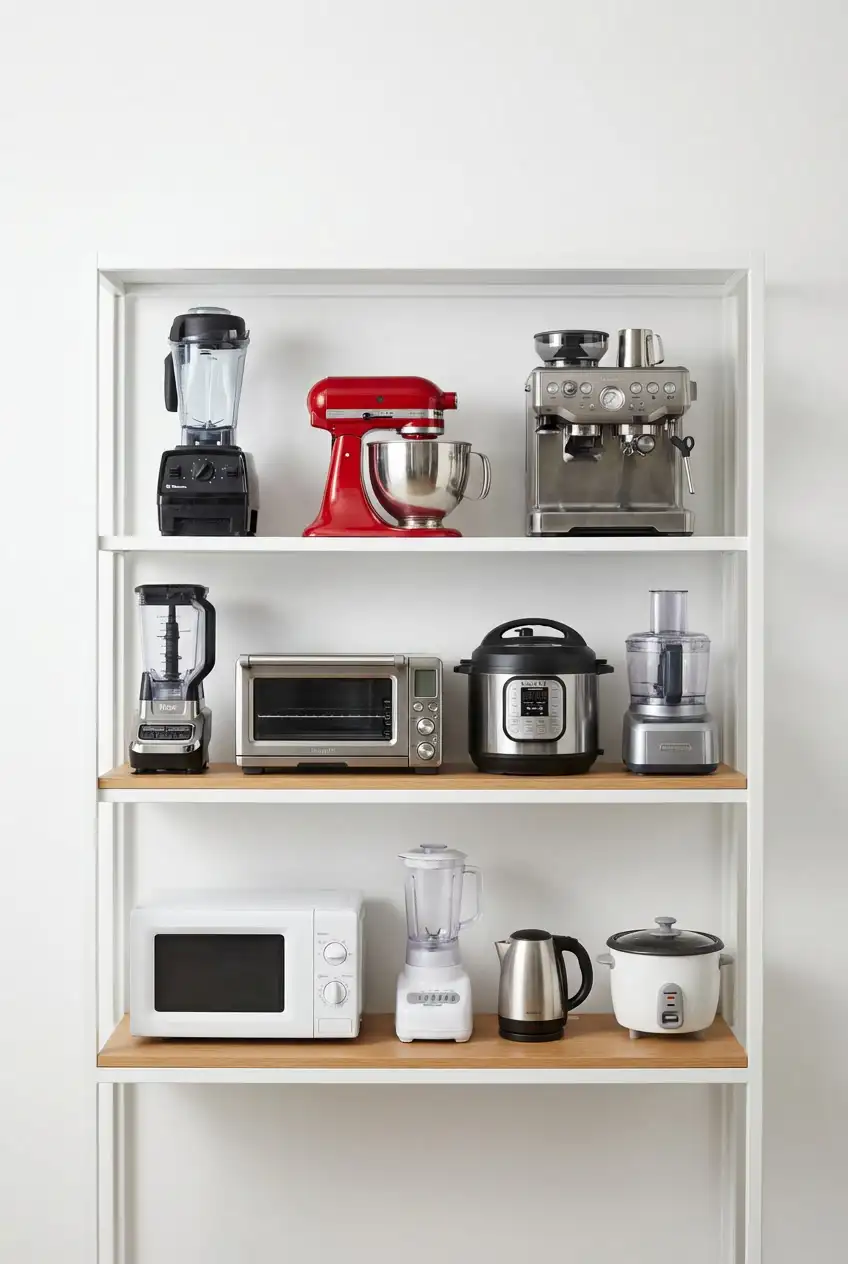
Here is what testing, writing, and cooking has taught us. The best kitchen is not the most expensive one or the one with the most gadgets. It is the kitchen that fits your real life.
Start with Tier 1 essentials. Build toward Tier 2 as your cooking habits grow. Upgrade to Tier 3 when you know exactly what you need. Protect your counter space. Buy quality instead of quantity. And never let a waffle maker bully its way into your limited cabinet space again.
A practical kitchen is more important than a picture-perfect one. Focus on appliances that support your real cooking habits, and everything else will follow. And once your kitchen essentials are locked in, a little indulgence never hurts. Check out our ice cream maker reviews if you are ready to add one genuinely fun appliance to your setup.
That is the goal. A kitchen that feels good to work in, every single day.
Key takeaway. Start minimal, buy quality, and upgrade with purpose. Your best kitchen is the one you actually use.
Read next
Ready to upgrade your kitchen?
From weeknight dinners to the gear that makes them easier, our recipes and tested picks help you cook with more confidence.