Helping you create a kitchen you love.

Kitchen Appliances

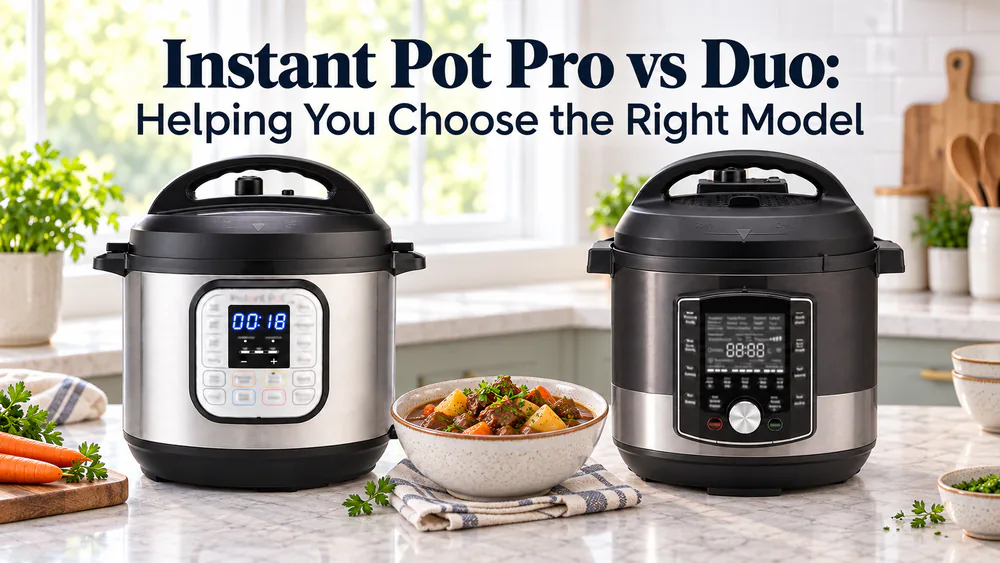
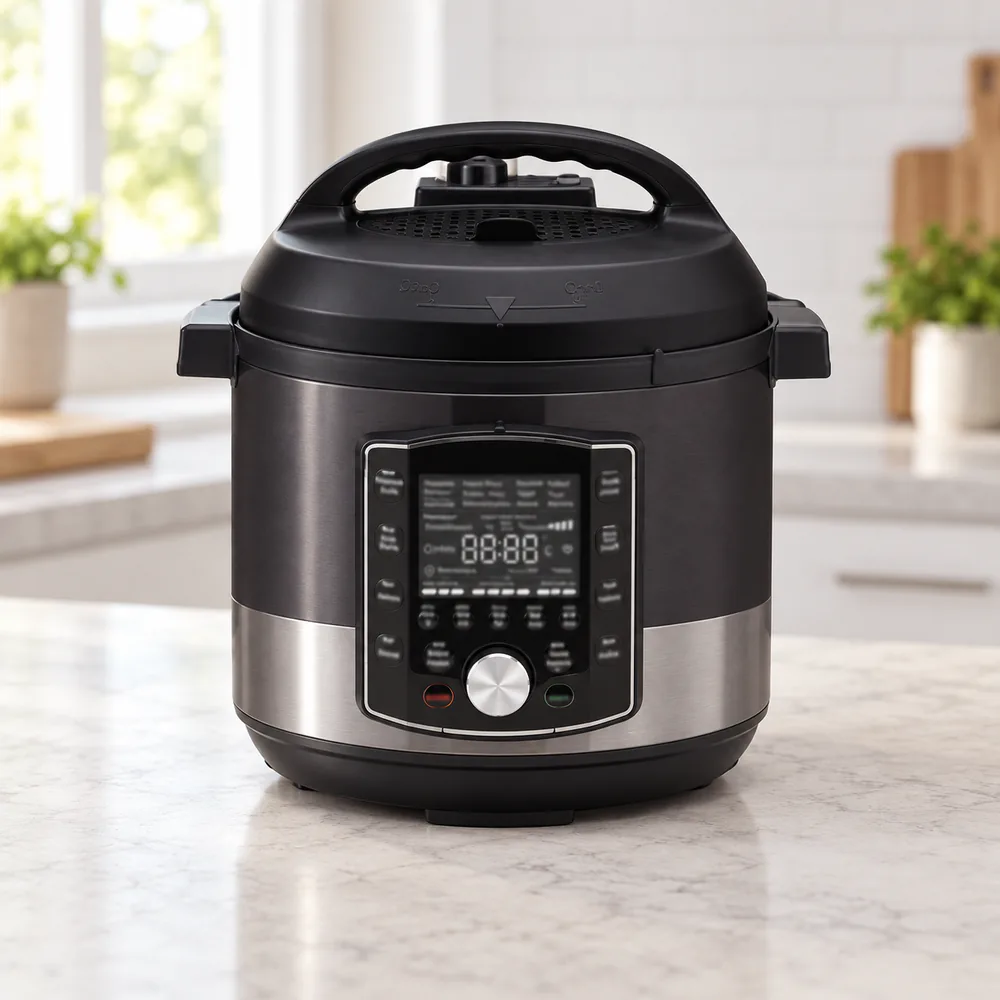
Instant Pot Pro vs Duo: Helping You Choose the Right Model

As an Amazon Associate we earn from qualifying purchases. We may earn a commission from links on this page, at no extra cost to you. Learn more.

Instant Pot Pro vs Duo: Helping You Choose the Right Model

Which Instant Pot is actually right for you, the budget-friendly Duo that has sold by the millions, or the pricier Pro with its longer feature list? It is a fair question, and an easy one to overthink while you stare at two boxes that look almost identical. We get it, because we asked ourselves the same thing before we started cooking on both.

We ran the Pro and the Duo through a full week of the meals we actually make: dried beans, homemade stock, weeknight braises, batch soups, and enough rice to feed a family of five. The short version is that both are excellent pressure cookers built on the same core promise, and the differences that matter are smaller and more specific than the spec sheet suggests.

Quick Verdict: Which Instant Pot Is Right for You?

If you want the most cooker for the least money, buy the Duo. It handles pressure cooking, slow cooking, saute, steam, rice, and yogurt, it goes on sale constantly, and it is the model that made the Instant Pot a household name. For most home cooks, it is more than enough.

If you cook often, want sous vide, and will appreciate a quieter steam release and pot handles you can actually grab, the Pro earns its higher price. The upgrades are not flashy, but the ones that matter show up every time you cook.

Key takeaway. A simple rule of thumb before you spend: count how many nights a week you truly cook. Three or fewer, and most of the Pro's extras sit unused, so the Duo is the smarter spend. Five or more, and its daily conveniences start paying back the price gap within a couple of months.

Instant Pot Pro vs Duo at a Glance

Both pots share the same DNA. They pressure cook up to 70% faster than slow cooking, they use a stainless steel inner pot, and they carry the same one-year limited warranty. What separates them is the depth of features layered on top, and the physical touches that make one pot friendlier to live with.

Side-by-Side Comparison Table

FeatureInstant Pot DuoInstant Pot Pro
Capacity / sizes3, 6, and 8 quart6 and 8 quart
Cooking functions7-in-110-in-1
Smart programs13 (6-qt); 11 (3-qt Mini)28
Wattage1000W (6-qt); 700W (3-qt)1200W (6-qt); 1400W (8-qt)
Pressure levelsHigh and lowHigh, low, customizable
Sous videNoYes
Steam release / lidEasy-Release switch, louderGentle switch with diffusing cover, quiet
Inner pot & handlesTri-ply stainless, no side handlesStainless with silicone side handles, flat bottom
Display / progressSmall basic LCD (time)Large backlit progress display
Saved favoritesNoUp to 5 custom presets
Warranty1-year limited1-year limited
Price tierBudget (frequently on sale)Premium

Summary of the Biggest Upgrades in the Pro

Three upgrades do most of the heavy lifting when you move from the Duo to the Pro. First, the silicone side handles on the inner pot, the single biggest day-to-day improvement in our week of cooking. Second, the sous vide program, which the standard Duo does not have. Third, the gentle steam release with its diffusing cover, which makes venting far less startling in a small kitchen.

7 Key Differences Between the Pro and Duo

1. Number of Cooking Programs (13 vs 28+)

The Duo is a 7-in-1 cooker with 13 one-touch smart programs on the 6-quart model. The Pro is a 10-in-1 with 28 customizable smart programs. That gap looks enormous on paper, but in practice it matters less than it sounds, because most cooks lean on pressure cook, saute, and slow cook and adjust time manually. The Pro's five saveable favorites help if you make the same dishes on repeat, but you will not feel starved for options on the Duo.

2. Control Panel and Display

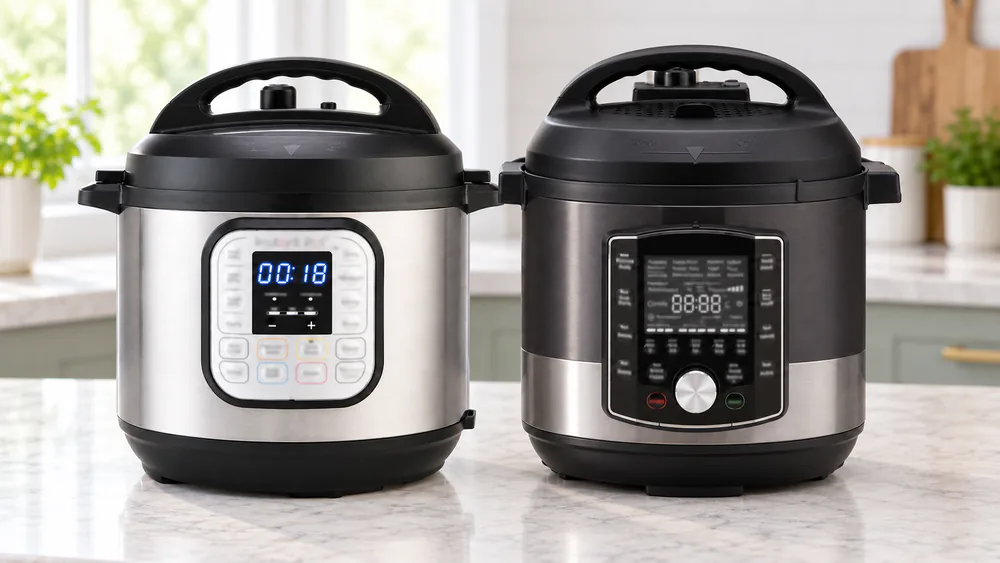
The Duo uses a small basic LCD that shows cooking time and little else. Older units require you to set the seal manually, while newer ones add an auto-seal slider. The Pro moves to a large backlit display that shows cooking progress, pressure level, temperature, and status icons at a glance. Its exterior has no physical buttons, so a spill wipes off in one pass, and it is a nicer interface to stand in front of during a long braise.

Close-up of the Instant Pot Pro backlit control panel showing cooking progress and pressure level next to the simpler Duo LCD display.
The Pro's backlit progress display next to the Duo's basic time-only LCD.

3. Steam Release and Lid Design

Here is a difference you hear before you see. The Duo uses an Easy-Release steam switch with no diffuser, and it vents loudly enough to make you flinch the first few times. The Pro adds a gentle steam release switch with a diffusing cover, so pressure comes down with a softer, more controlled hiss. If your kitchen opens onto the living room, or you cook after the kids are in bed, the quieter release is worth more than its spec line suggests.

4. Sous Vide and Advanced Cooking Modes

Sous vide is the cleanest dividing line between the two. The Pro includes a dedicated sous vide program; the standard Duo does not have one at all. If you want to hold water at a precise temperature for eggs, chicken, or steak, the Pro does it out of the box and the Duo cannot. The Pro also offers multi-level saute rather than a simple low and high: we could hold a true gentle simmer for gravy from roast drippings, where the Duo's coarser saute wanted to either barely move or race to a boil.

5. Inner Pot, Handles, and Accessories

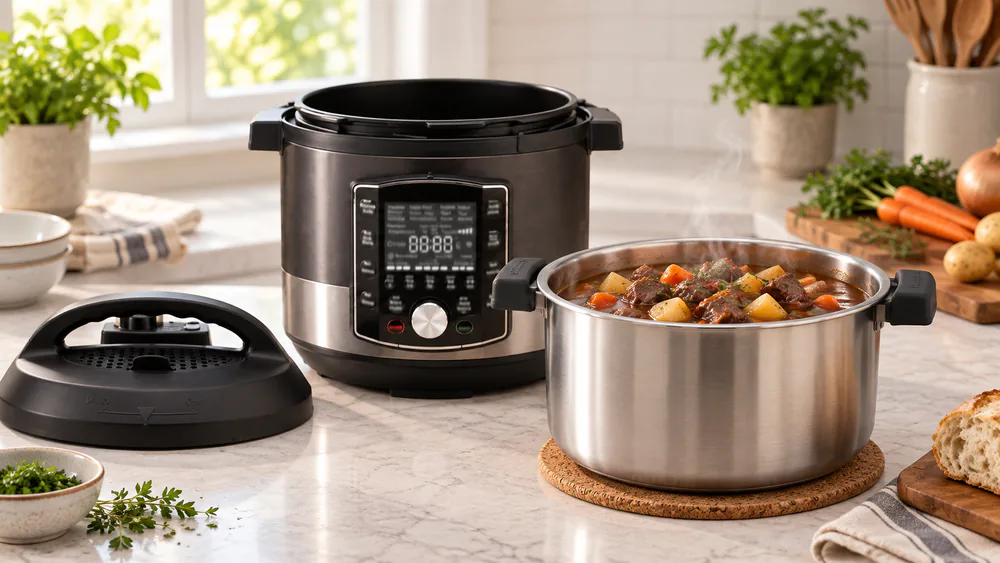
This is the upgrade we did not expect to care about and ended up loving. The Pro's stainless inner pot has easy-grip silicone side handles and a flat, heavy bottom, so you can lift the hot pot straight out without hunting for mitts. Those handles also hold the pot steady while you stir, so it does not spin the way the handle-less Duo pot does. The Duo's 18/8 tri-ply pot cooks beautifully, but with no side handles and a raised center you are fishing it out with oven mitts every time. The Pro also ships with an extra sealing ring and a stainless steamer rack.

The Instant Pot Pro stainless inner pot resting safely on a trivet by its silicone side handles, steam rising from finished beef stew.
The Pro's silicone side handles let you lift the hot pot without mitts.

6. Build Quality and Finish

Both pots feel solidly built, and both use dishwasher-safe stainless inner pots and lids. The Pro reads as the more premium object, while the Duo feels plainer but no less durable, with a detachable cord the Pro lacks. One honest caution on the Pro: the pressure and steam valve are the most-reported failure point we found, with some owners seeing the valve break after a few months. Handle them gently; replacements are cheap and easy to swap.

7. Price and Value

The Duo's other everyday advantage is price. We saw the 6-quart Pro land around $129.99 and the 6-quart Duo around $104.67, though street pricing moves week to week and both dip well below list during sale events. The 3-quart Duo Mini runs around $79.99, with pricing that shifts by retailer. The Duo is on sale so often that patient shoppers rarely pay full list, which widens the real-world gap between the two beyond what the sticker suggests. Sizes differ too, and the sizing tradeoffs get their own section further down.


Cooking Programs and Performance Compared

Everyday Programs Both Models Share

The core cooking both pots do is identical, and it is the part that changes your weeknights. Pressure cook, slow cook, saute, steam, rice, yogurt, and keep warm live on both. Dried beans, homemade stock, and tough braises like short ribs come out tender in an hour or two instead of an all-day simmer. Both pots also hold food warm for up to 10 hours, so you can start a batch in the morning and come home to a finished meal.

Pro-Only Functions Worth Paying For

The functions unique to the Pro are sous vide, multi-level saute, and adjustable pressure beyond simple high and low. Sous vide is the headline, but the multi-level saute is the one we reached for most, because holding a real simmer without a boil-over is genuinely useful. One function to treat with skepticism is slow cook: vendor copy implies full capability, but it is a known weak spot, and several owners report the mode stalling in preheat and never reaching a full simmer, leaving food undercooked.

Warning. Do not count on the Pro's slow-cook mode as a primary feature. It has a recurring habit of stalling in preheat and not reaching a full simmer, so food can finish undercooked. Pressure cooking is where the Pro shines.

Heating Speed and Consistency

Both pots pressure cook up to 70% faster than slow cooking, and in our kitchen the Pro reached pressure or steam in roughly 8 minutes from cold water. The higher wattage on the Pro, 1200 watts on the 6-quart and 1400 on the 8-quart, gives it a little more urgency than the Duo's 1000 watts. You will notice that gap most on big pots of cold liquid; for everyday portions, both come up quickly enough that the difference is minor.

The preset count is the number everyone compares, but the silicone pot handles and the quieter steam release are what actually changed how we cooked.

Design, Controls, and Ease of Use

The Learning Curve on Either Pot

Neither pot is hard to learn, and the curve is the same on both. The early friction is the same three lessons every new Instant Pot owner meets: how manual mode works, the difference between natural and quick release, and that the cook timer starts counting only once the pot reaches pressure. Once those click, usually within the first week, the routine becomes second nature. The Pro's readout gives a first-timer a little more reassurance while those habits form, since you can watch the pressure build instead of guessing, but a patient beginner will be just as happy learning on the Duo.

Safety Mechanisms and Handling Notes

Both pots carry more than 10 built-in safety mechanisms, including overheat protection and a lid lock that will not let you open the pot while it is still under pressure. That baseline is identical, and it is a big part of why these cookers earn the trust they do. Two small handling notes from our week: on the Duo, keep the little steam-trap condensation cup seated, because it is small, it pops off easily, and some cooks find it barely catches anything. And on both models the quick-release steam comes out very hot and can spit, so stand off to the side and keep hands and face clear when you flip the switch.

Size and Capacity Options

3-Quart, 6-Quart, and 8-Quart Choices

Size is one place the Duo clearly wins on flexibility. Only the Duo offers a 3-quart, sold as the Duo Mini, which is ideal for small households, side dishes, and dorm or travel use. It runs 700 watts with 11 smart programs, a scaled-down version of the full pot. For a family of four, the 6-quart is the sweet spot for stews, soups, and batch cooking, and it is the size we recommend to most people. The 8-quart exists on both models for big-batch cooks, but it is noticeably heavy to lift and store, so buy it only if you cook for a crowd.

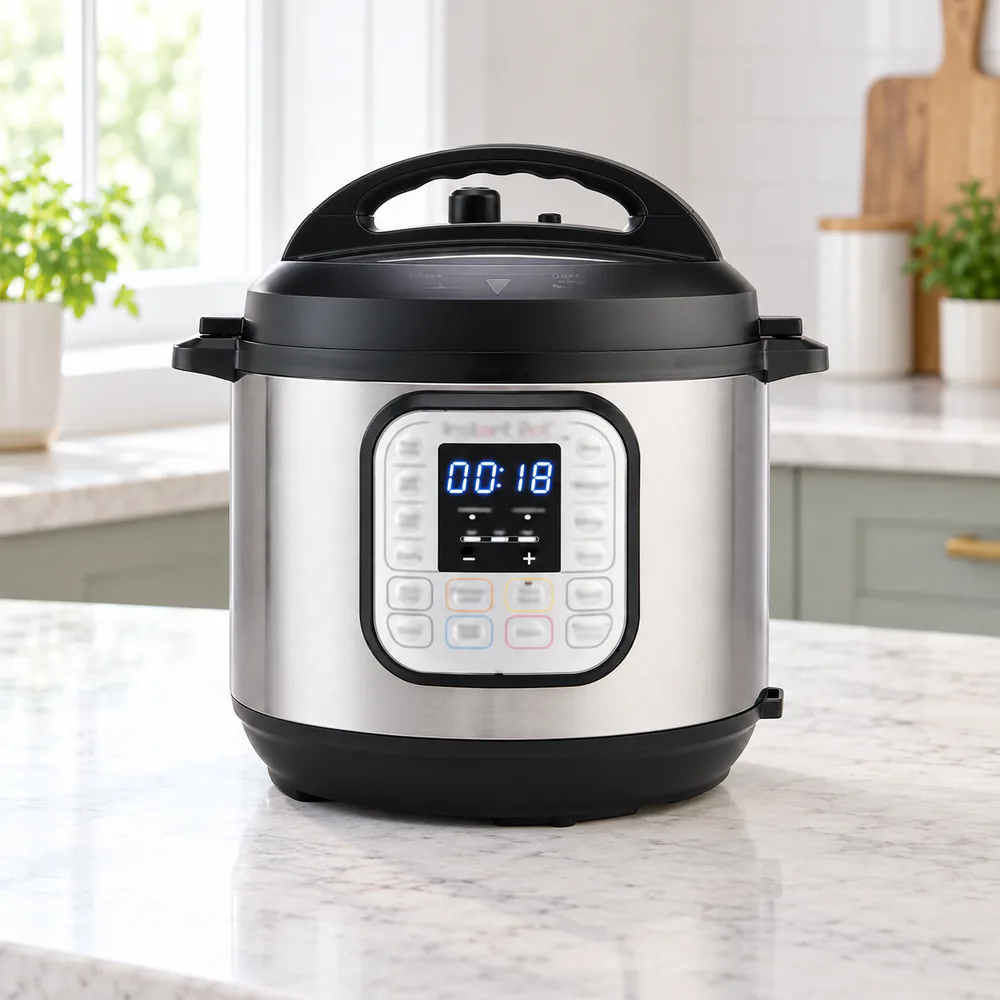
Instant Pot Duo 6-quart multicooker shown on a kitchen counter.
The Duo's three sizes, from the 3-quart Mini up to the 8-quart.

Price and Value in 2026

Is the Pro Worth the Extra Cost?

The honest answer depends on how much you cook and what annoys you. If you cook a few times a week and mostly pressure cook and saute, the Duo delivers nearly all of the same results for less money. If you cook most nights, the Pro's upgrades quietly pay you back: the silicone handles save a small hassle at every meal, the quieter release is calmer in a shared space, and sous vide adds a technique the Duo cannot touch. That is the case for the Pro, not one big feature but a handful of daily conveniences that add up over years.

Instant Pot Duo Review: Pros and Cons

Instant Pot Duo 6-Quart
1

Instant Pot Duo 6-Quart

Best Value
Check Price on Amazon
4.6/5

The Duo is the original best-selling Instant Pot, and after a week of real cooking it is easy to see why it stuck. It pressure cooked dried beans and tough braises tender in an hour or two, held finished food warm for up to 10 hours, and cleaned up without staining. The tri-ply stainless pot showed harmless bluish heat marks after the first few uses, which look like damage but are completely normal. The plastic sealing ring holds onto strong flavors, so plain rice after a spiced dish can pick up residual taste unless you deep-clean or keep a second ring, and the handle-less pot means reaching for mitts every time.

  • 7-in-1: pressure cook, slow cook, saute, steam, rice, yogurt, warm
  • 13 smart programs on the 6-quart model
  • Available in 3, 6, and 8 quart, the only line with a Mini
  • Holds food warm up to 10 hours for meal prep
  • Detachable power cord for easier storage

Specifications

Functions
7-in-1
Smart programs
13
Wattage
1000 watts (6-quart)
Sizes
3, 6, 8 quart
Warranty
1-year limited

Pros

  • Excellent value and frequently on sale
  • Genuinely beginner-friendly once you learn manual mode
  • The only line with a compact 3-quart Mini
  • Detachable cord and simple, wipeable control face
  • Same core pressure-cooking results as the Pro

Cons

  • No side handles, so you need mitts to lift the pot
  • No sous vide function
  • Louder Easy-Release steam venting with no diffuser
  • Basic time-only display and small condensation cup

Instant Pot Pro Review: Pros and Cons

Instant Pot Pro 6-Quart
2

Instant Pot Pro 6-Quart

Best Premium Pick
Check Price on Amazon
4.5/5

The Pro takes everything the Duo does well and smooths the rough edges. Its silicone inner-pot handles are the single biggest day-to-day upgrade, letting us lift the hot pot without mitts and holding it steady while we stirred instead of spinning. The multi-level saute held a true simmer for gravy from roast drippings, and the pot reached pressure in roughly 8 minutes from cold water. Two honest caveats: the silicone sealing ring absorbs strong smells like curry, so a dedicated second ring for savory versus sweet cooking is worth having, and the pressure lid with its silicone parts is the fussiest thing to clean, which is why many owners keep a separate glass lid for steaming and slow cooking.

  • 10-in-1 with sous vide and multi-level saute
  • 28 smart programs plus up to 5 saveable favorites
  • Silicone side handles and a flat, heavy inner pot
  • Gentle diffused steam release for quiet venting
  • Large backlit progress display, button-free exterior

Specifications

Functions
10-in-1
Smart programs
28
Wattage
1200 watts (6-quart); 1400 watts (8-quart)
Sizes
6, 8 quart
Warranty
1-year limited

Pros

  • Silicone pot handles you will use at every meal
  • Includes sous vide and adjustable multi-level saute
  • Quieter diffused steam release for shared kitchens
  • Large backlit progress display and wipeable face
  • Ships with an extra sealing ring and steamer rack

Cons

  • Premium price and no compact 3-quart option
  • Slow-cook mode can stall in preheat and undercook
  • Steam and pressure valve is the most-reported failure point
  • Sealing ring absorbs strong odors; pressure lid is fussy to clean

Which Instant Pot Should You Choose?

Warranty and Buying Used

Both pots carry the same one-year limited warranty, so neither buys you more coverage out of the box. That matters most on the used or open-box market. The Duo has been in circulation far longer, so you will find more secondhand units and more generations mixed together: cheaper prices, but a higher chance of an older model. Confirm which generation you are getting, since older Duos make you set the seal by hand while newer ones add an auto-seal slider. The Pro is newer and rarer secondhand, and its resale value holds up a little better if you ever move it on.

Counter and Cabinet Space

These two have nearly identical footprints, so the deciding factor is weight and where the pot will live. The 8-quart on either model is heavy to lift down from a shelf, so if it will be stored in a cabinet rather than left on the counter, factor that in before you size up. The Duo's detachable cord also tucks away more neatly between uses, while the Pro's cord stays attached.

Buying It as a Gift

If you are shopping for someone else, err toward the Duo. It asks less of a new cook, it is the size-flexible line if you are unsure how much they cook, and its lower price leaves room to bundle a glass lid or a spare sealing ring alongside it. Save the Pro for someone you already know cooks often and will genuinely use sous vide and the multi-level saute.

Instant Pot Pro and Instant Pot Duo standing side by side on a kitchen counter, lids on, ready to compare size and finish.
The Pro and Duo side by side; nearly identical footprints, different day-to-day feel.

Frequently Asked Questions

Are Duo accessories and inner pots compatible with the Pro?

Not reliably. The inner pots and some sealing parts differ between the models, so treat liners and rings as model-specific rather than interchangeable. Buy replacement pots and sealing rings that match your exact model to be safe.

Where do I buy replacement sealing rings and the steam valve, and are they costly?

Both are inexpensive and easy to swap yourself, but they are sold per model, so order parts that match your exact unit rather than assuming a Duo ring fits a Pro. On the Pro, the pressure and steam valve is the part most likely to need replacing, and a spare runs only a few dollars. Keeping an extra sealing ring on hand also solves the odor-absorption problem for savory-versus-sweet cooking.

Does the Instant Pot app add anything, and is it a reason to pick the Pro?

No. Both models pair with the same free app and its library of more than 800 recipes, so the app is not a Pro-only perk. It is genuinely handy for a new cook who wants guided recipes, but it should not tip your decision toward the Pro, since the Duo gets the identical app.

What should I check when buying a used or open-box Duo?

Confirm the generation and the exact model. Older Duos make you set the steam seal by hand while newer ones add an auto-seal slider, and the standard 6-quart carries 13 smart programs, so a listing citing 15 is probably a Duo Plus or a different line. Inspect the sealing ring too, since it holds onto old smells and a tired ring is cheap to replace.

How do I adapt a stovetop pressure-cooker recipe to the Instant Pot?

Keep the stovetop cook time about the same, but remember the timer starts only once the pot reaches pressure, so budget an extra 8 to 12 minutes of preheat before the countdown begins. Use enough thin liquid to build steam, at least a cup, and lean on natural release for beans and tough cuts so they do not seize up.

Can both models do sous vide and canning?

Only the Pro has a sous vide program; the standard Duo does not. As for canning, neither model is confirmed safe for pressure canning by an official source, and Instant Pot generally advises against it, so do not rely on either for that.

The Bottom Line

Whichever way you lean, this is a low-risk decision. Both pots do the core pressure cooking equally well, both carry the same one-year warranty, and both are easy to return if the model you picked turns out to be the wrong fit for your kitchen. The mistake to avoid is over-buying on features you will not touch, or under-buying on size and cooking two batches every Sunday. Match the pot to the meals you actually make, keep a spare sealing ring on hand, and either one will earn its place on the counter for years.

Read next

Ready to upgrade your kitchen?

Compare more tested pressure cookers and small-kitchen picks, or get our latest hands-on guides in your inbox.