The specs that matter for an inline filter are few, and once you know them the choice gets simple. Here is what we weigh when it comes to picking one for a specific kitchen.
Contaminant Reduction and NSF/WQA Certification
Certification is the difference between a marketing claim and an independently verified one. NSF/ANSI 42 covers chlorine, taste, odor, and material safety, exactly what most inline carbon filters are built to do. NSF/ANSI 53 goes further into health contaminants including lead and parasites, and NSF/ANSI 372 certifies a filter is essentially lead-free. To see the full picture of what a filter might target, the EPA publishes the range of drinking-water contaminants filters target.
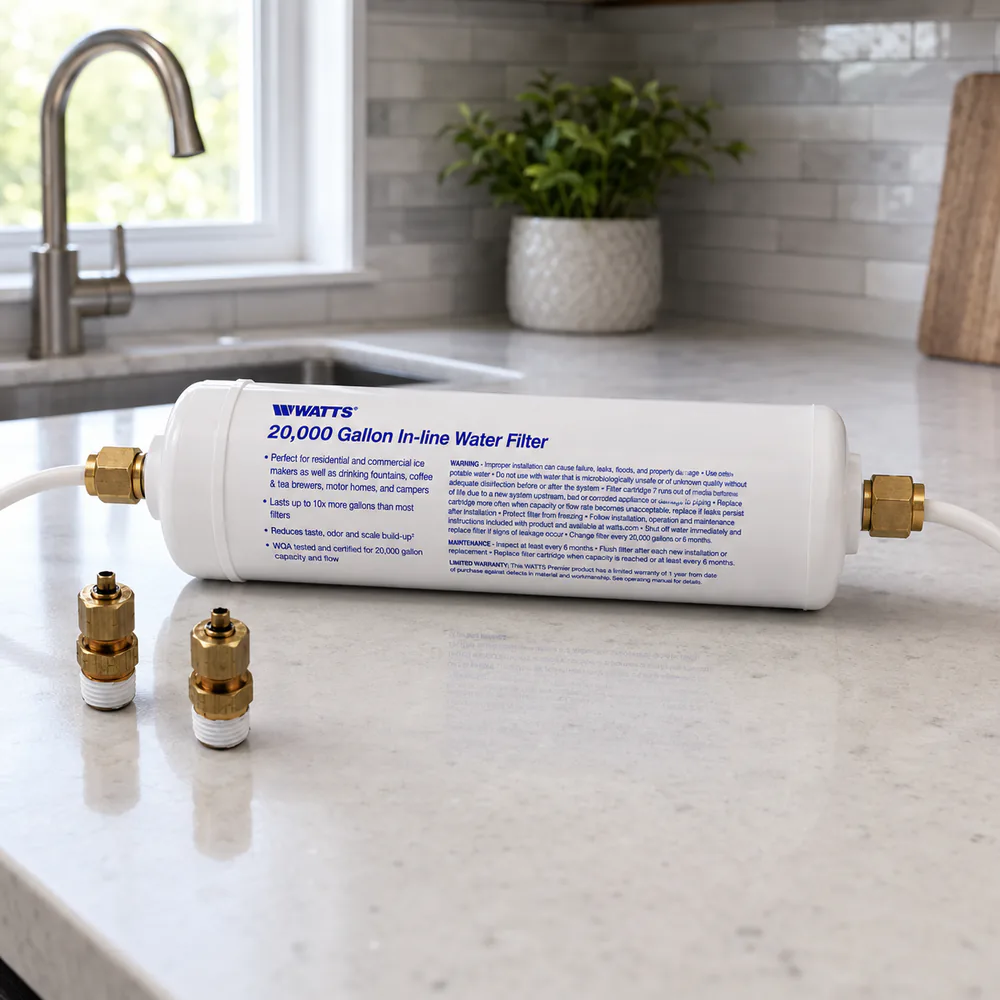
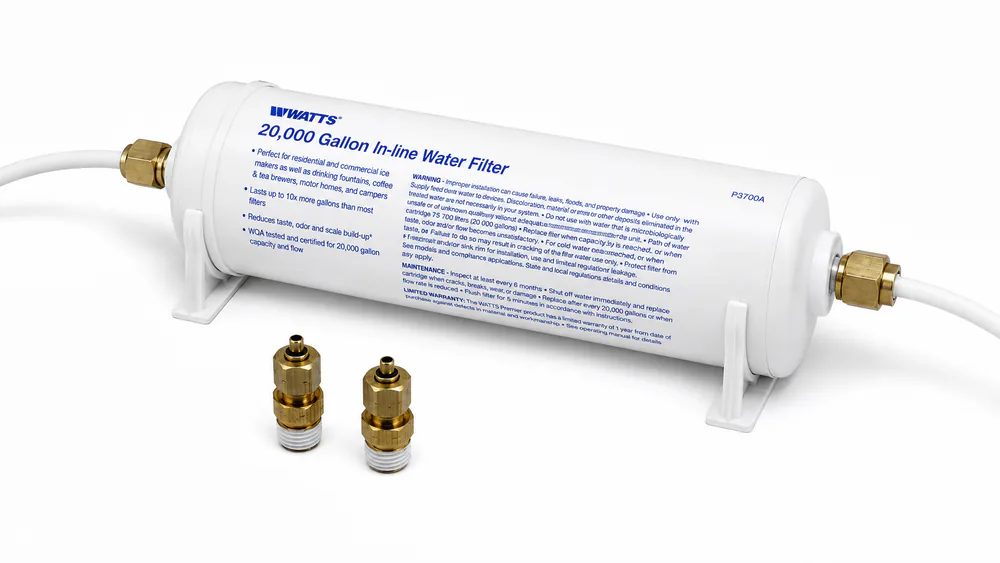
One nuance worth holding onto: a WQA certification, like the one on the Watts, is a legitimate third-party mark but is not the same as NSF, and "tested against NSF 53" is weaker than full NSF 53 certification. If you want a primer on how third-party filter certification works, it is worth five minutes before you buy.
Filter Lifespan and Replacement Cost
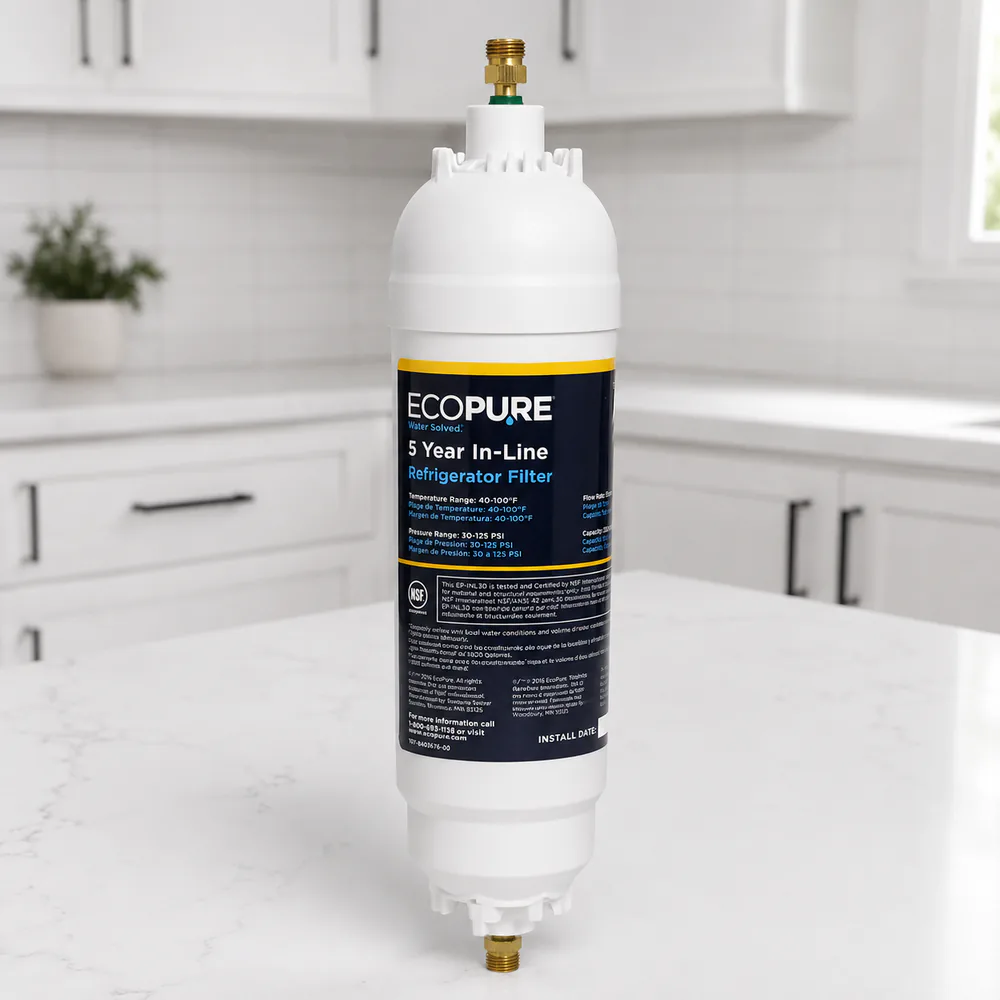
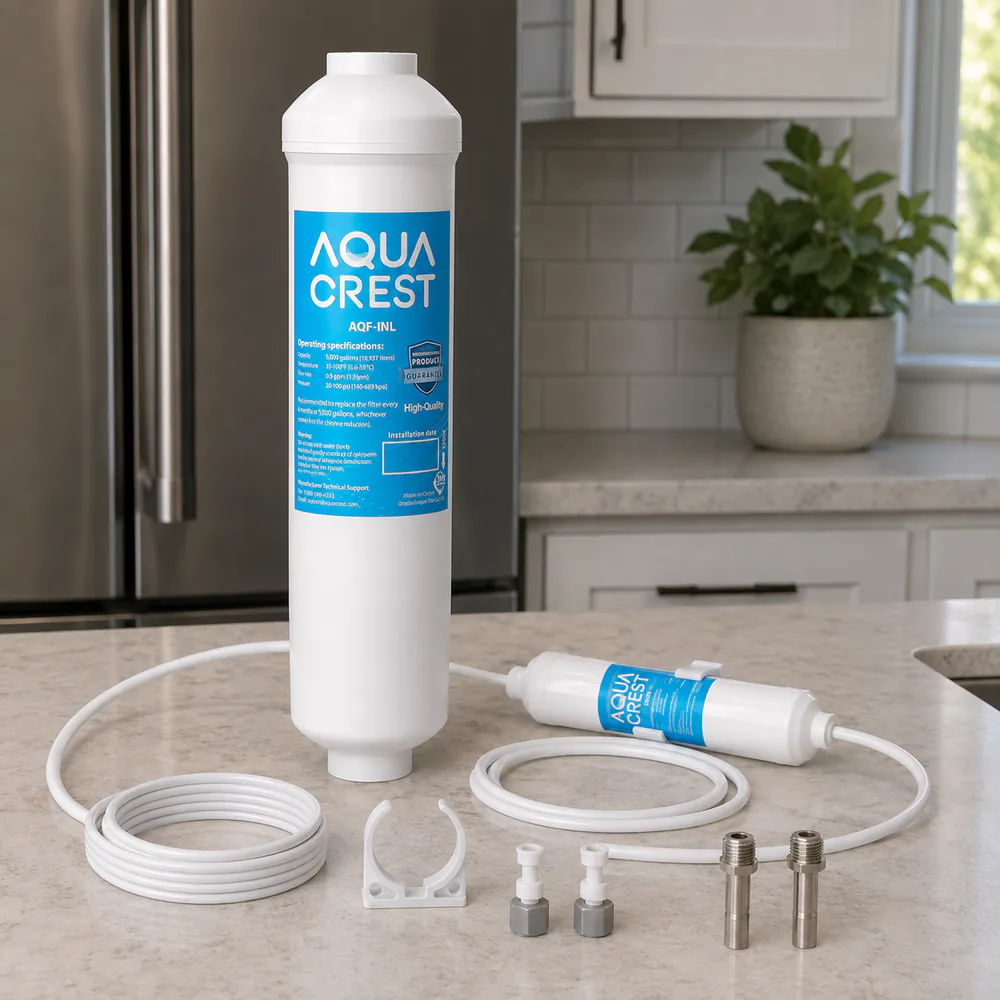
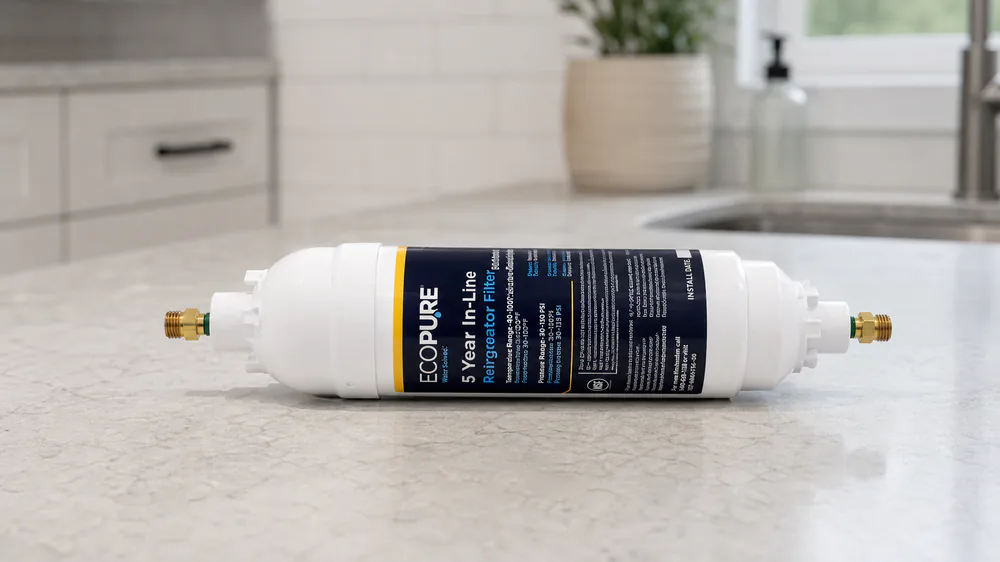
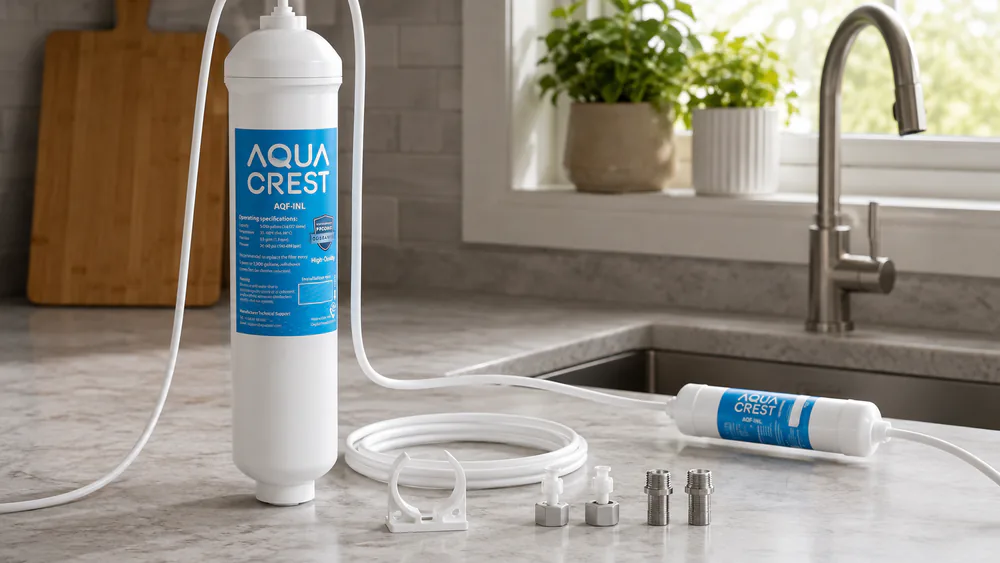
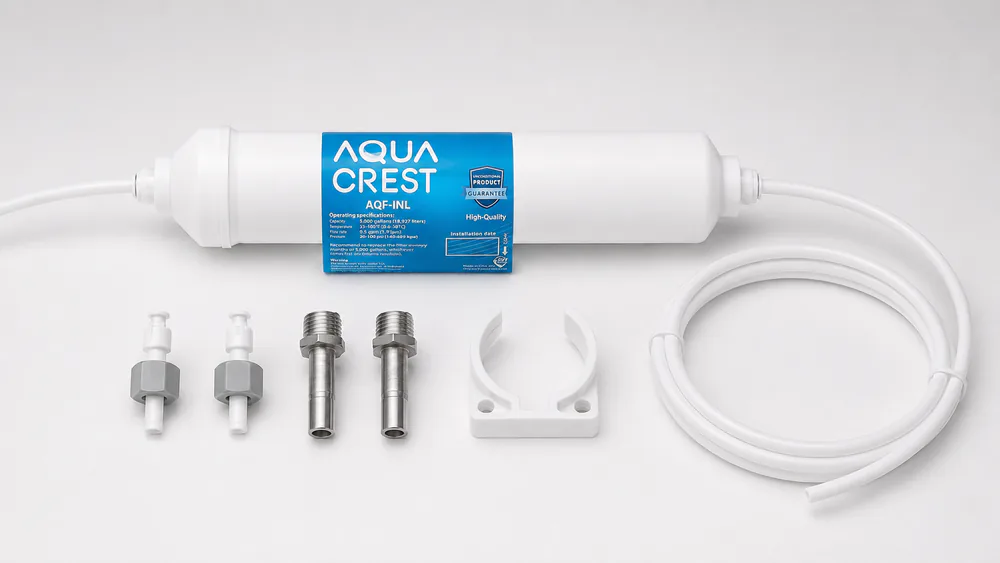
This is the number most likely to disappoint you if you take it literally. Manufacturers cite up to 5 years on the EcoPure and both AQUA CREST filters, but multiple owners of the AQUA CREST and Watts cartridges reported needing replacement in under a year under heavy use. Life depends heavily on your local water quality and volume, so treat any rated life as a ceiling. The honest way to budget is to replace on taste: when chlorine flavor creeps back or flow slows, swap the cartridge regardless of the calendar.
Flow Rate and Water Pressure
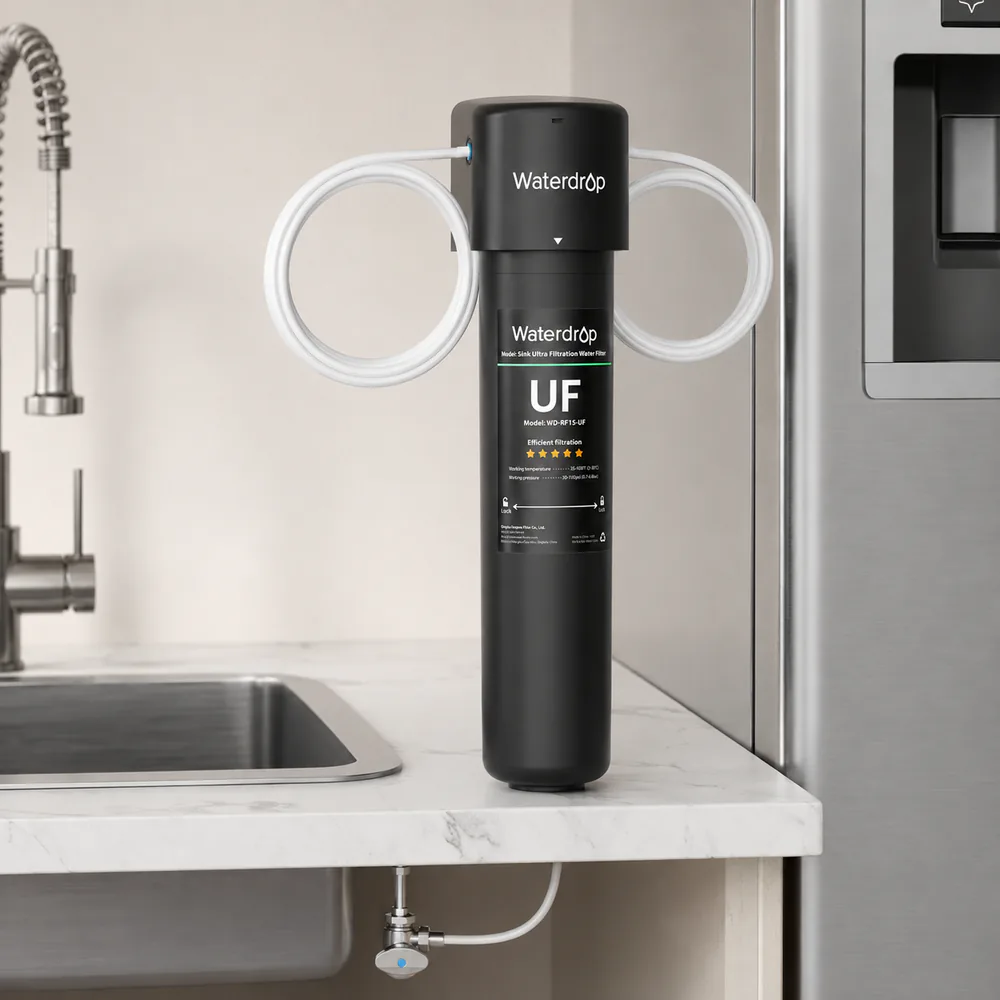
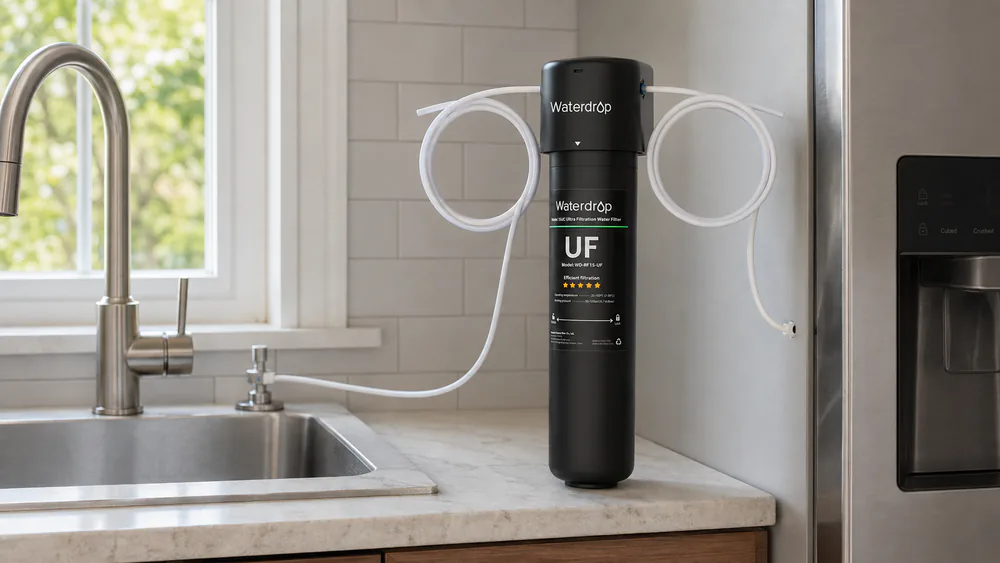
Flow is easy to ignore until your dispenser slows to a trickle. Filters become inconvenient once flow drops below 16 ounces per minute, usually because of a clogging or undersized filter. Only the Waterdrop 15UC-UF publishes a tested figure, 0.75 gpm at 60 psi, and it held pressure well in our testing. For the others, the more particles a filter catches, the sooner flow tapers, which is one more reason to replace on performance.
Compatibility and Fittings (1/4 inch quick-connect)
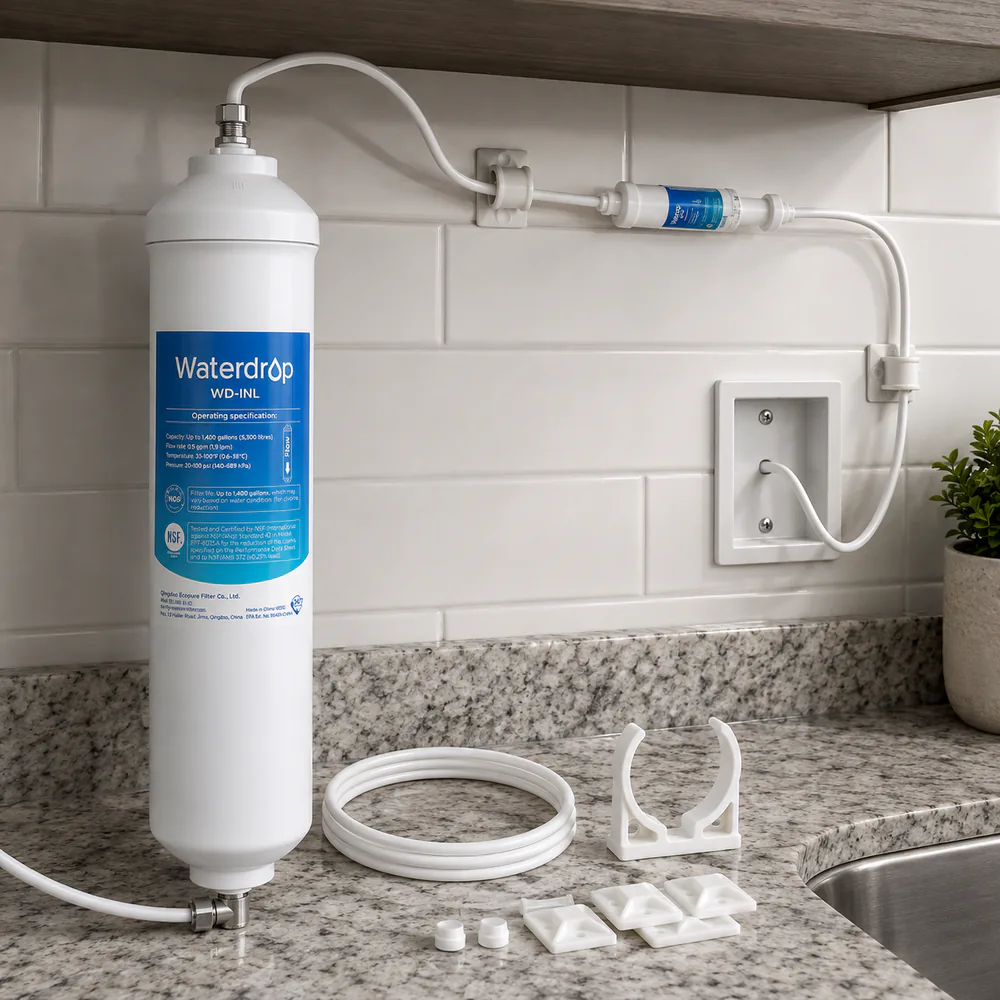
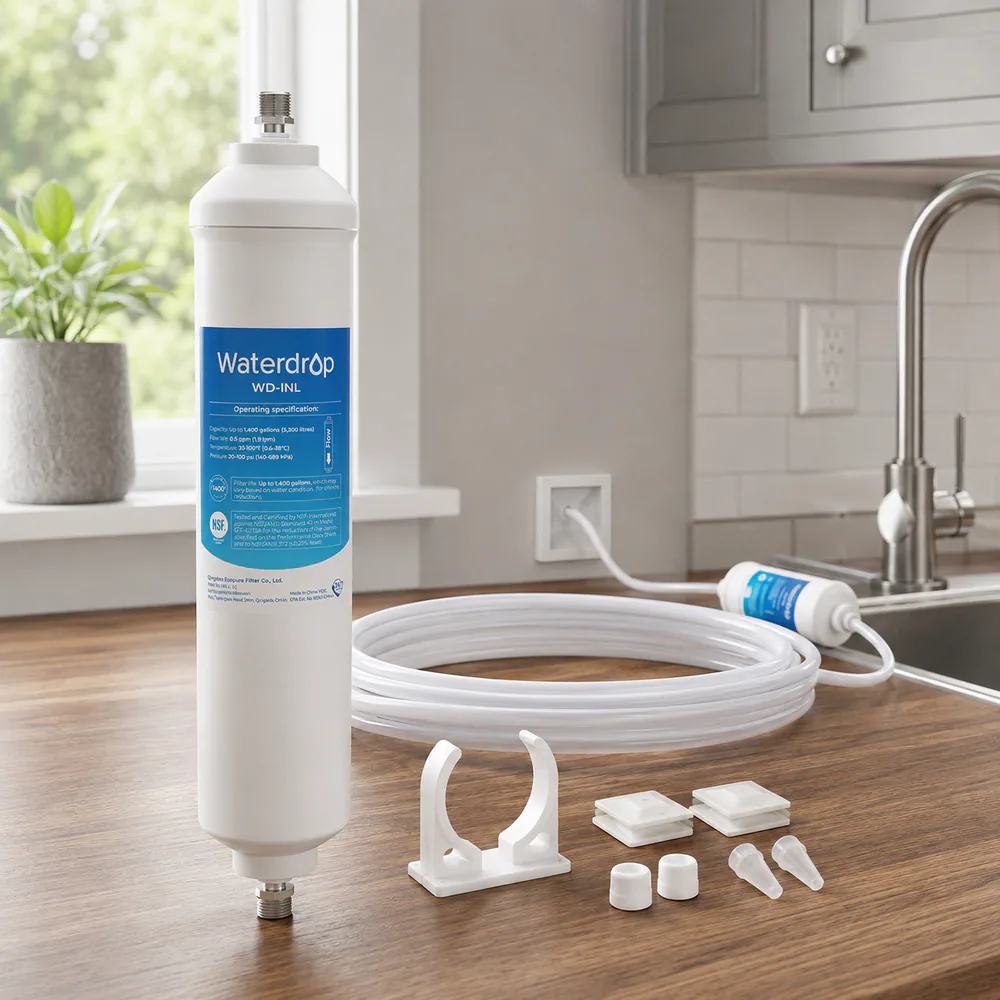
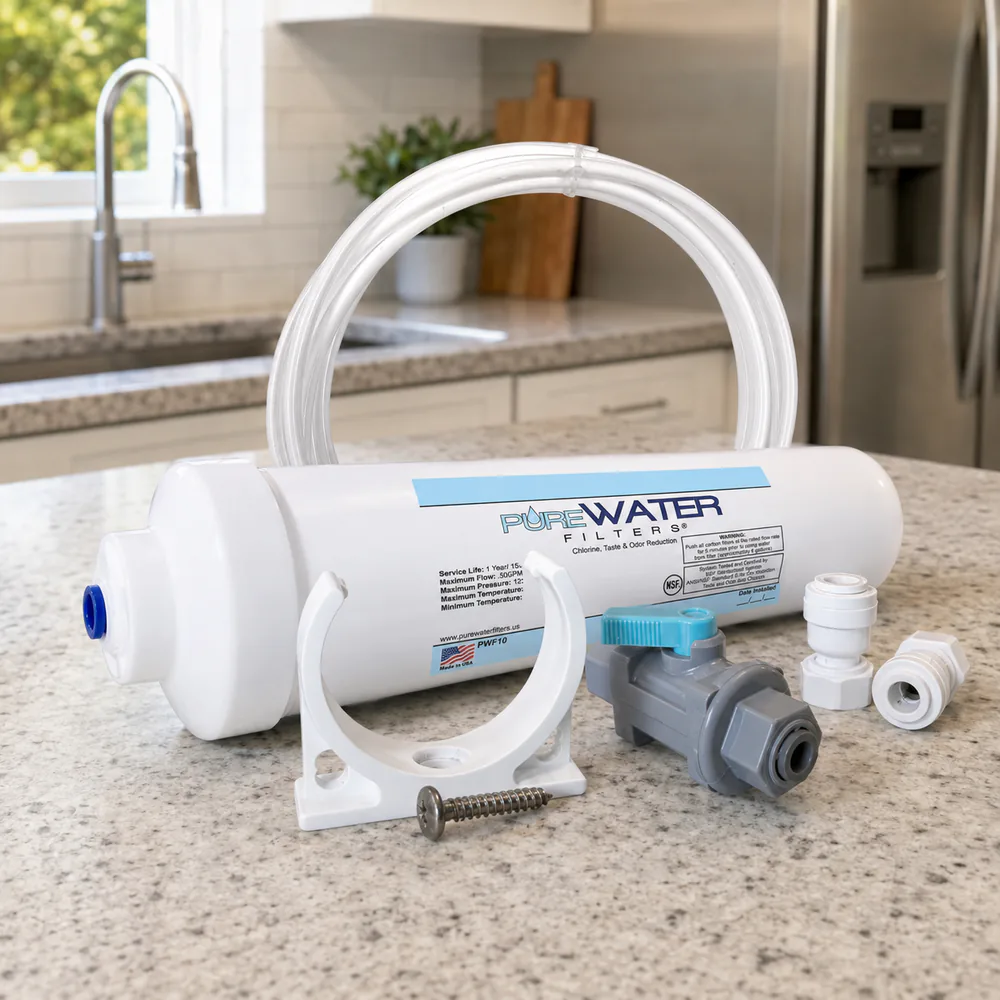
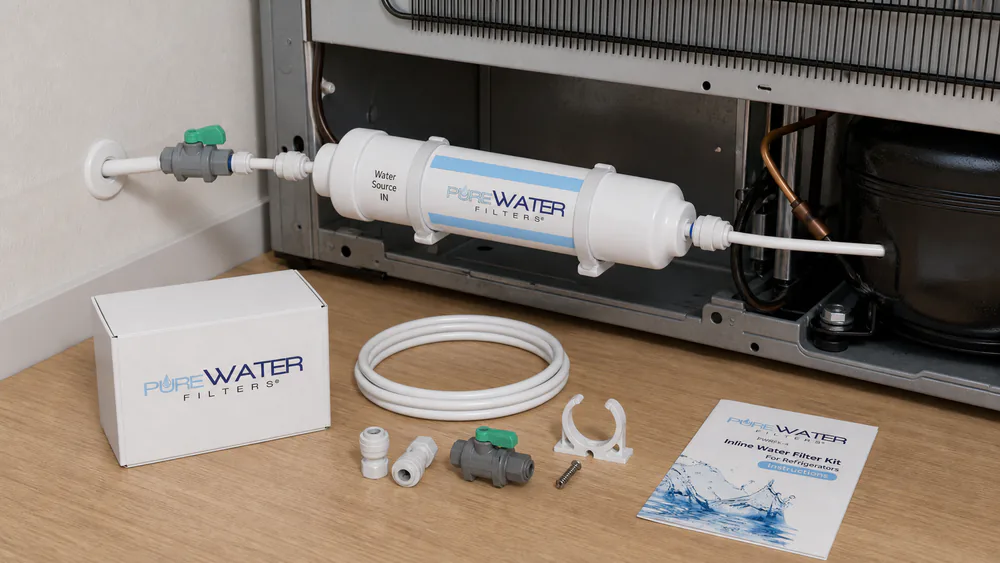
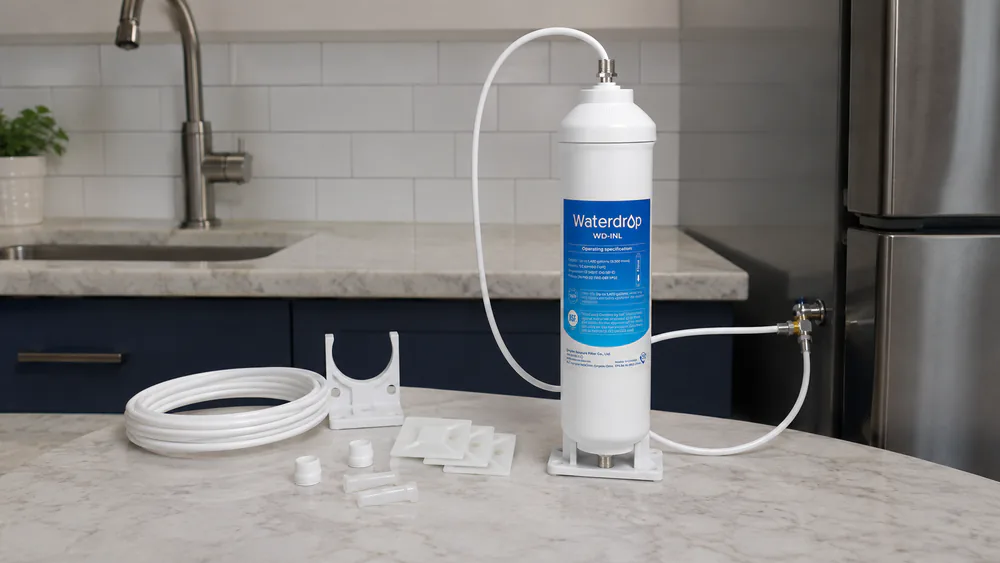
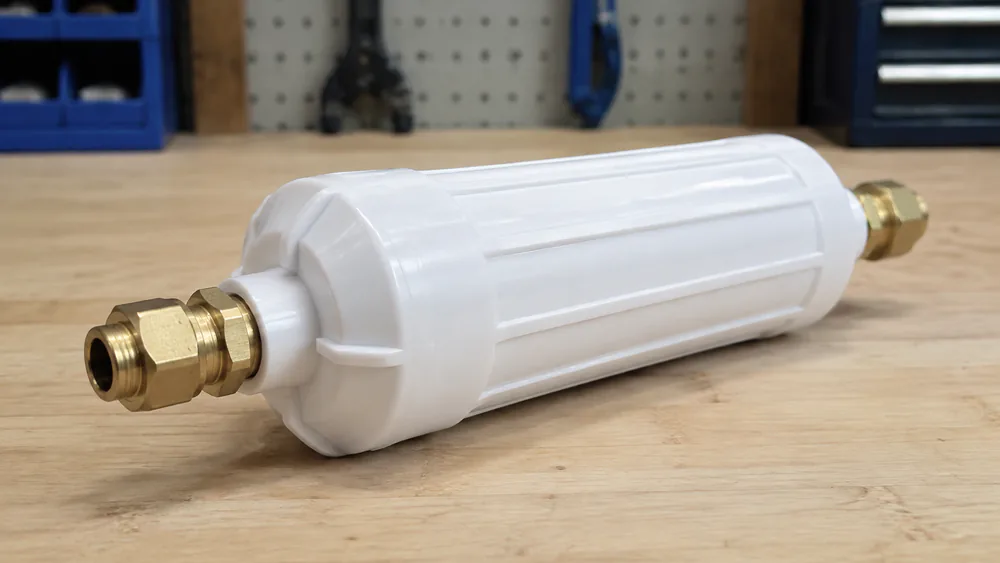
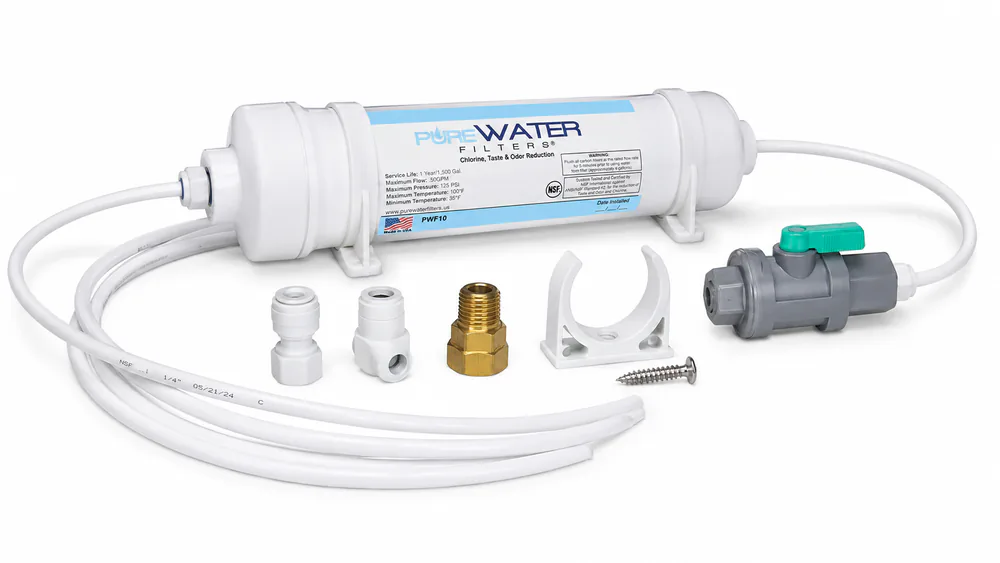
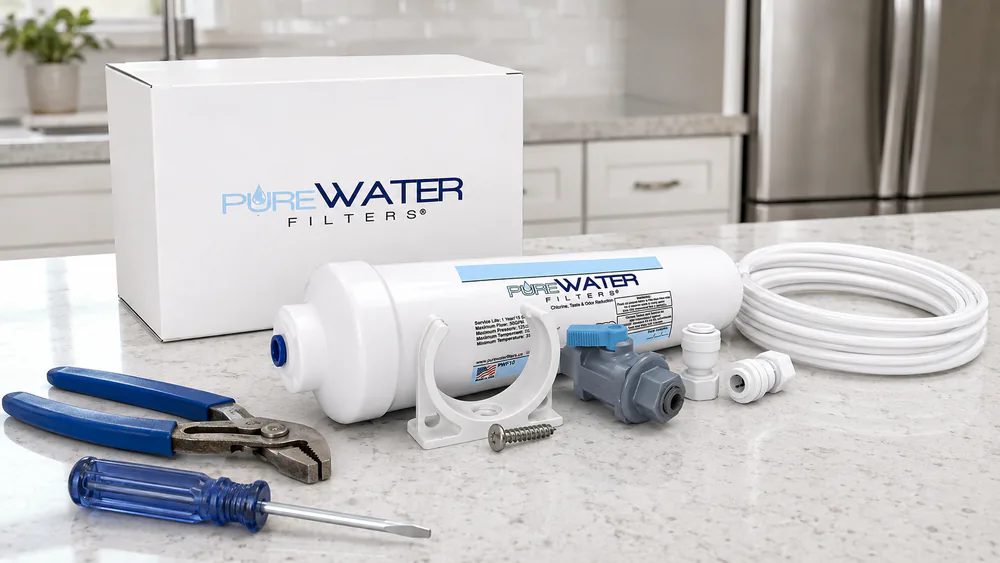
Almost every residential fridge and ice maker runs on a 1/4 inch water line, and every filter here fits that standard. What matters is which fittings come in the box. The best picks include both 1/4 inch compression and push-to-connect fittings, so they drop onto copper or plastic lines without an adapter run. The Watts ships brass connectors; the PureWater arrives as a full kit with 15 feet of line, adapters, and a shutoff valve for fridges with no existing supply.
Installation Difficulty
Most inline filters are tool-free, single-twist jobs that take a few minutes. The exception is a full plumbing kit like the PureWater, which took us about 45 minutes with wire cutters, pliers, and a screwdriver. The biggest cause of a bad install is not the filter, it is the tubing: push-to-connect fittings are the most common leak point, and leaks almost always trace to soft or undersized tubing that never seats fully. Insert the PE tube to its full depth, use stiffer 1/4 inch tubing if a joint weeps, and most problems disappear.