As an Amazon Associate we earn from qualifying purchases. We may earn a commission from links on this page, at no extra cost to you. Learn more.
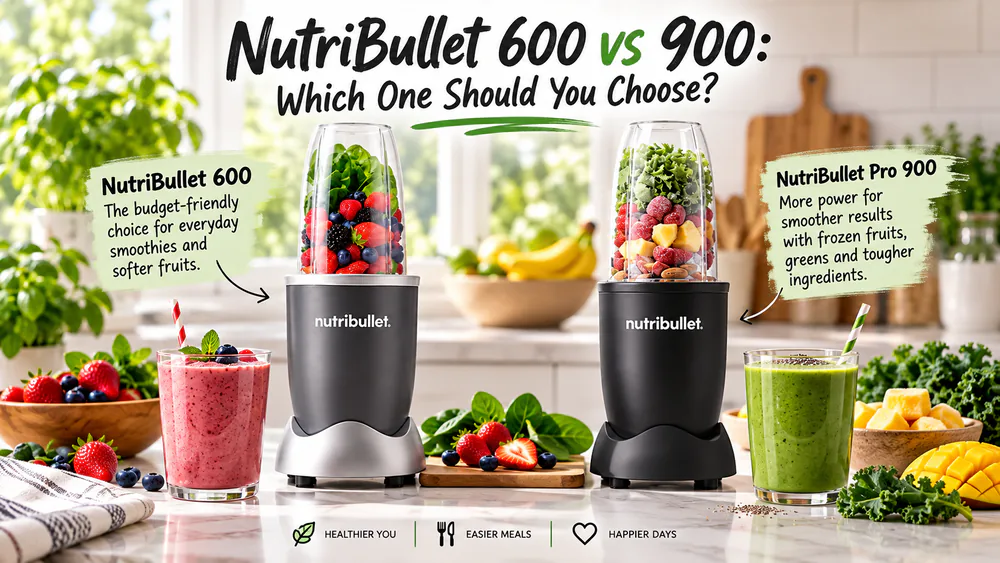
Choosing between the NutriBullet 600 and 900 can be tough. They look nearly identical, but they serve different needs, and the differences show up fast once you start blending. We ran both through weeks of testing on the same counter to find out exactly where the extra power shows up.
The 600 delivers 600W into a 24 oz cup for about $50. The Pro 900 steps up to 900W, a 32 oz cup, and about $80. This guide covers the specs, the performance gap on frozen fruit, greens, and ice, and whether the extra power is worth the money. Both blenders use BPA-free plastic cups, and both carry a free 1-year warranty.
Quick Comparison Table
Feature
NutriBullet 600
NutriBullet Pro 900
Motor power
600W
900W (50% more)
Blade speed
20,000 RPM
25,000 RPM
Cup capacity
24 oz tall; 18 oz short in most kits
32 oz plus 24 oz
Blade design
Twist-off stainless, hand-wash only
Twist-off stainless Pro, hand-wash only
Dishwasher safety
Top-rack-safe cups; hand-wash blade and base
Top-rack-safe cups; hand-wash blade and base
Colors
Gray / dark gray
About 13 matte or metallic
Accessories in box
Base, 2 cups, 2 lids, blade, recipe book
Base, 2 cups, to-go lid, rings, guide
Warranty
1 year
1 year; paid 3-year extension
Price
About $50
About $80
Street prices as of August 2026; they vary by retailer, week, and colorway.
NutriBullet 600 Review
Key Features
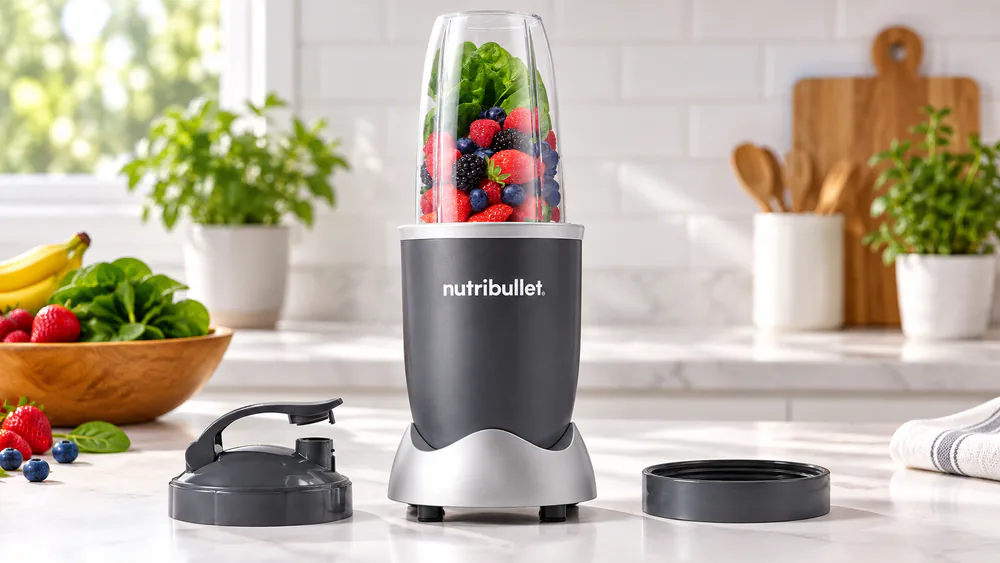
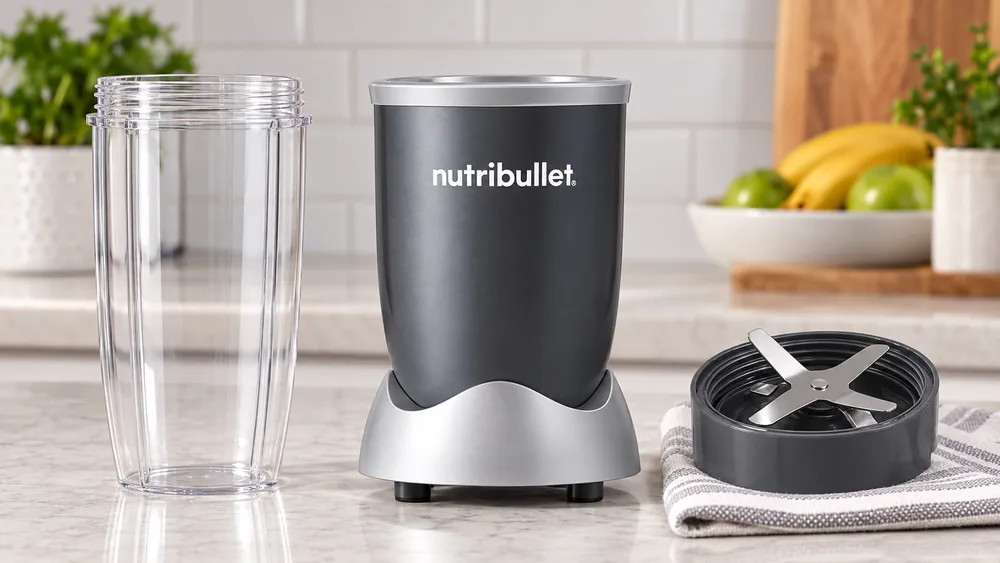
The 600 is a single-speed 600W machine with a 20,000 RPM extractor blade and a 24 oz tall cup, plus an 18 oz short cup in most kits. Operation is push-and-hold only, no buttons or pulse. It is also sold as an 8-piece set for spare cups, and you can check the current price on Amazon for the standard kit.
Soft-fruit and protein-shake batches came out smooth in under a minute. Then we dropped in frozen mango chunks and it began to shake and rock on the counter, forcing stop-shake-and-blend-again cycles, and the motor ran warm afterward.
600W single-speed motor, push-and-hold operation
20,000 RPM twist-off extractor blade
24 oz tall cup; 18 oz short cup in most kits
Cups and lids top-rack dishwasher safe; blade and base hand-wash only
Specifications
Power
600W
Blade speed
20,000 RPM
Capacity
24 oz tall cup; 18 oz short cup
Weight
6.04 lbs
Warranty
1 year
Price
About $50, street pricing varies
Pros
Finishes basic smoothies in under a minute
The quietest model in the NutriBullet line
Gentler motor, which may extend blade life
Cons
Leaves small bits and a grainy texture on frozen fruit when overloaded
Needs more liquid and smaller pieces to blend cleanly
No pulse, so a stuck blend means stopping completely
The 600 kit: a 24 oz tall cup plus an 18 oz short cup.
NutriBullet Pro 900 Review
Key Features
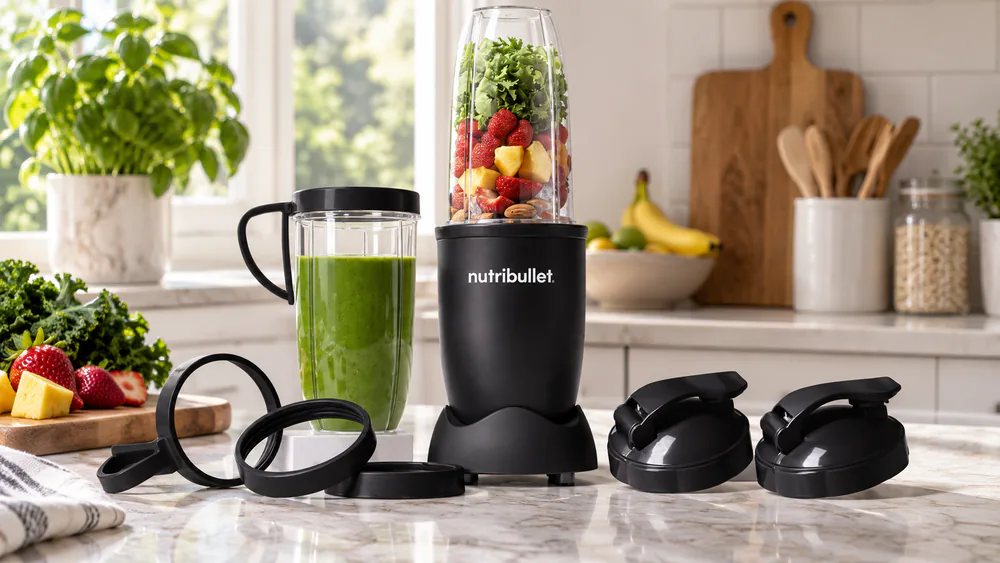
Where the 600 asks you to work around limits, the 900 ignores them. It is a 900W single-speed machine with a 25,000 RPM Pro blade, a 32 oz cup, and a 24 oz cup in the current kit; you can check the current price on Amazon before you decide.
One morning we ran a batch of frozen fruit and whole frozen bananas through the 900, and the shake came out silky in 30 to 40 seconds. Across weeks of testing, the motor never overheated, even on heavy loads. It is the smoother, more forgiving blender of the pair.
900W motor, 50% more power than the 600
25,000 RPM Pro extractor blade
32 oz and 24 oz cups in the current kit
Cups and lids top-rack dishwasher safe; blade and base hand-wash only
Specifications
Power
900W
Blade speed
25,000 RPM
Capacity
32 oz and 24 oz cups
Weight
4.7 lbs
Warranty
1 year
Price
About $80, street pricing varies
Pros
Silky results on greens, ice, almonds, and frozen fruit
32 oz cup covers double servings and meal prep
Cons
Louder than the 600, with a deeper note that carries
The tall cup can be stiff to unscrew after blending
The blade sits low in the tall cup, so a mid-blend shake helps
NutriBullet 600 vs 900: Head-to-Head Comparison
Motor Power and Performance
The 600 runs 600W at 20,000 RPM; the 900 runs 900W at 25,000 RPM, 50% more power and the biggest difference between the two. Both are single-speed push-and-hold machines, so the gap is torque and speed, not new settings.
Blending Speed and Consistency
Both finish most smoothies in under a minute, and a typical 900 batch runs 30 to 40 seconds. The consistency gap is where the extra power shows up, and it grows as ingredients get tougher.
Cup Capacity: Single vs Double Serving
The 600 kit centers on a single 24 oz serving; the cup doubles as your drinking cup. The 900 steps up to a 32 oz cup plus a 24 oz cup for double servings or meal prep, and the bigger cup grips better in the sink.
Noise Level
The 600 is the quietest model in the NutriBullet line. The 900 runs louder with a deeper note, loud enough to wake people in the early morning, though it sits more stable with less vibration. If anyone sleeps in, quiet matters more than wattage.
Blade Design and Accessories
Both use a twist-off stainless extractor blade, hand-wash only; cups and lids go in the dishwasher. The 900's Pro blade spins at 25,000 RPM against the 600's 20,000 RPM. The Special Edition ships three cups and flip-top lids.
Tip. Hand-wash the blade and dry the gasket completely. The gasket is not replaceable, and it is the first place mold grows.
Price and Value for Money
Right now the 600 runs about $49.99 to $54.99 and the 900 about $77.00 to $84.27, a gap of roughly $25 to $30. Street pricing moves week to week and varies by retailer and colorway.
Motor power and performance
Pro 900
Blending speed and consistency
Pro 900
Cup capacity
Pro 900
Noise level
NutriBullet 600
Blade design and accessories
Pro 900
Price and value for money
NutriBullet 600
Real-World Performance Tests
We ran both blenders through the same four tests on the same counter.
Ice Crushing Test
Both crush ice, but they want different things from you. The 600 needs enough liquid and small pieces; heavy ice makes it shake and rock, forcing stop-and-restart cycles with no pulse button. The 900 plows through ice and frozen fruit.
Warning. Add liquid before any ice or frozen fruit, keep runs short, and never blend hot liquids.
Frozen Fruit Smoothie Test
This is the test that separates the two. The 600 made a drinkable but grainy smoothie and needed more liquid to keep the blades turning. The 900 made the same batch silky in 30 to 40 seconds, with whole frozen bananas and a thicker result.
Leafy Greens and Fibrous Produce
Spinach blended fine on both, though the texture differed. The 900 turned spinach, ice, and almonds silky in seconds, with chia and flax seeds fully broken down.
Nut Butter and Grinding
Neither is built for nut butter, but both can do it. On the 600 it works only in small batches, slow and messy. The 900's torque handles almonds and seeds more easily and finishes smoother.
Which One Should You Buy?
Both are easy to find at retail, and you can order them directly from NutriBullet's Pro 900 page or browse the full blender lineup.
Choose the NutriBullet 600 If You...
You make single-serving smoothies from soft fruit or protein powder a few times a week. You shop on a budget first, and the price gap above settles the argument before the wattage does.
Choose the NutriBullet Pro 900 If You...
Frozen fruit, seeds, and greens are on your weekly menu and you want them smooth without babysitting. You make double servings or meal prep, and you do not mind a louder blender.
Our Pick: Best Overall
Read the two lists against how the motor gets used in your week. Most mornings means the Pro 900 is our pick; the score and reasoning are in the final verdict below. A few times a week, the 600 keeps its budget case.
Frequently Asked Questions
Can the NutriBullet 600 crush ice?
Yes, with the right setup. Pour liquid in first, keep the ice pieces small, and blend in short bursts; the ice test above explains why the routine matters. Follow that routine and the 600 handles ice fine.
Are the cups interchangeable between the 600 and 900?
No. The two models share no cups, lids, or blades, per the manufacturer's own FAQ; match replacements to your model number.
Which model is quieter?
The 600, and by a clear margin in our testing. Blend before sunrise and that margin matters, because the 900's deeper note is loud enough to wake people in the early morning.
Is the 900 worth the extra cost?
Yes, for most daily drinkers. The final verdict above walks through the reasoning; the short version is that the 900 earns its price the first time you blend frozen fruit. If your routine is soft fruit and protein shakes a few times a week, the 600 does the job for less.
How long do these blenders last?
Treat the blade as a yearly consumable: blades carry about six months of useful life, and the 600's gentler motor may extend that. A heavily used 600 tends to be replaced around the three-year mark, when the motor bearings squeal; earlier units have run eight years or more.
Which is better for frozen fruit smoothies?
The 900, and it is not close. It handles whole frozen bananas and makes thicker shakes with less liquid, which is the practical version of the power gap. If frozen fruit is on your weekly menu, that is the difference worth paying for.
Final Verdict and Recommendation
Our pick is the NutriBullet Pro 900. Across weeks of side-by-side testing, the 50% power gap showed up where it matters: silky frozen-fruit smoothies, fully broken-down seeds, and thicker shakes from a 32 oz cup, for about $25 to $30 more than the 600. The 600 remains the budget pick: quieter, cheaper, and capable of a daily soft-fruit smoothie. Budget for a replacement blade at the one-year mark. If we blended only twice a week, we would take the 600 and pocket the difference.
Key takeaway. Our pick: NutriBullet Pro 900, 4.7 out of 5. The 600 is the budget value at 4.2 out of 5, but the 900 earns its extra cost on frozen fruit.