
Recipes
Banana Nut Cake Recipe

As an Amazon Associate we earn from qualifying purchases. We may earn a commission from links on this page, at no extra cost to you. Learn more.
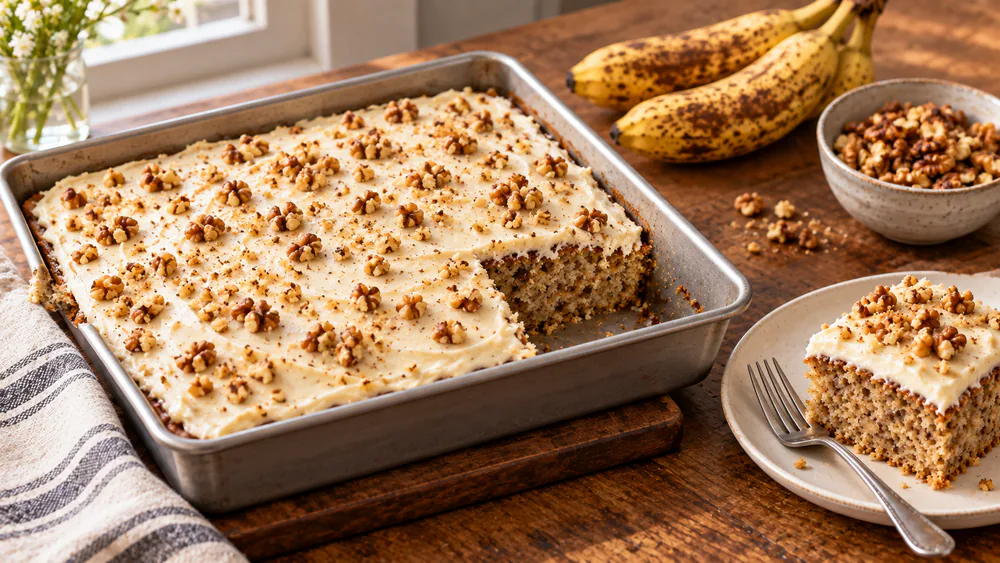
Banana nut cake is the moist, warm-spiced, nutty cousin of a plain banana bread, baked tall and tender with a soft crumb and a crackle of toasted walnuts in every slice. Ripe bananas do the heavy lifting, cinnamon and nutmeg round out the sweetness, and a simple cream cheese frosting turns a humble bake into a dessert worth setting on the table.
This is our go-to from-scratch version, built to be forgiving. You mash, mix, fold in nuts, and bake in one pan, with no fussy layer assembly unless you want it.
We baked this cake more than a dozen times across a full year in real family-of-five conditions, so the notes here come from repeated batches rather than a single test. We ran double 9x13 batches for weekend meal-prep, carried a single sheet to two school potlucks, and squeezed in quick weeknight rounds after dinner, which is exactly where the make-ahead and freezer notes got pressure-tested.
Why You'll Love This Banana Nut Cake
This cake earns its spot for a few plain reasons. It stays moist and tender for days, because ripe bananas and an acidic dairy keep the crumb soft. It is easy, mixed by hand in two bowls with no mixer. And it is flexible: bake it as a sheet, frost it or leave it bare, swap walnuts for pecans, and it still works.
It is also a crowd-pleaser. A single 9x13 pan serves about 12, which makes it a sensible bake for a party or a week of after-dinner slices. The familiar, comforting flavor makes it perfect for any occasion.
Ingredients You'll Need
Everything here is pantry-standard: flour and leavener for structure, ripe banana and dairy for moisture, warm spices for flavor, and nuts for crunch.
- 2 cups all-purpose flour, scooped and leveled
- 1 teaspoon baking soda and 1/2 teaspoon baking powder
- 1 teaspoon cinnamon and 1/4 teaspoon nutmeg
- 1/2 teaspoon salt
- 1/2 cup butter, softened, or vegetable oil
- 1 cup granulated sugar, or half granulated and half brown
- 2 large eggs, at room temperature
- 2 teaspoons vanilla extract
- About 1.5 cups mashed banana, roughly 3 large or 4 medium very ripe bananas
- 1/2 cup buttermilk or sour cream, at room temperature
- 1 cup chopped walnuts or pecans, lightly toasted
Room-temperature eggs and dairy blend in more evenly than cold ones and give a better, more even crumb.
Tip. Buttermilk, sour milk, or sour cream is the real moisture engine in this cake. It reacts with the baking soda to keep the crumb tender for days, so do not skip the acidic dairy.
Choosing the Right Bananas
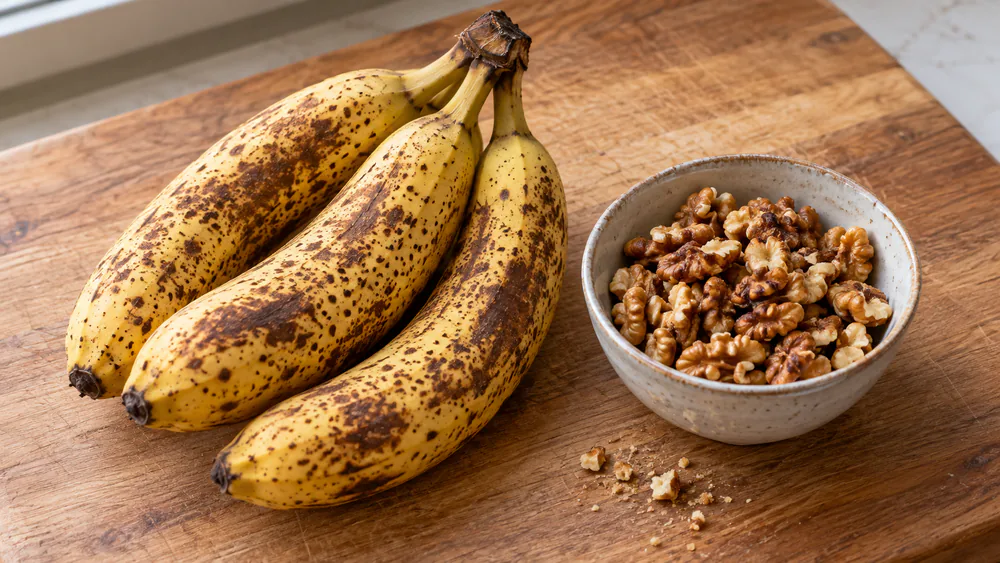
Ripeness is the single biggest lever you have. The moistest crumb comes from spotty, heavily brown-speckled bananas, and more brown spots mean sweeter, bolder banana flavor. Firm yellow bananas do not carry the same sweetness into the batter.
If your bananas are not there yet, our closest guide on how to ripen bananas in the oven covers the quick-fix method. Once they are soft and speckled, mash them well and pull out any large chunks. Removing big banana pieces before mixing prevents wet, mushy pockets in the finished crumb.
Note. Letting the mashed banana rest for about 15 minutes before mixing deepens the banana flavor and adds a little more moisture. Build that pause in while you measure the dry ingredients.
Best Nuts for Banana Nut Cake
Walnuts and pecans are the two standard choices, and they are used interchangeably. Walnuts bring a slightly earthy edge against the sweet banana, while pecans lean softer and more buttery. Pick whichever you like.
Whichever nut you choose, toast it first. A light toast before folding wakes up the oils and gives a firmer crunch that survives in the batter. We also lean toward crushing rather than coarsely chopping, since crushed nuts fold in more evenly and land crunch in every bite without weighing down the soft crumb.
How to Make Banana Nut Cake
The method is simple and mostly hands-off. You mix dry and wet separately, combine them gently, fold in the nuts, and bake in a single 9x13 pan at 350 degrees F. Grease and flour the pan before you start.
Step-by-Step Instructions
- Heat the oven to 350 degrees F and prep a 9x13 pan.
- Whisk the flour, baking soda, baking powder, cinnamon, nutmeg, and salt in one bowl.
- In a second bowl, beat the butter or oil with the sugar, then mix in the eggs and vanilla until smooth.
- Stir the mashed banana and the buttermilk or sour cream into the wet bowl.
- Add the dry ingredients to the wet and stir just until combined, stopping while a few lumps remain.
- Fold in the toasted nuts with a few gentle strokes.
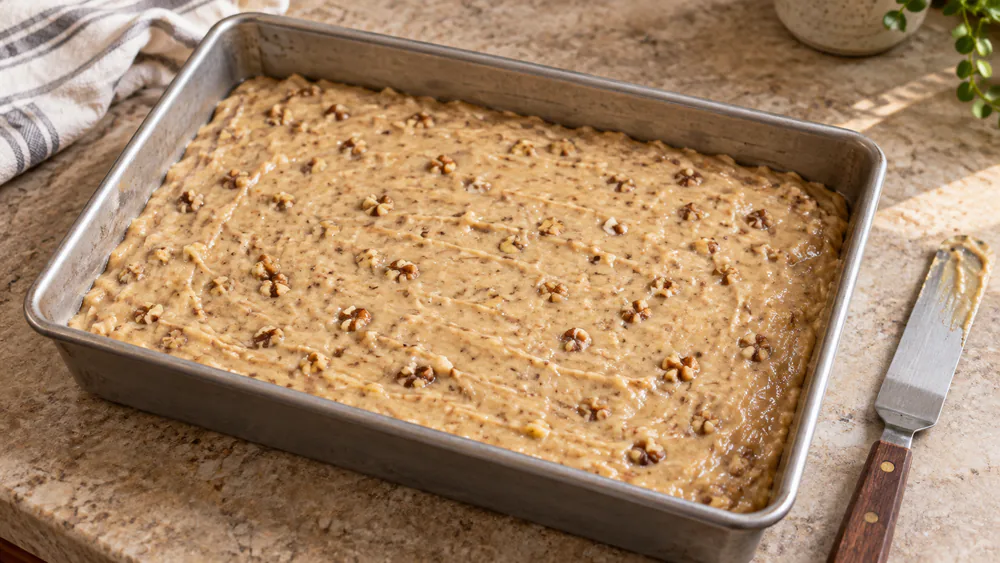
- Scrape the batter into the pan, level the top, and bake until a toothpick comes out clean.
Watch the mixing step closely, because it is where most cakes go wrong. Stopping while a few lumps still show is what keeps the crumb light rather than dense and gummy.
Warning. A 9x13 banana cake bakes roughly 45 to 50 minutes, but bake time swings with pan format and batter depth, so start checking with a toothpick before the low end of that range. Overbaking is a leading cause of a dry cake.
Baking times shift with the pan. Thin 9-inch round layers finish much faster, closer to 23 to 28 minutes each. Let the cake cool completely in the pan before frosting.
Making the Cream Cheese Frosting
Cream cheese frosting is the classic finish, tangy enough to balance the sweet cake. For a full 9x13 pan, beat about 8 oz of cream cheese with 1/2 cup of butter until smooth, then add 3 cups of confectioners sugar and a splash of vanilla. Beat until light and spreadable.
The one rule that matters: the cake must cool completely before frosting. Frost a warm cake and the frosting slides and melts off the top. Short on time? A caramel drizzle or a dusting of confectioners sugar are honest, faster alternatives.
Variations and Substitutions
This recipe bends easily to what you have and how you want to serve it. The same batter works across three formats we reach for most, each with its own oven temperature and timing.
| 9x13 sheet cake | 350 degrees F, 45 to 50 minutes, serves about 12, made with butter or oil |
|---|---|
| 3-layer round cake | 350 degrees F, 23 to 28 minutes per layer, serves about 15 to 18, made with vegetable oil |
| Older 9x9 shortening style | 375 degrees F, about 30 minutes, made with shortening and sour milk |
A few ingredient swaps are worth knowing beyond those three bakes. Oil in place of butter gives a slightly more tender, longer-lasting crumb, while butter brings more flavor. Bake it as a bundt for a frosting-optional presentation, and treat the frosting as swappable: cream cheese for tang, caramel for richness, or nothing at all.
Tip. Leavening depends on the rest of the recipe. When you use an acidic dairy like buttermilk or sour cream, baking soda does most of the lifting, and a little baking powder is insurance for a taller rise.
Recipe Tips for a Moist Cake
Moisture is mostly about a few habits, not a secret ingredient. Measure flour by scooping and leveling rather than packing the cup, since too much flour is a direct route to a dry, heavy cake. Lean on the acidic dairy and the ripe banana together, because they keep the crumb soft past baking day.
Dryness almost always traces back to two things: too much flour, or a cake left in the oven a few minutes too long.
Respect the leavener, too. Stale baking soda or baking powder produces a dense, poorly risen cake even when everything else is right, so check that yours is fresh. Finally, pull the cake at the first clean toothpick. That habit, paired with careful flour measuring, is what keeps this cake moist.
How to Store and Freeze Banana Nut Cake
An unfrosted cake keeps well at room temperature, covered, for a couple of days, since the acidic dairy helps it stay tender. Once frosted with cream cheese, refrigerate it in an airtight container, where it holds about 3 to 5 days; we treat the shorter end as reliable. Bring chilled slices back to room temperature before serving.
It also freezes nicely, which makes it a smart make-ahead. Cool completely, wrap well, and freeze in an airtight, freezer-safe container for up to 3 months. Thaw wrapped at room temperature, and frost after thawing if you froze the cake bare. Older shortening-and-sour-milk versions crumble if sliced warm, so cool fully before cutting.
Serving Suggestions
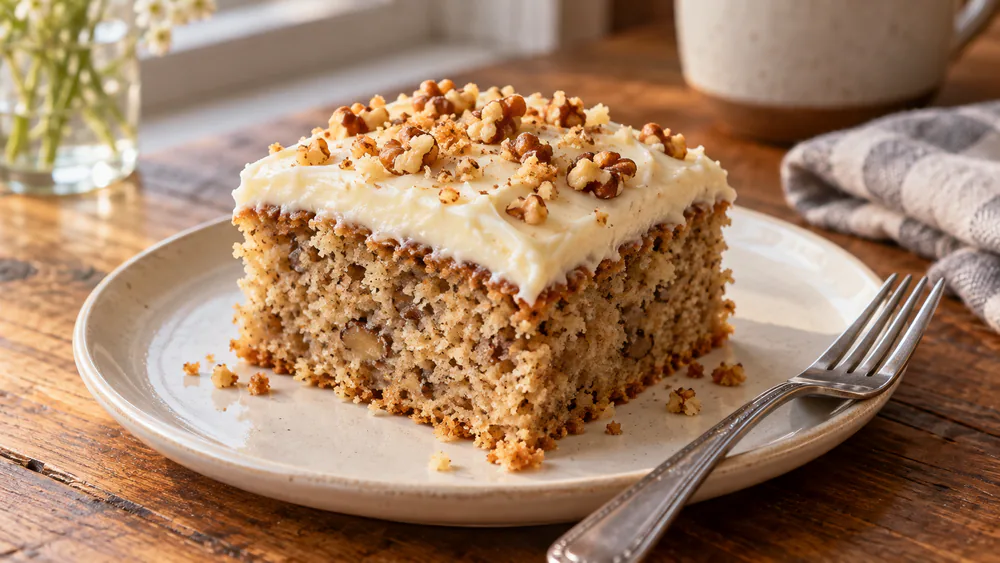
A slice needs nothing but a fork and a cup of coffee. The warm spice and banana read as cozy, a natural for brunch, snacking, and holiday tables: a bare version leans breakfast, a frosted one dessert. For more, top a slice with vanilla ice cream, whipped cream, or a thin caramel drizzle.
Frequently Asked Questions
Why is my banana nut cake dense or not moist?
The two usual culprits are overmixing and too much flour. Once the flour goes in, stir just until combined and stop while a few lumps remain, and scoop and level your flour rather than packing it. Overbaking and stale leavener also dry it out, so use fresh baking soda and pull the cake at the first clean toothpick.
Can I use frozen or nearly-black overripe bananas?
Yes, and they are great here. Thaw frozen bananas fully and drain off the extra liquid that pools, or the batter runs too wet. Nearly-black bananas are past pretty but perfect for baking, since they are the sweetest and mash to a smooth puree with no chunks to fish out.
Can I make it gluten-free?
A cup-for-cup gluten-free all-purpose blend that already contains xanthan gum works as a one-to-one swap for the flour. Let the batter rest about 10 minutes before baking so the flours hydrate and the crumb does not turn gritty.
Why does my cake sink in the middle?
A center sink usually means the cake came out before it set, or the leavener over-rose and collapsed. Bake until the center springs back and a toothpick pulls clean, keep the oven closed for the first two-thirds of the bake, and measure the leavener level rather than heaping.
How do I store it, and does it freeze?
Keep an unfrosted cake covered at room temperature for a couple of days, and refrigerate it once frosted with cream cheese, where it holds about 3 to 5 days. It also freezes well for up to 3 months: cool completely, wrap tightly, and thaw at room temperature, frosting after thawing if you froze it bare.
Can I make it dairy-free?
Yes. Use oil for the butter, and swap the buttermilk for a plant milk soured with a teaspoon of lemon juice so it still reacts with the baking soda. Skip the cream cheese frosting, use a dairy-free version, or finish with a dusting of confectioners sugar.
Final Thoughts
This is the banana nut cake we come back to because it is honest and hard to wreck: ripe bananas and acidic dairy for a moist, tender crumb, toasted nuts for crunch, and one pan to wash. Get the bananas spotty, keep the mixing light, and pull the cake at the first clean toothpick, and the rest takes care of itself. Frost it, drizzle it, or leave it plain; it is a warm, nutty cake worth keeping in your rotation.
Read next
Bake it while your bananas are spotty
Get the bananas brown, keep the mixing light, and you are one pan away from a moist, nutty cake worth sharing.