
Recipes
Chimichurri Pizza Recipe with Fresh Herb Sauce

As an Amazon Associate we earn from qualifying purchases. We may earn a commission from links on this page, at no extra cost to you. Learn more.

The first time we spooned leftover batch-made chimichurri onto a pizza base instead of red sauce, we were mostly trying to use up a jar before it turned. What came out of the oven stopped the conversation. The herb-and-garlic sauce over melty cheese was craveable enough that we made the whole thing again the next night, this time on purpose.
That is the honest origin of this recipe. Chimichurri is built for grilled steak, but spread thin over dough and cheese, it becomes something fresh and a little unexpected. This is a bold twist on classic pizza that still comes together on a weeknight.
We tested this pizza across several bakes to work out what matters: how thin to spread the sauce, when to add it, and how to keep the crust crisp under juicy tomatoes. Everything we learned is below, plus a printable recipe card.
What Is Chimichurri Pizza?
Chimichurri pizza swaps the usual tomato sauce for chimichurri, an uncooked herb sauce that comes from Argentina and shows up across Argentine, Uruguayan, Paraguayan, and Brazilian cooking. On steak it is a bright, garlicky finish. On pizza it does the same job, cutting the richness of the cheese with fresh parsley and vinegar.
There are two main styles of the sauce: green chimichurri verde and red chimichurri rojo. Parsley is usually the base for both. The classic green version leans on finely chopped flat-leaf parsley, minced garlic, olive oil, oregano, chili peppers, and red wine vinegar or lemon juice.
So why does the fusion work? The sauce is loose, herbaceous, and slightly acidic, and that acidity is exactly what melty mozzarella and sweet tomatoes need to feel balanced. You get bold flavor without a heavy, saucy pizza, and it reads as fresh rather than rich. That is what makes it stand out on a table full of familiar slices.
Why You'll Love This Recipe
This is the kind of recipe that earns a permanent spot in the rotation.
- It is genuinely different. Chimichurri gives pizza night a fresh, herbaceous angle without asking you to learn anything new.
- Most of the work happens ahead. The sauce keeps for days, so assembly is fast.
- It is forgiving. Store-bought dough works, and the toppings are simple.
- It scales. One batch of chimichurri can dress several pizzas, so it is easy to feed a crowd.
We batch-cook for a family of five, and this one passes the real test: the leftovers always get eaten.
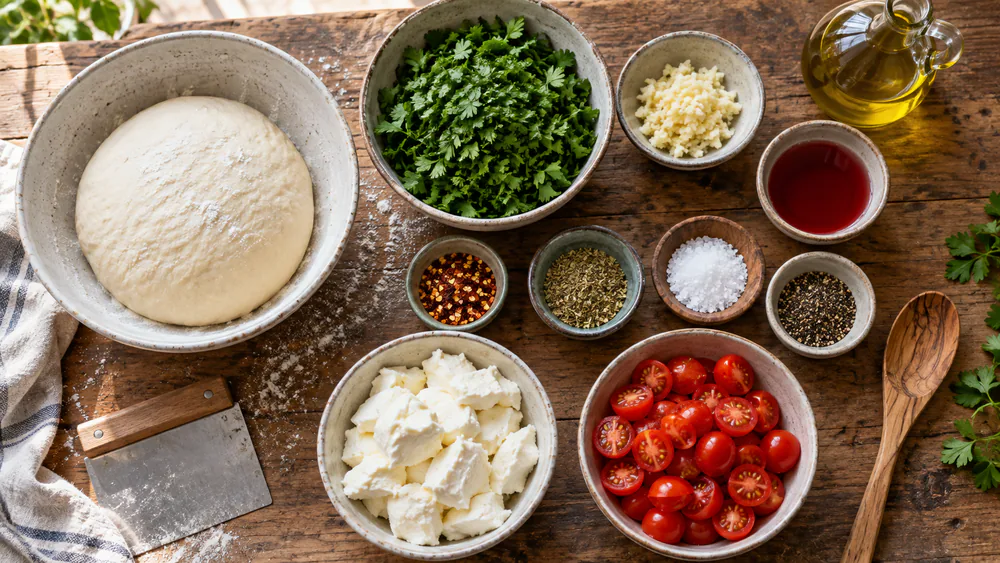
Ingredients You'll Need
A quick note before the list. The exact chimichurri ratios below are our working amounts, not a universal standard, since every source measures the sauce a little differently. Treat them as a starting point and adjust the garlic and vinegar to taste.
For the Chimichurri Sauce
- 1 cup finely chopped flat-leaf parsley
- 3 to 4 cloves garlic, minced
- 1/2 cup olive oil
- 1 tablespoon dried oregano
- 2 tablespoons red wine vinegar, plus more to taste
- 1/2 to 1 teaspoon red pepper flakes or a fresh chili
- Salt and black pepper to taste
Best substitutions. No red wine vinegar? Lemon juice brings the same brightness. Fresh oregano works in place of dried; use about a tablespoon chopped. Cilantro can stand in for part of the parsley if you like its flavor, and a minced shallot adds gentle sweetness in place of some of the raw garlic.
For the Pizza Base and Toppings
- About 15 oz store-bought refrigerated pizza dough (or your favorite homemade dough)
- 8 oz fresh mozzarella, torn or sliced
- A handful of sharp provolone, grated (optional but recommended for depth)
- 1 cup cherry or sweet tomatoes, halved
- 1/4 red onion, thinly sliced
- Cornmeal or flour, for the peel or pan
- Olive oil, for brushing the crust
Best substitutions. Fresh mozzarella gives the best melt, but a low-moisture block works if you pat it dry first. No provolone? A little parmesan adds a similar sharp note. Grape tomatoes swap in for cherry tomatoes one to one.
Equipment
You do not need special gear, but a couple of things help. A pizza stone or steel gives the crispest base, since it holds high heat and cooks the bottom fast. A parchment-lined baking sheet is a perfectly good stand-in if you do not own one.
If you have a peel, dust it with cornmeal so the pizza slides off cleanly. A hot outdoor pizza oven, like an Ooni, will cook this in a couple of minutes and is worth using if you have it, though a standard home oven handles it well. Beyond that: a sharp knife, a mixing bowl, and a wire rack for cooling so the base does not steam.
How to Make Chimichurri Sauce
Here is the single most important tip: chop everything by hand. Chimichurri is meant to be textured, not a puree, so resist the urge to reach for the food processor. When we chopped the parsley and garlic by hand instead of blitzing them, the sauce stayed loose and spoonable and sat on the dough like a herb oil rather than a thick paste. That texture is the whole point.
Finely chop the parsley and mince the garlic, then stir them together with the olive oil, oregano, vinegar, red pepper, salt, and pepper. Taste and adjust; it should be bright and a little sharp.
Now let it rest. Give the chimichurri at least 1-2 hours, or ideally overnight, before you use it. Letting it sit for a couple of hours noticeably deepened the garlic-and-oregano flavor compared with using it straight from the bowl. This is why the sauce is the perfect make-ahead job.
Note. The sauce keeps up to one week in an airtight container in the fridge, so a single batch on Sunday can dress pizzas all week. Bring it back to room temperature and give it a stir before spreading.
How to Make the Pizza
With the sauce resting and the toppings prepped, the pizza itself comes together in minutes. Work through it in four steps.
Step 1: Prep and Stretch the Dough
Bring your dough to room temperature first; cold dough fights back and tears. Once it relaxes, stretch it to about 12 inches on a cornmeal-dusted peel or a parchment-lined sheet. Brush the outer rim lightly with olive oil so it browns into a golden edge.
Step 2: Add the Cheese and Chimichurri
Scatter the torn fresh mozzarella and the optional provolone over the base, leaving the rim bare. Then spoon on the chimichurri in a thin layer, keeping a clear half-inch border around the edge. Go easy here. A thin, controlled layer of sauce keeps the center of the crust from steaming into a soggy patch.
Tip. Do not overload the base. Use only part of your chimichurri now and save the rest to drizzle on after baking. A thin layer under the cheese plus a fresh finish on top gives you the best of both: baked depth and raw brightness.
Step 3: Top with Tomatoes and Onion
Arrange the halved cherry tomatoes cut-side up and scatter the thin-sliced red onion over the top. Halved tomatoes matter here; whole ones release more liquid as they cook, and keeping them cut-side up lets moisture escape instead of pooling on the crust.
Step 4: Bake (Standard Oven vs. Pizza Oven)
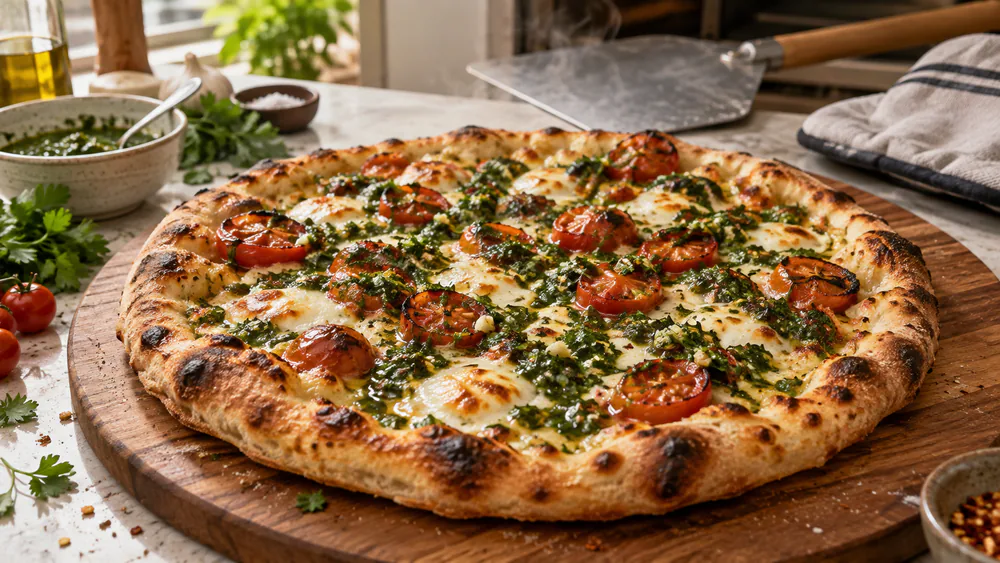
Bake in a very hot oven for the crispest result. In our kitchen, around 500F on the lowest rack browned the crust in under ten minutes while the fresh mozzarella just melted, keeping the herb sauce bright rather than scorched. Bake temperatures across recipes run anywhere from 450F to 500F, so use what your oven does best; hotter simply crisps faster. Expect roughly 8 to 15 minutes depending on temperature, and pull the pizza when the crust is golden and the cheese bubbles.
A pizza oven runs much hotter and cooks this in a couple of minutes. Watch it closely, since the thin sauce and fresh cheese over-brown quickly at those temperatures.
Tips for the Best Chimichurri Pizza
A few habits made the biggest difference across our bakes.
- Keep the sauce layer thin with a clear border. This, plus halved rather than whole tomatoes, is what kept the center of our crust from steaming into a soggy patch.
- Finish with fresh sauce. Adding a drizzle of extra chimichurri after baking, once the pizza has cooled a minute or two, keeps the raw-herb brightness that baking dulls.
- Preheat properly. A stone or steel needs a good 30 to 45 minutes in a hot oven to do its job. Do not rush it onto a cool surface.
- Let the chimichurri rest. Same rule as before: a couple of hours of rest deepens the flavor more than any last-minute tweak.
- Cool on a rack. Even two minutes on a wire rack keeps the bottom crisp instead of steaming on a plate.
Variations (Argentine vs. Mexican Chimichurri, Add-Ins)
The word chimichurri covers more than one sauce, and the difference matters a lot on pizza.
The classic Argentine version is the herb-forward green sauce we have been building: loose, mild, with just a slight tinge of spice. There is also a Mexican pizza chimichurri, from the Leon and Bajio region, built on mayonnaise, mustard, chile de arbol, garlic, onion, oil, and vinegar. It is a completely different animal: thick, creamy, and much spicier. When we tried the Mexican-style sauce, it was dramatically hotter and richer than the Argentine one, so a light hand goes a long way if you swap it in.
This base also takes well to add-ins. Grilled steak strips lean into chimichurri's roots, roasted red peppers add sweetness, and crumbled feta brings a salty tang. To bump the heat, add more red pepper flakes or a few slices of fresh chili before baking.
Serving Suggestions and Pairings
This pizza is bright and herby, so it pairs best with simple, fresh sides. A crisp green salad with a lemon vinaigrette echoes the sauce without competing. Grilled or roasted vegetables work too, especially anything charred that likes a chimichurri drizzle of its own.
To drink, a light red like a Malbec nods to the Argentine origins. Cut the pizza into smaller squares and it becomes a good party appetizer, with extra sauce on the side for dipping.
How to Store and Reheat Leftovers
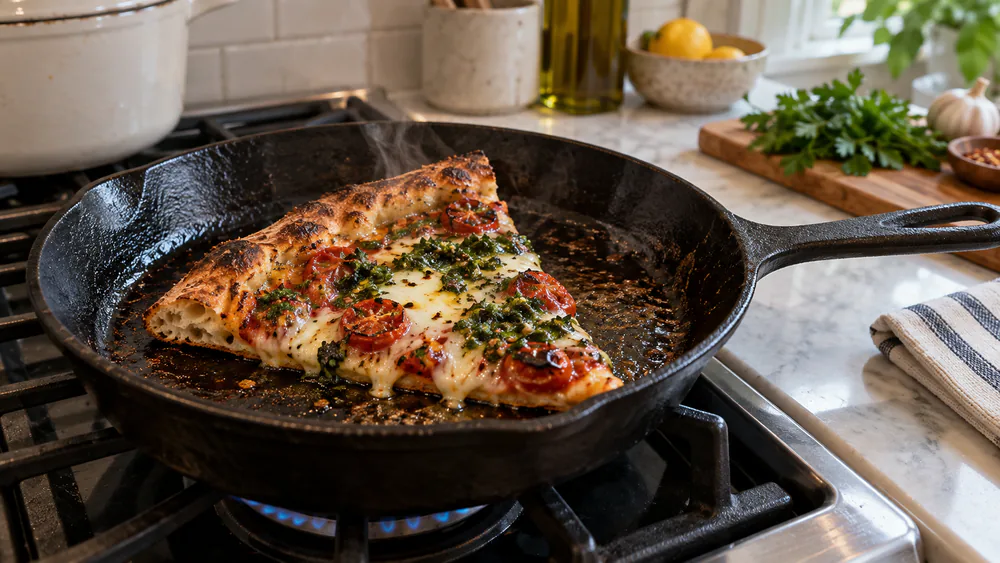
Chimichurri pizza keeps well, which is part of why we love it for meal prep. Store cooled leftover slices in an airtight container in the fridge. Cooked pizza keeps safely for 3 to 4 days refrigerated, and this one holds its flavor because the herb sauce stays bright.
To reheat, skip the microwave if you can; it softens the crust. A hot skillet over medium heat for a few minutes crisps the bottom back up, or use a 375F oven until heated through. Either way, reheat until the slice reaches an internal temperature of 165F. A fresh spoonful of chimichurri after reheating brings back that just-baked brightness.
Chimichurri Pizza Recipe (Recipe Card)
Here is the whole thing in one place, ready to print.
Chimichurri Pizza with Fresh Herb Sauce
Prep time: about 20 minutes (plus 1-2 hours to rest the sauce)
Bake time: 8 to 15 minutes
Makes: one 12-inch pizza
| Component | What you need |
|---|---|
| Sauce | Parsley, garlic, olive oil, oregano, red wine vinegar, red pepper, salt, pepper |
| Base | About 15 oz pizza dough, stretched to 12 inches |
| Cheese | Fresh mozzarella, optional sharp provolone |
| Toppings | Halved cherry tomatoes, thin-sliced red onion |
| Finish | Extra chimichurri, drizzled after baking |
Steps
- Chop the parsley and garlic by hand and stir together all sauce ingredients. Rest 1-2 hours or overnight.
- Bring dough to room temperature and stretch to about 12 inches on a cornmeal-dusted peel or parchment.
- Add mozzarella and provolone, then a thin layer of chimichurri, leaving a half-inch border.
- Top with halved tomatoes cut-side up and sliced onion.
- Bake at 475F to 500F on the lowest rack, 8 to 15 minutes, until the crust is golden and cheese bubbles.
- Cool a couple of minutes on a rack, then drizzle with fresh chimichurri and serve.
We have not calculated per-slice nutrition, since it swings widely with the dough and cheese you choose, so we would rather not give you numbers we cannot stand behind.
Frequently Asked Questions
Can I make the chimichurri ahead of time?
Yes, and you should. The sauce actually improves with a rest of 1-2 hours or overnight, and it keeps up to one week in an airtight container in the fridge. Bring it to room temperature and stir before using.
Do I add chimichurri before or after baking?
Both, ideally. Spread a thin layer under the cheese before baking for depth, then drizzle fresh chimichurri on top after the pizza cools a minute or two. The finishing drizzle keeps the raw-herb brightness that baking dulls.
What's the difference between Argentinian and Mexican chimichurri for pizza?
Argentine chimichurri is a loose, mild, herb-based sauce of parsley, garlic, oil, and vinegar. The Mexican pizza version is a thick, creamy, much spicier sauce built on mayonnaise, mustard, and chile de arbol. Use a light hand if you swap in the Mexican style.
Can I use store-bought dough?
Absolutely. About 15 oz of refrigerated pizza dough works well. Just bring it to room temperature first so it stretches to 12 inches without tearing.
How do I store and reheat chimichurri pizza?
Refrigerate cooled slices in an airtight container for 3 to 4 days. Reheat in a hot skillet or a 375F oven until the slice reaches 165F, then add a fresh spoonful of chimichurri to brighten it back up.
Final Thoughts
Chimichurri pizza came out of our kitchen as a genuine keeper, the rare experiment that turned into a regular request. The herb-and-garlic sauce over melty cheese is craveable enough to make the base recipe again just for the pizza, and the make-ahead sauce means it fits a busy week.
If you take one thing from our testing, make it this: keep the sauce thin, bake it hot, and finish with a fresh drizzle. Do that, and you will have a crisp, herbaceous slice that turns an ordinary pizza night into something worth talking about.
Read next
Ready to upgrade your kitchen?
Browse more tested recipes and honest kitchen guides to plan your next cook.