As an Amazon Associate we earn from qualifying purchases. We may earn a commission from links on this page, at no extra cost to you. Learn more.
Picking a butcher knife should be a ten-minute decision. You want a blade that holds an edge, a handle that still feels right in hour three, and a steel that sharpens back easily. Instead you find curved cimeters, heavy cleavers, breaking knives, and boning blades. The steel names read like legal documents, and prices run from $17 to $375. We tested 10 top butcher knives through a month of real prep in rotation, breaking down beef, pork, and poultry. We checked edges after every session. We scored edge retention, comfort, ease of re-sharpening, and value the way a working kitchen does. Here is what earned a place on our block.
We ranked these 10 butcher knives after a month of rotation testing. We scored edge retention, comfort and handle wear, ease of re-sharpening, and value.
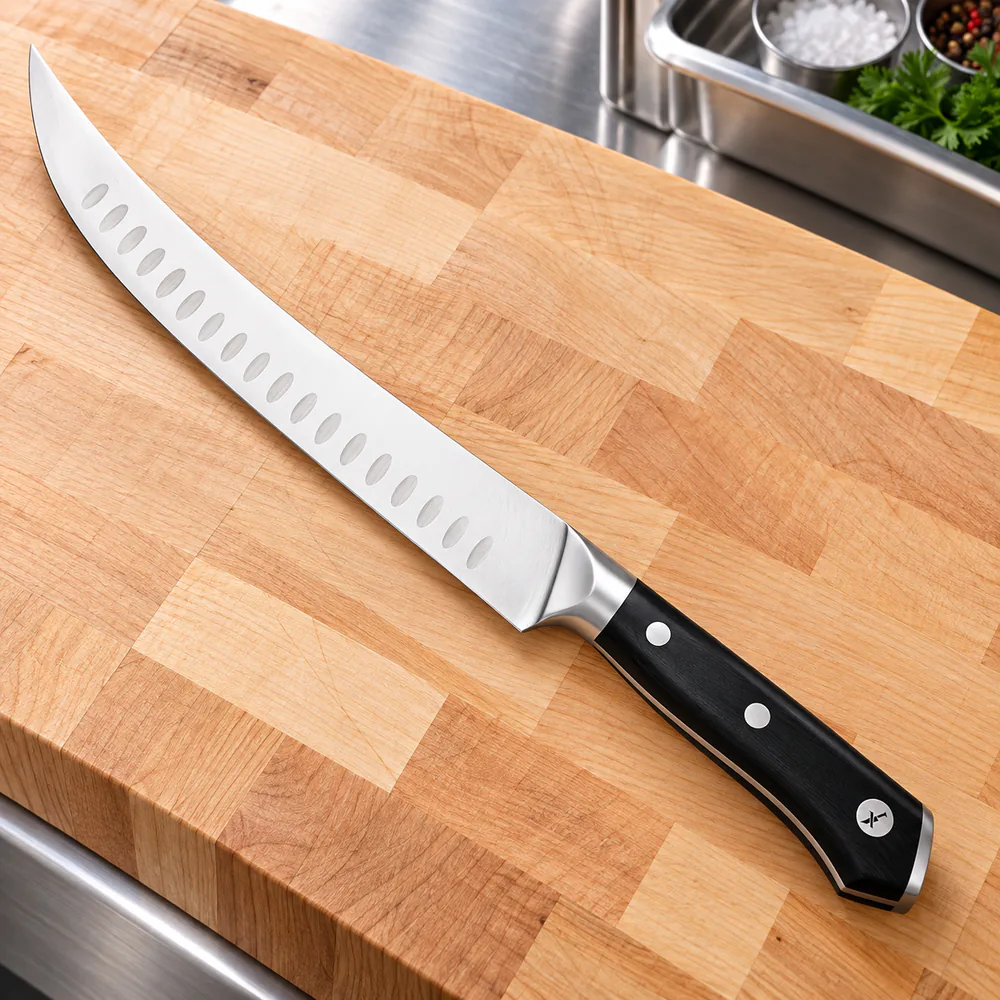
For breaking down a whole brisket or separating a beef eye round from the bone, the Cutluxe 10-inch cimeter is the blade we reached for most. It is forged from high-carbon German steel at 56+ HRC. The 10-inch curved profile rocks through large primals and frees meat from bone with a smooth draw. The full-tang pakkawood handle is triple riveted and comfortable. The hand-sharpened granton edge, ground to 14-16 degrees per side, arrives scary sharp. After a month of rotation testing and months of daily use breaking down beef eye rounds and pork shoulders, it still cut cleanly and looked close to new. The granton divots really do keep meat from sticking, which you notice on a long session.
Pros
Forged German steel at 56+ HRC holds its edge through heavy use
Scary sharp out of the box, and easy to keep that way
Full tang with a comfortable triple-riveted pakkawood grip
Granton edge reduces sticking on fatty meat
Lifetime warranty against material and workmanship defects
Cons
Rivets, bolster, and tang sit proud of the scales and can create hot spots
Hand wash only, with occasional handle oiling
Street pricing varies; list price sits near $45
The tradeoff shows up in your hand, not on the board. The rivets, bolster, and tang sit slightly proud of the pakkawood scales, creating hot spots on a long shift. This is not a dishwasher blade, and the handle needs occasional oiling. Street pricing moves week to week, with the same knife listing near $45 on some retail pages, so check the current price before you buy.
2
Victorinox Fibrox Pro 8-Inch Curved Breaking Knife
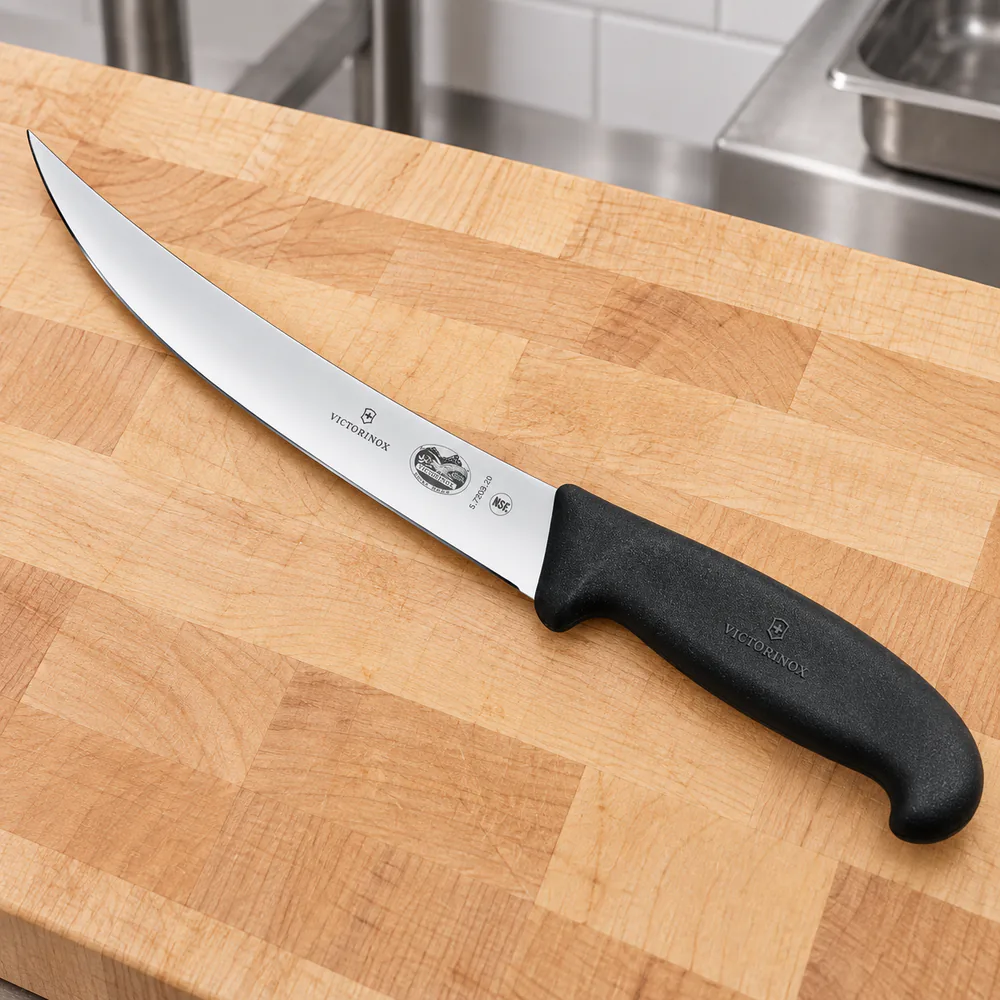
For trimming fat and membrane on a long day of prep, the Victorinox 8-inch curved breaking knife is the best value in this roundup. At about 0.26 lb, this stamped X50CrMoV15 blade (56-58 HRC) lets you work for hours without fatigue. The textured Fibrox handle gave us the best wet grip of the test. The curve is the point: it keeps the pointed tip out of the fat while you trim, so the blade does not dig into your work. In one session we broke down six whole beef tenderloins, a bone-in rib roast, and two boneless rib roasts. The edge came back to razor-fine far more easily than the harder steels here.
Pros
Featherlight at about 0.26 lb, ideal for all-day trimming
Textured Fibrox handle grips even when wet or greasy
Curved blade keeps the tip out of fat and connective tissue
NSF certified and dishwasher safe
Easy to sharpen back to razor-fine
Cons
Stamped steel needs sharpening more often than forged blades
Not the blade for heavy bone work
Street pricing has roughly doubled over the years
That easy-sharpening nature cuts both ways. The stamped blade needs attention more often than a forged one, so we reached for the steel before most sessions. It is NSF certified, dishwasher safe, and Swiss made, with a lifetime guarantee. A decade of service with minimal fuss is common, which matches the reputation for hard-working Swiss cutlery. Street pricing has roughly doubled over several years, so the exact figure moves week to week.
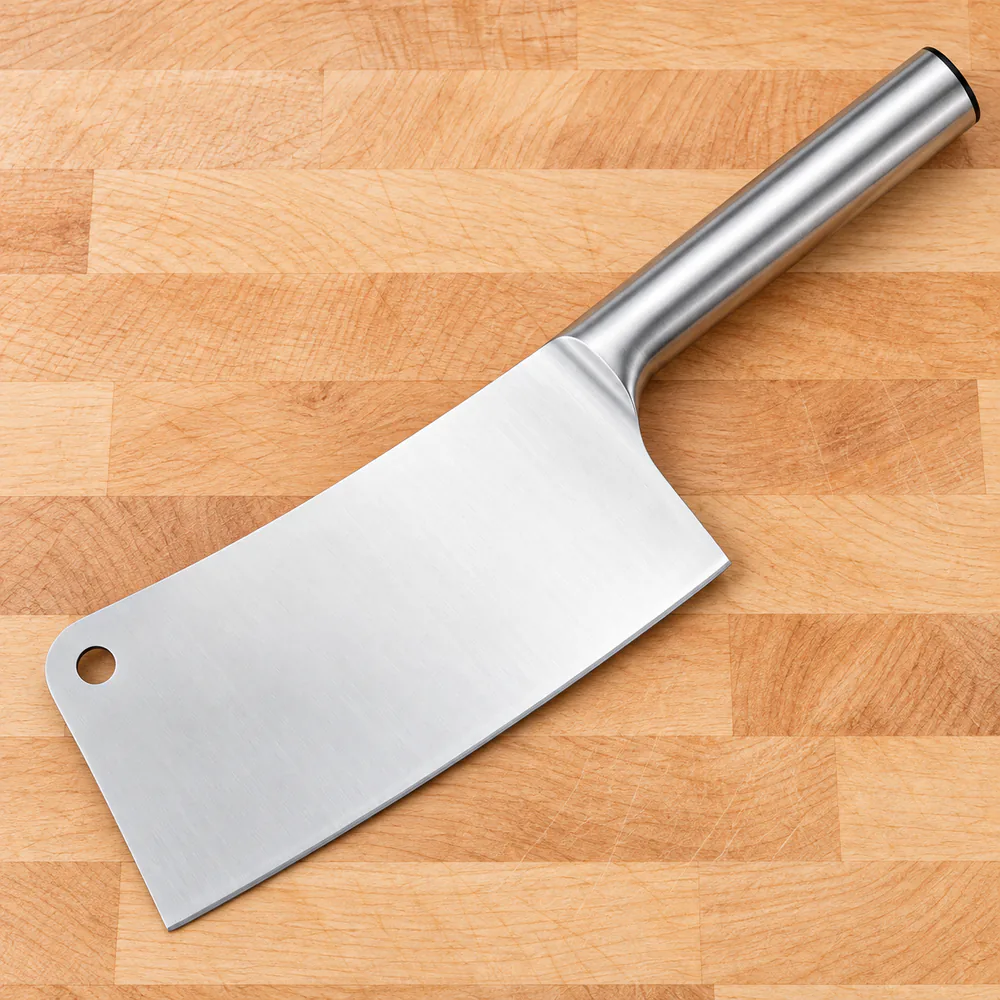
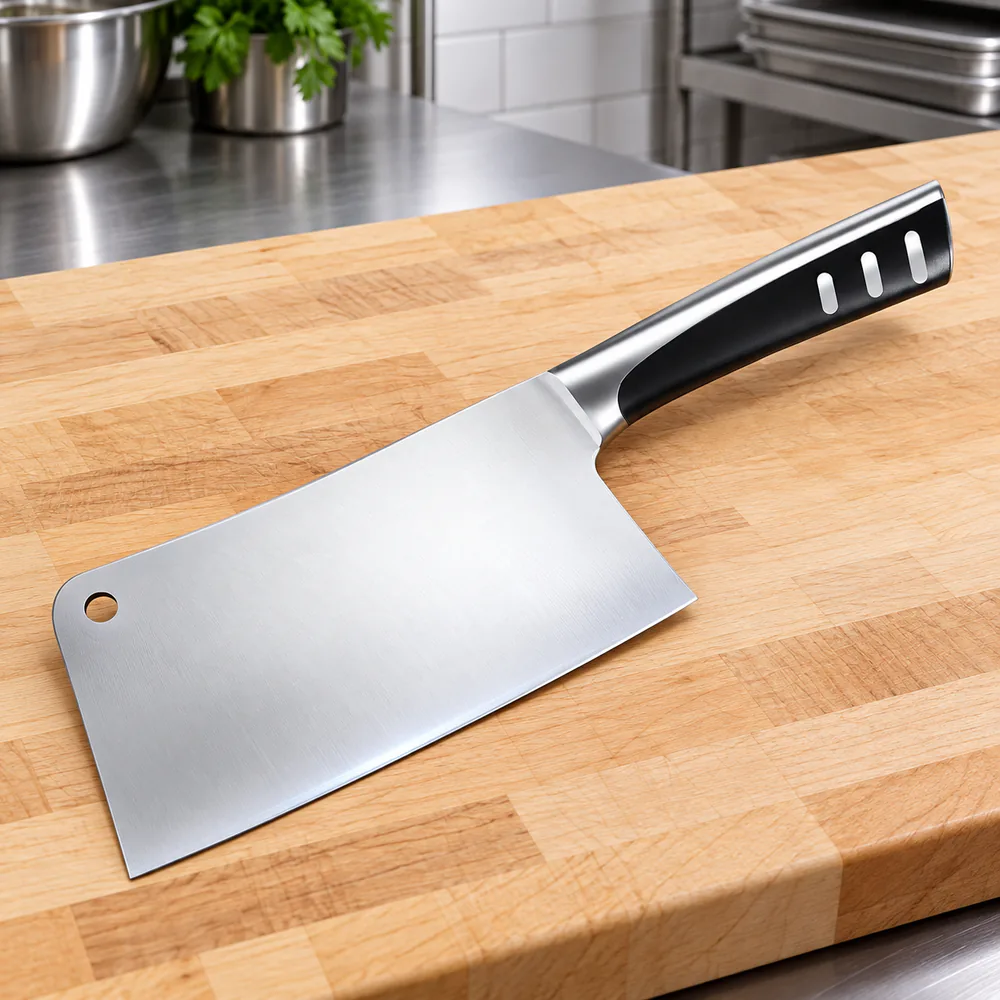
For splitting a chicken through the backbone or cutting ribs into sections, the Mueller 7-inch meat cleaver made quick work of every bone job we gave it. It is a single solid piece of forged German stainless steel with a seamless full-tang handle that will not come apart. At about 1.1 lb it carries enough heft to do the work. The wide blade doubles as a bench scraper when you move chopped meat off the board. The hand-sharpened 18-degree edge cut clean slices through everything we threw at it.
Pros
Made quick work of whole chickens and ribs
Single-piece forged German stainless with a seamless full-tang handle
Wide blade doubles as a bench scraper
Big value at about $20 street
Rust and corrosion resistant
Cons
Handle gets slippery when wet and feels too round
Needs frequent sharpening
Not a general-purpose kitchen blade
The weaknesses show up under pressure. The handle gets slippery when wet and feels too round, which made some of us nervous swinging a 7-inch blade even though it never slipped mid-cut. It also needs frequent sharpening, so budget a few passes on the steel before a heavy session. It is dishwasher safe, but we would hand wash it anyway. At about $20 street, it is a near-risk-free way to learn whether a cleaver belongs in your kitchen.
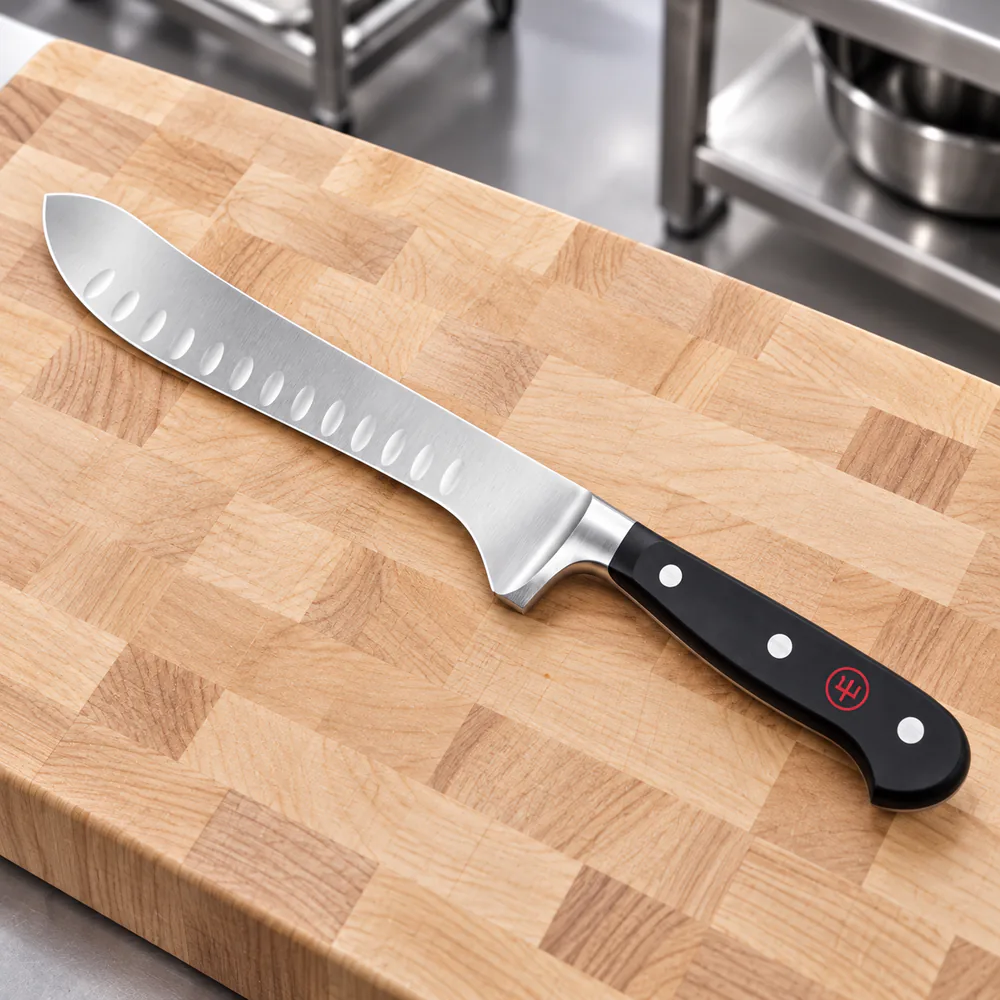
For cutting ribeyes from a whole roast or trimming a large primal with precision, the Wusthof Classic butcher knife is the premium pick that delivers on feel. It is forged from X50CrMoV15 high-carbon stainless in Solingen, Germany, hardened to 58 HRC. The 8-inch curved blade carries a hollow edge that reduces drag on fatty meat; we noticed it on the first cut. It feels surprisingly light for its size and balances so well it becomes an extension of the hand. The full-tang POM handle is triple riveted with a contoured finger guard, and the generous grip suits larger hands well.
Pros
Superb balance, surprisingly light in hand
Hollow edge reduces drag and sticking on fatty meat
Forged 58 HRC Solingen steel holds an edge well
Full-tang POM handle with a contoured finger guard
Limited lifetime warranty from a family-owned maker since 1814
Cons
Premium price most home cooks will not need
Strictly hand wash
Street pricing varies by retailer
Our honest take: it is not four times better than a $45 cimeter; it is a four-times-better feel. The ritual of a beautifully balanced Solingen blade is the reason to buy it. It is strictly hand wash. At around $170, this is a purchase for someone who wants the premium experience rather than raw performance per dollar.
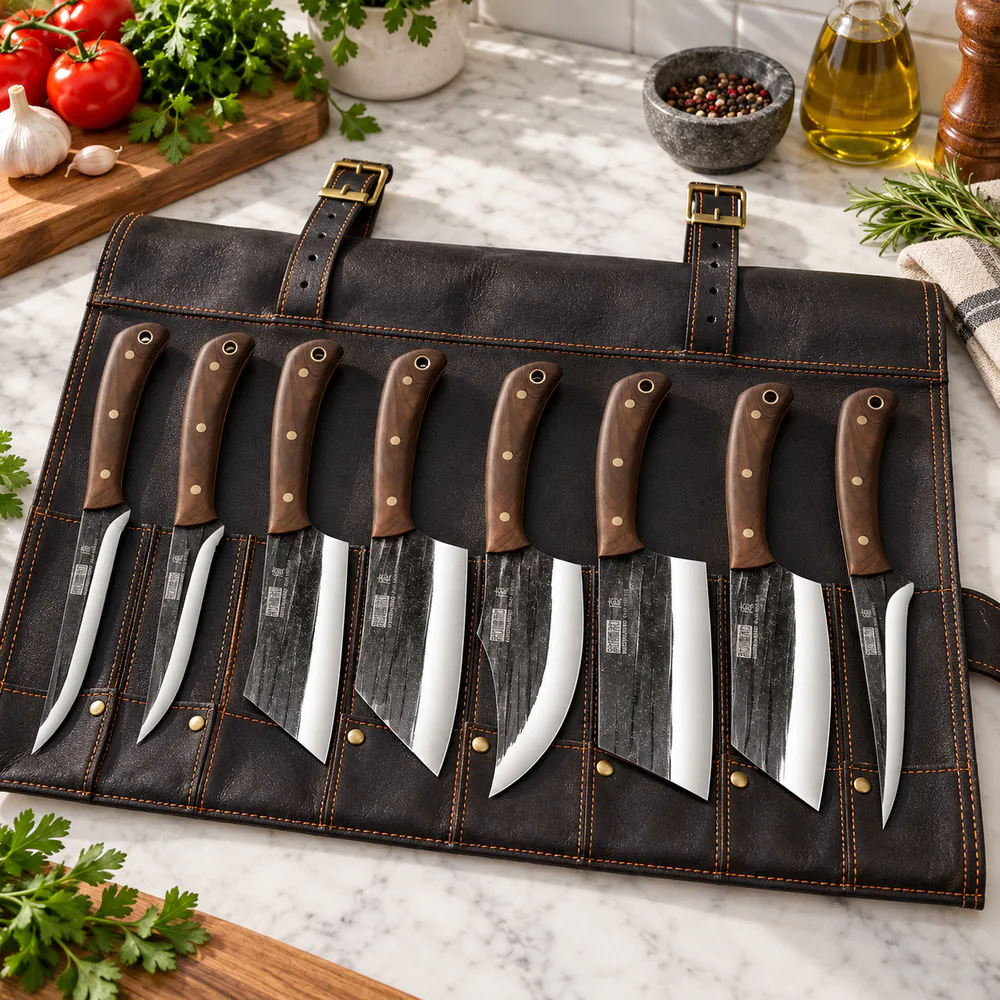
For outfitting a first butcher kit or a hunting and barbecue rig, the HOSHANHO butcher knife set delivers the most capability per dollar in our lineup. It is eight hand-forged high-carbon stainless pieces: a 6-inch bone chopper, a 6-inch meat cleaver, a fillet knife, and a paring blade. Every knife has a full-tang walnut-wood handle and a stonewashed hammer finish. Every blade arrived extremely sharp and solid in hand, and together they cut through bones and tough cuts with minimal effort. The portable roll bag keeps the kit organized for camping, tailgating, and backyard barbecue.
Pros
Full 8-piece butcher kit at a strong per-knife price
Every knife arrived sharp and solid in hand
Roll bag keeps the set organized for travel and BBQ
Hand-forged finish and walnut handles look far above the price
Handles cut through bone with minimal effort
Cons
Set price is not a sub-$50 buy
Not the choice for someone who needs exactly one knife
Hand wash and dry immediately to avoid rust
The honest caveat is that this is a bundle, not a single blade. Individual HOSHANHO knives sell for far less than the set. These blades are strictly hand wash and dry. Rust and brittle handles show up when the steel is not dried right away, so dry them promptly. The edge runs about 16 degrees per side, so match that angle when you sharpen. Set street price sits around $208.
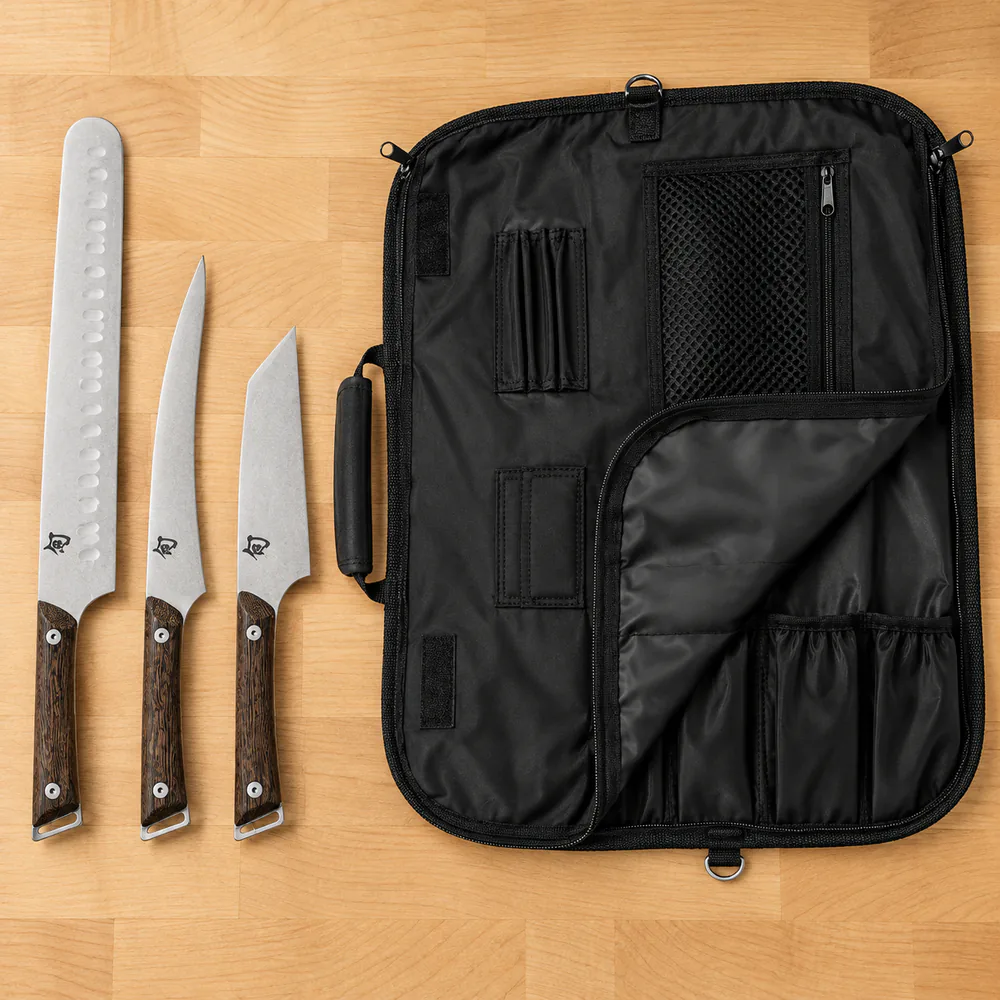
For a backyard cook who wants to slice brisket and break down a rack of ribs at the grill, the Shun Kanso BBQ set is the home-use pick we keep recommending. It is four pieces: a 5-inch Asian multi-prep knife, a 6-inch boning and fillet blade, a 12-inch brisket knife, and an 8-slot knife roll. The blades are AUS10A high-carbon stainless refined with vanadium, handcrafted in Japan. They arrive with a razor-sharp 16-degree edge. The contoured tagayasan handle is full tang, with a bottle opener and hanging hook on the butt.
Pros
Includes a 12-inch brisket knife that handles whole roasts
AUS10A steel holds a razor-sharp 16-degree edge
Full-tang tagayasan handle with a built-in bottle opener
Handcrafted in Japan with free sharpening and honing service
Roll keeps the four blades organized for travel
Cons
Premium price; treat the street figure as a ballpark
Wood handles arrive dry and want oiling
Hand wash only
The wood handles arrived dry and wanted a little oil before use, after which they felt fine. The set carries free sharpening and honing service, and it is hand wash only. Street price sits around $376 by our latest check, so this is a premium gift set for the barbecue cook who already owns the basics.
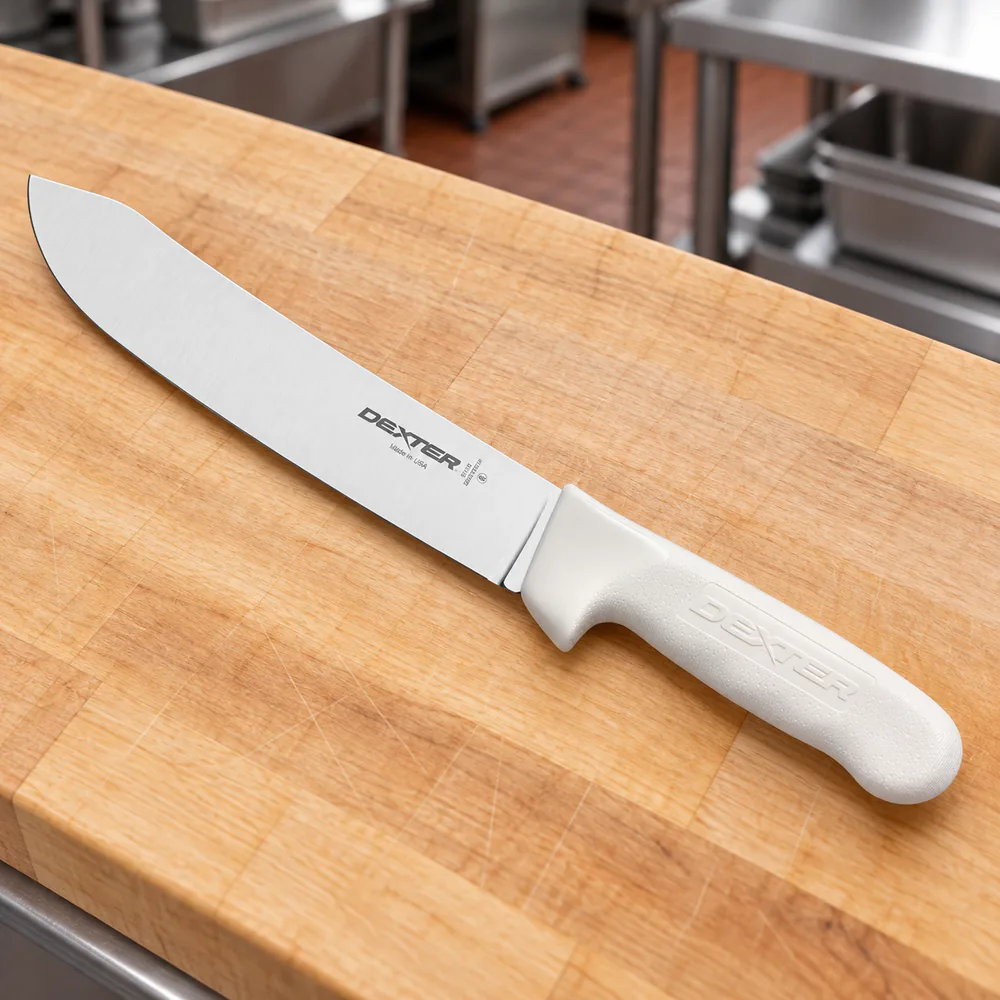
For a food-service workhorse that has done time in professional kitchens for generations, the Dexter-Russell butcher knife is our American-made pick. It is an 8-inch curved breaking blade in DEXSTEEL high-carbon stainless, hand-honed and made in the USA. It arrived sharper than most premium knives we tested. The DEXSTEEL edge held through heavy use, and the textured white Grip-Tex handle stays secure even when your hands are slick with blood and fat. The sealed blade-handle junction leaves no cracks for bacteria to settle into, which is why it cleans up so easily.
Pros
Arrives sharper than many premium blades
DEXSTEEL edge holds through big breaking-down jobs
Textured Grip-Tex handle stays secure when wet or bloody
NSF certified and dishwasher safe
Made in the USA
Cons
White handle shows stains over time
No sheath included, and it does not fit a standard block
Street pricing varies by retailer
The tradeoffs are honest ones. The white handle shows stains over time, and the knife comes with no sheath and does not fit a standard knife block. It is NSF certified and dishwasher safe. The food-service track record is long enough that older Dexter butcher knives stay easy to keep sharp after 30 years. Street pricing moves week to week and varies by food-service retailer.
For whole-poultry prep on a tight budget, the Utopia Kitchen cleaver is the cheapest blade in our lineup that still earns its place. It is a 7-inch stainless cleaver, full tang with a molded ABS PVC handle. At about 14 oz it carries real weight for chopping. It arrived sharp enough to split chicken wings at the joint, and the heavy head compensates when the edge dulls on bone work. It sharpens back easily, which matters at this price.
Pros
Lowest price in the lineup at about $12-17 street
Heavy 14 oz head powers through chicken bone
Arrives sharp enough to split wings at the joint
Sharpens back easily
Full tang with a wide, easy-to-grip handle
Cons
ABS PVC handle cracks and separates after some use
Not rust proof, so dry it promptly
Blade loses its edge quickly on heavy bone work
The catch is the handle. The ABS PVC handle cracks and separates after some use, so treat this blade as replaceable. It is not rust proof, but it is built good. It cuts through chicken bone pretty easily, which makes it a favorite for raw-fed pet prep and whole-poultry work. Dishwasher safe, though we would hand wash. Street pricing swings week to week and runs frequent discounts.
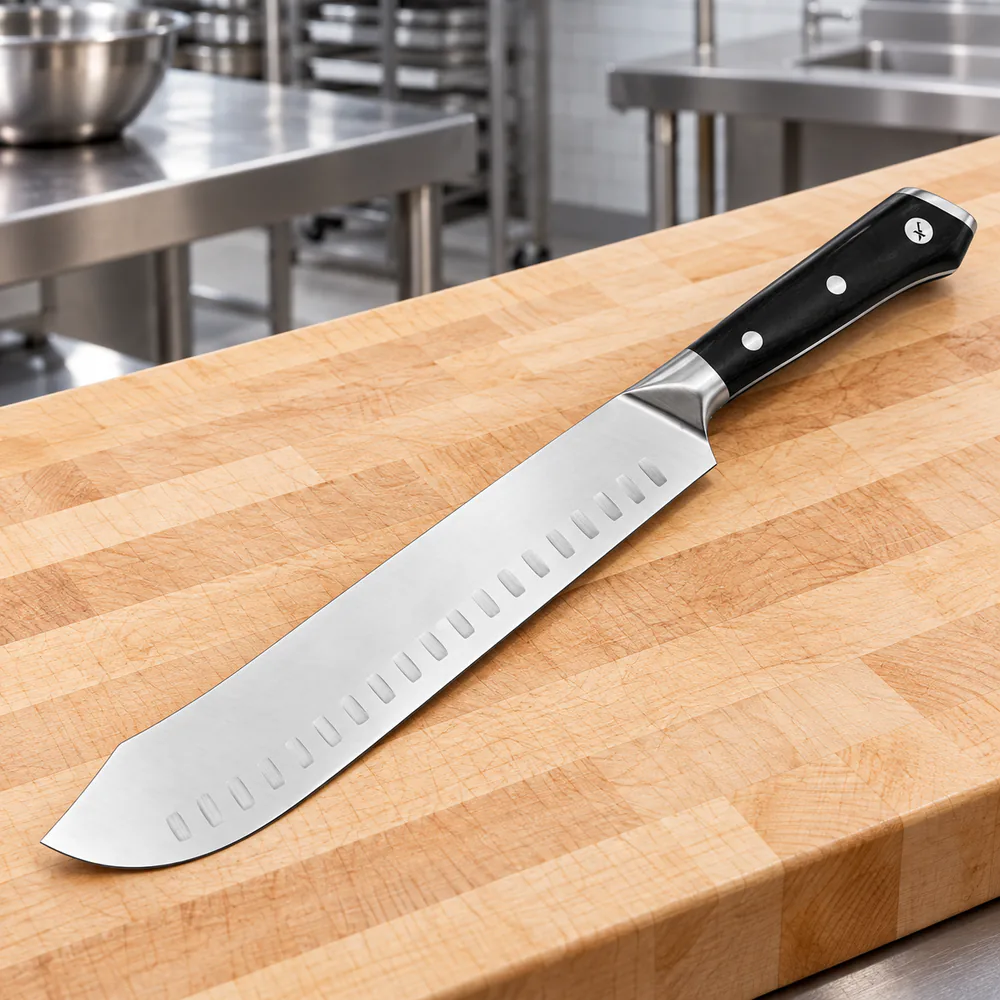
For turning a whole ribeye or Boston butt into steaks and roasts, the Cutluxe bullnose butcher knife is the large-cuts pick. The bulbous 10-inch tip adds edge length and front weight, and that momentum powers through big pieces of beef like butter. It is forged from high-carbon German steel at 56+ HRC, with a hand-sharpened 14-16 degree granton edge that really does keep meat from sticking. The full-tang pakkawood handle is triple riveted. At about 1.37 lb it has the heft to do the work without feeling clumsy. In our sessions it made easy work of whole ribeye and strip roasts, needing only a honing tool after four roasts.
Pros
Heavy front weight powers through whole roasts and butts
Granton edge keeps meat from sticking
Forged German steel at 56+ HRC
Full-tang pakkawood handle, triple riveted
Lifetime warranty
Cons
A minority report edge chipping and handle-scale issues
Not dishwasher safe
Street price and availability vary
The durability record is mixed. Most examples hold their balance and razor sharpness well. Some chip at the edge after a few uses, and a few handle scales have failed after hand-washing. It is not dishwasher safe, and it shares the Cutluxe lifetime warranty. Street price sits around $45, and the listing moves week to week.
10
Mercer Culinary Ultimate White 6-Inch Curved Boning Knife
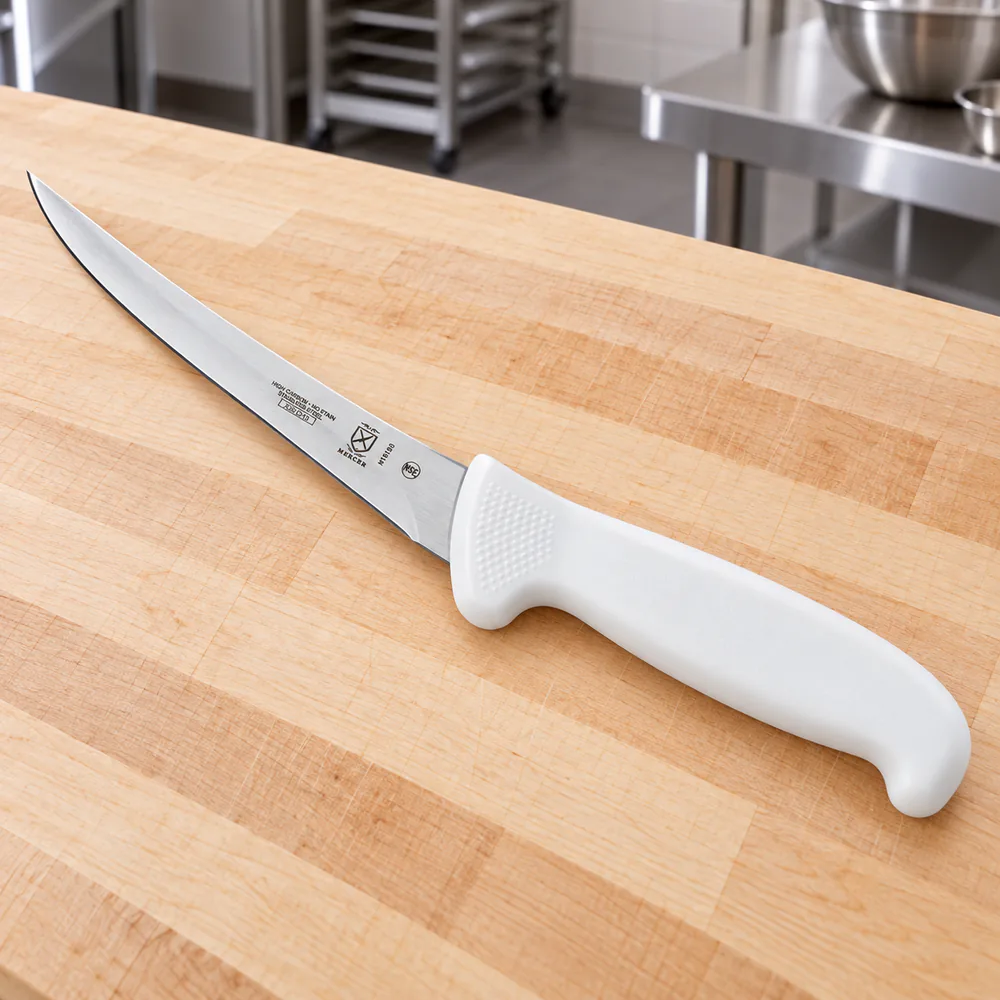
For trimming brisket fat and membrane without tearing the meat, the Mercer Culinary curved boning knife earned a permanent spot in our test kitchen. The 6-inch curved blade follows bone contours and works close to the joint. It is the first knife we reach for when a trimming job needs precision. It is one-piece high-carbon Japanese steel, stain-free and easy to keep sharp, with a polypropylene handle that has textured finger points. At about 4.6 oz it is light and nimble, and it is cheap enough to treat as the workhorse it is.
Pros
Curved blade follows bone contours for precise trimming
High-carbon Japanese steel, stain-free and easy to sharpen
Textured handle with finger points
Light and nimble at about 4.6 oz
Outstanding value for the price
Cons
Handle gets a bit slick from grease mid-use
Stiffer than a true flexible boning knife
Lookalike color-handle versions are not the same quality
The honest limits: the handle gets a bit slick from grease mid-use, and the blade is stiffer than a true flexible boning knife. It will not bend around awkward joints the way a flexible blade does. Watch out for lookalike color-handle versions that are not the same quality. Hand wash only, and the price lands around $11-15 street.
Butcher Knife Comparison Chart
Here is how all 10 picks stack up on the specs that matter. Prices are street estimates and move week to week.
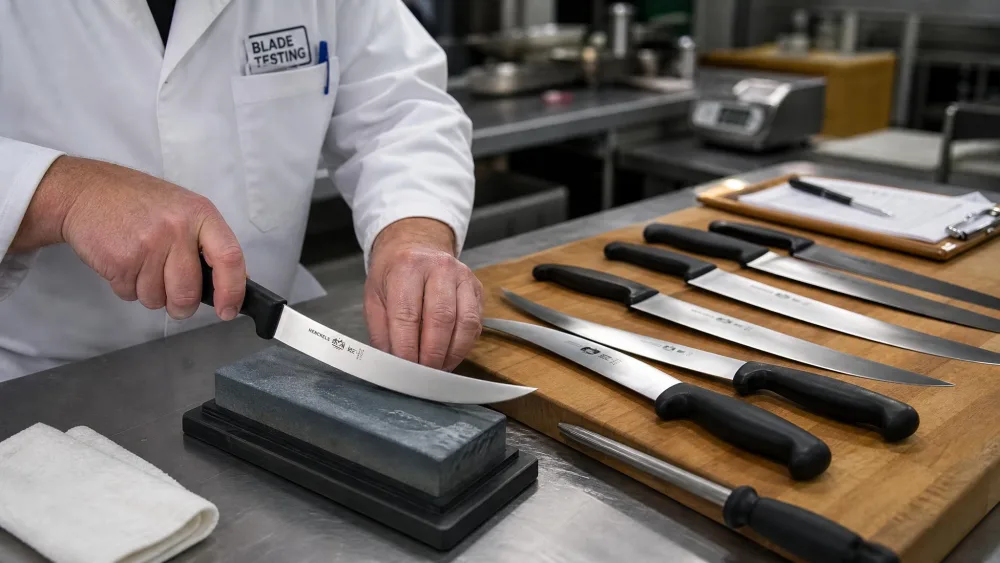
We tested 10 top butcher knives across a price span from a $17 budget cleaver to a $375 premium set. Each blade ran through a month of real prep in rotation, breaking down beef, pork, and poultry, with an edge check after every session. We sharpened every knife on the same home stones. We judged them the way a working butcher would, not the way a spec sheet does.
We scored four dimensions. Edge retention came first. A sharp blade requires less force and produces cleaner cuts, the same logic behind the knife sharpness testing used to measure cutting performance in the field. Comfort and handle wear came second: we watched how each handle felt in hour three of a long shift, wet and greasy. Ease of re-sharpening came third, because a blade that fights your stone costs you time every week. Value came fourth, measured as capability per dollar.
We check edges after every breaking-down session, not just out of the box.
We also recorded the specs that matter. Blade lengths ran from 6 to 12 inches across the lineup. Steel ranged from stamped X50CrMoV15 to forged German and Japanese high-carbon, and published hardness ran from 56 to 58 HRC. A butcher knife earns the name by its curved, outward-sweeping blade, and we paid close attention to how that curve behaved on the board. Every tester pushed hand washing, because that is how a butcher knife is actually treated in a working kitchen. We noted the care each blade demands. For the Best Value pick, we checked our results against the Victorinox specifications for the Fibrox breaking knife.
How to Choose the Best Butcher Knife
A butcher knife is a tool you rely on for hours, so the buying decision comes down to blade style, steel, handle, tang, and budget. Here is how to weigh each one.
Blade Material: German vs. High-Carbon vs. Damascus
Blade material decides how long the edge lasts and how easily it sharpens back. Forged German high-carbon stainless, usually X50CrMoV15, gives most cooks the best balance of edge retention and rust resistance. It is what most of our top picks use. High-carbon steel like the DEXSTEEL and Japanese blades in this roundup takes a keen edge and holds it, but some carbon grades need prompt drying. Damascus is mostly about looks: real folded damascus is beautiful and functional, but a laser-etched pattern adds nothing to the cut. Hardness, measured on the Rockwell scale, ran from 56-58 in our lineup. Within that range, higher usually means sharper for longer but harder to sharpen.
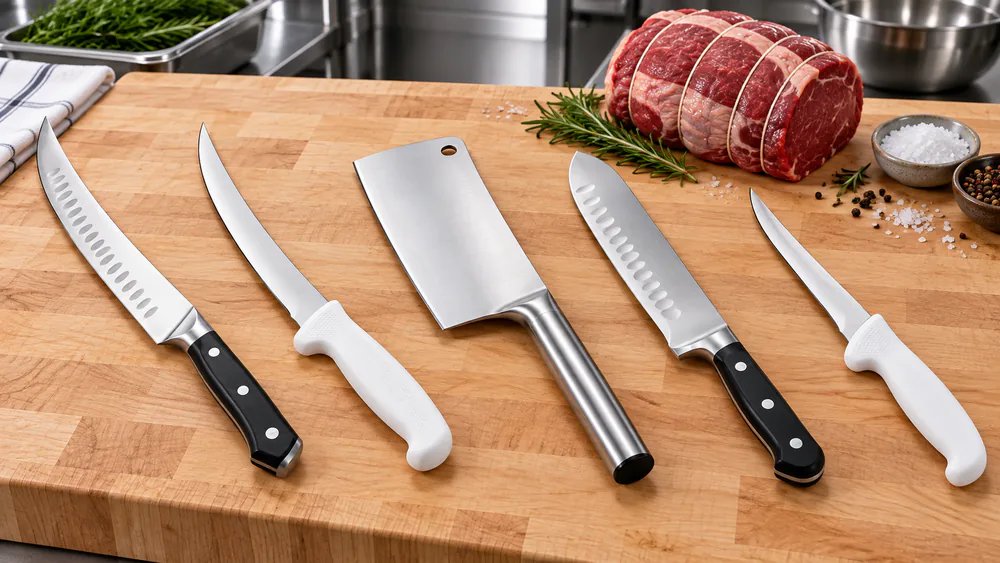
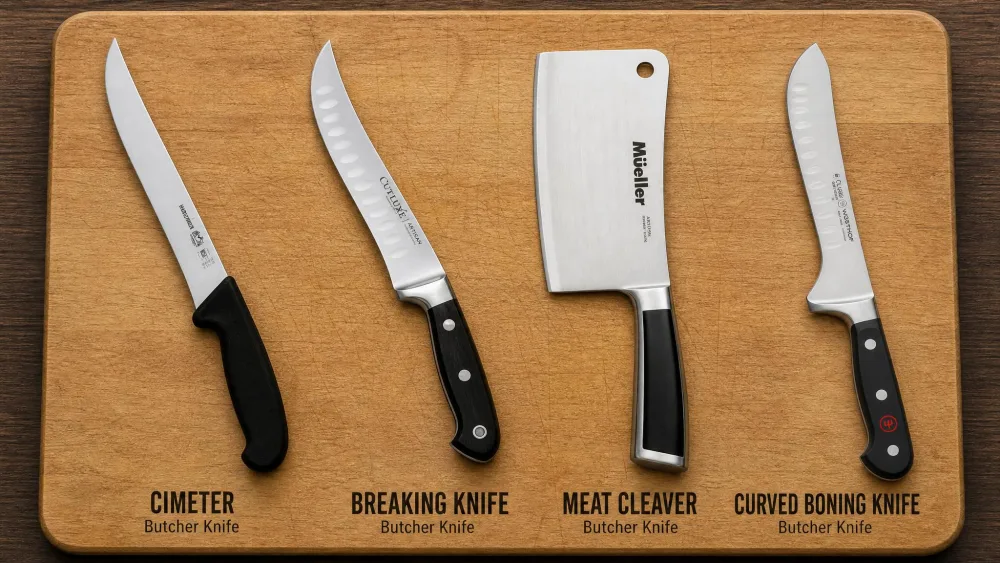
The shape should match your biggest job. A cimeter is a long, curved blade that rocks through large primals and separates meat from bone, which makes it the most versatile single butcher blade. A breaking knife is shorter and more curved, built for trimming and boning smaller cuts with precision. A cleaver is thick and heavy, made to get through bone, cartilage, and frozen joints. A curved boning knife follows bone contours for detail work. Length follows the same logic. Six-inch blades handle trimming and boning, 8-inch blades suit most home work, and 10-inch blades earn their keep on whole roasts and primals.
Cimeter, breaking knife, cleaver, and boning knife: four different jobs, four different curves.
Handle Material & Ergonomics
A butcher knife is a comfort purchase as much as a performance one, because you hold it for hours. In our testing, hour three is where handles earn their reputation. Textured synthetics like Fibrox, Grip-Tex, and pakkawood kept their grip when coated in fat, while smooth and overly round profiles felt riskier in wet hands. Wood handles look great, but they need occasional oiling and are strictly hand wash. Whatever the material, the handle should fill your hand without gaps and keep your fingers clear of the blade.
Full-Tang Construction & Balance
Full tang means the steel runs the entire length of the handle, which adds balance, durability, and control. It is the construction you want for a knife that takes real force, and every full-size pick in our top five is full tang. Stamped blades like the Victorinox and Dexter-Russell do not extend steel through the handle in the same way. Their synthetic one-piece construction still holds up for years in professional use. For most home cooks, full tang is a nice-to-have; for heavy bone and primal work, prefer it.
Stamped vs. Forged
Stamped blades are cut from a sheet of steel, which keeps the price down and the blade light, at the cost of slightly shorter edge life. Forged blades are heated and shaped from a single billet, which is pricier but holds an edge longer and usually feels better balanced. Both have a place. The Victorinox and Dexter-Russell stamped blades are professional favorites that outlast many forged knives, while the forged Cutluxe and Wusthof blades win on edge retention and feel. Pick stamped for value and lightness, forged for edge life and balance.
Price & Budget
Street prices move week to week, so treat the figures here as a snapshot. Our testing kept returning to the same conclusion: the $35 to $50 range is the sweet spot for home cooks. Forged and quality stamped blades deliver real edge retention there without the premium markup. Below $25, you can buy a capable cleaver like the Mueller or Utopia, but expect to sharpen often and to replace it sooner. At the premium end, $170 and up buys top-tier feel and edge retention, yet the gain per dollar shrinks fast for casual use. Hunters and frequent meat handlers are the buyers who justify spending more.
Frequently Asked Questions
What's the difference between a butcher knife and a cleaver?
A butcher knife is a curved, outward-sweeping blade built to slice, trim, and separate meat from bone. A cleaver is a thick, heavy blade made to get through bone, cartilage, and frozen joints by weight. If you mostly trim and portion, a butcher knife is the tool; if you split ribs or quarter chickens, a cleaver earns its place. Most kitchens end up wanting one of each.
What's the difference between a butcher knife and a chef's knife?
A butcher knife's curved blade is built for breaking down large cuts and working around bone, while a chef's knife is a generalist with a slightly curved edge for chopping, slicing, and dicing everything. If you cut mostly vegetables and boneless proteins, a chef's knife covers you. If you buy whole roasts, chickens, or primals, a butcher knife does the job a chef's knife cannot.
What size butcher knife should I buy?
Match the length to your biggest job. An 8-inch curved breaking knife handles most home trimming and boning, while a 10-inch cimeter suits larger primals and whole roasts. A 6-inch curved boning knife covers detail work like trimming brisket. If your biggest task is a weekly chicken or a holiday turkey, 8 inches is plenty; hunters and anyone breaking down whole animals will appreciate 10 inches.
Do I need a butcher knife set or a single knife?
Start with one good knife, usually an 8-inch breaking knife or a 10-inch cimeter, and add blades only when a job demands them. A set like the HOSHANHO makes sense if you regularly break down whole animals, process game, or want a kit for camping and barbecue. For most home cooks, one knife plus a cleaver covers nearly everything, and the budget is better spent on a sharper single blade.
How do I care for and sharpen a butcher knife?
Hand wash and dry every butcher knife after use, even the ones the listing calls dishwasher safe. Hone with a steel before each session to keep the edge aligned, then sharpen on a whetstone or with a guided sharpener when the edge starts to roll. Most of our test blades needed a real sharpening every few weeks of heavy use. Store knives in a block or on a magnetic strip, and oil wooden handles now and then.
The Bottom Line
After a month of rotation testing, our clear winner is the Cutluxe 10-inch cimeter. It held its edge through weeks of breaking down beef and pork. It feels right in hand hour after hour, and it delivers that performance at a price that embarrasses knives three times the cost. For a home kitchen that wants one dependable blade without the premium markup, the Victorinox Fibrox 8-inch curved breaking knife is the runner-up. It is lighter, easier to sharpen, and nearly as capable for trimming work.
The bigger lesson from our testing is the price sweet spot. Blades in the $35 to $50 range gave us the best balance of edge retention and value, and most home cooks should aim there. If a full kit is the goal, the HOSHANHO set delivers eight knives for about $26 each, less than the price of a single premium German blade. What we would do differently next time is spend less energy on the sub-$25 tier. Those blades cut fine out of the box but need sharpening so often that they cost more in time than they save in money. For anyone building out the whole knife drawer, our best chef knife sets roundup is the natural next stop.
Key takeaway. Best overall: Cutluxe 10-inch cimeter. Runner-up for the money: Victorinox Fibrox 8-inch curved breaking knife.