Helping you create a kitchen you love.

Knives & Cutlery

Best Chef’sChoice Knife Sharpener: Which Model Should You Choose?

As an Amazon Associate we earn from qualifying purchases. We may earn a commission from links on this page, at no extra cost to you. Learn more.

Best Chef’sChoice Knife Sharpener: Which Model Should You Choose?

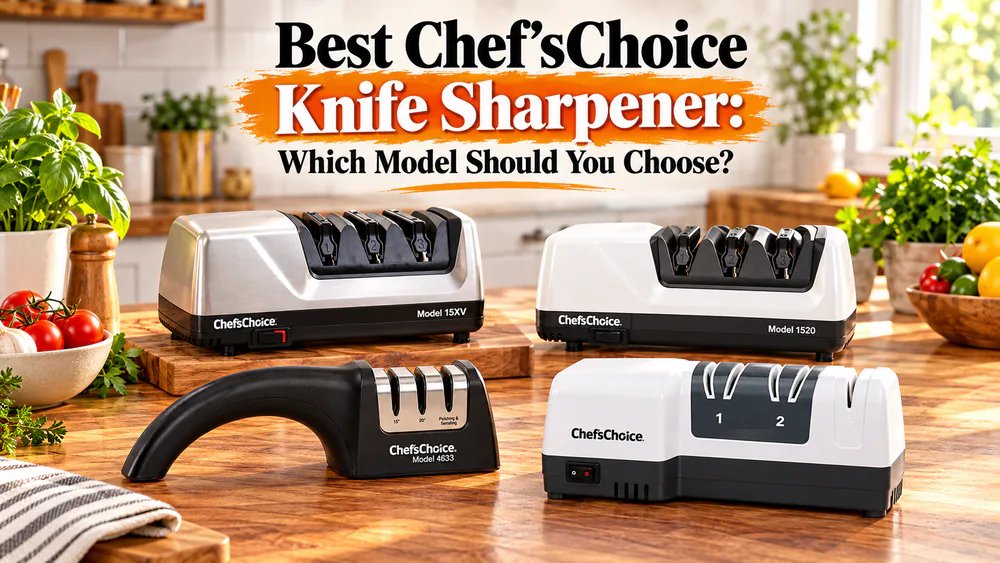
Picking a Chef’sChoice sharpener comes down to one question: what angle is your knife edge, and do you want to keep it or change it? The brand's lineup looks similar on the shelf, but a 15-degree machine and a 20-degree machine do very different things to the same blade. We judged four models on what they do to the edge, because that is the only measure that matters at the bench.

This guide covers two electric models, one manual and one hybrid. If you want to see how they stack up against other brands, our reviews of other knife sharpener brands and models cover the wider field.

How We Tested These Chef’sChoice Sharpeners

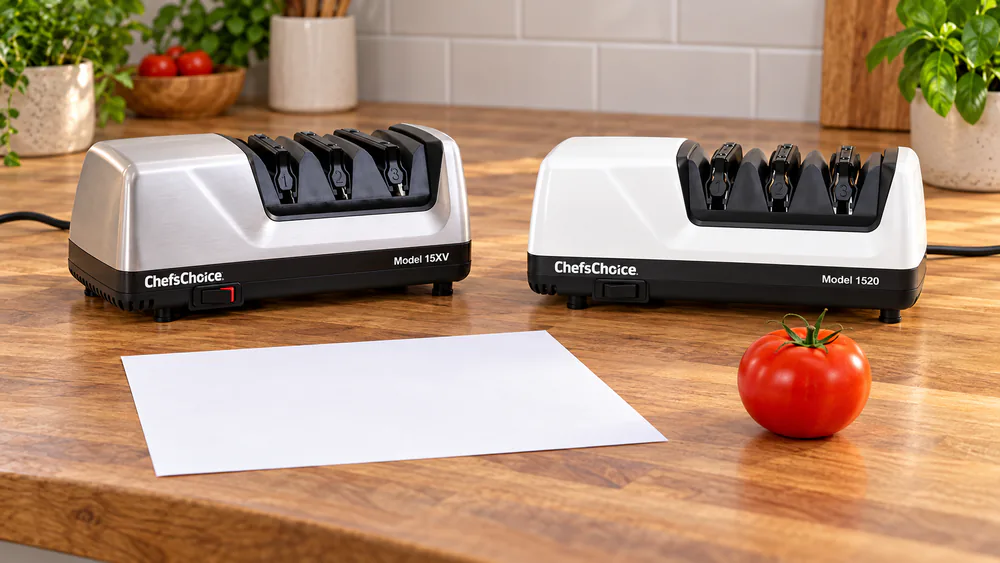
We start with the edge, not the box. A sharpener earns its place if the knife cuts printer paper cleanly afterward and bites into tomato or pepper skin without crushing the fruit. Those two checks tell you more in ten seconds than any spec sheet.

Then we assess the machine: whether the housing stays steady during a pull, whether you can see or feel the abrasive contact, and how well the guides accommodate a beginner's pressure. We also check how easy it is to clean and store. Where a model has a wrinkle, such as angle conversion or blade exclusions, we say so plainly.

Two Chef’sChoice sharpeners beside a sheet of paper and a tomato on a wooden bench
Paper and a tomato are simple materials for checking the finished edge.

Chef’sChoice Knife Sharpeners at a Glance

The 15XV and the 1520 are the two that confuse people most. The 15XV converts a traditional 20-degree edge to a 15-degree edge. The 1520 lets you choose between 15 and 20 degrees, so it can keep whichever edge your knives already have.

Feature15XVAngleSelect 1520Manual 4633Hybrid 250
Best fitA collection maintained at 15 degreesMixed-angle collectionOccasional sharpening without a motorConventional 20-degree kitchen knives
OperationElectricElectricManualPowered sharpening, manual finishing
Angle per side15-degree15-degree or 20-degree15-degree or 20-degree20-degree
Stages3-stage3-stage, select angle then finish3, select angle then finish3-stage, final stage manual
Blade compatibilityStraight and serrated steel; special single-bevel instructionsStraight and serrated steel; special single-bevel instructionsDouble-bevel straight and serratedDouble-bevel straight and serrated
Main limitationConverts rather than preserves a 20-degree edgeLarger powered applianceMore effort on dull blades; US availability uncertainDoes not preserve a 15-degree edge
CleaningMagnetic underside collectorMagnetic underside collectorDry sharpening, no oil or waterTap filings out onto paper

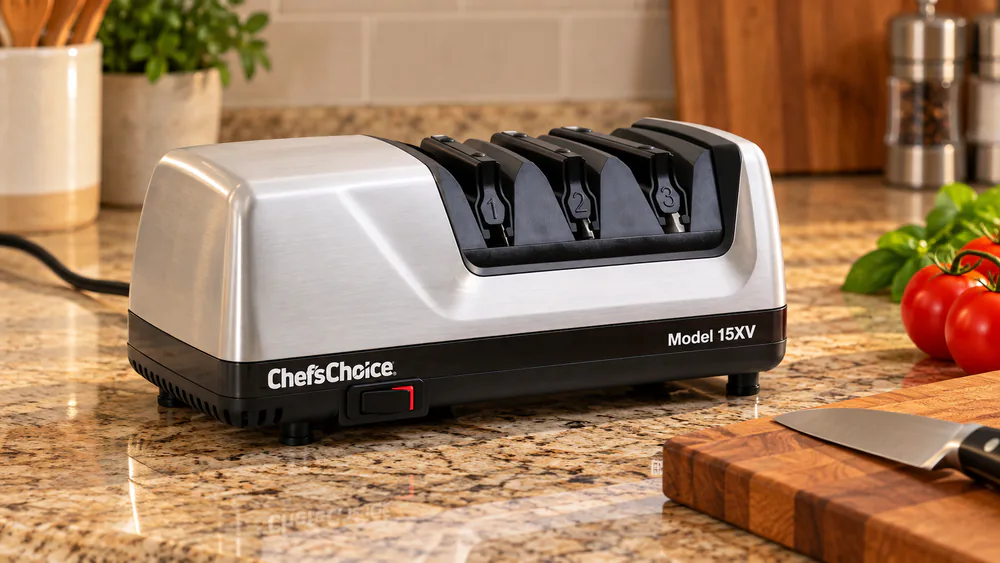
1. Chef’sChoice 15XV

Chef'sChoice 15XV
1

Chef'sChoice 15XV

Best for 15-Degree Edges
Check Price on Amazon

The 15XV turns out edges that cut paper cleanly and bite through tomato and pepper skin without crushing the produce. It uses a 15-degree edge per side and runs a 3-stage process of shaping, honing, and polishing with diamond abrasives and flexible spring guides. The housing feels substantial and stays steady during a pull.

Pros

  • Converts a traditional 20-degree edge to 15-degree
  • Handles straight and serrated steel blades
  • Underside magnetic cover makes shaving removal simple
  • 3-year limited warranty

Cons

  • Converts rather than preserves a 20-degree edge
  • Needs cabinet storage more than a shallow drawer
  • Takes practice to find the right speed and pressure

Two habits matter here. The edge disappears inside the slot, so you cannot inspect the abrasive contact the way you can on an exposed stone. And pressing down harder is the classic beginner mistake. A lighter hand makes the guided pull easier to control, and a steady speed matters more than force. The first conversion from a 20-degree edge takes more effort than later maintenance, and a badly dulled knife can need another cycle before it cuts cleanly.

One small wrinkle: a freshly sharpened large blade can leave small cuts in the plastic exit lip. It is cosmetic, but worth knowing. Cleanup is easy, since an underside access door lets you reach accumulated steel shavings without dismantling anything.
2. Chef’sChoice AngleSelect 1520

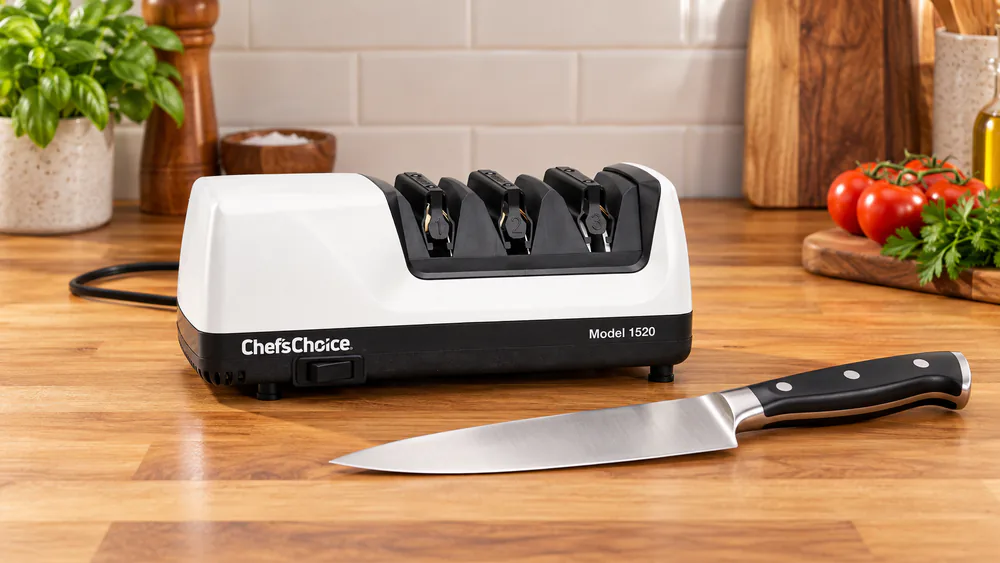
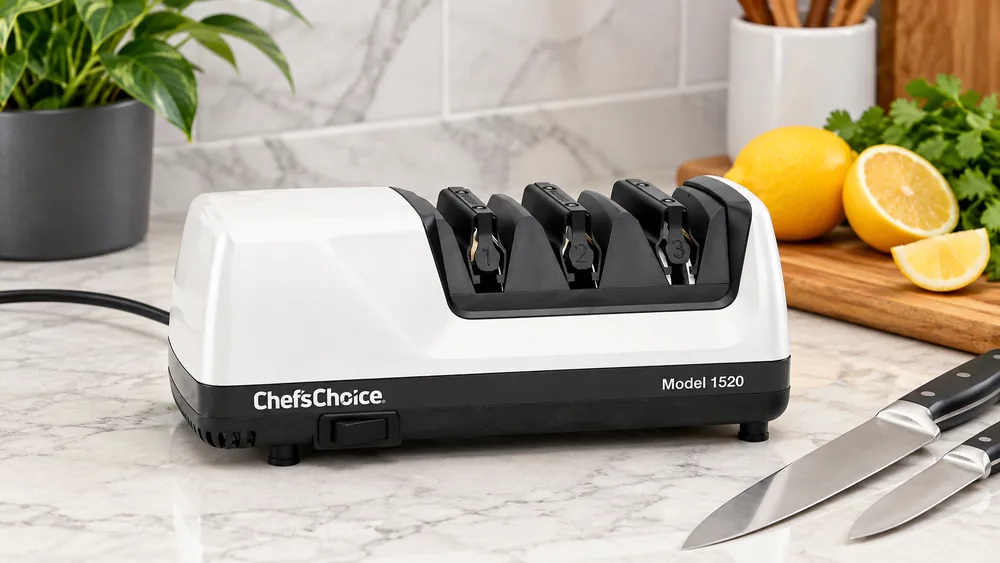
The corded Chef’sChoice AngleSelect 1520 electric knife sharpener on a kitchen counter with a chef's knife resting beside it
Chef'sChoice AngleSelect 1520
2

Chef'sChoice AngleSelect 1520

Best for Mixed Knife Collections
Check Price on Amazon

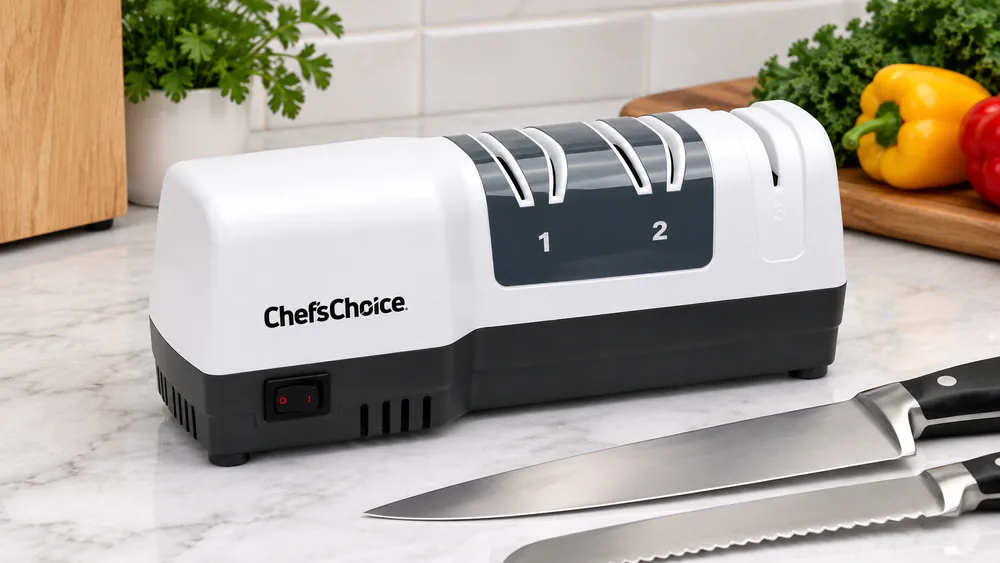
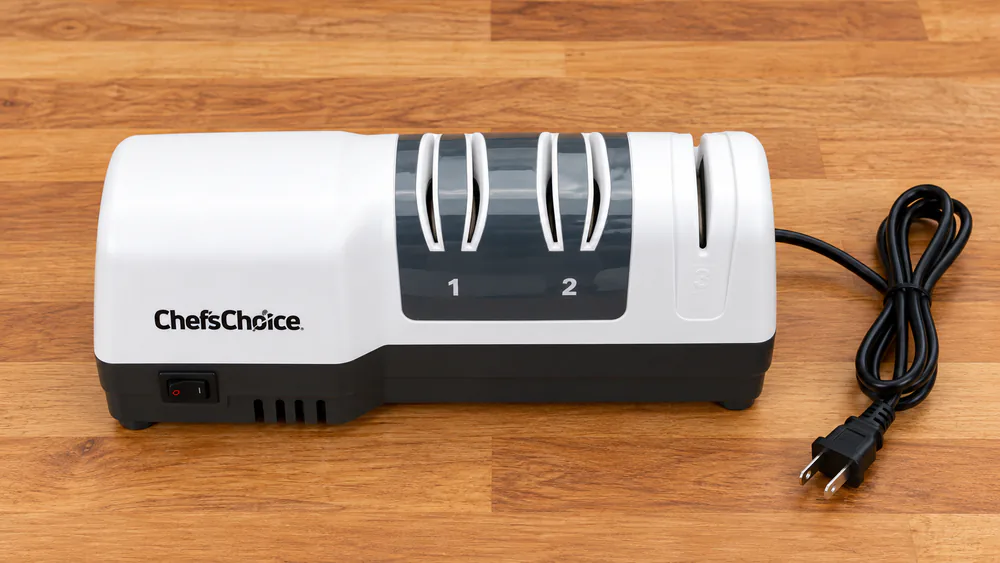
The 1520 is the more flexible of the two electric machines. You choose a 15-degree or 20-degree edge, pick the matching sharpening stage, then finish. Severely dulled kitchen knives can recover a clean tomato-slicing edge with consistent sharpening along the whole blade, which is the result we care about most.

Pros

  • Keeps a 15-degree or 20-degree edge as you choose
  • 3-stage electric system with a shared powered stropping stage
  • Handles straight and serrated steel blades
  • 3-year limited warranty

Cons

  • A larger powered appliance
  • A thick full bolster can obstruct heel access
  • You should not run every knife through every stage

The housing feels substantial and stays put while you pull. It also takes real storage room compared with a small manual tool, so plan on a cabinet rather than a shallow utensil drawer. This entry covers the corded AngleSelect 1520, not the rechargeable DC 1520, which is a different product.

3. Chef’sChoice Manual Model 4633

Chef'sChoice Manual Model 4633
3

Chef'sChoice Manual Model 4633

Best Manual Option
Check Price on Amazon

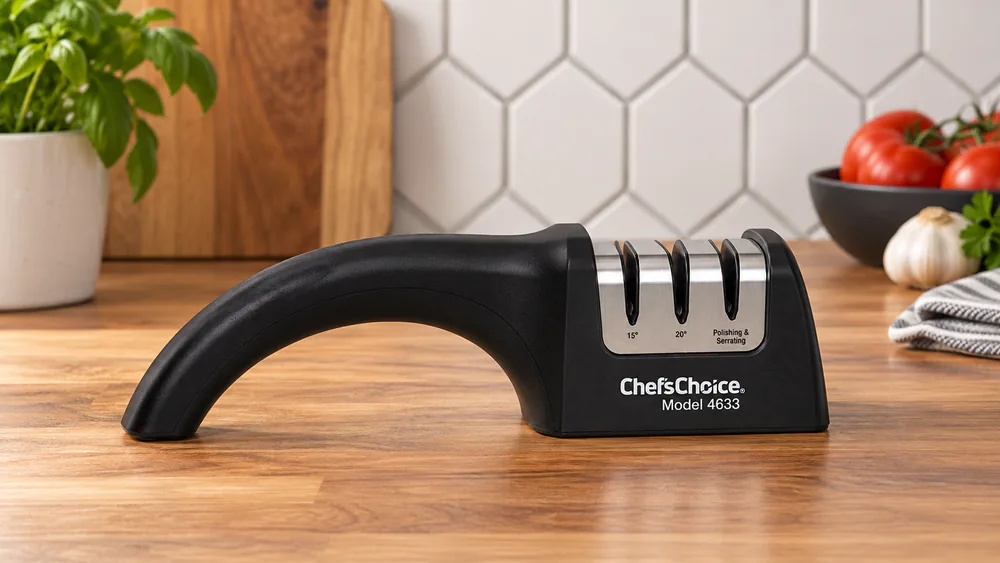
Ordinary kitchen knives respond well to a short sharpening-and-finishing session on the 4633, and the instructions make routine use straightforward. Its hand-powered diamond abrasive plates contact both faces of the edge at once. It offers 15-degree and 20-degree options per side and works for left- or right-handed users.

Pros

  • No motor, no outlet, no oil or water
  • 15-degree and 20-degree options per side
  • Slip-resistant feet
  • Budget tier among these four

Cons

  • More effort on dull blades or angle changes
  • Some bulky blades will not fit the slot
  • 1-year limited household-use warranty

Use centered back-and-forth strokes with modest pressure, and keep the blade faces off the slot walls. A very dull knife, or a change of angle, takes substantially more work than on an electric model. Some bulky pocket-knife blades cannot enter the slot adequately. Single-bevel Japanese knives and scissors are excluded, and we would not recommend it for ceramic.

Availability is the real caveat. The US brand collection has shown it sold out, so check stock before you plan around it.

4. Chef’sChoice Hybrid Model 250

Chef'sChoice Hybrid Model 250
4

Chef'sChoice Hybrid Model 250

Best for Quick Touch-Ups
Check Price on Amazon

Routine maintenance on the 250 is convenient and restores useful cutting performance quickly. Two powered stages sharpen the blade; a hand-operated finishing stage, used with the power off, completes the triple-bevel edge at 20 degrees per side. The small housing is easy to put away between sessions.

Pros

  • Small housing that stores easily
  • Manual finishing stage for touch-ups and serrations
  • No lubricating oil required

Cons

  • Does not preserve a 15-degree edge
  • Powered grinding can wear serration teeth if overused
  • Warranty length needs confirming

For touch-ups and serrations, use the manual finishing stage. Go back to powered sharpening only when finishing is not enough, because excessive powered grinding can remove serration teeth. Wipe the exterior with a damp cloth, and tap the metal dust out onto paper now and then.

It will sharpen double-bevel Asian blades, but their thinner factory edge will not be preserved. It is not recommended for ceramic and excludes single-bevel Japanese knives. A secondhand unit may arrive without instructions, so get the exact-model manual first. The warranty period differs between the product page and the brand's warranty index, so confirm the terms for the unit you buy.

The Chef’sChoice Hybrid 250 switched off on a counter with its empty manual finishing stage visible
The Hybrid 250 has a separate manual finishing stage; the appliance is shown switched off.

How to Choose the Right Chef’sChoice Sharpener

Start with your knives, then pick the machine. Choose a model that maintains your knife's existing edge angle or converts it to the angle you want.

Maintain your knife’s angle or convert its edge?

Most Western kitchen knives ship at around 20 degrees per side, while many Japanese-style double-bevel knives are thinner. The 15XV converts to 15 degrees. The Hybrid 250 holds 20 degrees. The 1520 and the 4633 let you pick between the two, so they are the safe choices when your set is mixed.

Choose between electric, manual and hybrid models

Electric machines like the 15XV and 1520 do the heavy lifting and give consistent results, at the cost of counter or cabinet space. The 4633 is hand powered and cheap, but a dull blade means more strokes. The 250 splits the difference.

Match the machine to the edge your knives already have, and the rest is easy.

Check blade compatibility and sharpening stages

All four handle straight and serrated steel blades. None is meant for ceramic, and the manual 4633 and the 250 exclude single-bevel Japanese knives. The 15XV and 1520 support them only through the dedicated handed procedure.

Compare cost, size and maintenance needs

The 4633 sits in the budget tier, the 250 is mid-priced, and the 15XV and 1520 are the premium picks. Maintenance is light across the board: no oil, no water on the abrasives, and a periodic clear-out of filings.

Tip. Light pressure and a steady pull beat force every time.

Using and Maintaining Your Sharpener

Know when to sharpen and when to touch up

Keep the exact-model manual handy, especially if you buy secondhand. On the 15XV, routine touch-ups use the finishing stage. Return to honing when finishing stops working. Serrations normally use the finishing stage only. Use the disk-dressing lever sparingly, since it wears the polishing surface.

Clean and store the sharpener

Wipe the housing with a damp cloth and empty the magnetic collector underneath. Do not put water or lubricant on the abrasives.

Frequently Asked Questions

What is the difference between the 15XV and the 1520?

The 15XV sharpens to a 15-degree edge per side and converts a traditional 20-degree edge. The 1520 lets you choose a 15-degree or 20-degree edge, so it can preserve either. Both are 3-stage electric machines with a 3-year limited warranty.

Can Chef’sChoice sharpeners handle serrated knives?

Yes. All four models support serrated steel blades. On the 15XV serrations normally use the finishing stage only, on the 4633 use the Polishing and Serrated stage, and on the 250 use the manual finishing stage.

Can you sharpen ceramic or single-bevel knives?

Ceramic knives are excluded by the 15XV and 1520 manuals, and the 250 is not recommended for ceramic. Single-bevel Japanese knives need the dedicated handed procedure on the 15XV and 1520. The 4633 and 250 exclude them.

Can an electric sharpener damage a knife?

It can remove more steel than you intended if you convert angles or use excessive pressure. Use light pressure, keep the pull moving, and follow the manual for your exact model.

Final Verdict: Choose for Your Knife Collection

If your knives are Western 20-degree blades and you are happy to move to a sharper 15-degree edge, the 15XV is the one we would buy. If your set is mixed, the 1520 is the safer machine because it keeps whichever angle each knife already has. The 4633 suits occasional sharpening on a tight budget, provided you can find one in stock, and the 250 fits cooks with conventional 20-degree knives who want quick touch-ups.

Read next

Ready to sharpen?

Explore more guides to choosing and caring for your kitchen knives.