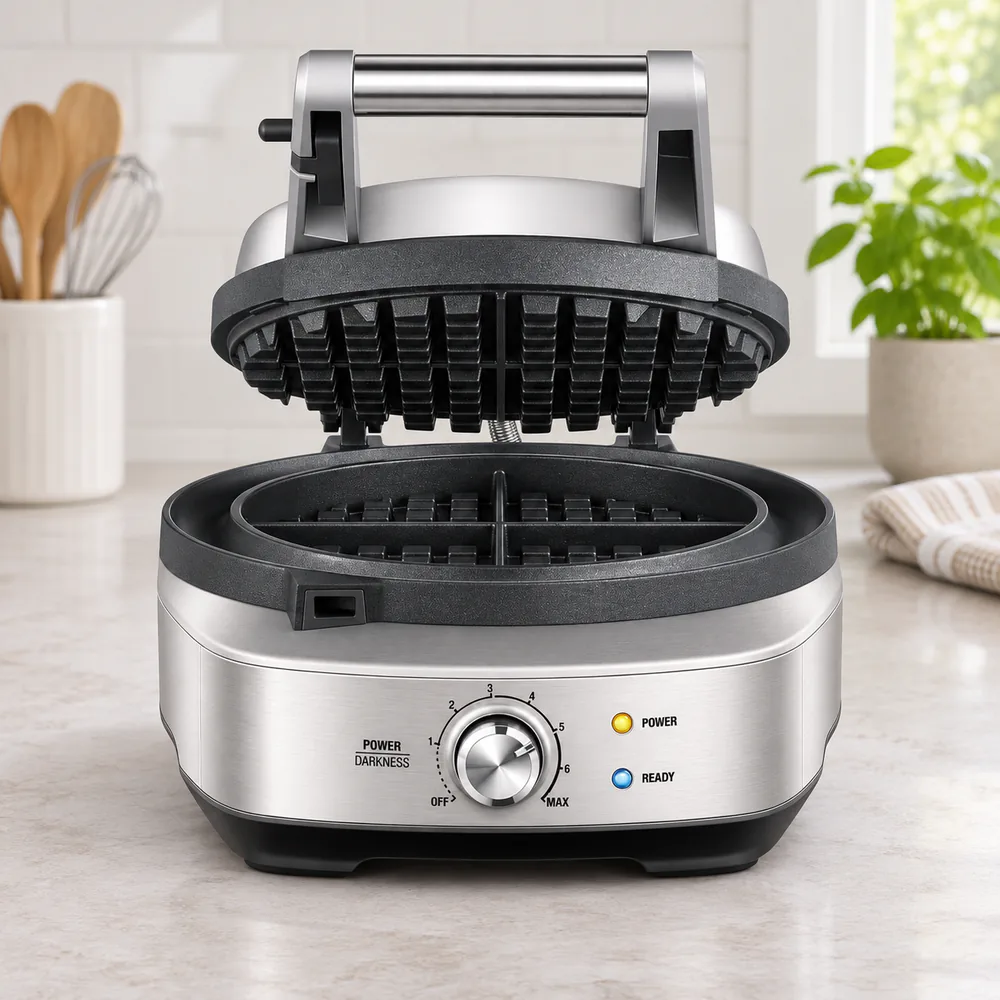
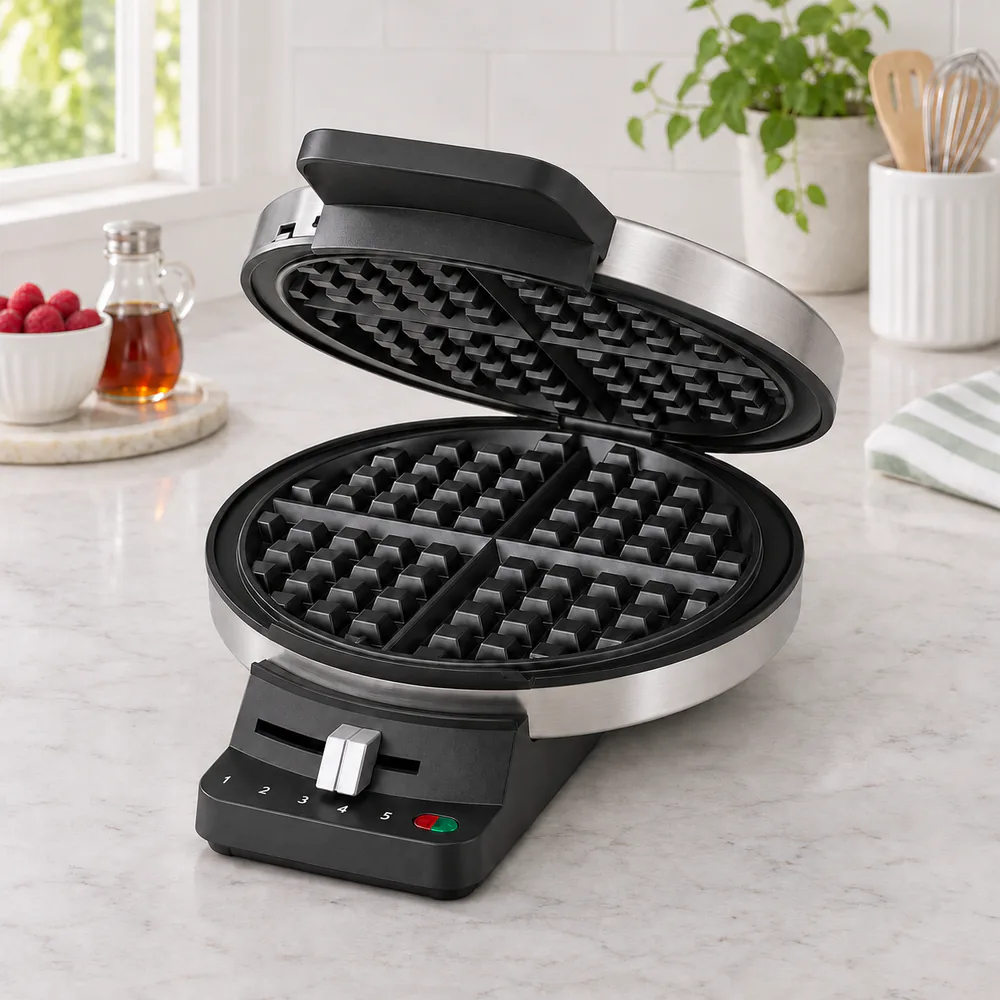
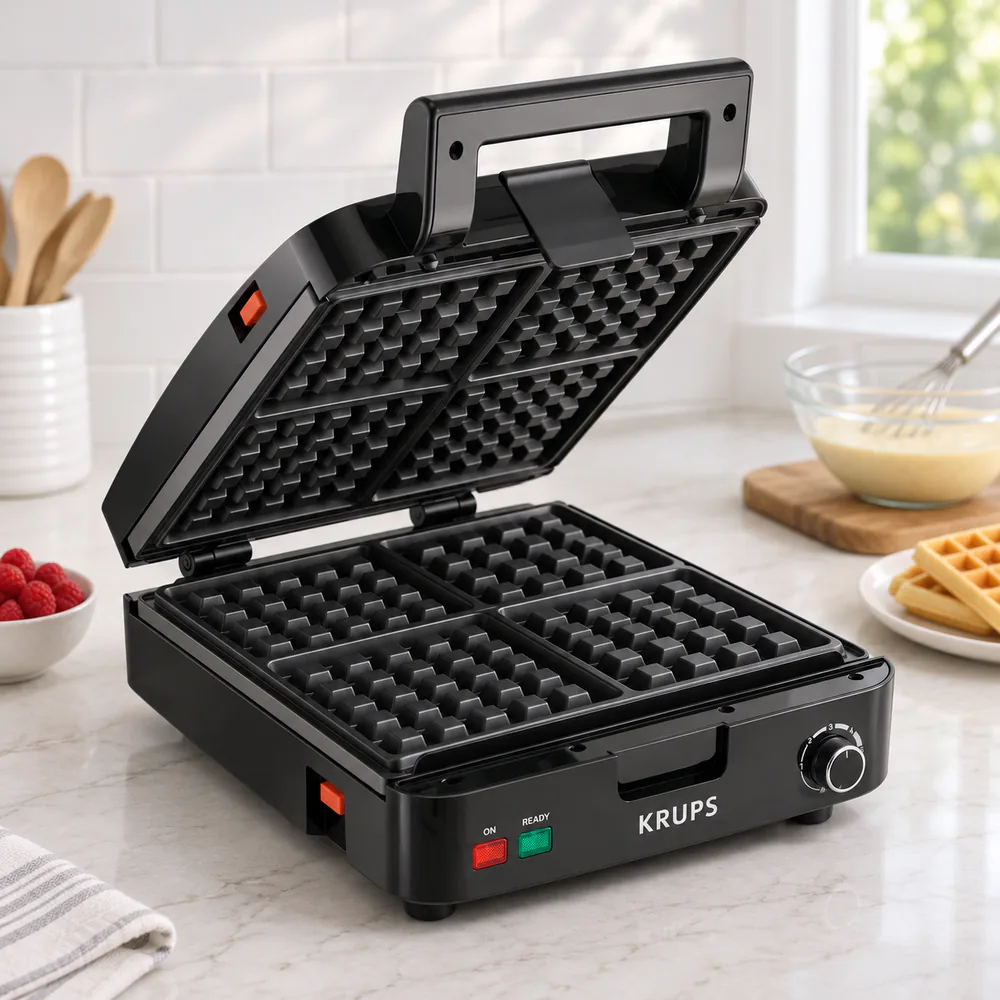
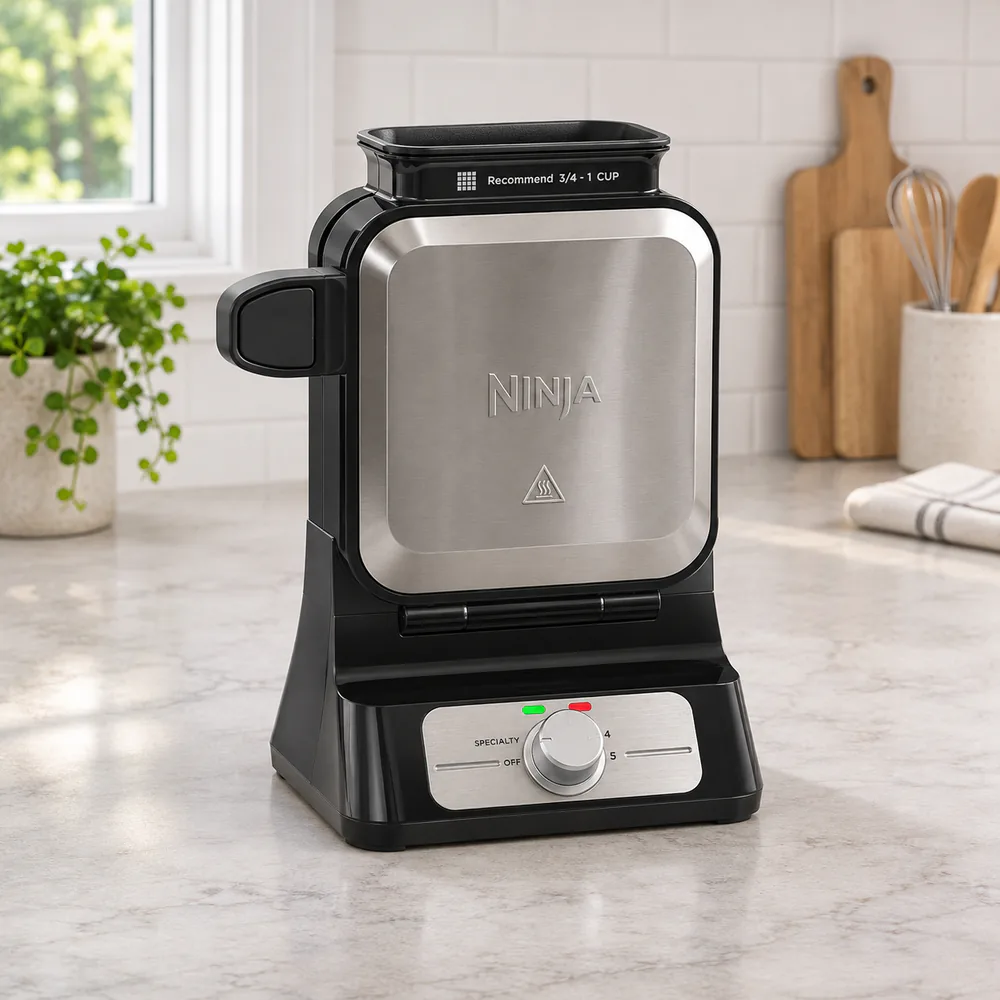
Every waffle iron looks similar on the shelf, but the details change what lands on the plate. Here is what we weigh before we recommend one.
Classic (American) vs Belgian Waffles
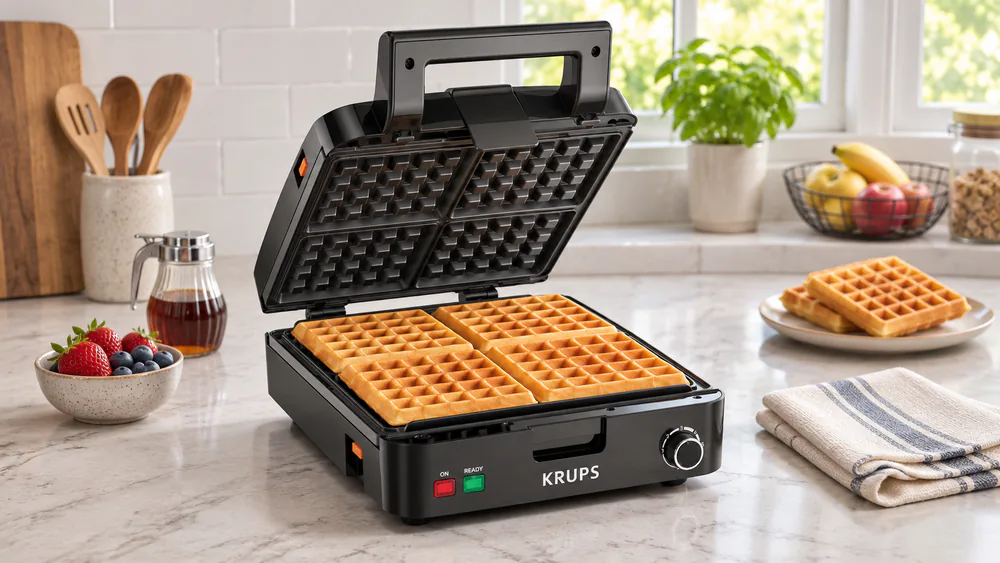
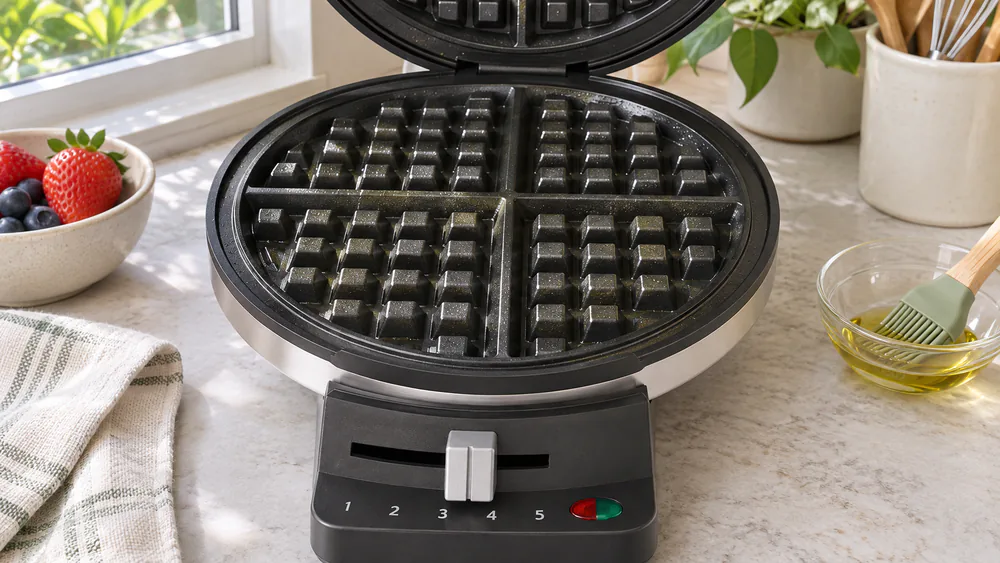
A classic American waffle is about 1/2 inch thick with small pockets, so it crisps through. A Belgian waffle is roughly twice as deep, with large pockets that hold syrup and a fluffier middle. Both come from a long tradition, and you can read about the history and styles of waffles if you want the background.
Pick classic if you want crunch and a diner-style stack. Pick Belgian if you want a tall, soft waffle. Most irons only do one, so decide first.
Plate Coating and Removable Plates
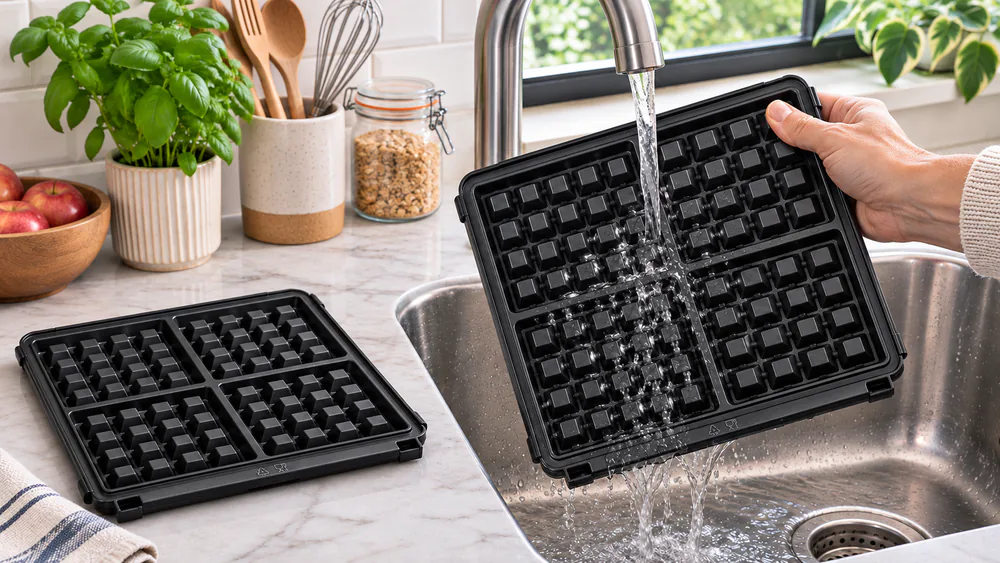
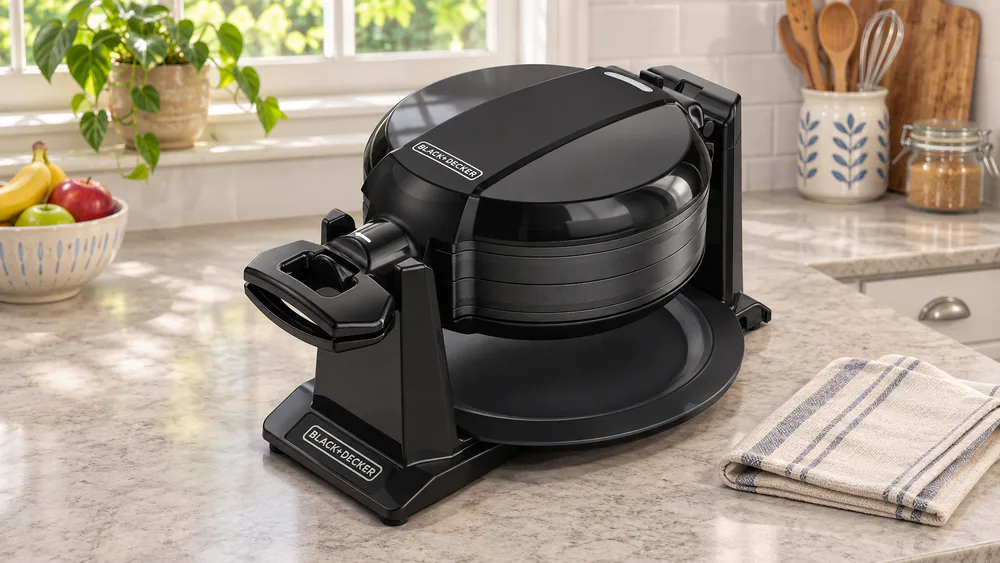
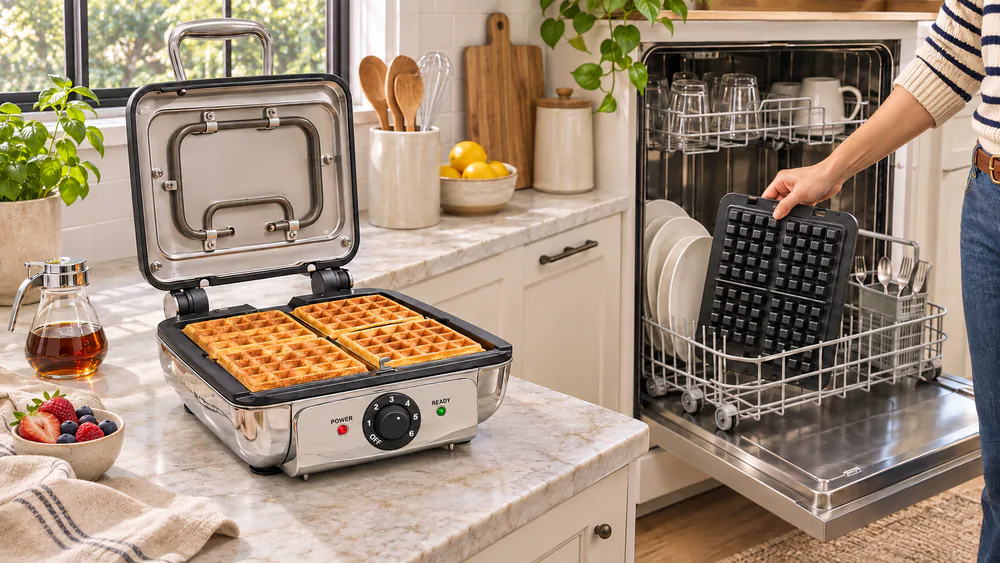
A good nonstick coating releases the waffle cleanly and wipes off with a damp cloth. Removable plates are the cleanup upgrade, because you can wash them in the sink or the dishwasher. Very few classic round irons offer them, which is why our easy-cleaning pick is a Belgian model.
Even with a good coating, a light swipe of oil or butter before the first batch helps the first waffle release.
Browning Control and Ready Indicators
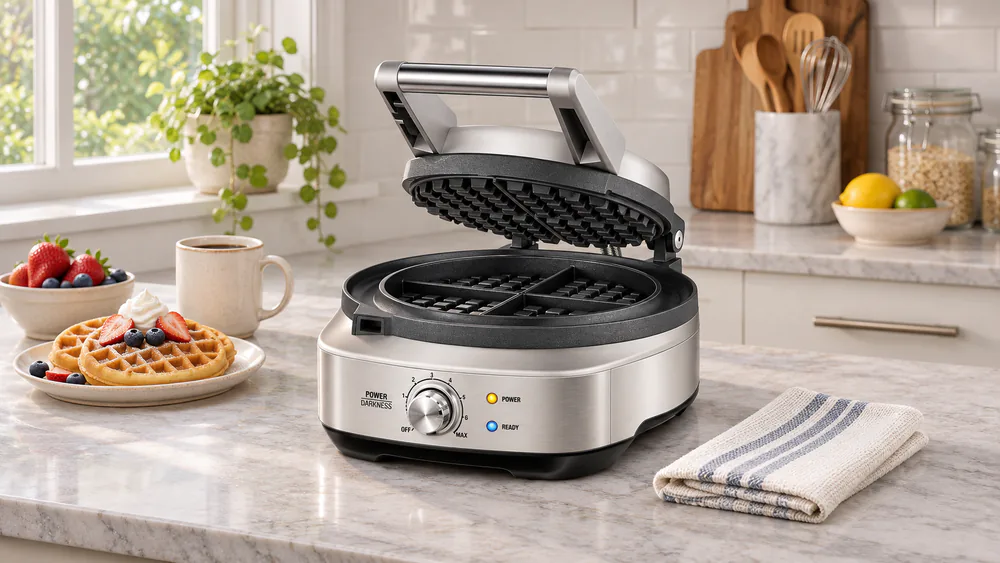
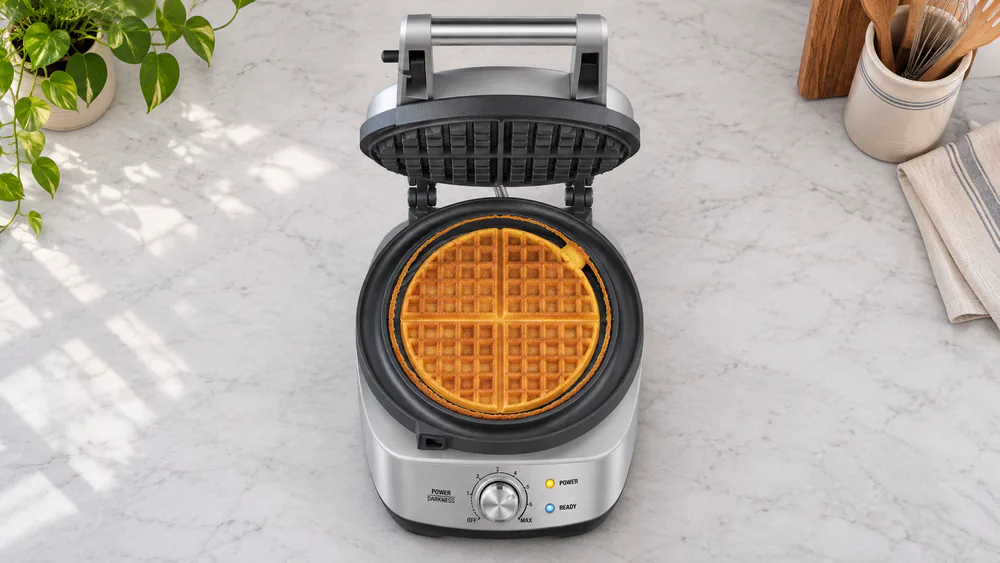
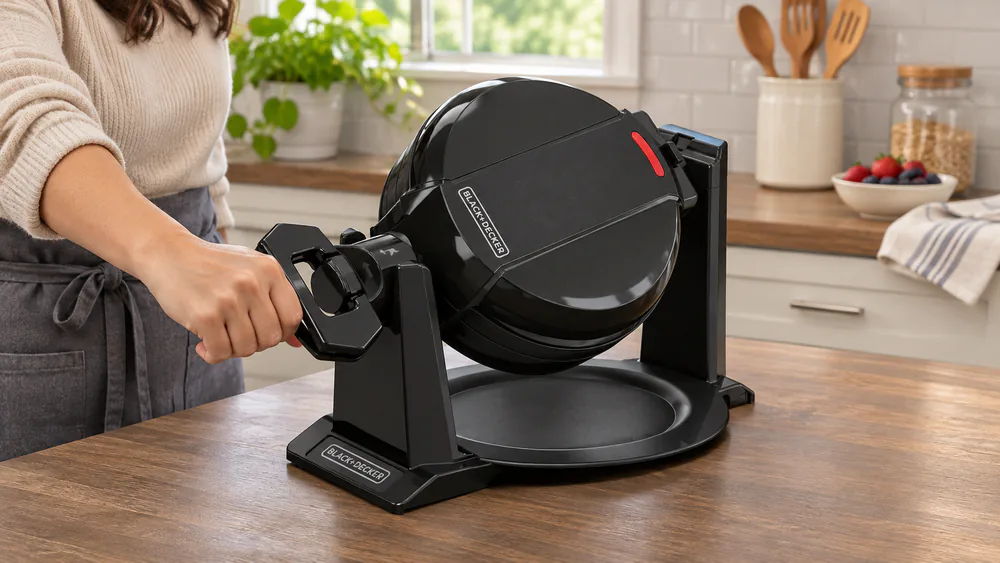
A browning dial helps, but the middle settings are usually the most reliable, and we found the extremes the least accurate on the two classic irons. Audible beeps are a bigger deal than most shoppers expect, because they stop everyone from lifting the lid early.
If an iron has no done light, plan on a few trial waffles to learn its timing. The sweet spot for most batters is the middle of the dial.
Size, Wattage and Storage
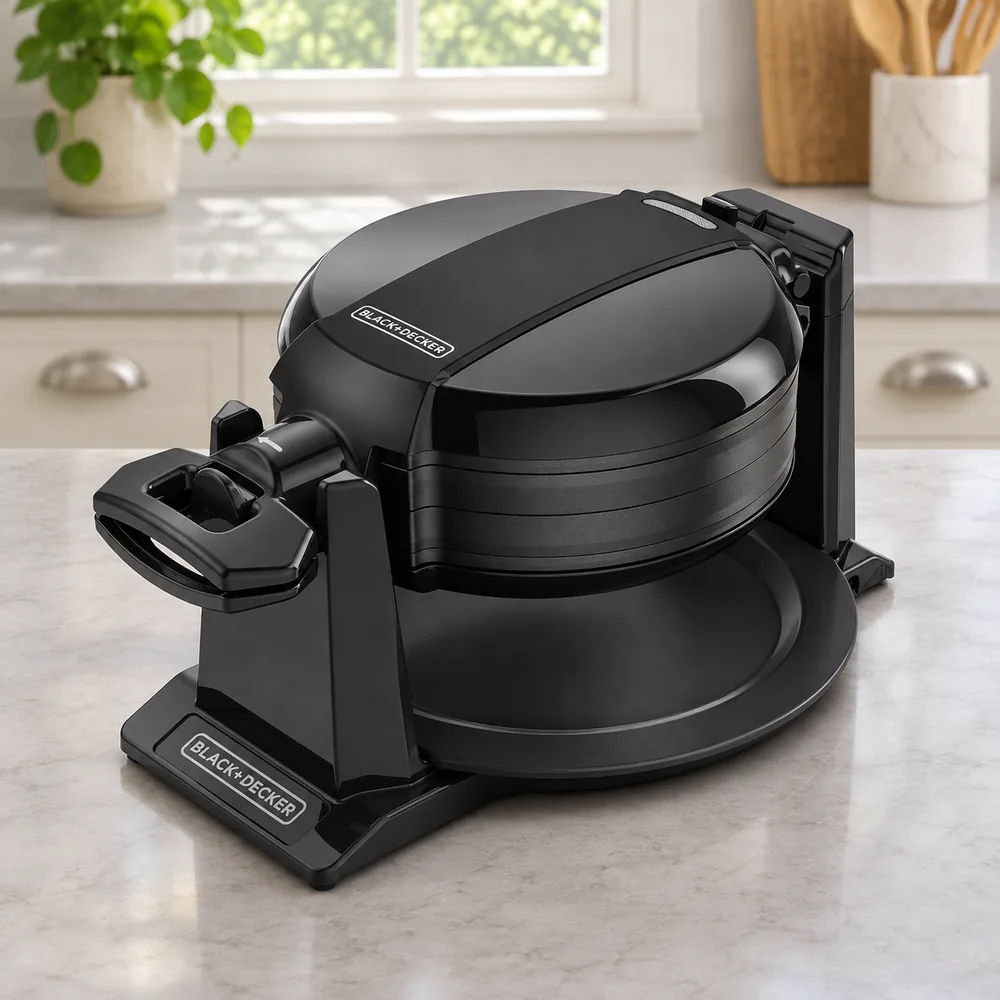
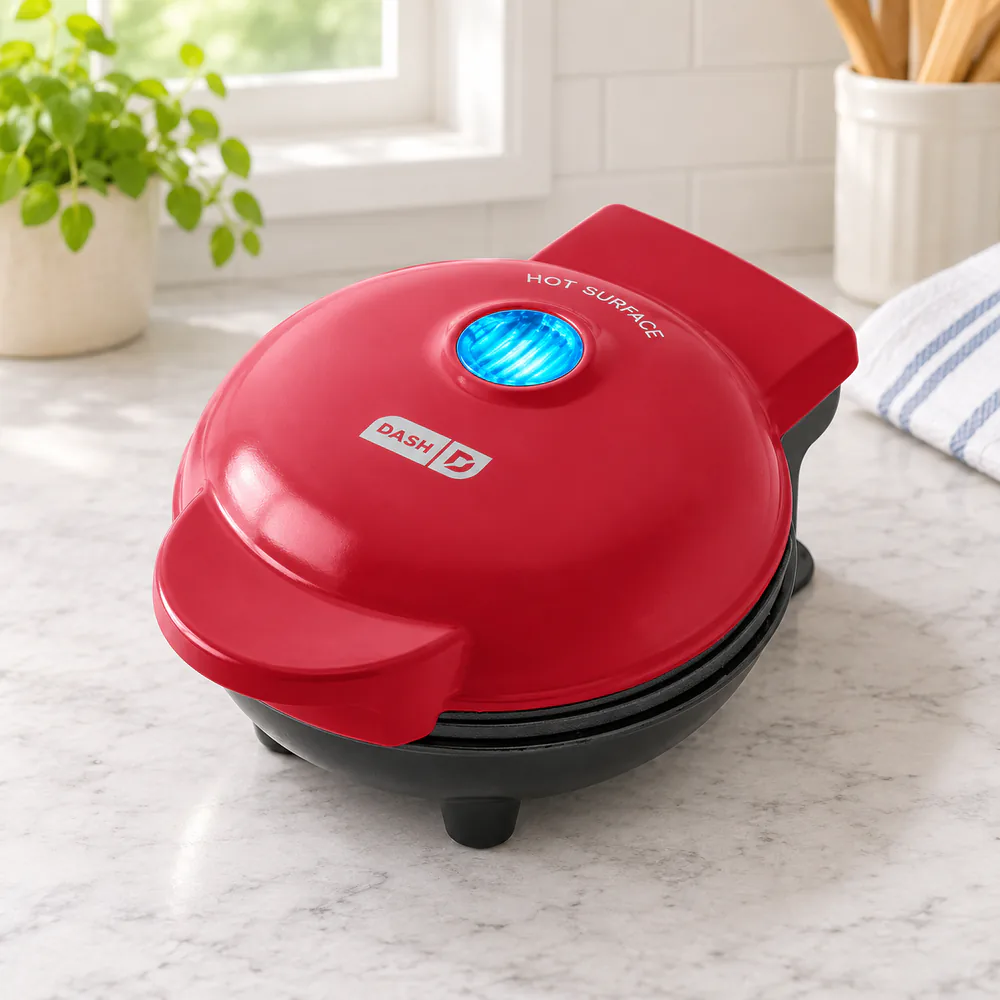
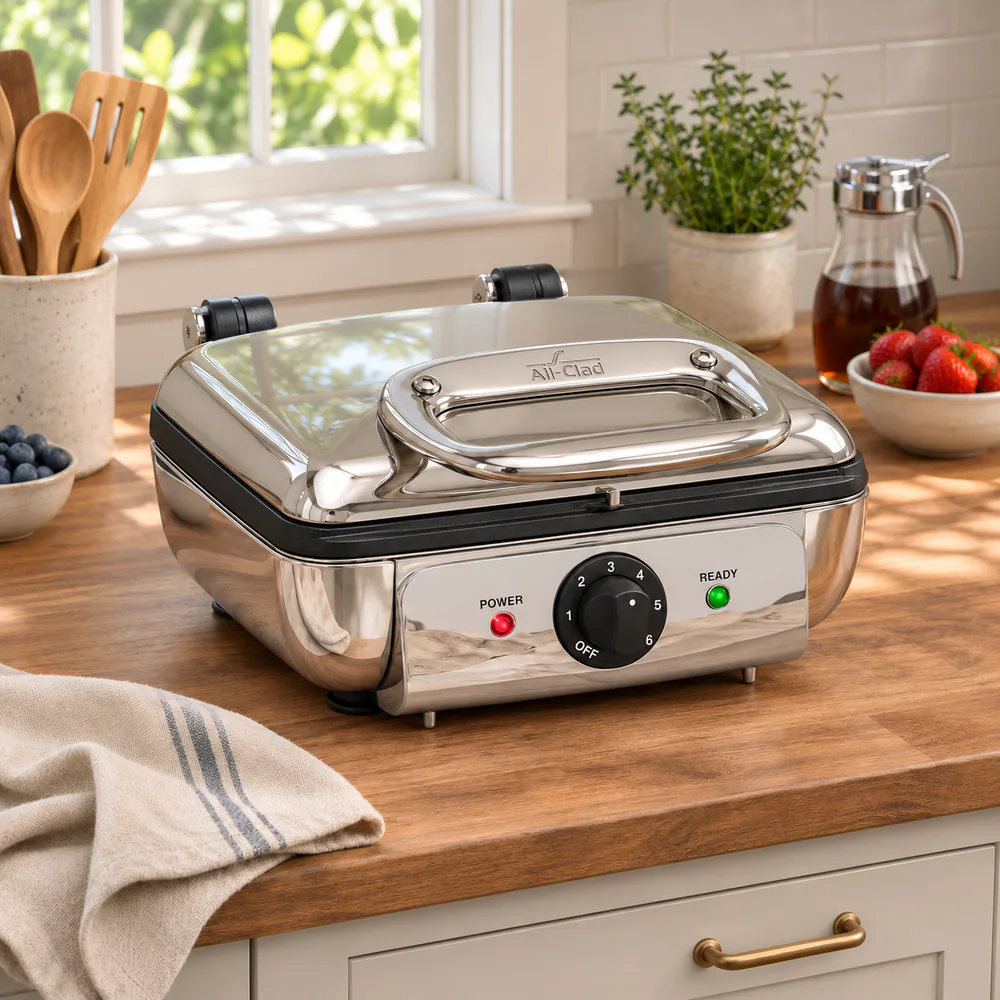
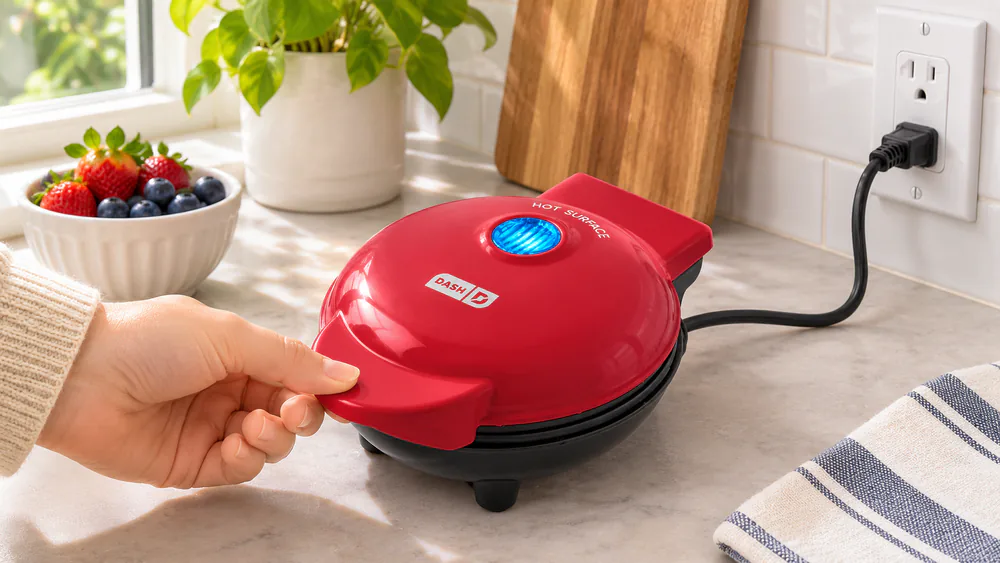
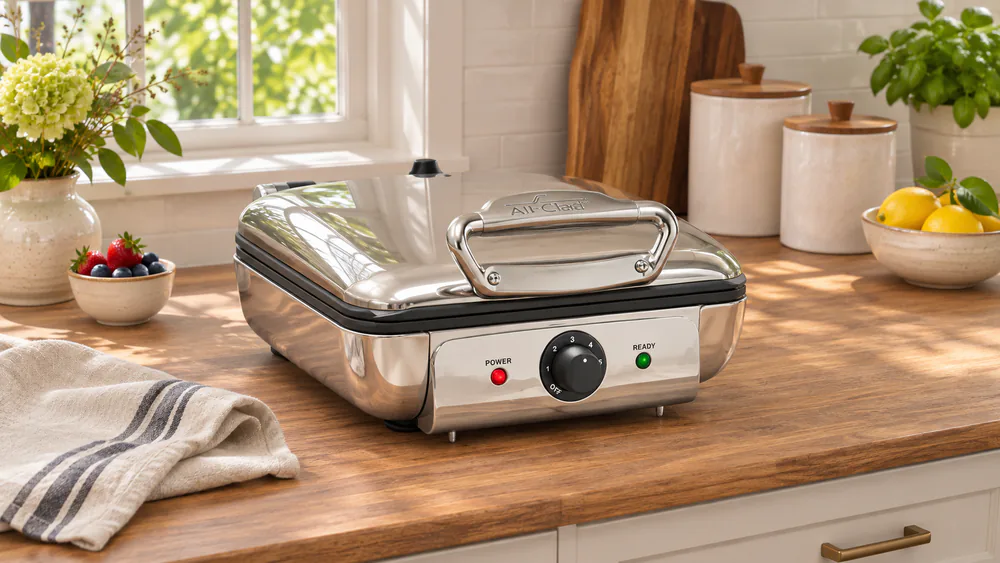
Wattage is a rough guide to how fast an iron reheats between batches. Our picks range from 900W up to 1600W, but the dial matters as much as the number. Weight and shape matter as well. The Dash Mini weighs 1.3 pounds, the Breville 6.7 pounds, and the All-Clad 13.3 pounds.
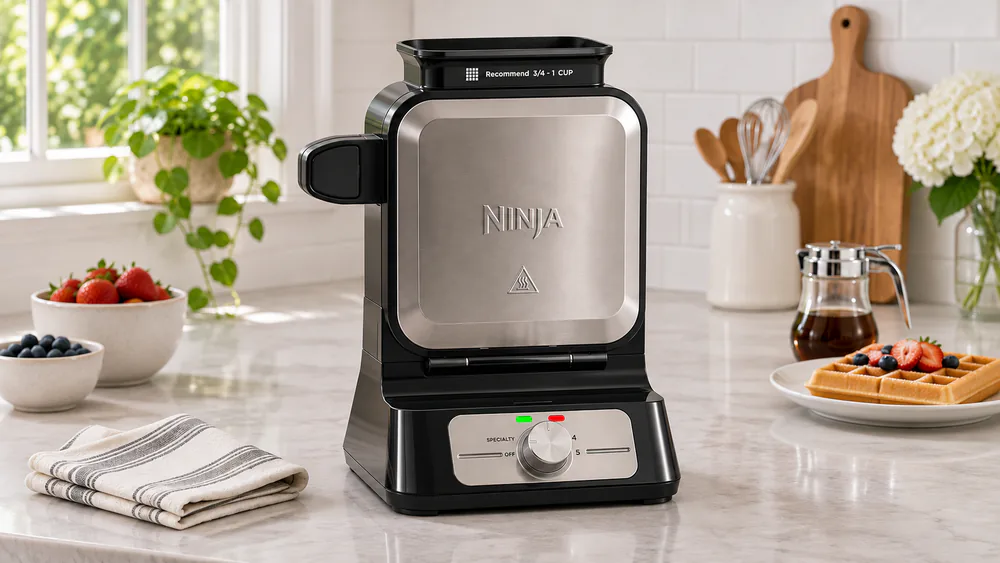
Think about where the iron will live. A vertical or upright design saves cabinet space, and a heavy iron is worth the counter space only if you use it every week.
Cleaning and Batter Overflow
Overflow is the main cleanup headache. A moat, a drip tray, or an overflow channel catches it, and each one saves a messy scrub. Let the iron cool until it is warm, then wipe the plates with a damp cloth. Never submerge a fixed-plate iron.