As an Amazon Associate we earn from qualifying purchases. We may earn a commission from links on this page, at no extra cost to you. Learn more.
Which cold press juicer actually earns its counter space? We ran 10 top models through weeks of daily juicing, plus a long-term durability fleet we keep running, measuring yield, ease of cleaning, and noise. The field splits harder than most: our top pick costs $599 and handles the whole batch hands-free, while the cheapest here runs about $99.98 and takes a whole apple without a cutting board.
A cold press juicer is a commitment: it takes up counter space, asks for a rinse after every batch, and the good ones cost real money. The great ones change your morning routine; the bad ones end up in a cabinet. Which machines deserve the counter space, and which budgets should reach for them?
Our test kitchen lives with the gear we review, so the verdicts below come from daily use, not a spec sheet. Every unit went through the same battery: whole-produce batches, fibrous greens, ginger and turmeric, plus the cleanup pass that decides whether a juicer survives daily use. We scored yield first, then cleaning friction and noise, then warranty as the durability signal; long-running testing programs like Wirecutter land on the same side we did: a juicer you dread cleaning is a juicer you stop using.
The Best Cold Press Juicers of 2026: Our Top Picks
Ten models made the cut, each for a different kitchen. The Nama J2 takes the top spot; the nine that follow cover value, hands-free, cleaning, quiet, small-space, batch, splurge, beginner, and green-juice roles.
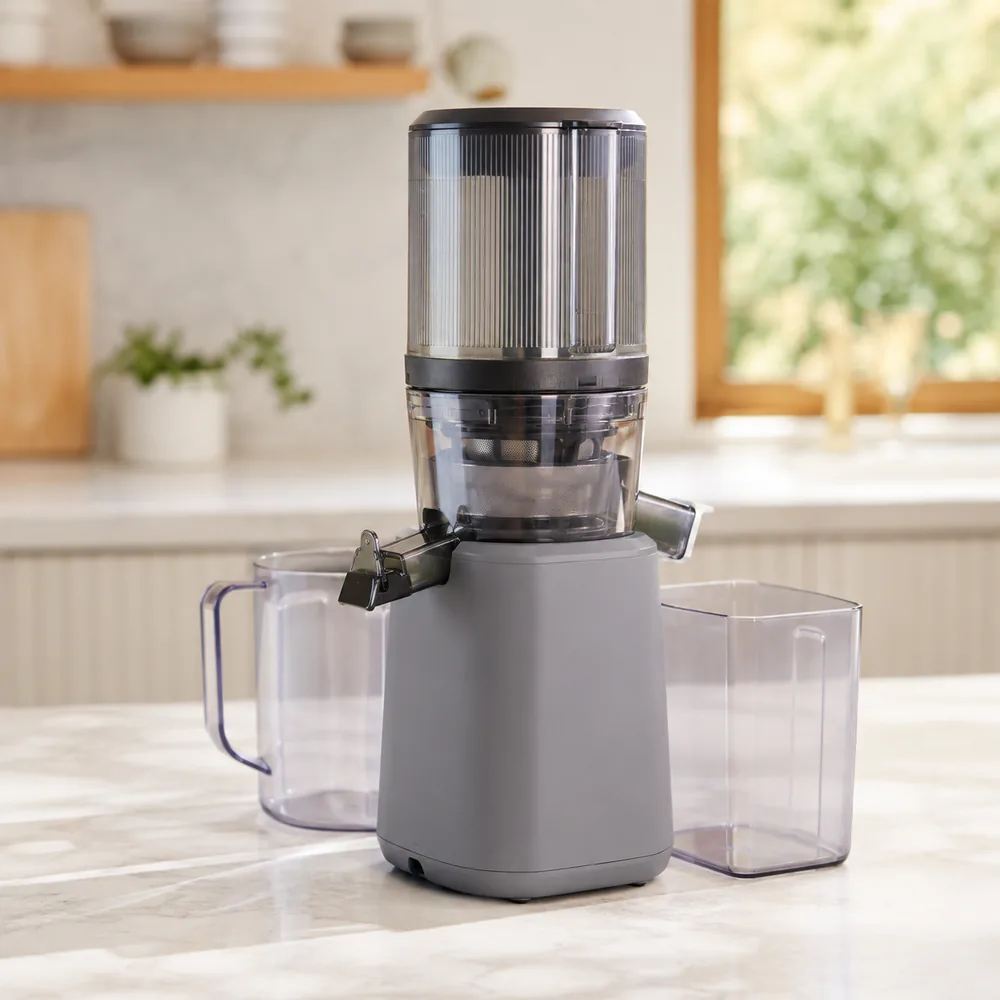
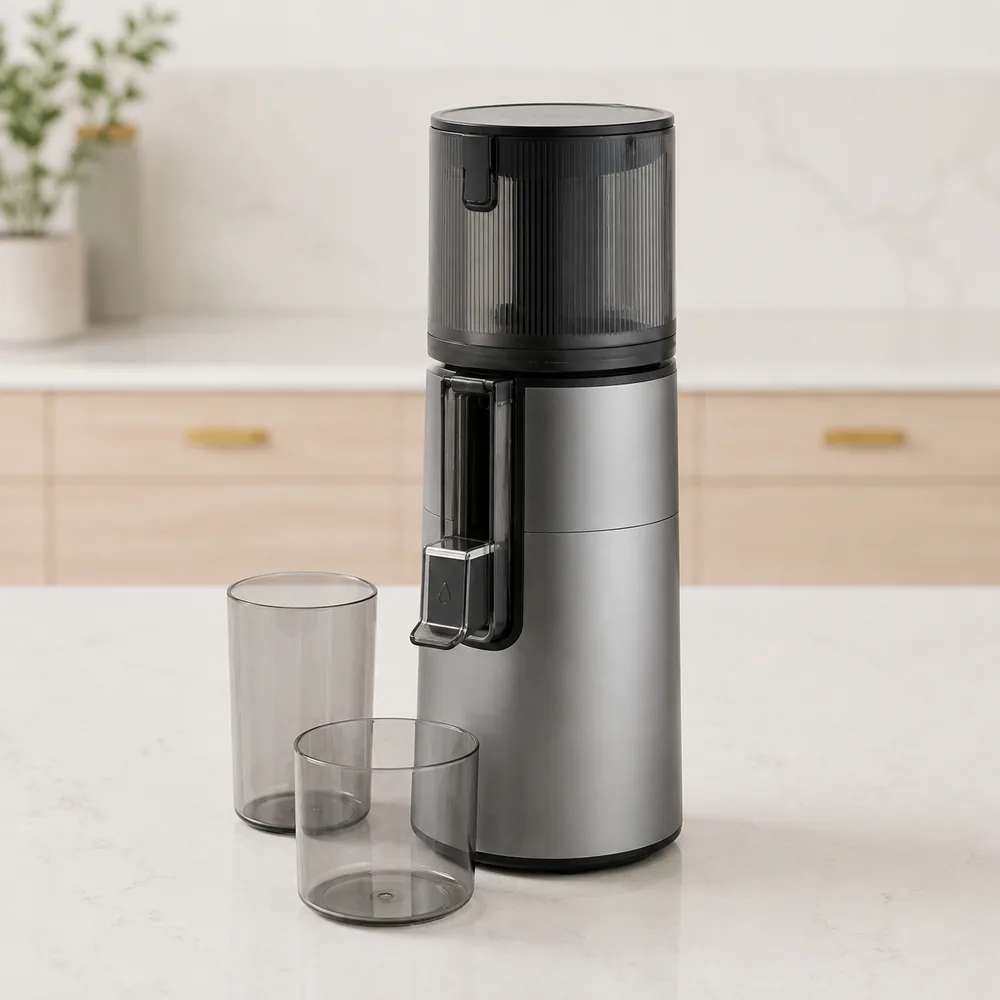
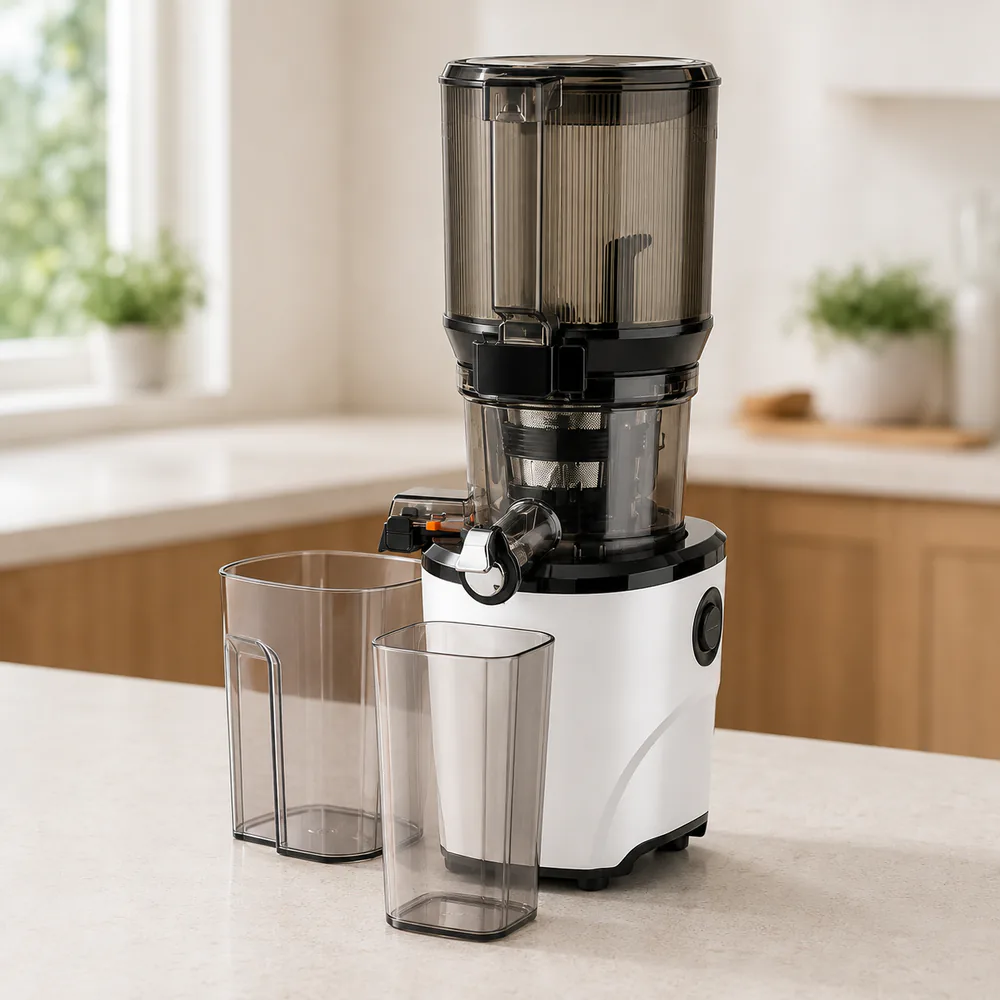
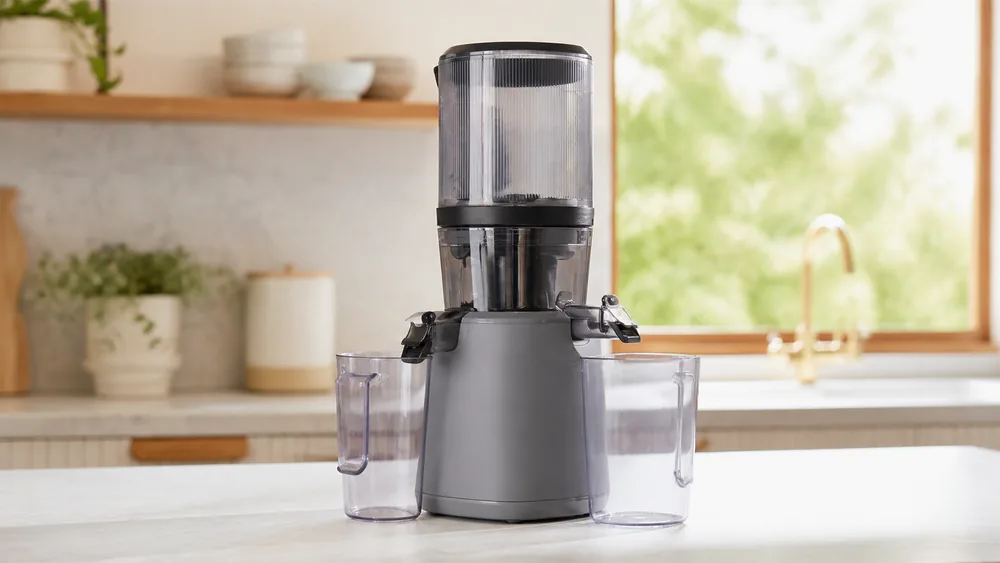
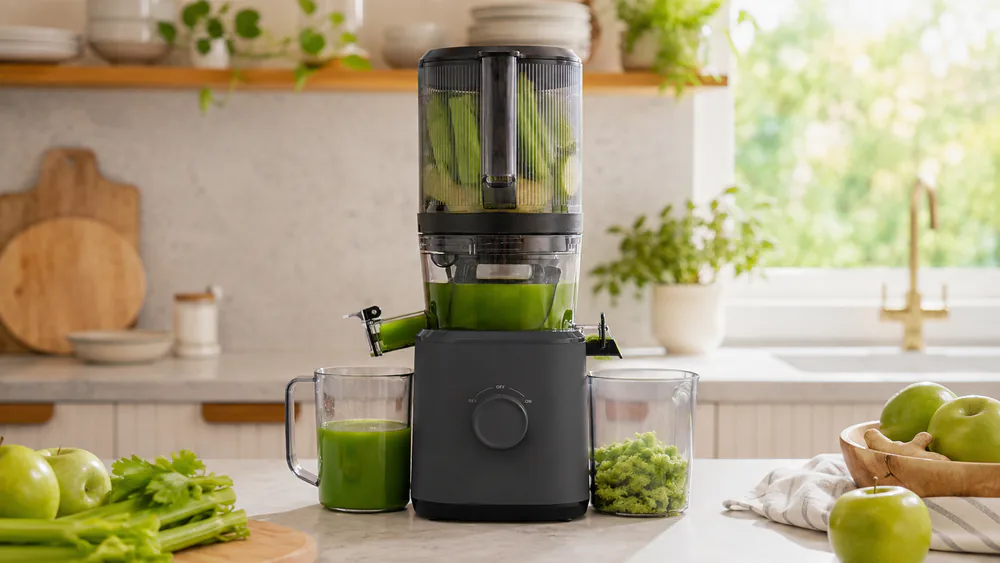
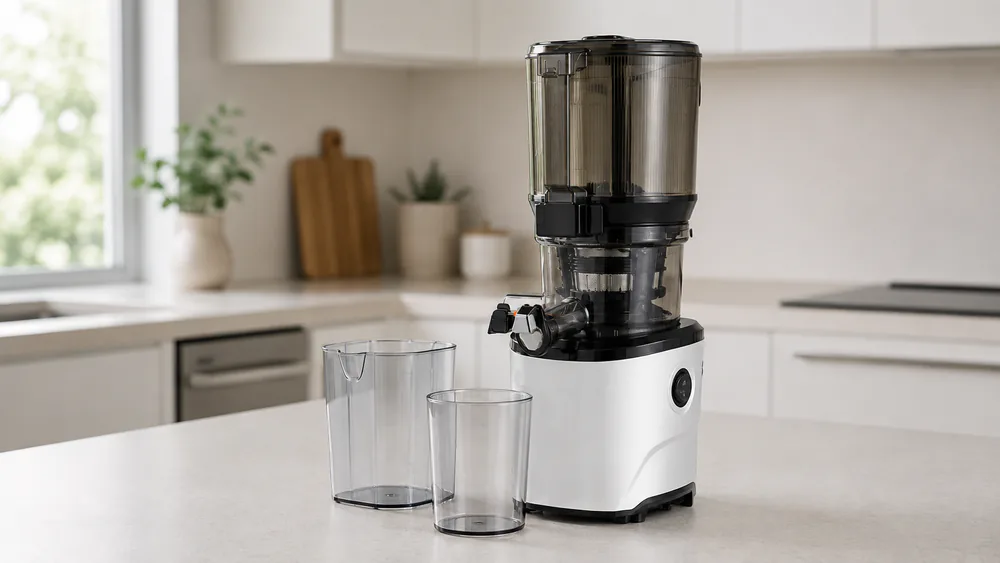
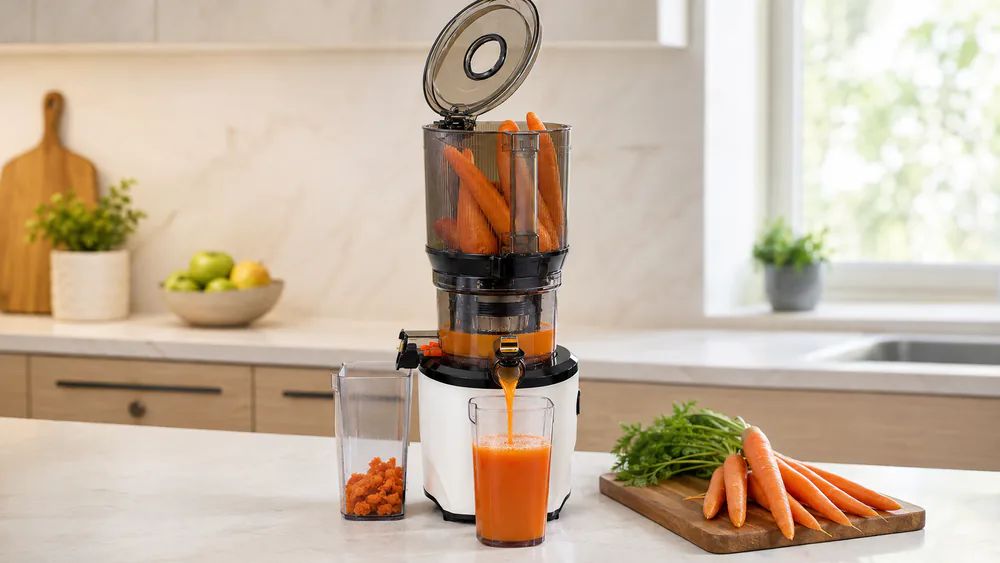
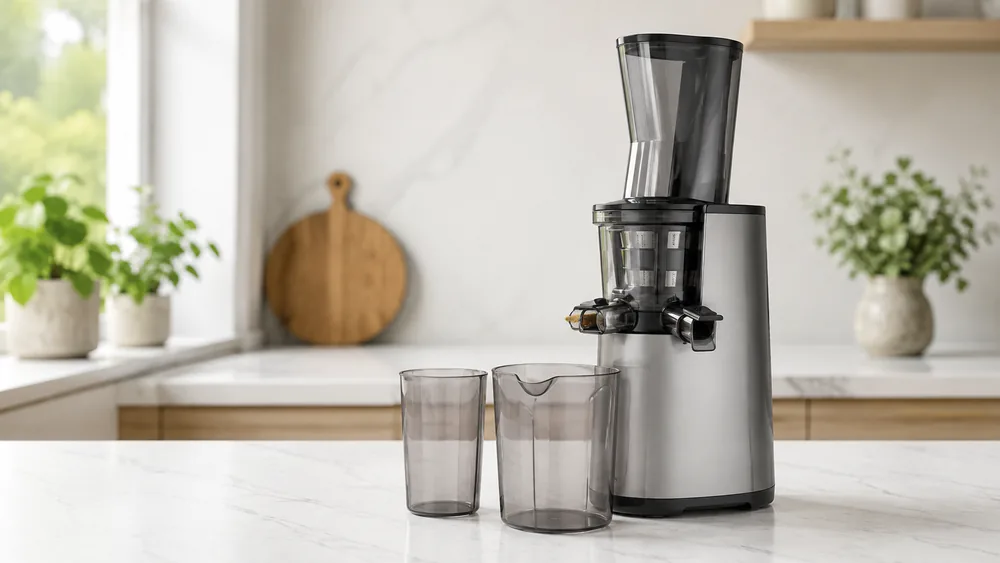
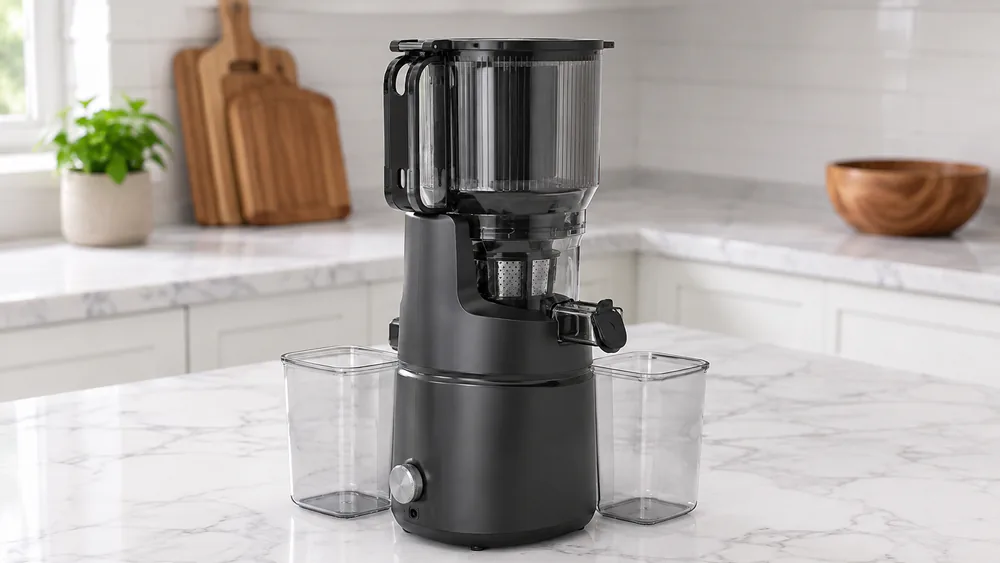
The Nama J2 changes what daily juicing feels like: its self-feeding hopper takes a whole recipe at once, cuts the produce itself, and presses it while you walk away, no pusher or chopping board. The payoff is in the pulp, noticeably drier than any other juicer we ran: one celery stalk, half a cucumber, parsley, and an orange gave about 9 oz, where a feeder-style machine left under 5 oz.
Self-feeding wide-mouth hopper that auto-cuts produce
Zero-waste masticating auger with fine and coarse strainers
Juice and pulp containers plus a spinning cleaning brush
BPA-free materials: SAN hopper, Tritan chamber, Ultem auger
Specifications
Price
$599
Motor
200W
Speed
50 RPM
Yield per load
16-32 oz
Dimensions
9.8 x 9.0 x 17.7 in
Weight
12.1 lbs
Warranty
15-year (all parts)
It runs quietly enough to leave the room, cleanup takes about four minutes with the included brush (hand-wash only), and assembly runs around 13 parts with a short learning curve. Two quirks: at 17.7 inches it will not fit under low cabinets, and it can drip after a run unless the juice outlet door stays closed. Add a 15-year all-parts warranty, and this is the machine we would buy for daily juicing.
Pros
Self-feeding hopper means no chopping or pushing
Pulp noticeably drier than any other juicer in this roundup
Quiet enough to leave the room, minimal foam
15-year warranty covering all parts
Cons
Hand-wash only
17.7 inches tall, no low cabinets
13-part assembly has a learning curve
Can drip after a run if the juice outlet door stays open
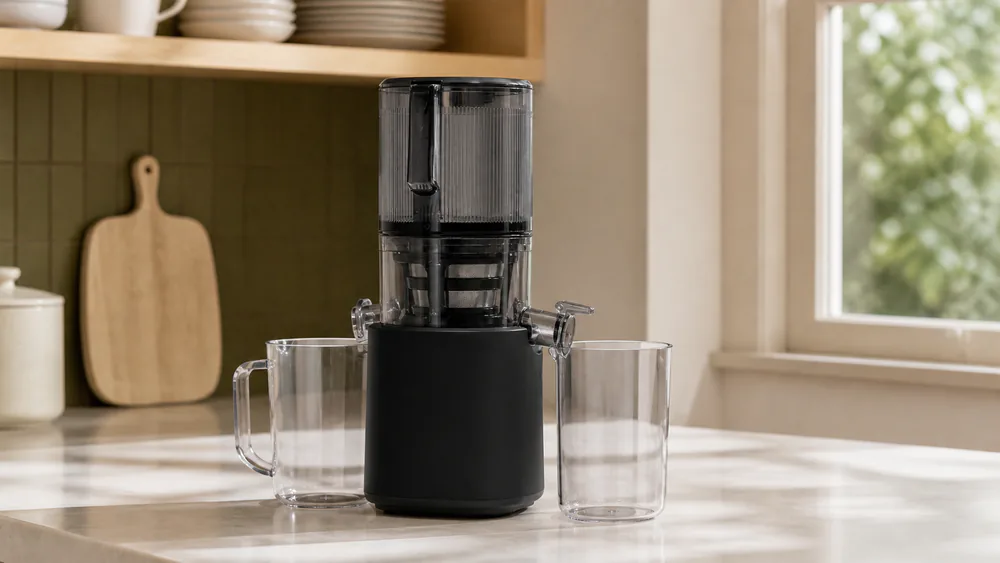
A $149.99 cold press juicer that does not clog is a category of one in our testing. The NeverClog earned its name in our kitchen: a full batch of fibrous celery and kale ran through without a single jam, the two pulp filters deliver real texture control, and re-running already-extracted pulp pulled almost nothing.
Two one-touch programs: Start-Stop and Reverse
Two pulp filters: Less Pulp and Lots of Pulp
Anti-drip lever, food tray, and pusher
All juice-contact parts dishwasher safe
Specifications
Price
$149.99
Motor
150W
Juice jug
24 oz (30 oz in the official spec table)
Pulp container
36 oz
Dimensions
12.11 x 7.15 x 15.93 in
Weight
7.94 lbs
Warranty
1-year
The trade-offs mostly come down to noise and prep time: it is the loudest pick in our lineup, roughly vacuum-level, and the small chute means produce needs chopping first. Cleanup is the saving grace, with every juice-contact part dishwasher safe and a low part count that makes hand-rinsing quick. Our one durability note: a unit in our long-term fleet developed a crack near the peel spout about six months in; a replacement chute assembly runs about $70. That and the 1-year warranty keep this from a higher score.
Pros
Ran a full fibrous batch without a single jam
Every juice-contact part is dishwasher safe
Two pulp filters for real texture control
Compact under-cabinet height
Cons
Louder than the rest of the lineup, roughly vacuum-level
Small chute means chopping first
1-year warranty
Long-term units can crack near the peel spout
The NeverClog claim, tested with the worst-case produce.
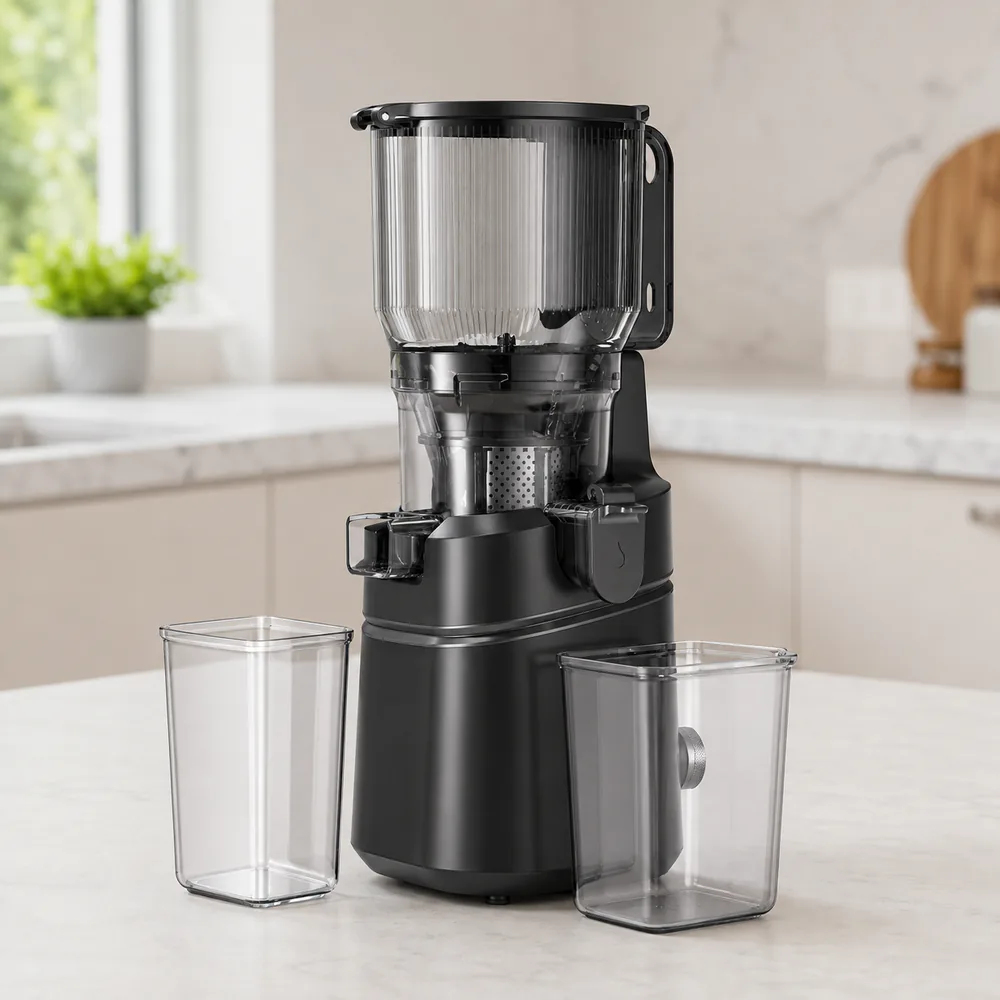
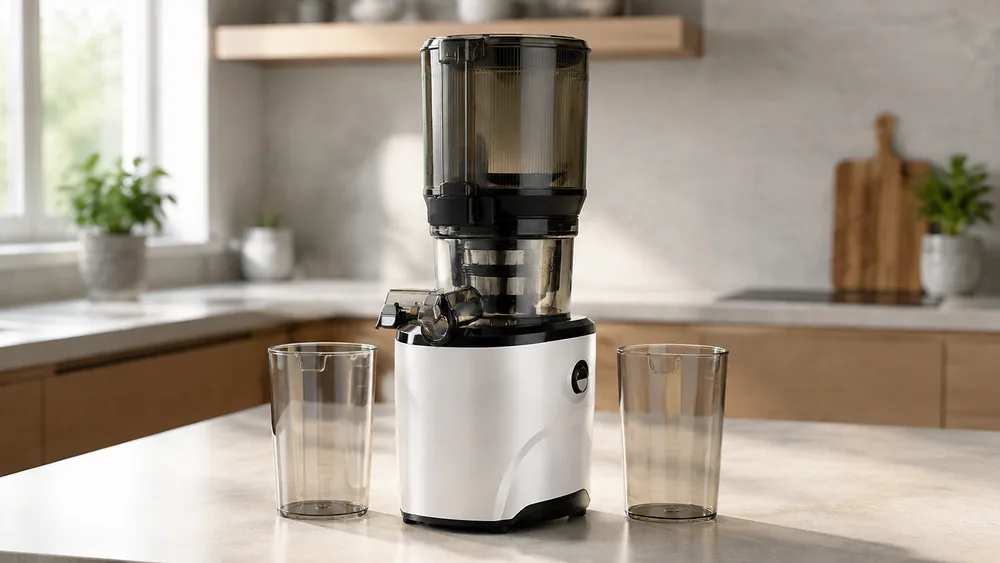
Hands-free is a real claim here, not just a line on the box: the flip gate feeds whole fruit in while keeping fingers out, and the 100 oz hopper swallows whole carrots and celery with no cutting board. We loaded a full batch, closed the lid, and walked away; pulp came out almost bone dry, and the AUTO10 handled turmeric and ginger back to back without complaint, quiet enough to run in the same room as a conversation.
Self-feeding auto-cut hopper with flip gate and double-crushing blade
Three strainers: juice, smoothie, and sorbet
Leak-proof juicing bowl with juice and pulp cups
Made in South Korea, with a detachable cord
Specifications
Price
$729.99 (street price varies)
Motor
240W
Speed
50 RPM
Hopper
100 oz
Dimensions
8 x 10 x 18 in
Weight
16.5 lbs
Warranty
15-year
The cost of that convenience is a bigger machine and a longer cleanup: it stands 18 inches tall, none of its many parts are dishwasher safe, and the included cleaning tools matter. Our longest sessions needed a mid-run break to clear pulp, which stings at this price. Even so, for a household that juices in volume, the 240W motor, 50 RPM press, and 15-year warranty make it the most capable hands-free machine we tested.
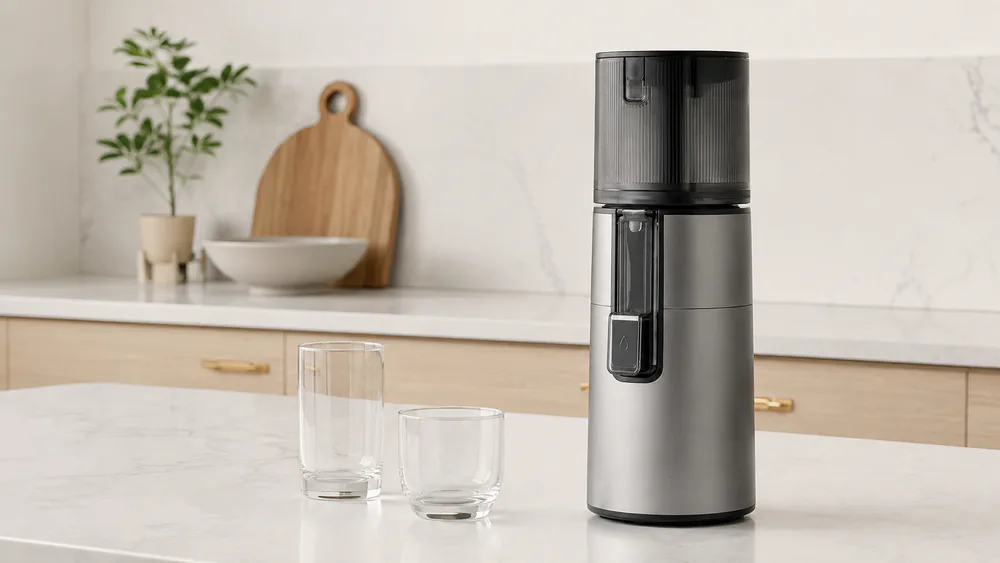
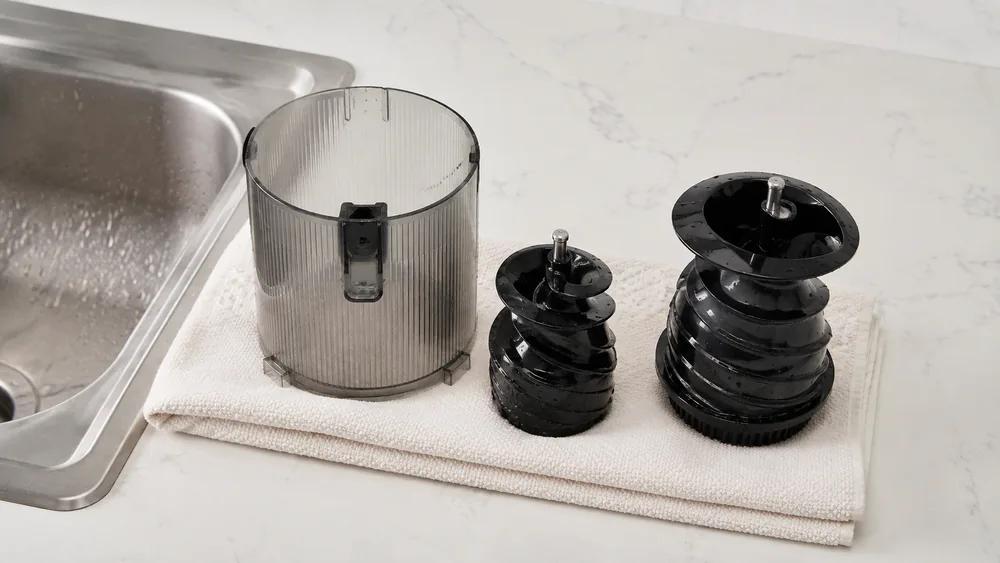
Cleaning is where the H400 wins, and it wins big. There is no strainer mesh to scrub; the straining happens inside the chamber and two-part auger, so a drop of dish soap and warm water rinse the parts clean. Juice and pulp collect in internal compartments, so nothing crowds the counter while it runs and nothing extra needs storing. It is among the quietest in the lineup, and you can add ingredients mid-run.
Strainer-free Easy Clean chamber with two-part auger
Internal juice and pulp compartments with a nesting pulp container
Self-feeding hopper, add ingredients while running
Six color options and a removable cord
Specifications
Price
$749
Motor
150W
Speed
90 RPM
Chamber
18.6 oz (550 ml)
Hopper opening
45 mm
Dimensions
6.6 x 10.3 x 18.5 in
Weight
14.8 lbs
Warranty
15-year
Our honest notes: fibrous produce can push out more pulp than juice, celery clogged the pulp chamber mid-session once, and the spout seal needs occasional maintenance against leaks. No machine is truly effortless to clean, and this one is as close as it gets. At $749 it is the most expensive pick here; the 15-year warranty, 90 RPM press, and 18.6 oz chamber are what you are paying for.
Pros
Strainer-free design rinses clean with no mesh to scrub
Juice and pulp in internal compartments, nothing extra to store
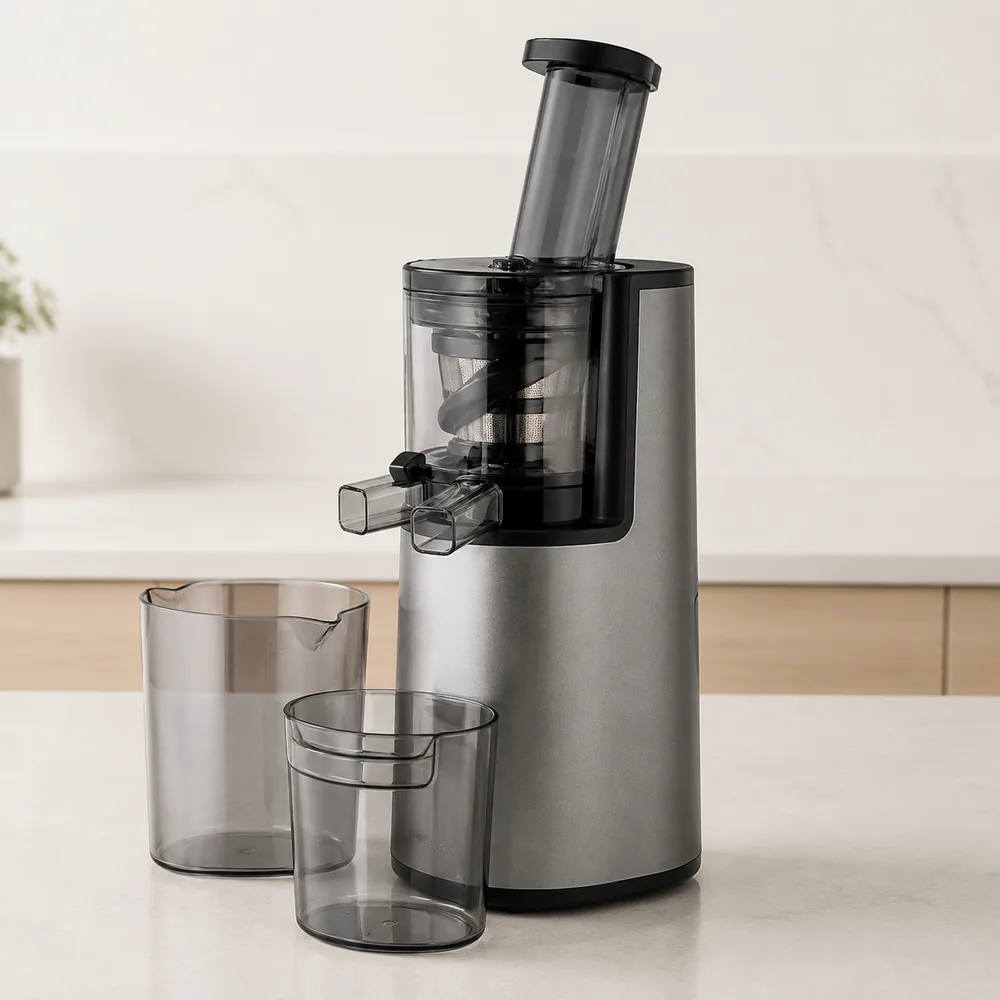
If noise is your kitchen's dealbreaker, this is the pick. The H-AA was the quietest masticating juicer we measured at 40-45 dB, quieter than a conversation, so you can juice before anyone else wakes. Its two-part strainer basket rinses clean in under three minutes, the compact water-bottle footprint suits small counters, and at $399 it undercuts the premium verticals by hundreds. The trade-offs are modest: the 10-year motor warranty trails the 15-year flagships, the 2.4-inch chute means most produce gets a cut first, and the 43 RPM press is the slowest here, so full batches take longer. For single glasses and couples who want greens without the grumble, it is the smart money.
Vertical slow-squeeze auger with a two-part strainer basket
BPA-free juice path
Five main teardown components
Compact water-bottle footprint
Specifications
Price
$399
Motor
150W
Speed
43 RPM
Chute
2.4-inch
Warranty
10-year (motor)
Pros
Quietest masticating juicer we measured, 40-45 dB
Two-part strainer rinses clean in under three minutes
Compact footprint at $399
BPA-free juice path
Cons
10-year motor warranty trails the 15-year flagships
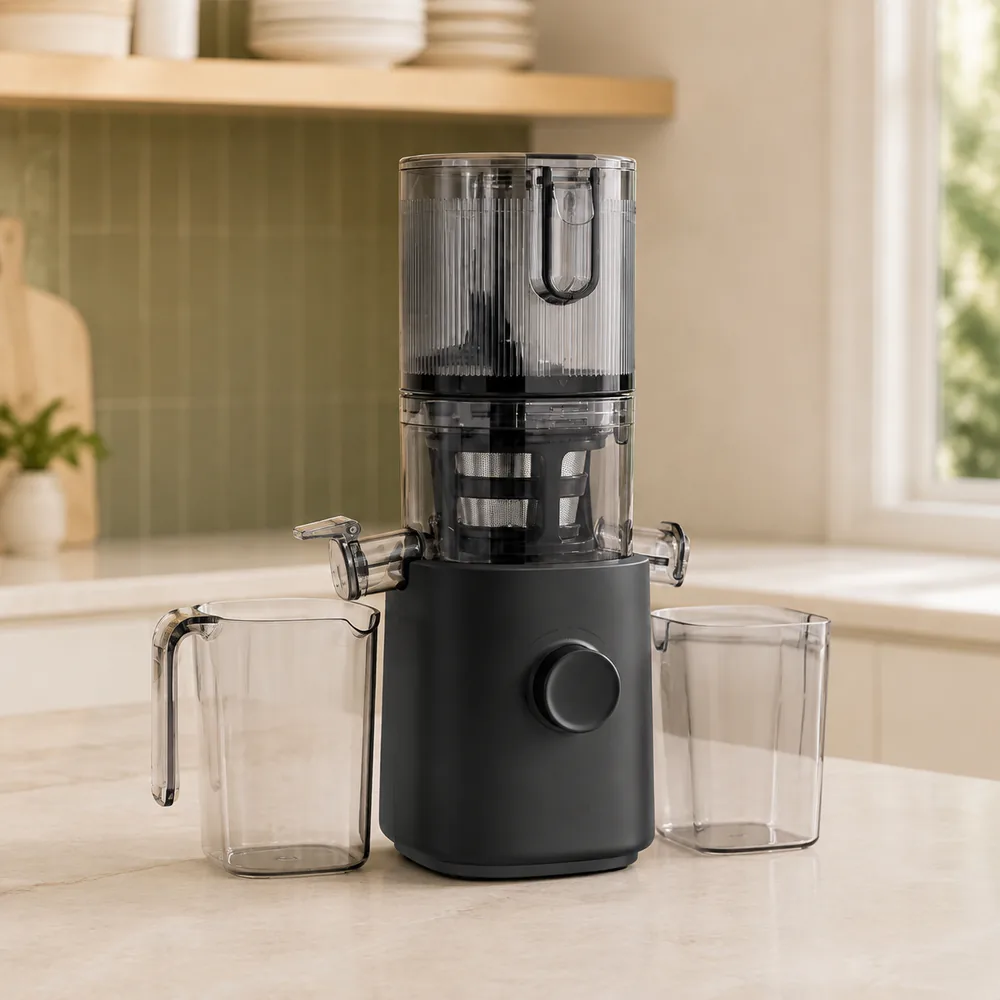
One glass is the J3's natural session unit: about three and a half oranges made 13.5 oz of juice, and you can keep topping the chamber up mid-run so the small load does not cap your glass count. We ran it every morning for three weeks, making ginger shots, orange and carrot juice, almond milk, and green juice, and it made light work of a pineapple and a big chunk of ginger. The self-feeding hopper keeps the walk-away promise at this size, pausing when the lid opens, and the 50 RPM press stays quiet through a full batch.
Self-feeding hopper in a compact travel-ready body
Juice and pulp containers with two strainers
Quick-release parts and a cleaning brush
Recipe book included
Specifications
Price
$499
Motor
130W
Speed
50 RPM
Yield per load
10-16 oz
Chute
3-inch
Dimensions
8.9 x 6.5 x 15.4 in
Warranty
15-year
The J3 shrinks the J2 formula for smaller kitchens: it measures 8.9 x 6.5 x 15.4 inches, with the same self-feeding hopper approach, 15-year all-parts warranty, and a 3-inch feed opening that takes medium fruit whole; the 130W motor spins at 50 RPM with quick-release parts. The honest math: 10 to 16 oz per load suits one or two glasses, not family batches, and $499 is the Nama premium for the compact body. For singles and couples, that premium buys the smallest full-featured cold press juicer here.
Pros
Same self-feeding approach as the J2 in a smaller body
15-year all-parts warranty
3-inch feed opening takes medium fruit whole
Quick-release parts keep the teardown simple
Cons
10 to 16 oz per load suits singles and couples only
The dual-feed chutes made batch sessions easy in our kitchen: whole apples dropped through the wide flip-gate chute while carrots and celery fed through the narrow auto-cutting chute, no cutting board involved. The feed side does have limits: big carrots can get stuck when the cutter pops them up, which is what the pusher is for, and small fruit chunks can catch in the top of the machine with a little waste. The jams we did hit came at the pulp outlet instead: pulp comes out dry and the wider outlet helps, but fibrous material can still clog it, and thin celery sticks can block it without fully stopping the machine.
REVO dual-auger technology
Dual-feed chute: 88 mm hard-produce and 48 mm soft-produce channels
Auto pulp ejection
Smoothie bowl and fine-mesh sorbet strainer accessories
Specifications
Price
$699.99 (varies by retailer)
Speed
60 RPM
Chute
Dual 88 mm / 48 mm
Yield
847 ml per 10-lb batch
Warranty
10-year
Over a full hopper it keeps up but is slow by design: a normal job ran about 10 minutes where a fast juicer takes two, and it is quieter than most cold press juicers we have run. A mixed batch of carrot, orange, beetroot, apple, ginger, parsley, and spinach left a decent glass for three people, with no froth, just pure juice.
It is also the yield leader: in standardized batch testing it pressed 847 ml from a 10-lb produce load, against 712 ml from the Hurom H-AA and 698 ml from the Omega NC900HDC, up to 20 percent more than Kuvings' previous generation. The dual-feed chute runs separate channels for hard and soft produce, 88 mm and 48 mm, with auto pulp ejection; the commercial-grade build and included smoothie and sorbet accessories round out a machine for serious batch juicers. Street pricing swings from roughly $600 to $700, and the 10-year warranty trails the 15-year flagships, but for volume juicers the yield math is the argument.
Pros
Yield leader: 847 ml from a standardized 10-lb batch
Dual-feed chute processes hard and soft produce at once
Auto pulp ejection keeps sessions moving
Smoothie and sorbet accessories included
Cons
Street price swings, roughly $600 to $700 by retailer
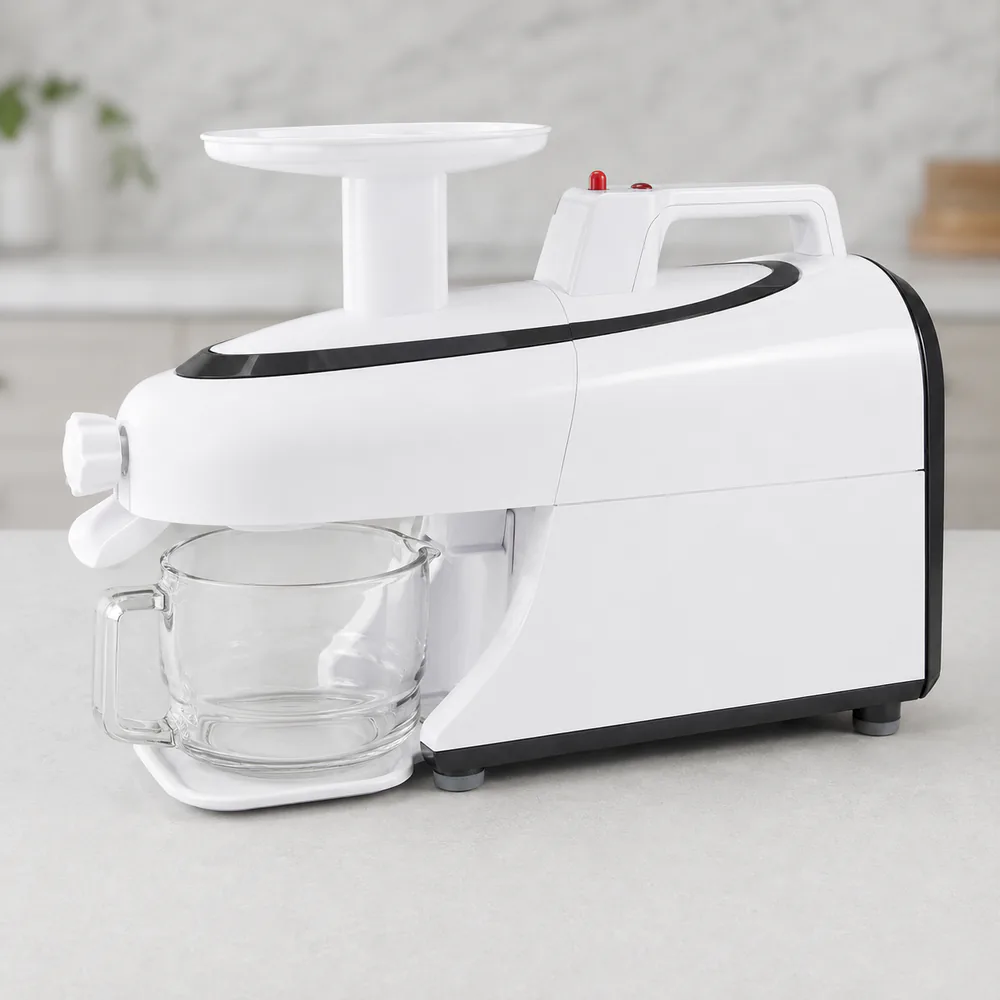
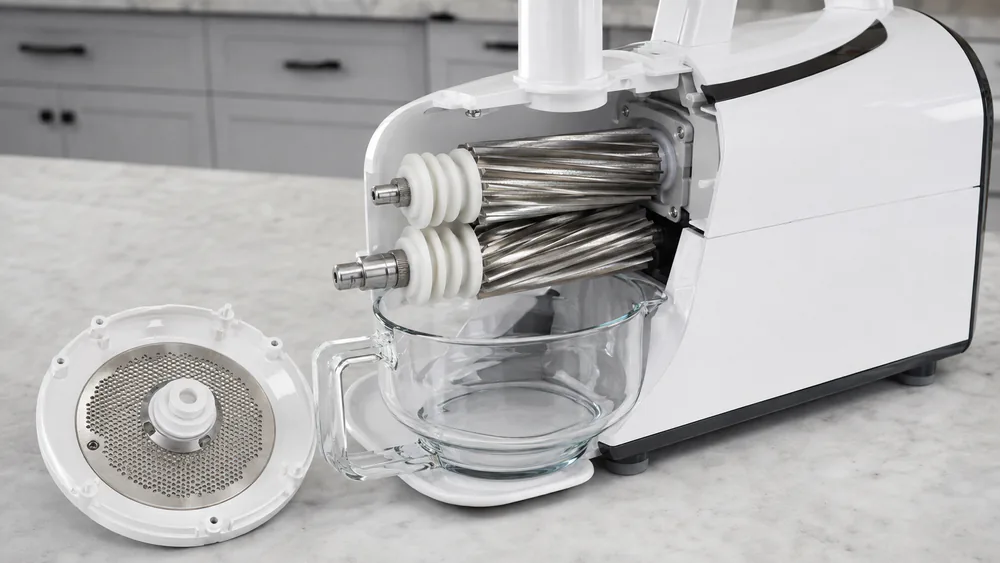
The Greenstar is the serious juicer's splurge: the twin stainless steel gears press with a force no single-auger machine matches, delivering restaurant-quality juice, bone-dry pulp, and effortless sorbet and nut butter. Refrigerated juice held up to about three days in our kitchen.
Twin stainless steel gears with pocket recesses
Fine and coarse screens plus homogenizing blank
Glass juice pitcher with drip tray
Plastic and wooden plungers
Specifications
Price
$550-$650 (varies by retailer and configuration)
Motor
170W
Speed
120 RPM
Chute
2-inch
Warranty
15-year
The price of that quality is labor: the 2-inch chute means chopping, only one produce texture at a time, and pushing produce through the gears takes real arm effort. Cleanup is the polarizing part: with many parts to rinse, it took twelve minutes on a good day, and plastic parts hold juice stains while metal wipes clean. The 170W motor, 120 RPM press, and 15-year warranty make it a buy-it-for-life machine for an enthusiast who does not mind earning it, at roughly $550 to $650.
Pros
Twin gears press restaurant-quality juice
Bone-dry pulp
Sorbet, nut butter, and salsa from the same machine
15-year warranty
Cons
2-inch chute and one-texture-at-a-time feeding
Pushing produce through takes real arm effort
Many parts to clean, plastic holds juice stains
The twin-gear press, the reason the splurge exists.
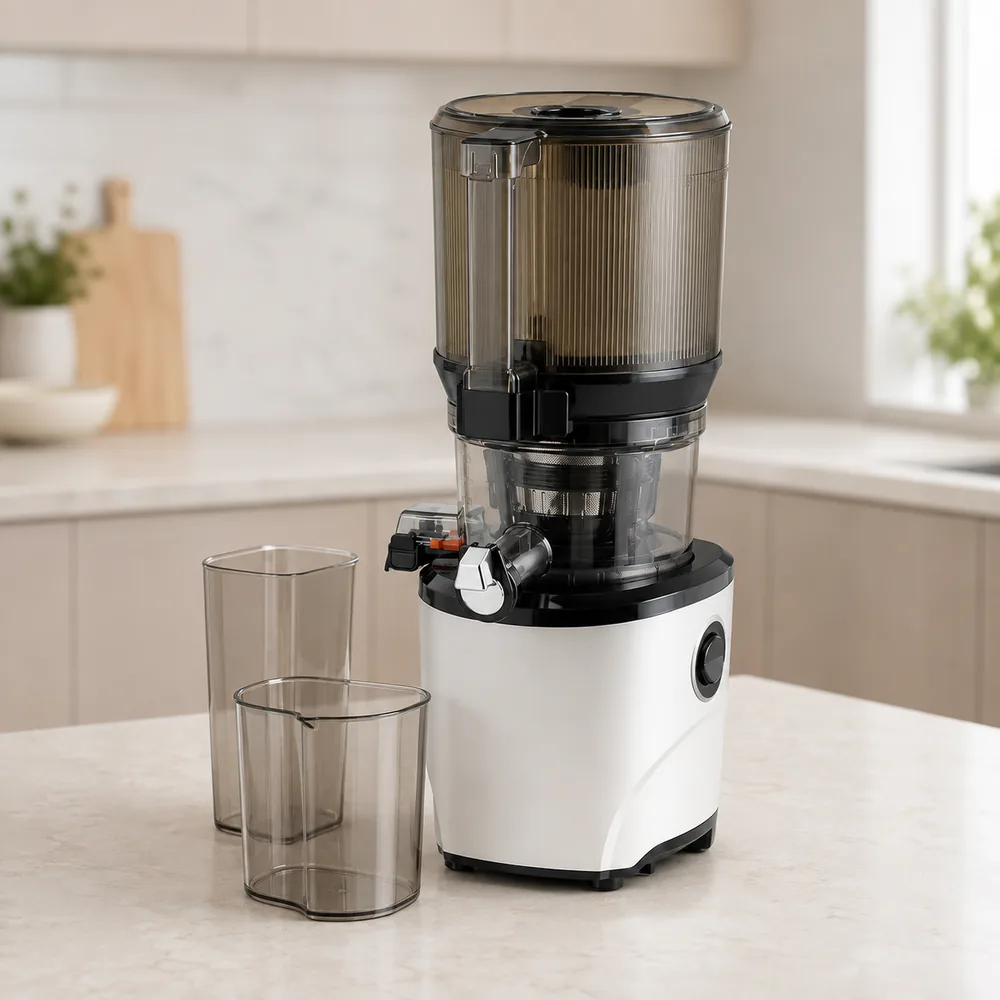
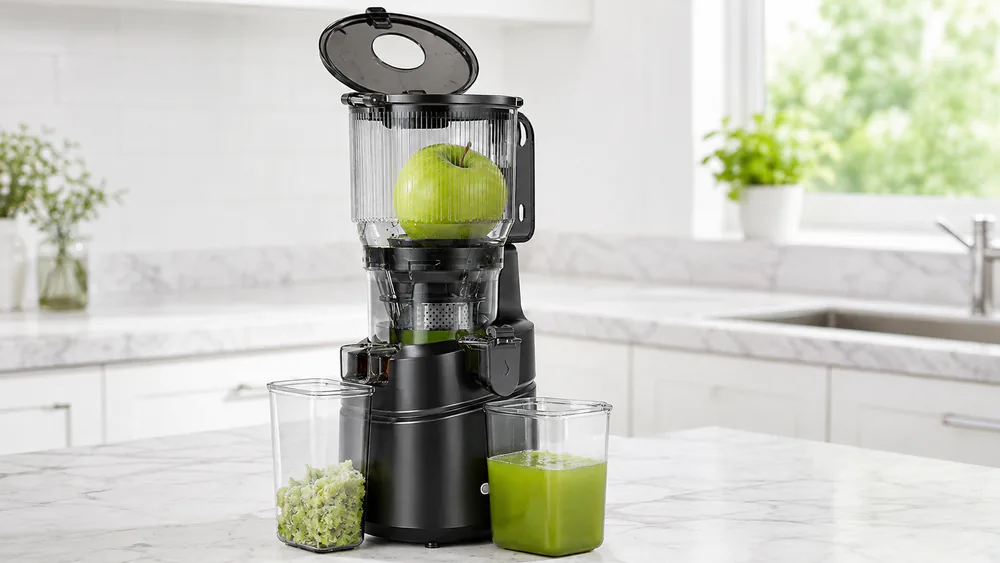
For under $100, the AMZchef is a genuinely well-made starter. The 6.3-inch feed chute is the widest in our lineup: a whole apple goes in without a cutting board, and it pressed apples, oranges, grapes, celery, carrots, and kale with nearly dry pulp. It runs noticeably quieter than the budget centrifugals we have used, and the 3-in-1 design adds nut milk and sorbet modes.
7-stage auger with triple filtration
3-in-1 modes: juice, nut milk, and sorbet
Self-feeding hopper with a removable juicing body
Food pusher and cleaning brushes
Specifications
Price
$99.98 (street price varies)
Motor
250W
Speed
60 RPM
Chute
6.3-inch
Warranty
Not published
Cleanup was easy on the whole, though our notes are not unanimous, and the triple filtration still let some pulp through for fussy drinkers. The honest caveat is the warranty: AMZchef publishes no term, which matters when budget machines in our field log failures within a year or two. At 250W and 60 RPM it carries more motor than machines costing twice as much, and as an entry point it is hard to beat.
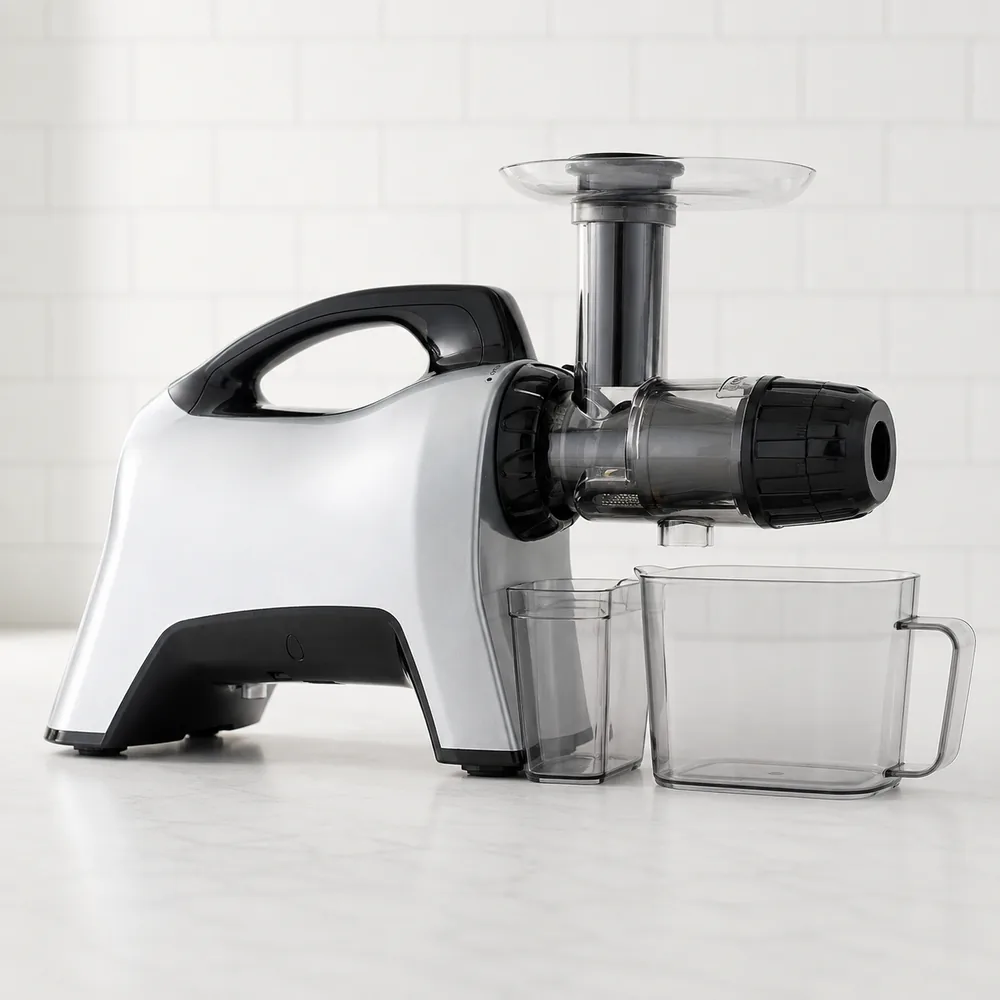
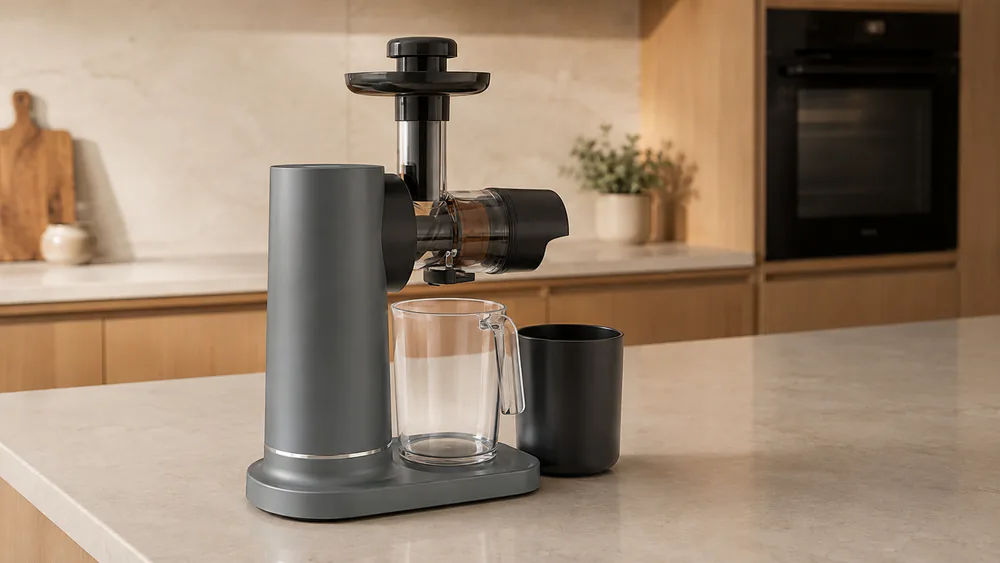
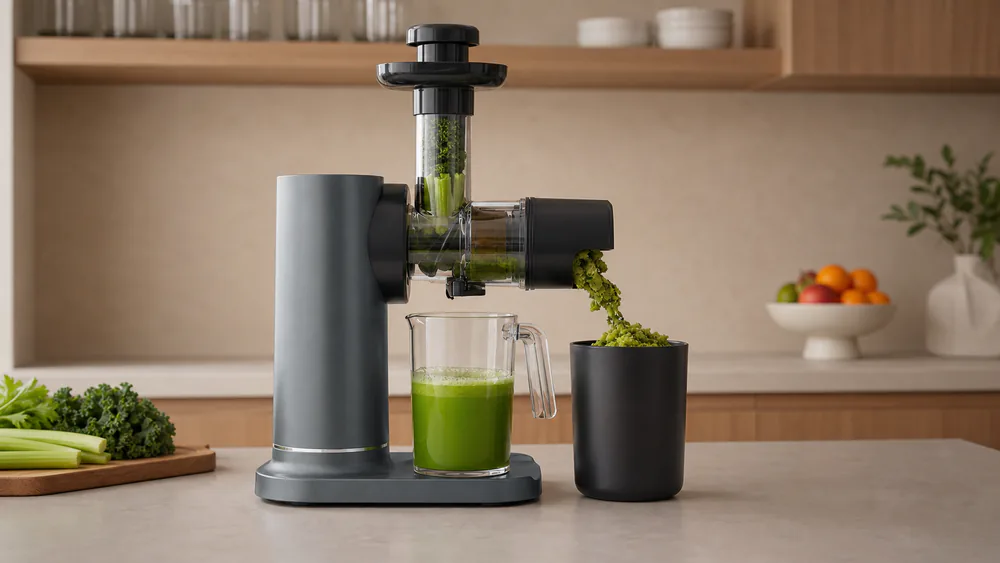
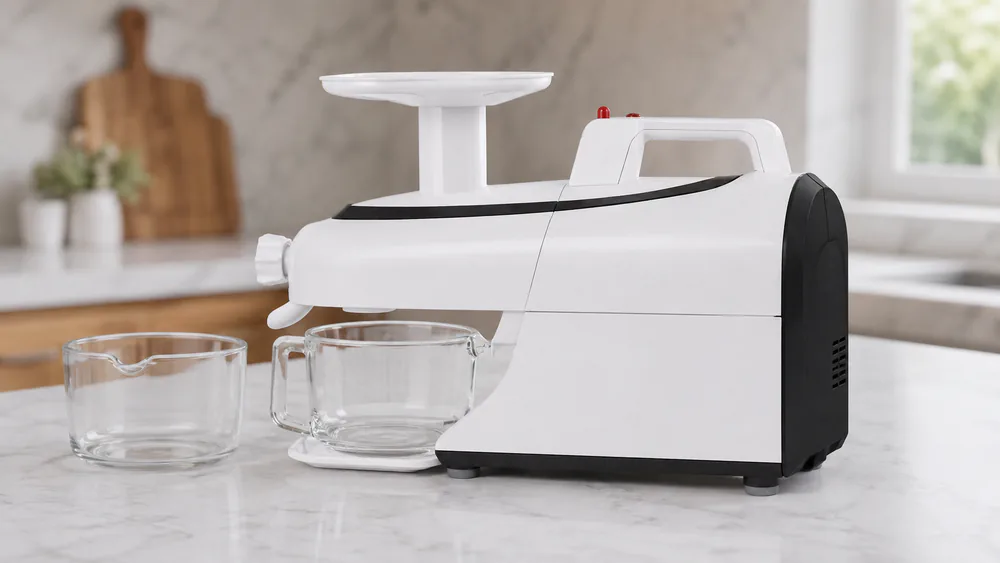
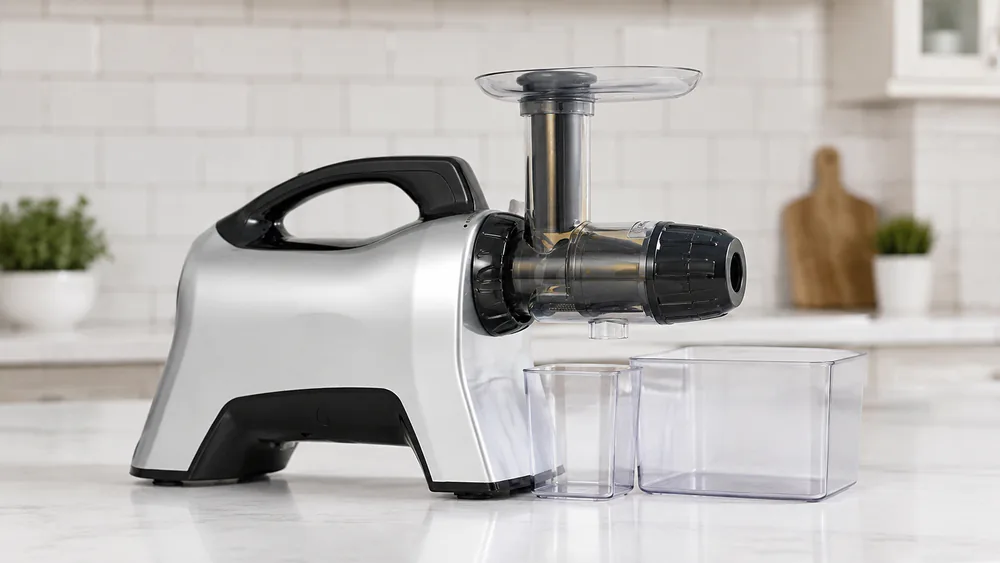
Green juice loyalists know the horizontal layout well, and the NC1000HDS is the category's wheatgrass champion: it extracted about 15 percent more wheatgrass juice per ounce than the vertical competitors in our head-to-head, and the same machine made smooth almond butter in about eight minutes. Cleanup ran about five minutes with the included brush, respectable with this many accessories.
Horizontal dual-stage masticating system
3-stage auger with adjustable end cap
Six nozzles plus juicing screen and homogenizing cone
Nut butter and pasta capability
Specifications
Price
$185.99 (street price varies)
Motor
200W
Speed
80 RPM
Design
Horizontal dual-stage
Dimensions
approx 6.1 x 18.5 x 12.3 in
Weight
14.7 lbs
Warranty
15-year (parts and performance)
The weak link is the plastic accessories: auger covers, locking rings, and end caps are where this machine fails, and replacement parts are hard to get, which is why our score is not higher. The 200W motor, 80 RPM press, six nozzles, and homogenizing cone make it the most versatile machine in the lineup, and 15-year coverage on parts and performance changes the five-year cost. If wheatgrass and greens are the point, this is the machine, plastic accessories and all.
Pros
Wheatgrass champion, about 15 percent more juice per ounce than verticals
Smooth almond butter in about eight minutes
Six nozzles plus homogenizing cone
15-year coverage on parts and performance
Cons
Plastic accessories are the weak link
Replacement parts are hard to get
Horizontal body needs about 18.5 inches of counter depth
Cold Press Juicers Compared: Quick Spec Table
Model
Best For
Feed Chute
Motor
Noise
Price
Our Rating
Nama J2
Best Overall
Self-feeding hopper
200W
Quiet
$599
4.8
Ninja NeverClog JC151
Best Value
Small chute
150W
Vacuum-level
$149.99
4.5
Kuvings AUTO10
Best Hands-Free
100 oz self-feeding hopper
240W
Quiet
$729.99
4.6
Hurom H400
Best for Easy Cleaning
45 mm hopper opening
150W
Very quiet
$749
4.6
Hurom H-AA
Best Quiet
2.4-inch
150W
40-45 dB
$399
4.4
Nama J3
Best for Small Spaces
3-inch
130W
Quiet
$499
4.4
Kuvings REVO830
Best for Batch Juicing
Dual 88 mm / 48 mm
Not published
Quieter than most
$699.99
4.3
Tribest Greenstar GSE-5000
Best Splurge
2-inch
170W
Moderate
$550-$650
4.4
AMZchef 6.3-inch
Best for Beginners
6.3-inch
250W
Quiet
$99.98
4.2
Omega NC1000HDS
Best for Green Juice
1.5-inch
200W
Fairly quiet
$185.99
4.1
How to Choose the Best Cold Press Juicer
The six criteria below are what separated our picks, and each maps to a habit that decides whether a juicer stays in daily use.
Feed Chute Size
Chute size decides how much prep you do, from none on the widest models to a cutting board for every glass on the narrowest. A 6.3-inch chute like the AMZchef's swallows whole apples, while a 2-inch chute like the Greenstar's means chopping every piece; self-feeding hoppers like the Nama J2's and Kuvings AUTO10's change the math entirely.
Tip. If chopping is why your last juicer collected dust, pick a wide chute or a self-feeding hopper. Prep time is the part of juicing people overestimate.
Juice Yield and Nutrient Retention
Yield is where a slow press earns its keep, and it is the easiest number to measure. Drier pulp means more juice from the same produce: the REVO830 pressed 847 ml from a 10-lb load where the H-AA managed 712 ml, a gap that pays for part of the machine in a year of daily juice. Cold pressing runs cool and slow, protecting heat-sensitive nutrients and limiting oxidation.
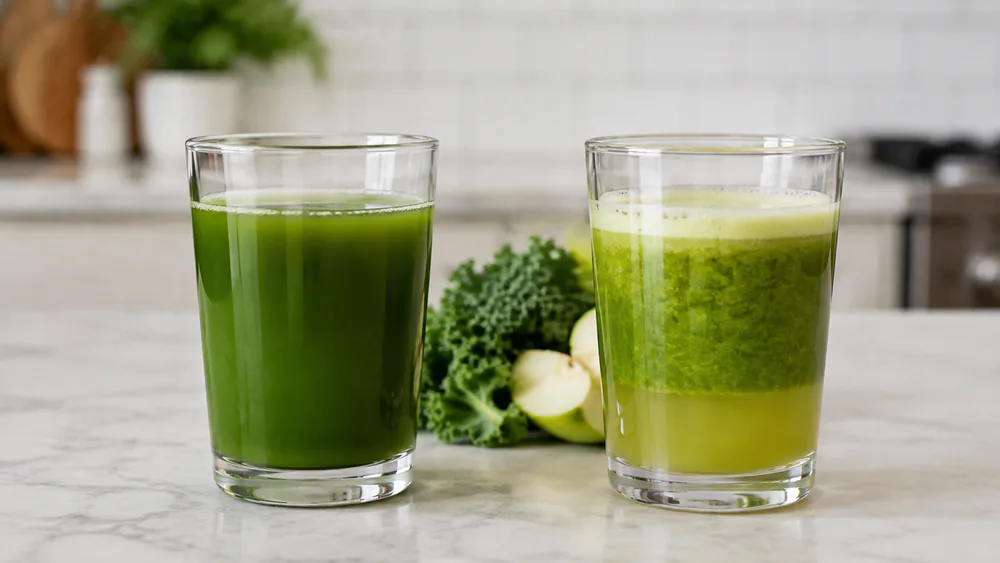
Same produce, two pressing styles.
Ease of Cleaning
Cleaning friction is the number one reason juicers end up in a cabinet; the two features that keep one in daily rotation are screenless designs and dishwasher-safe parts. The Hurom H400 rinses clean with no mesh, and the Ninja NeverClog sends every part through the dishwasher; hand-wash-only machines with many parts ask for a committed routine.
Warning. A 15-year warranty on a Nama or Omega versus one year on a budget model changes the five-year cost of ownership. Budget machines in our field log failures within a year or two, so read the warranty before the specs.
Noise Level
Cold press juicers run far quieter than centrifugals, but there is still a spread. The quietest masticating machine we measured, the Hurom H-AA, ran at 40-45 dB, quieter than a conversation, while the Ninja NeverClog sat closer to vacuum territory. If you juice before anyone wakes, this number decides whether the habit sticks.
Motor Power, Speed (RPM), and Warranty
Motor power in our lineup ranges from 130W on the Nama J3 to 250W on the AMZchef, and published speeds top out at 120 RPM; slower auger speeds mean gentler pressing and less oxidation, at the cost of longer batches. Warranty length is the best durability signal: 15-year coverage on the Nama, Hurom, Kuvings, Tribest, and Omega machines versus one year on the Ninja shows which brands expect their parts to last.
Cold Press vs. Centrifugal: Which Is Right for You?
A cold press juicer uses a masticating auger that crushes and presses produce at low speed, without heat or much oxidation. A centrifugal spins a fast blade to shred produce and fling juice through a sieve: quicker, cheaper, and noisier, with juice that oxidizes faster. In our kitchen, the best centrifugal we have used, the Breville Juice Fountain Cold Plus, finished a glass with zero pulp, but the juice kept only hours in the fridge where the slow press keeps for days. Note the naming trap: despite the "Cold" in its name, it is centrifugal with cold-extraction technology, not a cold press. If you want juice that keeps, or you are juicing greens, ginger, and wheatgrass, the cold press is the right tool. If you want a quick glass of orange juice and nothing else, a centrifugal is simpler and cheaper. Either way, the World Health Organization's healthy-diet guidance is clear: at least five portions of fruits and vegetables a day, and a juicer is one of the easier ways to get them in.
Frequently Asked Questions
What is the difference between a cold press juicer and a centrifugal juicer?
The terms cold press and masticating describe the same slow-squeeze design, so the two are interchangeable. An auger crushes and presses at 43 to 120 RPM, with little heat or oxidation, while a centrifugal shreds fast, juices quicker, and oxidizes sooner.
Is cold-pressed juice healthier than regular juice?
Cold pressing runs cool and slow, so it preserves more heat-sensitive nutrients and limits oxidation compared with high-speed centrifugal juicing. That said, juicing removes most of the fiber, which is why the Mayo Clinic's juicing guidance treats juice as a way to supplement whole fruits and vegetables, not as a replacement for them.
How long does cold-pressed juice last?
Refrigerated in an airtight container, slow-pressed juice stays fresh for 24 to 72 hours, and in our kitchen that has meant about three days for a slow-pressed batch. Centrifugal juice is a different story, best within about four hours, because the spinning exposes more of it to air.
What is the best cold press juicer for beginners?
If the budget stretches, the Nama J2. The self-feeding hopper removes the two things that trip up new juicers, chopping and pushing, and the 15-year warranty covers the learning period. On a tighter budget, the AMZchef is the friendly entry point: widest chute in our lineup and easy cleanup. Either way, pick a machine whose cleaning routine you can live with, because that habit decides whether you keep juicing.
Are cold press juicers difficult to clean?
Cleaning is the make-or-break feature, and it varies by design. Screenless machines like the Hurom H400 rinse clean with no mesh to scrub, and dishwasher-safe machines like the Ninja NeverClog send most parts through the cycle; the many-part, hand-wash-only machines take longest. Before any of it goes in the hopper, wash your produce under running water and scrub firm-skinned fruit, per the FDA's produce-cleaning guidance.
What can you juice with a cold press juicer?
Just about anything that grows. Leafy greens, celery, ginger, turmeric, and wheatgrass are the cold press specialties, and apples, carrots, beets, citrus, and soft fruit press cleanly in any of our picks. Multi-use machines go further: the Tribest Greenstar makes sorbet and nut butter, the Omega presses nut butter and pasta dough with its nozzles, and the AMZchef adds nut milk and sorbet modes to its 3-in-1 design.
Final Thoughts
The short answer is the Nama J2, but the roundup's best deal sits at the other end of the price scale: the Ninja NeverClog delivers most of the daily-use convenience at a quarter of the cost, and the AMZchef is the honest entry point under $100. Use the buying guide above to match the right trade-offs to your kitchen.